The Magician Tarot Card: Meaning, History, and Jewelry by Arcana I Symbols
Picture a craftsman's workshop. Four tools sit on the table: a wand, a cup, a sword, a coin. Each one stands for one of the classical elements. The craftsman raises his right hand toward the sky and points his left hand toward the earth. The gesture is simple, but it carries a thousand-year tradition behind it: what is above mirrors what is below. An idea becomes a thing. A concept takes form. This is precisely the scene depicted on the first card of the Major Arcana in most modern tarot decks.
The Magician (Arcana I) stands at the very beginning of the journey through the Major Arcana. The Fool (0) has already taken that first step into open space with no guarantees. The Magician answers the question: what do you do next? The card's answer is clear: gather your tools, focus, and get to work.
This guide breaks down the Magician card from every angle: the history from carnival juggler to hermetic symbol, the iconography of each element in the classic Rider-Waite-Smith image, the archetypal meaning, the connection to Mercury and the hermetic tradition, and the jewellery that embodies the card's symbols -- the infinity sign, the ouroboros, the all-seeing eye. No mysticism for its own sake. With genuine respect for the real history.
The Magician in the Deck: First After Zero
In most modern tarot decks, the Magician carries the number I. The Fool before him is numbered 0 or stands outside the count entirely. That is not accidental.
The Fool embodies the state before beginning: potential without form, movement without direction, openness without tools. He walks through the world with a bundle on a stick containing everything he needs for the journey, but he does not yet know what is in there. The Magician follows him as the first act of will. He takes what the Fool brought and spreads it out on the workbench.
The number 1 in numerology means beginning, unity, first cause. In most systems, the number 1 describes a start as an autonomous act: the capacity to begin without external support. The Magician does not complete the journey. He starts the process. That is his key function within the system of arcana: he is the one who translates intention into action.
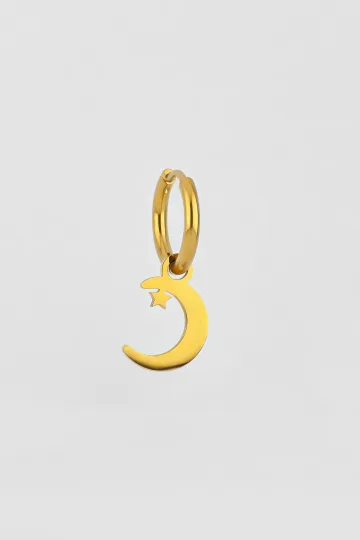
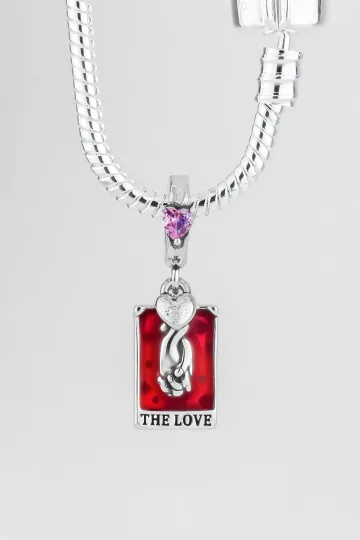
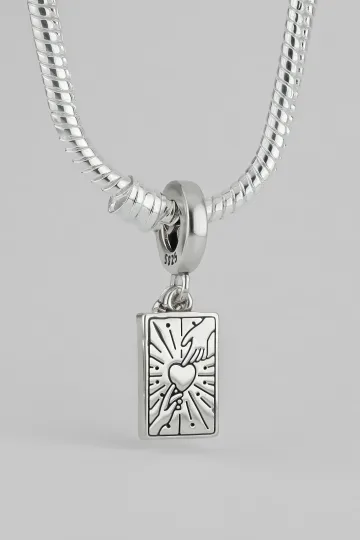
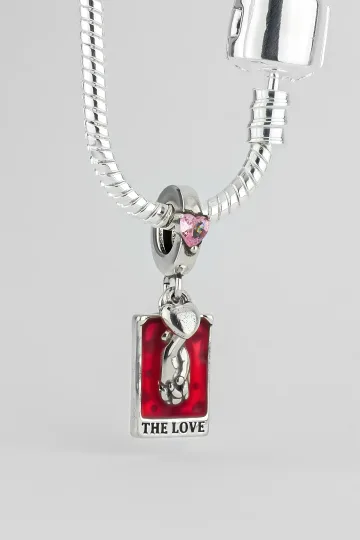
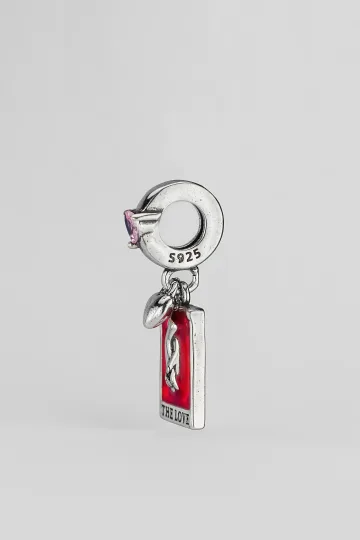
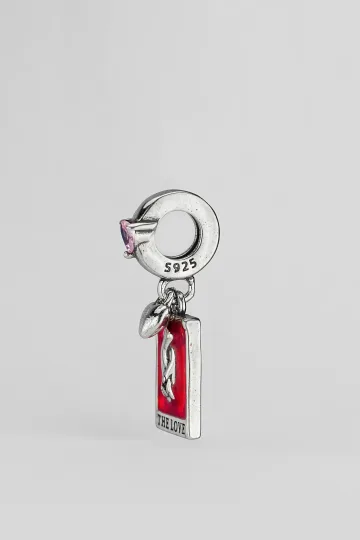
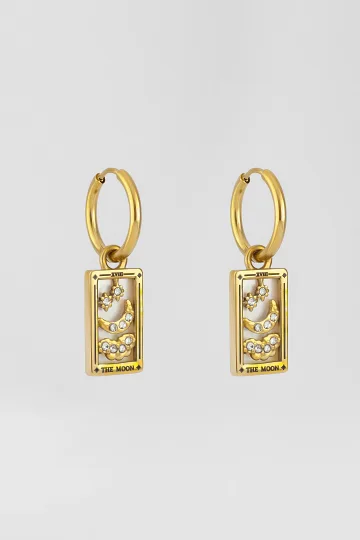
Wear the symbol, don't just read about it. These are in stock:





Understanding the card's position in the overall system matters. The Major Arcana form a path sometimes called the Fool's Journey: from 0 to XXI, the cards unfold a narrative about initiation, experience, loss, and finding. The Magician stands at the first step of this path and sets its tone. He says: you have the tools, go and work.
In the Major Arcana, each card describes a stage of human experience. The Magician corresponds to the moment when a person realises they have everything they need and starts acting. Not when everything is perfectly ready. Not when external circumstances have lined up without flaw. Exactly when the person has done what they could to prepare and now simply begins.
The Magician Through the Centuries: From Il Bagatto to Crowley
The history of the Magician's visual image spans roughly six centuries of continuous transformation. Each historical layer added a new reading without erasing the previous one.
Visconti-Sforza in the 1450s: the Carnival Juggler
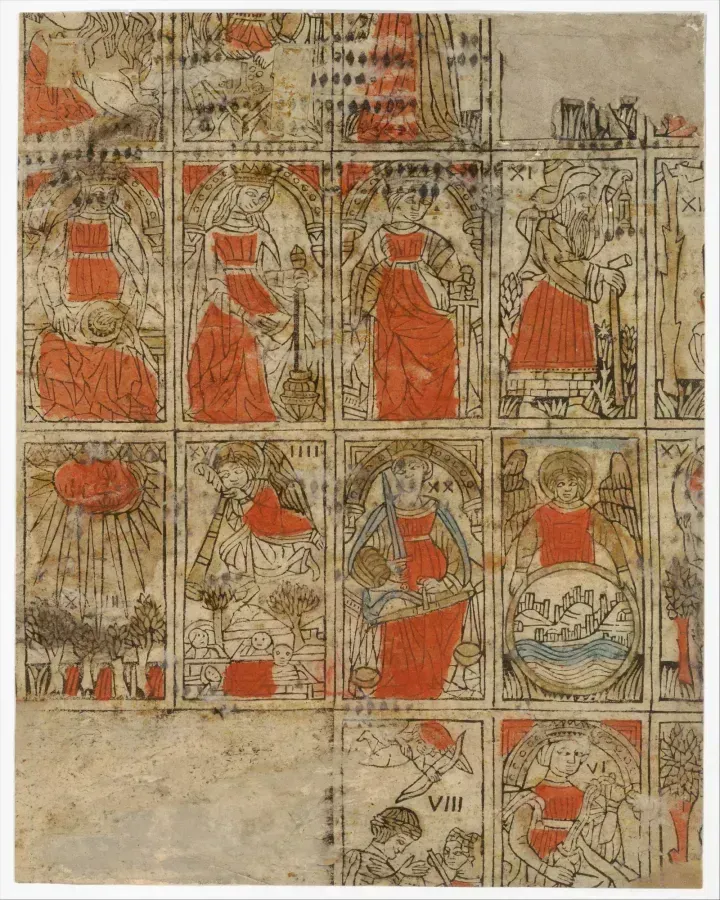
The earliest known depiction of the Magician card appears in the Visconti-Sforza deck around 1460. The artist Bonifacio Bembo painted a figure the Italians called "Il Bagatto" or "Il Bagatello." Both words trace to the Italian for "trifle," "knickknack," or "trinket."
In fifteenth-century cards, this figure is not a sage or a sorcerer. He is a street juggler, a conjurer who performs tricks with balls and cups in the town square. His broad-brimmed hat, his table of props, his slightly mocking posture. His social status is modest: he entertains the crowd and sometimes tricks the gullible.
Other early Italian decks, such as the Bolognese deck or the Este deck, also depict the first arcana as a juggler or peddler. The table of tools that would later become a sacred altar bearing symbols of the four elements originally was nothing more than a wandering vendor's counter.
The Marseille Deck and Le Bateleur
In the seventeenth century, France developed a visual canon known as the Tarot de Marseille. The Magician in it was called "Le Bateleur," meaning juggler or tightrope walker. The broad-brimmed hat and the table of tools remained, but the interpretation gradually began to shift.
Nicolas Conver produced his version of the Tarot de Marseille around 1760. The brim of Le Bateleur's hat curves in a way that distantly suggests a lemniscate, though this was almost certainly a decorative element rather than intentional symbolism.
Etteilla and the First Occult Readings
The French occultist Etteilla (Jean-Baptiste Alliette), active in the 1780s and 1790s, was among the first to systematize tarot as a tool for divination. He began actively connecting the cards to meanings that extended beyond simple gameplay. The first arcana in Etteilla's system gained additional connotations of intellect and dexterity.
Eliphas Levi and Papus: the Hermetic Turn
The French occultist Eliphas Levi (1810-1875) connected tarot to the Kabbalah and built the foundation for all subsequent esoteric interpretation of the deck. He aligned the cards with the letters of the Hebrew alphabet and the sephirot of the Tree of Life. The Magician received the correspondence of the letter Beth.
Papus (Gerard Encausse, 1865-1916) developed Levi's system, writing the first extensive treatise on tarot as an occult framework. In his interpretation, the Magician became the archetype of will and active principle, an instrument of connection between worlds.
Oswald Wirth (1860-1943) created a deck under Papus's influence in which Le Bateleur visually became a magician in the philosophical sense: a more dignified posture, attributes clearly referencing occult symbolism.
Rider-Waite-Smith 1909: the Canonical Image
In 1909, Arthur Edward Waite and the artist Pamela Colman Smith created the deck that defined the modern visual language of tarot. Waite was a member of the Hermetic Order of the Golden Dawn and deliberately encoded hermetic symbolism in the illustrations.
Waite's Magician is fully reimagined. The figure stands before an altar bearing all the tools of the four suits, raises a wand toward the sky, and points his other hand toward the earth. Above his head floats the infinity sign. His belt is formed by a serpent biting its own tail. White lilies and red roses bloom all around him. This image became canonical for most modern interpretations.
Crowley-Harris Thoth 1943: the Magus
Aleister Crowley worked on the Thoth deck from 1938 to 1943 with the artist Frieda Harris. Harris used principles of projective geometry, which gives the deck's visual language a fundamentally different character.
In Crowley's system the first arcana is called not "The Magician" but "The Magus." Crowley built his system on the Kabbalah, astrology, and alchemy, as well as his own Thelemic framework. The Magus is depicted surrounded by the attributes of Mercury and Thoth: the caduceus, an ape, an ibis, the feather of Maat, a cup.
The key distinction between Crowley's Magus and Waite's Magician is this: where Waite's card emphasises bringing a design into reality through command of tools, Crowley's card emphasises the Word itself -- the magic of language and formula. The Magus works through name, vibration, and intention expressed in exact form.
One metal per look, I mean it. Mix silver and gold and your Magician turns into a junk drawer.
How to Wear the Magician's Jewellery
The Magician's symbol works when everything around it stays quiet. Here is what actually holds up, sorted by occasion, from shoots and from clients.
What do I wear a lemniscate with every day? For daily wear I recommend a thin chain and an infinity pendant over a white shirt, grey knit or a turtleneck. A high or shallow neckline keeps the pendant at the collarbone instead of letting it sink into the fabric. One accent, the rest stays silent. I suggest 40 to 42 cm so the sign is always in view.
How do I build an evening look? For an open neckline and smooth silk I choose a slightly longer chain, 45 to 50 cm, so the pendant rests on the chest. An all-seeing eye in oxidised silver reads graphic against dark cloth. A deep colour, black or wine, gives the symbol weight.
How should an ouroboros ring be worn? I suggest one on the finger, with no rings beside it. The snake's form is self-contained, and extra metal nearby only mutes it. Oxidised silver across the scales looks composed in the office and out in the evening alike.
Can I wear two symbols at once? You can, but keep it restrained. I recommend a thin chain with a lemniscate plus a short one with no pendant: that builds depth without pulling attention from the main sign. Keep one metal per look, silver with silver, gold with gold.
Who and what occasion do I suggest it for? For anyone launching a venture, defending a thesis or starting a first day in a new role. The Magician's symbol works as a personal marker of the moment, not as jewellery for the shine. I choose one strong sign over a set: the archetype is about concentration, and the look follows the same rule.

Turn on your camera, pick earrings, a pendant or a ring, and see the piece on yourself in real time.
Switch items in one tap.
Everything runs in your browser: no photo or video is ever uploaded.
Iconography of the Rider-Waite-Smith Card: Element by Element
The classic Magician card from the Rider-Waite-Smith deck contains several key visual elements. Each carries a specific meaning. Here is a systematic breakdown.
The Pose: One Hand Up, One Hand Down
The Magician stands upright. His right hand is raised toward the sky, his left points toward the earth. The wand in his right hand is directed upward.
This pose embodies the principle Waite directly linked to the hermetic tradition: "as above, so below." The Magician serves as intermediary between two levels of reality. He receives an impulse from above and manifests it in the material world. He is the conductor who connects both planes.
In practical terms, this pose means the Magician knows how to translate intention (the celestial plane) into concrete action (the earthly plane). That is the definition of real effectiveness in the broadest sense.
The Infinity Sign Above His Head (the Lemniscate)
Above the Magician's head floats a horizontal figure eight. This is the lemniscate, the infinity symbol.
Mathematically, English mathematician John Wallis introduced this symbol in 1655 in his treatise "De Sectionibus Conicis." The word "lemniscate" derives from the Latin "lemniscus" through the Greek for "ribbon" or "ornament."
In the following century, Jakob Bernoulli described the "lemniscate of Bernoulli" as a fourth-degree curve with special geometric properties. In mathematics this is a precisely defined shape: the lemniscate is given by an exact equation, and it is a mathematically rigorous form whose properties connect to the golden ratio under certain construction conditions.
On the card, the lemniscate above the Magician carries several meanings simultaneously. Energy does not diminish: the Magician works with forces that do not run dry when handled correctly. His potential is not limited: capability is boundless when focus is maintained. Past and future are joined in a single cycle: action produces consequence, which becomes a new cause.
The Ouroboros Belt: the Snake Biting Its Own Tail
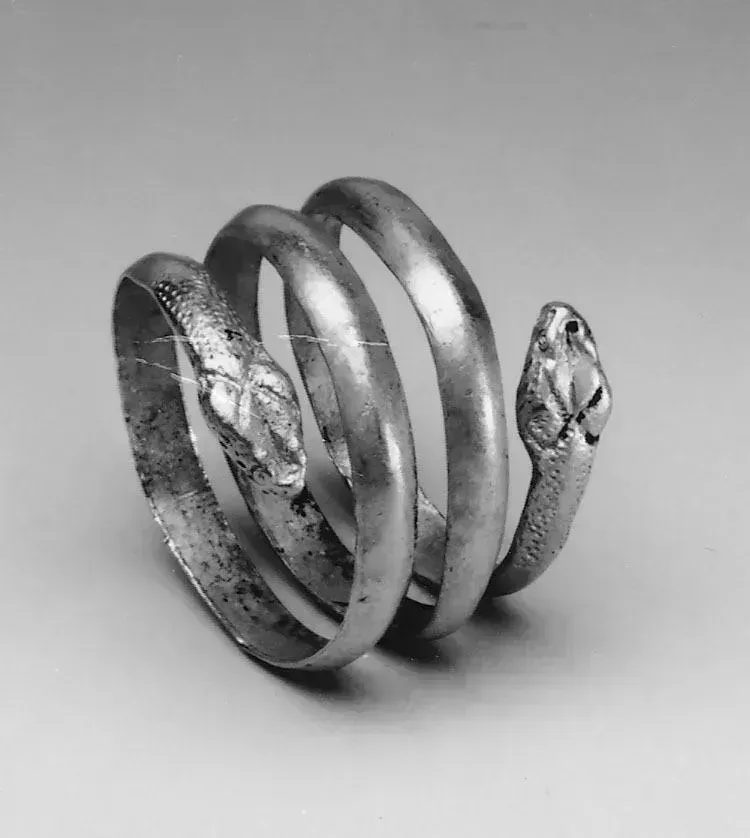
The Magician's waist is wrapped by a belt in the form of a snake biting its own tail. This is the ouroboros, one of humanity's oldest symbols.
The earliest known depiction of the ouroboros dates to roughly the fourteenth century BCE: it was found in Tutankhamun's tomb. In the Greek tradition the image was described as "Hen to Pan" ("One is All").
In alchemical literature the ouroboros represented the cycle of transformation: destruction and creation as a continuous process. The Latin formula "solve et coagula" holds the same principle: to create something new, you must dissolve what came before.
The Four Tools on the Table: a Detailed Breakdown
Before the Magician on the table lie four objects: a wand, a cup, a sword, and a pentacle. These are the four suits of tarot, each corresponding to one of the classical elements of the Western tradition.
Wand and Fire. In Waite's system, the wand corresponds to the element of fire. In the iconographic details, this is not merely a stick: the Magician holds the wand in his raised hand, making it an active instrument directed upward toward the source of intention. Fire as an element rises upward; it is active and directional. Symbolically, the wand embodies will, initiative, the primary impulse toward action, the creative energy that ignites a process. A person with developed "fire" starts projects, moves people, creates from nothing. When the wand rests on the table alongside the other tools, it means the Magician holds his will under control: he does not burn everything in sight; he channels fire to where it is needed.
Cup and Water. The cup on the Magician's table corresponds to the element of water. Water takes the shape of its container; it flows by the path of least resistance. In symbolic logic the cup speaks of emotional intelligence: the capacity to receive, to feel, to work with intuition. Water is also linked to creativity in its receptive aspect and to relationships. The cup on the table means: the Magician does not ignore emotional reality. He can handle that too. A Magician without the cup becomes a dry executor who cannot hear other people. The full set requires water.
Sword and Air. The sword corresponds to the element of air. Air carries information; it is invisible but felt. The sword cuts: it separates the essential from the extraneous, fact from assumption, clarity from vague impressions. In interpretation this is thinking, analysis, the ability to make decisions based on clear understanding. A Magician with a developed sword aspect does not drown in emotion and does not cling to a single idea: he sees the whole picture and knows where to draw the line. In the jewellery tradition the sword as symbol has appeared in ornamental work for centuries: from medieval heraldry to modern pendants combining iconography of strength and clarity.
Pentacle and Earth. The pentacle, coin, or disk corresponds to the element of earth. Earth holds everything else: without material grounding fire dies out, water spreads without direction, air dissipates without trace. The pentacle on the table says: the Magician knows how to work with real resources, to bring ideas into concrete results, to account for energy and budget. This is not grounded in a dismissive sense. It is the understanding that designs live in the world. A Magician without the pentacle builds castles in the air.
The fact that the Magician has all four tools on the table simultaneously means one concrete thing: he has the complete set for the work. He does not need to wait for the right circumstances or someone else's help. Everything needed is already there. That is the central thesis of the card.
White Lilies and Red Roses
The Magician stands in a garden. White lilies bloom at his feet. Red roses hang over the fence behind him.
In Western iconography the white lily traditionally signified purity and spiritual blamelessness. In Renaissance symbolism the lily points to unstained intention.
The red rose is linked to passion, will, and active action. In the alchemical and Rosicrucian tradition the rose stood for secret knowledge: "sub rosa" meant secrecy.
In the alchemical tradition white (albedo) and red (rubedo) marked two key stages of transformation: purification and the completion of the Great Work. The presence of both colours in the Magician's garden points to the wholeness of the process.
White Garment and Red Cloak
The Magician himself wears white robes and a red cloak over them. The white in Waite's system means purity of intention. The red cloak adds active principle: will and passion, with the potential for egotism as well. The Magician works with this force, and it is dual by nature.
Alchemy and the Magician: Hermeticism in Detail
Hermes Trismegistus and the Emerald Tablet
The Magician's pose traces back to the hermetic tradition, specifically to the text known as the Emerald Tablet (Tabula Smaragdina). This text is attributed to the legendary figure of Hermes Trismegistus ("Thrice Greatest Hermes"), who in the late-antique syncretic tradition merged characteristics of the Greek Hermes and the Egyptian Thoth.
The earliest known version of the Emerald Tablet appears in Arabic sources from the eighth and ninth centuries CE. The text reached Europe through Latin translations of the twelfth century and became one of the key texts of the alchemical tradition. Newton, who pursued alchemy alongside his mathematical work, made his own translation of the Emerald Tablet.
The key phrase in the Latin translation: "Quod est inferius est sicut quod est superius, et quod est superius est sicut quod est inferius." Translated: "That which is below is like that which is above, and that which is above is like that which is below."
"As Above, So Below": the Philosophical Meaning
The principle means: the laws operating at the cosmic level also operate at the level of an individual person. The macrocosm is reflected in the microcosm. Stars and cells follow the same principles.
Waite built the Magician card as a direct illustration of this principle. The raised hand points to the sky, the lowered hand points to the earth. The Magician stands between two worlds and serves as a channel between them.
Hermes Trismegistus as a figure is a synthetic image: in him Hermes with his caduceus and Thoth with his feather and papyrus are combined. Both of these gods are connected to recording knowledge, transmitting it, and crossing boundaries.
The Three Great Operations
In the alchemical tradition the Great Work (Magnum Opus) was described as a sequence of three or four stages of material transformation, symbolising the transformation of the alchemist himself.
Nigredo (blackening): dissolution, primordial chaos, the death of the old form. In psychological terms this is crisis, darkness, the necessary shadow before any genuine transformation.
Albedo (whitening): purification, washing, the emergence of clarity from chaos. The white lilies in the Magician's garden refer directly to this stage. Albedo is the moment when the design becomes clean and distinguishable.
Rubedo (reddening): the final stage, the union of opposites, the completion of the process. The Magician's red cloak and the red roses behind him. This is not simply passion; it is the sign of a completed cycle of transformation.
The presence of all the colour markers of the Great Work within a single card indicates that the Magician carries the entire alchemical process as a unified whole. He is not stuck at any one stage. He holds the entire path in a single image.
Mercury in the Alchemical Triad
Alchemical mercury (Mercurius) is simultaneously a specific substance (quicksilver) and a principle of mobility, changeability, and transmission between states. In the alchemical triad of "sulphur, salt, mercury," mercury occupied the middle position: between will (sulphur) and body (salt). The Magician in tarot occupies an analogous position: between sky and earth.
The Magician and the Kabbalistic Tree of Life
The Path of Beth
In the Golden Dawn tradition that Waite followed, each of the Major Arcana was linked to one of the paths on the Kabbalistic Tree of Life and to one of the letters of the Hebrew alphabet. The Magician corresponds to the letter Beth, meaning "house."
The path of Beth on the Tree of Life connects the first sephira, Kether (the Crown, the supreme principle, the boundless light), to the second sephira, Chokmah (Wisdom, the first manifested principle). This is the first path of descent from the absolute to the concrete: from the unthinkable Source to the first act of thought.
In Kabbalistic numerology the letter Beth has the numerical value of 2. This is not a contradiction with the Magician bearing the number 1: if Aleph (1) symbolises beginning itself, the primal spirit, then Beth (2) is the first act of embodiment, the creation of duality from unity. The Magician stands precisely at this step: he takes the undivided and begins building structure from it.
Mercury and the House
Beth means "house," and this is not accidental. The Magician creates a workspace: he organizes the table, arranges the tools, turns chaos into a workplace. "House" as the symbolic meaning of the letter points to the fact that mastery begins with creating the right space for the work.
Mercury as the astrological correspondence of the card adds the aspect of communication and mediation: the path from Kether to Chokmah is the first "transmission" from undifferentiated unity to distinguishable thought. The Magician stands on this path as intermediary and translator.
In the Golden Dawn tradition Mercury corresponded to the universal principle of connection, communication, and intellectual movement. If the first sephira Kether is what exists before all distinction, Chokmah is the first distinction, the first thought. The Magician literally holds the bridge between these two states. Every time a person translates intuitive understanding into a concrete plan, they reproduce this path.
Sephirot and the Tools
In the Kabbalistic interpretation, the four tools on the Magician's table correspond to the four worlds of Kabbalah: Atziluth (the world of emanation), Beriah (the world of creation), Yetzirah (the world of formation), and Assiah (the world of action). The wand belongs to Atziluth, the cup to Beriah, the sword to Yetzirah, the pentacle to Assiah.
This means that the Magician, having all four tools, operates on all levels of reality simultaneously. This is not competence in one domain. This is the full integration of all levels of existence into a single action.
The table of the Magician is a horizontal surface: all four tools lie before him as equals. There is no hierarchy among the elements. Fire is not above earth; air is not more important than water. The Kabbalistic reading supports this image: the four worlds of Kabbalah do not form a pyramid of values; they form a continuous flow from the subtle to the dense, and each level is necessary for working with the next.
Customer reviews
Zevira is a real jewellery shop. Genuine payments, deliveries and customer thank-yous.
🥰🥰🥰 gracias

Ok, ¡gracias! 🙂

The Magician Through Jung: Concentration and Shadow
The Magician Archetype in Analytical Psychology
When Jungian psychology speaks of archetypes, the "Magician" as a type appears in the collective unconscious as a figure who knows the laws governing the world and knows how to work with them. Jung did not analyse the Major Arcana directly, but his student Marie-Louise von Franz and other Jungians analysed the cards as expressions of archetypal patterns.
The Magician archetype in the broad sense is not necessarily a sage or a sorcerer. It is anyone who works with the laws of their field as though they know them from the inside. A chef who feels flavor without a recipe. A programmer who sees the bug before running the test. A therapist who anticipates the turn in the conversation before the client does. This is mastery that looks like intuition but is actually accumulated competence.
In psychology the state of maximum engaged competence at work is described as "the state of flow" (Mihaly Csikszentmihalyi). The Magician by his very nature is the image of a person in flow: total absorption in the task, without wasted effort, without losing direction.
Master Versus Manipulator
Jung developed the concept of the shadow extensively: the dark side of every archetype that emerges when the principle is misused or distorted by fear. The shadow of the Magician is the manipulator. A person who possesses the same knowledge and the same toolkit but uses them not for creation but for control over others.
The difference between the Magician and the manipulator is not in the skill set. The difference is in intention and in honesty toward the people they work with. The upright Magician builds, explains, transmits knowledge. The reversed Magician conceals, confuses, extracts advantage through someone else's ignorance.
Jung insisted: to work with the archetype of mastery without the risk of becoming a manipulator requires constant engagement with one's own shadow. A Magician who does not know his dark side will sooner or later begin using tools against people rather than for them.
Wholeness and Concentration
The key psychological characteristic of Jung's Magician is concentration in two senses. First, the ability to gather scattered energy into a single point of application. Second, inner wholeness, the integration of all aspects of the personality into one functioning system.
The Magician is not divided into a "public self" and a "real self." He is whole: his tools reflect his intentions, his actions correspond to his words. This wholeness is precisely what makes mastery possible.
The Magician in Literature and Film
Prospero in Shakespeare
Prospero in "The Tempest" (written around 1610) governs his island through magic, which means through knowledge of the hidden laws of nature. His books, his staff, his ability to control the elements and spirits directly correspond to the Magician's image: four tools, will as the central principle, the capacity to create reality through intention.
An important detail: Prospero at the end of the play breaks his staff and drowns his books. He consciously renounces mastery because he has achieved his goal. This is an archetypal moment: mastery is not an end in itself but an instrument for achieving a specific intention. A Magician who clings to tools for the tools' own sake ceases to be a Magician and becomes a collector.
Faust in Goethe
Johann Wolfgang von Goethe worked on "Faust" throughout his lifetime: the first draft dates to the 1770s, and the completed second part was published in the year of his death, 1832. Faust is the Magician in a state of crisis: a person who has mastered every tool available to him, concluded that it is not enough, and made a pact with Mephistopheles for expanded capability.
The tragedy of Faust is the tragedy of a Magician who confused end and means. He wants knowledge for the sake of knowledge, experience for the sake of experience, without knowing what he actually wants to serve. Unlike Prospero, who has a specific goal, Faust begins with existential hunger without direction. This is the reversed aspect of the Magician: the tools are assembled but the intention has not been articulated.
Gandalf in Tolkien
Gandalf in Tolkien, especially across "The Hobbit" and "The Lord of the Rings," embodies the image of the Magician as guide and driving force. He does not fight on his own behalf. He organizes, directs, sets processes in motion. His function is not victory but creating the conditions under which victory becomes possible.
In Tolkien's original text Gandalf is called "Olorin," meaning "one who dreams of wisdom" in the language of the Valar. This is not a combat mage; this is an organising mage: he is the one who persuaded Bilbo to set out, the one who assembled the Fellowship. The Magician as catalyst rather than principal actor.
The Sorcerer's Apprentice
The folkloric figure of the sorcerer's apprentice, given lasting form by Goethe's ballad "Der Zauberlehrling" (1797), follows a classic cautionary path of the Magician: a student who has learned the outward form of mastery but not the discipline behind it. He commands a tool he does not fully control, and the enchanted broom he sets to work floods the workshop because he knows the word to start but not the word to stop. This is the archetypal moment when borrowed competence outruns genuine understanding.
The story is a visual embodiment of the reversed Magician: the tools are at hand, the gestures are correct, but the intention and the mastery behind them are incomplete. The apprentice is the upright Magician in reverse, the one who reaches for power before he has earned the right to wield it.
Stage magic offers another reading of the archetype: the magician who carries all the technical tools of the craft, yet whose path forks on the willingness to pay the price mastery demands. This is a sharp portrait of the shadow of the Magician archetype, what happens when the toolkit is fully assembled but the intention has become corrupted.
Merlin
The figure of Merlin in the Arthurian cycle occupies a special place in the history of the Western cultural archetype of the Magician. Merlin is simultaneously advisor and practitioner: he sees the future, commands the elements, but uses this not for personal gain but to create the conditions under which a king can come into being. The BBC and American television adaptations of Merlin have brought this archetype to audiences who may never have read Malory, but the core of the figure remains unchanged: will deployed in service of a larger purpose.
The Alchemist by Coelho
In Paulo Coelho's novel "The Alchemist" (1988), the alchemist himself -- Santiago's mentor in the final stage of his journey -- embodies the Magician archetype in its most concentrated form: he knows the laws, commands the tools, and uses them consciously. He does not hand Santiago a finished result; he shows him how to see the laws and work with them.
The novel precisely reproduces the structure of initiation: the student moves from Fool (naive shepherd) to Magician (person who knows how to manifest intentions into reality). This is one of the reasons the book became a mass phenomenon.
Upload a photo of your pet, someone you love, or an object. We'll build a 3D model and hand-cast it in pewter.




The Lemniscate: Mathematics and Symbolism
John Wallis and the Infinity Sign
English mathematician John Wallis introduced the symbol of the horizontal figure eight in 1655 in his treatise "De Sectionibus Conicis." Wallis most likely chose this form by analogy with the Roman numeral for "thousand" (CIƆ or similar forms), which was used to indicate "countless multitude." This is one of the rare cases where the precise birth date of a symbol is known: 1655.
In the following century, Jakob Bernoulli described the "lemniscate of Bernoulli" as a fourth-degree curve. The name "lemniscate" comes from the Latin "lemniscus" through the Greek for "ribbon," "ornament." In mathematics this is not simply a beautiful shape: the lemniscate is defined by a precise equation and possesses special geometric properties, including connections to the golden ratio under certain construction conditions.
Two in One: the Meaning of the Closed Loop
Visually, the lemniscate is two closed loops joined at a single point. It is a form with no beginning and no end, but with a centre: the point of intersection. It is precisely at this centre -- over the Magician's head on the card -- that all the symbolic weight concentrates. He stands at the intersection of two streams: upper and lower, past and future, intention and manifestation.
If you treat the lemniscate as a route rather than a static shape, the picture becomes richer. Movement along it is continuous: from the left loop through the central point into the right, back through the centre into the left. There is no moment of stoppage. No dead end. The central point is not a pause but a moment of maximum concentration, after which movement continues into the other loop. The Magician in this metaphor is located exactly at the central point: where both streams converge and diverge simultaneously.
The lemniscate form in jewellery is ideal for delicate pieces: it reads as a complete form even at small scale. An infinity pendant on a fine chain looks clean and resolved. With a stone set at the central intersection point, the symbol gains an additional accent.
The Lemniscate in Modern Jewellery
From the second half of the twentieth century onward, the infinity sign became one of the most widely worn symbols in jewellery. People wear it as a universal sign of enduring love, limitless potential, a connection that does not break.
For someone familiar with the Magician card, an infinity pendant carries a more specific message: "I work with boundless potential." Not "I have everything," but "what I have does not diminish if I handle it correctly." That is a more precise and more complex message than simply "love forever."
Sterling silver (925) works well for the lemniscate for several reasons. Silver casts cleanly and holds fine lines. Engraving across both loops creates a textural contrast: one loop polished, one matte, which reinforces the sense of duality built into the symbol.
For a deeper dive into the history and meaning of this symbol, see our article on the infinity symbol in jewelry.
The Ouroboros in the History of World Jewellery
Ancient Egypt: the First Pieces
The earliest known depiction of the ouroboros dates to roughly the fourteenth century BCE: found in Tutankhamun's tomb in the form of a protective image from the "Amduat," or Book of the Underworld. This is not the only Egyptian ouroboros: images of the serpent biting its own tail appear in several funerary texts and on amulets. The Egyptian ouroboros was typically depicted as a flat snake curled in a circle, its tail entering an open mouth. The symbol served a protective function in the funerary context.
The Greek Tradition and "Hen to Pan"
In the Greek Gnostic tradition the image was described as "Hen to Pan" ("One is All"), pointing to the unity of the cosmos through the image of a closed circle. Greek jewellers crafted ouroboros rings and bracelets in gold: rings with a serpent's head biting its own tail have been found in a number of Hellenistic burials.
Byzantium: Gold and Enamel
In Byzantine jewellery the ouroboros appears as an element of amulets and body ornaments, often combined with Christian symbols. This is a textbook case of syncretism: an ancient pagan symbol was adopted into a new religious system and reinterpreted as a sign of eternity and resurrection.
Romanticism and the Renaissance of Interest
During the Romanticism of the nineteenth century, with its fascination with the medieval, with alchemy, and with secret knowledge, the ouroboros experienced a revival in European culture. Masonic and Rosicrucian organizations used the symbol in their ritual ornaments. Gothic and neo-Gothic style ouroboros rings and pendants appeared in the jewellery trade.
Art Nouveau: Lalique and Naturalism
In the Art Nouveau period -- the late nineteenth and early twentieth century -- the ouroboros acquired a new visual form. Rene Lalique and other masters created ouroboros pieces in which the serpent was depicted naturalistically: detailed scales, curved body, realistic head. Enamel allowed for subtle colour gradation. Art Nouveau pieces featuring the ouroboros are among the most prized jewellery of that era.
The Modern Revival
From the late twentieth century to the present, the ouroboros has enjoyed a sustained revival in the jewellery world. The interest draws from several directions at once: enthusiasm for alchemy and hermeticism, the popularity of tarot symbolism, and the growing appetite for jewellery with narrative and history.
The 1990s and 2000s gave the trend additional momentum through their interest in pagan and neopagan aesthetics and in Wicca. The ouroboros, as one of the few symbols possessing both academic legitimacy (alchemy, history, philosophy) and mystical appeal, proved ideal for a new generation of wearers who want their jewellery to mean something.
A modern ouroboros in sterling silver is cast by the lost-wax method: the craftsman creates a wax model with each scale, each tooth, each detail of the head rendered. The wax is then invested in plaster, the wax is burned out, and molten metal fills the resulting space. The finished ring is then worked by hand: casting marks are removed, surfaces are polished or given a matte finish, and oxidation is applied as needed to bring the detail into relief.
Scale matters in an ouroboros ring: too thin and the scales lose legibility; too wide and the ring becomes heavy. The optimal width for a wearable ring is roughly 5 to 8 millimetres: enough for the detail to read, small enough for the piece to be comfortable. An engraving on the inside of the ring -- an alchemical formula or a date -- adds a personal dimension without affecting the exterior appearance of the symbol.
For the full history and meaning of this symbol, see our guide to the ouroboros in jewelry.





The Magician Archetype: Will, Concentration, Manifestation
The Magician does not generate resources from thin air. He works with what is there. His central skill: see the tools, choose the right one, apply it at the right moment. That is a description of any professional in a state of mastery.
In psychology the state of maximum engaged competence at work is described as "the flow state" (per Mihaly Csikszentmihalyi). A person in flow is completely absorbed in the task, loses track of time, acts without wasted effort. That state requires balance: the task must be difficult enough to preclude boredom and achievable enough to preclude anxiety. The Magician, by his very nature, is the image of a person in flow: all four tools are on the table, he knows which to reach for first, and he knows when to switch to the next.
The Magician card appears in readings as an indication of a period when a person has everything needed to begin. This is not a moment of preparation and not a moment of accounting. It is the moment of beginning action.
Upright and Reversed Meanings
Upright: Concentration and Action
In the upright position the card speaks of concentration, mastery, and the ability to use resources. It is a signal to act: there is nothing left to postpone, the tools are gathered, the direction is set.
Psychologically this is a state of clarity: the person sees what needs to be done and does it. Without excessive doubt, without scattering, without waiting for the perfect moment.
Specific areas where the upright Magician card is especially significant: starting a project or business, negotiation and communication (Mercury), creative work, teaching and transmission of knowledge, making a decision after a period of hesitation.
Five Scenarios for the Reversed Magician
Manipulation instead of mastery. Using knowledge and skill to deceive rather than to create. This is "the charlatan" in the historical reading of the card: a figure who appears to be a master but uses the form of mastery to extract advantage at the expense of others.
Scattering. The person starts everything at once and finishes nothing. All four tools are in use simultaneously and chaotically, instead of working through each one in sequence with full attention.
Blocked will. You know what to do but do not do it. Every condition is in place, every resource is assembled, but the action does not begin. This is procrastination at the archetypal level.
False competence. The person has convinced themselves (and possibly others) that they have all the necessary tools, but has not actually tested this in practice. Self-assessment is not backed by real experience.
Misuse of knowledge. The Magician knows the laws of the system and uses that knowledge not for mutual creation but to create dependence in others. This is a subtle form of manipulation: not lying, but deliberately withholding knowledge that would liberate the other person.
Leave your email, we'll send your discount code. No spam, unsubscribe anytime.
The code arrives by email, valid on your first order.
The Magician and Other Cards: Connections Within the Arcana
The Fool (0) and the Magician (I) form an obvious pair: beginning without form, and beginning with tools. The Fool leaps into the void with eyes open because he is curious. The Magician organizes the space before the leap, because he knows that preparation matters.
The parallel with the High Priestess (II) is interesting. If the Magician represents active principle, will, action, then the High Priestess represents his counterpart: passive knowledge, intuition, waiting for inner signals. They stand adjacent in the numbering sequence for a reason: two principles that complete each other. The Magician acts; the High Priestess knows. The complete image of mastery requires both.
The Chariot (VII) returns to the theme of will at a different level: not "gather the tools" but "hold the course under pressure from external forces." The Magician starts; the Chariot holds direction.
The lemniscate above the Magician's head echoes in Strength (VIII or XI depending on the deck): there the same sign appears above a woman who tames a lion. Both cards say the same thing: energy is limitless when you govern it rather than suppress it or waste it.
The World (XXI), the final card of the Major Arcana, closes the path that the Magician opened. If the Magician is the launch point, the World is the completion point: the person has travelled the full cycle and integrated the experience. The ouroboros at the Magician's waist and the wreath on the World card echo each other as symbols of the completed circle.
Mercury and the Hermetic Tradition
In most astrological tarot systems, the Magician corresponds to the planet Mercury.
Mercury in astrology governs communication, intellect, quick thinking, trade, and travel. It is the planet of intermediaries: Mercury stands between worlds, carries messages, translates from language to language.
In astrology Mercury rules two zodiac signs: Gemini and Virgo. Gemini embodies quick, adaptive intellect, the ability to see multiple sides at once. Virgo embodies analysis, precision, the perfecting of technique. Both aspects are present in the Magician archetype.
In Greek mythology Hermes escorted the souls of the dead to the underworld and back; he was the only god permitted to cross every boundary. This quality -- the ability to move between worlds -- directly corresponds to the Magician's function in tarot: working at the junction between intention and manifestation.
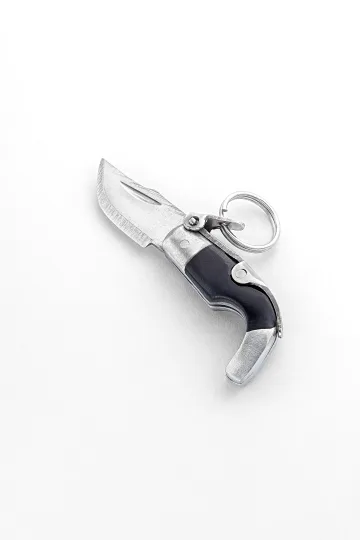
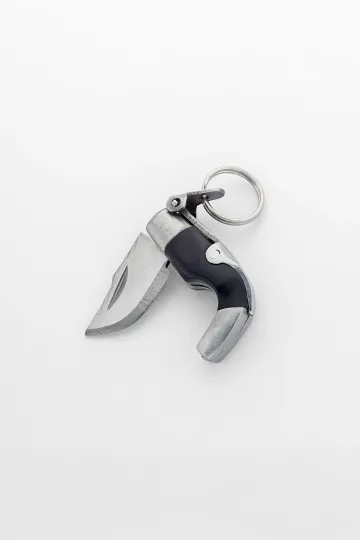
CAPAORA mini knife pendant
The 18th-century Spanish navaja in miniature: 40 mm of stainless steel, a real folding mechanism and a Palanquilla lock that clicks. An affordable gift to remember.
Authentic · Ships from Spain · 14-day returns
The Magician in Readings for Different Situations
Career and Professional Questions
In career readings the upright Magician points to a moment when the person has the right qualifications and is ready for the next step. If the question is about changing jobs: it is time. If about launching a project: conditions have ripened. If about negotiations: this is your moment; speak directly and with confidence.
The reversed Magician in a career reading warns: check whether all the tools are genuinely in place. You may be overestimating your readiness. Or you may be scattering your attention across several directions without giving any one of them full focus.
Starting a Project or Business
The Magician in the "what to do" position at the start of a project is a direct instruction: begin. Everything needed is already there. The card does not promise the path will be easy. It says you have what it takes to start.
If the Magician appears in a position of obstacle, it may indicate that someone in the project is using the wrong energy: either manipulating, or knowing everything but not sharing. It is worth figuring out who on the team holds the needed tool but keeps it off the table.
Going Public and Visibility
The Magician is the archetype of public mastery. When the card appears in a context connected to a public presentation, a launch, or a public appearance, it says: your appearance right now creates an impression. People see a master. Do not miss the moment.
The reversed Magician in a public visibility context indicates a risk of appearing not as a master but as a conjurer in the negative sense: someone in the audience will sense inauthenticity. Make sure the demonstrated competence is backed by real experience.
Personal Relationships
In relationships the upright Magician speaks of the ability to express intentions clearly and hear the other person. Not manipulation, but direct interaction. This is a period when words work, when a conversation initiated now will lead to the needed result.
The reversed Magician in relationships warns: one of the partners may be using their knowledge of the situation not for honest conversation but for managing the other person. Ask yourself: am I explaining, or am I manipulating?
Renowned Tarot Scholars on the Magician
Arthur Edward Waite
In "The Pictorial Key to the Tarot" (1910), Waite directly connects the Magician to the "Divine Motive in man" and interprets the card through a Gnostic framework. He describes the Magician as a manifestation of will directed simultaneously upward and downward. Waite insists: the card's symbols carry not one but several layers of meaning, and a surface reading will never be complete.
Waite particularly emphasised the distinction between the conjurer and the magician in the philosophical sense: the first exploits the audience's ignorance; the second works with the real laws of nature and has no need to exploit anyone else's lack of knowledge. This distinction is what he encoded in the visual transition from the carnival image to the hermetic one.
Aleister Crowley
In "The Book of Thoth" (1944), Crowley interprets the Magus through the concept of the Word: the Magus is the one who speaks the Word that creates reality. His interpretation emphasises the linguistic aspect: the Magus's power lies in the precise formulation of intention. An imprecise word scatters force; a precise one concentrates it.
Crowley noted that his historical models of the Magus were the Buddha (who with his word gave teaching its form for millennia), Muhammad (in the same way), and Thoth as the mythological creator of writing. The common thread: each of them spoke a Word that changed the structure of reality for millions of people. Crowley saw in this not a religious claim but a description of a mechanism: a precisely formulated principle acts as code, rewriting the behaviour of a system.
Rachel Pollack
In "Seventy-Eight Degrees of Wisdom" (1980, reprinted dozens of times), Rachel Pollack described the Magician as "a creature between worlds": not God, not a human being, but someone who knows how to work at the boundary. Pollack specifically noted that the lemniscate above the Magician's head is not simply a symbol of infinity but an indication that his power is cyclical: it returns to him in proportion to how correctly he uses it.
Pollack also traced the connection between the Magician and the Fool as a thread throughout her book: the Fool appears at the beginning of the journey as openness without form and at the end as wisdom that has regained its lightness. The Magician stands between these two states of the Fool: he is the one who gave form to potential but has not yet freed himself from attachment to his tools.
The Magician and the Fool: the Hero's Journey
The Contrast Between the First Two Cards
The Fool and the Magician are the first two figures in the Major Arcana sequence, and the contrast between them is fundamental to understanding both.
The Fool embodies potential without form. His attributes: a bundle on a stick (everything needed is there but has not been laid out), a small dog at his heels (instinct warns of danger, but the Fool does not listen), a flower in his hand (the beauty of the moment matters more than caution), the edge of the cliff (he cannot see where he is going and is not afraid). The Fool is the spirit of adventure, a beginning without a plan, openness without equipment.
The Magician is the next step. He takes what was in the Fool's bundle, spreads it on the table, and begins working. The Fool leaps because it is interesting. The Magician walks because he knows what to do.
Initiation: from Fool to Magician
In mythology the hero's journey often begins with exactly this transition: from the naive newcomer (Fool) to the first act of conscious will (Magician). This is the moment of initiation: the person ceases to be a beginner (in the good sense) and becomes a practitioner.
In the archetypal logic of tarot, this transition is not a one-time event. A person moves through it repeatedly: every time a new project begins, a new phase of life starts, a new domain opens up. First he is the Fool: eyes wide open, no plan, full of curiosity. Then he gathers his tools and becomes the Magician of that specific task.
The Hero's Cycle and the Ouroboros
The connection between the archetypal Fool-Magician pair and the ouroboros at the Magician's waist is worth noting. The ouroboros says: the end of one cycle is the beginning of the next. The Magician who has completed his task becomes the Fool again: with experience, but standing before a new unknown threshold. The ouroboros at his belt is not merely decorative. It is his personal program: the endless cycle of beginning, working, completing, and beginning again.
This structure explains why ouroboros jewellery is so often chosen by people who are in transition between life phases: they intuitively sense that they are wearing the symbol of precisely that moment. One thing ends, another begins. Tail in mouth, everything continues.
Jewellery by the Symbols of the Magician
This is the angle that matters most here. The symbols from the Magician card have long existed as independent visual units in jewellery.
The Lemniscate: Infinity Symbol Jewellery
The infinity sign floating above the Magician's head -- hovering there like a halo -- is the lemniscate. In the jewellery world this symbol is now everywhere: pendants, rings, bracelets, earrings.
For someone who values the Magician archetype, an infinity piece carries a specific message: "I work with boundless potential." Wearing an infinity pendant is also a visual reference to the unity of cycles: past and future, intention and manifestation.
Sterling silver for the lemniscate: a loop cast in silver holds its form for decades. Engraving across both loops, alternating polished and matte finishes, reinforces the visual contrast between the symbol's two halves.
Read more in our guide to the infinity symbol in jewelry.
The Ouroboros: Rings and Pendants with the Serpent
The ouroboros belt on the Magician is the most literal of his symbols. In contemporary jewellery the ouroboros is most often realised as a ring: the form of the piece itself reproduces the idea of the closed circle. An ouroboros ring is tautological in the best sense: it is the thing it depicts.
In sterling silver the ouroboros is cast by the lost-wax method: a wax model with rendered scales, teeth, and the shape of the head. After casting the piece is finished by hand. Oxidation applied to the relief makes each individual scale visible against the polished base.
For the full history and meaning of this symbol, see our article on the ouroboros and jewelry.
The All-Seeing Eye: the Magician's Third Eye
In the iconography of the Magician card there is no literal depiction of the all-seeing eye. However, in the hermetic tradition to which Waite's card belongs, the third eye -- as a symbol of inner knowledge and the ability to perceive what is hidden -- is directly connected to the Magician archetype.
In jewellery the all-seeing eye appears in several forms: the eye in a triangle in the tradition of the Eye of Providence, the Egyptian Eye of Horus (the Wedjat), the stylised third eye as a standalone form.
Read the full breakdown in our article on the all-seeing eye.
Alchemical Symbols of the Four Elements
The four suits on the Magician's table correspond to the four classical elements. In the alchemical tradition each element has its own visual symbol: an upward-pointing triangle for fire, a downward-pointing triangle for water, an upward triangle with a horizontal bar for air, a downward triangle with a horizontal bar for earth.
A set of all four element symbols as pendants or charms on a bracelet embodies the idea of the complete kit -- exactly like the tools on the Magician's table.
Send a friend a discount code, they save on their first order.
What Jewellery Fits the Magician Archetype
If you are thinking about pieces that correspond to the Magician archetype overall, a few principles apply.
One strong symbol. The Magician does not burden himself with excess. A piece with a single clear symbol -- lemniscate, ouroboros, or eye -- communicates this archetype more precisely than a collection of mixed elements.
Geometry. Lines, symmetry, deliberate form. Pieces with geometric elements: rings with clean shapes, pendants with minimal design. The Magician works with precision, and that precision reads in the lines of the piece.
Metal as foundation. For the Magician, linked to Mercury, silver works well -- the traditional "metal of Mercury and the Moon" in alchemy -- as does yellow gold as a symbol of solar energy and mastery. Both are appropriate depending on personal preference.
Sterling silver 925 and technique. Silver cast and finished by hand suits archetypal symbol jewellery for several reasons: the metal holds fine detail, accepts engraving, and takes oxidation well. Oxidised silver is exactly what allows a lemniscate or ouroboros to read with maximum clarity: the dark patina accentuates the relief.
Styling: one statement piece versus a set. For the Magician archetype, a single accent piece is more natural. An infinity pendant on a fine chain. An ouroboros ring worn alone. This is not a rule but a reflection of the principle: concentration rather than scattering.
For more on how such symbolic pieces are made technically, see our article on how jewelry is made.
Who the Magician Archetype Is For
By Profession and Occupation
An entrepreneur at launch. The moment when an idea has been formulated, resources have been assembled, but the business has not yet started -- this is the classic Magician situation. All four tools on the table. All that remains is to raise your hand.
Artist, designer, craftsperson. People who work with their hands and create form from intention are direct bearers of the archetype. A jeweller working with metal. A designer who sees the finished product in a set of requirements.
Programmer, analyst, researcher. Working with data, patterns, and structures corresponds to the intellectual aspect of the Magician (the sword on the table, the element of air). Programming as the creation of reality from intention through precise language corresponds directly to the hermetic formula.
Teacher, coach, mentor. The Magician in one of his aspects transmits knowledge. The ability to take something complex and make it clear through command of the "tools" of explanation corresponds to this archetype.
Negotiator, mediator, consultant. Mercury as patron of intermediaries points directly to these professions. A person who stands between two parties and ensures transmission -- that is one of the most precise images of the Magician archetype in professional life.
By Life Situation
Starting your own business. The first steps in entrepreneurship, launching a project, opening a studio. The Magician's symbolism speaks directly to this moment: gather your tools and begin working.
Graduating and entering a profession. A person spent years gathering tools (knowledge, skills). Now they step onto the field and apply them.
Changing direction. When a person shifts specialisation and comes to a new field carrying old skills, the Magician describes this moment precisely: familiar tools reinterpreted for a new table.
Emerging from a period of uncertainty. After a long period of searching and preparation comes a moment when you simply have to start. The Magician is the image of that moment: everything is already ready; all you need to do is raise your hand.
Magician-Symbol Jewellery as a Gift
A new job. The classic occasion for a gift carrying Magician symbolism. A person is starting a new professional chapter with a full set of skills. An infinity pendant or an ouroboros ring says: "your resources are with you."
Opening a business or launching a project. If someone close to you is starting their own venture, a piece with Magician symbolism fits better than any standard "business gift." This is not a wish for luck. It is a reminder that the tools are already assembled.
Earning a degree or professional certification. The completion of one stage of learning and the beginning of the next. The Magician is exactly about this: "you have gathered the tools; go to work."
For yourself as a marker. Some people buy a piece as a personal marker for a moment: "I am starting this thing." The Magician's symbolism fits that decision naturally. This is not superstition or a literal talisman. It is a tangible anchor for an intention.
A birthday gift for an entrepreneur or craftsperson. A piece with Magician symbolism corresponds to the professional identity of someone whose work is grounded in mastery.
If you are choosing jewelry with tarot symbolism more broadly, see our overview of tarot jewelry and the full breakdown of three Major Arcana cards in the article on the Sun, Moon, and Lovers.
FAQ
What does the Magician in tarot mean in simple terms?
The Magician, Arcana I, describes a state of readiness to act. The figure on the card has all the tools for the work: he knows what to do and does it. In readings the card often points to a period when there is nothing left to postpone: everything needed is already there.
Why does the Magician hold his hands in different directions?
The Magician's pose -- right hand up, left hand down -- illustrates the hermetic principle "as above, so below" from the Emerald Tablet. The Magician connects two levels of reality: intention (sky) and action (earth). He translates one into the other, acting as a conductor between levels.
What does the infinity sign above the Magician's head mean?
The lemniscate above the Magician's head means that energy and potential do not run out when handled correctly. This is not about unlimited resources in a literal sense, but about the fact that a focused person does not waste force unnecessarily.
What distinguishes the Magician from a charlatan (the reversed Magician)?
The upright Magician uses his tools honestly: the goal justifies mastery, but not deception. The reversed Magician points to a situation where skills are used for manipulation, or to a state where the person knows what to do but scatters attention instead of concentrating it.
Why is the Magician associated with Mercury?
Mercury in astrology -- quick, communicative, mediating -- corresponds to the Magician's function: translating between levels, connecting intention with manifestation, working with information. Hermes, the Greek counterpart of Mercury, was the only god permitted to cross every boundary: between the living and the dead, between sky and earth.
What jewellery corresponds to Magician symbolism?
Direct symbols of the Magician card in jewellery: the lemniscate (infinity sign), the ouroboros (snake ring), the all-seeing eye (third eye). Adjacent: alchemical triangles of the four elements, Mercury symbols. One strong symbol rather than a set works best: concentration rather than overload.
Is the Magician in tarot connected to magic in a literal sense?
No. Waite built into the card the hermetic tradition -- a philosophy about the laws of nature and their application. The "magic" of the Magician in modern interpretation is not sorcery but mastery: knowledge of the laws of your field and the ability to use them.
How does the Magician relate to the Fool who precedes him?
The Fool (0) is a state of open beginning without tools: he leaps into the void because it interests him. The Magician (I) is the next step: he takes what he has and organizes it for work. The Fool is potential without form; the Magician is potential that has taken the form of intention.
What does the letter Beth and the Tree of Life path mean?
In the Kabbalistic system Waite used, the Magician corresponds to the letter Beth ("house") and the path connecting Kether and Chokmah. This is the path from absolute unity to the first thought. "House" as the meaning of the letter says: the Magician creates a workspace before he begins the work itself.
Buying it as a gift? Each one arrives ready to give.
 A branded Zevira box and a little card come with every order.










Conclusion
The Magician, Arcana I, stands at the beginning of the Major Arcana path not because he is the most important or the most powerful. He stands first because his lesson is needed before everything else: gather the tools, focus, begin.
The card's history has travelled a long road -- from the carnival Il Bagatto of Italian decks in the fifteenth century, through the Marseille Le Bateleur, through the French occultists Etteilla and Levi, through Papus's systematization and Wirth's deck, to Waite-Smith's hermetic image in 1909 and Crowley-Harris's Magus of 1943. Six centuries of transformation of a single figure.
The symbols embedded in the card carry genuine historical depth. The lemniscate as the mathematical idea of John Wallis from 1655 and a visual image carrying the properties of Bernoulli curves. The ouroboros from Tutankhamun's tomb in the fourteenth century BCE, having survived Egypt, Greece, Byzantium, Romanticism, Lalique's Art Nouveau, and the present. The principle "as above, so below" from the Emerald Tablet in Arabic sources from the eighth century, translated by Newton and embodied by Waite in the figure's pose.
In the Kabbalistic system the Magician stands on the path of Beth, connecting the supreme unity to the first thought. In Jung's framework he is the archetype of mastery with the shadow of the manipulator, a shadow that demands constant honest self-examination. In literature he is Prospero, Merlin, Faust, the Alchemist: in all his incarnations a figure who knows the laws and bears responsibility for how he applies them.
In jewellery all three core symbols of the Magician -- infinity, ouroboros, all-seeing eye -- exist independently and carry their own history of wear. When you put on such a piece, you join a tradition considerably older than any specific tarot deck.
Want to go deeper into tarot symbolism? Start with an overview of tarot jewelry or explore the full guide to three Major Arcana in jewelry.
Sterling silver, gold, wedding rings, symbolic pieces, paired sets.
About Zevira
Zevira handcrafts jewellery in Albacete, Spain. The Magician is the archetype of bringing will into matter, and its symbolism often becomes a piece worn by founders launching their first venture or anyone moving from idea to practice.
What you can find from us under the Magician symbolism:
- Infinity pendants and rings (lemniscate)
- Ouroboros pendants (the serpent biting its tail, the Magician's belt)
- All-seeing eye pendants for those who value clear perception
- Rings with alchemical symbols of the four elements
- Paired pieces "Magician and High Priestess" as active and receptive
Every piece is handcrafted by a master, with personal engraving available. We work with sterling silver 925 and 14-18K gold.