The Emperor in Tarot: Meaning, History and Jewelry by Arcana IV Symbols
The new department head walks into the conference room. Seven years running. No raised voice, no scrambling. The team holds together, deadlines get met, conflicts get handled before they escalate. Nobody can quite explain why it works. But everyone knows: while he's here, the ship runs steady. That is the Emperor in real life. Not a crown on the head, not a menacing glare. Structure that functions even when you can't see it operating.
The Fourth Major Arcana occupies a specific position in the tarot sequence. It sits after the Empress and before the Hierophant. This is the masculine principle of authority given concrete form: a throne, armour, a scepter, mountains at the back. The card speaks of organisation, boundaries, protection, and the proposition that chaos can be managed if you know how to hold a structure together.
This article is part of the series on tarot jewelry meaning and focuses on Arcana IV from start to finish: iconographic history, every symbol on the card, archetypal parallels, and the jewelry that carries the same meaning.
The Card in the Deck: Arcana IV and Its Place in the System
Tarot is built on a narrative. The Fool at zero begins the journey with no experience, just forward momentum. The Magician at one shows the tools. The High Priestess holds secret knowledge. The Empress embodies fertility, sensuality, the natural order of things.
The Fourth Arcana arrives next. After the abundance of the Empress, form becomes necessary. Nature is rich, but without boundaries it's chaotic. The Emperor introduces laws, builds walls, posts sentries. The number four in numerology is the number of stability: four cardinal directions, four seasons, four legs on a table. The card literally rests on this number.
The relationship with its immediate neighbours is significant. The Empress and the Emperor together form a polarity: yin and yang, nature and civilisation, intuition and reason. They don't oppose each other -- they complete each other. Where the Empress gives life, the Emperor gives the form in which that life exists. Without the Empress, Arcana IV would be empty structure without content. Without Arcana IV, the Empress remains fertile chaos, rich but scattered.
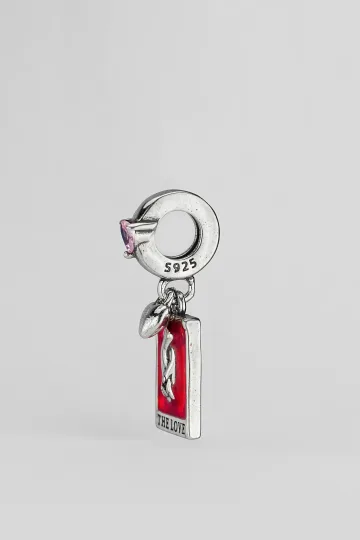
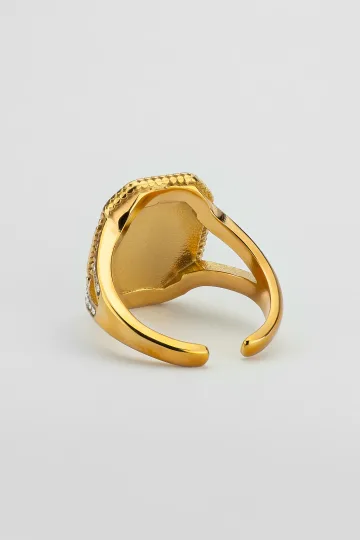
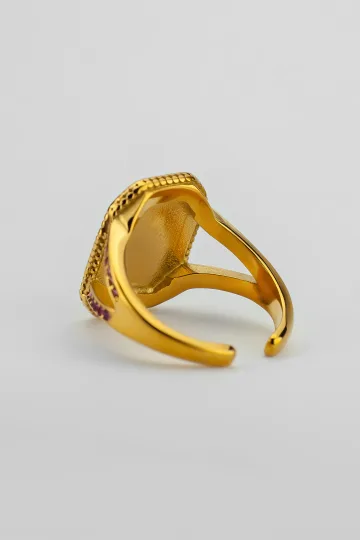
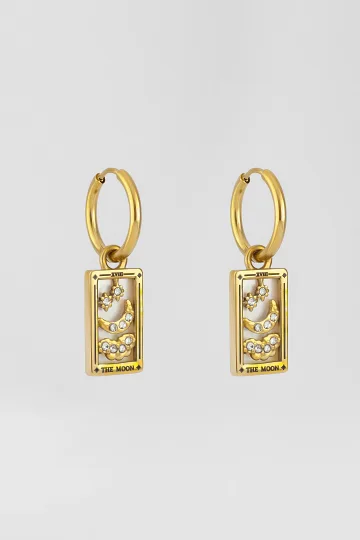
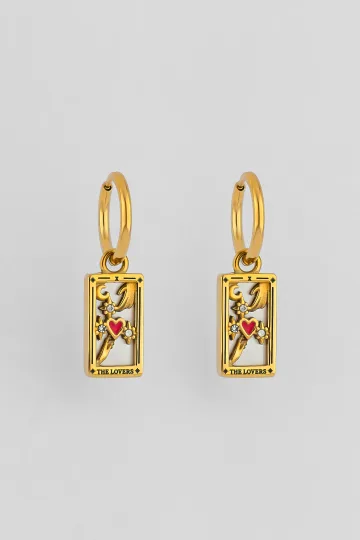
Wear the symbol, don't just read about it. These are in stock:





Within the deck there are numerical pairs. Arcana IV and Arcana XIII, Death (4 + 13 = 17, digits summing to 8 again). The Emperor's relationships with other numerical correspondences open additional layers of meaning for those working the system deeply.
The Emperor's counterpart in the deck is the Fool. Zero against four. Freedom without limits against order without exceptions. The Fool walks eyes closed toward the cliff edge, and that is the Fool's strength: not-knowing as a form of trust in the world. Arcana IV does the opposite. It knows everything about the cliff edge and therefore builds the railing. A sophisticated reading of a spread often lives in the tension between these two: how ready are you to accept structure, and how much does it constrain you?
Understanding the card's position in the system matters not for academic knowledge but for accurate reading. Arcana IV beside Arcana 0 in the same spread is a literal question: build or jump? Beside Arcana 3, it asks whether form has displaced content.
The Emperor Through the Centuries
The image of Arcana IV has travelled six hundred years. Each century added or removed layers. Working through the iconographic history is worth it precisely because beneath the stylistic accumulation, the same core stays constant.
Visconti-Sforza, 15th Century
Among the oldest surviving tarot decks, the Visconti-Sforza was created around 1450 for the Milanese court. The Emperor in it looks like a real monarch: rich garments, a staff of authority, a shield with the imperial eagle. The image deliberately references specific historical figures -- in particular the Holy Roman Emperor. The card was a prestige object, not a divination tool, and the iconography was built accordingly: recognisable, ceremonial, without ambiguity.
In one of the early variants of the deck, the Visconti di Modrone, there is a reference to Emperor Sigismund, who died in 1437. He is depicted with a fan-shaped hat rather than the standard crown, which is atypical for later versions of the card. These cards were made on parchment and decorated with gold leaf -- they were literally jewellery in card form.
The defining symbol of this era is the eagle on the shield. The double-headed eagle of the Holy Roman Empire gave the viewer instant information: what you are looking at is the highest level of secular authority, nothing ranks above it. The legitimacy of Arcana IV in the Visconti-Sforza was built on heraldic precision.
Marseille Tarot, 17th Century
In the Marseille tradition, L'Empereur becomes more heraldic. The figure sits sideways or at three-quarters angle. Legs crossed, which became a characteristic detail of this tradition and carried into many subsequent decks. Eagle on the shield, cross-shaped scepter, mantle. The image retains monarchical solemnity but becomes more stylised, closer to a heraldic emblem than a living portrait.
The Marseille version exerted enormous influence on French card-reading culture. The first systematic texts on tarot in the 18th century came out of this tradition. When Antoine Court de Gebelin wrote his essay on the supposed Egyptian origins of tarot in 1781 -- a hypothesis that was wrong but enormously influential -- he drew on Marseille imagery. So L'Empereur acquired a pseudo-Egyptian patina, even though there is nothing Egyptian in the card itself.
An important detail of the Marseille tradition: the scepter takes the form of a Lorraine or simple heraldic cross, not an ankh. This is purely European monarchical iconography without Egyptian elements. The ankh would only appear with Waite.
Rider-Waite-Smith, 1909
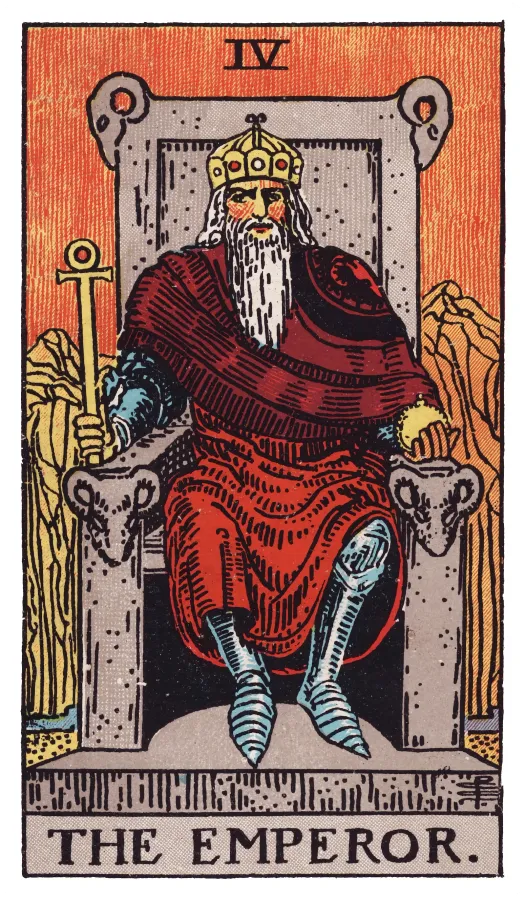
The Rider-Waite-Smith deck, created by Pamela Colman Smith under the direction of Arthur Edward Waite, transformed the visual language of tarot. The Emperor's iconography became deeper and denser with symbols. This version became the standard, and when people talk about the symbolism of the card, they mean this one.
Waite was a member of the Hermetic Order of the Golden Dawn and brought the system's occult correspondences into the deck. Each Major Arcana card was assigned an astrological symbol, an element, a path on the Kabbalistic Tree of Sefirot. Arcana IV received Aries and Mars. Smith, an artist with sharp visual intelligence, embodied these correspondences in details: the rams appeared specifically as zodiacal symbols, the mountains as Martian terrain, the scarlet colour as the colour of the planet.
Worth noting: Smith changed the traditional pose. In the Marseille tradition Arcana IV sits with crossed legs turned slightly sideways. In Smith's version, the Emperor faces the viewer directly or nearly so. This change is significant: Waite-Smith's Arcana IV meets your gaze. He doesn't look away, doesn't look sideways. He accepts direct contact.
Since 1909 the Rider-Waite-Smith deck has been reprinted hundreds of times, translated into dozens of languages, adapted into thousands of variations. Feminist decks, gothic decks, animal decks, astronomical decks. But in most of them Arcana IV is recognisable: throne, rigidity, red, mountains, scepter.
Crowley and the Book of Thoth: Aries at the Centre
Aleister Crowley and the artist Frieda Harris created the Thoth deck from 1938 to 1943. Their Emperor differs from Waite fundamentally. Where Waite's Arcana IV sits frontally and statically, Crowley's Emperor figure floats or occupies an active position. The emphasis shifts to Aries as the sign of spring initiation.
In the Book of Thoth, Crowley writes about Arcana IV as the principle of establishing power through action rather than through inheritance. His Emperor acts -- he does not simply reign. This is the distinction between two interpretations of the same archetype: Waite shows power as established form, Crowley as living initiative.
Harris's geometric style, based on projective geometry, gave the card an almost mathematical rigour. Her Emperor is surrounded by dynamic lines, not static forms. The red and Aries symbols are preserved, but the character of the energy is different: not a wise ruler on a throne, but a pioneer establishing rules in the act of moving forward.
A signet lives on the index finger, not the pinky. Leave the pinky to men with nothing to hold.
What to Wear Emperor Jewellery With
Over years of working with symbolic pieces I have built the Emperor look dozens of times: signets, crowns, shield pendants, ankh crosses. Here are the questions I hear most often at a fitting.
Where do I start if I want Emperor symbolism? I suggest taking one strong piece and building the look around it. A signet, a shield pendant or a crown on a chain, but only one. Put on a crown, a sword and a signet at once and the force scatters into details. I recommend choosing the symbol closest to your role and wearing it consistently.
How do I wear it every day? For everyday I choose dark metal without excess shine: blackened steel, matte gold, oxidised silver. A signet settles onto a plain shirt and dense cotton, a shield pendant slips under the collar on a short chain. The quieter the fabric, the more the symbol shows.
And for the office and a business look? This is where the Emperor is at home. I recommend a strict suit, monochrome, graphic lines. A signet on the index or middle finger, a pendant under the jacket, a bracelet in blackened steel. I like to keep the metals in one family: yellow gold with warm fabrics, silver and steel with grey and blue.
How do I build an evening look? In the evening the symbol moves from subtext to statement. I choose a crown on an open neck or a larger signet, and add a red stone, ruby or garnet, against dark fabric. Wine, black and deep blue light up both the stone and the metal. One accent up top, the rest kept low.
Which metal and stone suit this symbolism? For the character of the card I recommend red gold or ruby: a Martian, commanding code. Garnet gives the same deep red for less. If you prefer strictness without colour, I suggest black onyx or blackened steel. I do not advise soft, glossy finishes for the Emperor, they argue with its character.

Turn on your camera, pick earrings, a pendant or a ring, and see the piece on yourself in real time.
Switch items in one tap.
Everything runs in your browser: no photo or video is ever uploaded.
Rider-Waite-Smith Iconography: Every Element
The card reads dense: every object carries meaning. Here is the breakdown, layer by layer.
The Stone Throne with Four Ram Heads
The throne is carved from stone. Not wood, not soft, not upholstered. Stone means permanence, an inability to be shifted, the solidity of foundation. The Emperor's power is not temporary or accidental: it is structure written into bedrock.
Four ram heads decorate the throne: one on each armrest and two more on the top of the back. Exactly four, not three or five. The four here is not coincidental: it is the number of the card, the number of stability, the four cardinal directions. The ram, the zodiacal Aries, repeats four times as though the throne is built from the sign of Aries itself. The connection to the element of Fire and the planet Mars is written directly into the seat's construction. Mars, god of war, rules the first sign of the zodiac. Aries opens the year, first, leading, pioneering. The ram as a symbol of fearless pathfinding. For more on the zodiacal sign and its jewelry, see the article on Aries zodiac sign and jewelry.
Armour Beneath the Scarlet Robe
Beneath the rich red mantle, battle armour is concealed. This is not decorative. Waite put a specific meaning in it: the Emperor is always ready for defence. External pageantry does not cancel readiness for combat. This is a man who doesn't take the armour off even at a formal reception.
The armour also points to vulnerability that has been deliberately protected. Beneath the metal there is a body, there is a person. But access to it is regulated. The Emperor's emotional closure, legible in the card, is not cruelty -- it is a conscious boundary.
The shield as a symbol of protection and its meaning in jewelry is explored in depth in the article on the shield and its symbolism.
The Ankh-Scepter and the Orb
In the Emperor's right hand is a scepter in the form of an ankh, sometimes interpreted as a T-shaped staff. The Egyptian symbol of life in the hand of a ruler means power over life -- not in a cruel sense, but in the sense of a lawmaker on whom the order of existence depends. The ankh was an attribute of pharaohs in precisely this register. It doesn't kill; it sets the conditions.
In the left hand, the orb. Orbis terrarum, the globe of the earth, the traditional symbol of universal dominion. The Emperor holds life in one hand and the world in the other. The concentration of force is complete.
The sword as a symbol of power and justice, often appearing alongside the Emperor's image, is examined in detail in the article on the sword in jewelry.
The Long Beard as Jupiter's Marker
The white or grey beard refers to wisdom accumulated over years. This is not a young commander, not a prince on horseback. This is a man who has already been through wars, built a state, survived mistakes. His authority rests on experience, not primarily on lineage.
The beard as a marker of maturity appears throughout the iconography of power. Assyrian kings were depicted with combed, dressed beards as a sign of status. In Egyptian tradition, pharaohs wore ceremonial false beards -- even women in the pharaoh's role. Zeus, Poseidon, Odin, Jupiter in Roman sculpture are all depicted bearded as an attribute of supreme power and wisdom. Arcana IV is inscribed in this long tradition. The Emperor's beard is literally an iconographic citation from all of these images simultaneously.
The Scarlet Colour
Red robe, red garments under the armour. In European tradition red meant royal power, passion, blood, Mars. For the Emperor, red is both the colour of his ruling planet and the colour of highest status. In medieval textiles, scarlet was expensive, produced from rare dyes. Only those permitted by law and wealth could wear it.
The Mountains Behind Him
The background of the card: stone mountains. They are not decorative. Mountains in iconography mean an insurmountable obstacle for the enemy and a reliable rear for the one familiar with them. This is a natural fortress supporting the throne. The mountains, like the stone throne, also speak to immutability. They don't grow or melt with the seasons. They simply are.
The Emperor's horizon is closed and firm. Unlike the Fool, who has open sky and a cliff's edge at his back, the Emperor looks out from an entrenched position.
Zeus, Odin, Solomon, Charlemagne: Four Archetypes of the Emperor
Arcana IV was not invented from nothing. It condenses four fundamentally different historical and mythological types of supreme power. Breaking down each one separately matters because they are not synonyms -- each adds its own layer to what the card says about leadership.
Zeus: Power Through Supremacy
Zeus in Greek mythology did not take power by birth but through struggle. He overthrew his own father Cronus, freed his brothers and sisters, and divided the world with Poseidon and Hades. His authority rests on force, fear, and respect. His attributes -- the eagle as messenger and the thunderbolt as absolute weapon -- symbolise dominion over the sky and over life itself.
Zeus is wilful. He is fair by nature but breaks his own rules when it suits him. This is his fundamental distinction from the ideal Emperor of tarot. The card assumes that Arcana IV is subject to its own law; Zeus stands above the law. Nevertheless, the image of the ruler of the gods -- bearded, with his eagle -- directly influenced Western iconography of supreme authority, from which the image of the card emerged.
In jewellery: the eagle as Zeus's attribute became the primary heraldic symbol of empires, from Rome to the Holy Roman Empire, and appears on the earliest tarot cards as a direct reference to this tradition.
Odin: Power Through Knowledge
The Norse Odin builds power in a fundamentally different way from Zeus. He is a ruler, but his primary argument is not force -- it is knowledge. Odin sacrificed himself, hanging for nine days on Yggdrasil, the world tree, pierced by his own spear, to discover the secret of the runes. He gave up an eye to drink from Mimir's well and receive wisdom of the world's workings.
Odin is constantly in motion. He travels incognito, learning, accumulating knowledge. His raven retinue -- Huginn (Thought) and Muninn (Memory) -- flies across the whole world and reports everything back. This is the image of Arcana IV in its wise aspect: power that rests on the sword and on understanding alike. Odin's beard, his traveller's cloak, his single-eyed piercing gaze -- all of it resonated in the image of the grey-bearded ruler of tarot.
The distinction from Zeus is fundamental. Zeus knows he is stronger than everyone. Odin knows there are things stronger than him, and so he never stops learning. This makes Odin a more complex embodiment of the Arcana IV archetype.
Solomon: Power Through Law
The biblical King Solomon was not famous for military victories. His father David fought; Solomon built: the Temple in Jerusalem, a system of trade, diplomatic alliances. His power was legislative and administrative. The famous Judgment of Solomon -- when he proposed cutting a child in two to determine the true mother -- is an illustration not of cruelty but of impartial wisdom. The true mother refused the child to save its life.
Solomon was also a master of symbolic thinking. In Kabbalistic tradition his Keys, texts on magic and spirits, became classics of occult literature. This directly connects Solomon's image to the Kabbalistic dimension of Arcana IV discussed below.
In jewellery, Solomon appears through the Seal of Solomon, the six-pointed star, one of the most recognised heraldic and magical symbols. But more importantly: Solomon as archetype shows that the Emperor's power can rest entirely on wisdom and law, without the sword.
Charlemagne: Power Through Organization
A historical figure frequently cited by tarot researchers. Charlemagne (742-814), king of the Franks and the first Western emperor since Rome, created what historians call the Carolingian Renaissance: a management system, unified legislation, mandatory education for clergy, standardised writing. He built through military force and through administrative structure alike.
His portrait by Albrecht Durer (around 1512), the famous depiction in regalia with orb and sword, is visually close enough to Arcana IV's iconography that researchers suggest a direct influence. In Charlemagne's hands: orb and sword; in the tarot Emperor's: orb and ankh-scepter. Scarlet robes, crown, direct gaze.
Charlemagne as archetype highlights the practical dimension of Arcana IV: not conquest, but organisation. Not victory, but what comes after it. How to hold, how to arrange, how to make it functional. That is the question the card asks.
The Emperor and Aries: The Astrological Correspondence in Detail
In Waite's system, Arcana IV corresponds to the sign of Aries. The first zodiacal sign, cardinal Fire, ruled by Mars. This connection explains a great deal of the iconography and is worth examining closely.
The element of Fire gives the card its fundamental temperament. Fire doesn't tolerate stopping -- it either burns or goes out. Arcana IV in the fire dimension means power as continuous action, not as static status. The Emperor sits on his throne, but his energy is not passive. He is making decisions constantly.
The masculine, diurnal sign of Aries in astrological tradition is associated with initiative, directness, and willingness to act first. Aries doesn't wait for the right moment -- it creates the moment. This distinguishes it from the other cardinal signs: Cancer initiates cautiously, Libra initiates through partnership, Capricorn initiates strategically. Aries initiates directly. That's why it comes first in the zodiac.
Mars as ruler adds martial quality and directness. The planet of war and action. A Martian person doesn't flinch at the decisive moment. He can plan and strategize, but when the time to act arrives, he acts without delay. The card's scarlet colour is the colour of the planet: red Mars is visible in the night sky as a red star. The mountains at the Emperor's back are also a Martian image: the planet with its canyons, cliffs, severe terrain.
In astrology, Mars in Aries is said to be in domicile -- the strongest position. Its qualities express themselves without obstruction. Arcana IV is literally the image of Mars in domicile: full strength, no compromises with its own nature.
The first sign of the zodiac carries additional weight: Aries begins the zodiacal year. In the Northern Hemisphere this is the spring equinox, the moment when darkness yields to light, when the earth emerges from winter. Every new year begins under Aries, every new venture, opening, initiative. So the rams on the Emperor's throne are not merely a zodiacal sign -- they are a symbol of every beginning, every moment when someone takes responsibility for the first step.
The four ram heads on the throne echo the number four in another register: the four cardinal signs of the zodiac (Aries, Cancer, Libra, Capricorn) govern the four key turning-points of the year. Arcana IV with its four rams literally occupies a position at the center of this coordinate system. It is the card of the turning point, the juncture at which the decision about direction of travel is made. More on the sign and how to wear it in the article on Aries zodiac jewelry.
Customer reviews
Zevira is a real jewellery shop. Genuine payments, deliveries and customer thank-yous.
🥰🥰🥰 gracias

Ok, ¡gracias! 🙂

The Emperor in Kabbalah: Path Heh, the Window, the Opening
In the Kabbalistic system Waite embedded in tarot, each Major Arcana corresponds to a path on the Tree of Life and to a letter of the Hebrew alphabet. Arcana IV is connected to the letter Heh (ה) and to the path between the sephira Chokhmah (wisdom) and the sephira Binah (understanding).
The letter Heh literally means "window." This is a small detail with large symbolic weight. A window is neither a wall nor a door. A wall seals, a door opens fully. A window allows seeing from outside to inside and inside to outside, while remaining a frame. It gives light and sight, but doesn't cancel the boundary.
This is a precise metaphor for Arcana IV. The Emperor is not fully open like the Fool. He is not fully sealed like stone. He sees the world through the window of his understanding and experience. His boundary is structured, not arbitrary.
The path of Heh connects Chokhmah -- celestial wisdom, the initial impulse of understanding -- to Binah, structuring intellect, the capacity to give form to what has been understood. This is a direct description of Arcana IV's function: take wisdom and give it structure. Understand what is right, and build the system in which that rightness functions in practice.
In the Golden Dawn correspondence system Waite drew on, the path of Heh is also connected to the element of Fire and to Aries itself. Everything converges to one point: Arcana IV is the archetype of organising force that converts understanding into order.
An additional Kabbalistic layer: Chokhmah and Binah together are called the "Father and Mother" pair in Kabbalah. Chokhmah is the masculine principle of the initial emission of wisdom. Binah is the feminine principle that receives and forms. The path of Heh runs between them. Arcana IV literally stands on the path connecting the masculine and feminine principles of wisdom. This explains its connection to Arcana 3, the Empress: they are not merely adjacent in numerical order, they are Kabbalistically joined through this path.
Arcana IV Through Jung: the Father Archetype and Its Shadow
Carl Gustav Jung did not write specifically about tarot, but his concept of the archetypes of the collective unconscious provides a direct tool for understanding Arcana IV. Jungian psychology reads the card through the archetype of the Father and through the concept of the Shadow.
The Father archetype in the Jungian system is not biological fatherhood. It is the structuring principle in the psyche -- what establishes rules, boundaries, form. In its positive aspect, the father-archetype gives security: I know the rules, I understand the space I exist in. This is what allows risk and initiative, because there is a reliable base.
Robert Moore and Douglas Gillette, in their work on masculine psychology, describe four archetypes of mature masculinity: King, Warrior, Magician, and Lover. Arcana IV corresponds to the King. The mature King in this system does not dominate for domination's sake. He creates space in which others can develop. His power serves the kingdom, not himself.
But every archetype has a Shadow -- an unintegrated, immature aspect. The King has two shadows. The first is the Tyrant: power for power's sake, control as an end in itself, inability to delegate, fear of losing position. The Tyrant doesn't build -- he holds. The second shadow is the Weakling: refusal of responsibility, inability to make decisions, flight from the role. These are opposites, but both are immature aspects of the same archetype.
In readings, the reversed Arcana IV almost always indicates one of these shadows. Either the Tyrant who has strangled everything around him, or the Weakling who has left the field. The context of the surrounding cards helps determine which shadow is active.
Structure versus tyranny, protection versus control -- these are not abstract concepts. The difference comes down to one question: for whom does the power function? If for those it protects, it is the King. If only for itself, it is the Tyrant. Arcana IV in the upright position is a reminder: power is a tool in service to those for whose sake it exists.
Upload a photo of your pet, someone you love, or an object. We'll build a 3D model and hand-cast it in pewter.




The Crown as Jewellery Motif Through the Centuries
The crown on the Emperor's head is one of the most recognisable symbols of power in human history, and its journey through jewellery is worth examining closely.
The Crown of Saint Edward, the centerpiece of the British Crown Jewels, is one of the most symbolically loaded royal objects in the Western world. Recreated for Charles II's coronation in 1661, it is the crown used at every coronation since and was placed on King Charles III's head in 2023. Solid gold, set with over two thousand gemstones, weighing nearly five pounds. It is never worn outside of coronation -- it exists only for that one purpose. A crown whose weight marks the gravity of the moment it is used for.
Charlemagne's crown, the Imperial Crown of the Holy Roman Empire, dates to the 10th century and was used in coronations of Holy Roman Emperors for over eight centuries. Its eight sides reference the Heavenly Jerusalem described in the Book of Revelation -- octagonal, complete. The iconography makes the political claim explicit: this emperor rules by divine mandate, his authority the earthly projection of a heavenly order.
The miniature crowns in contemporary jewellery trace back to the Victorian tradition of the 19th century. Queen Victoria actively used the crown motif in court jewellery, which generated an entire aesthetic. Small gold crowns as pendants, as elements of tiaras, as earrings appeared in an era when monarchical symbolism became accessible beyond monarchs themselves.
Today a crown in jewelry is not a claim of privilege but a statement of inner status. The person who wears a crown says: I know my position. The full history and meaning of the crown as symbol is in the article on crown meaning in jewelry.
The Shield in Heraldry and Jewellery
On the Emperor's shield in the Marseille tradition the eagle is depicted -- in the Visconti-Sforza, the heraldic eagle of the Holy Roman Empire. The shield is not just protection: it is an identifier. On the battlefield, shields told friend from foe, and through shields family lineage was transmitted.
In heraldry, the shape of the shield carries meaning no less than its contents. The Norman shield used in the 11th and 12th centuries is an elongated triangle tapering to a point, reaching almost to the ground. It gave maximum coverage to a foot soldier. In jewellery this form is associated with the earliest knightly period -- the Crusades, the image of the paladin.
The medieval heraldic shield of the 13th and 14th centuries became more compact, square at the top with a figured lower edge. This is the shape used in most modern coats of arms and heraldic jewellery. It reads universally as a shield, requiring no additional context.
The Baroque shield of the 17th and 18th centuries acquired decorative curves along its edges, an ornamental character. This is no longer a combat object but a heraldic frame. In jewellery, the Baroque shield is a pendant or brooch with a monogram or device -- ceremonial identification, not battlefield function.
In contemporary jewelry the shield retains its semantics of protection and absorbing blows. A shield pendant is worn by people for whom protection is part of professional or personal identity: military, lawyers, doctors, parents. The full history of the symbol is in the article on shield meaning and symbolism.





The Sword in Jewellery: Mastery and Power
The sword is not depicted directly in the Emperor's card, but it is inseparable from the semantics of Arcana IV. It is the instrument of final decisions, the weapon with the most developed symbolic system of any.
The medieval sword -- a long straight blade with a cruciform guard -- was a weapon and a sacred object at once. The cross-shaped hilt was directly linked to the Christian cross, and many medieval swords bore names: Excalibur, Durandal, Gram. A sword with a name is a personality, an extension of the warrior's will. In jewellery the medieval sword conveys the idea of justice, of clear demarcation between right and wrong.
The rapier of the Renaissance and Baroque is a different archetype. Thin, swift, designed for the thrust rather than the cut. The rapier is the weapon of intellect: it demands speed, precision, and skill rather than brute strength. To wear a rapier was to belong to a class that settled disputes through ability, not muscle. In jewellery the slender sword-rapier is an image of sharp mind and precise decisions.
The katana of Japanese tradition carries an entirely different narrative. The curved blade was created with ritual attention to the process: the smith prayed, underwent purification, observed fasting. The sword contains the soul of its maker. As jewellery the katana is a symbol of discipline and craft as spiritual practice -- the Emperor in his samurai dimension: order not as external imposition but as internal cultivation.
In contemporary jewelry the sword remains one of the most articulate symbols. The full breakdown of each type and its meaning is in the article on the sword as a jewelry symbol.
The Signet Ring: History of the Men's Ring from Rome to the 20th Century
The signet ring is perhaps the most direct embodiment of Arcana IV in jewellery. Its history intersects directly with the history of power, law, and identity.
In ancient Rome the signet ring was a legal instrument. Cicero wore a ring with a Minerva intaglio and used its impression to authenticate official documents and letters. Without the seal, a letter had no legal standing. The signet ring was literally a component of the power system: without it, a person could not act officially. To lose the ring was to lose one's legal identity.
Julius Caesar, according to Suetonius, wore a ring with a Venus intaglio -- Venus being the progenitor of the Julian line. This was simultaneously a family symbol and a political statement: I descend from a goddess, my power is consecrated. Octavian Augustus changed the image on his ring three times during his lifetime, and each change was a politically significant gesture.
In medieval Europe the signet ring remained an attribute of the nobility. It was used to seal letters to kings and to issue papal bulls. Cardinals' rings, bishops' rings, the papal ring -- all served as official authentication instruments. When a pope died, his Fisherman's Ring was ceremonially destroyed to prevent document forgery.
In Victorian England the father's signet became family tradition. A prosperous father commissioned a ring with the family arms or monogram and passed it to his son upon reaching adulthood. This was a rite of initiation: you now bear the family name, you are responsible for it. Rings of this period are distinguished by high craftsmanship and often carry mottos.
The contemporary signet retains all of this semantics. A person choosing a substantial ring with a monogram or heraldic motif draws on three thousand years of this tradition. Whether or not they have a family crest is beside the point: the form and weight of the ring carry the idea.
The Archetypal Meaning: What Arcana IV Carries
The card unfolds across several semantic layers.
Structure and Order
The Emperor's primary meaning is the ability to organise chaos. This is a person who sees disorder and builds a system from it. Not because they want to control everything, but because they understand that without structure nothing works. Projects collapse, teams dissolve, cities burn.
Structure in the context of the card is not a synonym for bureaucracy. It is rules that help rather than obstruct. A nation's constitution, a military unit's code of conduct, a daily schedule that allows everything important to get done. Discipline in service to a goal.
Protection and Fatherhood
The second layer is the father archetype. Not father in the biological sense but the father-protector: the one who stands between danger and those he shields. This is a role that any person can occupy regardless of gender.
The Emperor's guardianship is not warm and soft, the way the Empress's is. It is firm. He does not embrace -- he builds walls. The distinction is real and it does not make one approach superior: different situations require different things.
Leadership Through Responsibility
The Emperor is often misread as a card about the desire to dominate. That is a mistake. The card is about accepting responsibility. Dominance is about standing above. Leadership is about carrying those who stand alongside.
When Arcana IV appears in a spread, it asks: are you ready to take responsibility for the outcome? For the team? For the decision? It is an uncomfortable question because responsibility is heavy.
Boundary and Law
The Fourth Arcana speaks of the right to establish rules. Of the fact that order does not exist by itself -- someone maintains it. This might be a personal boundary a person has drawn and defends. It might be an organisation's policy. It might be a country's constitution. In any case, someone wrote it, someone holds it.
The boundary in a psychological sense is one of the hardest things for many people. Saying no is not aggression -- it is architecture. Arcana IV is literally about this: the throne stands on solid foundation, mountains at the back, a defended position all around. For this to function, someone made the decision to occupy that position and not be moved.
Leave your email, we'll send your discount code. No spam, unsubscribe anytime.
The code arrives by email, valid on your first order.
Upright and Reversed
Upright: When Structure Works
In the upright position Arcana IV means mature, confident leadership. The person knows their rights and responsibilities. Makes decisions without hesitation. Creates an environment in which others can grow, because the rules are clear and stable.
In career readings this is the arrival of a strong manager, a step into a leadership position, or a moment that calls for a firm decision. In personal life it is a call to establish boundaries, take responsibility for a situation, stop waiting and start building. In relationships it is stability and security -- a partner to lean on.
In financial readings the upright Arcana IV speaks of a well-built system: budget in place, investments on plan, assets with a long-term horizon. Not speculation, not gambling, but sequential construction. In health questions it is the discipline of a routine: nutrition, training, sleep. Boring? Yes. Does it work? Yes.
Upright Arcana IV in the "what will help" position is a direct instruction: take control. Stop waiting for external conditions to shift. Organize what you have. Start small, but start systematically.
Reversed: When Structure Oppresses
The reversed Emperor shows the shadow of leadership. Power for power's sake. Rigidity without purpose. Bureaucracy that has become an end in itself. A person who controls from fear of losing control.
This can also mean external pressure: a domineering boss who crushes initiative. A father who suffocated independence. A system that doesn't allow room to move.
Or the opposite: a total absence of structure where it is necessary. A leader who accepts no responsibility. Chaos instead of order -- not because the Fool is open to the new, but because the Emperor is exhausted and let go of the wheel.
The reversed Arcana IV asks: where in your life has power become coercion? Where has discipline become fear?
Important to note: the reversed Arcana IV does not always indicate something negative. Sometimes it points to a structure that is too rigid and needs to give. An organisation where rules matter more than people. A family where order has swallowed warmth. In these contexts the card invites not more building but the removal of unnecessary walls.
Archetypal Parallels: from Mythology to Literature
Boromir and the Leader-Protector Archetype
In literary archetypes, Arcana IV often appears in the image of someone who takes on the weight of responsibility for others. Boromir in Tolkien's Lord of the Rings is an example of a complex Emperor: a protector, a leader, ready to die for his own. But the reversed shadow lives in him too -- the hunger for control, the willingness to justify questionable means by the goal. His tragedy is the tragedy of Arcana IV gone reversed.
Shakespearean Caesar
Caesar in Shakespeare's tragedy embodies the classic contradiction of Arcana IV. On one hand, a man who built an empire through discipline and organizational genius. On the other, Caesar cannot see how his power weighs on those around him, how his rise becomes a threat to the very republican system he once defended. His assassination on the Ides of March is the shadow of Arcana IV in action: the Tyrant who cannot be stopped by peaceful means.
King Lear
Shakespeare's Lear begins as Arcana IV at full strength and ends as its total collapse. Lear divides his kingdom by the wrong criterion -- whether a daughter loves him, rather than who is capable of protecting and governing. This is the Emperor's mistake: confusing the structure of power with personal attachment. The storm through which Lear passes is a direct metaphor for what happens when Arcana IV is reversed: chaos instead of order, madness instead of law.
Atticus Finch: the Father-Protector in American Literature
Harper Lee's Atticus Finch in To Kill a Mockingbird is one of American literature's most precise embodiments of the Emperor in his ideal dimension. A widowed father raising two children in Depression-era Alabama, a lawyer defending a Black man in a system rigged against him. He doesn't argue from weakness. He doesn't apologise for the inconvenience of his position. He builds walls -- not of stone, but of principle -- between his family and the violence of the world, and his children know: while Atticus stands there, something holds. This is Arcana IV as father-protector and as keeper of law simultaneously.
Don Vito Corleone: the Structural Father
Mario Puzo's Don Vito Corleone in The Godfather is the Emperor in a darker register -- not the ideal King but the patriarchal structure that fills the vacuum left by failed official institutions. He commands loyalty through protection offered in exchange for allegiance. The critical distinction: Vito does not rule for pure power, he builds a system. His tragedy is that the system he builds requires violence to maintain. He is the Emperor whose structure cannot survive transfer to the next generation -- a cautionary reading of Arcana IV about the limits of any order that rests on a single person's will rather than on law.
Gordon Gekko: the Fallen Emperor
Gordon Gekko in Oliver Stone's Wall Street (1987) is Arcana IV fully reversed: the Tyrant in his natural environment. His famous speech -- "Greed, for lack of a better word, is good" -- is the Emperor's voice stripped of any responsibility to the people inside the structure he controls. Gekko is pure acquisition wearing the costume of order. Structure as predation. The card shows clearly: a person can hold all the outward attributes of the Emperor (tailored suit, command of the room, absolute certainty) while embodying its shadow completely.
Logan Roy: Succession and the Patriarch Who Cannot Yield
HBO's Succession offers the most contemporary dissection of the Emperor's shadow in American culture. Logan Roy is a builder -- he created something real and large. But the same force that built the empire is precisely what makes succession impossible. He cannot delegate ultimate authority because the structure is not an institution; it is him. Every potential heir is sabotaged at the moment of true transfer. This is the Tyrant shadow of Arcana IV in its most specific American register: the self-made patriarch who confuses himself with the institution.
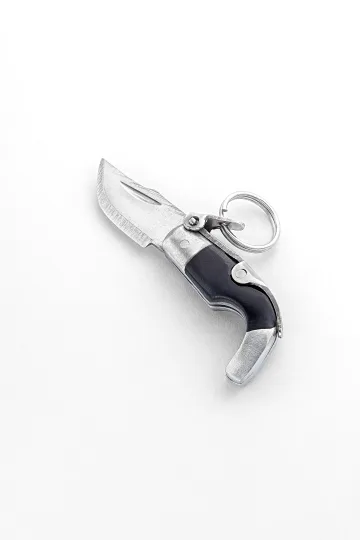
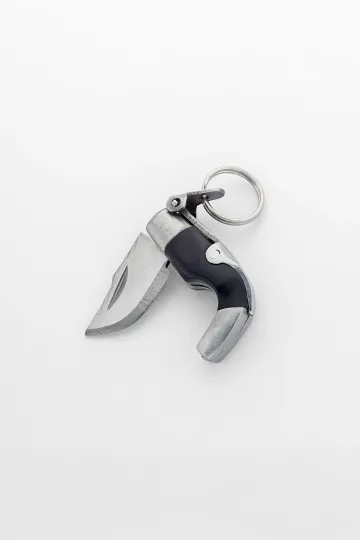
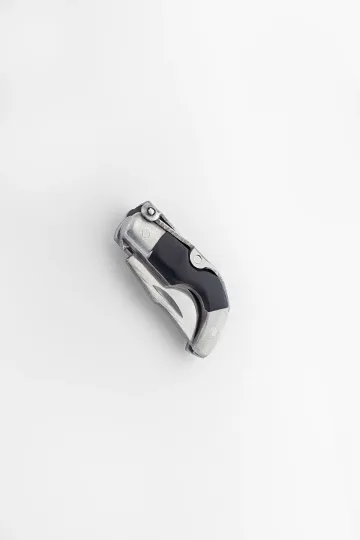
CAPAORA mini knife pendant
The 18th-century Spanish navaja in miniature: 40 mm of stainless steel, a real folding mechanism and a Palanquilla lock that clicks. An affordable gift to remember.
Authentic · Ships from Spain · 14-day returns
The Emperor in Spreads: Business, Military, Law, Fatherhood
Arcana IV appears in different contexts, and the specific domain shifts the emphasis of interpretation.
Business and Entrepreneurship
In business spreads, upright Arcana IV means a moment for structuring. If the business runs on intuition without systems, the card says: it is time to build processes. If there is already a team, Arcana IV asks: are the rules clear, is responsibility assigned, is the structure built so it functions without the founder present?
For entrepreneurs Arcana IV often appears in the "what is blocking" position: a system too rigid to adapt. Or the opposite, no system at all. Both situations require attention.
Military and Security Professions
In a military context Arcana IV is the archetype of the commander who accepts responsibility for the lives of the people under them. This is the heaviest weight the card carries. Here structure and discipline are not metaphors -- they are direct protection. A commander who fails to maintain order creates the chaos in which people die.
A military person with Arcana IV in their spread often stands before the question of the relationship between orders and conscience. The reversed card here is the commander executing an unjust order, or the commander who has surrendered authority to fear.
Law
For lawyers and judges Arcana IV in a spread is direct professional symbolism. Law as structure, justice as a form of protection, boundaries as the substance of the profession. Upright Arcana IV in a legal context speaks of a situation where the law is on the person's side, or where a correct decision requires firmness.
Reversed Arcana IV in a legal spread: the system working against the person, the law become an instrument of pressure rather than protection. An invitation to look for an exit outside standard procedure or to appeal to a higher authority.
Fatherhood
Perhaps the most personal context for Arcana IV. The card in the "what matters now" position in a family spread almost invariably speaks of one thing: structure is needed. Rules children understand. Boundaries that protect. Presence that feels like reliability, not control.
For fathers, particularly young ones, Arcana IV appears as a reminder of the difference between domination and protection. The father-as-Arcana-IV is not afraid of his children's disagreement. He establishes the rules and explains why they are what they are. This requires more effort than simply demanding obedience.
Emperor Card Combinations
Arcana IV in combination with other cards creates specific semantic situations worth reading as pairs, not separate messages.
The Empress-Emperor pair reads as the separation of two principles of being. The Empress, Arcana 3, embodies the natural, cyclical, nourishing. Arcana 4 embodies the made, legislative, architectural. Together they build the world: one generates life, the other creates the conditions in which that life takes form.
The Hierophant, Arcana 5, follows immediately after the Emperor. The Hierophant is also a figure of authority, but his power is spiritual and traditional. He holds not a scepter but a ritual staff. Between Arcana IV and Arcana V the distinction is between secular and ecclesiastical power. When both appear in sequence, the question is which type of order dominates in the person's life.
Arcana IV beside the Tower, Arcana XVI, means a threat to a rigid system. What seemed unshakeable is breaking apart. Sometimes this is necessary and inevitable: a structure that has outlived itself must fall.
Arcana IV beside Justice, Arcana XI, speaks of a system where rules and their application are aligned. The law exists on paper and in practice simultaneously. This may point to a legal situation, but more often to an internal question: do your actions correspond to your own principles?
Beside the Moon, Arcana XVIII, Arcana IV creates tension between rational control and the irrational, between what is visible and what is hidden.
With Arcana VI, the Lovers, Arcana IV raises the classic question of relationships: are love and structure compatible? Passion and rules? Practice shows: yes, if both people create the structure voluntarily.
Arcana IV beside the Chariot, Arcana VII, shows the difference between two types of leadership: the moving victor and the governing ruler. Often a question of life-cycle stage: is it time to transition from active building to managing what has already been created?
With Arcana XXI, the World, Arcana IV speaks of a structuring cycle completed. The system is built, it functions, it produces results. One of the most positive pairs for those building long-term projects.
Emperor Jewellery: Symbols That Carry the Arcana IV Meaning
This is the practical section. Which specific pieces carry the semantics of Arcana IV?
The Crown: Marker of the Summit
The crown on the Emperor's head is the apex of power iconography, one that appears in all cultures independently: from the Egyptian nemes headdress to the Gothic crown of the Holy Roman Empire. A piece with a crown is not a claim to monarchical ambition. It is a marker of inner status: I know my worth, I hold my position.
Crown pendants, crown rings, earrings with miniature crowns -- these are pieces for people who occupy leadership roles or are entering them. The full history and meaning of the crown as symbol is in the article on crown meaning in jewelry.
The Shield: Protection as Profession
The Emperor's shield, the armour beneath the robe, the defended rear of the mountains -- all of it is about the ability to hold a defensive line. A pendant in the form of a shield or with heraldic symbolism is worn by people for whom protecting others is part of their identity. Military, lawyers, doctors, security engineers, parents.
The shield in jewelry is no longer a weapon -- it is a symbol of responsibility. The person who wears it says: I take the hits. The full history of the symbol is in the article on shield meaning and symbolism.
The Sword: Decision Without Hesitation
The sword doesn't appear directly in the card, but in the tarot system it corresponds to the Swords suit, associated with intellect, decision, cutting away the unnecessary. For the Emperor the sword is the instrument of making decisions without dragging them out. It cuts doubts; it is sharp and final.
A sword pendant or ring suits those who work in fields that demand precision and readiness to make hard calls. The full breakdown of sword symbolism is in the article on the sword in jewelry.
Aries Symbolism: the Ram and the Pioneer
The ram on the throne, Aries as sign, Mars as planet. Pieces with Aries symbols -- the ram's head, the Tiwaz rune as a Martian symbol, the geometric T-shape -- carry the same energy: first, direct, without delay. These are pieces for people starting new projects, opening businesses, pioneering in their field. Everything on the sign and its jewelry is in the article on Aries zodiac jewelry.
Signet Rings
A separate conversation about signet rings. Historically the signet was an instrument of power: its impression sealed documents, verified identity, transferred inheritance. To wear a signet was to hold legal force. This is direct Emperor semantics.
The contemporary signet with a coat of arms, monogram, or substantial metal top preserves this meaning. It says: this person has a name, a history, a position. Heavy signets in gold or steel for men, more refined ones with ancestral symbolism for women.
Signet rings with a family coat of arms carry heraldic history. If there is no family crest, that is not a problem: contemporary jewellers create personalised signets with monograms, runic symbolism, geometric patterns. The substance is the same: identification through form.
Metal choice for an Arcana IV signet: yellow gold as a sign of traditional status, rose gold as a Martian colour, oxidised silver or blackened steel for a strict military code. Avoid soft and overly shiny finishes -- they contradict the character of the card.
Ankh Pendants
The ankh-scepter in the Emperor's hand. The Egyptian symbol of life entered the Western jewellery context in the 20th century and retains a dual meaning: both an appeal to ancient civilisation and to the idea of life-giving authority. An ankh pendant suits people who identify with the Emperor image: responsibility for others, decision-making, maintaining structure.
Red Gold and Rubies
The card's colour code: scarlet. In jewellery, rose gold (the copper alloy) and rubies carry the same colour signal. Mars, passion, energy, force. Rings and pendants in rose gold or with a ruby work as chromatic correspondence for people with Arcana IV qualities.
The ruby was historically the stone of kings. In the Burmese tradition it was called the "king of stones." In European medieval practice rubies were set in crowns and state regalia. Energetically, the ruby is associated with Mars and the Sun, with vital force and readiness to act. All of this maps directly onto Arcana IV.
Garnet is a more accessible relative of the ruby -- also Martian, dark red. For pieces with the Emperor's semantics without the crown-level price, garnet fits precisely.
If red stone is not the direction, black also aligns with Arcana IV. Black onyx, black spinel, black tourmaline. Austerity, containment, strength without display. This is the Emperor who doesn't wear the crown in public, but everyone understands who makes the decisions.
How to Wear Emperor Jewellery
Arcana IV symbolism calls for a specific approach to wearing. These are pieces with weight, and they function when treated accordingly.
One strong symbol. Arcana IV is about concentration of force, not diffusion. Wearing a crown, shield, sword, and signet simultaneously scatters the image. Choosing one key symbol and using it consistently aligns better with the card's character.
Metal without excessive shine. Matte and textured surfaces, oxidised silver, polished yellow gold in large forms, blackened steel. Small glittery pieces contradict the character of Arcana IV visually and in terms of feel.
Pairing with clothing. Pieces with Emperor symbolism work best in structured, architectural looks. A business suit, monochrome dressing, minimalist silhouettes. They are not excluded from everyday wear, but lose their edge when paired with soft, decorative pieces.
Men's format. A signet ring on the index or middle finger, not the pinky. A bracelet of dark metal or leather on the wrist, not a stack of thin bands. A pendant on a short or medium chain, under the shirt or at the open collar. A stud earring with the symbol, not a long drop.
Women's format. A crown pendant on a fine chain under a shirt. A strict signet on the index finger. A substantial metal bracelet on the wrist. Arcana IV pieces for women work in contrast: a deliberate, structural statement of position.
When to wear. Negotiations where you need to hold your ground. The first day in a new role. A court appearance. A dissertation defence. Your own birthday as a marker of maturity. Any moment that needs an internal anchor.
Send a friend a discount code, they save on their first order.
Who Emperor Jewellery Suits
Executives and managers. People who carry responsibility for organizations. They benefit from serious, status-appropriate symbolism: a signet, a crown, heavy metal. The piece works as an internal anchor -- a reminder of the role and its weight, not a public display.
Military and security professionals. Shield, sword, armour. The semantics of protection and discipline align directly with professional identity. A signet with a unit emblem, a shield pendant, a men's bracelet in oxidised steel.
Lawyers and judges. The sword of justice is not metaphor -- it is direct professional symbolism. Arcana IV in the aspect of law and justice. A lawyer wearing a sword pendant or signet carries a professional symbol.
Doctors and medical professionals. Not immediately obvious, but medicine is saturated with Arcana IV symbolism: protecting life, the structure of protocol, the discipline of decision-making in crisis. The ankh-scepter as the Emperor's attribute and the caduceus as a medical symbol are close relatives.
Fathers. Protector, builder, the one who holds the family's structure. Arcana IV pieces for fathers, especially at the moment of entering that role, carry precise meaning.
Women in leadership roles. Arcana IV is not tied to biological gender. A female executive, a female founder, a woman taking on structural responsibility, identifies with the Emperor as precisely as a man does. For women the symbolism often functions as an assertion: I don't need a soft image to lead.
Aries. The direct astrological correspondence. The rams on the throne are their symbols. Pieces with the ram, Aries symbols, or Martian red reflect zodiacal identity.
Entrepreneurs and founders. Starting a business is a literal enactment of Arcana IV: building structure from nothing, accepting full responsibility, establishing the rules.
People going through a leadership initiation. A dissertation defence, a promotion to director, the opening of a first business. An Arcana IV piece as a personal marker of transition. The piece you put on for significant moments, or wear every day as a reminder of the new role.
Emperor Jewellery as a Gift
The Emperor's symbolism hits precisely in several gift contexts.
A promotion or new leadership role. Any piece with power and responsibility symbolism: a signet, a crown pendant, a statement ring in dark metal. The message: you now carry this.
Completing professional education. A law degree, an MBA, a military commission. The transition from student to practitioner. The Emperor symbol says: you are now in the role. This is the strongest format for a graduation gift for someone entering a serious profession.
A man's milestone birthday. Particularly 40, 50, 60 -- ages when the Emperor's maturity has been accumulated. Complex symbolism wears better than simply attractive pieces. A piece with history and meaning gets worn for years; a decorative object goes in the drawer.
Father's Day. A direct reach into the card's semantics: protector, builder, the one who holds the family's structure. Particularly meaningful for someone who has recently become a father -- a precise designation of the role.
Coming through a crisis and reclaiming position. When someone has been through destruction and is rebuilding structure. The reversed Arcana has returned upright. A piece as a personal marker of restored strength.
Anniversary of a significant decision. One year after opening a business, one year after a career change, one year after a hard but correct choice. Arcana IV says: you held the structure, you stood your ground.
What to add with the gift: a small card with the symbolism explained. Not everyone knows tarot, and a direct explanation makes the gift more meaningful. A brief, substantive note about what Arcana IV represents turns the piece into a considered gesture.
The Emperor in Contemporary Culture
The Emperor's image from tarot has entered the visual language of contemporary culture more deeply than it appears.
In visual art and design, the image of a ruler on a stone throne appears regularly as a citation of Arcana IV in fantasy illustration, book covers, and video game concept art. RPG developers draw directly on the archetype: a ruler character with crown, mountains at the back, power symbolism.
In social media Arcana IV has become a marker for the aesthetics of strength and structure. Boards built around the Emperor image attract an audience that identifies with the leader-builder archetype. Visually the card often appears in men's "dark academia" and "old money" aesthetics: serious, dark, considered.
Notably, interest in Arcana IV online often spikes with cultural context. Periods of social instability increase interest in cards associated with structure and order. Arcana IV is searched in moments when people need an internal compass, not an external advisor.
For jewellery this means stable, not seasonal demand. The Emperor's symbols -- crown, shield, sword, signet ring -- remain relevant independent of trend cycles. These are archetypal images without an expiration date.
Frequently Asked Questions
What does Arcana IV mean in a spread for a man? Depending on context: the arrival of mature leadership, the need to accept responsibility, or a warning against excessive rigidity. The card is rarely neutral -- it always raises a question about the character of power in a person's life.
What does Arcana IV mean in a spread for a woman? Exactly the same. The archetype is not tied to gender. A woman who receives the Emperor in a spread receives the same question about structure, leadership, and responsibility in her own life.
Why rams specifically on the throne and not other animals? The rams are the zodiacal Aries, the sign corresponding to the card in Waite's system. Aries is ruled by Mars, the planet of activity, war, and initiative. The ram is first in the zodiacal cycle -- the pioneer. This maps onto the Emperor as the leader who goes first and sets the rules.
How is Arcana IV different from Arcana V, the Hierophant? Both are figures of authority but of different kinds. The Emperor is secular: his power rests on law, military force, state organisation. The Hierophant is spiritual: his power rests on tradition, ritual, religious hierarchy. The Emperor writes the constitution; the Hierophant maintains the doctrine.
How does Arcana IV work in a love reading? Stability and reliability as the foundation of the relationship. Or, reversed, control and pressure. A partner with Emperor qualities is a solid anchor but sometimes a source of tension due to unwillingness to be flexible.
Can you wear Emperor symbolism if you are not a leader? Yes. A piece with Emperor symbolism is not a declaration of office -- it is a call to an archetype within yourself. A student who takes responsibility for their choices, a mother who holds the family together, a freelancer building their discipline -- each of them is working with the energy of Arcana IV.
What is the difference between Arcana IV and the Chariot (Arcana VII) in the context of leadership? The Chariot is leadership in motion -- victory through will and concentration. It is the winner at the campaign's peak. Arcana IV is leadership in stability, after the victory: how to govern what has been won. The difference between a general on campaign and a ruler on a throne.
What does Arcana IV say in the context of finances? The card speaks of long-term construction, not quick returns. An investment horizon of ten years, not a bet on luck. Budget discipline, structured assets, sequential accumulation. If Arcana IV in the upright position appears in a financial spread, the message is almost always: build a system, don't look for a random opportunity.
What does Arcana IV mean in a career spread? Upright: a positive sign for the career. A strong manager arriving, organizational structure holding, a moment for a responsible decision. Reversed: a rigid, suppressive boss or a bureaucratic system that prevents movement.
Buying it as a gift? Each one arrives ready to give.
 A branded Zevira box and a little card come with every order.










Conclusion
Arcana IV is not about the fearsome king handing down commands. It is about the architect of order: the person who understands that without structure everything collapses and who takes on the responsibility of holding that structure. This is a heavy role. That is exactly why beneath the Emperor's scarlet robe, armour is concealed: the ceremonial appearance does not cancel the readiness to carry the weight.
For six centuries the card has preserved one image: a figure on a solid throne, mountains at the back, scepter in hand. Styles changed, decks changed, interpretations changed. The image held. There is something fundamental in it about how humans understand power: build, hold, protect.
Jewellery with Arcana IV symbolism means crowns, shields, swords, signets, ankhs, Aries symbols, stones in the red spectrum. It suits those who build, protect, lead, make decisions, and hold responsibility for others. These are pieces for people who are working, not performing.
Choosing them thoughtfully matters. The symbolism of Arcana IV carries a specific message, and that message should align with what the person wants to say to themselves. Not every day calls for Arcana IV at the throat. But there are days when exactly that is what is needed.
For other tarot cards and their jewelry, see the complete guide to major arcana meanings and the broader guide to tarot jewelry.
Sterling silver, gold, wedding rings, symbolic pieces, paired sets.
About Zevira
Zevira handcrafts jewellery in Albacete, Spain. The Emperor is the archetype of the leader and protector, and his symbolism (crown, shield, sword) is one of the strongest lines in our menswear collection and among women in leadership roles.
What you can find from us under the Emperor symbolism:
- Signet rings with engraved heraldry
- Crown pendants and heraldic motifs
- Shield pendants for those who build and protect
- Sword pendants and rings
- Aries zodiac pieces (corresponding to the Emperor)
Every piece is handcrafted by a master, with personal engraving available. We work with sterling silver 925 and 14-18K gold.