The Empress in Tarot: Meaning, History and Jewelry by Arcana III Symbols
Picture a friend eight months pregnant, moving through her garden in the early morning light. She's cutting ripe tomatoes, humming something under her breath, her cat winding around her ankles. There is no anxiety in her. No rushing. Only a deep sense of presence, a feeling that life is doing exactly what it should. That is The Empress in Tarot, minus the medieval gown and the throne replaced by a garden bench.
Or this: a gardener who spent April preparing beds, planting, watering, guarding seedlings from late frost, and now, late in July, stands in the middle of all that abundance and simply looks. Does nothing. Just looks. There is no passivity in that scene. There is earned fullness.
Arcana III is simpler and deeper than it first appears. It is a card about what happens when creative force finds a body. Not an idea in your head, not a plan on paper, but a living shoot already reaching toward the sun. In the structure of the tarot, The Empress stands between The High Priestess, who guards inward knowledge, and The Emperor, who builds outward order. She is the one who turns possibility into reality.
This card is several centuries old, and over that time its image changed: from a powerful sovereign of medieval courts to a mother-nature figure standing in a wheat field. Each layer added meaning without removing anything. Today The Empress remains one of the richest symbols in the deck, which is precisely why her imagery has long made its way into jewellery. This guide covers the card completely: history, iconography, archetypal meaning, and the specific symbols you can wear.
Arcana III in the Structure of the Deck
The Major Arcana run from 0 to 21, and the position of each card matters. The Fool (0) stands outside the count. The Magician (1) embodies will and active action. The High Priestess (2) guards secret knowledge and intuition. The Empress (3) comes third, and this is not accidental. In numerology, three represents synthesis: from one and two a third thing is born.
After the intuitive, hidden world of The High Priestess, The Empress brings energy outward. The High Priestess sits between the pillars of Solomon's Temple, behind a veil. She knows but stays silent. The Empress sits in a flowering meadow, in the open air, under the sun. She knows and acts. She does not think. She already creates.
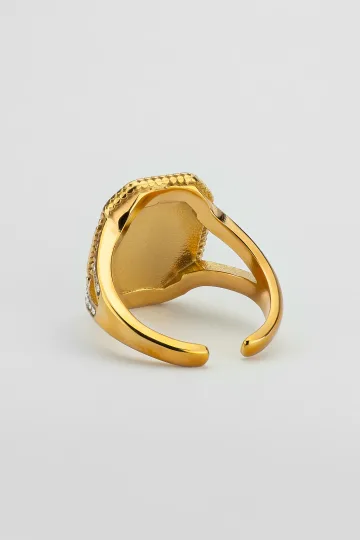
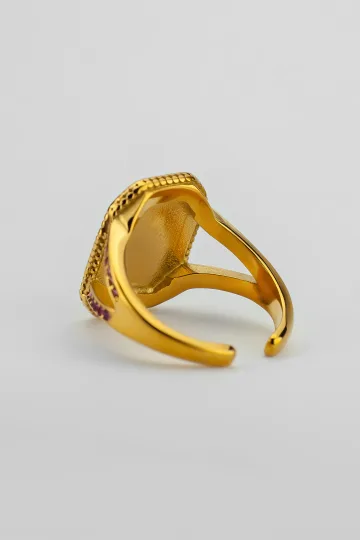
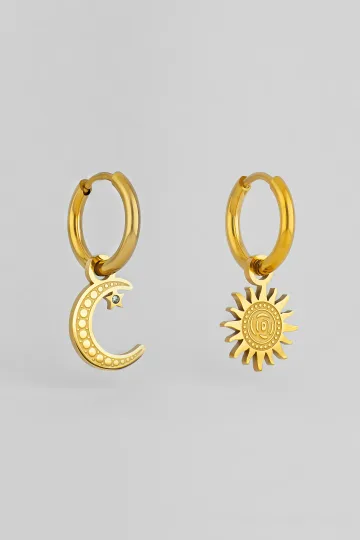
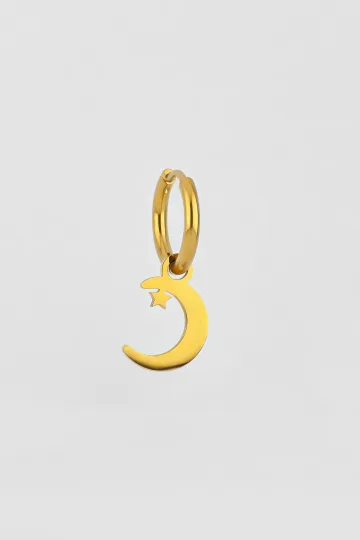
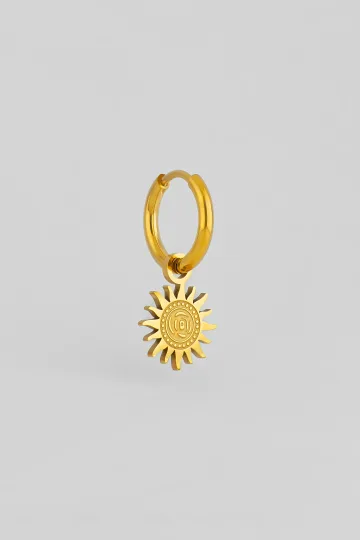
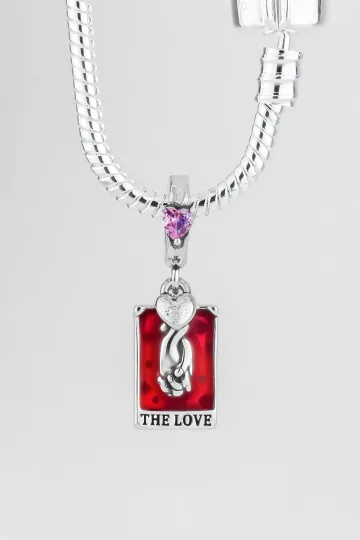
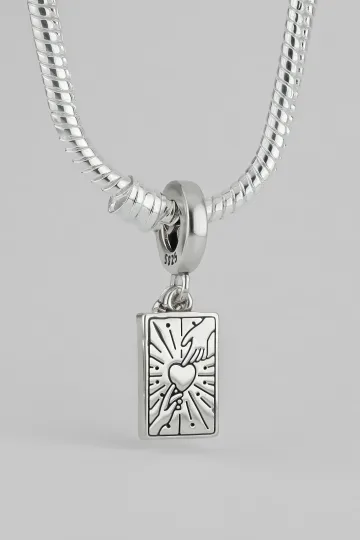
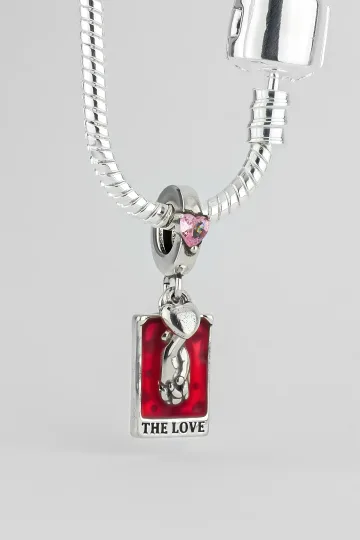
Wear the symbol, don't just read about it. These are in stock:


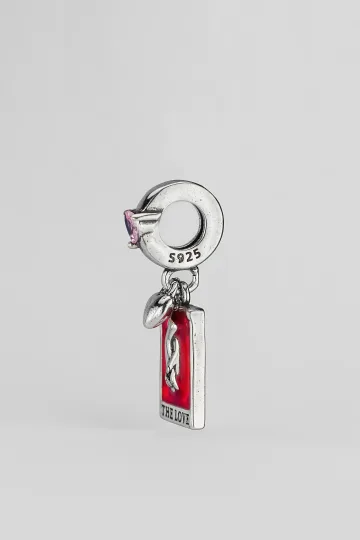
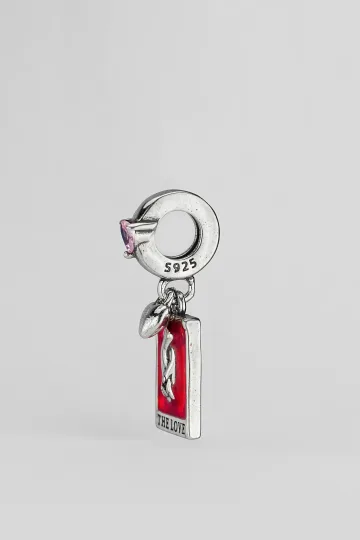
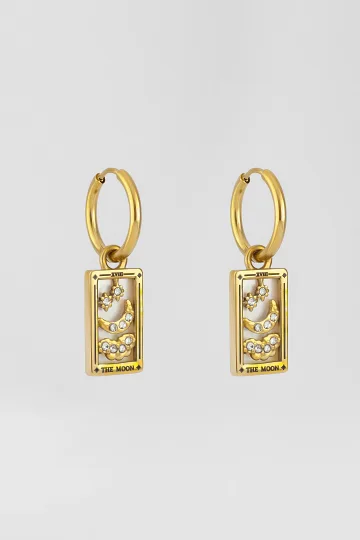


Three in the tarot also points to fertility in the widest sense: what was conceived now takes visible form. This explains why Arcana III is connected to pregnancy, creative projects, gardening, cooking, love, and abundance. Not because the card is magical, but because it describes the same principle in different contexts: care plus time equals result.
It matters that The Empress comes before The Emperor, not after. The structure The Emperor builds grows from the living foundation The Empress creates. Nature precedes architecture. The garden appears before the palace.
The full context of tarot symbols in jewelry is explored in Tarot Jewelry: What the Cards Mean and Why People Wear Them, and a detailed reading of neighboring arcana including The High Priestess and The Sun is in Tarot Card Meanings in Jewellery: The Sun, The Moon, and The Lovers Decoded.
The Empress Through the Centuries
The history of Arcana III is the story of a single image being reimagined in sequence, absorbing new cultural layers each time while never losing its core.
The Visconti-Sforza Deck and Bianca Maria
The oldest surviving tarot cards date to the mid-fifteenth century. The Duke of Milan, Filippo Maria Visconti, commissioned a series of card games that his son-in-law Francesco Sforza later expanded. These cards, known as the Visconti-Sforza deck, are held today in several collections, including the Pierpont Morgan Library in New York.
The figure believed to have inspired The Empress was Bianca Maria Visconti, Filippo's daughter and Francesco Sforza's wife. She was a real woman of enormous political influence: she governed Milan in her husband's absence, negotiated with ambassadors, and made strategic decisions. Her portraits confirm the resemblance to the card: a rich gown trimmed with fur, a crown, a scepter, a shield bearing a heraldic eagle. No suggestion of pregnancy. No fields of wheat. This is secular power, an earthly crown set against the heavenly authority of The Popess.
Early tarot was a tool for courtly games, and the card reflected real hierarchies of power. The Empress here is self-sufficient and formidable, with no man behind her and no child in her arms. Only a throne and a scepter.
This is an important detail: the idea of The Empress as a mother figure arrived only in the twentieth century. Before that, she was a state symbol, the embodiment of earthly power.
The Tarot de Marseille: L'Imperatrice
In the sixteenth and seventeenth centuries, the Tarot de Marseille became the standardised French deck. L'Imperatrice retains the markings of a ruler here: throne, crown, scepter. The shield carries a symbol interpreted variously as an imperial eagle or a heraldic figure.
In some variants of the late Marseille tarot, two curved shapes appeared behind The Empress's throne. Copyists gradually turned them into wings, an accident of misreading the shape of the throne's back. But the wings stuck and began to be read as a symbol of celestial dimension. The tarot was constantly accumulating meaning through interpretive errors.
During the Marseille period, tarot cards began to be actively used for divination. French occultists, particularly Antoine Court de Gebelin and Jean-Baptiste Alliette (known as Etteilla), reread the cards through the lens of Kabbalah, astrology, and Egyptian mystery traditions. Court de Gebelin, without real historical basis, claimed that tarot was the hidden Egyptian Book of Thoth. His theory was wrong but inspired a generation of occultists who began loading the cards with mystical content.
For The Empress, this meant a connection to the Egyptian goddess Isis, to the planet Venus, to the feminine principle in the Kabbalistic system. The card grew in meaning even as its image had not yet changed.
Waite-Smith: Mother Nature in 1909
The turning point came in 1909. Occultist and Freemason Arthur Edward Waite collaborated with artist Pamela Colman Smith to create a new deck. Their partnership was unusual: Smith was a professional artist and a member of the Hermetic Order of the Golden Dawn, the same esoteric society to which Waite belonged. The deck was published through the Rider Company, giving it one of its names: the Rider-Waite.
Waite consciously transformed The Empress. He removed the imperial eagle from the shield and replaced it with the symbol of Venus. He placed her in a flowering forest, surrounded her with a wheat field, added a stream running beside her. The crown of stars he borrowed from his predecessor Oswald Wirth, who had already used that symbol in 1889. In his book The Pictorial Key to the Tarot (1911), Waite explicitly called The Empress "the Fruitful Mother."
This was a deliberate shift from political power to the force of nature. Smith painted a relaxed, visibly pregnant woman in a lush but informal setting, not a throne room but a garden. This image proved remarkably durable. Today the Waite-Smith deck remains the best-selling tarot deck in the world, and its visual language defines all subsequent readings of the card.
The Empress became Mother Nature in the early twentieth century, under the influence of a specific person with specific beliefs. This is not "ancient wisdom." It is an authorial choice made in 1909 that became fixed in culture.
Crowley and Thoth: The Empress as Planetary Force
Running parallel to the Waite tradition is the Thoth deck, developed by Aleister Crowley in collaboration with the artist Lady Frieda Harris in 1943. Crowley did not soften The Empress: in his system, she is explicitly linked to Venus as the astrological planet that governs all attraction in the universe. The Thoth card depicts a figure with a pelican (symbol of self-sacrifice), an eagle (Scorpio, transformation), and a dove (Venus, love), while the background is filled with complex geometric structures that Harris developed based on projective geometry.
The key difference: where Waite emphasised natural abundance and motherhood, Crowley read The Empress as pure force of attraction, erotic and creative simultaneously. This is not a contradiction but two aspects of the same principle: earthly fertility and the cosmic power of love as the foundation of the universe.
The Empress wears gold, never silver. Leave the cold metal to the High Priestess and don't argue.
What to Wear with The Empress's Symbols
Dozens of looks with these symbols have passed through my hands: the Venus sign, the Tree of Life, the butterfly, the bee. Here is what actually works, by occasion, with no divination required.
What do I wear every day? I recommend one symbol on a fine, medium-link chain: a small Venus sign or a butterfly. Warm metal, gold or rose gold, is no accident here; it echoes the earthy nature of the card and sits evenly on tanned and fair skin alike. Match the length to the neckline: a short chain under a round neck, a longer pendant under a V.
Does it work for the office? It does, as long as you keep it restrained. I suggest one clean piece, a pendant or a ring with the Venus sign, and nothing piled on top. Against earthy tones (beige, olive, warm grey) the natural motif reads as a personal detail rather than jewellery on display. Matte linen or cotton set off the warm metal best.
How do I build an evening look? For the evening I allow myself layers. Long earrings with leaves or flowers, a pendant on a longer chain and a thin ring come together as an ensemble as long as they do not compete. I choose long drops for bare shoulders and flowing fabrics in deep tones: wine, emerald, golden ochre. Those colours pick up the garnet palette of the card itself.
And if it is a gift for an occasion? For an engagement, a milestone birthday or a finished project I recommend a single expressive accent. A charm bracelet is handy because you add a new symbol at each stage. I suggest the Tree of Life for a family event, and the butterfly for someone with a change or a big threshold behind them.
Who does all this symbolism suit? Anyone drawn to a warm, natural aesthetic rather than cold minimalism. Two rules that never fail. First, keep the metals in one warm family, gold with gold. Second, no more than three symbols at once, and always one centre of meaning, or the look falls apart. One strong sign reads better than five equal ones.

Turn on your camera, pick earrings, a pendant or a ring, and see the piece on yourself in real time.
Switch items in one tap.
Everything runs in your browser: no photo or video is ever uploaded.
The Waite-Smith Iconography: What Is Depicted and Why
The Waite-Smith card is packed with detail, each element carrying meaning. A close reading reveals an entire symbolic vocabulary.
The Figure Reclining in Nature
The Empress sits on a lush throne-couch upholstered with red cushions bearing pomegranate patterns, set in the middle of a living forest. She is full-figured, relaxed, clearly pregnant. There is no tension in her posture. She does not rule from a formal throne. She inhabits a space that simply belongs to her.
The red cushions signal sensuality, passion, life. The pomegranate pattern on them echoes the pomegranates on her gown, a deliberate multiplication of the fertility reference. The forest behind her is dense and green, the wheat field gold at her feet, a waterfall visible to the left. Everything grows. Everything flows. Everything bears fruit. This is not a palace or a temple. It is living nature as home.
The Empress's pregnancy is obvious but matters symbolically rather than literally. It is a visual image of potential that has already taken shape, is already real, is already nearly ready to emerge.
The Crown of Twelve Stars
On her head, The Empress wears a diadem of twelve stars. Twelve stars correspond to the twelve signs of the zodiac. The Empress belongs to no single season or element: she governs the complete annual cycle from Aries to Pisces. Every season, every phase of fertility, every mode of growth falls within her domain.
The stars also resonate with the Woman of the Apocalypse from Revelation: "a woman clothed with the sun, with the moon under her feet, and on her head a crown of twelve stars." Waite was a Freemason and Golden Dawn member; such parallels were conscious and intentional. The sacred feminine figure of Christian tradition entered into his synthetic occult philosophy.
In the jewellery tradition, the crown of twelve stars appears in pieces devoted to the Virgin Mary and connects, through iconography, to the Greek figure of Ariadne, whose stellar crown, the Corona Borealis, counts seven bright stars. The number twelve in jewellery is often played through twelve facets of a stone, twelve beads on a bracelet, or a star-shaped crown charm.
The Scepter and Orb
In her right hand, The Empress holds a scepter topped with a sphere. The scepter traditionally symbolises authority and sovereignty, one of the insignia of monarchs alongside orb and crown. The sphere at its tip means this authority encompasses the whole world: the sphere as image of completeness, wholeness, boundlessness.
The orb on the end of a scepter is one of the oldest insignia of power in western monarchical tradition, symbolising the terrestrial globe under the ruler's dominion. In The Empress's case, the orb is not a political claim but an image of wholeness: life as a complete cycle in itself, where what goes out returns. Earth, sun, fruit in the womb, egg, water droplet: all share the form of a sphere. It is the primary shape of fullness.
Unlike the sword that cuts or the wand that points, the scepter with its orb emphasises not striking force or command but fullness of possession. The Empress does not conquer. She already possesses. Her scepter says not "I can" but "this is mine."
The Heart-Shaped Shield with the Venus Symbol
At The Empress's feet lies a shield in the shape of a heart bearing the engraved sign of Venus (circle with a cross below it, the symbol). This is the key astrological attribute of the card. In the Visconti-Sforza deck the shield bore an eagle, symbol of earthly imperial power. Waite replaced the eagle with Venus, shifting the card from politics to nature and love.
The shape of the shield is itself significant. An ordinary shield is rectangular or oval, functional. A heart-shaped shield speaks of the principle of protection through love rather than fear, a principle entirely consistent with Venus: attraction is stronger than compulsion.
Venus in astrology governs beauty, love, harmony, sensory pleasure, and values. The principle of The Empress and the principle of Venus align: both describe attraction rather than action, filling rather than conquest. Venus does not hunt for prey. She creates a field to which everything is drawn.
For more on the history and meanings of the Venus sign in jewelry, see The Venus Symbol in Jewellery: Feminist and Astrological Meaning.
The Pomegranate Gown
The Empress's gown is decorated with pomegranates. This is a double reference: to the real fruit, a symbol of fertility in many cultures, and to the myth of Persephone. In Greek mythology, Persephone ate seeds of the pomegranate in the realm of Hades, and this bound her to the underworld. The pomegranate became a symbol of the link between life and death, fertility and loss, return and cycles.
Demeter, Persephone's mother, is regarded as the primary prototype for The Empress. Her grief over her daughter's loss turned the world into a wasteland. Her joy at her daughter's return filled the fields. The pomegranates on The Empress's gown refer to that cycle: harvest is possible only because there is winter. Abundance runs deeper than mere plenty. It includes loss and return.
In earlier cultures, Phoenician, Judaic, and Carthaginian, the pomegranate symbolised fruitfulness and vitality. In the Jewish tradition, a single pomegranate was said to contain exactly 613 seeds, one for each of the commandments of the Torah. The pomegranate pattern on The Empress's gown makes her body literally a living garden: she carries the symbol of fertility on herself.
The Wheat Field of Demeter
At The Empress's feet, ripe wheat sways. The wheat stalk was the sacred symbol of Demeter, goddess of the harvest. In the Eleusinian Mysteries, the secret religious rites of ancient Greece conducted for more than two thousand years, a priest at the culminating moment of the ritual would silently raise a cut stalk of wheat. This was the highest symbol available only to the initiated: life is born from death, as a wheat shoot from a seed cast into the ground.
Waite knew this tradition. He was consciously introducing the pagan imagery of Demeter into his synthetic symbolic system.
The wheat on the card signals concrete, tangible abundance. Not abstract wealth, not a potential future harvest, but what has already ripened, what can be cut and used. The labour has borne fruit. There is something to feed and something to share. The golden colour of ripe stalks is also the colour of the sun, and The Empress standing in her wheat field carries a solar aspect: nature is fed by light and gives it back in the form of food.
The Forest and Waterfall
The dark forest behind The Empress symbolises living nature with all its unpredictability, depth, and force. In Western symbolism, the forest often stood for a place where bearings are lost, where instinct rules, where old laws do not apply. But for The Empress the forest is not frightening. It is her home. She belongs to nature rather than trying to control it.
The waterfall to the left indicates the continuity of time and movement. Water in the tarot is traditionally connected to emotions and intuition. Here it is concrete and visible: a living source giving life to the field and forest. The waterfall is neither storming nor drying up: it simply flows. This is the image of normalcy, not catastrophe or scarcity.
The combination of forest and wheat field, wild and cultivated nature, creates a complete picture: The Empress governs both dimensions. She is the gardener who has tamed nature and she is nature itself, with all its abundance and untamed force.
The Archetypal Meaning: What Arcana III Carries
Arcana III describes a principle that in the analytical psychology of Carl Gustav Jung is called the archetype of the Great Mother. But this is not about "being a mom" in any domestic sense. It is about a particular relationship to life as something you take responsibility for, something that grows through you.
Abundance: The Empress does not compete for resources. She lives in a space where there is enough. This is a specific way of thinking: you invest without calculating exact returns, and the world responds with a harvest. Not naivety but seasoned knowledge of how the cycle works.
Nature and the body: Arcana III is firmly connected to the element of Earth. Respect for natural rhythms, for the body, for seasons. The opposite of The Magician, who works through will and control. The Empress works with what exists rather than against it. She does not force. She creates conditions.
Motherhood and care: In the wider sense, this extends far beyond literal motherhood. It is about what you create and nourish: a project, a relationship, a space, another person. The capacity to give without depleting is the key skill of this archetype. Depletion, as we will see in the reversed position, signals a disruption in balance.
Sensuality: The Empress loves beautiful things, good food, touch, fragrance. This is a healthy connection to the physical world. Arcana III is not about asceticism or the refusal of pleasure. The pleasure of what has been created is appropriate and important here.
Creative force: When an idea is born and you begin bringing it to life concretely, in material, in physical space, that is the energy of The Empress. The High Priestess was thinking. The Magician was planning. The Empress works with her hands.
Generosity: This card is about the fact that what has been created is intended for sharing. Wheat is harvested to feed people. The garden is planted for others to walk through. The Empress's abundance does not accumulate behind locked doors.
The Empress Through Jung: The Mother Archetype and Its Shadow
Carl Gustav Jung described the archetype of the Great Mother as one of the most fundamental in the collective unconscious. But he also warned that every archetype has a shadow, a dark side that activates when balance is disrupted.
The bright aspect of the Mother archetype is the nourishing, protecting, life-giving figure. In psychology she is connected to the sense of basic security, to trust in the world, to the confidence that needs will be met. A person with a well-integrated maternal archetype can give and receive without keeping score, can care without self-destruction, can see growth where others see only labour.
But every archetype has a shadow. In Jung, the shadow of the Mother is the Terrible Mother: suffocating, consuming, closing off space for growth. The mother who loves so tightly she cannot release. Hyperprotection that kills independence. A space of care that becomes a prison without evil intent, simply because the line between "nourishing" and "controlling" has blurred.
In the tarot, this aspect appears in The Empress reversed: not absence of power but excess of control over what should have been living its own life. The novel being endlessly rewritten because the author is afraid to release it. The child not permitted to make mistakes. The garden where every stem is cut to a ruler. Natural force without space for others is no longer The Empress's power. It is her shadow.
Jung also described the "anima" of a man, his inner feminine principle, through four stages of development. The highest form, Mary or Sophia, includes precisely the maternal dimension: wisdom, care, connection to the natural cycle. A man living in The Empress's principle does not lose his masculinity. He adds to it a nourishing, creative depth. Fathers, mentors, healers, makers: all of them work with this archetype at certain points in their lives.
For practice, this means: Arcana III asks not "are you giving enough" but "are you preserving space for growth in what you give." Generosity without space is not The Empress. It is her shadow.
Upright and Reversed: What the Card Positions Mean
Upright: Bloom and Fullness
In the upright position, Arcana III signals a period of growth. What has been created is bearing fruit. Relationships are full of warmth. Creative potential is active and finding expression. If you are thinking about pregnancy, starting a new venture, spending more time in nature, with your body, with beauty: the card says this is the right moment for all of that.
In personal relationships, the upright Empress points to nourishing, warm connections. Someone nearby who gives without keeping score. Or you yourself in that role. In work: a period when projects move forward, a team is cohesive, results are visible and measurable. In health: strong vitality, closeness to the body, recovery.
Sometimes the card points literally to pregnancy, real or metaphorical. A project at the stage of "already underway, not yet complete." An idea that already lives in you but has not yet entered the world.
Reversed: Stagnation and Suffocation
The Empress reversed points to a disruption in the same principle. The variations differ.
First: resources run dry. You give and give, and there is no replenishment. This is the classic burnout pattern for those who identify with the role of nurturer or caregiver. Care for others comes at the cost of the self.
Second: excessive control. Hyperprotection, the inability to give another person space, a suffocating bond. When care crosses into total management. When the garden that was meant to grow freely has been over-regulated to death.
Third: creative block. Ideas exist but nothing grows. You water but the soil is not receiving. The card points to a need to reassess conditions: perhaps you are investing in the wrong place, or your space lacks something fundamental. Sometimes this is simply the wrong season.
Fourth: dependence on the result. The Empress reversed sometimes points to an inability to release what has grown, a wish to hold onto what has already outgrown you.
Customer reviews
Zevira is a real jewellery shop. Genuine payments, deliveries and customer thank-yous.
🥰🥰🥰 gracias

Ok, ¡gracias! 🙂

The Empress in Kabbalah: The Path of Dalet, Venus, the Door
In the Kabbalistic system Waite used, each Major Arcana card corresponds to one of the twenty-two letters of the Hebrew alphabet and one of the paths on the Tree of Life. The Empress corresponds to the letter Dalet, the fourth letter, and to the path connecting Chokmah (Wisdom) with Binah (Understanding).
Dalet literally means "door." This is the central image for Arcana III: The Empress stands in the doorway between the two highest principles of existence. Chokmah is the primary impulse, unconditioned will, the paternal principle. Binah is form, understanding, the maternal matrix in which everything that will be created takes shape. The path of Dalet connects them, a passage from pure potential to formed possibility.
A door is not only an entrance but an exit. Dalet is what allows the inner to become outer. The seed in the soil sprouts through the door to the light. The idea in the mind steps through the door of action into the world. The child arrives through the door of birth. Every act of embodiment is Dalet.
The planet governing this path in Waite's Kabbalistic system is Venus. Here the symbolism closes into a circle: Venus on The Empress's shield, Venus as the astrological planet of Arcana III, and Venus as the force governing the path of Dalet. All of it points to one principle: beauty as force, attraction as a way of creating, love as the foundation of growth.
On the Tree of Life, The Empress is also connected to the sephira Netzach (Eternity), the lower of the two sephiroth governed by Venus. Netzach is the world of passions, emotions, natural forces, and artistic inspiration. The primary aesthetic response to the world comes from here. When you look at a sunset and your breath catches, that is Netzach. When music brings tears without explanation, that is Netzach. The Empress lives in this world of immediate experience of beauty.
Connections with Other Cards: A Path Through the Deck
Arcana III follows Arcana II, The High Priestess. The High Priestess is introverted: she accumulates knowledge, stays silent, waits. Her world is interior, nocturnal, secret. The transition to The Empress means what has been accumulated begins to act. Intuition takes shape in matter. What The High Priestess knew becomes the harvest of The Empress.
Together with The Emperor (Arcana IV), The Empress forms a pair: nature and structure, intuition and logic, organic growth and architectural order. This is not contradiction but complementarity. Without The Emperor, The Empress risks losing form. Without The Empress, The Emperor builds without life. The best gardens are planted where both plan and earth exist.
In the Celtic Cross spread, The Empress near Arcana X (Wheel of Fortune) amplifies the cyclical aspect: everything returns in its own time, everything bears fruit according to its own rhythm rather than our schedule.
Near Arcana XVII (The Star), The Empress speaks of a particularly fertile period: hope meets real conditions for realisation. Near The Moon (Arcana XVIII), she points to the need to listen to natural rhythms, including bodily ones.
Upload a photo of your pet, someone you love, or an object. We'll build a 3D model and hand-cast it in pewter.




The Tree of Knowledge and the Tree of Life: The Lovers and The Empress
In the Waite tradition, The Lovers (Arcana VI) depicts a scene clearly referencing Eden: a man, a woman, a serpent, two trees in the background. These are the Tree of Life and the Tree of Knowledge of Good and Evil. This image creates a subtle but deep dialogue with Arcana III.
The Empress is the force that precedes the choice of The Lovers. In her space, there is no dilemma between two trees: she herself is the living unity of nature and wisdom. The wheat field at her feet, the forest at her back, the waterfall to her left: this is her version of Eden, where there is no forbidden fruit because there is no prohibition. Everything in The Empress's garden is accessible and abundant.
The Lovers made a choice and left Eden. The Empress is the memory of what the world was like before the choice. This is not regression but an archetypal resource. When The Lovers card and The Empress appear together in a spread, it is a conversation about how any choice (The Lovers) rests on the resource of natural force (The Empress). Love does not happen in a vacuum: it grows from living soil.
Another connection: The High Priestess (Arcana II) sits between the two pillars, and the garden visible behind her veil is the same one depicted openly on The Empress's card. The High Priestess guards the entrance to this garden. The Empress lives in it. This is a sequence: first guarding and preservation (The High Priestess), then embodiment and life (The Empress). The garden exists because someone kept its seeds in the dark.
Venus, Earth, the Number Three: Astrology and Numerology
Planet of Arcana III: Venus. Element: Earth. Number: 3.
Venus in astrology describes the principle of attraction, beauty, harmony, and pleasure. She governs two signs of the zodiac: Taurus (earthy sensuality, material comfort, stability) and Libra (airy balance, aesthetics, harmony in relationships). In the context of Arcana III, the Venus of Taurus matters most: the connection to the physical world, to nature, to things you can touch, smell, taste.
The element of Earth adds stability and practicality. Unlike the Moon (Water, changeability) or the Sun (Fire, force), Earth is slow and reliable. She receives seed and gives harvest, but time is required for this. Impatience is incompatible with The Empress's principle. Earth works on its own rhythm.
The number three in the tarot tradition Waite used is connected to expression and manifestation. The Magician (one) sets impulse and intention. The High Priestess (two) creates tension between polarities and holds potential. The Empress (three) resolves this tension into form. This explains why Arcana III concerns creation and birth rather than planning or struggle.








Demeter, Venus, Gaia, Lakshmi, Persephone: Five Goddesses of Fertility
The image of The Empress was assembled from many sources. Those who created the tarot and reimagined it deliberately layered goddess imagery from different pantheons. Five of them stand apart, each connected to a specific cult with a history spanning thousands of years.
Demeter (Greece): Goddess of grain, harvest, and fertility. Mother of Persephone. Her cult was one of the most widespread in Greece: she had no bloody sacrifices and no elaborate theological systems, only earth, grain, and the rhythm of seasons. Demeter is not warlike and not mysterious: she is concrete: the harvest either exists or it does not. Her power is absolute precisely because it concerns food and not war. The Eleusinian Mysteries, devoted to Demeter and Persephone, were conducted for more than two thousand years without interruption, probably the most influential religious cult of Greece. Their essence came down to one symbol: the initiated were shown a cut stalk of wheat as an image of death and resurrection. Demeter lives in The Empress's wheat field and pomegranates.
Venus (Rome) / Aphrodite (Greece): In archaic cults preceding the classical Greek pantheon, Aphrodite was a goddess of the earth's fertility and not only of love. Her sacred animals (dove, sparrow, hare) are all connected to fruitfulness. Later her image narrowed to goddess of love and beauty, but the original connection to natural fertility remained. This is precisely why Waite placed the sign of Venus on The Empress's shield: this is not only a planetary connection but a reference to the mother-goddess-of-nature under a different name. Aphrodite's cult on Cyprus, one of the oldest sites of her worship, included rituals closely resembling the fertility cults of the Near East. Through her, The Empress connects to Astarte and Ishtar.
Gaia (Greece): Primordial Earth, from which everything emerged. Not an anthropomorphic figure with a biography but the very principle of living soil. In Hesiod's Theogony, Gaia gives birth from herself to Uranus (sky), Pontus (sea), and mountains, without any partner. She is primary in relation to everything. The forest and field behind The Empress speak specifically of Gaia. This is earth not as substance but as a living being. The modern Gaia hypothesis, the science of Earth as a self-regulating system proposed by Lovelock and Margulis, is very close to this archetype.
Lakshmi (India): Goddess of abundance, fortune, beauty, and prosperity. Her iconography includes lotuses, vessels of coins, elephants pouring water over her. Lakshmi is typically depicted standing or seated on a lotus, in a red or golden sari, with four arms: two holding lotuses, two letting coins fall. The principle is the same as The Empress's: abundance that flows of itself when you create the right conditions for it. Lakshmi does not earn wealth. She attracts it by her presence. Her cult is alive today: during Diwali, millions of people light candles and invite Lakshmi into the home.
Persephone (Greece): Daughter of Demeter, queen of the underworld, goddess of spring's return. Her myth is the one that lives directly on The Empress's gown in the form of pomegranates. Persephone is the archetype of cyclical death and return: she descends into darkness each autumn and rises again each spring. She is not a figure of death but of the entire cycle, and The Empress's abundance is inseparable from that cycle. The pomegranate seeds she ate in the underworld became the mechanism of the seasons themselves. Wearing Persephone's symbol is wearing the full cycle: not only summer but winter, not only harvest but seed.
Venus in Art: From Botticelli to Mucha's Art Nouveau
The visual tradition of Venus-Aphrodite in Western painting directly fed the image of The Empress. Waite and Smith were not creating an image from scratch: they were working within a five-hundred-year tradition of painting in which the female figure in nature was the primary way of depicting beauty and fertility.
Botticelli's Birth of Venus (circa 1485) is the first large-scale depiction of a nude female figure in European painting since antiquity. Venus emerges from the sea foam, surrounded by flowers, her hair blown by the wind. This is not an illustration of myth but the embodiment of beauty as force entering the world. Botticelli was painting under the influence of the Neoplatonists of the Florentine academy of Cosimo de' Medici, for whom Venus was an image of heavenly love descending into the material world. This is exactly the same principle Waite embedded in Arcana III.
Botticelli's Primavera depicts a garden with Venus at its centre, surrounded by the Three Graces, Mercury, nymphs, and the goddess Flora scattering flowers. This is a literal prototype of The Empress's garden: natural force organised around the principle of beauty.
In the nineteenth century, the Pre-Raphaelites, especially Dante Gabriel Rossetti, brought the image of the natural woman-goddess back to European art through a series of works on Venus, Proserpine, and nymphs. Rossetti painted Proserpine (1874), holding the fruit of the pomegranate: this is an almost direct prototype for the pomegranate symbols on The Empress's card.
Alphonse Mucha, the Czech Art Nouveau artist, created a series of posters and panels in the 1890s-1900s in which the female figure is literally woven into nature: flowers, leaves, and grain form part of her clothing and crown. Mucha's imagery is visually very close to what Pamela Colman Smith was doing for Waite: nature and woman as a single being. Waite and Smith worked in 1909, at the height of Art Nouveau, and this style inevitably influenced the visual language of the deck.
The Art Nouveau jewellery of the same period (Lalique's work in hot enamel, pieces from the workshops of Henri Vever and Georges Fouquet) depicted women with flowers, insects, and natural forms in a technique that created an image of woman as part of the natural world. The jewellery of that era literally embodied The Empress's principle in metal: the feminine and the natural are inseparable. American Art Nouveau masters of the same decade were exploring the same visual language through stained glass and decorative arts, the nature-as-ornament principle crossing the Atlantic without losing its essential meaning.
Leave your email, we'll send your discount code. No spam, unsubscribe anytime.
The code arrives by email, valid on your first order.
Goddesses and Parallels: From Isis to the Virgin Mary
The Virgin Mary (Christianity): Waite deliberately used the crown of twelve stars from the Apocalypse. Mary as the Woman clothed in the sun became part of the symbolic vocabulary of the card. The card works with a universal archetype that different cultures have described in their own vocabularies, each with their own words.
Isis (Egypt): Goddess of magic, motherhood, the heavens. Early eighteenth-century occultists drew a direct line to Isis as the primary source. The image of the mother who preserves and revives is very close to the principle of Arcana III. In the Egyptian tradition, Isis gathered the scattered parts of Osiris and restored him. The same principle: reassembly from fragments into wholeness.
Ceres (Rome): The Roman equivalent of Demeter. The name Ceres comes from a Latin root connected to growth and creation, the same root from which the word "cereals" derives. When we speak of grain products, we are unknowingly invoking the goddess of The Empress.
The Empress in Literature
The archetype of The Empress has lived in literature long before the tarot took its current form. And in modern texts it is recognisable immediately, even when the author has never held a tarot card.
Galadriel (Tolkien, The Lord of the Rings): Lady of Lothlórien, a living, flowering land. She does not rule through force. She keeps. Her garden is full of life, her gaze penetrates to the core of a person, she sees past and future not as prophecy but as knowledge of natural patterns. Her gifts to the Fellowship (the mirror of water, lembas, the thread) remain effective after parting because they come from natural, not magical, force. When offered the One Ring, she refuses: "In place of the Dark Lord you would set a Queen... Beautiful and Terrible." In that refusal is the entire archetype: The Empress knows the difference between nourishing force and power over others.
Demeter in Ovid: In the Metamorphoses, Ovid describes Ceres's grief after the abduction of Proserpine with such precision that the scene remains alive two millennia later. The goddess wanders the earth, abandoning her duties, and the world dies. Her grief is not weakness: it is a demonstration of the scale of her power. When The Empress leaves, the world feels it. This is the most direct illustration of the fact that the Mother archetype is not ornamental but central: without it nothing else functions.
Toni Morrison, Beloved: Morrison's Sethe is one of the most devastating mother figures in American literature, a woman who acts from an absolute imperative of protection so fierce it crosses the boundary into the unthinkable. Her story is not a celebration of motherhood but an examination of what The Empress's archetype looks like when it operates under conditions of extreme duress. Beloved makes the shadow side of the Great Mother legible without reducing it. The novel is a deep American answer to the question: what does a mother do when the world offers no safe version of care?
Maya Angelou, Phenomenal Woman: "I walk into a room / Just as cool as you please." Angelou's poem is a first-person inhabitation of The Empress's posture: the woman who occupies space without apology, who knows her own force, whose power comes not from permission but from presence. It has nothing to do with mythology and everything to do with how the archetype actually feels from the inside.
Marmee (Louisa May Alcott, Little Women): The version of The Empress as nineteenth-century domestic literature imagined her. Not a queen, not a goddess, not a sovereign. A woman who feeds, protects, counsels, embraces, and holds a household together through war and scarcity. She is Demeter scaled down to a single home, the mother whose presence is the foundation everything else stands on. No theatre, no symbolism. Simply the force of a mother in action.
The Homeric Hymn to Demeter: One of the oldest texts devoted to the goddess of fertility. The description of Demeter's grief is so physically tangible: the earth stops bearing, livestock stops multiplying, people begin to starve. The gods send for Persephone not out of compassion but out of pragmatism: without Demeter, civilisation will die. This is a frank acknowledgment that the Mother principle is not decorative but foundational.
CAPAORA mini knife pendant
The 18th-century Spanish navaja in miniature: 40 mm of stainless steel, a real folding mechanism and a Palanquilla lock that clicks. An affordable gift to remember.
Authentic · Ships from Spain · 14-day returns
Garnet as the Symbol of The Empress: The Persephone Myth and the Stone's Jewellery History
Garnet appears on The Empress's card twice: as a motif on her gown and on the cushions of the throne. This is not an accidental decorative choice but a conscious multiple reference to one of the most complex symbols of fertility.
The myth of Persephone exists in several versions, but the core is the same: Kore (Persephone) is abducted by Hades and taken to the underworld. Demeter, her mother, cannot accept the loss and stops nourishing the earth. Zeus negotiates her release with Hades, but it is too late: Persephone has already eaten pomegranate seeds in the kingdom of the dead, between three and seven depending on the version. That number of seeds determines how many months she spends underground each year. The pomegranate became a symbol of cyclicality: life and death, abundance and emptiness, are bound together through one fruit.
In jewellery history, garnet has been present since deep antiquity. Egyptian ornaments from the New Kingdom period (circa 1550-1070 BCE) included garnet beads and inlays. In Greece and Rome, garnet was a popular stone for carved gems (intaglio and cameo). Punic (Carthaginian) jewellers particularly prized garnet as a symbol of fertility: it appeared in ornaments for young women and brides.
In the Middle Ages, garnet was associated with the blood of Christ and used in ecclesiastical jewellery alongside rubies. During the Renaissance, garnet reclaimed its connection to fertility through Neoplatonic symbolism: Botticelli depicted pomegranates in his paintings of the Madonna precisely as symbols of motherhood and life issuing from death.
In the nineteenth century, garnet jewellery had a revival in the Bohemian style: deep-red stones in gilded brass became one of the major jewellery export products of Bohemia. This is when garnet became firmly lodged in popular consciousness as a "romantic" stone with history.
For Arcana III, garnet is the stone that carries the entire cycle: the beauty of the fruit, the bitterness of loss, the necessity of return. It is not simply a beautiful dark-red stone. It is a visual reminder that The Empress's abundance is cyclical and includes winter.
The Butterfly in Art Nouveau Jewellery
The butterfly does not appear directly on the classic Waite-Smith card, but it enters The Empress's symbolic field organically. And in the Art Nouveau jewellery of the period in which this deck was created, the butterfly held a central place.
Lalique created a series of jewellery pieces with butterflies in the 1890s-1910s, making them one of the leading motifs of the era. His butterflies are always half-woman: wings transition into a female figure, or the reverse. This is a direct embodiment of The Empress's principle: the natural and the human are inseparable. Hot enamel in outdoor colours, a gold framework, stones set into the wings: Lalique elevated an insect to the level of a jewelled masterpiece. His works are held in the Musee des Arts Decoratifs in Paris and in collections worldwide.
American Arts and Crafts workshops were exploring the same visual territory in the same decade, using butterfly and dragonfly motifs in stained glass and metalwork. The nature-woman interweaving of French Art Nouveau and American Arts and Crafts derived from the same source: the conviction that beauty in objects should look alive.
In the Greek language, "psyche" means both soul and butterfly. This is not coincidence: the Greeks observed metamorphosis and saw in it an image of what remains after the death of the body. A butterfly emerging from its cocoon is visible proof that transformation is real. In the context of The Empress, this is the aspect of renewal: the garden prepares for winter precisely in order to return, new, in spring.
A butterfly piece in the spirit of Arcana III is a choice of a tradition that is now a century and a half old. More on the symbol: Butterfly Jewellery: Meaning, Symbol and History.
The Bee as Symbol of Queendom
In some postmodern reworkings of the tarot, the bee appears on The Empress's card directly. In the Waite-Smith deck she is present indirectly: a wheat field without pollinators is biologically impossible. The history of the bee as a royal symbol has specific historical roots.
The pharaohs of Lower Egypt bore a double crown: the white crown of Upper Egypt and the red crown of Lower Egypt. Beside the red crown a bee was always depicted as the symbol of Lower Egypt itself. The title "Lord of Bee and Reed" was the official name of the pharaoh who united both lands. The bee here is not a metaphor for industriousness but a literal symbol of royal authority over a specific territory.
The Merovingian kings of France (fifth to eighth centuries) used golden bees as royal symbols. When in 1653 the tomb of Childeric I (father of Clovis) was discovered in the Ardennes, it contained three hundred golden bees sewn into his burial cloak. These bees became one of the major finds of European medieval archaeology.
Napoleon Bonaparte deliberately chose the bee as his personal symbol after coming to power. This was a conscious rejection of monarchical heraldry in favour of revolutionary symbolism with deep roots: the bee of Childeric connected him to French history while bypassing the Bourbons. Golden bees decorated his coronation cloak, the fabrics of imperial palaces, and official documents.
The bee and The Empress share several key principles. Fertility through labour: bees pollinate, without them nature cannot reproduce itself. Creation from abundance: the swarm works as a single organism creating honey from flower nectar, sweetness from effort, abundance from cooperation. Power without compulsion: the queen bee does not issue commands in our sense. She governs the life of the hive through her presence and pheromones. The swarm knows what to do because she is there. This is a precise image of The Empress's force: she does not command, she creates a field.
The history and symbolism of the bee in jewelry: Bee Jewellery Meaning: Why the Bee Is the Most Powerful Symbol You Can Wear.
The Empress in Spreads: Home, Family, Creativity, Body
Arcana III speaks differently depending on its position in a spread. Breaking down several key contexts is useful not for "correct divination" but for a sharper understanding of what The Empress's principle means in different areas of life.
Position "current situation": Something is growing in your life right now. Either literally (pregnancy, a project in full swing) or metaphorically (a relationship developing, a skill forming). The card says: do not obstruct the process. Your task is to create conditions, not force results.
Position "what is missing": The absence of The Empress's principle. Perhaps you are working yourself down without recovery. Perhaps the creative process is blocked by anxiety about the result. Perhaps your body is sending signals you are ignoring. The card in this position is a direct question: where in your life have you stopped nourishing the soil?
Position "home and family": The Empress in a position describing domestic life is a good sign: the home is full, relationships are warm, the family functions as a living organism rather than a bureaucracy. If the position is one of difficulty, it may indicate the "suffocating mother" shadow of the archetype.
Position "body and health": A direct connection to physical state. Arcana III in this position upright speaks of good vitality, of connection to natural rhythms. Reversed: the body is sending signals being ignored. Sometimes it literally points to pregnancy or a recovery period.
Position "creativity and work": The best position for Arcana III. A project is ripening. Creative force is active. If the position describes an obstacle, The Empress reversed here speaks of creative burnout or overly rigid control of the process.
Position "advice": Act from the principle of abundance rather than scarcity. Give without keeping score. Work with the natural rhythm of the task, not against it. Invest and trust the process.
Card Combinations: The Empress Alongside Others
When Arcana III appears beside other cards in a spread, the meaning becomes more specific.
The Empress plus The High Priestess (Arcana II): A very deep combination. Knowledge becomes manifestation. Intuition moves into action. Or the reverse: a caution that right now you need to stop, absorb, wait before creating. The High Priestess slows the excessive activity of The Empress.
The Empress plus The Emperor (Arcana IV): The classic pair. Nature and structure, garden and fence. A good combination for any creative project: there is both living force and form. In relationships: a mature alliance between two adults.
The Empress plus The Fool (Arcana 0): The beginning of a new cycle in fertile soil. The Fool arrives with pure potential, The Empress provides conditions for growth. A very auspicious combination for beginning a new venture.
The Empress plus Death (Arcana XIII): This pairing describes a complete cycle. Death here is not tragedy but transformation. Wheat dies as seeds in order to be born as a field. Demeter loses Persephone in order to find her again. The combination speaks of the completion of one fertility cycle and the beginning of the next.
The Empress plus Wheel of Fortune (Arcana X): Cyclicality is amplified. Whatever is happening is part of a larger rhythm. If it is difficult now: winter will end. If it is good now: preserve and enjoy it, knowing the cycle continues.
The Empress plus The Devil (Arcana XV): A difficult combination. The natural force of The Empress has been captured by material attachment. Or: excessive sensuality that has moved into dependency. What was pleasurable has become compulsive.
The Empress plus The Star (Arcana XVII): One of the most encouraging combinations. Hope meets real conditions for growth. What you have been investing in will yield fruit. A period of recovery after a dark stretch.
Send a friend a discount code, they save on their first order.
Jewellery by The Empress's Symbols
This is where the archetype of Arcana III becomes practical. Each symbol on the card has an analog in the world of jewellery, and each carries its own history.
Tree of Life
The forest behind The Empress references one of the most universal symbols: the Tree of Life. In the Celtic tradition, the tree connected three worlds: the underground, the earthly, and the heavenly. Roots go into the soil of ancestors, the crown touches the stars, the trunk stands in the present. In Kabbalah, Etz Chaim describes the structure of the universe through ten sephiroth connected by branches. In Norse mythology, Yggdrasil holds nine worlds.
The Tree of Life as jewellery is worn as a symbol of generational connection, growth, rootedness in the past while moving toward the future. In the context of The Empress, it amplifies the image of living, branching force that draws sustenance from below and reaches upward at the same time. A Tree of Life pendant organically complements jewellery with Arcana III symbolism: together they form an image of a person rooted in nature and directed toward growth.
Full guide to the symbol and its history: Tree of Life: Meaning, History and Symbolism in Jewellery.
The Venus Sign
The Empress's shield carries the sign of Venus. This is one of the oldest symbols in jewellery: it simultaneously denotes the planet Venus, the metal copper in the alchemical tradition, the biological female sex (from the eighteenth century, when the naturalist Linnaeus introduced this sign into botany), and a feminist symbol since the 1960s. Four meanings in one sign, accumulated over two thousand years.
A pendant or ring with the Venus sign is worn as an expression of feminine force, self-acceptance, connection to the natural feminine principle. For those who resonate with The Empress, this is the most direct and concentrated symbol-piece available. The sign speaks of exactly what Arcana III carries: not the power of conquest but the power of attraction.
History and meanings: The Venus Symbol in Jewellery: Feminist and Astrological Meaning.
Butterfly
The butterfly does not appear directly on the classic Waite-Smith card, but it enters The Empress's symbolic field organically for several reasons.
First: metamorphosis. Caterpillar in the cocoon, then butterfly. This is the process The Empress supports: potential becoming form through vulnerability and patience. In the Thoth deck developed by Crowley and Lady Frieda Harris, The Empress's image is directly connected to the principle of transformation.
Second: nature. The butterfly belongs to the garden, the field, the forest, the space that Arcana III governs. In the Greek language, "psyche" means both soul and butterfly. The butterfly as a soul symbol appears in the burial traditions of Egypt, Japan, and Mexico. The Empress as an archetype cares for the soul through the body, through the physical world, through natural beauty.
Third: pollination. Butterflies, like bees, pollinate flowers. Without them The Empress's garden does not reproduce. This is a practical, not merely poetic, argument for the connection.
Butterfly jewelry alongside an Empress symbol creates an ensemble about transformation and natural beauty. More on butterfly symbolism: Butterfly Jewellery: Meaning, Symbol and History.
Bee
The bee and The Empress share several core principles.
Fertility through labour: bees pollinate, without them nature cannot reproduce. This is the connection between the beauty of a flower and the existence of a fruit.
Creation from abundance: the swarm works as a single organism, creating honey from flower nectar. Sweetness from effort, abundance from cooperation.
Power without compulsion: the queen bee does not issue commands in our sense. She governs the life of the hive through her presence and pheromones. The hive knows what to do because she is there. This is a precise image of The Empress's force: she does not command, she creates a field.
Royal symbolism: in Egypt the bee was the symbol of the pharaoh of Lower Egypt. Napoleon used the bee as a symbol of power, industry, and immortality.
Bee jewelry works well as a symbol of a productive, creative period: when you are building, creating, nourishing. History and symbolism: Bee Jewellery Meaning: Why the Bee Is the Most Powerful Symbol You Can Wear.
Floral Motifs and Natural Elements
The field around The Empress is full of flowers. The rose, especially red, is connected to Venus and love. In some versions of the card, the lily appears as a symbol of purity and renewal. The pomegranate flower references the fertile fruit on the gown.
Jewellery with floral motifs (petals, wreaths, natural forms) enters the language of Arcana III organically. This is not romantic kitsch but a specific symbolic choice. A person wearing a flower speaks of their connection to the natural cycle, to beauty, to growth. Especially when the flower has been chosen deliberately.
Pendants, Earrings, and Charms for the Empress Archetype
For those assembling a look around Arcana III, several directions are worth knowing.
Single-symbol pendant: the Venus sign, bee, butterfly, or Tree of Life as a standalone piece. Minimalism that speaks to a specific principle without explanation.
Charm bracelet: several symbols on one cord. Tree of Life, bee, star (a reference to the crown's twelve stars), flower. Each charm adds a layer of meaning. Such bracelets are given gradually, one charm at each life milestone: the birth of a child, a move, the completion of a project.
Earrings with natural elements: leaves, flowers, insects. Long drops with woodland symbolism convey the feeling of nature and growth. The lightness of long earrings resonates with The Empress's image: not rigid but flowing.
Ring with the Venus sign: a minimal symbol for those who prefer one piece with depth. Works as everyday wear.
Layered sets: a butterfly or Tree of Life pendant plus a ring with the Venus sign plus a bracelet with a natural element. All three levels of The Empress: transformation, attractive force, rootedness.
All of these pieces work as visual reminders. They do not "attract luck" in any magical sense. They anchor a principle you want to keep in focus: abundance, growth, natural force.
Who The Empress Suits as a Personal Symbol
The archetype of The Empress resonates in several life situations.
A pregnant woman or new mother: the card literally depicts this state. A piece with Arcana III's symbols during this period becomes something more than an accessory. It is the marking of a specific life moment worth preserving.
A gardener or someone who works with the earth: anyone who works with living plants is in The Empress's principle. Physical labour, patience, the joy of a real harvest. A Tree of Life or bee pendant for such a person is not a metaphor but a direct match of image and life.
A creative person in a period of flowering: a writer who has finished a first draft, an artist who has sold her first piece, a designer whose project has come to life. The moment when what was interior has become exterior. A butterfly pendant as a symbol of metamorphosis is particularly precise here.
A person recovering from loss: The Demeter archetype includes a period of grief and winter. The return to The Empress after a dark stretch means spring is coming back. A piece can become a point of support, a visible reminder that the cycle continues.
An entrepreneur in a growth stage: when a business has emerged from an idea and begun to operate on its own. When a team has formed, processes are established. The bee as a symbol of collective creative labour is especially appropriate here.
A cook, healer, teacher, mentor: all whose labour is connected to nourishment, raising up, transmitting knowledge. The Empress feeds in the widest sense of the word. The teacher whose student has defended a dissertation. The doctor whose patient has reached remission. The same principle.
A person who wants to come back to earth: for those who live in their heads, in ideas and plans, Arcana III offers a return to the body. To physical space. To nature. A Tree of Life piece as a reminder of roots.
Gift Ideas
Jewellery with The Empress's symbolism fits several specific occasions.
Pregnancy and birth: a Tree of Life or bee pendant for a new mother. The Venus sign as a symbol of feminine force during the period when the body is taking centre stage. A charm bracelet to which another charm can be added at the birth of the next child.
Engagement or wedding: floral motifs, a Venus ring, natural symbolism. Suitable as a gift for a bride or newlyweds from a friend who wants to say something more precise than "congratulations."
A woman's milestone birthday: 30, 40, 50. Transition points where appropriate jewellery speaks not of youth but of force, experience, and full bloom. The Empress is not early youth. She is maturity at full strength.
Completing a degree or large project: Arcana III upright is also the moment of fruit gathered after long labour. A dissertation defended, a book published, a product launched. A butterfly pendant as the symbol of a transformation that has been accomplished.
A new chapter: a move, a change of career, the end of a difficult period. Arcana III symbolises the beginning of growth after foundations have been laid, and this is a good time for a symbolic gift that looks forward.
Just because: The Empress in tarot requires no special occasion. A beautiful piece with a history behind it is good in itself.
Frequently Asked Questions
What does Arcana III mean in a relationship reading?
In the context of relationships, The Empress upright points to a period of nourishing, warm connection. Mutual care, growth together, possibly a conversation about family and shared future. If the card falls in the position of "what is in the way," it is a question about balance: who is giving more, who is taking more, and is there space for both.
Do you need to be a woman to resonate with The Empress?
No. The archetype of Arcana III describes a principle, not a gender. A man who is a caring father, a strong mentor, someone with a deep connection to nature or to creativity, is fully living The Empress's principle. In Jungian psychology, the equivalent of this archetype in a man is called the Anima in its mature, nourishing aspect.
How does The Empress differ from The High Priestess?
The High Priestess is introverted and silent. She knows but holds knowledge inward. Her world is interior, nocturnal, secret. Her power is in preservation. The Empress is extroverted and concrete: she creates, manifests, nourishes. Her world is visible and daylit. Her power is in creation. The High Priestess holds the seed. The Empress grows it into a tree.
Why is wheat depicted on the card rather than another grain?
Wheat is directly connected to Demeter, the Greek goddess of harvest. In the Eleusinian Mysteries, a stalk of wheat was the highest symbol of the cycle of life and death. Waite consciously introduced this image, shifting The Empress from political authority to natural abundance. Wheat as a crop also symbolises civilisation: with the transition to agriculture, settled life began.
What does it mean to draw Arcana III in the "near future" position?
It is a signal of a ripening result. Something you have been investing time and effort in is ready to yield fruit. The card calls for not rushing the process and not intervening more than necessary: nature knows its rhythm. Your task right now is not to do more but to stay out of the way.
Can you wear jewellery with Empress symbolism without any connection to tarot?
Of course. The Venus sign, bee, butterfly, and Tree of Life exist beautifully as independent symbols with histories spanning thousands of years. Knowing their connection to Arcana III adds depth, but the piece works without theoretical background. Symbols operate through recognition, not through knowledge of texts.
What metals suit Empress-style jewellery?
In alchemy, Venus governs copper. In jewellery, this manifests as a preference for warm metallic tones: gold, rose gold, gilded bronze. Silver is closer to the Moon and The High Priestess, a cooler metal with a different energy. For The Empress, anything with the shade of earthy warmth feels organic: sunny yellow gold or soft rose gold.
What stones suit Arcana III's symbolism?
For Venus and the element of Earth, the traditional suggestions are emerald (the green of nature, growth), rose quartz (love, Venus), malachite (copper as the metal of Venus), amber (natural origin, the sunny colour of harvest). All of these stones are warm in tone or connected to natural processes.
What is the path of Dalet in Kabbalah and how does it connect to The Empress?
Dalet, the fourth letter of the Hebrew alphabet, means "door" and is connected to The Empress in the Kabbalistic system of the tarot. This path connects Chokmah (Wisdom) with Binah (Understanding) on the Tree of Life and is governed by the planet Venus. The image of the door describes the principle of the card precisely: from the interior to the exterior, from the potential to the embodied.
Buying it as a gift? Each one arrives ready to give.
 A branded Zevira box and a little card come with every order.














Conclusion
Arcana III describes the moment when creative force finds form. When caring presence nourishes growth. When the natural cycle unfolds in its own rhythm, without forcing and without rushing. The medieval sovereign with an eagle on her shield became mother nature in a wheat field, and behind that transformation lie seven centuries of reimagining: from the Milanese court of Bianca Maria Visconti to the London occult circles of Waite.
Each symbol on the Waite-Smith card carries its own history. The crown of twelve stars speaks of the full annual cycle and the twelve signs of the zodiac. The Venus sign on the heart-shaped shield speaks of beauty and attraction, and of the path of Dalet as the door from inward to outward. The pomegranates on the gown reference Persephone and the fact that abundance includes loss. The wheat at her feet recalls Demeter and the Eleusinian Mysteries. The forest and waterfall speak of living, flowing nature to which The Empress belongs.
Behind the card stand Demeter, Gaia, Venus, Lakshmi, Persephone, and the entire tradition of Art Nouveau from Botticelli through Mucha and Lalique to the American decorative arts workshops. The butterfly carries a century and a half of European jewellery art and the Greek image of psyche-soul. The bee holds the memory of the pharaohs of Lower Egypt, the Merovingians, and Napoleon. The garnet speaks of ancient Greece and Persephone. Behind every piece lies a history deeper than it appears.
All of these histories live in jewellery too: the Tree of Life speaks of rootedness and growth, the Venus sign of natural feminine force, the bee of creative labour and collective wisdom, the butterfly of transformation through vulnerability. Floral motifs are a reminder that The Empress is precisely where everything grows.
Jewellery with the symbols of Arcana III is a choice of language. The language of abundance, growth, natural force, and nurturing creative will.
Sterling silver, gold, wedding rings, symbolic pieces, paired sets.
About Zevira
Zevira handcrafts jewellery in Albacete, Spain. The Empress is the archetype of abundance and care, and her symbolism (tree of life, the Venus sign, natural motifs) remains one of the most popular collection lines.
What you can find from us under the Empress symbolism:
- Tree of life pendants and earrings
- Pendants with the Venus and feminine symbols
- Butterfly pendants as the symbol of metamorphosis
- Bee pendants and honeycomb motifs
- Natural motifs: leaves, flowers, branches
Every piece is handcrafted by a master, with personal engraving available. We work with sterling silver 925 and 14-18K gold.