The Venus Symbol in Jewellery: Feminist and Astrological Meaning
Three layers in one sign
A circle with a small cross pointing downward. The Venus symbol. Draw it on a piece of paper and virtually anyone, anywhere in the world, will read it without explanation: female. It appears in school biology textbooks, on airport toilet doors, in period-tracking apps, on placards at women's marches. The form is universal; it reads instantly.
And here is where it gets interesting. This same symbol, unchanged by a millimetre, once meant something else entirely. In medieval alchemical treatises it appeared alongside formulas for smelting copper. In Renaissance astronomical tables it marked the planet Venus. In Carl Linnaeus's botanical work of 1751 it denoted female plant specimens, alongside the Mars sign (male). And only in the late 1960s did the women's movement carry it onto protest placards as an emblem of equality.
Three layers of meaning have accumulated in one simple graphic form: astrology and alchemy, biology, politics. When you wear a Venus symbol pendant, you carry all three simultaneously. Any layer can be foregrounded depending on mood and context. An astrologer sees the planet that governs love and aesthetics in the natal chart. A botanist recognises Linnaeus's notation. Someone else sees a reminder of those who fought for the vote and for equal pay. And someone else still sees nothing but elegant, instantly legible geometry, as precise as a Roman numeral or a musical note.
This article explores how this symbol entered jewellery, why people want to wear it in different forms and with different intentions, and how to choose a piece that works for you rather than against you.
Wear the symbol, don't just read about it. These are in stock:



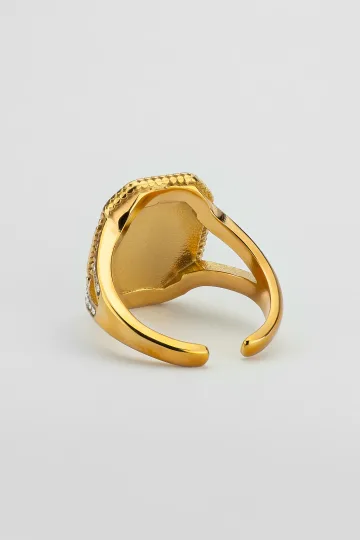
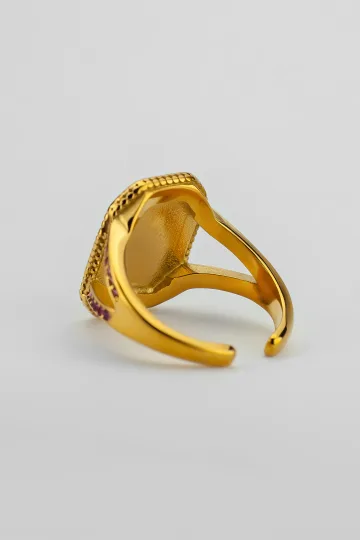
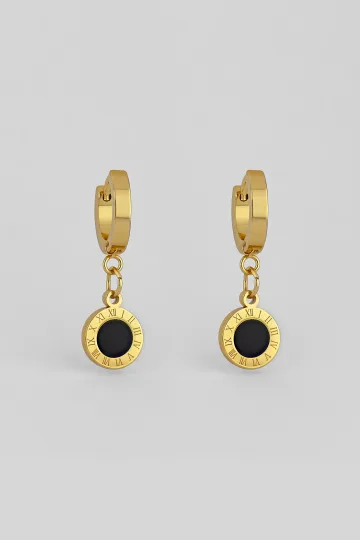

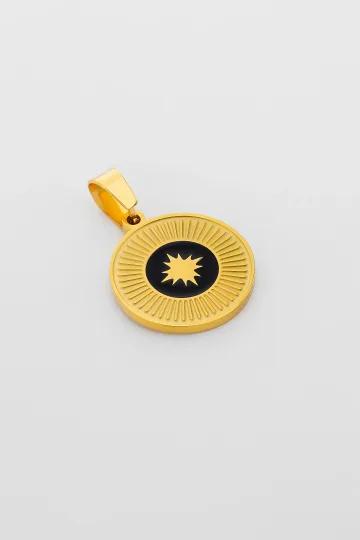

Venus symbol jewellery: which format to choose
The form of the Venus symbol suits the jeweller's craft. The circle at the top creates a visual anchor for the eye; the small cross below adds graphic sharpness and prevents the symbol from dissolving into an abstract smear. The sign remains legible even on very small pendants -- down to about a centimetre in diameter -- and equally carries well when enlarged to brooch size.
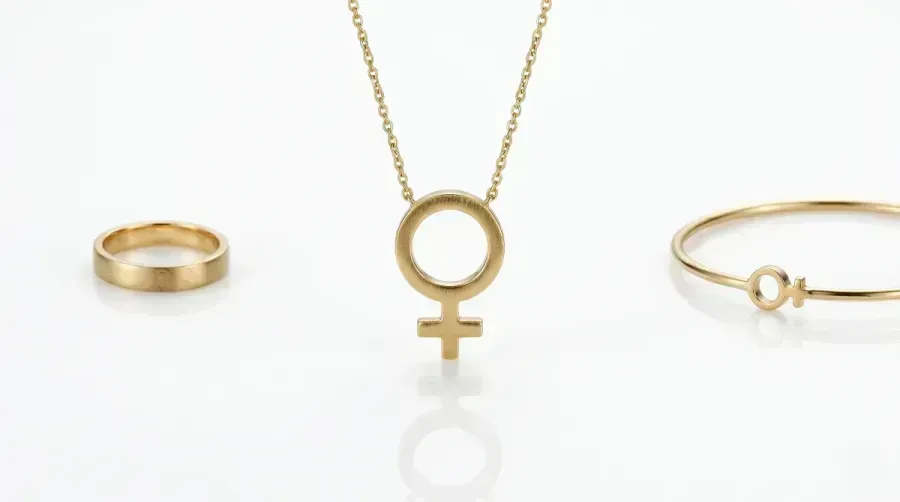
Pendant. The most common format. A fine silver or gold outline, circle 12-18 mm in diameter, cross below. Sits at the collarbone, tucked beneath a collar or worn over a plain roll-neck. Works as an everyday piece requiring no special occasion.
Stud earrings. Two matching Venus symbols in the lobes. Miniature studs, 5-8 mm in diameter. A clean graphic alternative to balls or stars. Symmetrical, light, visible only when the head turns.
Ring with engraved Venus symbol. The sign on the outer face of a flat band. Unlike a pendant, a ring is seen more often -- the wearer herself catches it every time she glances at her hand. Engraving creates no snagging on fabric and does not interfere with daily life.
Brooch. The larger format, 2-4 cm. A Venus symbol on a jacket, coat, or lapel reads more forcefully than a pendant because it sits in the interlocutor's direct line of sight. This is the format for those who want the symbol read clearly, rather than as an intimate reminder.
Choker with a plaque. A short chain or cord with a round or rectangular plaque engraved with the Venus symbol. Close to the throat, visible with any neckline. A contemporary format, popular in minimalist graphic jewellery.
Bracelet with the symbol. A fine chain with a single Venus charm, or a wider cuff with a metal plaque. The wrist is seen more often than the neck, so a Venus bracelet works as a quiet but permanent calling card.
Paired set: Venus and Mars. For couples, sisters, mothers and daughters, close friends. Two pendants, two chains, one shared meaning. More about the logic of paired jewellery with matching halves and how it works across distance and in daily life.
One Venus sign on a bare collarbone, worn over black. Pile on five symbols and it reads as a jumble sale, not a manifesto.
How and with what to wear the Venus symbol
The ♀ is easy: it adapts to a look instead of dictating it. Over the years, working shoots and runways, I have gathered what actually sits well on a person, sorted by occasion.
How do I wear the sign every day? For daytime I recommend a fine silver or gold contour on a short chain over a plain roll-neck, a white shirt or a simple tee. The quieter the fabric and colour, the sharper the line of the sign reads. I suggest keeping one metal tone and not crowding the neck: here the ♀ works as a piece you leave on for weeks.
Does it work at the office? It does. I choose a minimal contour under a blouse collar or over a thin knit. Silver or white gold in a business palette (grey, black, beige, navy) looks restrained and appropriate even at an interview. No political shouting, just clean graphics.
How do I build an evening look? For the evening I suggest a large cast ♀ or a stone-set sign over a black roll-neck, a silk top with a deep neckline or velvet. Here I let the symbol take the lead: one visible pendant instead of a handful of small ones. A deep neckline opens the collarbones and a larger shape sits beautifully on the skin.
What about a special occasion? For a dressy outfit and textured fabrics I choose rose gold or a sign set with ruby, pearl or rose quartz. The warm metal lifts the face and the stone adds colour. I recommend a slightly longer chain so the pendant falls right down the centre.
How do I combine it with other jewellery? I suggest layering by length: a short chain with the sign, a medium one with a plain pendant, a long one with a stone. I mix metals on purpose (silver with rose gold reads modern), though one tone is easier. To the sign I recommend simple geometric studs and thin stacked rings. One rule that never fails: a single ♀ per look beats three at once.

Turn on your camera, pick earrings, a pendant or a ring, and see the piece on yourself in real time.
Switch items in one tap.
Everything runs in your browser: no photo or video is ever uploaded.
Types of Venus symbol in jewellery
The same symbol lives in jewellery in a dozen different executions, each carrying its own shade of meaning. The difference between a fine outline pendant and a heavy cast piece is not merely aesthetic. It is read by those around the wearer, even when the wearer herself is not thinking about it.
Minimalist thin outline. The most graphic version. Wire about 0.8-1.5 mm thick, bent into a circle and cross. Nothing superfluous. Works within the idiom of restrained everyday jewellery, layers well with other fine chains. Reads calmly, without political or ideological weight -- simply as pleasing geometry.
Sculptural and dimensional. A cast pendant with thick walls, 2-3 mm, sometimes with an interior cavity or bas-relief. Heavier, more substantial, giving the sense of an artefact rather than an ornament. For those building a collection of statement pieces.
Venus symbol with a raised fist inside the circle. The historically precise emblem of the Women's Liberation Movement, developed by American activist Robin Morgan in 1969-70. A clenched fist inside a circle reads unambiguously as political. This is not "just a Venus sign" -- it is a direct quotation from a specific era and a specific movement. Worn by those who want to signal solidarity explicitly, rather than rest at an astrological or aesthetic reading.
Venus symbol with a stone in the circle. A small stone -- rose quartz, garnet, pearl, ruby -- set within the upper circle. The circle becomes a setting; the symbol becomes a classic pendant with a stone, just in an unusual frame. Softens the political undertone, returning the piece to a feminine, "Venereal" aesthetic.
With engraving of a name or date. A name, date, or initial inscribed inside the upper circle. A personal piece. A gift where a universal symbol meets a particular story. More on technique in the engraving guide and the monogram and initials guide.
Art Deco interpretation. A geometric, angular Venus symbol with broken lines in the spirit of the 1920s and 30s. The circle becomes an octagon; the cross becomes stepped. An allusion to the era of the early suffragettes, though the symbol itself was not yet widely used in their movement. An aesthetic game, not a political one.
Double Venus (Venus/Venus). Two Venus symbols intertwined or side by side. In jewellery it appears on mother-daughter duos, on sisters, and on close friends who want a matching set without romantic subtext. Meaning is set by context, not by the form itself.
Venus combined with another symbol. The Venus sign alongside Mars (the classic paired set), the moon, the sun, the ankh, or infinity. Combinations allow for an individual meaning: Venus plus ankh hints at a connection with the Egyptian goddess Hathor; Venus plus moon emphasises cyclicity; Venus plus Mars reads as equality or as a couple.
The history of the Venus symbol
The history of the Venus symbol breaks the familiar logic that "activists invented it in the twentieth century." In fact it predates feminism by at least a thousand years, and the form of a circle with a cross goes back to Greco-Roman antiquity.
Greek and Roman tradition: the mirror of Aphrodite
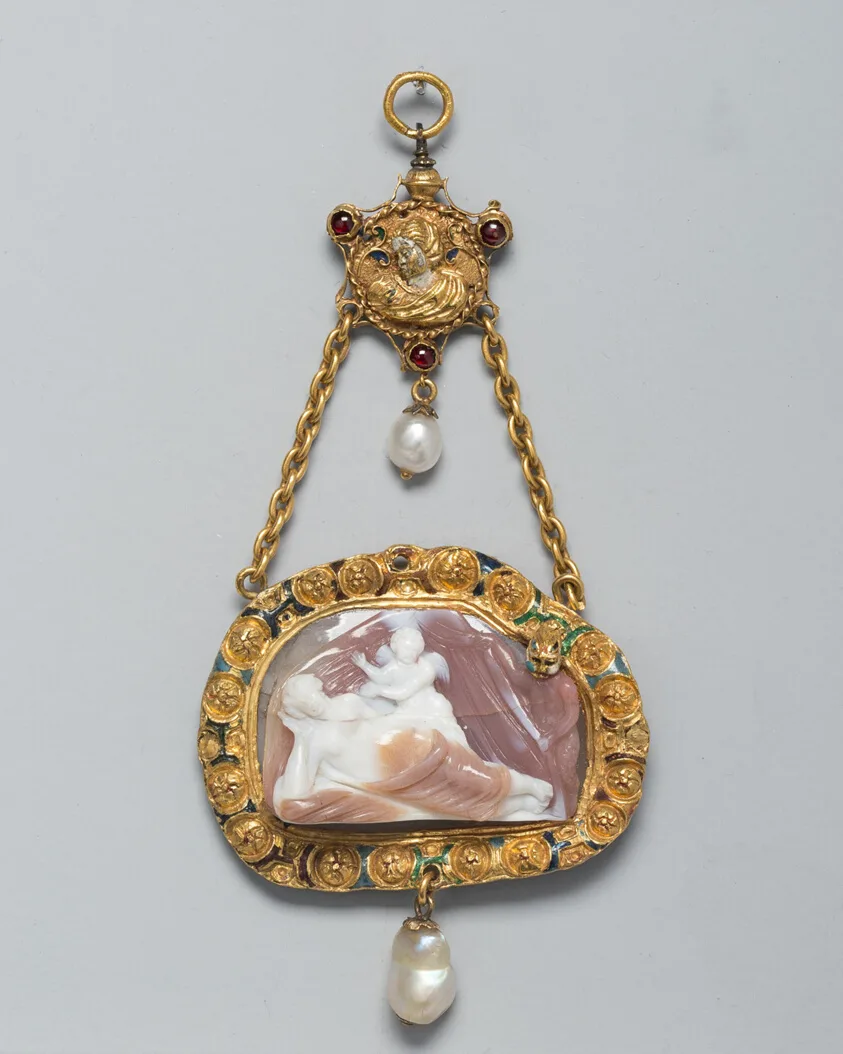
In classical iconography, Aphrodite (Venus to the Romans) was frequently depicted holding a hand mirror -- a polished bronze or copper disc with a handle. The mirror was not merely an attribute of beauty but a symbol of self-contemplation and femininity as such. Greek thought linked sight and beauty: to be beautiful meant being able to see and to be seen.
The mirror's handle pointing downward and the disc of the mirror itself closely resemble the modern Venus symbol. Some researchers consider this the graphic origin of the symbol -- the goddess's mirror reduced to a line and a circle. Other historians argue for a later, medieval evolution of the form with no direct connection to classical iconography. There is no definitive proof, but the visual resemblance is too striking to dismiss.
Alchemy: Venus as copper
In medieval and Renaissance alchemy, each of the seven known planets corresponded to one of seven metals. The Sun was gold, the Moon silver, Mars iron, Jupiter tin, Saturn lead, Mercury quicksilver, and Venus copper. The association was not arbitrary: copper in the ancient and medieval world was often mined on Cyprus (hence the Latin cuprum), and Cyprus was held to be the birthplace of Aphrodite-Venus, risen from the sea foam at its shores.
In alchemical treatises of the fourteenth to seventeenth centuries, the Venus symbol appears alongside formulas for alloys and recipes for chemical processes, denoting copper and its compounds. It can be found in the works of Basil Valentine, in the Mutus Liber, in the writings of Nicolas Flamel. For the alchemist, the sign of Venus had nothing to do with femininity in any social sense -- it denoted metallic softness, the capacity to take a form, the beauty of the oxide film (patina), the green colour of copper sulphate.
An interesting detail: copper was linked in alchemy to the skin, to beauty, to sensuality -- not because the metal was considered feminine, but because copper alloys (bronze, brass) were used for mirrors, cosmetic instruments, and jewellery.
Carl Linnaeus: 1751, biology
The Swedish naturalist Carl Linnaeus, in Philosophia Botanica (1751) and the subsequent Species Plantarum (1753), introduced a binary system for denoting sex in plants. For male specimens he used the Mars symbol, for female the Venus symbol, and for bisexual (hermaphrodite) plants a special composite sign. Linnaeus adopted these symbols ready-made from the alchemical and astrological tradition, because they were already well known to scholars of his day, were concise, and were easily written with a quill pen. The decision proved so convenient that the symbols took hold not only in botany but in zoology, and later in medicine, genetics, and eventually everyday culture. The modern icon for a women's lavatory is a direct descendant of Linnaeus's notation.
Astronomy: Venus the planet
Alongside alchemy, astronomy developed its own use of planetary signs -- in ephemeris tables, star catalogues, and astrological calculations. The Venus symbol appears in Byzantine manuscripts of the eleventh and twelfth centuries, and in Western printed editions it became standard from the fifteenth century onward. Kepler, Tycho Brahe, Galileo -- all worked with this symbol as a routine technical notation, devoid of social meaning.
The twentieth century: the suffragettes and the second wave
The suffragettes of the early twentieth century, fighting for women's right to vote in Britain, the United States, and elsewhere, used the Venus symbol almost not at all as an emblem. Their visual language was built on colours (purple, white, and green in Britain; yellow in the United States), slogans, and portraits of leaders. The Venus sign was still associated primarily with biology and astrology.
The shift came in the late 1960s. The Women's Liberation Movement in the United States was looking for a graphic symbol that would be instantly legible, require no translation, and connect explicitly to the theme of women. The Venus symbol fitted perfectly. Activist Robin Morgan, editor of the landmark anthology Sisterhood Is Powerful (1970), promoted a version with a raised clenched fist inside the circle. The combination became the emblem of the second wave, spread across posters, badges, T-shirts, and book covers.
Since then the Venus symbol has carried a political layer. But it is important to note: this happened only in the last fifty-five years. The entire preceding history of the symbol is politically neutral.
The symbol in the women's movement: from the second wave to the present
1960s and 70s: the American second wave
The second wave of feminism in the United States focused on issues that the suffragettes had not addressed: reproductive rights, equal pay, domestic labour, violence, and access to professions. The visual symbol of the movement became the Venus sign with a fist, and this emblem rapidly became recognisable far beyond activist circles. Pendants, badges, and patches with this symbol were sold in left-wing bookshops, worn at demonstrations, and appeared on the covers of magazines such as Ms., Off Our Backs, and Spare Rib.
The British contribution to this visual language went back further, of course. The suffragettes led by Emmeline Pankhurst (1858-1928) had built a formidable visual identity using purple, white, and green -- colours that still carry resonance in women's advocacy. Their legacy made the ground fertile for the later adoption of the Venus symbol as a shared shorthand across the English-speaking world.
The third wave: the 1990s
In the 1990s the third wave brought ideas of intersectionality, the inclusion of diverse experiences, and a critique of classical "white feminism." The visual language diversified, new symbols and images appeared, but the old Venus symbol did not disappear. It remained the baseline, the universal alphabet of the movement, above which new layers could be built.
Contemporary waves and the digital age
Since the 2010s the Venus symbol has been used actively in internet culture. It appears in social media bios, in emoji sets, on digital stickers, and on placards at International Women's Day marches. Simultaneously, the symbol has gained a softer reading: worn not only as a political statement but as a sign of personal identity -- "yes, I am a woman, and I like that."
Customer reviews
Zevira is a real jewellery shop. Genuine payments, deliveries and customer thank-yous.
🥰🥰🥰 gracias

Ok, ¡gracias! 🙂

Venus the planet and astrology
The astrological layer of the Venus symbol often proves the most vivid for readers. It is not ideological, not political, and requires no position-taking on social questions. It is simply a planet -- one of the seven classical ones -- with its own character, its own zodiac signs, and its own transits.
Venus in the natal chart
In astrology, Venus governs three major themes: love and relationships, aesthetics and taste, and money and values in the broad sense (what a person considers valuable, what they invest in emotionally). The position of Venus in the natal chart shows how a person loves, how they express affection, what draws them in other people, in art, in objects.
Venus in a fire sign (Aries, Leo, Sagittarius) gives expressive, vibrant love, open declarations, initiative in relationships. Venus in an earth sign (Taurus, Virgo, Capricorn) makes love stable, valuing reliability, inclined toward long-term commitment. Venus in an air sign (Gemini, Libra, Aquarius) brings lightness, a love of conversation, an aesthetic of elegance. Venus in a water sign (Cancer, Scorpio, Pisces) gives deep, emotional, sometimes consuming attachment.
Venus in Taurus and Libra is said to be "at home" -- in its own signs, where its qualities are most fully expressed. Venus in Pisces is in exaltation, its loving nature becoming almost mystical. In Aries and Scorpio, Venus is in detriment and fall respectively: its qualities work with more difficulty, through tension.
Venus retrograde
Venus turns retrograde roughly once every eighteen months, for forty to forty-two days. During these periods, according to astrological tradition, former partners return, relationships are reassessed, attachments are re-evaluated, and there is a desire to rethink one's wardrobe and aesthetic. Not all astrologers attach great significance to the retrograde, but for those who follow transits it is a time of inner review.
A piece of jewellery with the Venus symbol, worn during a retrograde, serves as a visual anchor of the process: "I am in a moment of reconsideration." Not a talisman in any esoteric sense -- rather a focal point for attention.
Venus as the morning and evening star
From the standpoint of naked-eye observation, Venus is the brightest point in the sky after the Sun and Moon. It is visible either just after sunset (the evening star, known to the Greeks as Hesper) or just before dawn (the morning star, known as Phosphor). The ancient Greeks long believed these were two different stars, until they understood they were the same planet. The Venus symbol, in turn, unites both aspects in a single sign.
People drawn to astronomy as much as astrology wear Venus symbol jewellery as a tribute to the observed planet. For them it is not a horoscope -- it is the night sky.
What the symbol means: without stereotypes
The word "femininity" has accumulated so much cultural baggage over the past century that it requires careful unpacking. The Venus symbol is not connected to a pink bow, is not equal to decorativeness, and is not limited to the role of "the weaker sex." Its semantic field is wider and more interesting.
Woman as a full human being. The first and primary layer of meaning: the Venus symbol is simply the sign that the wearer (or, indeed, any wearer) identifies as a woman or connects themselves with the female line. No qualifications, no additional conditions.
Equality. Through the second half of the twentieth century the Venus symbol became firmly associated with the idea that women are entitled to the same pay, the same legal subjecthood, and the same opportunities as men. Not more, not less. This is now a basic norm embedded in the legislation of most countries, though its practical realisation remains uneven.
Love and beauty (the Venereal layer). The astrological and mythological tradition connects the sign with Aphrodite-Venus, goddess of love, beauty, and harmony. Here the symbol works as a token of pleasant relationships, sensuality, and aesthetics. A romantic layer, not a political one.
Sisterhood. The idea that women across the world are connected by a shared experience, and that support between them matters more than competition. The term "sisterhood" came from the second wave and lodged in the language. Paired or group jewellery with the Venus symbol works as a physical marker of that bond.
Connection between mother and daughter. The ancestral line through the female side. Paired pendants -- one with the mother, one with the daughter -- or the double Venus symbol as an emblem of that bond. A gift for a birthday, a coming-of-age moment, the birth of a grandchild.
Natural cycle. In astrology and biology alike, the Venus symbol points to cyclical nature: the female body lives in lunar cycles, Venus orbits the Sun and returns to the same point in the sky every 584 days. Cyclicity is not weakness -- it is a different way of organising time.
The mirror as self-knowledge. If the origin-from-Aphrodite's-mirror theory is accepted, the Venus symbol becomes a sign of the capacity for self-perception: self-knowledge, self-reflection, acceptance of one's own form. Not narcissism -- an honest gaze.
Upload a photo of your pet, someone you love, or an object. We'll build a 3D model and hand-cast it in pewter.




Materials and techniques
The choice of material for a Venus symbol piece is far from neutral. Each metal carries its own associations, and they combine with the meaning of the symbol itself.
Sterling silver 925
The classic choice, the standard for graphic jewellery. The cool white tone emphasises the purity of the line without drawing attention to itself. Silver suits virtually any complexion and wardrobe, and combines well with other pieces. For fine outline Venus symbol jewellery this is almost the default choice.
Silver requires care: it tarnishes over time through oxidation. More on this in the guide to cleaning gold and silver and in the article on fixing tarnished jewellery.
Gold 14ct and 18ct
Yellow gold is warm, associated with luxury, with the classic tradition of the goldsmith's craft. For the Venus symbol, a gold colour adds a Venereal overtone: gold is traditionally the metal of the Sun, but its warm gleam has historically been connected with feminine beauty in many cultures. White gold returns the piece to a cool, minimalist aesthetic. More on the varieties in the guide to white, yellow, and rose gold.
Rose gold: the thematically apt choice
Rose gold is produced by adding copper to the alloy. And here a satisfying circle closes: copper is precisely the alchemical metal of Venus. A Venus symbol in rose gold corresponds to itself at the level of material. For those who appreciate symbolism operating on every level simultaneously, this is the ideal choice.
Rose gold has remained one of the most popular shades in jewellery for the past fifteen years, particularly in the "for myself" and "gift for a friend" categories. Its warm, slightly rosy tone suits almost every complexion.
Copper: the historically accurate metal
Pure copper is rarely used in serious jewellery because of rapid oxidation and the possibility of a skin reaction. But as an accent, as a component of an alloy, or as a base for enamel, copper has its legitimate place. Venus symbol pieces in copper appear in craft collections and individual makers' work, as an allusion to the alchemical tradition.
Worth noting: copper can leave a green mark on the skin. Why this happens and what to do about it.
Engraving
The Venus symbol is already an image in itself, but the interior of the circle can receive engraving: a name, a date, a short word. The technique suits flat pendants and rings with an even surface. Engraving can be laser-cut (precise, clean, machine-perfect) or hand-worked (with micro-irregularities that underline its handmade character).
Enamel
Coloured enamel within the circle of the Venus symbol transforms a graphic emblem into a festive piece. Popular colours: white (purity, simplicity), pink (an allusion to Venus the planet and to femininity), red (love, passion), black (graphic contrast), green (a nod to copper patina).
Stones: what to set in the circle
If the Venus symbol circle is used as a setting for a stone, the choice of stone adds an additional layer of meaning:
- Rose quartz -- gentle love, tenderness, self-acceptance.
- Ruby -- passionate love, fire, confidence.
- Pearl -- the classic of femininity, a connection with the sea and with Aphrodite.
- Garnet -- warmth, a sense of home, groundedness.
- Labradorite -- intuition, inner work, the astrological layer.
- Moonstone -- cyclicity, connection with the moon, mysticism.
Separate articles cover the meaning of ruby and labradorite.
How to wear it: everyday and accent looks
The same Venus symbol in different formats lives very differently. A fine pendant beneath a collar and a heavy cast piece on a cord are two different jewels even if the symbol on them is identical.
Fine pendant for every day
Circle 12-15 mm, wire 1 mm, chain 40-45 cm. Sits below the collarbone, partly hidden beneath the collar of a shirt, roll-neck, or jumper. Works in an office, at an interview, at university, at any neutral occasion. Does not make a loud statement, but is always there.
Such a pendant suits daily wear including in the shower. Sterling silver and gold hold up to water without issue. More in the article on wearing jewellery in the shower.
Large statement pendant
Circle 25-40 mm, thickness 2-3 mm, possibly with a stone inside, on a chain 50-60 cm. Worn over a roll-neck, jumper, or shirt. Does not hide. Reads immediately. For a party, an exhibition, a date, a video call. One such pendant replaces all other upper jewellery in the look.
Paired earrings
Small Venus studs work as a quiet rhyme with each other. They can be combined with an asymmetric earring -- one Venus, one plain circle, or one Venus and one Mars -- allowing the theme of sex and identity to play out further.
Ring with engraved Venus symbol
The outer face of a flat band. The symbol on the visible part of the ring. Works on the index, middle, or ring finger. On the right hand as a piece for oneself; on the left ring finger as part of a more complex story. On stacking rings.
Double Venus as a sign of female friendship
For two friends, for sisters, for a mother and daughter. Two identical pendants, or one pendant with two interlocking symbols. Does not impose any particular reading; leaves space for a personal story.
Layered
The Venus symbol works well in multi-layered compositions of chains at different lengths. A short chain with a small Venus, a medium one with a plain pendant, a long one with a stone. More in the layering guide.
Silver, gold, wedding rings, symbolic pieces, paired sets.
CAPAORA mini knife pendant
The 18th-century Spanish navaja in miniature: 40 mm of stainless steel, a real folding mechanism and a Palanquilla lock that clicks. An affordable gift to remember.
Authentic · Ships from Spain · 14-day returns
Who it suits
The Venus symbol requires no "licence" to wear. But certain wearers find it particularly apt.
Astrologers and those studying their natal chart. Everyone's personal Venus in the chart is different, and wearing its symbol is a subtle marker of one's own emotional and aesthetic constitution. A gift from one astrologer to another is read instantly.
Fans of minimalist graphic jewellery. A fine Venus symbol in silver is one of the cleanest graphic symbols there is, alongside the cross, star, circle, and heart. It enters a collection naturally.
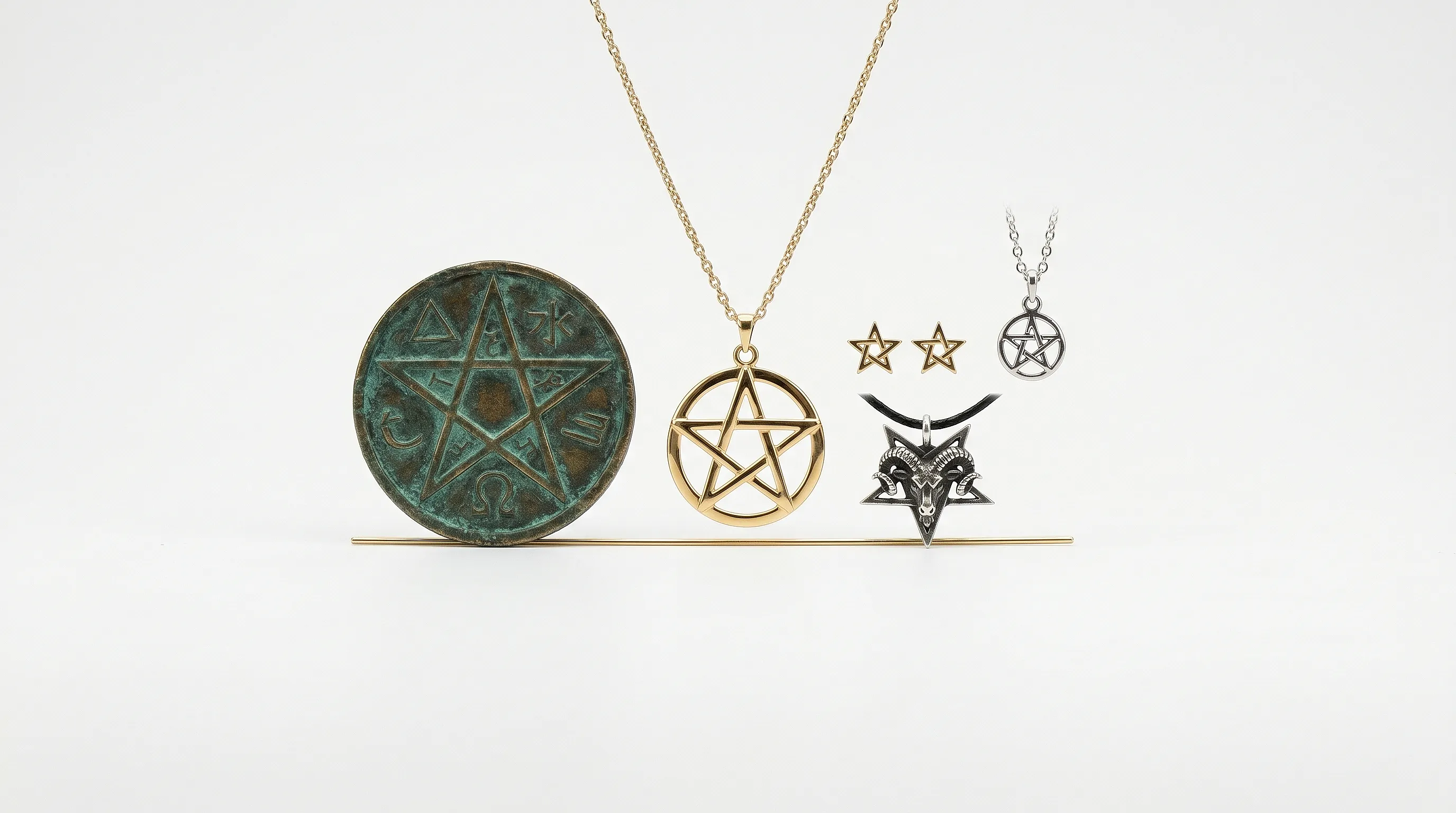
Women with mixed jewellery collections. If the jewellery box already contains an ankh, a pentagram, an infinity symbol, or an all-seeing eye, the Venus symbol adds a new cultural layer without conflicting with the rest.
A gift for a friend. For International Women's Day, a birthday, an anniversary of friendship, or for no particular reason. Ideas in the gift guide for her.
Mother and daughter. Paired Venus set. More in the gift guide for mum.
Women who identify with the idea of equality. Without any need to be a public activist. Simply a wearable position, personal and quiet.
Men who study astrology or alchemy. The Venus symbol is not exclusively female jewellery. Venus in a man's natal chart shows what type of women he is drawn to and how he expresses his sensual side. A man with a prominent Venus in his chart may wear its symbol as a talisman of his own emotional nature.
Seasonal rhythm of the piece
The Venus symbol works well in any season, but the tone shifts.
Spring. A fine silver outline, a short chain. Spring is the time of renewal, and a clean geometric piece underlines freshness.
Summer. Gold or rose gold, a short pendant on a tanned neck. The sun plays on the metal; the symbol is visible through the neckline of a light shirt or top.
Autumn. A larger Venus symbol on a long chain, worn over a roll-neck or jumper. Autumn invites heavier jewellery and bigger forms.
Winter. A ring with the symbol, because hands are more visible in winter than the neck (scarves, high collars). The glove comes off, and the Venus symbol is there on the finger.
Leave your email, we'll send your discount code. No spam, unsubscribe anytime.
The code arrives by email, valid on your first order.
FAQ
What is the difference between the Venus symbol and the Mercury symbol? They are often confused because both contain a circle and a cross. But the Mercury symbol is a circle with a cross below and a crescent above -- considerably more complex than the Venus symbol, and it represents the planet Mercury, the metal quicksilver, and, in biology, hermaphroditism. The Venus symbol has only a circle and a small cross pointing downward, nothing more.
Can a man wear the Venus symbol? Yes, without reservation. It is a notation for the planet Venus and the alchemical sign for copper. A man interested in astrology, alchemy, or simply drawn to the Aphrodite symbol wears it without any conflict with his identity. The contemporary reading of the Venus symbol as "exclusively female" is a political layer that has accumulated over the past fifty years; the symbol itself is older and broader than that reading.
Does the Venus symbol work with other jewellery? Yes. It combines well with clean graphics (circles, stars, the infinity sign), with lunar and solar motifs (see the article on sun and moon in jewellery), with classic crosses and ankhs. It can conflict with very heavily loaded ethnic jewellery -- Tibetan or massive Norse pieces, for instance -- where the existing symbols dominate the visual field.
Can a name be engraved inside the circle? Yes, this is one of the most popular personalisations. For a legible engraving, the circle should be at least 15-18 mm in diameter. On smaller pendants a name becomes a dot. More in the engraving guide.
What about the male partner symbol for paired sets? The Mars symbol is the mirror counterpart: a circle with a cross-arrow pointing up and to the right. In astrology it represents masculine energy, activity, initiative, and iron as a metal. A paired set of Venus and Mars is the classic choice for a couple -- though the combination is not necessarily heteronormative. It can also simply read as "two halves of one whole," "active and receptive," "action and contemplation."
Is the Venus symbol a feminist symbol? Partly. That is one of its layers, one that appeared in the late 1960s in the United States. But the sign has three other layers that are older and often more salient: the astronomical (the planet Venus), the alchemical (the metal copper), and the biological (Linnaeus's notation for the female sex, from 1751). Any of these layers can be foregrounded, and no one requires the wearer to choose only the political one.
Can I wear the Venus symbol if I have no interest in astrology? Yes. The sign is beautiful in itself as graphic design, and its meaning requires no esoteric knowledge. People wear crosses without any requirement to be practising Christians, and wear the infinity symbol without any engagement with mathematics. See the article on the infinity symbol.
Is the Venus symbol a religious symbol? No. It is a secular symbol with astronomical, alchemical, biological, and political connotations. No organised religion claims it as its own. Unlike the cross, the ankh, the pentagram, or the Om symbol -- where religious connotations exist for some, though not all -- the Venus symbol has no religious ownership.
What if I like the symbol but want to avoid the political accent? Choose a fine minimalist outline in silver or rose gold, without the raised fist inside the circle. That version reads primarily as astrological or aesthetic. Alternatively, combine the Venus symbol with a stone -- rose quartz, for instance -- and the piece reads as a classic pendant in an unusual setting.
What size pendant is best for daily wear? The optimum is 14-18 mm in circle diameter. Smaller and it disappears beneath a collar; larger and it becomes a visible accent. For statement pendants, 25-40 mm is fine -- but that is already an evening or special-occasion format.
Myths and facts about the Venus symbol
A fair amount of confusion has built up around the Venus symbol. Here are the most common misconceptions.
"The Venus symbol was invented by feminists." No. They adapted it in the late 1960s. The sign had been in use in astrology and alchemy since at least the early Middle Ages, and Linnaeus fixed it in biology in 1751. The feminist layer is the youngest of those that exist.
"A man cannot wear this symbol." He can. It is a notation for a planet and for the metal copper. The first two readings have no connection to the sex of the wearer.
"The Venus symbol always signals a political position." No. It signals whatever the wearer wishes to say. It may be astrology, aesthetics, lineage, or politics. Assuming without asking is inaccurate.
"The symbol derives from the Egyptian ankh." The connection is often drawn because of the visual resemblance (circle and cross). But there is no historical evidence of a direct link. The ankh is a separate Egyptian symbol of life with its own iconography and evolution. The Venus symbol comes from the Greco-Roman tradition and alchemy. Two independent symbols that happen to look similar. More on the ankh in the dedicated article.
"The Venus symbol is connected with witchcraft." No. It was the sign of alchemists, astronomers, and botanists -- the academic and scientific tradition of their eras. Confusion with witchcraft arises from other graphics: the pentagram, runes, lunar symbols. The pentagram and moon phases are different stories.
"Rose gold for the Venus symbol is a stereotype." Not quite. Rose gold contains copper, which in alchemy was precisely the metal of Venus. The connection between the metal and the symbol is not a marketing construct -- it is historical. The coincidence of a stereotype with a fact does not make the fact a stereotype.
The Venus symbol combined with other jewellery
Many wearers of the Venus symbol pair it with other symbolic pieces into meaningful combinations.
Venus plus ankh. Two symbols of life and femininity. Egyptian Hathor plus Greek Aphrodite. A cultural bridge.
Venus plus moon. Cyclicity squared. Female nature plus lunar rhythm. Particularly effective with phase symbols: waxing, full, waning.
Venus plus sun. A balance of the feminine and the solar. Not opposition, but complement. Venus and sun signs in one composition form a beautiful astrological code.
Venus plus infinity. Eternal femininity or eternal connection. Works well for mother-daughter paired sets.
Venus plus initials. Already discussed above, but to add: initials can be placed not only inside the circle, but on a separate charm pendant alongside the chain.
Venus plus a coat of arms or regional symbol. For those who want to combine the universal with the local. For example, Venus plus the Lauburu for wearers with Basque ancestry.
The Venus symbol as a gift: contexts
Valentine's Day
Not the most obvious choice (hearts dominate), but an interesting alternative. As the symbol of Aphrodite, goddess of love, the Venus sign connects directly with the theme of the occasion. For a couple tired of heart-shaped jewellery, a Venus symbol can be a refreshing option. See the Valentine's Day gift guide.
A friend's birthday
Paired bracelets or pendants with Venus symbols -- matching or complementary. The message: "our friendship is as significant an investment in life as family or romance." Works for childhood friends, colleagues who have become close, flatmates, business partners.
A relationship anniversary
A paired set of Venus and Mars for a couple. The meaning is symmetrical: "we are different and we are together." No need to make a political statement out of the gift.
Mother's Day
A Venus symbol pendant with the mother's date of birth inside the circle. Or a double Venus with the initials of mother and daughter. A lasting, non-seasonal, non-perishable gift.
A graduation, a transition, an important milestone
The Venus symbol as a marker of female maturity, of moving into a new phase. For a young woman finishing her studies, beginning a career, or moving to a new city. The symbol as a reminder: "you belong to yourself, and that is permanent."
For yourself
A gift to oneself, requiring no date or occasion. After a hard period, after an important achievement, after an important decision. A small Venus pendant as a physical anchor: "I chose myself."
Send a friend a discount code, they save on their first order.
The Venus symbol alongside other "feminine" symbols
Jewellery contains a whole constellation of symbols linked in various ways to the theme of femininity. The Venus sign is only one of them.
The moon and its phases. Cyclical nature, intuition, mysticism. More in the article on moon phases.
The rose. Beauty, passion, sensuality. The classic Venereal flower.
Pearl. A material rather than a symbol in the narrow sense, but historically closely tied to Aphrodite (born from sea foam) and to femininity.
Heart. The universal symbol of love. Less political than the Venus symbol, more emotional.
Anatomical heart. The contemporary alternative to the stylised version. More here.
Dove. The bird of Aphrodite-Venus, a symbol of peace and love. Less common in mainstream jewellery but present in bespoke collections.
Butterfly. Transformation, growth, female nature in motion. On butterflies.
Shell. An allusion to Botticelli's Birth of Venus, to the sea, to the beginning of femininity. Common in Mediterranean jewellery.
The Venus symbol is distinguished from all these by its abstract, geometric nature. It is not representational or figurative. It is pure graphic design, closer to a letter than to a picture. This is why it reads as both restrained and contemporary, free from the sweetness that flowers and hearts can sometimes bring.
Materials and durability: practical details
A piece of jewellery is bought for years, if not decades. From this standpoint, the choice of material for a Venus symbol piece is not decorative but engineering.
Silver 925. Soft, bends easily under mechanical stress. For a fine Venus outline, choose wire of at least 1 mm thickness; otherwise the pendant risks deforming if caught on fabric. Tarnishes over time; cleaned with a soft cloth and silver paste or a specialist solution. Service life at normal wear: decades.
14ct gold. Denser and harder than silver. A wire thickness of 0.8 mm is already adequate. Does not tarnish or oxidise at normal wear. Service life: virtually unlimited; passes to the next generation without loss.
18ct gold. Softer than 14ct because it contains more pure gold. More beautiful colour, but greater vulnerability to deformation. Recommended for pendants not subject to constant friction and snagging.
Rose gold. In terms of hardness, typically closer to 14ct than to 18ct. The copper in the alloy makes it slightly stiffer.
Platinum Venus pieces. Rare, expensive, exceptionally durable. For those investing in a once-and-for-all piece.
Gold plating. A coating on a brass or silver base. Looks like gold, costs considerably less. Downside: the coating wears in time, especially on edges and raised areas. A separate article covers how long gold plating lasts.
PVD coating. A more modern technology, giving a significantly more durable gold-coloured layer than classic gold plating. The best compromise for those who want a gold look without a gold price. On PVD coating.
Stainless steel. Strong, hypoallergenic, affordable. For daily wear of a Venus pendant in the pool, at the beach, or in the shower, this is near-ideal. The colour is silver or gold (via PVD) and does not change over time.
Hypoallergenicity
Some people have a nickel allergy -- nickel is frequently present in jewellery alloys. When choosing a Venus symbol piece to be worn continuously on the skin, look at the alloy composition. Sterling silver 925, 14ct and 18ct gold without nickel additions, platinum, and medical-grade steel are safe for the majority. More in the guide to jewellery allergies.
How to choose a Venus symbol piece as a gift
Buying for someone else is nearly always harder than buying for yourself. For yourself, you simply want it. For another person, you need to gauge their style, their relationship with symbolism, and their sensitivities.
Basic questions before buying
- Does the recipient wear graphic or decorative jewellery? For the former, a fine outline; for the latter, something richer with a stone or enamel.
- What metal dominates her collection -- silver, gold, rose gold? A gift should fit in with the rest.
- How does she feel about symbolic jewellery in general? Does she wear signs, letters, crosses? Or does she prefer abstract forms and stones?
- How close is the relationship? A paired double Venus implies a certain depth of connection.
- Are there political views that are important to keep in mind? The Venus symbol is universal, but the version with a raised fist inside is already a specific statement.
Safe options
When in doubt, a fine silver or gold Venus outline on a medium-length chain works for almost everyone. A universal base that combines with any style.
For more personalisation, add an engraved date or initial inside the circle. A small detail that turns a standard piece into something named.
For a step further, a paired set: Venus plus Mars for a couple, or double Venus for close friends or female relatives. More in the paired jewellery guide.
Higher-risk options
The version with a raised fist (strong political accent), very large statement pendants (not for everyone). These options work when you know the recipient's taste and views exactly; otherwise you may miss the mark.
What to do when a Venus symbol piece loses its look
Silver tarnishing. A normal reaction of silver to air and moisture. Cleaned with a silver cloth, a polishing paste, or a specialist solution. Do not rub with a stiff brush; do not use toothpaste (a myth that damages silver). More in the restoration guide.
Gold plating wearing away. If this is classic gold plating, restoration requires a workshop visit and re-coating. PVD coating virtually does not wear under normal use.
Fine outline deforming. Silver and soft gold pendants can bend if caught on something. A jeweller can straighten it in a few minutes.
Chain breaking. Chains can snap. Replacement is inexpensive and quick. Keep the pendant itself -- that is the harder part to replace.
Buying it as a gift? Each one arrives ready to give.
 A branded Zevira box and a little card come with every order.
















About Zevira
Zevira is a jewellery brand from Albacete, Spain. The Venus symbol line is one category within the catalogue. Current availability and details are in the catalogue.
Conclusion
The Venus symbol has travelled from the mirror of Aphrodite, through medieval alchemical treatises and Linnaeus's botanical keys, to the placards of American feminists in the 1970s, and onward to the pendants of anyone who wishes to wear it. It is a rare symbol with such a long genealogy: astronomy, alchemy, biology, politics, aesthetics. Four distinct eras compressed into one simple graphic form.
This layering is precisely what makes the sign so suited to jewellery. You can wear it as an astrological marker, as aesthetic design, as a personal position, or as a gift to someone you love -- and it will read correctly in each of those contexts. No one compels the wearer to choose only one layer. No one can take the others away.
A circle with a small cross pointing downward. The copper of Aphrodite, the Venus of Linnaeus, the emblem of Robin Morgan, the biology-class icon. All at once. All of it you, when you wear it at your neck.
And if you pause to think about it, the capacity to hold several stories simultaneously without contradiction -- that is, in itself, the most Venereal quality of all. Beauty, harmony, the ability to unite the different into a coherent whole. Which is, after all, what the Greeks admired in Aphrodite.