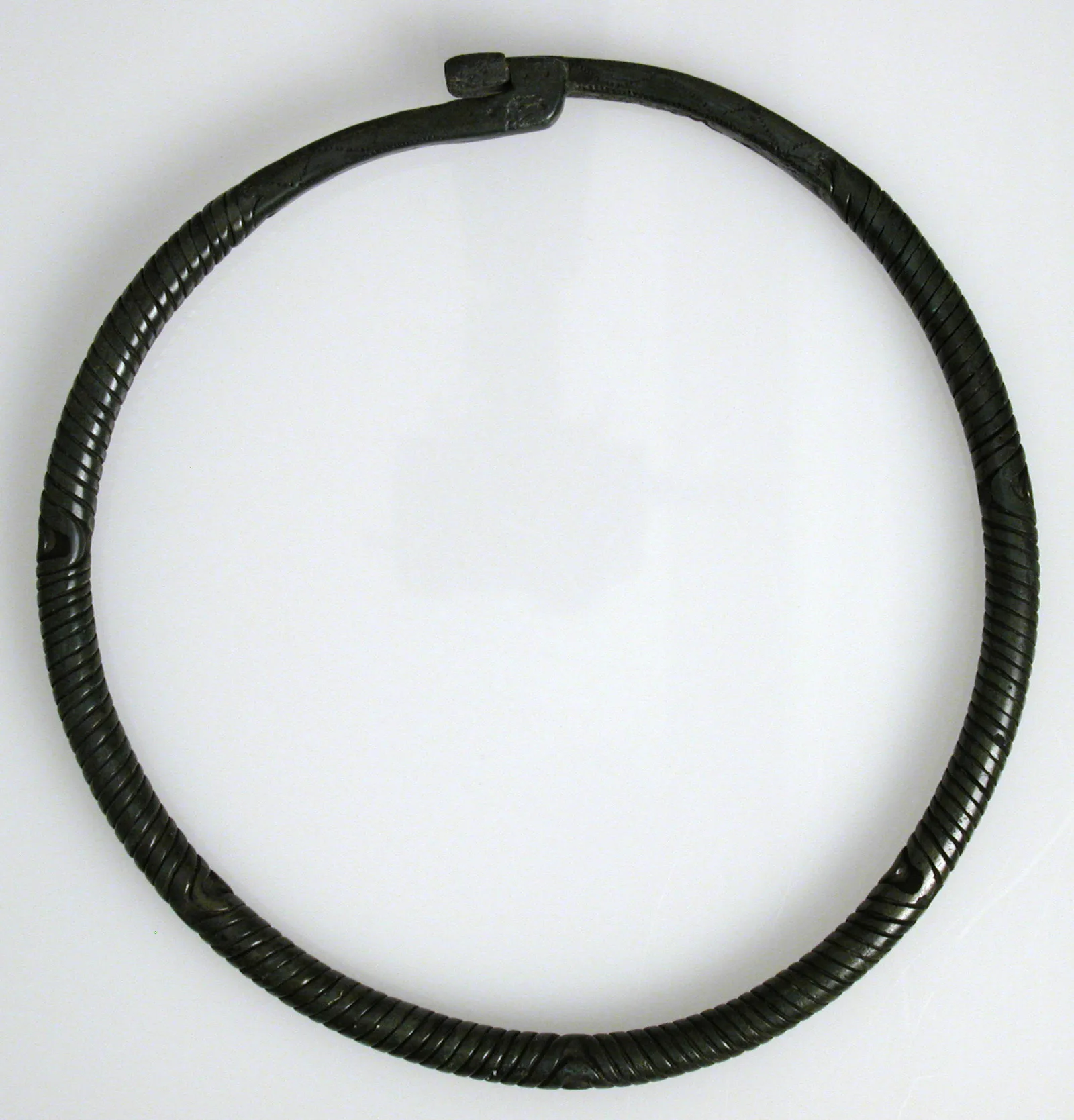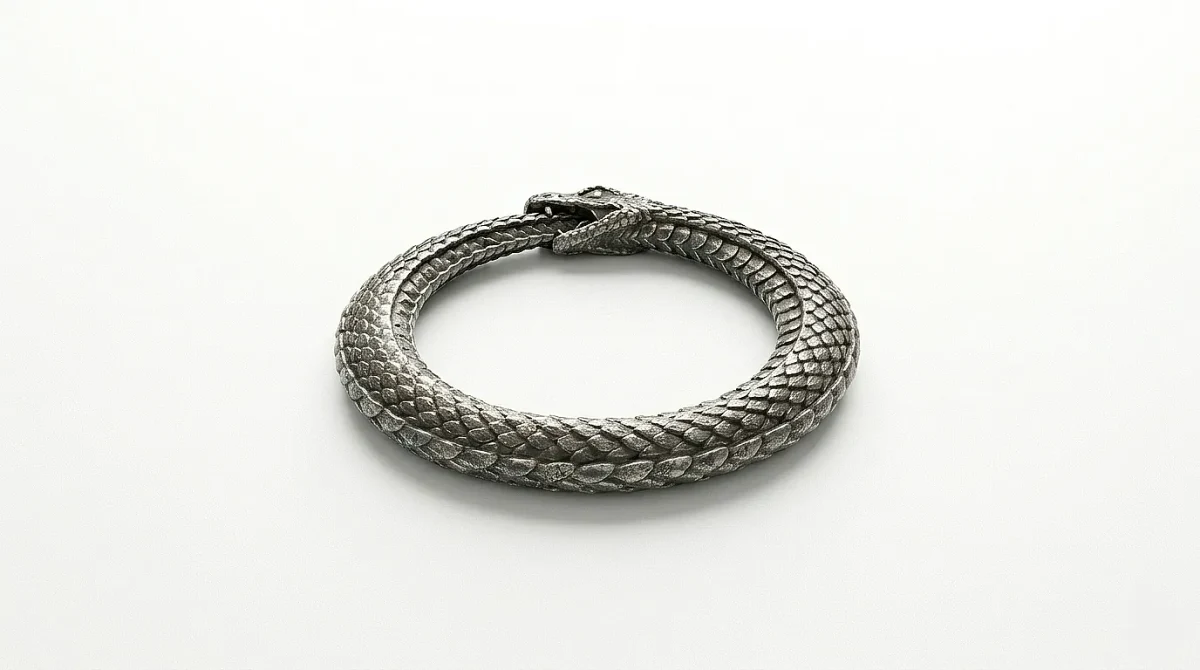
The Ouroboros: The Snake Eating Its Own Tail and Why It Means Everything
The symbol that swallowed itself
There's a drawing in a 3,400-year-old Egyptian funerary text that looks like it was doodled by a philosophy student at 2am. A serpent, curved into a perfect circle, swallowing its own tail. No explanation around it. No caption. Just the image, sitting in the margins of a book about what happens after you die.
That drawing is the oldest known ouroboros. And in the 34 centuries since someone scratched it onto papyrus, this symbol has shown up in Greek philosophy, Norse mythology, medieval alchemy, Jungian psychology, organic chemistry, tattoo parlours, fashion runways, and the logo of at least three video games you've probably played.
A snake eating itself. It should be grotesque. Instead, it's one of the most elegant symbols humanity has ever produced. A single line that says: everything ends where it begins. Destruction is creation. Death feeds life. The end is the start.
No other symbol captures the idea of infinity quite like this. The mathematical infinity sign is abstract. The circle is passive. The ouroboros is alive. It's an animal in the act of consuming itself, which means it's simultaneously dying and sustaining itself. It's horrifying and beautiful. It's nihilistic and hopeful. It contains its own contradiction, and that's precisely what makes it work.
This is its complete story. From tomb paintings to your jewellery box.
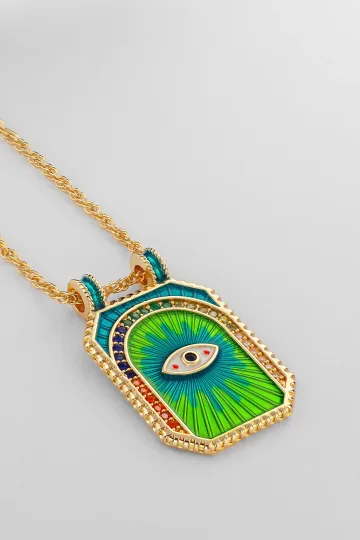
Wear the symbol, don't just read about it. These are in stock:


Ancient Egypt: Where the Circle Begins
The Enigmatic Book of the Netherworld
The earliest known ouroboros appears in the "Enigmatic Book of the Netherworld," a funerary text found in the tomb of Tutankhamun (died c. 1323 BCE). The text describes the journey of the sun god Ra through the underworld during the twelve hours of the night, and the ouroboros appears as part of this cosmic narrative.
In the Egyptian version, the serpent is not just any snake. It's Mehen, a protective deity who coils around Ra's solar barge during its passage through the darkness. The circular form represents the boundary between the ordered cosmos and the primordial chaos beyond it. Inside the circle: reality as we know it. Outside: formless void.
But here's what makes the Egyptian ouroboros specifically interesting. The serpent doesn't just form a boundary. It forms a cycle. The text describes how the sun "dies" each evening, travels through the underworld, and is "reborn" each morning. The ouroboros encircling this journey is the mechanism of rebirth itself. The end of the day is the beginning of the night. The end of the night is the beginning of the day. The snake's mouth meets its tail because that's how time works.
Egyptian religion was obsessed with cycles. The annual flooding of the Nile. The daily journey of the sun. The cycle of death and resurrection (Osiris dies, Isis resurrects him, Horus avenges him, order is restored, repeat). The ouroboros was the visual shorthand for all of it.
The sun's nightly journey
Understanding the Egyptian ouroboros requires understanding how Egyptians saw night-time. For them, night wasn't just darkness. It was the sun's journey through the body of Nut (the sky goddess) or through the underworld (the Duat), where it faced challenges, defeated enemies, and was regenerated before emerging at dawn.
The ouroboros serpent that encircles this journey is both the path and the container. It's the road the sun travels and the walls of the tunnel. When the snake swallows its tail, it creates the space in which rebirth happens. Without the circle, there's no journey. Without the journey, there's no dawn.
This is a more sophisticated idea than "circle = infinity." It's saying that the process of ending IS the process of beginning, and that the two are so intertwined that they're literally the same creature.
An ouroboros ring under the shirt cuff. People notice it second, never first, and that is exactly the chic.
How to wear the ouroboros
The ouroboros likes room to breathe, so I never crowd it. Here is what actually works, sorted by the question I get asked most.
What do I wear the ouroboros with every day? For everyday I recommend the ring on its own on the hand, or a pendant over a plain turtleneck or tee, where a calm background hands the symbol all the attention. Silver flatters cool tones (grey, blue, graphite), while yellow gold comes alive on warm earthy shades and black.
Is it right for the office? Yes, and it behaves better there than most symbols. I suggest a thin ring or a small pendant on a medium chain under a shirt or jacket, so it reads as a smart detail rather than jewellery on display. A deep V or an open collar lets the pendant sit freely, without fighting the neckline.
How do I build an evening or layered look? For evening I choose to bring the snake into a layer: the ouroboros pendant as the lowest, longest piece in a stack of two or three chains of different lengths, especially when the neighbouring pendants are smaller and simpler. I keep to one metal within a single look, as a clean single-metal story beats a mix of silver and gold.
Ring or pendant, which format suits me? The ring is the most personal, a quiet anchor on the hand you glance at all day. The pendant carries more weight and holds the symbol near the heart. Either way I recommend a piece where the snake's head and tail meet cleanly, with no sharp ends to catch the fabric.
Who does it actually suit? Anyone, and on any type, since the symbol is gender neutral. I suggest it for people who prefer restrained pieces with a story over a shiny pile, and it pairs cleanly with celestial motifs, eye symbols or a labyrinth when you want a small, considered stack.

Turn on your camera, pick earrings, a pendant or a ring, and see the piece on yourself in real time.
Switch items in one tap.
Everything runs in your browser: no photo or video is ever uploaded.
Greek Philosophy: Hen to Pan
Plato and the self-devouring cosmos
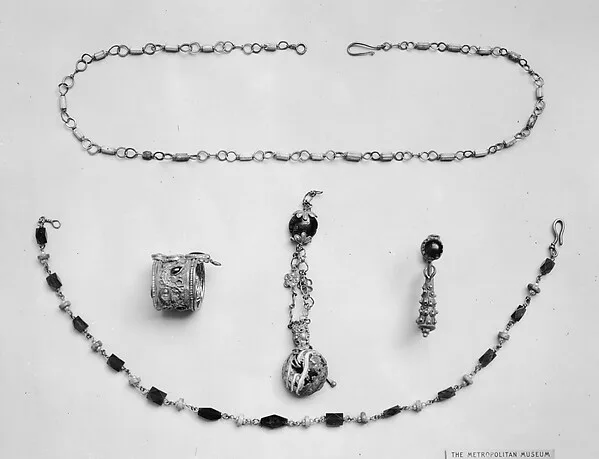
The ouroboros entered Greek thought through Egypt (Greeks had been visiting Egypt and borrowing ideas since at least the 6th century BCE). But the Greeks did what they always did with borrowed ideas: they philosophised them into something new.
Plato's dialogue "Timaeus" (c. 360 BCE) describes the cosmos as a self-sufficient living being that needs nothing outside itself. It has no eyes because there's nothing outside to see. No ears because there's nothing to hear. No legs because there's nowhere to go. It feeds on its own waste. It is, in essence, a cosmic ouroboros, though Plato doesn't use the image directly.
The phrase most associated with the Greek ouroboros is "Hen to Pan," meaning "The One is the All." This appears in Greek alchemical and Gnostic texts from the early centuries CE, often written inside or around the image of the serpent circle. The meaning: everything that exists is part of a single, self-consuming, self-generating system. The universe eats itself and becomes itself. Nothing is truly created or destroyed. It only transforms.
This idea predates modern physics by about 2,000 years, but it maps surprisingly well onto the laws of thermodynamics. Energy is neither created nor destroyed. Matter cycles through forms. The snake eats its tail because matter and energy have no beginning or end, only transformations.
Gnosticism and the boundary of the world
In Gnostic Christianity (2nd-4th century CE), the ouroboros took on a different role. The Gnostics believed that the material world was a prison created by an imperfect god (the Demiurge), and the ouroboros represented the boundary of this prison. The serpent's body was the wall separating the flawed material world from the true, spiritual reality beyond.
In this reading, the ouroboros isn't comforting. It's claustrophobic. The circle isn't a symbol of beautiful eternal return. It's a cage. The snake eats its tail because there's nowhere else to go. You're trapped in a loop.
This darker interpretation hasn't disappeared. It resurfaces in existential philosophy, in the concept of Nietzsche's "eternal return" (would you willingly live your life again, exactly the same, forever?), and in the modern feeling of being stuck in cycles you can't break. The ouroboros contains both readings simultaneously: the liberating "everything is connected" and the suffocating "there's no escape."
Customer reviews
Zevira is a real jewellery shop. Genuine payments, deliveries and customer thank-yous.
🥰🥰🥰 gracias

Ok, ¡gracias! 🙂

Norse Mythology: Jormungandr, the World Serpent
The serpent that holds everything together
Norse mythology has its own ouroboros, and it's one of the most dramatic characters in the entire mythological canon.
Jormungandr (also called the Midgard Serpent) is one of three children of the trickster god Loki and the giantess Angrboda. When the gods discovered these children, they were terrified. Loki's other children were Hel (ruler of the dead) and Fenrir (the wolf who would devour the sun). Jormungandr was thrown into the ocean surrounding Midgard (the human world), where it grew so enormous that it encircled the entire earth and grasped its own tail in its mouth.
Let that image settle. The world you live in is surrounded by a serpent so vast that its body IS the horizon. The ocean is its domain. The edge of the world is its coils. And it holds its tail in its mouth, completing the circle, holding everything together.
In Norse cosmology, Jormungandr isn't evil, exactly. It's necessary. The serpent's body creates the boundary of the known world. Without it, Midgard would dissolve into the chaos of the outer void (Ginnungagap). The snake is the wall.
Thor's fishing trip
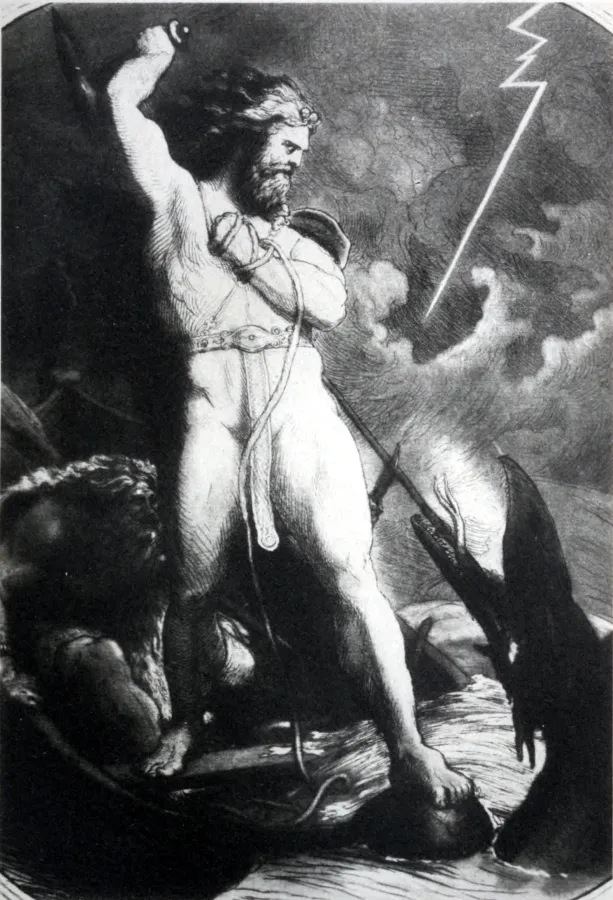
The most famous Jormungandr story involves Thor going fishing. Using an ox head as bait, Thor hooks the World Serpent and begins pulling it from the ocean. The serpent rises, dripping poison, and the two stare at each other across the surface of the water. Thor raises his hammer. The boat's owner, terrified, cuts the fishing line. Jormungandr sinks back beneath the waves.
This scene appears on Viking runestones and has been a favourite subject of Scandinavian art for over a thousand years. It's the ultimate "the one that got away" story, except the stakes are the end of the world.
Ragnarok: when the snake lets go
In the Norse end-times prophecy (Ragnarok), the signal that the world is ending is Jormungandr releasing its tail. The circle breaks. The boundary dissolves. The serpent rises from the ocean and floods the land with poison. Thor and Jormungandr meet in final battle. Thor kills the serpent but takes nine steps before falling dead from its venom.
The Norse ouroboros carries a message that the Egyptian and Greek versions don't: the circle can break. Eternity is conditional. The snake holds its tail by choice, and if it lets go, everything ends. This makes the Norse ouroboros more dramatic and arguably more honest than the serene Egyptian version. It says: the cycle continues because something is actively maintaining it. And that effort could stop.
For modern jewellery, this adds a layer. An ouroboros ring or pendant isn't just "I believe in cycles." It's also "I understand that continuation takes effort."
Alchemy: The Snake in the Laboratory
The Chrysopoeia of Cleopatra
The ouroboros is arguably the most important symbol in the Western alchemical tradition. Its most famous appearance is in the "Chrysopoeia of Cleopatra," a Greek alchemical text from around the 2nd century CE (not related to the famous Cleopatra of Egypt, despite the name).
In this text, the ouroboros appears in colour: the top half of the serpent is dark, the bottom half is light. Inside the circle are the Greek words "Hen to Pan" (The One is the All). This image became THE symbol of alchemy, reproduced in manuscripts for the next 1,500 years.
For alchemists, the ouroboros represented the central principle of their art: all matter is one substance in different forms, and through the right transformations, any substance can become any other. Lead can become gold. Not because gold is hidden inside lead, but because lead and gold are the same thing in different states. The snake eats itself and becomes itself. Matter devours matter and is reborn.
Solve et coagula: destroy and rebuild
The alchemical motto "solve et coagula" (dissolve and coagulate) is the ouroboros in verb form. Break something down to its fundamental components (the snake eating itself) and reassemble it in a new form (the snake emerging from its own mouth). Destruction is not the opposite of creation. It's the first step.
This process was both literal (chemical experiments with metals, acids, and heat) and metaphorical (spiritual transformation of the alchemist themselves). The ouroboros represented the idea that you can't build something new without first destroying something old. You can't grow without letting a previous version of yourself die.
If that sounds like modern therapy, you're not wrong. Carl Jung noticed the same thing.
Kekule's dream and the benzene ring
In 1865, the German chemist August Kekule was struggling to determine the molecular structure of benzene. According to his own account, he dozed off in front of the fireplace and dreamed of a snake seizing its own tail. He woke up and realised that benzene must be a ring: a circular arrangement of carbon atoms, each bonded to the next, with the last bonding back to the first.
Whether this actually happened as Kekule described is debated. But the story is culturally important because it shows the ouroboros crossing from mysticism to hard science. The symbol that alchemists used to represent the unity of all matter turned out to describe the actual molecular structure of one of organic chemistry's most fundamental compounds.
The ouroboros isn't just a pretty metaphor. It's a structural principle that appears at the molecular level. The snake really does eat its tail.
Upload a photo of your pet, someone you love, or an object. We'll build a 3D model and hand-cast it in pewter.




Carl Jung and the Modern Ouroboros
Carl Jung, the Swiss psychologist who developed the concept of archetypes, was fascinated by the ouroboros. He saw it as a symbol of the psyche's tendency toward wholeness, what he called "individuation."
For Jung, the ouroboros represented the integration of opposites. Conscious and unconscious. Light and shadow. Creation and destruction. The ego "devours" the shadow (the repressed parts of the personality) and in doing so becomes whole. The process is uncomfortable (nobody enjoys confronting their own darkness), but it's necessary for psychological maturity.
Jung wrote: "The ouroboros is a dramatic symbol for the integration and assimilation of the opposite, i.e. of the shadow. This feeds back process is at the same time a symbol of immortality, since it is said of the ouroboros that he slays himself and brings himself to life."
In modern psychology, the ouroboros appears in discussions of cycles: addiction cycles, relationship patterns, generational trauma, the tendency to repeat destructive behaviours. The serpent eating itself can represent both healthy integration (acknowledging and absorbing your darkness) and pathological repetition (destroying yourself in a loop you can't escape).
This dual meaning makes the ouroboros particularly resonant for people who've been through difficult self-work. A person wearing an ouroboros ring might be saying: I've confronted my own patterns. I've eaten my own tail. And I came out the other side as something more complete.





The Ouroboros Around the World
Hindu and Buddhist traditions
In Hindu iconography, the serpent Shesha (also called Ananta, "the endless") forms a coiled bed for Vishnu during the periods between cosmic cycles. Shesha is sometimes depicted mouth-to-tail, forming an ouroboros. The symbolism aligns with the Hindu concept of cyclical time: creation (Brahma), preservation (Vishnu), destruction (Shiva), repeat.
In Buddhist art, the ouroboros sometimes appears on the outer rim of the Bhavachakra (Wheel of Life), representing samsara, the cycle of birth, death, and rebirth. The snake is the cycle itself, and the goal of practice is to step outside the circle.
Mesoamerica: Quetzalcoatl
The feathered serpent Quetzalcoatl (Aztec) and Kukulkan (Maya) is sometimes depicted in circular form, tail in mouth. Mesoamerican calendrical systems were deeply cyclical, and the serpent circle represented the completion of time cycles. Some Aztec stone carvings show a two-headed serpent forming a circle, combining ouroboros imagery with the Mesoamerican concept of duality.
West Africa: Aidophedo
In Dahomean mythology (modern Benin), the serpent Aidophedo carries the world. Its body forms a circle that supports the earth, and its movements cause earthquakes. The similarity to Jormungandr is striking, though the two traditions developed independently.
China: the dragon biting its tail
Chinese art includes circular dragon motifs that closely resemble the ouroboros. The Chinese dragon is a symbol of power, fortune, and natural forces, and a dragon forming a circle represents the cyclical nature of time, seasons, and dynastic change. Jade pendants in the form of a circular dragon have been found dating back to the Neolithic period.
The Ouroboros and Religion: Why the Symbol Divides Opinion
The Abrahamic view
Christianity, Islam, and Judaism have an uneasy relationship with the ouroboros, for two reasons. The first is the snake itself: in the biblical tradition, a serpent tempted Eve in the garden, so the reptile carries a lasting association with sin and deception. The second reason runs deeper and concerns time. The Abrahamic faiths read history as a straight line, with a beginning (creation) and an end (judgement, salvation), and a single unrepeatable path in between. The ouroboros argues the opposite: time runs in a circle, the end folds back into the beginning without pause. That cyclical view sits awkwardly beside the idea of one final salvation, so orthodox readings tend to treat the symbol with suspicion, or reject it outright.
The ouroboros in Christian esotericism and Gnosis
The symbol never disappeared from Christian culture entirely. In the Gnostic texts of the early centuries it was, on the contrary, a key image: Gnostics saw the closed circle as the boundary of the material world and the unity of all things. Later, during the Renaissance, the ouroboros returned in Christian alchemy and emblem books, where the snake biting its tail stood for eternity and divine fullness, echoing the line "I am the Alpha and the Omega, the beginning and the end." So the symbol travelled from a mark of evil in orthodox readings to an emblem of eternity in esoteric ones, and both lines are alive today. For anyone wearing the piece the takeaway is simple: the ouroboros is a philosophical sign first, a religious one second, and it can be read more than one way.
CAPAORA mini knife pendant
The 18th-century Spanish navaja in miniature: 40 mm of stainless steel, a real folding mechanism and a Palanquilla lock that clicks. An affordable gift to remember.
Authentic · Ships from Spain · 14-day returns
German Alchemy: From Albertus Magnus to Paracelsus
The alchemical tradition that adopted the ouroboros was not a Mediterranean phenomenon alone. Some of its most important figures worked in the German-speaking world, and their contributions shaped how the symbol was understood for centuries.
Albertus Magnus (c. 1200-1280), a Dominican friar from Lauingen in Bavaria, was one of the most important natural philosophers of the medieval period. He wrote extensively on minerals, metals, and transformation processes. While historians debate whether Albertus was a practising alchemist or merely a commentator on alchemical texts, his works made alchemical ideas accessible to a European audience beyond the Arab and Byzantine worlds where much of the knowledge originated. The ouroboros appears in manuscripts associated with his tradition, usually as a marginal illustration accompanying discussions of metallic transformation.
Paracelsus (1493-1541), born Theophrastus von Hohenheim in what is now Switzerland, revolutionised alchemy by insisting on experimentation over textual authority. He burned the books of Galen and Avicenna in public, declaring that his own observations mattered more than a thousand years of received wisdom. Paracelsus used ouroboros imagery in his medical and alchemical writings to illustrate the principle that poison and medicine are the same substance at different doses ("the dose makes the poison"). The serpent consuming itself was his metaphor for the body's ability to transform harmful substances into beneficial ones, a principle that underpins modern pharmacology.
The German alchemical tradition was practical in a way that distinguished it from the more mystical Italian and Arab traditions. German alchemists were metallurgists and miners as much as they were philosophers. The mining regions of Saxony, the Harz mountains, and the Erzgebirge were laboratories where alchemical theory met geological reality. The ouroboros in this context was not just a philosophical symbol. It represented the actual cyclical processes they observed in smelting, refining, and purifying metals: ore goes into the furnace, metal comes out, slag goes back into the process. The end feeds the beginning. The snake eats its tail.
Leave your email, we'll send your discount code. No spam, unsubscribe anytime.
The code arrives by email, valid on your first order.
Nietzsche and the Eternal Return
The most philosophically rigorous modern engagement with ouroboros thinking came from Friedrich Nietzsche, and it happened on Swiss and German soil.
In 1881, while walking near the lake of Silvaplana in the Swiss Engadine, Nietzsche was struck by what he considered his most important idea: die ewige Wiederkehr des Gleichen, the eternal recurrence of the same. The concept appears in "The Gay Science" and becomes central to "Thus Spoke Zarathustra."
The idea is deceptively simple. Imagine that you will live your exact life again, in every detail, an infinite number of times. Every joy and every suffering, every boredom and every triumph, repeated forever. No edits. No improvements. No skipping the painful parts. Nietzsche's challenge: can you say yes to this? Can you love your life enough to want it again, exactly as it was?
This is the ouroboros reframed as an existential question. The serpent eats its tail, the cycle repeats, and you are inside it. The question is not whether the cycle is real (Nietzsche was not making a cosmological claim). The question is whether you can affirm it. Whether you can look at the snake eating itself and say: yes, I want this.
Nietzsche understood the dark reading too. The eternal return can be terrifying. If every mistake, every loss, every humiliation repeats forever, the weight of existence becomes unbearable. The eternal return is a test. It separates those who love life from those who merely endure it.
For modern wearers of the ouroboros, this adds a philosophical depth that goes beyond "everything is connected." Wearing an ouroboros after encountering Nietzsche's eternal return is wearing a question on your body: would you live this life again? The symbol does not answer. It just asks.
The Ouroboros in Mathematics and Science
Beyond Kekule's benzene dream, the ouroboros appears as a structural principle in several scientific contexts.
Feedback loops. In systems theory, a feedback loop is a process where the output of a system becomes its own input. A thermostat reads the temperature, turns the heater on or off, which changes the temperature, which the thermostat reads again. The snake eats its tail. Feedback loops govern everything from climate systems to stock markets to the regulation of blood sugar in your body.
Circular DNA. Many bacterial chromosomes and plasmids are circular, forming a molecular ouroboros. The DNA strand has no beginning and no end. Replication proceeds around the circle, and the machinery that copies the DNA loops back to where it started. Life at the molecular level is literally circular.
The cosmic cycle. Stars form from interstellar gas, burn through nuclear fusion, explode as supernovae, and scatter enriched material into space, which collapses into new stars. The atoms in your body were forged in the cores of stars that died billions of years ago. You are made of stardust, and when you die, your atoms will eventually find their way into something else. The universe eats its own tail at the largest scale imaginable.
The water cycle. Evaporation, condensation, precipitation, collection. The same water molecules have been cycling through this loop for billions of years. The water you drank this morning may have been rain in the Jurassic period, glacier ice in the last Ice Age, and part of someone's bath in ancient Rome. The cycle never breaks. The snake never lets go.
These scientific echoes do not make the ouroboros "true" in a mystical sense. But they explain why the symbol feels right. Humans invented the ouroboros thousands of years before they understood feedback loops or circular DNA. The symbol captured an intuition about the structure of reality that science later confirmed in precise, measurable terms.
The Ouroboros in Pop Culture and Fashion
The ouroboros has been steadily climbing in cultural visibility over the past two decades.
In tattoo culture, the ouroboros is consistently among the most requested designs, particularly as a ring tattoo (around the finger, wrist, or ankle). It works at any scale, in any style (geometric, realistic, minimalist, tribal), and carries enough meaning to fill a conversation without requiring explanation.
In fashion, snake motifs have been a luxury staple since the Italian heritage maison's famous Serpenti line. But the specifically ouroboros shape, the self-eating snake circle, has emerged as a distinct design element in recent years. Rings where the snake's head meets its tail. Pendants with the serpent forming a perfect circle. Bracelets where the clasp is the snake's bite.
In film and television, the ouroboros appears as visual shorthand for "cycles" and "eternal return." It shows up in Westworld, Dark (the German Netflix series that's practically an ouroboros masterclass), Fullmetal Alchemist, and dozens of others.
In gaming, the ouroboros is a recurring motif in everything from Elder Scrolls to God of War to Xenoblade Chronicles. It typically represents ancient or cosmic power.
In music, the imagery appears in album art and lyrics across genres. The symbol's association with both infinity and self-destruction makes it appealing to artists exploring dark or philosophical themes.
The reason the ouroboros works so well in modern culture is that it's inherently paradoxical, and modern culture loves paradox. It's death and life simultaneously. It's an ending that's a beginning. It's beautiful and disturbing. It tells you everything is connected without promising that everything is fine.
The Ouroboros as a Tattoo
What a snake-eating-its-tail tattoo means
In tattoo culture the ouroboros has long been one of the most requested symbols, and people choose it for the meaning rather than the line work. The most common reading is cyclicity and eternal return: life, death, and a fresh start follow one another, and every ending is also the start of something new. A second frequent reading is self-sufficiency: the snake feeds itself and needs nothing from outside, so the ouroboros gets inked as a sign of self-reliance, inner wholeness, the ability to be enough on your own. A third meaning is personal: the tattoo becomes a quiet reminder that everything comes back around, so it pays to watch what you send into the circle.
Placement and size
The round shape dictates where it goes. The most natural option is a ring tattoo around a finger, wrist, or ankle: the snake literally closes on the body, and the symbol works even in miniature. Larger, the ouroboros moves to the forearm, shoulder, or back, where there is room for detailed scales and texture. Its strength is that it reads equally well as a fine line a couple of centimetres across or as a large, worked drawing, so it suits both people who want a discreet mark and those who like bold graphics.
One snake, two snakes, or a dragon
The tattoo has recognisable variants, and each adds its own shade of meaning. The classic is a single snake closed into a circle: a clean reading of the eternal cycle. Two snakes biting each other's tails add the idea of duality and balance; if one is light and the other dark, the design echoes yin and yang, the unity of opposites. A dragon in place of the snake looks weightier and more powerful, so it gets chosen when the point is strength rather than philosophical subtlety. The meaning stays the same either way: a circle with no beginning and no end.
Snake or Dragon: Variations of the Ouroboros
Long before any tattoo, the ouroboros existed in two forms, and the difference between them is no accident. The serpent version is older and quieter: it reads as a philosophical, almost abstract sign of the cycle, and that is how alchemists and Gnostics drew it. The dragon version came later and speaks louder: a dragon is bigger, toothier, charged with more force and threat, so the circular dragon turns up where the point is might and grandeur rather than a subtle idea, from Chinese art to modern coats of arms and logos.
A separate line is the double ouroboros, where two creatures hold each other by the tail. This variant appeared in medieval alchemical manuscripts, where the upper and lower figures (sometimes one winged, one wingless) stood for pairs of opposites: the volatile and the fixed, spirit and matter. From there it is a short step to a yin-and-yang reading, if the two serpents are made to contrast in colour. Colour adds its own accents: a black ouroboros looks stern and graphic, gold nods to alchemy and eternity, red underlines the theme of life and blood. Colour does not change the meaning of the circle, but it sets the mood of the piece.
Send a friend a discount code, they save on their first order.
Wearing the Ouroboros: What It Says About You
Who wears it and why
People drawn to the ouroboros tend to share certain qualities:
They've been through cycles. Recovery, career changes, relationship patterns, personal reinvention. The ouroboros resonates with people who understand that endings are beginnings because they've lived it. The symbol says: I've been consumed and reborn. Maybe more than once.
They think in systems. Scientists, philosophers, programmers, strategists. People who see patterns, feedback loops, and interconnections. The ouroboros is a systems thinker's symbol.
They embrace contradiction. The ouroboros is simultaneously optimistic (cycles continue, rebirth follows death) and dark (you're trapped in a loop, destruction is inevitable). People who wear it tend to be comfortable holding both ideas at once.
They appreciate mythology. Norse fans, Egyptian history buffs, alchemy enthusiasts. The ouroboros is one of the few symbols that appears in virtually every mythological tradition, which gives it a universal quality that single-tradition symbols lack.
They like the aesthetic. Let's be honest: a snake eating its own tail is a striking visual. It works as a design element even for people who know nothing about its history. The form is just inherently cool.
Rings, pendants, and bracelets
The ouroboros ring is perhaps the most natural format. A snake forming a circle around your finger, head meeting tail. It's the most personal placement: a constant reminder on your hand, visible to you throughout the day. Ouroboros rings work for all genders and pair naturally with other meaningful rings.
The ouroboros pendant hangs as a perfect circle on a chain. The weight of the pendant gives the symbol a gravity that lighter pieces lack. On a medium-length chain, it sits near the heart: fitting for a symbol about internal cycles.
The ouroboros bracelet wraps the serpent around the wrist, often with the head and tail meeting at the clasp. This integrates the symbol into the functional structure of the piece, which echoes the alchemical idea that the ouroboros isn't just decorative but structural.
For layering with other symbolic jewellery, the ouroboros pairs well with celestial pieces (cycles of the sun and moon), eye symbols (awareness and eternity), and labyrinth motifs (journeys that return to their starting point).
The gift guide
For someone starting over. New career, post-divorce, recovery milestone. The ouroboros says: endings are beginnings. You're not losing something. You're completing a cycle and starting the next one.
For a philosophy or mythology enthusiast. If they light up talking about Norse myths, alchemy, or Jungian archetypes, the ouroboros is their symbol.
For a couple marking an anniversary. Matching ouroboros rings or pendants carry a meaning that "infinity" symbols can't match. Infinity says "forever." The ouroboros says "we keep choosing each other, cycle after cycle." One is a promise. The other is a practice.
For a graduate. End of one phase, beginning of the next. The ouroboros says what graduation actually is: a completion that's also a launch.
For yourself. Because you understand that the person buying this piece and the person wearing it tomorrow are the same and not the same. The snake eats its tail. You become what you consume. The cycle continues.
Buying it as a gift? Each one arrives ready to give.
 A branded Zevira box and a little card come with every order.





Frequently Asked Questions
What does the ouroboros mean? The ouroboros (a snake or dragon eating its own tail) symbolises cyclical nature, eternal return, infinity, and the unity of destruction and creation. It appears across Egyptian, Greek, Norse, Hindu, Chinese, African, and Mesoamerican traditions. The core meaning: endings are beginnings, and everything is connected in a cycle.
How do you pronounce ouroboros? oo-roh-BOR-os (four syllables, stress on the third). From Greek "oura" (tail) + "boros" (eating). Literally "tail-eater."
Is the ouroboros a religious symbol? It appears in many religious traditions but doesn't belong to any single one. Egyptian, Greek, Norse, Hindu, Buddhist, Gnostic Christian, and indigenous traditions all use it. It's more of a universal archetype than a religious symbol. People of any faith or none can wear it comfortably.
What's the difference between an ouroboros and an infinity symbol? The infinity symbol (lemniscate) is abstract mathematics. The ouroboros is alive. It's an animal in the act of consuming itself. The infinity symbol says "forever." The ouroboros says "forever, and here's the cost: you have to keep eating yourself to get there." The ouroboros carries darkness that the infinity symbol doesn't.
Is the ouroboros associated with any zodiac sign? Not officially, but it resonates most with Scorpio (transformation, death and rebirth, intensity) and Pisces (cycles, dissolution of boundaries, spiritual depth). Snake imagery in general connects to Scorpio in Western astrology.
Can men wear ouroboros jewellery? The ouroboros is completely gender-neutral. Its history spans warrior cultures (Norse), intellectual traditions (Greek philosophy), and mystical practices (alchemy) with no gendered associations. Ouroboros rings and pendants are among the most popular symbolic pieces for men.
What does a broken ouroboros mean? A serpent in a circle with a gap (not biting its tail) is sometimes used to represent a broken cycle, liberation from repetition, or the Norse Ragnarok (where Jormungandr releases its tail, signalling the end of the world). It's a more dramatic, less serene variation of the symbol.
Is the ouroboros the same as Jormungandr? Jormungandr (the Norse World Serpent) is a specific mythological character that takes ouroboros form. All Jormungandr depictions are ouroboros-like, but not all ouroboros images reference Jormungandr. The Egyptian and Greek versions predate the Norse version by over a thousand years.
What does an ouroboros tattoo mean? The same meanings as the jewellery: cyclicity and eternal return, self-sufficiency ("I feed myself and depend on nothing outside"), and a reminder that every ending is a beginning. The classic is a single snake in a circle; two snakes add the idea of balance and, in contrasting colours, read as yin and yang; a dragon in place of the snake sounds more powerful. It is most often inked as a ring around the finger, wrist, or ankle.
Is the ouroboros evil in Christianity? Orthodox readings treat it with caution: the snake is tied to the fall, and cyclical time argues with the linear idea of a single salvation. But in Gnostic and Renaissance Christian esotericism the ouroboros stood instead for eternity and fullness, echoing "I am the Alpha and the Omega." Today it is a philosophical sign first, a religious one second, and anyone can wear it.
What's the difference between a snake ouroboros and a dragon ouroboros? They share the meaning of the circle; the difference is in character. The snake is older and quieter, a philosophical, almost abstract sign of the cycle, the way alchemists drew it. The dragon is bigger and more imposing, so it gets chosen to underline strength and grandeur rather than a subtle idea. Choosing between them is a choice of mood, not of meaning.
Silver and gold jewellery, wedding bands, symbolic pendants, paired sets.
Where the mouth meets the tail
The ouroboros has been around for at least 3,400 years. It has survived the fall of Egypt, the collapse of Rome, the end of the Viking age, the death of alchemy, and the rise and fall of every culture that adopted it. And it's more popular now than it's ever been.
There's a reason for that. The ouroboros isn't just a symbol of cycles. It IS a cycle. It was created, forgotten, rediscovered, reinterpreted, forgotten again, and rediscovered again, across civilisation after civilisation, each one finding something new in the same old image of a snake swallowing itself.
It's the most honest symbol in jewellery. It doesn't promise you protection (like the evil eye). It doesn't promise you luck (like the horseshoe). It doesn't promise you love (like the heart). It just tells you the truth: everything ends. Everything begins again. And the space between the end and the beginning is so small that it fits in a snake's mouth.
That's not nihilism. That's not optimism. It's just how it is.
The snake knows. That's why it keeps eating.
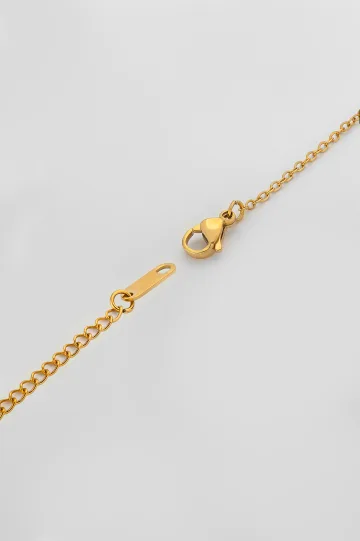
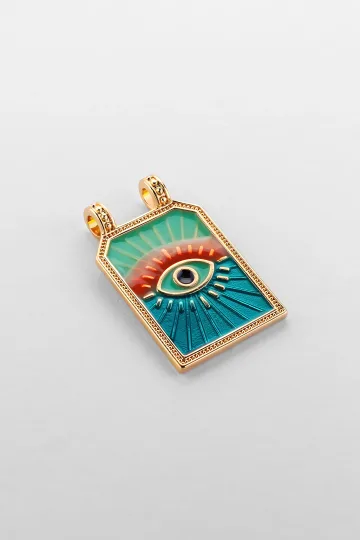
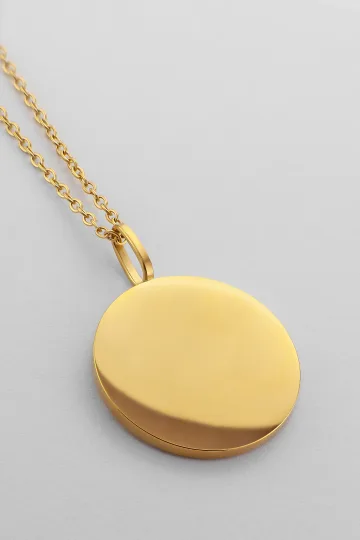
Wear the symbol, don't just read about it. These are in stock:









About Zevira
Zevira makes jewellery in the artisan tradition of Albacete, Spain. The ouroboros feels like a natural theme for us: a symbol of rebirth and the unbroken cycle sits easily with the idea of handcraft itself, where every piece is born from metal all over again.
Here is what you will find with us around the ouroboros and snake motifs:
- Ouroboros rings, where the snake's head meets its tail around your finger
- Pendants shaped as a perfect circle on a medium-length chain
- Serpent bracelets, where head and tail come together at the clasp
- Matching rings and pendants for anniversaries and milestones
- Snake motifs in gothic and symbolic styling
- Companion symbolism: celestial pieces, the eye, the labyrinth for layered looks
Each piece is made by hand by a craftsperson, with personal engraving available. Sterling silver 925 and 14-18K gold.