Adularia (Moonstone): Composition, Properties, Deposits and Care. 2026 Guide
Adularia is the most unusual of ordinary minerals. Feldspar makes up more than half of the earth's crust; it is the grey mass inside any granite under your feet. Yet under a rare set of conditions that same mineral begins to glow from within, releasing a soft bluish ray that glides across the surface every time you tilt your hand. The effect is called adularescence, and the stone itself goes by the trade name moonstone. Let us look at it honestly: what it is made of, why it shines, where it is mined, how to tell it from a fake and how to care for it.
What Adularia Is: Composition and Structure
Adularia is a semi-transparent variety of potassium feldspar with the formula KAlSi₃O₈. Feldspars, the most widespread minerals on the planet, form the backbone of granite and most igneous rocks. Only a small fraction of them shows adularescence, and it is precisely this variety that the jewellery trade prizes.
The stone took its name in the late eighteenth century from the Adula massif on the border of Switzerland and Italy, where benchmark specimens were found. Before that it was simply called moonstone, and the folk name outlived the scientific one: in shops you will far more often see the label "moonstone" than "adularia". In the jewellery variety the two are one and the same, as discussed in detail in the piece on moonstone meaning and properties.
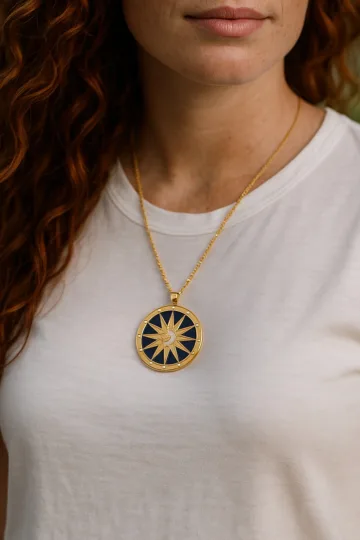
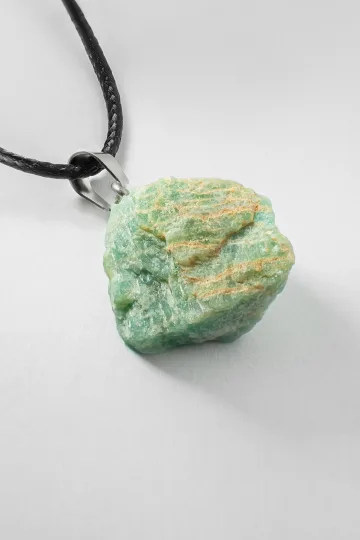
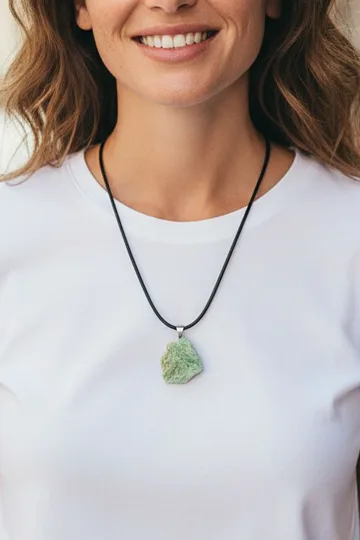
Wear the symbol, don't just read about it. These are in stock:







Physical Properties
- Mohs hardness: 6 to 6.5. This is a middling value: the stone is scratched by quartz dust and a steel blade, so it counts as soft for an everyday ring.
- Density: 2.55 to 2.62 g/cm³.
- Crystal system: monoclinic (adularia as the pure form of orthoclase); the general feldspar group also includes triclinic members. The symmetry is low, which is what produces the complex behaviour of light.
- Refractive index: roughly 1.518 to 1.526, close to quartz.
- Cleavage: perfect in two directions. That is why, on impact, adularia tends to split along a flat plane rather than crumble.
- Fracture: uneven to conchoidal.
- Dispersion and pleochroism: both weak, with almost no effect on how the stone looks. The main optical effect here is a different one, adularescence.
Why the Stone Shines
Adularescence is neither glow nor luminescence. In the dark, adularia looks like an ordinary cloudy stone. The effect is born when light enters the interior and reflects off the thinnest internal layers.
Inside the stone, plates of two feldspar phases alternate, a potassium one and a sodium one. Their thickness ranges from tenths of a micron to about one micron, that is, comparable to the wavelength of visible light (400 to 700 nanometres). When the layer size is close to the wavelength, light scatters and interferes in a particular way, gathering into a glowing band. Turn the stone, the angle changes, and the band shifts. This is how the illusion of a moving ray arises. If the layers are slightly thicker than ideal, the shine moves toward the blue end of the spectrum and gives the prized blue sheen; if thinner or thicker still, the effect weakens or whitens.
How Adularia Forms: Geology
Hydrothermal Origin
Adularia is born from hot mineral solutions. Deep in the crust, superheated water saturated with potassium, aluminium and silicon circulates through cracks. As the solution slowly cools, crystals of potassium feldspar grow out of it. The cooling rate decides almost everything: with slow, even cooling the crystal acquires an ordered layered structure, the source of its future shine. Sudden cooling kills the effect, and out comes a cloudy, lifeless stone.
The shine itself appears only after crystallisation, during the further cooling. At high temperature the potassium and sodium components are mixed within a single crystal. As they cool, they begin to separate into the thinnest alternating plates; mineralogists call this phenomenon exsolution of a solid solution. The thinner and more regular the plates, the cleaner and brighter the shine.
Where It Lies
The finest specimens are found in so-called alpine veins, cavities in the rock of mountain-building zones where crystals grew freely from hydrothermal solutions. Nearby you usually find rock crystal, smoky quartz and chlorite: all of them precipitate out of the same cooling solution. By these companions prospectors judge how promising a find is. The rocks of the most important deposits are tens of millions of years old: the crystal in a modern piece of jewellery began to grow long before humans appeared.
A moonstone belongs to silver and candlelight. Under yellow gold at noon it dies. Don't argue.
What to Wear Adularia With
I put a moonstone together for clients dozens of times a season, and almost always one quiet accent beats a fistful of sparkle. Here is what I recommend, by occasion.
How do you wear adularia every day? For daytime I suggest a milky cabochon on a fine chain over a plain knit, a white shirt or a grey jumper. It reads softly and does not argue with the look. Under a deep neckline I recommend a pendant at breastbone level; close to the throat I choose short studs with a small stone.
Which metal suits it? Almost always I choose cold metal: silver and white gold underline the stone's lunar coolness. Warm yellow gold I recommend only to those who enjoy a clash of temperatures, and even then as an exception. Grey and smoky adularia I suggest in an austere silver setting for the office.
What should you wear in the evening? For evening I choose the blue or rainbow stone: by candlelight and the warm glow of a lamp the ray comes alive. Here I recommend an expressive pendant or ring as the centre of the look, against a rich fabric, wine or emerald. For a special occasion I assemble a set of pendant, earrings and ring with a single type of shine.
How do you fit adularia into layered chains? Among chains of different lengths I set the adularia pendant as a separate accent and never weigh it down with bright faceted stones nearby. In a ring stack I suggest the milky stone with thin smooth bands and colourless inserts that light up its sheen. One gathered ray always beats a scatter.
What colours pair with it, and who does it suit? I gather the cool shine with a cold, neutral palette: white, grey, blue, silver. Grey adularia is the most versatile and fits almost anything. Among neighbours in a piece I recommend rock crystal; it lifts the milky glow without stealing attention. The stone works equally in women's and in restrained men's jewellery.

Turn on your camera, pick earrings, a pendant or a ring, and see the piece on yourself in real time.
Switch items in one tap.
Everything runs in your browser: no photo or video is ever uploaded.
Adularia Deposits
The Adula massif (Switzerland and Italy) is the historical benchmark deposit that gave the stone its name. Crystals with a bright bluish shine were found here. Mining stopped long ago, the site is protected as a geological monument, and so alpine adularias exist only in old collections.
Sri Lanka is the main source for the modern market. Ceylon moonstone is recognised by its milky-white body and soft shine. It is mined by hand in the central highlands from surface deposits.
India and Madagascar yield bluish stones and the rarer peach specimens. Indian adularia often has a yellow-grey tone, and the quality varies.
Scandinavia and northern Europe. In Norway and Finland you find feldspar with a moonstone effect; further north, similar finds appear in collector circles. Such pieces are more often collectible than truly fit for jewellery.
The History of Adularia
The shining stone was known in antiquity. The Greeks called it selenite after Selene, goddess of the moon, and linked it to Artemis; the Romans, to Diana. The stone was thought of as frozen moonlight and worn as an amulet; there was a belief that it changed with the phases of the moon (in reality this was an observation of how the shine behaves under different lighting).
In India the moonstone has long held a special place and was considered sacred; it was given to lovers as a talisman. In the East the soft shine was prized highly, and the poetic name "moon candy" has survived.
In the Christian Middle Ages the pure shine of adularia was given religious meaning. Monks linked the stone to purity, called it the stone of the Virgin and gave it to brides as a protector of marriage. Monastic herbals ascribed various properties to it, but this is part of the era's folklore, not a medical fact.
The nineteenth century was the heyday of adularia in European jewellery. The Romantic fashion for sentimental, symbolic ornament made moonstone a favourite. Jewellers mastered the cabochon cut that reveals the shine, and created refined pendants, brooches and rings.
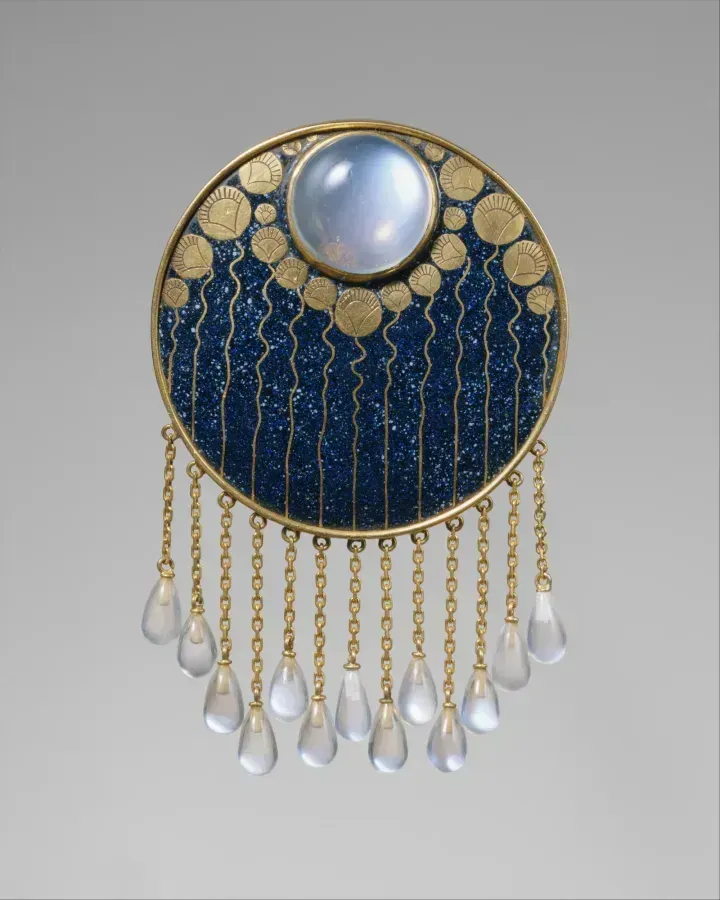
At the turn of the nineteenth and twentieth centuries adularia became one of the favourites of Art Nouveau. Masters of that movement loved flowing natural forms and muted, shimmering materials; the stone's soft shine answered an aesthetic full of lilies, female profiles and wavy lines.
In the mid-twentieth century the stone fell into shadow as fashion swung toward bright faceted gems. Its return came only in the new century, alongside renewed interest in the natural and the understated.
Moonstone in Jewellery
Art Nouveau jewellery artists turned adularia into a full-fledged expressive material. The moonstone became a dragonfly's eye, a drop of dew on a petal, the centre of a female profile, echoing the enamel and the fine lines of metal. In such works the stone carried the compositional core of the idea rather than remaining an ordinary accent. Today pieces of that era set with adularia are prized by collectors as examples of jewellery art.
Customer reviews
Zevira is a real jewellery shop. Genuine payments, deliveries and customer thank-yous.
🥰🥰🥰 gracias
Ok, ¡gracias! 🙂
Types of Adularia
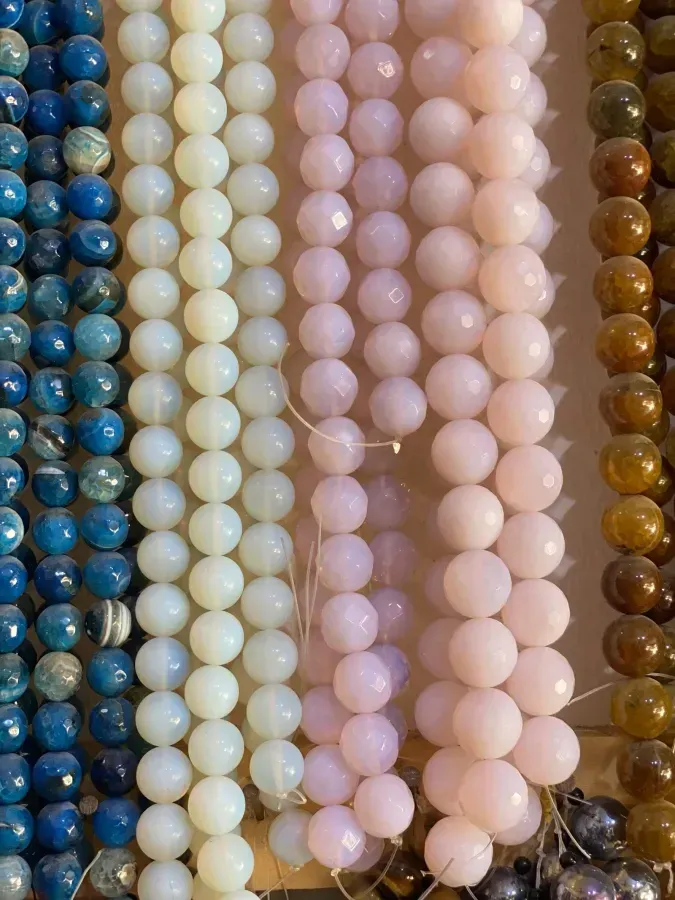
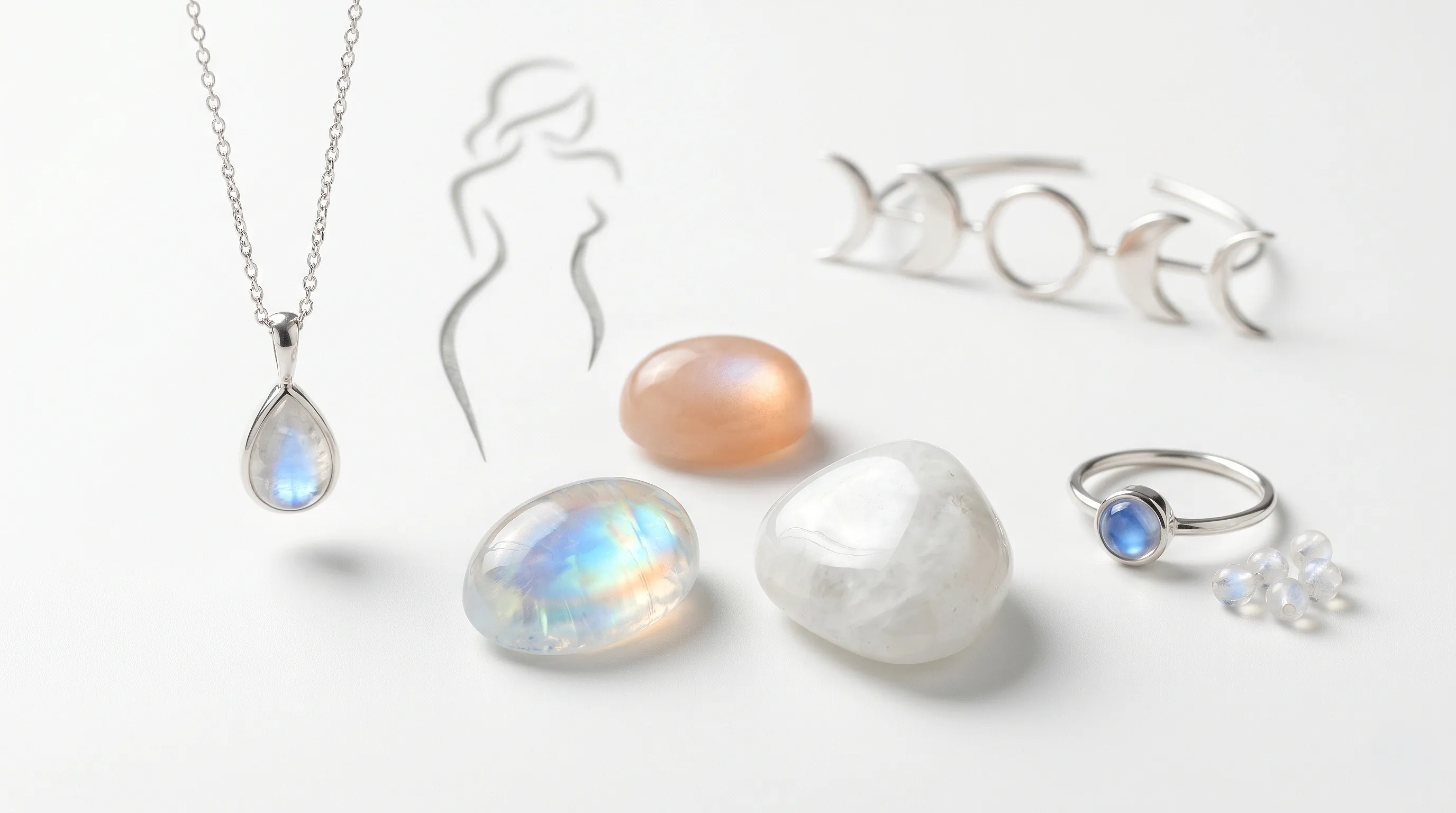
White (milky). The classic and most common option: a semi-transparent body with a milky or cream tint and a white or light-grey shine. Under evening light the effect is more pronounced.
Blue. A bluish body with an intense blue ray. Considered rarer and more valuable than white.
Peach. A warm orangey tone, sometimes with a golden shine. A rare variety from India and Madagascar.
Grey and smoky. A muted body and a restrained shine with a cool tint. A graphic, modern look that sits well in austere settings and men's jewellery.
Rainbow. Coloured flashes in the depth of the stone are added to the moonstone glow. In effect it sometimes comes closer to labradorite, yet it keeps its milky translucency.
Here honesty with the buyer matters. What the market sells as "rainbow moonstone" is, mineralogically, more often not potassium adularia but a pale translucent variety of labradorite (plagioclase, a sodium-calcium feldspar). It is a related feldspar, yet a different mineral species, and its flashes come not from adularescence but from labradorescence. This barely affects wearability: the hardness is the same, and it is set the same way. But if a seller calls the stone adularia and charges the price of a rare blue Ceylon specimen, a little clarity does no harm.
Cat's eye and star. Rare effects, when the shine gathers into one narrow band or crossing rays. They demand precise orientation in the cut and a fortunate natural structure, so they are valued above the ordinary.
Upload a photo of your pet, someone you love, or an object. We'll build a 3D model and hand-cast it in pewter.



How to Tell Adularia from Similar Stones and Fakes
Imitations
Three types of substitution turn up on the market. First, frosted "opalite" glass with an opal-like effect: it glows too evenly, lacks natural feathers and often contains tiny round air bubbles visible against the light. Glass is usually warmer to the touch and lighter than the stone. Second, treated chalcedony and other plain feldspars passed off as adularia. Third, simply a white matte stone with a glued-on reputation.
Genuine adularia gives a gathered, moving ray that shifts as you turn it, rather than sitting in place as an even blue wash. It has a slight inner haze and natural inclusions. For an expensive purchase the most reliable route is a report from an independent gemmological laboratory.
Simple On-the-Spot Checks
You cannot take a laboratory to the market with you, but a few tricks weed out crude fakes right in your hands.
- Light at an angle. Tilt the stone under a lamp. In a genuine adularia the glowing zone crawls, changes shape and fades when the shine axis moves away. Glass and plastic give an even sheen from one position, without the living movement of the ray.
- Backlighting against a lamp. Hold the stone up to a light source. A chain of identical round bubbles betrays cast glass; in a natural stone you will see an uneven haze, fine feathers and cleavage cracks in the form of straight parallel lines.
- Warmth to the touch. Press the stone to your cheek or lip. A mineral draws heat away and stays cool for a second; glass and plastic warm up faster. The test is crude, but paired with the others it helps.
- Weight. For the same size, natural adularia is slightly heavier than glass of equal volume and noticeably heavier than plastic. Compare by holding two stones in your hands.
- 10× loupe. Look for internal feathers (split cracks shaped like a centipede) and straight cleavage planes. Their absence alongside a perfectly even shine is grounds for caution.
No single check replaces a laboratory, but together they sift out the opalite glass and dyed plastic sold under the name moonstone.
Adularia and Labradorite
Both are feldspars, yet they look different. Adularia is light, translucent, with a soft flowing shine of a single tone. Labradorite is dark, almost opaque, with a bright rainbow play of blue, green and golden flashes (labradorescence). Where adularia has a calm milky glow, labradorite has a dramatic multicoloured sheen.
Adularia and Opal
Different minerals. Adularia is a crystalline feldspar with a moving single-tone shine. Opal is amorphous hydrated silica with a multicoloured play of fire; it contains water and fears drying out, which adularia does not.
Adularia, Sanidine and "Belomorite"
Sanidine is another variety of potassium feldspar, formed at high temperatures in volcanic rocks; transparent sanidines are sometimes faceted. Belomorite is a trade name for feldspar from northern deposits that gives a silvery-bluish shine. The differences are subtle, of interest mainly to mineralogists; for wearing, the brightness and gathering of a particular stone's shine matter more.
Adularia and Sunstone
A complete opposite in character: instead of a soft flowing shine, sunstone gives warm sparkling flashes from inclusions. Both belong to the feldspars, which links them by composition, but aesthetically they are antipodes.
How to Choose Adularia
The main thing in adularia is the quality of the shine, not the size.
- Gathering of the ray. A cheap stone glows as a diffuse mist across the whole surface. A good one gives a gathered band of light that glides clearly as a single front when tilted. Turn the stone under a lamp and follow the movement of the glowing zone.
- Clarity of the body. Look at the stone against the light: a clean bluish glow without brown murk and large cracks is prized above all. Small natural feathers are acceptable and confirm authenticity, while large internal fractures make the stone fragile during cutting and wear.
- Colour of the shine. A blue schiller is valued above a silvery one. But a bright, even blue across the whole surface is more likely a sign of glass: natural blue gathers into a moving band.
- The cut. An even dome without waves or scratches, with correct orientation. Whether the stone comes alive or stays dull depends directly on the cutter's skill.
By budget the range is wide: a modest stone of middling quality costs about as much as a couple of coffees, a good translucent specimen with a confident shine is noticeably dearer, and a rare large blue of collector grade moves into an altogether different bracket. Antique alpine specimens are sold at auction as rarities.



Why Adularia Is Cut en Cabochon
The shine is born inside the stone, so a faceted cut would extinguish it. A smooth convex cabochon gathers and directs the light, showing the moving ray. The cutter sets the shine axis strictly vertical, otherwise the sheen slides sideways, and chooses the dome height so that the ray stays gathered. This is why two cabochons of identical rough can cost differently. The shape is most often oval, round or teardrop: oval and teardrop emphasise the elongated movement of the ray, while round gives a symmetrical shine.
Leave your email, we'll send your discount code. No spam, unsubscribe anytime.
The code arrives by email, valid on your first order.
Caring for Adularia
A hardness of 6 to 6.5 and perfect cleavage govern everything about handling the stone: it is soft, fears knocks and readily splits along the cleavage plane.
Cleaning
Wash adularia in cool water with a drop of mild soap, wipe with a soft cloth and let it air-dry. Brief contact with water does the stone no harm. The dangers are hot water, sharp temperature changes and long soaking (which harms the setting).
You must never clean adularia with ultrasound or steam, as you would hard stones: vibration and sudden heat open the microcracks along the cleavage, and the stone may split or cloud over. If you send a piece for cleaning, be sure to warn the jeweller that it contains moonstone.
What the Stone Fears in Daily Life
The chief enemy is not water but household chemistry and knocks. Hairspray, perfume, creams and cleaning agents leave a film that smothers the shine. The rule is simple: jewellery goes on last, after make-up and scent, and comes off first, before cleaning, the shower or physical work. Sharp temperature swings (a windowsill in the sun, a radiator, a car in the frost) harm the layered structure.
Storage and Wearability
Store adularia apart from other jewellery in a soft pouch or a compartment of the box: harder stones and metal will leave scratches on it. In a pendant or earrings, adularia can be worn daily, as they are barely subject to knocks. Rings are trickier: for everyday wear a closed bezel setting that shields the edges of the stone is better, while open prong settings are wiser to keep for pendants and earrings. Once a year it is worth showing a frequently worn piece to a jeweller and checking the mounts.
The mineral itself is stable and does not fade, unlike pearl or amber. Over time only the surface changes: micro-scratches appear, the polish dulls. This is fixable, by re-polishing with a coloured-stone specialist and refreshing the setting, which is why adularia suits the role of a family heirloom well.
The Symbolism of Adularia
Here it helps to keep an honest frame. Adularia is a beautiful mineral with a poetic history, but this is the realm of tradition and folklore, not proven science. The stone has no healing or measurable "energetic" action.
The link with the moon arose from the very physics of the stone: its light is soft, dim, moving, more like moonlight than harsh sunshine. So different cultures independently tied the stone to the night luminary, and the astrological tradition assigns it to the sphere of emotion and intuition.
Tradition ascribes calm, femininity and a connection to natural cycles to adularia; it was given to brides and mothers-to-be as a protector. This is worth taking as cultural meaning and lovely symbolism, not as a real power. If a ritual with a pleasant stone in hand helps a person pause and focus, it is habit and attention that work, not the mineral. And the stone does not replace a doctor or specialist: with persistent anxiety or insomnia one must turn to them, not to a gem.
Pairings with Other Stones
- Rock crystal strengthens and lights up the milky shine of adularia without stealing attention. The safest pairing.
- Labradorite offers a related nature with an opposite aesthetic: a soft white shine against a dramatic blue-green sheen.
- Amethyst forms a restrained, noble pair in a muted palette, good for evening jewellery.
- Rose quartz gives a warm feminine range, popular in romantic jewellery.
- Pearl echoes the moonstone schiller with its nacre; both materials are delicate and intolerant of chemistry.
- Sapphire with a blue adularia creates a costly gradient from translucent-lunar to deep blue.
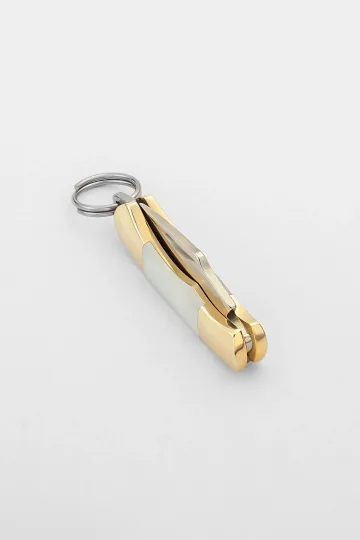
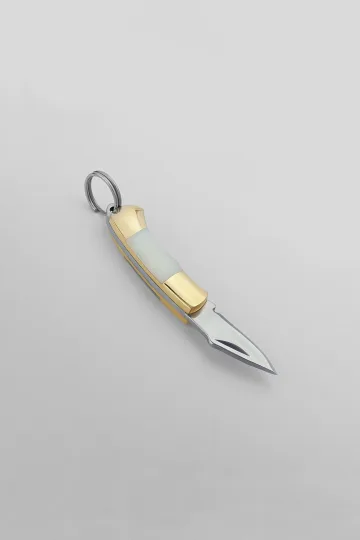
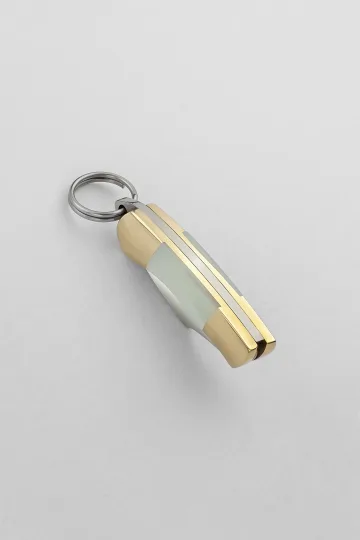
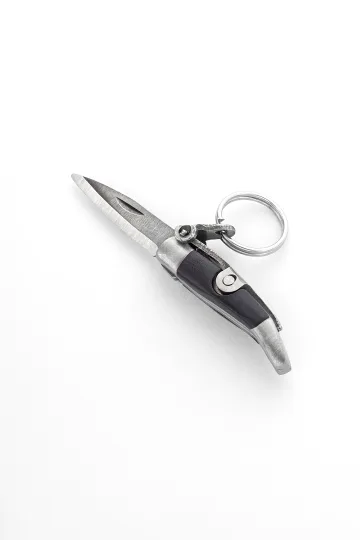
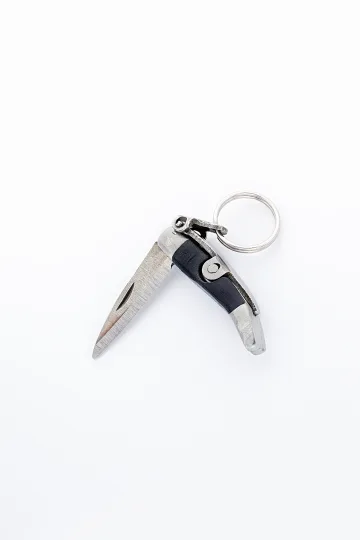
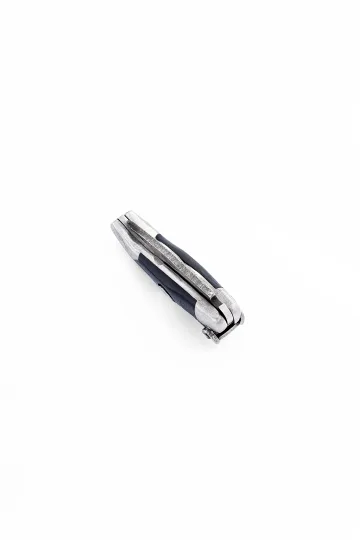
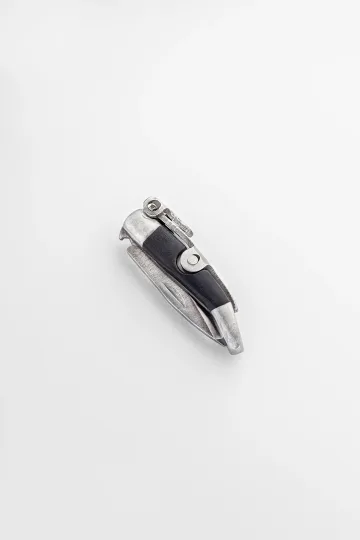
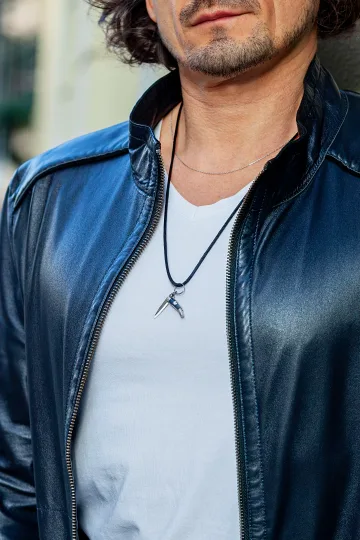
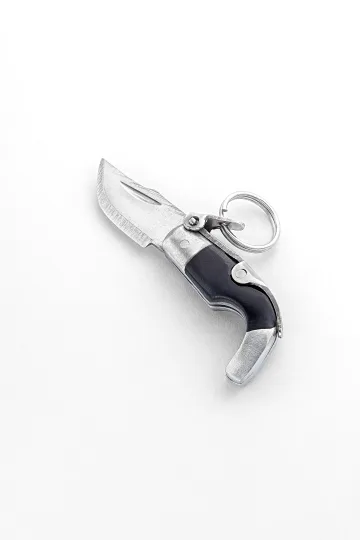
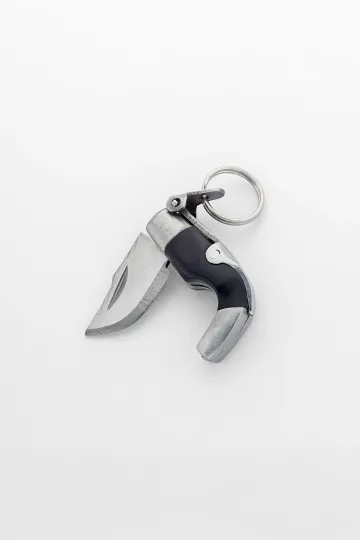
CAPAORA mini knife pendant
The 18th-century Spanish navaja in miniature: 40 mm of stainless steel, a real folding mechanism and a Palanquilla lock that clicks. An affordable gift to remember.
Authentic · Ships from Spain · 14-day returns
Adularia as a Collector's Stone
The market rates adularia by the brightness and gathering of its shine, the clarity of the body, the colour of the schiller and the size. A blue shine is valued above a silvery one; large clean stones above small cloudy ones. Origin also plays a role: alpine and old Ceylon specimens earn a premium for history and rarity.
Since mining at the Adula massif has stopped, genuine alpine stones with a documented history pass from collection to collection and hold their value steadily; new arrivals simply do not exist. Victorian and Art Nouveau jewellery is valued as antique, where the buyer pays both for the stone and for the master's work.
That said, adularia does not belong to the top tier of investment stones; it is neither a diamond nor a Burmese ruby. The sensible approach: buy what you enjoy wearing, choose the best quality within your budget, and treat any rise in value as a bonus, not a goal. Avoid treated and heavily fractured stones, document provenance, and keep laboratory reports for expensive specimens.
Adularia Among the Feldspars: Where It Belongs
Feldspar is not one mineral but a large family, and adularia occupies a narrow, aristocratic corner of it. Understanding that pedigree keeps you from getting lost among trade names and from overpaying for a substitute wearing a borrowed label.
The Potassium and the Sodium-Calcium Branches
The family splits into two large groups. The potassium feldspars, which include orthoclase, and adularia is its transparent, well-ordered form, are built around potassium. The sodium-calcium branch, the plagioclases, runs from pure sodium albite to calcium anorthite, and labradorite sits somewhere in the middle of that run. Adularescence, the floating blue sheen, comes from the potassium branch, where fine potassium and sodium phases alternate. The rainbow play of labradorite is born of a different mechanism on a different branch. The conclusion for a buyer is direct: if a stone flashes in every colour of the spectrum, it is almost certainly not adularia but a distant relation within the same family.
Adularia as a Variety, Not a Separate Mineral
Strictly speaking, modern mineralogy does not count adularia as an independent mineral species. It is a morphological variety of potassium feldspar with a particular ordered structure and a characteristic crystal habit, grown in low-temperature hydrothermal conditions. Put another way, adularia is not a different mineral from moonstone but its most noble and most cleanly expressed form. In the jewellery trade the words adularia and moonstone stand in for each other freely, and that is fair enough: the difference lives in academic classification rather than in what sits on your palm. A fuller walk through the whole group is in the piece on moonstone meaning and properties.
Why "The Best Adularescence" Means Adularia
The trade calls a fairly wide circle of sheening feldspars moonstone, but the benchmark for the effect remains adularia. The reason lies in the purity and the regularity of its internal layering. The more even and the finer the alternation of the two phases, the more gathered the ray and the cleaner its blue tone. In adularia from the better deposits that structure comes close to ideal, which is why it produces the most expressive moving sheen of the family. Plainer feldspars glow dimly, diffusely, whitish, without the gathered blue front that makes a stone noble.
This also sets the boundary against manufactured look-alikes. There is no laboratory-grown moonstone in commercial quantities, so a listing offering a synthetic one is almost always describing glass. Opalite, the milky glass sold under a dozen invented names, produces its glow by scattering light on a suspension rather than by interference on ordered layers, which is why the sheen sits still, spreads across the whole dome and looks the same from any angle. Frosted or sandblasted glass fails even earlier: its haze lives on the surface, so it scratches off at an edge and disappears under a wet finger, while adularescence lives inside the crystal and cannot be rubbed away. Hold a genuine stone and a piece of opalite side by side under a single lamp and the difference stops being subtle within a second.
How Adularia Differs from Sanidine
Sanidine is another variety of potassium feldspar, but with the opposite biography. Adularia grows slowly and at low temperatures in hydrothermal veins, and its structure has time to order itself, which lays the foundation for the sheen. Sanidine crystallises fast and hot in volcanic lava, where potassium and sodium atoms stay mixed in disorder. Because of that, sanidine is usually transparent and colourless, and it is occasionally faceted like any ordinary gemstone, but it never gives the floating lunar ray. In plain terms, adularia and sanidine are the same mineral by composition, separated to opposite ends of the temperature scale, and it is the unhurried cooling that turns one into a noble moonstone while haste leaves the other a rank-and-file clear crystal.
Adularia in Art and Culture
The shine of this stone gave artists and poets no peace long before any jewellery fashion. The image of frozen moonlight turned out to be a convenient metaphor, and it travelled through different cultures by different roads.
The Stone in Poetry and Literature
Moonstone became a literary symbol of mystery and changeability early on. In English prose of the nineteenth century it was promoted to a full character in an adventure plot: a stone with a history, a curse and a journey from the East to a country house in Yorkshire. Wilkie Collins published that novel in 1868, and it fixed on adularia the reputation of an enigmatic oriental gem while heating Victorian demand for it considerably. In verse its sheen was compared to mist over water, to breath on a window, to a memory that surfaces and fades again. The metaphor always circled the same idea: a light you cannot catch, because it keeps moving.
Moonstone and Art Nouveau
The flowering of Art Nouveau at the turn of the century was the finest hour for adularia in the decorative arts. Designers of that movement rejected the hard glitter of faceted stones in favour of muted, flowing, natural materials, and the soft shine of moonstone landed squarely inside that aesthetic. It went into dragonfly wings, into the throats of irises, into the hair of women's profiles. The stone stopped being a mere insert and worked as the centre of meaning, a drop of living light inside metal lacework. In Britain the same taste ran through the Arts and Crafts workshops, where silver, enamel and a milky cabochon replaced the diamond line of the previous generation. Those pieces hold the top of the antique moonstone market today.
The Eastern Tradition
In the East the soft moving sheen was read differently from Europe. In India moonstone was tied to sacred light and given to lovers as a wish for a happy union, taken as a stone of tenderness and constancy. The poetic name candy of the moon stressed not the glitter but a taste for quiet beauty: a stone that does not shout and lights up gradually instead. That line of feeling survives in the present appetite for natural, calm, understated jewellery, and it explains why the same cabochon reads as ceremonial in one culture and as everyday in another.
Send a friend a discount code, they save on their first order.
Facts About Adularia That Surprise People
- The stone was named after a mountain, not a person. Adularia takes its name from the Adula massif on the border of Switzerland and Italy, where benchmark sheening specimens were found. It is a rare case of a mineral carrying the name of a particular mountain range.
- In the dark, adularia is an ordinary cloudy stone. The famous shine is neither glow nor luminescence but a play of reflected light on internal layers. Switch off the lamp and the magic waits for the next beam.
- The layers inside are a hundred times thinner than a human hair. The alternating plates of two feldspar phases are around a micron thick, comparable to the wavelength of visible light. That is precisely why the stone plays blue rather than any other colour.
- The crystal in your ring is older than humanity. The host rocks of the important deposits are tens of millions of years old, and the stone itself began growing long before the first people appeared.
- The deposit that gave the name is long closed. Mining at the Adula massif has ceased and the site is protected as a geological monument, so genuine alpine adularia exists only in old collections; new material is not coming.
- Rainbow moonstone is frequently not adularia at all. That trade name often covers pale labradorite, a related feldspar with a different optical effect. Wearability is unaffected, but honest pricing certainly is.
- The Greeks took the stone for a piece of frozen moonlight. They called it selenite after Selene, goddess of the moon, and believed a lunar image lived inside it, changing along with the phases of the night sky.
- Ultrasound can split adularia in seconds. Because of the perfect cleavage, the ultrasonic bath that suits harder stones opens microscopic cracks, and a moonstone can crack while it is still in the tank. High-street cleaning services will do it by default unless you ask them not to.
Frequently Asked Questions
What is a moonstone and adularia, are they the same? In the jewellery sense, yes. Moonstone is the trade name for adularia and related feldspars with adularescence. Mineralogists distinguish subtle varieties, but for the buyer both words mean a semi-transparent feldspar with a moving shine.
Why does adularia shine when it moves? Inside it, the thinnest layers of different feldspar phases alternate, from tenths of a micron to one micron, close to the wavelength of visible light. Light scatters and interferes on these layers, gathering into a glowing band. Turn the stone, the angle changes, and the band shifts.
Does adularia shine by itself in the dark? No. This is not luminescence but reflected and scattered light. In total darkness adularia looks like an ordinary cloudy stone; the effect appears only under lighting and in movement.
Can adularia be worn every day? In a pendant or earrings, yes, as they are barely subject to knocks. Rings are trickier: a hardness of around 6 on Mohs, a fragile stone that fears chipping. Protect a ring from knocks, take it off for physical work and sport. On last, off first.
Is adularia suitable for an engagement ring? It looks romantic and unusual, but it calls for a conscious choice: because of its fragility it is less durable than traditional stones. If you are ready to look after the piece and accept possible small marks of wear, adularia makes a beautiful choice. A protective setting will noticeably extend its life.
How do you tell a real adularia from a fake? Imitations are usually made of opal glass: they are given away by a too-even glow, the absence of natural inclusions and round air bubbles against the light; glass is warmer to the touch and lighter. A real stone has a slight haze, natural feathers and a gathered ray that shifts when turned. For an expensive purchase get a gemmological laboratory report.
Can adularia get wet? Brief contact with cool, clean water does no harm; washing with water and mild soap is fine. The dangers are hot water, sharp swings, household chemistry and long soaking. In the shower, the pool and during cleaning it is better to take the piece off; salty seawater is undesirable because of salt and sand.
Can adularia be cleaned with ultrasound? No. Ultrasound and steam open the microcracks along the cleavage, and the stone may split or cloud. Only hand-cleaning with a soft cloth and cool water.
Where does the best adularia come from? The historical benchmark is the alpine Adula massif, but mining there has stopped and the stones remain only in old collections. The main source today is Sri Lanka with its milky-white Ceylon moonstone. Bluish specimens come from India and Madagascar. A good blue adularia is always a rarity.
Why has adularia risen in price in recent years? The fashion for natural stones and minimalism combined with the limited supply of quality rough. Stones with a bright gathered blue shine are few, while demand has grown, so the high segment has risen most noticeably. Ordinary cloudy stones remain affordable.
Does adularia show a cat's-eye or star effect? Yes, in some specimens the shine gathers into a narrow band (cat's eye); a star effect is rarer. Such stones are scarce and valued higher because they require special orientation in the cut.
Can adularia be treated? Quality natural adularia usually needs no treatment. Sometimes cloudy stones are impregnated or backed with a tinted layer, but this lowers value and counts as deception when undisclosed. For an expensive purchase, ask whether any treatment was carried out.
Is adularia a men's or women's stone? Historically it was more often tied to feminine symbolism, but this is cultural tradition, not a rule. Adularia appears in restrained men's jewellery too and suits anyone drawn to its aesthetic of calm light.
Common Questions
What stone size to choose for an everyday pendant?
For weekday wear, take a medium cabochon that lies on the breastbone and reads as a single quiet accent. Too large a stone in an open setting catches on clothing and gathers scratches faster. More important than size is the quality of the shine: a small one with a gathered ray looks costlier than a large cloudy one.
What is best to pair adularia with?
The stone loves cold metal and a cool palette: silver, white gold, white, grey and blue in clothing. Among jewellery neighbours, the safest pairing is rock crystal, which lights up the milky shine and does not steal attention. Bright faceted stones nearby are best avoided, as they smother the soft moonstone sheen.
How long will a piece with adularia last?
With careful handling it serves for decades and suits the role of a family heirloom: the mineral itself is stable and does not fade, unlike pearl or amber. Over time only the polish dulls and micro-scratches appear; this is fixable by re-polishing with a coloured-stone specialist. A pendant and earrings wear more slowly than a ring.
Can you wear adularia to the gym or shower?
Better to take it off. Knocks at the gym are dangerous to a fragile stone with cleavage, and in the shower a film from soap and products settles on it and smothers the shine. The same rule applies as with perfume: jewellery goes on last and comes off first, before the shower, sport and cleaning.
What to replace adularia with if you want a similar shine?
The soft moving glow is the work of white adularia, and it has no exact analogue. If you want a more dramatic multicoloured sheen, look at labradorite, a related feldspar with a bright rainbow play. For sparkling warm flashes instead of a cool ray, there is sunstone, the aesthetic antipode of adularia.
Buying it as a gift? Each one arrives ready to give.
 A branded Zevira box and a little card come with every order.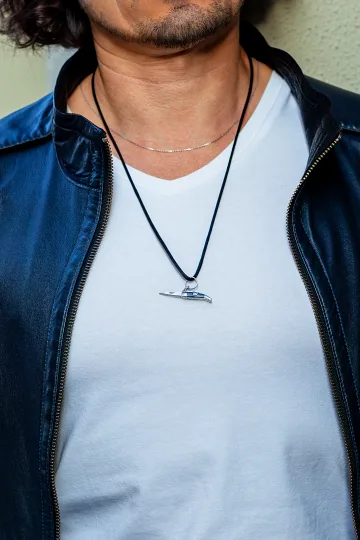





About Zevira
In our collection, jewellery with adularia combines the beauty of a natural mineral with the work of Spanish jewellers. We choose stones with a bright gathered shine, a clean body and good translucency, mainly Ceylon, and set them in silver and white gold, including protective settings for everyday wear.
If you are drawn to calm natural beauty without loud sparkle, adularia is your stone. For relaxation practices it is sometimes placed alongside selenite, and in the range of cool blue minerals alongside sodalite.
Handmade jewellery with adularia: pendants, rings and earrings with a moonstone shine in silver and white gold.