Agate: Every Type of Stone, Its Properties and Jewellery
A single centimetre of agate holds roughly a million years of history, recorded in stripes. Every line inside the stone marks a different impurity: red means iron, black means manganese or carbon, white means pure silica. The chemistry is always the same, yet no two agates on the planet are identical. Below we break down what it is made of, how it forms, the types you will meet, how to tell a real stone from dyed glass, and how to care for it.
What Agate Is: The Chemistry and Physics
Agate is the banded variety of chalcedony, a cryptocrystalline form of quartz. The recipe is simple: silicon dioxide, SiO₂, with traces of metal oxides that supply the colour. The crystals are so fine that the eye cannot see them. The stone looks solid, but under a microscope it is a dense felt of quartz fibres.
A few numbers worth knowing before you buy:
- Mohs hardness: 6.5 to 7. That is harder than window glass (5.5) and most household surfaces, so an agate ring will go years without a scratch.
- Density: 2.58 to 2.64 g/cm³. The stone is noticeably heavier than plastic or glass of the same size, which gives it that satisfying weight in the hand.
- Crystal system: agate is an aggregate of cryptocrystalline quartz (trigonal) mixed with moganite, so its fibrous build makes it behave as one solid mass.
- Cleavage: none, with a conchoidal fracture. Agate does not split along flat planes; it chips with sharp edges, like glass.
- Refractive index: roughly 1.53 to 1.54, with weak birefringence.
- Transparency: from translucent at the edges to fully opaque.
Agate shows almost no dispersion and no real pleochroism. This is not a faceted gem with fire, it is a stone of pattern. People prize it for the picture inside, not for sparkle. The rainbow shimmer of fire agate is a separate story, and it is not dispersion but interference: light splitting on wafer-thin films of hematite inside the stone, the way a puddle shows colour under a slick of oil.
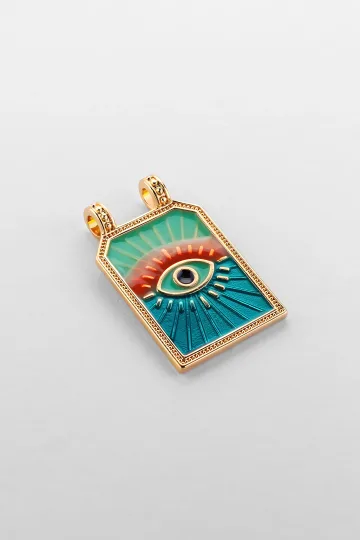
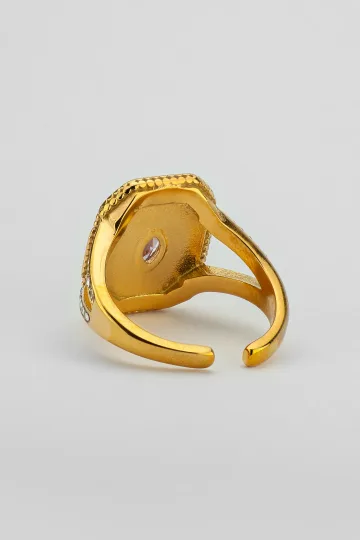
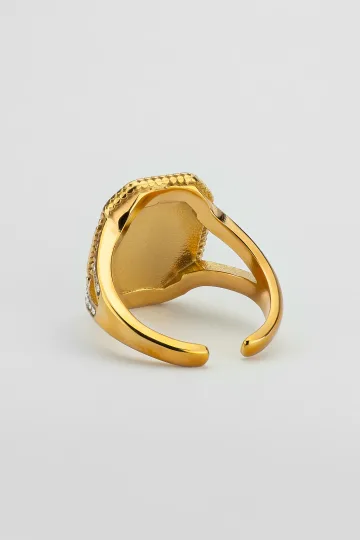
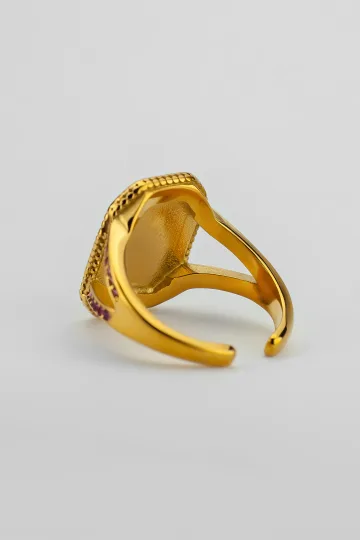
Wear the symbol, don't just read about it. These are in stock:




How Agate Forms in Nature
Agate is born in the cavities of volcanic rock, most often basalt. When lava cools, gas bubbles stay trapped inside it. Later, silica-rich water seeps through the rock and lays down quartz on the walls of those hollows, layer by layer. Each band is a thin crust that may take hundreds or thousands of years to settle.
The colour of each stripe depends on what was dissolved in the water at that particular moment. Iron oxide gives reds and rusty tones, manganese leaves brown and black dendrites, a clean solution leaves white and grey layers. The banded pattern is, quite literally, a chronicle of the changing chemistry of the water. Concentric rings appear when deposition gathers around a central point; even parallel bands appear when the solution filled the cavity quietly, one layer at a time.
How Agate Differs from Chalcedony and Onyx
The muddle over these names began in antiquity and has never been cleared up. Chalcedony is the general name for all cryptocrystalline quartz, that is, stone made of microscopic quartz fibres. Agate is chalcedony with banding or a pattern. Onyx is chalcedony with even parallel layers, usually black and white, with no waves or figures. Carnelian and sard are evenly coloured chalcedony with no bands at all. So agate, onyx and carnelian are all brothers in one family, distinguished only by the character of the pattern, while the chemistry underneath is identical. Anyone shopping in a British antiques centre meets this confusion constantly, because Victorian dealers used the terms loosely and their labels have been copied forward ever since.
What Moganite Is and Why It Matters
Alongside ordinary quartz, agate almost always contains a second mineral with the same formula, SiO₂, but a different structure. It is called moganite. Geologists have learned to estimate the age of a stone from its proportion of moganite: over time moganite slowly recrystallises into ordinary quartz, so old agates hold less of it than young ones. It is a rare case of a mineral's internal chemistry working as a built-in clock.
Why Agate Breaks with a Conchoidal Fracture
Many minerals have cleavage, planes along which the crystal splits cleanly. Agate has no cleavage whatsoever. When a fibrous quartz aggregate breaks, the fracture does not follow a plane but a smooth curved surface resembling the inside of a shell. Hence the name, conchoidal fracture. Glass and obsidian break the same way, and it is precisely this behaviour that let ancient toolmakers strike sharp cutting edges. For jewellery it means one thing: agate resists scratching well, but a hard, concentrated knock can take a conchoidal chip out of it and leave a sharp edge behind.
How Science Dates and Studies Agate
Modern methods look inside the stone without destroying it. Raman spectroscopy reveals the ratio of quartz to moganite from the way the stone scatters a laser beam. An electron microscope shows that every band is made up of bundles of parallel fibres twisted into a spiral. Isotope analysis of the oxygen in the quartz indicates the temperature at which crystallisation took place. Out of that data the history of one particular stone can be assembled: where it grew, when, and out of what kind of solution.
Geology and Deposits
The main sources of agate are well known and steady from decade to decade.
Brazil supplies most of the world's agate. The deposits in Rio Grande do Sul and Santa Catarina sit on ancient basalt plateaus riddled with cavities. Brazilian stone means high-contrast red, white and grey bands, often in generous sizes.
Uruguay borders the same lava flows, so Uruguayan agates resemble the Brazilian ones, though often with a deeper, more saturated ground. Collectors favour them.
India is an old mining centre, around the Deccan. Indian agates tend to be gentler in colour: bluish, grey, milky white, with soft blurred bands.
Germany is famous less for mining (the historic deposits near Idar-Oberstein ran dry long ago) than for craft. Idar-Oberstein has stayed the world's capital of agate carving for several centuries.
The United States offers agates from Oregon, Idaho and Montana, often with dendrites and clear quartz inclusions. Scotland gives the prized Scottish "pebble" agates in brown and red tones, beloved by Victorian jewellers. Agate also turns up in Mexico (fire agate), Madagascar and Australia.
One big agate against a plain collar, full stop. Piling on three at once is for magpies, and I won't hear otherwise.
What to Wear Agate With
I have handled enough agate to read a band of it like someone's handwriting. Here is what actually works, on shoots and in real life, sorted by occasion.
What do I wear agate with every day? For daily wear I recommend a pendant with grey or moss agate on a long chain over a plain chunky-knit jumper or a simple tee. The stone falls to the chest, the pattern reads against an even ground, and the look gathers around it on its own. I suggest keeping the top quiet: a busy fabric fights the stone, and both lose.
Is agate right for the office? It is. I choose restrained colours: black, grey, smoky agate in silver or white gold. A ring with a smooth cabochon or small earrings under a closed-collar blouse look composed and do not distract in a meeting. A deep V-neckline, by contrast, asks for a vertical pendant that draws out the line of the neck.
How do I build an evening look? In the evening agate comes alive on dark, heavy fabrics. A red or cherry stone on black silk or velvet reads almost like a jewel under warm light. For a special occasion I suggest a slim stack of agate-bead bracelets in a close palette plus one larger accent stone, so the wrist does not look monotonous.
Which metal do I match to the stone? The logic is simple: warm agates (red, orange, fire) I set in gold and brass, cool ones (blue, grey, black) in silver and white gold. You can mix metals, but then one leads and the other supports. Skin gives the same cue: a warm undertone likes gold, a cool one silver.
Who does agate actually suit? Almost everyone, it is a question of colour. A bright red enlivens the understated, a calm blue balances those who already love a lot of detail. One rule never fails: one expressive agate almost always beats three middling pieces at once. Let the stone take the solo and let the rest stay quiet.

Turn on your camera, pick earrings, a pendant or a ring, and see the piece on yourself in real time.
Switch items in one tap.
Everything runs in your browser: no photo or video is ever uploaded.
Agate Through Cultural History
The name itself goes back to the river Achates in Sicily, where, according to ancient writers, the stone was found in antiquity. Greeks and Romans cut intaglio seals, gems and amulets from agate: the hard, dense stone held fine carving well and did not crumble. Etruscan craftsmen set carved agate scarabs into gold. The Roman naturalist Pliny the Elder described agate among prized stones in his Natural History and repeated the beliefs of his day about its protective powers. Those were the folk beliefs of the time, not medical facts.
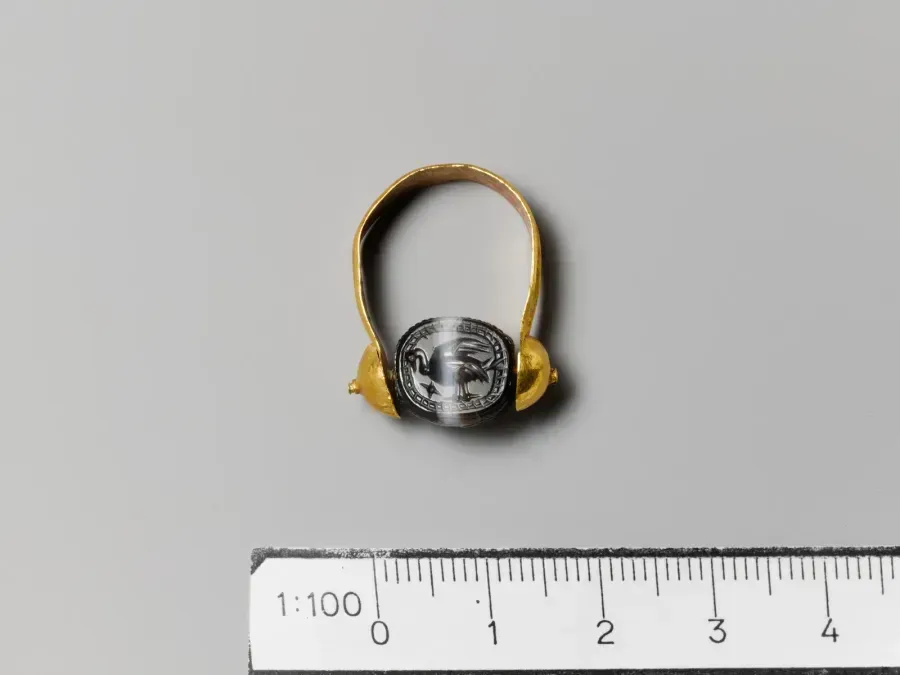
In the Middle Ages agate went into rosaries, book-cover mounts and hilts. During the Renaissance, large blocks were turned into vases, bowls and cups, the sort of objects that ended up in the curiosity cabinets of the European nobility. The craft peaked in German Idar-Oberstein, where a school of agate cutting and carving grew from the fifteenth and sixteenth centuries. The same workshops later processed imported Brazilian stone. In Victorian Britain Scottish agate became fashionable and was eagerly used in brooches and buckles. Alongside agate, jewellery often featured jasper in all its types and colours, a stone of similar density and character.
Agate in Mesopotamia and Ancient Egypt
Long before the Greeks, agate was being cut in Mesopotamia. Sumerian and Babylonian craftsmen made cylinder seals from the banded stone, rolled across wet clay to leave an impression that served as the owner's signature. Agate beads carrying royal dedicatory inscriptions have survived, and examples sit in the British Museum's Mesopotamian collections today. In Egypt, carnelian and banded chalcedony were made into amulets, among them the heart amulet and the wedjat eye, which were placed with the dead. The stone was valued because it held fine carving and did not fade in a tomb across thousands of years.
Gem Carving in Antiquity
Greek and Roman glyptics raised work in agate to a level that took a very long time to match again. The carver used the layers of the stone as a palette: a black ground, a white figure, a brown detail, all in one piece, without a trace of pigment. That is how cameos were made, with the design standing proud, and intaglios, with the design cut into the stone for sealing. From large blocks of sardonyx and agate, whole vessels and cups were carved, and these later fetched more than gold plate of the same weight.
Agate in the Caucasus, India and China
In India agate has been mined and worked around Khambhat in the west of the country for several thousand years, and beads from there travelled the trade routes across the whole ancient world. In China agate was turned into bowls, snuff bottles and figures, with particular value placed on stones whose natural two-tone pattern a carver could build into the subject. In the Caucasus and Central Asia banded agate went into rings and belt fittings, while a distinctive agate with a white eye on a dark ground was worn as a charm against the evil eye, a tradition still alive today.
Eye Agate as Protection Against the Evil Eye
A pattern of concentric rings converging on a point was read in many cultures as a watching eye. The logic is straightforward: if an eye of your own is looking outward, someone else's ill-wishing glance never reaches you. Beads and pendants of eye agate were made from the Mediterranean to Central Asia. It is the same idea that lies behind the blue glass nazar eye, only worked in stone and several thousand years older. It is worth treating as a fine old tradition rather than as protection that works.
Customer reviews
Zevira is a real jewellery shop. Genuine payments, deliveries and customer thank-yous.
🥰🥰🥰 gracias
Ok, ¡gracias! 🙂
Types of Agate
Banded Agate
The classic: alternating stripes of white, grey, red, brown and yellow. The layers can run dead straight or wavy. This is the most common and most recognisable form of the stone, and a practical one to cut: the jeweller can turn the bands vertically or on the diagonal to suit the shape of the piece.
Eye Agate
Concentric rings close in on a point and form a pattern that resembles an eye. It appears when deposition built up around a central seed of crystallisation. One of the most striking options for rings and pendants.
Fire Agate
A rare variety with a rainbow shimmer over a red-orange ground. The effect comes from interference of light on thin layers of hematite, not from pigment. The stone is hard to work: clumsy polishing kills the play of colour, so a good specimen is expensive. A full breakdown of the optics of this variety lives in the piece on fire agate, the stone with real fire.
Blue Lace Agate
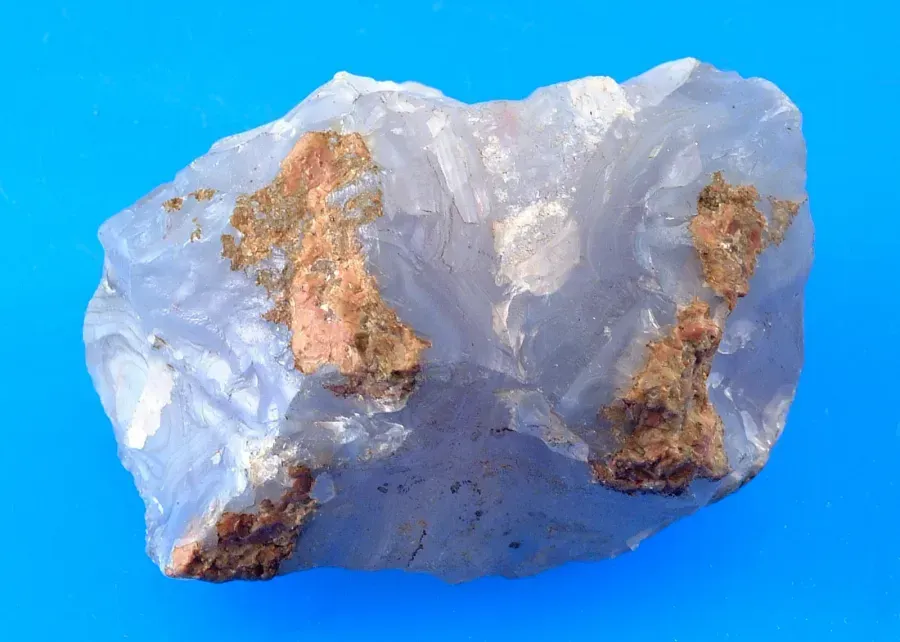
A pale blue ground with white swirls that look like lace. The colour is gentle, the pattern wavy. It is found above all in India and Namibia.
Moss Agate
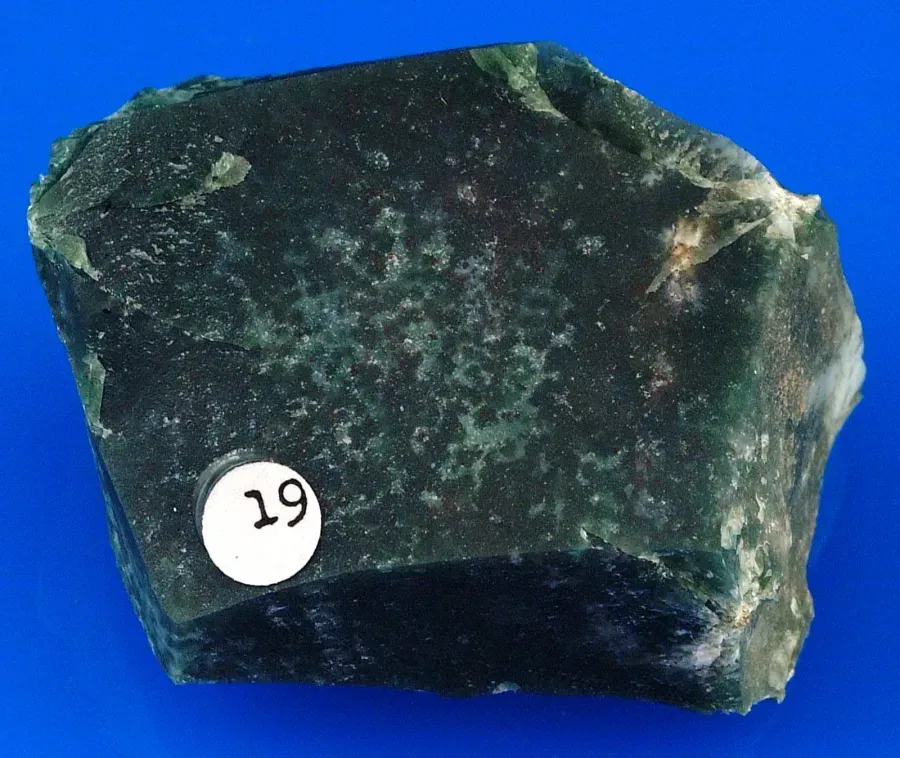
A translucent base with green inclusions that resemble moss or seaweed. It is not organic matter but ingrown iron silicates and chlorite. In a polished cabochon it looks like a miniature landscape. There is a dedicated piece on this variety: moss agate, nature's green stone.
Dendritic Agate
A clear or white base with black branching patterns. The patterns come from manganese oxide that settled in micro-cracks: not a fossilised plant but a crystalline picture of diffusion. The name comes from the Greek dendron, tree.
Carnelian and Red Agate
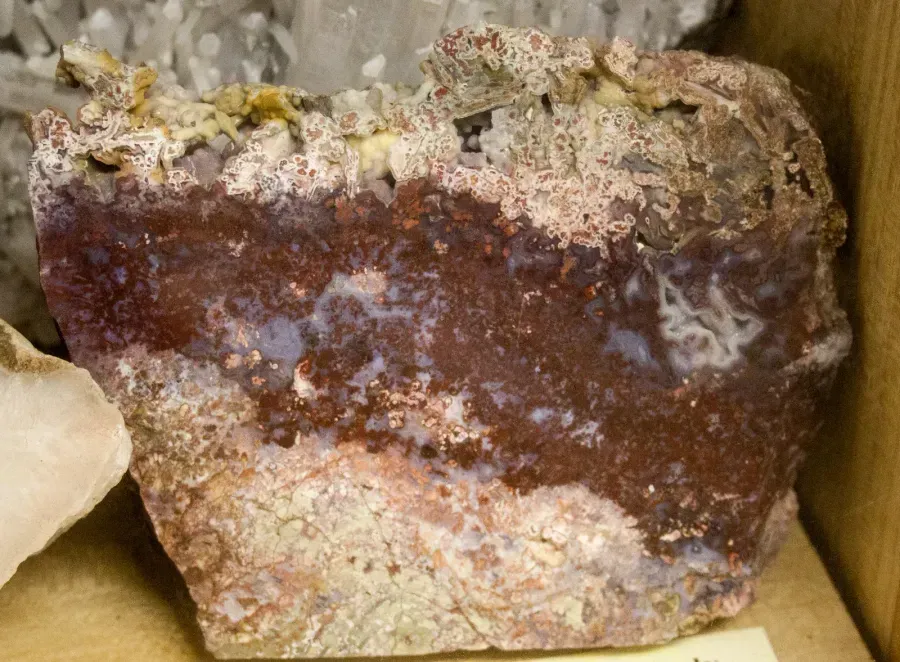
Shades from pink to deep cherry. Iron oxide is responsible for the colour. A dense, even red-orange stone from the same family is called carnelian.
Agate Geode
A cavity that was never fully filled: a hollow remains inside, lined with quartz crystals pointing inward. Cut open, it looks like a tiny cave with a crystalline lining. It tends to go into collections and decor rather than jewellery.
Botswana Agate
Named for the place it is mined in southern Africa. It is recognised by fine, very closely spaced bands in a pink-grey, lilac and peach range. The layers here sit tighter than in Brazilian material, and the transitions between them are soft, with no hard edges. Because of that delicate palette, Botswana agate is a favourite in quiet pieces where the stone supports an outfit rather than competing with it. In the local Tswana tradition the stone was associated with rites around birth, and some of that folklore has travelled to the present day along with the name.
Crazy Lace and Crab Lace Agate
A variety with closed rounded cells that build into a pattern resembling a shell or a cluster of bubbles, each cell holding its own small concentric figure inside. The stone is scarce and expressive, and it goes mostly into collectors' cabochons and one-off pendants where the whole complexity of the pattern can be seen at once. Cut it too small and the effect disappears entirely, which is why lace agates are usually seen in generous cabochons.
Plume Agate
Plume agate carries soft feathery inclusions inside a translucent ground, looking like small feathers or tongues of flame. The inclusions come from the same iron and manganese oxides as elsewhere, but here they settled in loose bushy clusters rather than in layers. The stone opens up best with light behind it, so plume agate is often cut into thin plates for pendants where the light can come through.
Mushroom Agate and Turritella
Turritella is often sold as agate, though strictly speaking it is a silicified limestone full of the shells of ancient turritella snails, replaced by silica. A dark brown ground is scattered with the pale spirals of the shells. Mushroom agate is the name given to specimens with rounded mottled inclusions resembling caps. Both are valued because what you are reading in the stone is literally a piece of an ancient seabed.
Snow and Waterfall Agate
Snow agate is the name for a translucent grey-blue stone with white flaky inclusions scattered through it like a flurry. Waterfall agate, sometimes called flow agate, gives long parallel streams of white across a dark ground, and the pattern genuinely does look like frozen running water. Both effects come from different rates of silica deposition inside the cavity.
Lake Superior and Sweetwater Agate
Lake agates, the best known of which are collected along the shores of Lake Superior in North America, are marked out by a rich red-orange ground from their high iron content. Glaciers carried these stones out of the parent rock long ago and scattered them across the beaches, so they are found tumbled smooth, with no sharp edges. Among collectors this is close to a cult variety, and picking them off a beach is a pursuit in its own right.
Thousand-Layer and Fine-Banded Agate
Sometimes several hundred exceedingly fine layers fit into a single centimetre of stone. In section they produce a moire or hologram effect: turn the stone and light appears to run along the bands. Specimens like this are cut across the layers to show the full density of the pattern, and they are used in pendants where the play is visible with light behind them.
Sardonyx Agate
A close relation of black agate and carnelian: alternating red-brown carnelian layers with white or black ones. Sardonyx is exactly what ancient carvers used for cameos, exploiting the contrast between layers so that a pale figure stood out against a dark ground. A stone with well over two thousand years of history behind it.
Wood and Coral Agate
Wood agate is the name for petrified wood replaced by chalcedony: a section shows growth rings and the structure of timber, but the material is stone. Coral agate, conversely, repeats the cellular structure of ancient coral. Both are pseudomorphs, cases where silica took the place of vanished organic material and kept its shape.
How to Tell Real Agate from a Fake
Agate is abundant in nature, so it is faked not to save on material but to pass off a cheap dyed stone or glass as a rare colour. What to look for:
- The pattern goes deep. On a natural stone, a chipped or raw edge shows the bands continuing inward. On a dyed one the pattern is often only on the surface.
- Imperfection. Natural agate has slight unevenness of tone, tiny inclusions, asymmetric bands. Colour that is too even, too loud, too uniform is a reason to suspect dye.
- Dyeing is not always a fake. Some agates (especially the bright blues, fuchsias and acid greens) are dyed. This is acceptable treatment if the seller declares it. Naturally neon-bright agates barely exist.
- Cold and weight. The stone feels cold against the hand and is clearly heavier than plastic. Glass is warmer and lighter, and often gives itself away with air bubbles inside.
- Hardness. Agate is not scratched by a steel knife. Glass is hard too, so one test is not enough, but soft plastic is ruled out at once.
It is also worth distinguishing agate from its relative quartz: amethyst, citrine and smoky quartz are coarsely crystalline varieties of the same SiO₂, while agate is cryptocrystalline and always banded or patterned.
Upload a photo of your pet, someone you love, or an object. We'll build a 3D model and hand-cast it in pewter.



How Agate Is Dyed and Heated
Dyeing agate is not a modern con but a craft several centuries old. In Idar-Oberstein it was industrialised back in the nineteenth century, when local stone ran out and imported Brazilian material was dyed instead. Agate is porous unevenly: the permeable layers soak up the solution, the dense ones do not, so dyeing sharpens the contrast of the bands and brings out the pattern. Knowing the mechanics helps you understand what you are buying.
- Black agate (often sold as onyx). The classic trick: the stone is soaked in a sugar or honey solution, then in sulphuric acid. The sugar settled in the pores chars into black carbon. That gives the deep, even black that banded agate almost never shows in nature. It is a stable treatment that does not fade.
- Carnelian red-orange. Grey and brown agates with iron are heated: the iron oxides oxidise further and shift into red and rusty tones. Heating imitates what the sun does over millennia in nature. The colour comes out durable.
- Blue, fuchsia, acid green. These are aniline and inorganic dyes. Nature rarely produces such pure neon tones, so a bright blue lace or poison-green agate is almost always dyed. The treatment itself is acceptable; the only question is the seller's honesty.
How to tell heating from dyeing by eye: after heating the colour runs through as a solid mass and looks natural; after dyeing the pigment often gathers along cracks and layer boundaries, giving a slightly sharper, chemical tone. Durability differs too: heated carnelian is not afraid of sun, while cheap dye can fade.


How to Choose Agate and What Drives the Price
Agate is plentiful in nature, so you are not paying for rarity of material but for the pattern and the work. A few pointers for what to look at in a finished piece.
- Pattern and contrast. The heart of agate. A crisp, readable design is valued: even parallel bands, a closed, regular eye, symmetry. A blurry, muddy pattern with unreadable transitions is cheaper even at a large size.
- Centring the stone in its setting. In a good piece the jeweller has turned the stone so the eye, or the crest of the bands, lands in the centre and does not slip under the bezel. This is handwork at the cutting and grinding stage, and it is exactly what separates a careful piece from a random one.
- Polish quality. The surface should be mirror-like, free of dull smears and scratches from coarse grinding. With fire agate polishing is genuinely critical: too deep a cut strips the thin hematite film and kills the rainbow play, which is why a good specimen costs markedly more.
- Uniformity of the slice. Cracks, cavities and pale crumbly zones lower both strength and price. Held to the light, a thin cabochon shows whether there are internal fractures.
- A rarer variety. Fire agate, clean blue lace without dye, a large expressive moss landscape: all cost more than ordinary banded stone. But even rare agate stays more affordable than most classic gems.
A word on size: in agate it adds less to the price than in transparent gems. A large but cloudy stone with a lazy pattern loses to a small one with a perfect design. Pay for the picture inside, not for the weight.
Agate in a Ring, Earrings and Pendant
A hardness of 6.5 to 7 lets you wear agate anywhere, but the lack of cleavage and the conchoidal fracture change the rules by type of piece.
- Rings. The most exposed position: the hand is forever knocking against desks, door handles, keyboards. A smooth cabochon without sharp edges survives knocks better than a faceted insert. Ideally the setting covers the edges of the stone (a closed bezel or rim) rather than leaving them open. Thin sharp corners are the first to chip.
- Earrings. The gentlest option: earrings take almost no impact. Here you can choose thin plates, geode slices, lacy cuts of blue lace agate that would have chipped long ago in a ring.
- Pendants and brooches. The happy medium: the stone is large, the pattern reads against the flat background of fabric, the risk of knocks is moderate. Translucent agate opens up against the light in a pendant, which is why moss and dendritic stones are especially good in a drop.
The general rule: the more a stone risks a knock, the smoother its edges should be and the more the setting should cover it.
Leave your email, we'll send your discount code. No spam, unsubscribe anytime.
The code arrives by email, valid on your first order.
Caring for Agate
A hardness of 6.5 to 7 makes agate easy for daily wear: it is not bothered by dust or everyday contact. But it has no cleavage and a conchoidal fracture, so a sharp blow against stone or tile can chip it. The logic of care is simple.
- Cleaning. Warm water, mild soap, a soft cloth or brush. That is enough. Avoid harsh chemicals, acids and chlorine; they will harm the setting sooner than the stone.
- Ultrasonic and steam. Not recommended, especially for dyed specimens and stones with cracks: they can worsen hidden flaws.
- Sun. Some dyed and a few natural red-orange agates fade over time in strong direct sun. Keep jewellery off the windowsill.
- Storage. Apart from harder stones (quartz is easily scratched by topaz, corundum, diamond). A soft pouch or a separate compartment in a box.
- Take it off for dirty work and sport. Not because of energy, but to avoid an accidental chip.
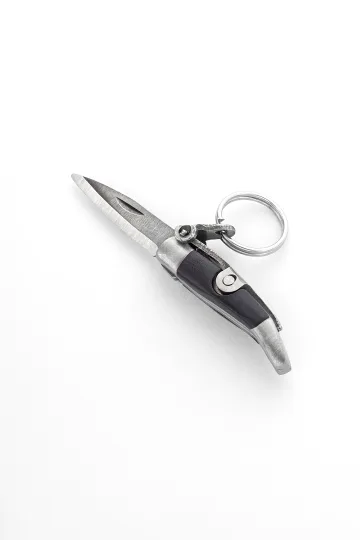
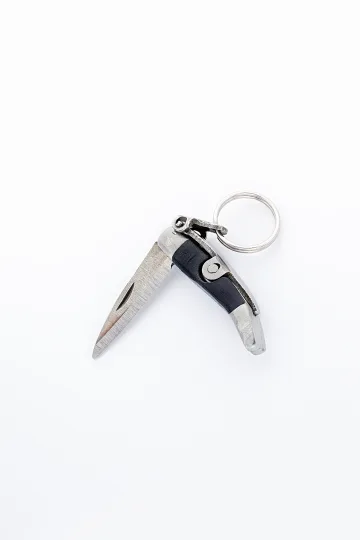
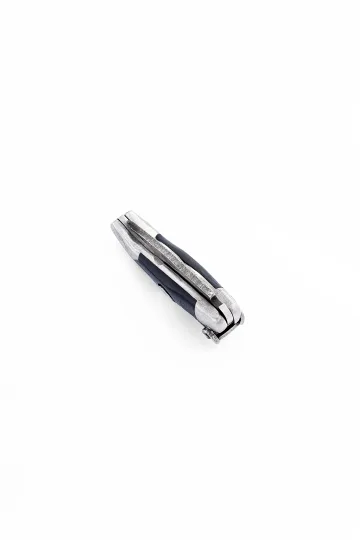
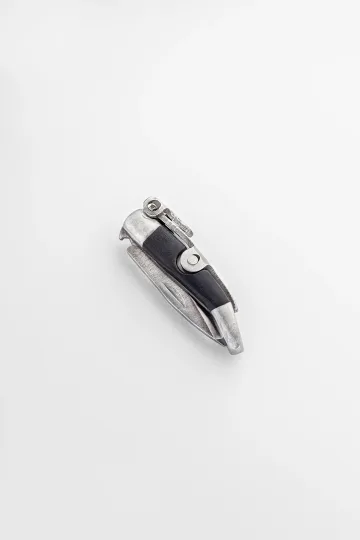
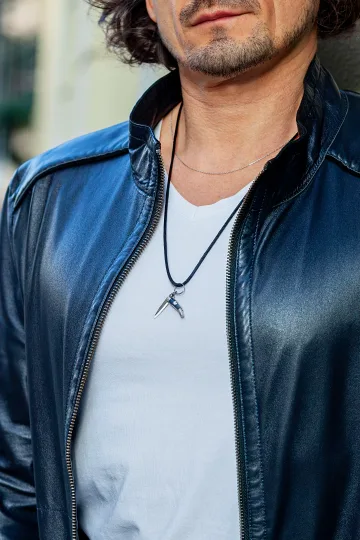
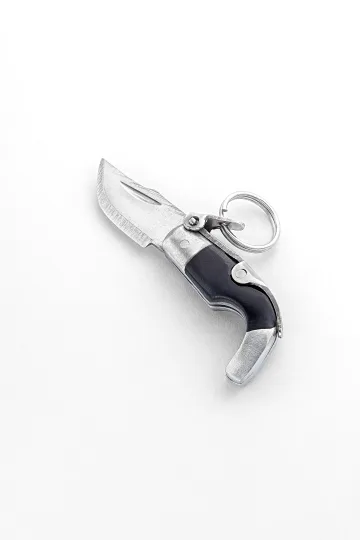
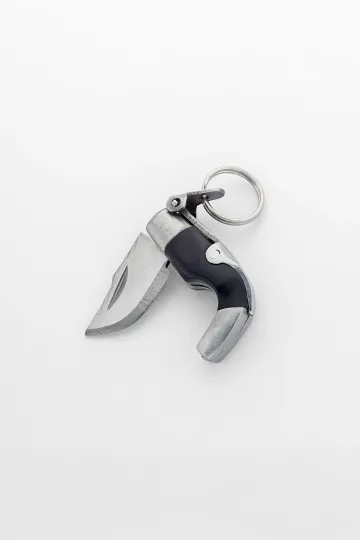
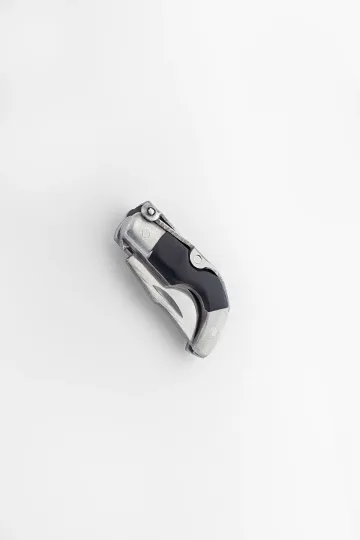
CAPAORA mini knife pendant
The 18th-century Spanish navaja in miniature: 40 mm of stainless steel, a real folding mechanism and a Palanquilla lock that clicks. An affordable gift to remember.
Authentic · Ships from Spain · 14-day returns
Symbolism: What Is Claimed and What Is Proven
Agate has been credited with all sorts of things: protection on the road, courage for warriors, clarity of mind. That is part of a cultural tradition, and it deserves to be treated as exactly that. The stone has no proven physiological or healing effect: no mineral cures disease or replaces a doctor. The pleasant weight of a smooth stone in the palm really can help you focus or calm down, but that is an ordinary tactile response, not a property of agate in particular. The reason to wear it is its beauty and its unique pattern, and the symbolism is best taken as part of the object's story.
Agate in Art and Interiors
From Princely Cabinets to Carved Vessels
In the Renaissance and the Baroque, large blocks of agate travelled well beyond jewellery. They were turned into vases, cups, handles, table tops and mosaic inlays for princely interiors. Florentine mosaic, assembled from thin plates of stone, frequently used slices of agate as ready-made landscapes: a mossy pattern stood in for shrubs, a banded one for layered hills. Nothing was painted. The craftsman simply chose the right pattern and cut to it.
Agate as a Natural Landscape
A polished slice of moss or dendritic agate looks like a miniature painting: trees, weeds, thickets, sometimes a whole horizon with mountains. This quality gives such stones the name landscape agate, and collectors gather the slices as finished works of nature. Nothing in the image is man-made; it was produced by the diffusion of manganese and the settling of silicates over millions of years. Which is exactly why no two landscape agates are ever the same.
Agate Slices in Design Today
Thin translucent plates of agate are set into lamps, stands, door handles and panels. With light behind them the full depth of the banding appears, invisible in reflected light. Jewellery uses the same idea in slim pendants: the stone comes alive when light passes through it, and each layer takes on a shade of its own.
Surprising Facts About Agate
- Agate carries one of the oldest recorded stone names. The word goes back to the river Achates in Sicily, and it is among the earliest documented mineral names in the European written tradition, about two and a half thousand years old.
- The proportion of moganite works as a geological clock. The older the agate, the less moganite it holds, because moganite slowly recrystallises into ordinary quartz. That ratio gives an estimate of a specimen's age.
- Black agate is nearly always made by human hands. Naturally uniform black banded agate hardly exists. The deep black is produced by soaking the porous stone in sugar and then charring it with acid. The technique has been known since the nineteenth century and holds its colour for decades.
- Fire agate glows through physics, not pigment. The rainbow play comes from exceedingly thin films of haematite inside the stone, where light interferes as it does on a soap bubble. Polish the stone a fraction too far, the film comes away, and the fire is gone for good.
- Chalcedony has been recorded beyond Earth. Terrestrial agates grow in volcanic cavities, but comparable chalcedony formations have been noted in Martian rocks, which points to water in those places in the past.
- A single pendant can hold millions of years of history. Every band was laid down over its own stretch of time, and a dense fine-banded slice packs hundreds of such episodes into one centimetre.
- Idar-Oberstein learned to cut agate with water. German carvers worked for centuries on enormous sandstone wheels turned by a river, lying face down on special benches to press the stone against the wheel. That posture became the trade's professional mark.
- Agate dates itself in layers, as a tree does in rings. From the alternation of bands geologists read how the solution changed: calm even layers mean quiet periods, ragged wavy ones mean jumps in temperature and chemistry.
Send a friend a discount code, they save on their first order.
Myths About Agate
Plenty of claims have gathered around agate, and not all of them hold up. The myth that agate cures illness does not stand: no mineral replaces a doctor, and serious conditions need medical care. The myth that cheap agate is always fake is wrong too: there is a great deal of agate in nature, so a low price is the norm, not a sign of forgery. What is true, though, is that neon-bright agates are usually dyed: nature rarely yields such pure acid colours, and an honest seller will say so.
Frequently Asked Questions
Agate and quartz: what is the difference?
Agate is a variety of quartz. All quartz is SiO₂, but in agate the crystals are microscopic and fused into fibres, and the stone itself is banded. Amethyst, citrine and smoky quartz are coarsely crystalline varieties of the same material.
Can agate crack?
Yes. Despite a hardness of 6.5 to 7, it has no cleavage, the fracture is conchoidal, and a sharp blow can chip or crack the stone. For rings worn actively, choose a setting that covers the edges of the stone.
Can you wear agate every day?
Yes. The hardness is plenty for daily wear. Just take it off before dirty work, sport and contact with aggressive chemicals.
Is agate afraid of water?
No. It is quartz, and quartz is water-resistant. Showers, the sea and washing your hands do it no harm. Be a little more careful with chlorinated pool water, which attacks the setting rather than the stone.
Does agate fade in the sun?
Dyed and some natural red-orange specimens can lighten over time in strong direct sun. Simply do not keep jewellery on the windowsill.
How do you tell natural agate from dyed?
In natural stone the pattern goes deep and is visible on a raw edge, the tone is slightly uneven, and there are tiny inclusions. Dyed stone often has a flat, loud colour and a pattern only on the surface. Neon-bright blue, pink and green agates are almost always dyed.
Is agate an expensive stone?
No, it is mostly an affordable stone: there is plenty of it in nature. The price depends on size, colour, clarity of pattern and treatment. Rare varieties such as fire agate cost markedly more, but even they are cheaper than most classic gems.
How do you clean agate?
Warm water, mild soap, a soft cloth. No ultrasonic, steam or harsh chemicals. Store it apart from harder stones so it does not get scratched.
Are black agate and onyx the same thing?
Often yes: what is sold under the name onyx is frequently dyed black agate. True natural onyx is chalcedony with even black and white layers, whereas a solid black stone is almost always the result of the sugar-and-acid treatment. That treatment is stable and perfectly acceptable, and the only real question is whether the seller calls it by its proper name.
Which agate is the rarest and most expensive?
The highest prices go to fire agate with a lively rainbow play: it is hard to find and easy to ruin at the polishing stage. There is more on the optics of that variety in our piece on fire agate, the stone with fire inside. Also worth more than the run of the mill are clean blue lace with no added colour and large, expressive moss agate with a landscape pattern.
| Type | Colour | What is inside | Best for |
|---|---|---|---|
| Banded | Red, white, brown | Parallel quartz layers | Rings, pendants, collections |
| Eye | White centre, dark rim | Concentric rings | Rings, pendants |
| Fire | Red, orange with rainbow | Hematite films, interference | Rare designer pieces |
| Blue lace | Blue with white | Wavy layers | Delicate bracelets, earrings |
| Moss | Green on translucent | Chlorite and silicate inclusions | Pendants, cabochons |
| Dendritic | White with black branches | Manganese oxide in cracks | Pendants, brooches |
| Geode | Varied | Cavity with quartz crystals | Decor, collections |
Common Questions
What size of agate should I choose?
Look at the pattern, not the weight. A small cabochon with a crisp eye or even bands looks dearer than a large stone with a lazy design. For a ring take a compact, smooth stone; for a pendant you can go larger, since the pattern reads better on the chest and does not get in the way of the hand.
Who does agate suit, and for what occasion?
Almost everyone: red and fire enliven a restrained look, blue and grey balance those who love a lot of detail. It is a stone for every day and for a gift with no occasion at all. It also works as a first piece with a natural stone: sturdy, eye-catching and affordable.
What does agate go with?
Warm shades (red, orange, fire) get on with gold and brass, cool ones (blue, grey, black) with silver and white gold. Keep the clothing around it quieter than the stone: a plain background lets the pattern take the solo. One expressive agate almost always beats three middling pieces at once.
How long will an agate piece last?
With normal handling, decades. A hardness of 6.5 to 7 protects against scratches, the stone does not fade from water and is not bothered by household dust. Its weak point is chipping from a sharp blow, so in a ring choose a setting that covers the edges and take the piece off for rough work.
What can replace agate?
If you like the banded pattern, jasper lies close: the same dense, opaque stone with a design. For see-through translucency, carnelian and smoky quartz from the same quartz family answer. All of them are inexpensive and also hold up to daily wear.
Buying it as a gift? Each one arrives ready to give.
 A branded Zevira box and a little card come with every order.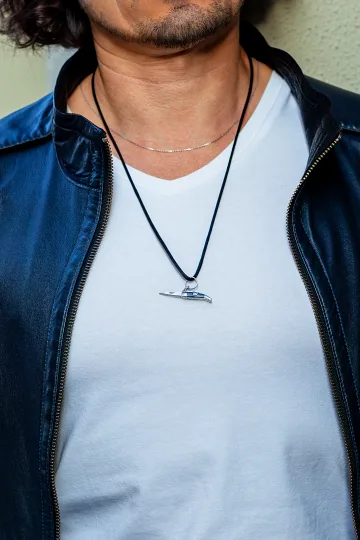






About Zevira
The Zevira collection includes bracelets, rings, pendants and earrings with agate of many kinds: from classic banded to rare rainbow, from gentle blue to deep black. Every piece is made of sterling 925 silver, and the polish reveals the stone's patterns and its translucency.
Looking for a piece of jewellery with a story of its own? Zevira agate in silver suits those who value the beauty of time, the singularity of nature and a quietly enduring style.