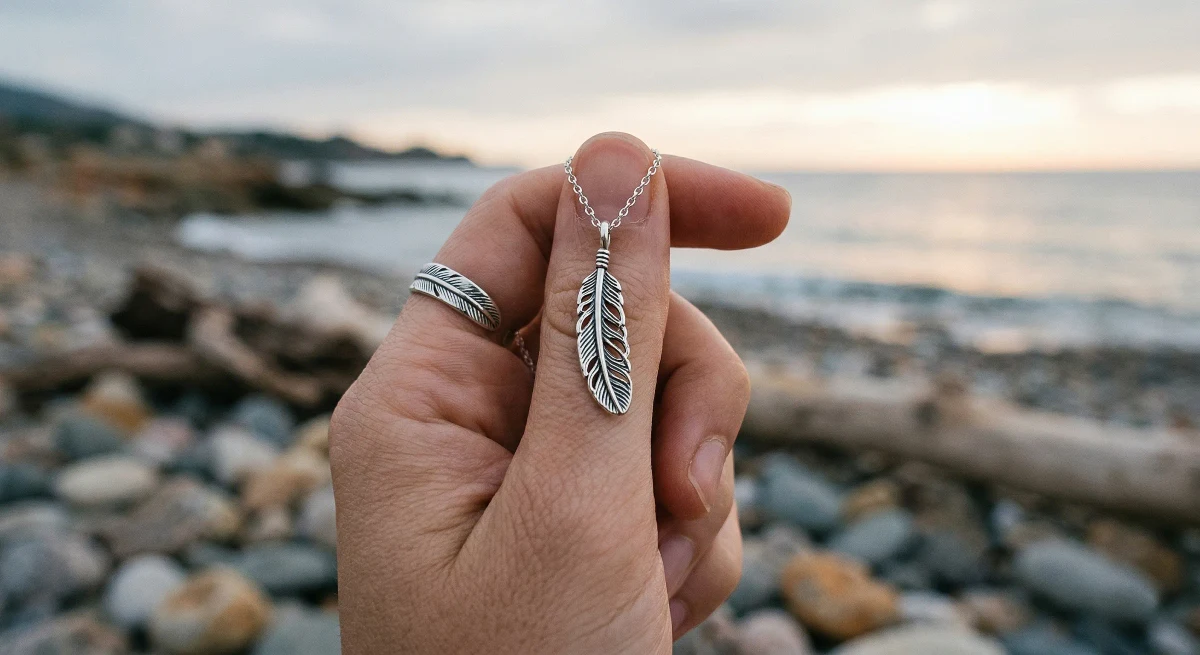
Feather Jewellery: Why a Piece of a Bird Became the Universal Symbol of Freedom
It weighs almost nothing. It means almost everything.
A few years ago, a friend showed me a necklace she never takes off. A small silver feather on a thin chain. Nothing fancy. I asked if it meant something. She said her mother had given it to her before she died, and that every time she felt lost, she'd hold the feather and remember something her mother used to say: "You're not stuck. You have wings."
That's a feather for you. It's one of the lightest objects in nature, and one of the heaviest in meaning.
No other symbol in jewellery carries quite the same range. A feather can mean freedom. It can mean truth. It can mean a message from a dead loved one, or a warrior's act of bravery, or a connection to the divine. It can mean you went to a music festival in 2014 and never quite let go of the aesthetic. All of these are valid. All of these have history behind them.
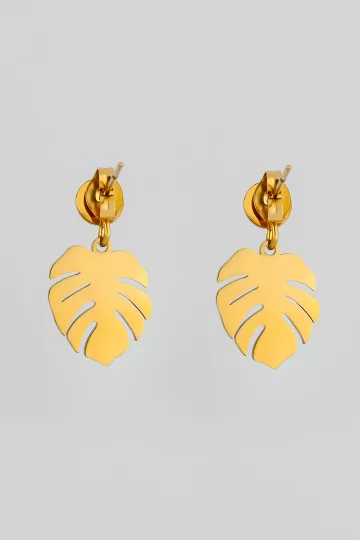
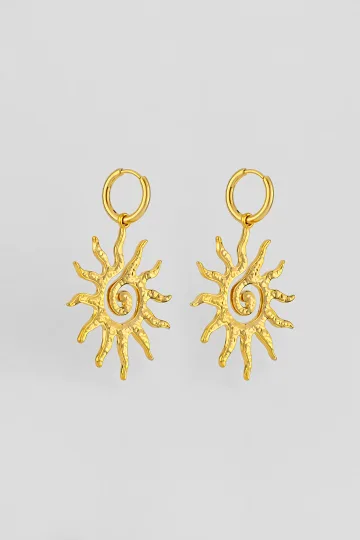
Wear the symbol, don't just read about it. These are in stock:






The feather as a symbol is genuinely ancient. We're talking about one of the oldest decorative objects humans ever used. Long before metal jewellery existed, people were wearing feathers. And they weren't just decorating themselves. They were saying something. About who they were, what they believed, and what they hoped for.
This article traces the feather through every major chapter of its symbolic life. Ancient Egypt, where your literal afterlife depended on being lighter than a feather. Native American traditions, where eagle feathers carry legal protections to this day. Celtic druid practices. Christian angel imagery. Victorian mourning rituals. The bohemian counterculture. The modern angel feather belief. And the reason feather pendants remain one of the most popular motifs in jewellery right now.
Egypt: Ma'at's Feather of Truth
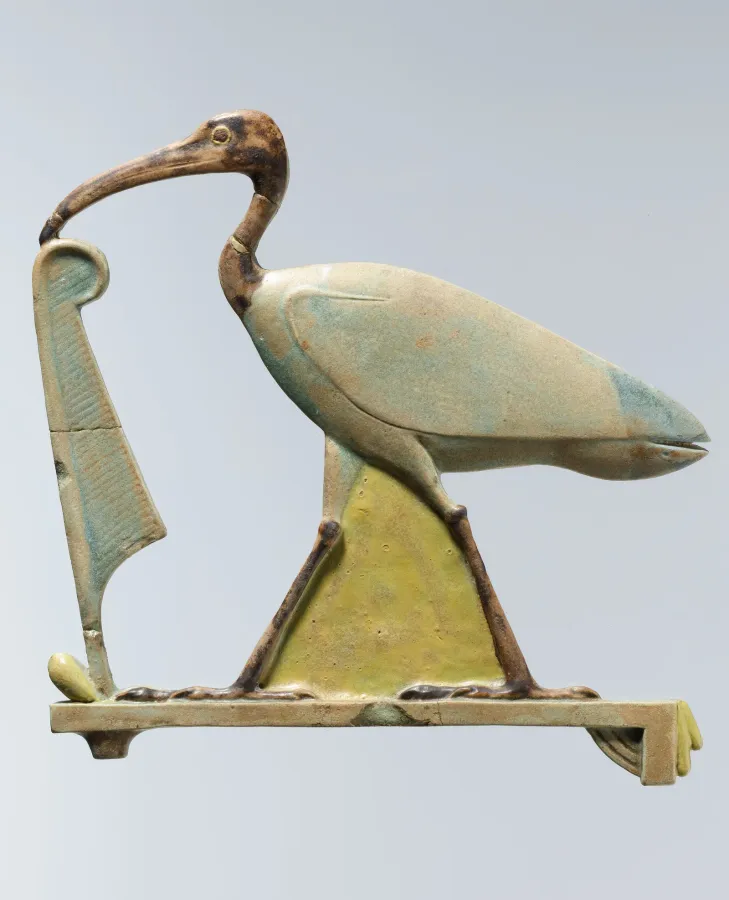
The weighing of the heart ceremony
If you had to pick the single most dramatic use of a feather in all of human mythology, it would be this one.
In ancient Egyptian belief, when you died, your soul didn't automatically get into the afterlife. You had to pass a test. And the test was terrifyingly simple: your heart was placed on one side of a scale, and a single ostrich feather was placed on the other.
This was the Weighing of the Heart ceremony, depicted in the Book of the Dead (or more accurately, the Book of Coming Forth by Day), the collection of funerary texts that Egyptians placed in tombs to guide the dead through the underworld. The ceremony took place in the Hall of Two Truths, before Osiris, the god of the dead, and 42 divine judges.
The dead person would recite the "Negative Confession," a list of sins they claimed not to have committed. "I have not stolen. I have not killed. I have not lied." And so on, through 42 declarations. Then Anubis, the jackal-headed god, would place the person's heart on the scale opposite the feather.
If your heart was lighter than the feather, or equal to it, you passed. You entered the Field of Reeds, the Egyptian paradise, to live in eternal peace.
If your heart was heavier than the feather, things got bad. Ammit, a creature with the head of a crocodile, the front of a lion, and the back of a hippopotamus, was waiting beside the scale. She ate the hearts that were too heavy. And that was it. No second chance. No reincarnation. Your soul simply ceased to exist. The Egyptians called this the "second death," and they feared it far more than the first one.
Ma'at: the goddess who wore a feather
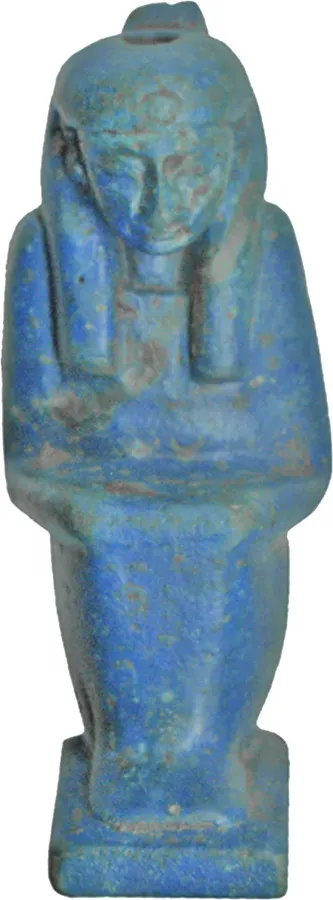
The feather on the scale belonged to Ma'at, the goddess of truth, justice, harmony, and cosmic order. Ma'at wasn't a goddess who did dramatic things in stories. She was more fundamental than that. She was the principle that kept the universe from descending into chaos. Without Ma'at, the sun wouldn't rise, the Nile wouldn't flood, the seasons wouldn't turn.
Ma'at is typically depicted as a woman wearing a single ostrich feather on her head. Sometimes she's shown as just the feather itself. The feather was her symbol, her identifier, and her tool of judgement all at once.
The choice of an ostrich feather is specific. Ostrich feathers have a unique property: their barbs are nearly equal in length on both sides of the shaft, making them appear symmetrical. Most bird feathers are asymmetrical. The ostrich feather's balance made it a perfect symbol for Ma'at's concern with balance, fairness, and order.
Lighter than a feather, or you don't get in
Think about what this myth is actually saying. Your entire moral life, every choice you made, every act of kindness or cruelty, was being weighed against the lightest possible standard. Not a stone. Not a coin. A feather. The standard for getting into the afterlife was to have lived so well that your conscience weighed essentially nothing.
This is one of the most powerful moral frameworks any culture has ever devised. And it centres entirely on a feather.
The influence of this imagery didn't stay in Egypt. The concept of a feather as a symbol of truth and moral lightness spread throughout the Mediterranean world and into European symbolism. When we say something is "light as a feather," we're echoing a metaphor that's over 3,500 years old.
One feather at the collarbone, and stop there. Pile on three and you don't fly, you jingle like a porch chime.
How to Wear Feather Jewellery
Over years on shoots the feather has passed through dozens of my looks, from a tiny stud to a long pendant on a bare back. Here is what actually works, sorted by occasion.
How do I wear a feather every day? For daytime I recommend a thin silver feather pendant on a 16-18 inch chain over a plain tee, a long sleeve, or a shirt with two buttons open. On a calm background the shape reads at once; on a busy print it disappears. I pair silver with cool tones (grey, denim, white) and yellow gold with warm ones (beige, terracotta, olive).
Is a feather right for the office? It is, as long as you keep it quiet. I suggest a short chain under a shirt or a fine V-neck knit, plus small feather studs instead of long danglers. Here the feather reads as a personal mark rather than a display piece, which is exactly the register work asks for.
How do I build an evening look? For evening I allow length and movement: a 24-30 inch pendant on a deep neckline, dangling feather earrings that sway when you turn your head. This is where the feather shows its bohemian side, so I choose flowing fabric, bare shoulders, and loosely worn hair beside it.
How do I layer a feather? For a big occasion I stack two or three chains of different lengths, with the feather sitting lowest as the longest accent and fine links or a short choker above. I suggest mixing metals: silver with gold in one stack feels more alive than strict monochrome. For neighbours I choose the same natural family: a leaf, a branch, a moon, a small pearl.
Who does a feather suit most? Anyone who values meaning in an object, likes a calm style, and prefers one telling accent to a pile of trinkets. Two rules that never fail. First: the finer the neck and the higher the neckline, the shorter the chain. Second: one feather you can see always beats three that argue with each other.

Turn on your camera, pick earrings, a pendant or a ring, and see the piece on yourself in real time.
Switch items in one tap.
Everything runs in your browser: no photo or video is ever uploaded.
The Burning Feather: Phoenix, Firebird and the Feather That Lights a Room
The tale of the feather nobody was supposed to pick up
If the Egyptian feather weighs your soul, the folk tale feather changes your fate, and rarely in the direction you were hoping for.
The Slavic story of the Firebird runs on that idea. A young prince riding through a forest at night finds a single glowing golden feather lying on the path. His horse warns him plainly: leave it, and you will avoid a great deal of trouble. He picks it up anyway, because it is too beautiful to walk past. The tsar hears of the feather and sends him after the bird itself, then after a magical horse, then after a bride, each task harder than the last. Every one of those journeys traces back to one small decision made against advice.
The bird at the centre of it is a creature of impossible beauty. Its feathers burn gold and red, and a single one gives enough light to fill a room. Catching it is the sort of feat that changes a person's standing permanently. But the story never begins with the bird. It begins with the feather.
The feather as a test: pick it up and your life changes
That feather is a point of no return. It marks the moment a character chooses between safety and adventure, between an ordinary life and a fate. The horse says leave it. Common sense says leave it. The feather is too beautiful, and so it goes into the saddlebag, and everything that follows follows from that.
It is a strikingly different reading from the Egyptian one. In Egypt the feather is an objective standard, a fixed weight against which everything is measured. In folk tale it is a temptation dressed as beauty, and it sets off a chain of consequences rather than delivering a verdict. The feather is neither good nor bad. It simply changes everything it touches.
Stravinsky caught exactly this in his 1910 ballet on the story, one of the works that made Russian modernism famous across Europe after the Ballets Russes brought it to Paris and then to London. In the ballet the feather is the first contact between the ordinary world and the magical one, the moment reality starts to widen.
Firebird and phoenix: relatives or coincidence?
The two birds get compared constantly, and the resemblance is obvious. Both are tied to fire, both are supernatural, both leave behind feathers with properties ordinary feathers do not have. The difference is in what they are for.
The phoenix is a bird of cycles. It burns, it dies, it comes back from its own ashes. Its story is about death and return, which is why it turns up on memorial jewellery and on pieces marking recovery from serious illness or a life that had to be rebuilt. The Egyptian bennu bird and the Greek phoenix are close enough that the Greeks probably borrowed it.
The Firebird is a bird of pursuit. It does not die and it does not return. It simply exists as something unreachably beautiful that people chase, and it charges a price for the chase. That is a very different message to wear.
In jewellery the two feathers say different things. A phoenix feather says: I came through it, and I am still here. A Firebird feather says: I am reaching for something extraordinary, and I know what it is going to cost. Neither is a small statement, and the choice between them is worth making deliberately rather than by picking whichever looks better in the case.
Upload a photo of your pet, someone you love, or an object. We'll build a 3D model and hand-cast it in pewter.
Siberian Shamanism: Feathers as a Bridge Between Worlds
The soul as a bird
Among many peoples of Siberia, including the Evenk, Sakha, Buryat, Khanty and Mansi, the soul is understood as a bird. A shaman's soul, in these traditions, can leave the body in bird form and travel between the three worlds: the Upper world of sky and celestial spirits, the Middle world where people live, and the Lower world of the dead.
This is not decorative language. In shamanic practice feathers are working equipment for that journey. They are not there to make the practitioner look impressive; they are there because the soul is going to need wings.
Mircea Eliade, whose survey of Siberian shamanism remains one of the standard accounts, put it bluntly: the shamanic costume is an attempt to give its wearer the body of a bird. The feathers on it are not trim. They are the flight apparatus.
The shaman's costume and its feathers
Siberian shamanic costumes frequently carried feathers from particular birds, and nobody chose the bird at random.
Eagle feathers belonged to the Upper world, to the sun and the sky spirits. Among several Turkic peoples the eagle was reckoned to be the first shaman, the being that taught people how to speak with spirits at all.
Owl feathers belonged to the Lower world, to the dead and to hidden knowledge. An owl sees in darkness, and a practitioner wearing owl feathers was understood to gain sight of what stays hidden from ordinary eyes. That association survives in modern jewellery, where the owl still reads as knowledge acquired the difficult way.
Raven feathers sat between the two. The raven is a trickster, a creature that moves through every world without belonging to any of them. Among the Chukchi and Koryak of the far northeast, Raven is the creator of the world outright, which puts a raven feather in a category of its own.
The eagle in Turkic and Mongolian tradition
Turkic mythology gives the eagle a particular seat: at the top of the World Tree that joins the three worlds together. Its feathers carry the power of the sky. In Sakha tradition the eagle is called the father of shamans, and the first shaman on earth was said to have been fathered by one.
Mongolian tradition ties the eagle to martial courage and divine protection instead. Eagle feathers there mark a warrior and a leader, and the association is still visible in the eagle hunting traditions of the Altai, where a golden eagle is trained, hunted with for a decade or so, and then released back to the mountains to breed.
The parallel with North America is hard to miss. On two continents, with no contact between them, eagle feathers became the mark of the highest honour a person could hold. The likely reason is simple: the eagle is what you see when you look up. In both cases the feather is a piece of the sky that fits in a hand.
Customer reviews
Zevira is a real jewellery shop. Genuine payments, deliveries and customer thank-yous.
🥰🥰🥰 gracias
Ok, ¡gracias! 🙂
Native American Traditions: Sacred Feathers
Eagle feathers and their spiritual weight
Among many Indigenous peoples of North America, eagle feathers hold a significance that goes far beyond decoration. They are sacred objects, comparable in spiritual weight to the cross in Christianity or the Torah in Judaism. This isn't a metaphor. For many Native American nations, an eagle feather is a direct connection to the Creator.
The bald eagle and the golden eagle fly higher than any other birds in North America. In many tribal traditions, the eagle is understood as a messenger between humans and the Creator, carrying prayers upward on its wings. An eagle feather, then, is a physical piece of that connection. Holding one is like holding a direct line to the sacred.
Eagle feathers are given, not taken. They are presented to individuals who have performed acts of courage, service, or spiritual significance. Receiving an eagle feather is one of the highest honours in many Native American cultures. They are used in prayer, in healing ceremonies, in sweat lodges, in dances. If an eagle feather falls to the ground during a powwow, the entire event stops until it is picked up with proper ceremony.
War bonnets: earned, not worn
The feathered war bonnet, or headdress, is probably the most recognisable symbol of Native American culture in the wider world. And it's also one of the most misunderstood.
War bonnets were not casual headwear. Each feather in a bonnet typically represented a specific act of bravery or leadership. A war bonnet with 30 feathers represented 30 separate occasions of recognised courage. They were worn by leaders and warriors who had earned every single feather individually, usually through acts witnessed and affirmed by the community.
Not all tribes used war bonnets. They are primarily associated with Plains nations such as the Lakota, Cheyenne, and Arapaho. Other nations had completely different feather traditions. The assumption that all Native Americans wore feathered headdresses is a Hollywood creation that has caused real harm to the diversity and specificity of Indigenous cultures.
Legal protections: the Bald and Golden Eagle Protection Act
Here's something most people don't know: in the United States, it is a federal crime to possess eagle feathers unless you are an enrolled member of a federally recognised tribe. The Bald and Golden Eagle Protection Act of 1940 (amended multiple times since) makes it illegal to "take, possess, sell, purchase, barter, offer to sell, transport, export or import" any bald or golden eagle, alive or dead, or any part of them, including feathers.
For enrolled tribal members, there is a legal exception. The National Eagle Repository in Colorado distributes eagle feathers and parts from eagles that have died naturally or accidentally to tribal members who apply for them. The waiting list can be years long.
This legal framework exists because the eagles were being hunted toward extinction, but it also represents a formal governmental acknowledgement that eagle feathers have religious significance. The Religious Freedom Restoration Act has been used in court cases to protect Native American use of eagle feathers.
The practical result is that genuine eagle feathers are among the most legally protected natural objects in the United States. If you see "eagle feather" jewellery being sold commercially, it's either made from a different feather, or it's synthetic, or someone is breaking federal law.
A note on cultural sensitivity
When wearing feather jewellery, it's worth being aware that feathers carry deep sacred meaning in Native American traditions. A minimalist silver feather pendant is not the same as wearing a war bonnet to a music festival. The former is a universal symbol with thousands of years of global history. The latter takes a specific, earned, sacred object from a living culture and turns it into a costume.
The distinction matters. Wearing feather jewellery as a general symbol of freedom, lightness, or spirituality is entirely fine and has deep roots in many cultures worldwide. Copying specific Indigenous regalia without understanding or permission is something else entirely.



Celtic and Druidic Traditions
Feather cloaks and bird divination
In Celtic cultures across Ireland, Scotland, Wales, and Brittany, birds were considered messengers between worlds. The Celts believed that birds, because they could fly, had access to the Otherworld, a parallel realm of spirits, ancestors, and divine beings that existed alongside the physical world.
Druids, the priestly class of Celtic society, reportedly wore cloaks made of feathers during ritual practices. The Irish text Togail Bruidne Da Derga ("The Destruction of Da Derga's Hostel") describes figures wearing feather cloaks, and several other early Irish and Welsh texts reference the practice. The feather cloak was believed to grant the wearer the ability to travel between worlds, or at least to access knowledge that ordinary humans couldn't reach.
Bird divination, called ornithomancy, was central to Celtic religious practice. The druids read the future in the flight patterns of birds, their calls, and their behaviour. Specific birds carried specific meanings. The wren was the "king of birds" in Irish tradition (there's a fascinating folk tale about how the tiny wren outwitted the eagle to claim the title). The raven was associated with the Morrigan, the goddess of war and fate. The crane was sacred and its feathers were used to make the famous "crane bag," a magical container that held treasures of the gods.
The crane bag and sacred birds
The crane bag (corrbolg in Old Irish) appears in the Fenian Cycle of Irish mythology. It belonged to the sea god Manannan mac Lir and was made from the skin of Aoife, a woman who had been transformed into a crane. The bag contained various treasures but could only reveal its contents at high tide.
The crane itself was a bird of enormous significance in Celtic tradition. Its standing-on-one-leg posture was associated with meditative and magical practices. Druids reportedly stood on one leg, closed one eye, and extended one arm while performing certain spells, mimicking the crane's posture. Crane feathers were talismans of secret knowledge and the ability to see beyond the surface of things.
This Celtic tradition of birds as intermediaries between worlds is one reason why feather symbolism runs so deep in the British Isles and Brittany. When a modern person of Celtic heritage wears a feather pendant, they're tapping into a tradition that predates Christianity in those lands by centuries.
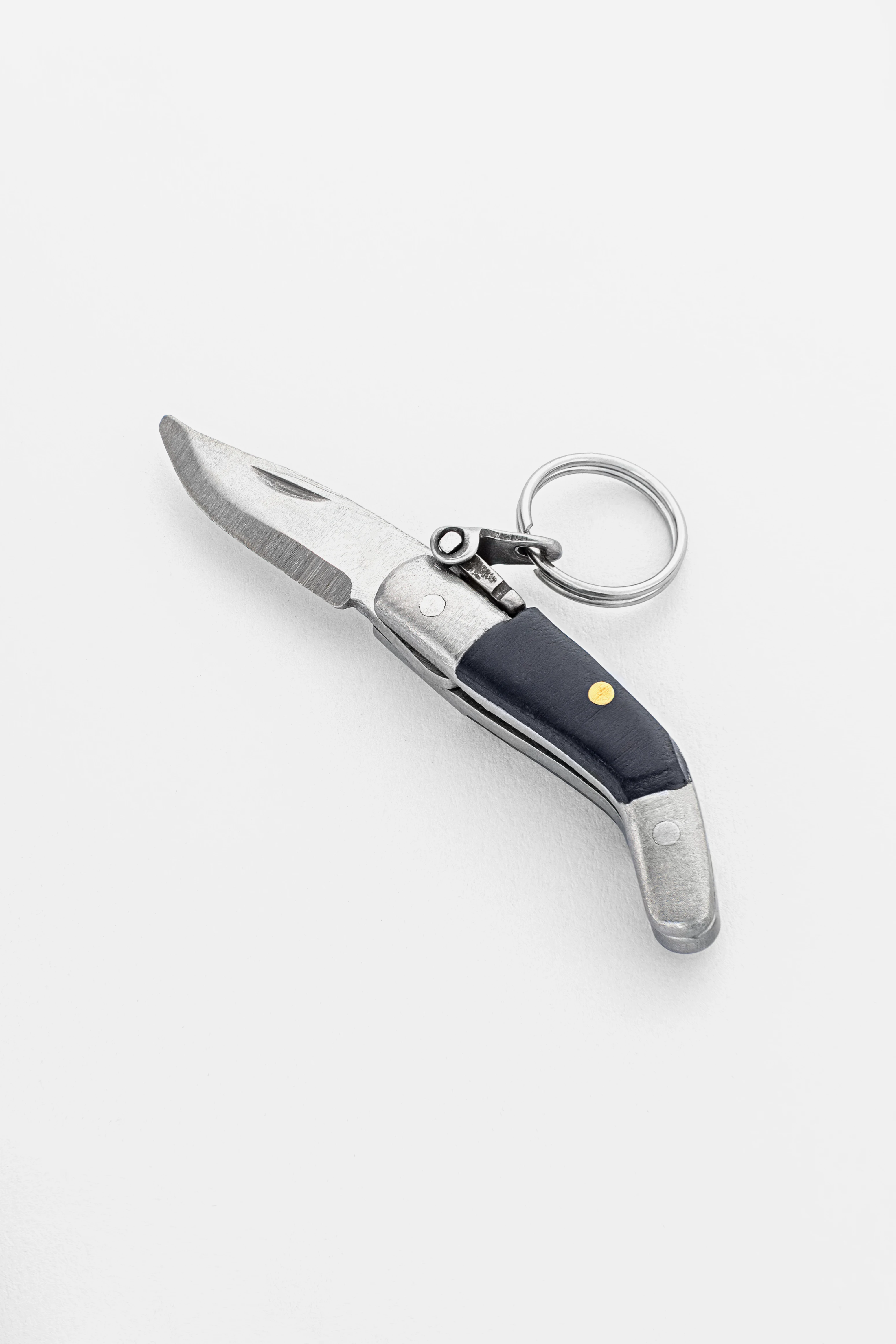
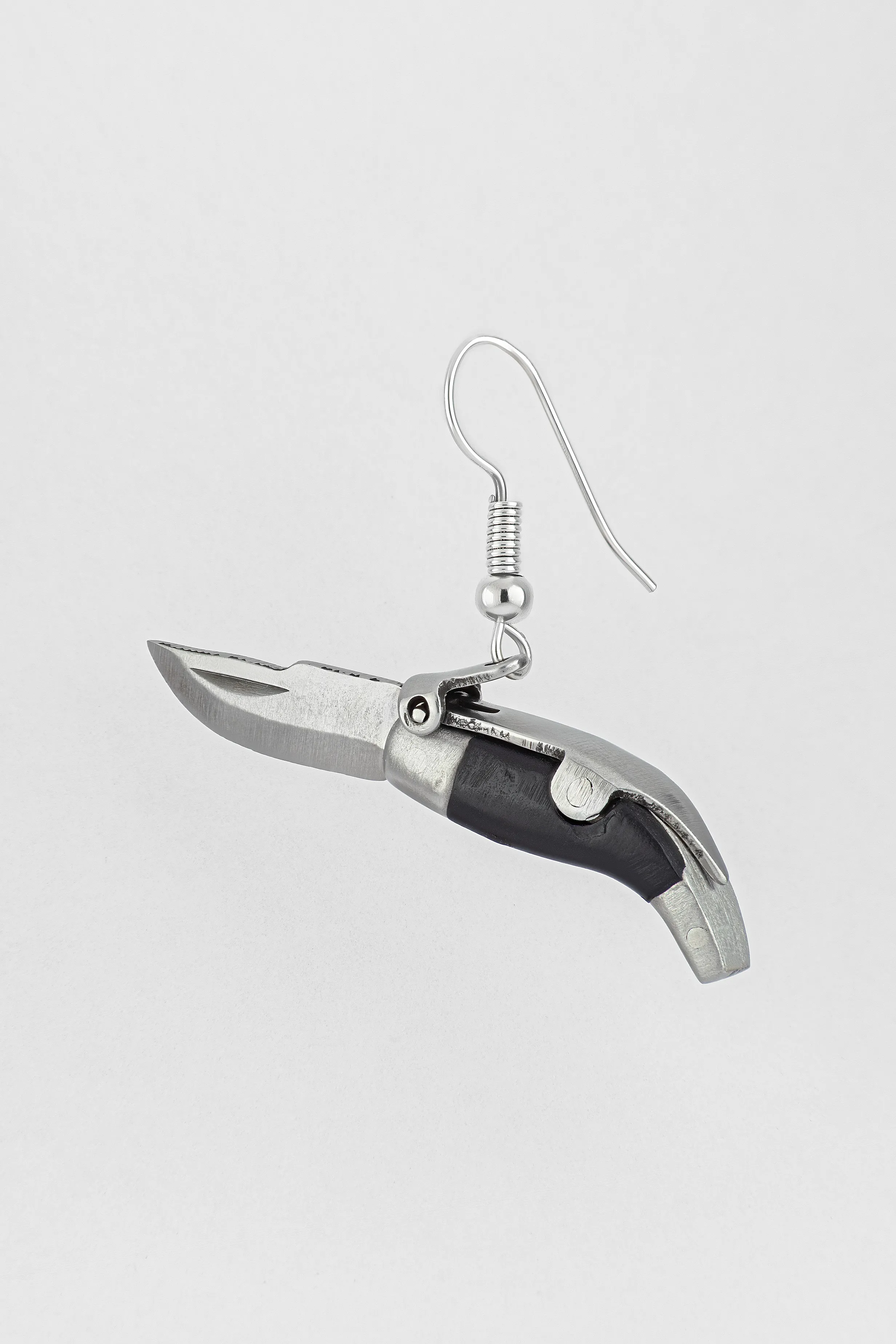
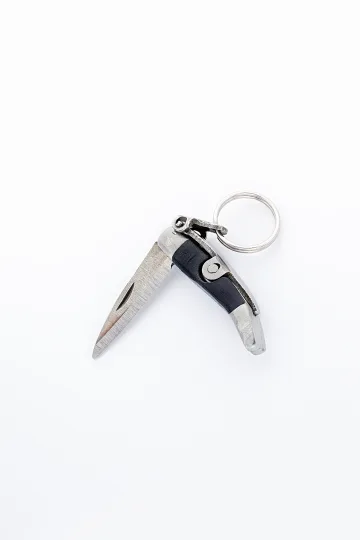
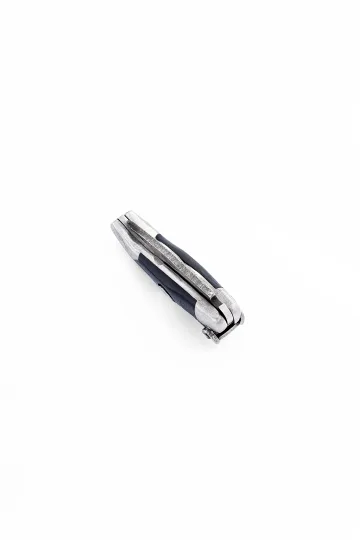
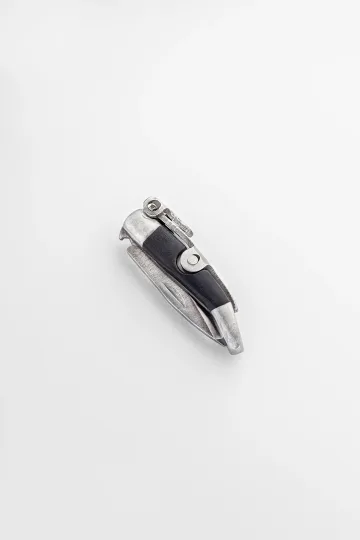
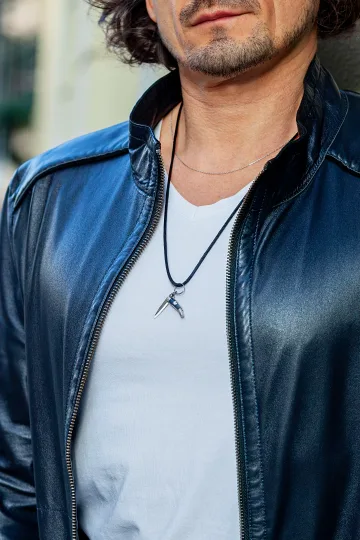
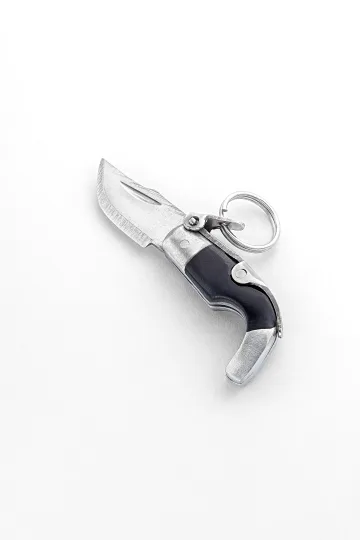
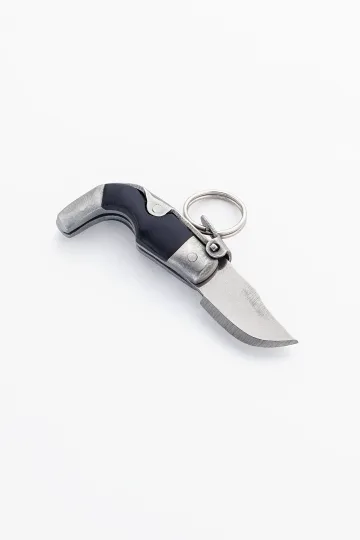
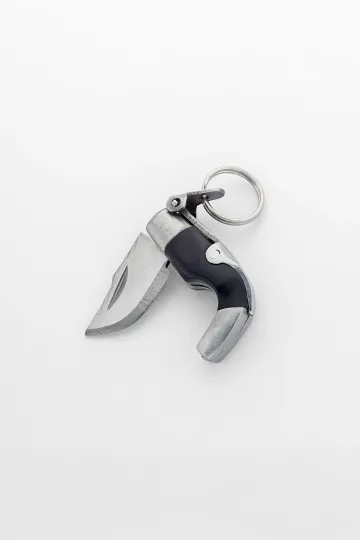
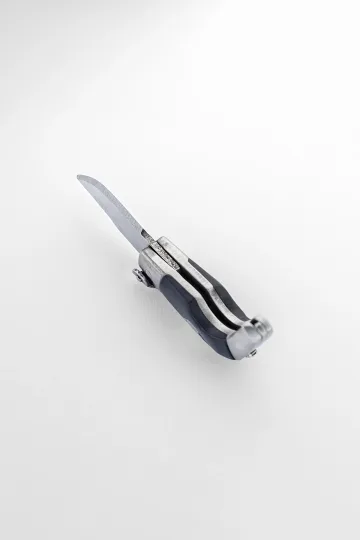
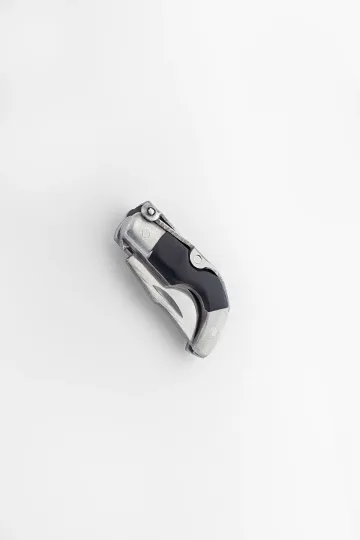
CAPAORA mini knife pendant
The 18th-century Spanish navaja in miniature: 40 mm of stainless steel, a real folding mechanism and a Palanquilla lock that clicks. An affordable gift to remember.
Authentic · Ships from Spain · 14-day returns
Christianity: Angel Wings and the Quill of God
Angels and their feathered wings
Angels in Christian art have feathered wings. This seems so natural that most people never question it. But it's worth noting that the Bible rarely describes angels with wings. The seraphim in Isaiah have six wings. The cherubim in Ezekiel have wings. But the angels who visit Abraham, who appear to the shepherds, who sit at the empty tomb of Jesus, are described as looking like ordinary people.
The feathered wings came from art, not scripture. Early Christian artists borrowed from existing iconographic traditions. The Greek goddess Nike (Victory) had feathered wings. Hermes had winged sandals. The Roman goddess Victoria had wings. When Christian artists needed to depict beings who moved between heaven and earth, they reached for the same visual vocabulary: feathered wings.
By the medieval period, angel wings had become standard in Christian imagery. And through those wings, the feather became permanently associated with the divine messenger, the being who moves between God and humanity. A feather, in Christian symbolic language, is a piece of an angel. Evidence that the divine is near.
This is the root of the modern "angel feather" belief, which we'll get to shortly.
The quill pen: writing sacred words
There's a second, quieter stream of feather symbolism in Christianity: the quill pen. Before steel nibs were invented in the 19th century, the primary tool for writing was a feather. Specifically, a goose feather, sharpened to a point and dipped in ink.
Every copy of the Bible, every theological treatise, every prayer book, every papal bull for roughly a thousand years was written with a feather. The monks in scriptoria across Europe spent their lives turning feathers into the word of God. The feather was literally the instrument through which sacred knowledge was transmitted.
This is why the quill became a symbol of knowledge, scholarship, and divine communication. The evangelists in medieval art are often shown holding quills. St. Matthew, St. Mark, St. Luke, and St. John, the four gospel writers, are frequently depicted with feathers in hand, writing the words that would define Western civilisation.
The Victorian Feather: Fans, Mourning, and Secret Languages
Feather fans and social signalling
The Victorian era (roughly 1837-1901) was obsessed with symbolism, codes, and hidden meanings. If you could communicate something indirectly rather than directly, the Victorians preferred the indirect route. Flowers had meanings. Gemstones had meanings. And feathers had meanings.
Feather fans were essential accessories for upper-class Victorian women. They served the practical purpose of cooling oneself in overheated ballrooms, but they also served as communication devices. The "language of the fan" was a semi-formalised system of signals that allowed women to communicate interest, disinterest, anger, or invitation without speaking a word.
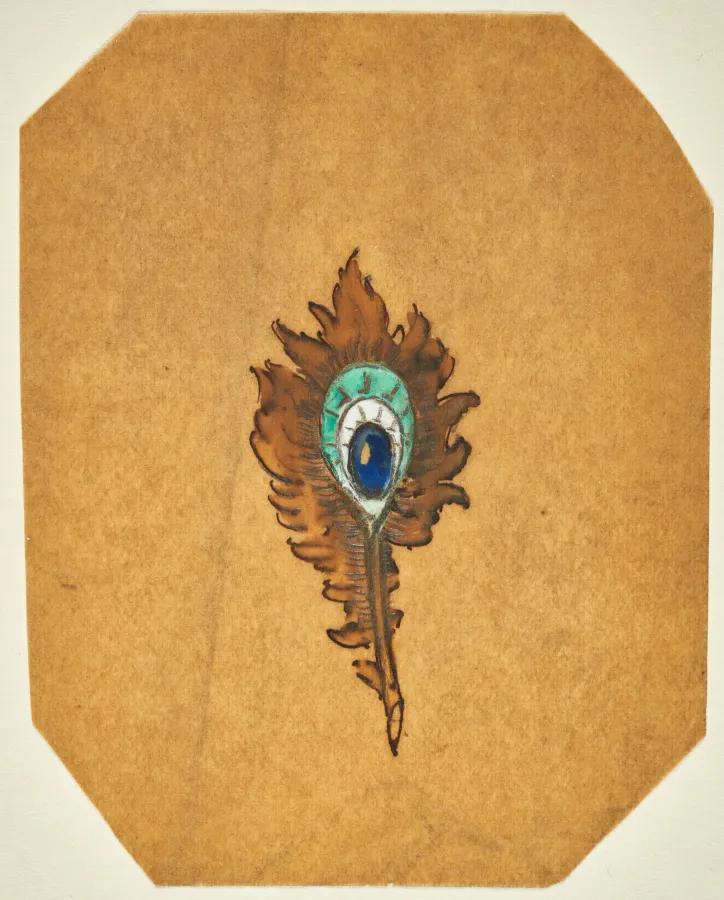
But the feathers themselves also carried meaning. Ostrich feathers indicated wealth and status (they were expensive imports). Peacock feathers were fashionable but controversial (the "evil eye" pattern made some people uneasy). Swan feathers suggested purity and grace. The choice of feather was a statement, and the Victorians read it.
Mourning jewellery with feathers
Victorian mourning culture was elaborate and codified. When someone died, their family entered a period of mourning with specific rules about dress, behaviour, and jewellery. During this period, mourning jewellery was worn. Most people know about jet (black stone) jewellery and hair jewellery (jewellery made from the hair of the deceased). Fewer know about feather jewellery.
Feathers were incorporated into mourning pieces in several ways. Small feathers were preserved under glass in brooches and lockets. Feather shapes were carved into jet and black enamel. And some of the most striking Victorian mourning pieces feature feathers arranged in elaborate patterns under domed glass.
The connection between feathers and mourning was natural. Feathers represented the soul's flight from the body, the lightness of release from earthly suffering, and the hope of heavenly ascent. A feather in a mourning brooch said: the person who died is free now. Their soul has taken flight.
The language of feathers
Beyond fans and mourning, the Victorians developed associations for specific feather types that influenced jewellery design:
White feathers meant innocence and purity. (The white feather would later take on a very different meaning during World War I, when women gave white feathers to men not in uniform as an accusation of cowardice. This practice was widely condemned then and since.)
Black feathers suggested mystery, protection, and the unknown. They appeared in gothic-influenced Victorian jewellery.
Blue feathers represented happiness and fulfilment. Blue jay and kingfisher feathers were especially prized.
Red feathers symbolised passion and vitality. Cardinal feathers were popular in American Victorian culture.
Many of these associations still influence how people interpret feather jewellery today, even if they don't know where the associations came from.
Leave your email, we'll send your discount code. No spam, unsubscribe anytime.
The code arrives by email, valid on your first order.
Bohemian and Hippie Culture: The 1960s to Today
Woodstock and the counterculture adoption
In the late 1960s and early 1970s, feathers experienced a massive cultural revival in the West. The counterculture movement, centred around the Vietnam War protests, the civil rights movement, and a general rejection of mainstream middle-class values, embraced feathers as part of its visual vocabulary.
Why feathers? Several reasons converged. The counterculture valued nature over industry, freedom over conformity, and spirituality over organised religion. Feathers checked all three boxes. They were natural objects. They symbolised flight and freedom. And they connected to spiritual traditions from around the world that the counterculture was actively exploring, including (sometimes problematically) Native American spirituality, Hindu philosophy, and Celtic paganism.
At Woodstock in 1969, at the Isle of Wight Festival in 1970, and at countless smaller gatherings, feathers were everywhere. In hair. On clothing. As jewellery. Janis Joplin wore feathers. Jimi Hendrix wore feathers. The association between feathers and countercultural freedom became cemented in popular consciousness and has never fully faded.
Dream catchers and festival culture
Dream catchers, the web-and-feather objects that hang in millions of bedrooms and car rearview mirrors worldwide, deserve a mention here. They originate from Ojibwe (Chippewa) tradition, where they were made to protect sleeping children from bad dreams. The feathers hanging from the bottom represent the gentle descent of good dreams to the sleeper.
Dream catchers were adopted widely during the counterculture period and have become one of the most commercially reproduced symbols of "bohemian" culture. This mass adoption has been a source of ongoing tension. Many Indigenous people view the commercialisation of dream catchers as cultural appropriation, taking a sacred object and mass-producing it as decor without understanding or respect.
Feather jewellery in the bohemian tradition sometimes incorporates dream catcher motifs. If you're drawn to this aesthetic, it's worth understanding its origins and being thoughtful about how you engage with it.
The boho aesthetic in modern fashion
The bohemian aesthetic never really went away. It surged back in the 2000s and 2010s, driven partly by music festival culture (Coachella, Glastonbury, Burning Man) and partly by fashion designers drawing on 1970s references. Feather earrings, feather pendants, feather hair accessories, and feather-themed jewellery became staples of the "boho-chic" look.
Today, the bohemian feather aesthetic has evolved into something more refined. Where 2010-era festival feathers were often large, colourful, and deliberately wild-looking, the current trend leans toward minimalist feather designs in precious metals. A small gold feather pendant on a delicate chain. A single feather ear cuff. The symbol remains, but the execution has grown more subtle.
The Angel Feather Belief: White Feathers from the Other Side
This section requires care, because it touches something deeply personal for many people.
The angel feather belief is the idea that when you find a white feather in an unexpected place, it's a sign from a deceased loved one or a guardian angel, letting you know they're watching over you. This belief has become enormously popular in the English-speaking world, particularly in the UK and Ireland, over the past few decades. Books have been written about it. Social media groups with hundreds of thousands of members are dedicated to sharing "angel feather" experiences.
The origins of this specific belief are somewhat hard to trace. It seems to draw on multiple traditions: the Christian association between feathers and angels, the Victorian association between feathers and departed souls, the Celtic belief in birds as messengers between worlds, and a general spiritual intuition that the natural world can carry messages from the unseen.
People report finding white feathers in places where feathers shouldn't be. In a closed room. On a car dashboard. In a pocket. Inside a book. Always at a moment when they were thinking of someone who had died, or feeling particularly lost or sad. The feather appears, and the person feels comforted. Reassured. Less alone.
Is this real? That's not a question this article can or should answer. What we can say is that the experience is real to the people who have it, and that the comfort it provides is genuine. Whether the mechanism is supernatural communication, the human brain's extraordinary ability to find patterns and meaning, or something else entirely, the emotional result is the same: a person in grief feels a moment of connection and peace.
This belief has had a massive influence on feather jewellery. Many people wear feather pendants specifically as a memorial to someone they've lost. The feather isn't just decoration. It's a wearable reminder that the person they love is still, in some sense, present. If someone tells you their feather necklace is for their grandmother, or their father, or their child, the appropriate response is to honour that meaning, regardless of your own beliefs about what happens after death.
Feather by Feather: What Each Bird Means
Peacock: the eye of protection (and theatrical bad luck)
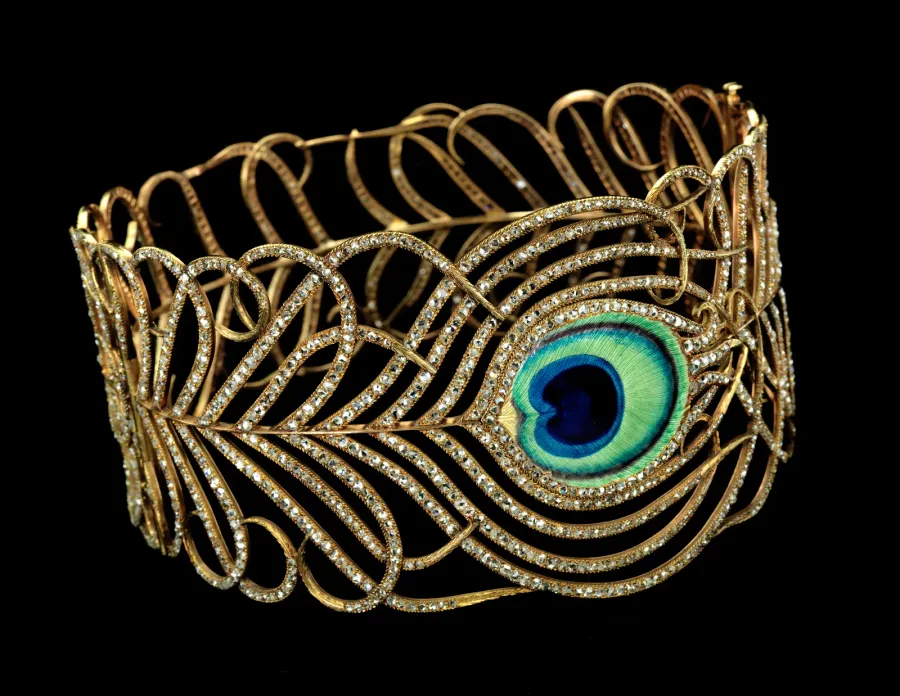
The peacock feather is one of the most visually striking natural objects on earth. That iridescent eye pattern, called an ocellus, has captivated humans for thousands of years. In Hindu tradition, the peacock is the mount of Saraswati, the goddess of wisdom, and the crest of Lord Krishna. In Greek mythology, the eyes on peacock feathers are the hundred eyes of Argus, placed there by Hera after the giant's death.
The "eye" pattern has given peacock feathers a dual reputation. In many cultures, the eye is protective, watching over the wearer and warding off evil. This connects to the evil eye tradition (nazar) found across the Mediterranean and Middle East. A peacock feather eye is a beautiful form of the protective gaze.
But in theatre, peacock feathers are considered spectacularly bad luck. Bringing a peacock feather onto a stage is said to guarantee a terrible performance or technical disaster. This superstition may have origins in the "evil eye" interpretation running in reverse: instead of protecting, the eye watches with malicious intent. Some trace it to the idea that the peacock feather's "eye" resembles the evil eye, and bringing dozens of "eyes" into a theatre invites disaster.
In jewellery, peacock feather designs are popular precisely because of this duality. They're gorgeous, they're protective, and they carry just a hint of danger. Peacock feather pendants and earrings tend to feature the eye pattern prominently, often in enamel or with blue and green stones.
Owl: wisdom and mystery
Owl feathers carry the owl's symbolism: wisdom, knowledge, the ability to see in darkness, and a connection to the hidden or mysterious. In Greek mythology, the owl was Athena's companion, and the "owl of Minerva" became a Western symbol of philosophical wisdom.
But owls also have a nocturnal, death-adjacent reputation. In many cultures, hearing an owl was an omen of death. The Aztecs and Maya associated owls with the underworld. In Celtic tradition, the owl was connected to the crone aspect of the goddess and the wisdom that comes through darkness and difficulty.
Owl feather jewellery typically emphasises the wisdom angle rather than the death omen angle, for obvious commercial reasons. But the best owl feather designs retain a sense of mystery and depth.
Eagle: courage and vision
Eagle feathers represent courage, strength, vision, and spiritual authority. Beyond their profound significance in Native American traditions (discussed above), eagles appear as symbols of power across many cultures. The Roman legions carried eagle standards. The eagle is the national symbol of the United States, Germany, Mexico, Egypt, and many other nations.
In jewellery, eagle feather designs tend to be bolder and more structured than other feather motifs. They suit people who want their feather symbolism to lean toward strength and ambition rather than lightness and freedom.
Dove: peace and the soul
The dove is the universal symbol of peace, and dove feathers carry that meaning. In Christianity, the dove represents the Holy Spirit. In the story of Noah's Ark, a dove brings back an olive branch to show that the flood has receded. The dove released at the Olympics symbolises peace between nations.
Dove feather jewellery tends to be white or silver-toned, delicate, and gentle in design. It's popular as a memorial piece (connecting to the angel feather belief) and as a symbol of hope during difficult times.
Buying it as a gift? Each one arrives ready to give.
 A branded Zevira box and a little card come with every order.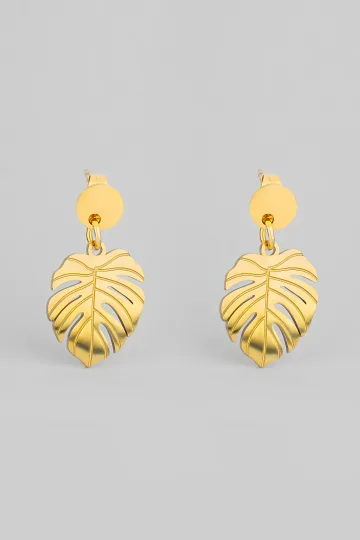



Feathers in Tattoo Culture and Modern Jewellery
The feather is consistently one of the top ten most requested tattoo designs worldwide. Tattoo artists report that feather requests span every demographic: men and women, young and old, first tattoo and fiftieth.
Why is the feather so popular as a tattoo? Partly because it's versatile. A feather works as a tiny finger tattoo or a full back piece. It works in black and grey or in full colour. It works realistic or stylised. It can be combined with birds (the feather dissolving into a flock of birds in flight is a hugely popular design), with quotes, with names, with infinity symbols.
But the deeper reason is the meaning. A feather tattoo almost always represents something personal. Freedom from a difficult situation. Memory of someone lost. A reminder to stay light when life gets heavy. The specific meaning varies from person to person, but the emotional territory is remarkably consistent: letting go, moving forward, staying free.
This same emotional territory drives feather jewellery. The minimalist feather pendant has become a modern classic precisely because it carries so much meaning in such a simple form. A small silver or gold feather on a chain says more than most elaborate pieces. It says: I value freedom. I remember someone. I'm still here, and I'm still moving.
The trend in modern feather jewellery is toward refinement. Delicate casting. Realistic vein patterns in the metal. Slight curves that catch the light. The best feather pendants don't look like a symbol of a feather. They look like someone plucked a feather from the air and dipped it in silver.
Send a friend a discount code, they save on their first order.
Frequently Asked Questions
What does a feather pendant mean? The most common meanings are freedom, lightness of spirit, truth (from the Egyptian tradition), a connection to a deceased loved one (from the angel feather tradition), and spiritual ascent. The specific meaning depends on the wearer's intention and cultural context.
What does a feather symbolise in different cultures? In Egypt: truth and moral judgement. In Native American traditions: sacred connection to the Creator (especially eagle feathers). In Celtic culture: travel between worlds. In Christianity: angels and divine communication. In Victorian culture: mourning and the soul's release. In modern culture: freedom, memory, and personal lightness.
Is it disrespectful to wear feather jewellery? Wearing feather jewellery as a general symbol is not disrespectful. Feather symbolism exists in virtually every culture on earth. However, wearing replicas of specific Indigenous regalia (like war bonnets) or claiming your jewellery has Native American spiritual properties when it doesn't is disrespectful. A silver feather pendant is universal. A "ceremonial eagle feather" sold on Etsy is a problem.
What does a white feather mean? In the angel feather tradition, finding a white feather is interpreted as a sign from a deceased loved one or guardian angel. In the Victorian era, white feathers symbolised innocence and purity. During World War I, white feathers were given to men as accusations of cowardice, a practice that is widely condemned.
What does a peacock feather mean in jewellery? Protection (the "eye" wards off evil), beauty, pride, and vision. In some traditions, peacock feathers are considered bad luck, especially in theatre, but in jewellery they're almost universally regarded as positive and protective.
Are real feathers used in jewellery? Sometimes. Real feathers preserved in resin or under glass appear in some jewellery designs, especially bohemian and handmade pieces. Most mainstream feather jewellery uses metal castings that replicate the feather's shape and texture. Metal feather jewellery is more durable and doesn't raise the ethical and legal concerns that can apply to real feathers.
What's the difference between a feather pointing up and pointing down? A feather pointing upward is generally associated with ascent, aspiration, and spiritual connection. A feather pointing downward suggests a feather that has just fallen, connecting to the angel feather belief (a message dropped from above). Both orientations are common in jewellery, and neither is "wrong."
Why are feather tattoos so popular? Feather tattoos work at any size, in any style, and carry universally understood meaning (freedom, lightness, memory). They're also visually flexible: a feather dissolving into birds, a feather with a quote, a feather in watercolour style. The design is simple enough to be versatile but specific enough to be meaningful.
Silver and gold jewellery, wedding bands, symbolic pendants, paired sets.
Giving a Feather: When and Why
A feather pendant is one of the few symbolic gifts that works without a speech attached, which is exactly why people reach for it in situations where the right words are hard to find.
It suits a departure. Someone moving abroad, starting a course in another city, leaving a job they held for fifteen years, all of that is a flight of some kind, and a feather says so without being sentimental about it. It suits a recovery, particularly a phoenix feather, where the message is that the person came through something and is still standing. And it suits remembrance, which is the reason a great many feather pendants are bought at all. Given after a bereavement, a small silver feather says the thing that nobody can say properly at a funeral, and the person receiving it will understand immediately.
It works less well as a generic present. A feather carries meaning whether you intended it to or not, and handing one to a colleague you barely know at a Secret Santa produces confusion rather than delight. If you want a safe symbolic gift for someone you do not know well, a plain geometric pendant is the better choice and a feather is the wrong one.
On practical matters, keep the piece small if you do not know the recipient's taste. A slim feather on a fine chain sits comfortably with almost any wardrobe, whereas a large statement feather is a commitment to a particular style and needs to be someone's actual taste rather than your guess at it. Silver is the safer metal for a first feather; gold reads warmer but narrows the range of what it will sit beside. And if the gift marks something specific, say so in a line on a card, because the meaning you have in mind is not always the one the symbol carries for the person opening the box.
Wear the symbol, don't just read about it. These are in stock:





Caring for Feather Jewellery
Why the feather is metal, not a real one
Almost every feather pendant sold in Britain and across Europe is made of metal, and there is a legal reason as well as a practical one. Under the Wildlife and Countryside Act 1981, the feathers of wild birds are protected in the United Kingdom, and taking, keeping or selling them is restricted, with the strictest protection reserved for the birds people most associate with symbolic feathers in the first place. Buying a pendant made from an actual eagle or owl feather is not a legitimate option here, and any seller offering one is selling you a problem.
That constraint turned out to be good for the jewellery. A real feather frays, breaks and discolours within a season of daily wear; a silver or gold one holds its shape indefinitely, takes engraving, and can be textured finely enough that the barbs read individually. The metal feather is not a substitute for the real thing so much as the version that survives being worn.
Tarnish, water and everyday wear
Sterling silver tarnishes because the copper in the alloy reacts with sulphur compounds in the air, and a feather tarnishes faster than a smooth pendant because it has more surface and more grooves for the darkening to settle into. Some of that is welcome. A little oxidation in the recesses is what makes the barbs visible; it is uniform grey dullness across the whole surface that spoils the piece.
Water is the ordinary enemy. Take feather jewellery off before swimming, because chlorine attacks silver alloys and salt water is no kinder. Take it off in the shower too, not because a single shower ruins anything but because soap film collects in the fine grooves and dulls the texture that made you buy the piece. If you live in a hard water area, which covers most of the south and east of England, the mineral deposit left as water dries adds a chalky film on top of the soap. Dry the piece with a soft cloth if it does get wet.
Perfume, hairspray and hand cream all shorten the life of a finish. The rule that works is jewellery on last, jewellery off first: dress, spray, then put the pendant on; take it off before you take your make-up off at night.
Cleaning and storage
For routine cleaning, a soft cloth is usually enough. When it needs more, warm water with a drop of washing up liquid and a very soft brush, an old toothbrush with the bristles already worn down, will lift what has collected between the barbs. Work along the direction of the barbs rather than across them, rinse in clean water, and dry it fully, including the space where the bail meets the chain, where water likes to sit.
Silver polishing cloths are fine on the flat of a feather but should be kept away from the grooves, since their whole purpose is to remove the oxidation you want to keep there. Dip style tarnish removers are worse for the same reason: they strip a deliberately oxidised finish in seconds and leave the piece looking flat and lifeless. Gold plated feathers should never meet either, because polishing removes plating rather than tarnish.
Storage does more good than cleaning. Air and humidity cause tarnish, so a small zip lock bag with the air pressed out, kept in a jewellery box away from radiators and bathrooms, will keep a silver feather bright for months without any intervention. Store feathers separately from harder stones, and lay a long chain flat or hang it rather than coiling it, since a fine chain that has been folded into a knot will keep the crease long after the tangle is out.
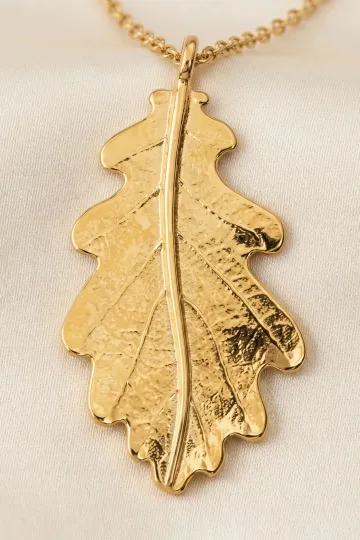
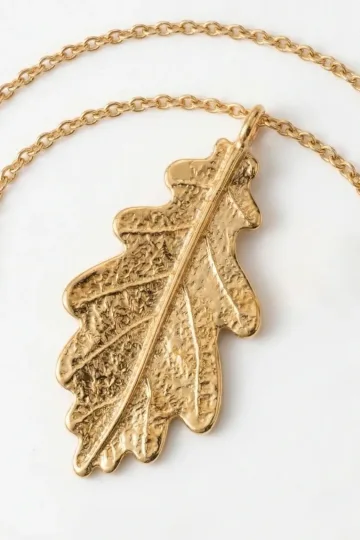
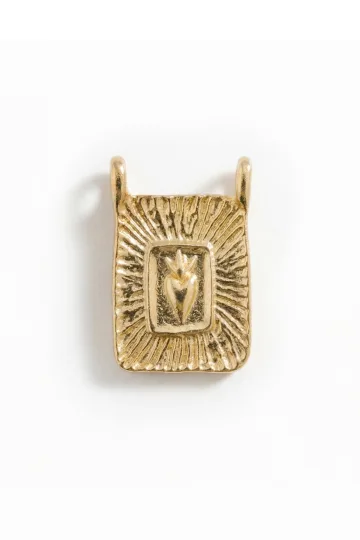
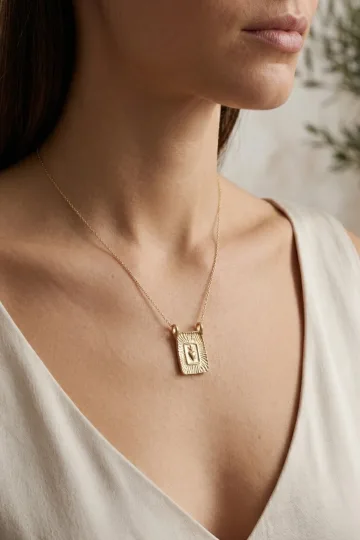
Wear the symbol, don't just read about it. These are in stock:
The lightest symbol, the deepest meaning
A feather weighs between 0.01 and 1 gram, depending on the bird. You can blow one off your palm. It can travel miles on a gentle wind. It's the lightest thing in nature that still has structure and shape.
And yet. And yet.
In Egypt, your entire moral life was measured against one. In Native American traditions, a single eagle feather represents one of the highest honours a person can receive. In Celtic culture, a feather cloak let you travel between worlds. In Christianity, feathered wings mark the boundary between human and divine. In Victorian culture, a feather in a mourning brooch carried the weight of grief and hope simultaneously. In modern culture, a white feather found in an unexpected place can bring a grieving person to tears of comfort.
There isn't another natural object with this kind of range. Stones are heavy and suggest permanence. Flowers are beautiful but temporary. Shells are associated with the sea. But feathers belong to the sky, and the sky belongs to everyone. Every culture that has looked up and watched birds fly has attached meaning to the thing that makes flight possible.
When you wear a feather pendant, you're wearing something that connects to almost every symbolic tradition humans have created. You're wearing the Egyptian standard of moral truth. The Native American sacred connection to the divine. The Celtic doorway between worlds. The Christian angel's wing. The Victorian soul's release. The bohemian's cry of freedom. The grieving person's hope that love survives death.
That's a lot for a piece of silver on a chain. But feathers have always carried more than their weight.
About Zevira
Zevira makes jewellery in the artisan tradition of Albacete, Spain. The feather isn't a random motif for us. It's one of those symbols people actually wear jewellery for: a light shape that holds freedom, memory, and a connection to the people who aren't here anymore.
What you'll find with us around feathers and nature symbolism:
- Minimalist feather pendants in 925 silver on a fine chain for everyday wear
- Feathers in 14-18K gold with realistic vein texture for a more refined look
- Earrings with natural motifs, from tiny silhouette studs to long dangling shapes
- Rings and bracelets with a feather wrapped around the finger or wrist
- Memorial pendants as a quiet gift in grief, in keeping with the white feather tradition
- Matching leaf, floral, and celestial motifs for layered looks
Every piece can be personalised with engraving by a craftsperson, with personal engraving available. 925 silver and 14-18K gold.
You might also like
The guides on Zevira are free. If this one helped, you can leave a small tip — it goes toward new guides and photography.
A voluntary tip, not a purchase. Card payment.