The Fleur-de-lis: French Royalty, New Orleans, and the Symbol That Conquered the World
A flower that outlasted the kings who claimed it
You've seen it a thousand times. On a wrought-iron gate in the French Quarter. On a Scout uniform. On the crest of a football team. On the gate of Versailles. On a heavy silver luxury ring in a high-end boutique window.
The fleur-de-lis is everywhere. And the strange thing is, nobody can agree on what flower it actually represents, which king first claimed it, or whether it was ever really about flowers at all.
What we do know: a three-petalled stylized design, probably inspired by a lily or an iris, became the personal emblem of the French monarchy sometime in the early Middle Ages. From there it spread to the Catholic Church, to the city of Florence, to the Scout movement, to New Orleans, to Quebec, and to roughly half the noble families of Europe. It crossed oceans. It survived revolutions. It outlasted the dynasty that made it famous.
That's a remarkable career for a plant illustration.
This article covers the full story. Where the fleur-de-lis comes from, what it meant to the people who wore it, the places where it still matters, and why a medieval royal emblem ended up on streetwear hoodies and silver pendants. No mythology without history. No claims without context.
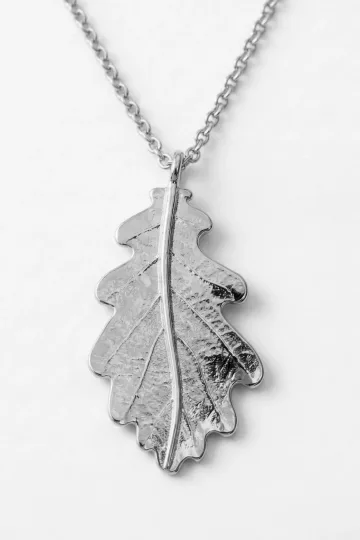
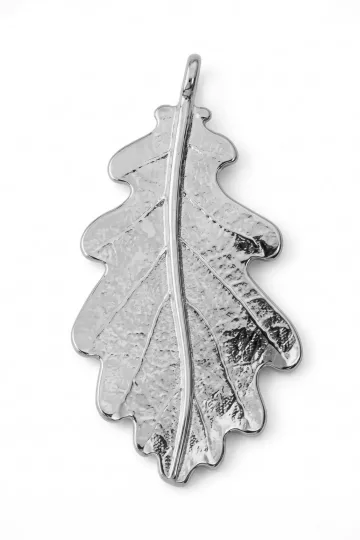
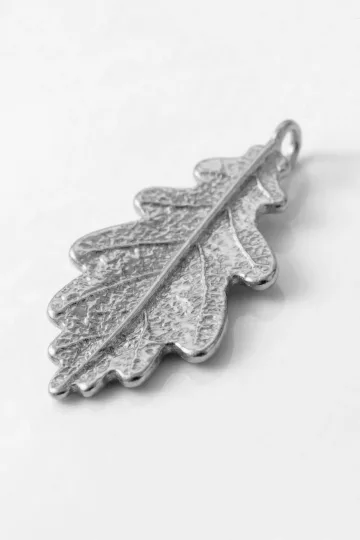
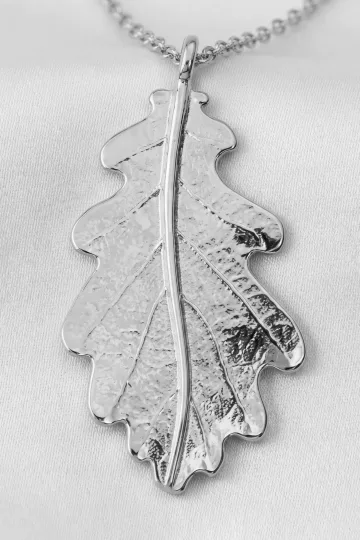
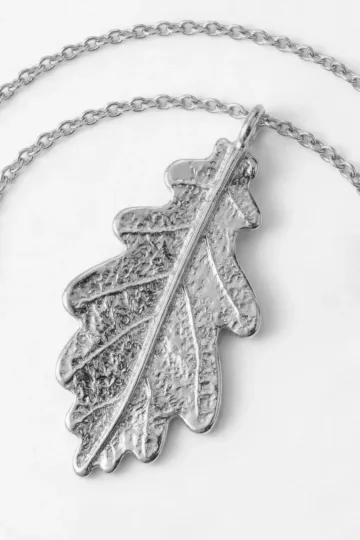
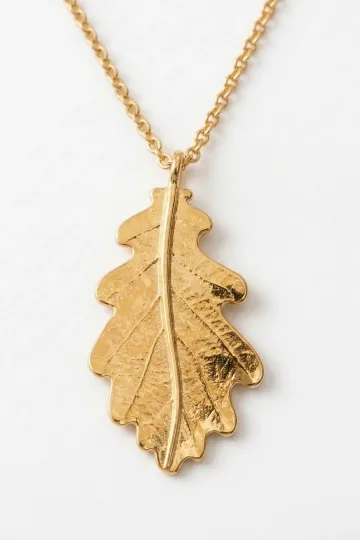
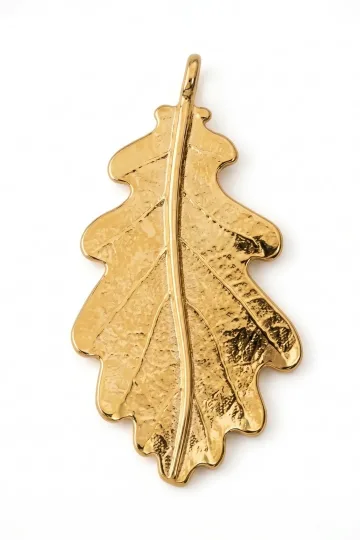
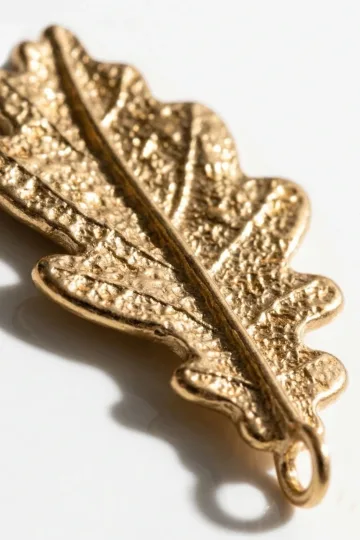
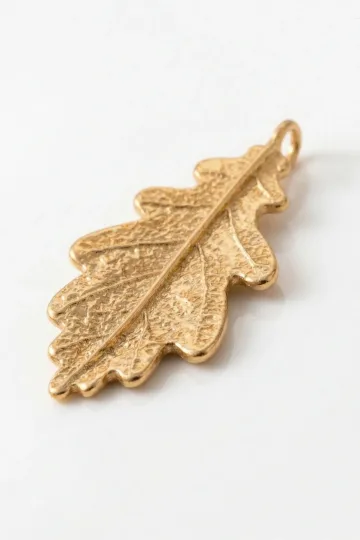
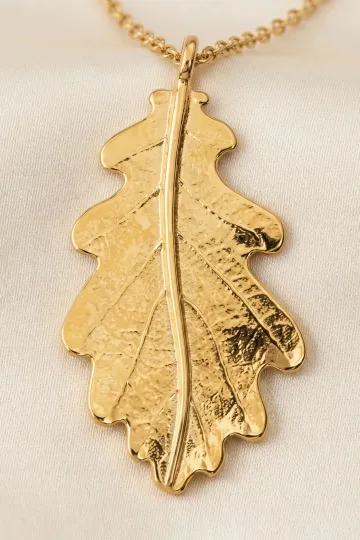
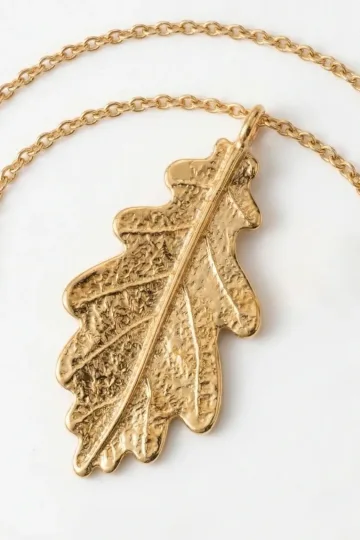
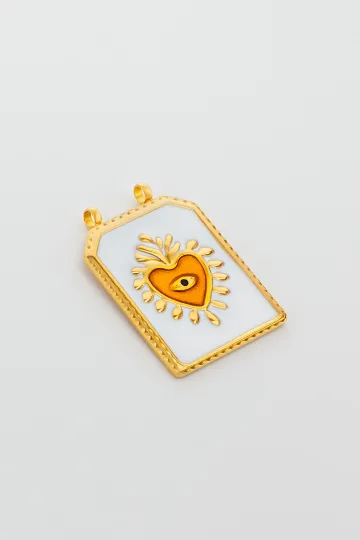
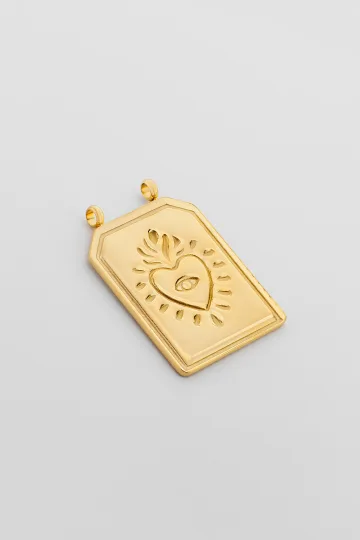
Wear the symbol, don't just read about it. These are in stock:
What the Fleur-de-lis Actually Is
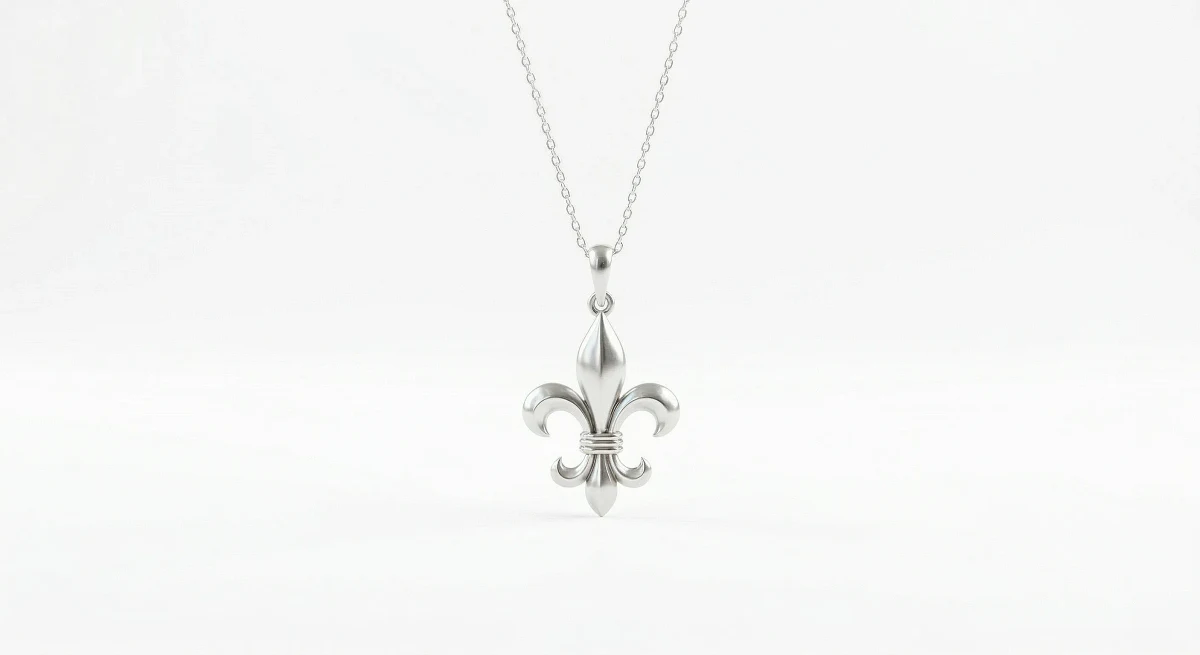
The fleur-de-lis (literally "flower of the lily" in French) is a stylized design showing three petals bound together at the base, with a horizontal band across the lower portion. The two outer petals curve outward; the central petal points straight up. Below the band, two smaller elements (sometimes called "sepals" or "pistils") curve downward, mirroring the outer petals.
Key visual features:
- Three petals above, bound at the middle
- A horizontal band or belt across the centre
- Two elements curving downward below the band
- Perfect bilateral symmetry
- Highly stylized; no naturalistic flower looks exactly like this
The design is old. Very old. Similar three-lobed motifs appear on Mesopotamian cylinder seals, Egyptian bas-reliefs, Minoan pottery, and Indo-European decorative art going back thousands of years. Whether these early examples are direct ancestors of the French fleur-de-lis or simply common ornamental solutions to the problem of "how do you draw a flower" is debated.
What isn't debated: by the High Middle Ages, the fleur-de-lis was firmly established as the premier symbol of the French monarchy, and from there it radiated outward across Europe, the Americas, and eventually the entire world.
What it represents (the short version):
- Royalty and nobility (French monarchy, Bourbon dynasty)
- Purity and the Virgin Mary (Catholic tradition)
- The Holy Trinity (three petals = Father, Son, Holy Spirit)
- Civic identity (Florence, New Orleans, Quebec)
- Honour and service (Scouting)
- Heritage and ancestry (French Canadian, Cajun, Creole communities)
One symbol. At least six different meanings. That's part of why it's survived so long.
One lily on a clean chain rules the whole outfit. Bury it under five pendants and you get a flea market. Don't.
How to wear the fleur-de-lis
The lily wants a clean background. After years working with heraldic pieces I keep coming back to one rule: the quieter the clothes, the louder the symbol reads. Here is what actually works, occasion by occasion.
How do I wear the lily every day? For daytime I recommend a small lily pendant on a fine chain over a white shirt, a grey rollneck or plain knitwear. A round neck or a shallow V opens the collarbone just enough for the pendant to sit centred instead of hiding in the fabric. Denim, linen, unpatterned cotton let the lily stay the only accent. Nothing else is needed before dark.
Does it belong at the office? It does, as long as you keep it restrained. I suggest a silver-toned pendant under a blazer or a sharp shirt, on a shorter chain so the symbol reads at the neckline rather than disappearing under the collar. A signet ring with a raised lily on the right hand I recommend as a stand-in for any other statement piece: one heraldic detail per outfit, everything else minimal.
How do I build an evening look? For evening I choose a dark, smooth fabric: black, deep navy, wine. Against that a gold lily turns into a jewelled point. Here you can go bigger: a chunky pendant, a longer chain following the neckline, or a signet that catches the light.
Silver or gold for a lily? I read the colouring. For cool complexions and a restrained wardrobe I recommend silver, which gives that architectural, faintly gothic character. For warm skin and softer clothing colours I suggest gold, closer to the royal tradition of the lily. One rule holds: a single metal per set so the look stays coherent.
Who does the lily actually suit? Anyone who likes pieces with a story and clean geometry rather than shine for its own sake. The symbol reads equally well on a man and on a woman; it comes down to scale and metal, not to whom it is owed. I like pairing the lily with a cross or a compass rose in one layer, yet it holds an outfit solo just as well: the symmetry carries any version. Two rules that never let me down. First, mix scales, one larger piece plus one or two thin ones. Second, for a small neckline take a shorter chain so the symbol lands in the open zone.

Turn on your camera, pick earrings, a pendant or a ring, and see the piece on yourself in real time.
Switch items in one tap.
Everything runs in your browser: no photo or video is ever uploaded.
The Great Debate: Lily or Iris?
The lily argument
The name says "lily." The French word "lis" (or "lys") means lily. The Latin "lilium" was associated with the symbol from the earliest written descriptions. Catholic iconography consistently pairs the fleur-de-lis with the Madonna Lily (Lilium candidum), the white flower that appears in Annunciation paintings. Case closed, right?
Not quite. The Madonna Lily has six petals in a radial arrangement. The fleur-de-lis has three petals in a vertical arrangement. They don't look much alike.
The iris argument
Some botanists and historians argue the design more closely resembles the Yellow Flag Iris (Iris pseudacorus), a wetland flower common in France. The iris has three upright "standard" petals and three drooping "fall" petals, which more closely matches the fleur-de-lis silhouette. The iris grows wild along the rivers and marshes of France, particularly in the regions where the Frankish kings held power.
There's also a linguistic argument. The old Frankish word for the flower may have been "liesch" or "liesc," which referred to iris-like plants, and this was gradually Frenchified into "lis."
Why it probably doesn't matter
Here's the thing: the fleur-de-lis is a heraldic device. It's not a botanical illustration. By the time it became the emblem of French kings, it had been stylized so heavily that it didn't represent any specific flower. It represented itself. The fleur-de-lis IS the fleur-de-lis, a symbol that references royalty, purity, and France. Whether the original inspiration was a lily, an iris, a lotus, or a spearhead (yes, some scholars argue it was a weapon, not a flower) matters to academics. To everyone else, it's the French royal lily, and that's enough.
The debate is fun, though. Especially over a glass of wine with someone who has opinions about medieval botany.
French Royalty and the Fleur-de-lis: From Clovis to the Revolution
Clovis and the angel's lily
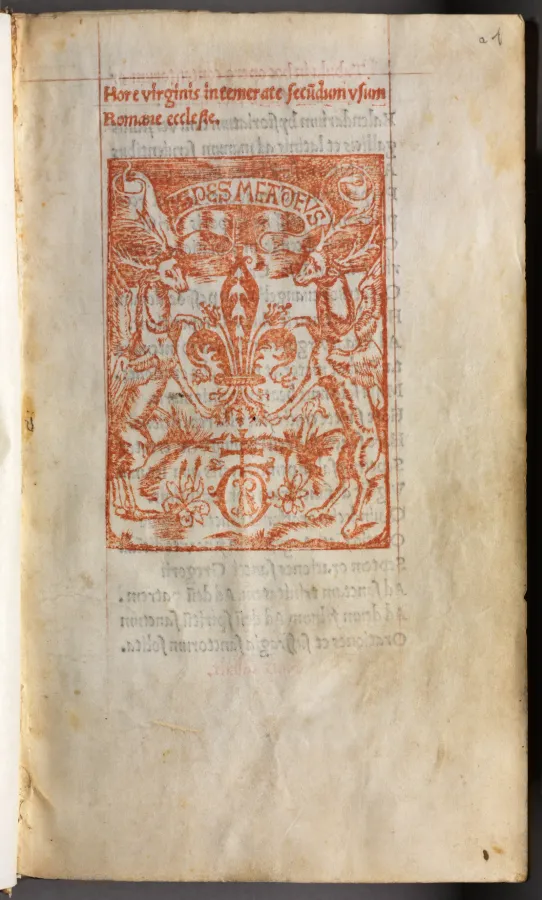
The founding legend goes like this: Clovis I, king of the Franks (roughly 466-511 CE), was fighting a desperate battle. At a critical moment, an angel (or the Virgin Mary, depending on the version) appeared and presented him with a golden lily. Clovis won the battle, converted to Christianity, and adopted the lily as his emblem.
The historical reality is murkier. Clovis did convert to Christianity (around 496 CE), and he did become the first king to unite the Frankish tribes under one rule. But the earliest visual evidence of the fleur-de-lis as a royal symbol doesn't appear until several centuries later. The legend was likely constructed retroactively to give the symbol a suitably divine origin.
What Clovis actually used as his emblem is uncertain. Some sources suggest toads or bees (Napoleonlater claimed the Merovingian golden bees were precursors to the fleur-de-lis). But by the time chroniclers were writing about Clovis in the High Middle Ages, the lily was firmly part of his story.
The royal coat of arms
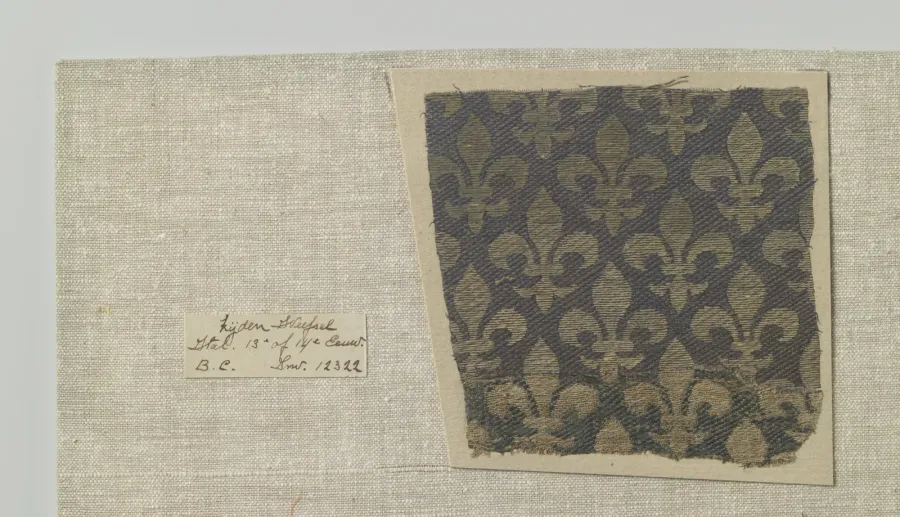
The first clear use of the fleur-de-lis on French royal arms appears under Louis VI (reign 1108-1137) or Louis VII (reign 1137-1180). The design: a blue (azure) field scattered with golden fleurs-de-lis, a pattern called "France Ancient" or "semee de lis."
Under Charles V (reign 1364-1380), the design was simplified to just three fleurs-de-lis on a blue field, called "France Modern." The three lilies were said to represent the Holy Trinity, or faith, wisdom, and chivalry. This is the version most people picture when they think of the French royal arms.
Every French king wore it
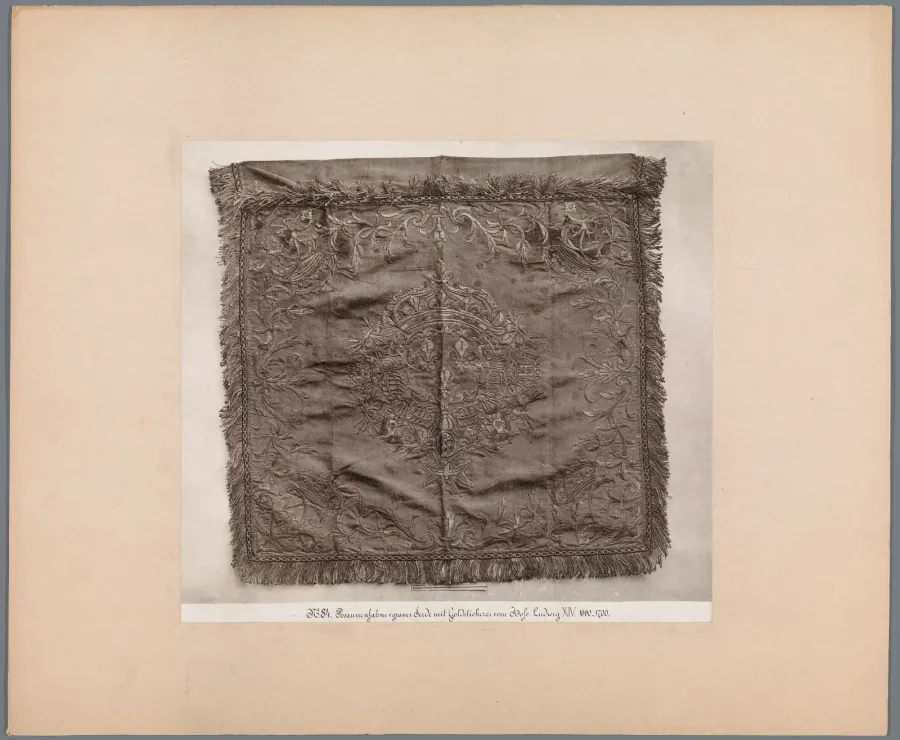
From Louis VII to Louis XVI, every king of France used the fleur-de-lis as part of his personal and state heraldry. It appeared on:
- Coronation robes (the famous blue mantle embroidered with golden lilies)
- The royal seal
- Coins and currency
- Architecture (carved into stone at every royal residence)
- Flags and military standards
- Sceptres and crown jewels
- Furniture, tapestries, and decorative arts
The fleur-de-lis wasn't just a symbol of the king. It was a symbol of France itself, of the divine right of the monarch to rule, and of the special relationship between the French crown and the Catholic Church.
At Versailles, Louis XIV covered virtually every surface with fleurs-de-lis. The symbol appears on gates, walls, ceilings, furniture, and garden features. Walking through the palace is like swimming in a sea of golden lilies.
The Revolution tears it down
On July 14, 1789, the Bastille fell. Within a few years, the French Republic had systematically destroyed, defaced, or removed fleurs-de-lis from every public building, monument, and document it could reach. The tricolour cockade replaced the white Bourbon flag. The lily, symbol of royal authority, became a symbol of the old regime that the revolutionaries were dismantling.
People were literally arrested for possessing items decorated with fleurs-de-lis. Stone masons were hired to chisel the symbol off buildings. Silverware was melted down. Embroidered textiles were burned.
The lily came back briefly during the Bourbon Restoration (1814-1830), when Louis XVIII and Charles X tried to pretend the Revolution hadn't happened. But after the July Revolution of 1830, the fleur-de-lis was permanently removed from the French state. The tricolour flag stayed.
Today, the fleur-de-lis has no official status in the French Republic. But it remains everywhere in France, in church architecture, in the names of streets and buildings, in the cultural memory of the nation. You can't erase a thousand years of symbolism with a revolutionary decree.
Upload a photo of your pet, someone you love, or an object. We'll build a 3D model and hand-cast it in pewter.



Catholic Symbolism: The Virgin Mary and the Holy Trinity
The lily of the Annunciation
In Christian art, the white lily is the flower of the Virgin Mary. In paintings of the Annunciation (the angel Gabriel telling Mary she will bear the son of God), Gabriel almost always holds or stands near white lilies. This tradition goes back to at least the 14th century, and probably earlier.
The connection is about purity. The white lily (Lilium candidum) was associated with virginity and moral perfection in both pagan and Christian traditions. The flower's colour (white, immaculate), its scent (sweet, overwhelming), and its form (opening upward, toward heaven) all fed into this symbolism.
The fleur-de-lis, as a stylized lily, inherited these associations. When the French king claimed the lily, he was also claiming a connection to the Virgin Mary, to purity, to divine approval. The French monarchy's special title, "the Most Christian King" (Rex Christianissimus), was reinforced by this Marian flower. The same botanical-spiritual logic runs through the lotus in jewellery, the Eastern symbol of purity that mirrors the lily's role in the Western tradition.
Three petals, one God
The three petals of the fleur-de-lis were widely interpreted as representing the Holy Trinity: Father, Son, and Holy Spirit. This reading made the symbol simultaneously royal and theological, a visual argument that the French king ruled by divine authority, with the blessing of the triune God.
Some medieval commentators assigned specific virtues to each petal: faith, wisdom, and chivalry. Others said the three petals represented the three social orders: those who pray (clergy), those who fight (nobility), and those who work (commoners).
Purity, chivalry, and faith
The fleur-de-lis became a shorthand for the ideal Christian knight: pure in heart, brave in battle, faithful to God and king. It appeared on the shields and surcoats of Crusaders. It decorated churches and cathedrals across France and beyond. It was, in many ways, the visual identity of medieval Christendom's most powerful kingdom.
This religious dimension is part of why the fleur-de-lis has survived. It wasn't just a political symbol that died with the monarchy. It was also a spiritual symbol that lived on in the Church, in religious art, and in the personal faith of millions of Catholics who see the lily as Mary's flower.
Customer reviews
Zevira is a real jewellery shop. Genuine payments, deliveries and customer thank-yous.
🥰🥰🥰 gracias
Ok, ¡gracias! 🙂
Florence and the Giglio: A City Built on a Flower
Florence's symbol is the giglio, the Italian word for lily. You'll find it everywhere in the city: on buildings, manhole covers, street signs, police cars, the Fiorentina football jersey, and (of course) every tourist shop in the centro storico.
The Florentine giglio looks different from the French fleur-de-lis. It's typically shown as a red lily on a white field (or the reverse, depending on which political faction held power at the time). The shape is also slightly different: the Florentine version often shows stamens emerging from the centre of the flower, making it look more naturalistic than the purely heraldic French design.
The city adopted the lily as its symbol in at least the 11th century, and the association may go back further. Legend connects it to the Roman founding of the city (Florentia, "the flourishing one"), with the lily representing the flowering fields of the Arno valley.
When the Guelphs defeated the Ghibellines in the 13th century, the winning faction switched the colours: the previously white lily on a red field became a red lily on a white field, to distinguish themselves from the defeated party. That red giglio on white has been Florence's symbol ever since.
The Medici family, Florence's most famous dynasty, used the giglio extensively. It appears alongside the Medici balls (palle) on buildings, artworks, and objects throughout the city. When the Medici became popes (Leo X and Clement VII), they brought the Florentine lily into the Vatican.
If you've walked through Florence, you've walked past the giglio hundreds of times without counting. It's woven into the city's fabric so completely that locals barely notice it anymore. Which is, in a way, the highest compliment a symbol can receive.
The Scout Symbol: Baden-Powell and the Worldwide Fleur-de-lis
Robert Baden-Powell founded the Scout movement in 1907. When he needed a symbol, he chose the fleur-de-lis. Not for its royal associations, but for its navigational ones.
Here's the connection: the fleur-de-lis had been used on compass roses since at least the 14th century to mark north. Sailors, cartographers, and navigators were familiar with it as a directional symbol. Baden-Powell, a military man who valued orientation and wayfinding, adopted it for Scouting with the message: "The Scout points the way."
The Scout fleur-de-lis has some modifications from the heraldic version. It typically includes two five-pointed stars (representing truth and knowledge), a central band with a reef knot (representing the Scout promise and service), and sometimes a surrounding circle or trefoil shape.
Today, the World Organization of the Scout Movement (WOSM) uses a fleur-de-lis surrounded by a circle and rope as its official emblem. It's recognized in virtually every country on Earth. Over 50 million Scouts and Guides worldwide wear some version of the fleur-de-lis on their uniform.
For many people, the Scout fleur-de-lis was their first encounter with the symbol. It represents service, honour, outdoorsmanship, and community. It has nothing to do with French kings and everything to do with a global youth movement built on the idea that young people can make the world better.



New Orleans: The Fleur-de-lis City
French colonial roots
New Orleans was founded in 1718 by Jean-Baptiste Le Moyne de Bienville as part of the French colony of La Louisiane, named after Louis XIV. The fleur-de-lis was planted in Louisiana soil from day one. It was on the colony's flag, on official documents, on buildings, and in the city's founding charter.
France ceded Louisiana to Spain in 1762 (the Treaty of Fontainebleau), then took it back in 1800, then sold it to the United States in 1803 (the Louisiana Purchase). Through all these political changes, the fleur-de-lis remained embedded in New Orleans' identity. The Spanish period added its own layers (New Orleans' famous French Quarter architecture is actually mostly Spanish colonial), but the lily endured.
Mardi Gras and daily life
Walk through New Orleans today and the fleur-de-lis is inescapable. It's on street signs. On the city flag. On iron balconies in the Quarter. On t-shirts, bumper stickers, tattoos, and coffee mugs. Mardi Gras krewes use it in their decorations. Restaurants put it on menus. It's the visual shorthand for "this is New Orleans."
The symbol's ubiquity goes beyond decoration. For many New Orleanians, the fleur-de-lis represents a specific identity: French-influenced, culturally distinct from the rest of America, proud of a heritage that includes French, Spanish, African, Creole, and Cajun elements. The lily is the thread that ties it all together.
Hurricane Katrina and the symbol of resilience
On August 29, 2005, Hurricane Katrina devastated New Orleans. Eighty percent of the city flooded. Over 1,800 people died. The aftermath was catastrophic, and the nation watched as one of America's most culturally rich cities nearly drowned.
In the recovery, the fleur-de-lis became the symbol of resilience. People spray-painted it on the sides of flooded houses. Artists created murals of the lily rising from water. "Nola Strong" campaigns featured the fleur-de-lis as their centrepiece. Tattoo shops reported a massive surge in fleur-de-lis tattoos, from locals marking their commitment to the city and from outsiders showing solidarity.
The symbol's meaning shifted. Before Katrina, the fleur-de-lis was history and heritage. After Katrina, it was also defiance. The city came back. The lily survived the flood.
The Saints and the Who Dat Nation
The New Orleans Saints, the city's NFL team, use a golden fleur-de-lis on a black field as their logo. When the Saints won Super Bowl XLIV in 2010 (their first and only championship, five years after Katrina), the victory felt like more than a football game. It was vindication. The fleur-de-lis was everywhere that night: on jerseys, on faces, painted on buildings across the city.
"Who Dat" nation, the Saints' devoted fanbase, has made the fleur-de-lis a fixture of American sports culture. Black and gold fleurs-de-lis appear on car decals across the Gulf Coast. The symbol connects football fandom with civic pride, cultural identity, and post-Katrina resilience in a way that few sports logos manage.
The Bourbon Lily in Britain: Six Centuries of Borrowed Heraldry
The English royal arms carried French lilies for longer than most people in Britain realise, and the story explains why the motif turns up on so many old buildings and old silver in England.
The English claim to the French throne
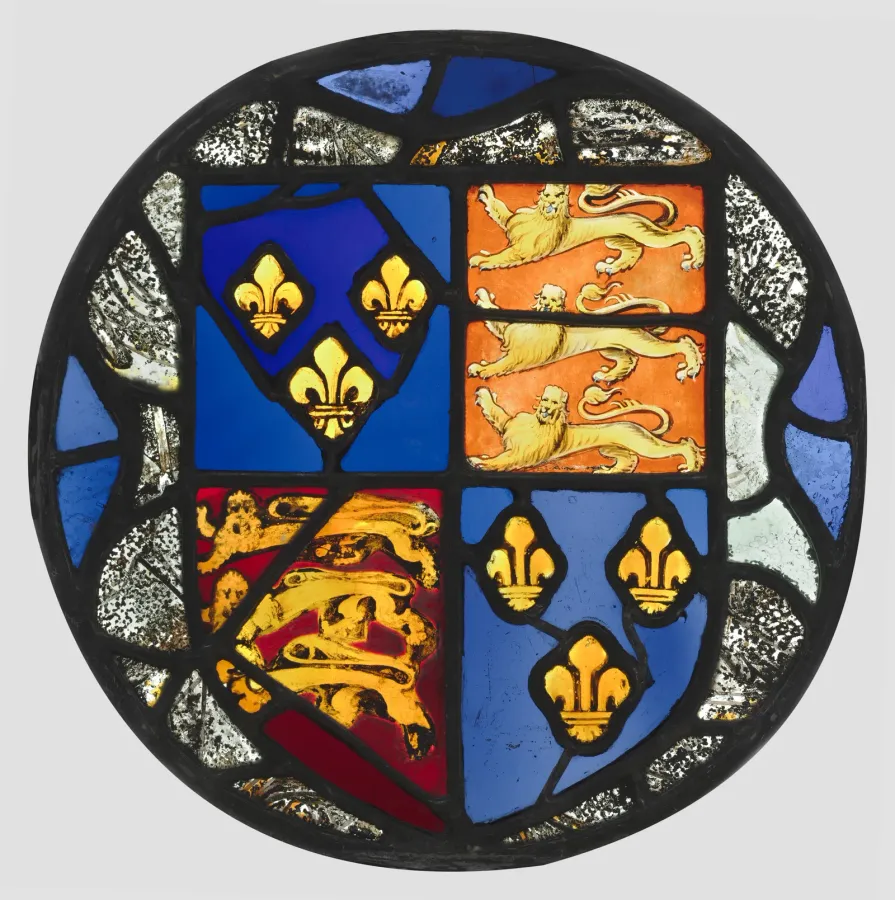
In 1340, Edward III quartered the fleur-de-lis of France with the lions of England and declared himself King of France, a claim based on his mother's Capetian descent and one of the sparks of the long war that followed. The lilies were not decoration on that shield, they were a legal argument in visual form.
What is remarkable is how long the argument outlived any prospect of being true. English and then British monarchs kept the French quarter on the royal arms for four hundred and sixty years, through the loss of every French possession except Calais, and then through the loss of Calais too. The lilies came off only in 1801, and they came off as part of a diplomatic tidying up rather than an admission of defeat.
The fleur-de-lis in British heraldry
Because the motif sat on the royal arms for so long, it worked its way into English heraldry at every level below it. It appears as a charge on hundreds of family coats of arms, often granted for service to the Crown, and it is the standard heraldic mark of the sixth son in the English system of cadency marks that distinguish brothers within a family.
It also became the standard decorative finish on things that point: the north point of a compass rose on English maps, the tip of a mace, the finial on a crown, the ends of a cross patonce. Once you know to look for it, the lily is on the ironwork of half the older churches in the country.
From Versailles to the country house
The eighteenth century added a second layer. English taste turned decisively toward French design, and country houses filled with French furniture, French silver patterns and French plasterwork, all of it carrying the lily as an ornamental motif entirely detached from any political meaning. Georgian silversmiths used it as a finial and a border; Victorian architects revived it wholesale in the Gothic style.
That is why a fleur-de-lis on a piece of English silver tells you very little on its own. It might be heraldic, it might be devotional, or it might simply be what a designer in 1860 reached for when a shape needed finishing.
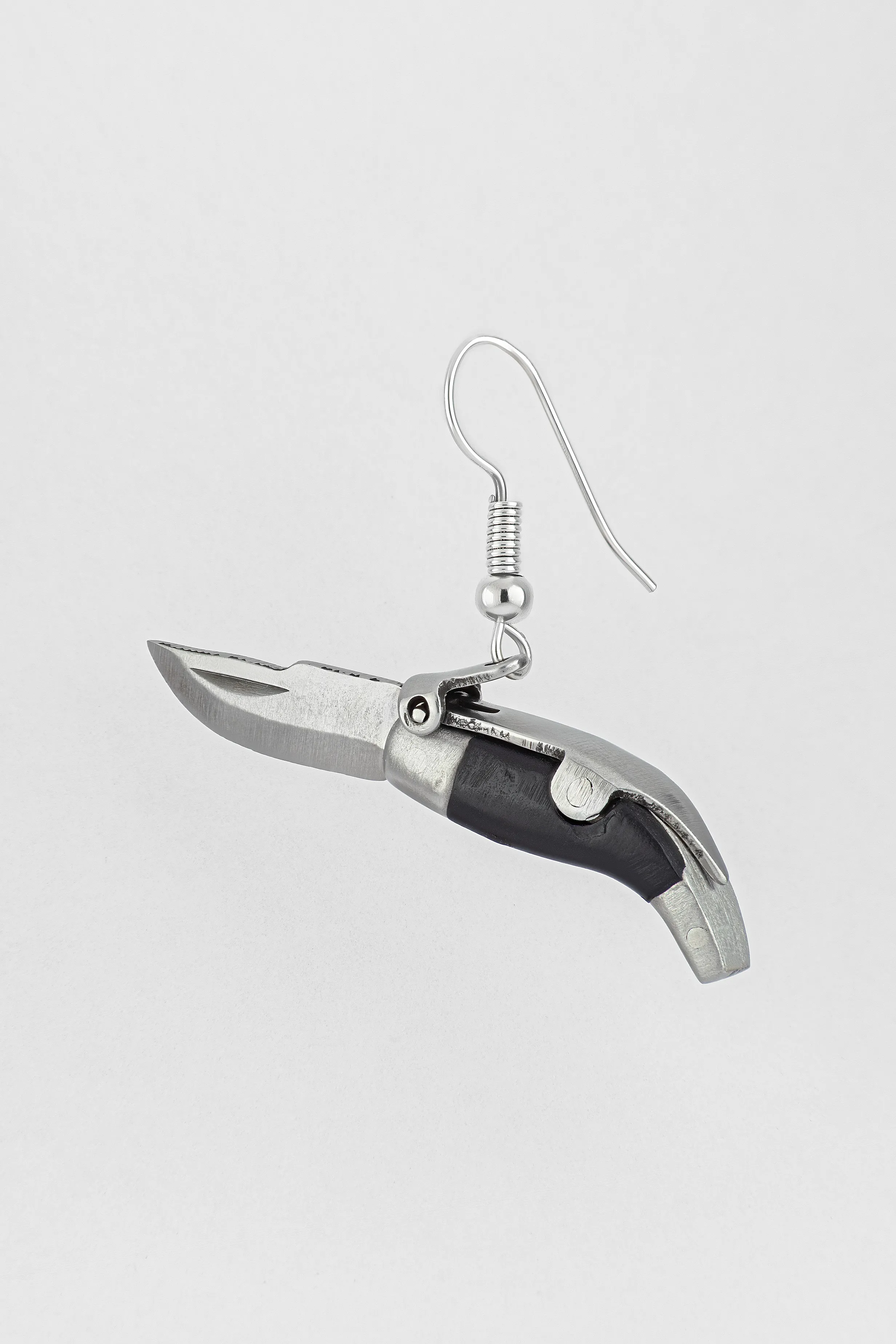
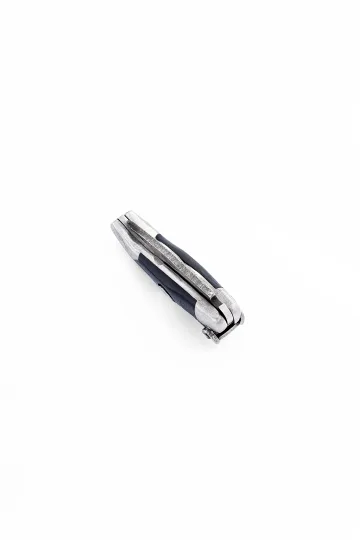
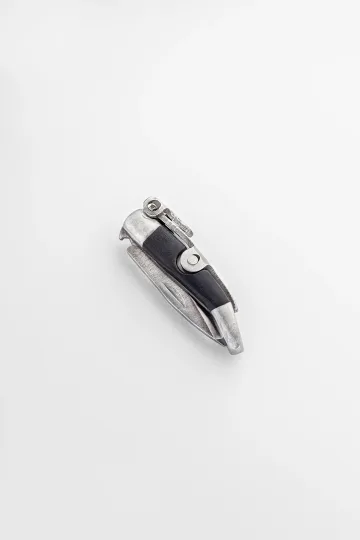
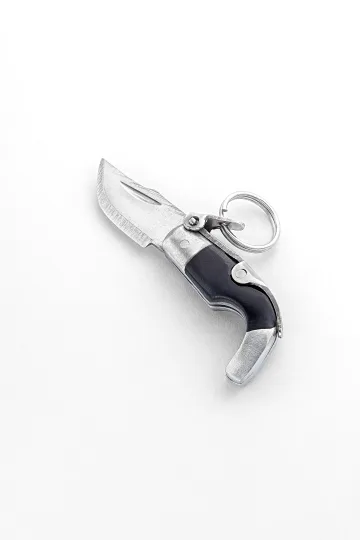
CAPAORA mini knife pendant
The 18th-century Spanish navaja in miniature: 40 mm of stainless steel, a real folding mechanism and a Palanquilla lock that clicks. An affordable gift to remember.
Authentic · Ships from Spain · 14-day returns
Quebec: The Fleur-de-lis on the Flag
The provincial flag of Quebec, the "Fleurdelise," features four white fleurs-de-lis on a blue field, separated by a white cross. It was officially adopted in 1948, but the symbol's connection to Quebec goes back to the days of New France.
When French settlers arrived in what is now Quebec in the 16th and 17th centuries, they brought the fleur-de-lis with them. It flew over Quebec City, Montreal, and every French settlement in the St. Lawrence Valley. When Britain conquered New France in 1760, the French flag came down, but the cultural connection to the lily persisted.
For French Canadians, the fleur-de-lis represents linguistic and cultural survival. In a predominantly English-speaking continent, Quebecois identity is bound up with the French language, French customs, and French symbols. The fleur-de-lis says: "We are still here. We are still French."
The symbol appears throughout Quebec: on government buildings, licence plates, tourist merchandise, and as a common element in jewellery and personal accessories. It's not just historical nostalgia. It's a living, active symbol of a distinct society within Canada.
The Bourbon Lily Across Europe: Spain, Italy, and Beyond
The Bourbon dynasty, which took its name from the French town of Bourbon-l'Archambault, spread the fleur-de-lis across Europe as its members ascended thrones in multiple countries.
Spain: When Philip V (grandson of Louis XIV) became king of Spain in 1700, he brought the Bourbon lily to the Spanish crown. The fleur-de-lis appears on the Spanish royal coat of arms to this day. Every Spanish king since 1700 has been a Bourbon, and the current king, Felipe VI, carries the lily on his heraldic shield.
Italy: The Bourbons ruled the Kingdom of the Two Sicilies (Naples and Sicily) from 1734 to 1861. The Bourbon lily appeared on the kingdom's coat of arms, its coins, its buildings, and its official documents. In southern Italy, the fleur-de-lis still carries associations with the old Bourbon monarchy.
Parma: The Duchy of Parma was ruled by a branch of the Bourbons from 1748 to 1859. The Farnese lily (a variant of the fleur-de-lis) was already the city's symbol; the Bourbon dynasty reinforced it.
Luxembourg: The Grand Duchy's coat of arms doesn't use the fleur-de-lis directly, but Bourbon connections influenced the local heraldic tradition.
The result: the fleur-de-lis isn't just French. It's pan-European. It connects France, Spain, Italy, and their former colonies through a shared dynastic symbol. When you see a fleur-de-lis in Barcelona or Naples, you're looking at the same lily that hung over Versailles.
Fashion and Streetwear: From Silver Luxury to Heraldic Chic
The fleur-de-lis entered modern fashion through two doors: high-end heraldic luxury and punk-adjacent streetwear.
High-end silver jewellery houses have made the fleur-de-lis a signature motif alongside the cross and the dagger. Treated this way, the lily becomes a symbol of aristocratic rebellion. Not actually aristocratic. Aesthetically aristocratic. The message: royalty isn't born, it's chosen.
Punk and historical fashion designers have incorporated the fleur-de-lis and other heraldic elements into their work. The argument such designs make is that royal symbols can be subversive, that wearing a king's emblem as a commoner is an act of appropriation and power.
Contemporary streetwear labels have used fleur-de-lis motifs in limited runs. The symbol works because it reads as "expensive" and "old money" even on a cotton hoodie. It signals taste, or at least the aspiration toward taste.
In jewellery, the fleur-de-lis appears on everything from delicate gold pendants to chunky silver statement rings. It pairs well with other heraldic and symbolic motifs: crosses, crowns, shields, anchors, and compass roses. The design's strong symmetry and clean lines make it readable at any scale, from a tiny earring stud to a large belt buckle.
The fleur-de-lis works in fashion because it carries weight without carrying baggage. Unlike symbols that belong to specific subcultures or political movements, the lily is broadly read as "classical," "noble," and "European." It adds gravitas to anything it touches.
Leave your email, we'll send your discount code. No spam, unsubscribe anytime.
The code arrives by email, valid on your first order.
The fleur-de-lis gift guide
For someone with French heritage. Whether their family came from France, Quebec, Louisiana, or any former French colony, the fleur-de-lis is a way of honouring that connection. It says: "Your roots matter."
For a Scout or former Scout. Millions of people have a deep emotional connection to the Scout fleur-de-lis. A jewellery version is a way of carrying that connection beyond the uniform.
For a New Orleans lover. Anyone who's fallen in love with NOLA (and it's hard not to) will appreciate the symbol. Bonus points if paired with Mardi Gras colours (purple, gold, green).
For a history enthusiast. The fleur-de-lis is a conversation starter. Every petal leads to a story: Clovis, Versailles, Florence, Katrina, the Bourbons. It's wearable history.
For someone who appreciates classic design. The fleur-de-lis is one of the most aesthetically satisfying symbols in Western heraldry. Its symmetry, its clean lines, its adaptability to different scales and materials. It just looks good. No historical knowledge required.
The Fleur-de-lis in Tattoo Culture
The lily is one of the most tattooed heraldic symbols in the world, and it carries an unusually wide spread of meanings depending on who is wearing it and where.
In New Orleans it is a civic tattoo, taken up in enormous numbers after the flooding of 2005 as a mark of the city and of having stayed. In Quebec it functions the same way, as an identity mark rather than an ornament. In France itself, the symbol is politically loaded because of its royalist associations, and it is worn far more cautiously.
Stylistically it suits tattooing well. The form is symmetrical, it reads at small sizes, and it works in solid black, in fine line and in ornamental blackwork alike. The common placements are the inner forearm, the back of the neck and the sternum, all of which suit a vertical symmetrical shape.
Two cautions worth knowing. The lily was used as a brand on enslaved people in French colonial Louisiana under the code that governed slavery there, and that history is remembered in the region even where the symbol is now worn with civic pride. Separately, some organised groups have adopted heraldic symbols generally, so context and company matter. Neither fact stops most people wearing it, and both are worth knowing before choosing it.
The Lily in Architecture: Where to Look
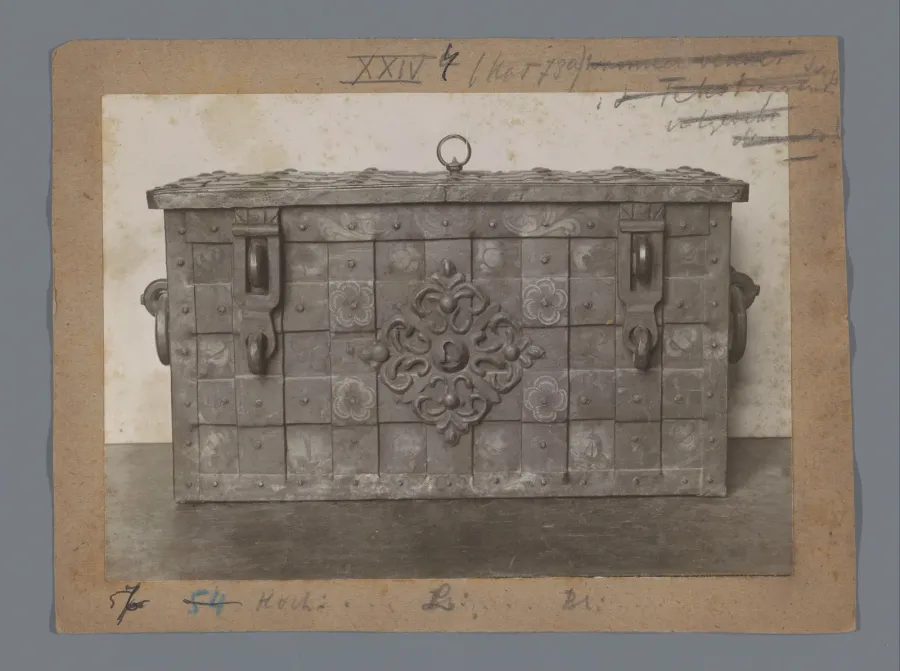
Once you can recognise the shape, it appears everywhere in European building, and it is a good way to date and place what you are looking at.
On roofs and railings. The lily is the default finial for iron and lead work, sitting on the top of railings, gates, weathervanes and the ridges of roofs. Victorian Gothic revival used it heavily, and so did the genuine medieval work it was imitating.
On towers and spires. Crockets, the leafy projections running up the edges of a Gothic spire, frequently resolve into lily forms, and the crowning finial often is one outright.
In stained glass. Any window showing the Annunciation will have lilies in it, usually in a vase between the angel and the Virgin. This is the devotional lily rather than the heraldic one, and the two look almost identical.
On monuments and tombs. French royal tombs are the obvious case, but the motif appears across European funerary sculpture as a sign of purity and of resurrection.
On floors and tiles. Encaustic tile floors, common in nineteenth-century British churches, use the lily as one of the standard repeating motifs alongside the trefoil and the quatrefoil.
In Florence, the whole city. The giglio is on palace facades, on bridges, on manhole covers and on the football club, and it is red on white rather than gold on blue, which is the quickest way to tell a Florentine lily from a French one.
Why the Lily Works as a Jewellery Motif
Plenty of heraldic symbols do not survive being reduced to pendant size. The lily does, and for reasons that are worth setting out, because they also tell you which versions to buy.
It is symmetrical. A symmetrical form reads correctly whichever way it swings, which matters enormously for a pendant that will spin on its chain. Asymmetric motifs spend half their life facing backwards.
It has a strong silhouette. The shape is recognisable in outline alone, with no internal detail required. That means it survives being made small, being cast rather than carved, and being seen at a distance or on a screen.
It has a natural top and bottom. The bound waist of the lily is exactly where a bail wants to go, so a pendant version needs no awkward loop added to a shape that did not expect one.
It works in every technique. Pierced, cast, engraved, enamelled, cut from sheet: the form survives all of them. Try that with a coat of arms.
It is legible at 8 mm. Which makes it viable as a stud earring, a signet face, a charm and a clasp, not only as a pendant.
It carries meaning without demanding it. People who want the French history get the French history. People who want the Marian symbolism get that. People who simply like the shape are not obliged to explain themselves, which is a genuine advantage in a symbol worn daily.
The Fleur-de-lis and Other Heraldic Symbols
Heraldic motifs are a family, and they combine according to rules that were worked out long before anyone wore them as jewellery. A few of those rules still help.
With the crown. The most natural pairing, and historically the most common, since the lily was the finial on French crowns. Together they read as unambiguously royalist, which is fine in most of the world and pointed in France.
With the cross. The cross fleury, whose arms end in lilies, does the combining for you and is the more elegant solution than wearing both separately. It is a standard heraldic form with centuries of use behind it.
With the lion. The English pairing, from the quartered royal arms. Worn together the two make a specifically Anglo-French statement, which is either exactly what you want or an accident.
With the rose. The Tudor rose and the French lily are the two great national flower emblems of the medieval west, and they pair well visually because one is round and one is vertical. Historically they signal a dynastic marriage.
With the anchor or the compass. Not heraldic pairings at all, but they work, because the lily is the ornament on the north point of a compass rose and the two shapes share a vertical axis.
What to avoid. Two heraldic charges of similar weight on the same chain compete rather than combine, and three is a costume. Keep the lily as the focal point and let anything else be smaller.
Send a friend a discount code, they save on their first order.
Caring for Fleur-de-lis Jewellery
The shape has recesses, and recesses are where jewellery care actually happens.
Silver. The pierced work between the petals traps polish and tarnish alike, which is why a dip is tempting and why it is the wrong choice: it strips the darkness out of the recesses that give the form its definition. Use a soft brush, warm water and a drop of washing-up liquid, then dry it properly, and keep a polishing cloth for the flat outer surfaces only.
Gold and gold plating. Gold needs less, but plating wears first on the high points, which on a lily means the tips of the three petals. If a plated piece is worn daily, expect the tips to go pale within a year or two. Solid gold has no such problem.
Enamel. Enamelled lilies are common in heraldic pieces. Enamel dislikes ultrasonic cleaners and sudden temperature change, and a damp cloth is all it should ever meet.
Hard water. In much of the south and east of Britain, tap water leaves limescale in exactly the fine channels of a pierced design. A final rinse in cooled boiled or filtered water avoids the grey film.
Storage. Lily pendants have points, and points catch. Store the piece flat in a soft pouch rather than tangled with chains, and if it hangs on a fine chain, unhook it rather than pulling it through knots.
When to see a jeweller. The weak spot on any pierced pendant is the bail and the narrow waist of the form. If either shows a hairline, stop wearing it: a crack in a thin section will part, usually while you are outdoors.
Buying it as a gift? Each one arrives ready to give.
 A branded Zevira box and a little card come with every order.

Practical Questions
Can I wear a lily pendant in the shower and the pool?
The shower is survivable and dulls silver over time from soap film. The pool is not: chlorine attacks the alloy metals in sterling and will pit the surface permanently, and it degrades gold plating fast. Take it off, and rinse it in fresh water after the sea.
How do I clean a silver lily that has gone dark?
Warm water, a drop of washing-up liquid and a soft toothbrush for the pierced sections, then a proper dry. For the flat surfaces, a silver polishing cloth. Avoid dips and abrasive pastes, since both remove the intentional darkness in the recesses and flatten the design.
Does the fleur-de-lis suit men?
It is one of the oldest motifs in men's jewellery there is, having spent six centuries on the arms of kings and on the signet rings of everyone who served them. Worn as a signet, a lapel pin, a cufflink or a broad pendant on a heavy chain, it reads as heraldic rather than floral. The versions that read as feminine are the small delicate ones, which is a question of scale rather than of the symbol.
What does it pair well with?
One other piece at most. A plain chain lets the shape carry the look. If you want a second element, choose something that shares the vertical axis, a bar, a compass, a plain cross, rather than another ornate charge. Metals should match unless you are mixing deliberately across several pieces.
How do I tell a lily from an iris in a design?
Look at the base. The heraldic fleur-de-lis has a horizontal bar binding the three petals near the bottom and two curled side petals that fall outward; it is a stylised form, not a botanical drawing. A true lily in art has six visible petals and prominent stamens. An iris has three upright petals and three falling ones with a beard. If the shape has a binding band, it is heraldic, and the botanical argument is beside the point.
What size pendant should I choose?
For everyday wear, 15 to 20 mm reads clearly without dominating. Below 12 mm the pierced detail closes up visually and the form starts to look like a generic shape. Above 30 mm it becomes a statement piece, which is fine deliberately and heavy accidentally. For earrings, 8 to 12 mm is the workable range.
Frequently Asked Questions
What does fleur-de-lis mean? Literally, "flower of the lily" in French. It's a stylized three-petalled design that has represented the French monarchy, the Catholic Church, the city of Florence, the Scout movement, and numerous other institutions and communities for over a thousand years.
Is the fleur-de-lis a lily or an iris? Scholars have debated this for centuries. The name says lily, and Catholic tradition connects it to the Madonna Lily. But the design more closely resembles the Yellow Flag Iris. In practice, the fleur-de-lis has been stylized so heavily that it doesn't represent any specific botanical species. It represents itself.
Why is the fleur-de-lis the symbol of New Orleans? New Orleans was founded by France in 1718 as part of La Louisiane, named after Louis XIV. The fleur-de-lis was the city's symbol from its founding. After Hurricane Katrina in 2005, it became a symbol of resilience and recovery. The New Orleans Saints NFL team also uses it as their logo.
Why is the fleur-de-lis the Scout symbol? Robert Baden-Powell chose it because the fleur-de-lis was traditionally used on compass roses to mark north. The symbolism: "The Scout points the way." Over 50 million Scouts worldwide wear it.
Is the fleur-de-lis a religious symbol? It has strong Catholic associations. The three petals were interpreted as representing the Holy Trinity. The lily is the flower of the Virgin Mary in Christian art. However, the fleur-de-lis is also used in entirely secular contexts (heraldry, civic identity, fashion), so it's not exclusively religious.
Why is the fleur-de-lis on the Spanish coat of arms? The Spanish royal family is Bourbon, descended from Philip V, grandson of France's Louis XIV. When Philip became king of Spain in 1700, the Bourbon fleur-de-lis entered Spanish heraldry, where it remains today under Felipe VI.
Can anyone wear the fleur-de-lis? Absolutely. The fleur-de-lis has no restrictions based on heritage, religion, or background. It's one of the most widely used symbols in Western culture, appearing in contexts from sports to fashion to personal jewellery. Wear it because you like how it looks, because you connect with its history, or both.
What does the fleur-de-lis mean in tattoo culture? It often represents French or Cajun heritage, New Orleans pride, Scout identity, or Catholic faith. After Hurricane Katrina, it became a popular resilience tattoo. In broader tattoo culture, it reads as "classical," "noble," and "European" without being tied to any negative associations.
Silver and gold jewellery, wedding bands, symbolic pendants, paired sets.
Wear the symbol, don't just read about it. These are in stock:








Collecting Antique Fleur-de-lis Pieces
The motif has been made continuously for centuries, which means the second-hand and antique market carries a great deal of it, at every level from Victorian mass production to genuine heraldic work.
What turns up most. Nineteenth-century British silver is the largest category by far: brooches, buckles, buttons, hatpins and watch chain fobs, produced in quantity during the Gothic revival. French devotional pieces from the same period are the second group, usually with a Marian rather than a royal reading. Florentine work with the red giglio is a distinct and smaller category.
How to date it. In Britain, the hallmark does the work: the Assay Office mark places it in London, Birmingham, Sheffield, Edinburgh or one of the offices that have since closed, and the date letter gives the year within that office's cycle. French pieces carry their own control marks, and the boar's head and crab marks for silver are the ones most often seen on the small devotional pieces. An unmarked piece is not necessarily wrong, since small items fell below the weight thresholds, but it is unverified.
What condition matters. On a pierced lily, check the three petal tips and the binding waist first, because those are the points that catch and the sections that crack. Old repairs are common and are usually visible as a change of colour in the solder. A worn piece with a sound structure is a better buy than a crisp one with a hairline.
Where the fakes are. Reproduction Victorian silver exists in quantity, generally cast from a genuine original, and the giveaway is soft detail: cast copies lose the crispness of the original's engraving and often show tiny pits from the casting. Reproduction hallmarks are also cast, so they sit slightly soft and shallow compared to a struck mark.
What to actually collect. The most interesting pieces are the ones that carry a specific history: a fob from a named maker, a mourning brooch with a date, a badge from an identifiable regiment or civic body. Generic lilies are pretty and plentiful. A lily attached to a documented context is the one worth keeping.
On wearing antiques. Most of these pieces were made for clothing that no longer exists, and brooch pins in particular were designed for heavy fabric. A Victorian brooch on a modern knit will sag and eventually tear it. Converting a brooch to a pendant is reversible if done well and destroys value if done badly, so any conversion should be by a jeweller who understands that distinction.
Wear the symbol, don't just read about it. These are in stock:





The flower that doesn't fade
The fleur-de-lis has been around for somewhere between 800 and 1,500 years, depending on where you start counting. Kings used it to claim divine authority. The Church used it to represent purity. Florence put it on everything. Baden-Powell pinned it on a million Scout shirts. New Orleans spray-painted it on the walls of flooded houses because the city refused to die.
That's a lot of weight for three petals and a band.
But maybe that's why the symbol works. It's simple enough to draw in thirty seconds. Elegant enough to cast in gold. Versatile enough to mean "I'm French," "I'm a Scout," "I love New Orleans," "I'm Catholic," or just "I appreciate good design." Not many symbols can carry that range.
The kings who made it famous are gone. The dynasty that spread it across Europe still sits on the Spanish throne, but that's about it. The Revolution tried to destroy it. Time should have buried it.
Instead, the fleur-de-lis ended up on pendants and rings and tattoos, carried by people who may never have heard of Clovis, may never visit Versailles, may not know a Bourbon from a bourbon. And that's fine. The symbol has grown bigger than its history. It belongs to everyone now.
Three petals. One flower. A thousand years. Still going.
About Zevira
Zevira makes jewellery in the artisan tradition of Albacete, Spain. We have a soft spot for the fleur-de-lis because of its geometry: the perfect symmetry and clean lines read just as well on a heavy signet ring as on a small pendant, which is exactly why the lily takes so beautifully to casting and engraving.
Here is what you can find with us on the heraldic theme:
- Pendants with the lily and other heraldic motifs on chains of different lengths
- Rings and signet rings with a raised symbol, made for daily wear
- The compass rose, where the lily historically marked north
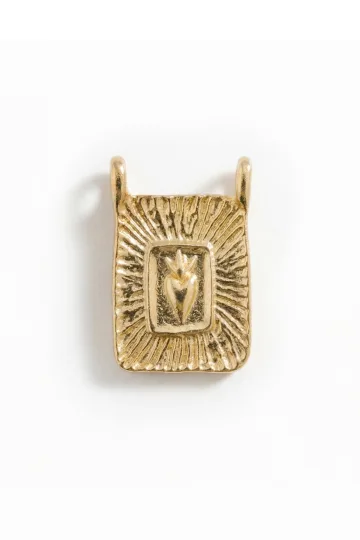
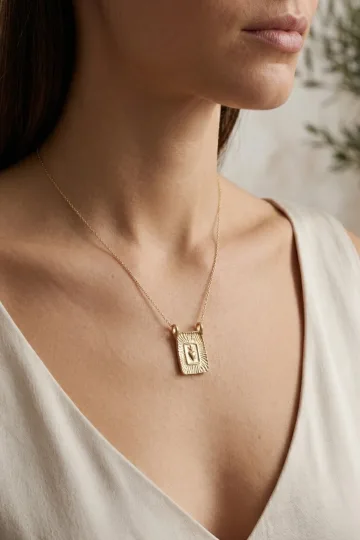
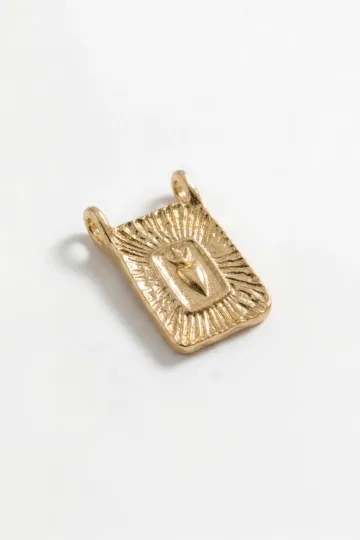
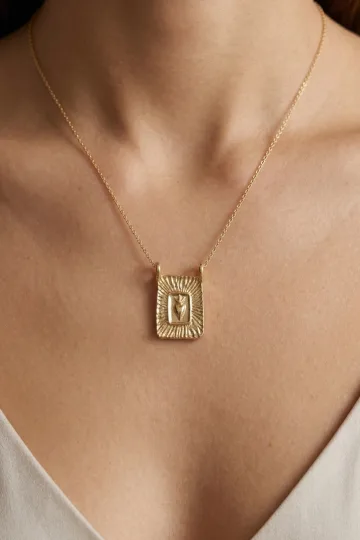
- Sacred hearts and crosses for a classic heraldic set
- Paired and stackable pieces, where the lily sets the central axis of a look
- Personal engraving of initials, dates, or a motto
Every piece can be personalised with engraving, with the option of personal engraving. Sterling silver 925 and 14-18K gold.