Piercing Across Cultures: Meanings and History Through the Ages
Introduction: An Ornament Six Thousand Years in the Making
In 1991, the body of a man was discovered frozen in the Alps, having died around 3300 BCE. He became known as Otzi. Studies revealed many surprising things: evidence of serious injuries sustained in life, precisely placed tattoo dots along his back and legs, a flint knife in a sheath, a bow. But for historians of body piercing, the most striking detail was this: Otzi had pierced earlobes, with openings stretching up to 11 millimetres in diameter. This is the earliest physical evidence of piercing in human history. Six thousand years ago, a man in Europe was already stretching his earlobes to a meaningful size, which implies an established cultural tradition and extended periods of gradual stretching.
When a woman today gets a septum pierced at a studio in Brooklyn or Chicago, she often thinks of it as her own choice, a statement against her parents' generation, a gesture of contemporary style. That is true, but it is also something more. The septum has six thousand years of history, beginning with Mesopotamian nobility and running through Mayan warriors. A nath on the nostril of an Indian woman is not simply an "accessory" but part of a wedding ritual with a thousand-year history. Stretched earlobes on a Polynesian person are not a "subculture trend" but a marker of initiation and social standing with deep roots.
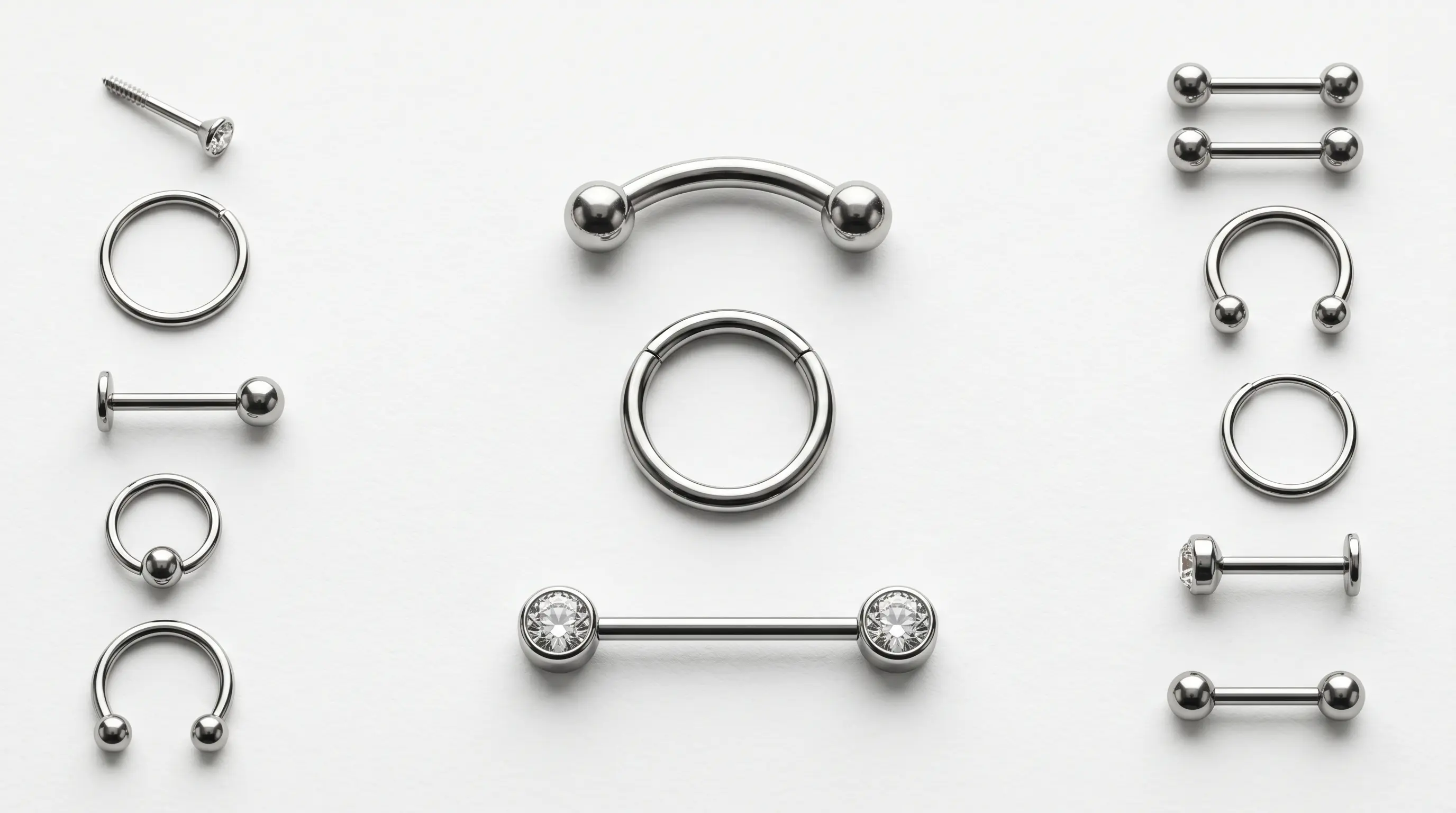
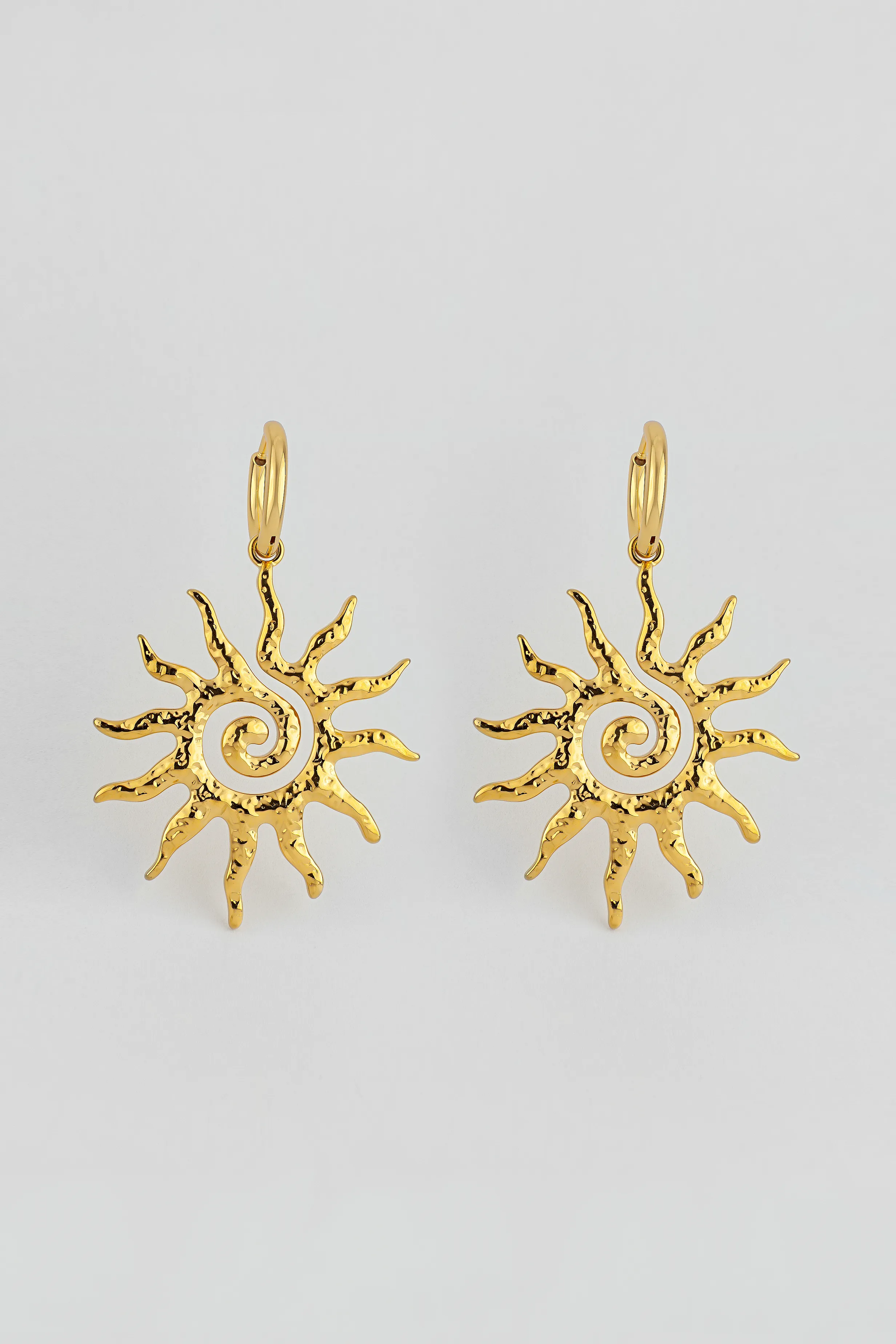
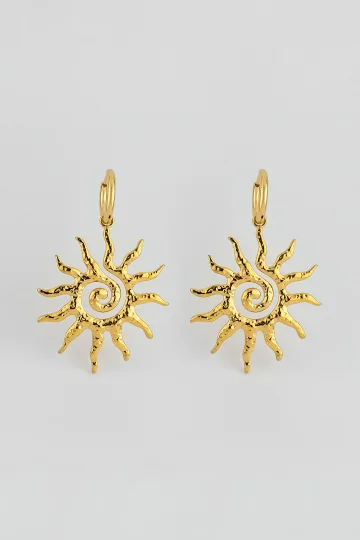
Wear the symbol, don't just read about it. These are in stock:
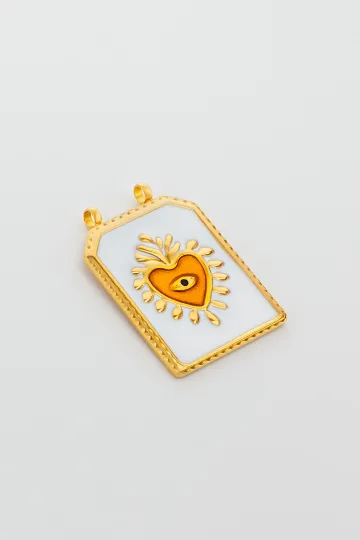
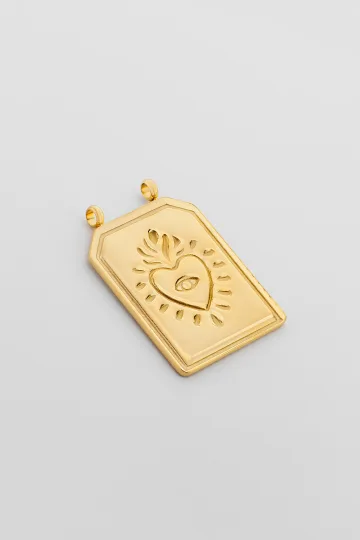
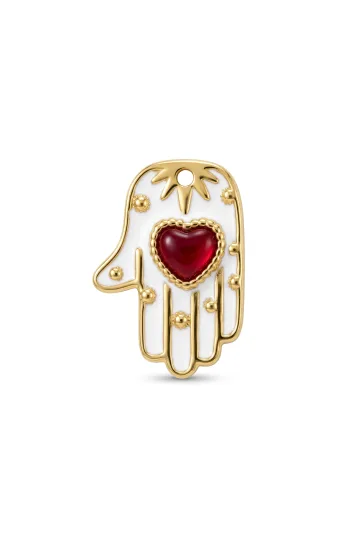

This guide brings together the meanings and history of piercing across world cultures. The goal is not to turn the reader into an anthropologist but to give depth to the ornament you wear or plan to wear. When you understand the roots of your septum or nostril piercing, your relationship with it changes. The piercing stops being a fashion whim and becomes participation in a living tradition.
If you want a broader map of body piercings first, read the complete guide to body piercing types. For everything about the ear specifically, see ear piercing types: the complete guide. This guide focuses on cultural context, history, and meanings.
Why Understanding Cultural Meanings of Piercing Matters
Several reasons why knowing the history and context is genuinely useful.
Depth of choice. When you choose a piercing with knowledge of its history, your decision gains an additional dimension. A septum reads as a conversation with Mayan warriors, with Indian nobility, with contemporary global feminism. The earring is only the surface layer.
Respect for tradition. If you choose a piercing that carries deep cultural meaning within a living tradition (nath in an Indian wedding, labret among the Mursi, septum in certain African communities), understanding the context helps you engage with it rather than simply borrow it without awareness.
Protection from shallow decisions. When you know a septum has six thousand years of history, the idea of getting one on a dare or purely for social media starts to feel lightweight. This ornament invites conscious engagement.
Better answers to questions. People sometimes ask why you got a septum. With cultural context, your answer becomes more substantive than "I just liked how it looks."
More precise choices. Knowing that a helix carries one meaning in subcultural terms and another as an initiation symbol in Polynesian tradition lets you choose with understanding.
Connection to your own roots. If you have cultural heritage, you can choose piercings that reference those traditions rather than copying borrowed forms.
One good hoop in the lobe outshouts five at once. An ear is not a charm bracelet, so take a few off.
How to style a piercing
Over years on shoots and runways I have built dozens of looks around piercings. Here is what actually holds up, occasion by occasion.
How do I wear a piercing every day? For daytime I recommend keeping it minimal: one or two small studs or a thin hoop in the lobe, a neat ring on the nostril. The quieter the outfit, the louder the jewellery reads, so I suggest a monochrome top with an open neck and hair pulled back. I keep metals in one family: warm yellow gold for tanned and deeper skin, white silver for cool and fair complexions.
Is a piercing office-appropriate? It is, as long as you keep it hushed. I recommend a stud with a small stone or a tidy ring, and for a septum I choose a skin-tone ring or an almost invisible retainer. Under a collar and a blazer the piercing reads as a light touch rather than a loud statement. If you want to build the ear, I suggest a vertical line along the rim with nothing dangling.
How do I build an evening look? At night you can turn the volume up. I suggest a long lobe drop against an open neckline with hair swept up, a larger nose ring, a defined composition along the cartilage. Deep, saturated fabric (wine, emerald, charcoal) lifts gold and stones. Loose hair hides half the jewellery, so I recommend pinning one side back.
What should I choose for a special occasion? For a wedding, a celebration or a shoot the logic flips: the jewellery becomes the centre of the look. I choose the ethnic motifs from this guide, a nath with a chain to the temple or heavy northern-style earrings, wherever the rest of the outfit can carry them.
How do I combine several piercings at once? When I curate an ear I keep a rhythm: the bold accent low on the lobe, finer pieces toward the top, and never more than one bright stone at a time. On length I advise this: a drop to the jawline lengthens the face, a short one at the lobe rounds it. One expressive piercing on a clean line always beats an ear draped like a garland.

Turn on your camera, pick earrings, a pendant or a ring, and see the piece on yourself in real time.
Switch items in one tap.
Everything runs in your browser: no photo or video is ever uploaded.
Prehistoric Era: Otzi and the Earliest Known Piercings
The earliest physical evidence of piercing dates to around 3300 BCE. That is the already-mentioned Otzi, the Iceman of the Alps. His earlobes were stretched to 7 to 11 millimetres, indicating a developed tradition of ear piercing in Neolithic Europe.
What Archaeology Tells Us
Beyond Otzi, many prehistoric finds have been documented.
Stone discs and pendants dating as far back as 8000 BCE. Finds at Catalhoyuk (present-day Turkey) show stone and bone plugs that may have been used in stretched ear or lip piercings.
Shell and amber rings from 5000 to 6000 BCE appear in burials across Europe. Their positioning near skulls suggests they were worn in pierced ears.
Perforated animal canines from before 10000 BCE. These "trophies" were worn in piercings of the ear, nose, or lip.
Clay dogu figurines (Japan, Jomon period, roughly 14000 to 300 BCE) depict people with ear, nose, and lip piercings. These are not direct physical evidence but show that piercing was a visually recognised practice within the culture.
Why They Did It
We cannot know for certain why prehistoric people pierced. The leading hypotheses:
Protective functions. Many traditions link piercings to protection against evil spirits through the "sealing" of vulnerable body openings (ears, nose). In contemporary communities that maintain traditional beliefs, this motivation remains alive.
Social status. The size of a piercing, the material of the jewellery, the number of piercings may have reflected rank, age, or occupation.
Initiation rites. Piercing as part of a coming-of-age ritual, marking entry into a new stage of life.
Aesthetics. Straightforward body ornamentation, without particular symbolic weight.
Tribal markers. A way of recognising fellow group members during contact between different peoples.
In practice, a single community may have held several of these motivations simultaneously, and meanings shifted across generations.
Ancient Egypt: Pharaohs, Status, and the Divine
Egypt left the most impressive material evidence of early piercing. The dry climate preserved mummies, jewellery, and texts from which we can reconstruct the meanings involved.
Social Status and Material
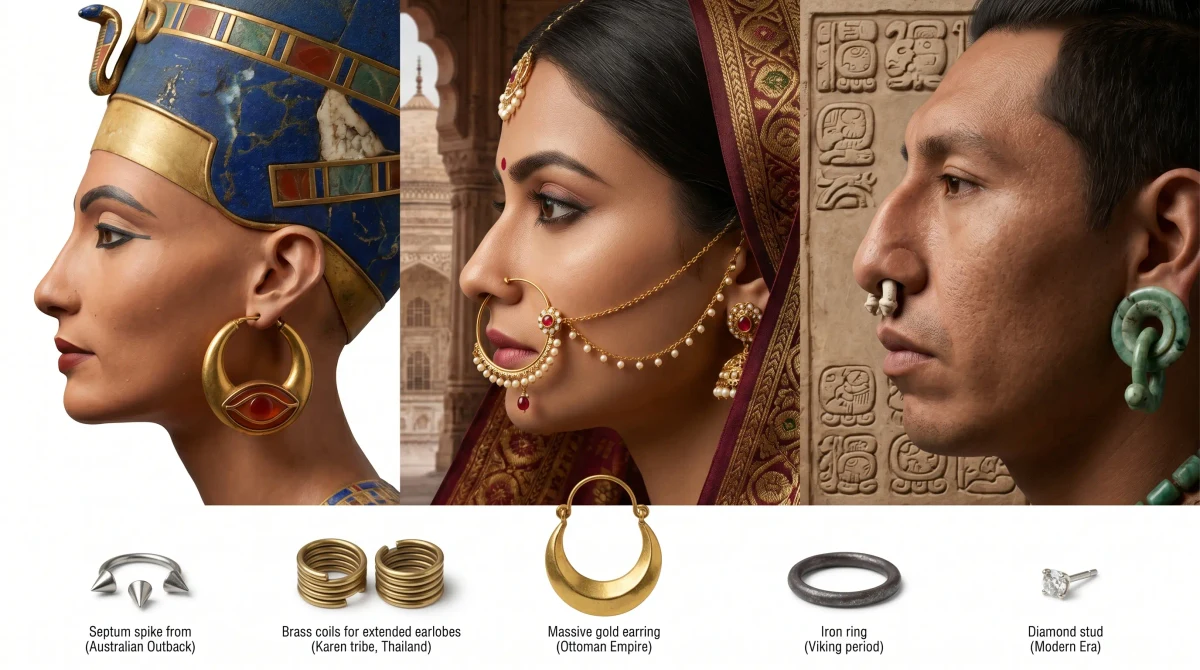
Ear piercing in ancient Egypt was a powerful marker of status. Pharaohs and high nobility wore earrings of gold, lapis lazuli, turquoise, and carnelian. Ordinary people wore copper, faience, and simple stone.
Tutankhamun, the pharaoh of the 18th dynasty, was buried at the age of eighteen with heavy gold earrings in his lobes. The death mask of Tutankhamun has holes for earrings at the ears, and the young pharaoh wore piercings during his lifetime. This is a rare piece of evidence because we normally encounter earrings only archaeologically, without the specific face they belonged to.
Navel Piercing
In ancient Egypt, navel piercing existed but was a privilege exclusively for noble women. The wives of pharaohs and priestesses wore gold navel ornaments inlaid with precious stones. Only those of noble birth were considered worthy of adorning the "divine zone" of the navel.
Religious Symbolism
Earrings shaped as solar discs or symbols of Horus connected the wearer to a specific deity. Priestesses of Hathor wore specialised ring earrings representing the solar circle.
Medical Context
In the Egyptian Ebers Papyrus (around 1550 BCE), there are references to ear piercings using specialised ointments for healing, containing myrrh, frankincense, and cedar oil. This is a forerunner of modern professional piercing with conscious aftercare.
Sumer and Mesopotamia: Early Jewellery Traditions
Sumerian civilisation gave the world some of the earliest extravagant earrings.
The Royal Tombs of Ur
In the Royal Tombs of Ur (around 2500 BCE), gold and silver hoop earrings of extraordinary craftsmanship were found. Queen Puabi, whose burial was excavated in the 1920s, was adorned with heavy gold earrings inlaid with lapis lazuli and carnelian.
The scale of some of these earrings (reaching 7 to 8 centimetres in diameter) suggests that earlobes were already stretched at the time of burial.
The Goddess Inanna
The Sumerian goddess of love and war, Inanna (the Babylonian equivalent Ishtar), was depicted with heavy gold earrings as symbols of her power. In the myths of her descent to the underworld, she passes through seven gates and removes a piece of clothing or jewellery at each one. Her earrings are among the core symbols of divine authority.
Nose Piercing
Mesopotamia provides early evidence of nose piercing, primarily among noble women. Delicate pendant earrings of lapis lazuli and carnelian were worn in the nostril. This tradition later spread through trade routes to India, where it became integrated into wedding rituals.
Ancient Greece and Rome: Warriors, Enslaved People, Aristocrats
The Greco-Roman world had a complex and sometimes contradictory relationship with piercing.
Ancient Greece
In classical Greece, ear piercing was common among women, especially in Athens. Women wore hoop earrings, pendants, and clusters. Among men, piercing was less frequent and often associated with eastern influences (Persian, Thracian).
In certain city-states, a man's ear piercing could signal membership in particular cults, for instance the cult of Mithras. Mithraic mysteries included a symbolic piercing as part of initiation.
Ancient Rome
In Rome, attitudes toward piercing depended on sex, status, and historical period.
Women. Free Roman women wore hoop earrings and pendants as standard accessories. Noble women wore gold; ordinary women wore copper and silver.
Men. In the early Republic, male piercing was considered effeminate and inappropriate. By the late Empire, especially after contacts with eastern provinces, men from the elite began wearing earrings, which was criticised by conservative segments of society.
Enslaved people. In some cases, enslaved individuals had their ears pierced and a ring inscribed with the owner's name inserted as a property marker. After manumission, the ring was removed, but the pierced ear remained as a reminder of prior status.
Gladiators. Some categories of gladiators wore piercings as part of their fighting persona. This was aesthetic rather than a social marker.
Symbolism
Crescent-shaped earrings (lunula) served as protective charms, especially for women and children. The piercing itself held no magical meaning; the form and material of the ornament were what mattered.
India and Ayurveda: Nath, Karna Vedha, Spiritual Rites
The Indian tradition of piercing is one of the most developed and continuously practised in the world.
Karna Vedha: Ear Piercing
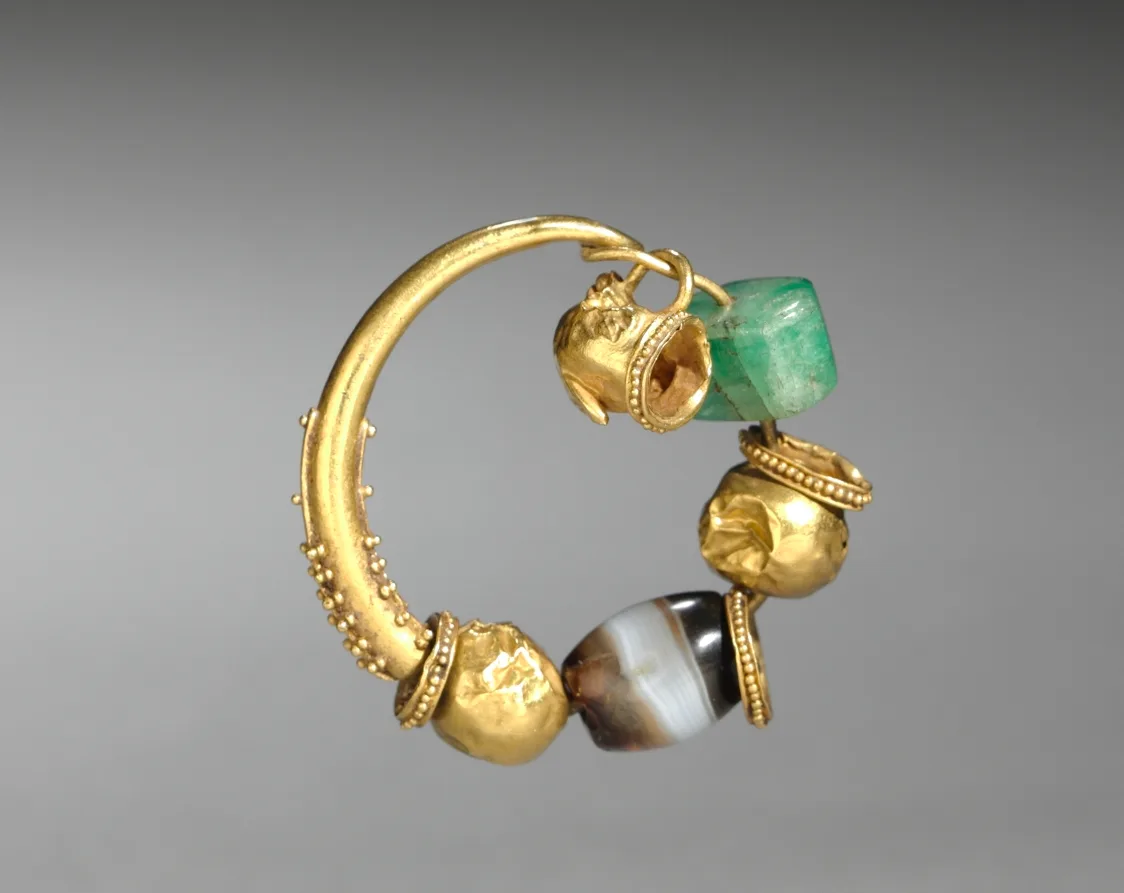
Karna Vedha (literally "piercing the ear") is part of the sixteen obligatory rites (Shodasha Samskaras) of the Hindu life cycle. The piercing is performed in early childhood, typically for girls at age 1 to 3, with timing varying by region for boys.
In Ayurvedic tradition, the piercing site is chosen with attention to nerve endings. Certain points on the ear are believed to correspond to specific organs of the body. Piercing the correct point in childhood, by this theory, supports lifelong health. Modern medicine does not validate this connection, but the tradition remains very much alive.
In contemporary India, Karna Vedha is often combined with a celebratory ceremony attended by extended family. The practitioner (typically a jeweller or ritual specialist) performs the piercing with a gold needle or dedicated tool.
Nath: Nose Piercing
The nath is a gold or silver ring worn in the nostril, a traditional attribute of the bride across most regions of India. The piercing is typically performed during adolescence, before marriage arrangements begin.
The size and style of the nath varies by region.
Rajasthan. Large naths, sometimes 7 to 10 centimetres in diameter, supported by a chain connecting to the temple or hair to prevent the nostril from being pulled.
Maharashtra. Naths shaped as large flowers with hanging pendants.
South India (Tamil Nadu, Karnataka). Smaller but more intricately decorated naths with hanging elements.
Bengal. Fine, minimalist naths, sometimes two piercings in one nostril.
The nath is not a daily piece of jewellery. A bride wears it through the entire wedding season and afterward often only for celebrations. In contemporary urban India, the nath has gradually shifted toward the decorative rather than the obligatory, but it retains its ritual significance.
Left Nostril Piercing in Ayurveda
Ayurvedic theory links the piercing of the left nostril to the health of the female reproductive system. The point is said to regulate the female cycle. Modern medicine has not confirmed a direct connection, but the tradition runs so deep that in most Indian regions the piercing is done on the left even without explicit explanation.
Ayurvedic texts also mention navel piercing and, in rare cases, lip piercing for therapeutic purposes. These practices never reached widespread adoption but persist in certain healing lineages.
Indian Women in the Diaspora
Indian women in the diaspora (UK, USA, Canada, the UAE) often pierce for a nath as a symbol of connection to their heritage. Studios in New York, London, and other cities have opened specialising in traditional Indian nose piercing with gold jewellery and ceremonies involving a priest's or master's blessing.
Southeast Asia: Thailand, Laos, Burma
In Southeast Asia, piercing has deep roots and in some communities retains its ritual significance.
Thailand
Traditional Thai ear piercing is performed in early childhood for all children, part of a Thai-Buddhist ritual intended to protect the child from evil spirits. Earrings are typically gold, simple in form.
In Thai-Chinese communities, ear piercing retains status significance: the size and weight of earrings reflect family wealth.
The Karen and other hill peoples of Thailand practised stretching earlobes to considerable sizes. Among certain Karen groups (sometimes called "long ear" Karen), stretched earlobes reaching 10 to 15 centimetres were a historical norm, though the practice has declined in the modern era.
Laos
Lao women traditionally wear gold earrings in pierced lobes. The style tends toward heavier and more elaborate forms than Thai earrings. Lotus-flower earrings are especially prized.
Among hill peoples of Laos (Hmong, Khmu), multiple piercings in a single ear are found, with different pendants worn according to age.
Burma (Myanmar)
The Padaung people (part of the Karen) are known for stretching earlobes alongside neck elongation using bronze rings. Ear piercing among the Padaung was part of coming-of-age ceremonies and involved progressively larger bronze ornaments.
The Shan peoples of Burma wear gold bar earrings as markers of married status.
Cambodia
In Khmer tradition, ear piercing was associated with Buddhist rituals. The bas-reliefs of Angkor show people with heavy earrings in stretched lobes, which was the cultural norm of that era (12th to 13th century).
Customer reviews
Zevira is a real jewellery shop. Genuine payments, deliveries and customer thank-yous.
🥰🥰🥰 gracias
Ok, ¡gracias! 🙂
China and Japan: Status and the Decline of Traditions
East Asian traditions of piercing have a complex history with periods of flowering and suppression.
Ancient China
During the Han dynasty (from 206 BCE), ear piercing was common, especially among the nomadic peoples along the northern frontier. The Han Chinese themselves tended to regard piercing as a foreign or "barbaric" custom and largely did not practice it.
During the Tang dynasty (618 to 907 CE), earrings became fashionable accessories for aristocratic women. Heavy gold earrings with inlay became part of the image of court life.
Under the Manchu Qing dynasty (from 1644), piercing became entrenched as a standard female practice. Manchu women wore multiple piercings in one ear, sometimes five or six with varied ornaments.
Nose piercing in China appeared among certain ethnic minorities (particularly in Yunnan) but not among the Han majority.
Japan Before the Meiji Era
During the Jomon period (roughly 14000 to 300 BCE), piercing was widespread among the indigenous peoples of the Japanese islands. Dogu figurines depict people with ear, nose, and lip piercings.
During the Yayoi period (from 300 BCE), piercing persisted partially but gradually began to be seen as "barbaric" under the influence of mainland Chinese cultural norms spreading to the Japanese elite.
By the Heian period (794 to 1185 CE), the Japanese aristocracy had abandoned piercing entirely. Any disruption to the body's integrity was considered improper. This standard held for the following thousand years.
The Ainu
The Ainu, the indigenous people of Hokkaido and Sakhalin, maintained ear piercing traditions into the 19th century. Ainu women wore earrings of shell, metal, and bone. Lip tattoos were also practised, which drew particular disapproval from Japanese authorities.
The Meiji Era and the Suppression of Ainu Traditions
In the Meiji era (from 1869), the Japanese government banned facial tattoos and piercings among the Ainu as part of a cultural assimilation program framed as "civilisation." By the early 20th century the tradition had nearly disappeared. The last Ainu women with lip tattoos and nose piercings passed in the 1960s and 1970s.
Contemporary Japan
Modern piercing in Japan began in the 1990s under Western influence. A generation of young Japanese people, particularly in Tokyo, Osaka, and Kyoto, began actively getting ear, nose, and lip piercings. By the late 2000s, piercing had become neutral mainstream with little reaction in most urban environments.
The corporate world remains more conservative. In major banks, government institutions, and traditional companies, visible piercing can still create issues.
The Ainu Renaissance
From the 1990s onward, a movement to revive Ainu culture has grown. Ainu activists have been restoring traditional tattoos, piercings, and garments as markers of cultural identity. Japan's official recognition of the Ainu as an indigenous people in 2019 gave the movement additional legitimacy.
Korea and the Ainu: Lesser-Known Traditions
Ancient Korea
Ear piercing in Korea appears in sources from the era of the Three Kingdoms (1st to 7th century CE). Gold earrings with pendant clusters of the characteristic Korean type have been found. In the royal burials of Silla (Gyeongju), earrings were among the primary jewellery types of the nobility.
With the rise of Neo-Confucianism during the Joseon dynasty (from 1392), piercing gradually lost status. The Confucian idea that the body is a gift from one's parents made piercing morally questionable. By the 17th century, piercing had largely disappeared among the nobility.
Contemporary Korea
Modern South Korean piercing revived in the 1990s under Western pop-culture influence. By the 2010s, Seoul had become one of the world's centres of aesthetic piercing, especially in the Hongdae, Gangnam, and Itaewon districts.
The Korean ear curation school is known for a distinctive aesthetic: pastel tones, miniature ornaments, enamel in soft colours, heart and flower forms. The influence of Korean pop music has spread this style around the world.
Pre-Columbian America: Maya, Aztec, Inca
The civilisations of Mesoamerica and the Andes had highly developed piercing traditions, many of which were suppressed after the Spanish conquest.
The Maya
Among the Mayan nobility, piercing was a required part of social identity. Ears, nose, and lip were pierced, and sometimes other points as well.
Ear piercing. Stretched lobes with large discs of jade, obsidian, and ceramic. Diameters could reach 3 to 5 centimetres.
Labrets. Lower lip piercings with ornaments of jade, obsidian, and gold. The highest nobility wore labrets of jadeite, considered the ultimate symbol of status.
Septum. Piercing of the nasal septum with a hanging ornament, often gold. Among priests and warriors, the septum was frequently decorated with elements signaling caste membership.
The Aztec
Among Aztec nobility, the labret was a strong marker of warrior rank. After a victory in certain categories of combat, a warrior earned the right to pierce his lower lip and wear a labret of a specific type.
Obsidian labrets for warriors of lower rank.
Jade labrets for higher rank.
Gold labrets for very high status (though less common, because gold was valued less highly than jade in Aztec culture).
The labret passing through the lower lip was believed to symbolise the warrior's right to speak on behalf of the gods. This link between speech and the lip piercing is a distinctly Aztec concept without direct parallels elsewhere.
The Inca
In the Inca Empire (15th to 16th century), ear piercing was obligatory for all men of the ruling class. Large gold or silver earrings in stretched lobes were the official marker of membership among the "big-eared men" (Orejones).
The degree of lobe stretching indicated rank: the larger, the higher the status. The Sapa Inca himself wore earrings reaching 5 to 7 centimetres in diameter.
The Suppression of Colonial Rule
After the Spanish conquest (16th century), the Catholic Church actively suppressed piercing traditions as "pagan." Labrets, earrings, and septums were forcibly removed, and restrictions on wearing them were enforced. Within a few generations, these traditions had largely disappeared across most regions.
In remote areas (the highland regions of Guatemala, northern Argentina, southern Mexico), some traditions survived in hidden form and have reached the present day.
Upload a photo of your pet, someone you love, or an object. We'll build a 3D model and hand-cast it in pewter.


Contemporary Latin America: The Revival of Nariguera
From the late 20th century, a movement to revive indigenous traditions has grown across Latin America, including piercing.
Mexico
In Chiapas and Oaxaca (southern Mexico), older women from indigenous communities can be found wearing traditional septum ornaments. This is not fashion but living cultural heritage. Younger Mexicans of indigenous descent sometimes get a septum as a symbol of roots and identity.
Contemporary Mexican designers incorporate the nariguera motif (the pre-Columbian septum ornament) into their collections, restoring lost forms. This movement is especially visible in Mexico City and Guadalajara.
Guatemala, Peru, Bolivia
In countries with large indigenous populations, the revival of traditional piercing is proceeding more actively. Studios in Lima, Cusco, and Guatemala City often specialise in pre-Columbian ornament forms: labrets, septums, and Inca-style earrings.
Brazil
Among Amazonian peoples (Yanomami, Kayapo), traditional lip and nose piercing persists to this day. Wooden discs in the lip, feathers in the nasal septum are part of everyday appearance. Contemporary Brazilian culture sometimes draws on these forms as "indigenous aesthetics" in design.
Sub-Saharan Africa: Maasai, Mursi, Himba
African piercing traditions are among the most diverse and best-preserved in the world.
Maasai (Kenya, Tanzania)
Stretched earlobes and cartilage piercings are markers of age and social status. Among Maasai women, earlobes are stretched gradually from childhood, reaching 5 to 10 centimetres in diameter by adulthood.
Into the stretched lobes go metal spirals of copper or iron wrapped in leather or fabric. The colour and type of the spiral reflect:
- Age
- Marital status
- Family and clan membership
- Particular social roles
Cartilage piercings with bead pendants are added alongside the lobes. The full assemblage on one ear of an older married woman can include a lobe spiral, three to five cartilage piercings, and pendant earrings.
Mursi and Surma (Ethiopia)
Among the Mursi and Surma of southern Ethiopia, women receive a labret in the lower lip as children and gradually stretch it. A small disc inserted in childhood is replaced by progressively larger ones, until by adulthood the disc can reach 10 to 15 centimetres in diameter.
Disc size among the Mursi traditionally reflected the bride price, calculated in cattle. The larger the disc, the more livestock a bride's family could expect at marriage.
The Ethiopian government and local Christian missions have often tried to reduce this practice, but in traditional villages it persists as a marker of cultural identity.
Himba (Namibia)
The Himba people of northern Namibia practice ear piercing with heavy metal and red ochre ornaments. Earrings and piercings form part of an elaborate aesthetic code that also includes the rubbing of hair and skin with red ochre.
Young Himba girls receive their first earrings at puberty, and the number of ornaments increases with age.
Karamojong (Uganda)
Among the Karamojong, the tradition of male labret piercing, symbolising completed warrior initiation, persists. Until recently, a man without a labret among the Karamojong was considered immature and without full standing in community life.
Congo Basin and Central Africa
Across the Congo Basin and Central Africa, diverse traditions of lip, nose, and ear piercing are found. Wood, bone, and copper ornaments. In some communities, a woman receives a piercing upon the birth of her first child as a marker of motherhood.
North Africa: Berber, Tuareg, Nubian
Berber (Morocco, Algeria, Tunisia)
Berber women wear earrings in pierced lobes as markers of married status. Heavy silver pendant earrings with green enamel and coral are a classic element of the Berber wedding trousseau.
In some Berber groups (particularly in the High Atlas of Morocco), traditions of facial tattoos and nose piercing among women survive. These are considered part of beauty and cultural identity.
Tuareg
The Tuareg, the nomadic people of the Sahara, have a strong tradition of silver jewellery including ear piercings for both men and women. Tuareg men typically wear a smaller earring, often in the form of a cross (the so-called "Cross of Agadez"), while women's earrings are larger and more elaborate.
Nubian
Nubian women of Sudan and southern Egypt maintain traditions of ear piercing with large gold earrings and nose piercing with a small gold star. Among the Nubian, earrings are often passed down through generations as family treasures.



Polynesia and Oceania: Maori, Hawaiian, Samoan
Polynesian piercing traditions are closely linked to tattooing (moko, tatau) and form a unified complex of ritual body ornamentation.
Maori (New Zealand)
The Maori traditionally pierced their ears and wore earrings of whale bone (reo), greenstone (pounamu), and mother-of-pearl. Ear piercing for Maori men was often part of warrior initiation and accompanied by moko facial tattooing.
Contemporary Maori culture is experiencing a revival, and traditional whale bone earrings are being crafted again from old patterns. They are worn at formal occasions and ceremonies as markers of Maori identity.
Hawaiian
In Hawaii, piercing the left ear was traditionally associated with the warrior caste, the right with the priestly caste, and both ears signified a master of many roles or one who had passed through several stations. Earrings were made of mother-of-pearl, shark teeth, and bone.
After 19th-century Christianization, the practice declined, but in the contemporary Hawaiian cultural renaissance it is returning as part of cultural identity.
Samoa
In Samoa, ear piercing was part of everyday culture. Mother-of-pearl and tortoiseshell earrings were worn by both men and women from early childhood.
With the arrival of missionaries, some traditions were suppressed, but in contemporary Samoa piercing is returning as part of cultural identity, especially among young people.
Tonga, Fiji
Similar traditions of ear and nose piercing. Among Fijians, ear piercing was often combined with tattooing and was part of wedding ceremonies.
Australia: Aboriginal Peoples and Nose Piercings
Among Australian Aboriginal peoples, septum piercing was part of male initiation rites. The piercing was performed in adolescence, with bone or feather inserted through the septum to symbolise the passage into adulthood.
After British colonization, many traditions were suppressed, but contemporary Aboriginal communities have a revival movement underway. Some Aboriginal men are restoring the traditional septum as a symbol of cultural identity.
Female piercing among Aboriginal peoples was less common, but in some groups ear piercing for young women marked the transition to adulthood.
Vikings and Northern Europe
Viking Age Scandinavia
Among the Vikings, lobe piercing was found primarily among male warriors. Silver and gold hoop earrings appear in burials across Scandinavia and in Viking settlement sites (Britain, Ireland, Iceland).
The size and weight of some earrings (certain examples reaching 50 grams) would require significantly stretched lobes to bear without tearing.
Viking earrings also served a monetary function: in times of need they could be cut into pieces and used as payment. Burials have been found in which earring fragments are separated and gathered in pouches as currency.
Baltic Peoples
Among Baltic peoples (Prussians, Lithuanians), female lobe piercing is documented into the 16th century. Earrings took forms drawn from plant and animal motifs, often with pendant jingles.
Following Christianization of the Baltic (13th to 15th century), the tradition gradually declined under pressure from the Teutonic Order and later Lithuanian rulers.
Finnish and Sami Traditions
Among the Sami (also known as Lapps), ear piercing was maintained as part of traditional culture. Silver or tin earrings with pendants and small bells. Piercings were often performed in childhood as part of a protective ceremony.
Early European Middle Ages and the Germanic Tribes
Among the early Germanic tribes, ear piercing for women was a standard practice. Visigothic and Lombard burials yield gold and silver earrings with garnets and amber. This was part of a rich ornamental culture that also included elaborate fibulae and belt fittings.
Leave your email, we'll send your discount code. No spam, unsubscribe anytime.
The code arrives by email, valid on your first order.
Medieval Europe: Prohibition and Return
Early Medieval Period (5th to 10th Century)
After the fall of the Roman Empire, the earring tradition survived primarily among the "barbarian" peoples (Goths, Lombards, Franks in their early stages). Noble Germanic women wore earrings with amber and garnet.
As Christianity spread, the Church began expressing displeasure with piercing as a "pagan custom." Sermons appeared against "adorning the ear with gold and silver, for this is idolatry of the body."
High Medieval Period (11th to 14th Century)
Earrings largely disappeared from European use. Ears were covered under headdresses (veils, caps, wimples), and the piercing itself became culturally invisible. This applied especially to married women, for whom uncovered ears were considered improper.
In some regions (particularly in Italy and southern France), earrings persisted among common women and peasants but not among the nobility.
Return in the Renaissance (15th to 16th Century)
The Renaissance returned earrings to fashion. In 16th and 17th century portraits, male courtiers are frequently depicted with a single pendant earring in the lobe. This was considered the height of fashion and refined taste.
William Shakespeare, as depicted in the so-called Chandos portrait, wears a gold earring in his left ear. This was a typical accessory for an educated man of his circle. The same appears in portraits of Francis Drake, Walter Raleigh, and other Elizabethan aristocrats and sea captains.
Female piercing returned as well, though more discreetly: small pearl drops, long garnet pendants.
The Renaissance: Court Fashion and Shakespeare
A closer look at one of the most interesting periods in European piercing history.
Male Fashion
From the 1550s to the 1650s, a man's earring in the left ear became a sign of education, cultural sophistication, and belonging to artistic or court circles. The favoured form was a pendant of pearl or small diamond.
Artists, poets, and actors were particularly drawn to this style. It was believed that an earring helped one "see the world more sharply," connected to a creative perspective.
The Maritime Tradition
From the age of great exploration (late 15th century onward), a tradition of ear piercing developed among sailors. For sailors, an earring marked a completed voyage through certain milestone points (the equator, Cape Horn, the Cape of Good Hope), signaling the status of an experienced mariner.
Practical explanations circulated as well: a gold earring on a drowned sailor's ear was meant to pay for his burial if his body washed ashore. Among pirates, a gold earring often marked the completion of a particular pirate rite or participation in the capture of a major vessel.
Differences by Country
England and Scotland. A strong male tradition, especially in port cities.
Spain and Portugal. Male piercing common, particularly among sailors. The female tradition (which never fully disappeared) also persisted.
Italy. Earrings worn by men and women alike, especially in Venice and southern Italy.
Germany and Northern Europe. Less prevalent, but found among merchant classes.
The 19th Century: Sailors, Pirates, Romani, and the Working Class
The 19th century is one of the most interesting periods in the social history of piercing.
Sailors and Pirates
The maritime tradition reached its peak. By the end of the 18th century, nearly all English sailors had at least one earring. Earrings became a sign of experience and maritime brotherhood.
Pirates used earrings as occupational symbols: the type of earring, material, and side worn all carried meaning in pirate culture. Captain Blackbeard (Edward Teach) is described wearing heavy gold earrings in both ears.
Romani
Among Romani people of Eastern European and Iberian origin, a man's earring was part of traditional culture. A Romani child often received an earring as protection against evil spirits and as a marker of belonging to the family group.
The size of the earring, material, and side worn reflected status and role within the community. In some Romani families, an earring was passed from father to son.
Circus and Fairground Performers
In the 19th century, a distinctive subculture of circus performers developed around facial piercings (eyebrow, nose, lip). Beyond the aesthetic dimension, this was part of professional identity.
Working-Class and Port Districts
In London, Paris, Hamburg, and Antwerp, records from the period indicate that certain piercings on women (particularly nipple and navel) were associated with working women in dockside areas and entertainment districts. This was occupational marking that later spread more widely.
African and Asian Diasporas
Immigrants from Africa, India, and Southeast Asia maintained their piercing traditions in European cities. By the end of the 19th century, Indian and Arab neighborhoods in London, Paris, and Berlin practised traditional piercing as an ordinary part of daily life.
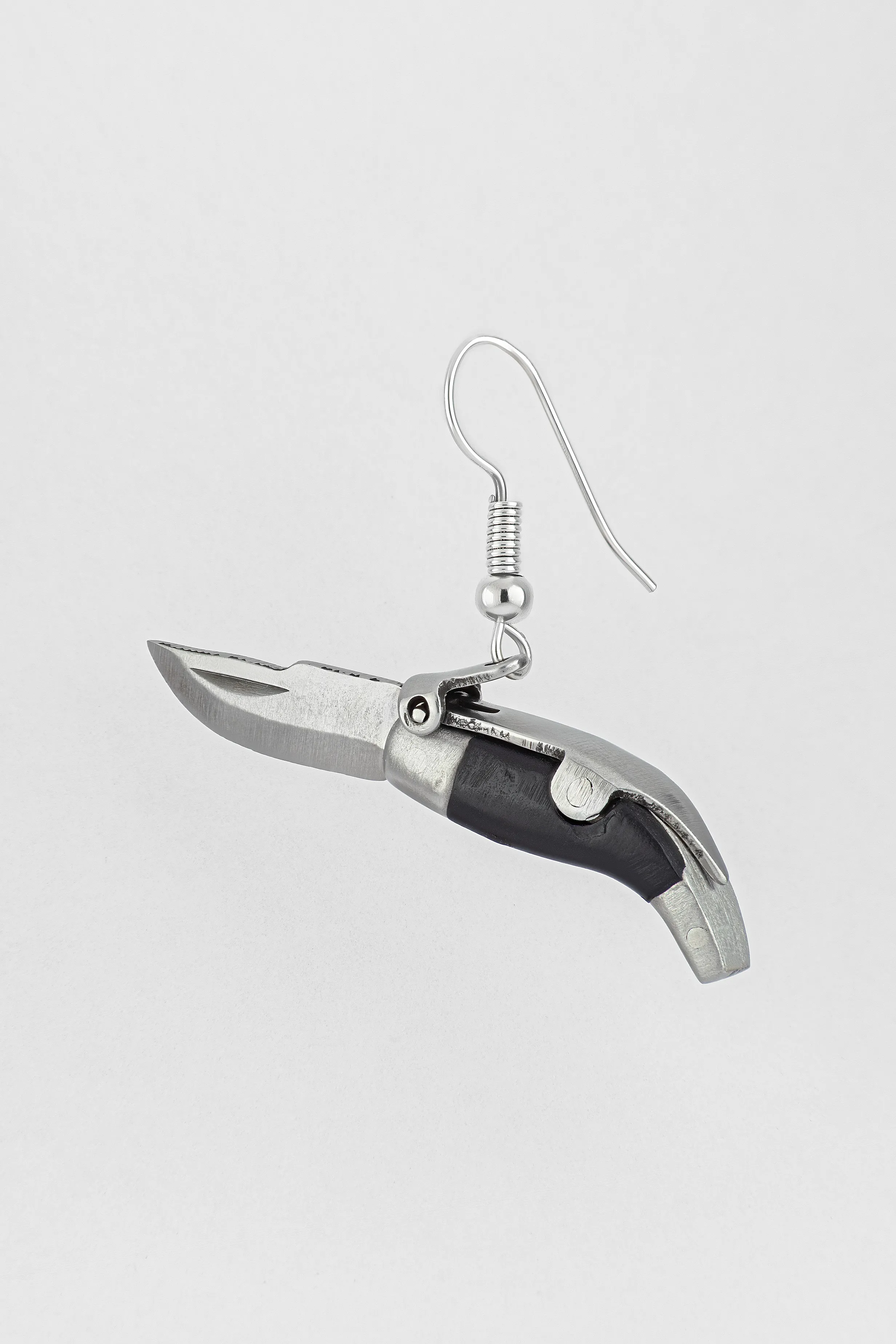
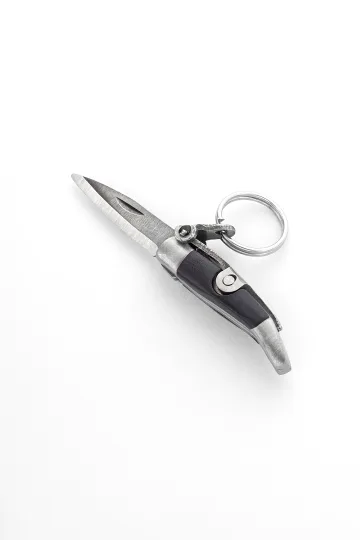
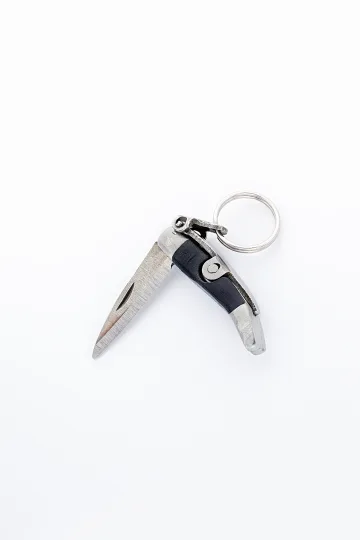
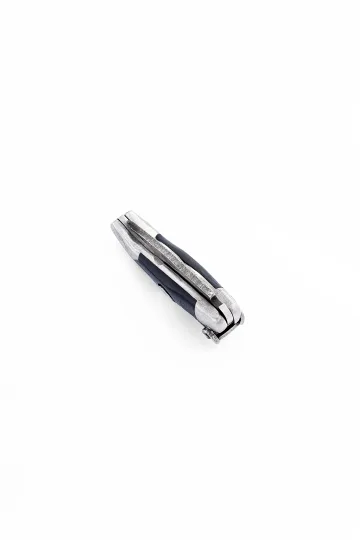
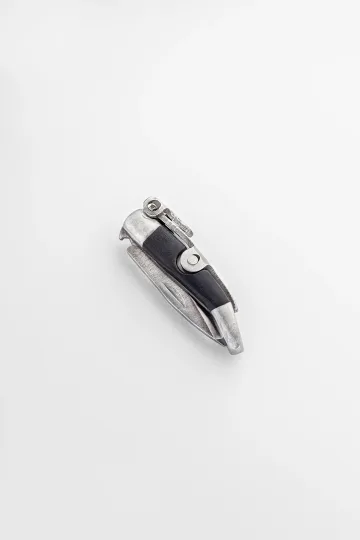
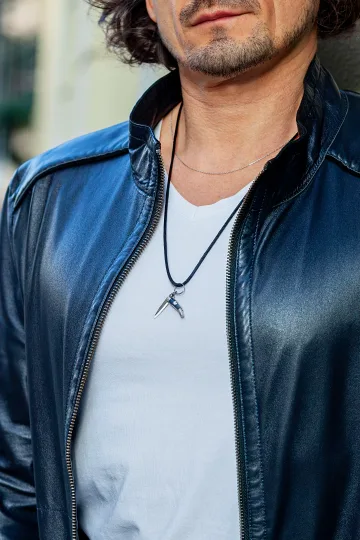
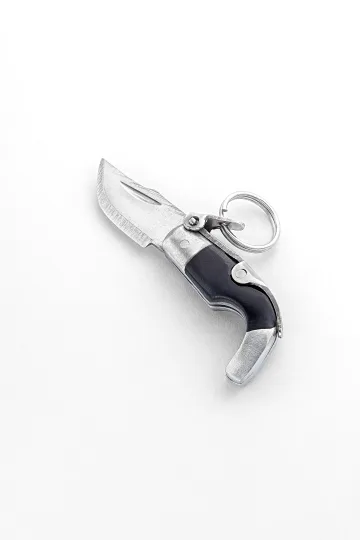
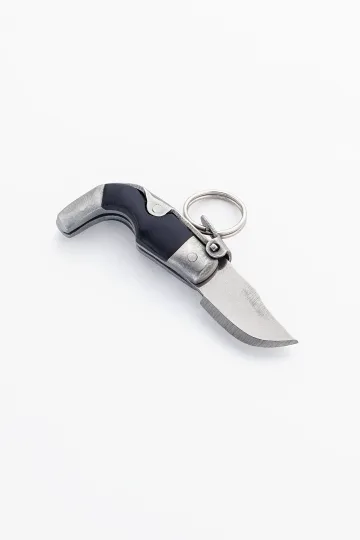
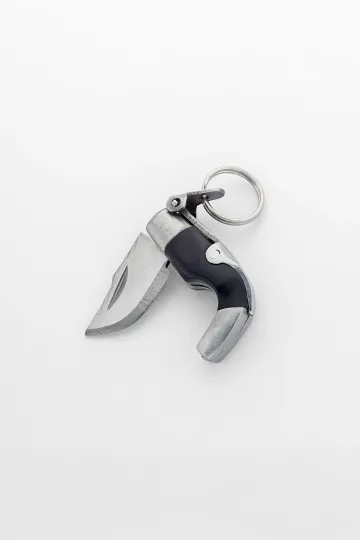
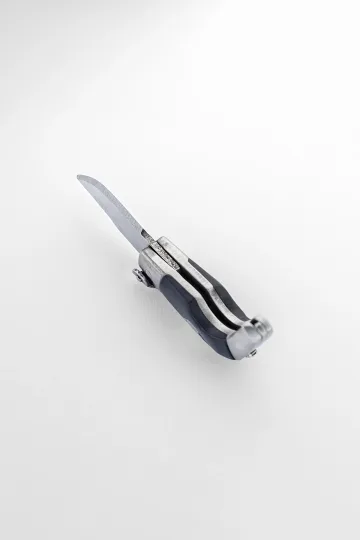
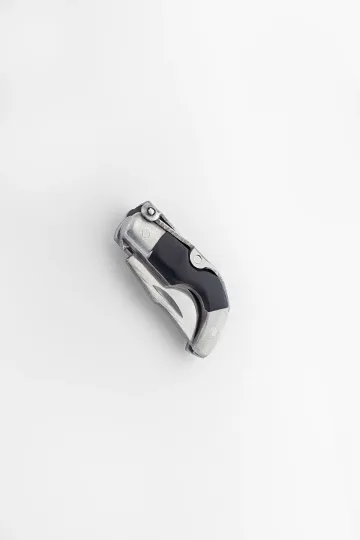
CAPAORA mini knife pendant
The 18th-century Spanish navaja in miniature: 40 mm of stainless steel, a real folding mechanism and a Palanquilla lock that clicks. An affordable gift to remember.
Authentic · Ships from Spain · 14-day returns
The 20th Century: Punks, Gay Culture, Feminism
The 20th century transformed piercing from a subcultural marker back into a mass phenomenon.
1960s: Hippies and Counterculture
The hippies of the 1960s returned ear piercing as part of their rejection of mainstream culture. Often these were thin hoop earrings or small pendants in an eastern style (mandalas, lotus flowers, yin-yang symbols).
Many hippies travelled to India, Nepal, and Morocco and brought back traditions of nose piercing, septum, and sometimes lip piercing. This formed the "hippie aesthetic" with borrowed elements from Eastern traditions.
1970s to 80s: Punk and Post-Punk
British and American punk of the 1970s radically altered the relationship with piercing. Septum, eyebrow, lip, industrial, and cartilage piercings became markers of punk identity. Getting a septum in 1975 in London was as strong a statement as a face tattoo is today.
Prominent punk musicians (Sid Vicious, Poly Styrene, members of the Exploited) popularized various forms of piercing through their images.
Gay Communities
In the 1970s and 80s, gay communities developed their own piercing codes. An earring in a man's right ear during this period could signal gay identity. Nipple piercings and other body piercings became part of BDSM culture and certain subcultures.
These codes gradually dissolved by the 1990s as piercing became a mass phenomenon and lost its specific sexual signaling.
Third-Wave Feminism
Feminists of the 1990s often used piercing as an act of bodily reclamation. Navel, septum, and chest piercings became ways of saying "this is my body, and I decide what to do with it."
Mass Fashion of the 1990s and 2000s
By the late 1990s, piercing had fully crossed from subcultural niche into mass fashion. Pop music stars (Christina Aguilera, Britney Spears, Lennox Lewis) popularized various forms of piercing on television.
By the late 2000s, ear, navel, and nose piercing had become nearly standard for teenage fashion.
2010s: Revival as Jewellery
In the 2010s, the concept of ear curation transformed piercing from a subcultural marker into a component of fine fashion. For more on this phenomenon, see the guide ear stack: how to build a curated ear.
Religious Meanings: Islam, Hinduism, Judaism, Christianity
Religions approach piercing differently, and this sometimes influences personal choices.
Islam
In Muslim tradition, there is a gender distinction.
Women. Ear piercing for girls is permissible and widely practised. Different schools of Islamic law hold varying views on nose piercing: the Hanafi and Maliki schools are more liberal, while the Shafi'i and Hanbali are stricter.
Men. Most schools consider piercing for men impermissible, viewing it as imitation of women. Nevertheless, among Muslim communities in Europe and North America, many young Muslim men pierce without religious difficulty.
In Iran, Turkey, and the Gulf states, ear piercing for women has traditionally been very widespread. In Syrian-Palestinian and Iraqi traditions, nose piercing for women also appears.
Hinduism
In Hinduism, piercing has deep religious roots. Karna Vedha (ear piercing) is among the Shodasha Samskaras (16 obligatory rites). Nath (nose piercing) is closely tied to wedding ceremonies.
Shaivites and Vaishnavites may wear specific piercings symbolising sect membership: piercings associated with the "three lines" (tripundra) or "vertical mark" depending on the group.
Judaism
In traditional Judaism, ear piercing for women is permissible. Male piercing is less common and sometimes prompts debate: some interpretations of Torah prohibit any body modification, while others are more liberal.
Contemporary liberal and Reform Judaism approaches piercing neutrally.
Christianity
Orthodox Christianity. Ear piercing for women is permissible and widespread. Male piercing was historically not encouraged, but in the contemporary Church this is largely met with neutrality.
Catholicism. Similar position. Ear piercing for women is the norm; male piercing historically less common.
Protestantism. Depends heavily on the specific denomination. Liberal denominations (Anglican, Lutheran in Northern Europe) approach all piercings calmly. Conservative denominations (evangelical, fundamentalist) may consider piercing inappropriate.
In contemporary Christian culture, piercing has largely shed its religious signaling. A priest with a pierced ear in a modern parish no longer causes scandal.
Buddhism
Buddhism broadly has no strict rules about piercing. Depictions of the Buddha often show elongated earlobes (a sign of noble birth as Prince Siddhartha), which implicitly points to cultural acceptance of piercing.
In Buddhist countries (Thailand, Sri Lanka, Burma), ear piercing for women is the norm, often connected to Buddhist protective ceremonies.
Iran and Persia: A Thousand-Year Female Tradition
Persian civilisation produced some of the most refined jewellery piercing traditions in the world, which survive to the present day.
Ancient Persia
From the Achaemenid period (6th to 4th century BCE), Persian noble women wore gold pendant earrings inlaid with turquoise and carnelian. The reliefs of Persepolis show figures with earrings in their ears, indicating how widespread the tradition was.
In the Sassanid period (3rd to 7th century CE), earring forms became especially complex: heavy pendants, multilayer compositions, inlay with semi-precious stones. Nose piercing appears as well, though less frequently.
The Islamic Period
After Islamization in the 7th century, the piercing tradition among women continued without significant change. Shia Islam (predominant in Iran) approaches women's piercing neutrally. Ear piercing for girls is performed early, typically in infancy.
Nose piercing in Iran and related cultures (Afghanistan, Tajikistan) is tied to ethnic tribal traditions, especially among the Qashqai, Bakhtiari, and Lur peoples. It forms part of wedding ceremonies.
Contemporary Iran
Despite the conservative religious government, piercing is fairly widespread in Iran. In cities, especially Tehran and Isfahan, young women get nose piercings, septums, and sometimes helix piercings. This is viewed as a cultural act and sometimes a quiet form of resistance to regulation of women's appearance.
Turkey and the Ottoman Empire
Turkish piercing tradition is a blend of Central Asian, Balkan, and Middle Eastern influences.
The Ottoman Period
In the Ottoman Empire, ear piercing for women was a standard part of culture across all social levels. Noble women wore elaborate pendant earrings with enamel, pearls, and garnets. Common people wore copper and silver with enamel.
In Istanbul and major cities of the empire, nose piercing appeared among certain ethnic groups (Greek, Armenian, Bulgarian), but not among Turks themselves.
Contemporary Turkey
Contemporary Turkish piercing follows global fashion trends. Istanbul is one of the active centres of professional piercing in the Eastern Mediterranean. Ear curation, septum, and nose piercings have entered mainstream culture.
Piercing in Music, Film, Literature
The artistic culture of the 20th and 21st centuries has actively used piercing as a symbol, shaping public perception through it.
Music
Rock and metal. From the 1970s, rock musicians wore piercing as part of a rebellious aesthetic. Ear, eyebrow, and septum piercings were part of the style of David Bowie, Prince, Iggy Pop, and Alice Cooper. This influenced how entire generations perceived piercing.
Punk rock. Sid Vicious, Poly Styrene, members of the Sex Pistols, the Clash, and the Exploited used piercing as part of an anti-bourgeois image. Septum, industrial, eyebrow and lip piercings in this aesthetic.
Hip-hop. In the 1990s, rappers (men and women alike) popularized heavy gold earrings, sometimes multiple in one ear, as a marker of success and a strong image. This influenced piercing fashion among young people in the US and beyond.
Pop. Madonna, Christina Aguilera, Britney Spears, and Lennox Lewis made piercing part of their public images and broadcast the style to millions through media.
K-pop. Contemporary Korean pop performers (both men and women) wear minimalist ear curation extensively, influencing aesthetics across Asia and worldwide.
Film
Films shape attitudes toward piercing. From pirate earrings in swashbuckler movies to septums in dystopias, character design frequently uses piercing as a rapid visual signal about personality: rebel, artist, outsider, ancient warrior.
In contemporary cinema (from the 2010s), a character's piercings increasingly carry no specific signal and simply reflect a realistic depiction of people today.
Literature
In literature, piercing appears from antiquity. In Homer's Iliad, Hera's gold earrings are described. In medieval sagas, Viking earrings appear as markers of rank.
In contemporary literature, piercing is a mundane detail, sometimes symbolic. In Stieg Larsson's novel "The Girl with the Dragon Tattoo," Lisbeth Salander's multiple piercings symbolise her underground status.
Contemporary Sports and Piercing: Restrictions
In contemporary professional sport, piercing is frequently restricted.
Olympic Rules
International federations of various sports require removal of most visible jewellery, including piercings, during competition. This relates to the risk of injury (to oneself and opponents) during contact.
In some disciplines (rhythmic gymnastics, synchronized swimming), ornaments are partially permitted but strictly regulated.
Team Sports
In soccer, FIFA prohibits any piercing during matches. The same rule applies in international ice hockey, rugby, and basketball. Removal is required, or taping with adhesive (which is often not accepted).
Combat Sports
In boxing, MMA, wrestling, and taekwondo, piercings are categorically removed. A blow to the face wearing an earring can cause tissue tearing and serious injury.
Swimming
Professional swimmers often remove piercings to reduce water resistance and to meet the aesthetic standards of competitive swimwear.
Professional Ballet
Ballet dancers traditionally wear only small classic stud earrings, without elaborate piercings. This relates to the aesthetic standard and the requirement for a clean line of the head and neck.
What This Reveals About Culture
The prohibition of piercing in professional sport reflects traditional European ideas of "professional appearance," in large part grounded in Victorian and Edwardian standards. These rules are gradually liberalizing, but more slowly than society at large.
Send a friend a discount code, they save on their first order.
Military, Police, Uniforms
Uniformed services have historically maintained strict piercing restrictions.
Military
In most armed forces worldwide, visible piercing is prohibited by regulation. This applies to men and, to a lesser extent, women (who are sometimes permitted a small stud in the lobe).
The US military, British armed forces, Bundeswehr, French forces, and Italian military permit female service members to wear small lobe earrings. Any other piercing (helix, septum, eyebrow) must be removed during service.
Police
Similar restrictions apply. Visible piercing (particularly facial) is considered inconsistent with the image of a police officer. In some jurisdictions, rules are liberalizing: in certain parts of the US and the UK, officers are permitted small cartilage piercings.
Medicine
In medical institutions, restrictions are tied to hygiene. Visible piercing (especially with pendants) is prohibited in surgery, dentistry, and operating rooms. Small studs in the lobe are generally permitted.
Aviation (Flight Attendants)
Appearance standards in most airlines permit only small lobe earrings. Septum, helix, and eyebrow piercings typically require removal during flights.
What This Reveals
Uniformed services are conservative by nature and adapt slowly to social change. With each generation, rules loosen somewhat, but the baseline principle of "minimal visible jewellery" persists.
Gender and Piercing Across Cultures
The gender assignment of piercing varies enormously across cultures and eras.
Cultures with Equal Male and Female Piercing
Polynesia, pre-Columbian America, many African peoples, ancient India, ancient Egypt, Renaissance Europe.
In these cultures, piercing was part of the identity of both sexes, sometimes with different ornament forms but without fundamental asymmetry.
Cultures with Predominantly Female Piercing
The contemporary Western world after the 19th century, traditional China and Korea, Eastern Orthodox tradition, historical Judaism.
Here male piercing was the exception and typically marked a special status (sailor, performer, subculture member).
Cultures with Predominantly Male Piercing
Vikings, Aztec warriors, certain African peoples where the labret is a marker of male rank.
Shifting Codes in Contemporary Life
From the 2010s, the gender assignment of piercing in most Western cultures has been dissolving. Any gender can wear any piercing without specific social freight. In Seoul and Tokyo this dissolution is proceeding even faster; in more conservative environments, more slowly.
Regional Nuances Today
In the Maghreb, the Middle East, and South Asia, stricter gender codes persist. Male piercing can attract disapproval in traditional settings.
In Northern Europe, North America, Australia, and urban Japan, gender codes are practically absent.
Symbolism by Piercing Type: What Means What and Where
Each type of piercing carries different meanings in different cultures.
Septum (Nasal Septum)
Ancient Mesopotamian nobility: status, noble birth.
Maya and Aztec: warrior valour, the right to speak on behalf of the gods.
Contemporary Western fashion: originally a subcultural marker (punk, gay culture), today a neutral fashion accessory.
Contemporary India (diaspora): sometimes a connection to the tradition of indigenous South Indian tribes.
Australian Aboriginal peoples: male initiation.
Nostril
India: bridal attribute (nath), linked to Ayurvedic tradition.
Ancient Egypt: rare, associated with nobility.
Middle East (Iran, Arabia): often worn by Bedouin women as part of the dowry.
Contemporary Western fashion: a neutral accessory.
Eyebrow Piercing
Contemporary Western fashion: originally a punk marker of the 1990s, now more broadly distributed in alternative circles.
Tribal traditions: rarely found.
Labret (Lower Lip)
Maya and Aztec: warrior rank, status.
Mursi and Surma (Ethiopia): female marker of adulthood, indicator of bride price.
Karamojong (Uganda): male initiation.
Contemporary Western fashion: subcultural, artistic.
Ear Piercings (Lobe)
Universal across cultures: present in virtually every tradition.
Ancient Egypt, Sumer, Maya, Rome: status markers.
Vikings, sailors: male markers.
Contemporary world: neutral for all genders.
Ear Cartilage (Helix, Conch, Tragus, Daith)
Polynesia: ritual initiations.
Contemporary Western fashion: part of ear curation (ear stack).
Navel Piercing
Ancient Egypt: restricted to noble women.
Contemporary West: a relatively recent mass phenomenon (since the 1990s), without deep traditional roots.
Nipple Piercing
Victorian England: an unusual 19th-century fashion among aristocratic women, believed to improve the shape of the breast.
Gay communities of the 1970s to 80s: a marker of membership.
Contemporary world: a neutral aesthetic choice.
Tongue Piercing
Maya and Hindu traditions: ritual, part of spiritual practices (blood often used in offerings).
Contemporary Western world: subcultural, aesthetic.
Cultural Appropriation or Honoring Tradition
This is a sensitive topic in contemporary life, especially when piercing carries deep cultural context.
What Counts as Cultural Appropriation
Using sacred or important cultural symbols from another tradition without understanding their meaning, especially when:
- The borrowing culture has historically dominated the source culture
- The borrowing is done for aesthetics or fashion without deeper understanding
- The borrowing happens without the participation or consent of the tradition's bearers
For example: a nath worn by an Indian woman in Rajasthan is part of a thousand-year tradition and personal ritual. A nath worn by a Western tourist who got it "because it looked beautiful after a trip to India" may be experienced as superficial appropriation.
What Counts as Honoring
Borrowing with understanding of context, acknowledgment of the source, and sometimes participation of tradition bearers. For example:
- Getting a piercing with a traditional practitioner from that culture
- Learning the meaning and history
- Using the ornament in its culturally appropriate context
- Acknowledging the borrowing rather than presenting it as original invention
The Grey Zone
Most contemporary piercing occupies a grey zone. The septum has so many sources across the world that attributing it to one culture is difficult. The ear lobe piercing is universal. The labret has history in both Africa and the Americas.
A reasonable approach: if you choose a piercing with deep cultural context, try to learn the history and approach it respectfully. If you simply want the aesthetic of a septum, a septum by a skilled practitioner is a perfectly normal contemporary ornament without obligatory cultural weight.
When It Is Worth Pausing
- A piercing with a clear reference to a specific living culture (nath, Mursi labret, Maori septum)
- Using ornaments with religious symbols without understanding
- Styling after indigenous peoples without respect for their present situation
When It Is Fine
- Universal piercing types (lobe, helix, navel)
- Types with such wide cultural distribution that no single "owning" culture exists (septum)
- A piercing approached with respect for roots and understanding of history
Ethnic Revival: Old Traditions Made New
From the late 20th century, a global movement to revive indigenous traditions has grown, including in piercing.
Maori Revival
New Zealand Maori are actively restoring traditional practices, including moko (facial tattooing), ear piercing with whale bone earrings, and traditional ornaments. From the 1980s, the Maori Renaissance movement has made piercing part of its scope.
Ainu Renaissance
The Ainu of Japan have been reviving lip tattoos and ear piercings since the 1990s as symbols of cultural identity. Following Japan's official recognition of the Ainu as an indigenous people in 2019, the movement gained additional momentum.
Latin American Movements
In Mexico, Peru, Bolivia, and Guatemala, a revival of pre-Columbian jewellery is underway, including septums and labrets in traditional styles. This is part of a broader indigenous rights and cultural preservation movement.
African Movements
In Kenya, Tanzania, and Ethiopia, younger generations from indigenous communities are turning to traditional piercing practices as markers of identity. Sometimes these are modern interpretations that combine tradition with contemporary style.
Northern Europe
In Scandinavia, Finland, and the Baltic states, Viking and Baltic ornament traditions are being revived. Craftspeople are reproducing hoop earrings and temple rings from archaeological prototypes.
What This Gives Contemporary Culture
The revival of traditions restores lost heritage and enriches the world's visual culture. Contemporary designers incorporate traditional motifs into their collections. Piercing gains additional layers of meaning.
Contemporary Fashion as a Synthesis of Cultures
Contemporary piercing is a mixture of many cultural traditions.
Globalization and Cross-Pollination
With the growth of the internet and social media, piercing trends spread instantly. Korean kawaii aesthetics have made miniature hearts popular. African traditions inspire heavy brass pieces. Polynesian forms are reworked into contemporary minimalist designs.
The Return of Classics
A counter-movement runs alongside: classic Western forms (pearls, diamond studs, gold pendants) are returning as a reaction against eclecticism. The minimalism of the 2020s includes a return to classic European jewellery forms.
Hybridization
Contemporary collections frequently blend cultural styles deliberately: Indian carving on European gold, Mexican ornament on Scandinavian silver, Maori forms in contemporary minimalist execution. This is hybridization as a new aesthetic language, distinct from appropriation.
Gender-Neutral Shift
Contemporary piercing is gradually losing its gender assignment. Ornaments that were once clearly male (heavy Viking earrings) or female (nath) are becoming available to any gender as an aesthetic choice.
Trends in 2026
Revival of pre-Columbian motifs. Designers are turning to Mayan and Aztec forms reinterpreted in contemporary materials.
Scandinavian renaissance. The return of heavy silver earrings in Viking style, especially popular in Scandinavia and Germany.
African aesthetics. Heavy brass spiral earrings inspired by the Maasai, in contemporary interpretations.
Japanese minimalism. The influence of wabi-sabi aesthetics on piercing: matte surfaces, asymmetry, deliberate imperfection.
Mediterranean revival. Yellow gold, turquoise, and white pearl in a Mediterranean style (Greek, Spanish, Italian traditions).
Heritage motifs. A revival of traditional ornamental forms in earrings across various European traditions.
Buying it as a gift? Each one arrives ready to give.
 A branded Zevira box and a little card come with every order.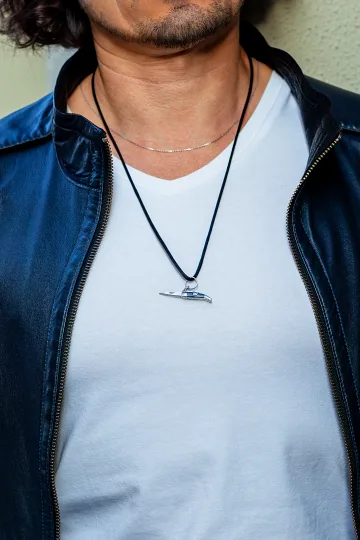




Frequently Asked Questions
Which piercing has the oldest roots in Europe?
Ear lobe piercing. Otzi (around 3300 BCE) had stretched lobes. Since then, archaeology shows a continuous tradition of ear piercing across various European cultures.
Which piercing is most culturally loaded today?
The nath (Indian bridal nose ring). It remains a living part of Indian wedding ceremony, and wearing it outside that context calls for reflection.
Can I wear a septum if I have no connection to Mayan or Indian culture?
Yes. The septum has such wide cultural distribution around the world (Mesopotamia, Maya, Africa, Australia, contemporary Western fashion) that it cannot be attributed to a single culture. It is a neutral contemporary ornament.
What did a left ear piercing mean for a man in medieval Europe?
Mostly nothing specific. In the Renaissance, a man's earring in the left ear became a sign of education and belonging to artistic or court circles. The maritime tradition of the 17th to 19th centuries added the meaning of "experienced sailor."
Why do Indian women pierce the left nostril?
By Ayurvedic theory, piercing the left nostril relates to female reproductive health. Modern medicine has not confirmed this connection, but the tradition runs so deep that in most Indian regions the piercing is done on the left even without explicit reasoning.
Which cultures prohibit piercing?
There is no strict religious prohibition on all piercing in the major world religions. However, in Orthodox Jewish observance and certain conservative Christian denominations, piercing (especially for men) can be seen as morally questionable. Some Islamic schools impose restrictions for men.
Where did contemporary Western piercing come from?
Modern mass fashion began with the hippies of the 1960s (Eastern influences), the punks of the 1970s and 80s (rebellious aesthetic), and spread into mainstream culture in the 1990s. The professional piercing industry took shape in the US in the 1970s and 80s (Jim Ward and other pioneers).
What does a right ear piercing mean on a man today?
In most Western cultures today, nothing in particular. The old division of "left ear straight, right ear suspect" dissolved by the late 1990s. Contemporary piercing is free of those former codes.
Which indigenous peoples have maintained their piercing traditions?
Mursi and Surma (Ethiopia) with labrets, Maasai (Kenya) with lobe spirals, Himba (Namibia) with earrings and ochre, Maori (New Zealand) with whale bone earrings, many indigenous peoples of Latin America. The list is long, and these are living cultures.
How do contemporary designers use traditional motifs?
They incorporate elements from various cultures into their collections: Mayan forms in contemporary labrets, Indian ornamentation in naths for the Western market, Scandinavian motifs in silver earrings. Designers working thoughtfully approach these sources with respect.
Should you learn the cultural history of a piercing before getting it?
Not required, but worthwhile. Especially for piercings with deep cultural context (septum, nath, labret). Knowledge adds meaning, helps you choose ornaments thoughtfully, and guards against superficial decisions.
What is better: staying within one cultural tradition or combining?
Depends on your motivations. If you want a connection to a specific culture, consistency within one tradition makes sense. If you want a contemporary synthetic look, combining different cultural elements is a normal part of 2020s aesthetics. The main thing is that your choice is intentional rather than accidental.
Does the meaning of piercing change over time?
It changes constantly. The same septum fifty years ago meant punk rebellion; thirty years ago, it signaled gay identity; ten years ago, indie aesthetics; today, it is a neutral accessory. In contemporary culture, any assigned meaning is temporary.
Conclusion
Piercing is one of the oldest practices of body ornamentation on the planet. From Otzi in the Alps 5,300 years ago to a woman in Seattle getting a septum at her local studio after work, a living tradition stretches across all continents and eras.
Knowing this history is not required to get a piercing. You can pierce your ear or nose simply because you want to look good. But knowledge adds meaning. When you understand that a natural septum is not "a punk statement" but a three-thousand-year tradition of Mesopotamian nobility and the Maya, your relationship with that ornament changes. When a nath in the nostril is consciously connected to Indian bridal tradition or worn with respect for that tradition, the earring becomes part of a larger conversation.
The main point: piercing is an ornament with a history. Even its simplest execution is participation in a very long chain of generations and cultures. It is worth approaching with respect, though without excessive solemnity. Contemporary aesthetics are free from the ritual obligation of the ancients, but they are enriched by that cultural context.
Further reading. For a broad map of body piercings, see the complete guide to body piercing types. For the ear in detail, read ear piercing types: the complete guide. For building a curated ear look, there is ear stack: how to put it together. For metals and ornament dimensions, see piercing jewelry guide: metal, form, diameter. For an alternative to piercing, see ear cuffs without piercing: a guide.
About Zevira
Zevira makes jewellery in the artisan tradition of Albacete, Spain. The history of piercing is really the history of the ornament that lives inside the piercing, and that thread is close to us: earrings, nose rings, cuffs, and pendants in which every piercing gets a piece of its own, just as it did from Sumer and Egypt to the studios of today.
What you can find with us for piercings and the jewellery for them:
- Stud and drop earrings for the lobe in 925 silver and 14 to 18K gold
- Hoops and small huggie rings for the helix and lobe in a range of diameters
- Minimalist pieces for building a curated look across several ear piercings
- Ear cuffs and clips that need no piercing, for anyone not yet ready for the needle
- Pendants and earrings that read historical and ethnic motifs through a contemporary lens
Every piece can be personalised with engraving by a craftsperson, with personal engraving available. 925 silver and 14 to 18K gold.
Silver, gold, engagement rings, symbolic jewellery, paired sets.