Body Piercing Types: The Complete Guide to Every Placement
Introduction: Thirty-Plus Points on a Single Body
A college friend came back from a semester abroad with a small hoop in her nostril and said one thing: "In India this goes back six thousand years, and I thought I was being rebellious." After that, she stopped arguing with her mom about self-expression and started seriously researching piercings. Within a year she had a septum, two helixes, a navel, and a microdermal on her collarbone. Not out of rebellion, but out of curiosity about her own body.
That story sounds familiar to a lot of people. One piercing leads to another, and a couple of years later you find yourself knowing the cartilage healing timeline by heart, reading titanium grade markings, and recognising a skilled piercer by the way they sterilise their tools. That is not an obsession. It is just attention to your own body, compounded by aesthetic discipline.
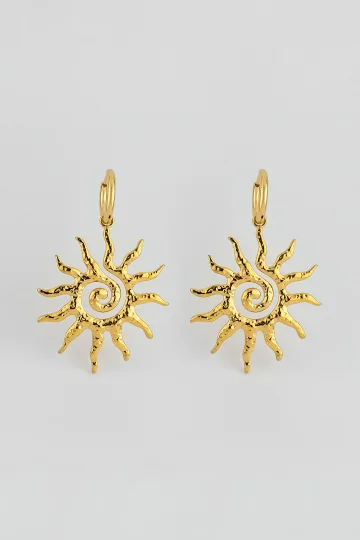
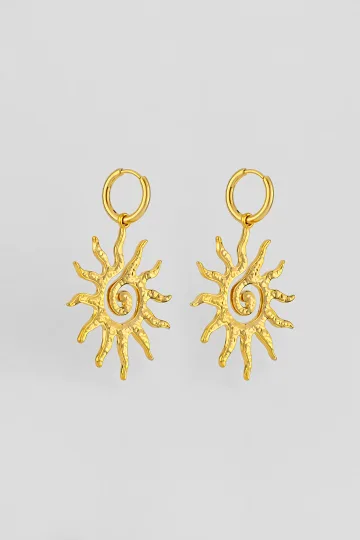
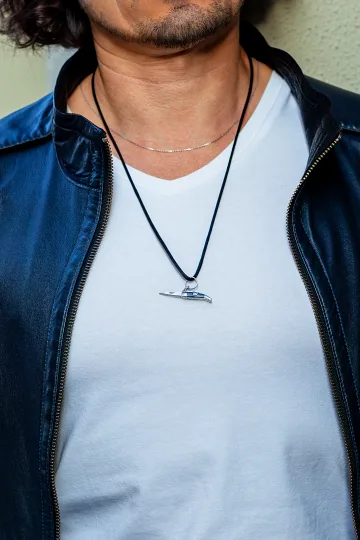
Wear the symbol, don't just read about it. These are in stock:








The human body offers more than thirty anatomically distinct spots for a piercing. The ear alone is a whole map. The face is another. The torso is a third. Each piercing is a small project: where to place it, how to heal it, what to insert, how to care for it through the first year. This guide maps every major placement in one place, organised by zone, pain level, healing time, materials, and aftercare rules.
We go top to bottom. Ears first, then face, then lips and mouth, then torso, then the specialised territory of surface work and microdermals. After that: pain scales, healing timelines, materials, aftercare, contraindications, how to find a good piercer, what to do when a piercing rejects, whether you can reopen a healed channel, the legal picture across different countries, and where piercing trends are heading in 2026. This is a long guide. That is the point.
The Piercing Map: 30-Plus Points on the Body
Before going into specific placements, it helps to see the full landscape. The body divides into five major zones for piercing, each with its own anatomy, healing rules, and aftercare requirements.
Head and neck. Ears, nose, brow, lips, mouth, tongue, upper lip frenulum. The most popular and most varied zone, partly because it heals well thanks to rich blood supply, and partly because it is visible. This is where most of the current trends live: ear curation, septum, Medusa, snake bites. About 60% of all visible piercings worldwide live in this zone.
Torso. Nipples, navel, surface placements on the collarbone and sternum, microdermals anywhere on flat skin. This is where healing gets longer and the work gets more nuanced. Torso skin moves constantly with every breath, bend, and turn, and that movement affects how stable a piercing stays.
Arms and legs. Microdermals on the wrist, shoulder, and back of the neck. A true through-and-through piercing on the arms almost never survives because friction from clothing and constant movement push the jewellery out within months. Microdermals and surface work are nearly the only viable options for decorating these zones. A standard transverse placement on the arm lasts an average of one to three years if everything goes right, and that is considered a success.
Back. Usually surface piercings or microdermals along the spine or on the shoulder blades. Visually dramatic, but temperamental: the skin rubs against clothing and bra straps, and sleeping on your back works directly against healing.
Intimate zone. A separate large category that this overview article does not detail. These placements require specialised studios and a separate, dedicated guide.
This article focuses on visible placements, because those are the ones that function as jewellery and contribute to the way you look. If a fully curated ear is one project, building a considered body is a lifelong one: one piercing this year, another the year after, a third three years from now.
Anatomy and Why It Matters
Body tissues differ enormously in their ability to heal. This is not marketing nuance. It is the single biggest factor in whether a piercing succeeds.
Soft tissue (earlobe, lip, nostril) is dense with small blood vessels. Blood delivers oxygen and immune cells, regeneration is fast, and healing takes four to twelve weeks.
Cartilage (most of the ear, the nasal septum) has almost no blood supply of its own. Cells receive nutrients by diffusion from neighbouring tissue. Regeneration is many times slower, and healing ranges from six to eighteen months.
Muscle tissue (tongue) heals fast because it is well vascularized, sometimes in two to four weeks, but it creates ongoing mechanical stress on teeth and gums.
Connective tissue on flat surfaces (sternum, collarbone, back) cannot hold a through-and-through piercing because surrounding tissue pressure pushes the jewellery out. Surface bars and microdermals are the only workable options here.
Understanding this difference prevents false expectations. If someone watches a friend's earlobe heal in a month and assumes their helix will do the same, they are in for an unpleasant surprise. Cartilage has entirely different rules.
One septum holds a face better than five hoops in one ear. A pile of cheap rings is a jumble, and don't argue.
What to Wear With a Piercing: Jewellery and Looks
The piercing is only half the job, the jewellery in it is the other half. When I put a look together for a client, I read the same helix with a thin stud and with a heavy ring as two different pieces. Here is what actually works, occasion by occasion.
What should I wear day to day? For every day I recommend the lightest, quietest option: a small stud with a natural stone in the lobe, a nose ring tucked inside, a flat labret disc. That kind of piece never catches on a high collar and never argues with an office dress code. I suggest matching the metal to your wardrobe: warm gold for beige and brown, silver-toned titanium for cool blues and greys.
And for an evening or a special day? For the evening I choose an accent on an open area: a microdermal at the collarbone, a long navel drop under a sheer top, a chain between two ear piercings. A deep, dark top (wine, emerald, black) holds the sparkle of a stone best, while a light fabric shifts the eye onto the shape of the metal. For a wedding or a shoot I gather several points in one palette rather than a scatter of random studs.
How do I build several piercings into a composition? The same rule applies as with jewellery in general: one metal sets the tone, the rest falls in line. Three or four studs on the lobe plus one cartilage piercing read as a curated composition when they are all gold or all titanium. I suggest mixing metals only on purpose, so it reads as a choice and not an accident.
Gold or silver, how do I choose for my skin? For a warm undertone I recommend yellow gold and warm shades, for a cool one silver and titanium. If you are unsure, look at the veins on your wrist: greenish means warm, bluish means cool. For a fresh piercing I choose implant-grade titanium either way, and I recommend gold only once it has healed.
Who suits what, and how do I avoid overloading the face? A single minimal piercing with the best possible stone I suggest for a restrained look and a mature style. A septum or a bold Medusa add character and sit well on strong features. An ear stack with chains I recommend to anyone who loves detail. And I keep the one-accent rule in mind: if a large septum works, I keep the ear quiet, otherwise the face gets overloaded.

Turn on your camera, pick earrings, a pendant or a ring, and see the piece on yourself in real time.
Switch items in one tap.
Everything runs in your browser: no photo or video is ever uploaded.
A Brief History: From Otzi to the Nineties
Piercing is one of the oldest forms of body decoration on the planet. Not a trend, not a modern invention, but a practice with deep roots.
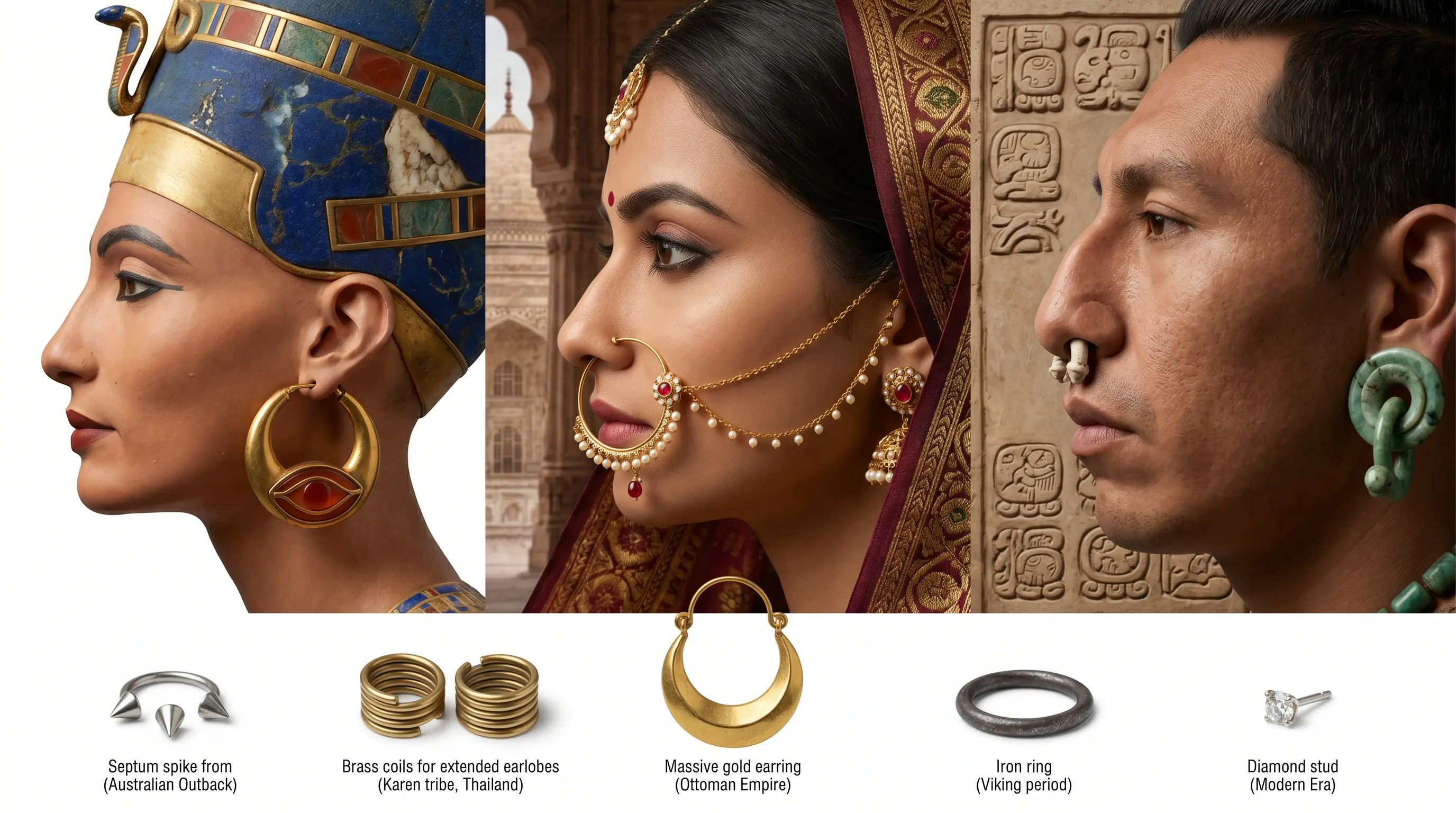
Prehistoric times. Otzi, the ice mummy found in the Alps and dated to roughly 3300 BCE, had stretched earlobes approximately 11 millimetres in diameter. That is the earliest physical evidence of piercing that has survived to us. Skulls from Neolithic burial sites in Anatolia and Mesopotamia show characteristic bone changes around ear openings.
Ancient Egypt. Ear piercing was a mark of high status. Pharaohs and their families wore gold, lapis lazuli, and turquoise earrings. Tutankhamun, at eighteen, was buried with heavy gold earrings in his lobes. Navel piercing also appeared, though less commonly and primarily among noblewomen. Priestesses of Hathor wore special hoop earrings symbolising the solar disk.
Sumer and Mesopotamia. Gold and silver hoop earrings from the Royal Tombs of Ur date to approximately 2500 BCE. Noble women wore delicate pendant earrings set with lapis lazuli and carnelian. The Sumerian goddess Inanna was depicted wearing heavy gold earrings as symbols of her power.
India and Ayurveda. Karna Vedha, ear piercing, is one of the sixteen obligatory life-cycle rites. Nose piercing, particularly of the left nostril, is connected in Ayurvedic tradition to female reproductive health. Modern Western medicine does not confirm this connection, but the tradition is three thousand years old and still very much alive. Across most regions of India and Nepal today, women wear the nath, a gold or silver ring in the nostril, as part of bridal dress.
Pre-Columbian Americas. Maya and Aztec nobility made large piercings in earlobes, noses, and lips. Labrets of obsidian and jade were worn by warriors and priests. Mummies have been found with septum piercings and intact gold and jade jewellery in the channels. Among the Aztecs, a labret passing through the lower lip symbolised the warrior's speech and his right to speak on behalf of the gods.
Polynesia and Oceania. Maori, Hawaiian, and Samoan peoples pierced lips, ears, and noses as part of warrior or priestly initiation. Earrings were carved from whale bone, mother-of-pearl, and shark teeth. Sizing stretched over a lifetime and indicated rank. That process of stretching earlobes to large gauges became the foundation of the modern gauging subculture.
Africa. The Mursi and Surma of Ethiopia, the Maasai of Kenya and Tanzania, and the Himba of Namibia stretched earlobes and lower lips using ceramic, wood, or bone discs. Among the Mursi, the diameter of a woman's lip plate traditionally corresponded to the size of her bride price, measured in cattle. Among the Maasai, thin metal spirals wound through stretched lobes indicate age and social rank.
Japan, Jomon period. Clay dogu figurines from as far back as 14,000 years ago depict people with ear and lip piercings. The Ainu people, indigenous to Hokkaido, maintained traditions of lip tattooing and lobe piercing well into the nineteenth century, when the Meiji government banned these practices as part of a cultural assimilation program.
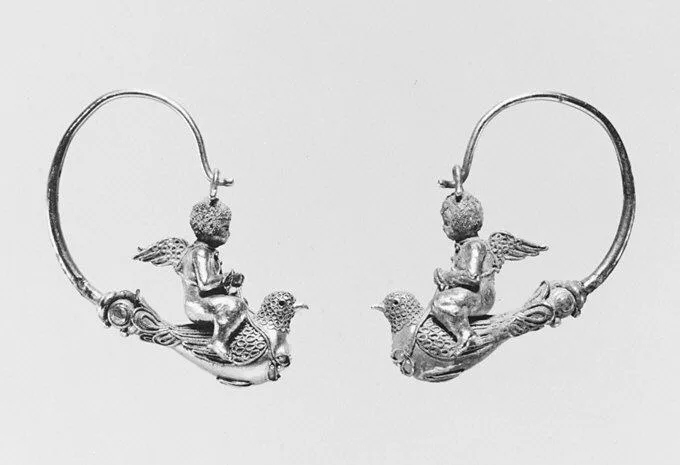
Medieval Europe. Earrings essentially disappeared for several centuries. Ears were covered by headdresses, and the Church did not approve. The comeback happened during the Renaissance: sixteenth- and seventeenth-century portraits show male courtiers wearing a single pendant earring in the lobe, considered the height of fashion. Shakespeare, in the so-called Chandos portrait, wears a gold earring in his left ear, as did most educated men of his circle.
19th century sailors. British and Spanish sailors pierced one lobe, believing a gold earring would preserve their eyesight, protect them from drowning, or at minimum pay for a burial if their body was found. Archaeological finds on Spanish Armada shipwrecks partially support this. Among pirates, a gold earring often signified completing a certain rite of passage or taking part in the capture of a major vessel.
20th century, subcultures. The hippies and punks of the 1970s and 80s turned piercings into political and aesthetic statements. Helix, septum, industrial, lip, and brow piercings moved from subcultural studios into mainstream culture. Jim Ward, an American who opened the first professional piercing studio in Los Angeles in 1975, effectively created the modern piercing industry. Before him, the work was done either in tattoo parlours or by amateur practitioners.
The 1990s, mainstream. Pop culture pushes navel and facial piercings onto magazine covers and music videos. Demand for piercings multiplies. Professional studios independent of tattoo shops open across New York, Los Angeles, London, and Berlin. The Association of Professional Piercers (APP) forms with formalized sterilisation and protocol standards.
The 2000s and 2010s. The navel pendant becomes part of the pop-star uniform. By the end of the decade, tongue and brow piercings become associated with emo and alternative youth culture. Smooth minimalist helixes and tragus piercings gradually displace facial piercing from mainstream fashion. Ear curation emerges as a jewellery genre.
Today. The concept of ear curation and the idea of a piercing as a considered jewellery decision has moved the practice into the same territory as fine jewellery design. When you choose a septum ring or a helix stud, you are choosing by zone, metal, shape, diameter, and compatibility with everything else you wear.
Why People Pierce: The Psychology of the Decision
Understanding motivation helps with choosing the right piercing. For most people it is a mix of several reasons, and honest self-awareness matters more than trend.
Aesthetics. The most common and most honest reason. A person sees an image, feels a connection, and wants to make it real. An aesthetic motivation does not need justification and works well as long as it does not conflict with lifestyle and profession.
Rite of passage. A piercing in adolescence or early adulthood often marks a turning point: graduation, starting college, moving away from home, surviving a breakup, recovering from illness. The body holds the memory of the moment through a mark, and that mark carries personal meaning.
Belonging to a community. Piercings signal membership in a subculture, profession, or circle. This works subtly: people with similar piercings find each other faster and reach common ground more easily.
Control over the body. An especially important motivation for people who have felt for a long time that their body did not belong to them, after illness, after a controlling upbringing, after an abusive relationship. A piercing is a small act of sovereignty.
Sensory curiosity. The body is a map of sensations, and piercings open new ones. Most people with tongue and navel piercings report increased sensitivity in the area after healing.
Spiritual or symbolic reasons. Ayurvedic left-nostril piercing, daith as a migraine remedy, septum as an initiation rite. These ideas are not always supported by medicine, but they matter to the people who live inside them.
The worst motivation is getting a piercing because a friend did or to prove something to someone. Those piercings tend to come out, and the spot stays as a reminder of a moment of weakness.
Living Regional Traditions
Piercing did not emerge from subcultural studios into modern fashion in a vacuum. Many placements have living cultural carriers, and understanding that context adds depth to the jewellery.
India: Nath and Ayurveda
The nath is a gold or silver ring in the left nostril, a traditional bridal ornament across most of India. It is often connected by a fine chain to a hair ornament or earring, forming a single composition. In Rajasthan, naths can be large enough that their weight is supported by a separate chain to the temple. South Indian naths tend to be smaller but elaborately worked with pendant elements.
The Ayurvedic concept of the left nostril as a point regulating female reproductive health goes back to early medieval medical texts. Modern Western medicine does not confirm the connection, but in Indian culture the tradition is very much alive. Indian women in the diaspora today often pierce the same nostril as a symbol of connection to their roots.
Mexico and Latin America: Nariguera
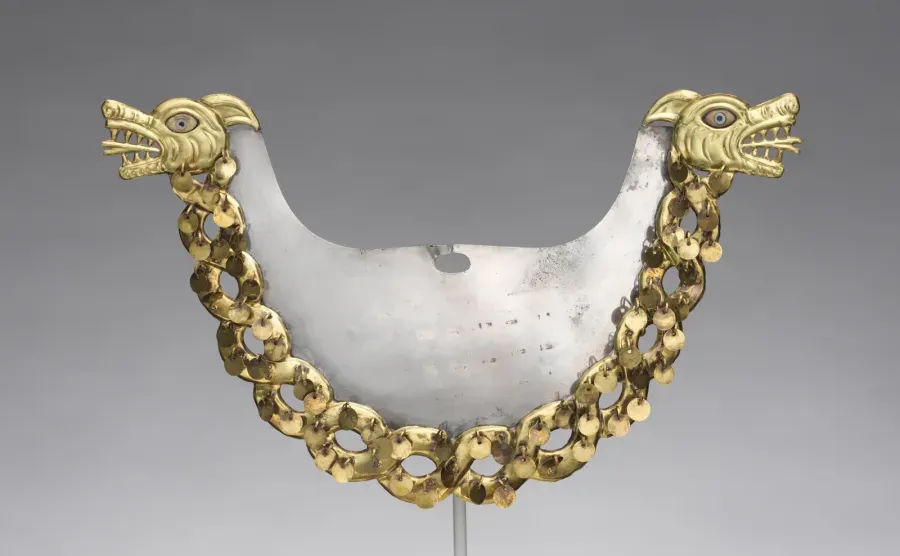
Pre-Columbian Mexican nobility wore the nariguera, a septum ornament in gold and jade. Among Aztec and Maya warriors and priests, the nariguera indicated status and the privilege of speaking on behalf of the gods. After the Spanish conquest the practice was suppressed, but in contemporary Mexican culture the nariguera is returning as a symbol of heritage and resistance to colonial erasure.
In southern Mexico and Guatemala, older women from indigenous communities can still be found wearing traditional septum ornaments, not as fashion but as living inheritance. Contemporary Mexican designers include the nariguera motif in their collections as part of cultural recovery.
Africa: Labrets, Plugs, Spirals
Among the Mursi and Surma of Ethiopia, women wear ceramic or wood labrets in the lower lip that increase in size over a lifetime. Among the Karamojong of Uganda, the male labret tradition survives as a marker of completed warrior initiation.
Among the Maasai of Kenya and Tanzania, stretched lobes are decorated with beads, metal rings, and thin spirals. The gauge and type of ornament communicate age, rank, and family status. Among the Himba of Namibia, women wear iron earrings coated with red ochre and bound into their hair.
These traditions survive but are contracting under pressure from modernization. Ethnographic work from the 2010s and early 2020s documents some of the last generations wearing traditional piercings at full scale.
Polynesia: Whale Bone, Shell, Shark
Among Maori, Hawaiian, and Tahitian peoples, piercings used whale bone, mother-of-pearl, and shark teeth. Maori men's ear piercings were often part of initiation and accompanied by ta moko facial tattoo. Whale bone tengusu earrings are still made to traditional patterns and worn at formal occasions today.
In Hawaii, left-ear piercing was traditionally associated with the warrior caste and right-ear with the priestly caste. Both ears together signified a master of all knowledge. After nineteenth-century Christianization the practice declined, but it is returning in the contemporary Hawaiian cultural revival.
The North: Vikings and Baltic Peoples
Viking men-at-arms wore silver hoop earrings in the lobe. Archaeological finds from Sweden, Norway, and Iceland show earrings weighing up to 50 grams, implying considerable tissue load. Among the Baltic Prussians and Lithuanians, women's lobe piercings are documented through the sixteenth century, with earrings in plant and zoomorphic motifs.
Japan: Ainu and a Fading Tradition
The Ainu, indigenous to Hokkaido and Sakhalin, practised lip tattooing for women and lobe piercing for both men and women. Earrings were carved from mother-of-pearl, metal, and bone. The Meiji-era Japanese government from 1869 onward banned these practices as part of cultural assimilation. By the early twentieth century the tradition had nearly vanished. Today, Ainu activists are working to restore it as part of ethnic revival.
Ears: The Most Extensive Zone
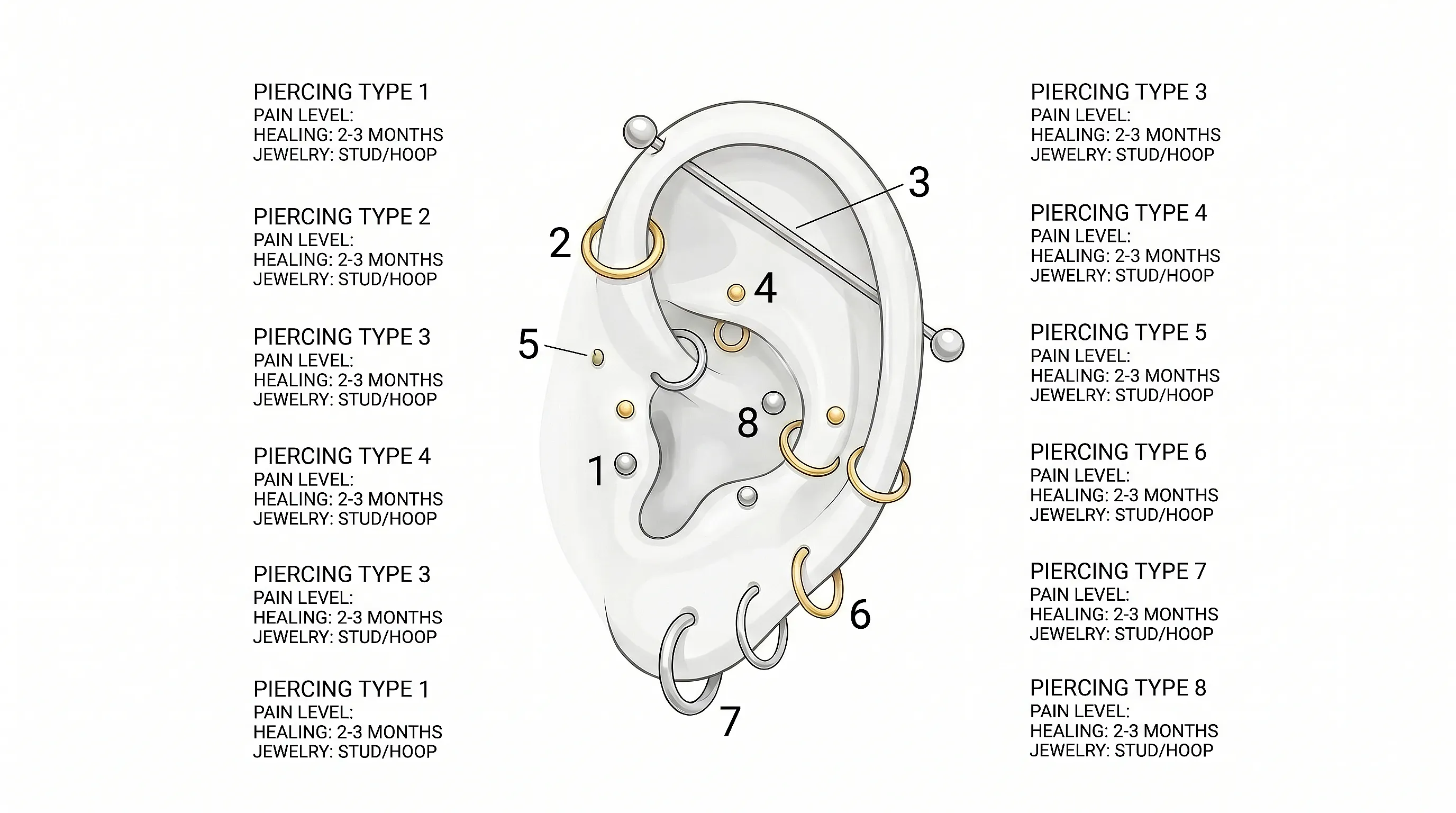
A single ear has about fourteen anatomically distinct piercing points. The lobe, the inner shell (conch), the outer folded rim (helix), the inner parallel ridge (anti-helix), the small nub in front of the ear canal (tragus), the opposite nub (anti-tragus), the point directly above the ear canal (rook), the fold beneath it (daith), and a dozen variations in between.
We will not break down every ear placement here in detail because there is a dedicated guide for that. Read ear piercing types: the complete guide for the full ear map with every point, pain levels, healing timelines, and jewelry recommendations by position.
The essentials: earlobe heals in four to six weeks. Cartilage takes six months to eighteen months. That difference comes down to blood supply. The lobe is dense with vessels; cartilage has almost none and regenerates slowly. Cartilage must be pierced with a needle by a professional piercer, never with a gun. A gun compresses rather than cleanly penetrates tissue and dramatically raises the risk of keloid scarring and infection.
The current defining trend is ear curation: a composed arrangement of multiple piercings on one ear. Two standard lobe piercings are no longer the whole story. A stack of three to five pieces on a single lobe plus one or two cartilage placements above is the direction. For how to build that composition, see the guide how to build an ear stack.
For people who do not want to pierce cartilage, ear cuffs offer a similar visual effect without any healing time. There is a separate guide: ear cuff guide, no piercing required.
And the perennial question of which ear to pierce and what that means historically, from sailors to subcultures to contemporary aesthetics, is covered in the guide to left versus right ear meaning.
Nose: Nostril and Septum
The nose offers three main piercing positions: the nostril (nostril), the septum (the partition between the nostrils), and the rhino (a vertical through-the-tip placement). There is also the bridge, a through-the-nose-bridge placement between the eyes, but it is rare and almost always rejects.
Nostril
The most common nose piercing. A single needle through the wing of the nose, more often on the left, less often on the right. Healing takes six to twelve weeks with careful aftercare and hands off the jewellery. Pain is moderate, around a four or five out of ten, because a nerve runs close to the surface in this area.
The starter piece is a short stud with a flat back disc inside so nothing catches during blowing your nose. After healing, a hinged ring or horseshoe retainer works well. Diameter ranges from six to ten millimetres depending on anatomy.
An anatomical note: on wider or fleshier nostrils, a nostril stud reads proportionally. On a delicate, narrow nostril, the jewellery needs to be very small or the area looks overloaded. A good piercer marks the spot with a pen and holds up a mirror before the needle goes in, so you agree on placement in advance.
In India, nostril piercing on the left side connects to the Ayurvedic concept of the left nostril as a point regulating women's health. In some Middle Eastern contexts, the right side is traditional. In contemporary Western practice, the side is chosen purely by facial aesthetics: whichever side looks more interesting.
Septum
A piercing through the septum between the nostrils. It is placed through the "sweet spot," a thin strip of soft tissue at the very edge, below the cartilage. When the needle hits that spot, the piercing is nearly painless and heals in six to eight weeks. If the piercer misses and hits cartilage, it is significantly more painful and heals over several months.
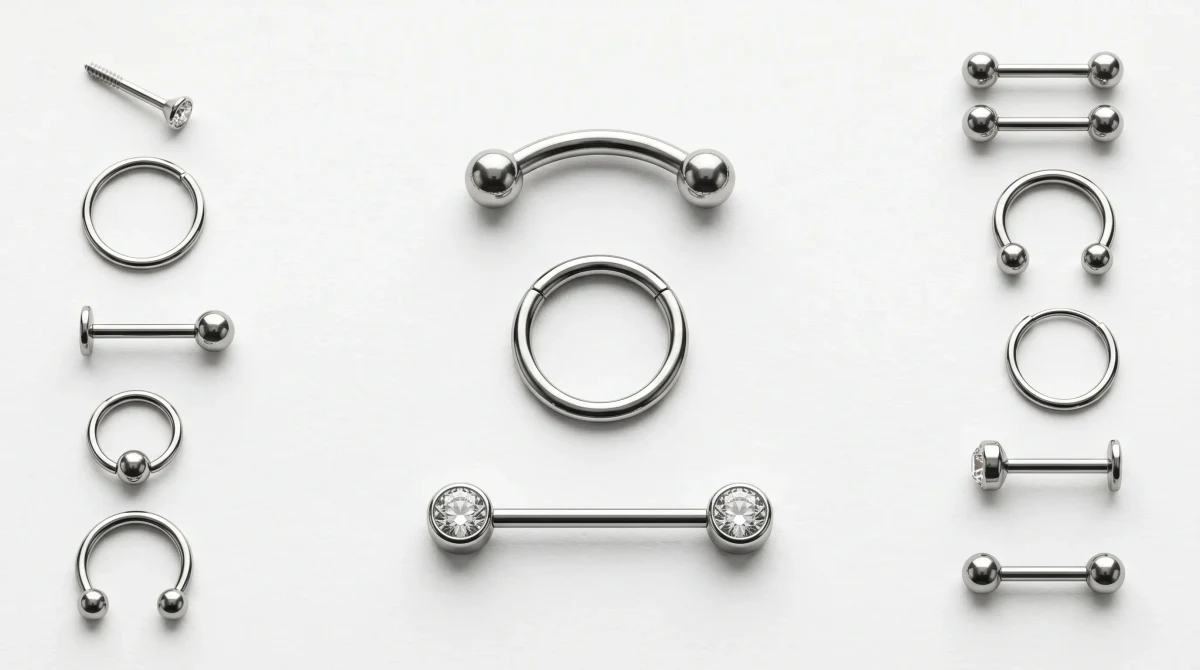
Common jewelry choices: horseshoe retainers, septum clickers, captive rings. One of the practical advantages: a septum is easy to hide. A horseshoe with both ends tucked up sits inside the nostrils and is completely invisible from the outside, which is convenient for conservative dress codes at work.
The septum has an ancient history. Maya warriors, Indian women of Rajasthani castes, nomadic peoples of Africa and Central Asia all wore large rings through the septum for millennia. The modern septum began in the subcultures of the 1980s, then moved to high fashion by the mid-2010s. Today it is one of the most prominent piercings on the European fashion week runways.
High Nostril and Septril
High nostril is placed above the standard position, closer to the nose bridge. It takes longer to heal, three to six months, and jewellery selection is more difficult because the nostril wing curves more at that height.
Septril is a rare placement: a vertical piercing through the tip of the nose that exits through the bottom of the septum. It can only be done on specific anatomy and is usually a secondary piercing done after the septum has fully healed. Healing can take up to a year.
Bridge and Erl
Bridge is a surface piercing across the nose bridge, between the eyes. Like all surface work, it migrates in most people within one to three years.
Erl is a rare vertical piercing through the tip of the nose from top to bottom. Anatomically viable only for a small number of people, very slow to heal.
Double and Triple Nostril
Two or three nostril piercings stacked vertically on one side, similar to a lobe stack. Each heals on its own schedule; it is better to wait three to four months between each one. The combination works well with a chain connecting the studs.
Brow and the Eye Area
Eyebrow piercing runs vertically through the brow, usually toward the outer edge. It can also be placed horizontally. Healing takes six to eight weeks, but the brow is one of the most rejection-prone placements because the skin there is thin and moves constantly. Many people find that the jewellery migrates within a year or two.
The starter piece is a small curved barbell. After healing, a ring is an option.
Anti-eyebrow is placed below the eye, on the upper cheekbone. It is done as a surface piercing or microdermal because a through-and-through placement there almost always rejects due to facial movement.
Horizontal eyebrow runs along the brow rather than through it. Less common, heals roughly the same as the standard placement.
Teardrop is a microdermal placed below the eye to mimic a tear. Purely decorative, lasts two to four years.
The brow has been one of the most image-defining piercings in popular culture, firmly associated with the alternative aesthetic of the 1990s. Today it returns as a retro reference. On the European fashion week circuit in 2025 and 2026, thin studs with natural stones appeared in editorial womenswear, suggesting a second wave.
Customer reviews
Zevira is a real jewellery shop. Genuine payments, deliveries and customer thank-yous.
🥰🥰🥰 gracias
Ok, ¡gracias! 🙂
Lips and Mouth: Monroe, Medusa, Snake Bites, and More
The face offers a rich vocabulary of named lip and perioral piercings. Most of them emerged from American subcultural scenes in the 1990s and have since established themselves in international piercing terminology.
Monroe and Madonna
Monroe is a piercing above the upper lip on the left side, mimicking Marilyn Monroe's famous beauty mark. It is usually done with a small flat-back stud with a coloured or clear stone. Healing takes six to ten weeks.
Madonna is the same placement on the right side, named for the mole on Madonna's face. Anatomically identical to Monroe, just mirrored.
Both placements are relatively low-risk for teeth and gums when the barbell is the right length. The interior disc must not press against the gum or rub the inner lip tissue.
Medusa and Philtrum
Medusa, also called philtrum, is placed in the centre directly below the nasal septum, in the groove of the upper lip. One of the most elegant facial piercings. Healing: eight to twelve weeks. The standard piece is a flat-back stud with a small stone.
It is also one of the most demanding piercings for long-term dental health. The barbell rubs against teeth and gums during eating and kissing, and a significant percentage of long-term wearers develop gum recession. Anyone planning to keep a Medusa for years should use the shortest possible barbell and a plastic interior disc. Regular dental checkups become mandatory.
Double philtrum places two piercings side by side, a few millimetres apart. Not everyone's philtrum groove anatomy supports this.
Snake Bites, Spider Bites, Dolphin Bites, Angel Bites
Snake bites are two lower lip piercings placed symmetrically at the corners, mimicking a snake bite. One of the most popular paired lip piercings. Each heals in six to ten weeks.
Spider bites are two piercings placed close together on one side of the lower lip, resembling a spider bite. Usually done on the left or right rather than centred.
Dolphin bites are two lower lip piercings at the centre, a few millimetres apart. Less common.
Angel bites are two symmetrical upper lip piercings, mirroring snake bites above the lip.
Cyber bites combine a Medusa above with a labret below, one above the lip and one below, vertically aligned.
Shark bites are four piercings: two on each side of the lower lip. Best suited to people who know exactly why they want this.
Canine bites are two upper and two lower lip piercings on the same vertical line on each side. Eight total points on the tissue.
Labret and Variations
Labret is a centre lower lip piercing, placed just below the lip. One of the oldest piercings in human history. Southern African tribal communities pierced labrits in childhood and gradually expanded them to plate size over years.
Vertical labret goes through the lower lip from bottom to top, with the top end of the jewellery exiting on the surface of the lip itself. Creates a sharper look but is harder on teeth than the standard labret.
Lowbret is placed very low, closer to the chin. Less common.
Ashley pierces the centre of the lower lip straight through, exiting through the inner lip tissue. From the outside only one stone is visible; the inside has a flat disc. Contemporary and minimalist.
Dahlia bites are placed at the extreme corners of the mouth, at the very edges where the lips meet. Named after a murder case from American cultural history. Not for everyone; some people have strong cultural associations with that reference.
Smiley and Frowney
Smiley pierces the upper lip frenulum. Visible only when you smile. Healing four to eight weeks. A delicate placement: the frenulum is thin, the barbell often tears through the tissue within one to two years.
Frowney is the counterpart below: a lower lip frenulum piercing. Even rarer and even more prone to rejection.
Tongue and Frenulum
The tongue is one of the most popular placements after the ear. It heals fast by piercing standards, two to four weeks, thanks to excellent blood supply. But it also delivers the most serious long-term side effects for teeth and gums.
Standard Tongue Piercing
A vertical placement through the body of the tongue, between the front and middle thirds, not at the tip. The starter piece is a long barbell so the tongue has room to swell in the first few days without the jewellery cutting into tissue. After two to three weeks it is swapped for a shorter barbell.
The primary risk is micro-damage to the enamel of the upper front teeth and gum recession. Studies show that the majority of people who have worn tongue piercings for several years show characteristic chipping or wear on the front teeth. This is minimised by choosing a soft interior ball, such as Teflon or bioplast, and switching to a shorter barbell as soon as possible. Regular dental visits after a tongue piercing are not optional.
Snake Eyes and Horizontal Tongue
Snake eyes is a horizontal piercing through the tip of the tongue with two beads at each end. Most professional piercers strongly advise against it: it damages tongue musculature, interferes with speech and normal articulation, and the APP has specifically listed it as a placement they do not recommend.
Web Piercing and Frenulum Linguae
Web piercing goes through the frenulum under the tongue. Healing four to six weeks. Less traumatic than snake eyes but still close to teeth and gums.
Double Tongue
Two tongue piercings side by side, or one toward the front and one further back. Anatomically possible for people with longer tongues. Healing is more demanding: greater tissue load, higher infection risk from two simultaneous wounds in the mouth.
Navel: Standard and Variations
Standard navel pierces the upper fold of the navel with the jewellery exiting inside the bowl. One of the most popular body piercings since the 1990s. Healing: six to nine months, sometimes up to a year, because the navel bends constantly, sweats, and rubs against waistbands.
The starter piece is a curved barbell of ten to twelve millimetres with two balls. After healing, decorative options include pendant barbells, crystal tops, and chain pieces.
Lower Navel and Floating Navel
Lower navel pierces the fold below the bowl rather than above it. Not everyone has suitable anatomy for this; you need a defined lower fold.
Floating navel is a variation of the standard where the upper ball sits recessed into the skin rather than sitting above the navel rim. Creates a minimal, architectural look.
Double and triple navel combine two or three piercings in the navel zone, typically upper and lower together.
Anti-navel is placed just below the navel, a centimetre or two south. Surface in nature, prone to migration, typically survives two to four years.
Pregnancy and the Navel
Navel piercings frequently need to come out during pregnancy as the skin stretches. Many people switch to a flexible PTFE retainer in the second trimester and remove the jewellery entirely before delivery. After giving birth the channel often closes and a new piercing may be needed six to twelve months postpartum.
For more on navel aftercare, jewelry shapes, and the cultural history of navel piercing, see the navel piercing guide.
Upload a photo of your pet, someone you love, or an object. We'll build a 3D model and hand-cast it in pewter.



Nipples and Chest
Nipple piercings are placed with a straight barbell, usually horizontally. Healing ranges from three to twelve months depending on the individual. The two sides often heal at different rates.
This is one of the most discussed piercings from a health perspective. Current research does not show significant contraindications for subsequent breastfeeding when the piercing has fully healed and the channel is stable. Jewellery is removed during nursing.
Pain: seven to nine out of ten. One of the most intense placements among visible piercings. The healing period requires soft, seamless underwear and avoiding tight clothing against the healing tissue.
Surface piercing on the sternum means piercings between the collarbones or along the sternum. Flat tissue means high rejection risk. Microdermals are the more durable modern alternative.
Paired and Asymmetric Nipple Piercing
One nipple, both nipples, or vertical paired piercings on one nipple are all options. Nipple piercings in men have their own aesthetic history, prominent in the gay community in the 1980s and 90s as a community marker, and today found much more broadly.
Surface and Microdermals
When you want to decorate a flat surface such as the collarbone, neck, shoulder, or back of the wrist, a standard through-and-through piercing will not hold. The body eventually pushes out any jewellery that lacks sufficient tissue on both sides to anchor it. Two techniques address this.
Surface Piercing
A specially shaped surface bar threaded horizontally under the skin. Two beads are visible on short posts above the surface. Healing: six to nine months. Long-term survival varies: migration within two to four years is normal.
Popular placements: collarbone, back of the neck, lower back, décolletage. Surface piercings require careful metal and bar selection. Flat-footed or rounded bars always in implant-grade titanium.
Microdermal
A small anchor with a flat base is inserted beneath the skin. Only the threaded decorative top is visible from the outside, and that top can be swapped out. Microdermals last an average of two to five years before the body starts to push them out.
Microdermals look particularly good in clusters: three on the collarbone, a line along the back of the neck, symmetrical placements at the temples. This is work for an experienced piercer: the depth and angle of the anchor determine how long the piece will last.
Insertion is done with a biopsy punch, not a standard piercing needle. Removal requires a small incision and should always be done by a professional.
Skin Implants and 3D Dermal Anchors
A more specialised category: three-dimensional metal shapes, stars, dots, ornamental forms, inserted into the skin like oversized microdermals. These are done only in studios with the specific licensing and training for body modification work.
Stretched Lobes: Tunnels and Plugs
Stretching earlobes to large gauges, the world of tunnels, plugs, and gauged piercings, is its own subculture within piercing with its own rules. The roots are in Polynesia and Africa; the contemporary mainstream in Europe and the US traces from the late 1990s.
How Stretching Works
A healed lobe is gradually brought to a larger gauge, not in one jump but in small increments: typically a half-millimetre to one millimetre every four to six weeks (one or two gauge sizes at a time). The body has time to adapt, and the tissue thickens from within rather than tearing.
The Standard Scale
| Size | Diameter | Notes |
|---|---|---|
| 18g | 1.0 mm | Standard fresh piercing |
| 16g | 1.2 mm | Heavy earring, cuff |
| 14g | 1.6 mm | Thin barbell |
| 12g | 2.0 mm | Noticeably thicker |
| 8g | 3.0 mm | Small tunnel |
| 4g | 5.0 mm | Mid-size tunnel |
| 0g | 8.0 mm | Large tunnel |
| 00g | 10.0 mm | Very large |
| 12.7 mm+ | 1/2 inch+ | Plugs; often past the point of return |
The Point of No Return
Up to about eight to ten millimetres, a lobe usually returns to close to its original appearance within a few months of removing the jewellery. Past twelve to thirteen millimetres, reversal becomes unlikely as the tissue no longer contracts on its own. This is worth understanding at the outset, because people's lives and priorities change, and the desire for large tunnels may pass while the stretched lobe remains.
Best Materials for Stretching
Silicone is soft, flexible, and good for sleep. Not appropriate for fresh stretching, only after the new size is fully healed.
Glass, obsidian, horn are classic "organic" options. Heavy enough to provide steady pressure and help tissue adapt.
Steel and titanium are fine for stretching work but not for long-term wear as the weight puts pressure on the channel walls.
Wood only after full healing, because it is porous and absorbs moisture.
Do not stretch faster than the schedule and do not jump more than one step at a time with a taper, or the tissue tears and scarring interferes with future stretching.



The Rarest and Most Experimental Piercings
Beyond the standard placements and surface work, there are experimental techniques done only in specialised studios.
Dermal Punching and Scalpeled Stretching
A dermal punch is a circular cutting tool that removes a disc of tissue to create an opening at a target diameter without the gradual stretching process. Healing is fast, but the edge of the resulting opening can be harder to control aesthetically.
Scalpeled stretching uses a scalpel cut followed by immediate insertion of a plug at the target diameter. Used to cross "difficult" millimetres where standard taper methods cause tears. Done only by very experienced piercers.
Transdermal Implants and Body Modification
Transdermal implants are flat titanium bases inserted under the skin, with either a threaded top for decoration (similar to a microdermal but more stable) or no external element at all. Implants in the shape of horns on the forehead, spikes along the spine, or raised patterns on the arms belong to the territory of extreme body modification.
This work is done in major body modification studios in cities like Berlin, London, Los Angeles, and Tokyo. Age is strictly 18 minimum; psychological consultation or review committee approval is often required, because reversibility is minimal.
Magnetic Piercing and Non-Piercing Alternatives
A contemporary alternative to actual piercing is magnetic jewelry: two strong magnets holding a piece against the skin without any opening. Used to simulate nostril, septum, tongue, and labret placement. It lasts a few hours to a day and allows someone to test the visual effect before committing. See also the ear cuff guide without piercing for a similar idea applied to ear placement.
Pocketing and Anti-Piercing
Pocketing is a rare technique in which jewellery is placed in a "pocket" under the skin and held by surrounding tissue pressure. It looks like a surface inset from the outside. Very temperamental, rejects frequently, done rarely.
Pain Ratings by Zone
Scale of ten. These are averages; individual pain thresholds vary significantly.
| Zone | Pain | Notes |
|---|---|---|
| Earlobe | 2-3 | Easiest placement, almost painless for most people |
| Brow | 3-4 | Thin skin, fast needle |
| Nostril | 4-5 | Reflexive tearing and sneezing, moderate pain |
| Septum | 2-3 | In the sweet spot, nearly painless |
| Septril | 6-7 | Complex placement, higher pain |
| Helix | 4-5 | Cartilage, noticeably more than lobe |
| Tragus | 5-6 | Dense, small cartilage, audible crunch |
| Daith | 5-6 | Similar to tragus, slightly deeper |
| Conch | 5-7 | Thick cartilage, prolonged sensation |
| Industrial | 7-8 | Two simultaneous piercings |
| Monroe / Madonna | 4-5 | Lip is resilient, needle is fast |
| Medusa / philtrum | 5-6 | Tear-reflex nerve proximity |
| Snake bites | 5 + 5 | Each is like a Monroe, but there are two |
| Labret | 4-5 | Less sensitive zone than upper lip |
| Vertical labret | 6-7 | Double trauma in one pass |
| Smiley | 3-4 | Thin frenulum |
| Tongue | 4-6 | Most people are surprised how manageable it is |
| Snake eyes | 7-8 | Not recommended |
| Navel | 4-5 | Thin skin, fast needle |
| Nipples | 7-9 | Among the most intense of the visible placements |
| Microdermal | 4-5 | Biopsy punch feels like a sharp pinch |
| Surface | 5-6 | Varies by zone and skin density |
Healing Timelines by Zone
| Zone | Healing | Notes |
|---|---|---|
| Earlobe | 4-6 weeks | Fastest healing |
| Brow | 6-8 weeks | High migration risk |
| Nostril | 6-12 weeks | Sensitive to contamination; do not touch |
| Septum | 6-8 weeks | One of the most predictable placements |
| High nostril | 3-6 months | More complex than standard nostril |
| Helix | 6-12 months | Slow but stable |
| Tragus | 6-9 months | Often faster than expected |
| Daith | 6-9 months | |
| Conch | 6-12 months | Thick cartilage |
| Industrial | 12-18 months | Two piercings, doubled timeline |
| Lip piercings (Monroe, Medusa, snake bites) | 6-10 weeks | |
| Labret | 6-10 weeks | |
| Vertical labret | 2-4 months | |
| Smiley | 4-8 weeks | Often tears out |
| Tongue | 2-4 weeks | Fastest among non-lobe placements |
| Navel | 6-12 months | Depends on activity and clothing |
| Nipples | 3-12 months | Wide individual variation |
| Microdermal | 1-3 months | Surface heals quickly; anchor takes longer to fix |
| Surface | 6-9 months | High migration risk |
These timelines represent full channel healing. The first signs of recovery such as reduced redness and stopped discharge appear earlier, but changing jewellery before the full healing period is done is always a mistake.
Materials and Starter Jewellery
This is probably the most underestimated section. The quality of the metal in your starter piece determines about 80% of whether your piercing heals well.
What Works for a Fresh Piercing
Implant-grade titanium (ASTM F-136) is the gold standard. Hypoallergenic, lightweight, does not oxidize, approved for surgical and dental use. Most professional studios use only this. Look for F-136 or GR23 on the packaging. For more on comparing metals, see brass, steel, and silver compared.
Niobium is a titanium alternative, equally inert and well-tolerated. Slightly heavier, can be anodised to different colours.
14K and 18K gold work well provided the alloy contains no nickel. Budget gold sometimes uses nickel as a hardener, which causes reactions in 10 to 15% of people. Buy from suppliers who list the alloy composition. Yellow, white, and rose gold at 14K without nickel are equally safe.
Platinum is rarely used for piercing due to cost, but is completely hypoallergenic.
Surgical steel 316L and 316LVM is below titanium in compatibility and may contain trace nickel. Acceptable, but if you have any tendency toward metal reactions, choose titanium.
Bioinert plastics (PTFE, bioplast) are soft, safe, used for tongue, lip, and pregnancy-related modifications. Not decorative, purely functional.
What to Avoid in a Fresh Piercing
Sterling silver, brass, costume jewellery, "medical steel" of unknown origin, gold plating (wears off and exposes base metal), alloys of unknown composition. All of these can cause irritation and dramatically slow healing. Brass is particularly aggressive: it darkens on skin, oxidises, and in an open wound that is a direct path to inflammation.
For how to distinguish real silver from a fake, see how to identify real silver.
After Healing
After the channel is fully healed, you can wear any metal that does not cause you a reaction. Many people move from titanium to gold for aesthetics, keeping titanium for sleeping and workouts. Sterling silver is acceptable post-healing but requires regular cleaning.
Stones and Settings
Cubic zirconia, natural stones, enamel, opal, mother-of-pearl, and moissanite are all suitable for piercing jewelry. The main requirement is that the setting is secure and the stone will not fall out, because losing a stone inside an ear or a lip creates two problems at once: aesthetic and practical.
Leave your email, we'll send your discount code. No spam, unsubscribe anytime.
The code arrives by email, valid on your first order.
Aftercare
The standard protocol is consistent across most placements and reflects the accumulated practice of professional piercers worldwide.
Saline rinse. Morning and evening, using a cotton pad or small bottle, not tap water directly. Sterile saline draws out discharge and helps the channel form. Packaged wound wash like NeilMed Wound Wash, or a DIY solution of a quarter teaspoon of non-iodized sea salt in a cup of cooled boiled water, both work.
Hands off. The hardest rule. Any hand contact means bacteria, swelling, and slowed healing. Do not rotate the jewellery, do not try to move it, do not take it out.
No soaking in shared water. Pools, ocean water, baths, and hot tubs are off-limits for the first weeks, and for cartilage and navel placements, for months. Showers are fine; avoid directing the stream directly onto the piercing.
Sleep carefully. An ear piercing, especially cartilage, needs a travel pillow or small foam ring underneath so the jewellery is not compressed.
Do not change jewellery early. The most common mistake. At four weeks a helix may look healed on the outside, but the channel is still forming inside. Changing jewellery early tears the forming channel and restarts the clock.
No alcohol, hydrogen peroxide, or antiseptics. They dry out tissue and slow healing. Saline, salt, and water only.
Clothing and underwear. For navel and nipple piercings, soft seamless cotton for the first months.
Go to a doctor if. Redness spreading beyond the immediate piercing site, fever, pus with smell, or intense throbbing swelling. These are infection signs. Do not self-treat with more saline; get medical attention.
What Is Normal
Clear or pale yellow discharge in the first weeks is normal. Mild swelling in the first three to five days is normal. Light redness around the piercing in the first month is normal. Itching during healing is normal.
What Is Not Normal
Green or grey pus with odour, throbbing swelling, fever, redness spreading more than a centimetre from the piercing site, painful pulsation. That is bacterial infection and it requires a doctor.
Long-Term Jewellery Hygiene
Healing takes months. Wearing takes years. Most piercing guides stop at full healing, but that is where the long story of maintenance begins.
Regular Metal Cleaning
Titanium and surgical steel. Every one to two months, remove the jewellery, wash with warm water and mild soap, wipe with a soft cloth. No abrasives. If you wear the jewellery continuously, visible buildup from dead skin and product residue develops over a few months.
Gold. Same mild soap cleaning plus a polish with a soft jewellery cloth every six months or so. 14K and 18K gold resist corrosion but can tarnish from contact with perfume, hairspray, or cleaning products.
Silver (post-healing only). The most demanding metal. Darkens on contact with air, skin, and fragrance. Clean with a soft silver polishing cloth, or a ten-minute soak in a baking soda solution (one teaspoon per cup of water), followed by a thorough rinse and dry.
Cubic zirconia, opal, natural stones. Soft cloth and warm water only. Do not use ultrasonic cleaners for opal or pearl.
Replacing Jewellery Every Year or Two
Even quality titanium or gold eventually wears out: threads strip, stress fractures develop at bends. Check your jewellery once a year or two and replace as needed. This is especially important for microdermals: if the external top is stripped or lost, the exposed base can catch on clothing and pull the anchor out.
Seasonal Notes
Summer. Heat, sweat, and swimming add wear. Clean more frequently. Salt water and chlorinated pools accelerate silver tarnishing. Sunscreen leaves residue on metal; wipe after application.
Winter. Dry indoor air makes the tissue around a piercing more sensitive and prone to irritation. A light moisturizer around (not on) the piercing helps.
Temperature changes. Sharp contrasts, like a hot shower after cold outdoor air, create micro-stress on the tissue around the piercing. Try to avoid sharp thermal contrasts in the first few years.
Piercing Contraindications
Not every person and not every moment in life is suitable for a piercing. Ignoring these contraindications can lead to serious consequences.
Diabetes (especially poorly controlled). Wound healing is significantly slower in diabetic patients, and infection risk is substantially higher. Clearance from an endocrinologist is needed before any piercing.
Immunodeficiency. HIV, long-term cytostatic treatment, chemotherapy, active autoimmune disease on therapy. An open wound with reduced immune function is an easy infection route.
Pregnancy and breastfeeding. No new piercings. Existing piercings can usually stay, but navel and nipple piercings are often removed.
Active skin conditions in the piercing zone. Psoriasis, eczema, active acne. Wait for remission.
Keloid tendency. If you have formed large keloids from other wounds, the risk of keloid formation at a piercing is high. This is particularly common in people with darker skin and in cartilage zones.
Age under 14 to 16 for anything other than the lobe. Tissues are changing rapidly, and healing is unpredictable. Most countries require written parental consent below 16 to 18.
Metal allergies. If you have a confirmed allergy to nickel, cobalt, or chromium, only titanium or niobium for fresh piercings.
Blood thinners. Aspirin, warfarin, rivaroxaban increase bleeding risk. Medical clearance required.
Active alcohol or drug intoxication. Any professional piercer will refuse, for both medical and legal reasons.
Menstruation for lower-body piercings. Hormonal changes affect sensitivity and coagulation. Better to wait.
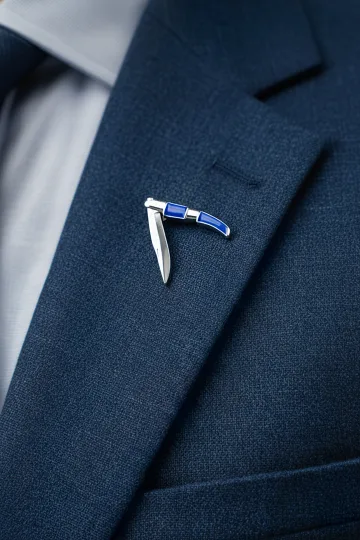
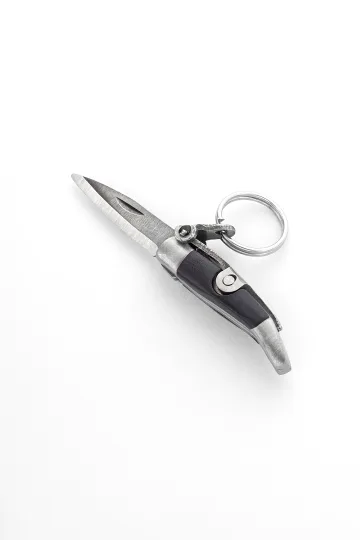
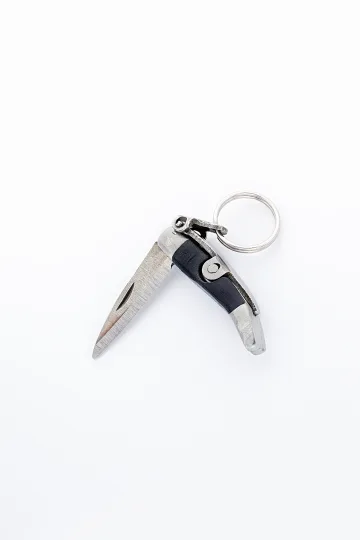
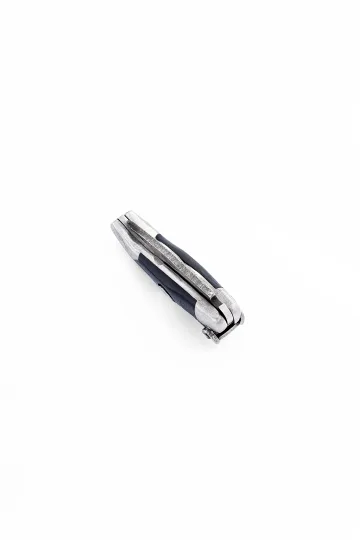
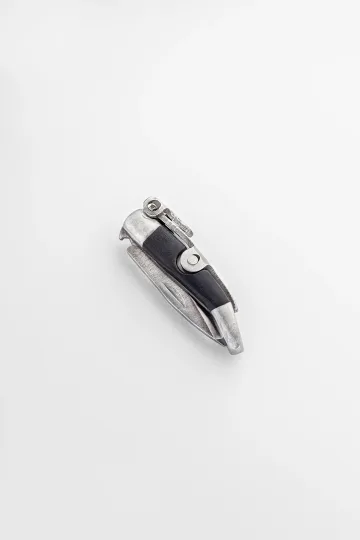
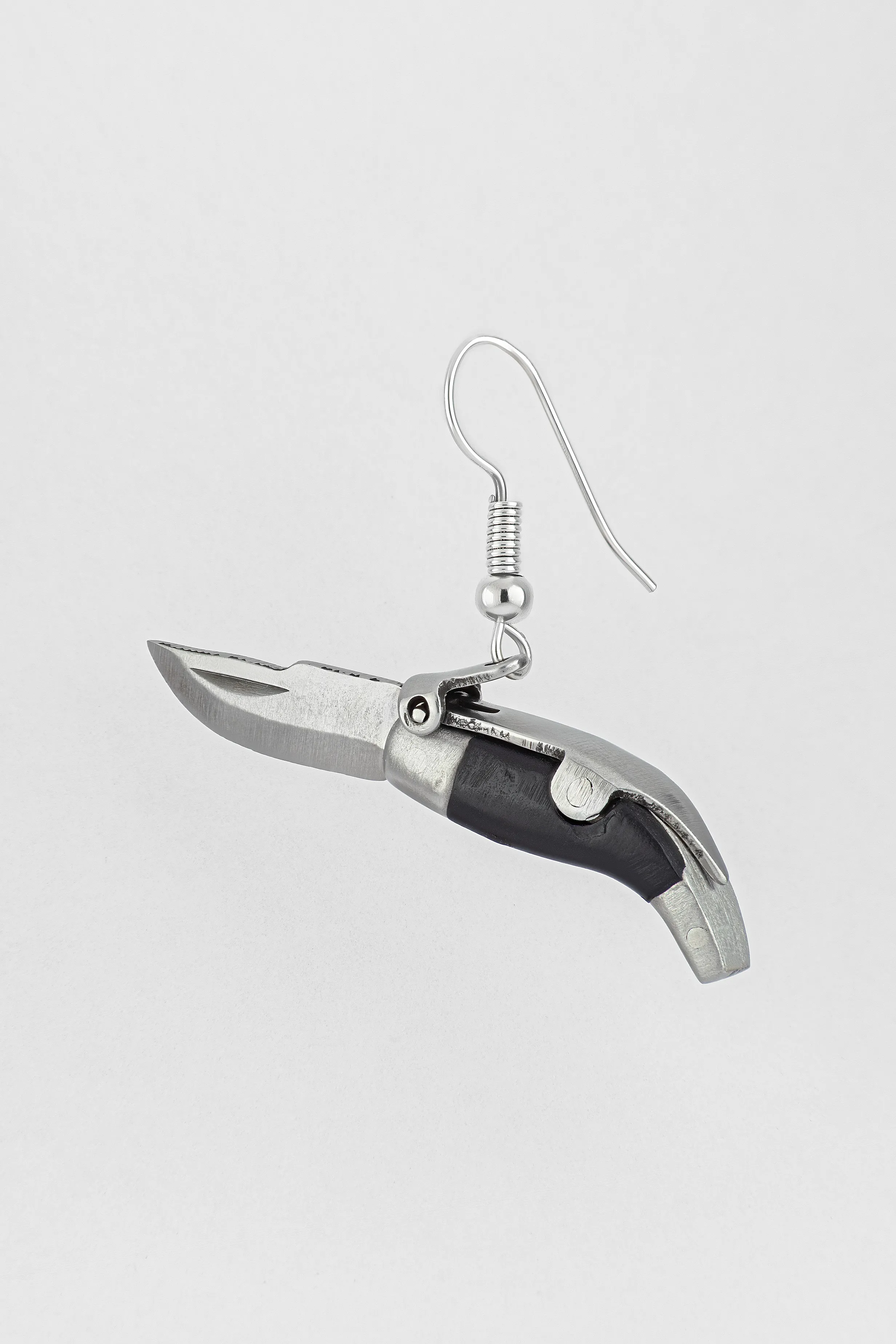
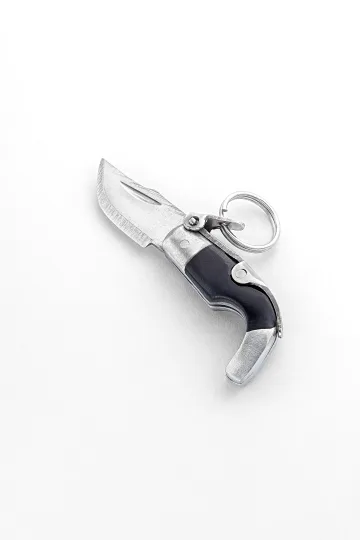
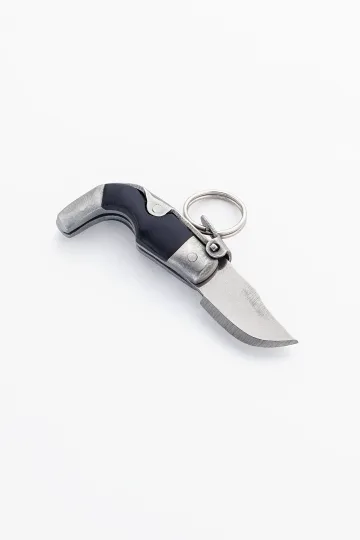
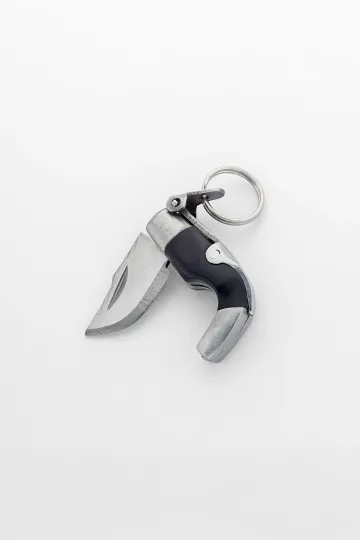
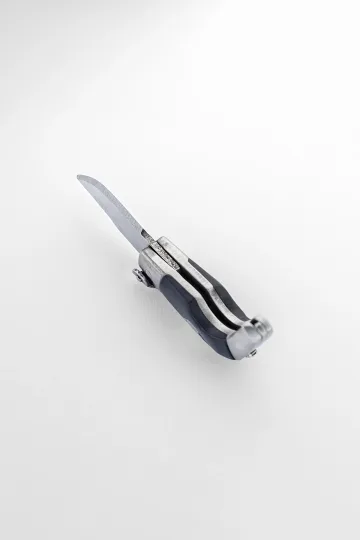
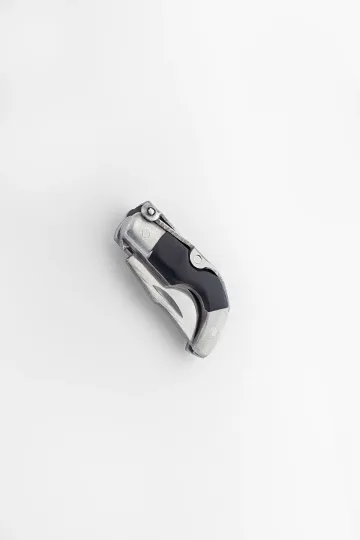
CAPAORA mini knife pendant
The 18th-century Spanish navaja in miniature: 40 mm of stainless steel, a real folding mechanism and a Palanquilla lock that clicks. An affordable gift to remember.
Authentic · Ships from Spain · 14-day returns
How to Find a Piercer and Studio
The skill of the piercer and the cleanliness of the studio matter more than almost anything else. A bad piercing is a bad outcome aesthetically and more: infection, keloid, permanent scarring, and having to remove the jewellery.
What to Look For
License and certification. In the US, reputable studios operate with a state body art license and piercers are often certified through the APP. In the UK, the BPP is the main professional body. Ask to see the certifications; they should be posted visibly.
Sterile instruments. Single-use needles opened in front of you. Reusable equipment like forceps must be autoclave-sterilised; wiping with alcohol is not sufficient. A good piercer will show you the autoclave and the sealed sterile pouch before opening it.
Gloves and aseptic technique. The piercer washes hands and puts on gloves in your presence and changes them if anything non-sterile is touched. The work surface is covered with a fresh disposable barrier.
Needles only, no guns. Piercing guns are devices from the last century that remain in mall kiosks and hair salons. They cannot be fully sterilised, they crush tissue rather than cleanly puncturing it, and they are completely inappropriate for cartilage. Every professional works with needles.
Starter jewellery with labelled material. The starter piece should have a stated material: titanium F-136, 14K gold. If the piercer cannot tell you what the earring is made of, leave.
Intake questions before the piercing. A good piercer asks about allergies, chronic conditions, medications, and pregnancy before starting. Skipping this is a warning sign.
Red Flags
Advertising any zone, any time, lowest price in town. Working from home without a license. No documentation for instruments or jewellery. Willingness to pierce a child under 14 without parental presence. Refusal to show the autoclave or describe sterilisation.
Cost
Without quoting numbers: significantly below market rate is always a reason to ask why. A good piercing is composed of skilled labour, sterilisation overhead, and the jewellery itself. Cutting costs in any of those three components means something is being traded off against safety.
Law and Age: What Different Countries Require
Piercing regulation varies significantly between countries and even between states or regions within a country.
European Union. Most member states require a minimum age of 14 to 16 for anything other than earlobes, with written parental consent or parental presence required up to 18. Studios are required to hold medical or health licenses and undergo regular sanitation inspections.
United Kingdom. Most piercings are available at 16 without consent. Genital piercings require 18. Nipple and navel placements are handled case by case by the studio. The BPP sets professional standards.
United States. Regulation is at the state level. California requires parental presence and ID for minors for all body piercings. Texas is stricter: genital piercings cannot be performed on minors even with parental consent. Most states require written consent and physical presence of a parent or guardian for clients under 18.
Germany. Among the most rigorous frameworks in the EU: specific medical training for piercers, regular recertification, documentation required for each client.
Japan and South Korea. In most studios, piercings other than the earlobe will not be done for anyone under 18. This connects to a traditional view of the body as parental responsibility until adulthood.
These are general guidelines. Local rules can vary. If you are a minor or are travelling, check the specific requirements.
Piercing and Medical Procedures
Most modern imaging and standard surgical procedures are compatible with piercing, with some nuances worth knowing.
MRI
Magnetic resonance imaging works with powerful magnetic fields. Iron-containing metals, high-iron steel, can heat up, shift, or distort the image. Implant-grade titanium, surgical-grade 316LVM steel, pure gold without magnetic traces, niobium, and platinum are all MRI-safe. Most quality contemporary piercing jewellery passes without issue.
Still, always notify the radiologist of any piercing before the procedure, especially if you are not certain of the metal composition or if the jewellery was placed in a studio that could not document materials. Jewellery of unknown composition must come out. If removal is not possible (fresh or load-bearing piercing), the radiologist can suggest an alternative imaging method.
CT and X-Ray
CT and X-ray use ionizing radiation, not magnetic fields. Any metal piercing will show as a bright point or line on the image and may obscure interpretation, particularly in the head and chest zones. Remove jewellery for diagnostic work whenever possible; insert a plastic retainer to keep the channel open.
Surgery
Under general anesthesia, the anesthesiologist will ask for all piercings to be removed. The reasons: displacement risk during the procedure, conduction risk from electrosurgical tools, and the need to access the airway or area quickly in an emergency. A plastic retainer keeps the channel from closing.
For emergency surgery, staff may need to remove jewellery quickly; in rare cases the area may need to be incised. Having a medical alert card or wristband documenting your piercings is useful, particularly if you wear a barbell in a hard-to-see placement.
Dental Procedures
Tongue, lip, and Medusa jewellery interferes with dental work. Remove it before the appointment. For extended procedures such as implants or sinus lifts, jewellery may need to stay out for the full course of treatment.
People with tongue and lip piercings should schedule dental checkups every six months rather than annually to monitor enamel and gum condition.
Pregnancy and Delivery
All piercings except ears are typically removed in the third trimester. During labour and cesarean delivery, everything comes out, including earrings, for anesthesia safety. Jewellery can return after full postpartum recovery; navel piercings often require a new piercing.
What to Do When a Piercing Rejects
Rejection is the process by which the body pushes the jewellery out of the channel. It occurs with most placements to some degree. Recognizing it early means preserving the zone for a future piercing.
Signs
The jewellery is visible through a thin layer of skin. The piercing widens and flattens from outside. The skin over the jewellery looks thin and shiny. Mild redness appears without infection signs. At this early stage it may still be reversible: switching to lighter, thinner jewellery, such as from gold to titanium, or from a straight to a curved barbell, sometimes stops the process.
What to Do
Early rejection (jewellery just starting to migrate). Switch to something lighter, check for metal allergy, reduce pressure from clothing or hairstyles over the zone.
Mid-stage rejection (jewellery nearly fully visible). Better to remove it yourself while the tissue is still intact. Waiting for the body to eject it completely leaves a wide flat scar rather than a small point.
Full rejection. Remove the piercing, treat the area with saline or panthenol cream for healing, and plan a new piercing in a different spot six to twelve months later.
Why It Happens
Jewellery too heavy, wrong metal, placement too shallow, physical stress on the zone, or anatomy not suited to that specific placement.
Removing a Piercing: What Stays Behind
After removing jewellery, the channel begins to close. How fast depends on how long it has been in.
Less than a year. The channel can close in days or weeks. Visible mark is minimal, sometimes nothing.
One to five years. Takes months to years to close fully. A small dimple or thin fibrous line may remain, usually invisible to others.
More than five years. The channel often stays open, particularly in the lobe. May eventually close, but a visible mark remains.
Stretched lobes (8mm+). Do not close naturally. They remain as open gaps. Sizes of 12mm or more require surgical correction to restore normal lobe appearance.
Microdermal. When removed correctly (by a professional via a small incision), it leaves a clean 2 to 3mm scar. Self-removal carries keloid risk.
Piercing scars are generally small and fade over years. Complete disappearance is uncommon, but after five years they are nearly unnoticeable.
Re-Piercing: Can You Reopen a Healed Point
A healed channel can often be opened again through or near the original spot, with caveats.
Through the original channel. If less than a year has passed and the channel has closed, a needle can often trace the old path. Less traumatic than a new piercing, often nearly painless. An experienced piercer can feel the difference between scar tissue and an old channel.
Near the original spot. If the old channel is fully closed or there is visible scarring, the new piercing goes two to three millimetres away. The scar remains and is sometimes visible on close inspection.
In a previously rejected zone. If the area rejected once, it may well reject again. Better to choose a different point or a different type of placement.
Through scar tissue. Never. Scar tissue heals poorly, and a new piercing in scarring will either take a very long time or not take at all.
Minimum wait between removal and re-piercing: six months, preferably a year. If the zone was infected, wait for full resolution.
Send a friend a discount code, they save on their first order.
The Full Cost of Piercing: Planning Ahead
A piercing is not a one-time purchase. It is a long relationship with recurring costs. A realistic estimate of that ownership cost helps plan both the first step and everything that follows.
One-Time Costs
The piercing itself. Varies by zone, complexity, studio reputation, and city. Helix and lobe on the simpler end; septum, industrial, or conch more expensive. Surface and microdermal at the higher end.
Starter jewellery. Implant-grade titanium is typically included in the piercing price or presented as a mandatory option. Starting in 14K gold is substantially more expensive.
Numbing gel. Not needed for most placements, available as an add-on for lower pain tolerance or particularly sensitive zones.
Documentation and health clearance. In countries with stricter regulation, a letter from a primary care doctor confirming no contraindications is sometimes required.
Recurring Costs Over Time
Saline solution for the first months. Either packaged wound wash or bulk non-iodized salt. Small per-unit cost but ongoing.
Jewellery upgrade after healing. If you want to move from titanium to gold or add a stone, that is a separate purchase.
Jewellery replacement every one to three years. Thread wear, lost balls, tarnishing, or oxidation. Over ten years of wearing a helix, you may go through four to six different pieces.
Annual or biennial check with a piercer. Recommended for evaluating condition, getting jewellery recommendations, and catching early issues.
More frequent dental visits for oral piercings. Every six months instead of annually.
Re-piercing costs if rejection or poor healing. Not every piercing takes first time. Adding a second attempt to the first creates a real total cost.
What Drives Cost Most
Piercer experience. A well-established piercer with 10 to 15 years of practice works in the premium range. It is worth it: fewer complications, better outcome, longer wear.
City. New York, Los Angeles, London, Berlin, Paris are above average. Smaller cities are typically less expensive.
Piercing type. Complex zones cost more than simple ones.
Starter jewellery. Basic titanium ball versus 14K gold with a stone.
Add-ons. Pre-consultation, zone selection with the piercer, ear curation design sessions.
Long-Term Value
Paying above average to a skilled piercer almost always costs less over time than saving money and dealing with complications. Treating an infection, removing a keloid, re-piercing after rejection, and additional dental work can easily cost several times the price difference between a budget piercer and a good one.
The same applies to jewellery: implant-grade titanium or nickel-free 14K gold during healing pays back in avoided irritation, avoided allergic reaction, and shorter healing time.
Piercing and Lifestyle: Work, Sport, Travel
Most piercings affect daily habits, especially in the first months.
Work and Dress Code
Corporate offices, medicine, law, and education often restrict visible piercings. Practical strategies:
- Hide the septum (horseshoe tucked up inside the nostrils)
- Use clear retainers for tongue, lip, and brow piercings
- Cover microdermals with clothing or hair
- Helix and tragus are generally accepted even in conservative environments
Sport
Contact sports (boxing, wrestling, rugby) require removing any visible piercing before training and competition. Pools are off-limits for the first two to three months for lobe and cartilage, up to six months for navel and nipples. Yoga, running, and weight training are compatible with most piercings, but keep pressure off fresh work.
Travel and Climate
Hot, humid climates slow healing and raise infection risk. They are not the ideal time for a fresh piercing. If you are travelling with a fresh one, pack individual-dose saline ampules and stay out of natural water sources.
Sleep
A fresh ear piercing requires a travel pillow or small foam doughnut to keep the jewellery from being compressed. A folded towel with a depression works as a simple inexpensive alternative.
Airports and Metal Detectors
Contemporary titanium piercings rarely trigger security frames, but occasionally do. This is not a problem; simply tell the security officer about the piercing and offer a visual inspection.
Piercing Trends 2026
Minimalism is back. After the era of stacked maximal ear curation of the mid-2010s, the pendulum is swinging toward one considered placement with the best possible piece rather than five with adequate ones.
Septum as a universal accessory. From subcultural marker to neutral jewellery worn on editorial sets, in academic environments, and in executive settings. The horseshoe tucked inside allows disappearing act whenever needed.
Asymmetric piercing. One bold placement on one ear, nothing on the other. Or entirely different stacks on each side. More on this in the guide to asymmetric earrings and how to wear them differently.
Natural stones over cubic zirconia. Moonstone, opal, labradorite, peridot. Colour over sparkle, texture over colour.
Minimal microdermals. One or two on the collarbone or along the neck without overcrowding.
Chains between piercings. A thin chain from helix to lobe, from lobe to second lobe. Creates the feeling of a composed arrangement without new piercings.
Nostril returning to centre. After a period when septum dominated, the standard nostril stud is back in focus, particularly in fall and winter 2026 collections.
Moving away from global uniformity. Local traditions such as the Indian nath, the Mexican nariguera, and Polynesian lobe stretching are being integrated into contemporary looks with cultural depth rather than as surface borrowing.
Gender and Piercing: How the Codes Evolved
The gender associations of piercing have shifted dramatically over the last hundred years.
Before the 19th Century: Piercing as Universal Practice
In most traditional cultures, piercing was not rigidly gender-coded. Male nobility in ancient Egypt, Rome, and Renaissance Europe wore earrings alongside women. Maya and Aztec warriors wore labrets and septum rings. Maori men wore whale bone earrings. Viking men wore silver hoops.
The gender association tightened in the Victorian era and spread through colonial expansion during the twentieth century. By the mid-1900s, male piercing in Europe and North America had nearly vanished as a mainstream practice.
The 1970s and 80s: Return via Subcultures
Punk, the gay community, heavy metal, goth, and the new feminist movement each brought piercing back into male and non-binary use. Among punks, an earring in the left ear on a man signaled alternative orientation; among sailors, the right ear signaled experience on specific sea routes.
By the late 1980s, ear piercing for men was accepted in music and creative industries across the US and Western Europe. The informal "left means something" rule operated for a few decades.
1990s to 2010s: Universalization
With piercing moving into mass fashion, gender signaling dissolves. Septum, nipple, navel, helix stop being markers of subculture or orientation and become simply ornament.
The rise of androgynous fashion and neutral aesthetics makes piercing universal regardless of gender. By the late 2010s, in major cities, no single piercing placement marks the wearer's gender in the eyes of most people.
Today
Contemporary ethics of piercing: any person of any gender can choose any placement. No historical obligation to make "the side of the ear mean something." Sides and zones are chosen by aesthetic preference, not social code.
Older associations persist in older generations. If you are choosing a piercing and thinking about family reactions, it is worth knowing that a man with an earring in the left ear may mean one thing to someone born in the 1950s and simply a piece of jewellery to someone born in the 2000s.
Piercing vs Tattoo: Two Different Genres of Body Modification
These two practices are often compared because both involve considered changes to the body. But the differences are fundamental.
Reversibility
Piercing. Reversible. Remove the jewellery, and within weeks or months the channel closes with minimal trace. Stretched lobes over 12mm and microdermals leave visible scars, but surgical correction is an option.
Tattoo. Conditionally reversible. Modern laser technology removes most tattoos over several sessions, but the process takes a year or more, is expensive, and can leave scarring or hypopigmentation. Fully trace-free removal is not always possible.
Pain
Piercing. Sharp and brief: one to three seconds at the needle, followed by days of manageable soreness.
Tattoo. Sustained pain during the session, measured in hours, especially on sensitive zones. The cumulative experience is more demanding, even if the peak intensity is lower than some piercings.
Healing
Piercing. Lobe in four to six weeks; cartilage up to eighteen months. Most placements fully healed within six months.
Tattoo. Surface layers in two to three weeks; deeper layers up to six months. Colours fully settle around the six-month mark.
Social Perception
Piercing. Neutral in most contexts when the placement is not extreme. Septum, lobe, and helix read as normal jewellery to most observers.
Tattoo. More polarising. In conservative professions, visible tattooing can be a limitation. In creative environments, it is neutral. In Japan, tattoos carry historical associations with organised crime and can still restrict access to certain bathhouses and facilities.
Long-Term Cost
Piercing. Many small recurring costs: jewellery replacement, cleaning supplies, check-ups, occasional re-piercing. These add up meaningfully over ten years.
Tattoo. Primarily one-time cost plus possible touch-ups over years. Complications, if they arise, tend to be more expensive to address.
When to Choose Which
Piercing is for people who:
- Want an ornament they can change or remove
- Are committed to a long aftercare ritual
- Like the idea of aesthetic evolution (jewelry can change)
Tattooing is for people who:
- Want a permanent visual statement
- Are comfortable with a sustained session and defined healing period
- Value a unique graphic object
Many people come to both over time. They are different tools for different purposes, not competitors.
What to Get First: Guidance by Character
The most common beginner mistake is choosing a placement based on an image without considering anatomy, lifestyle, and temperament.
If you are cautious and want an invisible first step. Second lobe piercing. Heals in a month, barely hurts, invisible to employers. After that you can decide whether to continue.
If you want a visible, bold placement and can handle some pain. Septum or Medusa. Visible, impactful, not extreme in pain. Septum can be hidden at work if needed.
If you have a creative career and no dress code restrictions. Helix, conch, tragus, industrial. Multiple piercings on one ear, ear curation, a gradual composition over years.
If you want something on the torso. Navel or collarbone microdermal. Navel is the classic; it requires patience and consistent aftercare. Microdermal is more contemporary and offers more variety in decorative tops.
If piercing is a performance for you. Snake bites, industrial, surface work. This is not a first piercing; it is a composed aesthetic statement.
If you want something spiritually or symbolically grounded. Ayurvedic nostril on the left, daith (believed in some traditions to help with migraines), septum as an initiation rite. These do not function as medicine, but they work as personal symbolism.
If you want to follow cultural roots. The Indian nath, the Mexican nariguera, Scandinavian lobe stretching toward tunnels. A piercing with history behind it carries a different weight.
For a guide to choosing jewelry by placement type, including metal, diameter, and form, see the jewelry guide for piercings.
For the cultural and historical context of specific placements, see the meaning of piercing in world cultures.
For a no-piercing alternative, ear cuffs without piercing.
Buying it as a gift? Each one arrives ready to give.
 A branded Zevira box and a little card come with every order.
Frequently Asked Questions
At what age can you get a piercing?
Earlobe piercings are traditionally done in childhood across many cultures with no specific age restriction. For cartilage and any other facial or body piercing, 16 is the minimum recommended age, because tissues are still changing and healing is unpredictable before that. Most professional studios in Europe and the US will not pierce anyone under 16 without written parental consent.
Does it hurt?
Most piercings rate three to six out of ten. The most painful of the common visible placements are nipples; the least painful are the earlobe and the septum in the sweet spot. Pain lasts one to two seconds. The harder part is maintaining correct aftercare for weeks and months after.
Can you get a piercing while pregnant?
No. Any infection during pregnancy carries risk for the fetus. The immune system operates differently during pregnancy and healing is unpredictable. Existing piercings can usually stay, but navel and nipple piercings are often removed in later stages.
What do you do if your piercing starts rejecting?
Signs: the jewellery is visible through thin skin, the piercing is widening and flattening at the surface. Early stage: try switching to lighter, thinner jewellery. If the process is advanced, remove the jewellery yourself while tissue is still intact, let it heal, and try a different spot in a year. Do not hold on; you will be left with a wide flat scar.
Can you wear a ring in a fresh piercing?
No. A ring moves with every movement, which prevents the channel from forming correctly. Starter jewellery is always a straight barbell or a flat-back stud. Rings go in after full healing.
How many piercings can you do in one visit?
Professionals recommend no more than two to three cartilage piercings in a single session. Lobes can be done in groups of three or four if the body is not already taxed. The limiting factor is immune load: each new piercing is a small wound, and the body needs resources to recover from each one.
What do you do if a piercing gets infected?
First distinguish infection from normal discharge. A fresh piercing produces clear or pale yellow lymph in the first weeks; that is normal. If discharge is cloudy white or greenish, has a smell, and the skin around the site is red and throbbing, that is infection. Rinse with saline, do not remove the jewellery (that traps the infection inside the channel), and see a doctor for antibiotics if there is no improvement in two to three days.
Can you work out with a fresh piercing?
Not in the first two weeks. After that, carefully. A helix does not get along with contact sport helmets; a navel does not like chin-up bar friction. Pools are off-limits for months for cartilage and navel placements.
What metal is best?
Implant-grade titanium ASTM F-136 is the universal safe choice for fresh piercings. Quality 14K gold without nickel also works. Surgical steel is acceptable for most people but should be avoided if you have any nickel sensitivity.
How often should you clean a fresh piercing?
Twice a day, morning and evening. More frequent cleaning is not better and can overdry the tissue and disrupt the natural healing process. If the skin looks dry or is flaking, reduce to once a day.
What should you do with a fresh piercing when you are sick?
The immune system is occupied elsewhere, healing slows, and inflammation risk rises. If the piercing is fresh (less than two months), increase saline cleaning frequency. If you have a fever, follow doctor-prescribed antibiotics. Do not get a new piercing while sick.
Is MRI safe with piercings?
Titanium and surgical-grade stainless steel are MRI-safe. Pure gold without magnetic additives is also safe. Jewellery of unknown composition must be removed. Always notify the radiologist of any piercing before the scan.
How long should you wait before re-piercing a failed spot?
A minimum of six months, preferably a year. The tissue needs to fully recover, and the scar needs to form and stabilise before a new needle goes in.
Can you swim in the ocean with a fresh piercing?
Not for the first two to three months. Ocean water carries bacteria that a saline rinse does not replicate. After three months it is possible, but rinse with fresh water after every swim.
Conclusion
Piercing is not one decision. It is a series of smaller ones: where, with what, by whom, and for how long. The body offers more than thirty points, but there is no obligation to fill them all. Choose by lifestyle, by temperament, by patience.
Three things matter most. First: go to a licensed piercer, and no guns on cartilage at mall kiosks. Second: implant-grade titanium as your starter piece, not silver, not costume jewellery. Third: time. A piercing is not a purchase; it is a process that unfolds over months and sometimes years. The body will tell you when the channel has stabilised and the jewellery can change.
Where to go from here. For the detailed guide to ear piercings specifically, read ear piercing types: the complete guide. For earring meaning and the left versus right tradition, read the guide to earring placement meaning. For a piercing-free alternative, see ear cuffs without piercing. For materials and metal comparisons, see brass, steel, and silver compared.
Silver, gold, engagement rings, symbolic jewellery, paired sets.
About Zevira
Zevira makes jewellery in the artisan tradition of Albacete, Spain. A piercing is a story about a material that sits inside your skin for years, so we work only with metals the body tolerates without irritation: implant-grade titanium and nickel-free gold.
What you will find with us for piercings:
- Studs and earrings for the first and second lobe, light enough for around-the-clock wear
- Clicker rings and horseshoes for the septum and nostril in a range of diameters
- Huggie hoops and helix barbells for building an ear composition
- Curved barbells and navel pendants, including pieces set with natural stones
- Stones instead of cubic zirconia: moonstone, opal, labradorite, peridot
- Cuffs and ear jackets for anyone who wants the look without a piercing
Every piece can be personalised with engraving by our maker, with the option of personal engraving. Sterling silver 925 and 14-18K gold.