Tennis Bracelet as an Investment: The Facts, Without the Romance
The Story of a Lost Bracelet
- The US Open. A court at Flushing Meadows. During a match, a slim line of diamonds slips off Chris Evert's wrist, and she asks the umpire to pause play so she can find it. The bracelet is recovered. The match resumes. Nobody in that moment is thinking about marketing.
Yet over the next few years, shoppers walk into jewellery stores and start asking for a bracelet "like the one Chris Evert wore." The word "tennis" sticks by the mid 1980s. This style of jewellery existed long before Evert under other names, but that single episode gave it the name that has held ever since.
The story explains the nature of the asset. A tennis bracelet is not valuable because of tennis. It is valuable because of a continuous line of single stones in settings, with no decorative add-ons and no architectural excess. The shape is so pared back that it is hard to date. A bracelet from 1985 sitting next to one from 2025 reads as the same object. That timelessness sets it apart from more decorative formats such as charm bracelets, whose value is tied to interchangeable parts and fashion. The restraint is exactly what creates the conditions for value retention, though it never guarantees it.
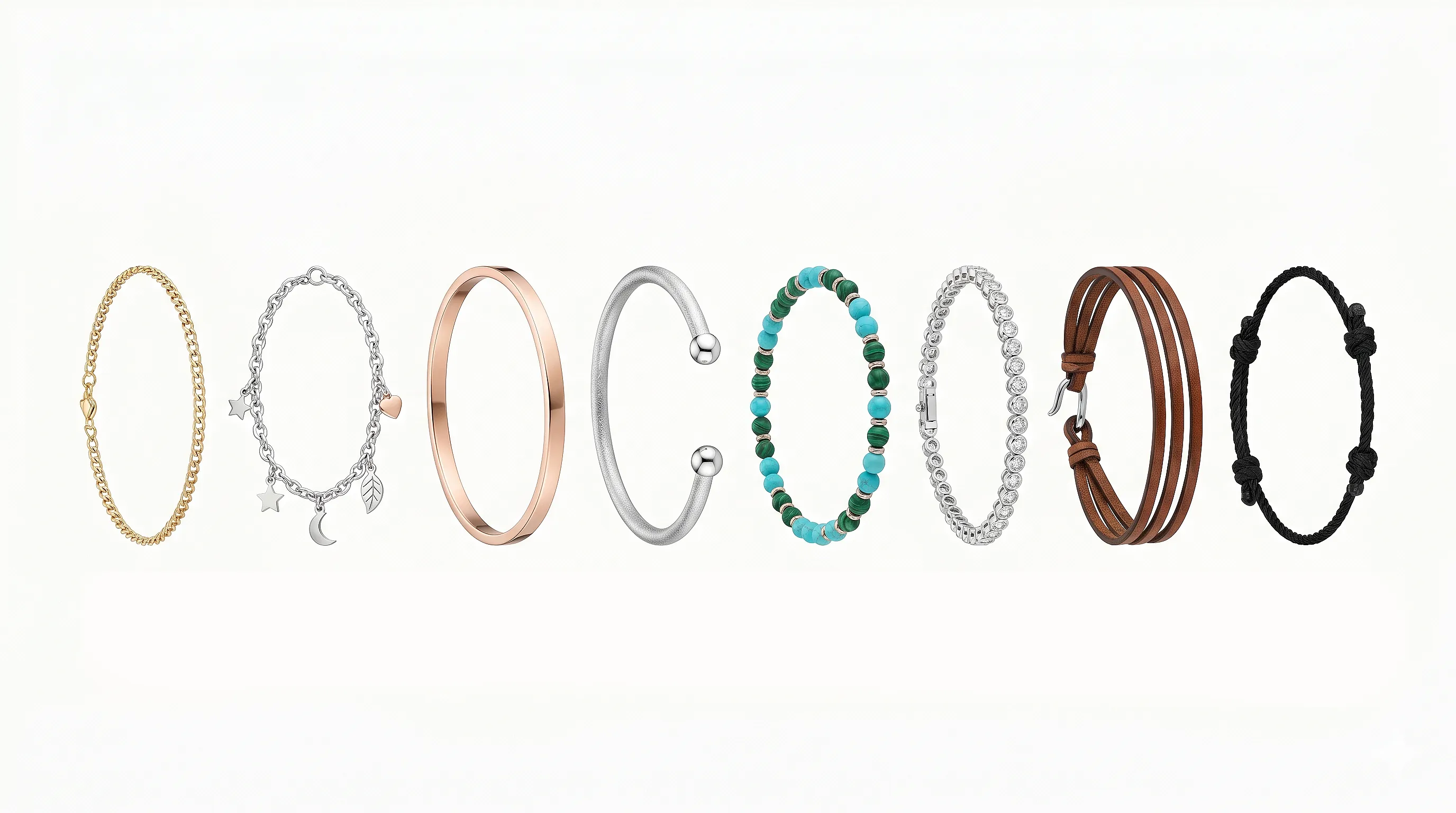
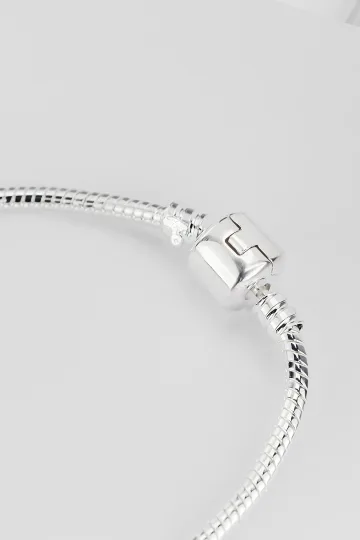
Wear the symbol, don't just read about it. These are in stock:



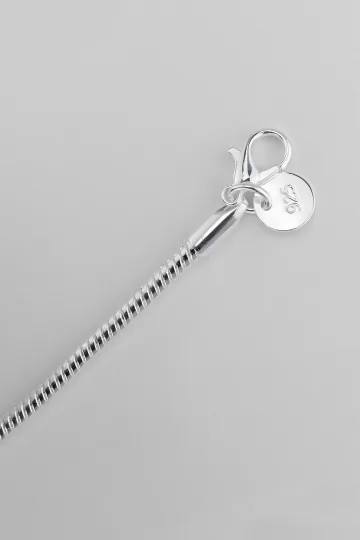
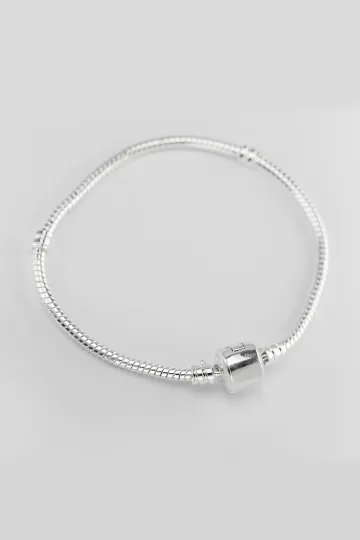
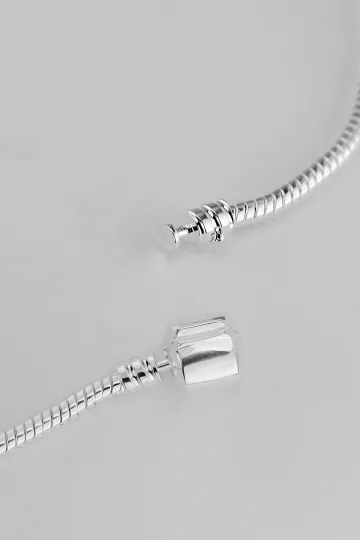
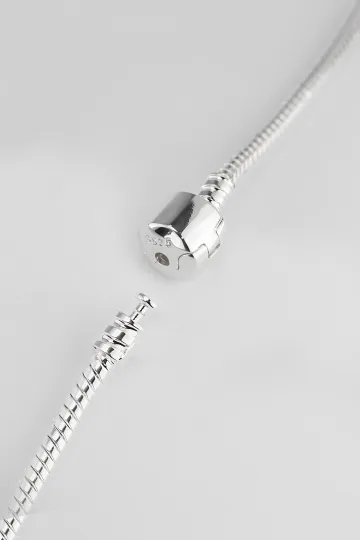
The episode itself says something about any money put into jewellery. Evert's bracelet was valuable enough to halt a professional US Open match while she looked for it. Not a cheap trinket, but a serious object with serious worth that literally demanded attention. That is the logic the entire investment conversation around this style lives inside.
From here we look at the tennis bracelet purely from a financial angle. No romance, no selling a dream, with real information about markup, liquidity and risk. If you want to understand the conditions under which this piece behaves like an asset and the conditions under which it does not, this is the place. None of this is financial or investment advice; it is general information about jewellery.
Anatomy of the Piece: What You Are Buying
Before talking about financial potential, it helps to break down what a tennis bracelet actually is. The construction feeds directly into how its worth as an asset gets judged.
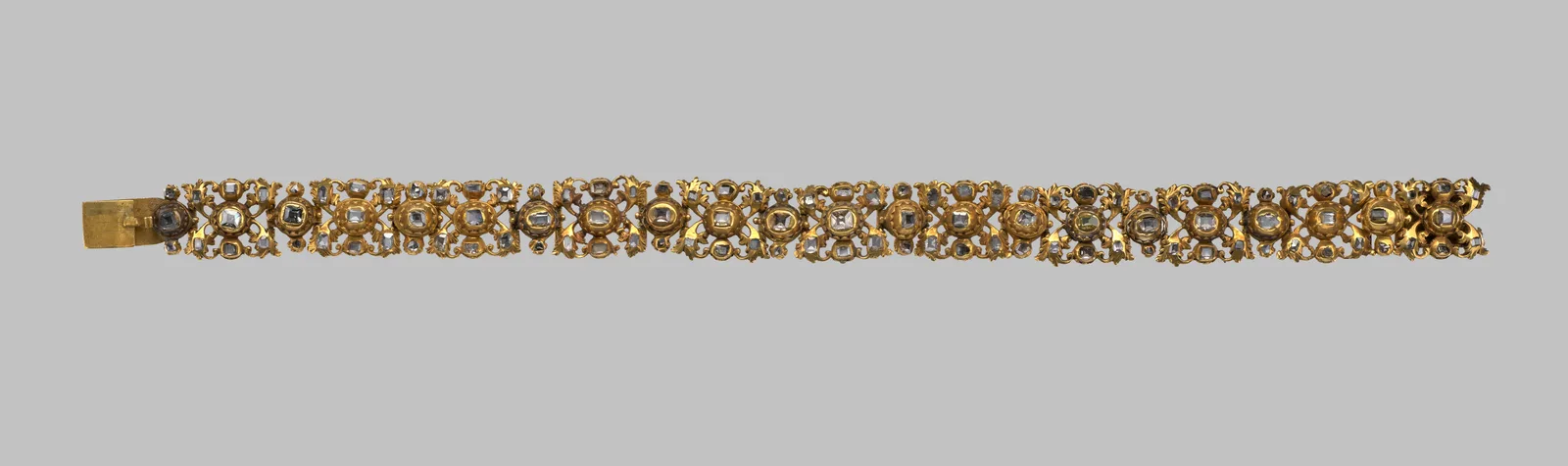
A continuous line of stones. Each stone sits in its own four-prong setting or in a bezel setting. The settings are joined by hinges, which gives the bracelet flexibility and lets it lie close to the wrist. A standard piece holds between forty and eighty stones, depending on stone diameter and overall length. The usual length for an adult woman's wrist is seventeen to eighteen centimetres.
Metal. White gold 585 or 750, yellow gold 585 or 750, platinum 950. The fineness of the metal feeds straight into the residual worth of the piece if it is ever melted down. A bracelet in 585 gold contains 58.5 percent pure gold by metal weight. A bracelet in 750 gold, also called eighteen carat, contains 75 percent. A platinum bracelet in a 950 alloy contains 95 percent platinum, which costs more per gram than gold.
Metal weight. The mass of the bracelet depends on the build of the settings and how much metal is used. A typical gold tennis bracelet weighs between eight and twenty grams. This figure matters: the metal content sets the floor of worth under any resale scenario.
Clasp. A box clasp with a double catch or a fold-over clasp with a safety pin. This is a structural detail that affects how securely the piece wears. A good clasp spares the bracelet the fate of Chris Evert's.
Stones. Bracelets use natural diamonds, lab-grown diamonds, moissanite, coloured sapphires, rubies, emeralds. Coloured stones behave differently on the market than diamonds: a ruby, for instance, follows its own logic of worth and rarity that barely overlaps with the diamond 4C scale. From a value-retention point of view these options differ fundamentally, and that distinction deserves its own section.
Setting type. A four-prong setting opens the stone up fully, so it is visible from every side and catches light well. A bezel setting wraps the stone in a solid rim of metal, gives a more modern look and protects better against loss. For an owner thinking about worth, the setting type does not change the value of the stones directly, but it does affect maintenance and the risk of losing stones as the metal wears.
For more on metal fineness and hallmarks, see our guide to hallmark meanings 925, 585 and 750.
A diamond line goes on a bare wrist, never over a sweater cuff. And alone. Stack five and you cheapen every stone, no arguing.
What to Wear a Tennis Bracelet With
Over years on shoots and in fitting rooms, the diamond line has passed across hundreds of wrists for me. I have gathered here what actually works, by occasion, not by the textbook.
What do I wear the bracelet with every day? For an everyday look I recommend a slim line of small stones on a bare wrist, or beside a delicate watch. A white shirt, simple knitwear, a light fabric: the bracelet works as a quiet accent and completes the look rather than fighting it. I suggest white gold and platinum for daily wear, they read the calmest.
Is it right for the office? Quite so, if you keep it restrained. One bracelet, nothing extra. A shirt or jacket cuff partly covers the line, and as the hand moves it catches just enough light to be noticed. For a strict wardrobe I recommend white metal, and I suggest saving yellow gold for looks in beige, brown and wine tones.
How do I build an evening look? For the evening I choose a larger line and a bare arm. A thin strap, silk, satin in a rich colour: metal and stones play against the fabric. I allow two bracelets side by side, or a bracelet with a slim plain bangle, but I keep the metal strictly in one tone, or the look falls apart.
One bracelet or layered? More often I suggest one bracelet on a bare wrist: the line of stones is expressive enough on its own. If you want layers, I add one plain bangle in the same metal, not five mismatched chains. I do not recommend mixing cool metal with warm on the same hand, unless it is a deliberate move with stones matched in tone.
Who does it suit, and how do I pick the length? Almost everyone, and that is part of its reputation. The slim line does not weigh down a delicate wrist and does not get lost on a larger one. I pick a length that lets the bracelet sit loosely but not slide onto the hand: about a finger's room. For minimalists I recommend a bezel setting and small stones, for those who want presence a four-prong setting and larger stones.
Turn on your camera, pick earrings, a pendant or a ring, and see the piece on yourself in real time.
Switch items in one tap.
Everything runs in your browser: no photo or video is ever uploaded.
Natural Diamonds vs Lab-Grown: A Critical Difference for the Buyer
This is the single most important question for anyone weighing the long-term worth of a piece. There is no ambiguity here: the industry position is clear.
Lab-grown diamonds do not hold their worth.
That is a market fact, backed by the data of the last five years. The price of lab-grown diamonds has fallen every year from 2020 to 2025 as production capacity has grown. A stone bought three years ago trades for substantially less today at wholesale. The secondary market for lab stones is extremely thin: most jewellers take them only at a token price, if at all.
Why does this happen? A lab diamond is produced in a reactor in a matter of weeks. Technological progress keeps lowering the cost of production. Today the cost of producing one carat of lab diamond is several times lower than five years ago, and the trend continues. This asset has none of the natural-scarcity principle that supports the worth of mined stones. The earth produces natural diamonds in a finite quantity, and large new deposits are rarely found. A lab reactor can be built anywhere, in any number.
On the secondary market, lab-grown diamonds are widely reported by market participants to lose a large share of their retail price within the first year after purchase. Try to resell after several years and the loss is usually steeper still.
Natural diamonds hold their worth better, though they do not automatically turn into a reliable asset. The gap between retail and secondary price is significant in both cases, but a good-quality natural stone is worth noticeably more on the secondary market after ten years than a comparable lab stone. The market for natural stones is more stable because limited supply creates a baseline demand.
There is a wrinkle: the price of natural diamonds has come under pressure in recent years precisely because of the growth of the lab market. As lab stones took a meaningful share of the jewellery market, part of buyer demand left the natural-stone market. That temporarily pushed natural diamond prices down too. How this trend plays out over the long run is still an open question.
The practical difference is simple. If you are buying a bracelet first and foremost as jewellery and want as much sparkle as possible for less money, lab-grown diamonds or moissanite are a sensible choice. If you see the piece as part of preserving capital, natural stones are the only realistic option. You cannot blend the two scenarios into one purchase: they pull the choice of parameters and budget in opposite directions.
For a detailed comparison of lab diamonds and moissanite by properties and price, see the article Moissanite vs lab diamond.
The Four Stone Characteristics and Their Effect on Liquidity
Every natural diamond is graded on four parameters: carat, cut, colour, clarity. Professionals call them the 4C, after the first letters of those English words. Each one affects how easily a piece sells and at what price.
Carat: Weight Sets the Price Tier
Stone weight in carats is the main price driver. One carat equals 0.2 grams. For tennis bracelets, the combined weight of all stones is given as total carat weight, shortened to TCW or ctw.
A bracelet with a combined weight of three carats and up in natural diamonds falls into the price band where the secondary market already works. Such a piece can be sold to a specialist jeweller, a buyer, or through an auction with reasonable expectations. Pieces with a combined weight under two carats are more often valued near metal weight with a small uplift at resale, rather than on stone quality.
An important nuance: the size of the individual stone matters more than the combined weight. A single stone of 0.25 carats is more liquid as a unit than ten stones of 0.025 carats at the same combined weight. Large stones cost disproportionately more than small ones: a fundamental law of the diamond market. A bracelet with stones of 0.10 to 0.15 carats each is far more interesting to a buyer than one with stones of 0.03 carats at the same combined weight.
For more on how stone weight is calculated and how it drives price, see the guide What is a diamond carat.
Cut: The Only Thing Made by Human Hands
Cut is the one characteristic given to a diamond by a person rather than by nature. The quality of the cut determines how the stone refracts and returns light. Tennis bracelets most often use the round brilliant cut. That cut has the most fully developed grading system from the GIA: Excellent, Very Good, Good, Fair, Poor.
From an ownership point of view, cut affects buyer demand and the visual impression of the piece. A bracelet with Excellent or Very Good stones looks markedly better, sells faster and, all else equal, draws a wider circle of buyers on the secondary market. A buyer who sees the bracelet in person judges its brilliance and play: a poor cut is obvious at a glance.
A practical tip: for bracelets with small stones, under 0.10 carats, the difference between Excellent and Very Good is less noticeable than in rings with a large centre stone. Even so, it is best not to drop below Good if the piece carries any value-retention ambition.
Colour: The Whiter, the Dearer
Diamond colour runs from D, completely colourless, to Z, a noticeable yellow tint. Stones from D to F count as colourless and are the most valued in their category. Stones from G to J are near colourless and make up the top mass-market segment.
For tennis bracelets, the sweet spot for the price-to-liquidity ratio is G to H in colour. Stones of this grade are white enough to look good in white gold or platinum, and noticeably cheaper than D to F to buy, which lowers the initial markup. On the secondary market, the difference between G and D for small stones is less dramatic than the primary-market prices suggest.
Yellow gold hides a weak stone colour. A yellow-gold bracelet with I to J colour stones looks visually fine. White gold and platinum highlight colour: against them, stones below G to H read warmer, which part of the buyer pool sees as a negative.
Clarity: When Inclusions Show and When They Do Not
Clarity describes the internal inclusions and external flaws of a stone. The GIA scale runs from FL (flawless) through VVS1/VVS2 (very, very small inclusions), VS1/VS2 (very small inclusions), SI1/SI2 (small inclusions) down to I1/I2/I3 (visible inclusions).
For a tennis bracelet, VS2 to SI1 is enough: on small stones, inclusions at this level are practically invisible to the naked eye even under careful inspection. Overpaying for VVS in a bracelet makes no financial sense: most secondary-market buyers will not see the difference and will not pay extra for it.
A level of I1 and below makes resale much harder. Inclusions are visible and they affect the brilliance of the stone. Secondary-market buyers often refuse such pieces or offer metal value only.
For the full colour and clarity scale with illustrations, see our guide to diamond colour and clarity.
Customer reviews
Zevira is a real jewellery shop. Genuine payments, deliveries and customer thank-yous.
🥰🥰🥰 gracias
Ok, ¡gracias! 🙂
Where a Tennis Bracelet Works as an Asset
The honest answer: within a very narrow range of parameters. The mass market for tennis bracelets does not cover that range. But the segment exists, and there are buyers in it.
The pieces that have historically shown value retention and growth share the following characteristics, taken together.
Large natural stones. Combined weight of five carats and up, with individual stones of 0.20 to 0.25 carats each. A market for such a piece exists: specialist buyers, auction houses, private deals through brokers. A bracelet with a combined weight of ten carats in good-quality natural stones is a serious asset.
High stone quality. Colour in the D to H range, clarity VS1 and above. Documented stones with GIA certificates or those of another reputable lab. Without documentation, quality is hard to argue at resale.
High-grade metal. Platinum 950 or 750 gold. The metal content sets the floor of worth: even if the stone market dips, metal can be melted at spot price. Platinum costs more than gold and is mined in far smaller volumes.
Documented history. Pieces with traceable provenance from auction houses, significant private collections, or a record of public sales are worth more than comparable anonymous jewellery. This applies in the expensive segment.
A time horizon from fifteen years. On a shorter horizon, the retail markup is not even covered by moderate growth in the worth of natural stones. This is a necessary condition for any investment scenario.
It is a narrow segment. Most tennis bracelets sold in standard jewellery stores fall outside this category on their parameters. The key word here is "together": all five conditions at once, not two out of five.
Upload a photo of your pet, someone you love, or an object. We'll build a 3D model and hand-cast it in pewter.



Where a Tennis Bracelet Does Not Work as an Asset
This is a much longer list, and it is worth knowing in advance.
Lab-grown diamonds. Production rising, prices falling, secondary market practically absent. A bracelet with lab stones is jewellery, not an asset. No more, no less.
585 gold with small stones. Combined weight under two carats, stones under 0.05 carats, colour I to J and below. At resale such a piece is valued close to metal value plus a small allowance for the jeweller's work. That is perfectly normal for jewellery bought for pleasure.
Bracelets without documentation. Without certificates on the stones, the stated characteristics cannot be confirmed to a secondary-market buyer. The seller either gets a refusal or a discount for the "risk of buying on trust."
Bracelets with SI2 stones and below. Inclusions affect brilliance and are visible to a trained eye. Such pieces are harder to sell at a reasonable price on the secondary market.
Jewellery with unusual cuts. If a specific cut falls out of fashion in ten years, finding a buyer becomes harder. The classic round cut is far safer in this respect.
A short horizon. If the piece is expected to be sold in two or three years, a loss against the retail purchase price is almost certain. That is the maths of retail markup, not of the jewellery market.
Moissanite and other synthetic stones. Moissanite is a wonderful optical material with a high refractive index. But as an asset it has the same limits as lab diamonds: no natural scarcity, no stable secondary market.
Retail Price and Auction Price: The Truth About Markup
This is the least pleasant section for a buyer and the most important for anyone thinking about worth.
The jewellery trade works on high markup. Traditional retail stores have historically added a significant, often multiple, markup to the wholesale value of materials, according to market participants. That covers rent, staff, marketing and profit. Online sales and working directly with the maker usually let this markup come down noticeably, but many traditional chains still run on the old model.
What does that mean in practice? A bracelet bought in a jewellery store on a main shopping street has a wholesale material value several times below its retail price. The very day after purchase you are effectively already underwater on secondary-market worth. This is not theft on the store's part; it is a business model the trade has run on for centuries.
The secondary market for jewellery pays noticeably less than retail. According to market participants, offers for high-quality certified pieces in good condition usually sit appreciably below the original retail, and for mass pieces without papers the gap is wider still. It can disappoint, but it reflects the reality of the market.
Resale channels and their price band:
Specialist jewellery auctions are the top band for exceptional pieces. Auction houses take a seller's commission, usually fifteen to twenty-five percent, but can reach a wider pool of buyers. The entry bar is high: auction houses accept pieces only from a certain value threshold.
Private sales through online platforms let you set the price yourself, but they take time and carry the risk of fraud. Expensive pieces require a meeting with a potential buyer, which adds complexity.
Specialist jewellery buyers work fast but offer the low end of the price band. Their business model assumes a margin for resale.
A pawnbroker is the last option by level of offer. Expect twenty to forty percent of the insurance valuation, sometimes less.
Practical takeaway: to break even on a tennis bracelet, natural diamonds must rise in worth enough to cover the original retail markup. For high-quality natural stones that is physically possible over fifteen to twenty years, but it is no guarantee.
A small calculation for clarity: suppose a bracelet is bought in a retail store. The wholesale material value was a notional forty percent of the retail price. On day one it is worth roughly thirty-five to forty percent of retail on the secondary market. To sell without loss in ten years, the real market worth of the stones must rise around two and a half times from the wholesale base. That is possible, but it takes the right moment and the right stones.



Comparison with Other Defensive Assets
To judge a tennis bracelet honestly as an asset, you have to set it next to what people in personal finance like to call "defensive" instruments.
Gold in bars or coins. Transparent pricing on the world market in real time. Buying and selling without having to hunt for a buyer: banks, dealers and mints take bars and coins at spot price with a minimal spread. Physical gold needs no appraiser and carries no fashion risk. An ounce is worth an ounce everywhere. This is the most honest rival to a piece of jewellery as a defensive asset.
Gold has one drawback: you do not wear it. A bar in a safe gives no aesthetic pleasure. Jewellery gold does, but at the cost of liquidity and the addition of a markup for the work.
Shares on the stock market. Liquidity in seconds, the possibility of dividend income, historically the highest long-term real capital growth among the main asset classes. Drawbacks: short-term volatility, the risks of specific companies and sectors, the psychological difficulty of downturns. A diversified index portfolio over fifteen years is statistically far more likely to show a positive real return than jewellery.
Property. Long-term protection against inflation in good locations, plus rental income. Drawbacks: low liquidity (a deal takes months), high transaction costs on purchase and sale, the cost of upkeep and management. The entry bar is far higher than for jewellery.
Bullion coins in gold and silver. A middle option between a plain bar and jewellery. Struck specifically for investment, sold at a minimal premium over the metal spot price, with a stable secondary market. They are not worn as jewellery, but they carry all the advantages of physical metal in liquidity and price transparency.
A tennis bracelet with high-quality natural diamonds. Its main advantage: it is the only one of the assets listed that you wear and enjoy every day. That is also where its weakness as a pure instrument lies: jewellery has to be worn and combined, and that is a question of style, not finance (there is a separate piece on the types of bracelets and how to wear them). It is an object with a double function, aesthetic and financial. Drawbacks: low liquidity, opaque pricing, a high initial markup, the risk of physical loss or theft, mandatory insurance and the annual cost that comes with it.
Its honest place in a portfolio: a tennis bracelet with natural stones fits as a small part of a capital-preservation strategy for someone who also values the object aesthetically. It does not replace other asset classes. It complements them, provided the person genuinely wants the object and treats its financial function as a bonus rather than the goal.
If the goal is purely financial, gold in bars or a well-diversified equity portfolio solves the task more reliably, more cheaply in transaction costs and with better liquidity.
GIA and IGI Certificates: Why They Matter at Resale
A certificate from an independent gemmological lab is a document that confirms the characteristics of the stones from the viewpoint of a neutral third party. Without one, a secondary-market buyer will either walk away or offer a price as for uncertified goods.
GIA (Gemological Institute of America) is considered the strictest and most widely recognised standard in the world. Founded in 1931, it developed the very 4C system the whole trade uses today. A GIA certificate on the stones in a bracelet substantially raises a secondary-market buyer's trust and removes the question of whether what is written is really true.
IGI (International Gemological Institute) is used more widely in Europe and Asia and actively grades lab stones. It is recognised by most retail chains. Some experts consider IGI slightly more generous in its grades than GIA, which is worth bearing in mind when comparing.
AGS (American Gem Society) is another reputable standard, with particular emphasis on grading cut quality.
An important limit: tennis bracelets with small stones, under 0.10 carats each, rarely carry individual GIA certificates for every stone. Certifying a single stone costs about as much as a 0.05-carat stone itself, sometimes more, so documenting each one simply does not pay. That is standard industry practice, not deception. For the buyer it means a concrete consequence: either look for a piece with larger stones, each certified, or accept that the paperwork is weaker and that this will show in the resale price.
For bracelets with stones of 0.20 to 0.25 carats each, individual GIA certificates are realistic and desirable. Such pieces are far more expensive on the primary market, but also more liquid on the secondary one.
A certified piece sells faster and usually fifteen to twenty-five percent dearer than a comparable uncertified one. That is an empirical observation from market participants, not a guaranteed premium.
Leave your email, we'll send your discount code. No spam, unsubscribe anytime.
The code arrives by email, valid on your first order.
Insurance and Storage: How Not to Lose Worth Physically
A tennis bracelet with high-quality natural diamonds is a valuable physical object that can be lost, stolen or damaged. This is not a theoretical risk: history named a whole style of jewellery after the very fact of its loss.
Jewellery insurance. Standard home insurance usually has a low overall limit for jewellery. Specialist jewellery cover handles theft, accidental loss, mechanical damage and other risks. The cost is typically one to two percent of the appraised value per year, and that sum is paid annually for as long as you own the piece.
Appraisal for insurance. The insurer requires a professional appraisal by a certified gemmologist. Remember: the insurance replacement value is usually higher than the secondary-market worth, because it reflects the cost of buying a comparable new piece in a retail store. Do not confuse it with the price a buyer will offer.
Storage. A diamond is a hard material, ten on the Mohs scale, but the setting deforms under a strong knock, and a stone can split along its cleavage plane under a sharp blow at a certain angle. Store the bracelet separately from other jewellery in a soft pouch or its own compartment in a jewellery box.
Regular maintenance. Once a year it is worth having a jeweller check the state of the prongs that hold the stones. It is a simple procedure that takes a few minutes, costs little and prevents the loss of stones as the settings wear.
Accounting for the cost of ownership. Insurance premiums over fifteen years are not zero. At a rate of 1.5 percent a year over fifteen years, that is 22.5 percent of the piece's value on insurance alone. Plus possible maintenance costs. These figures belong in the calculation of the real return of the asset, not ignored.
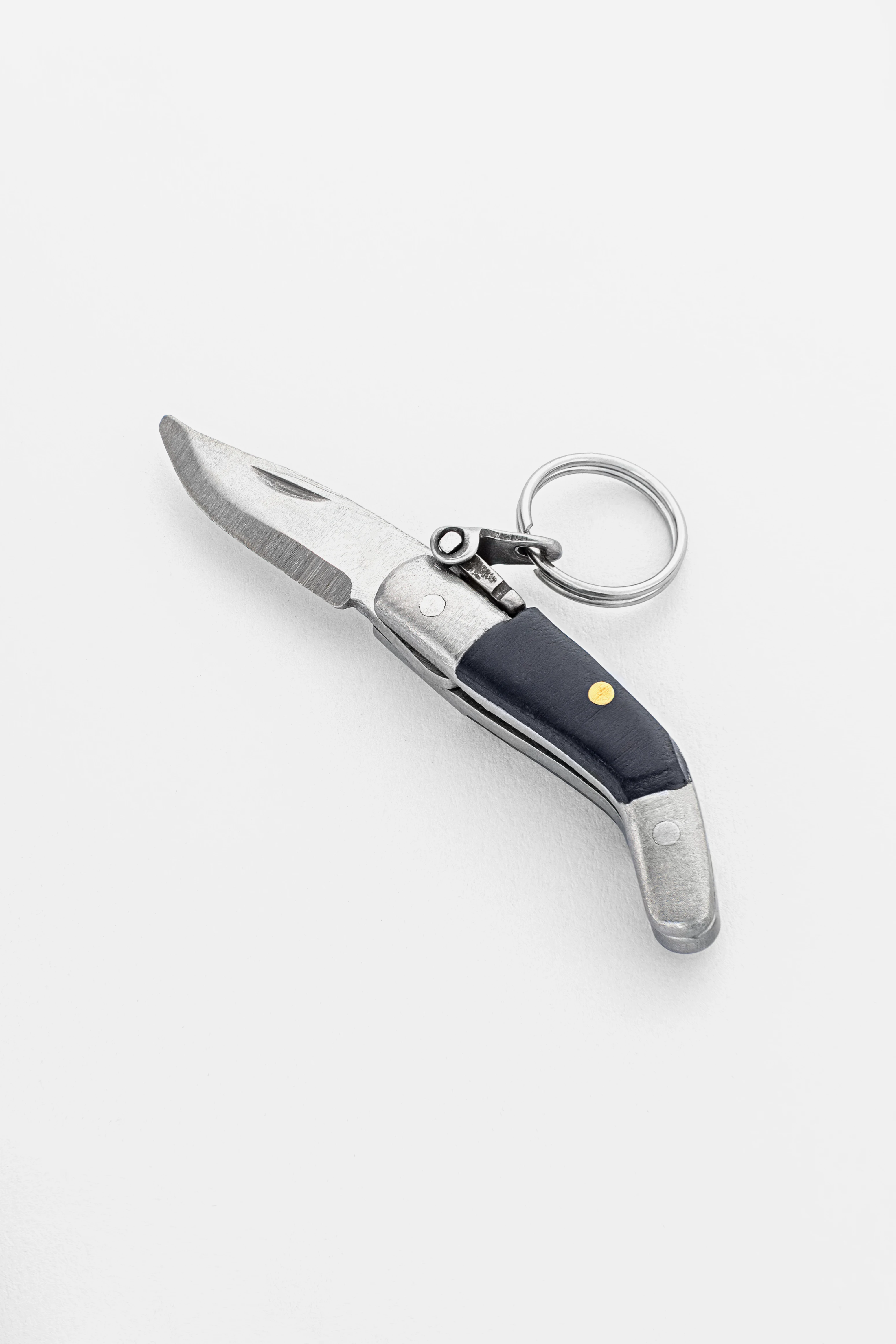
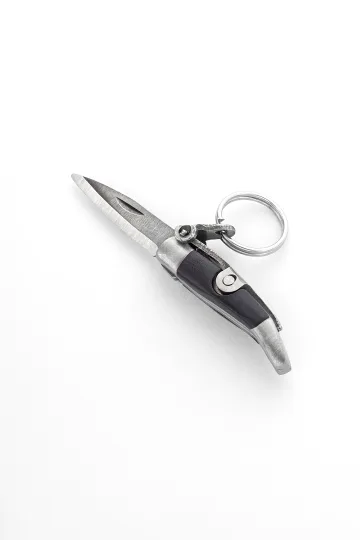
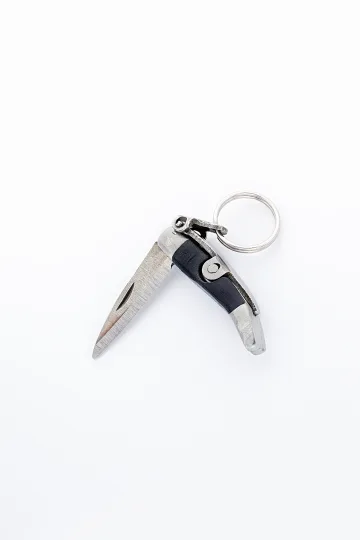
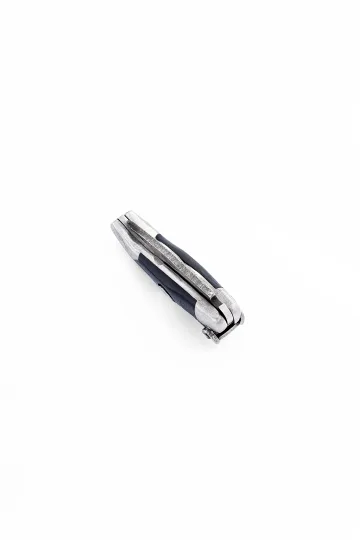
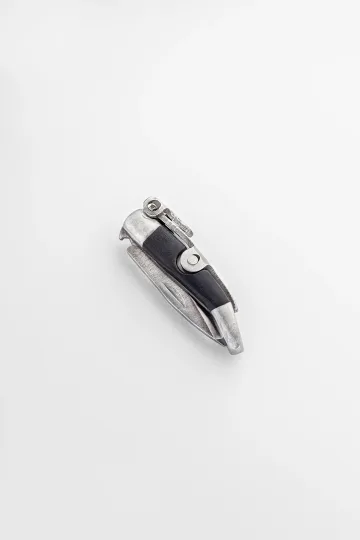
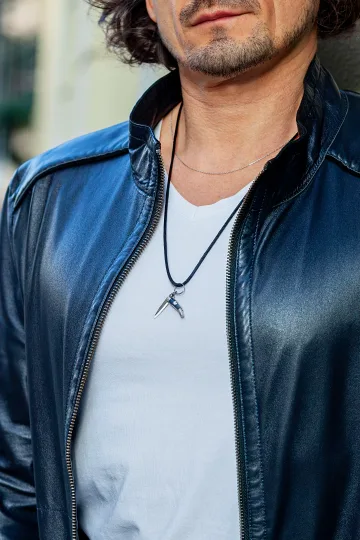
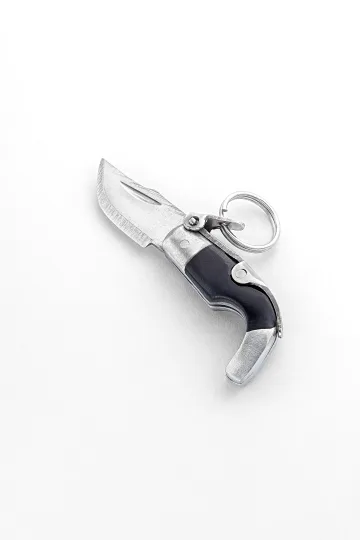
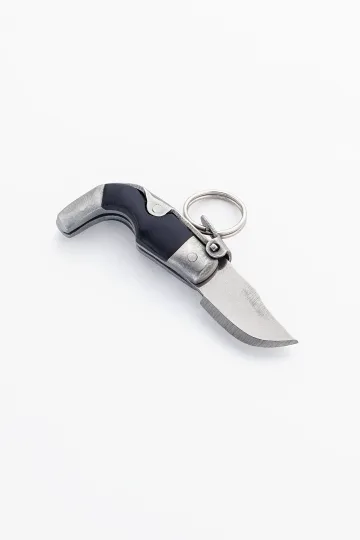
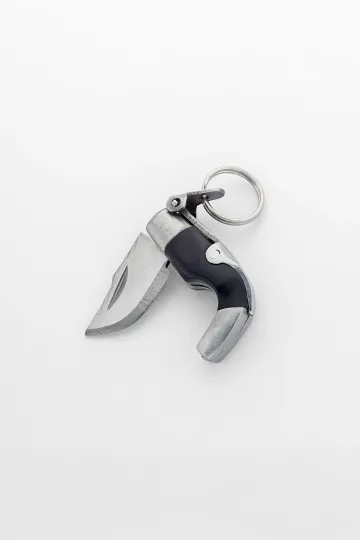
CAPAORA mini knife pendant
The 18th-century Spanish navaja in miniature: 40 mm of stainless steel, a real folding mechanism and a Palanquilla lock that clicks. An affordable gift to remember.
Authentic · Ships from Spain · 14-day returns
Time Horizon: After How Many Years to Judge the Result
For tennis bracelets with natural diamonds, the minimum sensible period to judge an investment result is ten to fifteen years. To reach a positive result in most scenarios, fifteen to twenty years is more likely needed.
Why so long? Several reasons work at the same time.
First: the initial retail markup digs a "hole." If bought at retail, the piece is worth thirty to fifty percent of that price on the secondary market in the very first year. To climb out of that hole to break even, the worth of the stones must rise substantially.
Second: natural diamonds have risen on average by a few percent a year over the very long run, but that growth is uneven. There have been periods of stagnation and decline. On a five-year horizon there is a high chance the piece still sits below the retail purchase price in real terms.
Third: the natural diamond market has been through several corrections. The years 2015 and 2016, 2020, 2023 with the pressure of the lab market on natural-stone prices. The next correction cannot be predicted in advance.
Over fifteen to twenty years, for a high-quality natural-diamond piece, the picture may be neutral or positive once inflation is accounted for, but that is a probability, not a guarantee. There is enough data to say this works with long ownership. Data to guarantee a return exists for no one.
What can be said with confidence: a tennis bracelet as an investment with a three-to-five-year horizon is a mistake. On that horizon the maths of markup makes a positive result extremely unlikely under any market scenario.
Who It Suits and Who It Does Not
An honest analysis demands a direct answer to this question.
It suits, as part of a strategy, the following people:
Those who love wearing jewellery and want a piece that holds its worth better than the average ornament. This is about replacing other jewellery that certainly will not hold worth, not about replacing financial assets.
Those who have a long horizon of fifteen years and up and no need for quick liquidity from this sum. It is an object for those who plan over the long term, not for those who might need the money fast.
Those who already have a core financial portfolio and are considering a small percentage of it for physical valuable objects. In that context a tennis bracelet with natural stones makes sense.
Those who understand the real structure of risk: low liquidity, opaque pricing, physical risks, annual insurance costs.
It does not suit:
Those who want a guaranteed return. No such guarantees exist on this market, nor can they.
Those who buy lab-grown diamonds expecting growth in worth. The lab-stone market moves the opposite way for fundamental reasons.
Those who buy at a retail chain without certificates and expect to sell in five years without loss. The maths does not allow it.
Those for whom this would be the main or only form of savings. Jewellery is too illiquid and too opaque in pricing for that role.
Those who view jewellery as a way to earn rather than to preserve. Returns like those of shares or property are not expected here.
Common Buyer Mistakes
Confusing the insurance valuation with the market price. If a gemmologist wrote a figure X in a document for insurance purposes, that is the replacement cost of a comparable new piece at retail. Not what you will be offered at sale. The secondary offer will be two to three times below the insurance valuation. That is the norm, not deception.
Buying without documentation. A bracelet without certificates on the stones is harder to sell, and often simply impossible at an acceptable price. Ask for the papers before purchase, not after.
Buying lab stones with investment expectations. These are two different products with fundamentally different economics. A lab bracelet is jewellery, not an asset.
Ignoring the fineness of the metal. A bracelet in 375 gold contains only 37.5 percent pure gold. Its metal value is far lower than that of a comparable piece in 750 gold at the same weight.
Leaving insurance costs out of the calculation. The real total cost of ownership is higher than the purchase price. At 1.5 percent a year over fifteen years that is 22.5 percent in extra cost.
Counting on a brand premium at resale. A brand premium works on the primary market: the buyer in the store pays for the name. On the secondary market, branded jewellery from a well-known name often sells for less than an unbranded piece of comparable quality, because the initial markup was higher and the secondary buyer looks at the stones, not the name of the store.
Buying a small bracelet with investment expectations. A piece with a combined weight under two carats in natural diamonds will most likely be valued near metal worth at resale. That is fine for jewellery but unacceptable as an asset.
Putting off insurance. Jewellery insurance is needed from the first day of ownership. Loss or theft without insurance is the total loss of the asset.
Send a friend a discount code, they save on their first order.
How to Buy Well: A Practical Checklist
If the decision to buy is made, a few steps lower the risks and improve the prospects at future resale.
Step 1: settle on the goal. If the piece is bought first and foremost for pleasure and beauty, the stone parameters can be anything to your taste. If there is a task of preserving worth, focus straight away on natural stones with certificates and a sufficient combined weight.
Step 2: look at the structure of the price, not just the figure. The price of a piece is made up of the worth of the stones, the metal and the markup for work and brand. The more transparently the seller describes stone characteristics and metal fineness, the easier it is to understand what you are paying for. Traditional boutiques on shopping streets have historically worked on the highest markup through rent and name; working directly with the maker lowers that markup. The starting price shapes your position at any future resale.
Step 3: ask for documentation before buying. Certificates on the stones, a piece passport, an invoice stating the characteristics. A seller who dodges these questions is, in itself, a warning sign.
Step 4: check the hallmark. A bracelet should carry the maker's mark and the metal fineness. In the United Kingdom, hallmarking of precious-metal jewellery above set weights is carried out by official assay offices. In many other countries the system is similar. The absence of a hallmark means the absence of independent quality control.
Step 5: think about the source of purchase. An auction house, a reputable jeweller with a track record, a direct maker or a trusted online retailer with a returns option. Each of these is safer than a random seller with no history.
Step 6: arrange insurance within the first week. Jewellery without insurance is a financial risk from day one.
Step 7: keep all the documentation. Box, pouch, certificates, invoice, piece passport, photographs. At resale in fifteen years a full set of papers is real money, and its absence is a real discount. Photograph the documents and keep copies separately from the originals, in case something is lost during a move or another life event.
The Secondary Market: Where and How to Sell
When the time to sell comes, the choice of channel has a decisive effect on the final price.
Specialist jewellery auctions. The top band for exceptional pieces. They require a prior appraisal and take a commission (the seller pays fifteen to twenty-five percent of the sale price), but they reach a wide pool of serious buyers. Suited to expensive pieces with good documentation.
Online platforms for jewellery. Specialist platforms let you reach buyers directly without an intermediary. It takes longer, demands good photographs and a competent description stating the stone characteristics. With certificates and patience, it often gives a better result than selling through buyers.
Jewellery buyers and antique dealers. Fast, no hassle, but at the lower edge of the market. A buyer purchases for resale with their own margin, so the offer is always below the retail equivalent.
Private sales. Through acquaintances, colleagues or specialist communities. Sometimes this gives a better price than any professional channel. But it requires trust on both sides and a properly handled transaction.
Pawnbroker. The fastest, the lowest price. Only as a last resort.
A general rule: the more time you are willing to spend on the sale, the higher the final price. A quick sale is always cheaper than a patient one.
FAQ
Does a tennis bracelet rise in worth?
Bracelets with high-quality natural diamonds have historically held their worth and risen moderately over a very long horizon of fifteen to twenty years. That is a statistical observation, not a guarantee of return. On a short horizon, most pieces are worth less than the purchase price because of retail markup.
Can a tennis bracelet be sold without loss?
It depends on holding time, stone quality, the presence of papers and the method of sale. Through a specialist auction with a high-quality certified piece after fifteen to twenty years, the chances of selling without loss are realistic. Through a pawnbroker or a buyer at any moment, a loss is almost certain.
What separates an "investment" tennis bracelet from an ordinary one?
Nothing in construction. The difference is in the parameters: natural certified stones of high quality, a combined weight of five carats and up, metal fineness of 750 or platinum, full documentation. The price is correspondingly several times higher than mass pieces.
Do I need a GIA certificate on every stone?
For small stones, under 0.10 carats each, that is unrealistic and not practised in the trade. For bracelets with larger stones, from 0.20 to 0.25 carats each, GIA certificates substantially improve liquidity. Even a single certificate from a recognised lab is better than no papers at all.
Which is safer for preserving capital: a tennis bracelet or gold in bars?
Gold in bars or coins is far more liquid, transparent and simple to value. For the pure task of preserving capital, gold is preferable. A tennis bracelet is justified as part of a strategy when the person values both the object itself and its financial function at once.
Does metal colour affect the resale price?
It does not affect the metal value at melt: fineness matters more than colour. It does affect consumer demand at resale: white gold and platinum today enjoy wider demand on the secondary market than yellow gold in a comparable price range.
How do I check that the purchase price is reasonable?
Ask for certificates on the stones before buying, check the metal fineness on the hallmark, and work out what makes up the price: stones, metal, work. If in doubt, an independent gemmologist's consultation before purchase is far better than regret after.
What happens to a tennis bracelet in an economic crisis?
Jewellery as a whole loses worth during acute crises, along with other non-financial assets. Physical gold often rises in a crisis. Diamonds behave differently depending on quality and the type of crisis. A good natural stone with papers is less volatile than shares, but also less liquid.
Buying it as a gift? Each one arrives ready to give.
 A branded Zevira box and a little card come with every order.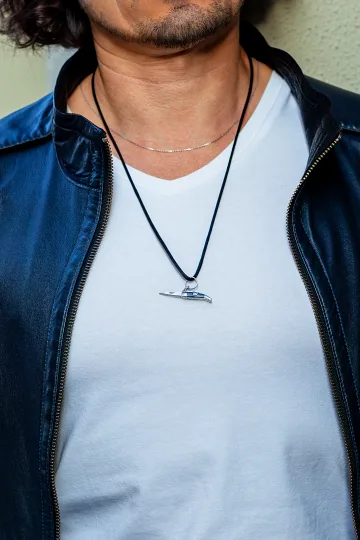




Conclusion: Jewellery First
A tennis bracelet with high-quality natural diamonds can work as part of long-term capital preservation. But that is a side effect, not the main function of the piece. The main function of jewellery is to be worn, to be liked and to bring joy every day.
When someone buys such a bracelet because they genuinely love the piece, and chooses natural stones, the right metal fineness, obtains documentation, arranges insurance and holds the piece calmly for fifteen to twenty years, they have a real chance of a neutral or positive financial result at the end of that period. Plus fifteen to twenty years of pleasure from wearing it. That is an honest deal.
When someone buys a tennis bracelet first and foremost as a way to put money in with the hope of growth, disappointment is likely. The jewellery trade is built around the seller's interests, not the buyer's. Markup, low liquidity, opaque pricing, insurance costs. All of it creates real barriers to an investment result.
The honest bottom line looks like this. A tennis bracelet with natural stones and good parameters is one of the few pieces of jewellery with any long-term financial potential at all. It is clean, timeless in design, and wears with anything in any setting. If you buy it first because it is beautiful, and treat the investment angle as a bonus while making a smart choice on parameters, the piece is worth paying for.
Three things to remember from this analysis. First: natural diamonds and lab-grown diamonds are two different products with different financial fates, and they must not be confused. Second: retail markup is real and significant, and it belongs in every calculation. Third: holding time is the main variable. On a short horizon, almost always a loss; on a long one, with the right parameters, the result can be acceptable. The rest are details that affect the size of the result, not its direction.
Handmade bracelets, rings and pendants in 925 silver and 14-18K gold, made to be worn every day and to keep their look over the years.
About Zevira
Zevira makes jewellery in the artisan tradition of Albacete, Spain. We don't sell the idea of an "investment" dressed up as jewellery: a piece should first of all be liked and worn, and its longevity is a question of honest material and careful work, not marketing.
What you'll find with us in bracelets and pieces built to last:
- bracelets in clean, simple shapes that stay relevant regardless of trends
- pieces in 925 silver and 14-18K gold with a clearly stated hallmark
- jewellery you can have personally engraved
- classic setting styles that any jeweller can service
- straightforward material descriptions with no vague wording
- hand assembly with every clasp and setting checked
Every piece can be personalised with engraving by a craftsperson, with the option of personal engraving. 925 silver and 14-18K gold.