Topaz in jewellery: colours, origins and how to choose
One mineral, a whole palette
For centuries topaz carried a reputation it didn't quite earn through brilliance. Some accounts claim it once rivalled diamond in value, though there's no solid proof it was systematically priced higher. The real driver was rarity: large, clean crystals were almost impossible to find, and the yellow stones that paled in sunlight were mistaken by the ancients for hardened gold. Then Brazil opened up deposits with crystals the size of a palm, and the price collapsed. The status stuck around.
What makes topaz interesting is that it isn't one stone but a whole spectrum: yellow, blue, pink, red, orange, colourless. The same mineral, with colour driven by trace elements and treatment. This guide covers what topaz actually is in terms of chemistry and geology, how its colours differ, how to tell natural from treated, and how to pick a stone for a piece of jewellery.
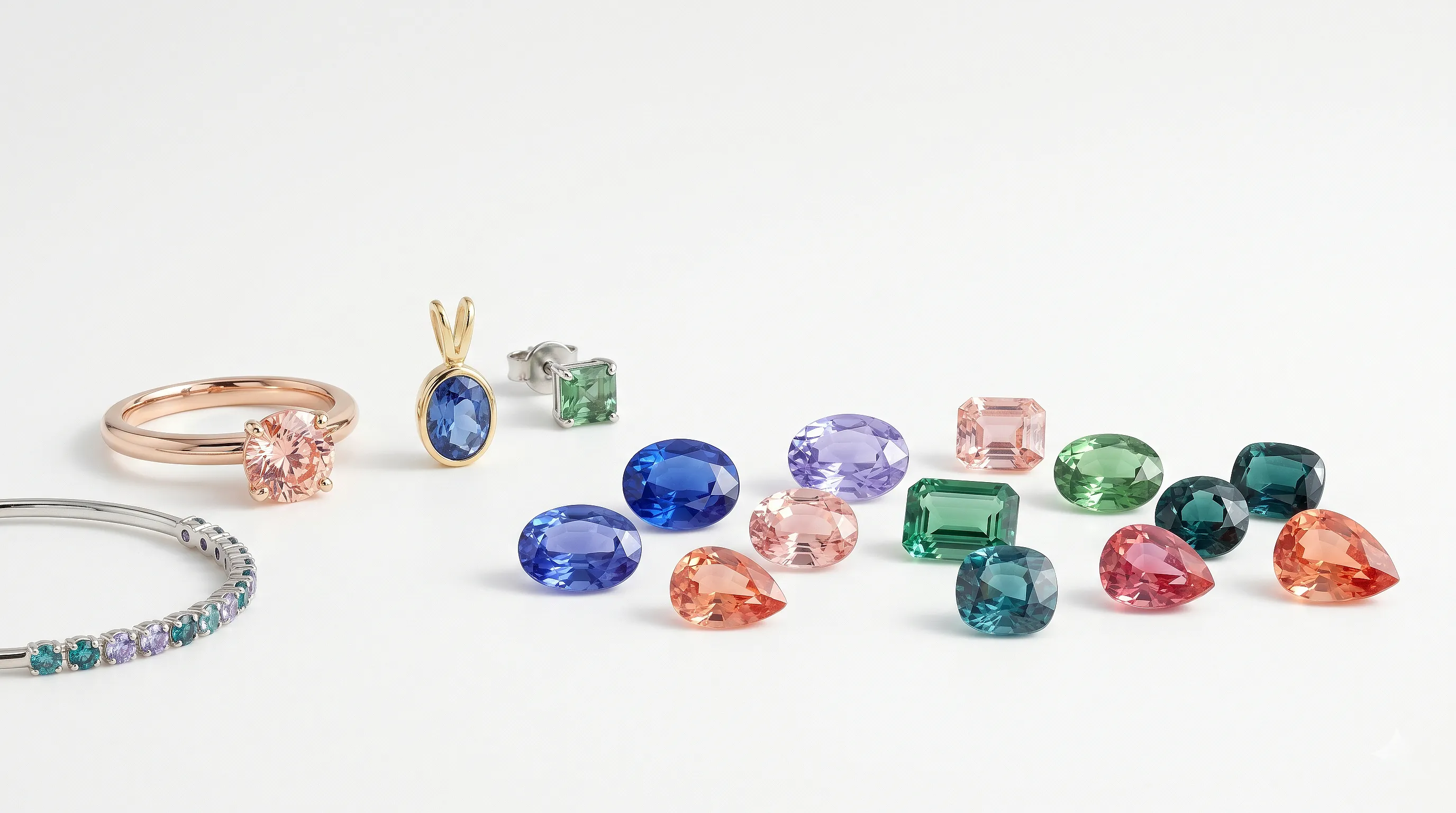
Wear the symbol, don't just read about it. These are in stock:




What topaz is: chemistry, physics, optics
Composition and structure
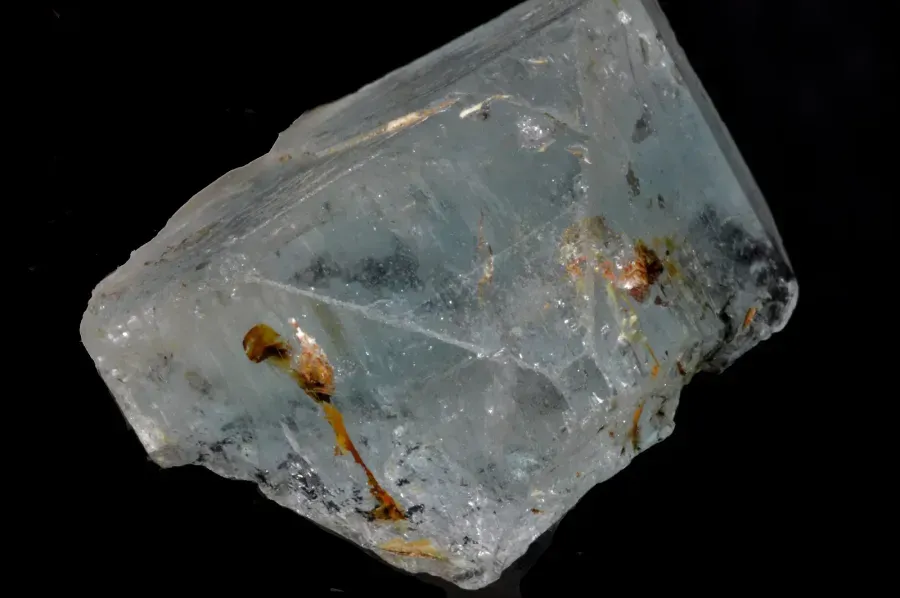
Topaz is an aluminium fluorosilicate with the formula Al₂SiO₄(F,OH)₂. A framework of aluminium, silicon and oxygen, with fluorine and a hydroxyl group built in. The ratio of fluorine to OH influences the stone's properties and how it responds to heat. Topaz crystallises in the orthorhombic system, forming the characteristic elongated prismatic crystals with lengthwise striations on their faces.
Hardness and toughness
On the Mohs scale topaz sits at 8. It's the reference mineral for the eighth step of the scale itself, standing between quartz (7) and corundum (9). In everyday terms that means topaz won't be scratched by dust (which is mostly quartz, 7) or by a steel knife. Only corundum, diamond or another topaz can mark it.
But topaz has a weak point: perfect cleavage in one direction, across the long axis of the crystal. That's a plane along which the stone can split from a sharp knock at the wrong angle, high hardness notwithstanding. Quartz has no cleavage at all, so at the same brittleness it forgives more. Because of this cleavage, cutters work topaz carefully, and in a ring it's best set in a protective mount.
Density and optics
Topaz has a density of 3.49 to 3.57 g/cm³. The stone is noticeably heavier than quartz or glass of the same size, a fact that comes in handy for a simple fake test. Its refractive index runs 1.61 to 1.64, the birefringence is weak and the dispersion is low (0.014). So don't expect the fiery play of a diamond: topaz wins on clarity and saturation of colour rather than rainbow flashes.
Where the colour comes from
The colour comes from impurities in the lattice and structural defects that absorb light of certain wavelengths:
- Yellow, orange and brown come from iron ions and the colour centres tied to them.
- Pink and red come from chromium ions (Cr³⁺). Chromium at the right concentration is rare, which is why natural pink and red topaz are so scarce.
- Blue is almost always the result of irradiation: it creates colour centres in the lattice that absorb the red-yellow part of the spectrum. Natural blue topaz exists, but it's pale and rare.
- Colourless topaz is a lattice with no significant impurities. As clear as glass, it serves as raw material for irradiation and heating.
Fluorine and hydroxyl: the invisible lever on the stone's properties
The formula for topaz carries an odd-looking pair, (F,OH): some sites in the lattice are held by fluorine, others by a hydroxyl group. The ratio between them is no cosmetic detail, it is a lever that changes how the stone behaves. Fluorine-rich topaz tends to be born in dry, high-temperature granites and pegmatites. Topaz with a noticeable share of OH belongs to wetter growth conditions and to rocks such as rhyolite. That balance governs the exact density, the refractive index, and how the crystal copes with heating. Gemmologists and mineralogists can sometimes work out from the fluorine content what type of deposit a given stone grew in: the same mineral keeps the signature of its birthplace right there in its chemistry.
Pleochroism: colour that depends on the angle
Topaz is weakly but perceptibly pleochroic, meaning a coloured crystal shows a slightly different shade when viewed through different angles to its axis. In yellow and orange stones that is a drift from honey towards golden pink; in blue ones, from clean blue to nearly colourless. The cutter has to allow for it, orienting the stone in the rough so that the richest colour plays through the table. A badly oriented topaz looks washed out even when the rough was excellent. This is one reason two stones of the same weight from the same deposit can be valued very differently: it comes down to whether the cutter caught the right axis.
Colour centres: why the colour can be switched on and off
Blue topaz is produced by irradiation, and the mechanism is worth understanding. A stream of particles knocks electrons out of their places in the lattice, and they lodge in defects to form what are called colour centres, tiny traps that absorb part of the spectrum. Those traps are what turn a colourless crystal blue. Heating after irradiation stabilises some centres and clears others, the unwanted yellow-brown ones, which is why the oven step is compulsory. The same mechanism explains why some natural topaz fades in sunlight: ultraviolet gradually discharges the unstable colour centres, and a pink or wine shade dulls. Colour here is not pigment inside the stone, it is a fine setting of electrons that can be both created and destroyed.
Natural blue and the question of wine topaz
A rarity of its own is natural wine-yellow and sherry topaz, the warm brownish pink shade that jewellery of past centuries prized particularly. The trouble is that many such stones are unstable: in bright light they lighten over months and years to a pale yellow or almost nothing. Antique brooches with the topaz colour lost are a common sight in collections, and any auction viewing in London will turn one up. The modern market for the wine shade rests largely on heated stones, whose colour holds better than the natural version. This is worth knowing: a warm sherry tone is best kept out of direct sun regardless of whether it came from the earth or from an oven.
London Blue lives after dark and wants black around it. Wearing it to the office is turning up to a meeting in white tie, don't.
What to wear topaz with
Over years on shoots I've run topaz through dozens of looks, in every one of its colours. Here's what actually works, sorted by occasion and by the shade of the stone.
Which topaz do I reach for every day? For daytime I recommend blue or yellow in a modest setting. Blue quietens things down and sits evenly on a pale blouse, a linen shirt or denim. Yellow adds warmth and reads well against beige, cream and soft grey. Both carry from morning to evening and ask for no attention.
What should I pick for the evening? For evening I suggest a deep London Blue or a rich pink on plain fabric, best of all on black, emerald or wine. An open neckline and swept-up hair give the stone room, so I choose a pendant on a fine chain or drop earrings over studs.
How do I match the stone's colour to the metal? I keep one simple rule: cool shades (blue, pink) I choose with white gold, platinum and silver, warm ones (yellow, orange, red) with yellow and rose gold. When metal and stone share a temperature, the look always holds together better.
Does topaz belong at the office? It does. I recommend stud earrings of 2 to 4 carats and a slim ring with the stone in a protected setting. That way topaz shows without arguing with workwear, and the closed setting guards the facets from knocks against a desk or keyboard.
Can I mix several topaz colours? You can, but don't be greedy. I suggest keeping to no more than two stone colours in one look, or the accent falls apart. Close tones work well: blue next to a slightly lighter blue, or warm yellow beside pink. One bright red I ask you to leave as the soloist.
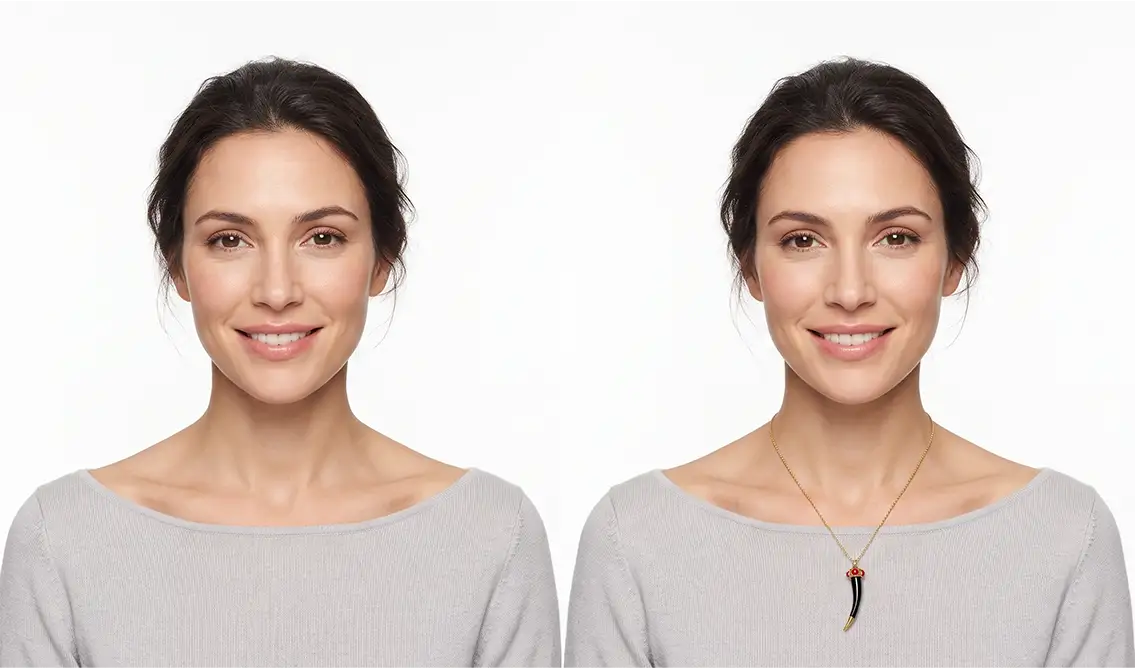
Turn on your camera, pick earrings, a pendant or a ring, and see the piece on yourself in real time.
Switch items in one tap.
Everything runs in your browser: no photo or video is ever uploaded.
History: from pharaohs to Brazilian mines
Antiquity and a tangle of names
The Greeks called the stone "topazion". One version traces the name to the island of Topazos (Zabargad) in the Red Sea, though what they mined there was peridot, not topaz. Another traces it to the Sanskrit "tapas" (fire, heat). The ancients struggled to tell topaz from similar yellow and greenish stones: peridot, chrysolite and citrine all travelled under a single name.
Pliny the Elder, in his "Natural History" (first century AD), describes topazion as one of the most precious stones. We now understand he was lumping several minerals under that word. The Egyptians linked yellow stones to the sun and the god Ra and carved amulets from them; the Romans set them in rings and brooches.
The Middle Ages and alchemy
Medieval lapidaries credited topaz with the power to calm anger, sharpen eyesight and warn of poison, the stone supposedly changing colour if poison had been slipped into a drink. Alchemists saw golden topaz as a vessel of the "solar principle". There is, of course, no evidence for any of this: it's the history of beliefs, not of the mineral's properties. But it's exactly what cemented topaz's reputation as a stone of nobility.
A similar role as a "solar" stone of abundance was played in jewellery by chrysolite, which topaz was confused with for centuries.
The eighteenth century: Brazil changes everything
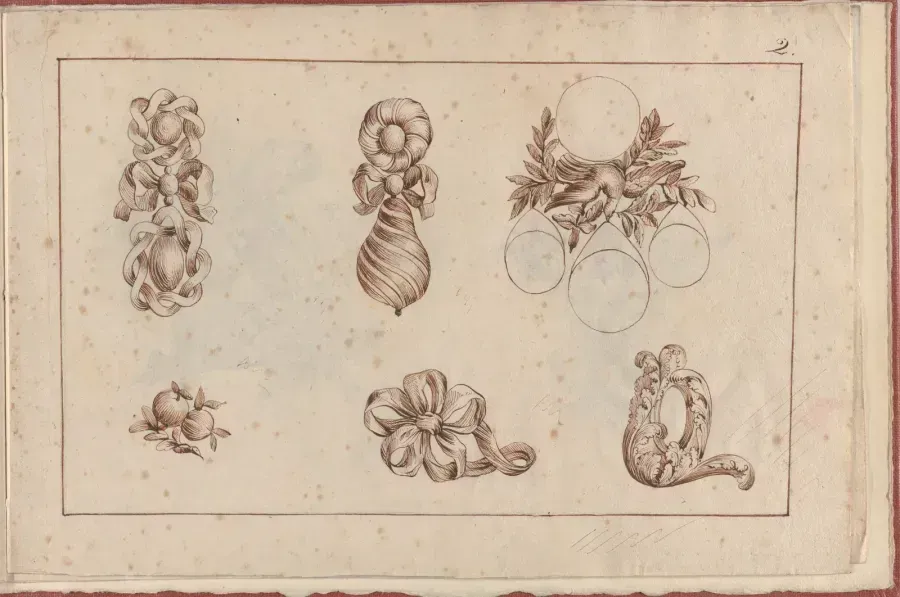
The Minas Gerais region of Brazil only began to be developed at the end of the seventeenth century, and large-scale topaz mining, including the imperial variety near Ouro Preto, took off in the eighteenth. The crystals from there were transparent, clean and large, a quality Europe had never seen before. Topaz flooded the market and its price gradually came down.
Brazil is also tied to the famous story of the "Braganza", a colourless 1,680-carat stone from the Portuguese crown regalia, long taken for a diamond and later for a topaz. Debate over its true nature continues to this day, but the name of topaz stuck to it and became a symbol of the scale of Brazilian finds.
Topaz in the Portuguese crown
Eighteenth-century Brazil was a Portuguese colony, and the best stones went first of all to Lisbon. Golden-orange topaz became almost a court stone, used on reliquary mounts, orders of chivalry and the ceremonial dress of the nobility. That is where the durable association between imperial topaz and the Portuguese court comes from, and it still surfaces in antique catalogues today. Curiously, it was precisely this Portuguese taste for the warm shade that fixed the word "imperial" as the top category of yellow-orange topaz, even though the term has no strict gemmological definition to this day: the line between an ordinary yellow and an imperial one remains largely a matter of the eye and the market.
The Urals chapter
Russia wrote a chapter of its own into the history of topaz. The Urals and Transbaikal yielded crystals of rare purity through the eighteenth and nineteenth centuries, bluish, wine-coloured and colourless, and prospectors gave the heavy transparent stones the apt nickname "heavyweight". Uralian topaz found its way into mineralogical cabinets and into the jewellery of high society, and good old specimens are now a coveted collecting rarity: industrial mining wound down long ago and the stones circulate mainly on the secondary market and in museums. The story links topaz to the other Uralian gems that made the lapidary workshops of the region famous.
The East: Sri Lanka and a Sanskrit trace
The island of Sri Lanka, historically Ceylon, supplied golden and pinkish stones long before the Brazilian finds, and medieval travellers wrote about Ceylonese gems. One version of the name is tied to the East as well: the Sanskrit word "tapas" means heat, warmth, fire, which sits neatly on the warm sunny colour of old topaz. In the Indian tradition warm yellow stones were broadly associated with generosity, knowledge and prosperity, and that symbolism of a warm sun stone rhymes with the European idea of golden topaz as a stone of abundance.
The nineteenth and twentieth centuries: science and treatment
As mineralogy advanced, topaz could be told apart from look-alikes with precision. It was around then that heating was found to change colour: a colourless or pale crystal could be turned a stable yellow or pink. By the end of the nineteenth century, a large share of the yellow and pink topaz on the market had already been heat treated.
The 1970s brought irradiation treatment: colourless topaz is irradiated, then heated, yielding a vivid blue. This made blue topaz a mass-market, affordable stone. Today topaz is one of the most popular coloured stones in the mid-price range.
Customer reviews
Zevira is a real jewellery shop. Genuine payments, deliveries and customer thank-yous.
🥰🥰🥰 gracias
Ok, ¡gracias! 🙂
Geology and deposits
Topaz forms in acidic igneous rocks, granites, pegmatites and rhyolites, and in hydrothermal veins, where fluorine from residual fluids enters the crystal lattice. It grows in cavities and fissures, which is why large, clean crystals are a real possibility.
The main sources:
- Brazil (Minas Gerais, Espírito Santo), the leading supplier. Both yellow "imperial" topaz and rough for blue come from here. The crystals are large and clean.
- The Urals and surrounding parts of Central Asia, historic deposits. Late-nineteenth-century stones from these areas are prized by collectors for their clarity; mining has largely ceased and the stones survive on the secondary market.
- Pakistan (Gilgit-Baltistan), a source of natural pink and red topaz, as well as rare natural blue without irradiation.
- Sri Lanka, a historic source of golden and pink stones, mentioned as far back as medieval texts.
- Nigeria, Myanmar, Afghanistan, Madagascar, rare colours: red, natural blue, and multicoloured crystals where pink shades into blue within a single stone.
The geography of mining shifts in waves: one deposit runs dry, another is discovered, so the make-up of the market is in constant flux.
What hides inside: inclusions as a signature
Tiny guests often live inside topaz: droplets of liquid, gas bubbles, sometimes two immiscible liquids in one cavity, along with needles and small crystals of other minerals trapped during growth. For a gemmologist these are not flaws but a biography: the set of inclusions frequently reveals the conditions the stone grew in, and occasionally points to a deposit. For a buyer the practical side matters more. A natural stone almost always carries at least microscopic inclusions, whereas glass gives itself away with perfectly round bubbles and rounded facet edges. A yellow topaz that is completely clean under a loupe, without a single trace of anything, should raise an eyebrow rather than delight.
How a crystal becomes a stone ready to set
The road from mined crystal to stone in a piece of jewellery is longer than it looks. The cutter first studies the rough against a light, hunting for fractures and the plane of cleavage, and establishing the axis of pleochroism. Then the future shape is marked out so as to avoid the cleavage and bring the deepest colour to the top. Any careless force near the cleavage plane risks a split, so topaz is sawn and ground more gently than many softer stones. The oval and the cushion are popular for good reason: both hold colour well and spare the corners along which the stone could part. A finished stone is always a compromise between weight, colour and the safety of its edges, and a good cutter balances all three.
Treatment: heating and irradiation
Roughly 90% of the blue topaz on the market has been irradiated. Let's look at how this works and how safe it is.
Heating. Used since the eighteenth century. A colourless or pale stone is heated to 450 to 550 °C, held, then cooled slowly (rapid cooling splits the crystal along its cleavage). The result is a stable yellow or pink that no longer changes in ordinary wear.
Irradiation. Colourless topaz is irradiated with a stream of neutrons or electrons, creating colour centres in the lattice, and then heated to stabilise it. The outcome is blue in varying intensities:
- Sky Blue, a light blue, the cheapest and most common.
- Swiss Blue, a bright, saturated blue.
- London Blue, a deep, almost inky blue with a grey undertone.
Irradiated topaz is safe to wear: residual radioactivity is measured before the stone reaches the market, and it's only sold once it has fully decayed to background levels. Natural blue topaz is a rarity (and a pale shade at that), and it costs many times more than the irradiated kind.
How to tell natural topaz from treated and from a fake
- A 10x loupe. Natural yellow topaz almost always has micro-inclusions, tiny crystals of other minerals or droplets of liquid. Irradiated blue sometimes shows uneven colour, "clouds"; natural blue is coloured evenly. Glass gives itself away with round gas bubbles and rounded facet edges.
- Weight and chill. Topaz is noticeably heavier than glass of the same size and stays cool to the touch longer.
- Hardness. Topaz (8) isn't scratched by steel; glass (5.5) and most imitations are.
- The lab. For an expensive purchase the most reliable route is a certificate from a gemmological laboratory (GIA and its equivalents). It states: natural, heat treated or irradiated. That's the best protection against a swap.
Mystic topaz: a coating, not the stone's colour
The iridescent, shimmering "mystic topaz" (also sold as "azotic") is neither natural colour nor irradiation. A wafer-thin layer of titanium oxide or another metal is sputtered onto colourless topaz, giving a blue-green-violet shimmer like an oil film on water. The coating is applied only to the lower part of the stone, beneath the pavilion; the upper facets are clear and the shimmer shows through them.
The key thing for a buyer to know: the coating itself doesn't hold up well. The layer is microns thick, nowhere near topaz (8) in hardness, and it wears away from friction, abrasive pastes and chemicals. On the girdle of a ring worn every day, the shimmer rubs off over time to leave clear bald patches, and the stone goes patchy and dull. Ultrasonic and steam cleaning are out of the question for such a stone: hot steam and cavitation strip the coating.
So mystic topaz belongs in earrings, a pendant or a brooch, anywhere the stone doesn't rub against clothing and skin. In an everyday ring it doesn't last long. Clean it only with a soft cloth and slightly warm water, no brush and no chemicals. Its price is low precisely because the colour is a coating, not a property of the mineral itself: there's no reason to pay over the odds for a "rare rainbow topaz".
Upload a photo of your pet, someone you love, or an object. We'll build a 3D model and hand-cast it in pewter.



Topaz colours and where each one fits
Colour is the heart of topaz. The hue is set by chemistry, not "energy", but each shade has its own established niche in jewellery.
Yellow and orange
From lemon to a deep golden brown. The most historic colour: yellow topaz is exactly what was prized in antiquity and in Portugal. The warm shades come into their own in yellow and rose gold. Orange ("imperial") with a pinkish undertone is one of the most expensive natural varieties, mined in Brazil.
Blue
From pale sky to deep London Blue. Almost always irradiated, and there's nothing wrong with that: the colour is stable and the stone clean. The cool tone gets along with white gold, platinum and silver. Blue topaz is the most affordable and versatile choice for everyday jewellery.
Pink
From peach to a rich pink. Natural pink is rare (chromium); most of what's on the market is the result of heating. True Brazilian "Imperial Pink" with an orange undertone fetches high prices. It looks soft in rose and white gold, a frequent choice for romantic pieces and an alternative to pink sapphire.
Red
The rarest colour. Natural red topaz turns up mostly in Pakistan and very rarely in Brazil, hence the high price. Worth noting: red beryl (bixbite) has nothing to do with topaz, although it's sometimes mistakenly called "red topaz". True red topaz is a stone for a single bold accent.
Colourless and multicoloured
Colourless topaz is as clear as rock crystal but harder, and serves as raw material for treatment. Multicoloured (bicolour, tricolour) crystals, where a single stone carries several shades at once, are a rarity even for museums and a coveted material for one-off pieces: every example is unique.



Topaz in jewellery: the formats
Rings
Topaz is hard, but because of its cleavage a ring stone needs protection. For an everyday ring, go for a closed or half-closed setting that shields the girdle and facets from knocks; tall "clawed" settings with an exposed stone suit evening rings worn only occasionally. Blue and pink topaz are striking in white gold and silver, yellow and orange in yellow and rose gold. For an expressive centre stone people choose 5 to 10 carats, for everyday wear 2 to 3.
Pendants
The most practical format: a pendant doesn't take the knocks a ring does, so it suits large and rare stones. A single 3 to 7 carat crystal on a chain looks striking. Length: at the collarbone for daily wear, lower towards the neckline for evening.
Earrings
Studs of 2 to 4 carats are the all-purpose everyday classic. Drop earrings and chandeliers with topaz come alive on a bare neck and in the evening. For an active day studs are safer; long earrings catch.
Bracelets
A tennis bracelet alternating topaz and diamonds looks dressy but calls for care because of the stones' cleavage. A bracelet of topaz beads is a calm everyday option. A rigid bangle with a single stone is a classic.
How to choose a topaz: four quality factors
Coloured stones are judged on four points.
Colour. The main factor. Look at saturation, purity of hue (any muddy secondary tones?) and tone. For blue, sky, swiss and london are simply different depths, a matter of taste. For yellow and pink: the cleaner and more saturated the colour, the more valuable.
Clarity. A stone fit for jewellery has no inclusions visible to the naked eye, or only very fine ones noticeable under a loupe. Cloudy patches and "clouds" cut both beauty and price.
Cut. Facets should be sharp and symmetrical. Too deep a cut hides the colour, too shallow a cut leaves the stone washed out. The classics for topaz are the oval and the cushion: these shapes show the colour off best.
Carat weight. Bigger isn't always better: a 5-carat pendant looks great, while a 5-carat ring can turn out bulky. Price rises faster than weight as the stone grows.
On blue topaz in particular, it's worth asking the seller whether it's irradiated or natural: it affects the price strongly, the safety and beauty not at all. For an expensive purchase (especially a rare natural colour), ask for a lab certificate stating colour, weight and type of treatment.
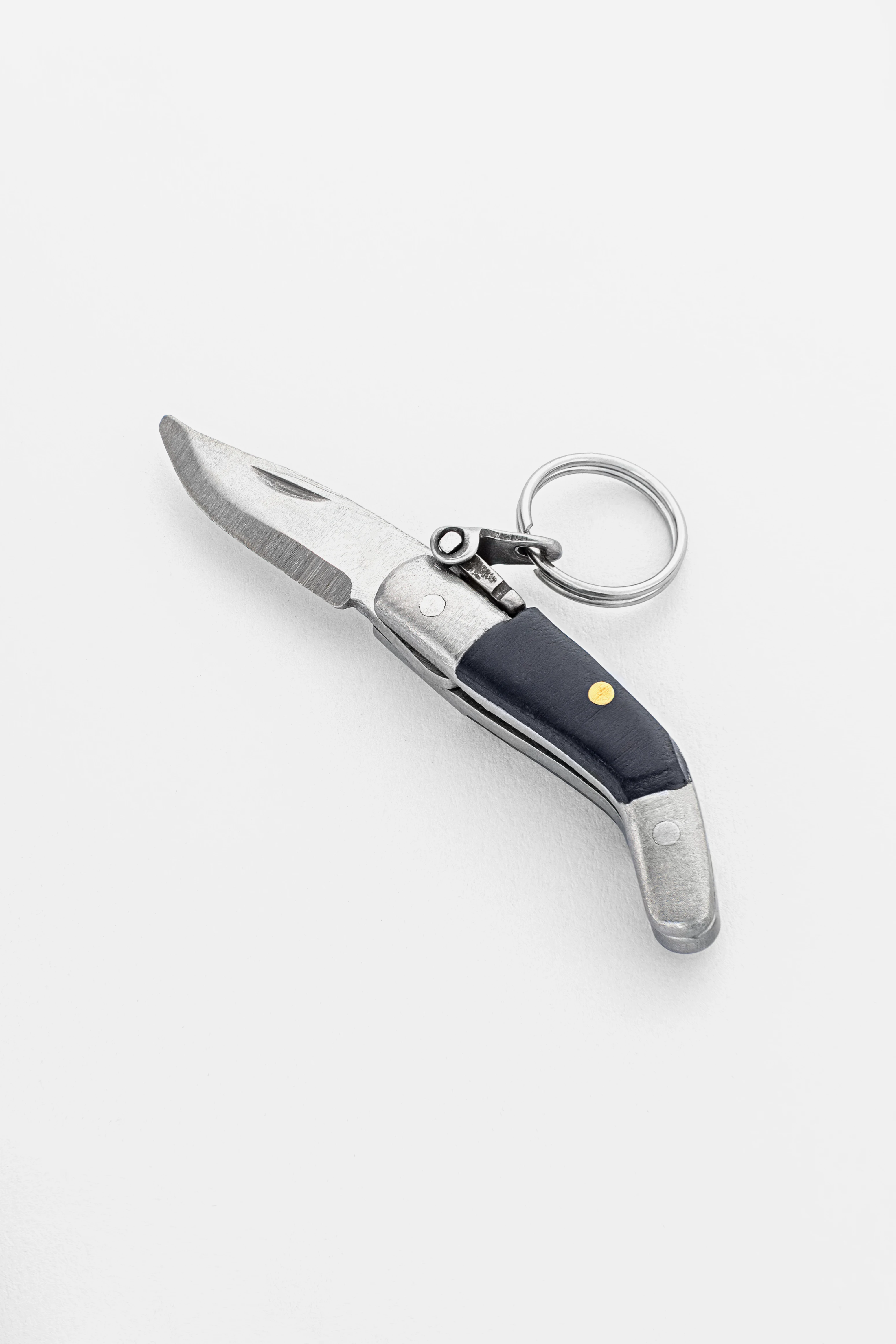
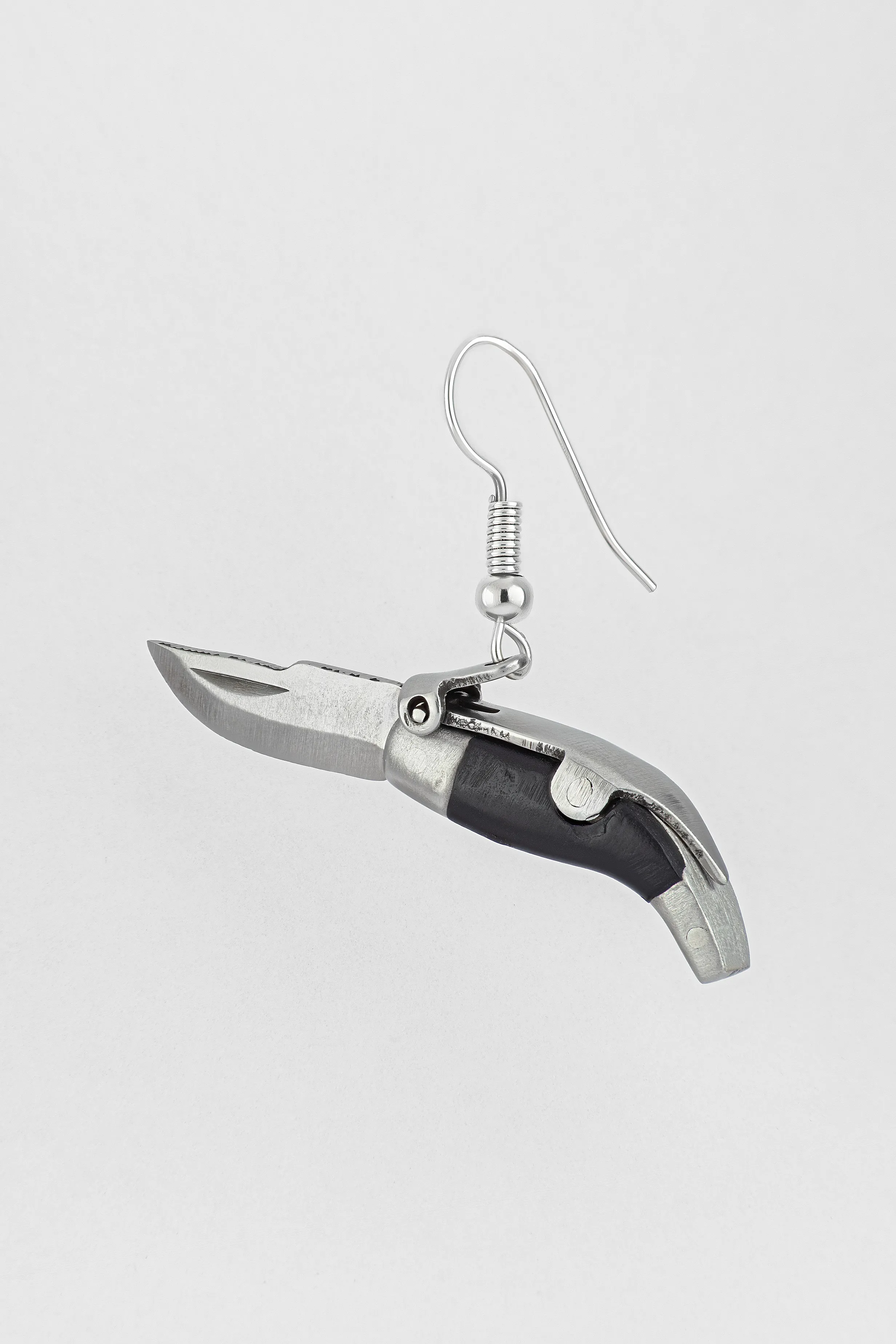
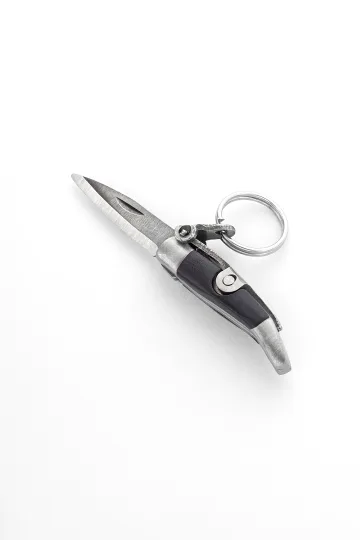
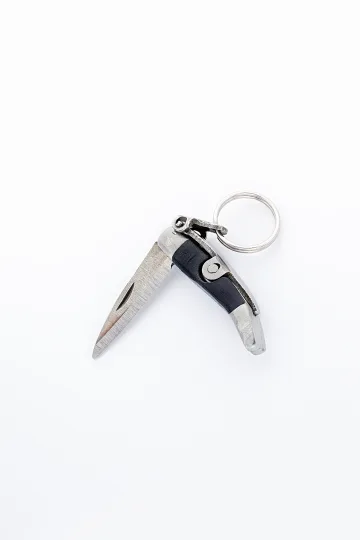
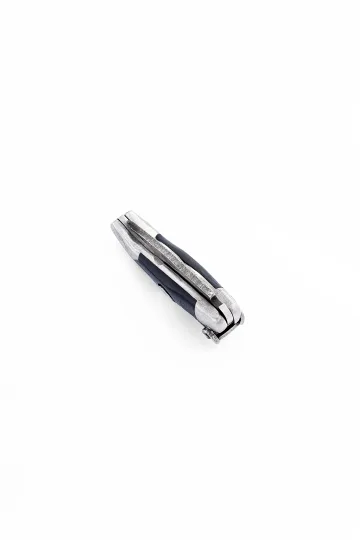
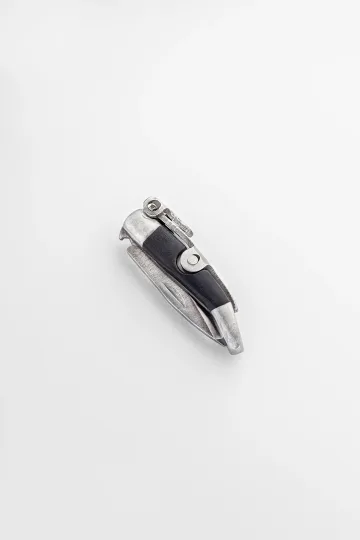
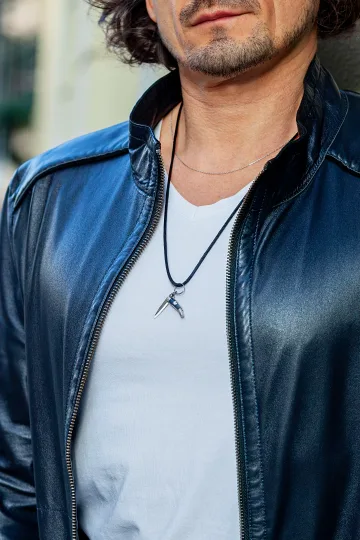
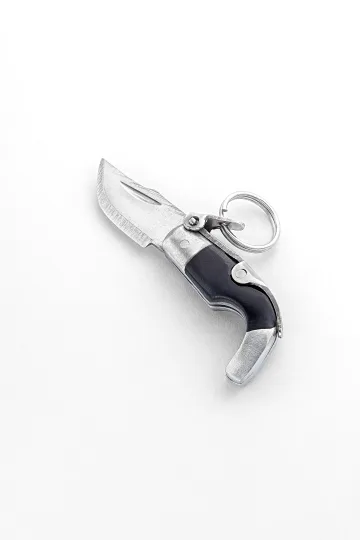
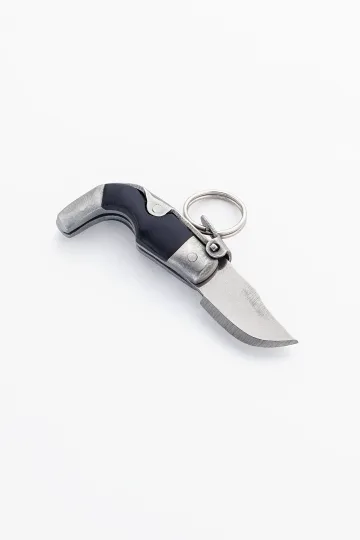
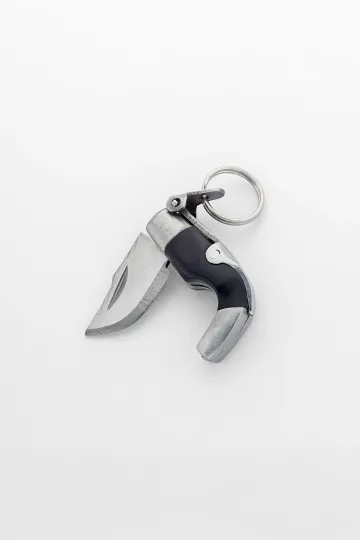
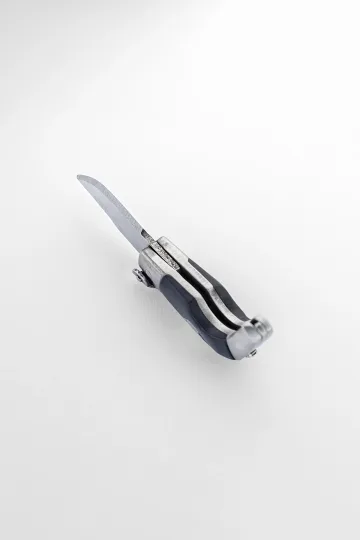
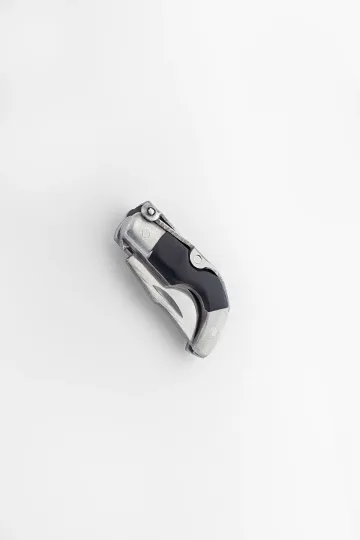
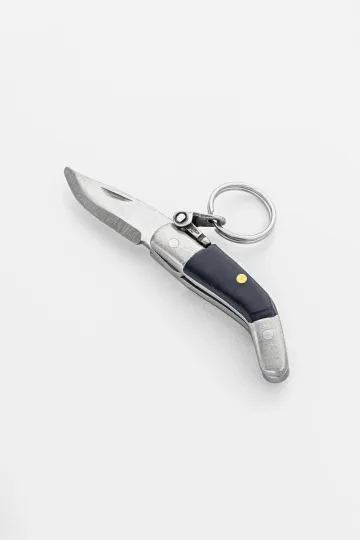
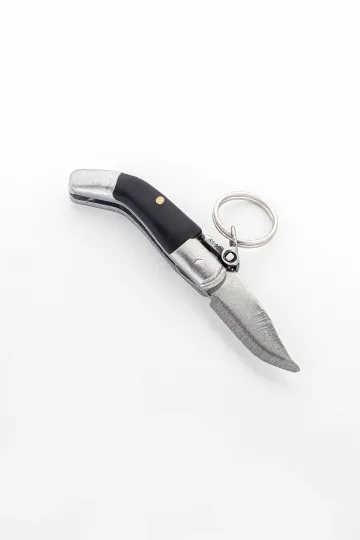
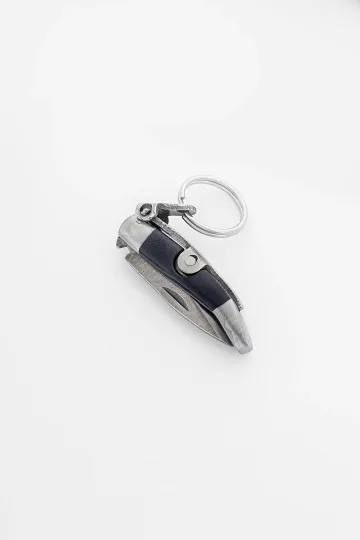
CAPAORA mini knife pendant
The 18th-century Spanish navaja in miniature: 40 mm of stainless steel, a real folding mechanism and a Palanquilla lock that clicks. An affordable gift to remember.
Authentic · Ships from Spain · 14-day returns
Caring for topaz
- Cleaning. Warm water, mild soap, a soft brush. Ultrasonic cleaning is acceptable for topaz, but avoid it for stones with inclusions and for delicate settings.
- Store separately. Because of its cleavage and hardness, topaz scratches softer stones, and a knock on the cleavage plane can split it. Keep it in a separate compartment or a soft pouch.
- No sudden temperature changes. A sharp move from cold to warm can split the stone along its cleavage.
- Keep pink and red out of long sun. These colours can gradually fade in bright sunlight; blue is steadier. Take the piece off before sunbathing.
- Chemicals. Topaz is inert to household substances, but it's better to apply cosmetics, perfume and chlorinated water before putting the piece on, to keep the setting and stone clean.
Leave your email, we'll send your discount code. No spam, unsubscribe anytime.
The code arrives by email, valid on your first order.
Topaz as a gift: the stone of November and anniversaries
Topaz comes with set occasions that make choosing a gift easier. It's the birthstone of November (alongside citrine), so a piece with topaz is a logical present for a November birthday. For such a gift, golden yellow or blue topaz is the usual pick: the first echoes autumn tones, the second is universal.
Wedding anniversaries are equally specific. Blue topaz is tied to the fourth anniversary, and imperial (golden orange) to the twenty-third. That's a handy prompt when you want to give something with meaning rather than just a pretty stone: a blue pendant or earrings for four years together read as a considered gesture.
If the gift isn't tied to a date, start from the recipient's eye colour and wardrobe. Blue and pink suit a cool colouring and pale gold; yellow and orange suit a warm one and yellow gold. The safe everyday bet is blue topaz in silver or white gold: it goes with almost everything and commits to nothing.
Myths and truths about topaz
Topaz and other coloured stones: an honest comparison
Topaz and sapphire. Sapphire is harder (9 against 8) and, in natural form, several times more expensive, blue especially. But sapphire's clarity is often poorer. Irradiated blue topaz gives a similar colour for a fraction of the price and is frequently cleaner. Want a premium stone, sapphire; want the best balance of beauty and affordability, blue topaz. If you'd like to get to grips with the shades, the guide to sapphire colours helps.
Topaz and amethyst. Amethyst is softer (7), scratches more easily and can fade in sun. Topaz is harder and more stable. For an everyday piece, topaz is the safer bet.
Topaz and aquamarine. Hardness is close (7.5 to 8). Aquamarine is at its best in very pale seawater tones; topaz offers more options for depth of blue and is usually cheaper in irradiated form.
Topaz and citrine. Citrine (yellow quartz) is softer and cheaper but less tough, and heated amethyst is often passed off as it. Yellow topaz is harder, its colour cleaner and steadier.
Topaz and pink tourmaline. Tourmaline is more affordable, but its colour is often uneven and shifts with the viewing angle. Pink topaz is coloured more evenly and is prized as a rarity.
Topaz in museums
The most striking topaz stones are kept in museum collections. The Smithsonian in Washington holds large cut topaz, among them the American Golden Topaz at around 12,555 carats. The American Museum of Natural History in New York is known for its rich gem collection, which includes topaz too. Collections like these show what beauty and size this mineral is capable of reaching.
Famous topazes and very large stones
Topaz has a property rare among gems: it can grow enormous and stay transparent while doing so. That is why the giants of the gem world include topaz, stones that impress not through fire but through sheer scale.
The record holders
Among cut topaz there are specimens running to thousands and even tens of thousands of carats, at a size no piece of jewellery could ever carry, so they exist only as museum and collection objects. Cutting a block like that is a feat in itself: one wrong stroke along the cleavage plane splits a crystal a cutter has worked on for months. Giant topaz shows what no small stone in a ring can show, namely how far the mineral is capable of going in purity and size before a single visible inclusion appears.
The "Braganza" and an argument about what it really is
The best-known topaz puzzle is the "Braganza" from the Portuguese regalia, a transparent giant of roughly 1,680 carats. For a long time it was thought to be a diamond of unbelievable size, then accepted as topaz, and the argument about its true nature has never been definitively closed, because the stone has not been examined with modern equipment. The story is instructive because it shows how easily a large colourless topaz could be mistaken for something far more expensive when no accurate instruments existed. The name of topaz stuck to the "Braganza" and became a shorthand for the scale of the Brazilian era of discovery.
Treasures that outlived their colour
Some old topaz has reached us altered. Wine and pinkish stones in antique brooches and tiaras have faded over centuries in the light and are paler now than they were when the piece was made. Restorers and collectors read such jewellery as a document of its period: a faded topaz says the piece is genuinely old and was worn a great deal in daylight. The paradox is that a weakness of the stone turned into evidence of authenticity.
Send a friend a discount code, they save on their first order.
Topaz in culture and symbolism
Symbolism here is offered as a history of ideas rather than a list of working properties: whether to believe in them is a personal matter, but knowing them is interesting.
The stone of trust and clarity
In the European tradition golden topaz was linked with honesty, loyalty and a clear mind, which is where its role as a stone of friendship and trust comes from. A pale transparent stone read logically as a symbol of transparent intentions. That thread survives into the modern language of gift giving: topaz is often given as a mark of sincere attachment rather than passion, warm and gentle, making no loud promises.
A sun stone for a steady mood
Topaz, and warm yellow topaz above all, carries a reputation as a stone that calms anger and brings an even temper. Medieval lapidaries wrote it down literally; today it reads more as a pleasing metaphor for warm light. Blue topaz, by contrast, has become in modern popular symbolism a stone of clarity and calm communication, which rhymes neatly with its cool sky colour. There is no physics behind any of it, but colour genuinely does affect the mood of the person wearing a piece, and in that sense choosing a shade that suits you is entirely sensible.
Zodiac signs and months
Topaz belongs to November alongside citrine, and blue topaz is often named as a December stone. In the astrological tradition it is tied to Sagittarius and Scorpio. These attachments are useful as navigation when choosing a gift, but they are worth holding as tradition rather than instruction: a beautiful stone is good regardless of a date of birth.
Buying it as a gift? Each one arrives ready to give.
 A branded Zevira box and a little card come with every order.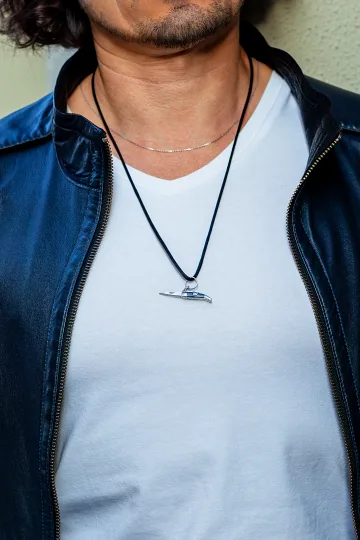




Facts about topaz that take people by surprise
Topaz sets the standard for hardness
Topaz serves as the official reference for hardness: step eight on the Mohs scale is defined by it. When a geologist in the field checks whether a mineral scratches or not, the number 8 in their memory is topaz.
Ancient "topaz" was usually a different stone entirely
The word is older than the mineral. The classical "topazion" from an island in the Red Sea was almost certainly peridot rather than our topaz. The name wandered from stone to stone for several centuries before settling on aluminium fluorosilicate.
Most blue topaz was born colourless
The bright blue lying in almost every display case was as clear as glass in nature. Its colour came from irradiation and an oven. Natural blue topaz does exist, but it is pale and rare, and it costs noticeably more.
"Heavyweight" was not an empty nickname
Uralian prospectors called topaz the heavyweight for a practical reason: it really is perceptibly heavier than the transparent quartz it resembles at the same size. That difference in weight is still used today as a first check against glass and imitation.
Rainbow mystic topaz is a film a few microns thick
The shimmering "mystic" stone is coloured on the outside rather than within: an extremely thin metallic layer is deposited on the underside, like an oil film on water. That colour can be rubbed away literally, with an abrasive, which is what happens to rings over time.
A single crystal can carry two colours
Some topaz shifts smoothly from pink to blue within one crystal. Such bicolours are a gift from geology: a change in growth conditions recorded directly in the colour of the stone, with every specimen unique.
Giants of tens of thousands of carats
Among cut gems, topaz holds the size records: clean stones exist running to thousands and tens of thousands of carats. Not one of them can be worn; they live in museum cases as monuments to a cutter's patience.
The colour can be switched off
Unstable colour centres make topaz one of the few gems that fades noticeably in sunlight. Antique wine topaz in museums has often become paler than it was meant to be: a century of daylight did the work.
About Zevira
Topaz is a stone with a history: of Egyptian amulets, Portuguese kings, Brazilian mines, light refracted through crystals of the earth. One mineral, yet a whole palette of colours, each with its own beauty.
In the Zevira collection, topaz pieces are chosen so the colour comes through fully: a ring with warm yellow topaz, a pendant with blue in a classic cut, a bracelet with pink. We're honest about treatment: if it's irradiated blue topaz, we say so plainly; if it's heated yellow, you'll know that too; natural pink is something special. You'll find the treatment information in every product's description.
If you're looking for a topaz piece to match your colour and your look, you'll find it at Zevira.
Wear the symbol, don't just read about it. These are in stock:

Frequently asked questions
Can topaz be worn every day?
Yes. A Mohs hardness of 8 makes it resistant to scratches. But bear the cleavage in mind: avoid sharp knocks. For everyday rings choose a protective setting; pendants and earrings are safer in this respect.
Is irradiated blue topaz safe?
Yes. Residual radioactivity is measured, and the stone only goes on sale once it has decayed to background levels. Wearing such a topaz is safe.
How do you tell natural blue topaz from irradiated?
Without a lab, it's difficult. A guideline: natural is usually pale, a soft blue; irradiated is bright and saturated. The precise answer comes from spectroscopy and a certificate.
Which topaz is the rarest?
Natural red, found mostly in Pakistan. After it, natural blue (without irradiation) and Brazilian Imperial Pink. Irradiated blue, by contrast, is the most common.
Can topaz fade in the sun?
Pink and red can gradually pale under long, bright sun. Blue is steadier, yellow dulls slowly. Take the piece off before sunbathing.
Can topaz be scratched?
Only corundum (9), diamond (10) or another topaz can scratch it. Dust and steel do it no harm. That's why you store topaz apart from other stones.
Is topaz suitable for an engagement?
Yes, pink, yellow or blue especially, as a coloured alternative to a colourless stone. For the ring a protected setting matters because of the cleavage.
Does synthetic topaz exist?
Yes, it's grown in a lab and is physically identical to the natural kind. But it's rare: natural topaz is cheap enough already, so growing it isn't worth it for jewellery.
Is topaz magnetic? Does it fear acids?
It isn't drawn to a magnet. It's inert to household acids and alkalis (vinegar and lemon juice do no harm); it reacts only to strong acids you wouldn't meet in ordinary life.
What is mystic topaz, and does it wear off?
It's colourless topaz with a wafer-thin metallic coating that gives a rainbow shimmer. The coating is very thin and fragile: friction, abrasives and ultrasound wear it away, and the stone goes patchy and dull. So mystic topaz is good in earrings and pendants but not in an everyday ring; clean it only with a soft cloth and warm water.
What is "Moon Topaz"?
Most often a marketing name for a light irradiated blue topaz or for coated glass. It's safer to go by the clear designations: sky blue, swiss blue, london blue.
How does a topaz crystal differ from a cut one?
A crystal is the untreated mineral in its natural form. A cut topaz is sawn and polished for shine and play of colour; it's the cut stone that goes into jewellery.
Why is blue topaz cheaper than sapphire when the colour looks similar?
Because the raw material is different. Blue topaz is produced by irradiating a common colourless stone, while natural blue sapphire is rare in itself. The colour can look alike, but behind sapphire stands scarcity and behind topaz stands availability plus a stable, repeatable treatment. For an everyday piece that is an advantage: a similar effect for a fraction of the outlay.
What do sky, swiss and london blue mean?
They are trade names for three typical shades of irradiated blue topaz rather than grades of the stone. Sky blue is light and gentle, swiss blue is bright and saturated, london blue is deep and almost inky with a grey undertone. Choosing between them is a matter of taste rather than quality: in every case the stone is the same mineral.
Are imperial topaz and precious topaz the same thing?
Broadly yes, both point to the warm golden-orange topaz from Brazil, sometimes with a pink undertone. There is no strict gemmological standard behind the term, so the line between an ordinary yellow and an imperial one is largely down to the seller's eye. On an expensive purchase, go by a laboratory report and by your own impression of the colour rather than by the grand word on the label.
Can I clean topaz at home?
Yes, ordinary cut topaz copes calmly with warm water, a drop of mild soap and a soft brush. The exceptions are coated mystic topaz and stones in delicate settings or with inclusions: those want a soft cloth only, with no brush, no chemicals and no ultrasonic bath. After cleaning, blot the piece and let it dry without applying heat, and if you live in a hard-water part of Britain, a final rinse in filtered water saves you a limescale bloom on the setting.
Topaz jewellery in every colour: yellow, blue, pink. Rings, pendants, earrings and bracelets in silver and gold.