Amazonite: the blue-green feldspar and everything worth knowing about it
The stone is named after a river where, in truth, it was never really mined. That is the first oddity about amazonite. The second: for a long time nobody could explain its deep blue-green colour, blaming first copper, then iron, until it turned out the real culprit was lead and tiny defects in the crystal. The stone is affordable, tough enough for daily wear, and unlike anything else in its shade. Below we go through the composition, the physics, the geology and the history without dressing it up, and along the way we explain how to wear it and how to tell it from a fake.
What amazonite is
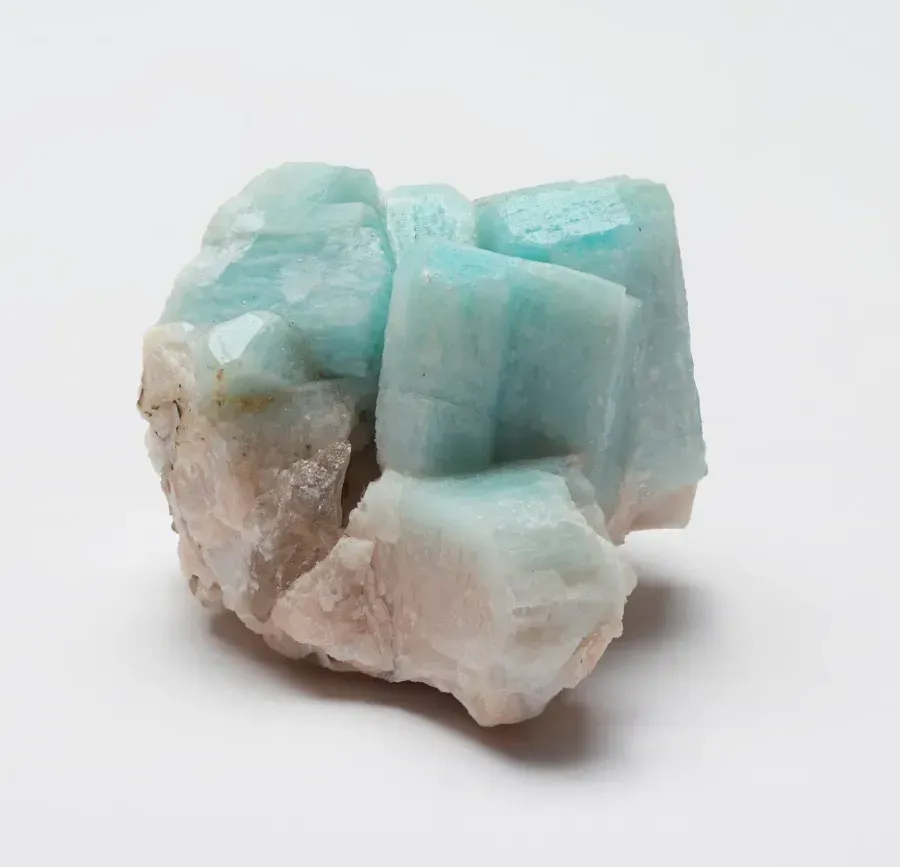
Amazonite is a blue-green variety of potassium feldspar, microcline to be precise. Feldspars make up almost half of the Earth's crust, so the mineral itself is utterly ordinary. The only thing that makes it special is colour: most microcline is white, cream or pinkish, while amazonite sits in a calm blue-green range, from pale turquoise to a dense seawater tone.
The name appeared in Europe at the end of the eighteenth century and was tied to the Amazon River in South America. The logic was simple: a pretty green stone arrives from the tropics, so it must come from there. It later emerged that there are practically no deposits in the Amazon valley itself, and the similar green stones the first travellers saw were most likely a different mineral altogether. The name stuck anyway, even though geographically it is almost accidental.
Wear the symbol, don't just read about it. These are in stock:


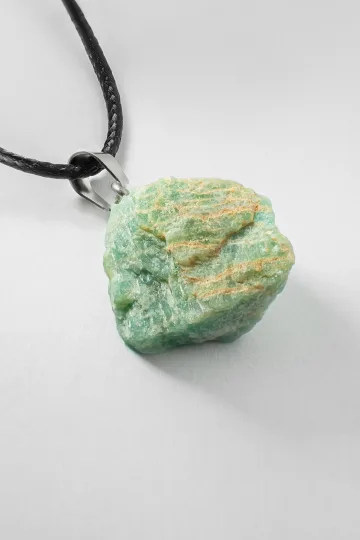



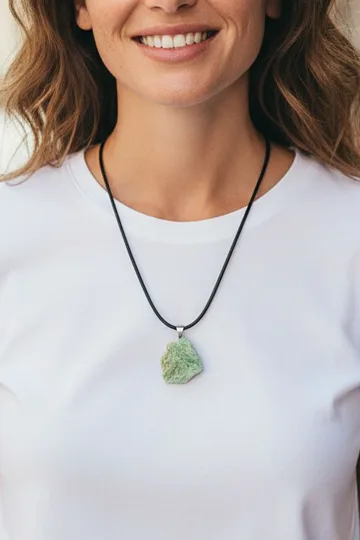

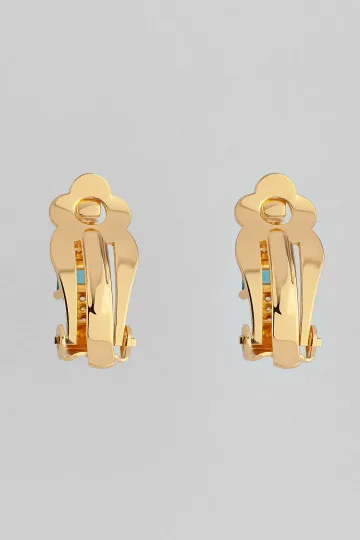

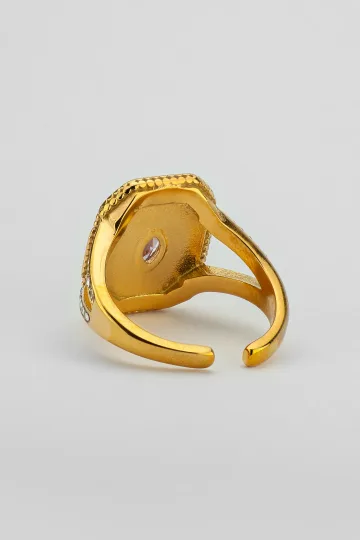
Chemical composition and formula
Amazonite is a potassium aluminosilicate with the formula KAlSi₃O₈. Orthoclase and sanidine share that same formula; all of them are polymorphs of potassium feldspar that differ in the internal ordering of their atoms. Amazonite belongs specifically to microcline, in which silicon and aluminium are distributed through the lattice in an ordered way (this is called the triclinic, low-temperature form).
Pure microcline is colourless. The colour of amazonite comes from impurities: the key role is played by lead built into the lattice, working together with traces of water and crystal defects produced by natural radiation. The older idea that copper or vanadium caused the colour is now considered mistaken in modern mineralogy. It is the lead-based centres that absorb part of the red-orange spectrum and reflect blue-green, which is why the stone looks the way we see it.
Physical properties
The key parameters of amazonite that matter when choosing and wearing it:
- Mohs hardness: 6-6.5. This is medium hardness. The stone is harder than glass and most household surfaces, but softer than quartz (7), let alone sapphire (9) and diamond (10). Sand, which always contains quartz particles, can leave micro-scratches on it.
- Density: roughly 2.55-2.63 g/cm³, like most feldspars. By weight amazonite feels lighter than quartz of the same volume.
- Crystal system: triclinic. Microcline has the lowest symmetry among silicates, which is where its characteristic twinning comes from.
- Cleavage: perfect in two directions, at an angle close to a right angle. This is its weak point: under a hard pinpoint blow the stone splits along cleavage planes rather than crumbling at random.
- Fracture: uneven to stepped.
- Lustre: glassy on fresh breaks; on finished stones more often silky-matte.
- Transparency: from translucent to opaque. Fully transparent amazonite is almost never found.
- Refractive index: around 1.52-1.53, with low dispersion. That is why amazonite does not throw fire like faceted transparent stones; its beauty lies in colour and in its characteristic pattern, not in the sparkle of facets.
The grid pattern and microcline twinning
If you look closely at amazonite, you can often see thin pale stripes that cross at almost a right angle and form a net. These are the so-called microcline twins, the result of the crystal reorganising as it cooled slowly. The white veins are usually ingrown albite (sodium feldspar) that separated out from the main mass. This pattern is both an ornament and a reliable marker of a natural stone: evenly coloured glass simply cannot reproduce it.
Why the colour is blue-green rather than blue or grass green
The shade of amazonite stays inside a narrow corridor between turquoise and sea water, and it rarely strays into a pure blue or a grassy green. The reason lies in the nature of the colour centres. Lead that has taken the place of potassium in the lattice, together with defects knocked out by natural irradiation, absorbs the red and orange part of the visible spectrum. What reaches the eye is the remainder, which is a mixture of blue and green. The more lead there is, and the heavier the dose of irradiation over millions of years, the deeper and cooler the tone. Pale stones usually hold less lead, or lay further from radioactive neighbours. So an evenly bright blue or a lush green amazonite scarcely exists in nature, and it is sensible to double-check a stone that shouts too loudly for added dye.
Can colour be strengthened or restored by heat and irradiation
The study of amazonite includes one curious experiment: heat a deeply coloured stone and it pales almost to white, because heat destroys the colour centres. Subsequent irradiation can bring the colour back. These are laboratory observations rather than everyday jewellery practice, since an irradiated stone needs a resting period and monitoring, and honest sellers declare such material separately. For a buyer the conclusion is simple: the natural colour of amazonite is stable in ordinary wear and in sunlight, but it fears strong heat, which is one more argument against steam and ultrasonic cleaning.
How amazonite behaves on a break and under a loupe
On a fresh break amazonite shines glassily and shows flat mirror-like cleavage faces, as though thin plates were stacked inside the stone. That follows directly from perfect cleavage in two directions. Under a loupe a good stone shows that the colour lives in the body of the mineral rather than sitting as a film on the surface, and that the pale albite veins run into the depth rather than being painted on. Those two signs, colour with volume and glassy steps on the break, are more reliable than anything a seller can tell you.
How amazonite forms
Amazonite crystallises from residual melts and solutions rich in potassium during the late stages of granitic magma solidifying. It is most often found in pegmatites, the coarse-grained veins that form when the last, most volatile-rich portions of magma cool slowly in the cracks of already-solid granite. Slow cooling produces large, well-shaped crystals, sometimes the size of a fist or larger.
Two conditions are needed for that blue-green colour to appear: enough lead to take the place of potassium in the microcline lattice, and natural irradiation from neighbouring radioactive minerals forming the colour centres. This is why amazonite is often found near minerals containing rare elements and uranium with thorium. It explains why it does not form just anywhere, only in a specific geochemical setting.
Main deposits
Only a handful of regions yield quality jewellery-grade amazonite.
Russia, the Kola Peninsula and the Urals. One of the best-known sources of deep green amazonite. The Kola pegmatites (Khibiny, Keivy) and the Ural deposits produce stone of a rich, cool shade. Russian amazonite has historically gone into both jewellery and carved objects.
USA, Colorado. The famous pegmatites of the Pikes Peak district became renowned for striking intergrowths of bright green amazonite with smoky quartz. These are among the most expressive collector specimens in the world.
Brazil. Despite the stone's name, Brazilian amazonite is mined not in the Amazon valley but mainly in the state of Minas Gerais, in granitic pegmatites. The shades run from pale to dense blue-green.
Madagascar. Supplies a large volume of amazonite for beads and cabochons, the colour usually lighter, with white veining.
Beyond these, amazonite also turns up in Canada, Peru, Namibia, India and several other countries. Most of the output is a by-product of feldspar and pegmatite mining.
Why stone from different places looks different
A practised eye can often guess the origin of amazonite from the character of its colour and pattern. Material from the Kola peninsula and the Urals is known for a deep, cool tone with a crisp grid. Colorado gives bright crystals, especially striking in intergrowths with smoky quartz. Brazilian material covers a wide range, from pale to a dense blue-green, and often goes by the sackful into bead strands. Madagascan stone is usually lighter, with noticeable white albite veining. The difference is not one of quality as such but of the geochemistry of a particular pegmatite: how much lead got in there, and what the dose of natural irradiation was. Two stones at the same price can therefore differ in depth of colour, and they are worth comparing in person rather than by the name of a region.
How rare it is
As a mineral, amazonite is common. As a jewellery material it is moderately widespread: clean, evenly coloured stone of a deep tone without cracks turns up noticeably less often than ordinary cloudy material. So in jewellery amazonite occupies a niche between truly mass-market ornamental stones and expensive transparent gems. It is an affordable natural stone, and it is precisely that affordability that makes it convenient for everyday pieces.
Customer reviews
Zevira is a real jewellery shop. Genuine payments, deliveries and customer thank-yous.
🥰🥰🥰 gracias

Ok, ¡gracias! 🙂

One amazonite on a bare wrist, linen sleeve pushed to the elbow. Pile on five stones and you've built a market stall, not a look. Take them off.
What to wear amazonite with
After years working with coloured stones, amazonite has become my safety net: cool, calm, never at war with the outfit. Here is what actually works, sorted by occasion.
What do I wear amazonite with every day? For everyday I recommend a thin bracelet on an elastic cord or stud earrings. The cool blue-green stone looks best against a natural palette: sand, olive, warm grey, washed blue. Light cotton and linen bring out its matte depth better than glossy fabric, so under a plain white shirt or a linen dress I suggest a matte stone rather than an over-lacquered one.
Is it right for the office? Yes. Here I choose a pendant on a 40-45 cm chain: it sits between the collarbones and reads as a neat detail, not a loud accent. For a business look I recommend silver or white gold, the cool metal continues the line of the stone and keeps a restrained tone. Save yellow gold for dressier days.
How do I build an evening look? For evening I suggest a boat neckline or bare shoulders, when the neck and décolleté are free. Amazonite set in silver reads cleanly here, and an elongated pendant of 50-60 cm lengthens the silhouette under a full-length dress. When you want warmth and shine, I choose a yellow-gold setting, which gives a dressy contrast on a deep-toned stone.
How should I wear amazonite for a special occasion? For a special day I line up a few pieces: an amazonite bracelet, a thin silver bracelet and a strand of rose quartz. The pairing of cool blue-green and warm pink looks considered rather than accidental. One rule I keep: never more than two metals in a look, and let one prominent piece lead.
Who does amazonite suit especially? Those who love a calm, natural palette rather than the flash of faceted stones. On darker skin a copper setting is striking, on fair skin I recommend silver. The stone is neutral in meaning, so it belongs equally in a woman's or a man's look, and the "women's stone" label decides nothing here.

Turn on your camera, pick earrings, a pendant or a ring, and see the piece on yourself in real time.
Switch items in one tap.
Everything runs in your browser: no photo or video is ever uploaded.
History of use
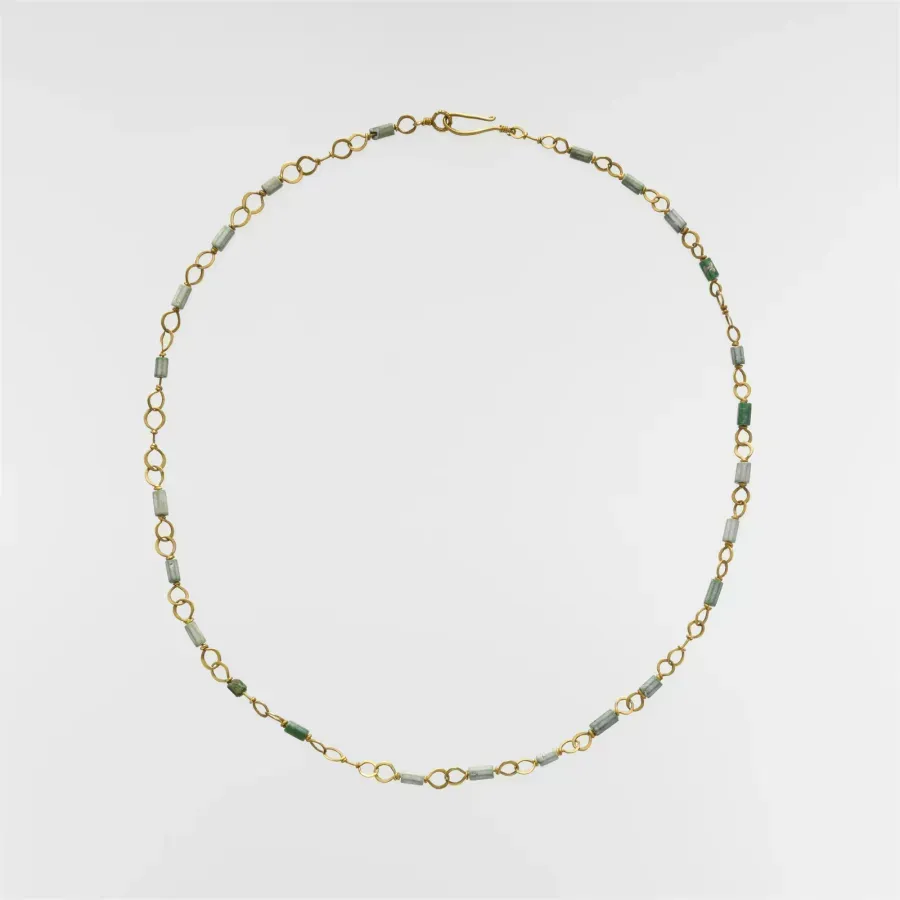
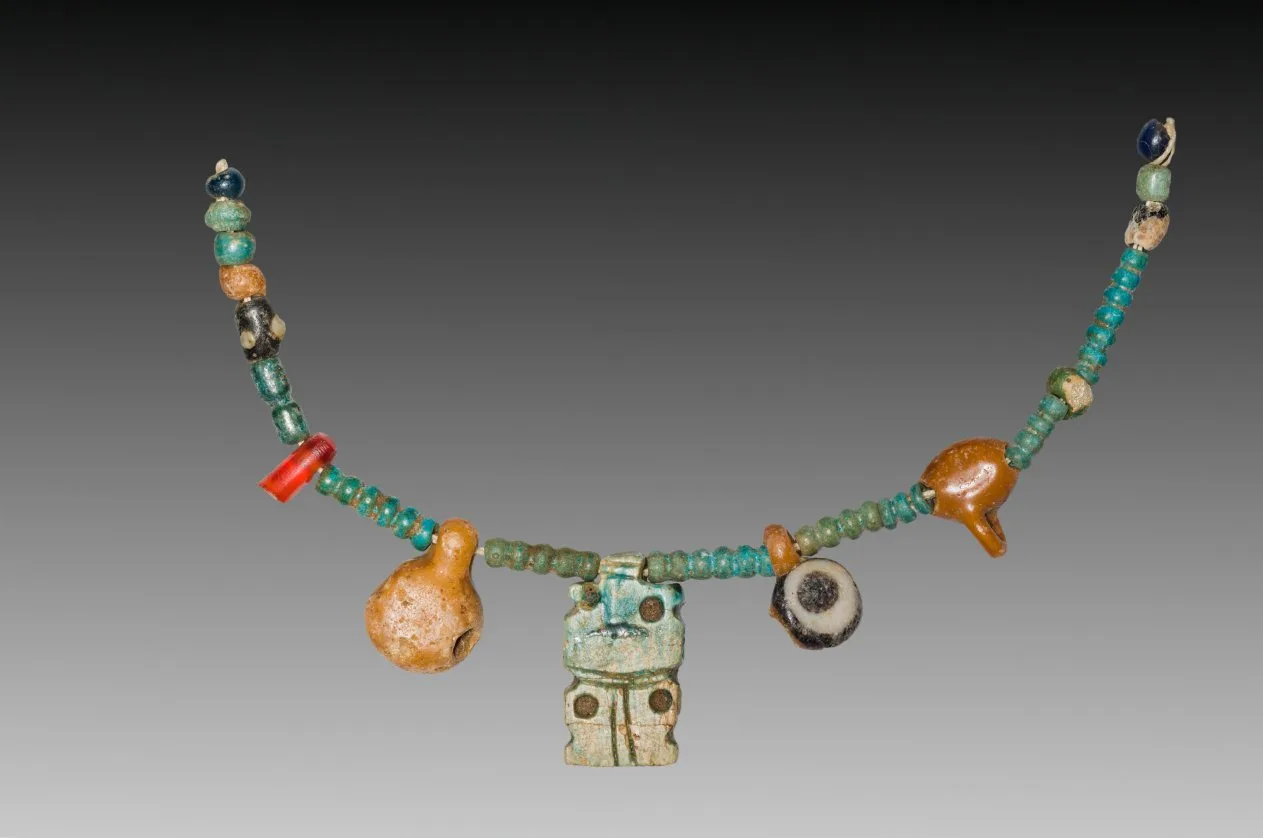
People used green feldspars long before the stone acquired its current name. It is well established that amazonite was already in use in Ancient Egypt: it was carved into beads, amulets and inlays, and the material has been found in burials, including among the objects in the tomb of Tutankhamun. The source for the Egyptians is thought to have been deposits in the Eastern Desert and the Tibesti region of the Sahara.
Green feldspar was also used by the ancient cultures of Mesopotamia and by the peoples of pre-Columbian South America, who made beads and inlays from it alongside other coloured stones. It usually had no special sacred status of the kind given to gold or turquoise; what was valued above all was its colour and workability.
The word amazonite itself came into use at the end of the eighteenth century, when it was linked to the Amazon River. The link turned out to be wrong as far as origin goes, but the name took hold in mineralogy. In the nineteenth and twentieth centuries the stone was used in stone-carving and in jewellery, especially where people valued an even colour and a calm matte texture that does not compete with the sparkle of transparent gems.
It is worth saying outright: there are no reliable sources for the pretty legends about Amazon warriors supposedly wearing this stone. That is a later romanticisation that grew out of a coincidence of names. The real history of amazonite is a history of carvers and jewellers, not of mythical tribes.
Amazonite in Ancient Egypt
Egypt has left the most reliable traces of the ancient use of green feldspar. Beads, scarabs, small amulets and inlays of amazonite turn up in burials of various periods, and the material is recorded among the objects from the tomb of Tutankhamun. Green in Egyptian symbolism was tied to rebirth and growth, to sprouting grain and the flooding of the Nile, which is why green stones were valued in funerary ornament. Amazonite went into use alongside turquoise, malachite and green faience, and ancient craftsmen did not always distinguish one green material from another. The sources, researchers believe, were deposits in the Eastern Desert near the Red Sea and the distant Tibesti massif in the central Sahara.
Mesopotamia and the East
Green feldspar was known between the rivers as well. It and similar stones were carved into cylinder seals, beads and inlays. No particular cult grew up around the material; what was valued was the even, calm colour and the fact that the stone takes carving and polishing well. This applied, workmanlike career is characteristic of amazonite in general: it was almost always a handsome working material rather than a sacred rarity.
Pre-Columbian America
The peoples of South and Central America also used green feldspars in beads, pendants and mosaic inlays alongside jade, turquoise and other coloured stones. Green in these cultures was often connected with water, fertility and life. Curiously, it was tropical America that gave the stone its European name, although the valley of the Amazon itself holds almost no deposits, and the green stones the first travellers brought back were in all likelihood other minerals.
Where the name came from and why it is wrong
The word amazonite took hold in Europe at the end of the eighteenth century. The reasoning of those who coined it was naive: a beautiful green stone comes from the tropics of South America, therefore its home must be there, on the great river. Geologists later established that there are no commercial deposits in the Amazon basin, and that the early finds had been confused with other green stones. By then the name had entered scientific use and stayed. The result is that rare case of a mineral carrying the geographical name of a place where it is barely mined at all, and the mistake has stuck more firmly than any correction.
Stone-carving in the nineteenth and twentieth centuries
When the Russian pegmatites of the Urals and the Kola peninsula yielded deep green amazonite, the stone went into the carving workshops. It was turned into inlays, signets, small sculpture and cabinet pieces, valued for an even matte tone that neither argues with the gold of a setting nor dazzles the way a faceted transparent gem does. In jewellery amazonite settled into the quiet niche of an everyday coloured stone, and the reputation of a convenient, even, inexpensive but dignified material has stayed with it ever since.
Upload a photo of your pet, someone you love, or an object. We'll build a 3D model and hand-cast it in pewter.




Varieties and lookalike stones
Amazonite is not divided into strict grades, but in practice stones are distinguished by colour and pattern:
- Deep blue-green without noticeable cloudiness is valued most highly.
- Pale, turquoise-tinted stone with white albite veining is common in bead strands.
- Amazonite with smoky quartz (the Colorado classic) is prized by collectors for the contrast.
What it gets confused with and how to tell them apart:
Turquoise. A similar shade, but turquoise is softer (hardness around 5-6), usually more uniform or with a dark matrix web rather than pale grid-like twinning. Amazonite has a characteristic glassy texture on a fresh break.
Chrysocolla and chrysoprase. These can also be blue-green, but their nature is different: chrysocolla is soft and often porous, while chrysoprase is a chalcedony with a hardness of 7 and no feldspar cleavage.
Labradorite and moonstone. These are related feldspars, but you recognise them by their optical effects: the iridescence of labradorite and the adularescence (bluish glow) of moonstone. Amazonite has no such glow; its colour is the body colour of the stone itself.
A quick crib for telling them apart
Reduce the signs to a single logic and amazonite is recognised by three things at once: the cool blue-green colour lives in the body of the stone, there is pale grid-like twinning or albite veining, and on a break the lustre is glassy with cleavage steps. Turquoise is softer and more uniform, chrysocolla is soft and porous, chrysoprase is hard and single-toned with no grid, the jades are tough and do not chip, and dyed quartzite is granular. When all three amazonite signs line up, a mistake is unlikely.
How to tell it from a fake
Dyed glass, pressed crumb or single-tone plastic are most often passed off as amazonite. What to check:
- Pattern. Natural amazonite almost always has white veins and grid-like twinning, an unevenness of colour. A perfectly even, flawless stone should put you on your guard.
- Coolness and weight. The stone feels cool to the touch and does not warm up quickly; glass warms in the hand more slowly, while plastic quickly becomes warm and is noticeably lighter.
- Hardness. Glass (5.5) and plastic are softer and scratch more easily, but a scratch test should only be done in an inconspicuous spot and carefully.
- Bubbles. In dyed glass you can often see rounded air bubbles under a loupe; in natural stone there are none.
A fully dyed, single-tone stone with no structure, passed off as expensive deep amazonite, is a reason to start asking the seller questions.
How amazonite is enhanced
Unlike agates or turquoise, amazonite is rarely dyed: its own colour is attractive enough, and dyeing dense feldspar evenly is difficult. But three treatments do occur, and they are worth knowing about.
Wax and resin impregnation. The most common and harmless procedure. Porous or cracked cabochons and beads are impregnated with colourless wax or resin to even out the surface and deepen the colour. The treatment is stable, but for exactly that reason such a stone dislikes hot water and ultrasound: heat softens the impregnation and spoils the lustre.
Crack tinting. In cheap material the white veins are sometimes tinted to pass a pale stone off as a deep one. The tell: the colour pools along the cracks unnaturally sharply, and under a loupe you can see the dye sitting in the recesses rather than in the body of the stone. A drop of acetone on an inconspicuous spot will often defeat such a dye.
Composite stones (doublets). A thin slice of amazonite is glued to a backing of cheap material to make a large cabochon out of a small piece. The seam is visible from the side at an angle, especially if the stone is not in a closed setting. Doublets are almost never found in beads; this is a matter for large inlays.
Natural, unimpregnated amazonite of good colour needs none of the above, and an honest seller will calmly tell you whether the stone has been treated.
Which metal and setting it goes into
Cool blue-green amazonite gets on with cool metal. Silver and white gold continue the line of the stone and hold a restrained tone, which is why they are chosen most often. Yellow gold gives a warmer, dressier contrast, especially on a dense saturated stone. Copper and brass settings suit pieces with an ethnic character and look striking on deeper skin tones. Because of its medium hardness and perfect cleavage, a bezel or a raised setting that shields the vulnerable edges of the stone is the sensible choice for rings. In earrings and pendants almost any mount will do, since the stone takes barely any knocks there.







Symbolism without exaggeration
In the literature on stones, amazonite is traditionally credited with calm, balance and help in communication, and is sometimes called a women's stone, linked to the Amazons. This is best treated as a cultural tradition rather than a fact: amazonite has no proven physical or healing effect, and no stone cures anything, lowers blood pressure or replaces a doctor or specialist.
There is, however, an understandable reason why people enjoy wearing it. The calm blue-green colour is visually associated with water and greenery; many people simply like it and find it easy on the eye. A smooth, cool stone is pleasant to the touch. This is aesthetics and habit, not magic, and there is nothing wrong with that: a beautiful piece of jewellery is valuable in its own right.
Why it gets called a women's stone
The nickname women's stone was born from the coincidence of the name with the Amazons, the legendary tribe of warrior women in Greek myth. The logic is purely verbal: amazonite, Amazons, therefore the stone is feminine. There is no historical connection between the mineral and those tales, nor any confirmed evidence that amazonite acts in some special way on women. It is a pretty label rather than a property. Reducing a stone to gender is odd in any case: colour and texture appeal to people regardless of sex, and a calm blue-green tone works equally well in a woman's piece and a man's. If the label helps someone choose a gift, no harm done, but it should not be mistaken for a fact about the stone.
Colour, calm and the expectation effect
Blue-green belongs to the cool half of the spectrum, and many cultures associate such shades with water, rest and quiet. Hence the durable association of amazonite with calm. What works here is not the stone but the colour and the context: a pleasant object on the hand, the small ritual of putting jewellery on, the thought of something restful. This is the expectation effect familiar to psychologists, and it does not turn a stone into medicine. Saying so plainly is actually better for the buyer: you value amazonite for what it genuinely gives, a beautiful colour, a pleasant weight and durability, rather than for promises nobody can check.
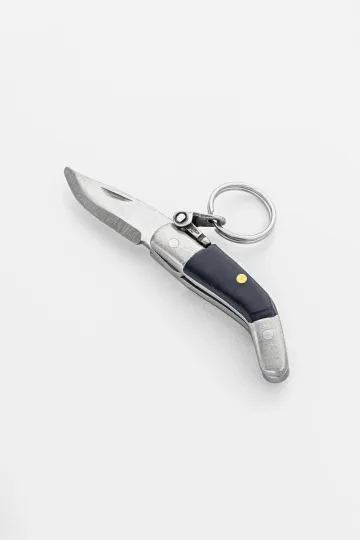
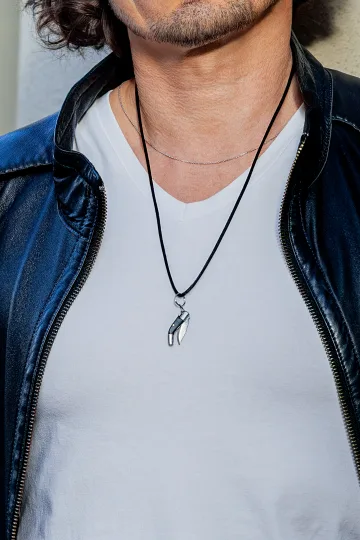
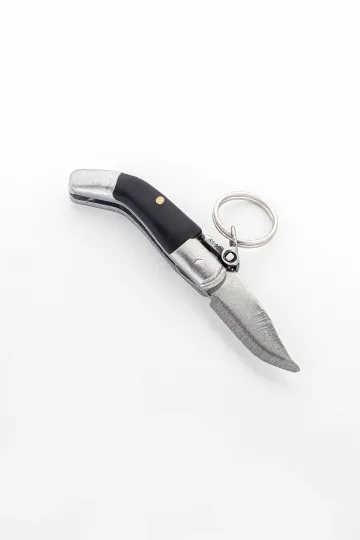
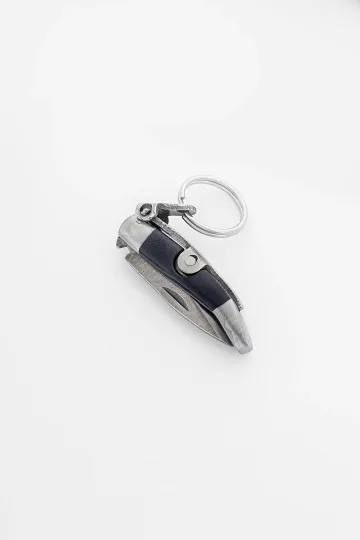
CAPAORA mini knife pendant
The 18th-century Spanish navaja in miniature: 40 mm of stainless steel, a real folding mechanism and a Palanquilla lock that clicks. An affordable gift to remember.
Authentic · Ships from Spain · 14-day returns
Amazonite in culture and everyday life
The green stone as a sign of water and growth
Across different eras and peoples, green and blue-green stones drag the same circle of meanings behind them: water, spring, sprouting grain, renewal. Egyptians placed green in burials as a promise of rebirth, and farming cultures tied the colour to the harvest. Amazonite fell into that common current alongside turquoise, malachite and jade. It had almost no mythology of its own; it shared the symbolism of all green stones at once, and there lies its honest, workmanlike role.
Amazonite in mineral collections
Among collectors amazonite holds a special place thanks to the classic intergrowths from Colorado: bright green microcline crystals against smoky quartz make one of the most recognisable mineral images there is. Such specimens are prized not for the size of an inlay they could yield but for the aesthetics of a natural pairing of colour and form. A good crystallised specimen with crisp faces and living colour is valued by collectors above an ordinary jewellery cabochon of the same weight.
Amazonite as a gift
A calm blue-green stone is easy to give precisely because it imposes no image and is not tied to a strict occasion. It suits an anniversary, or no date at all, and it suits a person who dislikes showy jewellery. The colour is neutral, and the metal can be chosen to the recipient's taste, silver for a restrained look, warm gold for a dressier one. Add the accessible price of a good natural stone and amazonite turns out to be that rare gift that looks dignified without putting anyone in the awkward position of receiving excessive luxury. If you want to add meaning, you can honestly cite the old tradition of linking it to calm, without passing that off as a healing property.
Why people are drawn to calm stones
The choice of a piece of jewellery often says more about mood than about taste alone. Bright gems with a play of facets attract those who want sparkle and attention. Matte stones of an even colour, amazonite, turquoise, jade, moonstone, get chosen when someone wants quiet and a natural palette nearby. There is no magic and no obligation in that: a calm colour simply does not tire the eye and lives happily with any clothing. Amazonite is convenient for exactly that reason, it does not argue with a look and asks for no special occasion.
Leave your email, we'll send your discount code. No spam, unsubscribe anytime.
The code arrives by email, valid on your first order.
How to choose amazonite when buying
Amazonite is almost never cut with facets: its low refractive index (around 1.52) and opacity give no play of light, so a facet would look dull. It is worked as a cabochon, a bead, a flat inlay, or tumbled (roughly rounded) for loose pieces. This means that what matters to the buyer is not clarity against the light but four other parameters.
Colour and its evenness. The most expensive amazonite has an even, deep blue-green tone throughout the body of the stone. Cheaper is the one where the colour is ragged, with large whitish zones or a greyish murk. The grid pattern and thin albite veins are the norm and even a virtue, whereas a dirty grey murk that dulls the colour is a minus.
Polish. A well-polished cabochon gives an even silky-glassy sheen without orange peel or scratches. Matte patches mean the stone is either poorly finished or already worn.
Symmetry and calibration in beads. In a strand the beads should be close in size and tone. A strong mismatch of colour within one strand means the material was assembled from different pieces and is often tinted to disguise it.
Integrity. Against the light and under a loupe, check for chips at the edge of the bead hole and cracks along the cleavage planes: those are exactly where the stone will later split. A fine net of veins is safe, but a through crack is a weak point.
For an everyday piece, go for earrings, a pendant or a bracelet: these take almost no knocks. A ring with amazonite makes sense only in a protected setting and not for daily wear.
Which stones it pairs with
Amazonite looks good alongside cool and neutral stones. With rose quartz you get a soft contrast of warm and cool. With amethyst the blue-green sits next to violet, both muted, and the look comes out calm. With moonstone and labradorite, amazonite falls into a natural feldspar palette, related in texture. If the idea of combining green and pink within a single stone appeals to you, look at unakite, where both colours are fused into one material, and for more on violet quartz see the piece on amethyst. Among the light matte stones of a similar restrained texture, magnesite is also worth a mention: white and quiet, it sets off the cool blue-green of amazonite nicely.
Caring for amazonite jewellery
A hardness of 6-6.5 and perfect cleavage dictate a simple rule: amazonite dislikes knocks and abrasives. Handled with care it lasts for decades; handled carelessly it easily takes a chip along a cleavage plane.
Cleaning. Warm (not hot) water, a drop of mild soap, a soft cloth or a brush with very soft bristles. Rinse and wipe dry. That is enough for ordinary grime from skin and cosmetics.
What to avoid. Ultrasonic and steam cleaning are unsuitable: vibration and sudden heat can open micro-cracks along the cleavage. Household chemicals, chlorine, acids, alcohol and abrasive pastes are also off limits; they spoil the polish and can etch into the surface.
Storage. Keep it apart from harder stones (quartz, topaz, corundum) and from metal to avoid scratches. A soft pouch or a separate compartment in a box is best. Sharp temperature swings are also worth avoiding.
Wearability by type of jewellery. Earrings and pendants wear little, as they barely come into contact with hard surfaces. Bead bracelets may lose a touch of lustre over time from friction, but the structure stays intact. For rings worn daily, though, amazonite is a risky choice: hands are constantly knocking against things, and the stone is easy to scratch or chip. A ring with amazonite is more sensibly worn on occasion, or chosen with a setting that has protected edges. The good news is that amazonite does not fade in the light; its colour is stable, unlike, for example, amethyst.
When to take amazonite off
A few simple habits will extend the life of a piece. Take a ring or bracelet off before cleaning the house, before sport and before any work with your hands: that is exactly where the knocks and the contact with abrasives happen. Apply cosmetics, scent and cream before you put the jewellery on, so the chemistry does not settle on the stone or work its way into the impregnation if there is one. Amazonite is better removed before a shower, a sauna and a swimming pool: hot water, steam and chlorine do it no favours. These rules are not demanding, and treated with care amazonite serves calmly for decades, passing from one owner to the next.
How to bring the lustre back to a dulled stone
Over time the surface of a cabochon or a bead can lose its mirror finish through fine scratches and friction. At home it cannot be restored with abrasive pastes; those only damage the polish. A lapidary, though, can repolish the stone and return its silky, glassy sheen, provided the thickness of the piece allows a thin layer to be taken off. That makes sense for an expensive inlay and almost none for an ordinary bead, which is simpler to replace. The colour itself does not suffer: it lives in the body of the stone rather than on the surface.
Facts that surprise
Amazonite is one of those stones whose most interesting side hides in the details. Here are a few things that surprise even people who have worn coloured stones for years.
The stone is named after a place where it barely occurs. Commercial deposits of amazonite in the Amazon basin are practically non-existent. The name was given in error in the eighteenth century, through confusion with other green stones from the tropics, and correcting it proved impossible.
Lead gives it its colour. For a long time copper was suspected, as with turquoise and malachite. In fact the blue-green comes from lead atoms built into the lattice plus defects knocked out by natural radiation over millions of years. In ordinary wear that lead is locked inside the crystal and entirely safe.
Heating erases the colour and irradiation brings it back. Heat a deep amazonite strongly and it pales almost to white, because heat destroys the colour centres. Subsequent irradiation can restore the colour. This is a laboratory experiment, and it shows very clearly where the colour comes from.
It is a relative of moonstone and labradorite. All three are feldspars, close kin chemically. But moonstone has its glow, labradorite its flashes of colour, and amazonite simply its own dense body colour with no optical effects at all.
The grid pattern is cooling frozen in place. The fine net of pale stripes on the stone, the microcline twinning, formed as the crystal slowly reorganised while cooling. In effect you are looking at a stage of mineral growth frozen in time.
People wore it long before it had a name. Beads and amulets of green feldspar are found in Egyptian burials, including among the objects of Tutankhamun. So the stone was in use for thousands of years before Europeans invented the word amazonite.
The most famous specimens grow with smoky quartz. In the pegmatites of Colorado, bright green amazonite crystals intergrow with smoky quartz, and those combinations are reckoned among the most beautiful natural pairings in the mineral world.
It is a variety of the most ordinary mineral there is. Feldspars make up nearly half the earth's crust. Amazonite is a guest of rare colour in the family of the most widespread minerals on the planet.
Send a friend a discount code, they save on their first order.
Frequently asked questions about amazonite
Is amazonite a precious or semi-precious stone?
Formally it is classed as semi-precious (an ornamental-jewellery stone). The division into precious and semi-precious is itself now considered conventional. It is more accurate to say: amazonite is a natural coloured stone, beautiful and tough enough for jewellery.
Why is amazonite blue-green?
Because of a lead impurity in the crystal lattice of the microcline and natural irradiation that creates colour centres. These centres absorb part of the spectrum and reflect blue-green. The old story about copper is wrong.
What is amazonite's hardness, and can it be worn every day?
6-6.5 on Mohs. Bracelets, pendants and earrings handle daily wear with ease. Rings are best protected from knocks or worn on occasion.
Does amazonite fade in the sun?
No. Its colour is light-fast and does not fade over time. Only the polish may dull slightly from wear, and a craftsman can restore it if needed.
How can I tell natural amazonite from glass or plastic?
Look for white veins and a grid pattern, an unevenness of colour. A natural stone is cool to the touch and heavier than plastic. In dyed glass you can often see air bubbles under a loupe. A perfectly even, single-tone stone is a reason to be doubtful.
Where is the best amazonite mined?
Deep green from Russia (the Kola Peninsula, the Urals) and striking intergrowths with smoky quartz from Colorado are considered among the best. Large volumes come from Brazil and Madagascar.
Is amazonite safe, given that it contains lead?
The lead is built into the crystal lattice in a small amount and, with ordinary jewellery wear, is not released and is not dangerous. It is enough not to chew or lick the stone and to wash your hands after handling untreated specimens. That is sensible hygiene for any mineral.
What should amazonite not be confused with?
Most often with turquoise, chrysocolla and chrysoprase. It is distinguished from turquoise by its grid pattern and glassy break, from chrysoprase by the absence of a chalcedony nature and its lower hardness, and from moonstone and labradorite by the absence of an internal glow.
Can amazonite be cleaned in an ultrasonic bath?
No. Perfect cleavage and possible micro-cracks make ultrasound and steam risky. Only warm water with mild soap and a soft cloth.
Buying it as a gift? Each one arrives ready to give.
 A branded Zevira box and a little card come with every order.














The short version
Amazonite is a blue-green microcline, a variety of the most common mineral in the Earth's crust, given its rare colour by lead and crystal defects. It forms in granitic pegmatites, and the best stones come from Russia, Colorado, Brazil and Madagascar. Its hardness is medium, which makes it convenient in bracelets, pendants and earrings and calls for care in rings. The grid pattern, white veins and glassy lustre help you recognise it. The calm and other properties attributed to it belong to the realm of tradition; the value of the stone lies in its colour, texture and durability.
Wear the symbol, don't just read about it. These are in stock:


About Zevira
Every piece of jewellery with natural stones is a small story, chosen specifically for you. The amazonite in our collection is selected for colour and quality, set in silver or gold, made by craftspeople who value clean colour and careful work.