Angel Numbers: The Meaning of 111, 222, 333, 444 and Jewelry With Your Number
Introduction: the digits you suddenly start noticing
First it's 11:11 on your phone. Then 222 on a receipt, 333 on the license plate ahead of you, 444 as an order total. It feels as though the world keeps winking at you with one particular figure. That sensation even has a scientific name, the Baader-Meinhof phenomenon, and it sits right next to a huge layer of esoteric tradition that calls these sequences angel numbers.
The idea is simple. A repeating string of digits that you suddenly see more often than usual gets read as a sign or a nudge. Each combination carries its own familiar meaning: 111 for beginnings, 222 for balance, 444 for protection, 777 for luck. Over the past few years the subject has moved from niche numerology into a mass language: people write about the numbers, engrave them on pendants, and give them as personal talismans.
This guide is honest from both directions at once. I'll walk through what each number traditionally means and where the idea came from, from Pythagoras to the popularizing of the term at the end of the twentieth century. And right alongside that I'll explain why the brain is so eager to catch these coincidences, no mysticism required, in the plain language of perception psychology. At the end I'll show how a number turns into jewellery: a pendant with "your" figure, an engraved date, a personal gift.
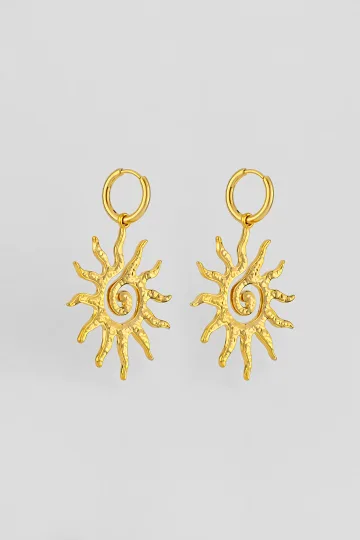
Wear the symbol, don't just read about it. These are in stock:



What angel numbers are
Repeating sequences
An angel number is a short combination of identical or ordered digits that supposedly carries a message. The classic set looks like this: 000, 111, 222, 333, 444, 555, 666, 777, 888, 999, plus the "mirror" and clock forms 1010, 1111, 1212. Sometimes people add personal combinations like 1234 (steady growth) or a birth date.
The key word is repetition. A lone 2 gives nobody a shiver, but a triple 222 or a quadruple 2222 already reads as "too often to be chance." The longer the run, the stronger the sense of a signal. For the same reason 1111 is treated as the most "powerful" number: four ones in a row appear on a clock exactly once a day and stick in memory.
How people notice them
Angel numbers usually get noticed in fleeting places: the clock on a phone, a car plate, a shop receipt, a like count, the time of a call. Practitioners advise you to "catch" the figure, pause, and think about what was on your mind in that moment. In esoteric logic, the coincidence of a thought and a number is the message.
There's an important detail worth keeping in mind here, one I'll come back to in the skeptical section. Digits on clocks and receipts flash past us hundreds of times a day. We simply don't register most of them. A neat repeat, though, jumps out and lodges in memory. The feeling of "I see it constantly" is born not from the frequency of the event but from the selectivity of attention.
Angel numbers and life-path numerology
Angel numbers grew out of numerology, an ancient system that assigns meaning to every digit. In life-path numerology, a name and birth date get reduced to a single digit by addition, and that digit supposedly describes a person's character and path. One is about leadership and starting out, two about partnership, three about creativity, four about order and work, and so on up to nine.
Angel numbers borrow the same alphabet of meanings but apply it to "random" encounters with digits rather than to a birth date. If 4 in numerology is stability and support, then 444 reads as an amplified signal of stability. The logic of addition and amplification repeats the basic numerological grammar, which is why the meanings of numbers broadly agree across different sources. I go into the symbolism of signs as such in the big guide to jewelry symbols and their meanings.
Angel numerology: one shared dictionary of meanings
Angel numerology isn't a separate science but an applied dictionary: a set of settled readings that carries the meanings of individual digits over to repeating combinations. In it, one is always about starting, two about union, four about support, seven about luck, and repetition simply amplifies the base quality. The convenience of the dictionary is that the meanings are easy to memorise and attach to any digit you meet. Its weakness is that the dictionary is flexible: different authors shift the emphasis, and there's no rigid canon. So it's sensible to hold angel numerology as a language of metaphor, not a reference book of exact predictions. Below, the readings are given in the most widespread version, with no claim to being the only correct one.
Repeating numbers: why the repeat is what matters
A single digit is barely read as a sign, while a repeat turns it into a signal. The reason is psychological: the brain reacts to symmetry and regularity, which stand out from the noise of random digits. Three or four identical digits in a row are statistically rare at the precise moment you look, so they feel like a coincidence with meaning. Tradition holds that the longer the repeat, the stronger the message: 11 is weaker than 111, and 111 is weaker than 1111. In reality it isn't the power of the sign that works but the visibility of the pattern. Repeating numbers are easier to remember and harder not to see, and that's exactly why the whole system is built around them rather than around single digits.
Wear one number, your own. A cluster of digits on a chain is a phone book, not a sign.
What to wear a number pendant with
Over the years a number pendant has passed through dozens of looks with me: for everyday, for going out, as a gift. I've gathered here what actually works, by occasion.
Which number should you choose to wear every day? One number, your own. I recommend settling on a date or a combination that means something to you, and not hanging three more next to it "just in case." A single figure on a clean chain reads as a sign, while a cluster of numbers turns into a set of symbols with no meaning. If you're torn between two, I'd choose the one that's easier to explain in a single phrase.
Which metal would you suggest for an engraved number? For a cool skin undertone I'd choose silver: a calm tone, and fine engraving reads clearly on it. For a warm undertone I recommend gold, which is softer and holds the cut longer without losing contrast. The figure is small, so what matters is not the alloy but the depth of the engraving: the crisper the cut, the longer the number stays legible.
Hide the number or bring it out? It depends on who the sign is for. If the number is only for you, I'd suggest a hidden engraving on the inside: smooth metal outside, the meaning known only to you. If you want the figure to be read, I recommend a delicate engraving on the front and a smaller pendant, so the number doesn't turn into a signboard.
What chain length should you take for such a pendant? For a closed collar I'd choose a shorter chain, 45-50 cm, so the pendant sits at the collarbone rather than getting lost under the fabric. For an open neckline I recommend dropping it a little lower, so the number lands in the open area and reads. The rule is simple: you pick the length to fit the neckline, not the other way around.
How do you build a meaningful gift out of a number? I match the figure to the person and the occasion: the date of an important day, a combination with a clear meaning, the number of the year. A birthstone by the recipient's month sits well next to it. I'd suggest tucking in a short note with the decoding: the gift then reads at once as a piece of jewellery and as a personal message, without the awkward "so what does this mean."
And a paired version for two? For a couple I recommend two matching pendants or rings with a shared date and the same metal. One tone holds the set together visually, and the engraving inside turns the pieces into a shared code, understood only by the two of you. It's quieter than a heart and works as a calm keepsake of one day.

Turn on your camera, pick earrings, a pendant or a ring, and see the piece on yourself in real time.
Switch items in one tap.
Everything runs in your browser: no photo or video is ever uploaded.
Where the idea came from
Pythagoras and the birth of numerology
The roots reach back to ancient Greece. Pythagoras and his school in the sixth century B.C. held that numbers lie at the foundation of the cosmos: "all is number." The Pythagoreans assigned qualitative meanings to the digits from 1 to 9, not just quantitative ones. One was the beginning and unity, two was duality, three was harmony, four was justice and order. It was precisely this idea, that a digit carries meaning rather than merely counting things, that became the foundation of all later numerology.
The Pythagoreans also worked with the geometry of number. They pictured ten as a triangle of dots, the tetractys, and held it sacred. For them the beauty of the numerical series was evidence of the universe's hidden order. From that conviction to the modern habit of reading 444 as a "message" is an enormous distance, but the line of descent is direct: in both cases a digit means more than a quantity.
Kabbalah, gematria, and counting letters
Meaningful counting developed in parallel within the Jewish tradition. Gematria, a technique from Kabbalah, assigns numerical values to the letters of the Hebrew alphabet and looks for links between words that share the same sum. The word for "life," chai, adds up to 18, which is why 18 and its multiples are still treated as a number of luck and life. The same mechanism is visible here as in angel numbers: a number becomes a carrier of meaning and a sign.
Similar systems existed in the Arabic tradition (abjad) and the Greek one (isopsephy). The thought that a message hides behind a digit arose independently across different cultures. Twenty-first-century angel numbers are, in essence, a folk, simplified heir to these ancient counting mysticisms, adapted to an age of digital clocks and phones.
The term "angel numbers" at the end of the twentieth century
The phrase angel numbers itself came into wide use at the end of the twentieth century and the start of the twenty-first. It was popularized by the American author Doreen Virtue, who wrote a series of books on angel numerology. She gathered scattered numerological readings into a handy "dictionary": what 111 means, what 444 means, what 555 means, and tied repeating digits to the idea of guardian angels sending hints.
There's a real difference here between ancient numerology and this modern layer. The meanings of the individual digits are old at their core, Pythagorean and Kabbalistic. But the specific format of an "angelic message through a repeat on the clock" is a product of recent decades, an era when the time is always in front of your eyes in digital form. Before electronic clocks there was simply nowhere to catch 11:11.
From there the idea spread across blogs, forums, and social media, where everyone added shades of meaning. Today there are dozens of slightly different readings of one and the same number, but the core of the meanings stays stable. The divergences are usually in the details: some authors link 444 first of all to protection, others to work and order, still others to the completion of an earthly stage. Even so, the base meaning of the digit, descending all the way from the Pythagorean tradition, is recognisable across every version.
That flexibility is at once the strength and the weakness of the system. The strength is that everyone finds a reading that resonates, and the number becomes genuinely personal. The weakness is that, if you want to, you can find a convenient explanation for any coincidence, and there's nothing to check it against. Keeping that in mind, I've gathered below the most common versions for each popular sequence, and I honestly mark where tradition ends and the work of perception psychology begins.
Customer reviews
Zevira is a real jewellery shop. Genuine payments, deliveries and customer thank-yous.
🥰🥰🥰 gracias
Ok, ¡gracias! 🙂
The meaning of each number
000 and 0000: a clean slate and unity with the whole
Zero is a special digit in numerology: it is emptiness, potential, and infinity all at once. A repeat of 000 or 0000 is read as a signal of a fresh beginning, the point before the start, when the old cycle has closed and the new one hasn't yet been written. The common phrasing: a blank page you can write anything on.
The second widespread meaning of zero is unity with the whole, a sense of connection to everything that exists, the dissolving of boundaries. The shape of the digit, a closed circle with no beginning and no end, supports this reading visually. Practitioners suggest meeting 000 as an invitation to release the past and not fear the emptiness before change.
Zero entered counting later than the other digits, and that lateness feeds its mystique: a system that gave emptiness its own separate symbol was seen as an intellectual breakthrough. In jewellery 000 shows up rarely, but it reads beautifully as three joined rings or a triple circle on a pendant. It's often paired with 999 to frame an end and a beginning on a single piece.
111 and 1111: the gate of beginnings and "make a wish"
111 is considered a number of starting out and manifestation. One is the first digit, a symbol of initiative and a new path, and its triple repeat reads as "a thought is about to become reality, watch what you're thinking about." Hence the popular advice: on seeing 111, note your current thought, since it's that thought that supposedly gets the energy to take form.
1111 is the close relative and the most famous form. Four ones on a clock at 11:11 have turned into the pop-culture ritual of "make a wish." The meaning is the same as 111, only amplified: a moment of synchronicity, an open window, the point where it's worth setting an intention. It's 1111 that gets engraved on jewellery most often and made into a personal number, because it's easy to remember and looks good.
A whole layer of practice around "intention" and working with thought has grown up around 111 and 1111 in recent years. The idea is to formulate what you want as clearly as possible in the moment of the number, as if it has already come true. From a psychological standpoint what works here isn't magic but focus: regularly voicing a goal keeps it in the field of attention and nudges you toward action. A pendant with 1111 in this logic isn't a spell but a physical reminder that brings you back to what matters to you.
222 and 2222: balance and trusting the process
Two is partnership, balance, diplomacy. 222 is read as a sign of harmony in relationships and a call for patience: things are coming together even if the result isn't visible yet, keep going in the same direction. This number is often linked with romantic and business unions, with the idea that you aren't alone and it's worth trusting the shared work.
The amplified form 2222 adds a note of calm: don't force events, let the balance restore itself. In esoteric logic this is a soft, "feminine" number, the opposite of assertive one. The advice attached to it is usually about not pushing and not rushing, but holding a steady course.
Because of the partnership theme, 222 is often chosen for paired jewellery: two matching pendants, two halves of one date, rings with a shared engraving. Here the number works beautifully in the literal sense, since two is about the union of two people. If you're looking for a relationship symbol that isn't as obvious as a heart, 222 carries the same meaning more quietly and privately.
333: creativity, self-expression, and support
333 is one of the "warmest" numbers in this system. Three governs creativity, communication, and joy, and its repeat is read as support from outside, a sign that your talents are noticed and worth showing more boldly. In Christian numerology three points to the Trinity, so 333 is sometimes given a shade of spiritual support.
The practical meaning invested in 333: it's time to express yourself, start a project, say the thing you've long kept silent. The number is presented as a green light for your voice and your creativity. If someone has long put off something creative, an encounter with 333 reads as permission to act.
Three is one of the most loaded numbers in culture generally: three wishes, three acts in a drama, the holy trinity. Psychologists know the rule of three, by which a list of three items is perceived as complete and convincing. Perhaps that's exactly why the triple repeat 333 feels so "full" and positive. For jewellery, it's chosen by creative people and by those who want a gentle reminder to sound out more boldly.
444: protection, support, and "angels nearby"
444 is the most "protective" number of the set. Four is order, stability, foundation, the four cardinal directions, four elements, four legs of a table. The triple repeat is read as a safety signal: you're on solid support, help is near, there's no need to worry. Hence the popular phrasing "angels nearby," though at heart it's about a sense of inner steadiness.
Because of this meaning, 444 is often chosen for protective jewelry and given as a token of support to a loved one in a hard stretch. The number reads as a quiet "I'm here, everything will hold." I explain the logic of protective objects in detail in the guide to protection amulets, talismans, and charms.
Four is really the main number for the way the world is arranged in the human mind: four cardinal directions, four seasons, four elements, four corners of a house. Anything that divides into four feels solid and complete. From there it's a direct path to the meaning of support. A pendant with 444 is often given before an exam, an operation, a move, or at the start of a hard road, when what matters most is the feeling that the ground underfoot won't slip away.
555: change, movement, and freedom
Five is freedom, adventure, movement. 555 is read as a sign of big changes on the way: life is preparing to turn, the old is leaving, a new stage is ahead. This number is presented as energetic, sometimes even unsettling, since change is rarely comfortable.
The advice for 555 is usually about flexibility: don't cling to the old, be ready for a shift, treat change as growth rather than a threat. Unlike steady 444, five is about wind in the sails and a change of scenery. People drawn to the idea of freedom and the open road often choose it as their personal number.
Five has historically been tied to the human being: five fingers, five senses, five limbs on a figure with arms outstretched. Hence its association with the body, movement, lived experience. In life-path numerology, five people are described as curious, restless, and poorly suited to routine. A pendant with 555 reads as the mark of someone on the move who isn't afraid that life will turn again.
666: not "the number of the beast" but a call to balance
In popular culture 666 is loaded with the reputation of the "number of the beast" from Revelation, and that's the first thing that comes to mind. But in the numerological tradition of angel numbers the meaning is entirely different. Six governs home, care, and the material side of life, and its repeat is read as a gentle warning: you've gone too far into chores, money, and worries, it's time to restore the balance between the earthly and the inner.
In other words, 666 in this system isn't about evil but about a tilt. A signal to stop fixating on the material, exhale, and remember people and yourself. The contrast between the eerie pop-culture image and the calm numerological meaning makes this number a good example of how one and the same digit lives in different traditions with opposite meanings.
777: luck, reward, and the right path
777 is the "luckiest" number of the set, and not by chance: a triple seven is the jackpot on a slot machine, a cultural symbol of luck the world over. In angel numerology seven governs spiritual growth, wisdom, and inner work, and its repeat is read as confirmation: you're on the right path, the effort will soon pay off.
The meaning invested in 777: don't turn aside, the reward is near, your inner work is noticed. This number is presented as rare and joyful, a sign of outer luck and inner growth coinciding. Because of its firm association with good fortune, 777 is often chosen for "good luck" gifts.
Seven has the richest cultural biography of the whole series. Seven days of the week, seven notes, seven colours of the rainbow, seven wonders of the world, seven heavens. The number seems built into the way people divide up the world, and that gives 777 a sense of special rightness. The jackpot of three sevens on slot machines cemented its link to money and luck back in the twentieth century. For a jewellery gift, 777 is convenient because its meaning is understood without explanation: it's a universal "good luck."
888: abundance and material flow
Eight in shape resembles the infinity sign stood on its end, and that sets its meaning: continuous flow, abundance, cycle. 888 is read as a number of material well-being, cash flow, and karmic balance, where good comes back manyfold. In Eastern traditions eight is one of the luckiest numbers, especially in Chinese culture, where it sounds like the word for "wealth."
The advice for 888 is usually about openness to receiving: don't block the good, let the flow move. This number is presented as a sign that effort is entering its payoff phase. Together with 777 it forms a "lucky" pair that people like to engrave and give.
In Chinese culture the love of eight reaches quite measurable heights. Phone and car numbers with eights sell for more, weddings and business openings are scheduled on the eighth, and the opening ceremony of the Beijing Olympics began on the eighth of August 2008 at eight in the evening. Behind angelic 888 about abundance stands this real economy of luck, where belief in a number moves prices. For a housewarming or a business launch, 888 reads as a wish for prosperity.
999: the close of a cycle and knowing how to let go
Nine is the last digit of the series, so its meaning is about the finale and completeness. 999 is read as a sign of a big chapter closing: a project is finished, a relationship or a stage has run its course, it's time to shut the door and free up room for the new. This isn't a sad number but rather one about maturity and summing up.
The advice attached to it: release what has ended, don't drag the spent along with you. 999 is often paired with 000: one closes a cycle, the other opens the next. Together they form a natural frame of an end and a beginning, which is why they're sometimes engraved on opposite sides of a single piece.
Nine holds a special place in pure mathematics too: any number multiplied by 9 gives a digit sum that reduces to 9 again, and nine itself, when added to any digit, seems to "vanish," leaving its digital root unchanged. This self-sufficiency feeds the image of nine as a number of completeness and completion. In jewellery 999 suits keepsakes that mark a closed chapter well: finishing your studies, a completed major project, a passage into a new chapter.
1010: awakening and entering the flow
1010 is a "mirror" combination that alternates one and zero. One is about beginnings, zero about potential and wholeness, so together they're read as a sign of awakening and entering the flow, the moment to act with awareness. The clock form 10:10 makes this number easy to "catch."
The meaning of 1010 is usually linked to spiritual growth and synchronicity: thoughts and events line up, and it's worth trusting the direction. This number is presented as supportive and light, without the drama of 555 or the finality of 999. More of a steady green light.
The pairing of one and zero echoes the binary code that runs all digital technology, and that gives 1010 a modern ring. Some wear it precisely as the mark of a person of the digital age, where beginning and potential are written in the language of ones and zeros. On jewellery 1010 looks rhythmic and symmetrical, which makes it a good choice for engraving.
1212: growth and a rising staircase
1212 is a sequential, ascending combination, and that's exactly how it's read: upward movement, development, stepping out of the comfort zone. One and two, repeated in order, give the sense of steps, a staircase you climb. The clock form 12:12 also adds to the number's popularity.
The advice for 1212 is about trusting your growth: you're moving in the right direction, keep climbing, don't look back at fear. This number is often chosen by people in a phase of change who want a reminder of their own progress. Along with 1111 it's one of the most popular "clock" combinations for personal jewellery.
Twelve on its own is a number of a completed cycle: twelve months, twelve zodiac signs, twelve hours on a dial. So 12:12 feels like the point where one circle closes and a new turn begins a step higher. The combination is popular with people who mark personal progress: an anniversary without a bad habit, a yearly milestone in a venture, a step forward after a hard stretch.
1234 and sequential combinations: growth step by step
Not all angel numbers are identical digits. Sequences like 1234 or 123 are read separately: as a sign of gradual, orderly growth, of moving up the steps in the right order. The meaning comes straight from the shape: the digits are lined up one after another, without jumps, so the combination is read as "you're moving methodically, step by step, skipping nothing." The advice for it is usually about trusting the process and taking small, consistent actions instead of lunges. On a clock, 12:34 is caught just as easily as neat repeats, which is why 1234 made it into the folk set. For jewellery, the sequence is chosen by people drawn to the idea of a methodical path rather than a sudden leap.
Upload a photo of your pet, someone you love, or an object. We'll build a 3D model and hand-cast it in pewter.


Master numbers: 11, 22, 33
Master number 11
In classical numerology most numbers are reduced to a single digit by addition. But 11, 22, and 33 are, by convention, not reduced but left as they are, called master numbers, amplified carriers of meaning. Eleven is a doubled one, so it's read as a higher version of initiative: intuition, inspiration, spiritual leadership. People with this number in their chart are said to have heightened sensitivity.
It's precisely because of its master-number status that the combination 11 and its lengthened form 1111 are perceived as especially "strong." Here angel numerology meets life-path numerology: one and the same number works both as a personality trait and as a sign glimpsed on a clock.
Master number 22
22 is called the number of the master builder. If 11 is about vision and intuition, then 22 is about bringing a great design into the material world, about the ability to turn a dream into a concrete structure. It's a doubled two, amplified partnership and balance, multiplied by the practical strength of four, to which 22 reduces.
In everyday encounters, 22 or 2222 is read as a sign that a large-scale project is achievable if you act methodically. The number is presented as rare and demanding: great potential, but also great responsibility for realising it.
Master number 33
33 is the "highest" of the master numbers, the number of the master teacher. It's linked to compassion, service, and unconditional support of others. A tripled three amplifies creativity and communication to the level of mentorship and care for the world. It shows up rarely in numerology and is considered the most "spiritually loaded."
In the context of angel numbers, 333 and the master number 33 echo each other: both are about self-expression and support, only the master number adds a shade of service and mature giving. For jewellery, 33 is chosen by people drawn to the idea of helping and leading others gently, without pressure.


Numbers on the clock: the meaning of the repeating time
A separate and probably the most common occasion to meet an angel number is the clock. Digital time shows us digits dozens of times a day, and it's on the phone display that the feeling of "the same ones again" is born. The question of what the time on the clock means is searched for separately from the meaning of the numbers themselves, because the interest here is specific: you saw 11:11 or 22:22 and want a short decoding. Below are the common readings of popular time repeats, with an honest note alongside that the clock is simply what most often catches the eye, and that's its role.
Identical digits on the clock: the general principle
Clock repeats fall into two kinds. The first is neat combinations where all the digits match: 11:11, 22:22, 00:00. The second is mirror ones, where part of the digits repeats the other in order: 12:12, 21:21, 10:01. By tradition, neat repeats are read as a strong, "loud" signal, and mirror ones as a sign of balance and synchronicity. The practical advice is the same for every case: on noticing a repeat, pause for a second and note what you were thinking about. Psychologically, the clock is convenient because we look at it in moments of pause, and a pause itself invites reflection. Hence the persistent feeling that the time is "prompting" you.
00:00 on the clock
Midnight on the display, four zeros, is read as a point of reset and a clean start. In meaning it's the clock version of the number 000: the old day has closed, the new one hasn't yet begun, a convenient moment to release the past and set an intention for tomorrow. The common reading advises not to wish for anything anxious at 00:00 but to formulate a calm wish, as if you're closing one page and opening a blank one. The skeptical correction is simple: we often see midnight on purpose, staying up to the end of the day or checking whether it's time for bed, so 00:00 turns up far less "by chance" than it seems.
01:01 and 02:02 on the clock
The early mirrors 01:01 and 02:02 are read gently. 01:01 is linked to beginnings and a first impulse: one opens and repeats, so the time is read as a sign of a fresh start or a new thought worth writing down. 02:02 adds the theme of balance and partnership from two: the common meaning is about harmony in relationships and the advice not to rush events. Both times mostly turn up for people awake late at night, and that's useful to keep in mind: the longer you stay up, the more "special" combinations you'll catch. The meaning of the night mirrors is quiet and personal, without drama.
03:03, 04:04, and 05:05 on the clock
The pre-dawn repeats inherit the meaning of their digits. 03:03 is read through three: creativity, self-expression, support, a sign to show your voice more boldly. 04:04 through four: support, stability, "ground underfoot," the clock relative of the number 444. 05:05 through five: change, movement, freedom, a hint of a coming shift. These times are caught less often because most people are asleep at that hour, and that's exactly why a repeat you do see feels especially "meaningful." Honestly, it's the rarity of glancing at the clock at five in the morning that makes the coincidence memorable, not some heightened concentration of meaning in the digits themselves.
10:10 on the clock
10:10 is one of the most noticeable mirror times. One and zero are read as beginning and potential, so the time is read as a sign of awakening, of entering the flow, the moment to act with awareness. It's the clock form of the number 1010, and they share a meaning: a steady green light, synchronicity of thoughts and events without the drama of change. Conveniently, 10:10 is symmetrical and easy to remember. A skeptic would add that ten-something in the morning and evening is a typical time when we check the phone, so it turns up predictably often, not on some special schedule from above.
11:11 on the clock
11:11 is the main clock number of the whole system and a genuine pop-culture ritual of "make a wish." Four ones appear on the display exactly twice a day and are remembered better than any other combination. The meaning is inherited from the number 1111: a window of synchronicity, the moment to set a clear intention, "a thought about to become reality." It's 11:11 that gets engraved on jewellery most often and made into a personal number. The psychological flip side of the ritual is honest and doesn't spoil the pleasure: having given one combination meaning, you unconsciously pluck it out of the stream, while hundreds of non-matches go unnoticed. The most useful thing is to use 11:11 as an excuse to recall your goal for a second.
12:12 on the clock
12:12 is a sequential, ascending repeat, and it's read as upward movement: growth, development, stepping out of the comfort zone. One and two in order give the sense of the steps of a staircase. It's the clock form of the number 1212, and the meaning is shared: you're heading in the right direction, keep climbing. Twelve is also a number of a completed circle, twelve months and hours, so 12:12 feels like a point of transition onto a new turn. The combination is loved by people who mark personal progress: an anniversary without a habit, a milestone in a venture, a step after a hard stage. As with the other clock times, visibility matters more than mysticism here.
13:13 on the clock
13:13 is interesting because it argues with the reputation of thirteen as an "unlucky" number. In the angelic tradition the repeat 13:13 is read the other way, as a supportive sign: the one of beginnings plus the three of creativity give a meaning of renewal and bold self-expression. The common reading advises you not to fear change and to trust your own ideas. The contrast with the superstitious fear of the number 13 makes this time a good example of how one and the same digit lives in different systems with an opposite sign. The practical advice for 13:13 is usually about releasing anxiety and acting rather than hunting for a bad omen in the number.
14:14 and 15:15 on the clock
The daytime mirrors inherit the meaning of their digits. 14:14 combines one and four: beginning plus support, so the time is read as a sign of a steady start, a venture on a solid foundation. 15:15 combines one and five: beginning plus change, a hint of movement and a fresh turn. Both times turn up in the middle of the day, when we often glance at the clock for work, so they're easily caught. The common advice for them is about the balance between plan and flexibility: build, but be ready to change course. The meaning of the daytime repeats is businesslike and calm, without the nighttime mysticism.
20:20 on the clock
20:20 is the evening's neat mirror, where two and zero give a meaning of partnership and potential. The time is read as a sign of harmony in relationships and a good moment for an honest conversation or a shared plan. Two is about union, zero about an open possibility, together about "you're on the same wavelength." The evening adds coziness to the reading: 20:20 is often caught at home, in a calm setting, which strengthens the sense of a warm sign. The skeptical correction is the same as before: eight in the evening is a typical time for the evening phone check, so the repeat turns up predictably rather than choosing you specially.
21:21 on the clock
21:21 is a mirror evening time with a strong "romantic" reputation in folk readings. Two and one are read as partnership and beginning, so 21:21 is linked to new relationships or a new turn in existing ones. The common meaning is about mutuality and about someone thinking of you. It's one of the most "wished-upon" times after 11:11. The honest flip side is the same: we look at the clock often around nine in the evening, and the theme of relationships itself makes us readier to invest meaning in exactly this time. It's more useful to see 21:21 as a reason to message a loved one than as proof of someone else's feelings.
22:22 on the clock
22:22 is a neat repeat of four twos, the clock form of the amplified number 2222 and the master number 22. The meaning is doubled: calm, balance, trust in the process from two, plus a shade of the "master builder," the ability to bring a great design into being. The time is read as a sign that something important is coming together and it's worth holding a steady course without forcing it. 22:22 is one of the most beloved clock numbers because of its lovely symmetry and the late hour, when the day is being wrapped up. The advice for it is about patience and faith in methodical work. As usual, late evening is a habitual time to glance at the phone, hence the frequency of these encounters.
23:23 on the clock
23:23 is the last noticeable repeat before midnight, and its meaning is summing-up. Two and three are read as balance and creativity, and the nearness of the day's end adds the theme of closing the day and preparing for a new one. The common reading advises you at 23:23 to release unclosed thoughts, give thanks for the day that has passed, and settle into rest. This is a calm, "lights-out" time, without the drama of change. A skeptic will remind you that before sleep we almost always look at the clock, so 23:23 is caught regularly by many people, and there's nothing beyond ordinary routine in that regularity.
16:16, 17:17, 18:18, and 19:19 on the clock
The evening mirrors of the second half of the day also hold the meaning of their digits. 16:16 through six is read as a reminder of home, care, and the balance between tasks and loved ones. 17:17 through seven is linked to luck and inner work, a sign that "you're on the right path." 18:18 through eight is read as flow and prosperity, a good moment for money decisions. 19:19 joins one and nine, beginning and completion, so it's read as a sign of one stage closing and the next starting. We catch all these times on the way home from work and over dinner, that is, in predictable windows for a glance at the phone, and their frequency lives in that ordinariness.
What to do if you keep seeing the same time
Practitioners advise a simple three-step sequence, and it's useful regardless of belief in signs. First, pause and note what you were thinking about the moment you noticed the repeat: often it gives away what's really on your mind. Then formulate a short intention or a thank-you, clearly and in the present tense. And finally, get back to what you were doing, without turning the number into an excuse to put off a decision. In this role the clock works as an awareness alarm built into the day. If you catch yourself waiting for the "right" time to make up your mind, that's a signal to return the ritual to the modest bounds of a reminder.
A skeptical look at clock repeats
Let's gather the honest frame in one place. Clock repeats seem frequent not because time selects them but because we look at the clock in predictable moments: on waking, at lunch, before sleep. In those windows, neat and mirror combinations turn up at exactly the rate the mathematics of the day allows. Having given one of them meaning, you switch on selective attention and start plucking it out of the stream, while the misses go uncounted. That's no reason to give up a pleasant ritual. It's a reason to keep it in a healthy role: you saw a repeat, took a pause, remembered something important. A number as a reminder is useful, a number as a command is not.
Leave your email, we'll send your discount code. No spam, unsubscribe anytime.
The code arrives by email, valid on your first order.
How it actually works
The Baader-Meinhof phenomenon: the frequency illusion
Now for the honest part. The feeling of "I see this number constantly" has a precise explanation in psychology, and it requires no angels. The Baader-Meinhof phenomenon, also known as the frequency illusion, describes a simple thing: as soon as the brain pays attention to an object, it starts noticing it everywhere, even though the real frequency of encounters hasn't changed.
It works in two steps. First, selective attention: having noticed 11:11 once and given it meaning, you now unconsciously pluck that exact combination out of the stream of digits. Then confirmation bias: each new encounter feels like proof of a pattern, while hundreds of non-matches simply go unrecorded. The result is a persistent sense of a "sign," even though statistically nothing unusual is happening.
Apophenia: the brain that hunts for patterns
Deeper than the frequency illusion lies apophenia, the human brain's tendency to see patterns and meaning where there is only chance. This isn't a defect but a useful evolutionary trait: an ancestor who took a rustle in the bushes for a predator survived more often than one who ignored the signal. The price of such sensitivity is that we find "messages" in random coincidences of digits too.
Numbers are especially prone to apophenia. There are few of them, they repeat often, and pretty combinations are easy to remember. Add digital clocks, receipts, and phones that show us numbers hundreds of times a day, and coincidences become statistically inevitable. Meeting a few "pretty" combinations over a week is the norm, not a miracle.
Why it still works and still feels good
Skepticism doesn't cancel the benefit. Even understanding the mechanics of the frequency illusion, many people keep enjoying "their" number, and there's no contradiction in that. An angel number works as an anchor of attention: on seeing 111, a person pauses for a second, remembers their intention, takes a breath. It's a small ritual of awareness built into an ordinary day.
Psychologists know the effect: a symbol you've given meaning to helps you gather yourself and lower anxiety, regardless of whether it's "real." A lucky coin or a ring you put on for an important meeting works the same way. So the healthy stance is curiosity without credulity: let the number be a pleasant reminder rather than a literal command from above. It's in exactly that role that it turns into jewellery.
There's also a flip side worth stating honestly. If a person starts making real decisions by numbers, canceling trips, cutting off relationships, or waiting for a "sign" instead of acting, a pleasant ritual turns into an anxious dependence on coincidences. The line is simple: a number as a reason to stop and think is useful, a number as an external command that lifts responsibility for the choice off you is already harmful. Jewellery is good because it keeps the number exactly in the role of a reminder rather than an oracle.
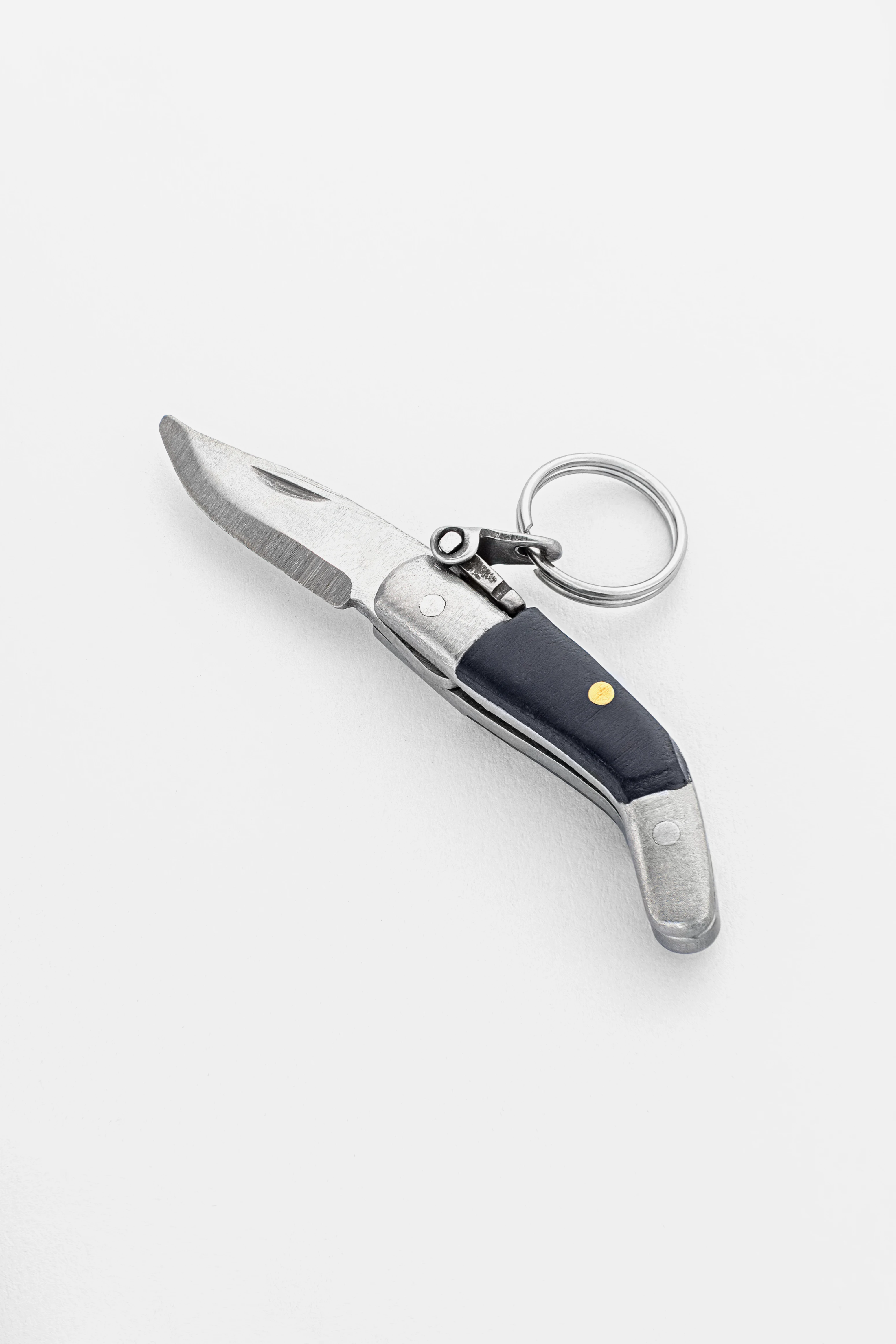
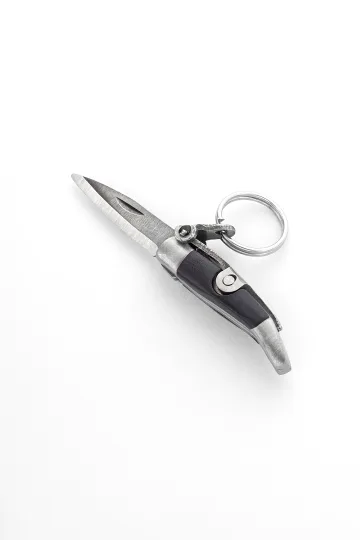
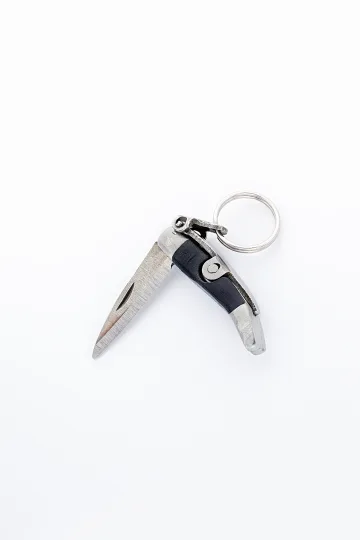
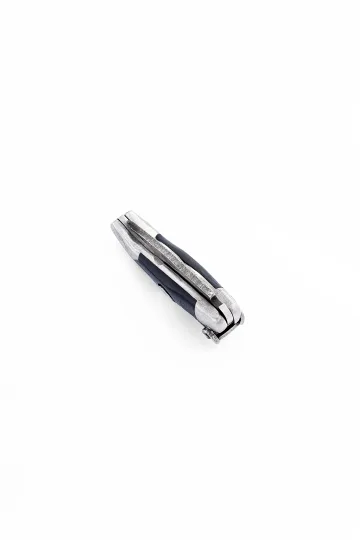
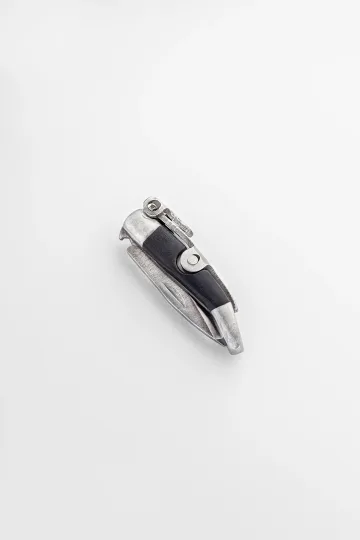
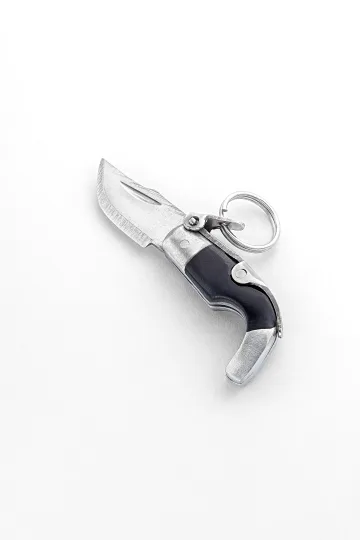
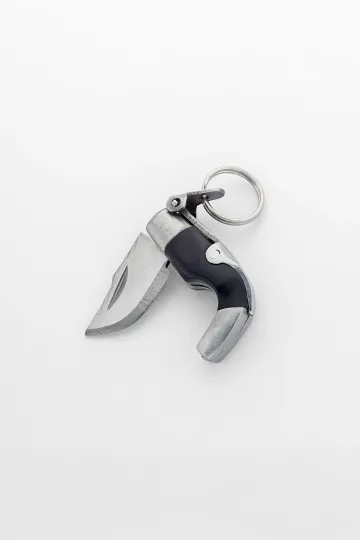
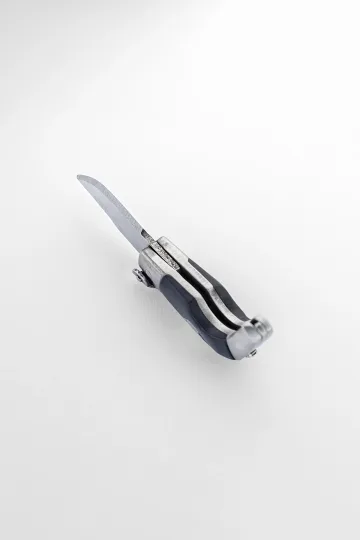
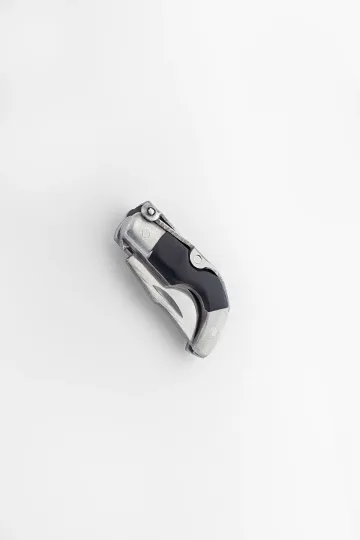
CAPAORA mini knife pendant
The 18th-century Spanish navaja in miniature: 40 mm of stainless steel, a real folding mechanism and a Palanquilla lock that clicks. An affordable gift to remember.
Authentic · Ships from Spain · 14-day returns
Myths and truth about angel numbers
A lot of sweeping claims have piled up around the subject in both directions: some declare the numbers direct messages from above, others total nonsense. The truth, as usual, sits in the middle and is more interesting than the extremes. Some popular "facts" about angel numbers turn out on closer inspection to be a muddle of different traditions, some simply repeat a common fear without grounds, and some hold a sensible kernel overgrown with exaggeration.
It's useful to be able to tell one from another, especially if you're choosing a number for jewellery or a gift and don't want to invest it with a meaning that actually belongs to a completely different system. Below I've sorted the most frequent misconceptions into cards, marking where we have a myth, where a half-truth, and where a real but poorly understood pattern. The card format is convenient because it shows the verdict and a short explanation of it right away.
Angel numbers in jewellery
A number gets onto a piece of jewellery in three ways. It is engraved on a smooth surface, it is cast or cut out as the shape of the pendant itself, so the digit is the pendant, or it is built from separate charms on a bracelet or chain, one figure per link. The first is the most personal, the second the most visible, the third the most flexible: a number charm is easy to add or take off when "your" number changes.
A pendant with "your" number
The most direct way to wear an angel number is a medallion pendant with digits. The options: a fine engraving on a smooth disc, raised cast digits, a number inside a circle or a horseshoe. A small minimalist pendant of 1.5 to 2 cm with delicate engraving suits everyday wear and doesn't shout, while a large accent of 3 to 5 cm reads from a distance and works as a statement.
The choice of number is usually personal: a date, a "clock" combination like 1111, or a digit whose meaning resonates, 444 for support, 777 for luck. Unlike a ready-made symbol, a number on a pendant is fully personal, its meaning known to you while others just see an elegant figure. That makes such a piece a quiet personal talisman rather than a declaration.
Engraving a date and a special number
A date is a natural angel number, already filled with meaning. A wedding day, the birth of a child, an anniversary, an important turn in life easily become a combination of digits on the inside of a ring, on a pendant, on a bracelet. Engraving a date gives the same sense of a personal sign as a "clock" number, but with a real tie to an event.
Technically a date can be written in different ways: as the full set of digits, in day-and-month format, or reduced to a single numerological digit by addition if you want it compact. A hidden engraving on the inside of a piece is popular precisely because it turns the jewellery into a secret: smooth metal on the outside, a number that means everything on the inside.
Where the engraving goes and how many characters fit
Work out the space before you order. On a disc of 12-15 mm across, a single legible line takes about 4-6 characters: 1111, 444 or 11:11 sit comfortably, while a full date such as 12/06/2015 needs two lines or a tiny font that will wear smooth after a couple of years. The inside of a ring holds more, roughly 15-20 characters on a band 3-4 mm wide, though you can only read them with the ring off. The back of a pendant suits longer versions: the number on the front, the date behind. The engraver will give you the exact capacity for the actual piece, because depth and lettering depend on the metal and its thickness.
Two traps tend to come to light only afterwards. A pendant on a chain flips over, and 666 upside down becomes 999, which are opposite numbers in this system: too much weight on worldly worries against a cycle coming to a close. If you choose sixes or nines, ask for a small bar underneath, the way bingo and lottery balls mark them, or pick a shape that always hangs one way round. The second trap is the typeface: in a thin sans serif, a 1 can blur into a 7, so a serif font is safer for 111 and 777. Roman numerals offer an elegant way out. 11:11 becomes XI:XI, 1111 becomes MCXI, and a passer-by sees an ornament rather than a code.
How to personalise a gift
A number turns ordinary jewellery into a meaningful gift with no risk of missing someone's taste. The logic is simple: you pick a digit to fit the person and the occasion. A new start in a loved one's life is 111 or 1010, support in a hard time is 444, a wish for luck is 777, a big change is 555, a round summing-up of life is 999. The meaning can go into a card so the recipient reads the "code."
Details strengthen the personalisation: a birthstone by month next to the number, a choice of metal to fit preferences, paired pieces with the same date for two. Such a gift works on two levels at once, as a beautiful object and as an encoded message. And unlike an abstract symbol, a number can always be explained in one phrase, which removes the awkward "so what does this mean."
Materials and care
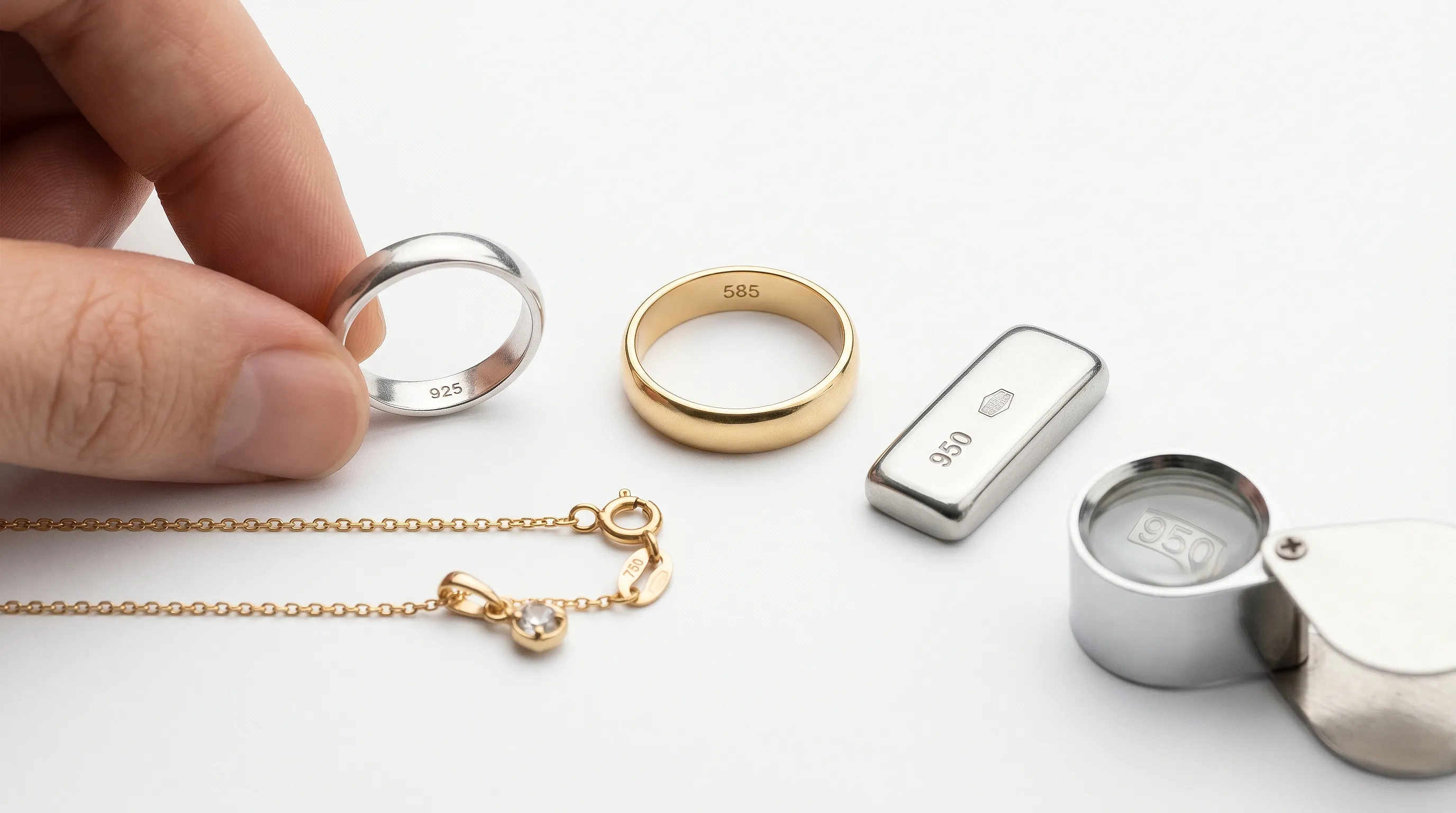
For jewellery with an engraved number, 925 silver and 14-18K gold work best: both hold fine engraving well and don't distort small digits over time. Silver is cheaper and gives a classic cool tone, gold is warmer and more durable in contact with skin. For a hidden inner engraving either of these metals will do, since the depth of the cut matters more than the alloy.
Care is standard for engraved pieces. Digits collect skin oil and cosmetic residue in their grooves, so once every couple of weeks it helps to go over them with a soft toothbrush and soapy water. Silver darkens over time, and engraving only gains contrast from that, but if you want to bring back the shine, a special cloth will help. Ultrasonic cleaning should be used carefully if there's a stone next to the number.
What to choose at Zevira for an angel number
Three pieces in the Zevira catalogue fit the theme without stretching the point.
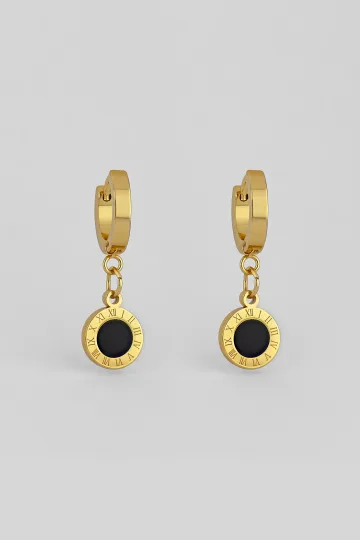
The Midnight Clock earrings are gold plated stainless steel: small, chunky huggie hoops with a round drop, its rim set with Roman numerals from I to XII around a black centre. It is a clock face in miniature. For anyone who keeps catching 11:11, 12:12 or midnight at 00:00, the pair speaks about mirror hours without a single Arabic digit.
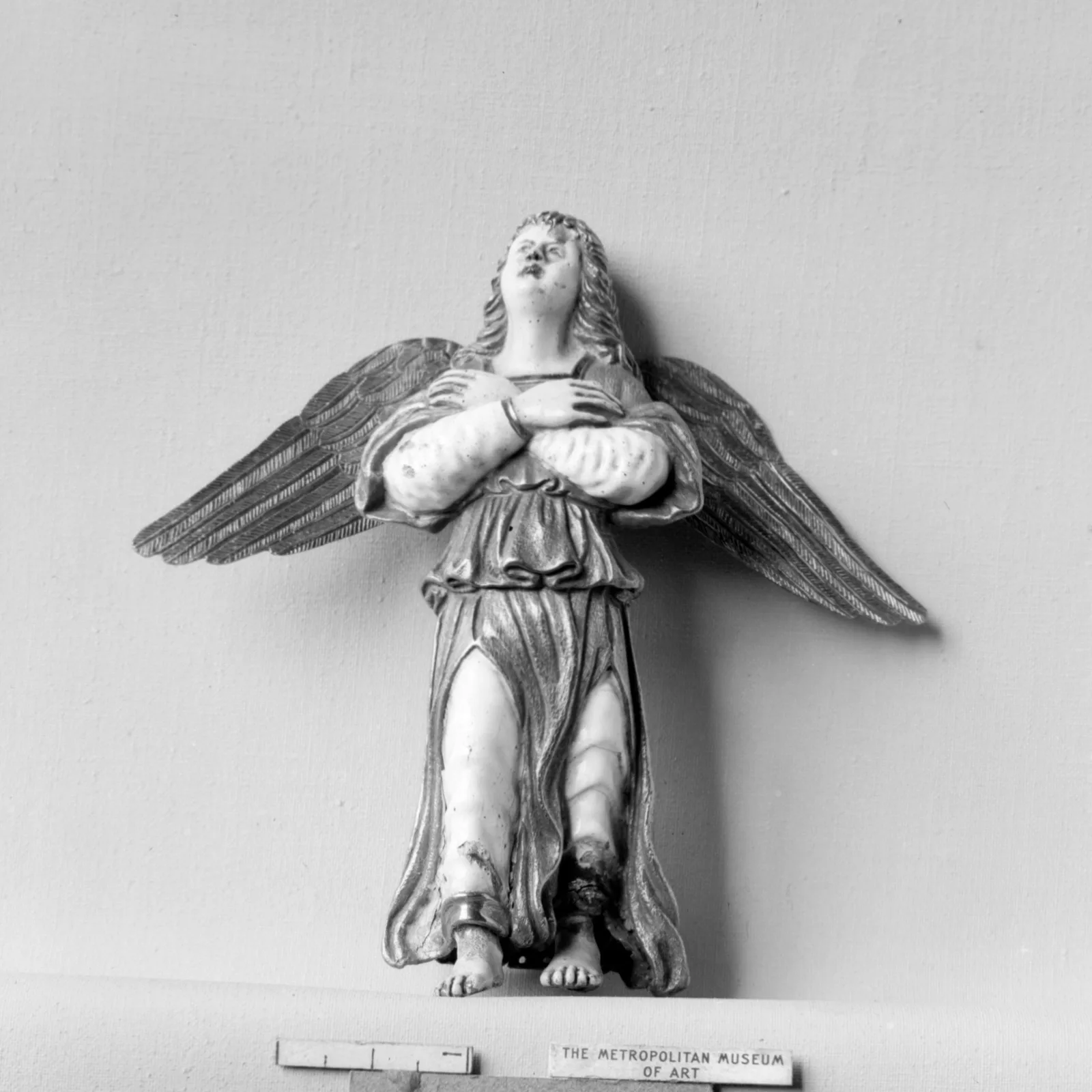
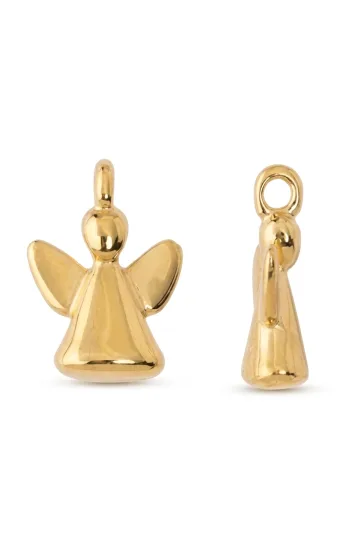
The Mini Angel Pendant Gold is a smooth angel figure of 14 x 9.6 mm in gold plated brass. It sits nicely on the same chain as a disc engraved with your number: the angel explains where the digits come from, and the digits make the angel yours.
If you know the recipient's number but can't settle on the form, the gift certificate solves it. It is digital and valid for 24 months, so they can choose the piece at their own pace, and you can write the "code" in the card that goes with it. A nice touch is to give it on a repeating date such as 11/11 or 12/12, so the date itself becomes part of the present.
Silver, gold, engraved pendants, personal charms, paired sets.
Facts that surprise
The 11:11 ritual is younger than digital clocks. The mass wish to "make a wish at 11:11" physically could not have appeared before the era of electronic displays. On an analog clock catching exactly four ones is impossible. The famous angel number is a child of technology, not of ancient tradition.
Pythagoras thought numbers were alive. For the Pythagorean school, digits weren't an abstraction but qualities with character: even ones "feminine," odd ones "masculine." The idea that 4 is "steady" and 5 is "free" runs straight from there, two and a half thousand years before blogs about angel numbers.
666 means the opposite in different traditions. In Christian eschatology it's the number of the beast, while in the numerology of angel numbers it's a gentle call to restore the balance between the material and the spiritual. One and the same triple repeat carries diametrically opposed meanings depending on the frame of reference.
The number 8 moves prices in Asia. Because it sounds like the word for "wealth," eight is so prized in Chinese culture that numbers with eights sell for more and important events are scheduled on the eighth. Angelic 888 about abundance rests on this quite real cultural economy of luck.
The "frequency illusion" is named because of a coincidence. The phenomenon was named after the Baader-Meinhof group not because it has anything to do with numbers, but because a newspaper reader ran into the name twice within a day and was struck by the coincidence. The term itself was born from the very effect it describes.
Gematria made 18 a number of life. In the Jewish tradition the sum of the letters in the word for "life" equals 18, which is why gifts and donations are often made in multiples of eighteen. It's one of the oldest examples of a "lucky number" working by exactly the logic of angel numbers, long before the term itself.
Zero entered counting later than the other digits. As an independent number, zero established itself in mathematics comparatively late, by way of the Indian and Arabic traditions. Its dual nature, emptiness and infinity at once, still feeds the mystical readings of 000 as a clean slate and unity with the whole.
The brain finds faces and numbers in noise. The same apophenia that makes us see a pattern in 444 is responsible for faces in clouds and power sockets. It's a single mechanism: the pattern-recognition system runs with a margin, preferring a false alarm to a missed signal.
Send a friend a discount code, they save on their first order.
FAQ
What do angel numbers mean in simple terms?
They're repeating combinations of digits (111, 222, 444, and the like) to which numerological tradition assigns a hint of meaning. Each number carries its own significance: beginning, balance, protection, luck. In essence it's a language of symbols laid over digits, and we notice coincidences with it because of the quirks of attention.
What does it mean if I keep seeing 111?
In tradition, 111 is read as a sign of beginning and manifestation: watch your thoughts, they supposedly get the energy to take form. From a psychological standpoint you've simply given this combination meaning and now unconsciously pluck it out of the stream of digits. It's useful to treat it as a reason to stop and recall your goal.
Is it true that 444 means protection?
In angel numerology, yes, 444 is the most "protective" number, a symbol of support and stability, hence the phrase "help is near." This ties to the meaning of four: order, foundation, the four cardinal directions. Whether it works literally is a matter of belief, but as a reminder of steadiness the number does help you gather yourself.
Why isn't 666 considered evil in numerology?
Because the tradition of angel numbers and Christian eschatology are different systems. In numerology six is about home, care, and the material, and 666 is read as a call to restore balance, not to disappear headfirst into chores and worries. The eerie reputation of the number of the beast came from another context and has nothing to do with the numerological meaning.
Are angel numbers a religion or a science?
Neither, strictly speaking. They're an esoteric numerological tradition with roots in antiquity and Kabbalah, given their modern form at the end of the twentieth century. Science explains the very sense of "signs" through the frequency illusion and apophenia. The sensible stance is to treat the numbers as a pleasant symbolic language rather than a proven fact.
What are the master numbers 11, 22, and 33?
They're numbers that, by numerological convention, aren't reduced to a single digit but left as amplified carriers of meaning. 11 is about intuition and inspiration, 22 about realising a great design, 33 about compassion and mentorship. They're considered rare and "strong," which is why 11 and 1111 are perceived as especially significant.
Which angel number should you choose for jewellery?
People usually take either a personal date, or a "clock" combination like 1111, or a number whose meaning resonates: 444 for support, 777 for luck, 555 for change, 999 as the summing-up of a stage. The number is fully personal: its meaning is known to you, while others just see an elegant figure. That makes such a piece a quiet personal talisman.
Is an angel number a good gift idea?
Yes, because a number removes the risk of missing someone's taste and carries a message right away. You pick a digit to fit the person and the occasion: 111 for a new start, 444 for support, 777 for luck. The meaning can be explained in one phrase or tucked into a card, which makes the gift both beautiful and meaningful at once.
Can you combine several numbers in one piece of jewellery?
You can, and it's a popular move. People often set the pair 999 and 000 as a frame of an end and a beginning, or combine a date with a "lucky" number. The main thing is not to overload the piece: two meaningful combinations read, while five already turn into a mush of digits. One strong number is almost always more honest than a set.
Conclusion
Angel numbers are a lovely bridge between ancient numerology and the modern habit of catching digits on a screen. Behind every repeat stands a meaning accumulated over centuries: 111 for beginnings, 444 for support, 777 for luck, 999 for completion. And at the same time, behind the very feeling of "I see it constantly" stands a plain psychology of attention, not necessarily a message from above.
That's exactly why a number lives well in jewelry. It obligates nothing and convinces no one, it simply works as a personal anchor: an engraved date, "your" combination on a pendant, an encoded wish in a gift. Want to believe in the hint, believe it; want to see in it an elegant reminder of your goal, that's honest too. You assign the meaning of the number yourself, and that's the whole of its power. You can return to other symbols in the guide to the meaning of the angel in jewelry or on the homepage.
Buying it as a gift? Each one arrives ready to give.
 A branded Zevira box and a little card come with every order.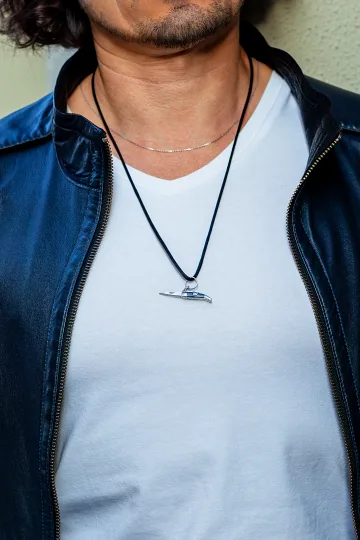






About Zevira
Zevira is based in Albacete, Spain, a town with a long history of fine metalwork and craft. Personal jewellery with numbers and dates is part of our collection, where a figure becomes a quiet personal sign rather than a declaration.
What you can find with us that carries a number:
- Medallion pendants engraved with "your" combination
- Charms with a date on the inner or outer side
- Numbers inside a circle or a horseshoe as a protective token
- Paired pieces with a shared date for two
- A number next to a birthstone by month
- Rings with a hidden engraving on the inside
Personal engraving is available. We work with 925 silver and 14-18K gold.