How to Choose a Jeweler for a Custom Order
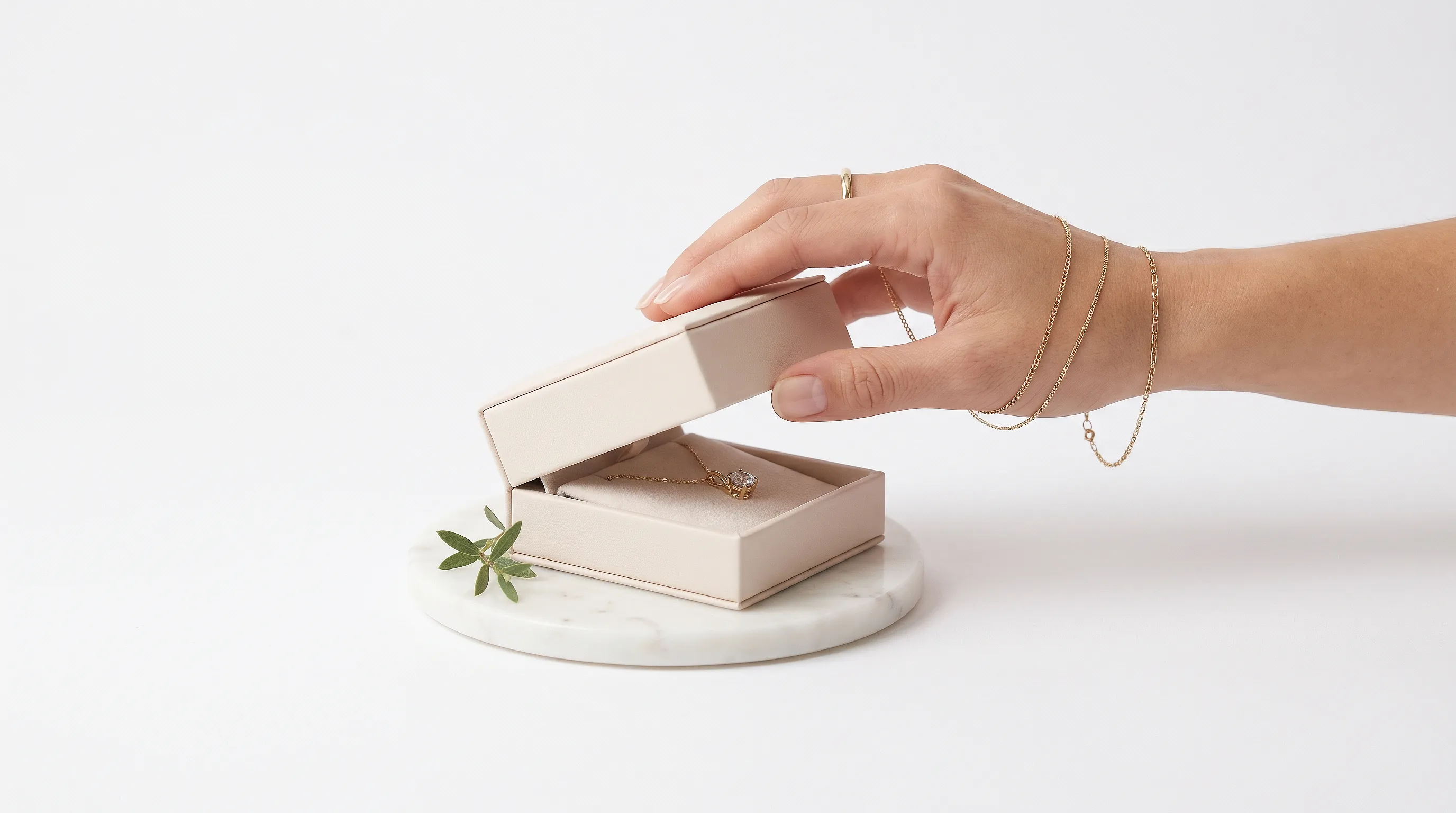
She lifts a ring out of the box with great care: a large old-cut diamond, the gold gone dark and slightly dented, but the stone is alive and glowing. It belonged to her grandmother. Now she and her partner want to turn it into an engagement ring, modern in shape yet built around that same stone. Where to start, who to approach, and how to avoid getting it wrong?
This is exactly the point where most people freeze. A custom order with a jeweller differs from buying a ready-made piece on every count: a different relationship, a different process, different risks. And a different result too: an object that no one else in the world owns.
This guide walks you through the whole journey, from working out whether you even need custom at all to signing a contract with the maker and receiving the finished piece. There are no empty tips here along the lines of "just find a good jeweller." Only specifics: what to check, what to ask, what allows no compromise. It is written from the position of someone who wants a good object and would rather not lose money or peace of mind getting there.
When You Need a Custom Jeweller and When a Ready Piece Is Enough
Before you go looking for a maker, answer one question honestly: do you need custom, or have you simply not found the right ready-made piece yet?
A custom order makes sense when:
- you have a family stone or a piece of jewellery that needs reworking;
- you want something built strictly to your measurements: a non-standard size, a particular setting shape, a specific mix of metals;
- you have a clear idea, but that piece does not exist anywhere on sale;
- you need personal engraving that cannot be applied to a ready piece in the spot and the way you want;
- you want a precise combination of metal, stones and style that appears in no collection;
- you want a gift with a story and a meaning, whereas a merely pretty object can be bought in any shop.
A ready-made piece is the wiser choice when:
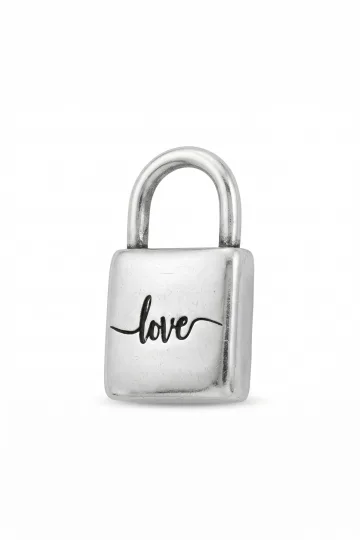
Wear the symbol, don't just read about it. These are in stock:
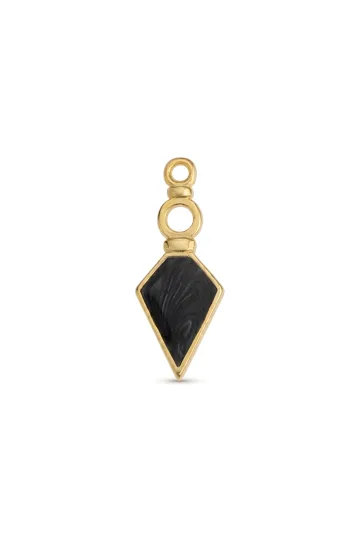


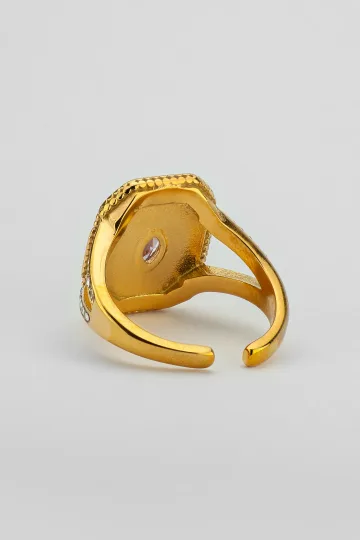
- the budget is tight: a custom piece in comparable materials runs 20 to 50% higher than ready-made because of the design and the handwork;
- the deadline is short: custom takes from 4 to 12 weeks, sometimes longer;
- you have no firm preferences, only a general feeling. In that case it is easier to choose among ready options, sharpen your taste and return to custom later with a clear picture of what you want.
There is nothing wrong with a ready-made piece. What goes wrong is ordering custom with no real grounds for it and then feeling let down by the wait and the final sum. A good ready piece in the right metal with a fitting stone beats a mediocre custom job dragged out through endless rounds of approval.
Types of Custom Requests: What Exists
Before you go hunting for a maker, understand which type of request you are bringing. That determines which specialist you actually need and what to look for in the portfolio.
A new piece from scratch
The most common scenario: you have an idea, references, a budget. The jeweller creates the design, builds a CAD model, produces the piece. This format suits most workshops that work to order. Here you find the widest choice of makers and the most standard process.
Reworking an heirloom
You bring grandmother's ring, mother's brooch, a pendant from an old collection. The maker removes the stone, melts down or reuses the metal, builds a new shape from those same materials. This is a more complex and more delicate kind of work: the maker needs hands-on experience with extracting and resetting stones, and experience with new materials alone is not enough here. Ask about it directly and look for concrete examples of that work in the portfolio.
One more nuance: if you want to melt old gold into a new piece, ask the maker how they handle a client's metal. Some add it to the general melt, others work it separately. Both can be acceptable, but you should know exactly how it is done.
Engraving
Sometimes the task comes down not to a new piece but to a line of text: initials, a date, a short phrase inside a ring or on the back of a pendant. Hand engraving and machine engraving give different results, so check which technique the maker uses and exactly where the text will sit.
Complex restoration
Restoring an antique piece, setting a rare stone, recovering enamel or cloisonné work. This is a narrow specialty, and not every custom jeweller will take it on. For tasks like these, look for makers who specialise specifically in antique restoration.
Commissioning a piece from just anyone is like getting a haircut from your butcher. Portfolio on the table first, and don't argue.
A Stylist's Take: How to Order a Piece You'll Actually Wear
Dozens of custom pieces have passed through my hands on shoots. Some slid into a look at once, others stayed in the box gathering dust. Here is what I look at myself before I send someone off to a bench jeweller.
How should I open the conversation with a jeweller? I recommend arriving with two folders: what you love and what you can't stand. The second one works as well as the first. A good maker would rather read your taste than copy someone else's ring. I always suggest bringing references for shape and character, not an exact picture to reproduce.
Which metal should I order for everyday wear? For daily wear I choose whatever agrees with your skin tone and doesn't demand fuss after every outing. Warm undertones suit yellow or rose gold; cool ones suit silver, platinum or white gold. If the piece will sit on your hand or collarbone all day, I recommend a sturdier build: a thin custom band is lovely but tires fast.
Should the piece be bold or quiet? It depends on where it's headed. For an everyday wardrobe I suggest a restrained shape that doesn't argue with your clothes. For nights out and statement looks I recommend a larger, recognisable line: a signature piece has every right to read across a room. One rule holds: let the loud detail take the solo, don't crowd it with neighbours.
Should the engraving be hidden or shown? More often than not I choose a hidden engraving inside the band or on the back of a pendant. The meaning stays with you and the piece reads clean from outside. If the lettering is the ornament itself (a bold date, initials on the face), then build the look around it and keep everything else calm.
How do I know it will be worn and not shelved? Try it, in your head, against three of your ordinary outfits, not one imagined gala. A piece that only works under a gown once a year is beautiful and useless. I suggest ordering something that survives a Monday: that's the piece that comes back onto your body, not into a drawer.

Turn on your camera, pick earrings, a pendant or a ring, and see the piece on yourself in real time.
Switch items in one tap.
Everything runs in your browser: no photo or video is ever uploaded.
Where to Find a Jeweller for a Custom Order
The most common mistake: typing "custom jeweller" into a search engine and choosing by a pretty website. Here are more reliable sources.
Personal recommendations
Ask people who have already ordered custom jewellery. A recommendation from someone who held the piece in their hands, watched the whole process and went through every stage of approval is worth more than any review online. Ask separately: do you like the result, how did the maker communicate, were there delays, and how did they react to changes.
Jewellery fairs and exhibitions
At professional jewellery-art shows, makers display original work. This is a chance to see pieces in person, talk to the maker face to face, and sense the level of craft without intermediaries. Large fairs gather makers from different cities, and you may find someone you can comfortably work with even at a distance.
Craft associations and guilds
Most countries have professional bodies for jewellers. The GIA (Gemological Institute of America) trains gemologists internationally, the British Jewellers' Association and the National Association of Jewellers operate in the UK, and similar guilds and trade groups exist across Europe and North America. Membership in a professional organisation is no guarantee of quality on its own, but it filters out the plainly random and signals a serious approach to the craft.
Author workshops
Small studios working under one maker's name often offer higher quality and closer contact with the client than chain jewellery shops with an in-house workshop. In an author's studio you usually deal directly with the person who will make your piece. These studios are easy to find on social media: look past how pretty the photo is and study images of the process, the CAD models and real finished pieces in clients' hands.
Online studios with custom production
Some studios work entirely online: you talk to the designer remotely, approve renders and 3D models over messages, and receive the piece by courier. This is convenient but calls for more caution: make sure the studio has its own real production rather than a middleman chain between you and a nameless workshop.
To weigh these channels quickly by reliability, closeness of contact with the maker and fitness for remote work, keep a short comparison in front of you.
What to Check Before the First Meeting
Before you book a consultation, do a basic check. It takes 20 to 30 minutes but saves you from the obvious mistakes.
A portfolio of real work
A good portfolio shows different stages: sketches, CAD renders, wax models, photos of finished pieces from several angles. A portfolio made only of retouched final shots tells you nothing: you cannot judge the quality of the setting or the precision of the metalwork.
Check whether the portfolio holds pieces close to your request. If you want to rework an old stone into a modern setting of complex shape, and the maker only has plain smooth wedding bands, that mismatch is worth raising directly.
Pay attention to how even the level is. If 90% of the work looks good but one or two pieces are clearly weaker, that is already information. Ask who made those pieces and what happened.
Genuine client reviews
Look for reviews on neutral platforms, since those on the jeweller's own site are biased by default. Notice mentions of timing (whether the work was delivered on schedule), the quality of communication during the process and, most important, whether the result matched what was agreed.
An absence of negative reviews alongside a large body of work can point to high quality just as easily as to active reputation management. A handful of moderately critical reviews with a sensible response from the maker often signals more honesty than a flawless picture.
Experience with your type of request
If you have a stone of unusual shape, a rare cut or one from a family piece with a history, make sure the maker has experience with exactly that material. This is not excessive caution: an inexperienced setting can damage or destroy the stone. Fragile stones such as emerald or alexandrite need a careful approach when they are removed and reset.
Insurance and documentation
A professional jeweller insures a client's pieces and stones while the work is in progress. Confirm this before you hand over the material, especially if it is a family treasure.
Customer reviews
Zevira is a real jewellery shop. Genuine payments, deliveries and customer thank-yous.
🥰🥰🥰 gracias

Ok, ¡gracias! 🙂

What to Bring to the First Meeting
The first consultation sets the tone for the whole job. Come prepared: it saves your time and helps the maker grasp the task at once.
References. Photos of jewellery you like for its style, shape, details. You do not need to bring an exact sample to copy. References exist to show your taste, your direction, your aesthetic. You can also show what you actively dislike: that helps just as much.
Budget. Name a real figure or range from the start. A good jeweller will help you see what is possible within it. Hiding the budget so as not to "anchor" yourself is pointless: you will burn both sides' time developing a concept that turns out to be beyond your means.
Deadline. If the piece is needed for a specific date, a proposal, an anniversary, a milestone birthday, say so straight away. Custom takes from 4 to 12 weeks depending on complexity. If the deadline is firm, discuss whether it can be sped up and what that changes in the process or the cost.
The emotional side. If you are bringing a family stone or want to put a particular meaning into the piece, tell the maker. This is useful information: a good one will reflect it in the design. A ring made from grandmother's diamond carries a different weight than a ring with a new stone.
12 Questions to Ask the Jeweller
This is not an exam. It is a tool that helps you understand who you are working with, before you have paid a deposit.
1. Who will make the piece?
Some studios outsource production to an external workshop. That is not always bad, but you should know exactly who you are working with. If the maker says "I do it myself," ask on what equipment and in what form. If part of the work is done by another specialist, a setter for instance, that is normal too: what matters is that the jeweller stands behind the final quality.
2. Can I see the CAD render before casting?
The modern process includes digital modelling with realistic visualization. You should approve the digital model before any metal is cast. If the jeweller suggests going straight to production with no render, that is a reason to be wary: you lose the chance to adjust the piece before the irreversible stage.
3. How many rounds of changes are included in the price?
Ask how many design-stage changes are covered by the agreed price and what happens if more are needed. The usual practice: 2 to 3 rounds included, the rest charged separately.
4. What is the exact production time?
Ask for a concrete figure, not "about six weeks." Check whether that time includes shipping, if the maker works remotely. Ask what happens if the deadline slips.
5. What is included in the price and what is charged separately?
Clarify in detail: whether the cost of the stone is part of the total or calculated apart, whether the price covers the final polish and rhodium plating, whether one specific size is set or a future adjustment is possible.
6. How do you work with clients' stones?
If you bring your own stone, ask: is it insured during the work, is a handover document drawn up, and what happens if it is damaged during setting. Damage while removing a stone from an old setting or fixing it into a new one happens even to experienced makers: you should know how that is handled.
7. Which metal do you recommend and why?
A good maker explains the choice of metal to suit your stone, your lifestyle and your budget, rather than naming a single option. Ask why they propose that particular fineness and alloy, and how they differ in wear and care.
8. Do you show a physical model before casting?
A physical wax model, or one printed on a 3D printer, lets you judge the real size and shape of the piece, on the finger. This matters, especially if the design is unusual or you are ordering a gift.
9. What guarantee comes with the piece?
Ask concretely: what is the guarantee period, what does it cover (setting defects, cracks in the metal, deformation from manufacturing faults), and how is a warranty repair arranged.
10. Can the piece be changed after I receive it?
Life changes: finger size, taste, circumstances. Ask whether a resize, extra engraving or a future stone swap is possible, and what it would cost. It helps to understand in advance how a ring is resized and when that is technically difficult: a complex setting or stones set all around the band can limit any adjustment.
11. What does your typical contract look like?
Ask to see the contract, or its main clauses, before you decide to work with this maker. This is normal practice, not a sign of distrust. If the jeweller dodges the question, treat it as a red flag.
12. Can I speak with any of your previous clients?
Not everyone is willing to share contacts, but the question itself is useful. The reaction to it says a lot about the maker's confidence in their work and in their clients' satisfaction.
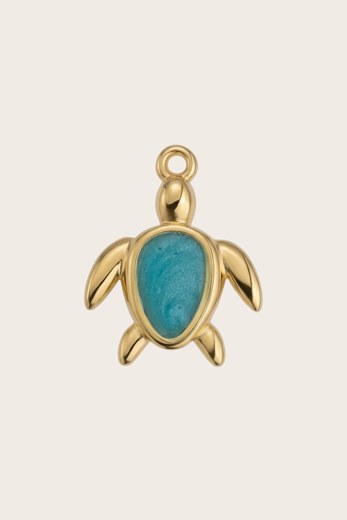
Upload a photo of your pet, someone you love, or an object. We'll build a 3D model and hand-cast it in pewter.



Work Stages: From Idea to Finished Piece
Understanding these stages helps you ask precise questions and notice in time if something is going wrong. The timings are approximate and depend on complexity.
Stage 1: Consultation and concept (1 to 2 weeks)
The first meeting or exchange of messages. The jeweller asks questions, you show references, you discuss the budget. The output: an agreed concept, a preliminary price and a sense of the timing. No metal and no stones at this point yet.
Stage 2: Sketch (3 to 7 days)
A hand or digital drawing showing the general shape and proportions. The key design elements are discussed here. Changes at this stage are the simplest and least costly: redrawing a pencil line is far easier than reworking a finished model.
Stage 3: CAD modelling (1 to 2 weeks)
A computer three-dimensional model with exact measurements. You receive photorealistic renders: the piece is shown from every side, and you can judge the band thickness, the size of the stone relative to the setting, the overall proportions, the height at which the stone sits. Approving the CAD model before the next stage is mandatory. Changes after CAD approval already require extra work.
Stage 4: Wax model or 3D print (3 to 5 days)
A physical model at full size. You can try it on, judge the weight in the hand, see how the shape looks on the finger. Changes are still possible here, though they are harder by now and, as a rule, paid.
Stage 5: Casting (2 to 4 days)
The wax model is used to create a casting mould, into which molten metal is poured. This stage is irreversible. After casting, the shape can no longer be changed: you can only remove material, never add it.
Stage 6: Finishing and refinement (3 to 7 days)
Filing down the casting seams, grinding, leveling the surface, a preliminary polish. The piece takes on its final shape and is readied for setting.
Stage 7: Stone setting (1 to 3 days)
One of the most demanding stages. The setter fixes the stones into the setting. The quality of the setting determines how long the stone will sit securely. A poor setting is not always obvious right away: the problem can surface after a month of active wear. That is why it matters to choose a maker with experience setting your particular type of stone.
Stage 8: Final polish and rhodium plating (1 to 2 days)
A polish to a mirror shine. White gold usually gets a rhodium coating: it gives a bright white colour and protects the surface. Rhodium wears off over time and needs renewing, usually once every 1 to 3 years with active wear.
Stage 9: Quality control and handover
The jeweller checks the setting of every stone, the quality of the polish, that the size is right, the presence of the hallmark. You receive the piece together with documents: a guarantee document and, if needed, an independent appraisal.
Total timings by stage:
| Stage | Time |
|---|---|
| Consultation and concept | 1-2 weeks |
| Sketch | 3-7 days |
| CAD modelling | 1-2 weeks |
| Wax model | 3-5 days |
| Casting | 2-4 days |
| Finishing | 3-7 days |
| Setting | 1-3 days |
| Polish | 1-2 days |
| Standard project total | 6-8 weeks |
| Complex project | up to 12 weeks |




Contract and Deposit: What Must Be Written Down
Verbal agreements are not enough. A contract protects you both and removes any room for differing interpretations.
What the contract should contain:
- a full description of the piece: metal, fineness, approximate weight, type of setting, a description of the stones with their characteristics (if the jeweller supplies the stones);
- exact timings for each stage, or at least a final completion date;
- the price and payment order: how much deposit, when the intermediate payment, when the final settlement;
- the terms for handing over a client's stones and materials, with a handover document and a description of their condition;
- the change policy: how many are included, what happens once that is exceeded;
- the guarantee terms: the period, what is covered, how to file a warranty claim;
- what happens if there is a delay through the jeweller's fault;
- what happens if the result departs substantially from the agreed CAD;
- the terms for refunding the deposit if the order is canceled.
On the deposit. Standard practice: 30 to 50% before work begins, the rest on receipt. Full prepayment before any work is unusual and calls for an explanation. No deposit at all is also a warning sign: a serious maker will not carry the cost of materials and time without fixing the client's intent. If you are ordering an expensive project with a family stone, an intermediate payment at the close of the CAD stage and before casting is a reasonable practice worth discussing at the start.
Red Flags: When to Walk Away
Intuition matters, but it is better to keep a concrete list.
A price well below the market
Custom work includes the designer's time, the CAD modelling, the maker's handwork and the cost of materials. A price that seems too good against three other quotes for a similar task is explained by cheap materials, by handing the work to a cheap workshop without your knowledge, or by a dishonest approach.
No work samples, or inconsistent ones
A jeweller who works seriously builds up a portfolio. If there is no work, or the portfolio shows one clearly high-level piece among a dozen weak ones, that calls for an explanation.
Refusal to show the CAD before casting
This is a matter of principle. CAD approval protects you from the "I thought it would look different" situation. If the jeweller says "trust me, no render is needed," that is not a professional's confidence in their work, it is shifting the risk of mismatched expectations onto you.
Pressure on urgency and emotion
"You have to decide today because I have a waiting list," "The discount only lasts until the weekend": these are sales techniques, not arguments. A good jeweller gives you time to think, compare and decide without rushing.
Vague answers about the stones
If you ask about the origin of a stone, its characteristics, the type of cut, and the jeweller dodges the answer or fobs you off with generalities, that signals insufficient competence or an unwillingness to be transparent.
No written contract
"We do everything on trust": a phrase that works fine among acquaintances, but not in a commercial deal of significant value. The contract protects you both.
Refusal to document the stone handover
If you bring your own stone and the maker does not offer to record its handover in writing, with a description of its characteristics and condition, that is a direct risk. Without a document you have no proof of what you handed over and in what state.
No physical address or contacts
A studio or maker should have a real address or at least a verified contact. Working only through an anonymous account, with no way to identify who is executing the order, is not worth it, especially when you are handing over a family treasure.
Leave your email, we'll send your discount code. No spam, unsubscribe anytime.
The code arrives by email, valid on your first order.
What to Do If You Don't Like the Result
Even with a well-built process, the finished piece sometimes fails to match expectations. Here is a plan of action.
Pin down the complaint. "I don't like it" and "the settings on one side are higher than on the other" are fundamentally different conversations. The second is concrete and fixable; the first needs clarifying before you can move on.
Check the contract and the agreed CAD. Look at what it says about the result matching the approved project and about the terms for rework.
State exactly what needs correcting. Describe it in writing, with reference to specific parameters or parts of the piece. That helps you and the maker talk about the same thing.
Give the jeweller a chance to fix it. Most serious makers would rather rework a piece than earn a bad reputation. Give them the chance to get it right.
If you cannot reach an agreement. In that case you have the contract, the correspondence and the handover documents for the materials. Consumer protection and professional associations are the next step.
It helps to draw a line: a small difference between the render and the finished piece, within the technical tolerance, is normal. A difference in key parameters (the type of metal, the shape of the stone, the essential design elements) is not.
Guarantees and After-Sales Service
Find out about the guarantee before you pay. It is part of comparing offers, not an afterthought.
The guarantee period
The standard: 1 to 2 years on manufacturing defects. This covers cracks in the metal from a casting fault, settings that have loosened, polishing flaws that appeared during production.
What the guarantee does not cover
Mechanical damage from use: knocks, scratches, deformation from pressure, damage to the stone from improper storage. Loss of a stone through a mechanical blow also falls, as a rule, outside the guarantee.
Post-warranty service
A good jeweler offers a free or reduced-price cleaning and setting check every 6 to 12 months. Between visits you can keep the shine yourself, if you know how to safely clean gold and silver at home without risk to the setting or the stones. This is prevention against losing a stone and extends the life of the piece. Regular visits also let you spot fatigue in the metal or the setting at an early stage, while a fix is still simple and cheap.
Resizing
Clarify the cost of changing the size after receipt: especially if you are ordering a gift and the exact size is not known in advance.
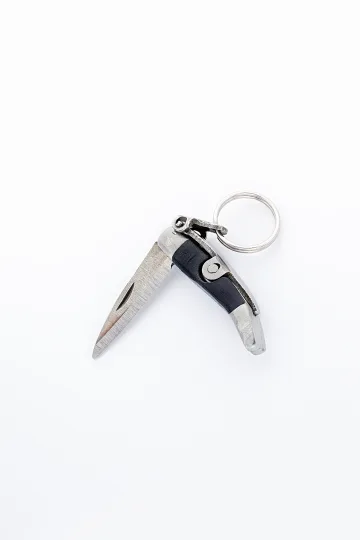
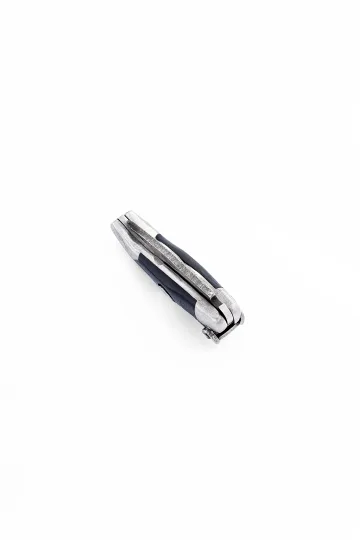
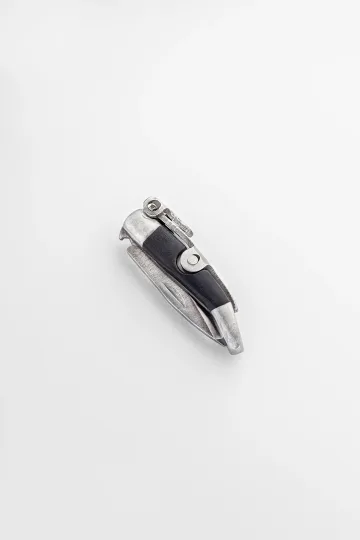
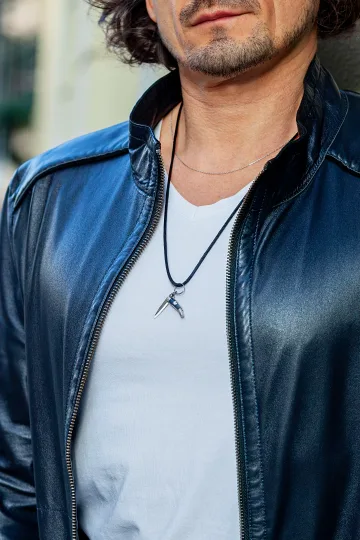
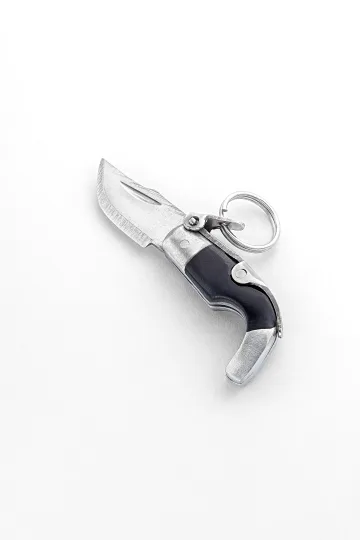
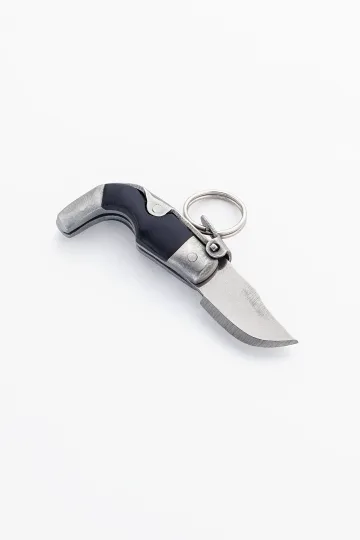
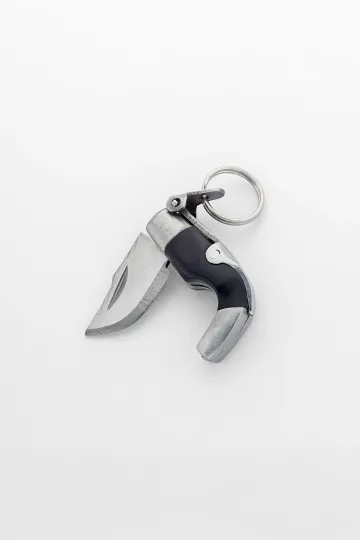
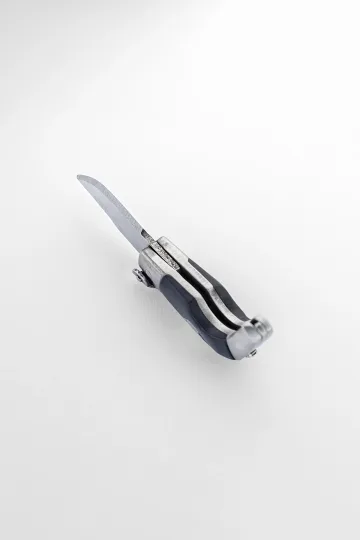
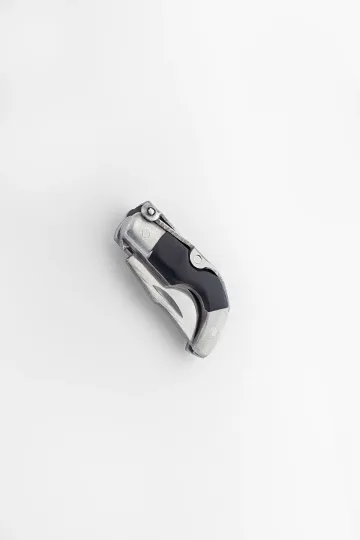
CAPAORA mini knife pendant
The 18th-century Spanish navaja in miniature: 40 mm of stainless steel, a real folding mechanism and a Palanquilla lock that clicks. An affordable gift to remember.
Authentic · Ships from Spain · 14-day returns
What Is Actually True About Custom Orders
A lot of received wisdom has built up around custom work: that it is always several times more expensive, that a lab-grown stone is a fake, that a verbal agreement is enough with an honest maker. Some of it is true only in part, some simply gets in the way of a decision. Let us go through the most common.
What Goes Into the Price of a Custom Piece
The price of a custom piece often surprises those who did not understand in advance what it is made of. Let us break it down by part.
Materials
The metal, the stones, the production consumables. 18-karat gold is dearer than 14-karat, platinum dearer than gold, a natural stone dearer than a lab-grown one. These are objective market prices, on which the jeweller has minimal influence.
Design and modelling
The work on the sketch, the CAD modelling, the renders, the possible rounds of changes. If the maker has no fixed design fee as a separate line, ask whether that work is part of the total price or billed on top.
Handwork
Casting, filing, stone setting, polishing, rhodium plating. This is the bulk of the jeweller's labour. Complex openwork, a multi-stone setting of different types, hand engraving: all of it raises the effort and the cost compared with a plain smooth ring.
The studio's overheads
Rent, equipment, insurance, taxes, packaging. Included in the price, but rarely broken out as a separate line.
The maker's margin
A professional with a reputation, a proven portfolio and a waiting list of orders charges more than a beginner. That is normal and explainable.
How to judge whether the price is fair. Request a preliminary quote from three different makers of comparable level, against your concrete description. Compare the final sum and the structure of the offer: what exactly goes into each line. The cheapest offer, all else being equal, calls for an explanation.
Custom Order or Ready-Made Jewellery: An Honest Comparison
| Parameter | Custom order | Ready-made jewellery |
|---|---|---|
| Uniqueness | One of a kind | Series, copies possible |
| Time to receive | 6-12 weeks | Immediate |
| Cost | Higher by 20-50% for design and work | Lower, includes retailer margin |
| Family stone | Yes | No |
| Exact match to the idea | High with the right process | Approximate |
| Risk of mismatched expectations | Present, manageable | Minimal |
| Emotional value | High | Depends on the piece's story |
| Flexibility of materials | Full | Limited to the range |
| Complexity of the process | Calls for involvement | Pick and buy |
For an engagement ring with a family stone, custom is all but the only option. For an everyday gift piece, when time is short, ready-made is the sensible call. The honest position: custom is better only when custom is exactly what answers your need.
Send a friend a discount code, they save on their first order.
Working with Stones: A Separate Conversation
The stone is the most vulnerable and the most valuable part of a custom project. A few practical points worth covering before you start.
Assessing the stone before the order
Before discussing design, the maker should examine the stone, especially if it comes from an old piece. A professional examination establishes: the type of stone and its characteristics (cut, colour, clarity), the condition (cracks, chips, surface scratches), the possible limits on setting (some setting types are unsuitable for fragile stones), and whether it matches the stated characteristics, if the stone is bought from the jeweller.
Do not make design decisions until the stone has been examined: it is the foundation on which everything else rests.
Certifying stones
Diamonds of 0.5 carat and up are usually sold with a certificate from a gemological laboratory. The best known and most respected labs: the GIA (Gemological Institute of America) and the AGS (American Gem Society). The certificate records four characteristics (the 4Cs): colour, clarity, cut and carat weight.
If the jeweller offers a stone without a certificate and says it was "checked on the spot," you are within your rights to ask for independent certification before deciding.
Family stones often have no documents: that is normal. In that case, ask the jeweller to describe the characteristics in writing in the contract.
Natural stones versus lab-grown
For a custom piece this is a choice worth making consciously. Lab-grown diamonds and other stones are chemically identical to natural ones but cost considerably less. That lets you get a larger stone on the same budget, or save without any visual compromise.
Natural stones have a documented origin history and hold their value on resale to a degree that lab-grown stones, for now, do not match. The latter are less predictable in price on the secondary market.
For a piece that matters above all visually and emotionally, the choice between them stays personal. For a piece with an investment side, the natural certified stone is usually preferred.
Colour, shape, cut
The jeweller will help match a stone to the design, but your own taste matters more. A few pointers:
The shape of the stone shapes the whole character of the piece. A round cut gives maximum brilliance and suits almost any design, an oval visually lengthens the finger and is especially sought after now, a princess (square) reads as modern and structured, the pear and the marquise are rarer and more expressive but call for settings that protect their sharp points well. If you have not yet settled on the stone itself, it helps to first understand how rings with different stones differ in character and care, and only then come to the maker with a concrete choice.
A diamond's colour on the GIA scale runs from D (colourless) to Z (yellow tint). The difference between D and G is all but invisible to the naked eye yet significant in price. For coloured settings (yellow or rose gold), a slight warm tone of a G-H diamond looks organic and is kind to the budget. For white gold and platinum, the D-F colours are preferable if you want perfect colorlessness.
How to Prepare Emotionally: The Part Rarely Discussed
A custom order, especially an engagement ring or a piece made from a family stone, carries a considerable emotional load. That is normal, and worth taking into account.
Expectations and reality
The render and the finished piece will not be 100% identical. Metal in reality reflects light differently than in a digital model. The smaller proportions may vary a little. This is a technical reality, not a fault of the maker.
A good way to prepare: study real photos of the maker's finished work alongside the renders. That way you will understand what their "final polish" looks like in life.
Family stones and their history
If you are reworking a piece with a history, it can be harder psychologically than it first seems. Grandmother's stone will literally lie on a stranger's workbench, taken apart, for several weeks. Some people find this unexpectedly hard.
Talk honestly with the jeweller about how important the object is. A good maker will treat it with understanding and keep you updated on the intermediate stages.
Decisions that are hard to make
At the CAD approval stage it may turn out that the idea looks different from how you pictured it. Sometimes that means rethinking the design. Sometimes it means getting used to a digital model that looks odd while, in metal, everything will come together.
If you feel uncertain at the CAD stage, do not rush the process. Better to spend another week on approval than to receive a piece that disappoints you.
The partner in the process
If the piece is for shared use or it is a gift, decide in advance: are you ordering it together or is it a surprise? A shared process sometimes kills the element of surprise, but in return it guarantees that the result pleases both of you. It is a personal choice, but better made consciously than by accident.
FAQ
Can an old piece be completely remade using only its own materials?
Yes. If the metal is of the right fineness and fit to be melted, it is used in the new piece. The stones, as a rule, are removed and set into a new mount. Clarify two points with the maker: whether your specific metal can be melted (some old alloys behave poorly) and whether material will need adding to reach the required weight of the new piece.
How much does a custom ring cost?
The cost is made up of the metal, the stones, the design and the handwork. The range is wide: a simple ring with no stone, or with a small one, can come in close to the price of a mid-range ready piece. Complex original work with a large stone runs considerably higher. Ask for a preliminary quote against your concrete description: without the details, no maker will give an exact figure.
How do I prepare a family stone for reworking?
The first step: bring the stone, still in its mount, to the jeweller for assessment. The maker will examine it, establish its characteristics and condition, and weigh the risks of extraction. Do not try to remove the stone from the old mount yourself: a careless effort can chip the stone or damage a facet.
What is CAD in jewellery?
CAD stands for Computer-Aided Design, that is, three-dimensional computer design. The jeweller builds an exact model of the piece, from which a photorealistic render is produced and, if needed, a physical model is printed on a 3D printer. It is a tool for approval before the irreversible production stage.
Do I need to insure a custom ring?
Yes, especially if it holds a family stone or a large budget. After you receive the piece and have it appraised, take out insurance against loss and damage. The jeweller insures the stone only while it is in the workshop.
Can I order custom jewellery online from a maker in another city?
Yes, many studios work entirely remotely. The process is the same: a consultation by video call or messages, references, CAD approval online, dispatch by courier. Make sure the studio has real production, and arrange the handover of stones (if any) through a reliable courier with a content inventory.
How long does a custom ring last?
With proper care and a regular setting check (once a year), a custom ring in gold or platinum lasts decades. The rhodium coating on white gold is renewed as it wears, usually every 1 to 3 years with active wear. The hallmark, the fineness, the guarantee documents and the appraisal form a document set worth keeping together with the piece itself.
How do I choose between several makers I like?
Request a preliminary quote from each against the same description. Compare the price and how the makers answer questions: how concretely, how patiently, how openly. Communication during the approval stage often predicts what the dealings will be like throughout the work itself.
Buying it as a gift? Each one arrives ready to give.
 A branded Zevira box and a little card come with every order.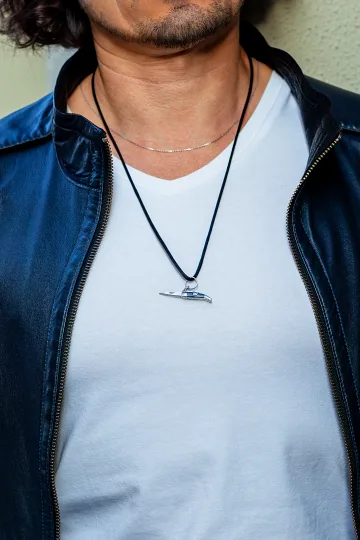




Conclusion
A custom piece, made the right way, will outlive several generations. A family stone in a new setting, a ring with personal engraving, an original object that exists in no shop: all of it needs the right partner on the production side.
Choosing a jeweller works much like choosing a doctor or an architect: qualification, reputation, the ability to listen, honesty in communication. A pretty social media account does not replace a portfolio of real work, and a verbal agreement does not replace a contract.
The custom process takes time and involvement on your part. You will approve renders, make decisions about the setting and the metal, sometimes revisit the original idea after seeing it in digital form. That is part of the process, not a flaw in it. It is precisely through that involvement that you end up with the object you genuinely wanted, rather than the one you had to accept as it came.
A good jeweller leads you through this process with confidence: explaining each stage, reporting progress, warning of possible limits in advance. If, in the course of dealing with them, you feel rushed, ignored or steered away from specifics, that is a signal. The jeweller who is a pleasure to work with does exist.
Prepare for the first meeting, ask the questions from this list, insist on CAD approval before casting, put everything in writing, including the handover of stones. Then the process becomes a pleasure rather than a source of worry: and in the end you have a piece you will want to pass on.
The ring you put on at a proposal or wear every day deserves to be made by someone you trust. Do not rush the choice: the time spent on the right jeweller pays back many times over in the quality of the result.
Handmade rings, pendants and earrings with the option of personal engraving: a comfortable place to start the conversation about your own piece.
About Zevira
Zevira makes jewellery in the artisan tradition of Albacete, Spain. We know the process from the inside, from sketch and model through to setting and final polish, which is why this guide describes the same stages every one of our pieces passes through.
What you can find with us when a personal approach matters:
- handmade rings, pendants and earrings you can take as a starting point for your own version;
- personal engraving: initials, a date, a short phrase in the right spot on the piece;
- a choice between 925 silver and 14-18K gold to suit the task and the budget;
- room for your wishes on shape, metal and how the details come together;
- a clear approval process before a piece goes into production;
- support and answers to your care questions after you receive it.
Every piece can be personalised with engraving, with the option of personal engraving. Sterling silver 925 and gold 14-18K.