Death in Tarot: Meaning, History and Jewellery for the Symbols of Arcana 13
The Death card in Tarot does not predict anyone dying. It speaks of completion: something old has ended, the new shape has not yet settled. A skeleton on a white horse, a black flag bearing a white rose, a fallen king beneath the hooves. The image looks grim, yet it reads as a passage.
This is one of the most misread cards in the whole deck. Let us be clear about the main point straight away: there is no evidence that cards predict anything at all. Tarot is a system of symbols gathered from European iconography and myth. Its value sits not in fortune-telling but in the precise visual language people used for centuries to describe great change.
What follows, in order: where the image came from, what each of its elements means, which real traditions stand behind it, and which pieces of jewellery carry that symbolism.
Arcana 13 in the History of the Decks
The thirteenth card holds a special place, and superstition is part of the reason. In most early decks the card carried no caption. Where the Lover, the High Priestess and Justice each had a name, the thirteenth position showed only an image and a number.
This was no accident. The number thirteen had been marked by fear in medieval Europe long before Tarot existed: thirteen at the table of the Last Supper, Friday the thirteenth as an ill omen. To name the card was to say the word out loud.
The earliest surviving decks were made for the Milanese courts of the Visconti and Sforza in the middle of the fifteenth century. There the figure is a skeleton, sometimes with a scythe, sometimes with a bow. The image grew out of the Danse Macabre, the dance of death, which flooded European art after the plague. The epidemic of 1347 to 1353 killed between a third and a half of Europe's population in a handful of years. Whole towns emptied. Art answered with a run of pictures in which death leads people of every rank into a single round dance: a duke beside a ploughman, a pope beside a beggar. Death levels everyone.
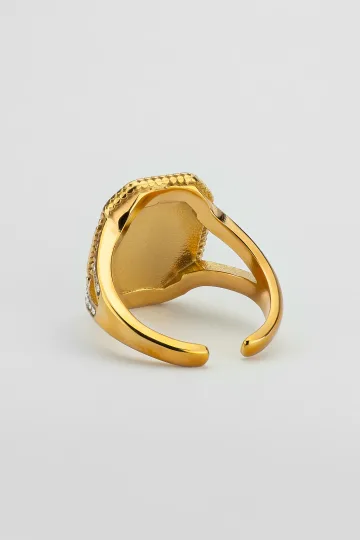
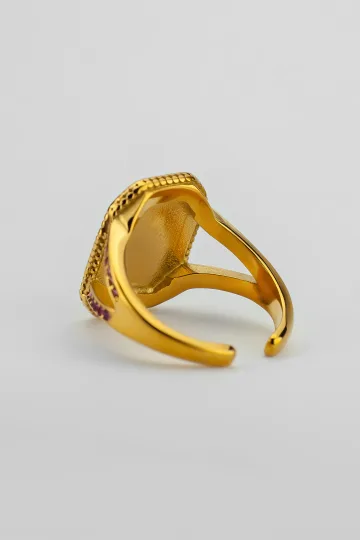
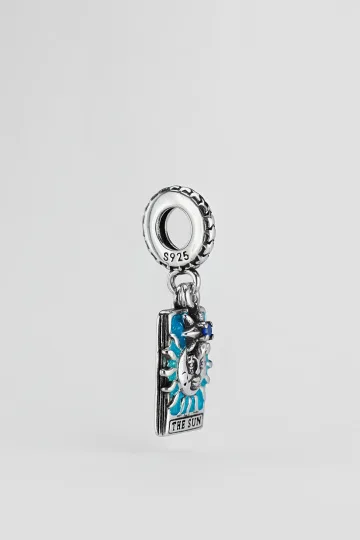
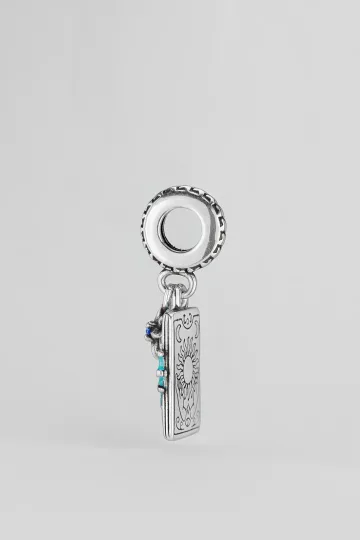
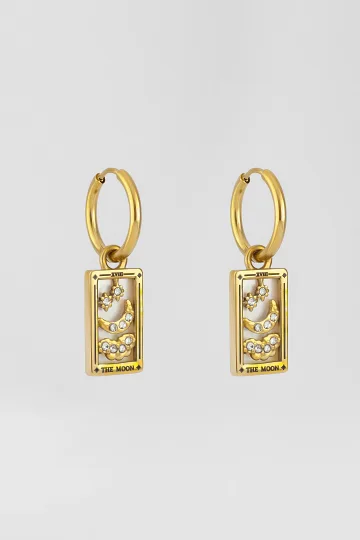
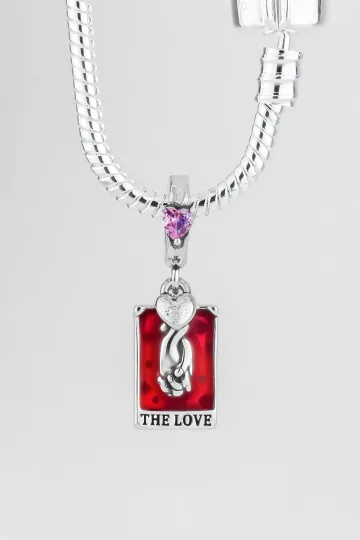
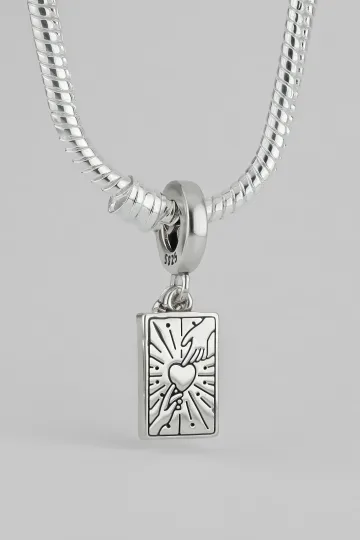
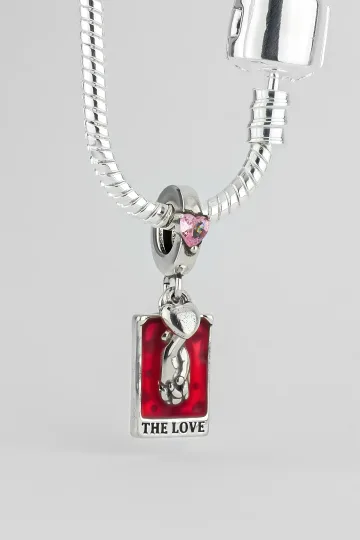
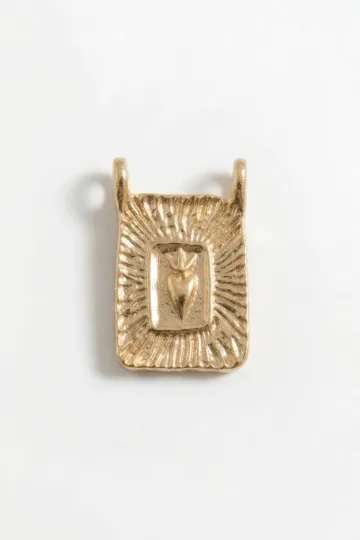
Wear the symbol, don't just read about it. These are in stock:







The Marseille deck, standardised by French craftsmen in the seventeenth century, kept the namelessness: above a skeleton mowing a field of hands and heads stands only the number XIII. But look closely. Between the cut limbs, plants push up from the earth. The idea that later decks would spell out, that destruction and growth run side by side, was already built into the picture.
In 1909 the artist Pamela Colman Smith, commissioned by Arthur Edward Waite, drew a deck that changed everything. The card now carried a plain caption: DEATH. Death was given a name and a reworked meaning, and modern readings rest on it. Smith deserves to be named in full: she was long kept in Waite's shadow, though it was she who drew all seventy-eight cards. A professional illustrator and theatre designer, she created not a frightening picture but a thought-out symbolic programme.
In the Thoth deck, developed by Aleister Crowley with the artist Frieda Harris in the 1940s and published after his death in 1969, the card gained another dimension: a skeleton with the traits of a scorpion and a sickle, set against decay and sprouting growth. Crowley stressed the Egyptian layer, death as the dying and rising Osiris.
Three traditions, three images of one card: the nameless figure with a scythe, the rider on a white horse, the scorpion skeleton. All three say the same thing.
Waite-Smith Iconography: Reading the Symbols
The Death card in the Waite-Smith deck is hard to mistake for any other. Behind the grim image sits a careful programme in which every element is deliberate.
The Skeleton in Black Armour
Death appears not as a person and not as a shadow, but as a skeleton in full knightly armour. The armour carries a double meaning. On one hand it is protection: the knight is invulnerable, change comes to everyone and cannot be talked out of arriving. On the other it is weight: armour presses down, it takes effort simply to bear it. The skeleton itself is what remains once the surplus has gone. Flesh, status, roles fall away; the bones stay. In memorial culture the skeleton is not the fear of death but a reminder of the essence.
The White Horse
The skeleton rides a white horse. For Waite white stands for purity and inevitability, not cruelty. In European iconography a white horse reads as a sign of nobility: not a warhorse and not a workhorse, but the horse of a ceremonial procession. Death as transformation rides openly, with dignity, rather than creeping round a corner.
The Black Flag with the White Rose
On the flag is a white rose of five petals against a black field. The black ground is mourning and a farewell without illusions. The white rose is beauty that exists in spite of everything. The five-petal shape ties to the number five, a symbol of change. Together they say: change happens, and there is a beauty within it. The same rose appears with the Fool and the Magician, each time as a sign of pure intent.
The Fallen King and Those Around Him
Beneath the horse's hooves lies a crowned figure, a dead king. Nearby a woman with her head bowed, a child looking at the rider without fear, a little further off a bishop with hands clasped. Four roles, four reactions. Power falls first, because it clings to form harder than anything else. The woman grieves but does not die: the image of those who remain. The child is not afraid, because it has not yet gathered the illusions that must later be surrendered. The bishop has found a shape in which to meet the inevitable. This is a direct inheritance from the dance of death, but Waite shifts it from horror to archetype: each of us meets change in our own way, yet no one can step around it.
The Rising Sun Between the Towers
On the horizon beyond a river, between two towers, the sun rises. It rises; it does not set. This is one of the most important elements: a new day after the night of completion, the move to the next state rather than a finale. The two towers mark a threshold, a point of crossing. The river behind the procession is the image of a continuous flow: life runs on, even when one particular shape of it ends.
Wear the skull in oxidised silver. Polished gold turns memento mori into a keyring, and I won't hear otherwise.
How to wear the symbolism of Arcana 13
This is a personal sign, and I suggest building a look around it as quietly as it was meant. Here is what actually works, by occasion.
What do I wear a skull or an ouroboros with every day? For daily wear I recommend oxidised silver on a thin chain, so the pendant slips under the collar of a jumper or shirt. A light top lifts the relief, a dark one turns the piece into a quiet mark, seen only when you move. This sign explains nothing to others, yet it stays close.
How do I build an evening look? For evening the logic reverses: a bare neckline and smooth fabric in a deep colour give the pendant room. Here I choose a phoenix or a butterfly and suggest carrying it over the clothing as a meaningful accent. Against bare skin at the collarbone the symbol reads best.
Gold or silver for this symbolism? Metal sets the mood. Oxidised silver pulls the look towards the severe and graphic, closer to the Stoic restraint of the card. Warm gold I suggest when you want to soften the symbol and fit it into a dressier outfit. For a dark garnet I choose oxidised silver, which gathers the whole theme at once.
Do I wear an ouroboros ring alone or stacked? An ouroboros ring is self-sufficient, and I recommend wearing it on its own, without neighbours, so the circle reads whole. Layers only get in the way here: the line has to close, not get lost among other rings.
How many symbols at once? One. For symbolism like this a single leading image is almost always stronger than a set. A stack of three signs reads as decoration, while a pendant of transformation wants to be the only one, so it stays a personal story. If you want layers, give the phoenix its own line of length and leave the rest at home.

Turn on your camera, pick earrings, a pendant or a ring, and see the piece on yourself in real time.
Switch items in one tap.
Everything runs in your browser: no photo or video is ever uploaded.
The Dance of Death: Where the Image Came From
The Danse Macabre was a culture's answer to catastrophe. After the plague of the mid-fourteenth century, death was everywhere: in emptied houses, in mass graves. Artists and the Church offered an image of a death that levels everyone, at once a warning and a comfort.
The most famous series belongs to Hans Holbein the Younger: the "Totentanz" of 1523 to 1526, forty-one woodcuts published in 1538. Death appears in every scene in a new guise: playing a lute for the pope, lifting a child from its cradle, leading a merchant out from behind his counter. No role protects, no piety buys its way out. For Holbein death is not a monster but a brisk next step.
The Italian tradition of the Trionfo della Morte, the Triumph of Death, finds its sharpest form in the fresco at the Palazzo Abatellis in Palermo, painted around 1446: death as a triumphant rider tearing through a crowd of the noble and the common alike. This iconography passed straight into Tarot. By the time Pamela Colman Smith drew Arcana 13, the image already had a century and a half behind it.
The thread running through all these pictures: death is neither an enemy nor a punishment but part of how the world is built. It cannot be bribed or postponed. That made the image frightening and freeing at once, since equality before death loosened the rigid tensions of medieval society.
Memento Mori: The Real Tradition Behind the Symbol
"Memento mori" is Latin for "remember that you will die". In the Roman tradition this was not a gloomy slogan but a practical tool. By one account, during a general's triumphal procession a slave stood beside him in the chariot and repeated the phrase. At the height of success the man was reminded of his own limits, to hold him back from pride.
Mosaics from Pompeii showed skeletons holding cups at the banqueting table, often with the caption "Carpe diem", seize the day. They were set in dining rooms: everything is fleeting, so enjoy it while you can. In Rome the philosophy of the feast and the philosophy of death were inseparable. The same idea went into intaglio rings carved with skulls, found across the former empire.
The Stoics built a whole system out of it. Seneca wrote to Lucilius that everything else is borrowed and only our time is truly ours, and that while we put things off, life slips by. Marcus Aurelius returned again and again to the thought of his own limits, not as a threat but as a footing: knowing about death helps you set priorities straight. Epictetus, a former slave, drew a line between what is in our power and what is not: death is not in our power, so fearing it is pointless, and the real evil is the fear of death that stops us living.
Later Montaigne titled one of his essays "That to Philosophise Is to Learn to Die". In the sixteenth and seventeenth centuries European painters created the vanitas genre: still lifes with skulls, flowers, clocks, sheet music. Everything beautiful set beside the inevitable. Art about the fact that the worth of a thing and its ending exist at the same time.
All these traditions say what Arcana 13 conveys visually: knowing about an ending does not kill joy, it makes joy sharper. This is history and philosophy, not a promise that a piece of jewellery will change anything.
Victorian Mourning Jewellery
Victorian Britain built one of the richest material cultures for working with loss. After the death of Prince Albert in 1861 Queen Victoria wore mourning for decades, and her example set the standard.
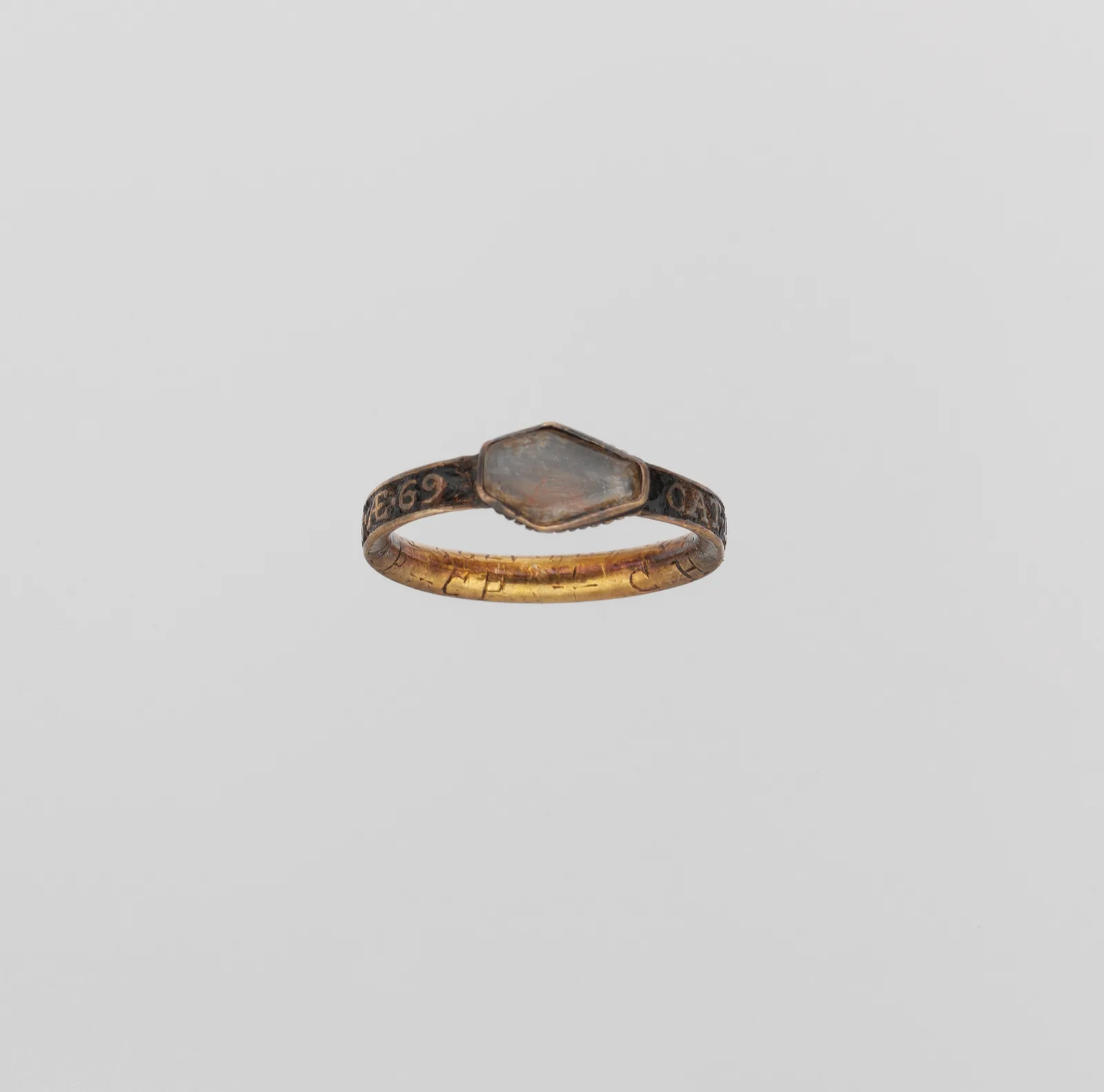
Mourning jewellery of that era is a genre in itself with its own materials. Jet, a kind of fossilised wood from Whitby in Yorkshire, gave a deep anthracite shine and went into brooches, lockets and bracelets. Its mining at Whitby grew into a whole industry. Black agate, with its dull dark colour, read as fitting for grief. Hair of the dead was sealed under glass in lockets: a way to keep the physical presence of a loved one, a norm rather than a macabre detail.
Skulls and skeletons in jewellery of this tradition carried a specific memento mori meaning, not Gothic decoration. A small gold or silver skull on a signet ring reminded its owner of transience. Modern pieces with blackened metal, skulls, jet and severe lines are direct heirs to this genre, which is nearly two hundred years old.
Customer reviews
Zevira is a real jewellery shop. Genuine payments, deliveries and customer thank-yous.
🥰🥰🥰 gracias

Ok, ¡gracias! 🙂

Caring for Jewellery with This Symbolism
The symbolism of Arcana 13 has its own materials, and each calls for its own handling. Oxidised silver, jet and matt dark stones behave differently from familiar polished gold, and ordinary care can ruin them.
Blackening on silver is not a separate layer of paint but a thin film of silver sulphide on the surface of the metal. It holds in the recesses of the design while wearing off the raised areas over time through friction, and that is the intention: a blackened skull or ouroboros is meant to let the relief stand out light while the shadows stay dark. The chief enemy of blackening is abrasion. Cleaning pastes, scouring powder, wipes with a polishing treatment strip the film in a few strokes, and the design fades into an even shine. Blackened silver should be cleaned only with a soft cloth and warm water with a drop of soap, no brushes and no dipping in ready-made silver dips: those dips dissolve the sulphide film, which is exactly what they are made to do.
Jet, the material of Victorian mourning jewellery, is not a stone at all but compacted wood, in effect a kind of coal. It is light, warm to the touch and soft: around 2.5 on the mineral hardness scale, roughly a fingernail. Jet scratches easily, dreads a knock, dislikes sharp swings of temperature, and cracks from the dry heat of a radiator or direct sun. Clean it only with a dry or barely damp soft cloth, no soaking in water and no chemicals at all. The old jet brooches and lockets that survive to this day did so precisely because they were never washed and were stored apart from metal and hard stones that would scratch them.
The general rule for all this dark symbolism is simple: keep each piece on its own, in a soft pouch, not in a shared box where metal knocks against metal. Take it off before the shower, before sport, before sleep. The body and perfume oxidise silver fastest, so a piece that lies on the skin all day darkens unevenly, and that is fine for blackened items but unwanted on smooth gold.
What to Engrave on a Piece for Arcana 13
Engraving turns a symbol into a personal mark, and for Arcana 13 the most fitting choice is not a name but a marker of passage. The most precise option is a date of completion: the day an important stretch ended, a job was left behind, a divorce went through, a chapter closed. Not the date of a loss as grief, but the date of a turning point as fact. Such a date is read by you alone, and it turns the piece into a private calendar of change.
Of the short inscriptions, the ones older than Tarot work best. Memento mori and carpe diem are Latin formulas with two thousand years behind them, tested by meaning rather than fashion. For anyone who has come through a hard period and emerged different, the Latin resurgam, "I shall rise again", suits well, a traditional inscription paired with the phoenix. Long motivational phrases and other people's quotations are best avoided: on a small surface they look cramped and date faster than the metal does.
There are technical limits. The inside of a ring usually holds between fifteen and thirty characters with spaces, depending on size and font, so a date or a single word almost always beats a sentence. On blackened silver the engraving is done before the blackening, so that the fresh cut of metal darkens too and the letters do not glint bare against the surface. Jet cannot be engraved: the material is too brittle and crumbles under the graver, so the inscription is moved to the metal part of the setting or locket.
Upload a photo of your pet, someone you love, or an object. We'll build a 3D model and hand-cast it in pewter.




Parallels in Myth and Nature
The theme of transformation through completion is so universal that no developed mythology is without it.
Persephone among the Greeks is carried off into the underworld, eats pomegranate seeds and so spends part of the year below and part above. She did not die forever but became a goddess who knows both worlds. Osiris among the Egyptians is killed by his brother, cut apart, gathered back together by Isis, and rises again as lord of the afterlife: death changes the role rather than destroying it. Inanna in the Sumerian myth descends into the underworld, at each of seven gates is stripped of a token of power, dies and returns, but altered: the knowledge of losing everything becomes her strength.
The most literal example is in nature. The caterpillar inside the cocoon dissolves almost entirely, and from that solution the butterfly is built. The same genetic material, a different form of life. The Greek metamorphosis means "change of shape", and that is fact rather than metaphor. Arcana 13 describes exactly this: not annihilation but rebuilding.
The Phoenix Through the Ages
The phoenix is one of the few symbols to pass through cultures with its meaning almost unchanged. In Egypt the Bennu bird embodied the god Ra and the daily cycle of the sun, dying in the west and being born in the east. Herodotus, in the fifth century BC, recorded a tale of a phoenix arriving once every five hundred years, and added honestly: "I have not seen it myself, only a picture." Early Christians saw in the phoenix a ready image of resurrection and placed it on sarcophagi and mosaics. In the Renaissance the phoenix entered the heraldry of families declaring their rebirth after catastrophe; it was used by the Medici, and Elizabeth I was portrayed in its image. In alchemy it became the symbol of the rubedo stage, the final step of transformation.
Anyone choosing the phoenix as a personal symbol chooses a precise thing: the fire was part of the process, and without it the new would not have been born.





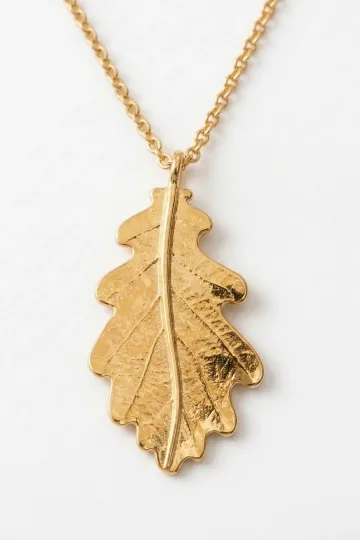
Jewellery for the Symbols of Arcana 13
The symbolism of Arcana 13 found material form in the memento mori tradition, which is older than Tarot. These pieces do not frighten; they return you to the present.
The skull: what remains. Skulls in jewellery appear from the sixteenth century, with their peak in the Victorian era. In the Stoic tradition and in Arcana 13 the skull carries not fear but precision: it is what remains once the incidental falls away, role, status, accumulated grievances, outdated fears. Everyone's bones are built the same way, and that levels people.
The phoenix: fire as renewal. A direct embodiment of what the card speaks about: the old form breaks down, the new one rises from the same place. It suits anyone who has come through a hard period and emerged different.
The hourglass: time as a cycle. When the sand has run out, the glass is turned over and everything begins again. A classic vanitas image, echoing the cyclical nature of Arcana 13.
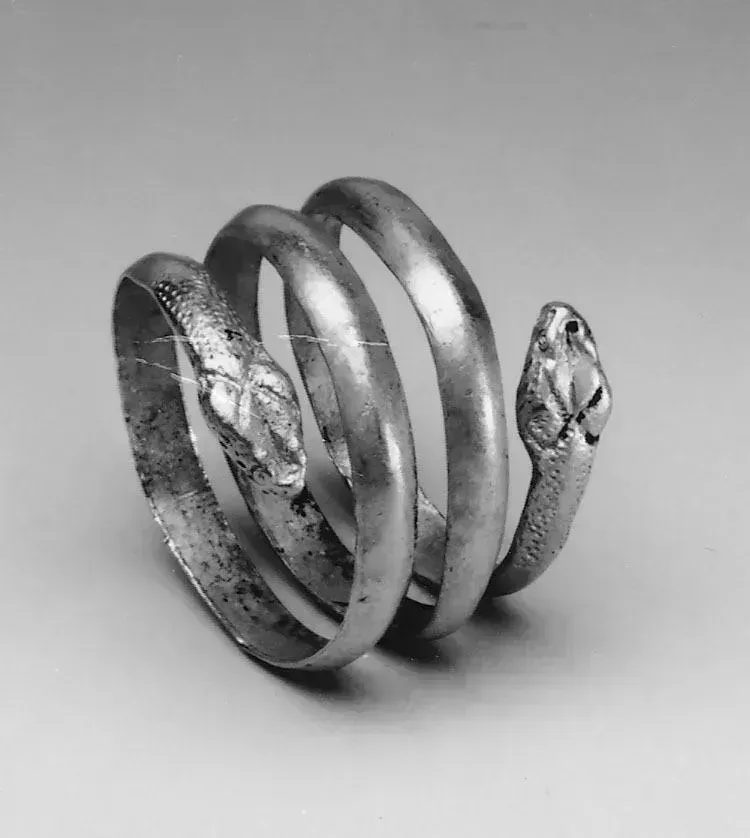
The ouroboros: the snake biting its tail. One of the oldest symbols of the cycle, found in Egyptian, Greek and alchemical texts. A circle with no beginning and no end: the end gives rise to the beginning. By its shape it sits perfectly in a ring, which is itself a circle.
The butterfly: visible metamorphosis. Behind the outward lightness sits a radical change that happens in the dark and silence of the cocoon. In the context of Arcana 13 the point is not the beauty but the very fact of the transformation.
The Card's Meaning: Upright and Reversed
Upright, Arcana 13 means completeness, a clear end to a cycle and acceptance of change. Something ends with no way back, and at the same time something begins. In practical reading the card confirms more often than it warns: it turns up when the parting has already happened, the job is already lost, the move has already taken place. The person who sees it in a spread usually already knows what it is about. The card gives that knowledge a name and offers it to be read as transformation rather than catastrophe.
The second layer of meaning concerns letting go. Often change is delayed not because the old is unready to leave, but because the person holds on to it with both hands. Fear of the new, habit, the illusion of control. In that reading the card is an invitation to release what is already dead, to free up space.
Reversed Death is resistance to change. The person sees that the old has ended but cannot or will not accept it, and goes on living a scenario that no longer exists. Sometimes the reversed position reads more gently, as a quiet, gradual ending with no rupture. In both cases the heart of it is the same: the change is already under way.
It is worth keeping in mind: all of this is interpretation of a symbol, not prophecy. A card in a spread works as a mirror, reflecting what the person already knows about their life. There is no evidence that it determines the future.
Leave your email, we'll send your discount code. No spam, unsubscribe anytime.
The code arrives by email, valid on your first order.
Its Place Among the Other Arcana
Arcana 13 stands between two important cards. The preceding Arcana 12, the Hanged Man, shows a figure upside down: a voluntary letting go, a pause, a view from another angle. The following Arcana 14, Temperance with its angel pouring water between two cups, carries the meaning of balance and integration after a great change.
Death stands at the centre of this three-step passage: first the letting go in silence, then the irreversible ending, then the recovery of a new balance. After Temperance the path continues: the Devil with the theme of attachment and the illusion of chains, then the Tower, then the Star with its hope. Death is not the end of the journey but a turning point in the middle: seven more Arcana follow it.
In combinations the card shifts its shade. Beside the Tower (Arcana 16) it describes a destruction sudden and radical: an outside blow has set off an inner change. Beside the Star it gives the opposite, comforting image: renewal follows the ending. Beside the World (Arcana 21) it means the completion of a great cycle with full acceptance, coming out whole on the other side.
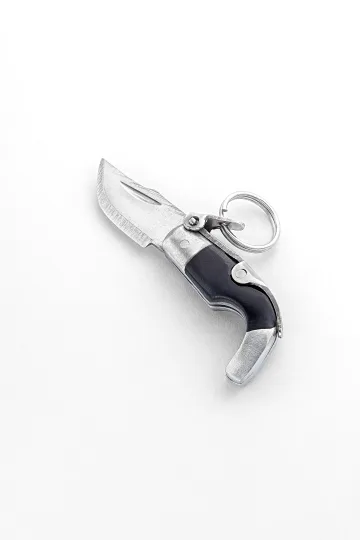
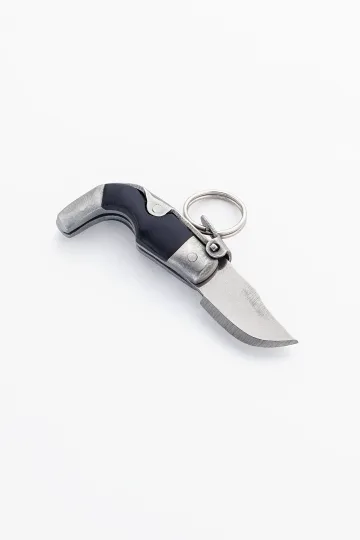
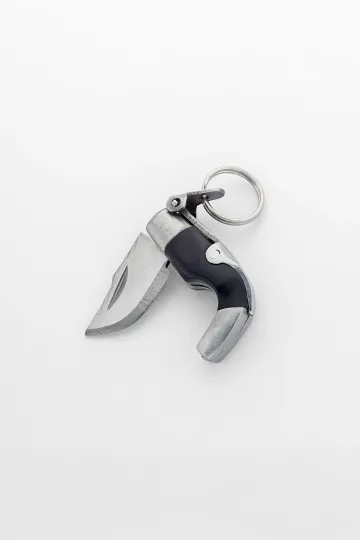
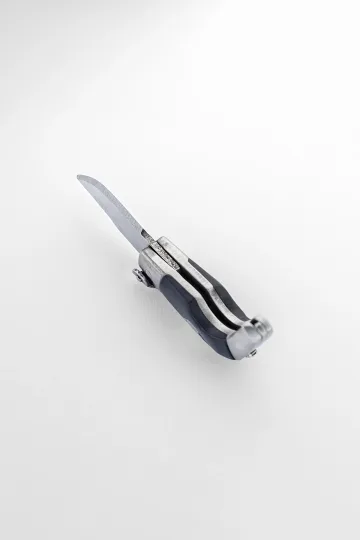
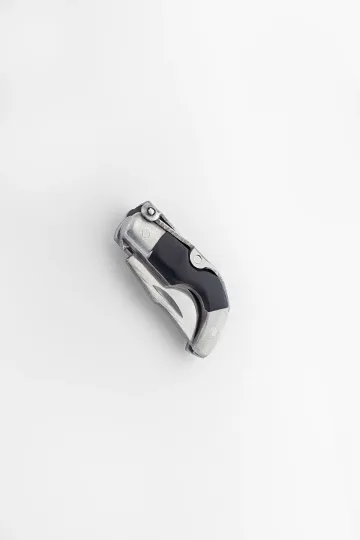
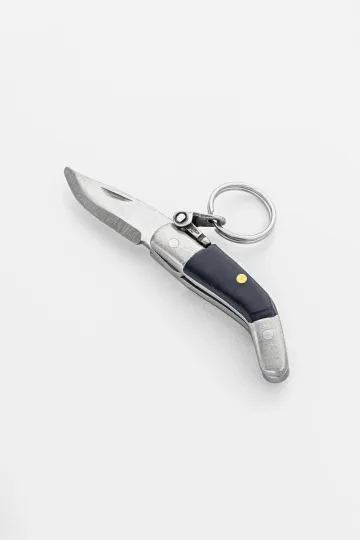
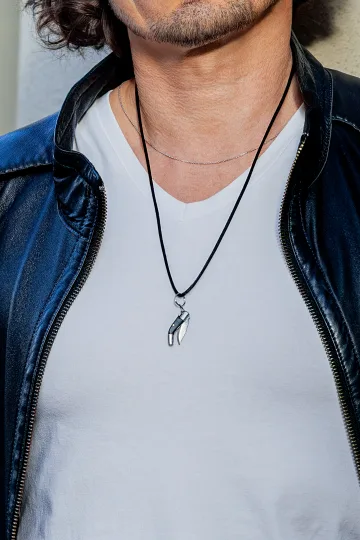
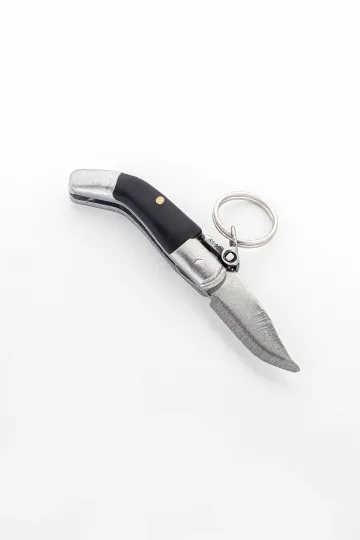
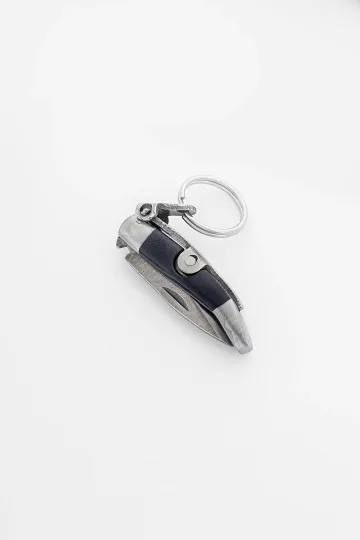
CAPAORA mini knife pendant
The 18th-century Spanish navaja in miniature: 40 mm of stainless steel, a real folding mechanism and a Palanquilla lock that clicks. An affordable gift to remember.
Authentic · Ships from Spain · 14-day returns
The Archetype Behind the Card: Thanatos, Saturn and the Scythe of Time
The skeleton with a scythe has a long pedigree, and knowing it makes Arcana 13 a much richer object. The figure did not appear from nowhere in the fifteenth century. It absorbed classical ideas about endings, about time, and about what cannot be argued with.
Thanatos: death without malice
The Greeks personified death as Thanatos, son of Nyx, goddess of night, and twin brother of Hypnos, god of sleep. That family arrangement says a great deal. The ancient world set death and sleep side by side as two states of rest rather than as horror and relief. On vase painting and grave reliefs Thanatos is usually a winged young man holding a torch turned downwards, not a bony monster. He does not torment anyone and takes no pleasure in the work. He simply arrives.
In Euripides the hero Heracles wrestles Thanatos in a fair fight and brings a woman back from him, which tells you what the Greeks thought the terms were: death can be delayed by strength and loyalty, but not cancelled. That calm, unmalicious figure is far closer to the Waite card than the grinning gothic skeleton that came later, and it is worth holding in mind when you look at the image.
Kronos, Saturn and the sickle
The scythe, the defining attribute in the European tradition, did not come straight from farming. It arrived through the figure of Time. The Greek Kronos, father of the gods, used a sickle against his own father and then swallowed his children out of fear of a prophecy. Later writers merged him with Chronos, the personification of time itself, and the sickle became the tool with which time cuts down everything living. The Romans knew him as Saturn, and the old man with a scythe and an hourglass, Father Time, survived all the way into the New Year cartoons of the Victorian press.
The skeleton on the Marseille card mowing a field of human figures is a direct continuation of that line. Death working as time's labourer, and the harvest is us. It is a bleak image on first reading and a rather practical one on second: harvest is not destruction, it is the point at which a growing season is completed.
The pale horse
The white horse under the skeleton points to a third layer. In the Book of Revelation the fourth rider comes on a horse of a pale, sickly colour, and his name is Death. A medieval viewer recognised that instantly, because it was painted on the wall of half the parish churches in Europe. Waite deliberately changed the shade to a clean white, which shifts the emphasis from punishment to solemnity, but the rider remains a rider.
The horse is doing specific work in the composition. It makes death mobile and unavoidable: a person on foot can be outrun, a person mounted cannot. So three streams meet in one card, the Greek Thanatos, the Roman Saturn as Time, and the biblical horseman, and each brought a layer of meaning with it. Very few cards in the deck carry that much accumulated history.
The Number Thirteen and Its Reputation
Thirteen drags a long tail of superstition behind it, and Arcana 13 inherited all of it without asking. The sources are worth knowing, because the fear of the number directly affected how the card was drawn and how it has been read ever since.
Where the fear came from
The most common explanation points to the Last Supper: the thirteenth at the table was the disciple who betrayed his teacher, which produced the old belief that thirteen at dinner means misfortune for one of them. Norse mythology supplies a strikingly similar story, in which an uninvited thirteenth guest arrives at a feast of the gods and the bright god Baldr dies as a result.
Underneath both stories sits a simpler structural point. Twelve is the number of completeness in European counting: twelve months, twelve signs of the zodiac, twelve disciples, twelve hours on a clock face. Thirteen is the one that will not fit into the pattern, the step past the edge of a closed system. A culture that organises itself in twelves will always find the next number faintly threatening.
Triskaidekaphobia in daily life
The fear even has a name of its own, triskaidekaphobia, and it is embedded in the built environment more deeply than most people notice. Plenty of older hotels have no thirteenth floor and jump straight from twelve to fourteen. Some theatres skipped row thirteen. In British street numbering the omission is common enough that surveyors treat it as a known quirk, and a house without a number thirteen in the terrace is not unusual in Victorian and Edwardian developments.
What settles the matter is that the fear is local rather than universal. In Italian tradition thirteen was for a long time the lucky number, associated with fortune and fertility, and seventeen was the one to avoid, because in Roman numerals XVII rearranges into VIXI, Latin for "I have lived", meaning "my life is over". That is the best possible proof that the meaning of a number is a cultural agreement rather than a property of the number.
Why the card sits in this position
The placement of this card at position thirteen is unlikely to be an accident. The twelve preceding Arcana, from the Fool to the Hanged Man, describe the formation of a person: gathering experience, meeting the world, and then the first genuine halt. The thirteenth puts a full stop to it. Everything accumulated has to be released for the journey to carry on.
A number already loaded with the idea of rupture and of stepping past a limit fell onto the card of transition very neatly. The people who designed the early decks appear to have felt this, which is one plausible reason the card was so often left unnamed. Naming it would have made the superstition loud. Leaving it silent left room for the meaning.
Scorpio and the Astrology of Arcana 13
In most astrological correspondence systems Arcana 13 is assigned to Scorpio, and it is one of the more convincing matches in the whole scheme. Understanding the sign adds depth to the card even if you treat astrology as a language of metaphor rather than as a description of how the world works.
Where the correspondence came from
The attachment of the tarot Arcana to signs and planets was worked out in English occult circles at the end of the nineteenth century, and Waite was part of that movement. They were building a single system in which every card answered to some element of the cosmos, and the whole edifice was constructed in London within a couple of decades. Scorpio went to the thirteenth card by argument rather than by lot: a sign of deep water, crisis and rebirth lined up with a card of endings almost perfectly.
It is worth being clear that this system is not ancient. It is roughly a century and a half old. It stuck because the match was genuinely persuasive, not because anybody found it in a medieval manuscript.
Why Scorpio specifically
Scorpio is a fixed water sign, ruled in traditional schemes by Mars and in modern ones by Pluto, named for the god of the underworld. Water governs feeling and depth, the fixed mode governs persistence, and Pluto governs everything hidden, everything that breaks down and everything that comes back in a different form. Scorpio is not frightened of dark subject matter; it lives there quite comfortably. Crisis, intensity, secrecy, regeneration.
Arcana 13 says the same thing in a different register: an ending that clears ground. The overlap is so direct that several schools treat the card and the sign as two descriptions of a single process rather than as two separate items that happen to correspond.
The three symbols of the sign
Scorpio has an unusually rich set of images, and all three connect to the card. The scorpion itself stands for defence and venom, the readiness to sting when something deep is touched. The eagle is the raised version of the same energy, looking down on its own passions from a height rather than being driven by them. The phoenix, the third and highest symbol of the sign, coincides exactly with the jewellery vocabulary of Arcana 13: destruction in fire and a rising from the ash.
People born under Scorpio, and people who have come through a large change of any kind, quite often gravitate towards the phoenix rather than the scorpion. It is the gentler statement of the same idea, and in that choice astrology, myth and the card all converge on one image.
Scorpio in jewellery
The symbolism gets worn in several ways. Some choose the sign directly, a scorpion silhouette or a pair of pincers, as a mark of temperament. Others prefer the phoenix line, which is softer and reads more broadly. The stones traditionally attached to the sign are topaz and a deep wine-coloured garnet, the latter chiming with the themes of blood and transformation.
A dark garnet in blackened silver gathers the whole set of associations into one object: water, depth, regeneration. There is no astrological rule requiring any of this. It is simply a way of assembling a private meaning into a single wearable thing, which is what the best symbolic jewellery does.
Readings Where the Card Appears
The card becomes much easier to understand in practice, through the standard spreads it turns up in. None of this is fortune telling about a fixed future. It is a way of giving structure to something a person already senses.
The three-card spread
The simplest layout is three cards for past, present and future. Arcana 13 in the past position speaks of a completion that has already become solid ground: the person has come through a major change and is standing on the other side of it. In the present it confirms that a break is happening now and that resisting it is wasted effort. In the future position it reads most gently of all, as a promise that the current phase will end and clear space, rather than as a threat. The same card in three positions sounds like three different statements.
The Celtic Cross and position
In a larger layout such as the Celtic Cross, what matters is the position, the neighbours, and the relationship between them. At the centre, as the heart of the question, the card says that the theme of the whole reading is transition. In the position of the obstacle it points to the person's own unwillingness to let go as the thing in the way. In near future it promises a completion shortly. Experienced readers look immediately at what lies alongside: the Star softens it, the Tower sharpens it, the Sun promises clarity on the far side of the change.
A spread for closing a cycle
There is also a narrow layout built around the theme of the card itself, in three positions: what is leaving, what makes it hard to let go, and what comes into the space that is freed. Arcana 13 in this spread usually sits in the centre and sets the tone for the other two.
The first position names a specific ending. The second uncovers the attachment or the fear that is holding on. The third shows the shape the released energy is going to take. This layout is particularly useful at the transitions that our culture barely marks at all: a change of career, a move to another city, the end of a long relationship, the point where children leave home.
How to read the card honestly
The one rule that matters with this card is not to frighten anyone and not to be frightened. Death in a reading is almost never about a physical outcome, and presenting it that way is an admission of not knowing the tradition. Reputable readers say this plainly rather than trading on the shock, and the ones who do not are usually selling something.
An honest reading sounds like a question rather than a verdict: what in your life has already finished but is still holding on to you. The card works as a mirror, not as a prophecy, and its value is that it gives a name to a process the person could feel but had not put into words. That is a genuinely useful thing, and it does not require believing anything in particular about the cards.
Facts That Tend to Surprise People
In the oldest Italian Visconti decks the Death card was sometimes drawn with a bow and arrows rather than a scythe. A skeletal archer took aim at a crowd, and every viewer understood that the arrow might be for them.
Pamela Colman Smith, who drew all seventy-eight cards of the Waite deck, was paid a single flat fee and held no share in the sales. The deck went on to sell in the millions and has supported publishers for over a century. She died in poverty in Cornwall, and her grave was unmarked for decades.
The word that actually fits this card is metamorphosis. In Greek it means literally a change of form, and it describes the transformation of a caterpillar into a butterfly as a biological fact rather than as a poetic flourish.
In the Thoth deck the skeleton dances, and the pose was taken from a real alchemical engraving. The deck's author called the thirteenth Arcana a dance rather than an execution, and specifically asked the artist to convey movement.
Whitby jet, the main material of Victorian mourning jewellery, is fossilised wood from the Jurassic, roughly a hundred and eighty million years old. The ornament worn at a funeral in Yorkshire was older than most of the dinosaurs whose bones lie in the same cliffs a few miles up the coast.
Italian culture treated thirteen as a lucky number for centuries, and the phrase "to make thirteen" meant a substantial piece of good fortune. The unlucky number there was seventeen, for the Roman numeral reason given above.
The rising sun on the Waite card comes up between two towers, and the identical motif of two towers appears on the Moon card. Waite linked them deliberately. In both cases it is a threshold between two states, a boundary that has to be walked through rather than avoided.
Send a friend a discount code, they save on their first order.
Who It Suits and How to Give It
Jewellery with the symbolism of Arcana 13 is a delicate thing, and the main point is to feel the moment. It is chosen by people drawn to the idea of passage and change, not to gloom. A skull in the memento mori tradition suits a person of a philosophical cast of mind, who will value the meaning rather than flinch at the image. A phoenix is good for someone who has taken an important step forward. An ouroboros is for someone thinking about cycles.
As a gift such a symbol calls for tact. Do not give it to a person in the sharpest part of grief or fresh loss: any philosophy would then be read the wrong way. And never give it with the words "this will help you get through" or "this is a symbol of your loss". Better to keep it neutral: "this is a symbol of change and a new stage". A gift to yourself is especially fitting here: a piece you choose for yourself at the end of an important stretch carries your own meaning rather than someone else's reading.
Buying it as a gift? Each one arrives ready to give.
 A branded Zevira box and a little card come with every order.








FAQ
Is it true that the Death card in Tarot foretells something bad?
No. This is one of the most stubborn myths, and it ties back to the early decks leaving the card unnamed, letting fear fill the gap. In the Waite-Smith system, the basis of modern Tarot, Arcana 13 describes the end of a cycle and the move to something new. The card does not say "you will suffer", it says "something is ending". And it is worth remembering: the cards have no predictive power; they are a language of symbols, not a forecast.
What does Arcana 13 mean in a love reading?
Usually something in the relationship has ended or is ending. More often it is not the couple itself but a phase of it: a period, a role, a familiar pattern. Frequently the card appears when a relationship moves to another level and its old shape leaves to let a new one appear.
Is it acceptable to wear jewellery with the symbolism of the Death card?
Yes. The memento mori tradition to which it belongs goes back several centuries. Wearing a piece with a skull, a phoenix or an ouroboros means remembering the value of the present, not upholding an aesthetic of fear.
How does Arcana 13 differ from the Tower?
The Tower (Arcana 16) is destruction that is sudden, painful and external. Death (Arcana 13) is the end of a cycle, which can be quiet and even voluntary. The Tower demolishes; Death transforms.
What does the reversed Death card mean?
Resistance to change: the person sees that something is ending but holds on to it out of fear or habit. Sometimes it points to a drawn-out passage that moves slowly and against resistance.
Is the Death card connected to the real death of loved ones?
In the traditional reading, no. Experienced card readers treat it as a metaphor for any serious ending, not as a sign of a physical outcome.
How do I choose a piece for the symbolism of Arcana 13?
Start not from the look but from what you want to express. Came through a loss and out the other side: a phoenix or a butterfly. Want to remind yourself of the value of the present: a memento mori skull or an hourglass. The theme of cycles matters: an ouroboros. Wearing a piece whose meaning is clear only to you is perfectly fine.
Do I need to understand Tarot to wear such a piece?
No. The symbols work apart from the system. The skull as a reminder of mortality existed long before Tarot; the phoenix as a symbol of rebirth appeared in myth millennia before Waite. Tarot gathered these images together, but they live a life of their own.
Why was the Death card unnamed in early decks?
Because of the superstition around the number thirteen and the reluctance to name death aloud. Namelessness was a cultural norm. Waite was the first in the modern tradition to give the card a name, turning fear into archetype.
Conclusion
We live in a culture that is bad at speaking about endings. For birth, marriage and death there are rituals and words. For the great in-between changes, divorce, a change of profession, a move, a recovery, there is almost nothing. Arcana 13 gives this a language: great transitions are part of life, they happen to everyone and deserve dignity rather than shame. The king lies beneath the hooves of the white horse. This happens to kings. This happens to everyone.
Jewellery with this symbolism, the memento mori skull, the phoenix, the ouroboros, the butterfly, the hourglass, is not jewellery of death but jewellery of change. A material reminder that out of endings the new is born. Great transitions deserve a sign of their own, one you carry with you.
Silver, gold, wedding rings, symbolism, matching sets.
Wear the symbol, don't just read about it. These are in stock:
About Zevira
Zevira makes jewellery in the artisan tradition of Albacete, Spain. Death in Tarot is the card of transformation, and our memento mori pieces are not about gloom but about the Stoic tradition: remember your limits in order to live better.
What you can find with us under the symbolism of Death as transformation:
- Memento mori pendants with a skull in the Victorian tradition
- Phoenix pendants as a symbol of rising from the ashes
- Hourglass pendants as an image of the cycle
- Ouroboros pendants as an image of eternal return
- Butterfly pendants as metamorphosis without the black
Each piece is made by a craftsman by hand, with the option of personal engraving. We work with 925 silver and 14 to 18 carat gold.