The Hermit in Tarot: Meaning, History and Jewellery for the Symbols of Arcana 9
Late at night, when the house has gone quiet and the street outside has finally stopped humming, a writer sits over a manuscript. The lamp on the desk lights up a few loose pages. The phone lies face down. The cup of tea went cold a while ago, though he never noticed, because his attention is not on the tea but on a thought that an hour ago felt vague and now, in the silence, has begun to take shape.
This moment is familiar to anyone who has ever chosen solitude, not because people were missing, but because here, in the quiet, they simply think best. Not because others get in the way. It is just that in the presence of others, part of your attention is always taken up by the social surface: how do I look, what will they say, did I understand that correctly. When you are alone, all of that falls away. What remains is the thought.
This is exactly the state that Arcana 9 depicts. An old man stands at the summit of a mountain in complete solitude, a raised lantern in his right hand, a staff in his left. Around him: snow, silence, the night sky. He is not lonely in the sense of being abandoned. He is alone in the sense of being focused. And his lantern burns for himself.
Arcana 9 opens up from every angle: where it came from, what each detail of the image means, how the Hermit archetype works in real life, and which pieces of jewellery carry the symbols of this card.
The Hermit is one of the most precise cards in the deck precisely because its meaning is easy to recognise in everyday life. We are not talking about mysticism here, and we are not suggesting you make life decisions based on a card. We are talking about a system of symbols that has spent several centuries gathering and refining the image of a person who chooses an inner path. Tarot, in this sense, works like a rich vocabulary for describing states that are otherwise hard to name with any accuracy. The word "Hermit" applied to a person can sound insulting or strange. But once you understand what the archetype actually means, you can wear it as an accurate description that carries genuine dignity.
The Number 9 in Tarot: Where the First Cycle Ends
The structure of the Major Arcana is no accident. From the Fool (0) to the World (21), a path is laid out in which every card holds its place. The number 9 occupies a special position in that sequence for several reasons.
In mathematics, nine is the last single-digit number. After it begins double digits, which is to say a new order. In numerology, 9 means the completion of a cycle, a sum, an integration. It is the number in which the total of everything before reaches its maximum and pauses just before the next leap.
For Tarot this means the Hermit stands on a threshold. Behind him lie eight lessons. The Fool began the journey open and naive. The Magician showed the power of will and intention. The High Priestess gave access to intuition. The Empress opened up creation and abundance. The Emperor built structure and order. The Hierophant passed on tradition and knowledge. The Lovers set up the choice that shapes a personality. The Chariot gave the experience of motion and of victory over circumstance. Strength showed that inner calm is more powerful than outer force.
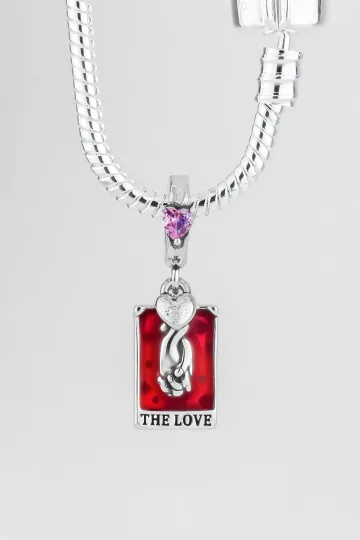
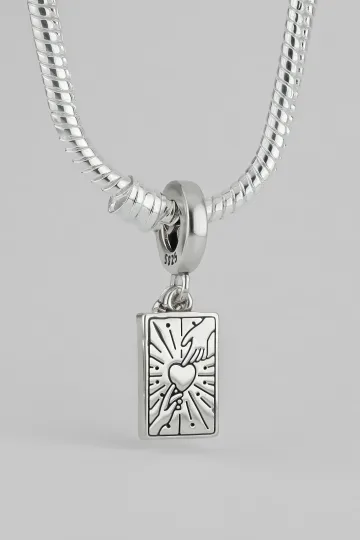
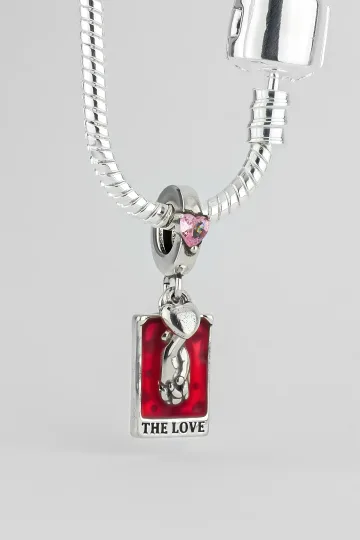
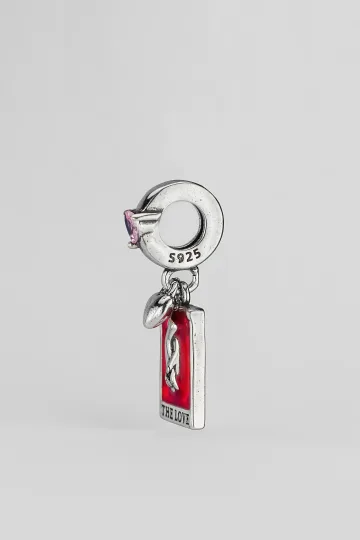
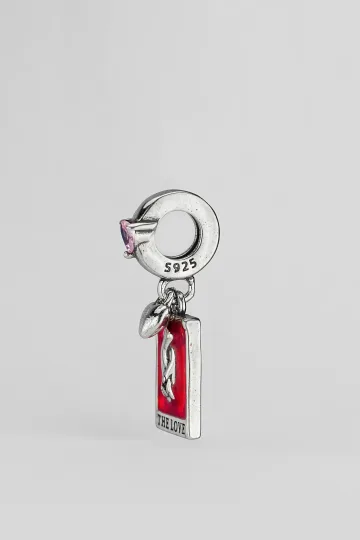
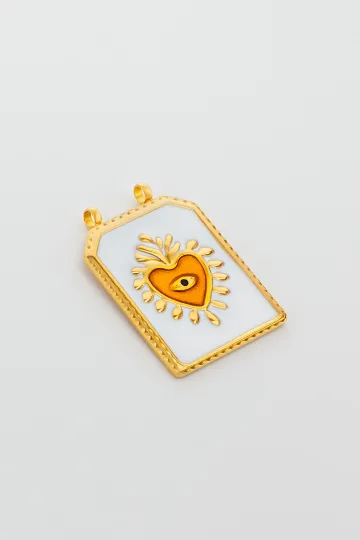
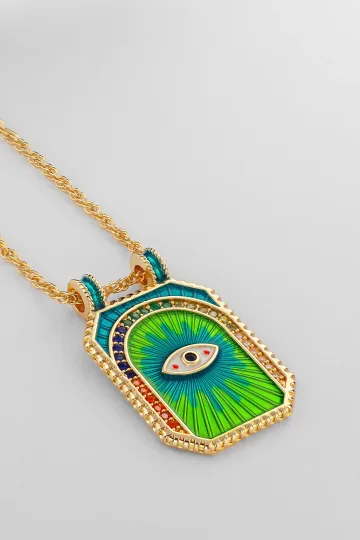
Wear the symbol, don't just read about it. These are in stock:




Now, carrying all of this, the Fool reaches the ninth stop. Here he has to halt, rethink everything he has walked through, and understand who he has become. This is not the end of the road. It is the place where you make camp in order to move on with full understanding.
Ahead lies the Wheel of Fortune. It will set a new cycle in motion. But before stepping into its turning consciously, you have to make sense of what is already there.
In this sense, nine is both the end of the first wave and the preparation for the second. A number of completion that creates the ground for a beginning.
The Hermit Through the Centuries: from Visconti to Crowley
The history of the Hermit in tarot spans several centuries and shows how a single image shifted in meaning depending on the era and the culture.
Visconti: Il Gobbo and the Hunchback with a Candle
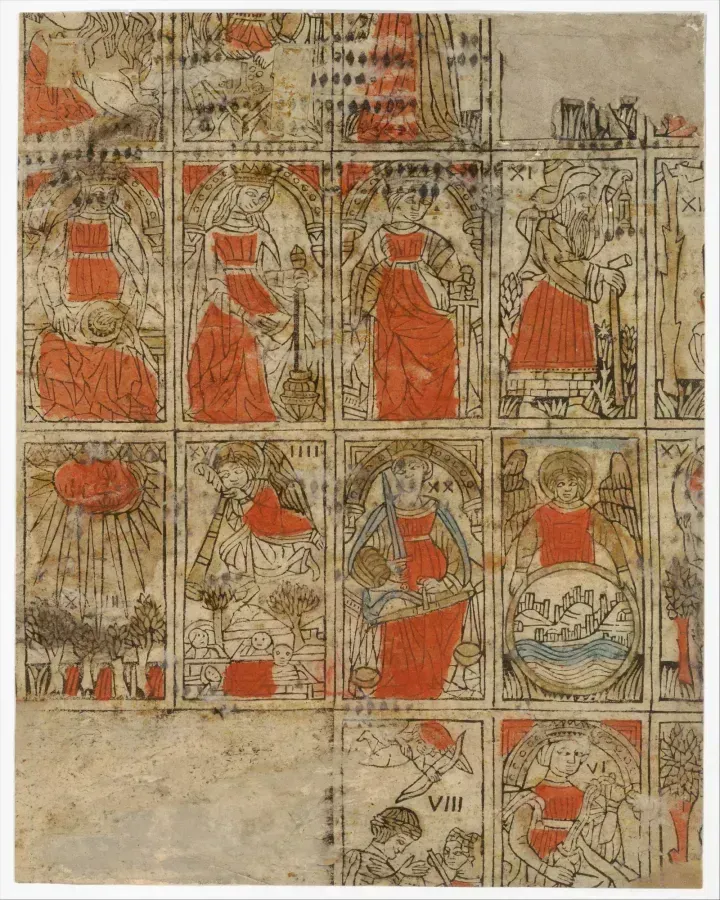
The earliest Italian decks were made in the middle of the fifteenth century for the aristocratic houses of Northern Italy. The Visconti-Sforza deck, painted around 1450, is among the finest surviving examples of that period.
On the card that would later become the Hermit, we see a stooped old man. He was called Il Gobbo, the hunchback, or Il Vecchio, the old one. In his hand he holds not a lantern but a candle or an hourglass. Sometimes the card's name was read as Il Tempo, Time.
This is not a sage and not a spiritual seeker. This is an allegory of inevitability: time flows, the body bends, the end draws near. In medieval iconography the hunch was a direct indication of a man whom nature had already bowed beneath the weight of all he had lived. The card carried the theme of memento mori, so characteristic of medieval aesthetics. Solitude here is not a resource but a consequence of old age.
The candle or hourglass in this early version became the prototype of something that would later be preserved in the symbolic memory of the Arcana. Even after the card changed its attributes, the association with time, with a slow and exact counting, remained in the subtext.
The Marseille Deck: L'Hermite and the First Lantern
By the seventeenth century, the standard French version of tarot had taken shape, the one known as the Marseille deck. In it the card was called L'Hermite, the Hermit. This is where the lantern first appears.
The Marseille Hermit is an old man in a dark cloak, with a staff and a lantern. But his lantern is shielded: he carries it at his hip, or half hidden beneath his cloak. There is light, but it is not raised, not put on show, not directed at others. It is a light for himself, or a light the sage has not yet decided to reveal.
In 1781 the antiquarian Antoine Court de Gébelin published a treatise, Le Monde Primitif, in which he was the first to draw a parallel between the Hermit and Diogenes of Sinope. This fourth-century BC philosopher was famous, among other things, for walking through Athens in broad daylight with a lit lantern. The connection proved so exact that it held for centuries.
Waite-Smith 1909: the Wandering Sage with a Raised Lantern
In 1909 the artist Pamela Colman Smith, working under Arthur Edward Waite, created the deck that would become the reference point for most modern tarot readers.
Waite made one decisive change: he raised the lantern. Where the Marseille Hermit shielded his light, Waite's holds it high above his head. He stands at the summit of a mountain, and his light can be seen from below. This is not a light for himself. It is a beacon, a marker for those climbing the slope.
The change seems small. In reality it shifts the whole idea of the card. The Marseille Hermit guarded his knowledge. Waite's shares it. The Marseille one lived in silence for his own sake. Waite's went into solitude in order to return with what others need.
Pamela Colman Smith turned the stooped old man into a wandering sage: straight back, steady staff, face turned forward. Solitude stopped being a burden and became a choice.
The Thoth Deck: the Hermit According to Crowley
Aleister Crowley created his Thoth deck in 1943 together with the artist Frieda Harris. The Hermit card in the Thoth deck carries the features of the god Hermes and of Mercury at once. Crowley wrote in his commentaries on the Thoth that the Hermit is "the Spermatozoon", the original life force that carries hidden knowledge. This reading differs radically from Waite's. For Waite the Hermit is the accumulated wisdom of a life lived; for Crowley he is the concentrated potential of the unmanifest.
In jewellery, the Thoth deck offers a different aesthetic: more Egyptian, more hermetic, with the emphasis on the caduceus and the priest's hand. But both readings agree on one thing: the Hermit carries something important, and that something shines for others.
A lighthouse belongs in matte silver under a dark collar. Mirror gloss is cheap fuss here, and don't argue.
How to Wear Jewellery for the Hermit's Symbols
This symbolism passes through my hands all the time: a lighthouse, an owl, a feather, an hourglass. It is intimate by nature, so I keep it close to the face. Here is what I recommend to clients, occasion by occasion.
What do you suggest for every day? I recommend a single pendant on a thin chain over a chunky knit, a roll-neck or a plain tee. I keep the tones muted: grey, graphite, navy, olive. They echo the Hermit's grey robe and let the piece speak without arguing with the clothes. I suggest a length down to the collarbones, so the symbol reads when you talk.
Does it work for the office? It does. Under a blazer it stays visible just enough to be a private sign rather than a statement. I choose matte silver or dark rhodium: restrained, no mirror gloss, closer to the spirit of Arcana 9.
How do I build an evening look? For the evening I bring the piece forward. A black dress, a silk blouse or velvet give a deep dark background where matte metal reads whole. For a special occasion I suggest two chains of different lengths: the upper one shorter and finer, the lower one carrying the main symbol.
Which symbol suits whom? Here I go from the person. I choose a lighthouse for those who hold the light for others, a mentor or a therapist. I recommend an owl for the night thinker, a feather for the one who thinks through writing, an hourglass for the one who values slowness. One exact symbol always beats a handful.
What is the usual mistake? Overloading. I leave one carrier of the symbol and keep the rest as background. And I do not mix metals: silver with silver, warm gold with gold. A matte surface instead of shine, and the piece says exactly what it was meant to.

Turn on your camera, pick earrings, a pendant or a ring, and see the piece on yourself in real time.
Switch items in one tap.
Everything runs in your browser: no photo or video is ever uploaded.
Waite-Smith Iconography: the Details and Their Meanings
The card looks austere. An old man, a mountain, snow, night, a lantern. Nothing superfluous. But every element that is present carries an exact meaning.
The Grey Robe: a Refusal of the Fuss
The Hermit's clothing is grey. Waite chose colour deliberately: red stood for will and passion, blue for emotion and depth, yellow for intellect and light, green for growth. Grey stands apart from all of this. Grey is neutrality, a stepping outside the polarities.
The Hermit is neither the red fighter nor the blue dreamer. He is the grey observer. He stands beyond the battle of colours, beyond social roles and external demands. His robe says: I take no one's side, I am occupied with something else.
The robe is closed and long. No ornament, no badge of belonging to any order or clan. This is a deliberate refusal of all the markers of status that usually signal here is my rank, here is my role, here is my side. The Hermit has stripped off every marker. What remains is just a figure in neutral grey, thinking.
The Staff in the Left Hand: Experience as Support
In the Hermit's left hand is a staff. In Waite's iconography the right hand is tied to the active, the outward-directed, the left to the passive, the receptive, the accumulated.
The staff stands for accumulated experience that has become a support. It is not a weapon and not a tool for cutting a path through the undergrowth. It is the body's memory of every road walked before this mountain. The staff keeps the Hermit upright on uneven ground. Experience keeps a person steady in moments when everything is shifting.
The staff is whittled with care, without excess decoration. It is not the wand of a magician or the sceptre of an emperor. It is a wanderer's working tool. It is made of wood, of natural material, not of the metal of power. It is plain and reliable, like any well-tested instrument.
The Snow-Covered Summit: Endurance and Silence
The Hermit stands neither at the foot of the mountain nor halfway up the slope. He is at the summit. The climb has already been made.
In tarot symbolism the mountain means an achievement that took effort. Some people storm the summit their whole lives. The Hermit is already there. This is not a reason for pride, it is simply a fact: he no longer needs to prove that he can. He knows.
The snow at the summit adds another layer of meaning. First, it is silence. Where there is snow, sound is muffled. Snow creates the acoustics of stillness. It is in those acoustics that you can hear the things usually drowned out by noise. Second, the cold of the summit is a kind of purity. There is no pile-up of the social here, no pressure of expectation, no clamour of opinions. Only air, sky and thought.
Third, the snow speaks of endurance. To reach a snow-covered summit, you had to walk through frost and thin air. The Hermit is not here by chance. He has walked a path most people could not have withstood. Not because he is physically stronger. Because he had a reason to walk to exactly this place.
The night sky behind him completes the picture: he works when the world sleeps. His time is not synchronised with the common rhythm. That too is a choice.
The Lantern with the Six-Pointed Star: Light Through Contradiction
The main attribute. The lantern in the Hermit's right hand is held high. Inside the lantern burns a six-pointed star, which Waite called the Seal of Solomon.
A star made of two triangles carries the idea of joining opposites. One triangle points up, the other down. This is not decoration but a geometric formula: spirit and matter, the heavenly and the earthly, the masculine and the feminine, intuition and reason. When they come together, not fighting, not crowding each other out, but genuinely joining, something new arises.
The Hermit's light is exactly that. It is not single-poled: it holds both reason and intuition. It is a light born through reconciling what seems incompatible. Real wisdom looks like this: it knows that the truth is complicated.
The lantern lights only the next step, not the whole route. That is the particular nature of the Hermit's wisdom. He does not draw up five-year plans. He understands where to place his foot right now, and that is enough. Such an approach asks for trust in the process, and trusting is also a skill you have to learn.
The Long Beard
In the iconography of the Western tradition, the beard signified wisdom, the years lived, accumulated knowledge. It is not decoration. It is chronology written in faces: so much lived that there is plenty to think about in the silence of a mountain summit.
The Solitude of the Figure
There is no one on the card but the Hermit. No pupils, no companions, no animals. This absence is deliberate. The card wants to say: this state is fundamentally solitary. Not in the sense of being forever without people, but in the sense that this particular kind of work is done only on the inside.
The Star of Solomon in the Hermit's Lantern: the Occult Meaning
The six-pointed star inside the lantern is a detail Waite added on purpose, and it carries more meaning than first appears.
Waite was a member of the Order of the Golden Dawn, a late nineteenth-century occult society that synthesised Kabbalah, Hermeticism, alchemy and astrology. In that tradition the six-pointed star was called the Hexagram, or the Seal of Solomon, and it held a central place in the system of magical symbols.
According to the Kabbalistic reading, the hexagram corresponds to the sephira Tiphereth, the sixth of the ten sefirot on the Tree of Life. Tiphereth means beauty, harmony and balanced consciousness. It is the point where heavenly impulses meet earthly reality. It is no accident that exactly this star burns in the Hermit's lantern: his wisdom is Tiphereth in action, the equilibrium of spiritual search and a grounded life.
In the Jewish tradition the Star of David was associated with protection and with the wisdom granted to Solomon. By legend, Solomon used a seal bearing a six-pointed star to command spirits and to build the Temple. The symbol carried the idea of power over the unseen.
Waite places this symbol inside the lantern, making it the source of the light. Wisdom, this detail says, is wider than accumulated knowledge. It is the ability to see the invisible, to hold opposites in balance, and to light the way exactly where it is darkest.
For jewellery this has a direct meaning: a pendant or ring with a six-pointed star inside a frame or a lantern carries precisely that sense, a balancing wisdom that keeps the light open.
Diogenes of Sinope: the Ancient Archetype of the Hermit
If you go looking for the most exact historical prototype of Arcana 9, you arrive at the Greek philosopher Diogenes of Sinope, who lived roughly between 412 and 323 BC.
Diogenes belonged to the school of the Cynics, which questioned the value of everything society held to be necessary: wealth, honours, power, social conventions. His teacher Antisthenes said that virtue is worth more than anything else. Diogenes went further and made this a philosophical position and a way of life.
He lived in a pithos, a large clay vessel or barrel, on the Athenian agora. For possessions he had a cloak that served as both blanket and bag. He gathered food where he could, or asked for it. Once, seeing a boy drinking water from his cupped hands, Diogenes threw away his only wooden cup as surplus.
The story of the lantern in broad daylight is the most famous. Diogenes walked through Athens holding a lit lamp. When asked what he was doing, he answered: "I am looking for a man." The irony had several layers. There were hundreds of people around. A sunny day, an open market, a crowd. There was no darkness at all. But an honest man, a human being in the full sense of the word, he could not find. The light was needed not because it was dark outside. It was needed because it is dark in human nature.
When Alexander the Great came to him and offered to grant any wish, Diogenes answered: "Stand out of my light." Alexander was the ruler of Greece and Persia. Diogenes was a homeless philosopher in a barrel. Yet it was Diogenes who spoke from a position of strength, because he had nothing to lose and nothing to ask for. After that conversation, by some accounts, Alexander said: "If I were not Alexander, I would wish to be Diogenes."
Antoine Court de Gébelin saw in this image an exact match for the Marseille Hermit with his lantern, and recorded the parallel in 1781. Since then it has become part of the canonical reading of Arcana 9.
The lesson of Diogenes for those who carry the Hermit's symbolism is simple: independence from outside judgement is not bought with wealth or with self-denial for its own sake. It is bought with clarity about what you actually need. The lantern is for the one who is searching. The one who has stopped searching can put it out and go to sleep.
Upload a photo of your pet, someone you love, or an object. We'll build a 3D model and hand-cast it in pewter.

Lao Tzu and the Taoist Hermit
Lao Tzu, the legendary founder of Taoism, lived, by tradition, in the sixth or fifth century BC. He worked as keeper of the imperial archives at the court of the Zhou state. He saw the fuss of power, watched states flourish and collapse, and at the end of his life decided to leave, because he had understood that what he was seeking was not here.
The legend says that as he made for the western pass, to disappear from civilisation for good, the gatekeeper asked him to write down his teaching. Lao Tzu stopped, wrote eighty-one short chapters, and went on. So the Tao Te Ching appeared, the Book of the Way and Its Virtue, one of the most widely read books in human history.
Lao Tzu's departure is almost a literal image of the Hermit with the raised lantern: he leaves, but he leaves a light behind.
In the Taoist tradition the idea of the "hidden sage" holds a special place. It is called yinshi, which can be translated as the recluse who has withdrawn. This is a person who consciously steps out of the social whirlpool, not from fear, but from the understanding that the Tao, the Way, is better heard in silence. Mountains, caves, solitary huts in the forest, all of these are traditional places of Taoist hermits.
The Tao Te Ching speaks directly of this principle. In chapter sixteen: "Attain utmost emptiness, keep unshakeable stillness. All things arise together, and I watch their return." In chapter thirty-three: "He who knows others is clever. He who knows himself is enlightened." This is not an instruction to literal seclusion. It is a description of a quality of attention available only to one who knows how to stop.
For the symbolism of Arcana 9, the Taoist tradition adds an important accent: the Hermit leaves not out of weakness but out of an excess of understanding. He is not fleeing the world. He is choosing a deeper way of being in it. In this he is close to another card of voluntary pause: the Hanged Man in Tarot also goes still by his own will, turning the familiar angle of view on its head to see what cannot be made out on the move.
Christian Eremitism: Anthony the Great and Hesychasm
In the first centuries of our era, in Egypt and Syria, a movement arose that radically changed the Christian understanding of spiritual practice. Desert monks withdrew into the wilderness not because it was more comfortable, but because there, in the total absence of distraction, they could work with what they considered most important.
Anthony the Great, who lived roughly between 251 and 356, is regarded as the founder of Christian monasticism. At about twenty he gave away all his property and went into the Egyptian desert. By legend he wrestled with demons in the wilderness, endured temptations and illness, and kept on his path regardless of them. Athanasius of Alexandria, who wrote his biography around 360, produced one of the most influential texts about the spiritual Hermit in the Western tradition.
Serapion the Sindonite, another Egyptian hermit of the fourth century, was known for pushing asceticism to its limit: he went about almost without clothing and ate the bare minimum. His epithet Sindonite comes from the word "sindon", the linen cloth that was the only thing he wore. Serapion wandered and preached, never lingering anywhere for long, movement and solitude at once. It is a rare combination: the Hermit on the road.
Hesychasm, which arose within Eastern Christianity and reached its peak in the fourteenth century on Mount Athos, developed the idea of eremitism into a complete system of practice. The Greek word "hesychia" means stillness, silence. The Hesychasts practised prayer in a state of absolute inner calm, removing every outer and inner irritant. Gregory Palamas, a fourteenth-century theologian, worked out a theology of the Hesychast experience, describing it as an encounter with an uncreated light, a light that is not made and will not go out.
The parallel with the Hermit's lantern is plain here. The Hesychasts described an inner light literally, as the goal of practice. Waite's Hermit holds this light, raised in a lantern above his head. The traditions differ, but the image is one: silence as a working state, light as the result.
Customer reviews
Zevira is a real jewellery shop. Genuine payments, deliveries and customer thank-yous.
🥰🥰🥰 gracias
Ok, ¡gracias! 🙂
Kant, Schopenhauer, Wittgenstein: the Western Intellectual Hermits
The image of the Hermit did not stay in monasteries and deserts. In the eighteenth, nineteenth and twentieth centuries it moved into universities, studies and country houses, and took the form of the Western intellectual who voluntarily limited his social life for the sake of the work of thought.
Immanuel Kant spent almost his entire life in Königsberg, never once leaving the borders of Prussia. Every day he went out for a walk at the same time along the same route. By legend, his neighbours set their clocks by him. He kept his circle of acquaintance strictly limited: a few colleagues, dinners twice a week with a small group of guests. The rest of the time was work. Out of this regimen came the Critique of Pure Reason, the Critique of Practical Reason and the Critique of the Power of Judgement, three works that reshaped European philosophy and thinking to this day.
Arthur Schopenhauer was unsociable to a degree that became a biographical trait. He deliberately shunned academic life, lived privately in Frankfurt, and kept a poodle named Atma (which means the world soul) instead of a wide social circle. His main work, The World as Will and Representation, appeared in 1818 and at first went almost unnoticed. Schopenhauer spent thirty years in that situation without changing either his convictions or his way of life. At sixty he finally began to be read. He was not surprised.
Ludwig Wittgenstein undertook the most literal embodiment of the Hermit image of all three. In 1936 and 1937 he went off alone to a wooden house on the shore of a Norwegian fjord, which he had built himself twenty years earlier. There he worked on what became the Philosophical Investigations. Without regular company, without daily post, in a completely isolated space. Wittgenstein wrote about language and its limits, and it was in that isolation that his thought moved where it had not moved in Cambridge.
All three represent the same archetype in different embodiments: thinking for which social bustle is not a resource but a hindrance. The lantern burns within, and that is exactly why the silence outside is needed.
The Hermit According to Jung: Individuation and the Inner Guide
Carl Gustav Jung, the founder of analytical psychology, left a detailed reading of the Hermit as a psychological archetype. In his system the Hermit is the introvert and the person grown weary of people. He is the personification of one of the most important figures of the collective unconscious.
Jung described the archetype of the Wise Old Man, the Senex, as an inner guide who appears at moments when the conscious mind has exhausted its resources. This is not a real person. It is an inner voice that speaks when the others fall silent. In dreams he takes the form of an old man, a monk, a father, a teacher. In life he shows up through the sense that you know exactly what to do, even though you cannot explain it rationally.
Individuation, the central concept of Jungian analysis, is the process of becoming yourself in the fullest sense. Not a rejection of personality but, on the contrary, the attainment of its most complete form. This process demands periods of solitude, of stopping, of turning inward. Without them a person lives in a collective mask, the persona, and never meets what Jung called the Self.
The Hermit in Tarot is the card that appears precisely when the process of individuation calls for a pause. When a person has reached the point where external answers are exhausted and an answer of another kind is needed. The inner guide is already waiting. The only question is whether the person is ready to step into the silence where that guide can be heard.
Jung himself went through a period that can quite literally be called a Hermit experience. After his break with Sigmund Freud in 1913 he sank into an intense solitude that he himself called the "confrontation with the unconscious". The result was the Red Book, an illuminated manuscript he never published in his lifetime. In it he recorded images, dreams, dialogues with figures from his own psyche. It was during this period that he met Philemon, his inner sage, who later became the basis of the Wise Old Man archetype. The Hermit led to Philemon. The lantern rose.



The Hermit in Kabbalah: the Path of Yod, the Hand, the Point
In Waite's Kabbalistic system every Major Arcanum corresponds to a letter of the Hebrew alphabet. The Hermit corresponds to the letter Yod.
Yod, the tenth letter of the alphabet, looks like a small dot or comma, a little hand held out ahead. It is the smallest letter in the Hebrew alphabet, and from it, according to Kabbalistic tradition, all the other letters arise. It is the point of original creation, the seed from which everything else unfolds.
The name of the letter, Yod, means "hand" or "palm of the hand". The hand that holds the pen, that guides the instrument, that writes, creates, changes. The link to the Hermit, who holds the lantern in his right hand, is direct: this is the hand that lights the way.
On the Tree of the Sefirot, Yod corresponds to the path joining Chesed (mercy, generosity) and Chokmah (wisdom). This path is one of the highest on the tree; it works in the region where the subtlest distinctions between the manifest and the unmanifest begin.
The numerical value of Yod is ten. In tarot numerology the Hermit is the nine, but through the letter Yod he is linked to the perfection of the number ten, which is the full cycle of the one. The one reaches its maximum before starting again.
For jewellery with a Kabbalistic accent, the letter Yod by itself speaks of the Hermit. A small sign, almost invisible, from which everything unfolds.
The Hermit in Film and Literature: Gandalf, Yoda, Dumbledore
The Hermit archetype is durable precisely because it recurs across different cultures and genres, recognisable without further explanation.
Gandalf in Tolkien appears and disappears, lives nowhere in particular, wanders. He knows considerably more than he says, and says exactly as much as the given moment requires. He does not take it upon himself to solve everything alone: his role is to guide those who are ready for the road. When Frodo says he wishes none of this had happened in his time, Gandalf answers: "So do all who live to see such times. But that is not for them to decide. All we have to decide is what to do with the time that is given us." This is exactly the Hermit's speech: not a prophecy and not a command, but a bearing lit by a lantern.
Gandalf lives in the most literal sense by the rules of Arcana 9: he comes exactly when he is needed, leaves exactly when his role is done, and never explains himself to those who are not ready to understand.
Yoda in Star Wars hides in the swamps of Dagobah. When the one who seeks him finds him, he does not rush to teach at once. First he watches, weighs, waits. His solitude is not wasted time. His solitude is a tool. By the time Luke finally finds him and realises who stands before him, Yoda already knows everything about him. Because he has been watching.
Albus Dumbledore in Rowling is another version of the same archetype. He is the headmaster of a school, but he lives in a tower, away from the bustle. He knows everything that is happening long before it becomes obvious. He speaks in riddles not because he wants to confuse, but because a direct answer would not give what is needed. The pupil has to get there himself. The lantern can only light the first step.
In literature a close image is carried by the monk William of Baskerville in Umberto Eco's The Name of the Rose. He is a detective investigating murders in a medieval monastery, but above all he is a man who carries knowledge into a dark place. His novice Adso, in whose voice the novel is written, describes the master as a man who is always a little ahead of events: he sees what others will see only a day later. William does not explain his logic at once. He gives others the chance to follow his lantern.
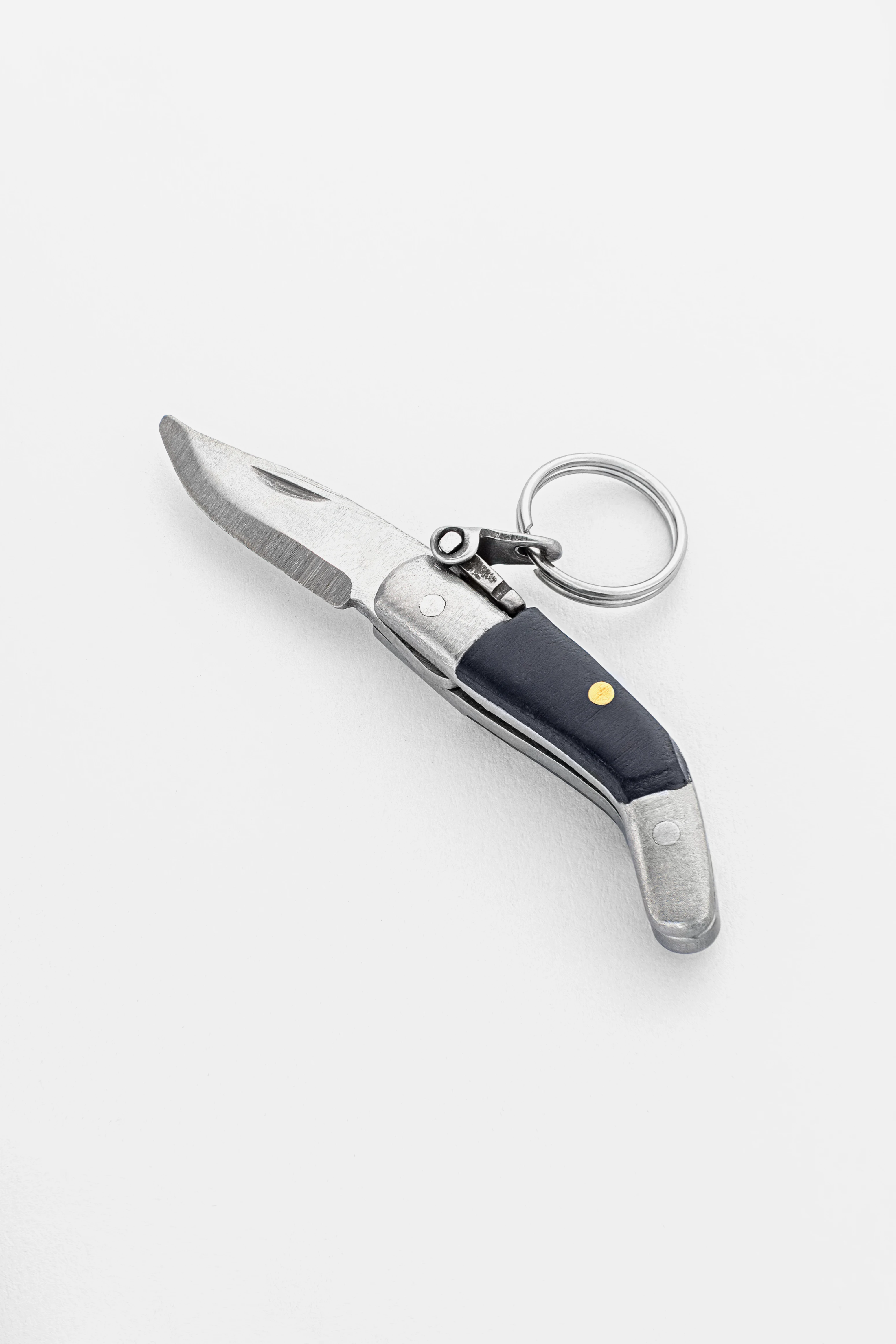
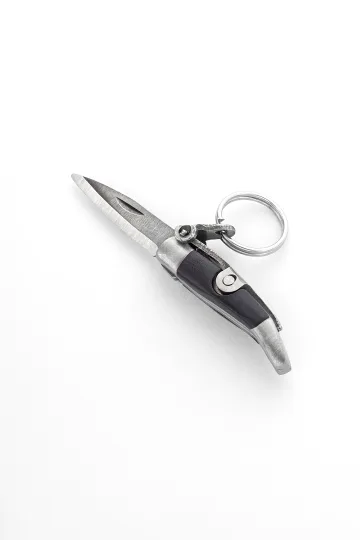
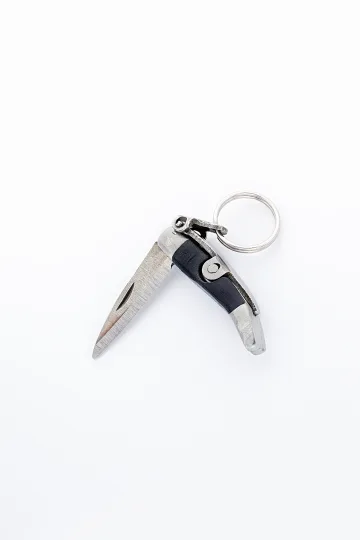
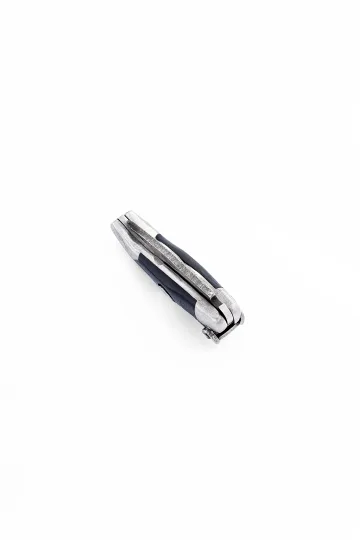
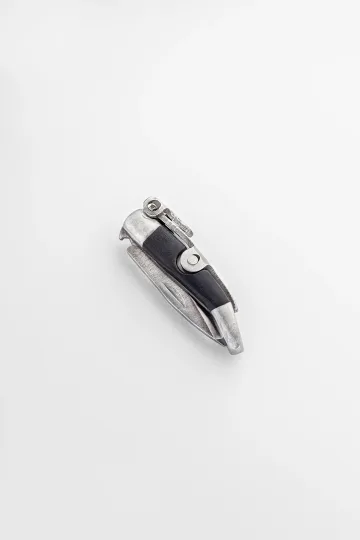
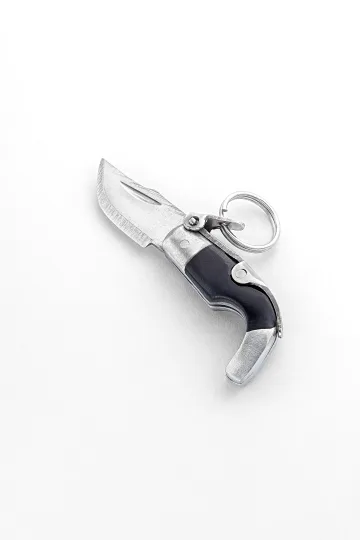
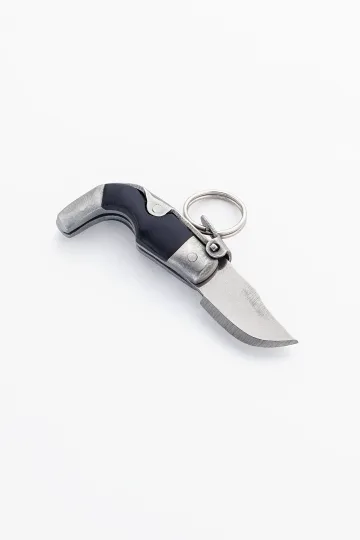
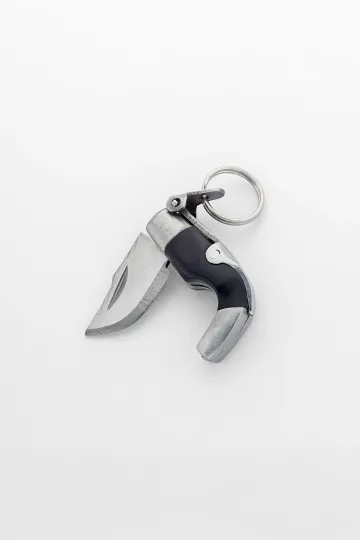
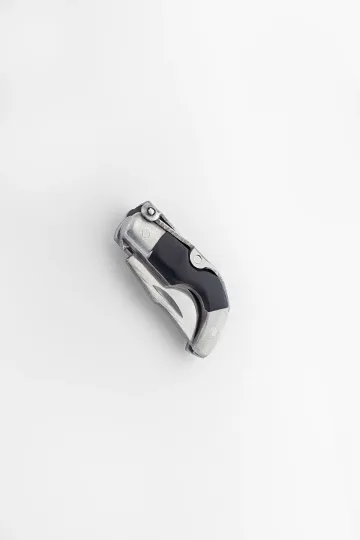
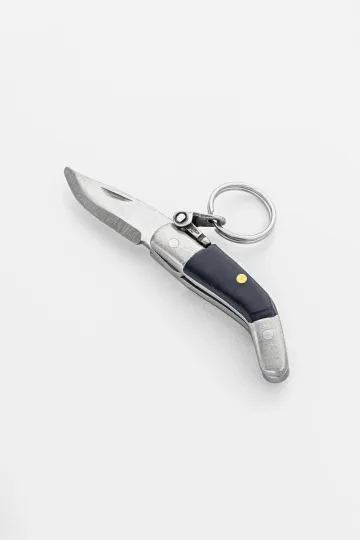
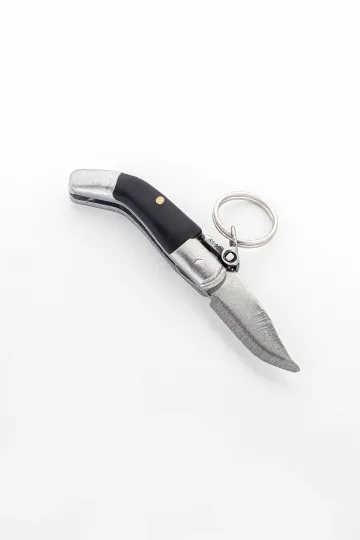
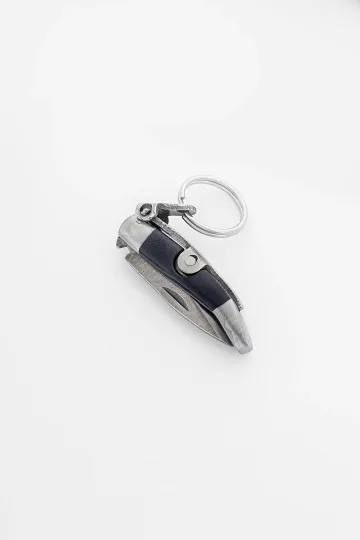
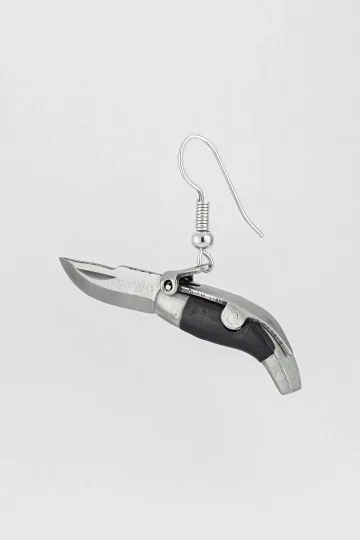
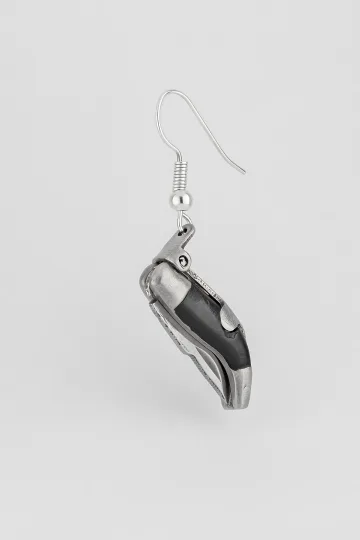
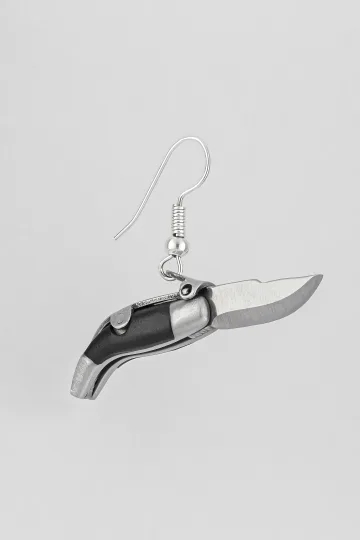
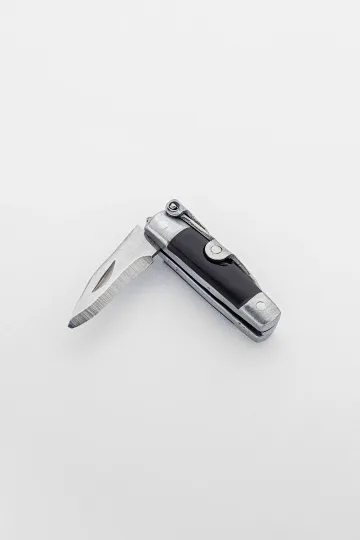
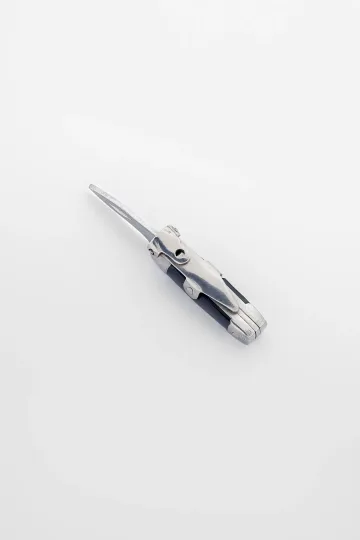
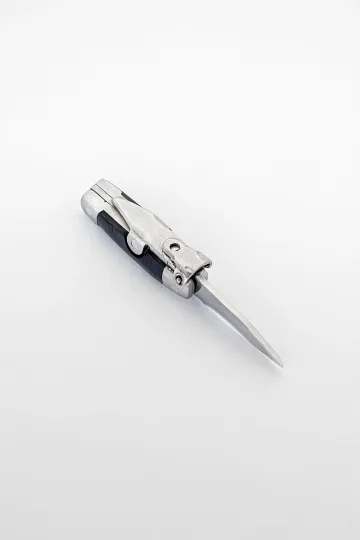
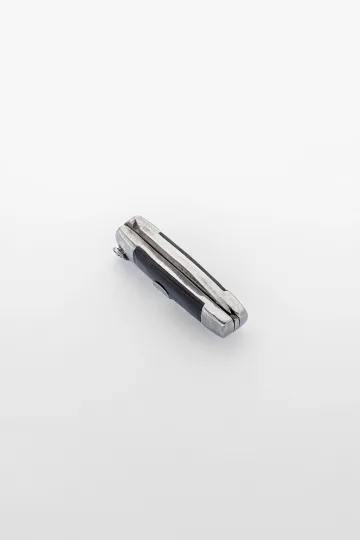
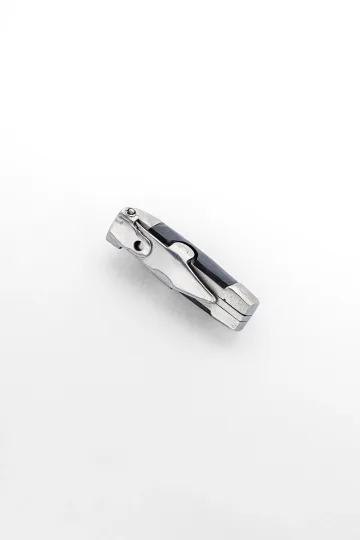
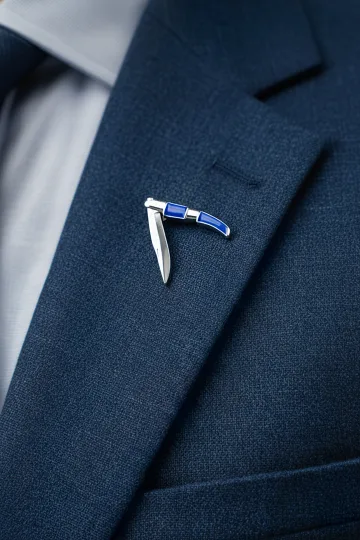
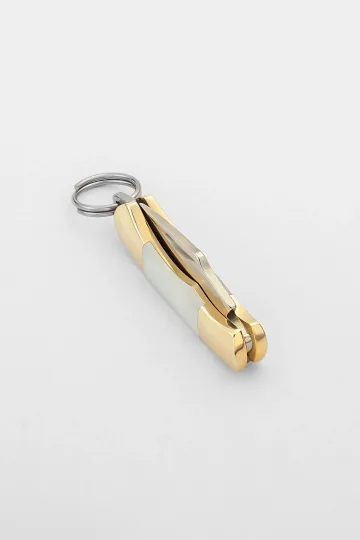
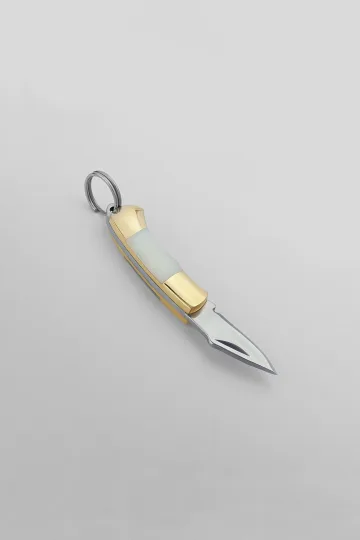
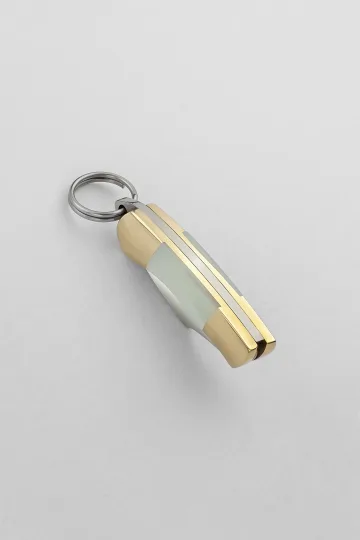
CAPAORA mini knife pendant
The 18th-century Spanish navaja in miniature: 40 mm of stainless steel, a real folding mechanism and a Palanquilla lock that clicks. An affordable gift to remember.
Authentic · Ships from Spain · 14-day returns
Jungian Analysis of the Hermit in Contemporary Therapy
In modern psychotherapy, including the Jungian and depth-psychological approaches, the Hermit archetype is used as a working concept for describing certain stages of the therapeutic process.
When a person comes to therapy after burnout, after a long period of living "for others", after a long stretch of ignoring their own signals, they are usually in a state that Jungian therapists call ego depletion. The outer world has swallowed all the energy. The inner one is almost empty.
The first step in such a state is not new decisions and not plans. The first step is to step out of the common current, a temporary solitude, a return to intuition. Therapy in this sense is itself a Hermit practice: one person and one specialist, a closed room, a time when you can say what usually goes unsaid anywhere, to anyone.
Carl Gustav Jung wrote about the shadow, that part of the psyche a person does not accept in themselves and hides from others. The Hermit works with the shadow. It is precisely in solitude, when no one is watching and there is nothing to perform, that an honest meeting with your own shadow becomes possible. It is unpleasant work. It is necessary work.
A return to intuition also stands at the centre of the Jungian reading of the Hermit. Modern life is overloaded with external signals, opinions, data, comparisons. In that current the inner voice falls silent, not because it disappears but because it becomes inaudible. The Hermit hears it. Because he has removed everything else.
In concrete therapeutic work the Hermit symbol is used to normalise periods of solitude: when a client says they have "dropped out of life" and treats it as a malfunction, the therapist can offer another reading. Stepping out of the common current to work on yourself is not a breakdown. It is Arcana 9. It is a necessary stage.
The Hermit and Introversion: the Psychology of Solitude
Carl Gustav Jung introduced the terms "introvert" and "extravert" in 1921 in his book Psychological Types. The introverted type draws energy from within rather than from social interaction. This is not an illness and not a defect, but an architecture of the psyche.
The Hermit in Tarot is the psychological card of the introverted principle in its best sense. Not anxious seclusion but purposeful immersion. When Jung described the periods of creative solitude in his own life, including the famous years of work on the Red Book that he did not publish for decades, he was in essence describing a Hermit experience: going inward with intent, working in silence, returning with what others need.
Introverted solitude and social anxiety are different things. The introvert chooses silence. The person with social anxiety avoids company out of fear. These are different states with different consequences. The Hermit is the first, not the second. He goes into the mountains not because he is afraid of people. He goes because thinking is easier up there.
The cost of selfhood is real too. A person who chooses depth over surface often runs into incomprehension. They are hard to draw into empty chatter. They do not give quick answers. They think for a long time before speaking. All of this creates a certain distance.
But behind that distance stands something valuable. One who can be alone with themselves without anxiety can also be with others without the need to fill the space constantly. Their silence is not awkward. Their words are not random. When they speak, it is worth listening.
Research in the psychology of solitude shows that deliberate solitude without external stimuli improves the ability to solve complex tasks and raises the quality of reflection. The brain at rest, free of social pressure, switches on a mode of narrative integration: it links scattered memories into meaningful patterns. This is exactly what the Hermit does on his summit. This is exactly what the person does who puts the phone away for a few hours.
Leave your email, we'll send your discount code. No spam, unsubscribe anytime.
The code arrives by email, valid on your first order.
The Hermit in Spreads: Burnout, a Thesis, a Spiritual Search, a Move to the Countryside
One of the strengths of Arcana 9 is that its image transfers easily onto concrete life situations. The Hermit appears in spreads not as an abstraction but as an exact answer to recognisable circumstances.
Burnout. A person who has worked flat out for several years reaches a point where carrying on is simply no longer possible. This is not laziness and not weakness. It is the exhaustion of a resource. The Hermit upright in such a spread says: it is time for the summit. Not towards people, not towards new projects, but to where there is silence. Not forever, but long enough for the lantern to light up again.
A thesis or a major creative work. Years of solitary work on a subject few people understand. Periodic doubts: is it worth it, is the direction right, will it ever be of use to anyone. Here the Hermit is a confirmation: what you do in solitude and without recognition has meaning. Keep going.
A spiritual search. When a person steps out of the tradition they grew up in, or out of a value system they have lived with for twenty years, they end up in an in-between. The old no longer works, the new has not yet formed. This state is unstable and often anxious. The Hermit upright here says: you are in the right place. This in-between is necessary. Give yourself time to think.
A move to the countryside, slowing down, a conscious step out of the urban rhythm. A person deliberately exchanges the accelerated city tempo for something slower: moves to the country, chooses work without the career race, starts keeping a smallholding, a garden, making things with their hands. Society often reads this as a strange choice or a step backwards. The Hermit says: no. It is a step up the summit. Not down the ladder but into another space, where there is another kind of work.
In all of these situations the Hermit's central task is one: to stop for long enough to hear what is usually drowned out by noise. The card does not promise that ready answers will be waiting in the silence. It promises that the right questions will be there.
Combinations of the Hermit with Other Cards
The meaning of the Hermit shifts depending on the neighbouring cards.
Beside the Moon (XVIII). The Hermit strengthens the theme of working with the unconscious. Solitude here is a pause, more a necessity of facing what usually stays in the shadow. The Moon plus the Hermit is a combination for a person in serious inner work: psychotherapy, the unpicking of chronic patterns, a deep rethinking.
Beside Temperance (XIV). The Hermit speaks of balance: the pause is needed, but it should be temporary. Temperance reminds us of the return to life after a period of silence. This is one of the most resourceful combinations: solitude as part of a healthy rhythm, not a permanent state.
Beside the Devil (XV). The Hermit may point to a person stuck in a solitude that has become a habit or a dependency. Silence has turned into a hiding place. The lantern is out, or aimed at the floor. This is a warning: it is time to come out, and here it is worth recalling that the Devil in Tarot is precisely about voluntary chains that a person keeps wearing even though the lock has long been open.
Beside the Sun (XIX). The wisdom gathered in silence comes out into the light and becomes visible. The period of search is complete and has borne fruit. The Hermit plus the Sun is one of the most positive combinations in the deck: the inner work is finished, and now it shines for others. If the Hermit's lantern lights only the next step, then the Sun in Tarot floods the whole clearing with light at once, and the knowledge gathered in solitude becomes an open joy.
Beside the High Priestess (II). The Hermit forms a pair of introverted principles: intuition and reflection, hidden knowledge and accumulated experience. This combination points to a very deep inner search, perhaps a turning point in self-understanding.
Beside the Magician (I). After a period of inner work comes the time to act. The knowledge gathered in the Hermit's silence now has to be aimed at the world through the Magician's intention and will. This combination is about readiness: you have thought enough, now do.
Beside Strength (VIII). Strength stands before the Hermit in the sequence of Arcana. It is a card about an inner strength that works not through suppression but through calm. Next to it in a spread it is a reminder: silence demands strength. Without inner steadiness, solitude becomes unbearable.
Beside the Wheel of Fortune (X). After the Hermit's pause, life comes back into motion. The Wheel sets a new cycle going. This combination is about transition: the period of silence ends, movement begins. It matters to step into it with what you found at the summit.
The Archetype of the Hermit: Solitude as Strength, Not Retreat
There are two kinds of solitude. One is forced and feeds on fear, resentment or weariness from being turned down. It drains. The other is chosen and feeds on curiosity about your own depths. It restores.
The Hermit archetype describes the second kind. The Hermit is a person who knows how to, and chooses to, withdraw into silence, not because he is uncomfortable with people, but because he is comfortable alone with a task, with a thought, with a question that will not let go for a long time.
In everyday life this is recognisable. The writer who writes better at night than by day, because at night there are no demands. The scientist who takes a problem on holiday not because of a deadline but because there will finally be time to think properly. The therapist who keeps a private diary, closed to everyone, because thinking is more honest there. The artist who works alone in the studio and shows up with the finished thing, not with a tale about the process.
The Link with the Neighbouring Cards: Strength and the Wheel
A card is better understood in the context of its neighbours.
Strength (VIII) stands before the Hermit. It is a card about an inner strength that works not through suppression but through calm. On the card a woman holds open the jaws of a lion, but without violence. The lion is not defeated, it is gentled by softness. Exactly that kind of strength is needed to bear the Hermit's silence. Without it, solitude becomes unbearable: the silence frightens, thoughts press in, you want to run back into the noise. With the strength of the Eighth Arcana you can stay in the silence and hear what lives there.
The Wheel of Fortune (X) stands after. It is a card of cyclicity, of unexpected turns, of new beginnings. After the Hermit's pause, life comes back into motion, but now with a different understanding. The one who skipped the ninth stop would enter the Wheel unprepared. The one who spent time on the mountain with a raised lantern enters the new cycle consciously.
Astrological Correspondences: Virgo and Mercury
In Waite's system every Major Arcanum is linked to an astrological correspondence. The Hermit corresponds to the sign Virgo and its ruling planet Mercury.
Virgo is an analytical sign. It is marked by attention to detail, a striving for precision, a love of practical work. It does not gravitate towards the public eye and does not seek the centre of attention. It is interested in the essence, not the outer shine. Virgo sees what others miss, because it looks slowly and carefully.
Mercury is the planet of thought, communication, the passing on of knowledge. It is quick and exact, able to connect ideas and find a way through where others see a dead end.
When these qualities are aimed not at the outer world but inward, you get the Hermit. Virgo-Mercury turned upon itself: a careful analysis of your own experience, an exact formulation of inner questions, a search for the links between what happened and who you have become.
Upright and Reversed Meanings
Upright: Productive Silence
When the Hermit appears upright, he signals: it is time to stop. Not out of tiredness, but out of a need to rethink. The period of active motion is over for now. Right now you need to think.
This can mean different things depending on the context. Stepping out of the rush for a few days. Starting a diary and keeping it honest. Going to a psychotherapist. Taking a pause in a relationship to understand what you actually want. Going deep into a subject you have long put off because you lacked the silence.
The upright Hermit does not say: leave people forever. He says: make the pause long enough to hear yourself.
The upright Hermit can also mean an encounter with a mentor. A person who appears in your life with the knowledge you need exactly when you are ready to receive it. That, too, is the Hermit.
Reversed: When Silence Has Become a Hiding Place
The reversed Hermit poses a question: is this still chosen solitude, or has it become an escape?
The key difference between upright and reversed is in the motivation. The upright Hermit goes into silence because there is something to search for there. The reversed one hides in silence because there is nothing he has to answer for there.
Isolation that feeds on fear does not give wisdom. It gives only a sense of safety. It is a false safety, because the situations a person avoids do not go anywhere. They wait at the door.
The reversed Hermit can also mean the opposite: a person has been in isolation too long and is now afraid to come out. Or, the other way round, runs from a needed pause into excessive sociability, filling every hour with company so as not to be left alone with himself.
Buying it as a gift? Each one arrives ready to give.
 A branded Zevira box and a little card come with every order.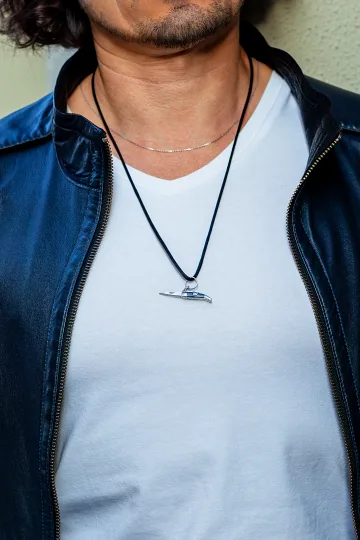






The Hermit as Mentor: When Wisdom Is Passed On
One of the often-overlooked aspects of Arcana 9 is the role of the mentor. The Hermit searches for himself. He guides others. His lantern is raised not to light his own way, he is already at the summit. The lantern is for those below.
In every tradition of mentorship there is a figure who stands a little apart from the process. Who knows more than they say. Who appears at the right moment and leaves when their role is done. That is the image of the Hermit in a social function.
The teacher you remember forever is usually exactly that. Not the one who actively promoted themselves and demanded attention. The one who once said something exact and quiet that changed the angle of view. That is the Hermit's lantern: one moment of clarity that shines for years.
In different cultures this role took different forms. The Sufi master who answers a question not directly but with a parable. The Zen teacher who stays silent until the pupil has ripened into the question. The old professor who does not explain but answers a question with a question. All of them carry the qualities of Arcana 9.
Jewellery for the Symbols of the Hermit
When a card's symbol becomes a piece of jewellery, it turns from an abstraction into a physical object you carry with you. For the Hermit there are several symbolic axes, each of them self-standing and at the same time tied to the central theme of the Arcana.
Beacon and Lantern: the Light Carried for Others
The most direct link to the Hermit. The lantern in the sage's hand is a beacon on a mountain summit. A lighthouse on the shore also stands alone, often on a rock, in solitude, and it is in the darkest storm that its light is needed most. It does not move towards the ships. It stands and shines, and the ships find their way themselves.
Lighthouse jewellery carries this meaning exactly. A person who is a point of support for others, not loudly and not for show, but simply because they are there and they shine, is the image of the lighthouse and of the Hermit at once. A lighthouse or lantern pendant suits a therapist, a mentor, a teacher, an older friend, the one people come to with questions.
A charm or pendant in the shape of an old lantern with worked detail carries the same semantics in a more intimate form: a personal light that burns even when it is dark all around.
The Hourglass: Time as an Ally
In the early versions of the card the Hermit held not a lantern but an hourglass. This symbol stayed in the semantic field of the Arcana even after the hourglass vanished from the image.
For the Hermit, time is not an adversary. It is a working tool. Solitude takes time. Thought unfolds slowly. Wisdom does not come quickly. The hourglass measures out not losses and missed chances but a rhythm: an hour of work, an hour of silence, an hour of returning to the task.
Hourglass jewellery carries this theme of a conscious relationship with time. For the one who practises meditation, works with slowing down, or simply values the depth of processes over their speed, such a pendant says a great deal without words.
The Owl: Wisdom in the Quiet of the Night
The owl's link to the Hermit runs along several lines. The owl sees in the dark. The Hermit carries light exactly where it is dark. The owl is silent. The Hermit speaks rarely but exactly. The owl hunts at night, when others sleep. The Hermit works when the world is resting.
Historically the owl was the heraldry of Athena, goddess of wisdom and strategy. In the European tradition the owl became a universal symbol of wisdom through learning. In Celtic mythology the owl was linked to the otherworld and to hidden knowledge.
Owl jewellery for a Hermit-type person is literal heraldry. A pendant, earring or ring with an owl says: I think, I observe, and I prefer depth to surface.
The Feather: Wisdom Shaped into Words
The Hermit writes. Not necessarily literally, but archetypally: he gathers knowledge and gives it form. Historically the quill was the instrument of thought for those who think through writing. Philosophers, historians, theologians held the pen as an extension of the hand.
In symbolism the feather carries several meanings. It is lightness and precision: a feather is weightless, yet it leaves a mark. It is a link with the upper worlds: the feathers of high-flying birds were always associated with the heavenly and the spiritual. It is freedom: a feather has no weight to hold it to the earth.
Feather jewellery suits writers, journalists, researchers, anyone whose work is bound up with the shaping of thought.
The Labyrinth: a Path That Leads to the Centre
The labyrinth is often understood in culture as a trap. In fact the classical labyrinth in mythology is not a trap but a path. A labyrinth has no dead ends in the usual sense: it leads to the centre, just by a long, winding route. The aim is not to get lost. The aim is to reach the centre by walking the whole way.
This is the perfect metaphor for the Hermit's inner search. Solitude is not a dead end and not a prison. It is a labyrinth: you enter, you follow turn after turn, unhurried, without panic, and at the centre you find something important. Meditation is a labyrinth. Psychotherapy is a labyrinth. Keeping a diary is a labyrinth.
Labyrinth jewellery carries the meaning of a conscious path. It suits those who are in an active search right now: in psychotherapy, in a change of direction, in a meditative practice, in a year of reconsidering their values.
How to Choose Jewellery with the Symbols of the Hermit
Each of these symbols is self-standing and at the same time set within a single system of meaning. If you are choosing a piece for yourself or as a gift, it is worth going by resonance: which symbol speaks most exactly about the person or the moment?
The beacon and lantern for the one who carries light for others, for the mentor or the therapist. The owl for the deep observer, the introvert, the night thinker. The feather for the one who thinks through writing, for the writer or the diarist. The hourglass for the one learning to value the slow and to work with time consciously. The labyrinth for the one in active search now, who knows they are inside a process.
Silver jewellery with a matte surface or a dark rhodium finish matches the spirit of Arcana 9 in its aesthetics: restrained, deep, without showy shine. It is the grey of the Hermit's robe translated into metal.
Send a friend a discount code, they save on their first order.
Who the Jewellery with the Hermit's Symbols Suits
Not every piece of jewellery speaks of every person. The symbolism of the Hermit is exact and recognisable. It resonates with particular kinds of people and particular periods of life.
The writer, the researcher, the scholar. A person whose work calls for immersion in a subject and long solitude before the page, the screen or the microscope. For them the lantern, the feather or the owl is not a metaphor but a literal description of working life. A piece with this symbolism says: I know what I am doing, and I am doing it right.
The psychotherapist, the coach, the mentor. The one who holds the lantern for others, who helps people see what they cannot see themselves. The lighthouse in a piece of jewellery is an exact image of this profession. A person who works in the quiet of a consulting room and comes out with what the client needs.
The philosopher, the teacher. A person who knows and passes on. Who does not impose but answers questions. Who appears when approached rather than standing on a stage all the time.
A person in an active inner search. The one who is in their own ascent right now: in therapy, on a retreat, after burnout, in a period of reconsidering what matters. A piece with the Hermit's symbol at such a moment becomes a reminder: you are in the right place, this is not wasted time, this is work.
The introvert who has come to terms with their nature. The one who has stopped apologising for preferring an evening with a book to a big crowd. Who knows they need to recover in silence rather than in company. The owl or the lantern in a piece says: this is not a flaw, it is an architecture.
An Occasion for a Gift
Jewellery with the Hermit's symbols works especially well as a gift for particular events, because these events carry something of Arcana 9 in them.
Defending a thesis or releasing a major work. Years of solitary work on a subject few understand. The lantern or the lighthouse here is a beautiful object and a recognition: you spent that time well.
Coming out of burnout. A person who has been through total exhaustion and returned with an understanding of their boundaries and their real rhythm has walked the Hermit's path. A piece for this moment: you held the light even when it was hard.
Beginning psychotherapy or finishing a course. Stepping into therapy is a decision to look inward. The lantern, the labyrinth or the hourglass suit as a symbol of this step in both directions: at the start as an intention, at the finish as a result.
The birthday of a thoughtful person. For the one who thinks, observes and rarely speaks of themselves aloud. The owl or the lighthouse will say what ordinary words find harder to express.
A return after a long absence. A person went away for a long time, was in a solitary place, finished a period of total immersion in something. The Hermit's return always brings something valuable. A piece for this moment says: I see it.
An anniversary of a long career. Twenty years in medicine. Thirty years in teaching. A person who has worked with people for decades, often in silence and without recognition, is the Hermit with the raised lantern.
Wear the symbol, don't just read about it. These are in stock:


Frequently Asked Questions
Does the Hermit in Tarot mean loneliness? Not in the sense of a lack of company. The Hermit means chosen silence with a purpose. It is solitude for work, for search, for reflection. If the card appears upright, it is about a productive pause that is needed right now.
What does the six-pointed star in the Hermit's lantern mean? In the Waite-Smith deck the Seal of Solomon burns inside the lantern. It is a symbol of wisdom born through the joining of opposites. The Hermit's light is not ordinary but hard-won through the working-through of contradictions. It lights only the next step, not the whole path.
Why does the Hermit stand at the summit rather than walking? He has already walked the path. The mountain means an achievement that cost effort. The Hermit at the summit is a person who has something to offer others, because he has already lived the experience of the climb. The snow at the summit stands for the silence and the endurance of that height.
Which zodiac sign corresponds to Arcana 9? In Waite's system the Hermit corresponds to Virgo with the planet Mercury. This pairing is exact: an analytical mind, attention to detail, a love of practical work, all turned inward.
Who should I give jewellery with the Hermit's symbols to? Writers, researchers, therapists, mentors, anyone who values silence and works in depth. Good occasions: defending a thesis, coming out of burnout, beginning or finishing psychotherapy, an anniversary of a long career, the birthday of a thoughtful person.
How does the upright Hermit differ from the reversed? Upright is about a productive pause, chosen solitude, wisdom through silence. Reversed poses the question: is this still a search, or already an escape? Isolation as a hiding place from meeting yourself is the reversed Hermit.
Is the Hermit linked to the philosopher Diogenes? Yes. Antoine Court de Gébelin was the first to draw this parallel in 1781. Diogenes walked with a lantern in broad daylight and said he was looking for an honest man. The lantern is needed not in darkness but where there is a false appearance of clarity. That is what makes the link to the Hermit so exact.
What does the Hermit's grey robe mean? The colour grey in Waite's iconography means neutrality and a stepping outside social polarities. The Hermit takes no one's side. His robe speaks of a refusal of all the markers of status and belonging: he is occupied with something else.
Which pieces of jewellery are most linked to Arcana 9? The beacon and lantern as the most direct symbols. The owl as wisdom of the night. The feather as wisdom through writing. The hourglass as conscious time. The labyrinth as the path inward. All of these symbols are covered in separate Zevira pieces.
Conclusion
The Hermit is a card for those who know the value of silence. Not for literal recluses. For everyone who knows how to, and dares to, stay alone with a thought long enough for it to say something.
The history of the image, from the hunchback Il Gobbo with his candle in Visconti, through L'Hermite with the shielded lantern of the Marseille tradition, to the raised beacon of Waite-Smith in 1909, is a history of a changing view of solitude: from a symbol of weight and of the end to a symbol of accumulated wisdom that shines for others. Crowley gave this image one more dimension: concentrated potential that carries within it the seed of the new.
Diogenes searched for an honest man with a lantern in broad daylight. Lao Tzu went into the mountains and left a light in his words. Anthony went into the desert, not away from the world but towards a deeper way of being in it. Kant walked the same route and wrote philosophy that changed Europe. Jung descended into the dark waters of the unconscious and returned with what others needed.
A lantern raised above the head is a different act from a lantern hidden under a cloak. The one who raised it high is thinking. He shines.
If Arcana 9 is yours, you already know it. You are the one who prefers to understand rather than stay silent. Who withdraws into himself not because the world is bad, but because inside there is a place where thinking comes easier. Who is sometimes needed by others precisely because he holds a lantern.
Jewellery with a lighthouse, a lantern, an owl, a feather or a labyrinth carries exactly this meaning. It is not decoration. It is a way of speaking about things for which ordinary conversation has no words.
And one last thing. The Hermit is not a permanent state. It is one of the periods of the path. After it comes the Wheel, a new cycle, movement and interaction again. The Hermit's solitude is valuable precisely because it is temporary and conscious. The one who knows how to enter it and to leave it consciously, rather than getting stuck, carries within them the true wisdom of Arcana 9.
More on the symbolism of Tarot in jewellery: Tarot jewellery and the meaning of the Tarot cards.
Wear the symbol, don't just read about it. These are in stock:









Common Questions
How do I care for a silver pendant with a Hermit symbol?
Take the piece off before sleep, before showering and before applying creams or perfume. Silver darkens from contact with sweat and cosmetics, so once every couple of weeks wipe the pendant with a soft cloth or a special silver cleaning wipe. Store it separately, in a pouch or a closed box, so the metal does not oxidise from the air.
Can I wear such a pendant in water, in the shower or at the gym?
Better not. Chlorine in the pool, sea salt and sweat speed up the tarnishing of silver, and a dark rhodium finish wears off over time from friction. Taking the piece off for a swim or a workout is easier than restoring the matte surface later. If it gets wet, wipe it dry before you put it away.
How can I tell real 925 silver from a fake?
Look for the 925 hallmark on the clasp or on the pendant's bail. Real silver darkens over time; it does not turn the skin green or peel off in patches. Cheap costume jewellery is often lighter in weight and quickly loses its colour to the yellow or pink metal beneath the plating. Neat engraving and careful soldering of the parts also point to handwork rather than stamping.
What chain length should I choose for a pendant with the Hermit's symbols?
The symbolism of this card is intimate, so the pendant reads best close to the face. A mid-length chain reaching to the collarbones or a little below sits on a plain background and is seen at once when you talk. For a layer of two chains, take the upper one shorter and finer and the lower one longer, so the main symbol does not get lost.
What do I pair jewellery with a lantern, an owl or a feather with?
Stay with muted tones: grey, graphite, navy and olive echo the Hermit's grey robe and let the jewellery speak without arguing with the clothes. Leave one carrier of the symbol on the look, let the rest be the background. Keep the metals in one family, silver with silver, gold with gold.
Who would jewellery with the Hermit's symbolism suit as a gift?
Those who work with their heads and value silence: writers, researchers, therapists, mentors, thoughtful introverts. Good occasions are defending a thesis, coming out of burnout, beginning or finishing psychotherapy, an anniversary of a long career. The lighthouse suits the one who holds the light for others, the owl the night thinker, the feather the one who thinks through writing.
Silver, gold, wedding rings, symbolism, matching sets.
About Zevira
Zevira makes jewellery in the artisan tradition of Albacete, Spain. The Hermit is the archetype of focused search, and its symbolism (lighthouse, owl, feather, hourglass) holds a steady place in our collections for those who work with their heads.
What you can find with us for the Hermit's symbolism:
- Lighthouse pendants as the Hermit's lantern
- Owl pendants as the image of night wisdom
- Feather pendants for writers and those who write their thoughts down
- Hourglass pendants for the meditative type
- Labyrinth pendants for the path of search
Every piece is made by a master by hand, with the option of personal engraving. We work with 925 silver and 14-18K gold.