The Sun in Tarot: Meaning of Arcanum 19, History and Jewellery
There is a moment in life when something inside simply lets go. Not because you decided to let go, not because you read the right book or talked to a therapist. On an ordinary Tuesday you step outside, and the light hits differently, and you realise you finally feel good. Not "coping", not "managing", but actually good.
A child riding a bike without anyone holding the saddle for the first time. The morning after a long illness, when your head is clear again. The first day after handing in a huge project, when you can just walk home and think of nothing. These moments need no explanation. There is nothing in them to be earned or understood. They simply are.
This is exactly what Arcanum 19 is about.
The Sun is the most unambiguously positive card among the Major Arcana. It is the card professional readers call the best possible draw in the deck. Success. Clarity. Pure joy. The inner child who is afraid of neither the abyss nor the grey sky.
What follows, in order: where the card came from, what each symbol means, its place in the system of the Arcana, and which myths and archetypes it echoes. And, the part that interests us most, which jewellery works with this energy and why solar motifs have stayed among the most sought-after in goldsmithing for thousands of years.
Place in the Arcana: out of darkness into light
The Major Arcana are built like a route. It begins with the Fool (0), a person on the threshold who does not yet know where he is going. It ends with the World (21), the closing point of the cycle, where everything has come together. Between them lie twenty-odd stops, each adding something.
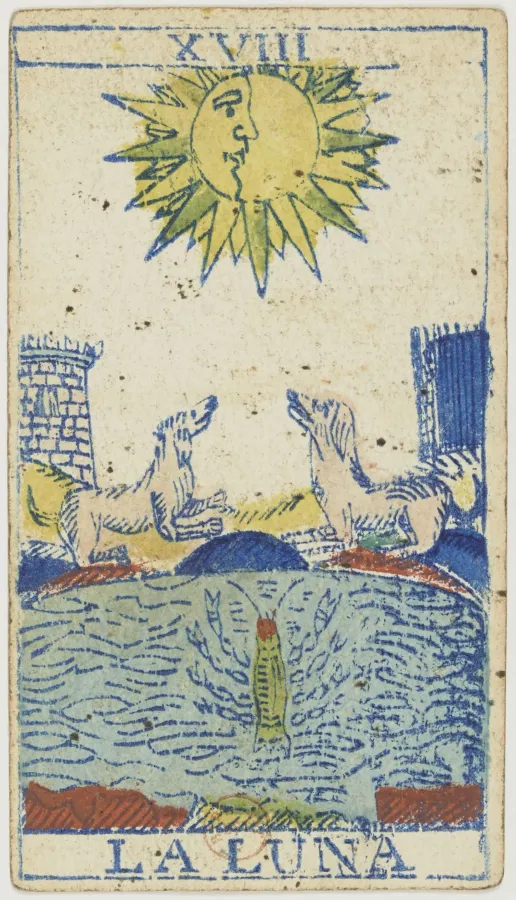
Arcanum 19 holds a very specific place on this route. Before it stands the Moon (18), the card of illusions, of night fears, of fog over the water. After it comes Judgement (20), the call to awakening, to a new life. The Sun stands exactly between these two: it is the exit from the night and the herald of renewal at once.
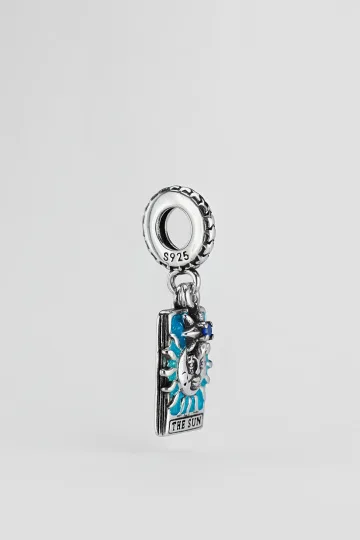
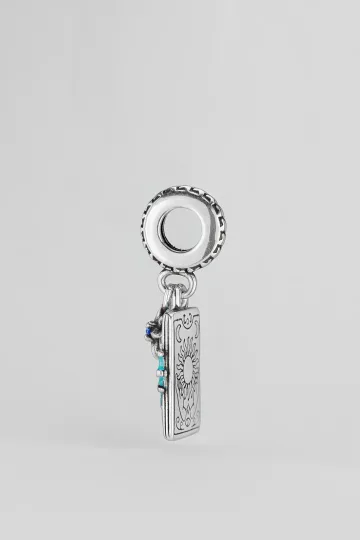
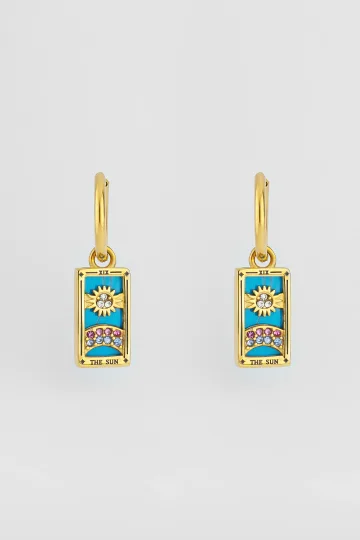
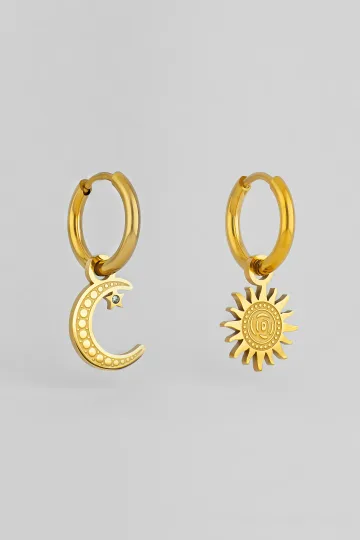
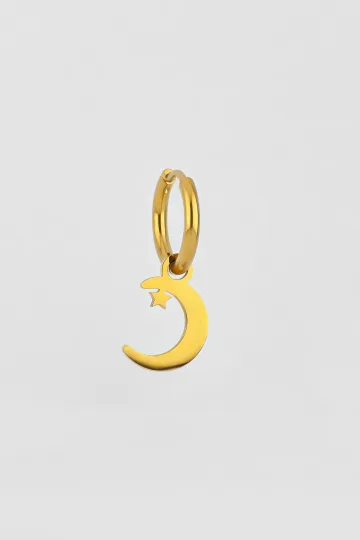
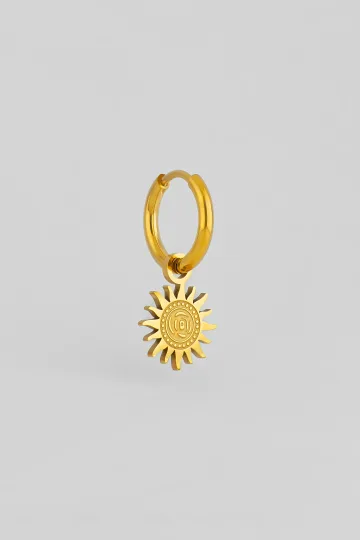
Wear the symbol, don't just read about it. These are in stock:





After the Moon with its ambiguity and uneasy imagery, the Sun literally burns off the fog. Everything that seemed frightening in the dark turns out, in daylight, to be ordinary. This is not magic, it is simply visibility. The Sun gives what was missing at the Moon stage: clarity, certainty, the chance to see things as they really are.
In the tradition of "the Fool's Journey", the idea that the Fool passes through all the Major Arcana as a protagonist, Arcanum 19 is the moment when, after all the trials, after Death (13), after the Tower (16), after the night of the Moon (18), dawn finally breaks. Not a metaphorical dawn, a real one: you have come out, and the light is warming you.
The number 19 in numerology reduces to 1+9=10, then 1+0=1. The one, the number of a new beginning, of the first step, of pure potential. The Sun, despite its high ordinal number, carries the energy of a beginning: it is not the conclusion of the path, it is its illuminated moment.
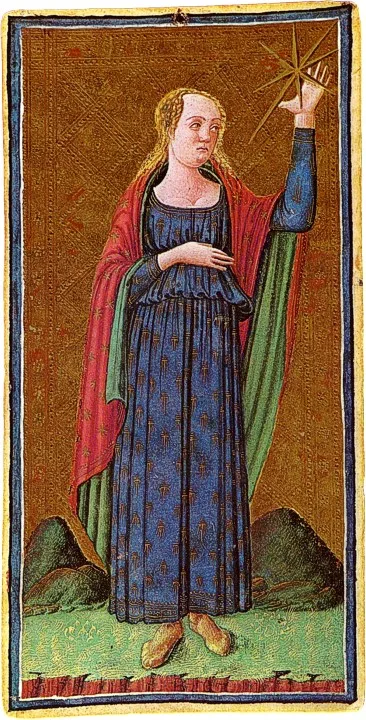
To grasp the scale of the shift, look at what precedes the Sun in the system. Arcana 15 (the Devil) and 16 (the Tower) carry the themes of attachment and destruction. Arcanum 17 (the Star), the first glimmer of hope after the Tower's catastrophe. Arcanum 18 (the Moon), the long, anxious night journey full of illusions and doubt. And then, after all of it, Arcanum 19. A child on a horse, four sunflowers, an enormous radiant sun overhead.
This structural context explains why the Sun reads so powerfully: it arrives after a particularly hard sequence. Without the Moon there would be no such dawn. That is why, in spreads where the Moon lies next to the Sun, a reader will usually say: "the hard period is ending, it will be good." Not because the cards are magical, but because this transition is built into the logic of the system.
There is also an interesting question of symmetry within the Major Arcana. If you split the 22 cards into two groups of eleven, the Sun ends up near the top of the second group, the one often called "supernal" or "spiritual". The first eleven (0-10) work with the experience of the world: the Magician, the High Priestess, the Empress, the Hermit, the Wheel of Fortune. The second eleven (11-21) deal with inner transformation: Justice, the Hanged Man, Death, Temperance, the Devil, the Tower, the Star, the Moon. And at the very top of this second row stands a triad: the Sun, Judgement, the World. Three cards read in any spread as the best possible outcomes.
History: from Visconti to Crowley
The history of the Sun card in Tarot can be traced through several key decks, each adding something of its own to the iconography.
Visconti-Sforza: two children
In one of the oldest surviving Tarot decks, the Visconti-Sforza (Northern Italy, around 1450), the card Il Sole shows two children. They stand side by side, embracing or holding hands, beneath a large solar disc. The scene carries a distinctly joyful tone: two beings who are happy together under this light.
The doubling of the figure has been read in different ways. Some scholars see the Dioscuri, Castor and Pollux from Greek myth, the heavenly twins. Others see simply two children as an image of serenity and accord. Either way the emphasis is already here: the Sun is good, it is freedom from sorrow, it is the childlike state of the world.
The Marseille deck: children or putti
In the Marseille tradition (seventeenth to eighteenth centuries), the deck that became the standard for French card-makers and was produced in large print runs, the card was called Le Soleil. Again children: small putti or two boys under a radiant sun. The execution is more standardised, the image less refined than in the Visconti, but the meaning runs the same way: youth and joy under sunlight.
One detail is striking: in a number of Marseille decks a wall stands behind the children. A boundary that has been crossed, an obstacle left behind. This detail would later be fixed in the Waite system as a full-fledged symbol.
Waite-Smith 1909: one child on a horse
In 1909 the artist Pamela Colman Smith, working on the illustrations for the deck commissioned by Arthur Edward Waite, reimagined the image. Two children became one, a naked child mounted on a white horse. The child holds a red banner, arms flung wide. Behind him, a stone wall with sunflowers, and above all of it an enormous solar disc with a face.
This image became canonical. It is the one reproduced, quoted and reworked by hundreds of later decks. The symbolic language here is exquisitely deliberate: every element carries a specific meaning, which Waite set out in detail in his book "The Pictorial Key to the Tarot".
Thoth, Crowley-Harris: the children dance again
The Thoth deck (Aleister Crowley and the artist Lady Frieda Harris, painted 1938-1943, first published 1969) returned to the image of several children, but in a wholly different interpretation. Children dancing in the sunlight, an image of illumination through joy, through movement, through vitality. Harris painted in the spirit of projective geometry, and her Sun is charged with a dynamism foreign to Waite's image.
Crowley renamed several cards in the Thoth system and altered a range of associations, but the Sun stayed the Sun: radiant, positive, uncompromisingly bright.
A sun wants gold and bare skin, full stop. A silver sun is an overcast Tuesday, and I'll pass.
What to wear solar jewellery with
The solar disc has been through dozens of looks on my shoots, and it sounds best when it does not argue with the clothes but catches the light by the face. Here is what actually works, by occasion.
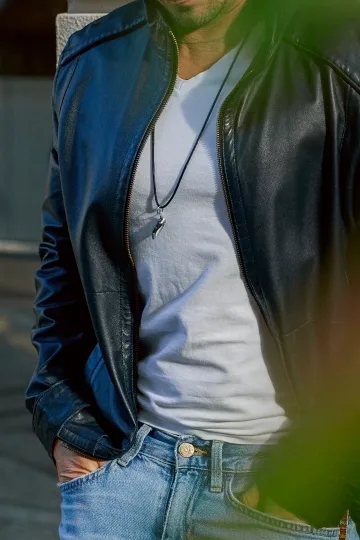
What do I wear a sun with every day? For an everyday look I recommend a small disc pendant on a short chain over a white T-shirt, a linen shirt or cream knitwear. The light fabric works like a sky against which the disc reads at once. For a warm skin undertone I suggest yellow gold, for a cool one silver. You can wear this without taking it off and only remember it at the mirror.
Is a solar pendant right for the office? It is, if you keep it restrained. I recommend a clean neckline, a V-shape or a shallow round one, under a plain top in beige, grey or navy. The disc settles in the décolleté and works as the single accent, not arguing with business clothes. I choose a small or medium size, no long drops.
How do I build an evening look? For the evening I suggest a large form and a dark ground: bare shoulders, a smooth fabric, black or wine. A large gold disc on bare skin gives a contrast of dark and light, that same Moon-Sun pair right on the body. I add drop earrings that catch the light when you turn your head.
And if I want to layer? Then I assemble a celestial system on purpose: a sun, a moon and a fine star on chains of different lengths in one metal. I recommend a clear step between the lengths, 5 to 7 cm, or the chains tangle and a system turns into a pile. One considered set always beats a random handful of pendants.
Who does solar jewellery suit? Almost anyone, especially those who love clear, open looks and are not afraid of a warm gleam by the face. Two rules that never fail me. First, I match the length to the neckline: a short chain (40 to 45 cm) brings the disc to the collarbones, a long one (50 to 60 cm) takes it lower, under clothing. Second, I choose the metal by skin undertone, not by mood: gold for warm, silver for cool, and rose gold sits softest on light skin.

Turn on your camera, pick earrings, a pendant or a ring, and see the piece on yourself in real time.
Switch items in one tap.
Everything runs in your browser: no photo or video is ever uploaded.
The iconography of the Waite card: every symbol
The Waite card's iconography is the most fully worked out, so we will go through it in detail. Every element here carries meaning.
The huge sun with a face
The centre of the card, a solar disc with a human face. The sun looks straight ahead, never glancing away. This is not an abstract luminary but a conscious being that sees you. Hence the meaning of clarity and transparency: under the Sun you cannot hide, you cannot lie. It lights everything equally.
The face of the sun in European iconography goes back to ancient images of Helios and Apollo. The personified sun, a sun that thinks and watches, is a sun of reason, a sun of consciousness.
Twenty-one rays: an encoded number
The sun's rays on the card are not a random number. There are twenty-one: eleven straight and ten wavy. Together they make 21, exactly equal to the number of Major Arcana if you leave out the Fool.
This is one of the rare cases where a visual element encodes the structure of the whole system. The Sun literally contains within itself the count of all the other Major Arcana, like an energy source lighting the entire path.
The two kinds of ray, straight and wavy, are often read as a symbol of two kinds of energy: the active and directed (straight) and the intuitive and flowing (wavy). Masculine and feminine principle, the logic of reason and the logic of feeling, both aspects at once in a single source of light.
The naked child
The child on the card is naked, and this is deliberate. Nakedness in Tarot symbolism signals the absence of pretence: nothing to hide, nothing to defend. The child puts on no armour, hides behind no roles or masks, he simply is.
This is both the archetype of the inner child (more on which below) and a literal image of what a joyful state looks like: open, undefended, in no need of defence because there is no threat.
The white horse
The child rides a white horse with no saddle and no reins. His arms are raised to the sides, no control, no steering. The horse moves on its own. This is an image of trust: when all is well, control is released. Not because the situation is unmanageable, but because there is no need to manage, you can simply ride.
The white horse in Western symbolism carries the meaning of purity, strength and nobility. In Christian iconography, triumph. In the Tarot context, strength without violence, power without coercion.
The red banner
In the child's right hand, a red banner on a white ground. Red, the colour of life force, of vitality, of action. The victor's flag, but not a victor over anyone: a victor in the sense of one who has come out into a new light, who has come through the night.
The banner echoes the image of the Tower: there the flag falls downward, here it is raised aloft. This is one of the many mirror images within the Waite system.
Four sunflowers behind the wall
Behind the stone wall stand four tall sunflowers, reaching toward the solar disc. Four, the number of suits in the Minor Arcana: Cups, Swords, Pentacles, Wands. Four elements, four cardinal directions, four aspects of life.
The sunflower, a plant that turns its head to follow the sun. Heliotropism as a behavioural principle: orientation toward the source of light, striving toward it. Four sunflowers mean that all four dimensions of life turn toward the light.
The sunflower is also a plant of the New World. Its home is North America; it appeared in Europe only after 1492. That Pamela Colman Smith included the sunflower in a 1909 card says something about an image of the "new", of something "unknown yesterday but already part of life".
The grey wall: the boundary is crossed
The stone wall is the boundary between the past (darkness, difficulty, the unknown) and the present (open space, sunlight). The wall has not collapsed, it still stands. It has simply been crossed.
This image matters as a counterweight to the Tower (16): there the wall came down catastrophically. Here it is simply behind you, not destroyed but left behind. The past has not vanished, but you are already on the other side.
The archetype: what the Sun means in human experience
The Sun card works with several overlapping archetypal meanings.
Clarity after confusion. The Sun is the moment when a situation suddenly becomes clear. Not because anything has changed on the outside, but because the fog has lifted. Any decision made in clarity has a different quality from one made in panic or uncertainty.
Success without qualifications. Most "positive" Tarot cards carry a condition: the Star asks for hope after an ordeal, the Lovers ask for a choice, the World for the completion of a cycle. The Sun is one of the few that is simply good, no caveats. It is a yes with no comma after it.
The inner child. The naked child on the card is not literally a child. It is the part of the personality that knows how to be glad for no reason and with no justification. Not because it has been earned, not because everything is going to plan. Simply because right now it is good.
Uncompromising honesty. Sunlight lights everything. In sunlight you do not hide. The upright Sun often points to a moment when the truth comes out, and turns out to set you free.
New life. In spreads about pregnancy and birth, the Sun is one of the strongest cards. Literally new life, an arrival into the world.
Recognition. The Sun often appears at the moment when effort is finally noticed. It is a card readers link with public recognition, not in the sense of fame, but in the sense of "your work is seen and valued". The child rides with the banner raised: he is not hiding, he is here, he is visible.
Simplicity as a virtue. One of the less obvious aspects of Arcanum 19 is the reminder that complexity is not always a sign of depth. The child on the card is not solving philosophical problems, he is simply riding and rejoicing. Sometimes the right answer is exactly that: direct, simple, with no hidden floor beneath it. The Sun says: let the situation be what it is, do not invent secret meanings where there are none.
Customer reviews
Zevira is a real jewellery shop. Genuine payments, deliveries and customer thank-yous.
🥰🥰🥰 gracias
Ok, ¡gracias! 🙂
Upright and reversed: even a delay is not a cancellation
Upright, the Sun reads simply: success, joy, clarity, vitality. Whatever is asked, the answer is positive. This is a rare case in Tarot where context barely changes the meaning: in any spread the upright Sun is good.
Reversed, the Sun does not become a bad card. This matters: the reversed Sun is still the Sun. Its light is just slightly dimmed or delayed. The key phrase: a delay, not a cancellation.
The specific nuances of the reversed Sun:
- Temporary obstacles on the way to success. It is still coming, just not so quickly.
- Self-doubt that gets in the way of accepting the good when it is finally there. "Too good to be true", a typical reaction under the reversed Sun.
- An excess of optimism: everything is so good that you stop noticing the real problems.
- The inner child is blocked: you want to be glad, but something stops you from letting yourself.
Remember: even in the most demanding Tarot system the Sun in any position stays in the upper part of the scale. It is a card that lightens a spread rather than weighing it down.
There is a curious detail in the iconography of the reversed Sun. Turn the Waite-Smith card over and the child ends up upside down. This is an image of a person who has lost their footing, not in the sense of catastrophe (that is the Tower), but in the sense of mild disorientation. Still cheerful, still bright, but somehow off. It is a precise metaphor for the state of "everything's fine, but something isn't right": the success is there, but for some reason there is no joy in it. Or there is, but not the kind you expected.
Another reading of the reversed Sun, a "solar eclipse". The light has not disappeared, it is temporarily hidden. An eclipse does not mean the end of the day, it means a few minutes of darkness in the middle of the day. Unusual, strange, a little unsettling, but within minutes everything returns.
Leo and the Sun in astrology
In the Western astrological system of Tarot each Major Arcanum is assigned a planet or a sign of the zodiac. The Sun is assigned the Sun. And, through it, the sign of Leo.
Leo is the only sign ruled by the Sun. It is its domicile: the place where the Sun is at full strength, has all its resources, and can act with maximum freedom. The qualities of Leo in astrology: strength, generosity, creativity, the ability to shine, and the ability to be at the centre without forcing it.
The Sun in astrology governs vitality, the ego in the healthy sense of the word (not conceit but self-sense), the life force. It is the planet that answers the question "who am I?", not in the sense of a role but in the sense of the core of the personality.
The link between Arcanum 19, Leo and the Sun creates a triple structure: the card speaks of the same thing the planet speaks of, and the same thing the sign speaks of. Generosity, vitality, clarity, leadership through radiance rather than through power.
It is also interesting that the Sun is exalted in Aries, another sign tied to new beginnings and direct action. This reinforces the aspect of "the first step in clarity" that Arcanum 19 carries especially distinctly.
Astrologically Leo rules the Fifth House of the natal chart, the house of creativity, pleasures, romance and children. Again: the three themes of Arcanum 19 (joy, vitality, the child) coincide with the area this house governs. When the transiting Sun passes through the Fifth House, or when directions activate Leo in the chart, astrologers often describe the period in the same words readers use for Arcanum 19: a time of creative self-expression, of joy, of visible results.
The lion as the animal of the sign is associated with sunlight through the colour of its mane (golden, solar). In jewellery the lion is one of the oldest royal symbols, present in the heraldry of most European monarchies. A ring bearing a lion, a lion pendant, is a royal symbol, a solar one, and Arcanum 19 all at once. Triple solar symbolism in a single piece.
Upload a photo of your pet, someone you love, or an object. We'll build a 3D model and hand-cast it in pewter.


Apollo and Helios: the Greek sun gods
In Greek myth two different gods stand behind the sun, and they are often confused.
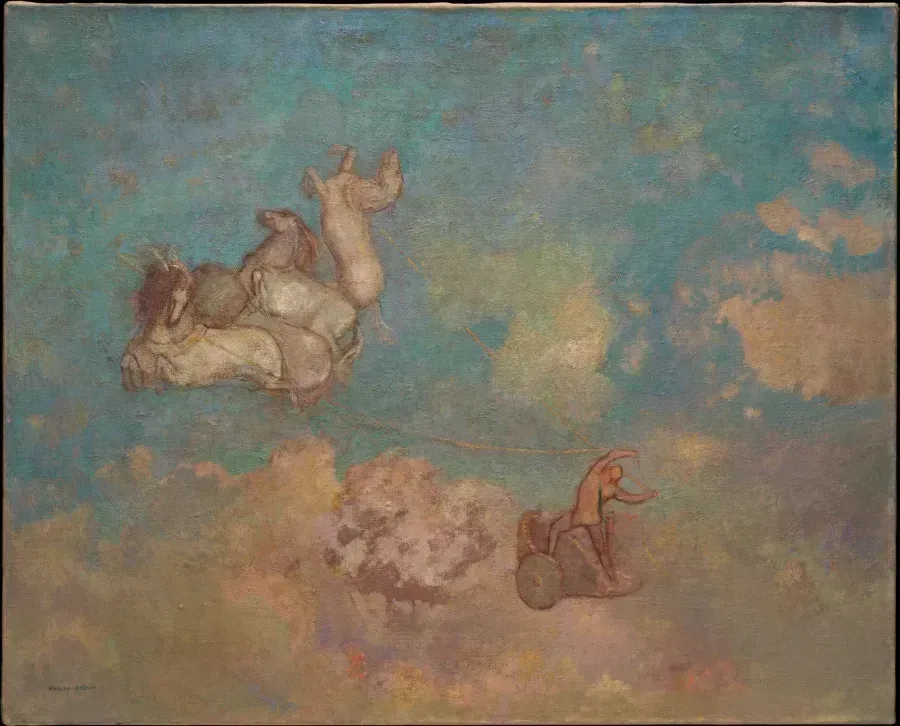
Helios, literally the Sun as a heavenly body. Each morning he harnessed his fiery chariot and drove it across the firmament from east to west. By evening a golden boat awaited him, carrying him back to the east across the ocean. Helios is the physical sun: motion, heat, light. He is all-seeing; no deed under the open sky escapes him. It was Helios who told Demeter that Hades had carried off Persephone, because he saw everything that happens on earth in daylight.
Apollo, a god of light, but already in a figurative sense. The light of reason, of prophecy, of music, of healing. The Delphic oracle is his. The lyre is his. The power to foresee is his. By late antiquity the images of Apollo and Helios began to merge: Apollo took on solar attributes and became the sun god in the broad sense.
Both figures are present in the iconography of Arcanum 19, Helios as physical radiance and all-seeing sight, Apollo as clarity of thought and creative vitality.
The story of Phaethon is telling, the son of Helios who begged his father to let him drive the chariot of the sun. Helios agreed, though he warned of the danger. Phaethon could not control the horses, the chariot strayed from its course and began to scorch the earth, and Zeus was forced to strike him with a thunderbolt to prevent disaster. This myth is often read as a warning about the difference between holding power and knowing how to use it: solar energy is enormous, but it demands mastery.
Here lies the difference between Arcanum 19 upright (the Sun) and reversed: upright, the child rides confidently, without reins, in harmony with the horse. Reversed, it is more like Phaethon: too much too fast, a mismatch between desire and ability.
The Pythian Games in honour of Apollo at Delphi were held every four years and included musical, poetic and athletic contests. The laurel wreath of the Pythian victor is one of the first images in history of "triumph" as public recognition of success. Apollo as patron of these games is the Sun in the role of the one who sees and rewards the best. Another analogy to Arcanum 19: a public, recognised, illuminated achievement.
Sol Invictus and Ra: the sun as a state cult
The Roman cult of Sol Invictus, the "Unconquered Sun", was officially introduced under the emperor Aurelian in 274 AD. The sun became the chief god of Rome, a symbol of the empire's eternal strength. The Day of the Sun (Dies Solis) became a public holiday. The festival of the Birth of the Unconquered Sun was kept on 25 December, a date chosen because of the winter solstice, when the days begin to lengthen.
This is an important historical moment: solar symbolism was politically charged. To wear a solar symbol in Rome in the third and fourth centuries meant something concrete: you are on the side of strength, you are part of the imperial order, the Unconquered Sun warms you.
Ra, the Egyptian sun god, one of the most important deities of the Egyptian pantheon. His daytime journey across the sky and his night journey through the underworld are among Egypt's chief mythological narratives. In the morning Ra appeared as the scarab Khepri (the young rising sun), at noon as the falcon Ra-Horakhty, in the evening as the ram Atum. Three forms of a single solar cycle.
Horus, the falcon-sun whose right eye was the sun and whose left eye was the moon. His daily victory over Set (the god of chaos) is a metaphor of sunrise: each morning Horus defeats the dark of night. The Eye of Horus as a symbol of solar sight came into jewellery as far back as ancient Egypt and remains in it to this day.



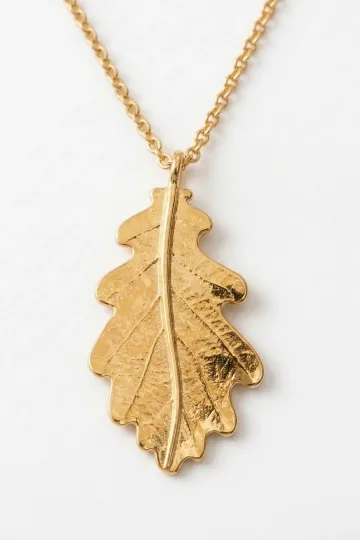
Surya, Mithra, Inti: the sun on three continents
Solar mythology is one of the most universal. On every inhabited continent the sun became an object of worship and personification.
Surya, the Indian sun god, one of the Adityas (gods of the heavenly expanse). His depiction in twelve manifestations corresponds to the twelve months of the year. Surya rides a chariot drawn by seven horses, the seven colours of the rainbow or the seven days of the week. Surya Namaskar ("the Salutation to the Sun") is one of the basic sequences in yoga. A thousand-year tradition of consciously turning toward solar energy as a source of vitality.
In the Vedic tradition Surya carries several layers of meaning that coincide exactly with Arcanum 19. His epithet "Savitar" means "the Impeller", "the Quickener", the one who prompts things to begin, wakes them from sleep, sets motion going. The Gayatri Mantra, one of the chief Vedic prayers, is addressed to Savitar: it is a request for the illumination of the mind, for clarity, for understanding. For thousands of years people have greeted the sunrise with this prayer: a plea that sunlight enter both the body and the thought.
Mithra, the Persian god of light, one of the most venerated in the Iranian pantheon. Mithraism, which spread through the Roman Empire in the first to fourth centuries AD, became one of the largest mystery religions. Mithra was born from a rock, slew the sacred bull from whose body all living things arose. His birthday coincided with the winter solstice. Mithraism and early Christianity competed for an audience in roughly the same era in the same Roman provinces.
In Mithraism there was a seven-grade hierarchy of initiation, and one of the highest grades was called "Father" (Pater). It is striking that the image of the father-sun who lights everyone, with no attachment to any particular son, echoes Jung's description of the Self: a source that does not choose, it simply shines.
Inti, the sun god of the Inca, considered the forefather of the ruling dynasty. The Inca called themselves "children of the Sun". Gold was the metal of Inti, and this is precisely why Inca jewellery was almost exclusively golden. The great ritual objects of the Inca were images of the solar disc. Modern jewellery with a solar disc carries this thousand-year tradition of veneration, even when the wearer is not thinking about it.
The Inca Coricancha, the "Golden Court", was the temple of the sun in Cusco, its walls literally sheathed in gold leaf. When Spanish conquistadors plundered the temple in the sixteenth century they were astonished at the quantity of gold. For the Inca this was not wealth as we understand it, but the literal embodiment of sunlight in metal. To wear gold meant to wear a piece of Inti.
Amun-Ra in the Egyptian tradition, the fusion of Amun (the hidden god) and Ra (the solar god), became the chief god of the New Kingdom. Amun-Ra embodied both the hidden (the nocturnal, the unconscious) and the revealed (the solar, the clear) in a single figure. This is a precise parallel to Jung's system and to the pair of Arcana 18 (the Moon) and 19 (the Sun): two poles that, in their fullness, are the Whole.
All traditions converge on one thing: the sun, the source of life, the source of order, the source of what lets things grow. Jewellery with a solar symbol is jewellery that belongs to all cultures at once.
Jung: the Self and the solar in individuation
Carl Gustav Jung worked with solar symbolism as an image of the Self, the central archetype of the psyche, uniting the conscious and the unconscious into a single whole.
In the Jungian system the Ego is the centre of the conscious part of the personality. The Self is the centre of the whole personality, including what we do not know about ourselves. Individuation is the process of gradually approaching the Self, when the fragments of the psyche begin to gather into something whole.
The Sun in this system is a symbol of the Self: it shines equally on everything, shows no preference, casts no shadow on purpose. It is not an ego-sun that shines only on itself. It is the sun in the sense of a centre that lights the whole field of the psyche.
The moment Arcanum 19 turns up in a spread is often read by Jungian-minded analysts as the moment when the Self "speaks" directly, without the symbolic detours of the Moon and the Tower. It is a rare and valuable state.
The child on the card is also present in the Jungian vocabulary: Puer Aeternus (the eternal youth), the archetype of perpetual youth and the creative principle. In its positive form, freshness of perception, the ability to begin again. In its negative form, infantilism, a refusal to grow up. Arcanum 19 represents the positive pole: the inner child as a source of joy, not as an evasion of responsibility.
In "Psychology and Alchemy" (1944) Jung wrote of the "filius philosophorum", the son of the philosophers, the mysterious child born in the alchemical process of joining opposites. This is not a literal child but a symbol of what is born when the dark and light principles of the psyche begin to interact rather than war. The naked child on the Sun card is this same image in Tarot iconography: born at the end of a long path, innocent not from ignorance but from having passed through knowledge.
There is also a link between the solar archetype and what Jung called, in alchemical terms, "rubedo" (redness), the final stage of the alchemical work, when everything has been synthesised and set alight. In the system of the Four Stages of Jungian alchemy: nigredo (blackness, darkness), albedo (whiteness, purification), citrinitas (yellowness, the transitional stage), rubedo (redness, solar completion). Arcanum 19 corresponds precisely to rubedo: burning, radiant, complete.
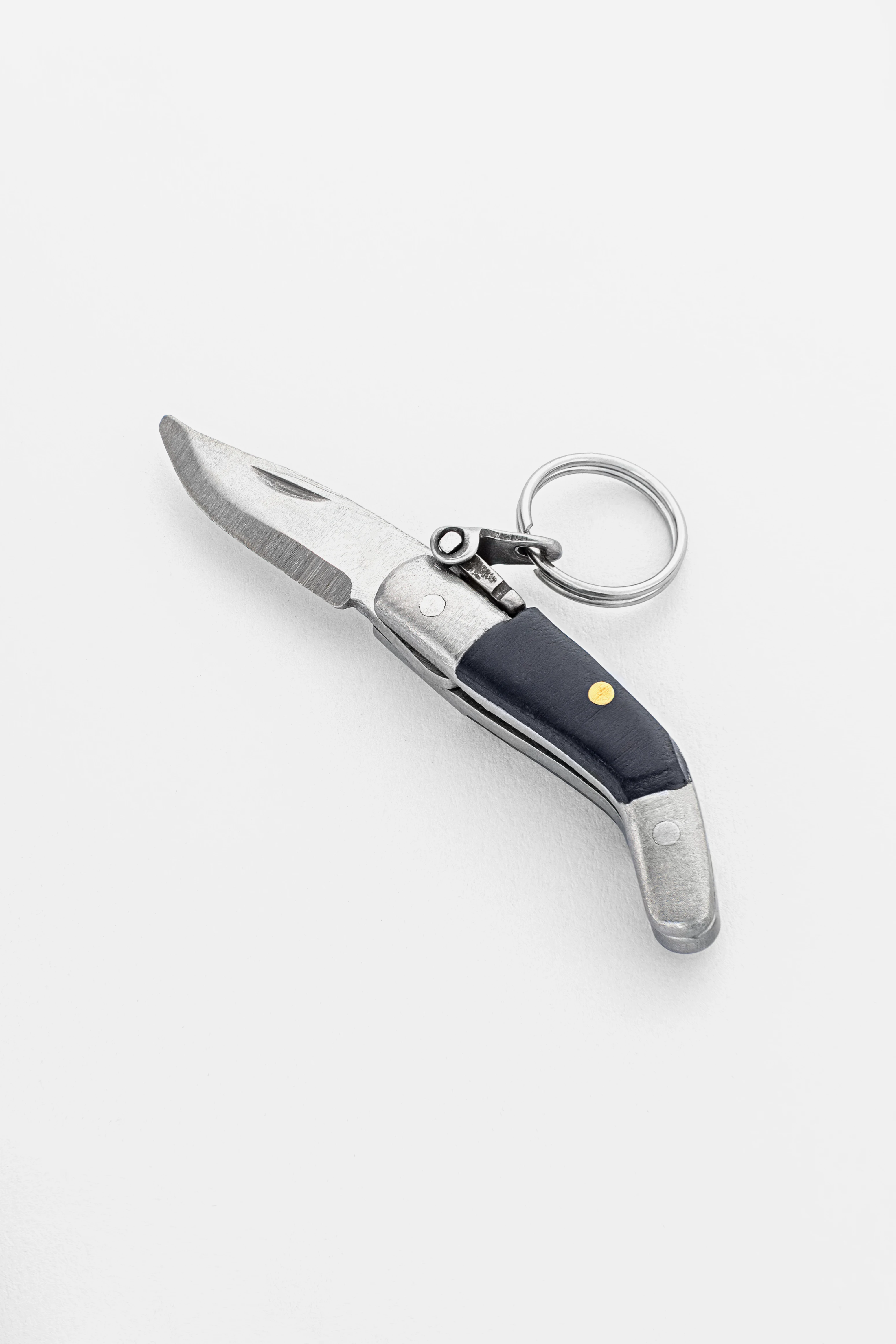
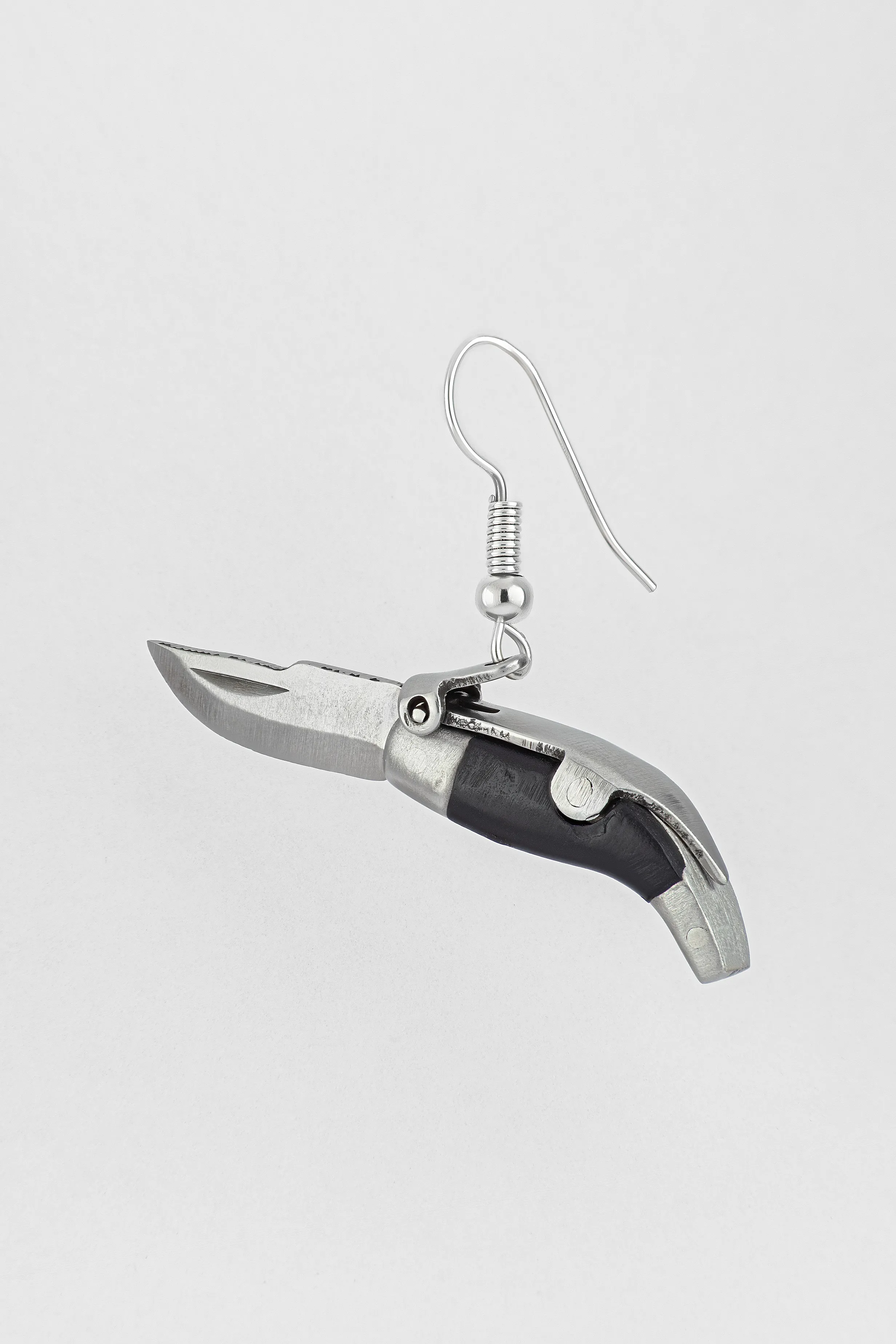
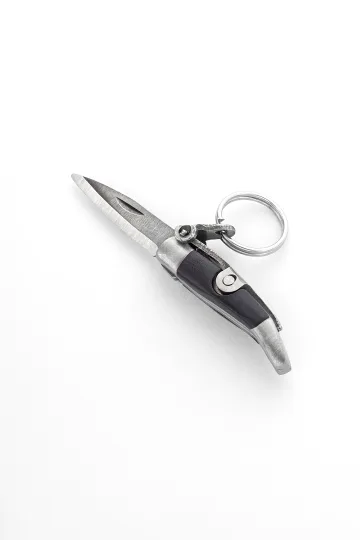
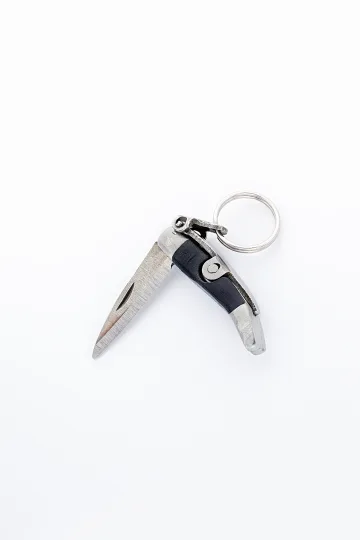
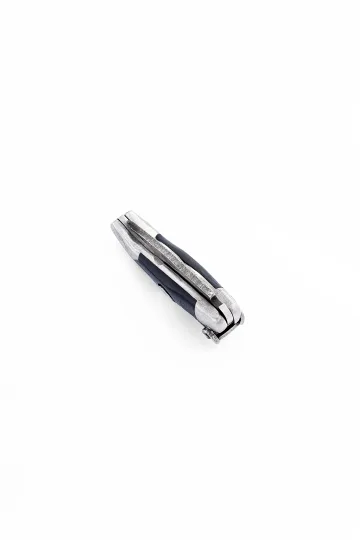
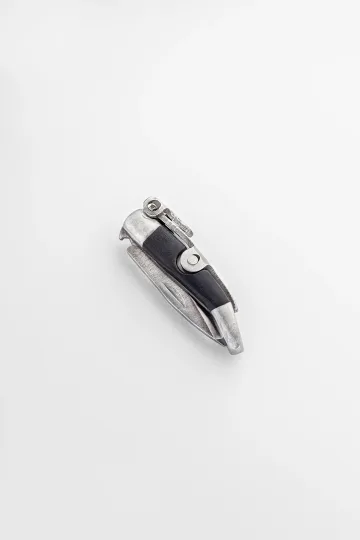
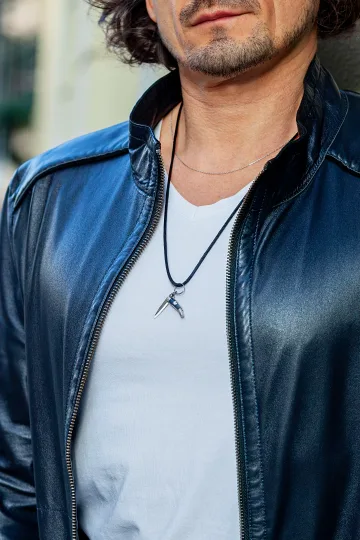
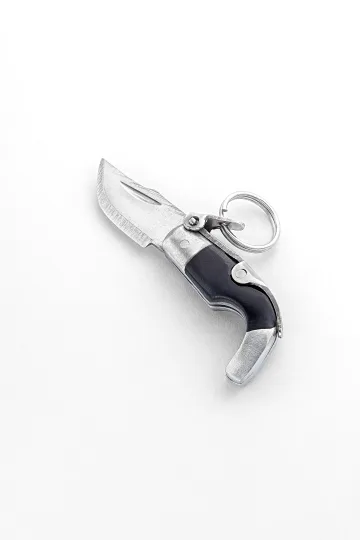
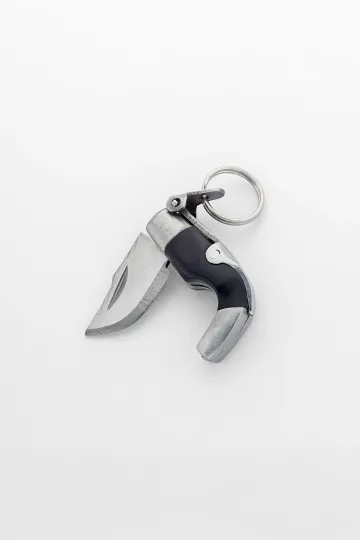
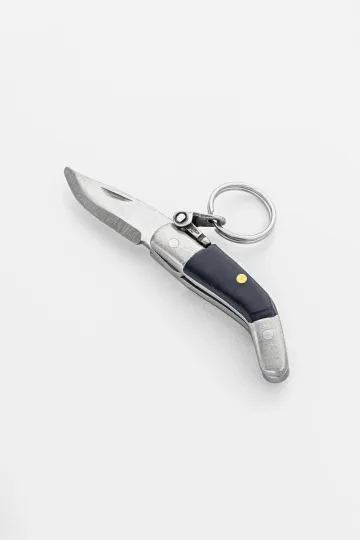
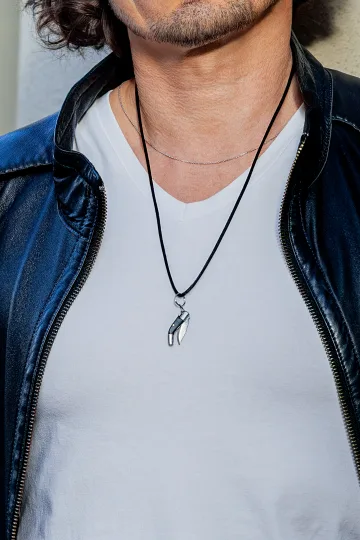
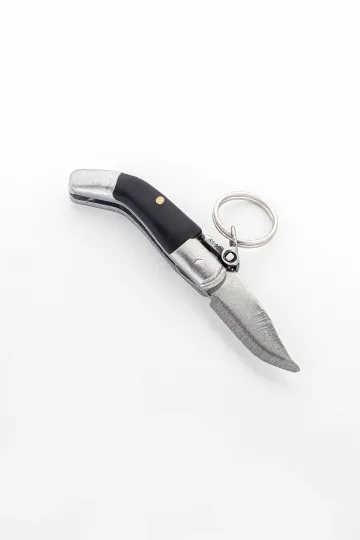
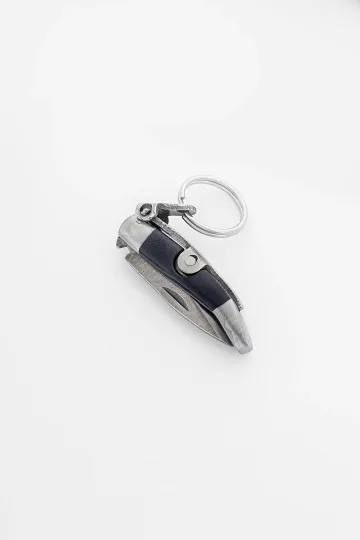
CAPAORA mini knife pendant
The 18th-century Spanish navaja in miniature: 40 mm of stainless steel, a real folding mechanism and a Palanquilla lock that clicks. An affordable gift to remember.
Authentic · Ships from Spain · 14-day returns
Positive psychology: what science knows about joy
Martin Seligman, the founder of positive psychology, identified several components of human well-being in the PERMA model: Positive emotions, Engagement, Relationships, Meaning, Accomplishment.
Positive emotions in this system are not "just a good mood". They are states that widen attention and thought (Barbara Fredrickson's "broaden-and-build" theory): when we feel good, we notice more, think more broadly, build more connections. Joy literally makes us smarter and more social.
Mihaly Csikszentmihalyi described the state of flow: complete absorption in an activity, when time vanishes, effort stops feeling like effort, and there is only what you are doing right now. It is in this state that a person feels what the Sun card symbolises as joy: not as an external event but as a quality of presence.
The child on the white horse with no reins is an image of flow. There is no control, not because it has been lost but because it is not needed. The movement happens on its own.
Many people describe this state in their own words. When someone feels joy in its genuine, immediate form, not the euphoria of a stimulant but precisely that quiet hot clarity Arcanum 19 carries, it is experienced not just as "pleasant" but as a sense of rightness, the feeling that the choice made was the correct one. It is this quality that sets the moment of the Sun apart from a random good mood.
In research in the 2000s Barbara Fredrickson found the so-called "positivity ratio": people who had roughly three times more positive experiences than negative ones showed significantly higher functioning, in relationships, at work, in health. When Arcanum 19 turns up in a spread, it is "good news". It is a signal that the resource for high-level functioning is available right now. Worth using this moment not for rest but for movement.
Leave your email, we'll send your discount code. No spam, unsubscribe anytime.
The code arrives by email, valid on your first order.
In literature and cinema: moments of sunlight
Some scenes in world culture convey the state of Arcanum 19 more precisely than any description.
"The Alchemist" by Paulo Coelho. The moment when Santiago finds the treasure, not the one he was looking for, but the one that had been near him all along. It is not gold. It is the understanding that the journey itself was the treasure, that the meaning lay in the movement. The Sun card is a card of just such understanding: not of finally getting the external thing, but of something inside finally becoming clear.
"Life Is Beautiful" by Roberto Benigni. The closing scene, when Guido's son sees that he has survived, that the war is over, that his father did not lie, that life really was a game, and also a horror. A ray of morning light through the door of the tank. The moment when the darkest part has passed and a real dawn arrives. Arcanum 19 after Arcanum 18 is exactly this.
"The Shawshank Redemption". The scene of Andy emerging from the sewer pipe in the rain, arms raised to the sky. Critics agree this scene works as an image of birth: out of darkness into light, out of confinement into freedom. Then, at the end, the shore, bright sun, a reunion after the dark. Director Frank Darabont ends the film on this image for a reason: sunlight as a synonym of freedom and clarity.
"The Little Prince" by Antoine de Saint-Exupéry. The prince comes to the pilot in the desert, to a dying, exhausted man who has lost his bearings. And by his presence, by his direct childlike gaze, he gives the adult back the ability to see what matters. The prince is the inner child as a function: he does not solve the problem of the aeroplane, he reminds the man why one lives at all. Golden hair, a golden scarf, laughter, all of it is the Sun.
"Scent of a Woman" (1992) with Al Pacino. The closing scene, where Colonel Slade, blind and having lost the meaning of his life, walks to the middle of the hall, dances a tango and gives a speech. This is not the same situation as Shawshank: here the Sun comes not after darkness outside but after darkness within. A man has found something alive in himself again. The hall sees it and applauds. Public, illuminated, joyful vitality, Arcanum 19 in its exact form.
The poetry of Pablo Neruda, "Ode to the Sun". Neruda wrote odes to simple things: the onion, socks, the tomato, and the sun. His ode to the sun is not solemn, not theological. It is a conversation with a hot patch on the floor, with warmth on a shoulder, with the thing that comes every morning and never asks for thanks. "You ask nothing, you only give" is a precise characterisation of the upright Arcanum 19. Not a transaction. Just light.
In all these stories, different in genre, era and culture, there is one shared moment: when a person stops fighting and simply begins to be. The child on the card does not fight the horse and does not fight the sun. He simply rides. That is the state Arcanum 19 symbolises: not a victory over something, but the moment when the struggle is no longer needed.
Jewellery with solar symbolism: what and why
The sun is one of the oldest and most widespread motifs in jewellery. This is not fashion or a passing fancy. It is a presence that has never been interrupted in any era.
Finds of solar discs and wheels in gold date to the Bronze Age (the second millennium BC), in Denmark, Ireland, central Europe. The golden solar discs of the Egyptian pharaohs. Inca masks of Inti in pure gold. Medieval reliquaries with sun rays. Silver solar pendants of the twentieth century. The fine gold sun pendants worn now in any country in the world.
Why is this motif so persistent? Several reasons.
First, the solar disc is one of the most recognisable geometric images. A circle with rays is read instantly in any culture.
Second, the meaning is unambiguously positive: the sun brings warmth, life, growth. Unlike the moon or the stars, whose symbolism is ambiguous (the moon is tied both to mystery and to illusion), the sun in most traditions is direct and bright.
Third, solar jewellery works well with any metal: yellow gold underlines the solar quality literally, silver creates a cool lunar contrast, rose gold adds warmth without heaviness.
Sun and moon: the pair
One of the most sought-after motifs in jewellery, the sun and moon together. In Tarot, Arcanum 18 (the Moon) and Arcanum 19 (the Sun) are a pair built as a transition: night and day, dark and light, illusion and clarity. To wear them together as jewellery is to work with both poles of experience: with what happens in the dark and with what lights everything.
Celestial jewellery: the context
A sun pendant sits naturally within a broader celestial theme, jewellery with the moon, stars, constellations. Celestial symbolism is having a moment: an aesthetic that is at once visually beautiful and carries a layer of meaning. The sun is the central object of the whole celestial pantheon, with everything else arranged around it.
The feather: lightness
Feather jewellery carries the symbolism of freedom and lightness, qualities that rhyme well with the Sun archetype. The child on the card is unburdened: he carries no weight of the past, no fear of the future. Pairing a sun pendant with a feather is a combination of clarity and lightness.
The bee: solar energy
The bee in jewellery is one of the most interesting symbols in the context of the Sun. Bees are active in daylight, and their sociability and productivity are associated with solar energy in many traditions. In Egypt the bee was a symbol of pharaonic power, the power of the Sun. The combination of sun and bee in jewellery works on the level of a natural archetype: two images of vitality and making.
The sunflower as a motif
The sunflower from the Waite card is a motif that almost never appears in jewellery directly, but its symbolic meaning is worth knowing. Heliotropism (turning to follow the sun) as a principle: jewellery with a sunflower, or with an image alluding to it, carries the meaning of orientation toward the light, of following the source of vitality.
Pendants with a solar disc
Of all forms of solar jewellery, the sun pendant with rays is the most direct reference to the iconography of Arcanum 19. A round disc with rays (straight, wavy or combined) in gold or silver. A simple form with a thousand-year history.
An important detail of choice: the rays can be identical or different. The Waite card shows both kinds, straight and wavy. Jewellery with alternating straight and wavy rays is closer to the card's iconography. But equal rays carry their own meaning: the uniformity of sunlight, which shines the same for everyone.
Earrings with solar motifs
Stud earrings with solar discs are one of the most versatile options for everyday wear. A small diameter (8 to 12 mm) does not overload the look, yet the presence of the symbol gives the sense of a small, constant sun beside the face, literally.
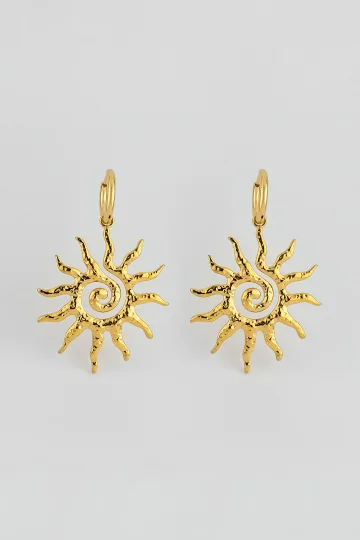
Drop earrings with solar discs on a fine chain give movement: when you turn your head they catch the light. In their own way they reproduce the behaviour of a real sun, constant, mobile, alive.
Asymmetric earrings with one sun and one moon carry the theme of Arcana 18 and 19 directly: two poles, one on each ear. Dark and light not as opposites but as a pair.
Solar rings
A ring with a solar disc at its centre is a more visible statement than a pendant. In the Western jewellery tradition rings with solar symbols have been present since the Bronze Age: Celtic sun wheels, Roman rings bearing Sol Invictus, Inca golden rings with the disc of Inti.
A fine gold ring with a small relief solar disc is an everyday, understated solar symbol. You look at your hand and you see it. A reminder that works not on the level of reason but on the level of the glance.
The Sun in Tarot and solar symbolism in the history of jewellery
Before we talk about specific pieces, let us work out why solar symbolism in goldsmithing is so durable. It is one of those rare cases where a visual motif and its meaning do not drift apart across centuries.
The Nebra Sky Disc (around 1600 BC, Germany) is one of the oldest surviving images of the firmament. It shows the sun, the moon and the stars. It is not jewellery but a ritual object, yet the form of the gold discs on it directly precedes what people later came to wear. The solar disc as a symbol appeared long before anyone thought up Tarot.
Celtic torcs and sun wheels in bronze and gold, from the second and first millennia BC. A spoked wheel as a symbol of the sun: spokes, rays, a rim, the firmament. Celtic sun wheels are found all across Europe, from Ireland to the Balkans. To wear such a piece meant literally to "carry the sun with you", in a period when the solar cult was central to religious life.
Egyptian golden solar discs under the pharaohs were a privilege of kings and priests. The uraeus (the cobra) and the solar disc together made up the chief royal symbol of Egypt. Gold in Egypt was called "the flesh of the gods", precisely because it was the colour of Ra.
Medieval reliquaries in the form of a solar disc with rays were one of the principal kinds of church furnishing. This is the ostensorium, the monstrance, the vessel for keeping the consecrated host, surrounded by golden rays. The solar disc in Christianity acquired a new layer of meaning without losing the old one: light as such, the source of life.
The "Sun King" style of the seventeenth century under Louis XIV (Roi Soleil, the Sun King) introduced solar symbolism as an official courtly mark. The palace of Versailles is oriented along the sunrise-sunset axis. The solar disc on coats of arms, medals, jewellery, is literally the identification of the ruler with the sun god. The Versailles workshops produced thousands of pieces with a solar motif.
All of this points to one thing: when someone today chooses a pendant with a solar disc, they enter a tradition several thousand years old. Not because they are thinking about it, but because the form is so durable and so charged with meaning that culture passes it from generation to generation without effort.
How to choose jewellery for the energy of Arcanum 19
When people say "jewellery for the Sun in Tarot", they do not mean "buy a card with a picture on a chain". They mean choosing a symbol that resonates with what the card carries: clarity, vitality, openness, joy without conditions.
Metal. Yellow gold is the most obvious choice for Arcanum 19. Its colour literally repeats the colour of the solar disc. But silver works too, especially if you want a lunar-solar contrast in one piece. Rose gold adds warmth and a human softness. For jewellery with a solar motif there is no "wrong" metal; the form matters more.
Form. A disc with rays is a direct reference to the card's iconography. A ring (a circle without rays) carries a different meaning, completion, the World. A teardrop or a drop is the Moon. Rays are the Sun. If you want Arcanum 19 specifically, choose a circle with rays: straight, wavy, or (as on the card) alternating.
Size. A small discreet pendant is jewellery "for yourself". You know what you are carrying; others may not notice. A large central pendant is a statement to the world: "I am in a period of clarity and I am not hiding it." For Arcanum 19 both options are fitting. The card does not ask for modesty: the child on it rides with the banner raised.
Stones. If the piece includes settings, the theme of the Sun traditionally calls for warm, solar stones: citrine (yellow, solar), amber (literally sunlight set solid), sunstone (heliolite, its name says it all), golden rutilated quartz (golden threads inside the crystal). Among clear stones, rock crystal in a gold setting creates the effect of "focused light". Labradorite works for lunar-solar compositions, where both Arcana appear.
Combinations. If you want to put together a small "solar ensemble": a central pendant with a solar disc, complemented by a fine bracelet with a sunflower or a bee, both solar motifs work together naturally. Stud earrings with small solar discs sit well with a larger pendant without competing with it.
As a gift. Jewellery with solar symbolism is fitting to give: on emerging from a hard period ("clear at last"), on the birth of a child or a pregnancy (the literal context of the card), on finishing a big project or defending a thesis, on a birthday in the summer (Leo, the sign of the Sun, the height of summer). Both the gift and the words matter: "I chose this because you came through the dark and now it is light" is far more precise than simply handing over a box.
In spreads: how the card is read
The Sun brings a simple, clear signal to a spread, but context adds nuance.
Questions about work and career. Success, recognition, a project finished well. The upright Sun in the outcome position or the near future is one of the best draws for questions of this kind.
Questions about relationships. Joy, mutuality, openness. If there have been difficulties, a period of clearing and warming. Not necessarily "the perfect relationship", but certainly a good moment.
Questions about health. Traditionally the Sun in health spreads reads positively: recovery, improvement, the return of energy.
Questions about plans and decisions. A green light. Now is a good time to act.
In the advice position. Be open, like the child on the card. Do not defend yourself where there is nothing to defend against. Let yourself simply be glad of what is.
In the obstacle position. Reversed or in the position of a challenge: blind optimism, an unwillingness to see the real problems, "sunglasses" that keep you from noticing what needs attention.
Combinations with other Arcana
The cards work in each other's context, and the Sun unfolds differently in combination.
Moon (18) + Sun (19): the route through the night. One of the most significant sequences in the deck. The Moon is a period of uncertainty, illusion, fear. The Sun is the way out of it. To see these two cards together in a spread is a signal: the night is ending, the dawn is near.
Sun (19) + Judgement (20): a call to the new. After clarity comes awakening. Judgement summons you to a new stage, but for that you need the very clarity the Sun gives. This pair often turns up at moments when a person stands on the threshold of a big decision and already knows the answer, only has not yet said it aloud.
Fool (0) + Sun (19). The Fool begins the path, the Sun lights it. If these cards are in one spread, the person is going in the right direction, despite the apparent naivety of the start. The child on the horse with no reins and the Fool at the edge of the cliff are two images of the same trust in the process.
Sun (19) + Star (17). Both Arcana are positive. The Star carries hope and healing after an ordeal. The Sun is concrete success and clarity. Together they say: both the hope and the result, both are here.
Tower (16) + Sun (19). A hard sequence has led to something good. The destruction cleared a space for something real. This pair often appears for people who have come through a serious crisis and discovered that life became more honest afterward.
Magician (1) + Sun (19). The Magician is deliberate action with tools. The Sun is the result of that action, its illumination. The Magician knows what to do; the Sun says: do it, now is a good time. Together they are one of the best pairs for "is it worth starting?" questions.
Justice (11) + Sun (19). Balance plus clarity. This often reads as: the situation is arranged fairly, and it will come to light. Sometimes, the end of a long matter (legal, personal, professional) that closes in the questioner's favour.
Death (13) + Sun (19). Death in Tarot is transformation, not an end. The Sun after Death is the dawn after transformation. It is one of the most reassuring pairs in spreads about change: something has died, but the new is already shining.
Reversed Sun in the advice position. Often read as: "allow yourself a little overcast." You do not always have to be on a high, you do not always need maximum vitality. Sometimes a quiet grey day is not a problem to be solved. It is simply a grey day.
Send a friend a discount code, they save on their first order.
How to wear solar jewellery: season, style, occasion
A solar motif in jewellery works differently depending on context.
By season. In summer, gold, exposed areas of skin, larger forms. The peak of the sun calls for a mirror peak in the jewellery: a large solar disc in the height of July is not excessive, it is exact. In the cold season a sun pendant under a coat carries a different meaning: a personal source of warmth that is not visible from outside. Jewellery "for yourself", a reminder that the sun has not gone, it has only grown deeper.
By metal and image. Yellow gold in summer, a direct, bright, open choice. Silver with a solar disc creates an interesting contrast: a cool metal with a hot symbol. It is the Moon-Sun pair, night and day in one piece. For those who do not want to look "solar" literally, a silver solar disc is subtler and more ambiguous.
By clothing. A sun pendant works well with neutral tones: white, beige, cream, where it reads as the main accent. With black, contrasting and expressive: a dark ground, a bright centre. With other bright colours, only if the pendant itself is large enough not to be lost.
Layering. A solar disc plus a moon plus a star on chains of different lengths is a celestial system worn on the body. It works if all the pieces are of one metal or consciously of different ones. Mixing random pieces of different lengths creates chaos instead of a system.
By occasion. For a graduation, a thesis defence, a first day at a new job, the birthday of someone who has come through something hard, anywhere a sign of "now it is good" is called for. There is no need to explain Tarot symbolism to the person you are giving it to: it is enough to say "I chose this because you came out into the light after a long darkness." That is clear without any special knowledge.
For men. A solar symbol in jewellery has no gender limits. A fine gold chain with a solar disc for a man is a classic that has existed for thousands of years (from the Egyptian pharaohs to modern men's jewellery). A coin-like disc with a relief sun is a masculine format that reads seriously.
Buying it as a gift? Each one arrives ready to give.
 A branded Zevira box and a little card come with every order.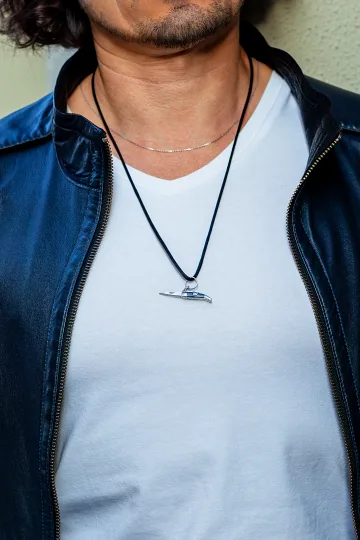






The Sun in different Tarot traditions: how the interpretation changed
It is interesting to trace how the same card reads differently depending on the system a reader uses.
Waite-Smith (1909), the most widespread system. Here the Sun is above all about vitality, success and illumination. The emphasis is on physical joy (the child, the horse, the movement) and on the exit from darkness (the wall behind).
The Marseille tradition, in a number of interpretations more austere. The two children are read as a symbol of a duality that has finally found harmony: masculine and feminine, conscious and unconscious, or simply two people at peace with each other. Less emphasis on personal joy and more on accord.
The Thoth, Crowley, Arcanum XIX here is tied to the Sun-spirit as Sol (alchemical gold). The symbolism is more esoteric, the emphasis on illumination as a spiritual quality. The dancing children, an image not of naive carelessness but of the dance of Life itself: Vita.
The Thoth Tarot (in other readings) interprets the Sun through the lens of Horus, the Egyptian falcon sun god. Crowley was convinced that his era (the "Aeon of Horus") was succeeding the previous one (the "Aeon of Osiris"), and the Sun card in his system carries this eschatological charge: it is good, and good in a new way.
The Gnomon Tarot (one of the modern academic systems) interprets the Sun through a model of archetypes: the child who knows no shame. A psychological emphasis, the moment when a person reclaims a part of themselves once hidden out of fear of being judged. To be glad out loud, without apology, is also a skill.
What unites all the systems: not one reads the card as negative. The variations are in the detail, the emphasis on success, on harmony, on spiritual clarity, on psychological liberation, but the conclusion is always the same: it is good. It is precisely this consensus of positivity that makes the Sun unique among the Major Arcana.
FAQ
Is the Sun in Tarot literally a good card?
Upright, yes, it is one of the few cards that read positively almost always. Nuance is added by the reversed position and the neighbouring cards, but on the whole the Sun stays in the upper part of the scale in any spread. Readers usually name three cards that are good without reservation: the Sun, the Star and the World. Of these the Sun is the brightest and most immediate.
Are the twenty-one rays on the card a coincidence?
No. It is a deliberate choice by Pamela Colman Smith (or her instructor Waite). 21 rays = 21 Major Arcana minus the Fool. The Sun literally contains the number of all the other Arcana of the path. The 11 straight rays are often read as active, conscious energies, and the 10 wavy ones as intuitive, unconscious.
Is the child on the card literally about children?
The child on the card is above all the archetype of the inner child, the capacity for open joy. In spreads the card can indeed point to children or pregnancy, but that is not the only or the main reading. The rule in Tarot: a literal reading of a symbol is relevant when the question is asked literally. If you ask "will I have children?", the Sun in the answer position is a positive sign. If you ask "how is my project going?", the Sun is about success and vitality, not about children.
Is the reversed Sun a bad thing?
No. It is a temporary delay, dimmed light, small obstacles on the way to the good. The reversed Sun is still a positive card, just less unconditional. A good analogy: an overcast day, not night. The sun is behind the clouds, it is there, you just cannot see it directly right now.
How does the Sun differ from the Star and the World?
The Star (17) is hope and healing, a quiet glow after the dark. A calm certainty that it will be good. The World (21) is the completion of a cycle, the integration of experience, the dance at the finish. The Sun (19) is clarity and vitality in a particular moment, active joy. All three are positive, but in different ways: the Star is quiet, the World is conclusive, the Sun is bright and present. If the Star says "you will recover" and the World says "you did it", then the Sun says "right now it is good".
Which jewellery suits the energy of Arcanum 19?
Pendants and earrings with a solar disc in yellow gold or gold plate. The combination of sun and moon for working with the poles of experience. The celestial theme in general. The sunflower as a motif. Fine gold chains with a simple solar disc are one of the most understated ways to wear this energy without the literal symbolism of Tarot. For those who want a clearer link to the card, jewellery with alternating straight and wavy rays directly reproduces the Waite iconography.
Are the Sun and Leo in astrology the same thing?
Not the same thing, but closely linked. The Sun rules Leo, it is its domicile. The qualities of Leo and the Sun overlap: generosity, vitality, creativity, the ability to shine for others. If a person has the Sun in Leo in their natal chart, Arcanum 19 resonates especially for them. The sign of Leo governs the season from late July to late August, the height of summer in the northern hemisphere, the time of greatest solar activity. This is no chance coincidence.
How can the symbolism of the Sun in jewellery be used as a personal sign?
A sun pendant works well as a piece for the moment of emerging from a hard period, for a new beginning in the context of clarity, as a gift on the completion of an important stage. Engraving a date on the back turns the piece from a symbol into a personal mark: "on this day it became clear." You can also engrave a word or the coordinates of a place where something important happened, a concrete point on the map of a personal story.
Is the sunflower on the card a European plant?
No, and this is an interesting fact. The sunflower comes from North America. It reached Europe after 1492. Pamela Colman Smith, drawing the card in 1909, included a plant that was relatively new to the European tradition, which coincides symbolically with the theme of the Sun as new, open, not yet familiar. More on this in the myths widget.
Does a solar piece need to be "activated"?
There is no need for any ritual. The piece carries its layer of meaning through the choice of symbol and through the wearer's intention. If you chose a sun pendant at a particular moment in your life, it carries that moment with no extra manipulation. The symbol works through memory and through the glance: every time you look at it, it reminds you of that moment and that state.
Can a solar piece be worn all the time or only on "good" days?
All the time. It is precisely on hard days that a piece with the Sun works most strongly: it reminds you that the light is there even when it is temporarily out of sight. This is not a talisman that "attracts the sun". It is an anchor that keeps the memory of what it is like when it is good.
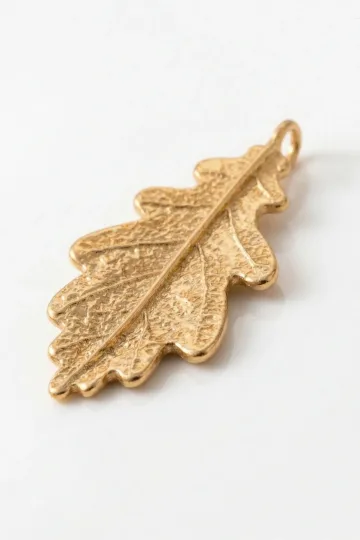
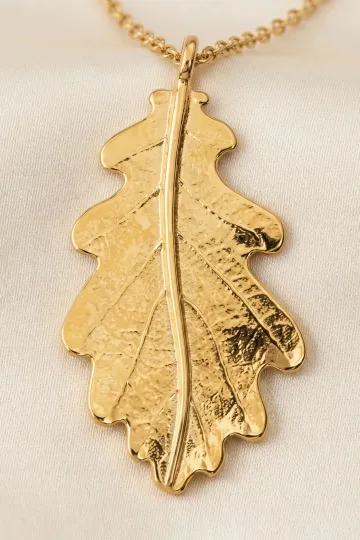
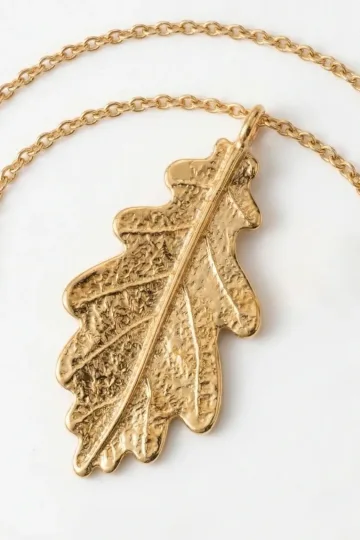
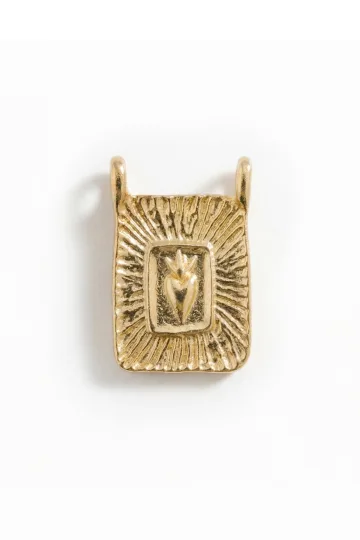
Wear the symbol, don't just read about it. These are in stock:
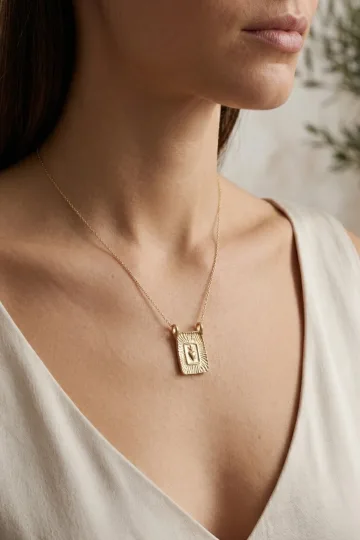
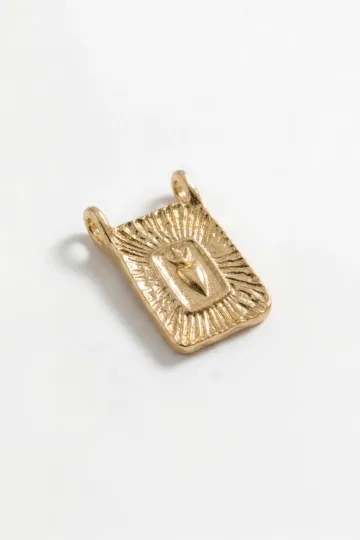
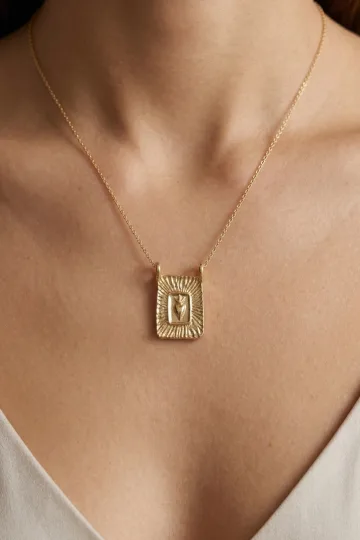
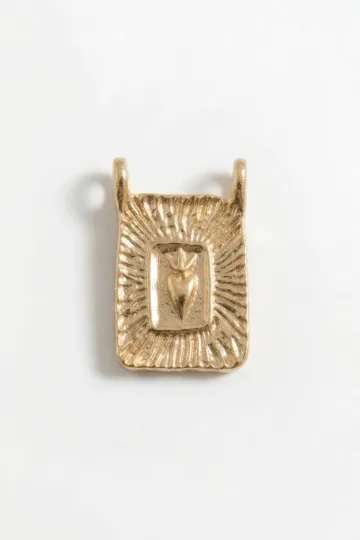

Conclusion
The child on the white horse beneath the enormous sun does not know that the image will survive for centuries. He simply rides, arms raised, the banner in the air, no reins.
Arcanum 19 is built so that its meaning barely needs explaining. Of all twenty-two Major Arcana the Sun is the most direct: joy needs no interpretation. Success needs no justification. Good means good.
Behind this simplicity stands a thousand-year tradition. Ra and Helios, Sol Invictus and Inti, Apollo and Surya, all the sun gods of all cultures spoke of one thing: there is a source that shines, that gives life, that sees everything without a shadow. The 1909 Tarot card compressed this tradition into a single image.
The structure of the Arcana saw to it that the Sun would come exactly when needed: after the Moon, after the night fog, before Judgement, before a new beginning. This is not a chance place in the deck. It is an architectural decision: the dawn stands exactly where it should, after the longest night.
The moment when a solar piece is chosen not because it is beautiful but because it coincided with something inside, these are the moments that turn a piece from an object into a sign. Not magical, requiring no ritual. Simply a quiet, personal sign: it is clear now, it is good now.
Sometimes it is enough to look at a small gold disc on a chain to remember: this state existed. It is possible. It will come again.
Silver, gold, wedding rings, symbols, matching sets.
About Zevira
Zevira makes jewellery in the artisan tradition of Albacete, Spain. The solar motif is one of the most enduring in our collections: from fine disc pendants for everyday wear to expressive celestial sets with the sun and the moon.
What you can find with us:
- Pendants with a solar disc and rays in yellow gold and 925 silver
- "Sun and moon" sets for those who want to work with both poles
- Earrings with celestial symbolism
- Fine chains with solar pendants
Each piece is made by hand by a craftsman, with the option of personal engraving. We work with 925 silver and 14 to 18K gold.