The Hanged Man in Tarot: Meaning, History and Jewellery for the Symbols of Major Arcanum XII
A painter took a three-month sabbatical. Everyone around her read it as a career stall, a loss of momentum, an unprofessional retreat. She locked up her studio, drove to a small town in the hills of Cornwall, and spent three months simply looking at the sea. No shows, no publications, no posts. When she came back, she made a body of work she could not have produced before that stillness. The space of silence gave her something that two years of unbroken output never could.
A volunteer left for a year in rural Kenya with no reliable internet and none of his usual routines. He was not chasing enlightenment and not running from anything. He just decided that this year would not be about a career, but about something else. When he returned he could not say exactly what had shifted. But something had. He saw things differently.
A middle manager at a large company had everything he had wanted five years earlier. Good salary, a respected title, a clear future. And then, one morning, he simply could not get out of bed. Not depression in the clinical sense, just total burnout. He had to stop. Not because he wanted to, but because his body and his mind took the pause without asking his permission.
All three people met a card that Tarot calls the Hanged Man. Arcanum XII is the card of voluntary (or forced) stillness, of a shift in viewpoint, of sacrifice for the sake of something larger. Not an execution. Not a punishment. Initiation through stillness.
What follows takes Arcanum XII apart from every angle: history from Florentine traitors to Waite's reimagining, the iconography of each symbol, mythological parallels from Odin to Prometheus. And, above all: why the ankh, the tree of life and the labyrinth become jewellery for those living through their own version of the Hanged Man.
Place among the Arcana: the pause before transformation
The twelfth arcanum stands between Justice (XI) and Death (XIII). That position is no accident.
The Hanged Man only makes sense in the context of the whole sequence of Major Arcana. The first ten cards (the Magician, the High Priestess, the Empress, the Emperor, the Hierophant, the Lovers, the Chariot, Strength, the Hermit, the Wheel of Fortune) are about forming a personality, learning the tools of the world and meeting its laws for the first time. This is a stretch of active doing, learning, building.
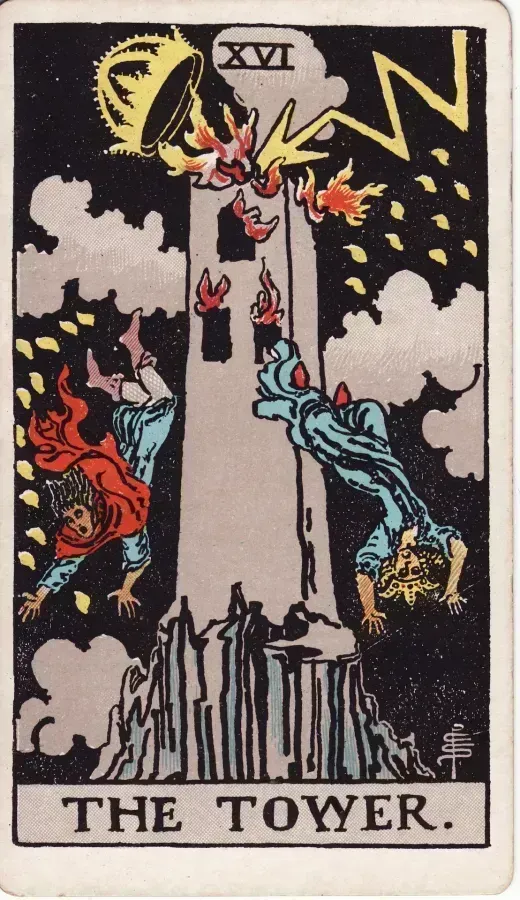
From the eleventh card a different process begins. Justice asks for balance and honesty. The Hanged Man asks for a halt. Death asks for letting go. Temperance asks for integration. The Devil exposes illusions. The Tower destroys what rested on false foundations. The Star offers hope after the wreckage. The Moon submerges you in the unconscious. The Sun brings light. Judgement wakes you. The World completes the cycle.
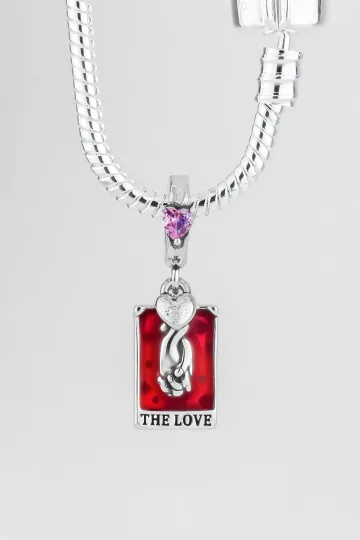
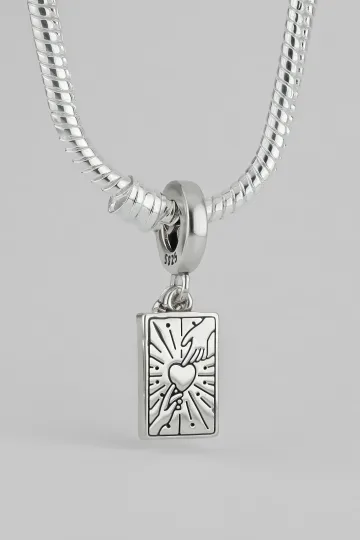
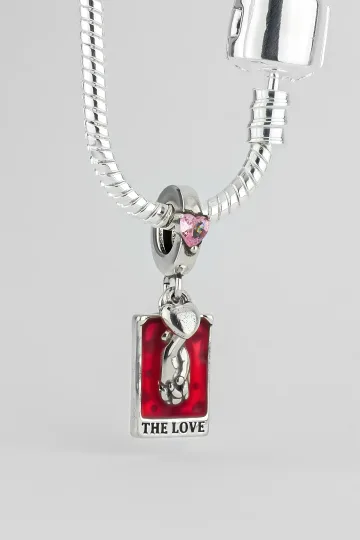
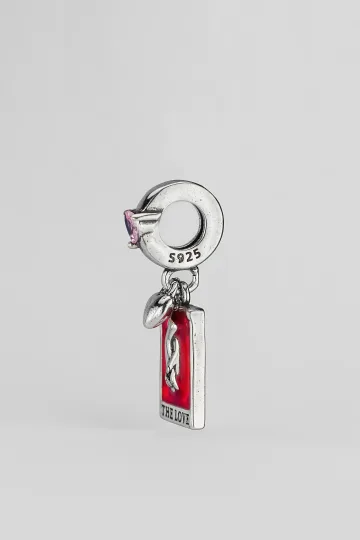
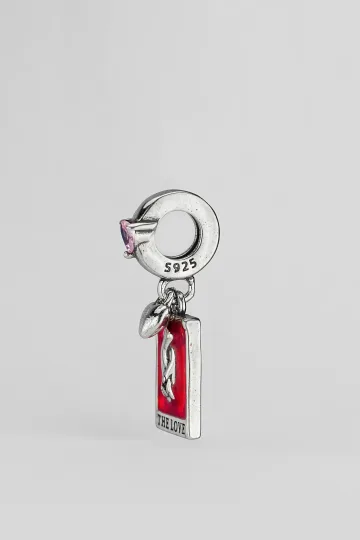
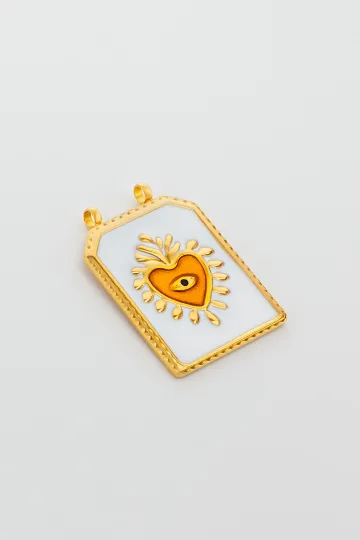
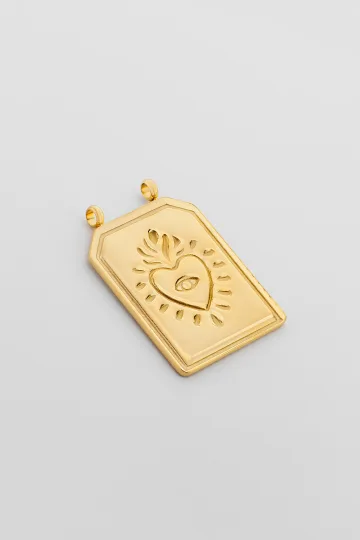
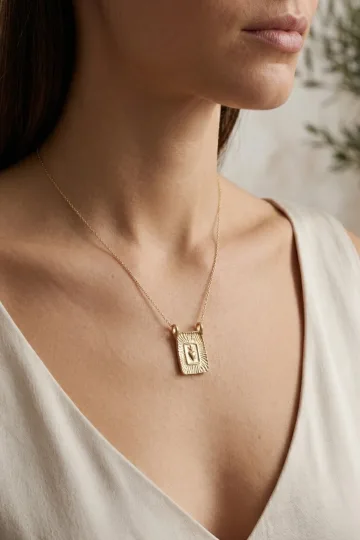
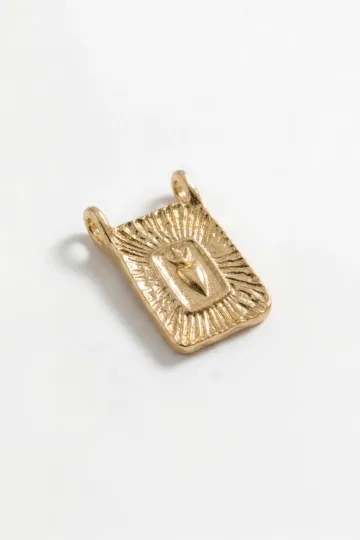
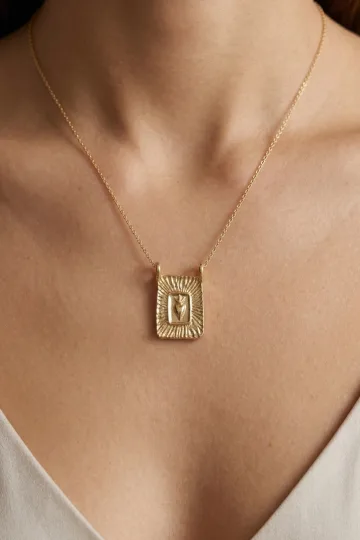
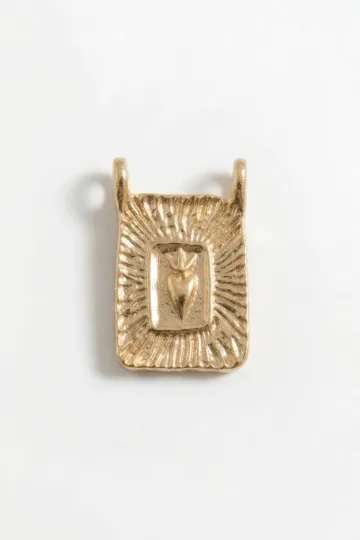
Wear the symbol, don't just read about it. These are in stock:




In this second half of the Fool's journey everything turns on transformation and integration, not on construction. The Hanged Man is the first genuinely "stopping" card of this section. It is the very card that opens the move from active building to deeper work.
Justice (XI) draws the balance: what was done, what was missed, what needs to change. It is a moment of looking at yourself honestly. After it comes the Hanged Man, a halt to rethink what Justice has shown. And then Death (XIII), transformation, an irreversible change, the end of one cycle and the start of another.
The Hanged Man is a conscious pause before an irreversible crossing. You cannot step into the waters of Death without first hanging suspended. You cannot transform without accepting a voluntary stop.
In numerology, twelve is the number of cyclical completeness: twelve months, twelve signs of the zodiac, twelve apostles, twelve labours of Heracles. The twelfth arcanum closes the first cycle of twelve cards (from the Magician to the Hanged Man) and opens the final stretch of the journey through the Major Arcana.
In the "Fool's journey" (the idea that the Fool-zero passes through all twenty-one arcana as stages of a life) the Hanged Man is the moment when the traveller realises: moving forward the old way is no longer possible. You have to stop. Give something up. Look at it differently.
For the other arcana of the journey, read the guide to Tarot jewellery.
The card's history: from the Florentine traitor to the willing sage
Visconti-Sforza and Il Traditore
The earliest images of this card date to the fifteenth century, and they look radically different from what we see today. In the Visconti-Sforza deck, made around 1450 for the ducal court of Milan, the card was called "Il Traditore", the Traitor.
The image was literal: a man hung by one leg from a gibbet, head down. Not a metaphor, not a symbol of wisdom. It was a direct reference to the Florentine custom of pittura infamante, "shaming painting". In medieval Italy, those who had committed treason or fled their debts were painted upside down on the walls of public buildings as a form of public punishment and disgrace. Sometimes the actual execution took the same form.
In its original guise the card carried a flatly negative social meaning: here is the traitor, here is his fate. No spirituality, no inversion.
The Marseille tradition: Le Pendu
By the seventeenth and eighteenth centuries, when the Marseille deck took shape, the card changed its name from "the Traitor" to Le Pendu, the Hanged Man. The iconography softened a little, but the meaning stayed ambiguous. The figure was still suspended, its expression undefined. The image read two ways at once: punishment, or a voluntary gesture?
In the age of the Enlightenment and the flourishing of esoteric orders, the card began to acquire a mystical reading. Occultists of the eighteenth and nineteenth centuries, above all Antoine Court de Gébelin and later Éliphas Lévi, reinterpreted it as a symbol of voluntary sacrifice and initiation. Lévi linked it to the planet Neptune and the element of Water, and that association settled into Western esotericism.
Waite-Smith 1909: a complete reimagining
The turning point came with the deck of Arthur Edward Waite and Pamela Colman Smith, published in 1909. Waite knew Christian mysticism, the Kabbalah, Freemasonry and Norse mythology, and he deliberately layered all of these onto the image of the card.
Smith drew a figure that is plainly suspended of its own accord. The face is calm, almost serene. Around the head, a glowing halo, the sign of illumination. The pose suggests a yogic state of meditation rather than the agony of someone being put to death.
The key innovation: a living tree. In the Marseille tradition the figure hung from a dead gibbet. In Waite-Smith it is a T-shaped cross of living branches with leaves (their number varies across editions). The living tree changes the meaning at its root: this is not an instrument of execution but a living tree, possibly the World Tree.
In his book "The Key to the Tarot" (1910) Waite wrote plainly that the card depicts a voluntary sacrifice for the sake of higher knowledge. The link to Odin on Yggdrasil was an obvious analogy for him.
The Thoth of Crowley: Neptune and Water
Aleister Crowley, in his Thoth deck (developed in 1943 with the artist Frieda Harris), gave the card an even more pronounced esoteric register. In Crowley's system the card corresponds to the Hebrew letter Mem (water) and the element of Water as the original dissolution that precedes rebirth.
Harris rendered the figure in a pose recalling the Egyptian ankh or an occult sign of inversion, a T-cross with the head lowered. In the Thoth deck the Hanged Man is more abstract and less human, in keeping with Crowley's philosophy, for whom the card was about the dissolution of the individual ego into the Great.
An ankh belongs in oxidised silver under a collar, not over a sequinned neckline. One symbol on the chain, lose the rest.
What to wear it with
I keep the symbols of pause and inversion quiet, with no noise in the outfit. Here are the moves I actually use, by occasion.
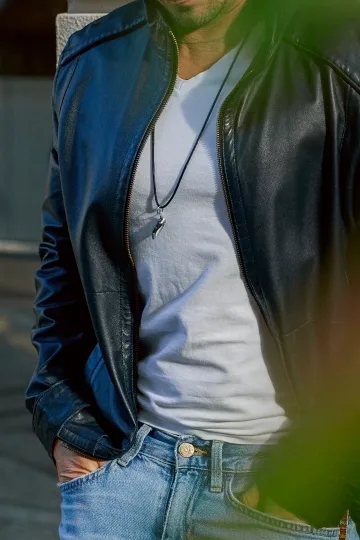
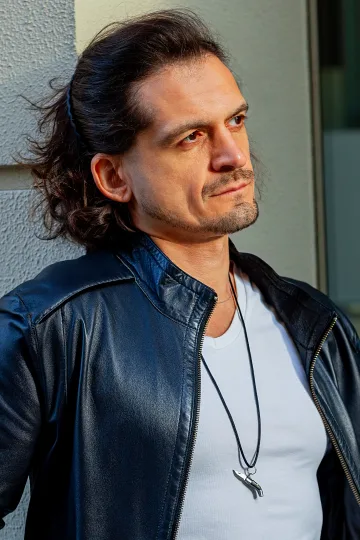
How do I wear an ankh or a labyrinth every day? For every day I recommend a fine chain with a single symbol over a plain roll-neck, a linen shirt or soft knitwear. I keep a muted palette: dusty blue, grey, olive. Matte silver is more honest here than shine. Under a shallow round or V-neckline the pendant reads just enough to be noticed without pulling focus.
Is it right for the office? It is. I suggest slipping the pendant under a shirt or blouse and choosing a shorter length, so it sits at the collarbone rather than tangling in the collar. The symbol of the pause does not have to be on show; it works hidden too, as a private anchor only you see. Under a jacket it reads as a quiet detail.
How do I build an evening look? For the evening I choose a tree of life on a long chain over a dark dress with an open back or a deep neckline. I recommend matte or oxidised silver, so the detail shows in low light. One accent, not two: the theme of the Hanged Man does not tolerate competing meanings.
Which metal and stones suit this theme? Silver sits closer to the lunar, intuitive side of the symbol, so I usually choose it, matte or oxidised. For stones I suggest cool, deep ones: moonstone and aquamarine for daytime softness, onyx and black tourmaline for the evening. Keep to one metal line, silver to silver, gold to gold.
One symbol, or can I layer? Here I am strict: one symbol, one meaning. If you want layers, add a second, longer chain, but an empty one, with no second sign. Overloading with symbols dilutes the theme. On length: 45 cm for the pendant at the collarbone, 55-60 cm for the second line in the evening.

Turn on your camera, pick earrings, a pendant or a ring, and see the piece on yourself in real time.
Switch items in one tap.
Everything runs in your browser: no photo or video is ever uploaded.
The iconography of the Waite card: what is shown and why
The T-shaped cross of living wood
The figure hangs not from an ordinary gibbet but from a T-shaped crossbar set into a living tree. The letter "T" in sacred geometry is the Tau cross, one of the oldest symbols there is. The Tau cross appears in Egyptian iconography, in early Christian symbolism, in Masonic tradition.
The living branches with their leaves matter enormously. There is no death. No withered wood. This is growth, life, continuation. The sacrifice happens inside a living world, not in a dead space.
Some scholars see here a direct nod to Yggdrasil, the World Ash of Norse mythology, the very tree from which Odin hung.
A leg bent into the figure 4
One leg is suspended, the other folded behind it so that the silhouette forms the figure 4. Four, in numerology, is stability, order, structure (four points of the compass, four elements, four seasons). The Hanged Man is frozen in the geometry of stability even in the midst of suspension. The inversion is not chaotic, it is structured.
This detail is often missed, but it matters: the Hanged Man is not helpless. He has chosen the position and holds it deliberately.
Hands behind the back and the triangle of the body
The hands behind the back form an inverted triangle together with the bent legs. The inverted triangle is one of the oldest symbols of water, of the feminine principle, of receptivity. The figure has literally become an embodiment of the watery element: open, receiving, dissolving.
This is not helplessness. It is deliberate openness. The hands are tucked behind the back not because they are bound, but because they are not needed: at this moment there is no need to act, to grip, or to defend.
The halo around the head
The golden or white halo around the head is the card's most unambiguous symbol. The halo means illumination, enlightenment, contact with higher knowledge. It is the head, turned down toward the earth, that lies closest to the roots, and it is there that the light appears.
The paradox of the card is compressed into this one detail: the path to enlightenment runs through inversion. Through accepting the lower position. Through refusing the "right" direction.
The calm face
The figure's expression is calm. Not suffering, not ecstasy. Just calm. This detail separates the Hanged Man from the image of a martyr or a victim in the usual sense. The Hanged Man does not suffer. He is in a state that meditative traditions call "the witness": you observe without reacting.
Blue hose and red shirt
The colours of the clothing are symbolic in Waite's system. Blue is water, emotion, intuition, calm. Red is earth, the physical body, passion, life force. The yellow in the hair and the aura is air, thought, awareness. The Hanged Man carries all the elements within him, but inverted: the rational below, the intuitive above.
Each symbol: why it matters
Inversion. The card's central symbol is the upside-down position itself. We are used to looking at the world a certain way: right is what is called right; up is up. The Hanged Man literally adopts the opposite point of view. What looked like a loss, a pause, a sacrifice, a stillness, turns out to be an investment. What looked like weakness turns out to be strength. Physical inversion as a metaphor for conceptual inversion.
Voluntariness. The figure shows no sign of struggle. He came to this tree himself. This is exactly what separates the Hanged Man from Death: it is not an outside force that changes things, but an inner choice that suspends them. It is the difference between a crisis and a retreat, between burnout and a creative pause.
Impermanence. The Hanged Man hangs, but not forever. Every pause is finite. This is not the journey's end point. It is a crossroads with a mandatory stop.
Sacrifice for knowledge. Something is given up: time, speed, the familiar angle of view, the illusion of control. In return comes what could not have come any other way. In mythology this exchange goes by many names: consecration, initiation, revelation.
The archetype: voluntary sacrifice, initiation, inversion
The Hanged Man works on several archetypal levels at once, layered over one another.
There is no "wrong" reading of this card. The Hanged Man is deliberately many-layered. Waite built in Norse, Christian, Kabbalistic and yogic strata at the same time. To read it only as "the card of the pause" is to simplify. To read it only as "the card of sacrifice" is also a simplification. Every level exists at once and reinforces the others.
Voluntary sacrifice. The first and central layer. Something valuable is given up, not because it was taken, but because it was offered. Give up time for understanding. Give up speed for depth. Give up control for openness. Sacrifice in this sense is not a loss but an investment in another currency.
A change of perspective. The second layer. The most literal content of the image: look at the world differently. Turn the angle of view around. The Hanged Man says: what you take to be true from your usual position may look entirely different if you turn upside down. Not because the old view was wrong, but because it was incomplete.
Initiation. The third layer. In most traditions initiation includes a period of isolation, of symbolic death, of rebirth. The person is led out of their familiar setting, undergoes an ordeal, returns changed. The Hanged Man is the card of the middle stage of initiation: the person has already left the old world but has not yet entered the new one. He is in between.
Inversion as wisdom. The fourth layer. In Zen there is the notion of "beginner's mind", a mind that does not know the answer in advance, is open to experience, is not armoured by knowledge. The Hanged Man is a literal embodiment of beginner's mind. Physical inversion as a metaphor for giving up the familiar answers.
Customer reviews
Zevira is a real jewellery shop. Genuine payments, deliveries and customer thank-yous.
🥰🥰🥰 gracias
Ok, ¡gracias! 🙂
Upright and reversed: different situations
A caveat first: Tarot cards do not work like a verdict. The upright Hanged Man does not mean "you must stop and you must suffer". The card describes a state or a possibility, it does not prescribe an action.
Upright, the Hanged Man says: it is time to stop. Not because you are tired (though perhaps that too), but because to keep going in the same direction at the same pace would mean missing something important. This is the card of retreat, of the creative pause, of a period of rethinking. It is time to give something up for the sake of something else.
The key meanings of the upright Hanged Man: voluntary pause, a shift of viewpoint, sacrifice for the sake of insight, acceptance of uncertainty, waiting for the right moment, spiritual search, inner work.
Reversed, the card works differently. There are two main readings here.
The first: resistance to a necessary pause. The person feels they need to stop, but does not. They keep going out of stubbornness, fear or habit. The reversed Hanged Man here is a warning: the pause will come anyway, only no longer by choice. Better to choose it yourself.
The second: the pause has dragged on. The person is stuck in a state of waiting. The Hanged Man has turned into a way of life instead of a temporary stage. No action, no forward movement. Here the card says: it is time to take yourself down from the tree and move on.
Both readings turn on the relationship to time and stillness. The upright Hanged Man is a productive silence. The reversed Hanged Man is either a flight from it or a being stuck in it.
Astrology: Neptune and the element of Water
Different occult systems gave the Hanged Man different astrological correspondences. In the tradition of the Golden Dawn, from which Waite emerged, the card corresponds to the Hebrew letter Mem (water) and the element of Water. Crowley, in the Thoth system, also fixed Neptune to it. Some modern astrologers prefer to link the Hanged Man with Neptune or Pisces, others with Uranus as a symbol of upheaval. For practical purposes the correspondence with Neptune and Water is the most stable and intuitive.
In the Western astrological tradition of Tarot the Hanged Man corresponds to the planet Neptune and the element of Water.
Neptune is the planet of dissolution, mysticism, intuition, illusion and spirituality. Neptune blurs boundaries: between self and other, between the real and the imagined, between past and future. This is exactly what the Hanged Man needs: to dissolve the familiar boundaries of perception.
Neptune was discovered in 1846, relatively recently for an astrological system. Its discovery coincided with the rise of Romanticism, spiritualism and mystical movements. In astrology Neptune rules Pisces, the sign of dissolution, compassion, spiritual search and, sometimes, escape from reality.
The link between the Hanged Man and Neptune is precise: both are about a voluntary plunge into uncertainty for the sake of something that cannot be reached by rational means.
The element of Water deepens this meaning. Water is receptive, accepting, reflecting, dissolving. When the figure of the Hanged Man folds the hands behind the back into the shape of an inverted triangle (the symbol of water), it is literally taking the posture of the watery element. Do not act. Accept. Reflect. Dissolve.
In readings, the appearance of the Hanged Man often coincides with periods when Neptune is active in the personal chart: a transit of Neptune across significant natal points brings precisely these states, unclarity, the dissolving of familiar landmarks, the need to trust intuition.
Odin on Yggdrasil: the central parallel
The most direct mythological parallel to the Hanged Man is the Norse myth of Odin on the World Ash.
In the poem "Hávamál" ("Sayings of the High One") from the Poetic Edda, Odin himself describes his ordeal:
"I know that I hung on a windswept tree nine long nights, wounded with a spear, dedicated to Odin, myself to myself, on that tree of which no man knows from where its roots run."
Nine days and nine nights. Without food, without water. Pierced by his own spear. On the tree Yggdrasil, which is at once the axis of the world and the tree of life. He gave himself to himself. The one who offered and the one who received were one and the same.
For what? For the runes, the sacred alphabet that gave power over language, magic and the secret knowledge of the world. At the end of the nine days Odin glimpsed the runes, took them up, and survived.
The parallels with the Hanged Man are almost point for point:
- Suspension from a tree (Yggdrasil, the World Tree; Waite's T-shaped cross, the living tree)
- Voluntariness (no one forced Odin; the figure of the Hanged Man is calm)
- A period of isolation (nine days; the pause)
- Piercing/sacrifice (Odin's spear; something valuable is given up)
- The result: knowledge (the runes; the halo of illumination)
Waite almost certainly had this myth in mind when he developed the concept of the card. The living tree is no coincidence: Yggdrasil is alive, it feeds nine worlds, it is the axis of the universe.
It is worth taking in the scale of this myth for Norse culture. Odin is no minor figure in the pantheon. He is the chief god, the father of the gods, the wisest of all. And yet he chooses to go through an ordeal that could have killed him, for the sake of knowledge. So in Norse myth wisdom is not an innate privilege, even for the highest of beings. It has to be paid for.
The runes Odin won meant more than letters in the Norse tradition. They were the principles of the cosmos, keys to shaping reality through language. Each rune is not a sound but a force. Hence the tradition of runic spells: a language that knows the laws of the world can act upon it.
For more on the symbolism of the World Tree in jewellery, read the guide to the tree of life.
Upload a photo of your pet, someone you love, or an object. We'll build a 3D model and hand-cast it in pewter.
Christ on the cross: the Christian parallel
The Kabbalistic tradition, which Waite knew well, adds another layer. In the Kabbalah the Hanged Man corresponds to the letter Mem and to the path between the sefirot Geburah (severity, strength) and Chesed (mercy, love) on the Tree of Life. It is the path that joins two opposite poles by dissolving the boundary between them. This is exactly what Water does: it does not destroy, it dissolves. Mem, the letter of water, stands for the dissolving of solid certainty in favour of liquid openness.
The Christian tradition offers a different but structurally similar parallel.
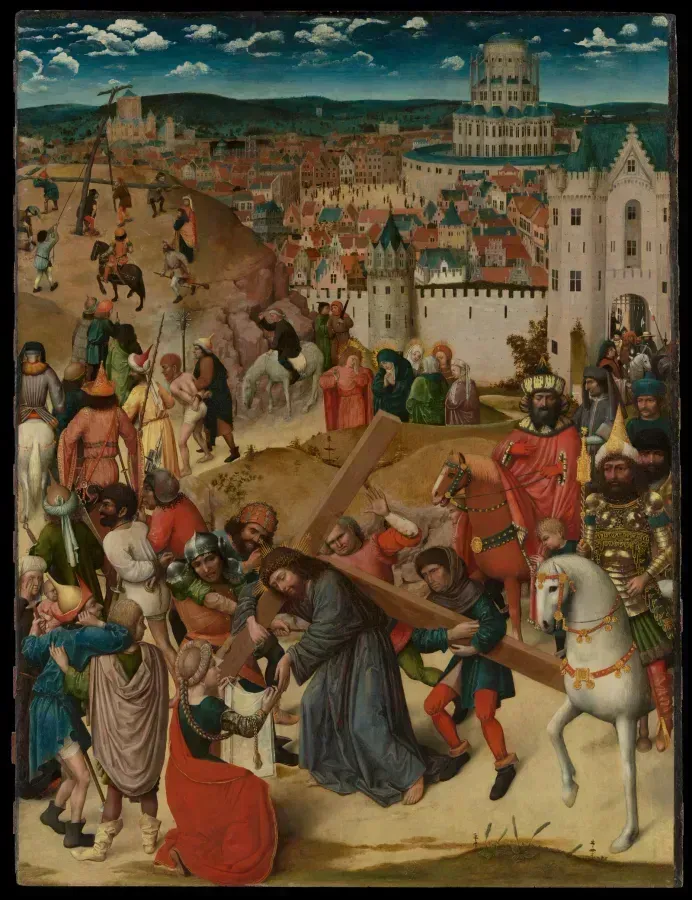
The crucifixion of Christ is a voluntary sacrifice for the sake of redemption (the Gospel of John: "No one takes my life from me, but I lay it down of my own accord"). Death is accepted knowingly. Suffering is not avoided. And through that suffering, resurrection, transformation, new knowledge for all humanity.
The difference from the Hanged Man lies in one detail: Christ dies and rises again. The Hanged Man simply hangs, without dying. But the archetypal structure is the same: voluntary sacrifice leads to transformation and revelation.
The Tau cross (on which the Hanged Man hangs) was used in early Christian symbolism as one of the prefigurations of the crucifix. The letter "T" comes from the Greek alphabet; in Hebrew it is the letter "tav", the last letter of the alphabet, a symbol of completion. Ezekiel was told to mark the righteous with the sign "tav".
This connection is no accident. Both the Hanged Man and the image of the crucifixion work with one archetype: wisdom through voluntary suffering.
Prometheus: the ancient sacrifice for humanity
Greek mythology offers a third parallel. Prometheus stole fire from the gods and brought it to humankind. In punishment Zeus chained him to a rock in the Caucasus. Each day an eagle came and tore out his liver. By night it grew back. Endless suffering.
Prometheus makes his sacrifice not for personal knowledge (as Odin did), but for the good of others. He knew he would be punished. He chose the sacrifice knowingly. And his being chained to the rock is a parallel to the suspension of the Hanged Man.
The structural likeness: stillness + voluntariness + suffering, accepted for the sake of something greater. The difference: Prometheus has neither a halo nor any release in the near future. His story is about an endless price. The Hanged Man speaks of a finite pause.
The asymmetry of Prometheus's sacrifice
Prometheus holds a special place in the Greek tradition precisely because his sacrifice is asymmetrical: he pays himself, and another wins. This is a fundamentally different structure of sacrifice from Odin's (sacrifice for personal knowledge).
Prometheus is a Titan, a predecessor of the Olympian gods. His name means "forethinker". He knew he would be punished for stealing fire. He acted in spite of that knowledge. This is neither naivety nor recklessness, but a conscious choice. The price was known, the choice was made.
Being chained to the rock is an even harsher form of stillness than suspension. Odin had a term (nine days). Prometheus had an eternity (until Heracles freed him). These are fundamentally different archetypes of sacrifice. Odin chooses an urgent initiation. Prometheus, a permanent martyrdom.
And yet both motifs are present in the symbolism of the Hanged Man. The upright Hanged Man is Odin: a finite pause with a known end. The reversed Hanged Man, in some readings, can point to the situation of Prometheus: a pause dragged on beyond what was needed.



Dionysus and the suffering gods
In the ancient mystery religions there was a whole class of "dying and rising gods": Dionysus, Osiris, Tammuz, Adonis. Each of them went through death, a descent into the underworld, and a return.
Dionysus, in the Orphic tradition, was torn apart by the Titans and made anew. His cult had symbolic death and resurrection as the central ritual of initiation.
The Hanged Man sits in this same archetypal field: a "temporary death" (stillness, pause, inversion) as the forerunner of renewal. Not a final death, that belongs to Arcanum XIII, but an intermediate state, a dying of the old without final disappearance.
This motif of "dying, but not all the way" is present in the shamanic traditions of many cultures: the future shaman lives through a symbolic death and dismemberment as part of initiation. After it, he returns with new powers.
Osiris, in Egyptian myth, was killed and dismembered by his brother Set, but remade by the goddess Isis and given immortality. His story is a harsher version of the same archetype: destruction precedes a higher form of existence. The Egyptian ankh, the symbol of life that has passed through death and reached eternity, carries exactly this meaning. That is why the ankh works so precisely as jewellery for someone living through the experience of the Hanged Man: it is a symbol not of death but of life that came through a symbolic death.
Osiris is also the god of the afterworld, who weighs the hearts of the dead. This chimes with Justice (XI), the arcanum that precedes the Hanged Man: first the weighing, then the suspending. The Egyptian parallel closes the circle.
In literature and film
The archetype of the Hanged Man can be found in culture long before, and well outside, Tarot. It is one of the most enduring narratives there is: the halt as a path to transformation. Precisely because the experience is universal, it surfaces in texts across eras and cultures with no direct link to Tarot.
"Zen and the Art of Motorcycle Maintenance" by Robert Pirsig (1974) is a book written after the author lived through a complete nervous breakdown, involuntary hospitalisation and a series of electroshock treatments. Pirsig literally lived through the annihilation of his former self and had to put himself back together. The book he wrote afterwards became one of the best-selling philosophical novels of the twentieth century. The loss of self gave him what could not have come any other way.
"The Alchemist" by Paulo Coelho (1988). Santiago, a shepherd, abandons his familiar life, loses his money, falls into captivity, and for a long time cannot move toward his goal. Each halt he reads as a defeat turns out to be exactly what is needed for the next step. Coelho works directly with the archetype of voluntary sacrifice for the sake of insight.
"Into the Wild" (1996 book, 2007 film). Christopher McCandless voluntarily gives up everything familiar (money, family, career) and goes into the Alaskan wilderness. The story is tragic but archetypally exact: a man chooses the total halt of ordinary life for the sake of something he cannot name but feels as a necessity. This is the Hanged Man taken to the extreme.
"Wuthering Heights" by Emily Brontë. Heathcliff withdraws into a long, suspended grief after losing Cathy, refusing the ordinary course of life, and from that point of utter renunciation the whole second half of the story unfolds. The pause here is darker than redemptive, but the structure of the suspended figure who sees what others cannot is the same.
"Siddhartha" by Hermann Hesse (1922). A young brahmin leaves everything: his family, his familiar path, his studies with the ascetics. He passes through a period of total stillness by a river, listening to its voice. It is the river, which flows and stays itself at the same time, that gives him the understanding the brahmin texts, the asceticism and the life of luxury never could. The pause by the river is the pure Hanged Man.
"The Monk Who Sold His Ferrari" (1997), a pop version of the same archetype. A successful lawyer survives a heart attack and goes off for a year to the Himalayas. He returns changed. The story is more pedestrian in execution, but the archetype is the same.
"Thinking in Pictures" by Temple Grandin. The autistic scientist describes how long stretches that those around her took for "doing nothing" were periods of intense inner processing. What looked like a pause from the outside was work from within. This is one of the most precise descriptions of the Hanged Man's experience in non-fiction: outer stillness does not equal inner emptiness.
"The Year of Magical Thinking" by Joan Didion (2005). The author describes the year after the sudden death of her husband. This is a forced Hanged Man: not a chosen pause, but an accepted one, in which everything is rethought. Didion does not romanticise grief, but she honestly describes how a forced halt reordered her understanding of life, death and memory.
The theme of the pause that seems like wasted time but turns out to be an investment runs through all of these texts. This is not coincidence but the structure of an experience that people live through and that they need.
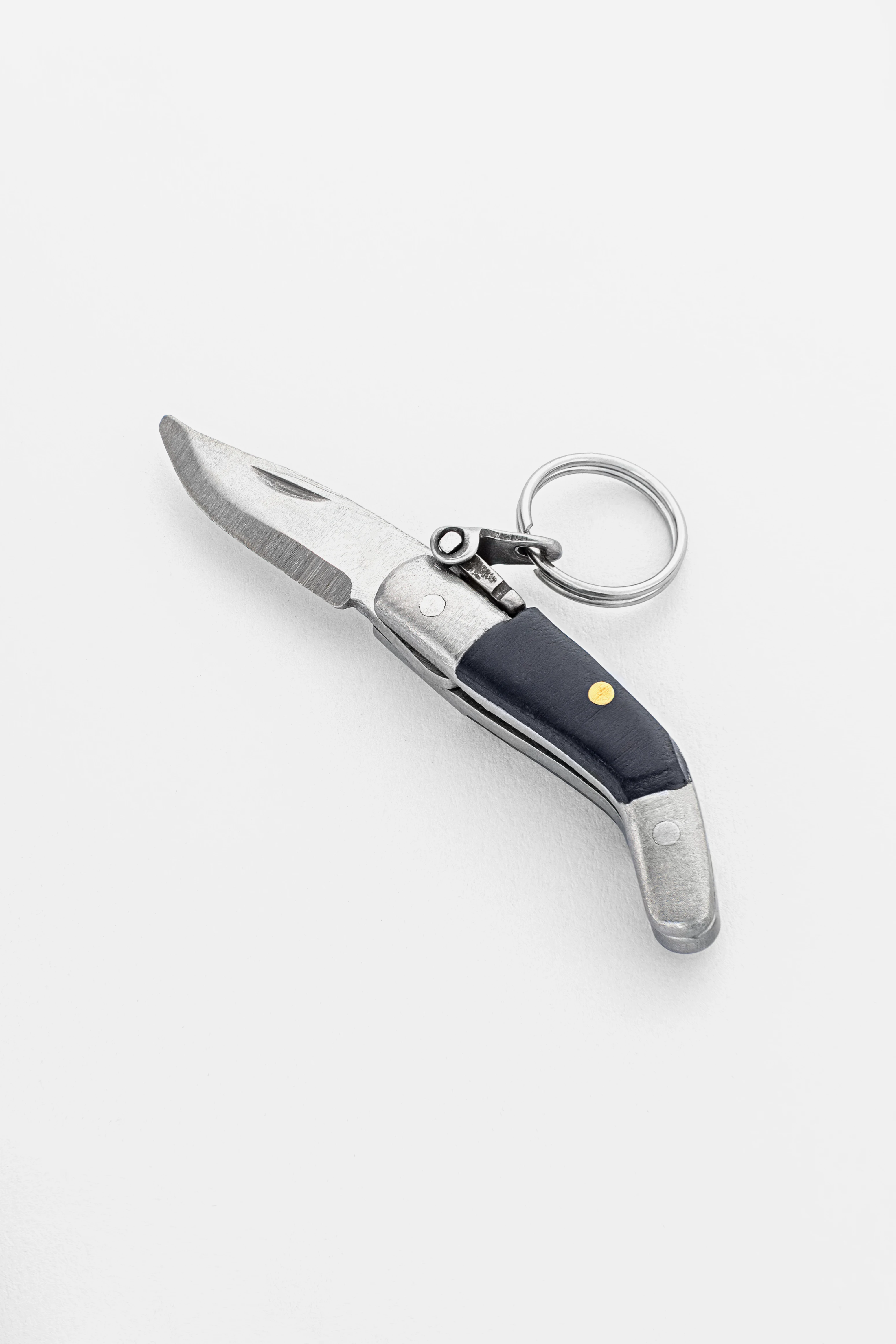
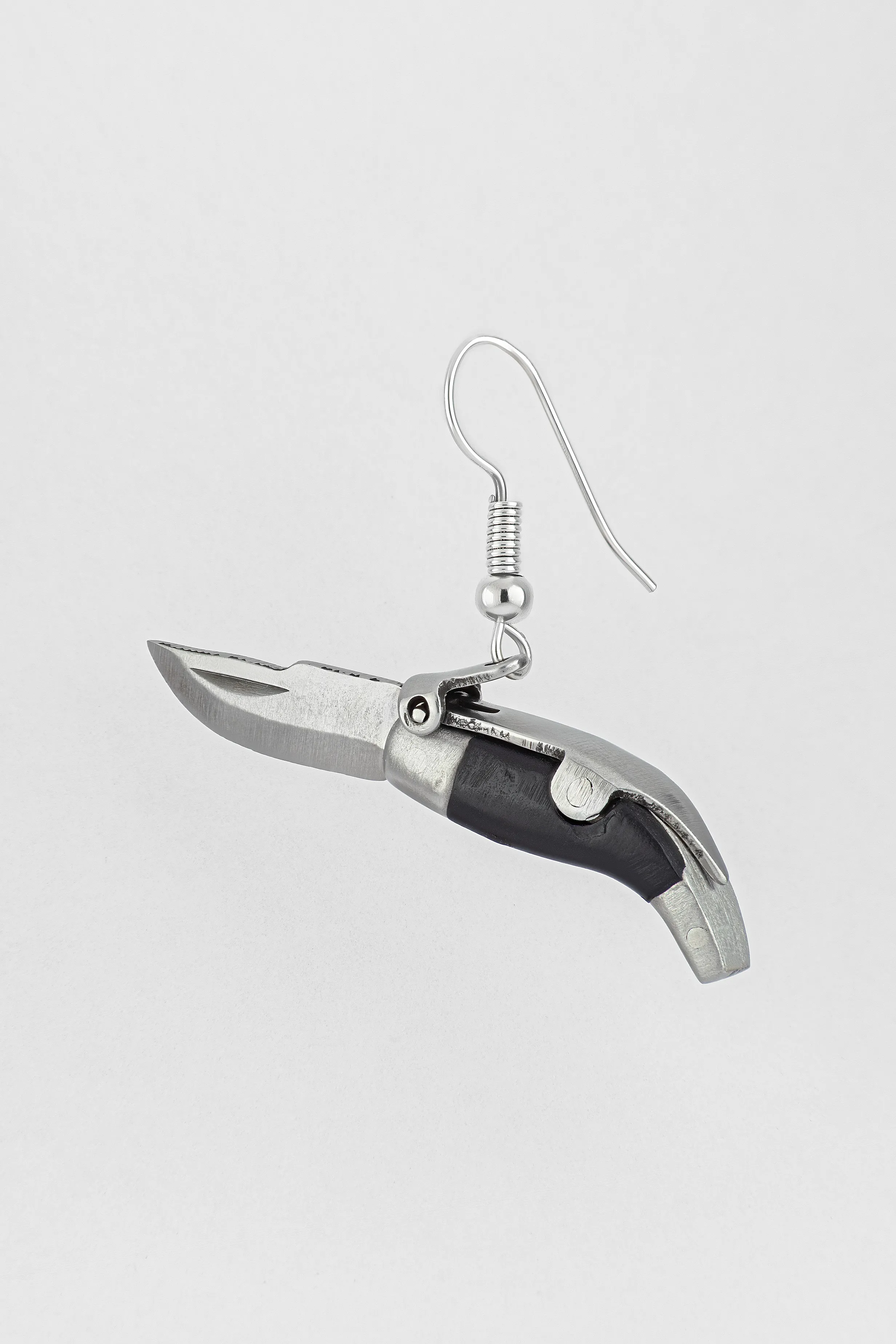
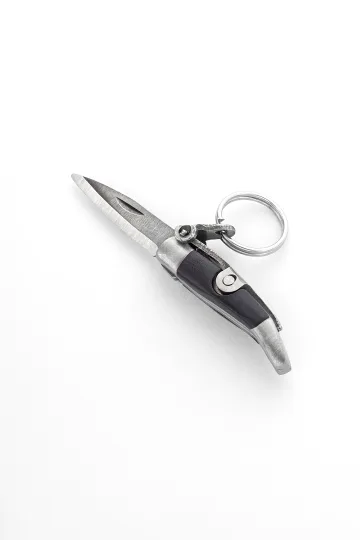
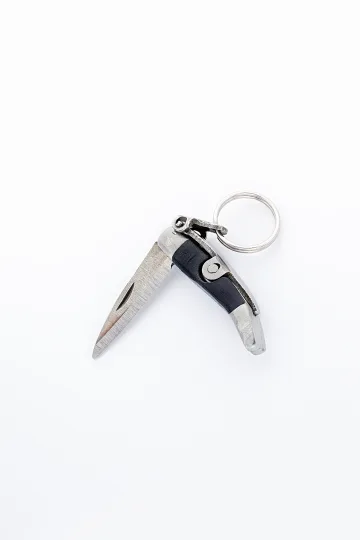
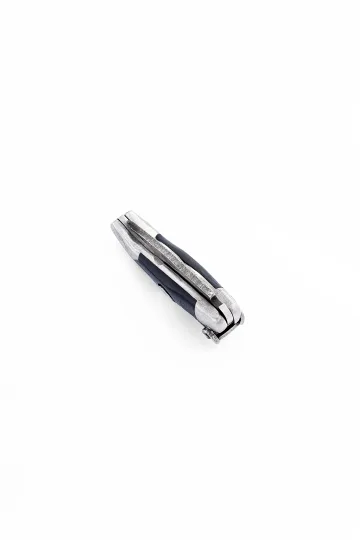
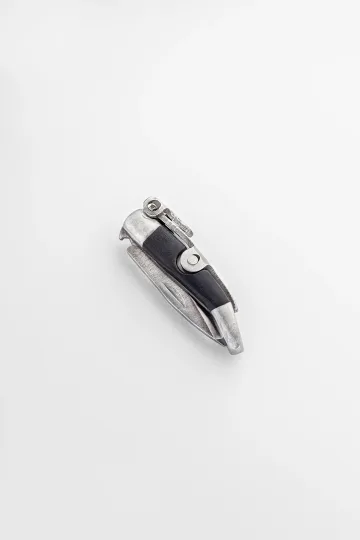
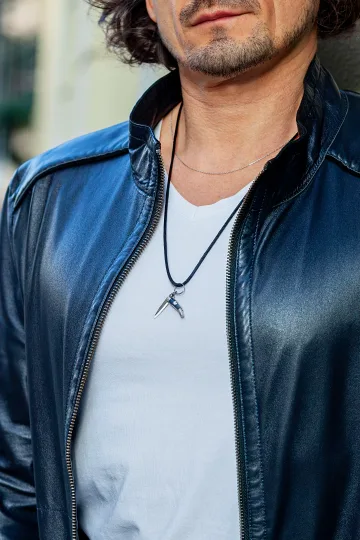
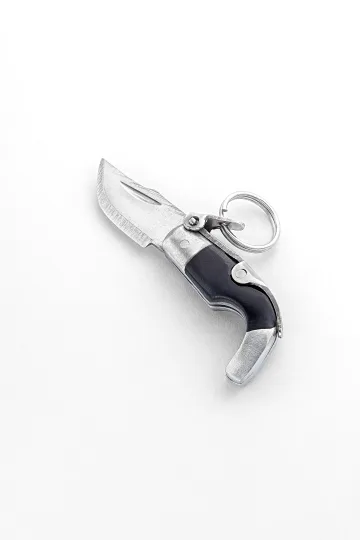
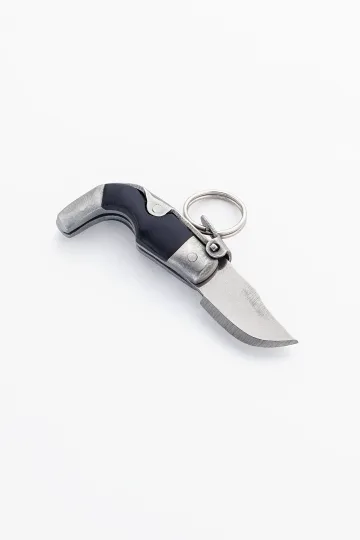
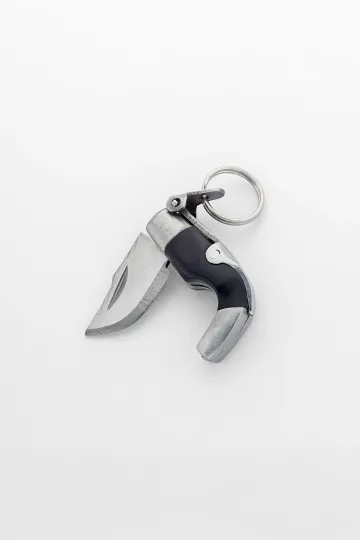
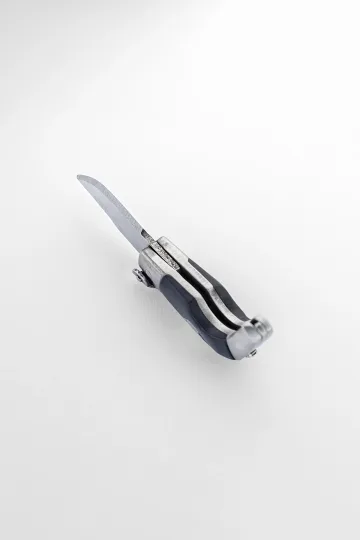
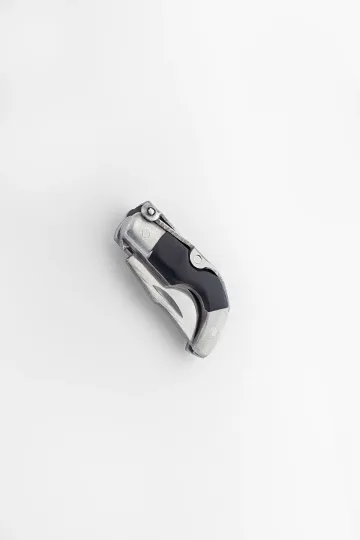
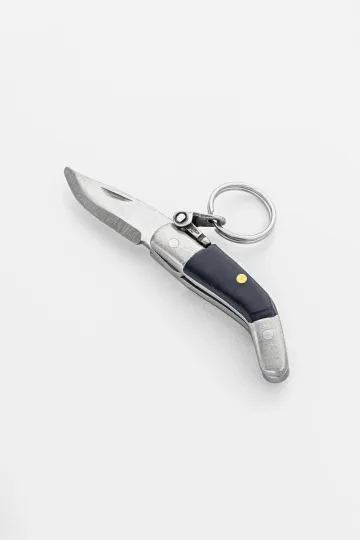
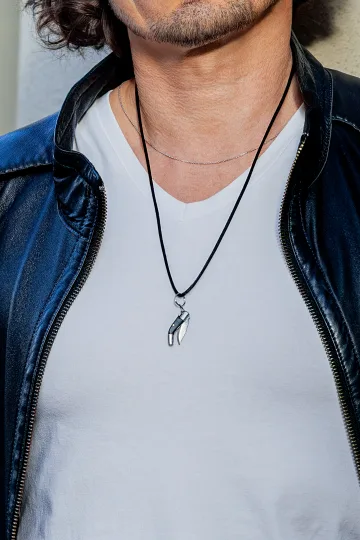
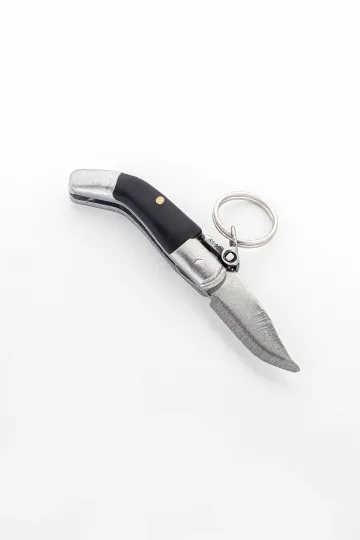
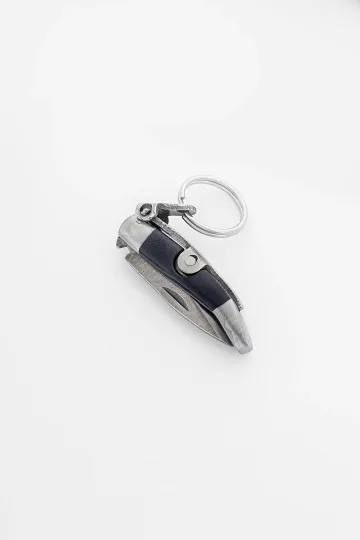
CAPAORA mini knife pendant
The 18th-century Spanish navaja in miniature: 40 mm of stainless steel, a real folding mechanism and a Palanquilla lock that clicks. An affordable gift to remember.
Authentic · Ships from Spain · 14-day returns
Jewellery: symbols that work with the theme of the Hanged Man
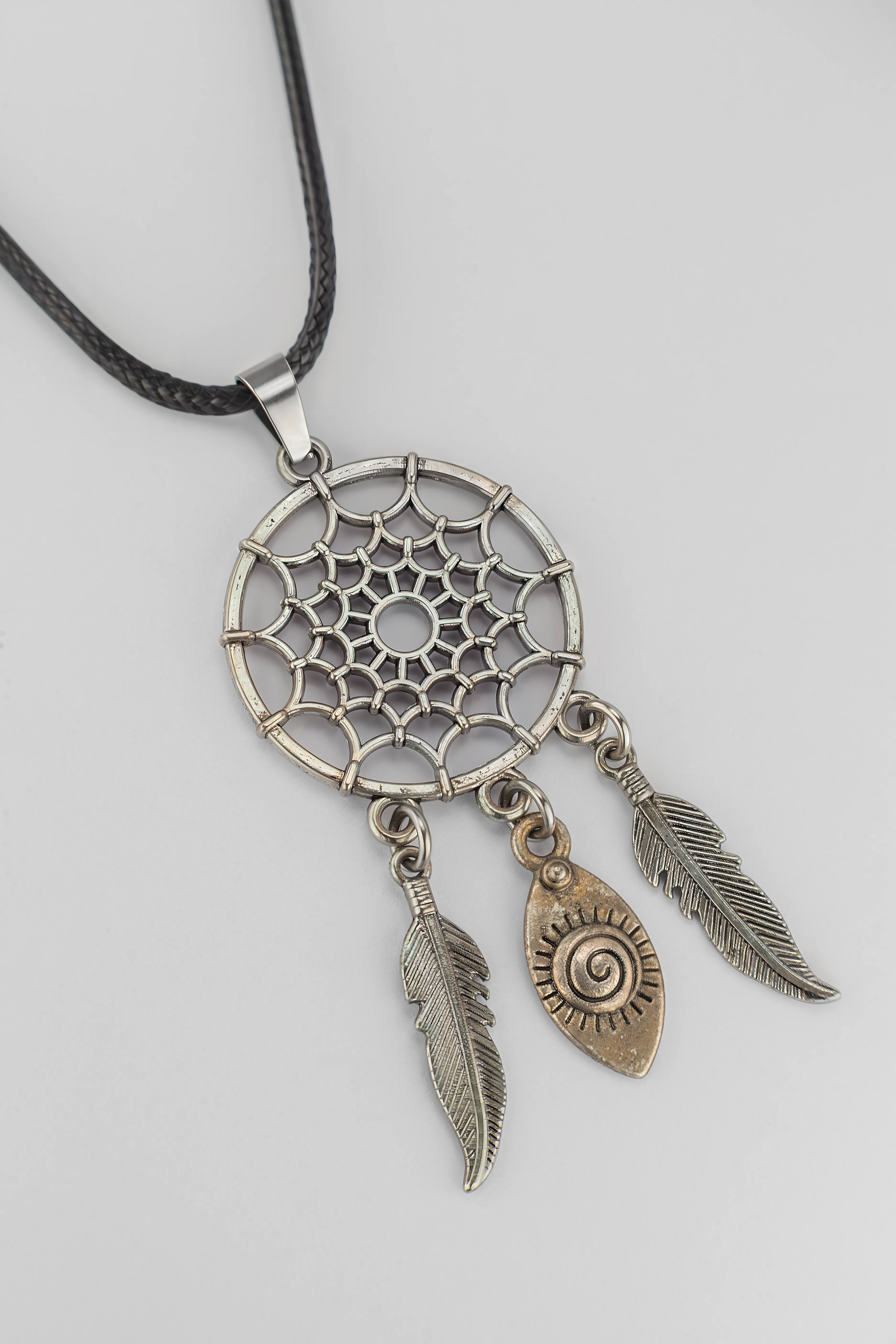
The symbolism of the Hanged Man is hard to render literally. A pendant in the shape of the inverted figure exists (especially in Tarot culture), but it works more as a declaration than as jewellery with a personal meaning. More interesting are the symbols that engage the same archetypal theme: inversion, sacrifice, pause, the link between earth and sky.
The ankh: the key to the paradox
The ankh, the Egyptian cross with a loop, is one of the most exact symbolic answers to the theme of the Hanged Man. The ankh joins opposites: the T-shaped cross (the Tau cross, the very one on which the figure hangs) and the loop above, which in Egyptian iconography meant life, eternity, linkage.
The ankh is literally the "key of life", and it is built as a paradox: to gain life (the loop above), you have to pass through the cross (the T below). The structure mirrors the Hanged Man: through being lowered, toward the light. Through sacrifice, toward knowledge.
In jewellery the ankh long ago moved beyond Egyptology. It is worn by people for whom the idea matters that life and death are not opposites but two sides of one process. For someone living through the experience of the Hanged Man, the ankh speaks exactly.
The tree of life: root and crown
The tree of life is a direct nod to Yggdrasil and to the living tree of the Waite card. As a symbol the tree works in two directions at once: the roots go down, into the earth, into the dark; the crown reaches up, toward the light. The tree is a vertical axis between two worlds.
The Hanged Man hangs from a living tree precisely because a link to both poles is needed. The roots (what is hidden, deep, instinctive) come closer when the head is lowered. The crown (light, knowledge, the higher) is visible only when you look from below upward.
A pendant in the shape of the tree of life suits those living through the period between "down" and "up", that is, the experience of the Hanged Man itself.
The labyrinth: a willing wandering
The labyrinth, in the classical sense (not a maze of dead ends, but a single path with no alternatives), is an image of a way that cannot be cut short. You have to walk the whole route, all its loops and turns, without knowing when you will reach the centre.
The Hanged Man and the labyrinth are one archetype: you cannot skip the period of the pause. You cannot cut the corner between Justice and Death. You have to hang on the tree for as long as it takes.
A piece with a labyrinth suits people who understand: they are in the middle of a process, and the process cannot be hurried. It is an honest symbol for those in the middle of their own pause.
The key: secret knowledge beyond the threshold
The key is a symbol of access to what is usually closed. The Hanged Man opens a door that cannot be opened the ordinary way. Only in a state of inversion, only by giving something up, only through the pause, does what would otherwise stay shut open.
A key pendant is not worn as ornament for practical life. It is a symbol of knowledge that lies beyond the threshold of the familiar. Knowledge paid for with the price of a halt.
The Tau cross: the ancient correspondence
The T-shaped cross (the Tau cross, also known as the Crux commissa or the Anthony Cross) is the card's most direct symbol.
The history of the Tau cross crosses several traditions. In Egyptian hieroglyphics the "djed" sign (support) had a form close to a T. Later the Tau cross became one of the symbols of the Egyptian tradition, appearing in images as part of the key of the ankh (the ankh being a Tau cross with a loop). In the Old Testament tradition the letter "tav", the last letter of the Hebrew alphabet, was used as the seal of God (the book of Ezekiel). In early Christian tradition the Tau cross was one of the prefigurations of the crucifix, and it was with this cross that Francis of Assisi marked his letters and drawings. Today the Tau cross is regarded as the symbol of the Franciscan order.
In jewellery the Tau cross appears less often than the ankh or the Latin cross, but for those who know its history it carries the most direct link of all to the iconography of the Hanged Man. It holds several historical layers: an Egyptian hieroglyph, the last letter of the Hebrew alphabet, one of the prefigurations of the Christian crucifix.
The Hanged Man in different Tarot traditions today
The world market of Tarot decks runs to thousands of editions. The image of the Hanged Man changes with the artist and the tradition, but the archetypal core stays stable.
The very range of interpretations says something important: the archetype is so robust that it survives any reimagining of the image. Draw a bat, draw a yogi, draw an abstract figure in water, the essence stays the same: voluntary inversion, calm, suspension as a path to knowledge.
The Thoth deck (Crowley-Harris, 1943/1969). The most geometrically abstract version. The figure dissolves into flows of water, one leg coiled by a serpent. Crowley added the planetary symbol of Neptune and the Hebrew letter Mem (water) to the card. In esoteric circles the Thoth deck is considered harder to interpret, but it is the one that kept the strongest link to the Kabbalistic tradition.
The Thoth deck in Harris's rendering. Frieda Harris used the principles of projective geometry (the system of Rudolf Steiner) to create spatial illusions. The Hanged Man in this version literally dissolves into space, which deepens the meaning of the dissolution of the ego.
Modernised feminist decks. In decks like Slow Holler, Linestrider or the Wild Unknown, the Hanged Man is often shown as a neutral or female figure, sometimes simply as an animal at rest (a bat, hanging head down). This strips away the historical connotation of execution and leaves the pure meaning of the voluntary pause.
Japanese tarot. In several Japanese versions the Hanged Man is shown as a figure meditating in an inverted yoga pose (something like sirsasana, the headstand). This removes any hint of execution and concentrates the meaning on the bodily practice of changing perspective.
Animal and nature decks. In decks like the Animal Spirit, the Wildwood or the Botanica, the Hanged Man is rendered through the image of a beast or a plant in a seasonal pause: a bear in winter sleep, a leafless tree, a cocoon. This translates the human archetype into a natural cycle, making the pause part of an everyday rhythm rather than a rare extreme state.
Minimalist graphic decks. In contemporary author decks like Mystic Mondays, Sasuraibito or the Wooden Tarot, the Hanged Man is pared down to a geometric composition: a figure marked out in lines, an inverted triangle, a silhouette with no detail. This works for people who find Waite's iconography heavy and who feel closer to abstract symbolism.
For all the variety of interpretation, three elements stay stable across almost every version: suspension by the leg, a calm face (or its equivalent, the absence of any sign of suffering) and a link to a living tree or to nature. These three make up the archetypal core of the card.
Leave your email, we'll send your discount code. No spam, unsubscribe anytime.
The code arrives by email, valid on your first order.
Who draws the Hanged Man: a psychological portrait
If Tarot is taken as a projective tool (a mirror of an inner state rather than an oracle), then the Hanged Man comes up at a moment when a person is in one of several situations.
A transition between identities. The person is no longer who they were, but has not yet become who they will be. It might be a change of profession, the end of a long relationship, a move to another country. The familiar markers of "who am I" no longer work, the new ones have not yet formed. It is this in-between state that the Hanged Man describes most precisely.
A period after intense activity. Several years of active work, achievement, movement, and then a sudden loss of energy or meaning. Not depression, but the exhaustion of a former direction. Body and mind say: this path is walked, a new one is needed.
A forced halt. Illness, the loss of a job, a pandemic, the birth of a child, circumstances that make the familiar pace impossible. The Hanged Man often appears in the readings of people whom life has stopped by force. The card's question: do you accept this halt, or do you keep fighting what cannot be changed?
A spiritual turn. A person who has long moved in one direction begins to feel they need something fundamentally different, on the spiritual or existential plane. Not a crisis of faith in the usual sense, but a widening of the frame of understanding. The Hanged Man here is the card of precisely that widening.
The moment before a big decision. Sometimes the Hanged Man comes up on the eve of a decision, not after it. It says: do not rush. Gather more information. Look from another angle. A decision made from the state of the Hanged Man (after pause and rethinking) will be different, and better.
The Hanged Man in everyday life: concrete situations
An abstract analysis of symbolism is useful, but the Hanged Man as a lived experience has concrete forms.
A creative crisis. A painter, writer or musician who cannot make anything new. The old language is exhausted, the new one not yet found. Attempts to "force" creativity through will do not work. The only way through it is the pause, often a long one. It is out of such pauses that breakthroughs are born: Picasso before Cubism, Tolstoy before "Anna Karenina" after his crisis of faith, Bowie before "Low" after a period of cocaine-fuelled isolation in Los Angeles.
Burnout at the peak of a career. Research shows that burnout most often catches not failures but people at the point of maximum success. It is just when everything is working, when what you were striving for has been reached, that body and mind can send the signal: this is not it. The Hanged Man at this moment offers not the destruction of a career but an inversion of the angle of view: what actually matters?
Caring for a sick relative or a child. A period of caring for someone who needs your full presence is a forced pause from the familiar rhythm. Life is literally turned upside down. In this state there often happens a reassessment of priorities that then shapes the next stage of life.
A long journey or a sabbatical. When a person deliberately takes a break from a career, for a year or more, to travel, to volunteer, or simply to live at a different pace. The Hanged Man is the card of such a year.
Meditative practices. Intense silent retreats (vipassana, Zen sesshins, the Ignatian exercises of Loyola) are a literal embodiment of the Hanged Man: voluntary stillness for a set term for the sake of a change in perception. No movement, no social roles, no distractions. Only presence. The first two or three days of a silent retreat are the classic resistance: the mind wants to run, to think about other things, to know when it will end. Then something shifts. That is the halo of the Hanged Man: it appears not at the beginning but after the resistance lets go.
A period after losing a job. A sudden loss of a job, especially one bound up with a person's identity, is a forced Hanged Man. Painful, because not chosen. But structurally the same: the familiar way of existing suddenly disappears, and a new angle of view has to be found. It is in such periods that many people change both their work and the direction of their life.
Psychotherapy and work with an analyst. Deep therapy requires a temporary plunge into what is usually kept outside consciousness. This too is a form of the Hanged Man: to look, of your own will, from below upward at what you usually keep under control.
How to tell the Hanged Man's experience from simple procrastination
One of the most common questions: how do you know whether a pause is productive, rather than procrastination or avoidance?
Signs of the Hanged Man's productive pause:
- A sense of inner movement amid outer stillness. Something is happening, even if it cannot be seen from outside.
- Periodic flashes of understanding or shifts in perception. The halo appears.
- Acceptance of uncertainty without a panicked need to "close" it.
- A readiness for the result to be different from what was expected.
- A link to the theme: the person knows what the pause is for, even if they do not know when it will end.
Signs of being stuck or procrastinating:
- The pause is used to avoid a specific decision or action.
- The person did not accept the pause but got stuck in it against their will.
- There is no sense of inner movement, only anxiety or emptiness.
- The person constantly thinks about when they will finally "be able to continue".
- The pause is used as an excuse for a specific fear.
The difference is not always obvious, and sometimes what starts as procrastination turns into a productive pause, if the person is able to look honestly at what they are avoiding. Therapy often helps untangle this.
An important test: if the pause were guaranteed to be productive (that is, you knew for certain that in three months you would come out with the answer you need), would you accept it? If yes, then the resistance is not to the pause but to the uncertainty. The upright Hanged Man speaks of exactly this: I cannot guarantee the result, but the halo will appear.
The Hanged Man and the body: the physical embodiment of the pause
An interesting aspect that is rarely discussed: the Hanged Man has a strong bodily dimension.
The inversion on the card is a literal turning of the body upside down. In body-oriented practices (somatic therapy, body workshops, yoga) the principle of inversion is used to change perception: the headstand, forward folds, positions in which the head ends up below the heart. Blood flow changes, the familiar sensory experience is disrupted, perception shifts.
This is not a metaphor. It is physiology. When the body is in an unfamiliar position, the brain is forced to process information differently. The usual patterns of perception are temporarily disrupted.
The yogic inversions (sirsasana, sarvangasana) are practised in traditional hatha yoga for exactly this purpose. They build flexibility, and they change the angle of view, both literally and figuratively.
A meditative practice in the pose of the Hanged Man (not literal but symbolic, where the person deliberately takes up the position of the "one who does not know", the "beginner") also works through the body: slowing the breath, relaxing the muscles of control, giving up defensive postures.
In jewellery this bodily aspect is rarely reflected directly. But a pendant with an ankh or a tree of life, worn during a period of conscious pause, can work as a bodily anchor, a reminder: you are now in a state of inversion, and that is fine.
Choosing a piece with a bodily correspondence to the theme: the ankh is good to wear at the throat or near the heart, both places tied to voice (expression) and feeling (experience). A tree of life pendant on a long chain sits closer to the solar plexus, an area that many body-oriented practices link to the sense of self. A ring with a symbol of the pause, a reminder at every glance at the hands, which right now are not acting but waiting.
The Hanged Man and time: how the archetype works with time
The Hanged Man has a particular relationship with time that sets it apart from the other arcana.
Most arcana work in linear time: before and after, cause and effect, action and result. The Hanged Man suspends this linear movement. It says: time now is not linear, it circles.
This matches what neuroscience tells us about how deep rethinking works. When a person reassesses past experience or forms new structures of meaning, the brain does not move in a line. It goes back, passes through the same points differently, finds connections that were not visible on the first pass. This is not a loss of time. It is a different form of working with time.
Meditative traditions describe similar states: in deep meditation linear time dissolves. Odin's nine days on Yggdrasil could have been lived as a single moment or as an eternity, the tradition does not say. What matters is that at the end of that non-linear time the runes came.
For people used to measuring productivity by linear results (done/not done, written/not written, earned/not earned), the experience of the Hanged Man is especially hard. It asks you to agree that the work is now happening on a different level, and its results will appear later, in a different form than expected.
In readings: when the Hanged Man appears
In a reading the Hanged Man rarely carries a flatly bad meaning. Most often it speaks of a state or of a need.
An important note on working with the card in a spread: the Hanged Man is especially valuable not as an answer but as a context. When it appears in the position of "what will help" or "advice", it is one of the most concrete answers in the deck: stop, look differently, give something up. When it appears in the position of "what is in the way", it means the person is resisting a necessary pause. When in the position of "outcome", a period of initiation lies ahead, one worth preparing for.
Questions about career and action. If the Hanged Man comes up for the question "what should I do", the answer often reads as "nothing, for now". The moment for decisive action has not yet come. A pause, a rethinking, an accumulation of understanding is needed.
Questions about the spiritual path. One of the most direct answers: you are living through a period of initiation. What feels like a loss or an inaction is part of a longer process. Trust it.
Questions about relationships. The Hanged Man often appears as a signal of the need to reconsider the angle of view. What you see in a relationship from your usual position may look entirely different if you try to stand in the other person's place.
Questions about loss and crisis. This is the card of living through a hard period productively. Not avoidance, not a quick exit, but acceptance of the state of being "inside it". The halo on the head says: there is light in this state, look for it.
The "advice" position in a spread. When the Hanged Man stands in the advice position, it almost always means one thing: stop. Give something up. Look differently. Do not rush.
The Hanged Man in popular culture
Arcanum XII appears in mass culture less often than the Fool or Death, but where it does appear, it is almost always exact.
In music. Several albums and tracks use the image of the Hanged Man directly as a metaphor for a period of uncertainty between two stages. Radiohead, whose music often works with the theme of suspension and the impossibility of moving in the familiar direction, is named by Tarot writers as one of the most "hanged" of artists. The period between "The Bends" and "OK Computer", a creative suspension between the pop format and something fundamentally new, ended with a halo.
In visual art. Salvador Dalí, whose work with inversion and surreal logic is plain, designed his own Tarot deck in the 1970s. His Hanged Man is a figure dissolving into space, its outlines lost. What interested Dalí was precisely the moment of the dissolution of form, which suits the Neptunian nature of the card perfectly.
In film. Films about voluntary isolation ("Into the Wild", "Get Out", "127 Hours", "Gravity") work with the same archetype. The hero is stuck in a situation with no quick way out. The familiar tools do not work. The only way lies through accepting the state you are in. In "Gravity" the literal suspension of Sandra Bullock's character in open space accompanies a psychological journey from accepting death to the will to live.
In horror and fantasy. The image of a suspended character who sees what others cannot is used in countless genre texts. In Neil Gaiman's "American Gods" Odin, one of the central figures, and his story work directly with the myth of Yggdrasil. Suspension as a way of gaining knowledge of the secret world is one of the enduring narrative moves of the fantasy genre.
Send a friend a discount code, they save on their first order.
The Hanged Man as a gift: when to give jewellery with this theme
Jewellery with the symbolism of the Hanged Man is not the most obvious gift, but at the right moment it can land more precisely than any other.
For someone in a creative crisis. A painter, writer or musician who is stuck. A pendant with an ankh or a labyrinth says: your halt is not the end. It is part of the path. The knowledge will come.
For someone living through burnout. Not words of consolation, but a symbol that names the state honestly: you are the Hanged Man right now. That is fine. The halo will appear.
For someone before a big decision. A piece with a symbol of the pause is a reminder not to rush. The right moment will come after rethinking.
For someone who has come out of a hard period. A retrospective gift: you passed through a period of the Hanged Man and came out with insight. An ankh or a tree of life as a memory of that experience.
For yourself, at a moment of conscious pause. Buying a piece for yourself at the start of a planned retreat, a sabbatical or a period of rethinking is a ritual sealing of intention. "I choose this pause deliberately."
When giving, it matters to name the meaning aloud. A piece with a labyrinth can be just a piece in itself. But if you say, "I chose the labyrinth because I understand that you are in the middle of a path that cannot be cut short", the symbol starts to work differently.
How to wear jewellery with the theme of the Hanged Man
The symbolism of the pause and of inversion is not a loud theme. It works better in something worn close to the body that needs no explaining.
A pendant under your clothes. An ankh or a small labyrinth on a fine chain, hidden under a jumper or a shirt. It is a personal symbol that only you see. A reminder to yourself, not a declaration.
Plain silver, unpolished. Matte silver or oxidised sterling carries the theme of inner work better than bright, polished metal. A dark patina brings out the detail and creates a sense of depth.
One symbol, not several. Unlike the symbolism of the Fool (where a set of amulet pendants works), the Hanged Man is a single symbol. One piece, one meaning. Overloading with symbols dilutes the theme.
Long-term wear. A piece with an ankh or a tree of life, put on for the length of a conscious pause, becomes an anchor of that period. When the pause ends, the piece stays as a memory of the initiation. You can go on wearing it as a reminder of what you came through.
Metal and stones. Silver suits the lunar, intuitive side of the Hanged Man. Blue stones (moonstone, aquamarine, lapis lazuli) are the elements of water and Neptune. Dark stones (onyx, black tourmaline) are depth and uncertainty. Mother-of-pearl is the dissolving of boundaries.
Buying it as a gift? Each one arrives ready to give.
 A branded Zevira box and a little card come with every order.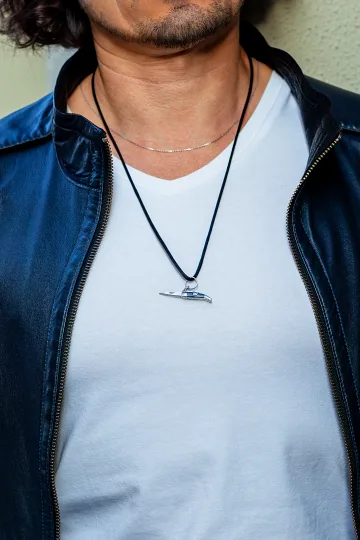




Card combinations
The Hanged Man + the Fool (0). A rare pair, but exact: a person has begun a new path and at once found themselves in a pause. Or the Fool is only getting ready, and the Hanged Man says: stop and rethink first. A leap without a preliminary pause may be premature.
The Hanged Man + the Hermit (IX). A deepening of the theme of inner search. The Hermit is solitude with the lantern of wisdom. The Hanged Man is suspension for the sake of insight. Together they speak of a deep period of seclusion and spiritual work.
The Hanged Man + Strength (VIII). Strength is the taming of the inner beast through gentleness, not through force. Strength together with the Hanged Man means: the sacrifice to be made is precisely the giving up of the forceful approach. Gentleness as a tool.
The Hanged Man + the Star (XVII). A very positive pair. The Hanged Man is the pause, the Star is hope and recovery after a hard period. The Star says: there is light ahead. The Hanged Man says: first spend time in the dark.
The Hanged Man + Death (XIII). An expected pairing in the numbering (12 and 13). Together they speak of an inevitable crossing: the period of the pause ends, transformation lies ahead. Do not be afraid. The Hanged Man was the preparation. Death is not the end but a door. Read about Death in Tarot.
The Hanged Man + the Moon (XVIII). The dark night of the soul. Illusions, the subconscious, fears. The pause happens amid uncertainty and fog. A difficult pairing, but an honest one: this is what real inner work can be like. The Moon does not give clarity, it lights just enough for the next step to be possible, but no more. The Hanged Man in these conditions learns to trust not sight but feeling.
The Hanged Man + Temperance (XIV). Arcanum XIV, which follows Death (XIII), speaks of integration and balance after transformation. The Hanged Man together with Temperance points to the right dynamic: pause (12), transformation (13), integration (14). The person is moving correctly through the natural cycle, not trying to skip the stages.
The Hanged Man + the World (XXI). A distant but important marker: the pause of the Hanged Man leads to completion and integration. Not to emptiness. To fullness. The World is the end point; the Hanged Man is one of the necessary stages of the path to it.
FAQ
Is the Hanged Man a bad card?
No. Upright it is one of the deepest cards of growth in the deck. The discomfort of its appearance often comes from the fact that it asks for a halt at the very moment you want to act. But it is the discomfort of growth, not a catastrophe.
Does the Hanged Man foretell physical danger?
No. This is an archetypal card, not a literal one. The suspension on it is a metaphor, not a prediction. In readings the Hanged Man speaks of an inner state or of necessary life pauses, but not of physical threats.
Is it a card about depression?
Not in the clinical sense. The Hanged Man describes a voluntary or accepted state of stillness. Depression is a state in which a person sees no meaning in movement. The Hanged Man is a state in which a person sees meaning in the pause. The difference is subtle but fundamental. If the card comes up during a real depression, it is a signal to pay attention, not to romanticise the state.
How long should the Hanged Man's pause last?
Exactly as long as it needs to. One of the hardest aspects of the archetype: it has no schedule. Odin hung on Yggdrasil nine days. Pirsig searched for himself for several years. The painter from our opening took three months. The pause ends when what it was for has already been received.
Can you wear jewellery with the symbol of the Hanged Man?
Yes. A direct image of the card exists in jewellery and has its admirers. But more often the symbols that match the archetype work better: the ankh, the tree of life, the labyrinth, the Tau cross. They carry the meaning without illustrating the scene directly.
The Hanged Man and the Hermit: what is the difference?
The Hermit (IX) is an active search with a lantern. He walks, even if alone. The Hanged Man (XII) is total stillness. The Hermit seeks; the Hanged Man waits. Both are about inner work, but in different ways.
The Hanged Man came up three times in a row. What does that mean?
The repetition of a card traditionally strengthens its meaning. Three Hanged Men in a row say: the pause is inevitable and it is already happening. Resisting it only drags out the process. What exactly needs to be given up, the neighbouring cards answer that.
What does the Hanged Man mean in the position of the past?
A past pause that became the foundation of the present. Something was sacrificed. Something was rethought. It is an experience you can draw on as a resource for the current situation.
Can you "speed up" the experience of the Hanged Man?
No, and attempts to do so are counterproductive. Odin could not have won the runes in a single day. Initiation has its own length. But you can create the conditions for living the pause more consciously: meditation, retreat, creative work, body work, therapy.
How do you explain the Hanged Man to a sceptic who does not believe in Tarot?
The card describes a real human experience: a period of forced or voluntary halt through which a new understanding comes. This is not esotericism but a narrative that exists in every culture (Odin, Prometheus, Christ, Buddha under the Bodhi tree). Tarot simply gives this experience a precise visual image with six hundred years of history.
The Hanged Man and Buddha under the Bodhi tree: is it the same story?
A very similar structure. Siddhartha Gautama sat under the Bodhi tree without moving until he reached enlightenment. He did it voluntarily, giving up his former identity of prince and ascetic. The inversion in Buddha's case is not physical but mental: he turned around the usual way of seeking truth, from action to non-action. The halo of the Hanged Man points directly to the Buddhist iconography of enlightened beings.
What if the Hanged Man comes up again and again over months?
This is a signal that the period of pause or rethinking is lasting longer than expected. The neighbouring cards can hint at what exactly is holding you in suspension. Sometimes a person is stuck because they are resisting a necessary letting-go (a card in the obstacle position will show this). Sometimes the pause is simply longer than is comfortable (positive cards in the outcome position).
Is the Hanged Man a card about loneliness?
Not necessarily. The Hanged Man is about stillness and a change of viewpoint, but not necessarily about isolation. You can live through the experience of the Hanged Man in a relationship, in a team, in a family. Loneliness is more the theme of the Hermit (IX). The Hanged Man can be alone, but need not be.
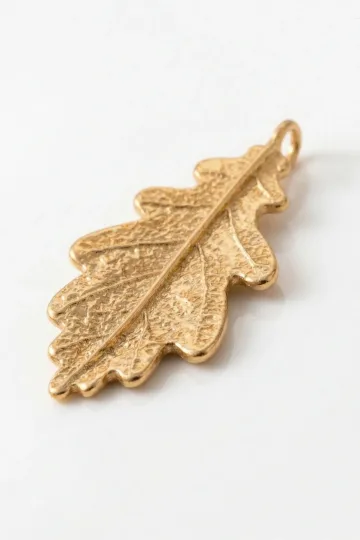
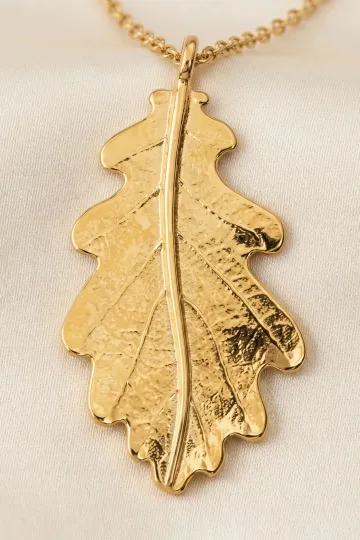
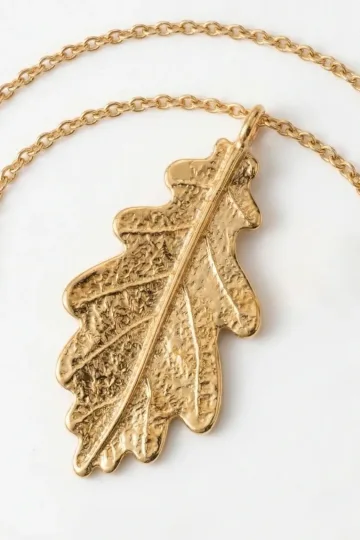
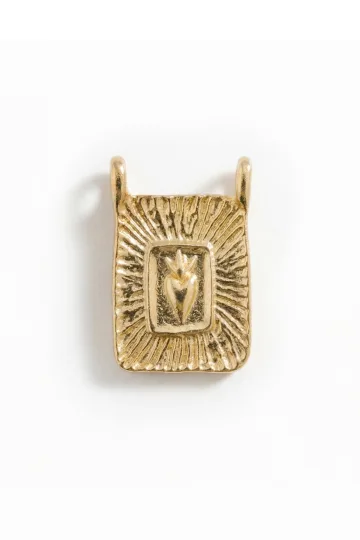
Wear the symbol, don't just read about it. These are in stock:
Conclusion
The painter came back from her three-month pause and made her best work. The volunteer came back from Kenya and could not explain what had changed, but something had. The manager with burnout came out of it a different person.
None of them planned the experience of the Hanged Man. No one thought, "I need an initiation through stillness". They simply found themselves in a state where movement had become impossible or wrong. And through that state they passed to something that could not have come any other way.
The twelfth arcanum is one of the most honest in the deck. It does not promise quick solutions. It does not say "everything will be fine". It says: right now you need to hang suspended. Give something up. Look differently. The light around the head appears not at the start of the period but in the middle of it, once the angle of view has already changed.
This card is six centuries old. In that time millions of people have passed through it, recognising in the inverted figure their own state. Artists before a breakthrough. Scientists before a discovery. People before a change in the course of life. All of them gave something up. All of them received something in return.
Not because the card is special. Because the experience is universal.
Odin hung for nine days and won the runes, the secret knowledge of the language of the world. Siddhartha sat under the Bodhi tree and won enlightenment. Pirsig lived through the destruction of himself and wrote a book that became part of the culture. Each of them passed through a form of the Hanged Man.
A piece with an ankh, a labyrinth or a tree of life does not make you Odin. It says: I understand what I am doing right now. I accept the pause consciously. The light will come when it comes.
That is enough to begin with. The pause will add the rest.
The twelfth arcanum describes one of the most universal of human experiences: the moment when you have to stop, give something up and look differently. It is not a punishment and not a catastrophe. It is a structural necessity before transformation.
Odin hung on Yggdrasil nine days and won the runes. Prometheus accepted stillness for the sake of fire for humankind. Christ accepted the cross for the sake of something greater. The suspended figure gives up the old and, through it, finds release.
All of them gave something up. All of them received something in exchange.
A piece with an ankh, a labyrinth or a tree of life does not "charge" you with the energy of the Hanged Man. It speaks of what you already know and what you are already going through. Or it reminds you that the pause is not a loss. It is an investment.
Silver, gold, wedding bands, symbolism, matching sets.
About Zevira
Zevira makes jewellery in the artisan tradition of Albacete, Spain. Each piece in the symbolic collections is created with an understanding of the history and meaning of the symbol, not as decoration but as a wearable language. Tarot symbolism is one of the steady motifs of our collections: from the ankh and the tree of life to pendants made for the energy of particular arcana.
What you can find with us for the symbolism of the Hanged Man:
- Pendants with the ankh, the T-cross and the loop of life together
- Pendants with the tree of life, a direct link to Yggdrasil
- Pendants with the labyrinth, the path that cannot be cut short
- Pendants with the key, the secret knowledge beyond the threshold of the pause
- Fine chains with the Tau cross, the historical form of the card
Each piece is made by hand by a master, with the option of personal engraving. We work in sterling silver and in 14-18K gold. An engraving on the back, a date, coordinates or a single word, turns any of these symbols into a personal marker of a particular period of life.