The Strength Card in Tarot: Meaning, History and Jewellery Inspired by Arcana VIII
A beast you do not need to defeat
Five centuries ago this card showed a man with a club, prising open a lion's jaws. Today it shows a woman in a white dress, unarmed, and the lion lies at her feet. The image of strength has turned a full hundred and eighty degrees: from the one who conquers the beast to the one beside whom the beast feels safe.
The woman on the Strength card does not fight the lion and does not run from it. She holds his muzzle in her hands, and the animal lets her. Not because he has been beaten into submission. Because next to her he is calm.
In a Tarot deck the Strength card sits in the eighth position in the Waite tradition and the eleventh in the Crowley one. It belongs to that small group of cards that make people catch their breath, not from fear but from recognition. Something in this woman and this lion looks like a truth we have always known about how real strength works.
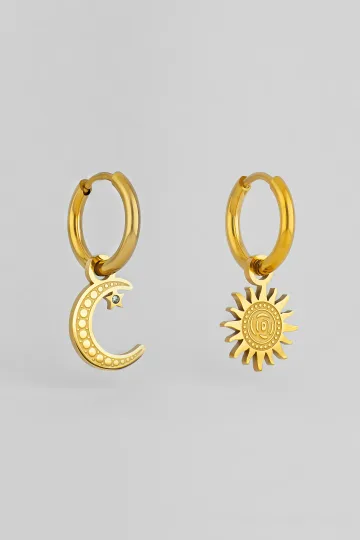
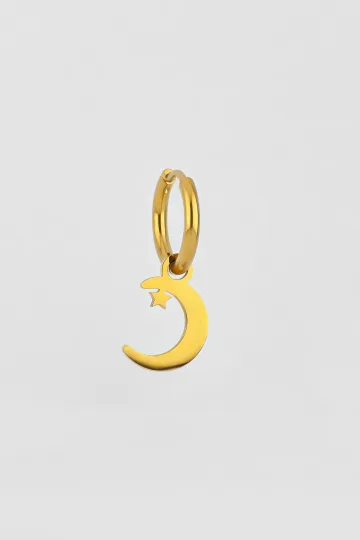
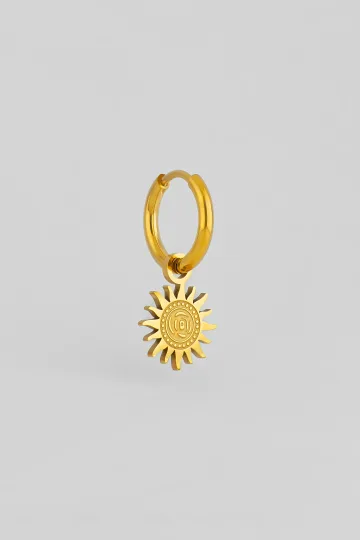
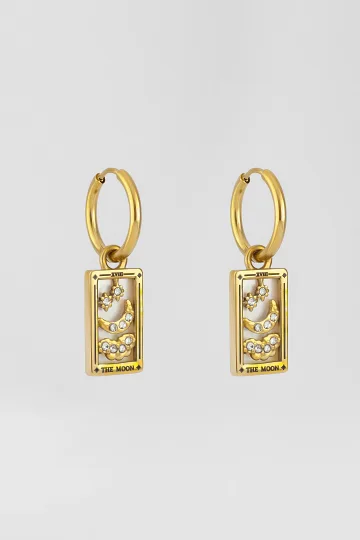
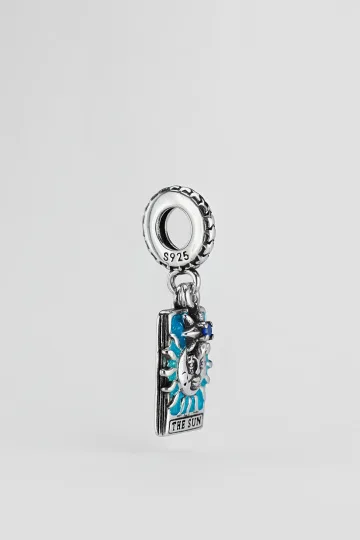
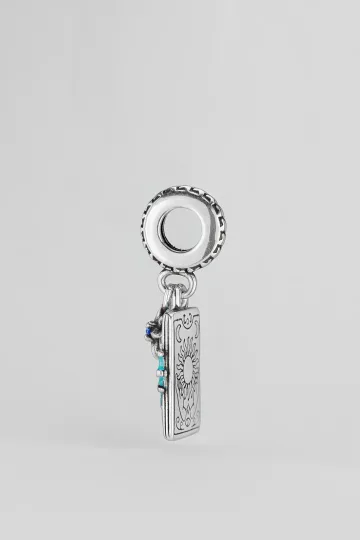
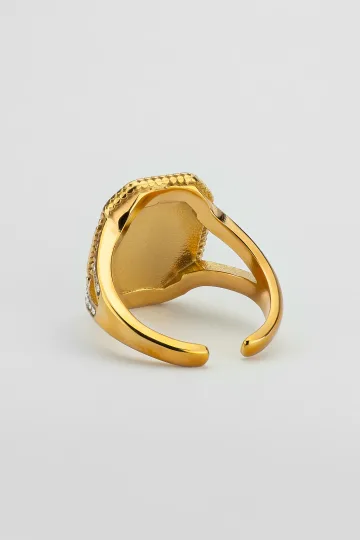
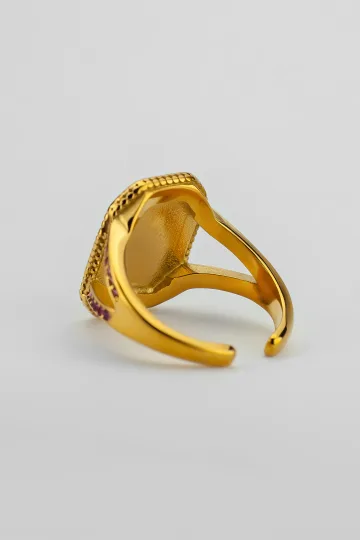
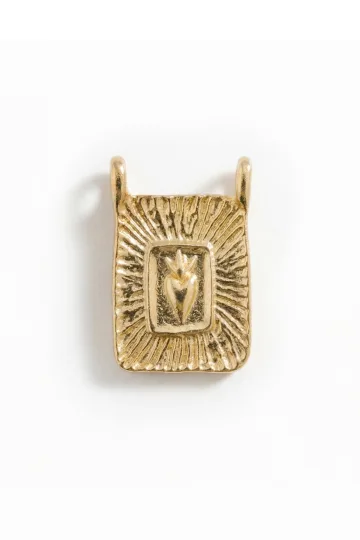
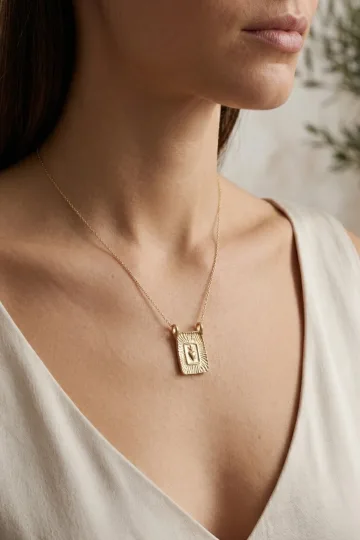
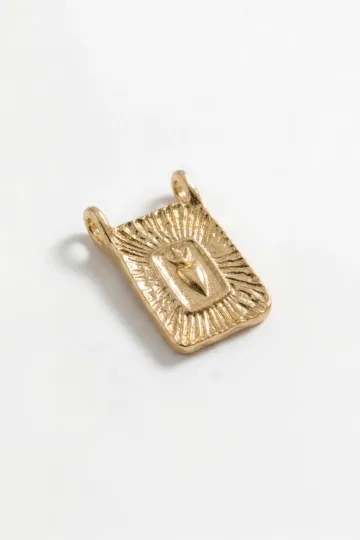
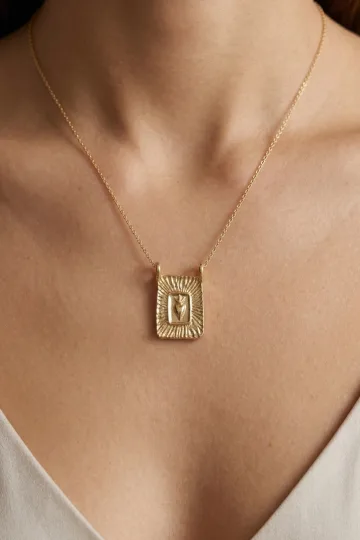
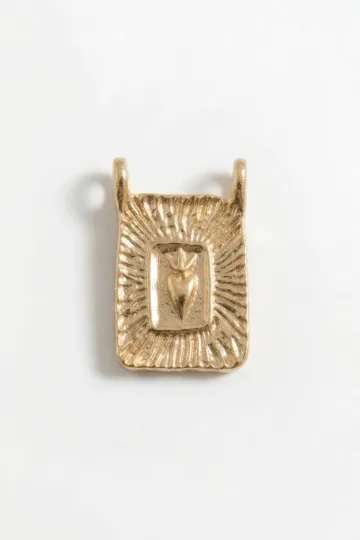
Wear the symbol, don't just read about it. These are in stock:




When most of us hear the word strength, the first picture is external: muscle, power, weapons, control. Western culture spent centuries building heroes on exactly that. But there is another kind of strength, less visible, harder to describe, and far more demanding of inner resource. The ability to stay yourself under pressure. The skill of not reacting where a reaction would be understandable and even justified. Patience that is conscious rather than passive.
That is what the Strength card is about.
For anyone searching for this quality in themselves, the card offers something you can hold: an image you can wear close to the skin. Not because the jewellery hands you strength, but because it reminds you the strength is already there. That is the difference between an amulet and a mirror.
This article is about the Strength card, its history and its imagery, about the archetype of quiet inner steadiness, and about which pieces of jewellery carry the same message: the lion, the serpent, the ouroboros, the infinity sign.
The card in the deck: number, place, the great swap
In most modern decks Strength holds the eighth position among the Major Arcana. It was not always so, and behind that swap lies a very specific story.
In the older European decks, including the Tarot de Marseille, the eighth card was Justice, and Strength came eleventh. Arthur Edward Waite, building his famous deck in 1909, switched the two. Justice moved to position 11, Strength took 8. The decision was not arbitrary: Waite was constructing numerological and astrological correspondences, and it mattered to him that Strength line up with the zodiac sign of Leo.
Aleister Crowley, in his Thoth deck, kept Strength in position 11 and renamed the card Lust, shifting the emphasis from quiet inner mastery to passion as the driving energy of the universe. Different words, a different angle on the same image. Where Waite's card speaks of calm self-possession, Crowley's speaks of life force itself: untamed, primal, not suppressed but directed.
If you ever meet the number 8 or the number 11 attached to this card, both are correct. They simply belong to different traditions.
Strength is one of the Major Arcana, the 22 cards that describe universal life archetypes. Where the Minor Arcana track everyday events and moods, the Major cards speak of deep inner states and turning points along the road. Among them Strength sits between the Chariot (victory through will and discipline) and the Hermit (the turn inward in search of wisdom). It is a transitional moment: from conquering the outer world to understanding your own inner one.
In that sense Strength carries something its neighbours do not. The Chariot conquers. The Hermit withdraws. Strength stays. It stays beside what is difficult, and it neither flees nor attacks. That is a specific skill, and a rare one.
Among the Major Arcana, Strength sits at what you might call the middle of the first cycle. The first eight cards, from the Magician to Strength, describe the road from becoming aware of your own potential to learning to use that potential from within. The Magician knows the tools. The High Priestess keeps the hidden knowledge. The Empress and the Emperor build a world. The Hierophant passes on tradition. The Lovers choose. The Chariot conquers. Strength accepts. After her the Hermit goes inward to grow wise. There is a logic to the sequence.
A lion wants an open collar and gold. Buried under a turtleneck it is a house cat, and don't argue.
How to wear the symbols of Strength
These symbols have passed through my hands by the dozen: the lion, the ouroboros, the serpent, the infinity sign. Here is what actually works when I build a look for a client.
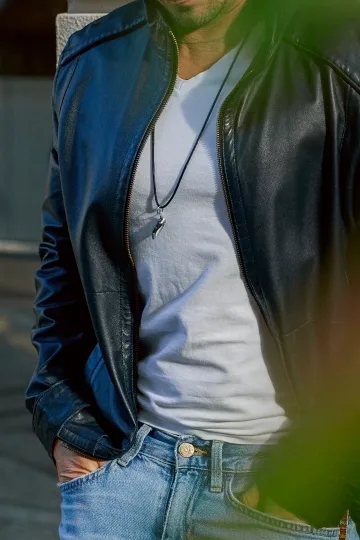
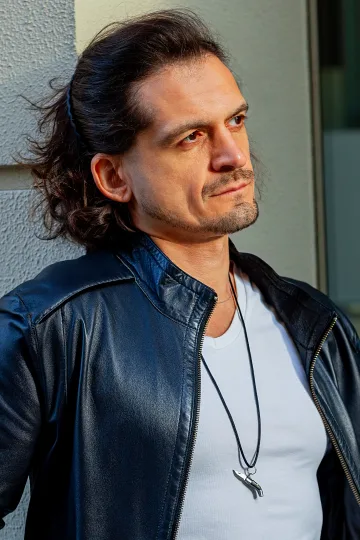
What do I pair a Strength symbol with every day? For everyday wear I recommend a fine chain with a small symbol over a plain knit, a basic tee or a high-necked shirt. A quiet ground (white, grey, sand, graphite) lets the symbol show up, and the lion or ouroboros reads cleanly. The calmer the fabric, the sharper the look.
Which symbol should I choose for my character? For anyone who likes dignity and a solar note I suggest the lion: it announces itself quietly but clearly. For those moving through renewal and the acceptance of their own nature, the ouroboros or the serpent sits closer. And if you want a quiet, almost invisible sign meant only for yourself, I choose the lemniscate, the infinity sign.
How do I wear a Strength symbol to the office? For work I choose a restrained neckline: a V-shape or a shallow boat neck. A pendant on a medium chain drops toward the décolletage and stays visible but not loud. A ring with a lion's head or a lemniscate on the bezel suits this setting better than a heavy bracelet: it is always at hand and never distracts in meetings.
How do I build an evening look? For the evening I suggest layers: a fine chain with an infinity sign can be stacked with a longer chain without a pendant, and the symbol stays the lead. Silk, velvet, satin, bare shoulders or a deep neckline heighten the effect. On smooth, lustrous fabric silver and matte gold read especially composed.
Which metal suits my skin tone? A warm skin tone and a golden tan I recommend backing with gold, especially matte, which echoes Leo's solar symbolism. A cool, porcelain tone takes silver and blackened steel, with their lunar, quiet note: for those I choose the serpent or the ouroboros. You can mix metals if one stays the lead and the other plays in the background.

Turn on your camera, pick earrings, a pendant or a ring, and see the piece on yourself in real time.
Switch items in one tap.
Everything runs in your browser: no photo or video is ever uploaded.
The card's history: from Hercules to a woman with flowers
The history of this card's image spans more than five centuries, and over that time a single idea passed through several entirely different bodies.
The oldest surviving Tarot cards belong to Italian aristocratic families of the fifteenth century. The Visconti-Sforza deck, painted around 1450 for the Dukes of Milan, is one of those early sources. On its Strength card, then called Fortitudo, a man with a club prises open a lion's jaws. It is a direct quotation of the myth of Heracles and the Nemean lion. For an Italian Renaissance viewer raised on classical allegory the image read instantly: physical might as virtue, mastery over the beast taken literally, achieved through muscle. It is worth saying that in the earliest Visconti-Sforza cards Strength was sometimes shown as a woman with a broken column. That iconography goes back to Samson and to medieval allegorical figures of Fortitudo: strength that breaks down barriers. The story still rests on a physical act of breaking or subduing.
In the Tarot de Marseille, which spread through France from the late sixteenth century, the image begins to change. La Force, Strength in French, is now shown as a woman. But she still engages actively with the lion: her hands hold his jaws, and there is visible effort in her posture. This is no longer Hercules with a club, yet it is still a struggle. The softness has arrived, the stillness has not. Between these two versions lies a shift in how a whole culture understood strength: from the physical to the moral, from the masculine to the feminine, from victory to endurance.
Between the Marseille deck and Waite's stand almost three centuries of occult interpretation. In the eighteenth century French intellectuals decided the Tarot held encoded systems of knowledge. In the nineteenth, Masonic and Rosicrucian circles began to map correspondences between the cards, astrology, the Kabbalah and hermetic philosophy. The Strength card came to be read as something larger than an allegory of virtue: as an archetype describing an inner psychological process.
The most radical reworking came from Aleister Crowley in the Thoth deck. His card is called Lust and shows a woman riding a seven-headed lion. This is neither taming nor combat, it is union. The woman does not stand over the beast, she sits upon him and holds a cup. Crowley moved the emphasis from self-mastery to life force as such: raw, vital, needing no bridle. For him passion is not the enemy of spirit but its fuel.
When Arthur Edward Waite hired Pamela Colman Smith in 1909 to create a new deck, he gave her specific instructions for every card, yet Smith brought her own artistic vision. For Strength she produced an image stripped of any sense of struggle. The woman stands over a reclining lion, her hands resting gently on his muzzle. The lion does not fight, does not bare his teeth. The woman's expression is calm, almost thoughtful. Above it all floats a horizontal figure of eight. This image became the canonical one and shaped most modern decks, fixing the firm association of Strength with quiet inner steadiness. Today, when people picture the Strength card, this is what they see.
Pamela Colman Smith deserves a separate mention. She was a young artist born in the Caribbean and working in London, a friend of Yeats and Stoker, part of the theatrical and artistic circles of her day. Waite paid her a single flat fee with no royalty. Her name did not appear on the deck for decades. Until recently the deck was simply called the Waite deck, with no mention of Smith. Now it is usual to add her name: the Rider-Waite-Smith deck. But for 113 years the images she created worked without her authorship attached. Including that very woman with her lion.
The Waite-Smith iconography: what the card actually shows
Let us read the imagery of the Strength card in the Rider-Waite-Smith deck closely. Every element on it is deliberate, and that is no exaggeration: Smith worked in the tradition of symbolic painting, where details carry meaning.
The woman in white
The woman is dressed in white. In the symbolism of Smith's deck, white appears on figures whose nature is pure or whose link to a higher principle is especially close. The white robe makes her a relative of the High Priestess and the Star.
What matters is that the clothing is not protective. It is not armour. The woman is open. Her defence is internal, not external. The robe falls freely, with no belt of metal or leather, no weapon at the waist, no helmet on the head. Where the Emperor is sheathed in armour, Strength comes out to the beast in a simple white dress. The contrast is the whole point: the Emperor's strength is all on the outside, visible to everyone. Strength's is inside, and that only makes it denser.
The belt and the wreath of flowers
The belt and the wreath on the woman's head are made of living flowers. This is not decoration in the ornamental sense. Floral symbolism in Smith's work points to nature, to the organic, to a link with the living. The woman does not set herself against the lion the way civilisation is set against the wild. She is part of nature, only of its other side. There is no fundamental rupture between her and the beast: they come from the same world.
The wreath of flowers around her head is often read as a crown of nature. Not the metal crown of power, but the organic crown of presence. The belt of the same flowers continues the motif: her weapon is not a sword but something living. It is a detail easy to miss at a glance, yet it changes the entire reading of the image. Where the male version of Strength carries a club or a blade, the female version carries flowers. And wins.
This detail matters a great deal for the archetype. Strength here is not about a person rising above their instincts. It is about instinct and consciousness learning to work together.
The lion
The lion on the Strength card is traditionally read as the embodiment of instinctive nature: passion, anger, fear, animal impulse. Not bad in themselves, but in need of contact with consciousness. The lion is tawny, alive, real. His tail hangs low. He looks downward. Not broken, not drugged. Simply trusting.
The lion at the woman's feet stands not for a conquered enemy but for an accepted part of the self. This is the energy many people spend a lifetime trying not to notice or trying to suppress: anger, desire, fear, jealousy. The Strength card says suppression does not hold in the long run. Acceptance and honest contact do.
The lion also carries an astrological meaning. In Waite's system the Strength card corresponds to the sign of Leo and its ruling planet, the Sun. Leo as a zodiac sign is tied to dignity, vital energy, the ability to express yourself without apology. When the symbolism lines up with the astrology, the image grows denser still.
The infinity sign above her head
Above the woman's head, in the air, floats a horizontal figure of eight, the lemniscate, the mathematical sign of infinity. The same symbol appears on the Magician card, the first of the Major Arcana.
This is no accident, and the link with the Magician comes up further on. What matters here is the sign itself: Strength's mastery over the instincts comes not from a temporary act of will but from a constant, inexhaustible inner resource. We write about the meaning of this symbol in more detail in our guide to the infinity symbol in jewellery.
The mountain in the distance
On the horizon stands a single mountain with an almost perfectly pyramidal outline. Mountains appear on many of Smith's cards and read as a symbol of endurance, constancy, the long road. They do not threaten or loom: they simply are, a reminder that some things are measured in years rather than moments.
That the mountain is far off rather than in the foreground speaks of perspective. The woman sees beyond the present moment. Her strength includes a horizon of time. It is precisely the single pyramidal shape, not a ridge or a cliff, that creates the sense of quiet permanence. This is a mountain no wind will shift. It was always here. And the woman standing beside the lion, in that sense, was always here too. This is not a passing state, it is a character.
The calm landscape
The background of the card is serene: a yellow sky, soft green earth. No drama in the surroundings. That too is Smith's choice: to show that what passes between the woman and the lion needs no storm and no crisis. Strength shows itself in ordinary circumstances. The steadiest person is not the one who did not break in an extreme situation, but the one who holds firm in daily life.
The yellow of the sky points to solar energy: light, clarity, warmth. This is not the cold self-possession of the stoic. It is the warm steadiness of someone who knows what they are doing. Tellingly, the same yellow sky stands behind the Magician and behind Justice, two other cards with a strong solar dimension. A sunlit landscape without shadows says everything here is in plain sight. No hidden manipulation, no secret game. Only open presence beside the beast.
Strength through Jung: integrating the shadow, the union of masculine and feminine
Carl Gustav Jung never wrote specifically about the Strength card, but his theoretical apparatus describes this image with striking precision.
Jung's concept of the Shadow names the part of the personality a person does not acknowledge as their own: qualities, desires, fears and impulses pushed out of consciousness because they seem unacceptable. In this reading the lion on the Strength card is the Shadow: the living, powerful, potentially dangerous part of the self that most people spend their lives trying not to see. Strength proposes not the destruction of the Shadow but its integration. The woman neither kills the lion nor flees. She stays beside him. That is the Jungian work with the Shadow: to accept what was rejected in yourself, to own it, to find it a place within.
The figure of the woman herself is no less important to the Jungian reading. If we treat the card as one person's inner landscape, the woman embodies the anima in a man's psyche, or the conscious principle in a woman's. The lion embodies the animal, the instinctive. Their interaction on the card is a meeting between the conscious and the unconscious without war. Jung called this process individuation: becoming a whole person, including the parts of yourself once denied.
The alchemical tradition, to which Jung gave a great deal of attention, described the union of opposite principles as the central operation of transformation: Solve et Coagula, dissolve and make anew. The ouroboros, the serpent biting its own tail, was one of the chief alchemical symbols of exactly this cycle. Both the ouroboros and the Strength card speak of the same thing: the union of what once seemed irreconcilable.
Customer reviews
Zevira is a real jewellery shop. Genuine payments, deliveries and customer thank-yous.
🥰🥰🥰 gracias

Ok, ¡gracias! 🙂

Strength in the Kabbalah: the path of Teth, the serpent, wisdom
In the systems of correspondence worked out so energetically in the nineteenth-century hermetic orders, the Strength card is linked to the letter Teth of the Hebrew alphabet. Teth carries the meaning of serpent, or of good. Its numerical value is nine. In the tradition of occult Kabbalah this letter is tied to a path on the Tree of the Sefirot connecting Keter (the Crown, the highest source) with Chesed (Mercy).
The path through Teth describes a movement from pure power to its expression through love and acceptance. It is not the path of law, as Justice is, and not the path of destruction. It is the path of wisdom shown through gentleness. The serpent in Hebrew mysticism is ambiguous: it is the tempter of Eden, and the Nachash, the primal serpent bearing hidden knowledge, and the bronze serpent Nehushtan raised by Moses in the desert as a source of healing. Three faces of one creature: danger, knowledge and healing. The lion on the Strength card carries the same threefold meaning.
The number nine in numerology is traditionally linked to the completion of a cycle and to accumulated wisdom. The nine Muses, the nine worlds of the Norse tradition, the nine months of carrying a child. If the letter Teth carries the number nine, it tells us that the strength this card speaks of does not start from zero: it is the strength of completion, of gathered experience, of a road already walked.
Leo in the zodiac and the heroics of the sun
Astrological Leo, the fifth sign of the zodiac, ruled by the Sun, occupies the place in the zodiacal circle tied to the height of summer. This is the time when the Sun in the northern hemisphere stands highest, the day is longest, and the heat is at its most intense. The symbolism is direct: Leo as a sign carries the energy of the peak, of fullness, of solar radiance.
Regulus, the brightest star in the constellation of Leo, was reckoned in traditional astrology one of the four royal stars. Its name means little king. Regulus was associated with military victory, high position, the capacity to command and to lead. And yet the tradition noted that Regulus shows its strength fully only when a person does not use it for revenge. The moment personal grievance and the wish to punish take over, the royal star withdraws its support. That astrological observation matches the archetype of the Strength card: real strength is possible without thirst for revenge, without the triumph of ego, without any display of superiority.
Egyptian parallels add another layer. The god Horus, son of Osiris and Isis, was often shown with the body of a lion and the head of a falcon: a solar hero whose strength was born of pain (the loss of his father, the conflict with Set) and came to expression through patience and purpose rather than rage.
Upload a photo of your pet, someone you love, or an object. We'll build a 3D model and hand-cast it in pewter.




The lemniscate: the symbol's debut with Wallis in 1655 and its road into jewellery
The horizontal figure of eight we call the infinity sign first appeared in a mathematical text in 1655. The English mathematician John Wallis introduced the symbol in his work Arithmetica Infinitorum to denote an infinitely large number. Where the shape itself came from is not known for certain. One version: Wallis adapted a late Roman numeral for 1000, which was written as the letter M or as an elongated loop and which in colloquial Latin carried the sense of very many, countless.
The word lemniscate itself comes from the Latin lemniscus, a ribbon or band. The term was coined in 1694 by the Swiss mathematician Jacob Bernoulli to describe an algebraic curve shaped like a figure of eight. Later Wallis's symbol and Bernoulli's curve merged into the single notation for infinity we use today.
The journey from mathematics into jewellery took roughly three centuries. In the nineteenth century the horizontal eight began appearing in jewellery, at first tied to the occult and mystical tradition. On the Magician card in the 1909 Waite-Smith deck the lemniscate is already a mature symbol with a settled meaning: an endless flow, an inexhaustible resource, the link between heaven and earth. By the middle of the twentieth century the infinity sign had entered mass jewellery production as one of the most recognisable and universal images of all.
Today a lemniscate pendant is among the best-selling symbolic pieces in the European market. History tells us this symbol has exactly one precise origin: Wallis's mathematics of 1655. The whole mythological weight it now carries was added later, in the nineteenth and twentieth centuries. That does not make the symbol less meaningful, it is simply an honest account of how images gather meaning over time.
The archetypal meaning: what the Strength card says
The Strength card describes several connected things at once.
Inner strength against outer. If the Chariot (7) stands for victory through discipline and a willed effort, then Strength (8) goes further. This is mastery of the self. The ability to look at your own fear, anger or desire without letting them run your behaviour. The difference is subtle but fundamental: you can control the beast with a cage, or you can live with him in the same space.
Gentleness as a tool. The woman does not raise a sword or put on armour. She uses touch. It is a very concrete image: sometimes what looks like softness demands more resource than open combat. Speaking a hard truth calmly is harder than shouting it. Waiting for a situation to resolve is harder than charging in at once. Staying kind when you are tired is harder than staying kind when you are fresh.
Courage as presence. The lion is not small. The woman on the card clearly knows that. Courage here is not the absence of fear but the choice to stay beside what frightens or unsettles you. That is a different quality from fearlessness.
Self-knowledge as the foundation. To accept the lion you have to know him. The Strength card is often read as a call to look honestly at your own instinctive nature: not to push it away or be ashamed of it, but to work with it. The parts of yourself you find unacceptable do not vanish when ignored. They build up and break out ungoverned. Meeting them face to face, uncomfortable as it is, is what gives steadiness.
Quietness as a quality. The Strength card is not loud. A person in this archetype does not announce their strength or put it on show. It is simply there, a plain fact. Others sense it. Chaotic situations settle when such a person walks into the room. Not because they do anything, but because of who they are.





Upright and reversed meaning of the card
Upright
Upright, Strength speaks of steadiness. It marks a period when a person finds their resource not outside but within. Things around may be hard, yet there is a sense that there is enough to see it through. The card points to patience, self-possession, gentle persistence.
In the context of relationships, upright Strength describes a person who can stay themselves under pressure. They do not lose themselves in conflict. They are capable of compassion without losing clarity. They can set boundaries without aggression.
In the context of work or a project the card speaks of stamina: not a brilliant sprint but the ability to keep going when the early enthusiasm has worn off and the finish is still far away. This is a card for the long distance.
In the context of personal growth, upright Strength often appears when a person has already come through something hard, or when they stand before something that will demand a long supply of resource.
Reversed
Reversed, the card points to a disruption of that balance. Either toward suppression: instincts, emotions or fears driven so deep that the person acts mechanically, cut off from the living part of themselves. On the surface everything is under control, but this is not peace, it is numbness.
Or the other way: the lion has taken over, and impulsiveness, anxiety or anger run the behaviour. Reactions are out of proportion to the situation. The person does things they later regret.
Reversed Strength can also speak of a time when the familiar sources of confidence have run dry. It is a signal: time to look for new ones. And, crucially, the card in this position does not say there is no strength. It says the strength has to be found again, that this is a temporary state, not a permanent one.
Sometimes reversed Strength appears for people with very harsh demands on themselves: those who believe that asking for help means showing weakness. Here the card says the opposite: admitting that your resource has run low is not a defeat.
Links with other cards
The Magician (I)
The first appearance of the lemniscate in the deck. The Magician stands before the tools of all four suits and directs their energy consciously. His strength comes from knowledge and skill. Strength (8) does the same with inner forces. The infinity sign above the head of both cards hints that the source of strength is inexhaustible as long as the contact with it is right. The Magician begins the road. Strength shows how to walk it.
The Chariot (VII)
Strength's immediate predecessor in the Waite numbering. The Chariot speaks of control through the tension of will: two sphinxes pull in different directions, and the charioteer holds them in check by force and discipline. It works, but it costs effort. Strength offers a different path: not holding contradictions down by force, but creating the conditions under which they come into balance by themselves. The hard against the soft. Both are needed, but Strength describes the more mature tool.
The Hermit (IX)
After Strength in the sequence. The Hermit withdraws into silence and inner search, holding a lantern for those who follow. The logic of the Chariot-Strength-Hermit triad reads as: victory through will, victory through acceptance, wisdom through solitude. Strength stands at the centre, the pivot between outward doing and inward being.
Justice (XI, in the Waite numbering)
The card Waite swapped with Strength. Justice works through clarity, measure and balance: the scales, the sword, precision. That too is a form of strength, but through reason and principle. Strength works through the heart and acceptance. Both cards describe steadiness, but by different means.
The High Priestess (II)
A visual kinship through the white robes and the symbolism of knowledge held within. The Priestess keeps a secret without explaining it. Strength holds the lion without suppressing him. Both cards describe a presence that needs no explanation.
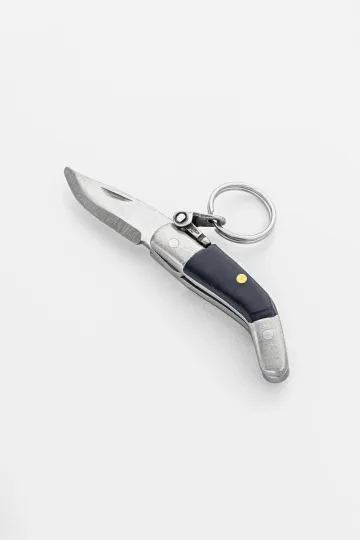
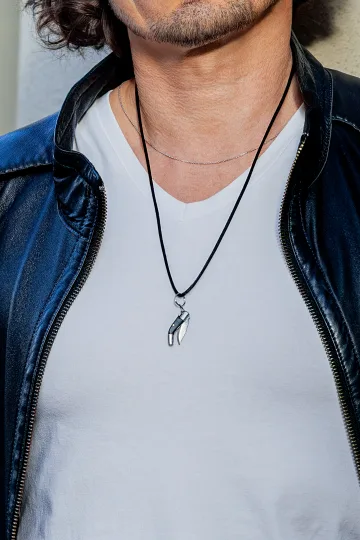
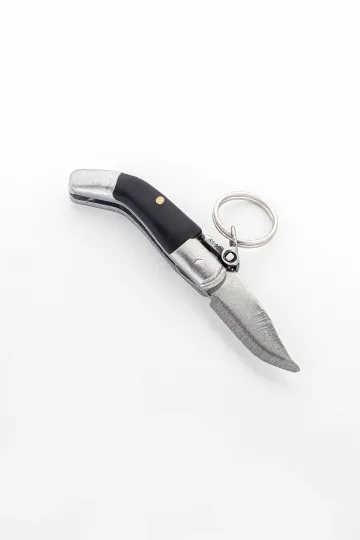
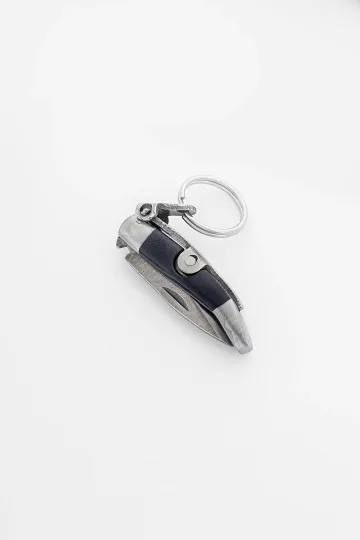
CAPAORA mini knife pendant
The 18th-century Spanish navaja in miniature: 40 mm of stainless steel, a real folding mechanism and a Palanquilla lock that clicks. An affordable gift to remember.
Authentic · Ships from Spain · 14-day returns
Astrological correspondence: Leo and the Sun
In Waite's system the Strength card corresponds to the sign of Leo and to Leo's ruling planet, the Sun. The correspondence builds a clear chain of symbols.
Leo as a zodiac sign is tied to dignity, vital energy, the ability to take up space without apology. People with a strong Leo in the birth chart are often described as charismatic and warm, with a sense of an inner spine. The shadow side of Leo is the demand for recognition, a pride that gets in the way. The Strength card works precisely with that shadow side: how to use Leo's solar energy without it tipping into self-admiration.
The Sun, Leo's ruling planet, is in traditional astrology the centre of the chart, the source of vitality and identity. Jewellery with the symbolism of the lion or the sun carries the same energy: not aggressive, but assured. The image of a person who knows their place and takes it calmly.
Mythological parallels
Heracles and the Nemean lion
The first labour of Heracles echoes the card directly. The Nemean lion was invulnerable to weapons: nothing could pierce its hide. Heracles strangled it with his bare hands, then used its own claws to remove the hide, which became his armour. Read literally, it is a story of physical strength. But in the tradition of psychological interpretation of myth that Jung and his followers developed so energetically, the twelve labours of Heracles read as twelve trials of the human psyche, one for each sign of the zodiac.
The first labour, the Lion, then reads as a trial of pride and the fear of death. The Nemean lion embodies the part of a person that fears their own mortality and answers that fear through bluster and a display of force. To defeat it is integration, not destruction: Heracles puts on the lion's hide, makes the beast a part of himself. He does not deny his animal nature, he acknowledges it and carries it with him. In the wider context the twelve labours as psychological trials form a whole map of personal growth: each one matches the overcoming of a particular inner fear or limit, from pride and the fear of madness to greed and vanity.
Androcles and the lion
The Roman tale of the runaway slave Androcles, who met a suffering lion in the desert with a thorn in its paw. Androcles pulled the thorn out. Years later he was captured and thrown into the arena with wild beasts. The lion turned out to be the same one. It recognised him and did not touch him. In the end both were given their freedom.
This story already sits much closer to Waite's Strength card: not victory over the beast but mutual trust, grown from an act of kindness. The strength here lies in doing something good in a moment of fear and helplessness, expecting nothing in return.
Daniel in the lions' den
The biblical Daniel was thrown into a pit of lions for refusing to stop praying. He spent the night there and came out unharmed. In a religious reading this is a miracle. In a symbolic one it is a person whose inner wholeness protects them where ordinary strength is powerless. The fear and the threat are present. They cannot be wished away. But there is something in the person that stays untouched.
Characters in literature and film
The theme of a person taming a beast through gentleness rather than force repeats across cultures.
In the fairy tale Beauty and the Beast, whose story circulates in European folklore from the sixteenth century, the heroine is not afraid of the Beast. That, rather than beauty in itself, breaks the curse. Fear turns people into monsters. Acceptance gives them back their human form.
In Michael Ende's The Neverending Story the young Atreyu travels with Falkor, the luck dragon, an enormous creature that carries him not by compulsion but by choice. No control, only mutual openness. The image of a child and a dragon as partners rather than tamer and beast echoes the card directly.
In Norse mythology the goddess Freyja rides a chariot drawn by two large cats given to her by Thor. The cat, an independent animal that does not yield to taming, serves her willingly. That is another version of the same archetype.
It is remarkable how stable this image stays across cultures and eras: a person and a beast who do not fight but stay in contact. Most likely because the image describes something real in the psyche: the meeting with the instinctive part of yourself that cannot be reduced to a war against it. The image holds within it an acknowledgement that human inner nature is indestructible, and that this is good. You can know it and you can work with it. That is exactly what the Strength card does.
Leave your email, we'll send your discount code. No spam, unsubscribe anytime.
The code arrives by email, valid on your first order.
Heroines of Eastern myth
The archetype of strength through alliance with a predator is no Western monopoly. It turns up in Eastern mythologies in forms that are sometimes even more direct than the Tarot card.
The goddess Durga in the Hindu tradition is shown riding a lion or a tiger. Her name means the inaccessible one, the one who is hard to reach. Durga was created by the gods to fight the demon Mahishasura, whom none of the male divinities could defeat. Her battle with Mahishasura lasted several days. And yet Durga, despite the many weapons in her eight arms, wins not through fury but through assured calm. The lion beneath her neither drags her forward nor demands governing: he simply carries her where she is going. This is the very dynamic Smith painted: beast and woman in coordination, not in subjection.
The Egyptian Sekhmet, with her lioness head, embodied at once the destructive and the healing aspect of solar energy. She could destroy and she could heal. Her cult at Memphis was among the most important: warriors turned to her before battle and physicians before treatment. Sekhmet's dual nature reflects what the Strength card says about the lion: the destructive instinct and the creative instinct are one and the same beast, and he becomes one or the other depending on how the person beside him relates to him.
The goddess Cybele from the Anatolian tradition, taken up by Greeks and Romans, is shown in a chariot drawn by a pair of lions. Cybele, the Great Mother, stood for the earth itself, for fertility and the cycles of nature. The lions draw her not because they are conquered: they draw her because she is their mother. This is the maternal archetype of strength: not mastery over nature but a belonging to it so complete that even the predator senses kinship.
Quiet strength in modern psychology
What the Strength card describes in the language of archetype echoes the way modern psychology describes the work with difficult states.
Dialectical Behaviour Therapy (DBT), developed by Marsha Linehan in the 1980s, is built precisely around the capacity to bear distress without an impulsive reaction. One of its key ideas, distress tolerance, describes the skill of staying beside a painful state without trying to escape it at once. That is literally what the woman on the card does: she stands beside a lion who is uncomfortable and potentially dangerous, and she does not leave.
Acceptance and Commitment Therapy (ACT) works with psychological flexibility: the ability to hold unpleasant thoughts and feelings without letting them dictate behaviour. In ACT inner strength is not the absence of fear or pain but the ability to act in line with your values even while they are present. That is a precise description of what the Strength card calls courage.
Mindfulness practices, which entered mainstream psychology in the 1990s through the work of Jon Kabat-Zinn, describe a similar quality: observing your own inner state without an immediate reaction. The lion on the card is the inner state. The woman beside him is the observing, present consciousness. The distance between them is zero, yet the control comes through presence, not suppression.
A familiar image is the mother bear who protects her cubs not through aggression but through absolute steadiness. The archetype of the mother bear and the archetype of the Strength card describe the same quality from different sides: strength born of love and protection rather than the wish to dominate.
Strength in spreads: how to read the card by position
The Strength card works differently in a spread depending on its position and its neighbours.
In the outcome or current situation position. Strength says the resource is there, it is inside, and the person is already moving. This is not a card of victory but a card of continuation. It appears for those who have come through something hard and are now in the just keep walking phase.
In the context of a long-term goal. Marathon training, a project that runs for years, a thesis: Strength advises not an explosive burst but the skill of conserving resource. Do not try to solve everything in one day, trust the process. Here the card often appears beside the Hermit or the Moon, and the three together describe a long road through uncertainty.
In the position of advice about inner work. Strength most often means: there is no need to rush. The lion will not grow more biddable for being pushed. Make contact, even if it takes time.
In a spread about a relationship in crisis. Strength beside cards of conflict or rupture speaks of a gentle stance: neither retreat nor attack, stay in contact, hear the other without losing yourself.
Strength combined with other cards
How Strength sounds beside other cards often matters more than its meaning in isolation.
Strength and the Moon. One of the most complex and profound combinations. The Moon speaks of something hidden, of fears and uncertainty. Strength beside the Moon says: yes, it is dark and unclear, and you will manage. Not because you know what is coming, but because you can stay in uncertainty without panic.
Strength and the Star. Hope and stamina together. After a hard stretch a gap of light appears, and the resource within is there. One of the most reassuring combinations, especially after a run of heavy cards.
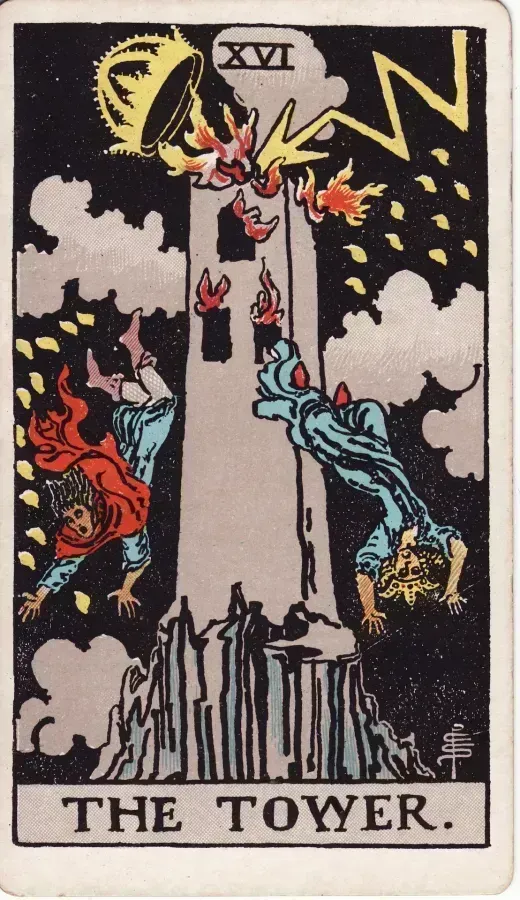
Strength and the Tower. Destruction and steadiness. Something has collapsed or is about to, and yet there is something that cannot be destroyed. Strength beside the Tower says: the crisis is real, but you will pass through it. Not thanks to outer circumstances, but thanks to what is inside.
Strength and the Chariot. Both cards about control, but of different kinds. Together they describe a person who knows both the willed effort and acceptance, and knows when to use which tool. A mature combination.
Strength and Justice. Two different approaches to steadiness: through the heart and through the mind. Together they describe a situation that needs both: acceptance and clarity. They often appear in spreads about serious decisions that call for both clear sight and compassion.
Strength and the Hermit. Inner work on two levels. Strength speaks of accepting the instincts. The Hermit speaks of the turn inward for wisdom. Together they describe a person ready for deep inner work and with the resource to do it.
Jewellery inspired by the symbols of the Strength card
The Strength card concentrates several symbols, each of which exists in the jewellery tradition as an image in its own right.
The lion
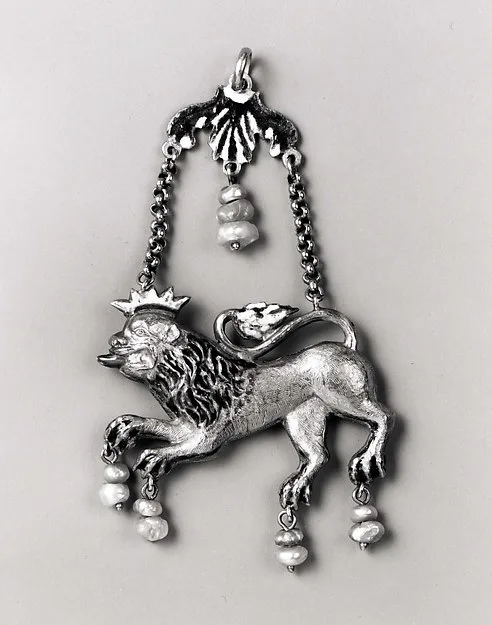
The central symbol of the card. The lion in jewellery carries the meaning of dignity, inner might and solar energy. It is one of the oldest heraldic symbols, appearing from the Egyptian Sphinx to the medieval coats of arms of European monarchies. Spain, Venice, England and the Netherlands all use the lion in their state symbolism as an image of strength and dignity.
In a jewellery context a lion's head on a ring or pendant reads not as aggression but as inner might. A ring with a lion's head on the bezel, a pendant in the form of a profile or a full figure: these are pieces that speak about themselves with restraint, yet clearly.
The ouroboros: infinity as a form
The serpent biting its own tail is one of humanity's oldest symbols. Egyptian, Greek, Norse and alchemical traditions all used it to mark cyclicity, eternal renewal through destruction and rebirth. The ouroboros visually creates the same shape as the infinity sign on the Strength card: a closed loop with no beginning and no end.
In the context of the Strength archetype the ouroboros carries an added meaning. It is the image of one who has walked the circle: accepted their nature whole, the dark part and the light, and discovered that they do not contradict but complete each other. The alchemists used the ouroboros to mark the process of Solve et Coagula, dissolve and make anew. Before anything can change, it must first become fully itself.
For the full history of this symbol, read the article on the ouroboros: the serpent that bites its tail.
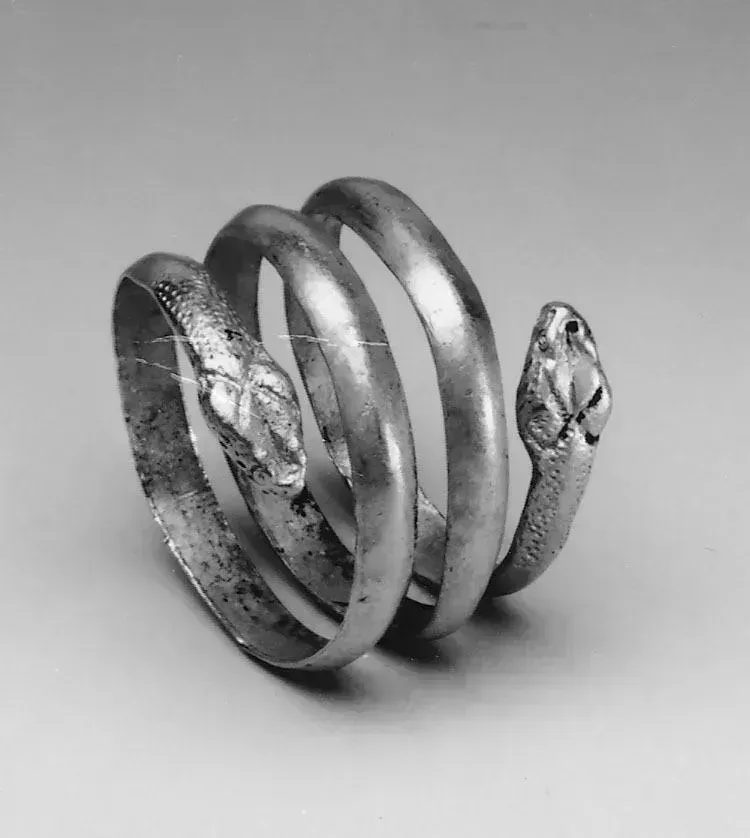
Jewellery with the ouroboros: rings, pendants, bracelets. The shape of a ring, perfectly matching the symbol, makes the ouroboros especially natural on a finger. An ouroboros pendant hangs at the chest as a reminder of cyclicity. Most often silver or blackened steel, less often gold, though the alchemical tradition knew it precisely in gold.
The serpent
The serpent runs through the jewellery tradition of every culture. The Egyptian uraeus on the crowns of the pharaohs. The Greek caduceus of physicians, two serpents around a staff. The Indian nagas as guardians of water sources. Victorian engagement rings in the shape of a serpent: it was exactly such a ring that Prince Albert gave his future wife, Victoria. The serpent sheds its skin and stays alive: transformation, renewal, the ability to survive what seemed fatal.
In the context of the Strength card the serpent embodies the same idea as the lion: an instinctive nature that can be an ally rather than an enemy. The serpent in jewellery speaks of transformation and of a person's ability to renew themselves. We write more about the meaning of the serpent in jewellery in our article on the serpent as a symbol.
The infinity sign
The lemniscate appears directly on the Strength card as the symbol above the woman's head. In jewellery it is one of the most legible and widespread images: the horizontal eight reads as eternity, continuity, cyclicity.
For the Strength archetype it is an especially precise symbol: not a temporary effort but a constant resource. Not a sprint but a marathon. Not a bright flash but an even light. Pieces with the infinity sign suit people in long processes: recovery, long-term projects, relationships that have come through a test. The history and meanings of this symbol are gathered in the article on the infinity symbol.
An infinity pendant is fine, unnoticeable to others but felt by the wearer. An infinity bracelet reminds you at every glance at your hand. A ring with a lemniscate ties the archetype of the card to the archetype of the ouroboros.
The wolf
The wolf appears in jewellery as a symbol of wild strength that lives by its own laws. Unlike the lion, tied to power and dignity through heraldry, the wolf carries the sense of freedom and of not being broken. But there is an overlap with the Strength archetype too: a wolf in a pack lives by the inner laws of interdependence, not by the law of violence. In a wild pack the leader is more often not the most aggressive but the most steady and caring: the pack holds together through a parental role, not through a constant display of superiority.
A piece with a wolf, for the Strength archetype, speaks of accepting the wild part of yourself: the part you are not meant to show. You can read more about the symbolism of the wolf in the article on the wolf in jewellery.
The dragon
The dragon carries the might and the potential danger of the beast, but in many traditions, especially the Eastern ones, it is a wise guardian. The Japanese ryu, the Chinese long: creatures of enormous strength that shows itself in stillness rather than rage. It is precisely this version of the dragon that comes closest to the archetype of the Strength card.
In the Western tradition the dragon is tied to a trial: the hero who kills the dragon frees something bound. In a psychological reading the dragon that is killed is the fear or complex that holds a person captive. Defeating it sets them free. Again the same dialectic: not flight from the beast but a meeting with him.
A dragon pendant, for someone who identifies with the Strength archetype, speaks of the ability to hold enormous inner might in balance. We write about the symbolism of the dragon in our guide to the dragon.
Which jewellery suits the Strength archetype
In terms of form and aesthetics, jewellery for the Strength archetype is usually restrained, without excess decoration. It is not a bright accent but a constant reminder. Something that stays on the body even on the days you have no energy to think about what you are putting on.
By style: minimalist, or with a single strong symbol. Rings with one element work well, fine chains with a small pendant, bracelets without superfluous detail.
By symbol: lion, serpent, ouroboros, infinity, wolf. They all carry the idea of strength that does not shout about itself. None of these symbols shout. All of them are quiet and clear at once.
By metal: gold, especially matte, is associated with the solar energy of Leo. Silver sits closer to the moon and to intuition, to what happens in the quiet. Blackened silver or dark steel give a sense of restrained, hidden might. All three work, it comes down to personal feeling.
By the form of the piece: rings with the symbol on the bezel carry a sense of permanence, they are always at hand, literally. A pendant on a fine chain lies at the heart. A bracelet with the symbol reminds you at every glance at your hand. An earring with a small symbol: a quiet piece, visible to no one but you.
By size: usually on the smaller side. The Strength archetype is not about taking up space on the outside. A piece only you can see works no worse than a visible one, and often better: it is a conversation with yourself, not an announcement to others.
Send a friend a discount code, they save on their first order.
Tarot, Strength and jewellery: a link to the thematic cluster
We keep a detailed hub on Tarot jewellery, where the articles on the cards and their symbols are gathered. Here it is worth explaining why the Strength card holds a special place among those chosen for jewellery.
Most of the cards taken as the basis for jewellery are cards about states or events: the Moon about intuition, the Star about hope, the Lovers about love. Strength is different. It is about a process. About how a person relates to themselves within that process.
That makes a piece with the symbolism of Strength a personal statement of intent. Not about what was or what one wishes to gain, but about how a person chooses to move through the difficult. Quietly. Without unnecessary noise. Staying themselves.
That is why the symbols of Strength, the lion, the infinity sign, the serpent, the ouroboros, are often chosen not in a moment of triumph but in a moment of trial or of coming out of one. You can read about the other Tarot cards in jewellery in our overview of the main Arcana.
Who a piece with Strength symbolism suits and when it is given as a gift
There is no single right person for this card, but there are several situations in which a piece with its symbolism is chosen for oneself or given for a specific reason. As a personal purchase and as a gift, it works not as a medal for an achievement but as a quiet witness: I know how it was.
After illness or a long crisis. For someone who came through a hard stretch not as a hero but simply by carrying on day after day. As a gift, such a piece with an ouroboros or an infinity sign says without words: I saw you come through this, and it stays with you.
At the finish of a long project. A thesis, a long build, the launch of a business, years of work on a book. Marathon runners, climbers, people in long-distance goals. The finish after a marathon deserves a different gesture from the finish after a sprint: the Strength card speaks of exactly this kind of movement, where what matters is to keep going after the enthusiasm has passed.
For a mother after the birth of a child. The first months are the Strength card in its purest form: presence, patience, gentleness in a situation that demands far more resource than it looks from the outside. A pendant with a serpent or an ouroboros, a ring with an infinity sign, will say it more precisely than a beautiful but generic piece.
In the course of therapy or personal work. Psychotherapy often resembles what the card shows: the meeting with the parts of yourself that frightened you or seemed ungovernable. A piece underlines the value of that road, not as a reward for a result but as recognition of the process.
Before something that frightens you. A new job, a move, a public talk, a long-delayed conversation. Strength does not promise there will be no fear, it says that its presence does not cancel the move forward. It also suits the person who always solved problems by force and is now learning something else: a reminder that gentleness is a tool, not the absence of strength.
Buying it as a gift? Each one arrives ready to give.
 A branded Zevira box and a little card come with every order.














Frequently asked questions
What does the Strength card mean in a Tarot spread?
In a spread, Strength points to a period when the main resource lies inside rather than outside. The card speaks of self-possession, patience and gentle persistence. It indicates that the current situation calls not for an aggressive solution but for a steady presence. In the advice position, Strength often recommends gentleness where the first impulse calls for force.
Is the Strength card 8 or 11?
It depends on the deck. In the Rider-Waite deck and most modern decks Strength stands at position 8. In the Tarot de Marseille and Crowley's system it is at position 11. Waite swapped Strength and Justice in 1909 for astrological correspondences. Both versions are historically correct.
Which symbol best conveys the meaning of the Strength card in jewellery?
It depends on which aspect matters most to you personally. The infinity sign literally quotes the card. The ouroboros conveys the idea of cyclicity and of accepting your own nature whole. The serpent speaks of transformation. The lion of dignity and inner might. The wolf of the wild part of yourself that needs no suppressing. Most people choose the symbol that sits closest to their own experience.
Can you wear jewellery with a Tarot symbol without knowing the Tarot system?
Yes. Most of the symbols that appear on Tarot cards exist independently of the Tarot itself. The lion, the serpent, the infinity sign, the ouroboros carry meaning on their own. The Tarot context adds depth but is not required.
Is the Strength card linked to femininity?
The figure of a woman on Waite's card creates a visual association. But the archetype of inner strength through acceptance and gentleness is universal. The card describes a quality, not a gender. Its symbols are worn by people of any gender.
Is Strength in Tarot linked to physical strength?
There is no direct link. The card has historically evolved from images of physical strength (Hercules with the lion on the early Italian decks) to an image of inner steadiness (Waite-Smith, 1909). Today, in most traditions, Strength speaks of psychological stamina, self-possession and gentle courage.
How do I choose between an infinity pendant and an ouroboros if I want a piece in the Strength archetype?
The infinity sign is abstract, its meaning open and universal. The ouroboros is a concrete image with a dense history: alchemy, transformation, the cycle. If the beauty of the form and a clean line matter, choose infinity. If the depth of the symbol and its link to the idea of renewal through destruction matter, choose the ouroboros.
What does Strength mean beside the Moon in a spread?
The Moon speaks of the hidden, of fears and uncertainty. Strength beside the Moon describes the ability to stay steady in a situation where much is unclear. It is one of the most telling combinations for people going through an anxious period: the resource is there, even if the dark has not yet lifted.
Common questions
Can you wear a lion or ouroboros pendant in the shower and the swimming pool?
Better to take it off. Chlorinated and hot water speed up the tarnishing of silver, and changes in temperature loosen the small links of a chain over time. Gold takes water more calmly, but soap and shampoo leave a film in the hollows of the relief, and the symbol reads less clearly. Taking the piece off while bathing and laying it in a dry place noticeably extends its life.
How do you care for a silver piece with Strength symbolism so it does not darken?
Silver darkens from contact with air, sweat and cosmetics, this is natural. Wipe the piece with a soft cloth after wearing and store it separately in a closed pouch or box, away from moisture. Do not deliberately polish blackened silver or dark steel to a shine: the patina is part of the design. A light film on ordinary silver comes off with a soft cloth in a minute.
Who does a piece with Strength symbolism suit and for what occasion is it given?
Those going through a long trial or just out of one: after illness, at the finish of a big project, at the start of therapy, a mother after the birth of a child. It is not a medal for a victory but a quiet sign: I know what it took. As a gift, such a piece speaks without words, which is why it is chosen not for a celebration but for a moment a person came through on their own resource.
What do you pair a lion, serpent or infinity pendant with?
With a plain base: a fine chain with a small symbol shows up on the even ground of a T-shirt or a high-necked shirt. For an open neckline take a medium length so the pendant lands toward the décolletage. One strong symbol works better than a scatter of small details, so keep it the lead and quieten the rest.
What can replace the pendant if you like the idea of the Strength card but not the figure of the lion?
The same idea is answered by several images at once. The infinity sign literally quotes the symbol above the woman's head on the card and reads abstractly. The ouroboros conveys the acceptance of your own nature through the cycle of renewal. The serpent speaks of transformation, the wolf of the wild part of yourself. Any of them carries the same message of quiet steadiness without a literal image of the beast.
Wear the symbol, don't just read about it. These are in stock:
In closing
The Strength card in Tarot describes a very specific skill: to stay beside what frightens you, without fleeing and without a fight. The woman and the lion stand together, and neither side has destroyed the other. Not weakness and not victory. Something third, for which ordinary language does not hold many words.
The symbols of the card, the lion, the infinity sign, the serpent, the ouroboros, exist in the jewellery tradition independently of the Tarot. Their meanings overlap: cyclicity, renewal, dignity, inner might. A piece with any of these images carries the same idea shown on the eighth card.
For those who have come through something long and hard, or who are in the middle of it now, such a piece works as physical evidence. That you are still going. That you know about it. And that this is enough.
Silver, gold, wedding rings, symbolism, matching sets.
About Zevira
Zevira makes jewellery in the artisan tradition of Albacete, Spain. Strength is the archetype of quiet inner steadiness, and our ouroboros pendants, serpent rings and infinity pieces often become the first piece someone buys after a hard period.
What you can find with us for the symbolism of Strength:
- Ouroboros pendants (the serpent biting its tail) as the belt of Strength
- Serpent rings in different styles
- Pendants and rings with the lemniscate (the infinity sign above the head)
- Wolf pendants for wild strength
- Dragon pendants for a character of their own
- Matching Strength and Magician pieces sharing the infinity symbol
Each piece is made by hand by a master, with the option of personal engraving. We work in 925 silver and 14 to 18K gold.