Ganesha in Jewelry: the Elephant-Headed God With One Broken Tusk and a Mouse for a Mount
Ganesha has one broken tusk, and there are a dozen versions of how it happened. In one, he took a blow from his own father's axe rather than insult the weapon. In another he snapped the tusk off himself and dipped it in ink, because the pen broke halfway through a great poem and stopping was not allowed. A god who maims himself to finish a book ended up on millions of pendants, rings, and bracelets around the world.
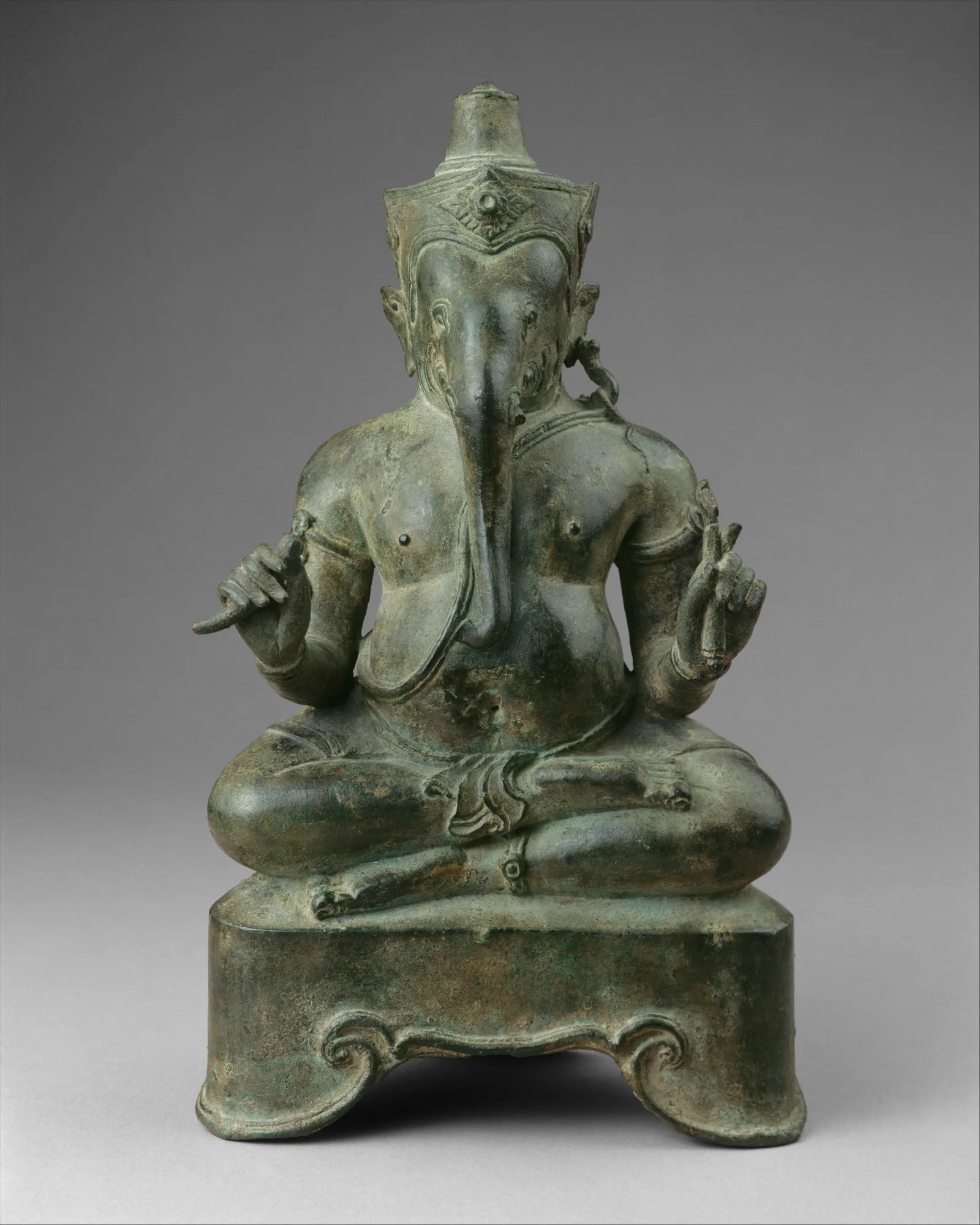
An elephant head on a human body, a round belly, four arms, a sweet in one hand, and a serious little mouse at his feet. People recognise Ganesha even if they have never opened a single Indian text. He is shaped from clay for the festival, struck on coins, cast in silver, and hung around the neck before an exam, a move, a wedding, or the launch of a business. He is the most "beginning" of all the gods: you turn to him in the first second of anything new, so he will clear the obstacle from the road.
This article is about who Ganesha is, where the elephant head came from and why there is only one tusk, what every object in his hands means, how people wear the image with respect, and what such jewellery is made of. No esoteric fog and no condescension toward someone else's faith.
Who Ganesha Is
Son of Shiva and Parvati
Ganesha belongs to the Hindu pantheon and is regarded as the son of Shiva, the great god of destruction and transformation, and the goddess Parvati. In the family of gods he has a brother, Kartikeya, the god of war. Ganesha himself is a warrior only in a figurative sense: his battlefield is obstacles, doubt, laziness, and chaos, not armies. His name joins the words "gana" (a host, a retinue, the crowd of spirit-helpers who follow Shiva) and "isha" (lord, master). The result is "lord of the hosts," head of the colourful retinue that surrounds his father.
Ganesha has dozens of names, and each one lights up a facet of his character. Ganapati means the same as Ganesha. Vinayaka is translated as "remover of obstacles" or "supreme leader." Vighneshvara is literally "lord of obstacles": he both sets barriers before those who would benefit from stumbling and clears them for those who are ready. Ekadanta means "the one-tusked," a direct nod to the broken fang.
Wear the symbol, don't just read about it. These are in stock:






Remover of Obstacles and God of Beginnings
Ganesha's main role in Hinduism is Vighnaharta, the one who removes obstacles. The logic runs two ways. He clears the path, and he decides for whom the path stays closed. So people address him twice: to take away a hindrance and to keep him from setting a new one. From this role grows a second one: the god of fortunate beginnings. In Indian tradition almost any undertaking is opened with an appeal to Ganesha, whether a wedding rite, the building of a house, the first page of a notebook, or the first day of trade in a new shop.
Patron of Wisdom, Writing, and Trade
Ganesha is tied to the mind and the word. He is considered the patron of study, the sciences, the arts, and writing. Students pray to him before exams, authors before starting a book, and merchants open new ledgers in his name at the festival of Diwali. This pairing of intellect and luck makes the image easy to wear: a single symbol covers both "give me a clear head" and "give me a smooth road."
Legends of the Elephant Head and the Broken Tusk
How Ganesha Got His Elephant Head
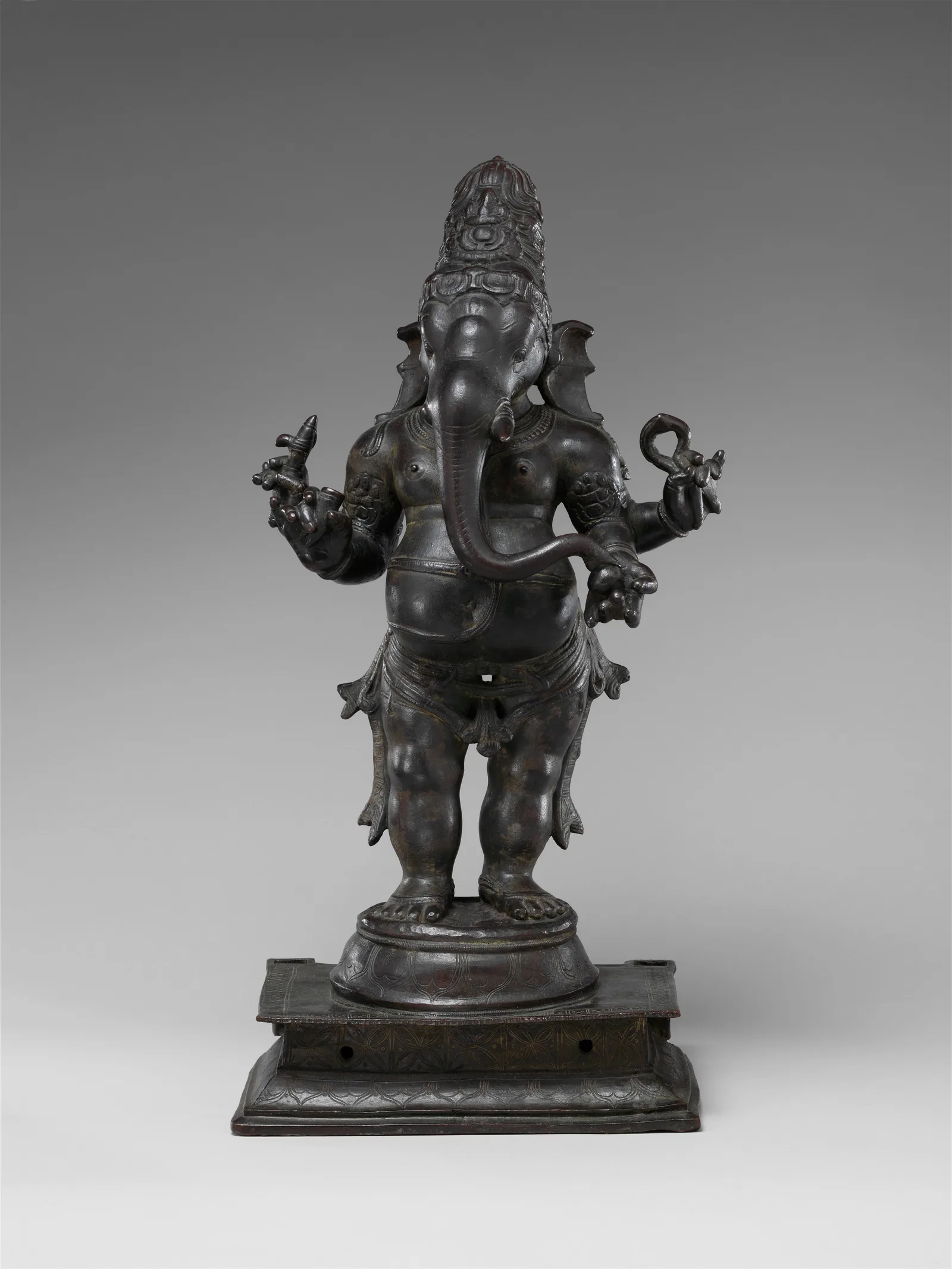
The best-known story reads almost like a family drama. Parvati, left alone, shaped a boy out of clay (or from the fragrant unguents of her own body), brought him to life, and set him to guard the entrance while she bathed. Shiva returned, and the boy, not recognising him, refused to let him in to his own wife. A quarrel flared, and in his rage Shiva struck off the boy's head. Seeing Parvati's grief, he swore to give the child the first head that crossed his path. The first was an elephant. So the human body received an elephant head, and the family was reconciled.
This legend has variants. In some versions it is not Shiva himself who takes the head but his retinue or another figure. In others the elephant is not random but specific, for example the elephant of the god Indra. But the skeleton is the same: the head is lost, replaced with an elephant's, and the replacement carries meaning. In India the elephant is a symbol of wisdom, memory, strength, and dignity, so the new head was no demotion.
A Dozen Versions of the Single Tusk
There are even more stories about the broken tusk, and they contradict one another, which is interesting in itself. The most beautiful is tied to a great poem. When the sage Vyasa dictated a vast epic, Ganesha took on the task of writing it down. The pen broke mid-dictation, and the agreement was not to pause. So Ganesha snapped off his own tusk and went on writing with it. A sacrifice for the sake of a finished work, very much in his character.
Another version is martial. The warrior Parashurama, a disciple of Shiva, came to see his teacher, but Ganesha would not admit him, guarding his parents' rest. A fight broke out, and Parashurama hurled the axe that Shiva himself had given him. Ganesha could have dodged, but he recognised his father's weapon and took the blow on his tusk rather than dishonor the gift. There are simpler versions too: the tusk broken in a brawl with a giant, lost because of the Moon that laughed at the heavy god, and so on. The jumble of legends is not confusion but the mark of a very old, living image that has gathered retellings over two thousand years.
Why There Are So Many Legends
Ganesha was not handed down by a single canonical text. His image was assembled over centuries from local cults, epics, and folk retellings, so every region and every era has its own favourite version. For a piece of jewellery that is actually a plus: the object carries not one frozen dogma but a whole fan of stories, from which the wearer picks the one closest to home.
Keep the elephant above the belt, never on the buckle. Ganesha rides at the collarbone, and that is that.
How to style Ganesha
Over the years Ganesha has moved through festive looks and quiet everyday wardrobes with me. It is a strong symbol but fussy about its setting, so here is what actually helps, sorted by occasion.
What do I wear Ganesha with every day? For daily wear I recommend a restrained silver pendant of medium size on a thin 45 to 50 cm chain. It sits just under the top button of a shirt and reads as a personal detail rather than a loud declaration of faith. A light top lifts the chased trunk and folds, a dark one turns the figure into a quiet accent. Under a V-neck I suggest a shorter chain so Ganesha lands cleanly in the open zone.
How do I choose a piece as a gift for a big event? For a wedding, a housewarming or the launch of a business I choose gold or silver with bright enamel: a red or gold fill on the god's robes looks festive and reads at once as an occasion piece. This Ganesha is meant to be seen, not tucked under a collar. Give it in a soft pouch, kept apart from other jewellery, since enamel dislikes the company of hard stones.
Can I combine Ganesha with other symbols? Yes, and in the Indian tradition it is common. I recommend staying on one cultural line: Ganesha sits cleanly next to the syllable Om or a lotus, they come from the same world. Mixing it into a stack with amulets from unrelated traditions I would avoid, since you get a busy jumble with no shared meaning. One Ganesha on a clean chain always beats one squeezed between five pendants.
Which format fits my rhythm? If you want the symbol always in view, I suggest a ring or a bracelet with a carved bead: your hand catches your eye before every task. If you wear jewellery quietly and close to yourself, a pendant under clothing suits you better. Choose wooden or stone beads if touch matters to you; sandalwood warms pleasantly in the hand but fears water, so take it off before a shower.
Who does Ganesha actually suit? Anyone who likes a piece with meaning and a story rather than bare shine. It sits equally well on a minimal look and an ethnic one. Two rules that never fail. First: choose the material for its role, silver for everyday, gold and enamel for celebration, wood and stone for a meditative mood. Second: wear Ganesha above the waist and with respect for its source; this is not a print but a living image, and that awareness is what makes it a working talisman.

Turn on your camera, pick earrings, a pendant or a ring, and see the piece on yourself in real time.
Switch items in one tap.
Everything runs in your browser: no photo or video is ever uploaded.
Where the Image Came From and How It Spread Across the World
Ancient Roots of the Cult
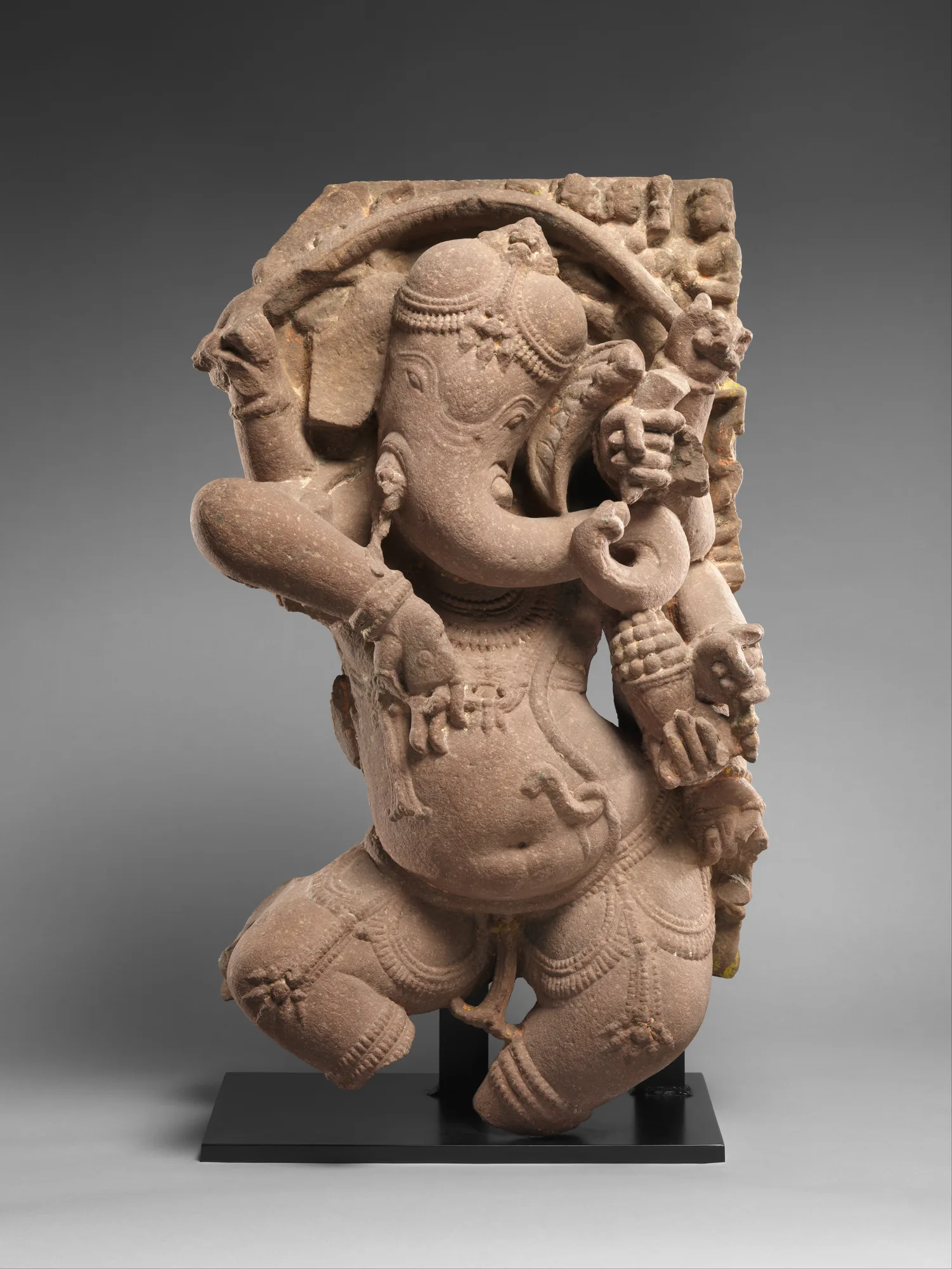
The elephant-headed deity did not appear in Indian art all at once. Scholars date early mentions of a figure that removes or sets obstacles to the first centuries of the common era, and by the fifth or sixth century Ganesha is a steady presence in temple sculpture. Some researchers see in him the heir of older vighna spirits, minor deities of hindrance that people appeased before a task. Over time the scattered cults merged into one vivid image, and from a secondary averter of misfortune Ganesha grew into one of the most beloved gods of the pantheon.
The Texts That Fixed Him
The image gathered its own sacred texts. There are separate Puranas devoted to Ganesha that collect the legends of his birth, his tusk, his deeds, and his thousand names. From these texts came the habit of listing his epithets in long catalogues, each highlighting a separate facet: sage, sweet-tooth, fierce guardian, kind patron. The more texts there were, the more details later found their way onto statues and jewellery.
Ganesha Beyond India
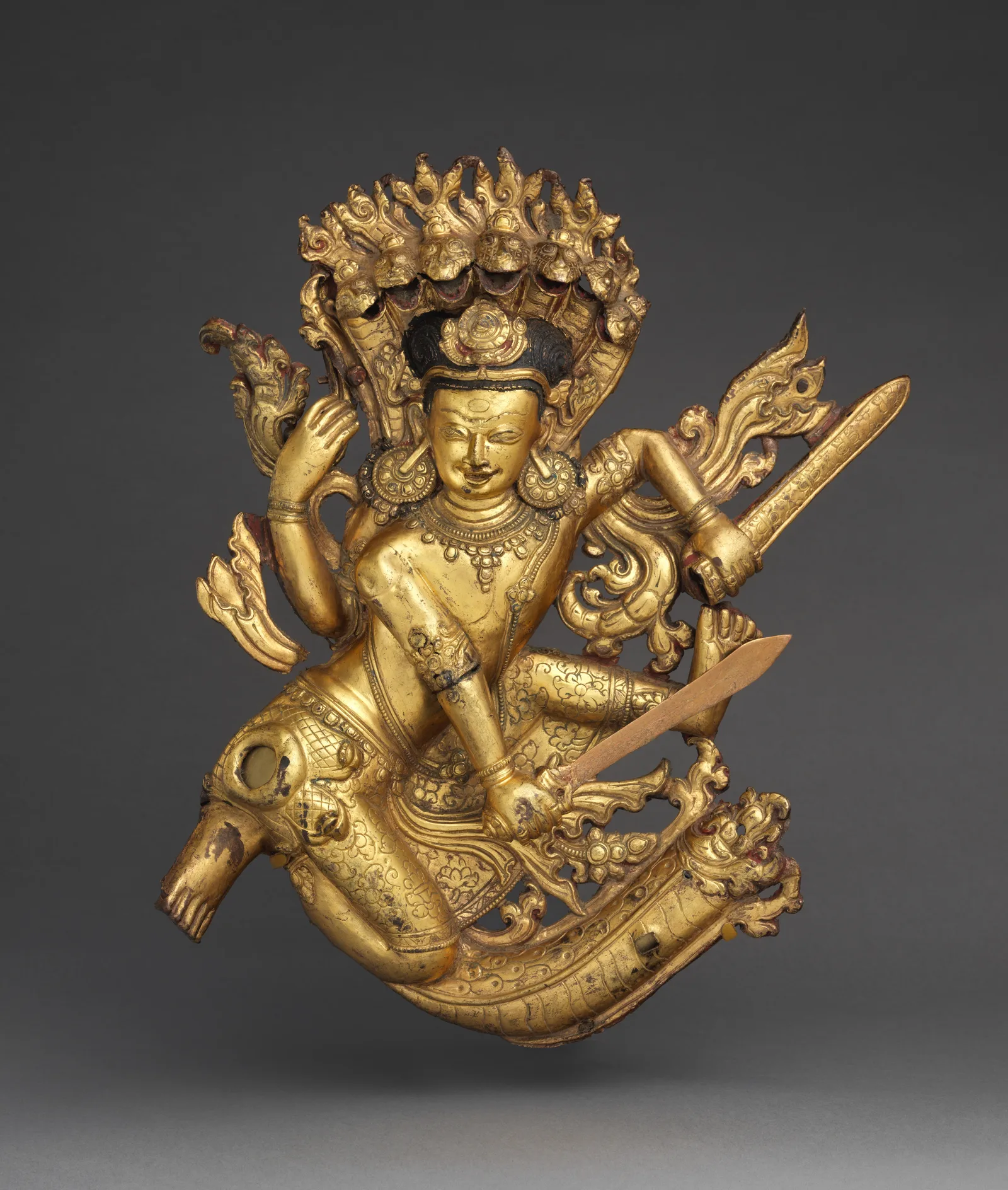
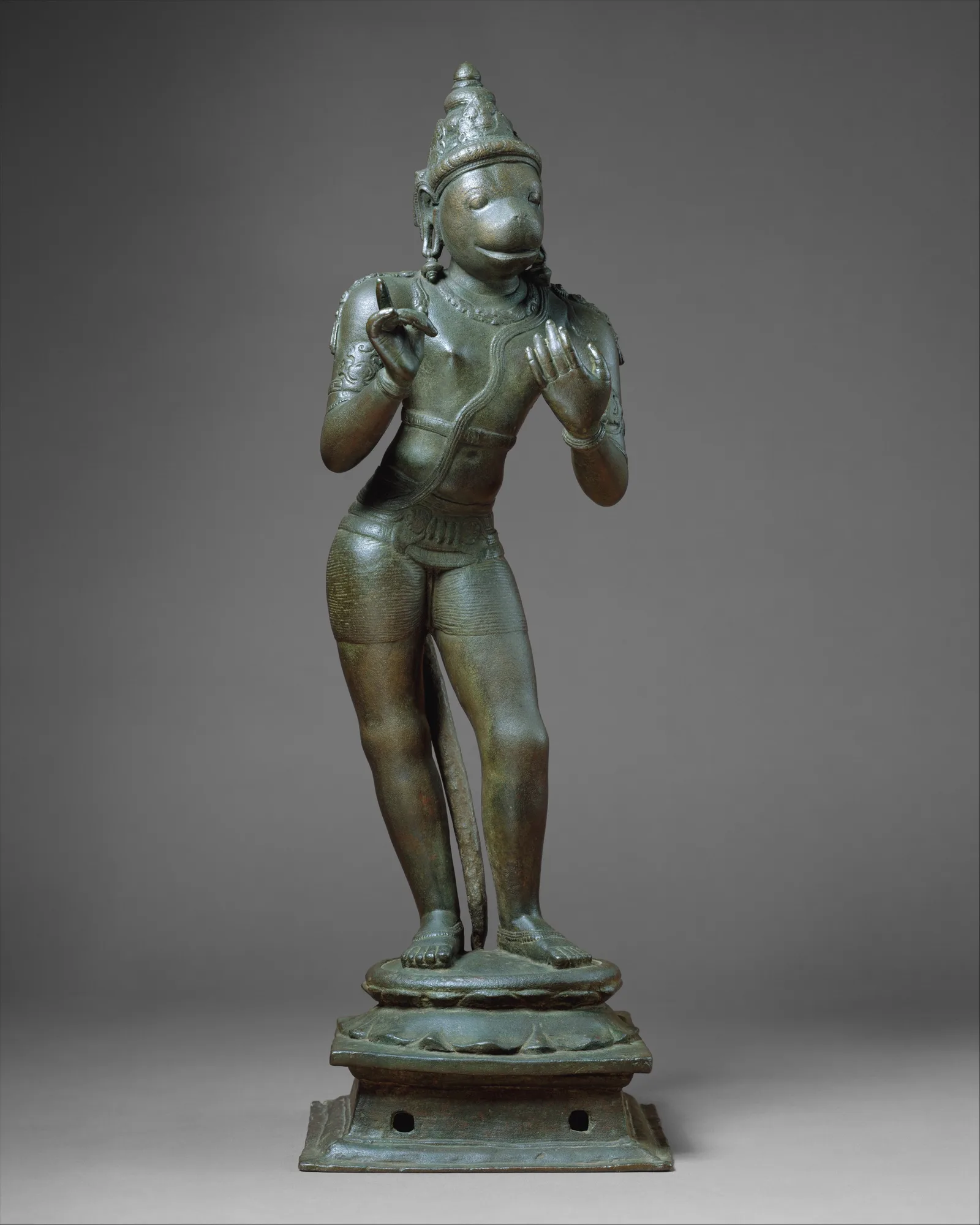
The elephant-headed god travelled far from his homeland with merchants, monks, and settlers. In Buddhism he appears as a protective deity; in Nepal and Tibet he takes on local traits; in Thailand he is honoured as Phra Phikanet and linked with the arts and commerce. Traces of the cult are found in Japan, on Java and Bali, and in medieval Cambodia. This wide geography explains why the styles of Ganesha jewellery differ so much: Nepalese repoussé, Thai gilding, and South Indian bronze give very different faces to the same god.
Ganesha's Festivals and Their Trace in Jewellery
Ganesha Chaturthi
The main festival in the god's honour is Ganesha Chaturthi, a multi-day celebration especially lavish in western India. People mould clay figures, from tabletop size to enormous, honour them for several days, and then carry them in a musical procession to lower them into water, seeing the god back home. During these days it is customary to give and wear images of Ganesha, so the festival revives the trade in silver and gold figurines, pendants, and rings. A piece received at Chaturthi is thought an especially lucky beginning.
Diwali and New Beginnings
At Diwali, the festival of lights, Ganesha is honoured together with Lakshmi, the goddess of wealth. Merchants start new ledgers, families open the financial year, and the image of the obstacle-remover fits naturally into this theme of a clean start. Many people buy or give small Ganesha pieces specifically for Diwali, as a symbol of a fortunate money year.
A Festive and an Everyday Piece
Because of this seasonal link, Ganesha jewellery lives in two modes. The festive version is an ornate gold or enamel figure worn on special days and given for major events. The everyday version is a restrained silver pendant or ring worn constantly as a personal talisman. When buying, it helps to decide at once which of the two roles the piece will play.
Customer reviews
Zevira is a real jewellery shop. Genuine payments, deliveries and customer thank-yous.
🥰🥰🥰 gracias
Ok, ¡gracias! 🙂
The Symbolism of the Attributes: What Ganesha Holds
The Elephant Head, Large Ears, and Trunk
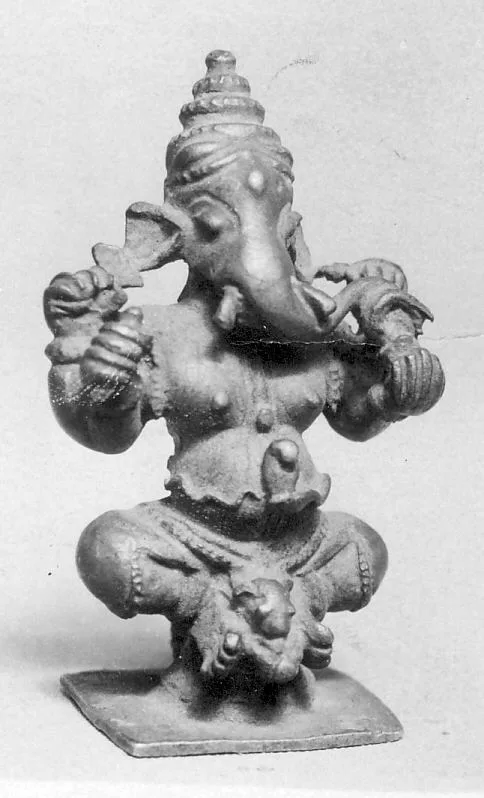
Every detail of the figure reads as a sign. The large head is about a large mind and breadth of thought. The big ears are about listening more than you speak. The small eyes are about concentration and attention to detail. The trunk is about adaptability: an elephant's trunk can uproot a tree and lift a needle, combining brute force with the finest precision. The curve of the trunk in figurines carries meaning too: an image turned to the left is considered gentler and more "domestic," turned to the right more austere and ritual.
Four Arms and What Is in Them
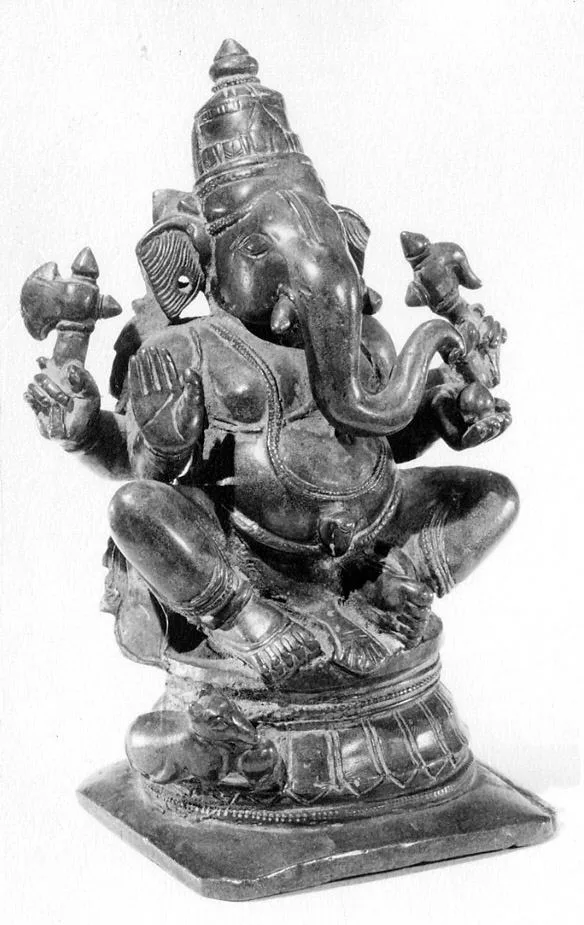
The classic Ganesha has four arms, and that is not about anatomy but about the deity's many tasks at once. Depending on the image, recurring objects appear in his hands. The noose or lasso symbolises the catching of desires and attachments, to pull a person closer to a goal and keep them from scattering. The goad, the pointed hook of an elephant driver, means direction and a nudge: with it the god removes barriers and urges movement. Often one hand is folded in a gesture that grants blessing and fearlessness.
Laddu, Modak, and the Sweet Belly
In one hand or in his trunk Ganesha almost always holds a sweet. The modak is a steamed dumpling of rice flour filled with coconut and palm sugar, the god's favourite treat. The laddu is a ball of flour, clarified butter, and sugar. The sweet is a symbol of the reward for spiritual labour and the fruit of wisdom: knowledge brought to ripeness turns sweet. The rounded belly, meanwhile, is not about gluttony but about the ability to calmly "digest" everything life brings, the good and the bad.
The Mouse as Vahana
Every Hindu deity has a vahana, a mount, and for the enormous Ganesha it is a small mouse or rat named Mushika. The contrast is deliberate. The mouse is nimble, slips through any crack, and gnaws through any barrier, a symbol of small nagging desires and hindrances. The heavy god seated on a tiny rodent is the image of a mind that keeps petty temptations under control, not the other way around. The mouse at Ganesha's feet almost always looks toward its master, waiting for a command.
Upload a photo of your pet, someone you love, or an object. We'll build a 3D model and hand-cast it in pewter.

Why Ganesha Is Invoked at the Start of Anything
First Among Those Addressed
Hindu ritual has a firm rule: Ganesha's name is spoken before the other gods'. There is a legend that explains the privilege. The gods were offered a contest: whoever circled the whole world first would take precedence. The brother Kartikeya raced off on his peacock to fly around the earth. Ganesha simply walked, unhurried, around his parents, and said that for him Shiva and Parvati were the whole world. Resourcefulness beat speed, and the right of first address went to him.
Opening a Wedding, a Home, and a Notebook
In practice this means Ganesha appears at the start of important events. Wedding invitations in India are often decorated with his figure. At a housewarming his image is set by the entrance. Schoolchildren write his name on the first page of a new notebook. At Diwali merchants begin new ledgers with an appeal to him and to Lakshmi, the goddess of fortune. Ganesha jewellery is a portable version of the same gesture: a symbol of beginning that is always with you.
Prayer Before a Task as a Ritual of Composure
Turning to Ganesha before you begin is a way to settle, not an empty formality. By speaking his name or simply touching the pendant, a person puts a pause between "I want" and "I do," and in that pause they gather themselves. Psychologists have long described the value of such micro-rituals: they lower anxiety and restore a sense of control. So the jewellery works not instead of effort but as its trigger, a small anchor that sets a working mindset in motion.
The Obstacle as Part of the Path
The image of Ganesha holds a non-obvious wisdom: the obstacle is not always the enemy. Sometimes a barrier he sets guards against a hasty, harmful step. So believers ask not "clear everything from the road at any cost" but "let me pass what is good for me, and stop what is harmful." This duality makes the symbol mature; it is not about blind luck but about reasoned movement.
The Many Faces of Ganesha: Forms and Colours
Thirty-Two Forms
The iconographic tradition describes many canonical forms of Ganesha, and people often speak of thirty-two classic appearances. Each differs in pose, the number of arms, the set of objects, and the mood. There is Bala Ganapati, the infant god with fruit in his hands. There is the heroic Vira Ganapati with a whole arsenal of weapons. There is a dancing one, one seated on a lotus, one embracing his consort. For jewellery the calm seated forms are most often chosen, but knowing about the variety helps explain why two figures of the same god can look so unlike.
Colour and Its Meaning
Descriptions give Ganesha different skin colours, and each carries a shade of meaning. Red is linked with energy, action, and protection, so a red Ganesha is often invoked to remove barriers. White is associated with purity and calm, gold with wealth and celebration. In enamel jewellery these colours are deliberately played up: red or gold fill on the robe is both decoration and a nod to the needed facet of character.
Alone or With Family
Ganesha is shown both alone and surrounded. In some traditions he has consorts whose names translate as Fortune and Achievement, and sometimes Prosperity is added. Family compositions are rare in jewellery because of their complexity, but they appear in large festive sculpture. For an everyday piece a single figure is almost always chosen; it is more concise and reads more clearly.



Pose, Gestures, and Related Symbols
Seated, Standing, and Dancing
Ganesha is depicted in different ways, and the pose changes the mood of the image. A seated Ganesha, more often cross-legged, conveys calm, stability, and focus; it is the most "domestic" and meditative option for everyday wear. A standing one expresses readiness to act and resolve. The dancing Ganesha, Nritya Ganapati, is full of joy and movement, chosen for its light, festive feel.
Hand Gestures and Their Meaning
The position of the palms in Indian iconography is a language of its own, the mudras. The gesture with a raised open palm facing the viewer grants protection and removes fear. The gesture with the palm turned down and open means giving and generosity. Their combination reads as "do not be afraid, and receive." Jewellery often keeps these gestures even when the figure is heavily stylised.
Om, the Lotus, and the Ancient Swastika Sign
A circle of related symbols stays around Ganesha and appears on the same jewelry. The syllable Om is the primal sound from which, in Indian tradition, the universe began, and its outline is sometimes brought close to the silhouette of an elephant head and trunk. The lotus is the flower of purity that grows from the mud yet stays unstained; Ganesha often sits on it or holds it.
The swastika deserves a separate word, because in European culture this sign is unambiguously tied to the crimes of the twentieth century and provokes justified rejection. In the Indian tradition, however, the svastika is one of the oldest symbols of well-being and luck, its Sanskrit name meaning "that which brings good." It was drawn on thresholds, in ledgers, and beside Ganesha for thousands of years before it was perverted and seized by an ideology of hatred. These are different signs that share only their outline, and in the Indian context the meaning is strictly the original, peaceful one. On jewellery for European wear this sign is deliberately not used, so as not to multiply misunderstanding.
How to Wear Ganesha With Respect If You Are Not Hindu
Can You Wear Someone Else's Religious Symbol
The short answer: most often yes, on condition of respect. Hinduism is open by nature and does not divide the world into "us" and "them" as strictly as the Abrahamic religions. Wearing an image of a god out of curiosity, affection, or a wish for luck is not considered an insult, as long as it is done without mockery and without turning the sacred into a joke. Many Indian teachers say outright that sincere respect matters more than formal membership.
Tactful Boundaries
A few simple guidelines will spare you any awkwardness. You should not place a deity's image below the waist, on shoes, on underwear, or anywhere it would end up in a degrading position; in Indian culture that is considered rude. A pendant or a ring on the hand raises no questions. If you find yourself in a temple or visiting a devout family, calmly follow their rules. And it is worth remembering that for millions of people this is not a fashion print but an object of living faith, so jokes and caricature are out of place. The same careful approach suits any amulet or talisman from another tradition.
Why Respect Is the Point of the Amulet
Any protective symbol works first of all through the wearer's attention. When you choose Ganesha consciously, understanding what he means, the jewellery stops being just a shape of metal and becomes a daily reminder: begin calmly, listen more than you speak, do not let small things knock you off the path. In that sense, respect for the source is the working part of the talisman.
Leave your email, we'll send your discount code. No spam, unsubscribe anytime.
The code arrives by email, valid on your first order.
What Ganesha Jewellery Is Made Of
Silver
Silver is the most common material for Ganesha both in India and beyond. The metal is considered pure, cool, and tied to the Moon; it is easy to detail, and fine chasing renders the trunk, the folds, and the sweet in the hand well. Silver is affordable, takes on a patina over time that deepens the relief with dark shadows in the recesses, and is equally at home in men's and women's pieces. For everyday wear it is the most practical choice.
Gold
In Indian culture gold is the metal of the sun, of wealth and celebration, so a gold Ganesha is often given for weddings, births, and major beginnings like opening a business. Yellow gold is traditionally closer to the Indian aesthetic, but the image looks good in more restrained tones too. A gold figure is seen as a gift "of luck with weight," a piece kept for years and passed on.
Sandalwood and Other Woods
A carved sandalwood Ganesha is a tradition of its own. Sandalwood is fragrant, warm to the touch, and tied in Hinduism to ritual purity; its paste is used in temple rites. A wooden figure is light, pleasant to hold, and over time the wood darkens and polishes from the hands. As jewellery, beads and small carved pendants are the more common form. One drawback: wood fears water and needs gentle handling.
Jade, Stones, and Enamel
Ganesha is also carved from stone. Jade, with its deep green colour and tough strength, is especially good for miniature carving and is considered a stone of luck and protection in many Asian traditions. You also find figures of onyx, lapis lazuli, and rose quartz. A separate branch is silver with coloured enamel, where the god's robe and background are filled with bright colours; such a Ganesha looks festive and recognizably "Indian."
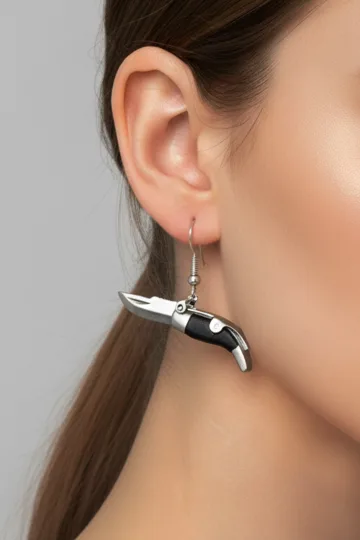
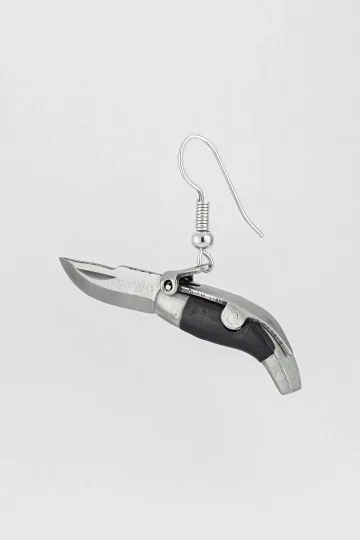
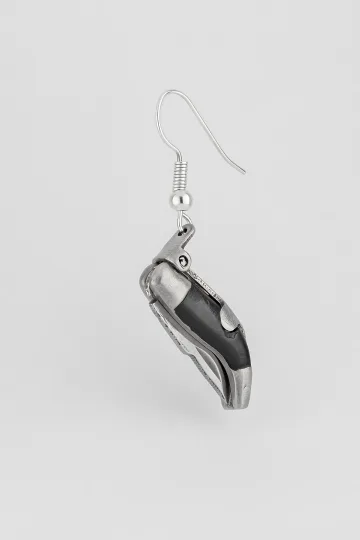
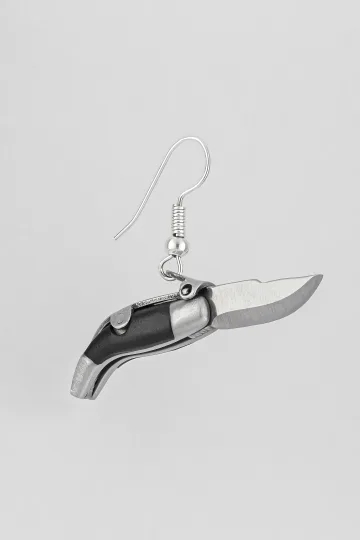
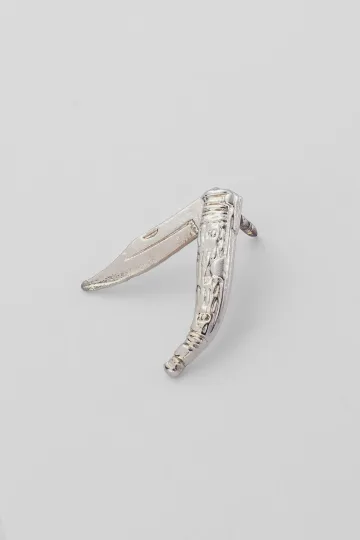
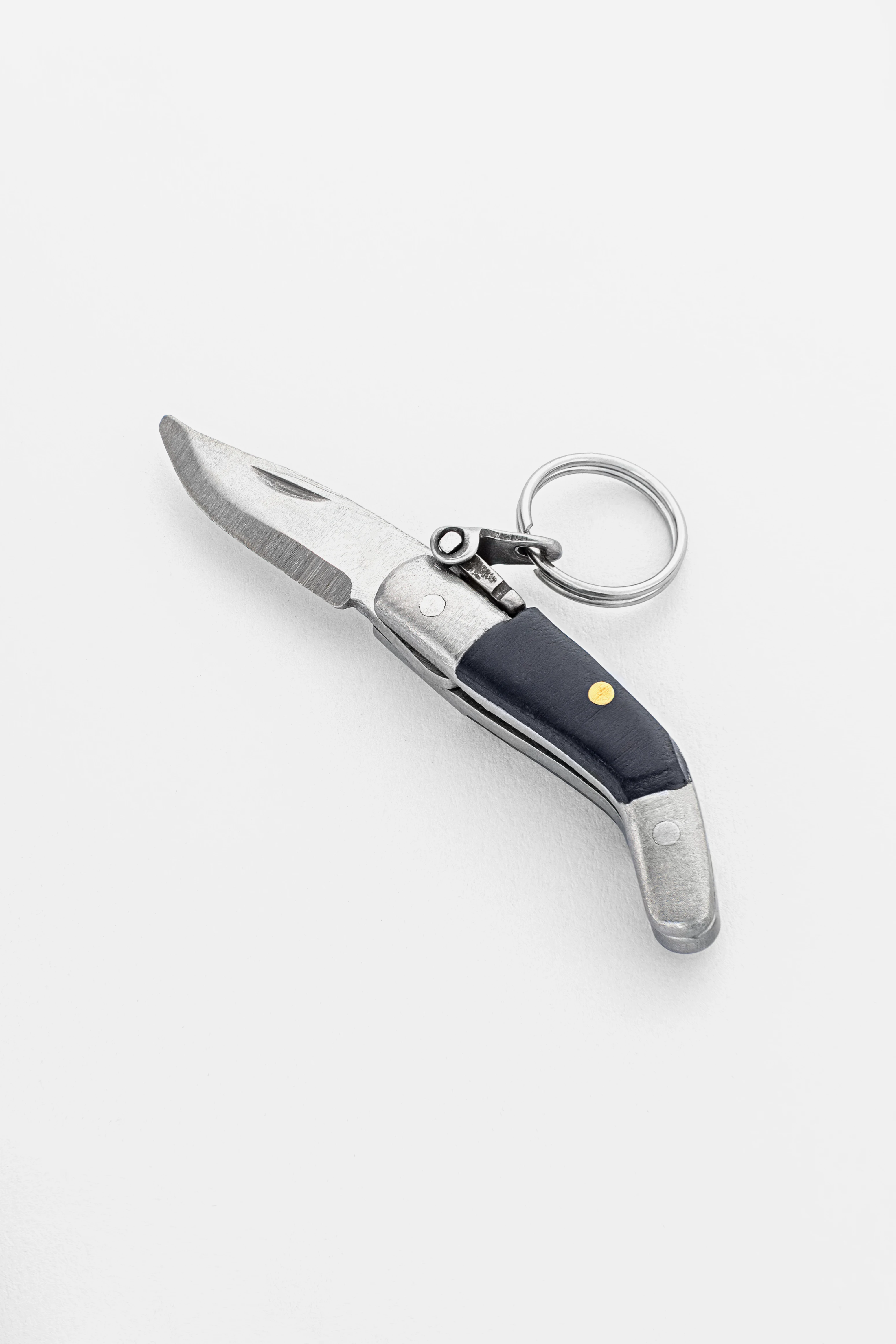
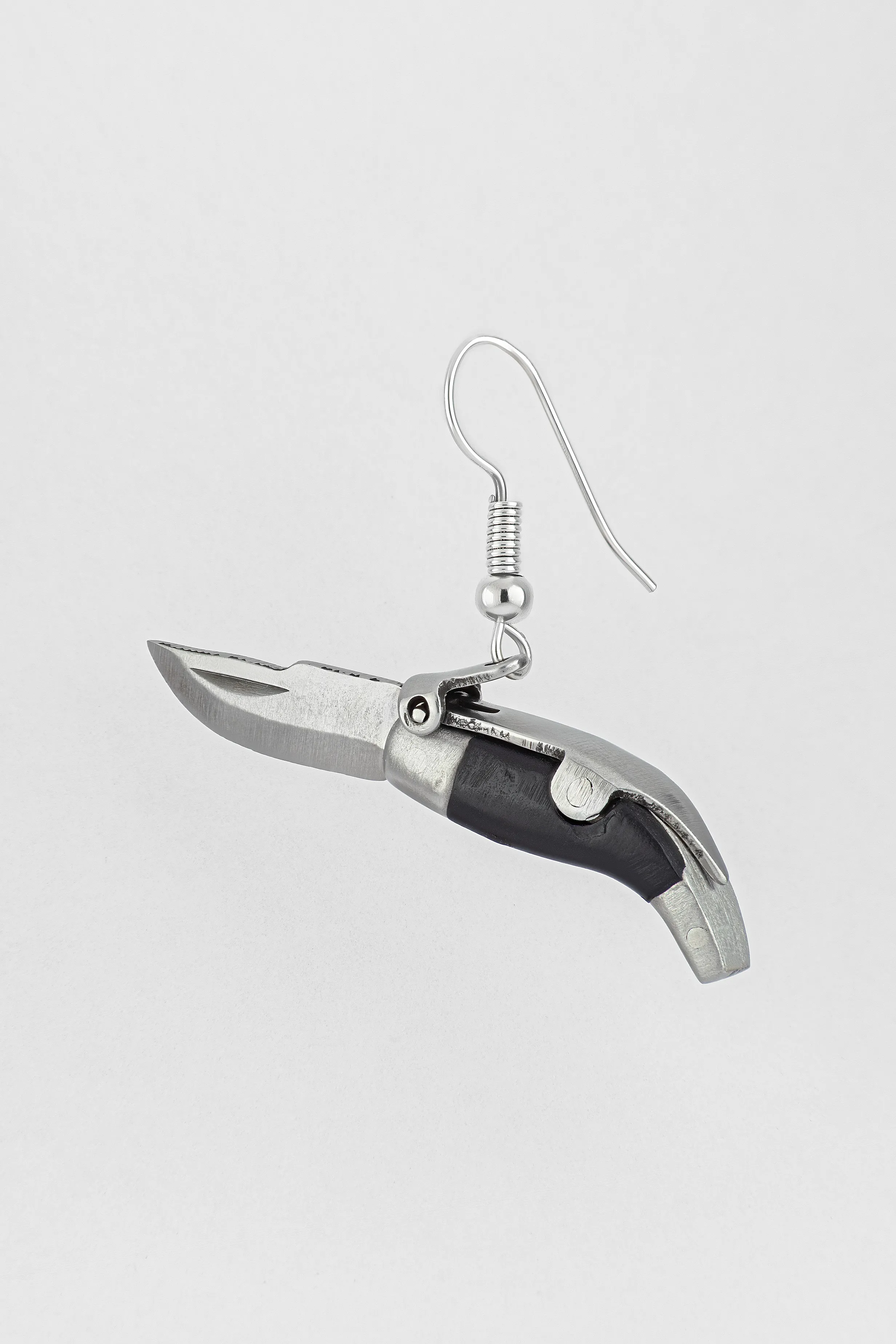
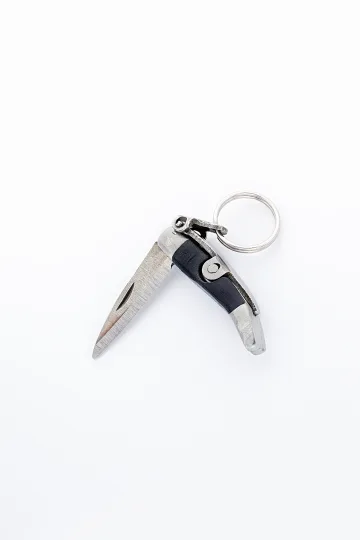
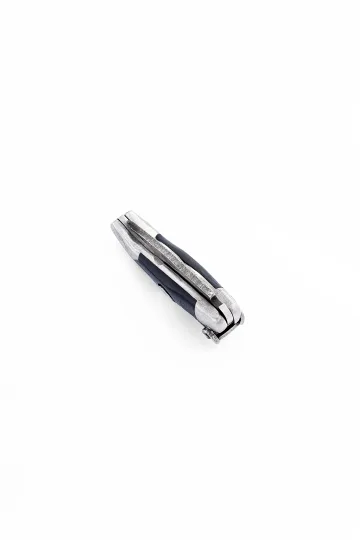
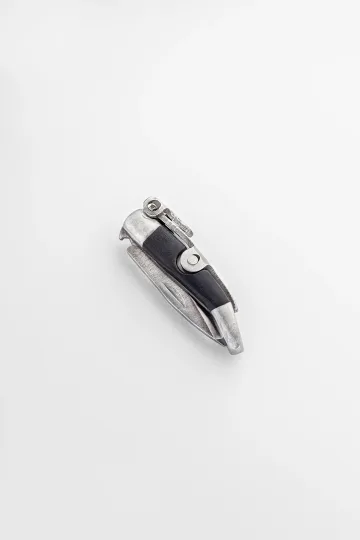
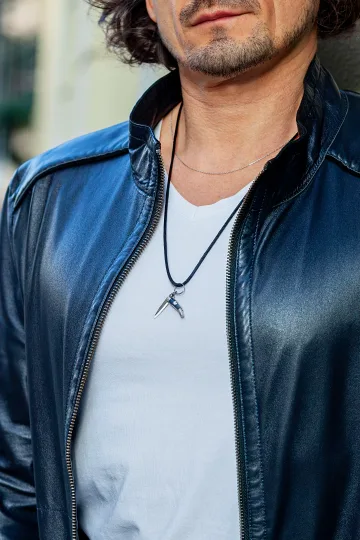
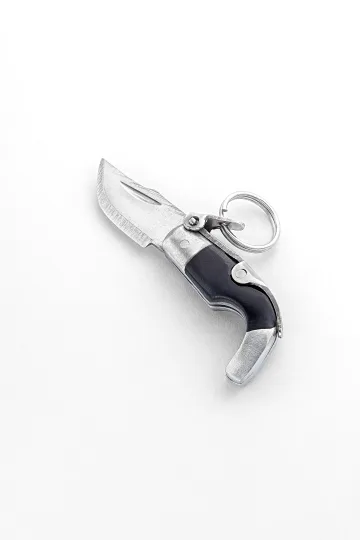
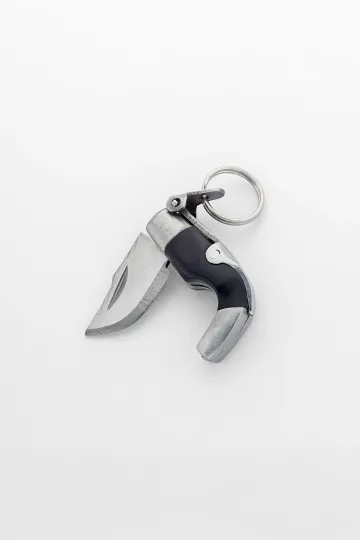
CAPAORA mini knife pendant
The 18th-century Spanish navaja in miniature: 40 mm of stainless steel, a real folding mechanism and a Palanquilla lock that clicks. An affordable gift to remember.
Authentic · Ships from Spain · 14-day returns
In What Kind of Jewellery Ganesha Is Worn
Pendant
The pendant is the most natural format: the image rests on the chest, close to the heart, and is easy to hide under clothing or to show. A Ganesha pendant is often made double-sided, with relief on the front and the syllable Om or a mantra on the back. Size is chosen to suit the occasion: a large medallion for a festive look, a tiny figure for discreet everyday wear. A pendant is also convenient because it is not tied to a size, which makes it easy to give.
Ring
A Ganesha ring is rarer but striking: a tiny three-dimensional figure or a relief on a signet. Such a protective ring keeps the symbol always in view, close to the idea of a constant reminder to gather yourself before a task. One drawback: a raised relief on a ring wears down faster and needs more careful upkeep than a smooth band.
Bracelet and Beads
In bracelets Ganesha appears as a separate charm or as a carved bead among others, especially in the tradition of prayer beads and sandalwood strands. Wooden and stone beads bearing the god's face are strung together with smooth ones, so the relief figure does not catch on clothing. A bracelet is convenient because the symbol stays in your field of view on the wrist and combines easily with other amulets.
Earrings and Small Objects
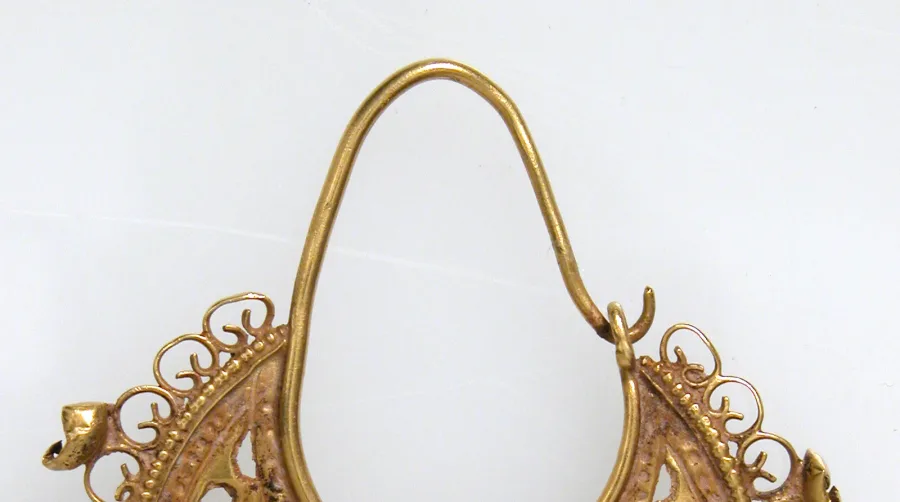
Ganesha earrings are more common in the South Indian tradition, where the image is worked in fine gold granulation. For an everyday European wardrobe, earrings with a deity are rare, chosen more for an ethnic or festive look. There is also tiny work: keychains, clips, figures for a bag or a car that are not formally jewellery but carry the same sense of a companion on the road.
Who Ganesha Jewellery Suits
Those Starting Something
If a person is launching a business, changing careers, or opening something of their own, the symbol of the obstacle-remover lands exactly right. What works here is not magic but focus: the piece on the neck is a reminder that any big undertaking is made of hindrances cleared one after another. For such a person Ganesha works both as a personal talisman and as a gift "with a wish for the start."
Students and Those Who Are Learning
The patron of the sciences and writing is an obvious choice for a student, a graduate, or anyone settling down to serious study. A small pendant before an exam calms the nerves as well as a ritual with a favourite pen. It is a neat, unobtrusive gift for an older schoolchild or a student that does not look ostentatiously religious.
Travelers and Those in Transition
The road is one long string of beginnings and unforeseen obstacles, so Ganesha is a frequent companion of travellers. People take him on trips, hang him in the car, and give him before a move to another city or country. For those standing on the threshold of big changes, the image of a beginning and a cleared path gives a calm sense that the road will be passable.
Ganesha as an Amulet: Luck, Feng Shui, and Removing Barriers
A Talisman for Luck and Clearing Obstacles
As an amulet Ganesha is worn with two meanings: to draw luck in one's affairs and to remove what is in the way. In this he differs, for example, from classic luck symbols like the elephant, which speak of well-being and strength in general. Ganesha is more specific: he is about overcoming a barrier and a fortunate beginning. So he is chosen not "for happiness in general" but for a particular situation where there is an obstacle and a start is needed.
What Feng Shui Says
In feng shui, though it is a Chinese system, the image of Ganesha has caught on as a universal symbol for removing barriers. The figure or image is advised to be placed by the front door, facing into the home, as a "gatekeeper" of luck, and also in the work or study area to support clarity of thought and the progress of affairs. It is thought fortunate to give such an image rather than buy it for oneself, though there is no strict ban on buying it yourself. A trunk turned to the left is linked in feng shui with domestic peace, to the right with career and finances.
How the Image Actually Works
Without esoteric promises, the amulet's benefit is quite real and psychological. A visible symbol of beginning lowers the anxiety before a new step, and the habit of "turning to Ganesha" before a task becomes a small ritual of composure. It works the same way as a favourite pen at an exam or an athlete's lucky shirt: it is not the metal that moves events but the mindset the metal anchors.
Send a friend a discount code, they save on their first order.
Facts That Surprise
- Ganesha has more than a hundred names, and in some traditions they are counted as one thousand and eight, each for a separate facet of character and a separate prayer.
- Once a year statues of Ganesha are sent en masse into the water. At the Ganesha Chaturthi festival clay figures are lowered with honours into rivers and the sea, symbolically seeing the god home, and this has become an environmental problem because of plaster and paint, so dissolvable figures of clay and cow dung are increasingly moulded.
- In one legend the Moon laughed at how Ganesha tumbled off his mouse after overeating sweets, and the god cursed it. Because of this, by belief, you must not look at the Moon on Ganesha Chaturthi, or you will bring slander upon yourself.
- Ganesha is honoured far beyond India: his image appears in Buddhism and in the art of Nepal, Tibet, Thailand, Japan, and island Southeast Asia, where he has local names and traits.
- The most famous epic of Indian literature was, by tradition, written down with Ganesha's very tusk, so the god is both a hero of the myths and their first "scribe."
- The heavy god rides a mouse, and the pairing overturns the usual logic: it is not the large that defeats the small by force, but the mind that keeps the small under control.
Comparison: Ganesha and Neighboring Symbols
To see where Ganesha sits among other "lucky" images, it helps to compare them by meaning and occasion. An elephant in jewellery speaks of well-being and strength in general, the lotus of spiritual purity, Om of a link to the sound of the universe. Ganesha is narrowly tuned to the start of affairs and the clearing of hindrances. If you want a general luck charm, the choice is wider. If it is about a specific undertaking, an exam, a launch, a move, the obstacle-remover is more precise than the rest.
Ganesha and the Elephant
People often confuse the two, and for no reason. The elephant as jewellery is a broad symbol of luck, memory, family strength, and dignity, readable in almost any culture. Ganesha borrows the elephant head but adds a specific mythology and a narrow function of beginning. The elephant suits a neutral "good luck" gift; Ganesha is the conscious choice of a person who understands what they carry.
Ganesha and Om
The syllable Om and Ganesha often live on one piece, and that is no accident. Om is the sonic foundation, Ganesha its visible embodiment in the role of the beginning of all beginnings. If Om is about a link to the whole universe and meditation, Ganesha is about applied action: to begin, to overcome, to arrive. Together they make the pair "mindset and deed."
Ganesha and the Lotus
The lotus is a symbol of spiritual growth through the mud of the world, and Ganesha often sits on it. The lotus speaks of inner purity and unfolding, Ganesha of practical progress. Whoever is closer to the theme of inner work is closer to the lotus; whoever is in the thick of affairs, to Ganesha.
Caring for Ganesha Jewellery
Silver and Gold
A silver Ganesha is cleaned with a soft cloth, and when it darkens with a special wipe or a mild solution, but the dark patina in the recesses of the relief is often left on purpose: it brings out the detail of the trunk and the folds. Take the piece off before a shower, a pool, and sleep, and keep it away from perfume and household chemicals. Gold is less demanding; warm water with a drop of mild soap and a soft brush is enough to bring the shine back into the relief.
Wood and Stone
A sandalwood or any wooden figure is kept away from water and sharp swings in humidity, wiped with a dry cloth, and now and then refreshed with a drop of neutral oil so the wood does not dry out. A stone Ganesha of jade or another mineral is washed in cool water and wiped dry, avoiding knocks against hard surfaces, because the fine carving is vulnerable on the projecting parts, especially the trunk and ears.
Storage
Keep the figure apart from other jewellery so the relief neither scratches nor gets scratched, ideally in a soft pouch or a separate compartment of a box. Enamel pieces especially dislike the company of hard stones. With careful handling a silver or gold Ganesha lasts for decades and calmly passes to the next owner, which is very much in the spirit of a symbol that is meant to be handed on anyway.
Enamel and a Coloured Ganesha
A multicoloured Ganesha with enamel painting on the robe and crown is cared for differently from plain metal. Enamel is glass fused to a base, and it fears the same things glass does: knocks, falls onto a hard floor, and sharp changes in temperature. Such a figure is cleaned only with a soft dry cloth, without abrasive pastes and without soaking, because rough cleaning scratches the gloss and over time chips the colour at the edges of the relief. Take an enamel Ganesha off before any impact load, and store it separately so the hard stones of neighbouring pieces do not leave scratches on the painting.
Buying it as a gift? Each one arrives ready to give.
 A branded Zevira box and a little card come with every order.






Frequently Asked Questions
Can I wear Ganesha if I do not practice Hinduism?
Yes. Hinduism is open, and wearing the image out of respect and affection is not considered an insult. The main condition is careful treatment: do not turn the sacred image into a joke and do not place it degradingly, for example on shoes.
What does Ganesha's broken tusk mean?
It is a symbol of sacrifice for the sake of a finished task and of accepting imperfection. By the best-known legend Ganesha broke off the tusk to finish a great poem when the pen broke. The word "Ekadanta," the one-tusked, became one of his names.
Why does Ganesha have an elephant head?
By legend his original head was struck off in anger by his father Shiva, who then, to revive his son, fixed on the first head that came to hand; it happened to be an elephant's. In India the elephant is a symbol of wisdom, memory, and dignity, so the replacement carried a high meaning.
What does the mouse at Ganesha's feet mean?
The mouse is his vahana, his mount, and a symbol of small desires and hindrances. The heavy god astride a tiny rodent means a mind that keeps petty temptations under control, not the other way around.
Which way should the trunk face?
There is no strict rule. In feng shui a trunk to the left is linked with domestic peace and gentleness, to the right with career and finances, and a straight trunk is considered rare and universal. For everyday wear it is a matter of taste.
Who is given Ganesha jewellery?
Those starting something, students before study and exams, travellers, and people on the threshold of change. In Indian tradition the image is often given for a wedding, a housewarming, and the opening of a business.
Can I buy Ganesha for myself?
Yes. The belief that an amulet is better received as a gift exists, but there is no strict ban on buying it yourself. A conscious personal choice of the symbol works no worse than a gift.
Which material is best for everyday wear?
Silver. It is stronger than wood, cheaper than gold, holds fine detail well, and over time takes on a beautiful patina that brings out the relief. For a ceremonial gift gold is more often chosen; for a meditative mood, sandalwood or jade.
About Zevira
Zevira is jewellery with meaning: symbols, amulets, and images from different cultures, made with respect for the source. We do not turn someone else's faith into a print but carefully carry the meaning into metal and stone, so the piece works as a daily reminder rather than a decoration. Silver, gold, natural stones, and an honest telling of the story behind every symbol.