How to Test Gold at Home: 7 Methods That Work and Where They Fail
A home gold test gives you a hint, not a verdict. A magnet, a drop of acid, or the weight in a glass of water will expose a crude fake, but only a jeweller with a spectrometer or a touchstone can name the exact karat. No kitchen method tells an honest 14K from 18K. So testing at home is worth doing, but trusting a single test blindly is not.
Here is the order of what follows: why gold gets faked and with what, how to read a hallmark, what a magnet shows and where it lies, how to weigh metal in water, what a drop of acid does to real gold and to brass, which folk tests work and which do not, and the moment you should stop torturing the piece at home and take it to a specialist. Every method, with its weak spot stated plainly.
Why gold gets faked and how
Gold gets faked for a simple reason: a gram of the metal costs as much as a few good meals, while a chunk of brass with the same shine costs about as much as a box of matches. That price gap for a thing that looks identical is the whole motive. The pricier the metal, the more people want to slip something cheap into its place.
Fakes come in different degrees of nerve. Understanding exactly what you are dealing with narrows the field of checks right away.
Gold plating: a thin layer over a cheap base
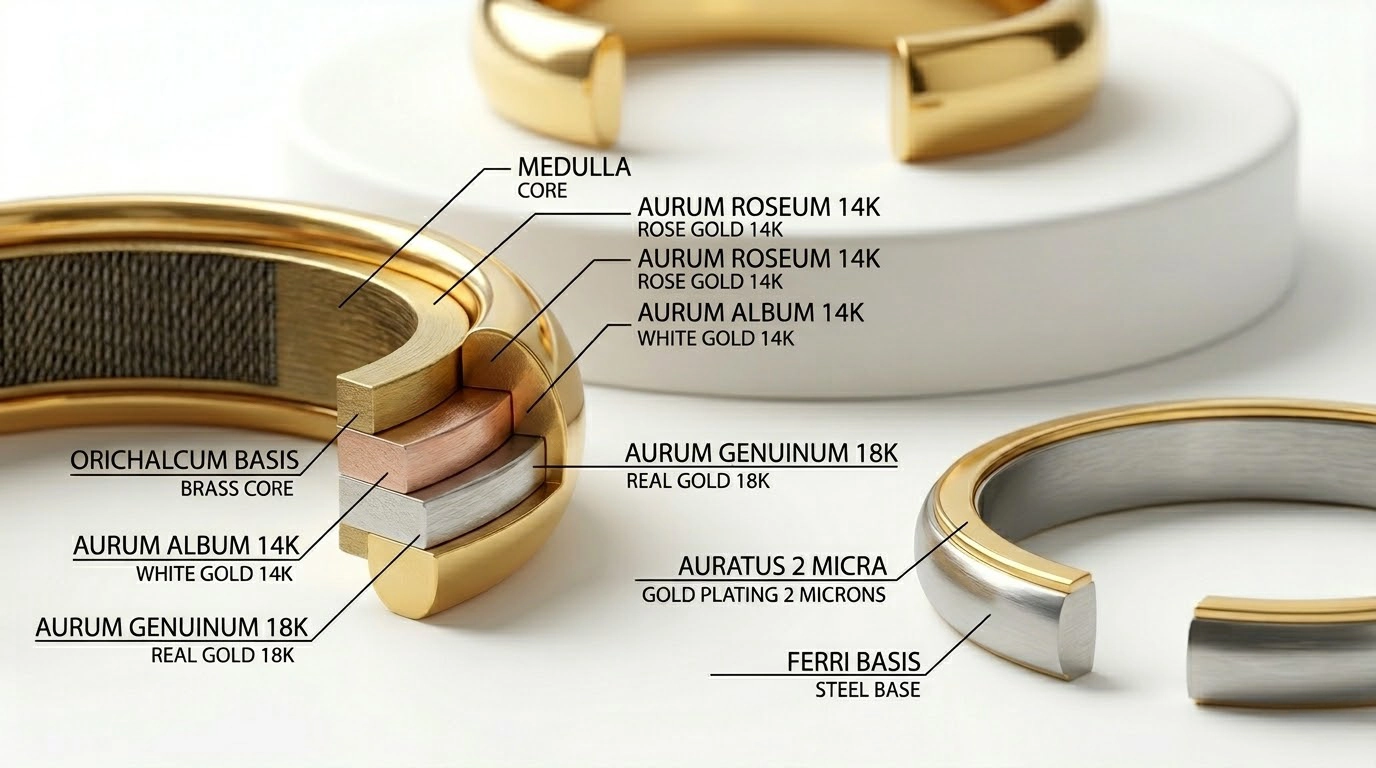
The most common and the most honest of the "deceptions." A thin layer of real gold is deposited over a base of brass, copper, or silver. The thickness is measured in microns, sometimes fractions of a micron. From the outside the piece looks gold, because on the outside it is gold. The trouble is the layer wears off, and within a year or two the yellow brass or whitish copper shows through on the edges and friction points. Plating is not always a trick: it is sold honestly as an affordable alternative. It becomes a trick when a thin coat is passed off as solid metal. We cover the difference between coating and solid metal in detail in our piece on gold plating versus solid gold.
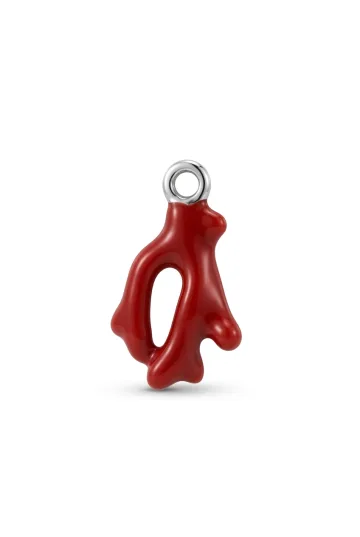
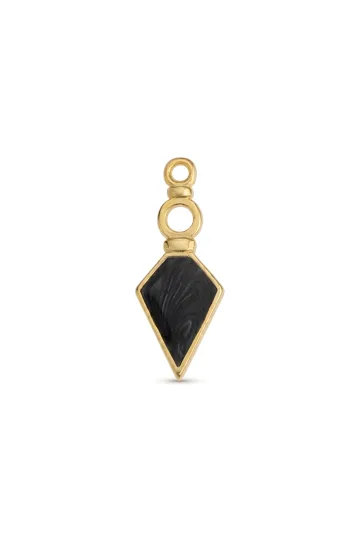
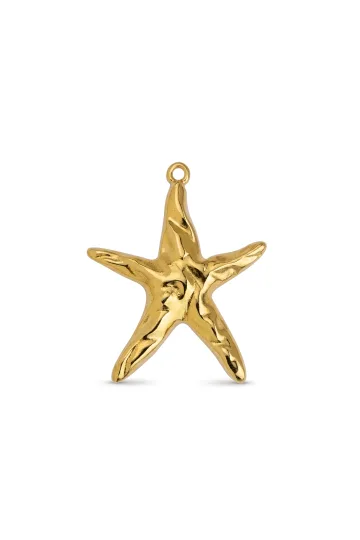
Wear the symbol, don't just read about it. These are in stock:
Rolled gold and gold filled
Rolled gold, sometimes called by the French term "doublé," is a thick layer of gold mechanically bonded to a base under pressure and heat. The layer here is far more serious than ordinary electroplating, sometimes tens of microns. The piece survives for years and is nearly impossible to tell apart from the outside. But it is still not solid gold, and a chip or a cut reveals a different core. In older jewellery this technique was used for watch cases and frames.
Brass and tombac dressed as gold
Brass is an alloy of copper and zinc, and by colour it can look very much like yellow gold. Tombac, a high-copper brass, mimics reddish gold. Without a coating, these pieces give themselves away with green on the skin and the telltale smell of copper on your hands. Brass is what most often "rings out" in cheap market jewellery sold as gold.
Tungsten inside bullion
A chapter apart, for investors, not for jewellery. The density of tungsten almost matches that of gold, so it is used to fake bullion: a tungsten core under a thin gold shell. Weight and size add up, and the home density test is useless here. Only drilling, ultrasound, or professional analysis can save you. In jewellery, tungsten appears honestly as a material for men's rings, and there it does not pretend to be gold.
Low-karat alloys sold as high
The most treacherous case. The metal is real gold, but there is less of it than claimed. Instead of 18K you are sold 9K, watered down with cheap metals. To the eye and to the magnet there is no difference: both are gold. Here home methods are nearly powerless, and it is for exactly this case that jewellers and spectrometers exist.
Method 1: hallmark and karat
The first thing to do is simply look at the metal closely. Most legal gold carries a hallmark, a tiny stamp with numbers and symbols. It is the fastest, safest way to form a theory about the metal without touching it at all.
What the karat number means and how to read it
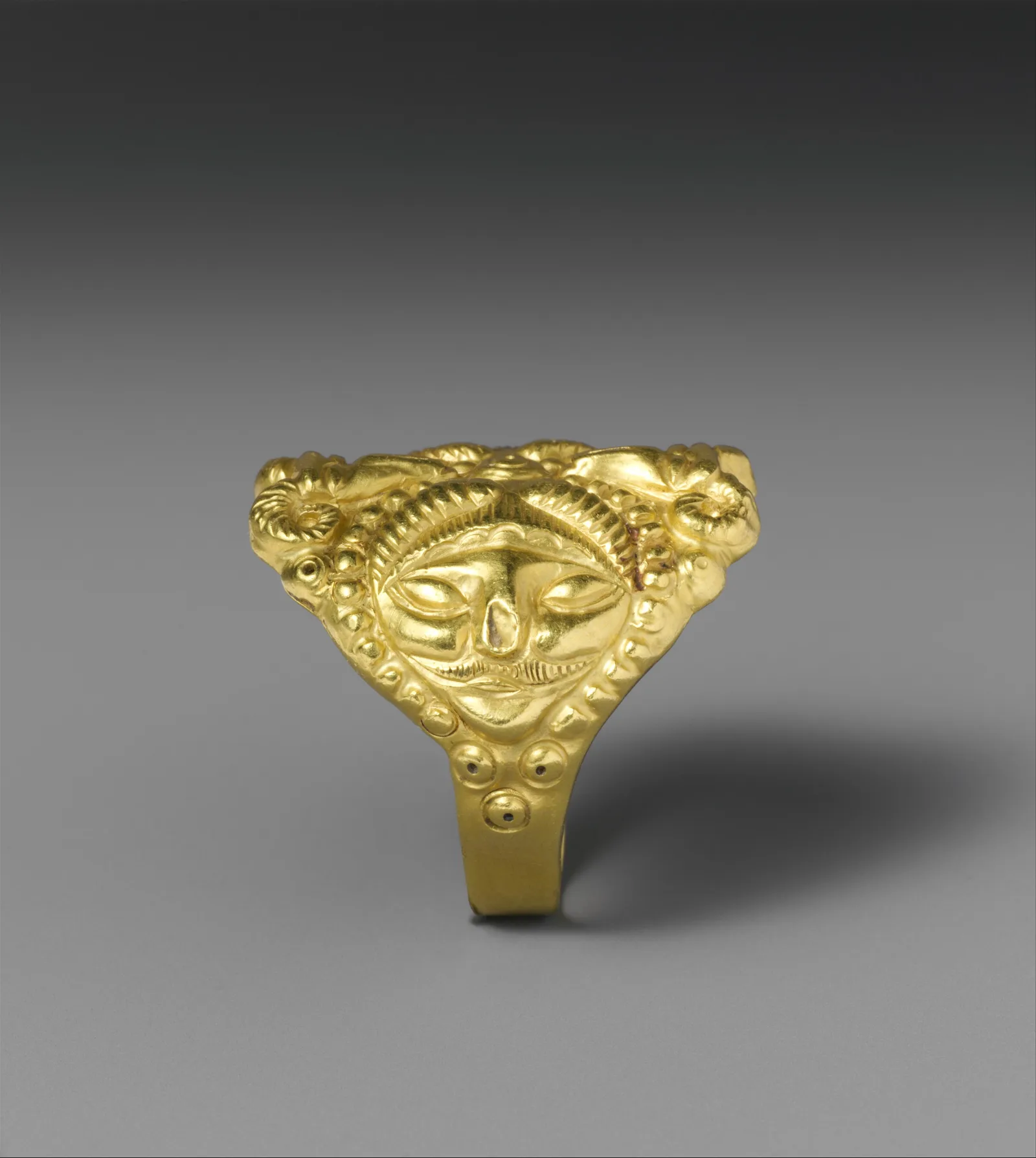
Fineness is the amount of pure gold in the alloy. In the metric system it is expressed in parts per thousand. A 585 mark means 585 parts of gold out of 1000, the rest being alloy metals: copper, silver, zinc. Pure 999 gold is almost never used in jewelry, it is too soft. The most common jewelry grades are 375, 500, 585, 750, and 958. The higher the number, the more gold and the pricier the metal. We pulled together a detailed breakdown of every value in our guide to hallmark meanings: 925, 585, 750.
The karat system and the metric one
In English-speaking countries gold is measured in karats, and that is a separate system, not to be confused with carats of gemstones. Pure gold is 24 karat. 18 karat equals 750 metric, 14 karat equals 585, and 9 karat equals 375. The conversion is simple: divide the karats by 24 and multiply by 1000. If an imported piece reads "585" or "14K," that is exactly the same gold content.
Where to look for the hallmark
On a ring the hallmark is usually inside the band. On a chain or bracelet it is on the clasp or on a small tag near the catch. On earrings it is on the post or on the back. The mark is tiny, and you often need a loupe or a phone camera with good zoom. Next to the fineness number there is usually a maker's mark, and in some countries a state assay-office stamp in the shape of a small figure or coat of arms.
State marks and maker's marks
Beyond the fineness number, a good piece often carries two more marks. The first is the maker's or workshop mark: a set of letters in a frame that lets you trace the piece back to whoever made it. The second is the official assay mark, which looks different from country to country: in some places a figure of an animal or a head in profile, in others a city's coat of arms, in others an alphanumeric code from the assay office. These marks are applied by an independent body after a real analysis of the metal, and they are harder to fake than plain digits. If a clean official mark and a maker's mark sit next to the fineness, the hallmark deserves more trust. If there are only bare "585" digits with nothing alongside, it counts for less.
Fake hallmarks
A hallmark is a strong sign, but not proof. Stamping a fake mark with "585" on it costs next to nothing, the die is pennies. So the hallmark works alongside other checks, not in place of them. It is suspicious when the digits are crooked, at uneven depth, blurry, or placed for show out in the open instead of hidden. A genuine hallmark is neat and tucked where it is out of sight when worn. The complete absence of a mark does not mean the gold is fake: old, handmade, and some Asian pieces may carry no fineness mark. But it is reason to check more carefully.
A separate trap is the right hallmark on the wrong metal. Sometimes a scammer takes a fragment of an old gold piece with a genuine assay mark, solders a cheap base to it, and sells the whole thing as gold. The mark is real, but it belongs only to the small fragment. So even a flawless stamp is worth backing up by checking the whole body of the piece: a magnet across different areas, an inspection of the solder joints, a weighing. One genuine mark does not make the entire object gold.
Gold that greens your finger is brass in a borrowed tuxedo. Wear the hallmark, not the plating, and no arguments.
How to choose and wear gold
Over years on set, hundreds of gold pieces have passed through my hands, from heirloom rings to fine chains. Once the karat is confirmed, the second question begins: which gold is yours, and how to wear it so it works for the look instead of just glinting on its own. Here is what actually helps you choose.
Which gold suits your skin tone? For a warm undertone (greenish veins, an even tan) I recommend yellow or red gold: it lights the skin from within. For a cool undertone (bluish veins) I suggest white gold, which gives a clean cool shine and never fights the skin. A neutral undertone takes almost anything, and there I usually choose rose as the most versatile warm option.
Yellow, white or red, what changes on the body? The alloy sets the colour, and each reads differently on skin. Yellow sounds classic and warm, white sharp and modern, red soft thanks to the copper in the mix. For a warm wardrobe (beige, olive, caramel) I choose yellow. For a cool one (navy, grey, black) I suggest white. Rose gets along with powdery, muted tones.
Which karat for daily wear? For a piece you never take off, I recommend 585: the colour is already rich and the metal is tougher than soft 750, so it scratches less against keys and keyboards. Save 750 for special pieces and rare wear, where depth of colour matters more than durability. Remember that higher karat is softer, and a thin 750 chain stretches faster.
How do you wear gold so it never looks cheap? The main rule: one good piece always beats a scatter of small ones. I suggest picking an anchor piece (a chain, a ring, a pendant) and building the look around it. Matte gold reads richer than mirror-bright, while a loud orange shine gives away plating more often than solid metal. Keep the piece clean: oils and cosmetics dull gold's own warm glow.
Can you mix gold and silver? Yes, and it has long stopped being a mistake; it is a technique. I recommend mixing on purpose: repeat both metals at least twice in the look, so it reads as intent, not accident. Yellow gold against silver gives a lively contrast, rose gently ties the warm and the cool. One condition: watch that cheap plating next to solid gold does not betray a difference in tone under the light.

Turn on your camera, pick earrings, a pendant or a ring, and see the piece on yourself in real time.
Switch items in one tap.
Everything runs in your browser: no photo or video is ever uploaded.
Method 2: the magnet
The magnet test is loved for its simplicity: bring it close and you see at once. It really does rule out part of the fakes, but overrating it is dangerous.
Gold is not magnetic
Pure gold is not attracted by a magnet. Not at all. If a piece clings to a strong magnet, it cannot be solid gold, there is clearly iron or steel inside. For the test you need a strong neodymium magnet, not the weak fridge magnet: a feeble field may not react even to an iron base. Bring the magnet to the piece, or hang the magnet on a thread and bring the piece toward it. If it pulls, it is definitely not gold.
Why it is not a hundred-percent test
And here is where the magnet lies. Plenty of fakes are not magnetic either. Brass does not magnetise. Copper does not magnetise. Aluminium, lead, and non-magnetic stainless steels do not react to a magnet. Gold-plated brass sails right through the magnet test and passes for gold. So the magnet can only say "no," when the piece sticks, but it cannot say "yes." Failing to stick does not equal gold. It only means there is no crude iron filler inside.
The trick with a strong magnet and a tilt
There is an advanced version of the test for bullion and coins, based not on attraction but on braking. Gold is diamagnetic: near a moving strong magnet, weak eddy currents are induced in it. If you slide a powerful neodymium magnet slowly down a tilted gold surface, it slows a little, as if rolling through honey. On a fake of light alloy it slides more freely. The method is delicate, takes practice, and barely works on small jewellery. For checking a ring at home, better not to rely on it.
When the magnet does save you
For all the caveats, the magnet remains the first test for good reason. A huge share of crude fakes and of pieces simply mistaken for gold contains steel: cheap chains with an iron core, steel clasps under gold paint, souvenir "gold" coins on a steel base. They all stick to the magnet instantly. Run the magnet separately over the body of the piece and over the clasp: sometimes the body is non-magnetic and the clasp is steel, and that already tells you the piece was assembled from different materials. Thirty seconds of checking save time and nerves before you reach for the scale, let alone the acid.
Customer reviews
Zevira is a real jewellery shop. Genuine payments, deliveries and customer thank-yous.
🥰🥰🥰 gracias
Ok, ¡gracias! 🙂
Method 3: visual inspection
Your eyes and hands are an underrated tool. Before reaching for the acid, look the piece over carefully in good light. A fake often gives itself away.
Wear and the base showing through
The great traitor of plating is wear. Look at the spots that rub the most: the edges of a ring, the inner side of the band, chain links at the bends, the tips of the prongs holding a stone. If another colour shows through the yellow layer, whitish, reddish, grey, you are looking at a coating over a cheap base, not solid metal. Solid gold wears evenly and does not change colour, because it is the same all the way through.
Colour on the edges and in the recesses
In real gold the color is deep and uniform across the whole surface, including the grooves of engraving and the joints between parts. Cheap plating often sits unevenly: in the recesses the tone is darker or, the other way around, does not fully cover, while on the raised parts it is brighter. A color that is too loud, orange-yellow, "toy-like," is also suspect: natural gold alloys have a softer tone. Different shades within the gold itself, white, yellow, red, are normal and depend on the alloy; we covered this in our piece on white versus yellow gold.
Green skin and dark marks
If a green or black mark stays on your skin after wearing the piece, it is almost certainly the copper in the alloy reacting with sweat and cosmetics. High-karat solid gold barely leaves any, it has little copper. But brass, tombac, and worn plating turn skin green regularly. It is an indirect sign, but an honest one. Why this happens and what to do about it we explained in detail in the article on why jewelry turns skin green and how to fix it. The green mark on its own is not a verdict, cheap silver also leaves a dark trace sometimes, but together with the base showing through the picture becomes clear.
Method 4: water and density
This is the most "scientific" of the home methods and the only one that leans on a physical property hard to fake in a piece of jewellery. Gold is very heavy, denser than almost every metal that goes into jewellery. The idea is to measure the density and compare it with a reference.
Why gold is so heavy
The density of pure gold is around 19.3 grams per cubic centimetre. For comparison: silver is about 10.5, brass about 8.5, steel about 7.8, lead about 11.3. Even gold alloys are noticeably denser than ordinary fakes: 14K (585) is around 13, 18K (750) is around 15 to 16. That is, a chunk of gold the same size weighs noticeably more than a chunk of brass. It is the first thing experienced hands feel: gold "tugs" at the palm.
Calculating density at home
You need an accurate kitchen scale (better still a jeweller's scale, accurate to hundredths of a gram), a glass of water, and a thread. The order is this. First weigh the dry piece and note the mass in grams. Then hang it on a thin thread and submerge it fully in the glass of water sitting on the scale, without touching the bottom or the sides. Note how many grams the reading rose by: that is the mass of displaced water, and in grams it numerically equals the volume of the piece in cubic centimetres. Divide the mass of the piece by that volume. You get the density.
An example. A ring weighs 6 grams. When submerged, the scale added 0.4 grams, so the volume is 0.4 cubic centimetres. The density is 6 divided by 0.4, which equals 15. That is close to 18K, a good sign. Had it come out around 8 to 9, you have brass in front of you, however much it shines.
Density benchmarks by karat
For the calculation to mean anything, you need something to compare against. Keep a short cheat sheet in view. Yellow gold at 9K (375) is around 11 to 12 grams per cubic centimetre, 14K (585) is around 12.9 to 13.6, 18K (750) is around 15 to 16, and pure 999 gold is around 19.3. White gold at the same karat is slightly denser because of the palladium or nickel in the alloy, red gold slightly lighter because of the copper. If your number lands in one of these corridors, it is a good sign. If the result is around 8 to 9, you have brass or bronze, however convincingly the piece shines. Around 10 to 11 is silver or its alloys. The range of values hints at the karat too, but roughly: the corridors of neighbouring grades overlap, and mixing up 14K with 18K on a kitchen scale is easy.
Where the method lies
Accuracy runs into the scale and into air bubbles. On a cheap scale with a one-gram step, measuring the displacement of a tiny ring is impossible, the margin of error eats the whole result. Shake the air bubbles off the surface before measuring, or they will lower the apparent weight and spoil the number. Hollow pieces, chains with many links, items with stones and clasps give a false volume: inside there is air or a stone of different density, and the catch and spring are often steel. And the main thing: the method tells gold from a light fake, but does not reliably separate 14K from 18K, and is no use at all against a tungsten core, whose density is almost that of gold. It is a coarse filter, not the precise balance of an assay office.
Upload a photo of your pet, someone you love, or an object. We'll build a 3D model and hand-cast it in pewter.



Method 5: ceramic, the streak on unglazed tile
An old jeweller's trick, gentle and almost harmless to the metal. You need a piece of unglazed ceramic: the back of a wall tile, the bottom of a porcelain cup, a dedicated streak plate.
How to make the streak
Drag the piece across the rough ceramic surface with light pressure, like chalk on a board. Watch the colour of the mark. Real gold leaves a golden, yellowish-bright streak. Most fakes leave a black or dark-grey mark: that is how pyrite streaks, that is how many cheap alloys and painted metal streak. It comes down to gold being soft and ductile, it "smears" in its own colour, while hard fakes crumble into dark dust.
What the streak colour tells you
A golden streak is a good sign, but not the final one: plating also leaves a golden mark, since on top it is gold. So the ceramic test is usually done where the coating may have worn through, or combined with other tests. A black streak almost certainly means there is no solid gold. The method scratches the piece a little in one spot, so streak it on an inconspicuous area, for example the inner side.



Method 6: the acid test
The most accurate of the home methods and at the same time the most dangerous. Acid genuinely reveals gold, because gold is inert and does not react with most acids. But that is exactly why you have to work with aggressive reagents, and a mistake costs your health and the piece.
Warning: this is dangerous
Acid test kits for gold contain strong acids, including nitric and hydrochloric. They leave burns on skin, eat through clothing, and give off caustic fumes. Without gloves, eye protection, and good ventilation you must not take this on. Acid permanently damages the piece at the test point and fully dissolves a cheap fake. If the piece is precious to you as a keepsake or you are not sure of your hands, do not do the acid test at home. Take the piece to a pawn shop or a jeweller, they have the same reagent, but trained hands and a fume hood. This is the case where saving time is not worth the risk.
How the reagent reacts to different karats
The principle is this. The kit has several bottles, each tuned to one karat grade. A drop of acid of the right strength is applied to the metal, usually on a fresh scratch or on the streak left on a touchstone. Real gold of the stated karat does not change under "its" acid. If the karat is lower than stated, the drop begins to change colour: a milky greenish tone signals little gold or none, a brown tone signals plating over copper. From the strength at which the metal finally "gives" you read off the karat. It is the touchstone method, only in a home version.
Why it is better left to a specialist
The acid kit answers crudely: "gold or not" and "roughly which karat." To read the reaction correctly takes experience: the colours are subtle, lighting affects them, a beginner gets it wrong easily. On top of that the piece is left with an indelible stain. A professional will do the same more carefully, and often skip the acid entirely by holding an X-ray fluorescence analyzer to the piece, which reads the composition without a single scratch. At home, acid is justified only if you buy scrap regularly and know how to handle it.
What you must not do with acid
A few prohibitions that sound obvious but get broken constantly. Do not apply acid with bare hands: even a small drop gives a painful burn, and a splash in the eye is an injury. Do not sniff the fumes or work in a closed room: the mix of nitric and hydrochloric acid gives off a corrosive gas. Do not store the kit where children or animals can reach it. Do not pour concentrated leftovers down the sink, dilute them heavily with water first. And do not test your favourite ring with acid "just in case": the stain stays forever. If any one of these points raises a doubt, that is a direct signal to take the piece to a specialist rather than experiment.
Method 7: sound, the bite, vinegar, and other folk tests
A mountain of household advice has piled up around testing gold. Part of it holds a grain of sense, part is useless or harmful. Let us go through it honestly so you do not waste your time.
The bite test
From Western movies comes the habit of biting a coin: gold is soft, and supposedly the tooth leaves a mark. There is a grain of truth, pure gold really is soft. But the alloy in jewellery is harder, and with your teeth you are more likely to chip your enamel than the metal. Lead and tin are also soft, taking a mark even more easily than gold. Lead, on top of that, is toxic. The conclusion: do not bite jewellery, the test is unreliable and harmful.
The sound test
Some believe gold rings clearer and longer. Precious metals do have a special, clear ring, used when checking coins by dropping them on a hard surface and listening. But telling a gold coin from a silver-plated one by ear takes a trained ear, and with jewellery of complex shape the method barely applies: the ring depends on shape, size, and stones more than on the metal. At home it is entertainment, not a check.
The vinegar test
A drop of table vinegar on the metal: gold does not react, while copper and brass may darken or develop a greenish film. The logic is sound, acetic acid acts faintly on copper alloys. But the reaction is weak, slow, and easy to confuse with ordinary tarnish. Vinegar will not tell solid gold from good plating and will not name the karat. As a quick home hint it will do, as proof it will not.
Iodine, makeup, and other hints
People sometimes advise dripping iodine on the metal or applying foundation: a dark mark stays on copper. Iodine does darken many metals and leaves a mark even on low-karat gold, so for a pricey piece it is a bad idea. Foundation darkens from the iron in steel, but that is again an indirect sign, not a test. All these methods are of the "better than nothing" sort, but you cannot draw a conclusion from them.
Leave your email, we'll send your discount code. No spam, unsubscribe anytime.
The code arrives by email, valid on your first order.
What does not work and the myths
A few entrenched mistakes that lead people astray with gold regularly.
Myth one: "real gold does not sink." It sinks, and how, it is one of the heaviest substances there is. Buoyancy has nothing to do with it, and any advice to "test gold by tossing it in water" confuses cause with effect.
Myth two: "gold never stains skin." High karat barely stains, but 9K with a lot of copper can leave a mark, especially in summer or with acidic skin. A green finger under a gold ring does not always mean a fake, sometimes it is simply a low karat.
Myth three: "if it shines bright, it is gold." The exact opposite: new brass and plating shine brighter and "cheaper" than pure gold, whose tone is soft, warm, not mirror-like. A loud shine is more often a sign of a coating.
Myth four: "the magnet shows everything." The magnet shows only iron inside. The most common fakes, brass and plating, are non-magnetic and pass the test untouched.
Myth five: "a 585 hallmark is a guarantee." Hallmarks are faked with a die for pennies. It reinforces other signs but on its own guarantees nothing.
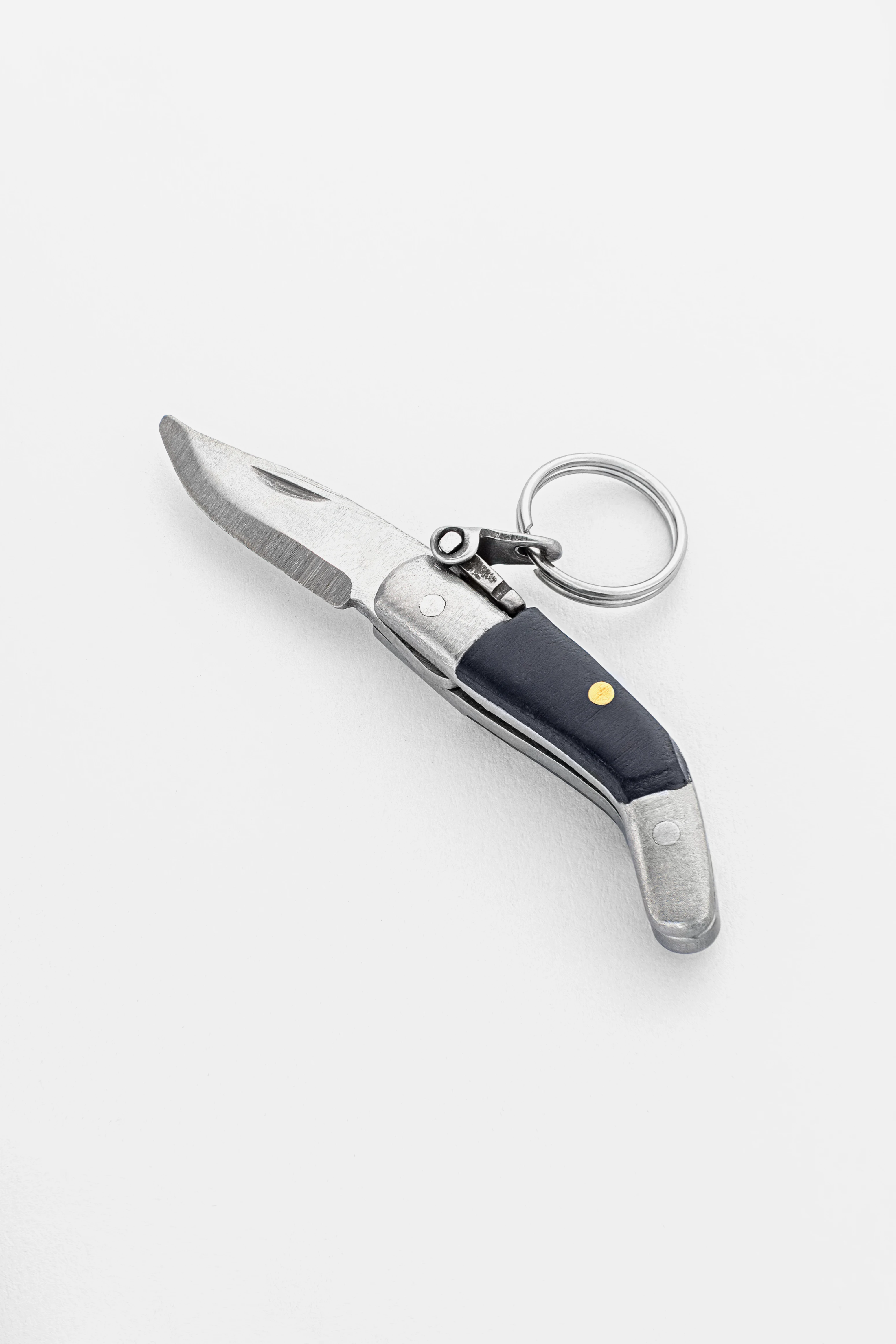
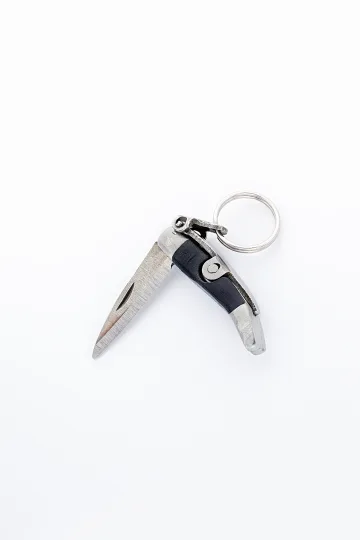
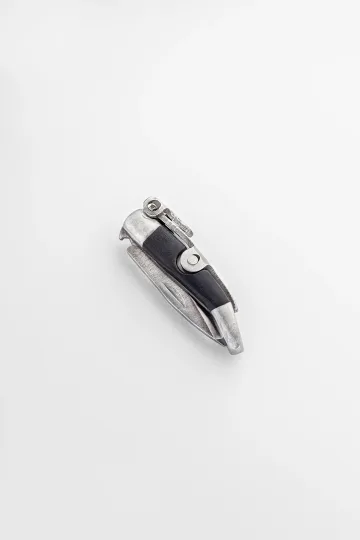
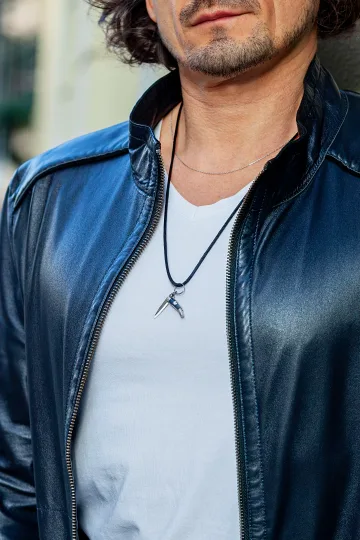
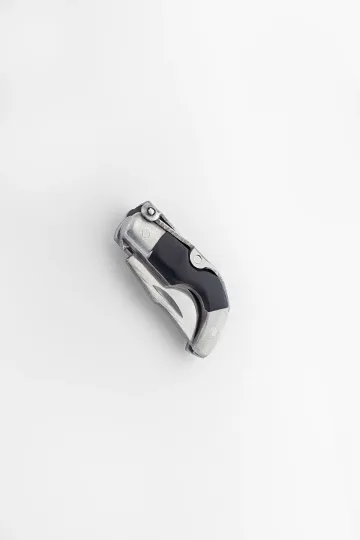
CAPAORA mini knife pendant
The 18th-century Spanish navaja in miniature: 40 mm of stainless steel, a real folding mechanism and a Palanquilla lock that clicks. An affordable gift to remember.
Authentic · Ships from Spain · 14-day returns
When to go to a jeweller or a pawn shop
Home methods are fine as a first filter. But the moment money, an inheritance, or a doubtful purchase is on the table, accuracy matters more than convenience. Professional methods do not damage the piece and give an unambiguous answer.
The X-ray fluorescence analyzer
The main tool of modern appraisal. The device irradiates the metal and, from the reflected radiation, reads the exact composition of the alloy, including the karat and the impurities, in seconds and without a single scratch. Pawn shops, gold buyers, and jewellery workshops use it. It is the most accurate non-destructive method available to an ordinary person: just walk in and ask for a test. It is often done free, in the hope that you will sell the metal.
The touchstone and acids at the workshop
The classic assay-office method. The piece is dragged across a dark stone, leaving a mark, and acids of different strengths are dropped on. The karat is read from the reaction. The same acid test as at home, but in expert hands and with reference needles to compare against. It leaves a tiny, imperceptible streak that is then polished out.
What a test costs and where it is done free
The good news: an accurate test often costs nothing. Pawn shops and gold buyers want you to bring the metal to them, so the X-ray analyzer reading is done free, right in front of you, on the expectation of a deal. You are not obliged to sell anything: you can simply learn the karat and leave. Jewellery workshops sometimes charge a small fee for an appraisal, especially if you need an official written report for insurance or an inheritance. If there is no pawn shop or workshop nearby, any jeweller who takes in repairs can help: they have a touchstone, acids, and experience. The cost of such a test is nothing next to the price of getting it wrong when buying gold secondhand.
When a home test is enough
If you just want to know whether the little ring from a flea market is gold or painted brass, home methods are enough: magnet plus inspection plus density give a confident answer at the level of "gold or not." Going to a specialist is worth it when you need to know the exact karat, when the piece is expensive, when you are about to sell it or buy it secondhand for serious money, and when the home tests gave a contradictory result.
How to avoid buying a fake in the first place
The best test of gold is buying where you do not need to test. A few habits save both nerves and money.
Buy from a seller with a reputation and documents. A receipt, a tag with the karat, a guarantee, and the option to return the piece are worth more than a discount on "gold at the price of brass." A price that is too low is not luck but a red flag: gold is not sold well below the spot value of the metal, there is simply no sense in it for an honest seller.
Ask to see the hallmark and look the seller up. On marketplaces, check the reviews and how the metal is described: honest text separates "585 gold" from "18K gold plated," fraudulent text mixes them on purpose. The words "gold tone," "gold colour," "gold filled," "gold plated" mean there is no solid gold inside, and that is fine if the price matches.
Keep the difference in materials in mind. Many "deceptions" are really honest plating that the buyer misunderstood. Before crying fake, make sure you have not confused a coating with solid metal: they are two different product categories, not good gold and bad gold. The detailed breakdown is in our piece on gold plating versus solid gold.
Red flags when buying secondhand
A few signs that should put you on alert at once at a flea market, in a listing, or in someone else's hands. The seller rushes you and will not let you examine the piece calmly under a loupe. The price is well below the metal's value by weight, yet the seller swears the gold is real. There is a hallmark, but the seller gets nervous when you ask to see it in the light. The piece is sold "urgently, for family reasons," in cash and without a receipt. The metal is suspiciously light for its size. The listing photos show one piece and your hands hold a slightly different one. Any one of these on its own is not a verdict, but two or three together mean you should not reach for your wallet without an X-ray analyzer.
Bonus: a home "detective" kit on the cheap
If you want to test metal regularly, the minimum set comes together cheap: a strong neodymium magnet, a jeweller's 10x loupe, an accurate scale with a hundredth-of-a-gram step, a piece of unglazed tile, and a glass. That is enough for a confident "gold or not" answer on any piece. Add the acid kit only if you are ready to respect safety and do not mind leaving a mark on the piece. And for the exact karat, keep the address of the nearest gold buyer with an X-ray analyzer in mind anyway.
Testing gold and the topic of "plating versus solid gold"
These two topics go hand in hand, but they answer different questions, and it matters not to confuse them. Our piece on gold plating versus solid gold explains the difference in materials: what a coating is, how long it lasts, how electroplating differs from rolled gold and vermeil, whether plating is worth buying at all. That is the question "what am I buying and how long will it last."
This article, by contrast, is about methods: how to find out with your hands, a magnet, water, and acid whether what is in front of you is gold or not, and roughly which karat. That is the question "how do I check what I already hold." In short: first read about the difference in materials, to understand what exists, then come back here to learn to recognize it. And be sure to check the guide to hallmark meanings: without understanding what the numbers on a hallmark mean, any check is only half done.
Send a friend a discount code, they save on their first order.
Facts that surprise
Gold is so dense that a cube a little over thirty centimetres on a side would weigh close to a ton. Two adults could not lift a single such cube, even though it looks about the size of a stool.
All the gold humanity has ever mined would fit in roughly three or four Olympic swimming pools. Despite millennia of mining, there is surprisingly little of the metal on the planet, and that keeps its price up.
Gold is so malleable that from a single gram you can draw a wire a couple of kilometres long or roll a sheet thinner than cigarette paper, one that light passes through with a greenish tint. That is why plating can be so thin: a gram covers an enormous area.
Gold practically does not rust or tarnish, which is why ancient jewellery is found gleaming. The mask of Tutankhamun lay underground for more than three thousand years and shines as if it were struck yesterday.
Saliva and sweat do not act on pure gold, but "aqua regia," the mix of nitric and hydrochloric acid, dissolves it easily. The name arose precisely because that mix defeats the "king of metals."
The human body holds a tiny amount of gold, fractions of a milligram, mostly in the blood. To gather even a single ring's worth would take thousands of people.
The cosmos makes gold in catastrophes: a large share of the gold atoms in the universe was born in collisions of neutron stars. The ring on your hand is, quite literally, a shard of a star.
Frequently asked questions
How do I test gold at home without reagents?
Chain three safe methods together. First the magnet: if it sticks, it is definitely not gold. Then a loupe inspection for wear and the base showing through. Then density with a glass of water and an accurate scale. These three steps, without any chemistry, give a confident "gold or not" answer. You will not learn the exact karat this way, but you will weed out crude brass and painted metal.
Is gold attracted to a magnet?
No. Pure gold and its alloys are not magnetic. If a piece sticks to a strong magnet, there is iron or steel inside, and it cannot be solid gold. But the reverse does not hold: brass and plating are not magnetic either, so "it did not stick" does not yet prove gold.
Can you tell gold from plating at home?
Partly. The main clue is wear: on plating, another colour shows through over time on the edges and friction points. Solid gold is the same all the way through. But fresh, not-yet-worn plating is hard to tell apart reliably at home: on top it is real gold. Only a cut, acid on a deep scratch, or a specialist's X-ray analyzer will say for sure.
What does a drop of acid do to real gold?
Nothing visible. Gold is inert and does not react with most acids, so the stated karat does not change under "its" acid from the kit. A fake or a low karat makes the drop change colour: greenish or brown. The acid test is dangerous, demands protection, and leaves a mark on the piece, so better not do it at home without experience.
How do I find the karat of gold without a hallmark?
At home the exact karat is nearly impossible to determine. Density gives only a rough range, the acid kit an approximate answer with risk to the piece. If there is no hallmark and the karat matters, go to a pawn shop or workshop with an X-ray fluorescence analyzer: it names the exact composition in seconds and without scratches.
Does real gold sink in water?
Yes, and very readily: gold is one of the heaviest substances, its density nearly three times that of steel. The myth that gold "does not sink" is complete nonsense. Water is used in testing not for buoyancy but to measure volume and calculate density.
Does gold leave a mark on skin, and does that mean it is fake?
High karat barely stains the skin. But 9K gold with a lot of copper can leave a green or dark mark, especially with sweat and cosmetics. The mark on its own does not prove a fake, it speaks more of a low karat or of brass. Link this sign to the others.
Should I test gold at home or go straight to a jeweller?
If you want to know whether it is "gold or costume jewellery," home methods are enough and they are free. If it is about the exact karat, an expensive piece, an inheritance, or a secondhand purchase for serious money, go straight to a specialist with an analyzer: the home test only hints here, and a mistake costs dearly.
Conclusion
Testing gold at home is doable and it is a useful skill: a magnet, a loupe, a glass of water, and a piece of tile will tell you in an evening whether you hold metal or painted brass. But home methods have an honest ceiling. They tell gold from a fake, and are nearly powerless against a low karat sold as high, against good plating, and against tungsten in bullion. Acid is more accurate but more dangerous, and in clumsy hands it ruins the piece. So the rule is simple: at home, test for "gold or not," and for the exact karat and the doubtful cases go where there is an X-ray analyzer. Do not trust a single test, chain the magnet, the inspection, and the density together, and getting it wrong becomes almost impossible. The best test of all is buying from an honest seller with a hallmark, a receipt, and a reputation, when there is simply nothing left to check.
Silver, gold, wedding bands, symbols, and matching sets with honest karats and hallmarks.
Buying it as a gift? Each one arrives ready to give.
 A branded Zevira box and a little card come with every order.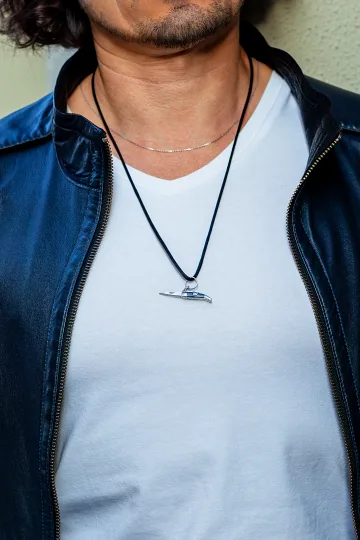








About Zevira
Zevira is jewelry with nothing to test by acid. We state the metal and karat honestly on every piece: where there is gold, there is gold with a hallmark; where there is 925 silver, there is real 925 sterling silver; where there is a coating, we call it a coating outright. No "gold tone" instead of gold and no surprises on the edges a year into wear. You choose calmly, you wear the piece for a long time, and you can save the magnet and the loupe for gifts from the flea market.