Kunzite: the pink heart stone that fades in the sun and once ruled engagement boxes
Kunzite was only discovered in 1902. For a gemstone, that is yesterday.
Most of the stones people wear on a finger have been known to us for three to five thousand years. Kunzite is younger than the telephone, the cinema and the aeroplane.
And yet, in a little over a century, this soft pink spodumene has built a reputation as the stone of a calm heart. It has slipped into collections, into magazines, and into the jewellery boxes of people who have never heard the word spodumene.
This is the story of where kunzite came from, why it is pink, why it dreads direct sunlight, how it is cut, what it pairs with, and what people pour into it. No promises that a stone will heal you, but no condescension towards anyone who sees in it more than a chemical formula.
What kunzite really is
Kunzite is the pink or pinkish-lilac variety of the mineral spodumene.
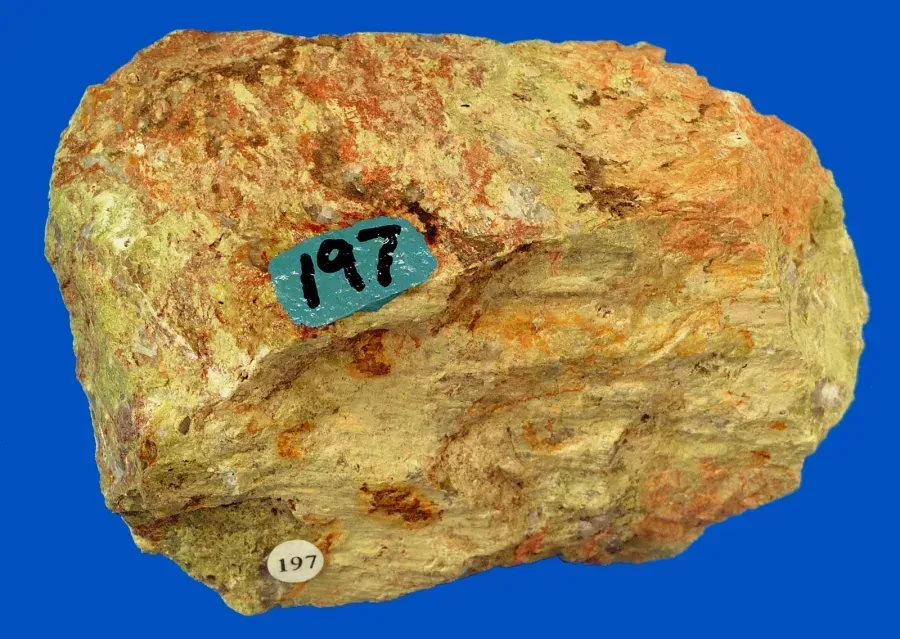
Spodumene on its own is a colourless or grey lithium-aluminium silicate, formula LiAlSi2O6. It looks like an ordinary rock, the kind you would walk straight past in a museum case.
The pink and lilac colour comes from a trace of manganese. The more manganese locked into the crystal lattice, the deeper the colour, ranging from the faintest blush to a rich violet-pink.
Wear the symbol, don't just read about it. These are in stock:






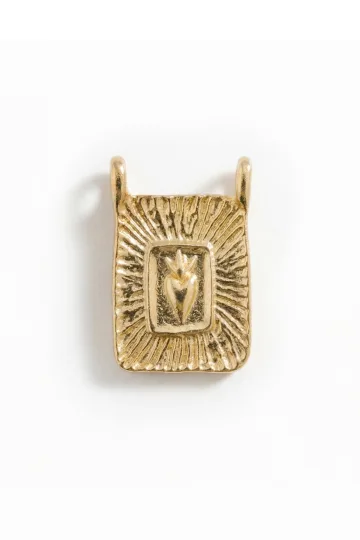
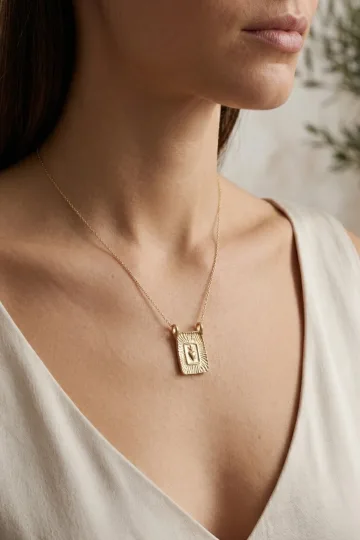
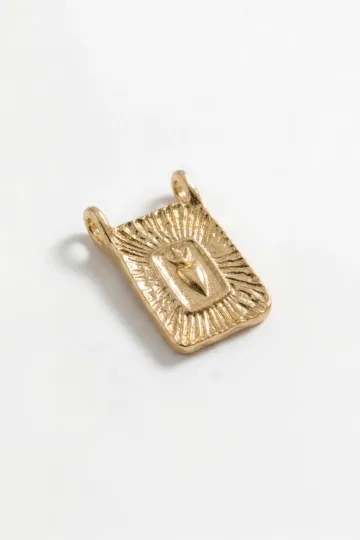
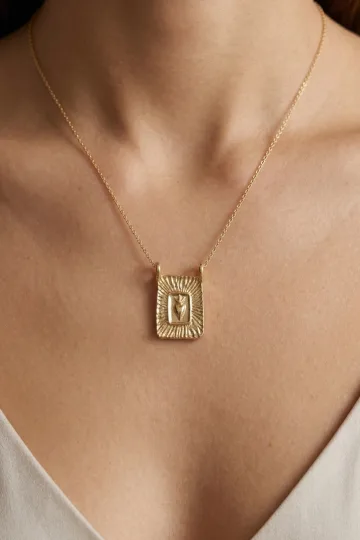
So a pink stone is a grey stone that manganese has turned pink. And that is exactly why its colour is so fragile, more on that below.
Where the name comes from
The stone was named after George Frederick Kunz, the chief mineralogist of a major early twentieth-century jewellery house. We mention him as a historical figure of science, not as a brand.
Kunz was a man of his era. A self-taught expert who became the foremost authority on gemstones of his time, a museum consultant, an author of books on minerals and the superstitions around them.
When a new pink stone was found in California, he was the one asked to describe it. The mineralogist Charles Baskerville proposed the name kunzite in 1903, and it stuck.
So kunzite carries a scientist's surname instead of an ancient name, and that honestly reflects its age.
The spodumene family
Spodumene has close mineral relatives.
The green variety of spodumene is called hiddenite. The yellow and colourless forms are simply called spodumene. There are also rare lilac and almost violet tones.
They are all the very same mineral, the difference lies only in the trace elements and therefore in the colour.
So kunzite is not a separate stone, it is a colour name inside a mineral species, the way emerald names green beryl or amethyst names violet quartz.
Hardness and brittleness
Kunzite sits at 6.5 to 7 on the Mohs scale. That is below quartz on an edge, and noticeably below sapphire or diamond. It is not among the most scratch-resistant stones.
But the real difficulty with the pink stone is not hardness, it is cleavage.
Spodumene has very perfect cleavage in two directions. In plain terms: the crystal splits easily along flat planes, the way mica peels apart or a log splits along the grain.
One unlucky knock, and the stone does not scratch, it splits along a clean plane.
That is why cutters of kunzite are regarded as top-tier masters, and the cutting itself is risky. A cutter can lose the stone in a single movement.
History: a stone barely older than a hundred years
1800: a mineral with no colour
The story makes sense to begin earlier than the stone's official birth.
Spodumene itself was described as a mineral back in 1800. The name comes from a Greek word meaning to burn to ash, because when heated the grey spodumene crumbles into a greyish powder.
So the stone first had lithium, a Greek name about ash, and a reputation for being brittle. Only a century later did it become a pink ornament.
The nineteenth century: pink hints
Pink spodumene did turn up for geologists before Kunz.
There are records of pinkish spodumene crystals found in Brazil as early as the nineteenth century. But they were not singled out as a distinct gem variety and were often mistaken for other pink stones.
Spodumene as we know it today went uncounted in those finds. The stone was waiting for the person who would describe it.
1902: the California find
The decisive event happened in the Pala mountains, San Diego County, California.
This is a region of pegmatite veins rich in lithium, tourmaline and rare minerals. Here, at a mine working lithium ore and pink tourmaline, miners struck transparent pink-lilac crystals of a clarity and size never seen before.
Samples reached the specialists, and in 1902 George Frederick Kunz gave the mineral its scientific description. In 1903 the variety was officially named kunzite.
For a couple of decades California became the main source of gem kunzite, and the Pala district remains legendary among collectors to this day.
Early twentieth century: kunzite arrived in fashion right on time
The pink stone showed up at a lucky moment.
The turn of the century was the Art Nouveau era, with its love of soft, natural, flowing forms and pastel colours. A transparent pink-lilac stone fitted that aesthetic perfectly.
Jewellers were quick to value the large clean crystals. Kunzite could be cut into big stones of dozens of carats that still cost less than a comparable pink sapphire or pink topaz.
In the same period a reputation began to form around the stone as feminine, tender, heartfelt. Partly because of the colour, partly because the new stone was not weighed down by centuries of legend and its symbolism could be invented from a blank page.
Mid twentieth century: kunzite turned out to be strategic raw material
Here the story takes an unexpected turn.
Spodumene is the principal lithium ore. And lithium in the twentieth century became a strategic material: first for metallurgy and glass, then for medicine, where lithium salts are used in psychiatry, later for batteries.
That means huge volumes of spodumene were and are mined for lithium, not for beauty.
Gem spodumene is largely a by-product of lithium mining. At large lithium deposits, transparent coloured crystals fit for cutting turn up only occasionally.
Most spodumene is murky grey ore that gets crushed and processed into metal.
So a strange double life emerges. The same spodumene sits both in a jewellery box as a pink stone and in a phone battery as lithium.
Late twentieth century: Afghan and Brazilian giants
In the second half of the twentieth century the centre of gravity for gem kunzite shifted.
Afghanistan, the Nuristan province, and Brazil, the state of Minas Gerais, gave the world crystals of outstanding size and saturation. From these deposits came stones of a deep lilac-pink tone, valued above the pale ones.
Cut kunzites of hundreds of carats appeared, museum specimens that mineral collections take pride in.
Kunzite in the jewellery boxes of the twentieth century
The pink stone was a favourite gift in the high society of the past century, a stone that was soft, never loud, yet expensive-looking because of its size.
Jewellery with kunzite is known to have featured in the collections of society women of the first half of the century. The stone settled into the public mind as a gift with a warm, heartfelt message rather than a display of status.
That reputation has reached our day almost unchanged.
The twenty-first century: a stone for collectors and romantics
By our time kunzite has settled into two steady roles.
The first is the jewellery role: an affordable large coloured stone for tender, romantic pieces, loved for its soft pink glow.
The second is the collector's role: huge clean crystals from pegmatites, the pride of mineral collections and a fixture in natural history museums.
Spodumene lives between these two roles today, a stone that few people recognise by name yet many find beautiful.
Famous crystals
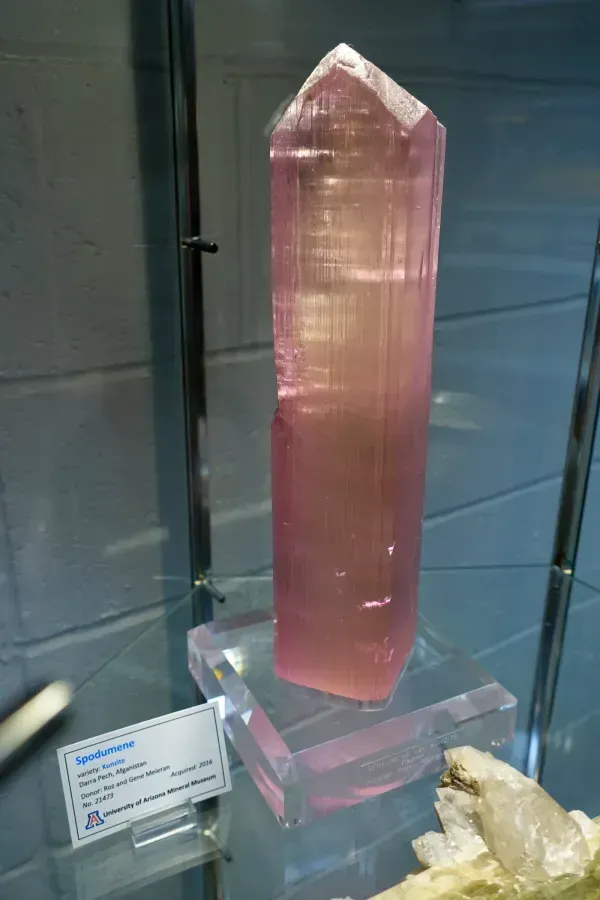
Kunzite is famous for its giant specimens. From the pegmatites of Brazil, Afghanistan and California came transparent crystals tens of centimetres long and weighing kilograms.
Cut stones of hundreds of carats are kept in major mineral collections and natural history museums. For most gemstones such sizes are unthinkable, for kunzite they are part of its nature.
These giants show the key trait of spodumene: it grows large and clean, which is exactly why the gem pink stone is rarely small and grainy.
Kunzite is for candlelight, not the midday sun. Take it to the beach and watch it fade. Don't say I didn't warn you.
What to wear kunzite with
Over years of styling shoots and building looks the stone has passed through dozens of decisions with me. Here is what actually works, sorted by occasion.
What do I wear kunzite with every day? For daily wear I recommend going small: a thin pendant at the neckline of a jumper or modest studs near the face. The stone reads as a warm touch to knitwear in pastel tones, to milky, beige, dusty blue. I suggest flowing fabrics: silk, linen, soft cotton. Stiff texture and a loud print are no friends to the stone.
Is kunzite right for the office? Yes, as long as you keep it restrained. A lilac-pink tone in white metal looks neat and does not shout about status. I recommend small earrings or a pendant under a shirt and a blazer in a neutral colour: grey, charcoal, sand. The stone softens a strict cut without pulling attention away in a meeting.
How do I build an evening look? Evening is kunzite's natural element. In warm artificial light the pink tone grows deeper, and the risk of fading disappears. Here I suggest sizing up: long earrings with drops or a large pendant on an open neck, a deep or V-shaped neckline. Against a black dress I choose kunzite without hesitation, on the dark ground the pink glows especially clean.
And for a special occasion? For an engagement, a milestone or an anniversary I recommend kunzite as a stone with a heart theme. Rose gold echoes the very shade and makes the look tender, warm yellow gold adds dressiness. Under a white or powdery dress I choose it as a quiet romantic accent, not a display of luxury.
Who does kunzite actually suit? Anyone drawn to soft, quiet beauty, a calm warmth rather than daring. Two tips that never fail. First: match the metal to the stone's undertone, white for cool lilac, rose and yellow gold for warm peach-pink. Second: one kunzite in a look as the soloist, the other pieces smaller and quieter, or the tender stone will lose to its neighbours.

Turn on your camera, pick earrings, a pendant or a ring, and see the piece on yourself in real time.
Switch items in one tap.
Everything runs in your browser: no photo or video is ever uploaded.
Geology and deposits: where pink spodumene comes from
Where it is born
Kunzite forms in pegmatites, special veins that take shape at the final stage of cooling granite magma.
When the main mass of magma has already crystallised, the leftover melt concentrates water, lithium, boron, beryllium and other rare elements. From this rich residual solution, large crystals grow in cavities: tourmalines, beryls, topazes and spodumene.
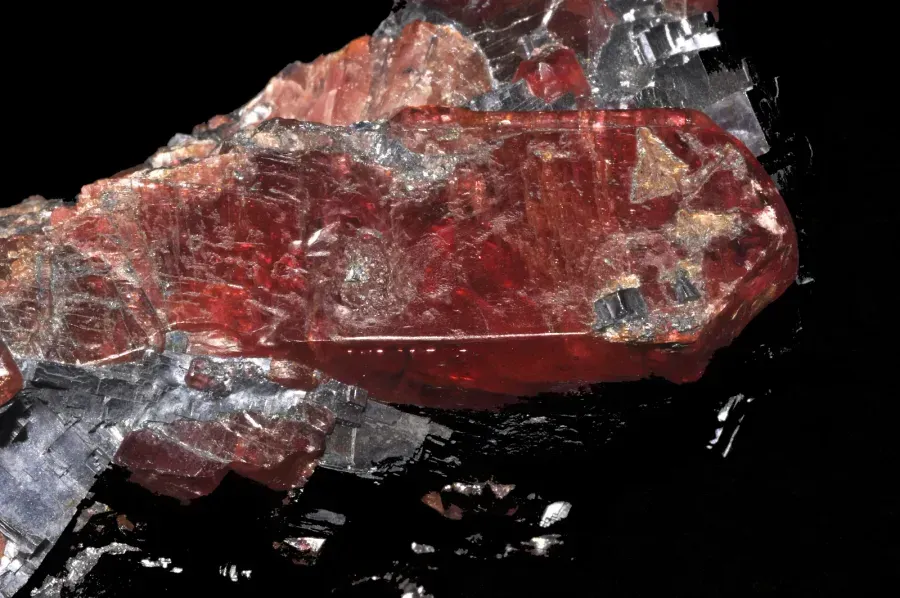
That is why the stone often shows up in the company of pink tourmaline and beryl. These stones are literally vein neighbours, grown from the same lithium-rich melt.
The crystals in pegmatites can be enormous. Spodumene is one of the few minerals that yields crystals a metre long. Yet barely a fraction of a percent is of gem quality.
How kunzite reaches the surface
Pegmatite veins lie in hard rock, and getting to them is not easy.
Some spodumene is mined as a by-product at lithium mines, where whole pegmatite bodies are opened up for the metal. Some is dug out by hand, artisanally, in remote mountain regions such as Afghanistan.
The crystals found are sorted. The murky and grey goes for processing into lithium, the transparent and coloured is picked out for cutting. A tonne of raw material yields grams of gemstones.
This path from vein to cut stone explains why, even with spodumene so abundant, good kunzite remains a less than frequent guest in the showcase.
Vein neighbours
A single pegmatite vein with kunzite often hosts pink and green tourmaline, aquamarine and morganite, smoky and rose quartz, sometimes topaz.
Collectors prize specimens where the pink stone grew together with tourmaline or beryl on a shared base. Such a cluster tells a geological story better than any single stone.
This kinship explains why kunzite sits so naturally in jewellery alongside these very stones.
Afghanistan
The Nuristan province and the Kunar region supply much of today's finest gem stone: saturated lilac-pink crystals of high clarity.
Mining there is artisanal and unstable, which makes supply irregular and individual stones especially sought after.
Brazil
Minas Gerais, the classic region for coloured stones, has been supplying spodumene for over a century.
Brazilian stones are often large and clean, the tone ranging from pale pink to saturated. It is a reliable, steady source.
United States, California
The historic homeland. San Diego County, the Pala district, the mines where the stone was first found.
Today mining there is mostly for collectors and hobbyists, but the name of the place carries weight. A stone with a Pala label is a small point of pride for a collector.
Other sources
Pakistan. Its proximity to the Afghan pegmatites yields stones of similar quality.
Madagascar, Myanmar, Nigeria. Additional sources giving kunzite of varying quality and shades.
Why good kunzite is rarer than it seems
There is plenty of spodumene in the ground, lithium is mined by the tonne. But gem kunzite needs three conditions to coincide at once.
Transparency. Most crystals are murky.
An even, saturated colour. Most stones are pale or unevenly coloured.
A flawless zone large enough to yield a cut stone, given that capricious cleavage.
Many crystals are fractured or split during cutting. So a good deep-pink kunzite with no visible inclusions and a proper cut is not as common a thing as the abundance of raw material might hint.
Colour and its caprices: the defining feature of kunzite
Where the pink comes from
The colour of kunzite is down to manganese built into the spodumene lattice.
Depending on how much there is, and on a trace of iron, the stone ranges from nearly colourless with a faint blush to a deep pink-lilac.
The most prized tones are a saturated pink with a violet undertone. It is sometimes called lavender-pink.
Pleochroism: colour depends on the angle
The stone is strongly pleochroic. That means it shows a different intensity of colour from different directions: deep pink along one axis, almost colourless along another.
For the cutter this is both a gift and a puzzle.
The stone has to be oriented so that the most saturated colour faces the table, that is, upward, towards the viewer.
A good master squeezes a vivid cut stone out of a crystal that looked pale, purely through correct orientation. Poor orientation produces a watery, washed-out result from the very same material.
A stone that fades in the sun
This is the best-known and most important feature of spodumene. Its pink colour is not stable under ultraviolet light.
With prolonged exposure to bright sun, kunzite can grow paler, and in severe cases lose almost all of its colour.
For this it was jokingly called the evening stone: it was recommended to wear it in artificial evening light and keep it out of daylight.
This is not a flaw in a particular stone, it is a property of the mineral. So a kunzite piece should not be left on a windowsill, on a car dashboard behind the windscreen, or worn all day at the beach. It is best stored in a box, in the dark.
Irradiated colour fades faster
Irradiation is a separate matter. Some stones on the market are irradiated to enhance or change their colour, sometimes producing a deeper pink or lilac.
Such induced colour is especially prone to fading in the light.
Natural deep-pink kunzite from good deposits holds its colour better, but even it does not enjoy long sun. An honest seller will tell you whether the colour is natural or induced.
Lilac versus pink
The stone is loosely divided into two poles.
Pure pink, warm, with a faint peach or raspberry hint.
And lilac-pink, cool, with a violet undertone.
Both are valued, the choice is more a matter of taste and of which skin tone and metal the stone suits. Cool lilac looks striking with white metal, warm pink with yellow and rose gold.
Cat's eye and rare effects
Occasionally spodumene with a cat's eye effect turns up. With a cabochon cut, internal fibrous inclusions create a narrow band of light that glides across the surface.
Such stones are rare and prized by collectors above ordinary ones.
There are also large museum crystals that are works of nature in themselves and command value as a rarity regardless of any jewellery work.
Customer reviews
Zevira is a real jewellery shop. Genuine payments, deliveries and customer thank-yous.
🥰🥰🥰 gracias
Ok, ¡gracias! 🙂
The physics and optics of kunzite for the curious
This part is for those who like to understand what happens inside a stone. You can skip it, but it explains nearly all of kunzite's caprices with a single logic.
Why manganese is what colours the stone
Pure spodumene is transparent and colourless, like glass. Colour in minerals almost always comes from trace metal ions slotted in place of the lattice's main atoms.
In kunzite the colourant is manganese. Its ions absorb part of the visible light and let the rest through, and our eye sees that remainder as pink or lilac.
The company of iron and other traces shifts the shade towards warm or cool. That is why two stones from the same vein can differ slightly in colour.
Why the colour is unstable
The colour of the pink stone rests on a delicate balance of manganese states. Ultraviolet carries enough energy to upset that balance.
Under long exposure to light the ions shift into another state that no longer gives a pink colour. The stone pales.
This is the key difference between kunzite and sapphire. The colour of sapphire rests on a stable structure and does not fear light, while kunzite's colour rests on a fragile equilibrium that light can shift.
Why it splits rather than scratches
Hardness and brittleness are different things, and spodumene illustrates it well.
Hardness is resistance to scratching. Brittleness is the tendency to split under a blow.
Kunzite is of medium hardness, but because of its perfect cleavage it is very brittle. Inside the crystal there are planes along which the bonds between atoms are weaker. The stone splits along them with a clean break.
Sapphire, by contrast, is hard and tough: it has no such weak planes, it withstands a blow. That is why kunzite calls for a care that sapphire does not.
Where the glow from within comes from
A good pink stone is often described as glowing from within. This is not mysticism, it is optics.
High transparency and a well-judged cut let light enter the stone deeply, reflect off the facets and come back out to the viewer, carrying the pink colour with it.
The cleaner the stone and the more precise the cut, the stronger this inner radiance. A murky or poorly cut kunzite looks flat, because the light dies on its inclusions.
Luminescence under ultraviolet
Many kunzites glow under an ultraviolet lamp with a warm orange-pink luminescence. This is luminescence, a phenomenon separate from ordinary colour.
Gemmologists sometimes use the glow as one of the clues when identifying a stone. But it is a supporting sign, not proof, and you cannot rely on it alone.
How gemmologists assess kunzite
For coloured stones, assessment is usually broken down into colour, clarity, cut and weight. With spodumene these four factors each carry their own emphasis.
Colour matters most
For kunzite the colour decides almost everything. A saturated, even, clean pink or lilac-pink without a grey or brown cast is what is prized.
Pale, watery tones cost noticeably less for the same size. Stones that are too dark and murky also lose value.
Medium to high saturation with a pleasant violet undertone and good transparency looks best.
Clarity
High transparency is expected of kunzite, because nature usually gives clean raw material.
Inclusions visible to the eye, and fractures especially, reduce both beauty and price, and fractures also raise the risk of splitting.
The cut decides whether the stone comes alive
The cut is half the result for kunzite. A good cut captures the best colour from the pleochroism and makes the stone glow.
A poor cut yields a pale, flat, lifeless stone from the same material. So when choosing, look both at the colour on the tag and at how the stone actually looks in the hand.
Weight and price per carat
Since the raw material is large, heavy kunzite turns up often, and the price per carat does not climb as sharply as it does for rare stones.
That is what makes the stone an affordable way to own a large coloured gem. The thing to remember is that size without colour is no value.
Upload a photo of your pet, someone you love, or an object. We'll build a 3D model and hand-cast it in pewter.



Energy, meaning and symbolism
With spodumene the symbolism is more honest than with many ancient stones. It is a little over a hundred years old, and almost all of its esoteric reputation took shape in the twentieth century, before our eyes, in books on crystal healing and in popular culture.
This is not a thousand-year tradition, it is a modern myth. And there is nothing wrong with that, as long as you understand that this is exactly what it is.
Heart and love
The central motif of kunzite is the heart and love.
The colour pink, in almost every culture, is tied to tenderness, attachment, gentleness. Twentieth-century crystal healers cast kunzite as the stone of unconditional love, of emotional healing, of making peace with oneself.
It is linked to the heart chakra and described as a stone that helps you open up, let go of resentment, and soften anxiety.
Where the line of sobriety runs
The tone here is best kept sober. There is no scientific evidence that the stone changes your emotional state on its own.
But there is a clear psychological mechanism. An object you wear and associate with calm and love acts as an anchor and a reminder.
Someone who has chosen a pink stone as a symbol of self-care may genuinely feel calmer. And that is about the person, not about the chemistry of manganese in a lattice.
A stone for relationships, not status
Kunzite is often given as a sign of tender attachment: to a mother, a daughter, a partner.
Its reputation as a soft, undemanding stone makes such a gift a warm gesture.
In that sense the symbolism of the stone is about relationships and emotions, not about power or status, which weigh down a ruby or an emerald.
Calm and sleep
Another layer of meaning is calm and sleep. Because of its link with lithium, spodumene is credited with a soothing influence.
And straight away, a caveat. The lithium in the stone is chemically bound in the crystal and has no effect on a person through the skin.
So this is association and belief, not pharmacology. The stone is not a medicine, and it should not replace therapy or prescribed treatment.
A stone of acceptance and forgiveness
Twentieth-century crystal healing gave kunzite one more motif: the ability to let go of resentment and forgive.
The logic here is emotional. The pink heart stone is linked to gentleness towards oneself and others, and therefore with a readiness to release old pain. A similar reputation as a stone of forgiveness belongs to rhodonite, which kunzite shares both a pink palette and a heart theme with.
And again without exaggeration. The stone does not do the work of forgiveness for a person. But as a symbol of intent it can help you tune in, if the person genuinely wants it.
A gift with a message
Of all its symbolism, the idea of a gift is where kunzite works most practically.
When the heart stone is given with warm words, it becomes the carrier of the meaning the giver poured into it. The wearer puts the piece on and remembers the person who gave it, and what was said at the time.
This is a clear, human mechanism of memory, and it needs no magic to work.
Why kunzite's symbolism is easy to invent
Ancient stones have rigid symbolism, accumulated over millennia. The pink stone had almost none, and in the twentieth century it was invented to fit the colour.
That is why kunzite's meanings are so flexible and so kind: love, heart, tenderness, calm. People chose them recently and deliberately, looking at a transparent pink stone.
There is no deception in this, as long as you understand that it is a modern tradition, not ancient knowledge.



Kunzite in jewellery
Rings
A ring with kunzite is both a challenge and a compromise.
A large pink stone in a ring looks luxurious and costs relatively less than a sapphire of comparable appearance.
But spodumene is soft, 6.5 to 7 on Mohs, and brittle because of its cleavage. And a ring is the most vulnerable piece of jewellery: hands bump into everything.
So a kunzite ring is more sensibly worn as an evening or occasion piece, not an everyday one. A good setting should protect the stone: a closed bezel or a recessed seat is better than tall thin prongs.
The metal is chosen to match the shade. Cool lilac kunzite looks striking cooling against white gold or rhodium-plated 925 silver. Warm pink opens up in yellow and especially rose gold, which echoes the colour of the stone.
About 925 silver, it is worth knowing that it is softer than gold, but as a setting for an evening stone it is perfectly appropriate and affordable.
Pendants
A pendant is the ideal format for kunzite.
On the chest the stone is better protected from knocks than on a finger, and it can be made large. A big pink kunzite in a pendant looks generous and yet wearable.
A pendant is also easy to tuck under clothing in bright sun, which protects the colour from fading.
The heartfelt symbolism of the stone makes a kunzite pendant a logical gift for someone close.
The cut for a pendant can also be fancy: a pear-shaped drop, an oval, an emerald step cut that beautifully shows off the stone's clarity. A cabochon is used for stones with a cat's eye effect.
Earrings
Earrings with kunzite are one of the happiest uses of the stone.
They are barely subject to knocks. They balance each other in colour easily, since the cutter matches the pair for a close shade. And a pink glow near the face freshens the look.
Long earrings with large kunzite drops are a striking evening option.
Since earrings are usually worn in the evening and indoors, the problem of sun fading barely arises.
Bracelets
A bracelet with kunzite calls for care: the wrist also bumps into whatever is around.
Smaller stones work better here, in protective settings, or the pink stone as beads alternating with other stones.
A bracelet of kunzite beads with a cat's eye effect looks soft and expensive.
Such a bracelet is best worn carefully and taken off for active tasks.
Cut and sizes
Because of the clarity and size of the raw material, the stone is often cut large. Stones of 10, 20, 50 carats are not rare, and museum specimens run into the hundreds.
Step cuts, the emerald and baguette, which emphasise transparency, are popular, as are fancy drops.
The cutter always solves two tasks at once: to capture the maximum colour through pleochroism orientation, and not to split the stone along its cleavage.
How to wear and care for kunzite
Keep it out of the sun
The main rule follows from the nature of the stone. Spodumene fades under ultraviolet.
Do not wear it all day in bright sun. Do not leave the piece on a windowsill, on a car dashboard, by a window.
The ideal life for kunzite is evenings, indoors, soft artificial light. And by day, a box in the dark.
If you take a kunzite piece on holiday, put it on in the evening rather than for the beach.
Keep it from knocks
Cleavage makes the pink stone vulnerable to sharp impacts.
Take off your kunzite ring and bracelet when you work with your hands, do sport, wash dishes, carry heavy loads.
A blow that a sapphire would not notice can split this stone along a cleavage plane.
Keep it from temperature swings and chemicals
Sudden shifts of heat and cold do spodumene no good. Do not wear it in a sauna, do not wash it in hot water, do not set it near a heat source.
Cosmetics, perfume, hairspray, household chemicals settle on the stone and the metal. So the piece goes on last, after make-up and fragrance, and comes off first.
How to clean it
Gently only. Warm, not hot, water, a drop of mild soap, a soft cloth or brush, wipe carefully and dry.
No ultrasonic or steam cleaners: vibration and heat can split the stone along its cleavage.
No stiff brushes or abrasives: the hardness is only 6.5 to 7, it is easy to scratch.
How to store it
Separately from other jewellery, in a soft pouch or a compartment of a box, in the dark.
Harder stones, quartz, sapphire, diamond, will scratch kunzite if stored together, so keep it apart.
The dark also protects the colour from fading.
When to take kunzite off
There is a simple rule: kunzite goes on last and comes off first.
It is worth taking off before sleep, a shower, sport, cleaning, cooking, going out into bright sun and any work with the hands.
Put it on after make-up, fragrance and styling, so cosmetics do not settle on the stone.
This habit feels like a fuss only in the first weeks, then it becomes automatic and noticeably extends the stone's life.
With kunzite this discipline pays off especially: the stone is soft, brittle and fussy about light, and every piece taken off in time is one chip not received and one day not faded.
On charging and rituals
Many owners enjoy rituals: holding the stone in the hands, cleansing it before first wear, tying it to an intention.
If that helps you relate to the piece mindfully, wonderful. Just two cautions for the safety of the stone.
Do not set kunzite out to charge in the sun, as is advised for many crystals. For it that is a direct path to fading.
And do not cleanse it in salt water for long, and do not heat it. Water and temperature swings are no friends to the stone.
A safe ritual for kunzite is moonlight, incense smoke, or simply a few minutes in the palms, without sun and without water.
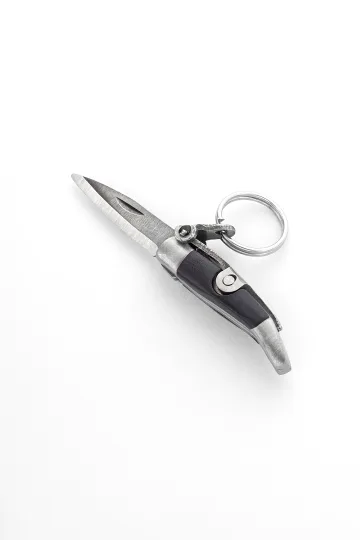
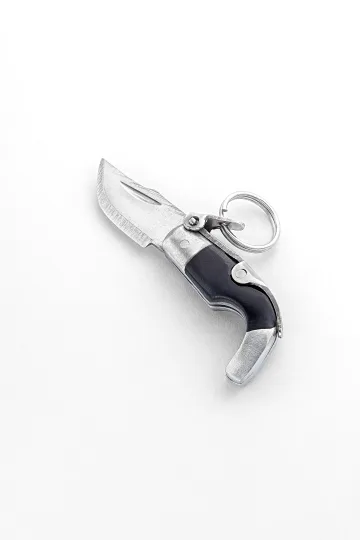
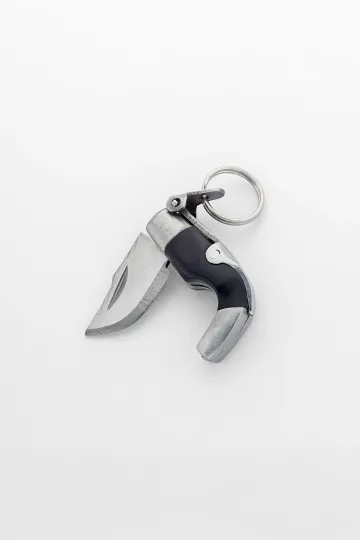
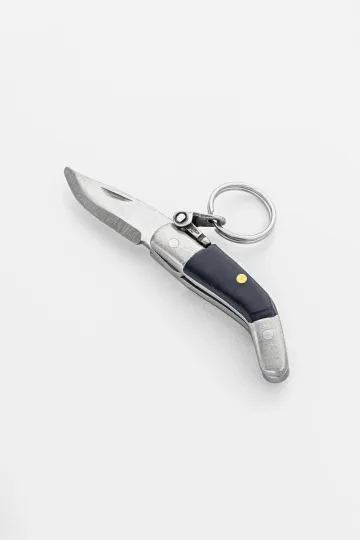
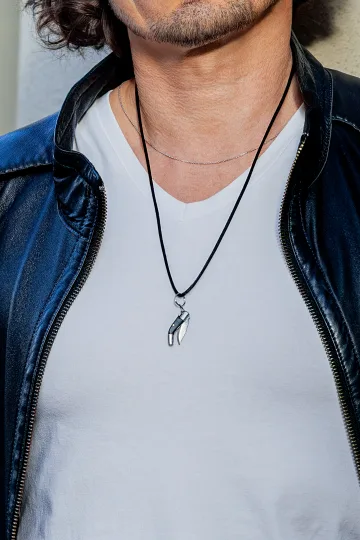
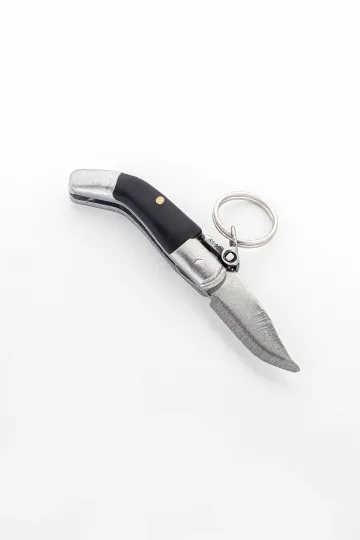
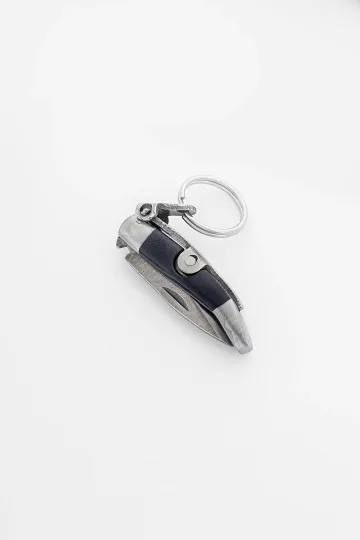
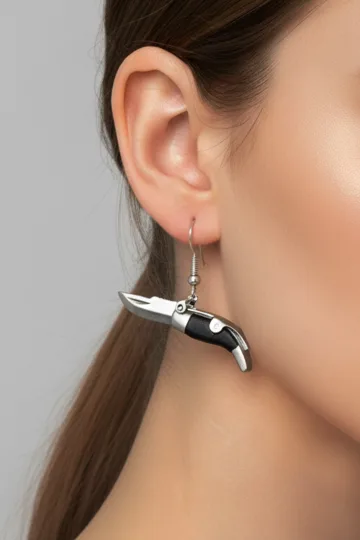
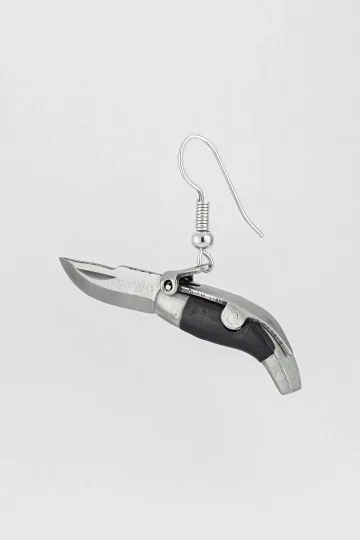
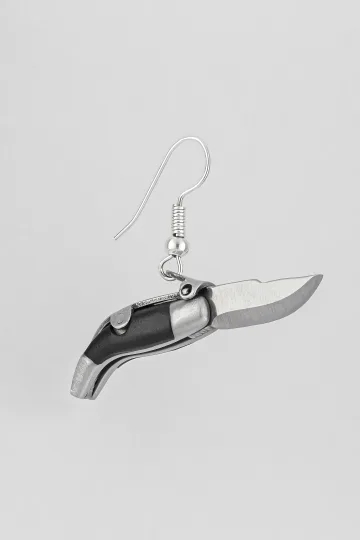
CAPAORA mini knife pendant
The 18th-century Spanish navaja in miniature: 40 mm of stainless steel, a real folding mechanism and a Palanquilla lock that clicks. An affordable gift to remember.
Authentic · Ships from Spain · 14-day returns
Kunzite and the setting metal
The setting for kunzite solves two tasks: to bring out the colour and to protect the fragile stone. The metal is chosen to match the shade.
White gold and rhodium-plated silver
Cool white metal reinforces the lilac undertone of kunzite and makes it more aristocratic.
This is the best choice for a cool, lavender-pink stone. A white setting adds the clarity and shine that soft kunzite sometimes lacks.
Yellow gold
Warm yellow metal emphasises the warm, peach-pink side of the pink stone.
Yellow gold makes the look softer and more dressed-up, well suited to gift pieces with a heart theme.
Rose gold
Rose gold echoes the very colour of the stone and reinforces its blush.
This is the most romantic pairing for kunzite, especially for pendants and earrings brought up to the face.
925 silver
925 silver is a sensible choice for an evening stone and for those who do not want to overpay.
Silver is softer than gold and darkens over time, it needs care. But as a setting for tender kunzite it is perfectly appropriate and affordable. You can read more about the properties of the metal in the piece on 925 silver.
What matters more than the metal colour
Whatever metal you choose, the main thing is that the setting protects the stone.
A closed bezel or a recessed seat is more reliable than tall thin prongs. For a fragile stone, protection matters more than the decorative flourish of the setting, especially in rings and bracelets.
Kunzite paired with other stones
With pink tourmaline and morganite
These are its natural relatives by colour and by vein.
Spodumene, pink tourmaline and morganite, that is pink beryl, form a soft pink palette with subtle shifts of shade.
Together they give a gentle gradient loved in romantic jewellery. By symbolism all three are stones of the heart and tenderness, so the combination is coherent in meaning.
With amethyst and lilac stones
Lilac-pink kunzite chimes beautifully with amethyst and other violet stones.
The cool lavender range looks refined, especially in white metal.
By popular symbolism amethyst adds a motif of clarity and calm to kunzite's heart theme.
With clear quartz and white stones
Colourless rock crystal, white topaz or small diamonds serve the pink stone as a neutral framing setting.
They light up the pink colour without arguing with it, and add the shine that soft kunzite sometimes lacks.
With pearls
A warm pinkish stone and pearls give a classic tender combination, loved in jewellery for brides and for gifts.
Both read as feminine, soft, romantic.
What to avoid
Spodumene is easily overpowered.
Next to a saturated ruby, emerald or sapphire, its pale pink gets lost and looks watery.
If you want to put kunzite together with vivid stones, give it the lead role and a large size, and use the vivid ones as small accents. Otherwise the tender stone will simply vanish against them.
Leave your email, we'll send your discount code. No spam, unsubscribe anytime.
The code arrives by email, valid on your first order.
Kunzite versus other pink stones: a detailed comparison
There are many pink stones, and buyers often get confused. Let us go through kunzite against its main rivals one by one.
Kunzite and pink sapphire
These are opposites in character.
Pink sapphire is hard, tough, unafraid of the sun, lasts forever with any wear and suits an everyday engagement ring. But a large sapphire is expensive.
The pink stone is soft, brittle, fades in the light and needs careful handling. But a large kunzite is many times cheaper than a comparable sapphire.
The choice is simple. If you need everlasting durability and money is no object, take the sapphire. If you want large soft beauty on a budget, take the stone and look after it.
Kunzite and morganite
These are close rivals in the niche of the tender pink stone.
Morganite is harder and tougher, it has no treacherous cleavage, it holds up to daily wear better. Morganite's tone is usually warmer, peach-pink.
Spodumene is softer and more brittle, fades more in the sun, but more often gives a cool lilac-pink shade and large stones.
If everyday practicality matters, morganite. If a large lilac-ish colour matters, kunzite.
Kunzite and pink tourmaline
Tourmaline is closer to kunzite in affordability and in the range, but it is tougher and not as afraid of light.
Pink tourmaline gives brighter, sometimes almost raspberry tones. Kunzite is softer and gentler in colour.
They are often combined in a single piece precisely because of their kinship of shade and shared vein of origin.
Kunzite and rose quartz
Here the difference is enormous.
Rose quartz is mass-market, murky, milky-pink, very cheap, tougher than kunzite and barely fades.
The stone is transparent, vivid in colour, with an inner glow and pleochroism, noticeably more expensive and more beautiful when cut.
These are two different leagues: quartz for inexpensive beads and cabochons, spodumene for cut stones with character.
Kunzite and pink topaz
Topaz is harder than kunzite and not as fussy about light, it is easier to wear.
But natural pink topaz is rare, and much of what is sold is treated for colour. Kunzite is more often natural in colour and costs comparably.
For beauty, at equal quality, both are good, the difference is more in practicality and in the availability of a particular stone.
How to choose kunzite and not get caught out
Colour
The more saturated and even the pink or lilac-pink, the more valuable the stone. Pale, watery tones cost less.
But remember pleochroism: the stone should show its best colour in the table, not slip into colourlessness at a slight turn.
Clarity
The pink stone is usually grown large and clean, so transparency without visible inclusions and fractures is expected of a good stone.
Visible fractures are both an aesthetic minus and a risk of splitting along the cleavage.
Cut
A skilful cut is half the job for kunzite.
A good master caught the colour, did not split the stone and let it play. A crooked or too-flat cut kills even good material.
Size
Since the raw material runs large, a big stone is not rare and does not cost extravagant money at medium quality.
Size in itself does not make a stone expensive, colour matters more.
Natural or irradiated
Some spodumene is irradiated to enhance the colour. Irradiated stones often have a deeper but less light-stable tone: they fade faster.
A well-treated stone carries no direct harm to health, but an honest seller is obliged to disclose the treatment.
If colour stability matters to you, choose natural colour and ask about the origin.
What it is confused with and faked by
Kunzite is confused with pink topaz, pink sapphire, morganite, pink amethyst and quartz. Coloured glass or cheap rose quartz is sometimes sold as kunzite.
Signs of natural kunzite: noticeable pleochroism, that is, the stone changes saturation when turned, a pleasant coolness to the touch, the absence of air bubbles that give away glass.
The most reliable path for an expensive stone is a report from an independent gemmological laboratory.
What it costs, by feel
The pink stone is one of those that give a lot of beauty for moderate money.
A modest kunzite in silver is comparable in price to a good dinner for two.
A large saturated stone in gold is closer to the cost of a weekend on a short trip.
Rare deep-lilac specimens of collector quality go for more, but even they are usually more modest in price than rubies or sapphires of comparable size.
For anyone who wants a large coloured stone without astronomical spending, the stone is an honest choice.
A short list of questions for the seller
Is the colour natural or induced by irradiation. Light stability depends on it.
Where the stone is from. Afghanistan, Brazil, California are clear sources.
Is there a laboratory report, if the stone is expensive.
What the setting is and whether it protects the stone from knocks.
What care is involved and what cleaning the seller allows.
An honest seller answers these questions calmly and does not dodge the topic of treatment.
What to beware of
A garishly loud, unnaturally even colour may mean heavy irradiation that will fade fast.
Too low a price for a huge size and saturated tone is reason to suspect glass or dyed quartz.
A refusal to talk about treatment and origin is a warning sign.
Tall thin prongs on a fragile stone for an everyday ring are a bad idea for the sake of preservation.
Common mistakes in caring for kunzite
These mistakes are where the stone's beauty is most often lost. They are easy to avoid if you know in advance.
Mistake one: leaving it in the sun
The most common and the most galling. The piece is left on a windowsill, forgotten on a car dashboard, worn all day on a bright beach.
The result: the pink colour pales, sometimes irreversibly. The fix: store it in the dark, wear it in the evening and indoors.
Mistake two: ultrasonic cleaning
Many clean all their jewellery in an ultrasonic bath, out of habit. For spodumene this is dangerous: vibration can split the stone along its cleavage.
The fix: only gentle hand cleaning with warm soapy water.
Mistake three: hot water and temperature swings
Washing in hot water, wearing it into a sauna, setting it by a radiator. Kunzite dislikes sharp temperature changes.
The fix: warm, not hot, water, no saunas and no heating.
Mistake four: storing it together
Tossing kunzite into a shared box with other jewellery. Harder stones will scratch it, and knocks against metal can chip it.
The fix: a separate soft pouch or box compartment.
Mistake five: wearing it as if it were a sapphire
The most general mistake. Kunzite is treated as an everlasting stone: not taken off for sport, cleaning, the beach.
The fix: remember that kunzite is tender, and handle it like an evening piece, not an indestructible one.
Who kunzite suits
The stone sits well in the wardrobe of those who love soft, pastel, unaggressive jewellery. It is a stone for a tender, romantic look, not for a display of status.
It suits people for whom the emotional symbolism of a piece matters: heart, care, attachment.
In terms of wear, kunzite is for those ready to handle a piece carefully: to wear it in the evening, keep it from sun and knocks, store it apart.
If you need a stone you can put on and forget for years in any conditions, kunzite is not it, a sapphire suits that better.
But if you value soft beauty and do not mind a little care, kunzite will reward you with a large, inwardly glowing pink colour that few recognise by name yet everyone finds beautiful.
As a gift kunzite is especially good where you want to express tenderness: to a mother, a daughter, a partner, a close friend. The pink heart stone, with its clear warm symbolism, speaks of feeling softly, without pomp.
How to build a look with kunzite
Kunzite is soft in colour, and that dictates the style. It does not compete for attention, it adds warmth.
What it pairs with in a wardrobe
Pastel and neutral tones bring out the stone best: beige, grey, milky, powdery, dusty blue.
Black makes the pink brighter by contrast, a good evening option.
Loud colours next to kunzite compete with it and drown out the tender tone, so they are best avoided.
Day and evening looks
By day kunzite works as a quiet accent: small earrings or a pendant under clothing, away from direct sun.
In the evening it opens up. In soft artificial light the pink tone grows deeper, while the stone itself has no risk of fading. A large pendant or long earrings with kunzite are a calm evening luxury.
When there is more than one stone
The pink stone sits well in combinations of several tender stones: pink tourmaline, morganite, pearls, clear quartz.
The main rule: one large kunzite as the centre, the rest smaller and quieter. Several vivid stones nearby will turn the look into an argument the stone loses.
Send a friend a discount code, they save on their first order.
Seasonal care: kunzite through the year
Spodumene has a seasonal logic, because its main enemy is the sun.
Summer
The riskiest season. Long days, bright sun, holidays, the beach.
In summer kunzite is worn mindfully: in the evening, indoors, under the cover of clothing. To the beach, on a long walk in the sun, a kunzite piece is best left behind. In the car it is not left on the dashboard.
Winter
The most comfortable season for kunzite. There is little light, it is worn mostly indoors, and on the neck under clothing the stone is protected.
In winter the pink stone can be worn more often and more calmly.
The shoulder seasons
In spring and autumn the usual caution applies: keep it from bright sunny windows, take it off for active tasks, store it in the dark.
Once a year
A good occasion once a year to inspect the piece: check the stone's mounting, look for new chips or fractures, and if needed send it for a professional clean without ultrasound.
Kunzite in modern culture
Kunzite never became a household name, and that is part of its charm. It is worn by those who know what they are wearing.
It entered twentieth-century fashion as a soft, non-status, feminine stone and has held that niche. It is loved by designers working with a pastel, romantic aesthetic.
In crystal healing and popular esotericism the stone has settled in as one of the chief stones of the heart and love, on a par with rose quartz, and much is written about it in roundups on emotional balance.
Among mineral collectors spodumene is valued for its huge clean crystals and its lovely geological story about pegmatites and lithium.
So here is a stone with three different audiences: those who love tender jewellery, those who believe in heart symbolism, and those who collect minerals. Each sees its own thing in kunzite, and all three are right in their own way.
Buying it as a gift? Each one arrives ready to give.
 A branded Zevira box and a little card come with every order.






Frequently asked questions about kunzite
What is kunzite in simple terms?
Kunzite is a pink or pinkish-lilac gemstone, a variety of the mineral spodumene. The grey, unremarkable spodumene turns pink because of a trace of manganese, and this lovely pink form was named kunzite after the mineralogist George Kunz, who described it in the early twentieth century. In essence it is a soft-pink transparent stone, loved for its gentle colour and large size. Its main quirks: the pink colour can fade in the sun, and the stone itself is quite brittle, because it splits easily along flat planes. For this reason kunzite is more often worn as an evening piece and kept from knocks and bright light.
Why does kunzite fade in the sun?
Kunzite's pink colour is created by a trace of manganese in the crystal, and this colour is not stable under ultraviolet. With prolonged exposure to bright sun, light energy gradually destroys the state of the manganese ions responsible for the colour, and the stone pales. In severe cases the stone can lose its pink tone almost entirely. Irradiated stones with induced colour fade especially fast. This is not a flaw in a particular specimen but a property of the mineral, which is why the stone was historically called the evening stone and was recommended to be worn in artificial light and stored in the dark, in a box, away from windows and sun.
Can kunzite be worn every day?
It can, but with caveats. Kunzite is softer than many stones, 6.5 to 7 on the Mohs scale, and brittle because of its perfect cleavage, meaning it splits easily under a blow along certain planes. It also fears the sun. So everyday wear as a ring or bracelet, which bump into everything, is risky: the stone can be scratched or split, and the colour will fade in the sun. Earrings and a pendant take daily wear better, because they are barely exposed to knocks and tuck away from the sun under clothing. If you want to wear kunzite often, choose earrings or a pendant and protect the stone from direct sun.
Is kunzite a precious or semi-precious stone?
The division into precious and semi-precious stones is now considered outdated and arbitrary, and gemmologists hardly use it. By the old classification kunzite would be counted semi-precious, because the classic precious five were diamond, ruby, sapphire, emerald and sometimes pearl with alexandrite. But that says nothing about the real value of a particular stone. A large clean stone of saturated colour can cost noticeably more than a small murky sapphire. It is better to judge not by the label but by the quality of the particular stone: colour, clarity, size and cut.
How much does kunzite cost?
The pink stone is one of those that give a lot of beauty for sensible money. A small kunzite in silver is comparable in cost to a good dinner for two. A large saturated stone in gold is closer to the price of a short weekend trip. Rare deep-lilac stones of collector quality cost more, but even they are usually more modest than rubies or sapphires of comparable size. The price is driven above all by colour, since deep pink-lilac is valued above pale, as well as by clarity, size and cut quality. Since the raw material can be large, a big stone of medium quality costs less than you might think from its appearance.
How does kunzite differ from morganite?
Both kunzite and morganite are pink stones, and they are easily mixed up, but they are different minerals. Kunzite is pink spodumene, a lithium silicate, while morganite is pink beryl, a relative of emerald and aquamarine. Morganite is harder, 7.5 to 8 against 6.5 to 7 for kunzite, and tougher, with no such treacherous cleavage, so it takes daily wear better. Morganite usually gives a warmer, peach-pink tone, kunzite more often goes towards lilac-pink. Kunzite fades more in the sun. If you need a durable pink stone for every day, morganite is more reliable, if a large lilac-ish colour for moderate money matters, kunzite.
How does kunzite differ from pink sapphire?
Pink sapphire is a variety of corundum, one of the hardest stones, 9 on Mohs, it barely scratches, does not fear the sun and lasts forever with any wear. Kunzite is softer, 6.5 to 7, more brittle because of cleavage and fades in the light. But kunzite gives large stones for far less money: a big pink sapphire is expensive, while a comparable kunzite is many times cheaper. In colour the sapphire is usually brighter and more stable, kunzite softer and often with a lilac undertone. The choice is simple: sapphire for durability and investment, kunzite for large soft beauty at an affordable price.
Can kunzite get wet?
Brief contact with water does spodumene no harm, washing it in warm water with a drop of mild soap is fine. But there are important limits. No hot water and no sharp temperature swings: because of the cleavage the stone can crack. No prolonged soaking in salt water, as is advised for cleansing some crystals: it is an unnecessary risk. Absolutely no ultrasonic and steam cleaners: vibration and hot steam split the stone along its cleavage planes. So it can get wet carefully and in warm water, but it is better not to swim in the piece and to take it off before a shower, a pool and the sea.
Is kunzite natural or man-made?
Both natural and treated kunzite are found on the market. Purely synthetic kunzite, grown in a laboratory, is rare and of almost no commercial interest, because natural raw material is plentiful and cheap. What is common is the treatment of natural stones: some are irradiated to enhance or change the colour. An irradiated stone is still a natural pink stone, just with an induced colour that usually fades faster in the light. A treated stone carries no direct harm, but an honest seller should disclose the treatment. Glass and dyed quartz are sometimes passed off as kunzite, so an expensive stone is worth buying with a laboratory report.
Which zodiac sign does kunzite suit?
In popular astrology kunzite is most often linked to Taurus, Leo and Scorpio, and because of its pink colour and heart theme it is placed under Venus, the planet of love. But this is a tradition of popular astrology, not a scientific fact. The link of a stone to a zodiac sign is supported by nothing but the tradition itself. If it pleases you to choose a stone as the stone of your sign, that is a good reason and a lovely personal story. But do not think the stone will work differently depending on a birth date. It is far more honest to choose a stone simply because you like the colour and feel close to its symbolism of tenderness.
What does kunzite mean as a stone of love?
Kunzite is called the stone of the heart and of unconditional love, and it earned that reputation in the twentieth century from crystal healers and popular culture, not from ancient traditions, since the stone is a little over a hundred years old. It is linked to the heart chakra, to tenderness, to making peace with oneself, to the ability to let go of grievances and open up to feeling. But this is symbolism and belief, not a proven effect. The stone does not change your emotions chemically. Yet as a personal symbol it works: an object you wear and associate with love and calm becomes a reminder and an anchor. That is why kunzite is often given as a warm sign of attachment to people close to you.
Does kunzite help with anxiety and insomnia?
In folk crystal healing kunzite is credited with a soothing action, the ability to relieve anxiety and improve sleep, partly because the stone contains lithium and lithium salts are used in psychiatry. But this is a false link: the lithium in kunzite is chemically bound in the crystal and does not reach the body through the skin, the stone is not a medicine. There is no scientific evidence that kunzite treats anxiety or insomnia. That said, the psychological anchor effect is real: if a thing is tied for you to calm, it can help you tune in. Just do not let kunzite replace a doctor, therapy or prescribed treatment, real anxiety and insomnia need a specialist's help.
How do I clean kunzite at home?
Kunzite should be cleaned gently and without fanaticism. Pour warm, not hot, water, add a drop of mild soap, gently wipe the stone and setting with a soft cloth or soft brush, rinse in clean warm water and dry with a soft cloth. Absolutely avoid ultrasonic and steam cleaners: vibration and steam can split the stone along its cleavage. Do not use stiff brushes, abrasive pastes and harsh chemicals: the stone's hardness is only 6.5 to 7, it is easy to scratch. Do not soak it for long and do not use hot water. After cleaning, store the stone in the dark, to protect the colour from fading at the same time.
Can faded kunzite be restored?
This is a tricky question. Sometimes the colour of irradiated spodumene, lost in the sun, is partly restored by repeat irradiation in a laboratory, but this is a special procedure, not a home one, and the result is not guaranteed. Natural colour faded by long sun is almost impossible to restore reliably. So the main advice is not to cure fading but to prevent it: do not wear the stone in bright sun, do not leave it by a window or on a dashboard, store it in the dark. If the stone has already paled badly, it is simpler to accept the new, calmer shade as it is than to chase a restoration that often does not justify the effort and cost.
Does kunzite really calm you because of lithium?
No. It is a lovely but mistaken logic. Yes, kunzite is spodumene, the chief lithium ore, and yes, lithium salts are used in psychiatry to stabilise mood. But the lithium in kunzite is firmly built into the crystal lattice and is not released, it does not penetrate the skin and has no effect on the nervous system through wearing the stone. Getting any pharmacological effect from the lithium in a piece of jewellery is physically impossible. So the link of stone, lithium, calm is a coincidence of names and a play of associations, not a working mechanism. Kunzite's soothing reputation is more honestly explained by its tender colour and the psychology of a symbol.
Which metal is best for kunzite?
It depends on the shade of the stone and your taste. Cool lilac-pink kunzite looks striking in white metal: white gold or rhodium-plated 925 silver, which emphasise the cool lavender undertone. A warm pink stone opens up in yellow and especially rose gold, whose colour echoes the stone and reinforces its blush. For evening pieces and for those who do not want to overpay, 925 silver is a sensible choice, though it is softer than gold. For an expensive stone, gold makes more sense as a more durable and worthy setting. The main thing is that the setting protects the fragile stone: a closed bezel is more reliable than thin tall prongs.
Where is the best kunzite mined?
The finest gem stone today comes mostly from Afghanistan, the Nuristan province and the Kunar region, where saturated lilac-pink crystals of high clarity are found. Brazil, the state of Minas Gerais, has supplied large clean stones for over a century. The historic homeland of spodumene is California, the Pala district in San Diego County, where the stone was first found in 1902, and where mining today is mostly for collectors. Additional sources are Pakistan, Madagascar, Myanmar and Nigeria. Origin in itself is not the main price criterion: the colour, clarity and size of the particular stone matter more, but Afghan and Brazilian crystals are traditionally well regarded.
Is kunzite suitable for an engagement ring?
Kunzite is beautiful in a ring, but as a stone for an engagement piece it is a debatable choice. An engagement ring is usually worn every day and for years, while kunzite is soft and brittle: it scratches, can split from a blow along the cleavage and fades in the sun. For a piece that is never taken off, this is a risk. If you really want kunzite specifically, choose a protective setting with a closed bezel, prepare to look after the stone and possibly re-cut or replace it over time. Many prefer kunzite for a dressy, non-everyday ring, and take a more durable stone for the engagement. Those choosing a ring mindfully would do well to read the guide to choosing an engagement ring first.
How does kunzite differ from hiddenite?
These are two colours of one mineral. Kunzite and hiddenite are both varieties of spodumene, only the stone is pink or lilac-pink, the colour from manganese, while hiddenite is green, the colour from a trace of chromium or iron. In chemistry and properties it is one stone: the same hardness of 6.5 to 7, the same treacherous cleavage, the same pleochroism. Hiddenite is rarer and usually more expensive than kunzite, especially the deep emerald-green from the historic finds in North Carolina. Yellow and colourless spodumenes did not earn their own pretty names. So the stone and hiddenite are the pink and green sisters in one mineral family, like emerald and aquamarine within beryl.
Can kunzite be passed down as an heirloom?
It can, and many do, because a kunzite piece carries warm heart symbolism that sits well in a family story. But you have to understand the limits. Kunzite is brittle and fears the sun, so to reach the grandchildren in good shape it needs proper storage: in the dark, apart from hard stones, kept from knocks. If a family kunzite has paled or scratched over time, it can be re-cut or the stone replaced in the same setting, keeping the meaning of the piece. Unlike an everlasting sapphire, the stone needs care, but with gentle handling it can well become a memorable family heirloom with a clear story about love.
Is it true that a large kunzite means cheap and low quality?
No, this is a misconception. Kunzite is indeed often large, because spodumene grows in big clean crystals, and a large stone for kunzite is neither rare nor a feat. But size in itself says nothing about quality. What makes kunzite expensive is not its bulk but a saturated, even colour, clarity and a skilful cut that caught the best shade through pleochroism. A large pale watery stone will be cheap, while a comparatively smaller but deep-lilac and clean one is valued higher. So do not confuse size with value: a large stone is simply the nature of the mineral, and quality is judged by colour and clarity, as with any coloured stone.
Are kunzite and rose quartz the same thing?
No, these are different stones. Rose quartz is a variety of quartz, very common, usually murky, milky-pink, without vivid transparency, and costs very little. Kunzite is spodumene, it is more transparent, brighter in colour, often goes towards lilac and gives large clean cut stones. Quartz is harder than kunzite, 7 against 6.5 to 7, and does not fade as much in the sun, but in the beauty of transparent colour it falls short of a good kunzite. Sometimes cheap rose quartz is passed off as kunzite. Transparency and pleochroism help tell them apart: kunzite changes the saturation of its colour when turned, quartz does not.
Why is kunzite so cheap compared with other heart stones?
It comes down to quantity and to mining. Spodumene is the chief lithium ore, extracted in huge volumes for the metal, while the gem stone comes as a by-product. The raw material is large and relatively common, so a large spodumene is not rare, which means the price per carat does not race away as it does for rare rubies or sapphires. To this are added the stone's weaknesses: softness, brittleness, fading in the sun. The buyer pays less partly for these limits too. As a result the stone gives unusually much size and colour for the money, and that is exactly why it is loved by those who want a large coloured stone without big spending.
Can kunzite be worn in the shower and the pool?
Better not, though a one-off contact with water will be no disaster. In the shower the stone meets hot water, soap, shampoo and gels, and sharp heating and chemicals are bad for kunzite: because of the cleavage the stone dislikes temperature swings. In the pool there is chlorine, which damages both the setting metal and, over time, the stone. In the sea there is salt and sand: grains of sand are harder than kunzite and scratch it, while knocks against the edge or rocks can split it. The habit of taking off a kunzite piece before the shower, the pool and the sea will extend its life and preserve its shine.
Does kunzite darken over time?
Kunzite itself does not darken: the stone does not oxidise or develop a patina the way silver does. On the contrary, its risk is to pale from the sun, not to darken. But the piece as a whole may look duller for other reasons. Skin oil, cosmetics and soap film settle on the stone, and because of this film kunzite loses shine and seems murky. This is fixed by a gentle clean with warm water and a drop of soap. The setting metal can darken, especially 925 silver, but that is about the metal, not the stone. So if kunzite has gone dull, clean it first, most likely it is dirt, not damage to the stone.
How do I tell whether kunzite is genuine without a laboratory?
You cannot tell with full reliability at home, but there are clues. Turn the stone in good light: a genuine stone visibly changes the saturation of its colour at different angles because of pleochroism, glass and dyed quartz do not. Look through it: glass often shows round air bubbles, a natural stone has none. Spodumene feels cool and rather heavy to the touch, plastic is warm and light. Rose quartz is murkier and gives no such inner glow. These signs help screen out crude fakes, but for an expensive purchase it is still worth asking for a report from an independent gemmological laboratory.
What should I give alongside kunzite to reinforce the meaning?
If you want to underline the theme of the heart and tenderness, kunzite is well complemented by stones that are relatives in symbolism: pink tourmaline, morganite, pearls. A kunzite pendant and matching earrings with small morganite look like a coherent tender set. For a gift with a story you can add a short note about the stone: that it is a little over a hundred years old, that it is called the stone of the heart, that it is best worn in the evening and kept from the sun. Such a gesture turns the piece into a personal story. The main thing is not to overload the set with vivid stones next to which the soft kunzite would be lost.
Is there blue or green kunzite?
Strictly speaking, no: the name kunzite is given precisely to the pink and lilac-pink variety of spodumene. Green spodumene is no longer kunzite but hiddenite, a separate colour name. There are yellow, colourless and rare almost-violet spodumenes, but blue natural spodumene of gem quality is practically unheard of. If you are offered a bright blue kunzite, that is reason to be wary: most likely it is another stone, glass or heavily treated material. So the palette of true kunzite is pink and lilac with shifts in between, and for green colour turn to its brother hiddenite, which is also beautiful but rarer and dearer.
Is kunzite suitable for men?
Of course, though by established tradition it is considered a feminine stone. That reputation is purely cultural, about the pink colour and the symbolism of tenderness, not about any property of the mineral. For a man kunzite can suit as a stone in a signet ring, in cufflinks or in a pendant, especially the cool lilac-pink tone in white metal, which looks more severe than warm pink. Just do not forget the practical side: kunzite is soft, brittle and fears the sun, so a man's kunzite ring, like a woman's, is best worn as an occasion piece rather than a daily working one. In meaning, the heart stone is fitting for anyone who values its symbolism.
How does kunzite behave when heated?
Poorly, and this is important to know. The mineral spodumene itself can change or lose its colour under strong heat, and sharp temperature swings are dangerous because of the perfect cleavage: the stone can crack from thermal shock. So kunzite is kept away from open flame, hot water, a hairdryer, radiators and the sauna. When a jeweller works on the setting, heating the stone calls for great care, and an experienced master tries not to heat kunzite needlessly. For the owner the rule is simple: no heating, no hot cleaning and no temperature swings. Kunzite likes an even, calm, cool environment, like many tender stones.
Is kunzite worth buying as an investment?
As a pure investment, no, and here is why. The price of the pink stone stays low because of the abundance of raw material and because of the stone's weaknesses: softness, brittleness and fading in the light. This is not a rarity that appreciates over time, like the best sapphires or rubies. The exception is rare collector crystals and stones of outstanding deep colour, but that is a narrow market for connoisseurs, not a way to preserve money. Buying kunzite is more honest for the sake of beauty and symbolism, not for profit. If you want a stone both as jewellery and as an investment, look towards rarer and more durable species, and take the stone because you like it.
Can faded or chipped kunzite be re-cut?
Often yes, and it is a sensible way to give the stone a second life. If the stone has chipped along its cleavage or scratched badly, a skilled cutter can sometimes re-cut it into a smaller but clean and beautiful stone. A slightly paled stone can also look fresher after re-cutting, thanks to a new geometry and play of light. But there are nuances: re-cutting reduces the weight and requires a master familiar with the capricious cleavage of spodumene, or the stone can be lost in the work. A badly faded natural colour cannot be brought back by re-cutting, it is about form and shine, not colour. The decision depends on the value of the stone and on how dear it is to you as an object.
Wear the symbol, don't just read about it. These are in stock:






Conclusion
Spodumene is a rare case of a gemstone with a precise date of birth and a clear biography. Found in California in 1902, named after a mineralogist, in a hundred years it travelled from a scientific curiosity to a stone of the heart.
No thousand-year legends wrap around it, and there is an honesty in that: everything said about it took shape before our eyes.
Kunzite gives a great deal of soft pink beauty for sensible money, but it asks for respect for its weaknesses. Protect the colour from the sun, mind the knocks, love the evening light and the dark box.
To those ready to reckon with this, it answers with a large, inwardly glowing pink tone that few recognise by name yet everyone finds beautiful.
This is a stone for those who value quiet beauty and do not chase eternity. Kunzite does not try to be a ruby or a sapphire. It is different: soft, tender, with a clear human story about the heart and about caution.
And in that honesty, perhaps, lies its chief charm. The pink stone promises no more than it can give, and is beautiful precisely for being what it is.
The pink heart stone in Zevira jewellery
We will find you kunzite and other tender stones in a setting that guards fragile beauty and brings out the colour. 925 silver and gold, evening earrings and pendants with warm symbolism.
About Zevira
Zevira is jewellery with character and an honest story behind every stone.
Zevira is jewellery in which meaning matters more than shine.
We talk about stones honestly: where the truth lies, where the lovely legend lies, where the caution in care lies.
Kunzite for us is about tenderness and care, about a gift that speaks of feeling softly, and about a stone that lasts a long time if treated gently.
We match the setting to the character of the stone, explain how to wear and store it, and do not promise miracles a piece cannot give.