The Laguz Rune: Meaning of the Water, Flow and Intuition Symbol in the Elder Futhark
The old Germanic peoples called water everything that flows, spreads and holds no shape: the sea, a river, a lake, rain, blood and tears. Laguz, the twenty-first sign of the Elder Futhark, literally means "water." From the very start it was about the thing you cannot hold in your fist.
That is where the paradox begins. A sign worn today as a symbol of intuition, feminine power and inner flow started out describing something entirely physical: a sea you were afraid to cross, a river you had to ford, water that feeds and drowns with equal indifference. Laguz speaks not of a calm garden stream but of an element stronger than any person, one that lives by its own laws.
The rest follows in order: where the symbol came from, how it sounded and looked, what it meant to the Norse and the Anglo-Saxons, what a runic pendant with Laguz is made of, how to wear it, how it differs from other runes of feeling and fate, and why the water sign of an ancient alphabet returned as jewellery precisely as the rune of intuition.
Why Water Became a Rune
The word "laguz" goes back to Proto-Germanic laguz, meaning "water, lake, sea, body of water." The same root gave Old Norse lögr (water, sea, liquid) and Old English lagu (sea, ocean), and it echoes wherever a language speaks of great bodies of water. For the peoples of Northern Europe, living among fjords, rivers and open sea, water was no abstraction but a daily neighbour, a provider and a killer.
The sea gave fish, salt and passage. Ships carried goods, war bands and news across it, and whole fortunes were made in maritime trade. A river watered fields and herds, drove simple machines, and served as a border between lands and worlds. Yet the same water drowned boats, washed away banks, arrived as storm and flood. Wealth and ruin here are inseparable, and Laguz holds both sides.
Wear the symbol, don't just read about it. These are in stock:




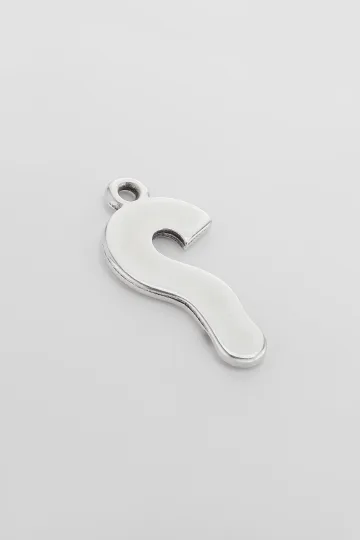
The rune took that doubleness and turned it into a sign. A simple vertical stave with one short branch rising from the top and to the side recalls a reed bent by the wind at the water's edge, a fishing hook, or the crest of an oncoming wave. The form is fluid, asymmetric, seeming to lean sideways, the way everything caught in a current does.
Understanding Laguz means separating two layers. The first is practical: it was a letter for the sound "l," an ordinary unit of writing in the runic row. The second is symbolic: every rune carried a name and a meaning, and Laguz owned the theme of water, of fluidity, of what cannot be seized and held. Both layers lived at once. A carver could cut Laguz simply as an "l" in a name and, in the next breath inside a charm, as a sign of protection at sea or a wish for an easy passage over water.
What the Laguz Rune Is
The Meaning of the Name and Its Sound
Laguz is the twenty-first rune of the Elder Futhark, the oldest runic alphabet of the Germanic peoples. It carried the sound "l" and stood in the third "aett," the last of three groups of eight runes into which the row was divided. The rune's name sounded a little different across the Germanic world, but the root is everywhere the same and everywhere it is about water.
To the Norse it was lögr (water, sea, liquid), to the Anglo-Saxons lagu (sea, ocean), and for the Goths scholars reconstruct a form with the same meaning. Everywhere it is large, living, moving water rather than a sip from a cup. The very name carries the idea of an element with a will and a mood of its own.
What the Symbol Looks Like
Laguz's shape is simple and memorable: a vertical stave and one short branch rising from the top, up and to the side at a sharp angle. It resembles a pole with a flag on top, a bent stalk, or a hook. In the classic version the branch points up and to the right.
The form is often read as a wave or as water running down a slope. Unlike the strict, symmetrical runes, Laguz looks slightly tilted, as if led by a current, and that lean sits well on the meaning of the sign. Like the whole Futhark, the rune is built from straight lines with no smooth curves, because it was carved into wood and bone where a curve is hard to make.
Variant Forms of the Stave
There is no single canonical shape for the water rune. Across the centuries and across different lands it shifted the angle of its branch and the length of its stave. In early Elder Futhark inscriptions the branch sometimes leaves the upright at nearly a right angle, a short confident stroke, while in other carvings it runs longer and shallower, closer to the top of the stave. The carver worked by eye, with an iron point on an uneven surface, and two Laguz staves cut by the same hand within an hour of each other could look quite different.
When the Elder Futhark gave way to the Younger in the north, the water rune simplified along with the whole row. In the younger system the sign became terser still, the branch shorter and sharper, though the recognisable slanting head survived. In the Anglo-Saxon row the rune lagu kept the same skeleton, and English carvers used it in inscriptions on stone and bone across Northumbria and beyond. What every variant shares is a single branch near the top of the upright, leaning aside the way everything carried on water leans.
The mirrored form deserves a note of its own, with the branch pointing left instead of right. Modern divinatory practice reads mirrored and reversed Laguz as confusion in place of clarity. That reading has nothing to do with the ancient inscriptions, where the direction of a branch was a matter of handwriting and of which way the carver happened to be working, rather than a matter of prophecy.
Its Place in the Elder Futhark
The Elder Futhark was used roughly from the 2nd to the 8th century across Germanic Europe, from Scandinavia to the Black Sea. Twenty-four signs split into three rows of eight, each row named after its own first rune. Laguz stands in the third row, sometimes called "Tyr's aett" after the god of honour and war who opens it.
The neighbours say much. Beside Laguz stand Mannaz, the rune of the human being, and Ingwaz, the rune of fertility and seed. The sign of water sits between the image of the person and the image of growth, and that is no accident: water in the old mind bound life, body and the continuation of a line. Within the row Laguz reads as the element that feeds all living things.
Laguz, Water and the Leek
The rune has a second, disputed etymology that scholars love to discuss. Some tie Laguz not only to water but also to the word laukaz, "leek." Among the Germanic peoples the leek was seen as a plant of health, strength and protection, and its name appears in many early runic inscriptions, carved as a charm on amulets and objects.
The debate runs on, and both versions make their own sense. Water and the growing leek are joined by the theme of vital force: both feed, heal and help things grow. For a piece of jewellery this is a richness rather than a problem: Laguz can be read as a sign of water and intuition and as a sign of living growth and health, and both meanings have ancient roots.
History: From the Proto-Germans to Today
Proto-Germanic Roots
Long before the first runic inscriptions, the Germanic tribes already had the word laguz and the concept behind it. Water was one of the basic elements of their picture of the world, a border between the settled and the wild, between the land of people and the land of other powers. A river was crossed with care, the sea traversed with a prayer, and springs and bogs were held to be places where the world of people wears thin.
When the Germanic peoples created or borrowed runic script in the first centuries of our era, they gave one of the signs the name of a concept of water that already existed. The rune did not invent the sacredness of water; it fixed it in letter form, setting the element in a row with wealth, the human being and the sun.
The Scandinavian Iron Age and the Viking Era
Runic writing flourished during the Iron Age and the Viking era, roughly from the 8th to the 11th century. For a seafaring people water meant almost everything: they crossed it to raid, to trade and to reach new lands, and the life of a whole farmstead depended on whether the ships came home. The water rune was cut onto objects tied to voyaging, and sea-luck was guarded with charms and amulets.
By that time the Elder Futhark in the north had already given way to the shorter Younger Futhark of sixteen signs, and the water rune survived there, its shape slightly altered but its name and meaning intact. In a society where a sea passage was ordinary, the sign of the element that carried the ships stayed alive and needed.
Inscriptions, Bracteates and Amulets
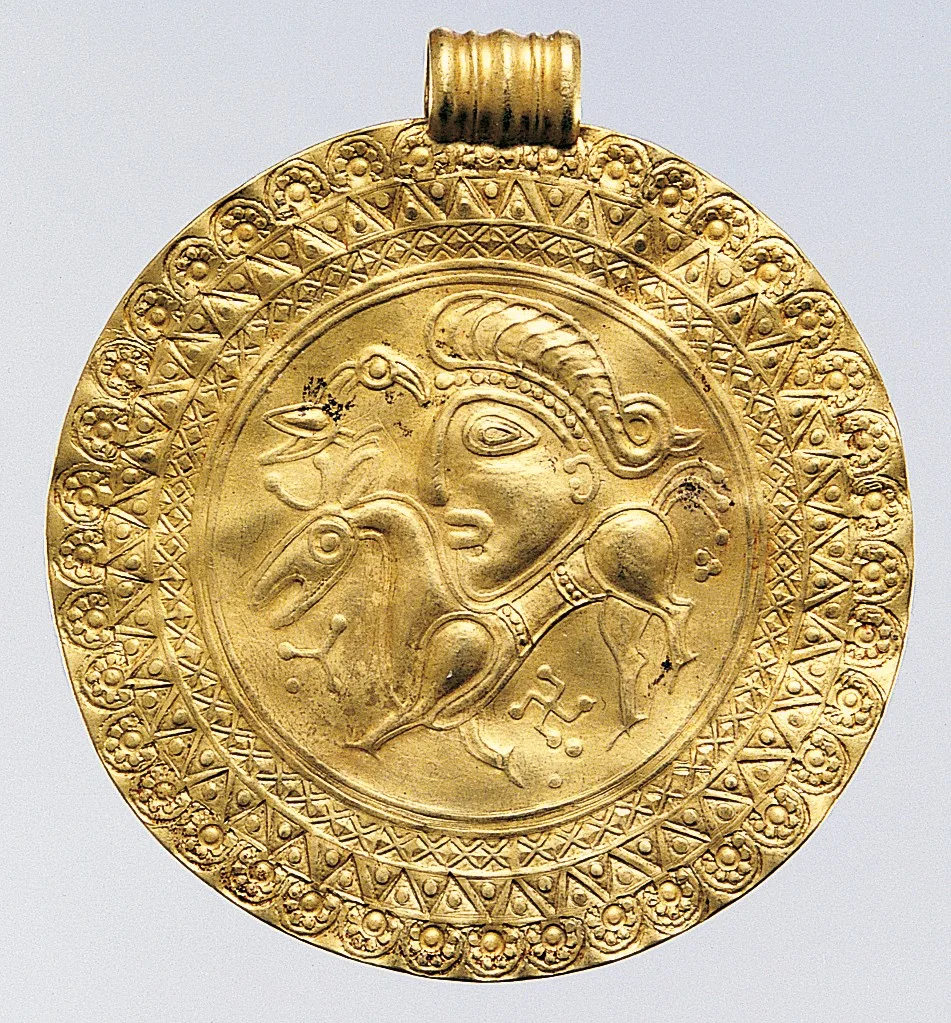
The water rune rarely appears alone in inscriptions, but it belongs to a very old layer of runic charms. On gold bracteates, the thin medallion pendants of the Migration Period, the same short magical words recur: alu, laþu, laukaʀ. That last one means leek, the very word that is arguably behind the name Laguz. It was cut as a wish for growth, health and protection, and worn against the body on a cord.
Bracteates were pendants for a reason. They were pierced or fitted with a loop, hung at the neck, and evidently valued as ornament and as charm at once. A runic formula on such a medallion turned a disc of gold into a wearable piece of luck. That matters for Laguz specifically: the habit of hanging runic meaning at the throat, which modern rune pendants return to, descends directly from these early amulets rather than being an invention of the last century. British collections hold their share of them, and the Anglo-Saxon material from Kent in particular sits in the same tradition as the Scandinavian finds.
A separate line runs through charms connected with sailing. Archaeology does not hand us a labelled Laguz sea amulet ready made, and it would be dishonest to claim otherwise. What is well attested is the custom of cutting protective runes onto objects going on a journey and onto ships themselves. The sign of the element that carries a vessel fits naturally into that practice as a wish for a good passage over water, which is how it is worn today by people who work at sea or simply love it.
The Anglo-Saxon Rune Poem
The fullest medieval commentary on the water rune survives in the Anglo-Saxon rune poem, written down in England probably in the 10th century. The stanza on the rune lagu speaks of the sea as something boundless and frightening: water seems endless to men when they venture out on a heaving ship, the waves terrify them, and the sea-steed, that is, the vessel, will not heed its bridle.
The stanza is honest and uneasy. It does not sing the praises of water but shows its might and willfulness: an element that does not obey a person and can slip its rein at any moment. This is an early and very bodily image of what would later be called an "unruly current": water stronger than the one who stepped into it.
The Norwegian and Icelandic Rune Poems
The Scandinavian rune poems, the Norwegian and the Icelandic, also speak of the water rune through images of the element. The Norwegian stanza draws a waterfall dropping from a mountain, a torrent that crashes down with unstoppable force. Water here is motion, collapse, pure dynamics, not the still surface of a pond.
The Icelandic poem calls water "eddying flood," "wide kettle" and "land of the fish." "Land of the fish" is a kenning, a poetic circumlocution for the sea: where the fish is at home, for a person there is an abyss. The Northern tradition saw water's double face clearly: it feeds with fish and with sea-roads, and it also boils, churns and swallows. The Laguz rune gathers both these images.
The Three Poems Together: Reading the Images
The three surviving stanzas are worth reading side by side, because they argue with each other as much as they agree. The Anglo-Saxon poem speaks of the sea as an expanse that frightens: the ship is compared to a horse that will not answer the bridle, and the man on a pitching deck has lost command of his own course. This is the view from on board, through the eyes of somebody already out in it and dependent on its temper. The stanza neither condemns the element nor praises it, it simply reports the unease honestly.
The Norwegian stanza looks at water differently. Its water is a waterfall crashing down from a height. There is no ship here and no fear of drowning, only pure force of falling, movement as such. The Icelandic stanza gathers water into dense kennings: a wide kettle, in which the wet is boiling, and the land of fish, where what is home to one creature is an abyss to another. Each kenning forces you to see water from two sides at once.
Taken together the three give a solid portrait of the element: fear and open horizon in the English poem, unstoppable movement in the Norwegian, boiling and a double bottom in the Icelandic. Not one of them reduces water to the gentle symbol of feeling it has become. The medieval poet had real water in mind first, the kind that drowns you and feeds you, and the softer readings came much later.
The Decline of Runic Writing
With the arrival of Christianity and the Latin alphabet, runes gradually left everyday use. In Scandinavia they held on longer, in places into the late Middle Ages, but as the main script they yielded to Latin letters. The water rune, along with the whole Futhark, passed from a living alphabet into the realm of antiquity, of inscriptions on stones and memory.
Even so, the runes never vanished completely. In rural Scandinavia runic calendars and household marks survived into the modern age, and the memory of the signs' meanings was preserved in folklore, in beliefs about water, and in scholarly works. Water as a sacred and dangerous element lived on in popular culture with no alphabet at all.
The Revival in the 20th Century
Fresh interest in the runes arrived with the 19th and 20th centuries and their fashion for Germanic antiquity, folklore and mysticism. Systems of runic divination appeared, books of interpretation, and jewellery in their wake. That is when Laguz firmly took on the role of "the rune of intuition, feeling and the unconscious" by which it is known today.
The psychology of the 20th century played a part too, with its attention to the unconscious, where water became a familiar image of the hidden depths of the soul. The ancient sign of the element and the new language of depth psychology met almost without a seam, and Laguz gained a second layer of meaning. Historical Laguz was a letter and a concept of water as an element. Today's Laguz has also absorbed a layer about intuition and the inner world, one that grew over the last century and a half. Both layers are real; they simply belong to different eras.
Upload a photo of your pet, someone you love, or an object. We'll build a 3D model and hand-cast it in pewter.
The Meaning of the Laguz Rune: Water, Flow, Intuition
Water and Current
The first and chief meaning of Laguz is water in all its forms: sea, river, lake, rain, current. Behind it stands the idea of flow, of motion, of what does not stand still and finds its way around any obstacle. Water rounds a stone, seeps through cracks, wears down rock with patience. Laguz is about that ability to keep moving, not by forcing a way through but by going around and finding a channel.
In modern practice this gives rise to the counsel to "go with the current": not to fight the element but to feel its direction and use it. This is not about weakness but about flexibility. The water rune reminds us that stubborn rigidity breaks where fluid softness passes. A Laguz pendant is often chosen precisely as a sign of the ability to adapt and not get stuck.
Intuition and the Unconscious
The second layer of Laguz's meaning is intuition, instinct, the knowledge that comes not from reasoning but from somewhere in the depths. Water here is a metaphor for the unconscious: the surface is visible, and beneath it a dark mass where what we do not perceive lives. To look into the water is to look into yourself, and not everything down there is pleasant or clear.
That is why Laguz is held to be the rune of dreams, forebodings and the inner voice. It is read as the sign of the moment when it is worth trusting a feeling rather than logic, listening to the quiet "something is wrong" or "this way." To wear Laguz is in part to keep a reminder at hand: you have an inner compass, and sometimes it is more accurate than the mind.
The Feminine and the Moon
In ancient cultures water is almost everywhere tied to the feminine, and Laguz inherits that link. The sea and the moon, the tides, the cycles and rhythms of the body, the moisture that gives life: all of it folds into an image of a soft, receiving, fluid power. Not weak, but different in nature from the strength of fire or iron.
Northern mythology peoples water with feminine figures. Ran, the mistress of the sea, catches the drowned in her net. The nine daughters of the sea giant Aegir are the waves, each with her own name and temper. The moon rules the tides, and with them, by an old feeling, the inner rhythms of a person. Laguz gathers this circle of images and so is often read as the rune of feminine intuition, feeling and a bond with the cycles of nature.
Nerthus and the Sacred Waters
The link between water and the feminine among the Germanic peoples is older than the runes themselves. At the end of the first century a Roman historian described a goddess whose wagon was drawn across the land in days of peace, and how afterwards the goddess and her vessels were washed in a secluded lake, with those who did the washing swallowed by the same water. The goddess was called Nerthus. She was a figure of earth and fertility whose cult closed on water, on a lake as a place of power and secrecy.
That story explains a good deal about how the water rune came to feel the way it does. Water here is a threshold of the sacred: the place where the human world touches another and where carelessness is punished. A female divinity, water and secrecy come together in a single knot centuries before anyone would call Laguz the rune of feminine intuition. The modern reading did not invent that connection, it dragged a very old layer up to the surface.
The same layer shows in the custom of giving gifts to water. Bogs and lakes across northern Europe, and not least in Britain and Ireland, yield weapons, ornaments and vessels lowered into them deliberately as offerings. Swords and cauldrons come out of English fenland and Welsh lakes in numbers that rule out accident. Water accepted the gift and did not give it back, and in that exchange it was understood as a party with a will of its own. Laguz inherits that attitude to water as a living and demanding force rather than a harmless emblem of softness.
Cleansing and Healing
Water washes, rinses, carries off dirt, and from this comes another meaning of Laguz: cleansing and healing. Among many peoples springs and wells were held to be healing; water was used in rites of passage, and old things were washed away before a new beginning. The growing leek of the rune's second etymology adds the same motif of health and strengthening.
In practice Laguz is linked to emotional cleansing: to letting feelings flow rather than storing them under pressure. As standing water grows murky and spoils, so unexpressed feeling poisons from within, while running water stays alive and clear. The water rune reminds us that feelings need motion, not a dam.
Reversed Laguz
Divinatory practice also weighs the "reversed" position of the rune, when the sign falls upside down. Reversed Laguz is read as an emotional storm, confusion, fear of the unknown, a lost bond with intuition or a flight from one's own feelings. It is the flip side of the same theme: if upright Laguz is about a healthy flow, the reversed rune is about flood and stagnation at once, about water that has burst its banks or, conversely, gone stale in a bog.
There is no point looking for a historical basis here; the split into upright and reversed meanings is a product of modern practice. Yet as a system of images it is coherent and keeps both sides of water in view, the two sides the old poems spoke of honestly: both the road and the abyss.
Customer reviews
Zevira is a real jewellery shop. Genuine payments, deliveries and customer thank-yous.
🥰🥰🥰 gracias
Ok, ¡gracias! 🙂
Laguz in Divination and Runescript
Most people meet the water rune today in a divinatory context, in a bag of rune tiles laid out for a reading. It is worth setting out how it is read there, and then saying plainly which parts of that practice are ancient and which are recent.
How Laguz Is Read in a Spread
In a typical spread the rune is drawn from the bag and interpreted by the position it lands in. In the position of the past, upright Laguz suggests a stretch of time when the person trusted the current and let it carry them. In the position of the present it calls for listening to feeling rather than argument. In the position of the future it promises change and a flow better not resisted. In the position of advice it reads almost identically every time: slow down, sense the direction, trust intuition ahead of bare calculation.
Much depends on the question asked. Put to a question about feelings, the water rune is read as a sign of depth and sincerity. Put to a question about work, it counsels flexibility rather than forcing a door. Put to a question about health, it is taken as a reminder about emotional clearing rather than anything physical. The reversed position turns the meaning towards confusion, stagnation or running away from what you feel.
Combinations With Other Runes
Runes in a spread are read in relation to each other, and the neighbours change the shade of Laguz considerably. Beside Ansuz, the rune of speech and message, water is read as intuitive insight, an idea that arrived from below rather than by reasoning. Beside Berkano, the rune of growth and the feminine, the water theme swells into fertility, care and motherhood. Beside Fehu, the rune of wealth, the current is tied to money and luck that come to hand when you do not grasp at them.
There are tense pairings too. Laguz next to Isa, the rune of ice, is read as a contest between movement and arrest: something living is freezing over, or else the ice is about to break. Next to Sowilo, the rune of clarity, the pairing is taken as a meeting of intuition and reason where neither should be allowed to crush the other. All of this is a system of images belonging to modern practice, and different schools teach it differently.
Bindrunes and Runescripts
Bindrunes are a subject in themselves: several runes joined into one sign by sharing a common stave. Laguz, with its plain vertical upright, lends itself to this easily, since its single branch attaches to somebody else's stave without a fight. Makers cut bindrunes with Laguz as a personal charm on the theme of instinct and flow, combining it with a rune of protection or a rune of plenty to stitch two wishes into one compact symbol that fits on a pendant.
The custom has an ancient ancestor. On early amulets runes were sometimes joined and repeated, and charm words such as laukaʀ were cut as ready-made formulas of luck. A modern bindrune inherits the idea of gathering meaning into a single sign, even though the particular designs are usually composed today for the particular owner.
An Honest Note About the Age of Rune Divination
Honesty requires a qualification here. That runes were used for casting lots is attested: a Roman writer described Germanic peoples cutting marks on strips of wood, scattering them and reading how they fell. But that is lot-casting, a yes or no answered by chance, rather than an elaborate spread with positions and reversed meanings. The orderly system of interpretation in which Laguz means intuition and flow took shape in the nineteenth and twentieth centuries, assembled by writers working with fragments.
This does not make the practice empty. It makes it a modern language for working with images, built on old material, and that is a fair description rather than a dismissal. Anyone who wears the rune because the meaning speaks to them loses nothing by knowing where the meaning came from. What they gain is the ability to talk about it without repeating claims that will not survive a conversation with a historian.



What Laguz Jewellery Is Made Of
The material of a runic pendant carries its own meaning and changes both the look and the character of the piece. For the water rune cool, pale, "wet"-feeling materials are especially fitting. Here are the main options and what is worth knowing about each.
Silver
The most fitting choice for the water rune. The cool, moonlit sheen of silver itself chimes with water, ice and the moon, and for the Vikings silver was also the main measure of wealth, some of it won from the sea. A silver Laguz looks severe and clean, and the sign reads crisply on the pale metal.
Sterling silver 925 sits well in both daily wear and a ritual look. It pairs with a leather cord in the Scandinavian key and with a thin chain in a restrained style, and in both cases it underscores the watery, lunar nature of the sign. It is a universal option, sturdy and undemanding in care.
Gold
Gold adds warmth to the water rune and reads like a sunlit glint on the surface of the sea. The warm metal softens a rune cool in meaning and makes it more festive, nearer to the theme of abundance and living force, especially if you recall the "leek" etymology with its motif of growth and health. Most often 14 or 18 karat is used; both hold the crisp carving of the sign and are unafraid of daily wear.
A gold Laguz works well as a gift for a meaningful occasion: the birth of a child, an important passage, the start of a new chapter. The contrast of the warm metal and the "watery" meaning makes such a piece expressive and far from ordinary.
Aquamarine, Moonstone and Water in a Stone
The water rune calls for a union with stones of a watery palette. Aquamarine, whose name literally means "sea water," is a clear pale blue seemingly filled with light, like a little sea in a setting. Moonstone, with its drifting inner glow, points to the moon and the tides, to that same feminine, fluid symbolism. Blue topaz, labradorite with its shimmer, and turquoise the colour of shallows all fall into the theme.
A stone strengthens the meaning without shouting over the sign. A small inset beside the rune, or a pendant where Laguz sits next to a clear blue gem, reads as a whole image of water. When choosing such a version, take care that the stone does not compete with the rune for attention but supports it.
Wood and Bone
The most authentic option from a craft point of view: wood and bone are exactly what runes were originally carved into. A wooden or bone Laguz, cut by hand, is closest to the historical spirit of the sign. Such pendants are light, warm to the touch, each with its own unique grain, and wood is itself tied to the water that fed it while it lived.
The price of authenticity is fragility and fussiness. Wood fears moisture, which for the water rune sounds almost ironic; bone is sensitive to changes in conditions, and both materials call for careful handling. This kind of amulet is more often chosen as a ritual or collector's piece than for daily wear.
Stainless Steel
The pragmatic modern choice. Steel 316L does not darken, does not fear water or sweat, leaves no mark on the skin and holds the crisp carving of the sign for years. For the water rune steel has a pleasant bonus: it truly is not afraid of moisture, so a steel Laguz can be worn to the pool or out in the rain.
A steel Laguz suits anyone who wears jewellery constantly and does not want to think about upkeep. It fits an everyday, sporty or streetwear look and easily survives what a moonstone or wood would never forgive.

Turn on your camera, pick earrings, a pendant or a ring, and see the piece on yourself in real time.
Switch items in one tap.
Everything runs in your browser: no photo or video is ever uploaded.
How to Wear the Laguz Rune
At the Neck as a Pendant
The most common way to wear the rune is as a pendant at the neck, close to the body. Here both the chain length and the way the sign sits in the neckline matter. A short chain (40-45 cm) holds the rune high, near the collarbones. A medium one (50-55 cm) brings it onto the chest, where the symbol reads large. A long one (60-70 cm) tucks the amulet under clothing, closer to the heart, which many find fitting for a rune of feeling and intuition.
By a view common in practice, a protective rune is worn so that the sign is oriented correctly toward its owner, so it "reads" for the wearer. There is no strict historical rule here, but for Laguz, the rune of the inner world, the sense that the symbol is turned toward you is especially in tune with the meaning. A separate guide to choosing chain length can help you settle on the right one.
On a Ring and a Bracelet
Laguz sits well in a ring and in a bracelet too. Engraving the rune on a flat signet ring or on the plate of a bracelet looks spare and does not catch the eye, which appeals to those who wear the symbol "for themselves." A bracelet with the water rune looks good paired with stones of a watery palette, and on a ring Laguz becomes a quiet personal reminder, always in view.
A ring with a single rune has the advantage that the sign is always before your eyes, on the hand, and easily becomes an anchor of attention in moments when it matters to listen to yourself rather than only to reason.
Direction and Correct Form
When choosing a piece it is worth checking that the rune is carved correctly: a vertical stave and a branch rising from the top, up and to the side. A reversed or mirrored sign in the divinatory tradition reads as emotional turmoil rather than a clear flow, so a workshop should orient Laguz so the pendant has a clear "top."
This is not a superstitious quibble but a matter of meaning. If you are taking a rune for its meaning, it is logical for that meaning to be upright. With a good maker the orientation of the sign is checked, and it is easy to tell top from bottom.
What to Pair It With
Laguz is spare and gets along with almost any style. It looks good on a rough leather or rubber cord in the Scandinavian key, on a thin chain in a restrained look, and paired with other Northern symbols. Fitting neighbors include the Algiz rune as a sign of protection, the Fehu rune as a sign of prosperity, and pendants with the images of the Norse pantheon.
The one thing worth avoiding is clutter. A single rune on a clean cord reads more strongly than one hemmed in among five pendants. If you want layers, give Laguz its own length of chain so the sign does not get lost, and let a water stone beside it only support the theme.
Who Laguz Suits and Who It Is Given To
Laguz is not tied to gender, age or profession, but it has themes it is especially in tune with. It is the rune of feeling, intuition, change and flow, so it is most often chosen and given in connection with the inner world, creativity and the transitional moments of life.
People take it:
- For those who trust their intuition. The rune works as a visual reminder to listen to instinct rather than drown it out with arguments.
- For those in creative pursuits. Water as an image of imagination and a flow of ideas is close to those who write, paint, compose and seek inspiration.
- In times of great change. A move, a change of work, the end of one stage and the start of another: Laguz is about the ability to keep flowing and not get stuck.
- As a gift for the birth of a child or an important passage. Water as a symbol of life, growth and cleansing sounds warm and fitting.
- For lovers of Northern culture and the runic tradition. Laguz is a logical choice for those who collect the symbolism of the Futhark and value its watery, lunar images.
- For skeptics who care about meaning, not magic. The history of the sign is interesting in itself, and belief in a "power of water" stays a private matter.
As a gift Laguz is convenient because its meaning reads warm and soft: a wish for sensitivity, flexibility and inner balance. A jewellery gift guide by occasion can help you pick the right version.
Leave your email, we'll send your discount code. No spam, unsubscribe anytime.
The code arrives by email, valid on your first order.
How to Choose Laguz Jewellery
Correct Form and Orientation
The first thing people look at is the accuracy of the sign. The stave is vertical, the branch rises from the top, up and to the side at a sharp angle. A pendant should have a clear "top" so the rune does not end up reversed while worn. A mirrored or upside-down form is undesirable for the water rune, since in the tradition it reads as turmoil rather than clarity.
Checking is simple: lift the pendant by its loop in its natural position and make sure the branch points up, not down. If a workshop made the sign legible and stable, that is a good mark of attention to meaning, not only to form.
Craft Versus Stamping
Mass stamping gives an even but faceless sign, often with a blurred relief. Hand carving or quality casting hold crisp edges, and the rune looks alive. For a symbol whose whole force is in its form, crisp lines are not a quibble but the essence.
If you want a piece with character, look for versions with hand finishing, a light asymmetry to the carving, an honest metal texture. Such pendants are closer to the spirit of runic craft, where each sign was carved separately, and the fluid form of Laguz looks especially alive in handwork.
Size and Proportion
For an everyday pendant a size of 2-4 centimetres is comfortable. Under two the sign gets lost on the chest; over four it starts to look massive. For a masculine look and a broad neck people take it nearer the upper edge, for a slender build nearer the lower. A ring and a bracelet call for finer, neater engraving, or the rune looks crude. If there is a water stone beside the rune, watch the balance: the stone should not overpower the sign.
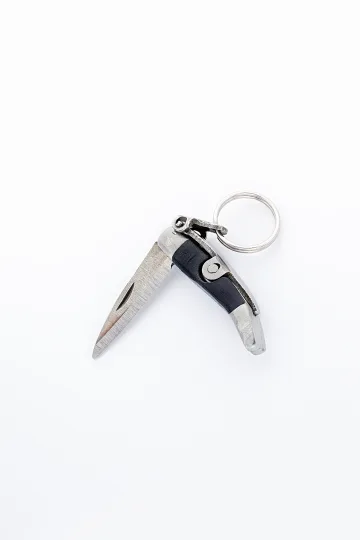
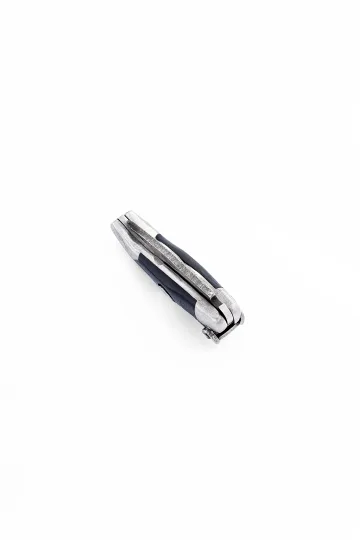
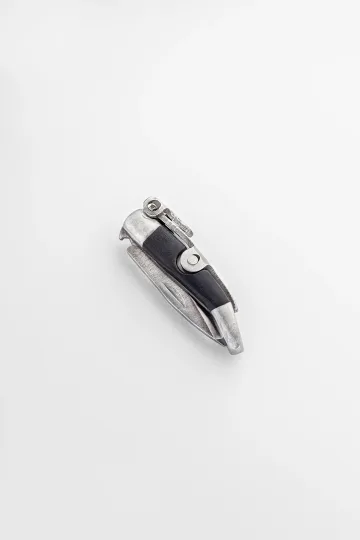
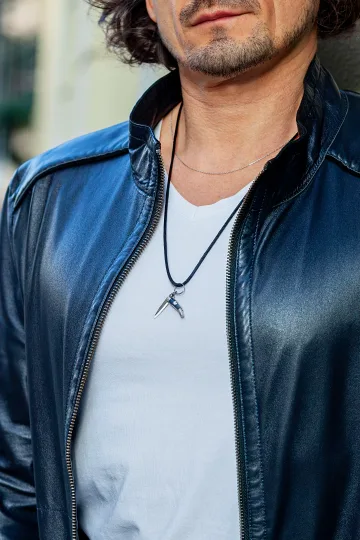
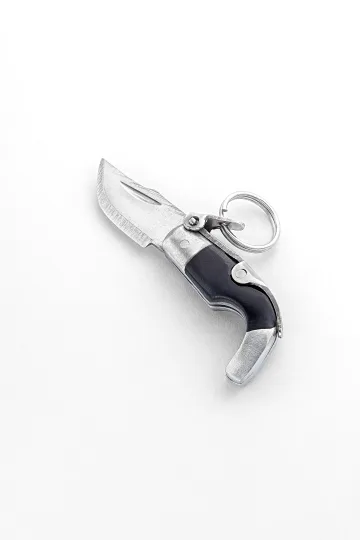
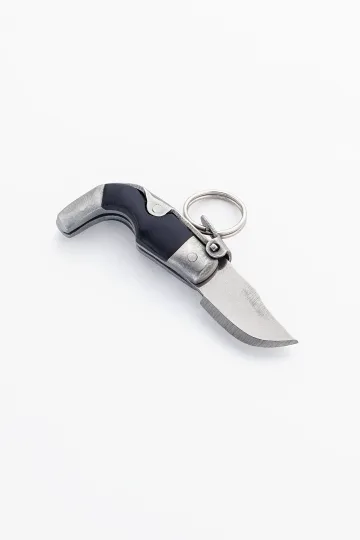
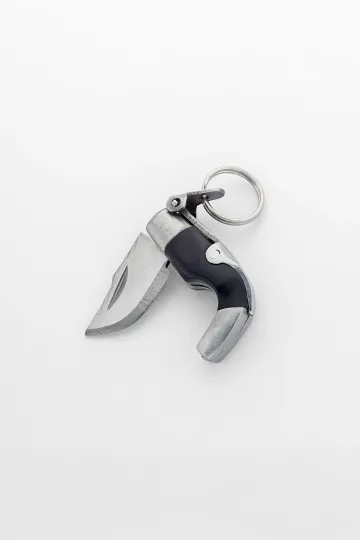
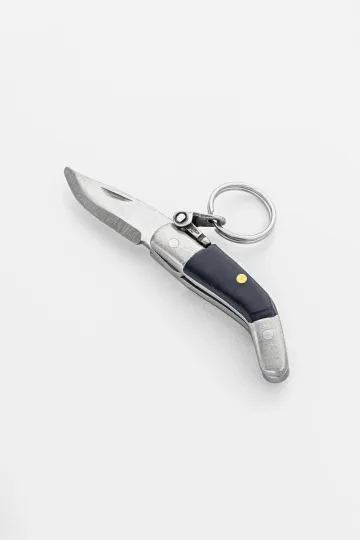
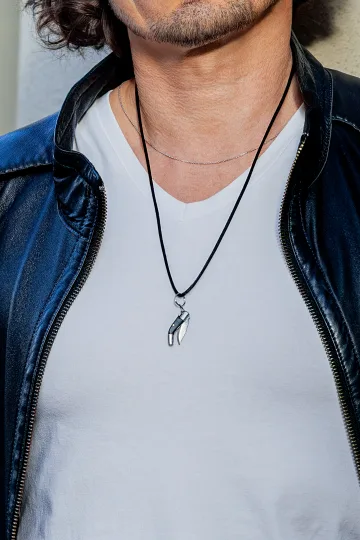
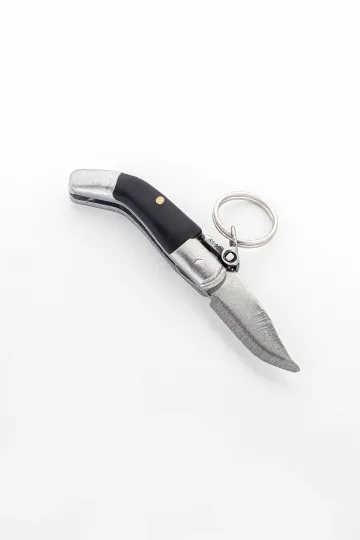
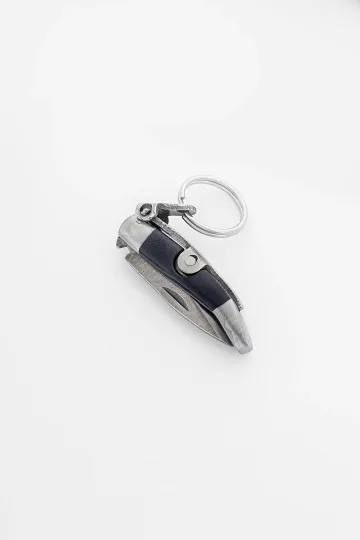
CAPAORA mini knife pendant
The 18th-century Spanish navaja in miniature: 40 mm of stainless steel, a real folding mechanism and a Palanquilla lock that clicks. An affordable gift to remember.
Authentic · Ships from Spain · 14-day returns
Laguz and Other Runes of Water and Feeling: What Is the Difference
More than one rune reflects water, emotion and depth in the Futhark, and they share the meanings out among themselves. Understanding the differences helps you choose "your own."
Laguz and Isa: Current Versus Ice
The main pair by element is Laguz and Isa, the rune of ice. Both are about water, but in opposite states. Laguz is living, flowing, moving water, the sign of flow and change. Isa is frozen water, ice, the sign of a halt, a pause, a standstill. Laguz leads forward and teaches you to flow; Isa stops you and teaches you to wait.
Together they describe the full cycle of water: motion and rest, thaw and frost. In practice they are sometimes set against each other as "act on instinct" and "freeze and wait." Choosing between them, a person is really choosing what they lack right now: motion or a halt.
Laguz and Perthro: Flow Versus the Mystery of Fate
The rune Perthro is tied to mystery, fate, the hidden and the lot cast, and it is often read as the sign of what is concealed and not yet revealed. Laguz is also about depth and the unseen, but differently: where Perthro is about the riddle and destiny, Laguz is about feeling and flow. Perthro is the closed casket of fate; Laguz is open water you can sail across.
Both runes work with what is hidden below the surface, and so they are sometimes confused. The difference is that Laguz invites you to trust the current and your intuition, while Perthro reminds you that not all is in our hands and part of the pattern of fate stays a mystery.
Laguz and Sowilo: Water Versus the Sun
The rune Sowilo is the sun, light, clarity, will, the force that leads straight to a goal. Laguz is its soft opposite: not a bright direct ray, but the fluid, the reflected, the lunar. Sowilo is about conscious clarity and action, Laguz about intuition and feeling. The sun shows the path; the water feels it.
They are best understood as a pair, as two ways of finding your bearings in the world: by reason and by instinct, by light and by depth. Neither is better than the other; they complement each other, and the choice of rune often says which one a person leans on now.
The Psychology of a Runic Amulet
You do not have to believe in the magic of runes for a Laguz pendant to "work." The mechanisms that make such an amulet useful are quite earthly and well described.
An anchor of attention to feeling. When a person ties an object to a concrete intention, a glance at that object returns the mind to it. A water rune at the neck becomes a quiet reminder to listen to yourself, to slow down, to ask "what do I actually feel." It works as a visual bookmark for attention, without any mysticism.
The confidence effect. Sports and cognitive psychology describe the "lucky object" effect: a person confident that a talisman is with them acts calmer and more collected. Anxiety drops, steadiness rises. For many, Laguz does exactly this in moments of uncertainty, when a decision has to be made on a feeling.
Ritual and passage. Putting on the water sign before an important talk, a journey or a change is a small ritual, and rituals restore a sense of control where much is out of our hands. Water as a symbol of passage helps to mark gently the border between "before" and "after."
Identity and values. To wear a rune of intuition is to state quietly (first of all to yourself) your priorities: sensitivity, flexibility, attention to the inner world. Anchors of identity increase resilience to hardship, and in that sense an ancient sign works for a thoroughly modern person.
There is nothing supernatural in this. An amulet does not change reality; it changes the wearer's relationship to reality, and it does so in a measurable, useful way.
Laguz in Culture and Heritage
Runes have long moved beyond archaeology and live in language, folklore and modern culture. The trace of the water rune is deep and spread everywhere, like water itself.
In language. Old Norse lögr and Old English lagu are kin to a whole cluster of words about water and low ground. Through a shared root they echo the words for lakes, moisture and flooded land that survived in place names and old dialects. Water as laguz left its mark in the very names of wet places on the map of the north.
In water mythology. The Northern tradition gave water characters: Ran with her net, the daughters of Aegir who are the waves, the water spirits of rivers and falls. Water was a border between worlds; the dead were ferried across it, and gifts were offered at its edge. The Laguz rune gathers this layer of a folk sense of water as a living, animate, wilful element.
In modern symbolism. The revived interest in Northern antiquity has made the Futhark a recognisable visual language. Runes decorate books, games, music covers and craft goods. Laguz, with its fluid form and clear image of water, holds a firm place in this set, especially where a sign of feeling, intuition and change is wanted.
One important caveat is worth keeping. In the 20th century some individual runic signs were used by political movements of grim repute, and a heavy context surrounds certain symbols. Laguz does not belong to that circle and remains a neutral sign of water, but a general awareness of what you wear and what you wear it beside is fitting here.
Send a friend a discount code, they save on their first order.
Facts About the Laguz Rune That Surprise You
The rune's name is kin to words for water across Europe. Old Norse lögr, Old English lagu and Proto-Germanic laguz go back to one root meaning water and bodies of water. The idea of "water as a separate element with a name" has been stitched into the Northern languages for thousands of years.
The rune has two etymologies at once. Some scholars tie Laguz not only to water but also to the word laukaz, "leek," a plant of health and protection. The debate is still open, and both senses, water and living growth, are ancient in the sign.
The old poems feared water rather than admiring it. The Anglo-Saxon rune poem calls the sea boundless and frightening and likens the ship to a horse that will not heed its bridle. The Northern tradition saw might and willfulness in water, not a calm surface.
Laguz stands in "Tyr's aett." The water rune belongs to the third and last row of the Futhark, opened by the rune of Tyr, the god of honour and war. Its neighbours, the runes of the person and of fertility, place water at the very centre of the theme of life.
The form is read as a wave and as a hook. The tilted branch of Laguz recalls now the crest of an oncoming wave, now a fishing hook, now a reed bent at the water's edge. The asymmetry of the sign sits well on the meaning of fluidity and motion.
The link between water and intuition is younger than it seems. The image of water as the unconscious was strengthened by the psychology of the 20th century. Ancient Laguz was above all the sign of a physical element, and the layer about "inner depths" grew in modern times, though it fell onto the sign perfectly.
Water was a border between worlds. Among the Northern peoples rivers and the sea divided the land of people and the land of other powers; the dead were ferried across water and gifts were offered there. The water rune carries this ancient image of a threshold and a passage.
A steel Laguz does not fear what it symbolises. Of all the materials, stainless steel alone is indifferent to water, so a water rune in steel can be worn in the rain or the pool without a thought for care. A pleasant meeting of form and meaning.
Silver, gold, runic and Scandinavian symbolism, protective charms, paired sets.
Frequently Asked Questions About the Laguz Rune
What does the Laguz rune mean? Laguz is the twenty-first rune of the Elder Futhark, standing for the sound "l" and the concept of water: the sea, a river, a lake, any great moving body of water. In a broad sense it symbolises flow, current, intuition, feeling, the unconscious, the feminine, cleansing and the ability to adapt. The name goes back to Proto-Germanic laguz, "water, body of water."
Is Laguz the rune of intuition? In modern practice, yes; it is read as the rune of intuition, instinct, dreams and the inner voice. Water here is a metaphor for the unconscious, the hidden depths of the soul. But historically it was above all about water as an element, the sea and the river, and the layer about intuition grew in modern times. Both senses are real, simply from different eras.
What does the Laguz rune look like? A vertical stave with one short branch rising from the top, up and to the side at a sharp angle. The form is read as a wave, a bent reed or a fishing hook. There are no smooth curves in the sign, as across the whole Futhark, because runes were carved into wood and bone.
What does reversed Laguz mean? In the divinatory tradition the reversed position is read as an emotional storm, confusion, fear of the unknown, a lost bond with intuition or a flight from feeling. It is the flip side of the rune: upright is about a healthy flow, reversed about flood or stagnation. The split into upright and reversed meanings appeared in modern practice.
Who does the Laguz rune suit? Those who trust their intuition, people in creative pursuits, anyone passing through great change and transition. Water as a symbol of flexibility, feeling and cleansing is close to those who value the inner world. Gender and age do not matter here; the sign is neutral and open to everyone.
Can you wear the Laguz rune every day? Yes. For daily wear silver and stainless steel are convenient: they are sturdy, undemanding in care and do not darken, and steel does not even fear water. Gold suits too. Wood, bone and soft water stones are authentic or beautiful but call for careful handling; they are more often chosen as a ritual or dress version.
Which stones go with the Laguz rune? Best of all with stones of a watery palette: aquamarine, whose name means "sea water," moonstone with its drifting glow, blue topaz, labradorite and turquoise. Such a stone strengthens the watery meaning of the sign if it does not compete with it for attention but gently supports it.
Do you have to believe in the magic of runes to wear Laguz? No. Many wear the rune for its meaning and history rather than for a "power of water." The sign is interesting in itself: it is more than fifteen hundred years old and is bound to the language, culture and mythology of Northern Europe. Belief stays a private matter, and beauty and meaning work without it.
Runes, Scandinavian charms and symbolism in silver, gold and steel.
Buying it as a gift? Each one arrives ready to give.
 A branded Zevira box and a little card come with every order.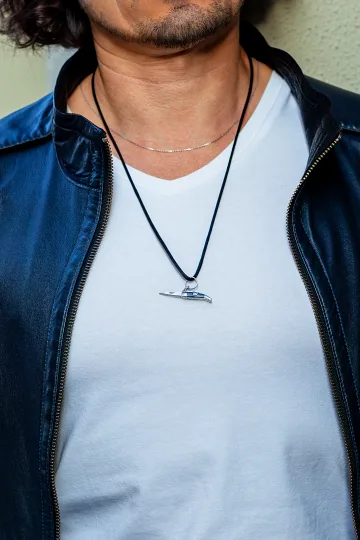




Conclusion
Laguz travelled from a sign for the sea and the river to a symbol of intuition and inner flow on a silver chain. Over fifteen hundred years both the way of thinking about water and the language used for it changed, but the essence of the rune stayed the same: water is what cannot be held by force, yet what you can move in step with if you feel its direction.
The twenty-first rune of the ancient alphabet tells both truths at once, honestly. Water feeds, heals, carries ships and gives life, and it also drowns, washes away banks and arrives as a storm. Whether you wear Laguz for its meaning, for the beauty of the Northern form or for a quiet reminder to trust your instinct, you carry with you one of the most human symbols in history: the sign of what flows through us and around us, and what is worth learning to trust.
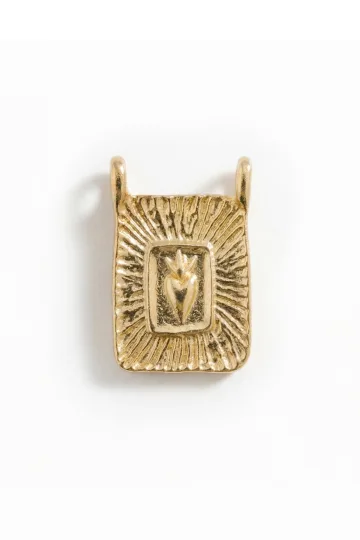
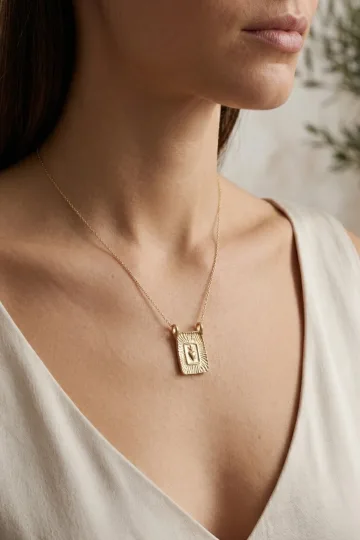
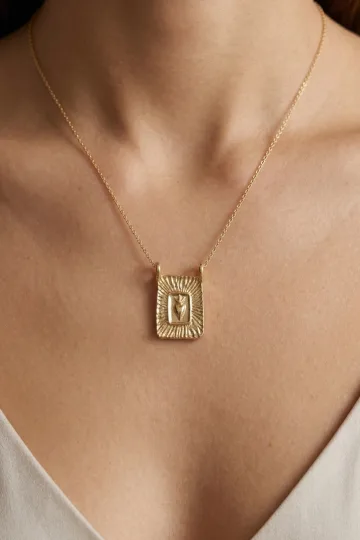
Wear the symbol, don't just read about it. These are in stock:
About Zevira
Zevira makes jewellery in the artisan tradition of Albacete, Spain. Runic symbolism is one of the themes close to us: an ancient form, legible without words, equally at home on a rough leather cord and on a thin chain. We render Laguz with a checked orientation of the sign and crisp carving, in modern materials and proportions, often in a union with stones of a watery palette.
What you can find with us on the theme of Northern symbols:
- Runic pendants in silver, gold and steel
- Scandinavian charms: protective runes, water and lunar motifs, images of the gods
- Versions with aquamarine, moonstone and other gems of the watery range
- Leather and rubber cords and chains of various lengths for a rune of any size
- Paired and set versions for those who collect the symbolism of the Futhark
- The option of personal engraving
Every piece can be personalised with engraving. Sterling silver 925 and 14-18K gold.