The Algiz rune (Elhaz): meaning of protection and rune jewellery
Introduction: the upward-pointed shield of the Northern world
A friend in Oslo wears a small silver Algiz rune on a thin chain. She bought it when she started long solo hiking trips in the Norwegian fjords. The rune for her is not a magical guarantee of safety, more a reminder of attention: of staying alert, of trusting her instincts, of the connection with the natural world she walks through. Every time she touches the rune at her collarbone, she remembers that protection is partly external (right gear, planning) and partly internal (presence, awareness, calm).
The Algiz rune is one of the most powerful symbols of the Elder Futhark. Its primary meaning is protection in all senses: physical safety from danger, emotional shielding from negativity, spiritual connection with the divine. The graphic shape is striking: three lines diverging upward, evoking both elk antlers and an open human hand stretched up to the sky in a gesture of invocation.
Wear the symbol, don't just read about it. These are in stock:
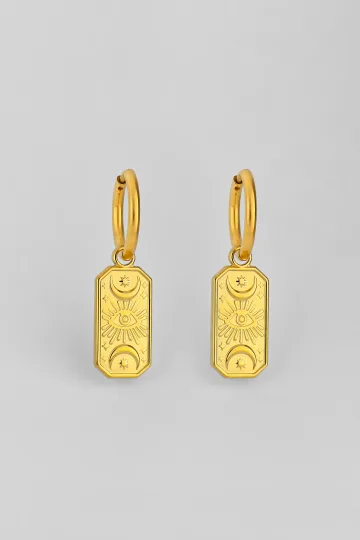
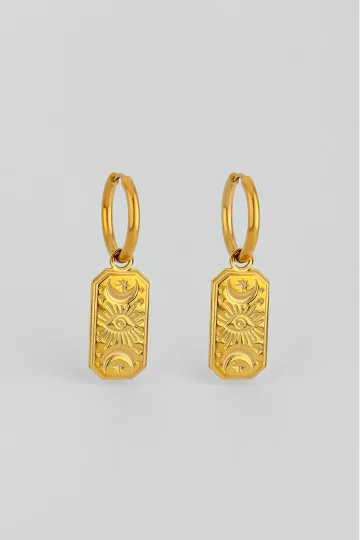

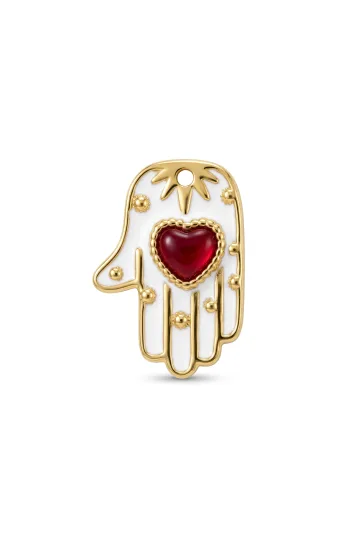
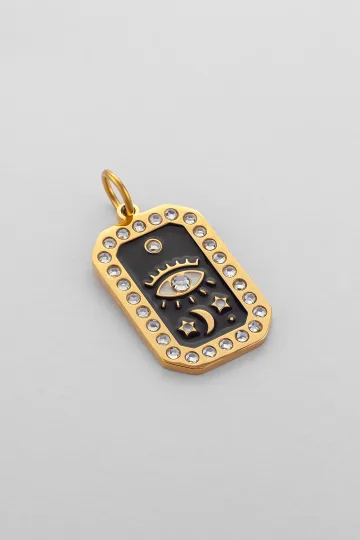
Among the 24 runes of the Elder Futhark, Algiz has become in recent years the most popular in contemporary jewellery. Thor's hammer and the Valknut are worn more often by those who follow Norse mythology specifically, but an Algiz protective amulet is carried even by people who do not know the rune's name and have no particular interest in the Viking age. The graphic is self-explanatory: clean, simple, upward-pointing. It reads without explanation.
This guide collects the full history of Algiz: from its origins in the Elder Futhark, through use in ancient Germanic and Viking cultures, to modern jewellery. The elk as the Northern peoples' totem. The connection to gods and Valkyries. Why this is one of the most popular protective runes today. How to wear it as a personal amulet. What it pairs well with. Where it appears in literature and pop culture. The aim is to give a complete view of the symbol's living meaning.
If you want to read about other runes, see the Odal rune guide and the Valknut guide. For protective symbols in general, see the protection amulets guide.
What the Algiz rune is
Algiz is the 15th rune of the Elder Futhark, the oldest known Germanic alphabet. Its shape is three lines diverging upward from a single root: a central vertical line with two side lines rising at an angle to the sides, like an open trident pointing to the sky.
Place in the Elder Futhark
The Elder Futhark has 24 runes in three aetts (sets of eight). Algiz is the 7th rune of the second aett (Hagal's aett). It closes that second group.
Phonetic value
The rune represents the sound "z" or, more precisely, a sound that in later Scandinavian languages shifted to "r". Its name comes from the Germanic word *algiz, meaning "elk" or "moose".
Function
In writing the rune was used as a regular letter. In divinatory and amuletic practice it carried the strong meaning of protection, defence, connection with higher forces.
Why Algiz stands out among protective symbols
Among all the world's protective symbols, Algiz occupies a particular position because of several qualities at once:
- Graphically simple and immediately recognisable
- Linked simultaneously to a totem animal (the elk) and to the world of the gods
- Clear, consistent meaning across all historical sources
- Works equally well as a standalone symbol and within complex compositions
Younger Futhark
In the Younger Futhark of the Viking age (after 800 AD) the Algiz rune did not disappear: it became the rune "Yr" with a slightly modified meaning (associated with the yew tree and the bow). But its protective meaning continued in folk tradition.
Algiz on a leather cord, branches skyward. A dainty chain has no business here.
How and what to wear the Algiz rune with
The rune has no sharp detail and no fuss, so it fits almost any look; you only need to catch the mood. Here is how I build it, by occasion.
What do I wear Algiz with every day? For daily wear I recommend a thin silver pendant on a mid-length chain over a plain tee or sweater, set so the rune rests on the chest and reads clearly. Pale or busy fabrics swallow it; dark tones (graphite, khaki, navy, black) light the shape up. For the office I suggest the same pendant tucked under a shirt collar, or a clean minimal version without blackening so it does not argue with a formal look.
How do I build an evening look? For evening I flip the logic. An open neckline, a smooth fabric (silk, satin, fine knit) and a slightly larger rune on a short chain or choker turn the symbol into a clear accent. I recommend giving a massive piece the spotlight rather than burying it.
Can I layer it with other jewellery? Yes. Thin models I slide into a stack of two or three chains of different lengths; heavier ones I keep as a solo. You can mix metals on purpose (silver with brass, white with yellow gold), but I suggest holding to two tones per look, or it turns noisy.
Chain or leather cord, and who does it suit? A leather cord instead of a chain shifts the look toward a Northern, reenactor feel and sits well on coarse textures: linen, suede, heavy wool. The rune reads equally on Scandinavian minimalism and on boho or ethnic styling. On length I suggest 40 to 50 cm for smaller frames, 50 to 60 cm for larger, and a cord adjusted to height.
Is there one rule for stacking? If you build a stack (a ring plus a pendant, earrings plus a pendant), keep the rune's orientation the same everywhere, branches up. That single detail is what separates a considered look from a random one.

Turn on your camera, pick earrings, a pendant or a ring, and see the piece on yourself in real time.
Switch items in one tap.
Everything runs in your browser: no photo or video is ever uploaded.
Names and pronunciation: Algiz, Elhaz, Eolh
A few linguistic notes.
Proto-Germanic name
In Proto-Germanic the rune was called *algiz or *algís, meaning "elk". Pronounced roughly "AL-giz".
Modern names
The rune appears under several modern variants:
Algiz (the most common modern form). Used consistently in contemporary runic practice. Linked to the Proto-Germanic root algiz-, referring to the elk or any large branching-antlered deer.
Elhaz (a more accurate transliteration of the Proto-Germanic). Sometimes used as a phonetic variant. Pronounced "EL-haz" rather than "AL-giz".
Eolh or Eolhx (the Anglo-Saxon variant in the Old English rune poem). The 10th-century English poem describes Eolh as a plant (likely sedge or a sharp-edged reed), read as a metaphor for protection through sharp edges that wound those who attack.
Yr (the Old Norse form in the Younger Futhark, with slightly altered shape and meaning). In the Younger Futhark, Yr refers to the yew tree (the material for bows) rather than elk or sedge, and functions as a late-alphabet rune with its own symbolism.
Contemporary runic jewellery almost always uses the Elder Futhark name and shape, Algiz. This is both culturally clear and graphically the most effective choice.
In Proto-Germanic poetry
The Old English rune poem describes Eolh: "The eolh-sedge is mostly to be found in a marsh, growing in the water; cruelly it wounds and stains with blood any man who in any way tries to grasp it." Behind the natural image lies the protective core: the rune protects, but with sharp edges that those who attack it pay for.
The shape: elk antlers or open hand
The graphic of the rune has several layers of meaning.
Elk antlers
The first and primary reading. The rune resembles the upward-spreading antlers of an elk (moose). In the Northern world the elk was a sacred animal, and antlers symbolised protection (the elk defended itself with them against wolves and bears). Stylising the broad palmate antlers of a Scandinavian elk into simple lines produces almost exactly the Algiz shape.
Open hand toward the sky
The second reading. The rune is shaped like a human open hand stretched upward: one central trunk (the arm) and two upper branches (the fingers spread). A gesture of invocation, asking for help from the heavens, or of defence against threat.
Tree
The third reading. The rune looks like a stylised young tree: a trunk and branches reaching upward. A symbol of growth, connection between earth and heaven.
Person with arms raised
A fourth reading. The shape is anatomically recognisable as a human figure standing with both arms raised, in a posture of prayer or greeting. This interpretation reinforces the sense of reaching toward higher forces.
Bow and arrow
A fifth, less common reading. The shape can be seen as an arrow pointed upward, ready to fly. The arrow of intention directed toward the sky.
Y-Tiwaz combination
Some interpretations see it as Tiwaz (the rune of the god Tyr) plus a third upper branch: an extra "antenna" reaching the divine.
The common thread
In all readings the shape is upward and outward: the rune is open, raised, looking up. It does not curl on itself in defence but reaches up for help and outward to repel. Unlike the inverted Algiz (Yr), whose mirror image points downward, the upright Algiz is associated with reaching toward what is above.
The elk as a totem of Northern peoples
The animal that gave the rune its name.
The elk in Northern ecosystems
The European elk (Alces alces) was the largest animal of the Northern forests, weighing up to 700 kg, standing 2 metres at the shoulder, with antlers reaching 30 kg. Strong, fast, dangerous. Hunting an elk required skill and was an initiation for young men. Its ability to pass through forest dangers unharmed, to escape wolves, to cross marshes and rivers, made it a symbol of the guide and protector.
Elk antlers as a symbol
The antlers, which the male elk grows and sheds every year, were a symbol of cyclical renewal and natural strength. Hunters often kept antlers as trophies and amulets. Archaeological digs in Sweden and Germany find elk bones and antler fragments in ritual contexts.
The elk in Norse mythology
Mythological elk-like creatures appear: the elk Eikthyrnir stands on the roof of Valhalla, eating leaves from the tree Læraðr. Water dripping from his antlers feeds the wells from which all the rivers of the world flow. The elk is part of the fabric of cosmic maintenance.
Among the Sami
Silver, gold, engagement rings, symbolic jewellery, paired sets.
The Sami, the indigenous people of northern Scandinavia, link the elk with shamanic tradition. In Sami myths the elk is a mediator between the human world and the spirit world. Old elk antlers were found at Sami sacred sites well into the 20th century.
Among pre-Christian Germanic tribes
Among the Germanic tribes before Christianisation the elk was both a hunted animal and a sacred one. Hunting it was done with respect for the prey. After a successful hunt part of the antlers or the shoulder blade was brought to a sacred place in thanks.
The Scythian parallel
The Scythian and Sarmatian peoples of the southern Russian steppes also venerated elk and deer. The famous "animal style" of Scythian jewellery is full of deer with branching antlers. The direct connection to Germanic-Norse veneration is hard to trace, but the semantic parallel is evident.
British and Irish parallels
In British and Irish tradition the stag occupies a similar position: the horned figure, the lord of the wildwood, the guide through unknown terrain. Medieval hunting lore attributed special wisdom and protectiveness to the great stag. This shared Northern European symbolism is part of why Algiz resonates beyond strict Norse contexts.
In shamanic tradition
In Siberian shamanic tradition the elk was a spirit guide. The shaman's headdress often had antlers. Some scholars suggest a deep prehistoric link between Northern shamanic and Germanic traditions through the elk symbol.
Customer reviews
Zevira is a real jewellery shop. Genuine payments, deliveries and customer thank-yous.
🥰🥰🥰 gracias

Ok, ¡gracias! 🙂

Connection with gods and Valkyries
The rune's divine layer.
The Sigrdrífumál
The poem Sigrdrífumál in the Poetic Edda (10th to 13th century) describes how the Valkyrie Sigrdrífa teaches the hero Sigurd the runes. She names a rune for protection in battle, a rune for healing wounds, a rune for wisdom. The exact names in Sigrdrífumál do not always align with the classical Futhark, but scholars associate this protective rune with Algiz.
Graphical link to the Valkyries
Graphically, Algiz with its upward branches recalls the figure of a Valkyrie in armour: head, shoulders and raised arms, or a sword held upright. This allows the rune to be read as an image of the female protector.
Connection with Heimdall
In Norse mythology, Heimdall is the gatekeeper god who guards the rainbow bridge Bifrost between Asgard (the gods' realm) and Midgard (humanity). His Gjallarhorn will sound at the start of Ragnarok. Heimdall is the protector god par excellence: he can hear grass grow and see hundreds of miles. The idea of permanent alert readiness fits the meaning of Algiz precisely. This is the most established divine association.
Connection with the Valkyries
Valkyries are the warrior maidens who choose the slain on the battlefield and bring the worthy to Valhalla. Their protective role over chosen warriors aligns strongly with Algiz.
Connection with Tyr
Tyr is the god of justice, courage and war. His sign Tiwaz looks like an upward-pointing arrow, similar in spirit to Algiz. Both are runes of higher protection through righteousness.
As a prayer to the gods
Carving Algiz on an object or wearing it as an amulet was understood as a request for divine protection. The wearer asked the gods to watch over them.
Symbolic communication with the divine
The shape of the rune, with three lines reaching up, can be read as antennae for receiving the divine. The wearer is open to divine help.
Algiz in the Elder Futhark
The rune's place in the runic system.
The three aetts
The Elder Futhark is a system of 24 runes in three aetts:
First aett (Freyr's runes): Fehu, Uruz, Thurisaz, Ansuz, Raidho, Kenaz, Gebo, Wunjo
Second aett (Hagal's runes): Hagalaz, Naudiz, Isa, Jera, Eihwaz, Perthro, Algiz, Sowilo
Third aett (Tyr's runes): Tiwaz, Berkana, Ehwaz, Mannaz, Laguz, Ingwaz, Dagaz, Othala
The Hagal's aett
This aett is generally about transformation through difficulty. Algiz is the seventh rune of the aett, near the end: after passing through hardship comes protection, before sunrise (Sowilo, the final and victorious sun rune).
Sequence and symbolism
Algiz is positioned in the system as a key rune of transition from suffering to triumph. The sequence: go through trials (Hagalaz, Naudiz, Isa), experience growth (Jera, Eihwaz, Perthro), find protection (Algiz), emerge into light (Sowilo). After ice, patience, endurance and mystery, comes Algiz as the assurance of protection, and after it Sowilo brings the light.
The ALU formula
In protective magical inscriptions of the Elder Futhark, Algiz appeared often. The formula "ALU" (read today as "ale" or "strength"), common on amulets, was strengthened when combined with Algiz. This is evidence of the rune's active use in protective practice, not merely theoretical symbolism.
As a divinatory rune
In rune divination Algiz indicates:
- Protection from threats
- Help from higher forces or trustworthy friends
- Connection with the divine
- Need to seek refuge
- A safe path through complex situations
The inverted Algiz signals vulnerability, abandonment by protection, danger.
Upload a photo of your pet, someone you love, or an object. We'll build a 3D model and hand-cast it in pewter.




Inverted Algiz: what it means
A separate point.
The inversion and Yr
When Algiz appears upside down (the antlers pointing downward), the resulting shape is actually a different rune: Yr of the Younger Futhark. Same graphic, mirror orientation. Yr in the Younger Futhark means the yew tree (and by extension the bow made from yew), with its own set of associations.
The yew tree symbolism
The yew is both a tree of death (its berries are highly toxic) and a tree of enduring life (yew trees live for centuries). Yr is associated with the underworld, with passage, with protection through knowledge of death. Wearing an inverted Algiz is either a conscious choice to reference Yr and this deeper symbolism, or an error.
Negative meaning in modern divination
In contemporary esoteric literature, inverted Algiz is often read as "negative protection":
- Loss of protection
- Abandonment by divine forces
- Vulnerability and exposure
- An enemy nearby
- Personal weakness in a difficult moment
This is a modern reading rather than a strictly ancient one. When buying Algiz jewellery with the intention of wearing the upright protective symbol, check that the branches point upward.
What to do
When Algiz appears inverted in divination, traditional rune practitioners advise:
- Avoid major decisions until the situation clears
- Strengthen physical and emotional defences
- Reduce contact with toxic people
- Take time to recover trust in oneself
As a meditative theme
Some practitioners use the inverted Algiz as a meditation on weak points: what protections am I missing right now? Where am I vulnerable? Awareness of weakness is the first step in strengthening it.
Algiz in jewellery: the main protective rune
Why people wear Algiz today.
Why it became the leading protective rune
In contemporary runic jewellery, Algiz has established itself as the top protective rune. Several factors brought it to this position:
Graphic clarity. Three lines, easily read in any size and material. A small pendant of 1 cm with Algiz remains legible.
Transparent meaning. Unlike runes with layered readings, Algiz is clearly associated with protection. It reads intuitively: arms up, antlers up, branches up.
Gender neutrality. Algiz has no fixed masculine or feminine association. A large heavy men's piece and a fine delicate women's piece with Algiz work equally well.
Thematic breadth. Algiz covers protection of home, protection in travel, protection during pregnancy, protection of children. A multi-purpose protective amulet.
Northern character. Unlike universal protective symbols (hamsa, nazar, evil eye), Algiz carries a clear ethnocultural stamp. For those interested in the Northern tradition, this is a plus.
As an amulet
The Algiz rune is one of the most popular protective amulets in Northern symbolism. It is worn:
- As protection from physical danger
- As protection from negative energies (in spiritual practice)
- As protection from the influence of toxic people
- As a daily reminder of inner safety
As a symbol of strength
Beyond protection, Algiz is read as a sign of strength to defend oneself and those close. Not aggression but firm boundaries.
Personal vow
Wearing Algiz can mark a personal commitment: "I take responsibility for my own protection". A reminder to be vigilant, to set healthy boundaries, to choose trustworthy company.
Modern relevance
In a world where many feel anxious about external threats (digital, environmental, social), Algiz speaks to a deep need for felt safety. The rune is not a magical guarantee but a personal anchor.








Types of Algiz jewellery
The most common forms.
Pendant
The most popular form. The Algiz rune as a flat pendant on a chain, usually 1.2 to 4 cm. Flat, relief-carved, pierced, enamelled, blackened, engraved.
Baby protective pendant
Small smooth silver pendants with Algiz, designed specifically for infants and children. No sharp edges, secure clasp, size 1 to 1.5 cm. A popular gift for baptism or a first birthday.
Ring
The Algiz rune as a stamped or engraved sign on a silver or bronze band. Often a wide signet style. Also worn as a fine ring with a pierced rune shape.
Earrings
Algiz as a small earring, often in pairs with the same orientation on both ears.
Bracelet
The Algiz rune on a leather band with a central metal Algiz, on a silver chain bracelet, or as one element in a layered multi-charm bracelet.
Choker
Algiz as the central element on a short chain. Makes the symbol visible and prominent against the collarbone.
Charm
Small pendants with Algiz compatible with standard charm bracelet systems.
Piercing
Algiz as a shape for piercing jewellery, particularly septum, daith, and helix pieces. A growing specialist segment.
Brooch
For traditional wear or reconstruction events.
Accessories
Hair clips, belt buckles, cufflinks with Algiz engraving.
Carved wood pendant
Return to traditional material. Oak, ash, yew, walnut. Hand-carved Algiz on a leather cord.
Mixed metal
Silver Algiz with a bronze or brass accent, or two-tone pieces where rune and setting are different metals. The contrast highlights the graphic.
Tattoo (related theme)
Many people who wear Algiz jewellery also have it as a tattoo. The two forms reinforce each other.
Custom
Personal pieces, often paired with other protective symbols or initials of those the wearer wants to protect.
Materials for Algiz pieces
The most common choices.
Silver
The classic Northern choice. Silver 925 is the standard. Transmits Northern aesthetic, accessible, durable. Blackening and patination give the effect of an archaeological find. Silver is the metal of moonlight and intuition, fitting protective traditions. Most mass-market and mid-range Algiz pieces are silver.
Steel
Hardwearing, hypoallergenic, does not tarnish. Good for substantial men's pieces and active daily wear. Popular with younger male wearers.
Bronze
A historically authentic choice for Viking and Germanic pieces. Warm honey-toned colour, develops a greenish patina over time. Needs some maintenance. For those who value archaeological accuracy.
Iron
The most traditional material for protective amulets. Iron was historically considered to repel evil. Modern wearers sometimes choose forged iron for authenticity.
Gold
Yellow gold 18-carat for premium pieces. Does not tarnish, is inheritable, carries high status. Less common in Northern jewellery than silver, but used. White gold suits contemporary design.
Wood
Hand-carved wooden runes for amulets and ritual pieces. Yew (particularly symbolic, since inverted Algiz, Yr, refers to the yew tree), ash (the Yggdrasil tree), oak, walnut.
Bone and horn
Traditional texture. Carved plates in leather or silver settings. Authentic but not ideal for daily wear.
Stone
Pendants carved from black agate, obsidian, or onyx with Algiz inscribed. Less common, found in specialist artisan work.
Stone insertions
Small stones of protective association: garnet (the Viking stone), Baltic amber, black onyx, hematite, obsidian, smoky quartz, moonstone. Set in the rune's central trunk. In premium pieces: diamonds, sapphires, amethysts.
Enamel
Coloured enamel (blue, green, black) filling the rune graphic on a metal base. Contrasted, vivid, contemporary.
Leather cord
Not the material of the pendant itself, but the base for hanging. A leather cord is more authentic to Northern aesthetics than a metal chain. Softens and takes the wearer's shape over time.
Combinations
A silver rune with a small black stone, or a bronze rune with an iron rivet, for layered protective symbolism.
Leave your email, we'll send your discount code. No spam, unsubscribe anytime.
The code arrives by email, valid on your first order.
Who the Algiz rune suits
Some practical orientation.
People in transitions
Anyone going through a major life change (a move, divorce, career shift, recovery) often resonates with Algiz. The rune supports through transition.
Pregnant women and mothers
Algiz is often chosen for protection during pregnancy and after childbirth. A delicate silver pendant is a popular gift for a pregnant woman. After the birth, many move to paired protection: one Algiz for the mother, one for the baby.
People with anxiety
The rune as a tactile anchor. Touching it during anxiety reminds the wearer of their own resources and the principles of self-protection.
People in caring professions
Nurses, social workers, teachers, therapists: anyone who absorbs heavy emotional content from others often wears Algiz as a daily protective practice.
People in active or risky professions
Military personnel, emergency responders, doctors, long-distance drivers, climbers. Algiz as a protective symbol in work that carries physical risk.
Travellers
People who travel solo, especially in challenging environments, find Algiz a meaningful companion. Also popular with those who frequently change countries: one rune-anchor that stays the same on every journey. A classic among sailors, truck drivers, and flight crew.
People recovering from harm
Survivors of abuse, accidents, or serious illness sometimes choose Algiz as a sign of having reclaimed personal safety.
Young parents
Family protection through a symbol. Algiz as a family amulet: one pendant in the house, smaller versions for each member.
Lovers of Norse culture
People drawn to Asatru, the Old Norse worldview, Viking history, often add Algiz to their collection as a foundational rune.
People connected with Northern nature
Hikers, hunters (ethically aligned with the elk-totem tradition), fishers, skiers, lovers of winter Scandinavia. The rune feels natural in that context.
Who it does not suit
Like with other meaningful symbols, the Algiz rune deserves understanding before wear. Buying it just for the look without learning the meaning misses the point.
Algiz has no strict gender, age, or ethnic requirement. It is a universal protective symbol, open to anyone.
Combinations with other runes and symbols
A few common pairings.
Algiz plus Tiwaz
Tiwaz (arrow pointing up) is the rune of the god Tyr, symbol of warrior strength and justice. Together: "protection in combat", "the protected warrior". Frequent in men's pieces.
Algiz plus Thurisaz
Thurisaz is the rune of the thorn (defence, breakthrough). Together: passive and active aspects of protection simultaneously, a layered defensive amulet.
Algiz plus Othala
Othala (Odal) is the rune of family and heritage. Together: protection of home and family. For homemakers and family protectors. Common in pieces meant for inheritance. For more on Othala, see the Odal rune guide.
Algiz plus Sowilo
Sowilo is the sun rune (success, victory). Together: protection leading to triumph. The natural pairing of the second aett's last two runes.
Algiz plus Berkana
Berkana is the rune of birth and motherhood. Together: protection of new life. For pregnant women and new mothers.
Algiz plus Yggdrasil
Not a rune but a mythological image. The combination emphasises connection between earth and sky, protection at all levels of being.
Algiz plus Valknut
The Valknut is Odin's knot of three interlocked triangles. Algiz plus Valknut is a complex composition for those deeply embedded in the Norse tradition.
Algiz plus Mjolnir
Mjolnir is Thor's hammer. Together: the protective rune and the protective weapon. A complete protective set.
Algiz plus Vegvisir
Vegvisir is the Icelandic stave of the way-finder. Together: protection during travel and journey. A natural pairing for travellers.
Algiz plus Aegishjalmur
Aegishjalmur is a later Norse protective symbol. Together: a powerful protection package, but one that requires careful composition to avoid visual overload.
Algiz in a circle
Not a rune but a composition. The circle signifies completeness and wholeness. Algiz within a circle strengthens the idea of all-encompassing protection.
Bind-runes with Algiz
Algiz often serves as a base for bind-runes (superimposed rune combinations). The bind-rune Algiz plus Tiwaz creates a potent warrior-protector symbol.
With protective symbols from other cultures
Algiz with hamsa, nazar, Celtic triquetra. Multi-cultural protective compositions. Semantically these belong to different traditions, but in contemporary jewellery practice they coexist comfortably.
For more on these pairings, see the related guides: Mjolnir guide, Aegishjalmur guide, Valknut guide.
CAPAORA mini knife pendant
The 18th-century Spanish navaja in miniature: 40 mm of stainless steel, a real folding mechanism and a Palanquilla lock that clicks. An affordable gift to remember.
Authentic · Ships from Spain · 14-day returns
Algiz in modern fashion
How the rune is used today.
Scandinavian minimalism
Clean lines, silver without ornamentation, pure graphic. Algiz fits this aesthetic perfectly: three lines, smooth surface, small size.
Norse-gothic
The dark side of Northern aesthetics. Blackened silver, rough textures, the "found archaeology" look. Algiz large, massive, with the texture of something made by a runemaster.
Reconstruction
In Viking and Anglo-Saxon reconstruction events, Algiz appears on amulets, weapon hilts, brooches based on specific historical finds from Gotland, Birka, Hedeby. Authentic Northern wear.
Boho and ethno
Combination of Norse symbolism with other ethnic motifs. Algiz inside complex multi-cultural compositions.
Sport and outdoor
Algiz as a protective amulet for athletes, travellers, extreme-sport enthusiasts. Robust steel models, suitable for continuous wear.
Wellness and mindfulness
Modern wellness culture has discovered runes as personal anchors. Algiz appears as part of meditation practice, mindfulness, mental-health support. A psychological shield against information overload.
Men's fashion shift
Algiz has broken through the "jewellery for women only" barrier in men's fashion. A 25-to-50-year-old man wearing an Algiz pendant is an ordinary urban sight in the 2020s. In women's fashion, Algiz is often miniature, part of a layered look with fine chains.
Gift-giving for big life moments
Algiz is often gifted for major transitions: a new job, a move, recovery from illness, a graduation, a milestone birthday.
Trends for 2026
What is current.
Mother-child paired pieces
Identical Algiz pendants: one adult size, one child size. Gifted at birth as a symbol of continuing protective bond.
Algiz with natural stones
Stones with a Scandinavian connection: Norwegian larvikite, Swedish garnet, Baltic amber. Emphasises geographic and cultural grounding.
Minimal silver pendants
Small (2 to 3 cm), thin chain, modest design. Suitable for daily wear in any setting.
Digital micro-engraving
On the small space around or inside the Algiz, a text is engraved: the wearer's name, a birth date, a protective phrase, home coordinates. Invisible to the naked eye, "sealed" inside the piece.
Bind-runes on commission
Individual combinations with Algiz, composed to the customer's personal history. Not mass production but hand work.
Mixed metal
Silver Algiz with a copper or bronze accent. Modern designer style.
Stacking with other Northern pendants
Algiz, Mjolnir, Vegvisir, Odal worn together on a chain or stack. A complete personal Northern set.
Personalised engraving
Algiz with engraved initials, dates, runic phrases. Custom pieces for life transitions.
Algiz within a shield
Composition with the rune on a stylised round Northern shield. Reinforces the protective semantics.
Yellow gold Northern
Return of yellow gold to the premium segment after years of white-gold dominance. Algiz in 18-carat yellow gold for status pieces.
Signet rings with Algiz
Revival of the signet ring. Silver or gold rings with deep Algiz engraving on the face. References medieval runic rings.
Eco-conscious craft
Handmade pieces from recycled silver, with attention to ethical sourcing. The Northern aesthetic supports sustainable craft.
How to wear and care for Algiz jewellery
Practical advice.
Orientation of the rune
Standard rule: the branches of Algiz point upward. If the rune is inverted (branches downward) it becomes Yr, a different symbol. When buying, check the orientation. If the piece is identical on both sides, pay attention to which side faces outward when worn.
Where to wear
Most common as a pendant on a chain. Length: 40 to 50 cm for women (collarbone or short length), 50 to 60 cm for men. Leather cord adjusted individually.
With clothing
Algiz reads well against plain dark fabric (black t-shirt, dark grey jumper, navy). Against pale or patterned fabric it disappears. In a formal office setting it can be worn inside a collar; with casual wear, outside.
When to wear
Daily for those who treat Algiz as a personal practice. For specific moments (during travel, before a difficult meeting, during recovery) for those who use it situationally.
When to take off
In water (shower, sea, pool), during sport with risk of pendant catching, during heavy manual work. Silver tarnishes faster with sweat and chemicals. Remove when using aggressive cleaning products or chlorinated water.
Care
Polish silver with a soft cloth or polishing cloth every 3 to 6 months. Avoid contact with cosmetics, perfume, harsh cleaners. For long-term storage, keep in an airtight pouch (silver tarnishes from sulphur in the air). For tarnished pieces, see how to clean tarnished jewellery. Wood and bone should not be wetted or heated; oil occasionally with mineral or linseed oil to preserve texture; store separately from metal pieces.
On losing the piece
In the runic tradition, losing an amulet is not a catastrophe but a sign of a cycle closing. You can order a new Algiz or wait to see whether a replacement is needed. Many practitioners suggest not rushing: the lost rune "has done its work".
Passing it on in the family
Algiz is well suited to being passed on. A grandmother passes her pendant to her granddaughter, a mother to her son at 18, partners exchange Algiz as a sign of mutual protection. Normal practice that does not alter the rune's meaning.
Charging or activation
Some practitioners of Northern tradition perform a small personal ritual when first wearing a new Algiz piece: holding it briefly during meditation, stating a personal protective intention, sometimes leaving it overnight under moonlight. Optional, but meaningful to those who do it.
Replacement
If the piece breaks (chain snaps, pendant cracks), it can be repaired or replaced. Some practitioners see breakage as a sign that the rune has "fulfilled its duty" and a new one should be made or bought.
Algiz in the broader cultural context
Beyond Norse contexts.
Slavic parallels
The Slavic Berehynia (a protective female figure) and Algiz share a protective archetype. Some Slavic traditions use similar branching symbols.
Celtic parallels
In Celtic art the god Cernunnos bears branching antlers. The graphical similarity to Algiz is visible. Cernunnos is forest god and guardian of the boundaries between worlds. Celtic protective symbols (the triskele, the Celtic knot, the Cernunnos antlered figure) have parallels with Algiz. The antlered protective deity is common across Northern Europe.
For the Celtic knot, see the Celtic knot guide.
Scythian-Sarmatian parallels
In the Scythian-Sarmatian "animal style" (7th century BCE to 3rd century CE), deer and elk with branching antlers are a central motif. Graphically close to Algiz, with the semantic connection of strength, protection, and link to the spirit world.
Siberian shamanic traditions
Among the Evenks, Yakuts, and other Siberian peoples, deer and elk are sacred animals. Shamanic costumes and amulets often incorporate antlers or their stylisations. This is a separate tradition, not Algiz, but the thematic resonance is the same.
Sami parallels
The Sami sun symbol and protective drums share some thematic ground but are a separate tradition. Sami symbols are not Algiz.
Universal archetype
The "open hand reaching up to the sky" or "antlers raised" gesture appears across cultures as a sign of asking for divine protection. The graphic "antlers up" or "arms up" is archetypal for the cultures of the Northern Hemisphere. Algiz is one specific Germanic version of a universal human gesture.
Send a friend a discount code, they save on their first order.
Algiz in personal protective practice
A few uses.
Daily wear as anchor
Wearing the piece every day provides a constant tactile reminder. In moments of stress, touching the pendant brings attention back to the principle of self-care.
Protective circle
When you feel pressure or discomfort, you can visualise Algiz surrounding you as a protective sphere. A simple visualisation, no equipment needed. Used as a conscious pause in stressful situations: negotiations, conflicts, overloaded schedules.
Algiz at the threshold
An old tradition holds that carving or drawing Algiz above the front door or on its frame protects the home. Contemporary adaptation: a small metal sign with Algiz fixed inside the door or placed on a shelf in the entrance. The meaning is protection of the home from outside influences.
Algiz in the car
Small keychain rune or pendant on the rear-view mirror. Protection on the road. Common among frequent drivers.
Before challenging moments
Some wearers hold the rune briefly before stepping into a difficult situation (a job interview, a hard conversation, a public speech, a medical procedure, a flight). A small private ritual that functions as a cognitive anchor against anxiety.
Morning ritual
Some wearers begin the day by touching the pendant with a short mental formula: a request for protection, thanks for the previous day, setting an intention. A psychological ritual that turns the jewellery into a point of focus.
As travel companion
For solo travel, the rune is held during the journey as a reminder of attention and trust in one's instincts.
Passing protection
If someone close is going through a hard time, you can lend them your Algiz temporarily. A common practice: a mother passes her chain to her daughter before an important event, a partner puts their own amulet on a departing traveller.
In meditation
Holding the rune during meditation and visualising its protective shape extending around oneself. A Northern variant of "protective visualisation" practices.
In hard nights
People with anxiety or insomnia sometimes hold the rune at night as a calming object. Tactile contact has measurable calming effect for some.
As a memorial
For a deceased loved one who protected the wearer in life. The rune becomes a continuing bond.
Important note: these practices function at the level of psychological focus and cultural tradition, not as literal magic. Real protection comes from knowledge, skills, caution, medical care, and practical planning. Algiz is a symbol that helps keep the theme present, aids concentration, and connects to a cultural tradition. Valuable, but not a substitute for practical measures.
Algiz in literature and pop culture
A few mentions.
Tolkien
Tolkien's writings were deeply informed by Old English and Old Norse, including the runic systems. Many of his invented "runes" (in the Hobbit and the Lord of the Rings) are adapted from Anglo-Saxon Futhorc which included Eolh (Algiz).
Fantasy literature
Novels by Neil Gaiman, Ursula Le Guin, Bernard Cornwell, and others include runic systems. Algiz appears as the protective sign a hero carves on doors, shields, and skin. Cornwell's Saxon Stories series describes runic magic in particular detail: pagan warriors carve protective runes on weapons and armour, with Algiz among the principal ones.
TV series and film
The series Vikings (2013 to 2020) uses runic tattoos and amulets as part of the visual language of the era. Vikings: Valhalla (from 2022) continues that aesthetic. The Marvel Thor films include runic inscriptions in the Asgard set design, in stylised form. History channel and BBC documentaries on the Viking age regularly show archaeological finds bearing Algiz.
Video games
Skyrim, God of War (2018 and 2022), and Assassin's Creed Valhalla (2020) all use runic symbols as part of their mechanics or world design. Valhalla builds a runic system directly into gameplay. These games have helped introduce rune symbolism to a generation of younger audiences who might not otherwise have encountered it.
Music
Many Northern, Viking, and folk metal bands use rune symbolism in their album art and lyrics. Wardruna (the Norwegian neofolk ensemble that created the Vikings soundtrack) incorporates Algiz in its materials. Albums by Heilung, Faun, and Eluveitie regularly feature runic compositions.
Social media
Instagram and TikTok accounts dedicated to Scandinavian aesthetics, neo-paganism, and runic meditation have made Algiz recognisable among younger adults. Hashtags like algiz, runicjewelry, and vikingstyle accumulate millions of views, forming a generation for whom Algiz is part of ordinary visual culture.
Tattoos
Algiz is one of the most tattooed runes globally. Often as a single rune or as part of a larger Norse design. Many people test the symbol through tattooing before buying jewellery.
Algiz as a gift: context and occasions
When to give.
To a pregnant woman
A delicate silver pendant at any point in the pregnancy. Double meaning: protection for the mother and for the coming child. Often accompanied by a short note explaining the rune's meaning so the recipient understands.
To a newborn
A small smooth silver pendant of 1 to 1.5 cm, no sharp edges. Not for immediate wearing (infants should not sleep with jewellery), but as a symbolic gift. Families keep these pendants until the child is older and pass them on as family keepsakes.
To a friend going through a hard time
A meaningful gift for someone in transition. The rune symbolises that you wish them protection and safe passage.
For a journey
Before a long business trip, an emigration, or a lengthy journey. Algiz as a protective companion that goes everywhere. Gift from someone remaining at home.
At 18
Silver or gold pendant with Algiz for the 18th birthday. Symbolic threshold: parents give the protective symbol as a sign that they are letting go, but not stopping to care.
At a wedding
Matched pieces with Algiz for both partners. Meaning of mutual protection in the marriage. Sometimes identical, sometimes slightly varied.
To a graduating student
A reminder of inner resources as they enter the next stage of life.
To a new mother
Combined with Berkana (the birth rune), it symbolises protection over mother and child.
For recovery
Algiz as a symbol of return to strength after illness or injury. Gift to someone close in treatment or rehabilitation. Meaning: return to force, protection against relapse.
To a soldier or first responder
A meaningful symbol of personal protection for people who put themselves in harm's way professionally. Often given by a group of friends or colleagues together.
To a traveller
Combined with Vegvisir, it is a wish for safe passage and finding the way.
To oneself
Always appropriate. A self-promise of self-care and attention. Suitable especially for moments of divorce, job loss, a move, a change of profession, or bereavement.
When not to give
If the recipient does not know runes or has no interest in Northern symbolism, the gift may not land. Discuss before buying.
Algiz within the Northern protective set
The wider Northern protective tradition.
Historical precedent
In traditional Norse protective practice, Algiz rarely appeared alone. It was part of a complex of protective signs applied to home, weapon, amulet, and body. Contemporary jewellery reclaims this logic in multi-symbol compositions.
The standard archaeological complex
Archaeological finds from the Migration Period and Viking age show a typical protective complex: Algiz as the main sign, Thurisaz as aggressive defence, Ehwaz as help in movement, Sowilo as solar force. These four runes appear together on bracteates, amulets, and weapon handles. Contemporary jewellery offers pieces that reproduce this classic composition: a central Algiz with three complementary runes at the edges.
The late Norse complex
A second historical complex combines Algiz with Aegishjalmur and Valknut. A later Norse protective package documented in Icelandic manuscripts of the 17th and 18th centuries. Artisans working in the reconstruction tradition make complex pendants with this set, usually in a round disc with the three main signs.
The divine protection complex
A third variant combines Algiz with runes of divine protection: Tiwaz (Tyr), Ansuz (Odin, patron deity), Berkana (fertility goddess). This composition asks for protection from all the main forces of the pantheon. An amulet for those with deep knowledge of the mythology.
Mjolnir (Thor's hammer)
The single most popular Northern protective amulet. A more active, warrior-style protection. Often paired with Algiz for full coverage.
Vegvisir (the way-finder)
The Icelandic stave for not getting lost. Often worn alongside Algiz, especially by travellers.
Aegishjalmur (Helm of Awe)
An Icelandic stave for protection through power and intimidating presence. More aggressive in tone than Algiz.
Valknut (Odin's knot)
A symbol of Odin and the bond between Valhalla and the living. Less directly protective but spiritually significant.
Yggdrasil (the world tree)
A symbol of cosmic order and the wholeness of existence. Less directly protective but provides existential grounding.
A complete set
Some wearers build a complete personal Northern set: Algiz (protection), Othala (heritage), Mjolnir (active defence), Vegvisir (way-finding), Yggdrasil (grounding). One piece on a chain or a stack of pendants together.
For more on these symbols, see: Mjolnir guide, Aegishjalmur guide, Valknut guide, Tree of life guide.
Buying it as a gift? Each one arrives ready to give.
 A branded Zevira box and a little card come with every order.














Frequently asked questions
What does the Algiz rune mean?
Protection, defence, connection with higher forces, divine help, vigilance.
Is Algiz a Viking rune?
It originated in the Elder Futhark (earlier than the Vikings) but continued into the Viking age in a slightly altered form (Yr). The protective meaning persisted.
Can I wear Algiz if I am not Scandinavian?
Yes. The rune's protective meaning is universal. Knowing its history shows respect.
Where is best to wear Algiz?
Most often as a pendant. Earrings, ring, bracelet also work.
What is the difference between Algiz and Elhaz?
The same rune. Algiz is the more common modern form. Elhaz is a more accurate transliteration of the Proto-Germanic name.
What does the inverted Algiz mean?
Inverted Algiz is actually a different rune, Yr, associated with the yew tree. In modern divination it is often read as vulnerability, loss of protection, exposure to risk. A signal for caution and rebuilding boundaries.
Can I combine Algiz with other runes?
Yes. Common combinations: Algiz plus Othala (family), Algiz plus Sowilo (success), Algiz plus Berkana (motherhood), Algiz plus Mjolnir (warrior protection), Algiz plus Tiwaz (protection in combat).
What material is best?
Silver 925 is the most popular and Northern-aligned. Steel is practical for active daily wear. Bronze and iron are historically authentic. Gold is acceptable and used in premium pieces.
What stones go with Algiz?
Garnet and amber are culturally most accurate (used by Scandinavians in the Viking age). Moonstone for women's pieces. Onyx and obsidian for dark masculine styles. Rock crystal as "pure protection".
Will Algiz really protect me?
The rune is a symbol of intention, not a magical guarantee. It functions as a personal reminder and anchor. Physical safety depends on practical actions; the rune supports the mindset.
Can I give an Algiz piece to a child?
Yes, especially for children entering school, starting a long journey, or recovering from illness. Choose a small smooth piece with no sharp edges and a secure clasp. Silver 925 is suitable for most children.
Is Algiz on Norwegian flags or coats of arms?
The rune as such does not appear on modern national flags, but Norway and other Nordic countries have a rich runic heritage, and the rune is found on many old runestones.
Should I draw Algiz on my own piece?
Optional but meaningful. Some practitioners personalise their pieces with their own carving on top of bought items. Inscribing the rune as a personal mark is a small ritual of ownership.
Can I wear Algiz at work?
A small modest piece is appropriate for any workplace. Larger or more visible pieces depend on the environment.
What is the connection between Algiz and the elk?
The rune name comes from the Proto-Germanic word *algiz meaning elk. The rune shape resembles upward-pointing antlers. The elk was a sacred Northern animal symbolising natural protective power.
Do I need to "charge" or "consecrate" an Algiz piece?
Optional. Some practitioners hold a small personal ritual with new pieces. Others simply wear them. Neither is right or wrong.
What does Algiz mean in a rune reading?
Algiz is usually read as protection, sponsorship of higher forces, security, help from above. Inverted Algiz (or drawn face-down) is interpreted as vulnerability, loss of protection, exposure to danger. Contemporary rune-reading practices are esoteric reconstruction, not direct continuation of ancient rituals.
Conclusion
The Algiz rune is the Northern world's primary symbol of protection. Across more than two thousand years it has carried the same essential meaning: defence, vigilance, connection with higher forces. Today as personal jewellery it serves as a tactile reminder of self-care and attention.
In a world where the idea of protection covers the physical, emotional, informational, and psychological, Algiz gains a second wind. The pendant is worn by pregnant women, experienced travellers, teenagers, older adults, people of Scandinavian heritage, and those who simply respond to a clear and powerful graphic.
The three main rules. First: understand the rune. The historical meaning of protection through elk-symbolism and divine connection is rich; wearing it without knowing the context misses the point. Second: pick a piece that fits your style and life. Silver pendant for daily wear, bronze for Northern reconstruction events, gold for premium pieces. Third: combine with other Northern symbols thoughtfully. A complete protective set (Algiz, Mjolnir, Othala, Vegvisir) carries layered meaning.
What else to read. On the Odal rune, the Odal rune guide. On Mjolnir, the Mjolnir guide. On the Valknut, the Valknut guide. On the Aegishjalmur, the Aegishjalmur guide. On the Tree of Life, the Tree of Life guide. On protective symbols in general, the protection amulets guide.
About Zevira
Zevira makes jewellery in the artisan tradition of Albacete, Spain. Protective symbols like Algiz are graphic first for us: a maker cuts and assembles each runic pendant one piece at a time, keeping the clean lines that let this rune read as protection in the first place.
What you can find with us on the theme of protective runes:
- Algiz pendants in a range of sizes, from tiny to bold men's pieces
- Paired "mother and child" protective pendants and family sets
- Signet rings and slim bands with the rune engraved
- Silver and gold pieces with natural stones (garnet, amber, moonstone)
- Bind-runes and Algiz compositions with other Elder Futhark symbols, made to order
- Protective charms from other traditions for multicultural pairings
Every piece can be personalised with engraving, with the option of personal engraving. Silver 925 and 14 to 18K gold.