The Tiwaz Rune: Sign of Victory, Justice and the Warrior God Tyr
A god put his hand into a wolf's jaws knowing it would be bitten off. Not for a grand gesture, but to bind the beast and save the gods. The Tiwaz rune is named after him, the one-handed Tyr. It is the sign of victory that costs a sacrifice, and of justice you pay for with yourself.
Tiwaz looks like an arrow pointing straight up. Simple, hard, without a single wasted line. The ancient Germanic peoples scratched it onto spearheads and sword hilts, believing the rune guided the weapon to its target and shielded the warrior in battle. Of all the marks of the Elder Futhark, Tiwaz sits closest to the idea of honour: not raw force, but force placed in the service of what is right.
What the Tiwaz Rune Is
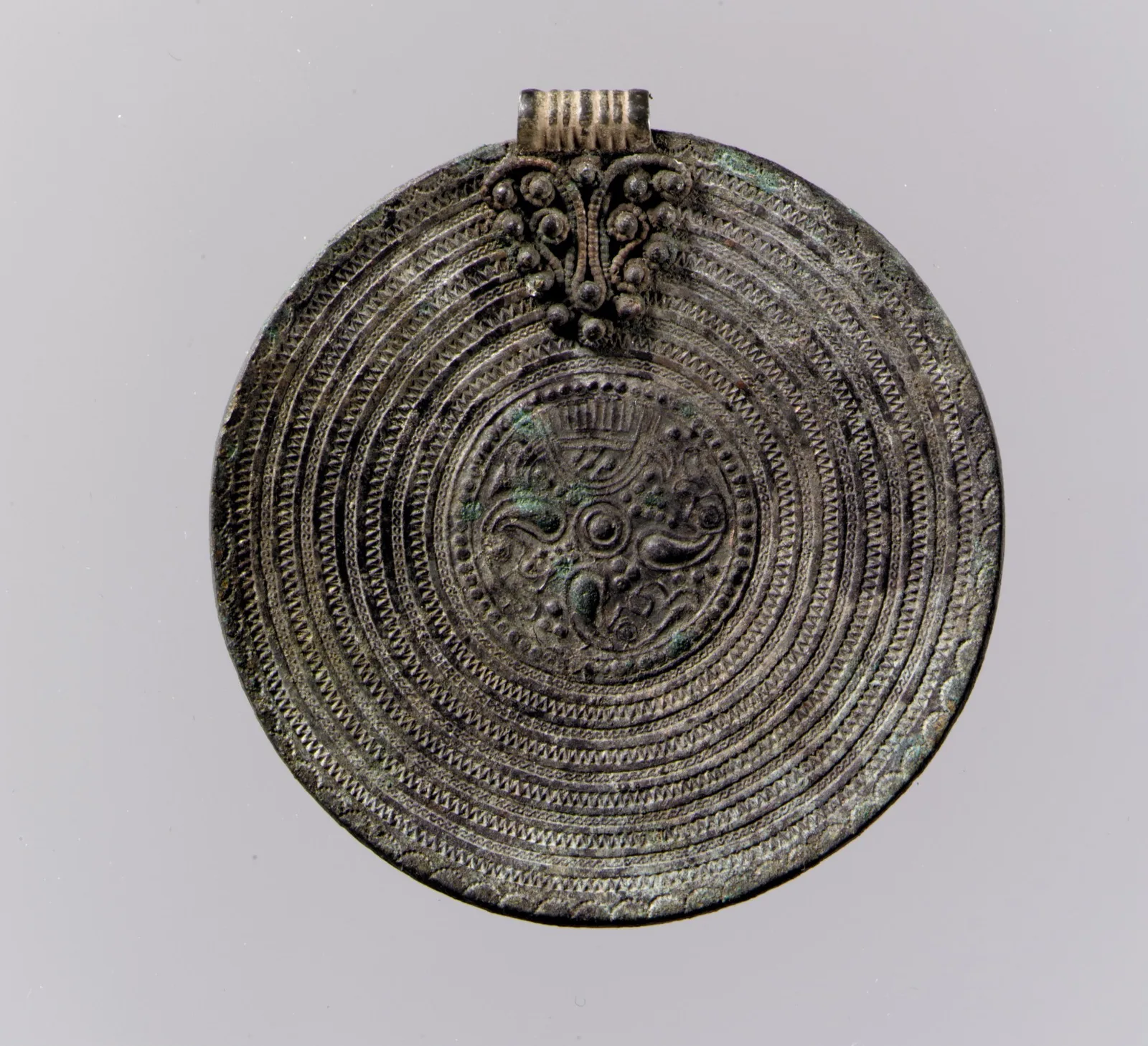
Tiwaz is the seventeenth character of the Elder Futhark, the oldest runic alphabet of the Germanic peoples. Its sound matches the letter "t." But runes were never merely letters. Each carried a name, an image and a meaning, and Tiwaz is one of the most heavily loaded of them all.
How It Looks and What the Name Means
The shape is unmistakable: a vertical line with two short strokes fanning downward from its tip. The result is an arrow or a spearhead aimed at the sky. No other rune in the Elder Futhark reads so immediately as a weapon.
Wear the symbol, don't just read about it. These are in stock:

The name Tiwaz goes back to a Proto-Germanic word that meant both "god" and one specific deity, Tiwaz himself. From the same root come the Latin deus, the Greek Zeus and the Sanskrit dyaus, meaning "the shining sky." Tiwaz began as the supreme sky god of all the Germanic peoples, and only later, in Norse mythology, was he pushed aside by Odin and turned into Tyr, the god of war and law.
Tiwaz in the Elder Futhark
The Elder Futhark held twenty-four runes, split into three groups of eight called "aettir." Tiwaz opens the third aett, dedicated, by one reading, to the forces of the human world and divine order. The company matters: right after the rune stand Berkana (growth, the feminine) and Ehwaz (movement, partnership). Tiwaz in that row answers for the masculine, warlike, law-bound principle.
Unlike many runes whose meaning is reconstructed from indirect clues, the sense of Tiwaz is known with confidence. The old rune poems that reached us from England, Norway and Iceland speak of it directly. All three tie the rune to the god Tyr and to the idea of a sure guide.
Tyr's Aett: the Third Group of Eight
The three groups of eight in the Elder Futhark are named after the rune that opens each. The first is called Freyr's aett, the second Heimdall's or Hagal's, and the third carries the name of Tyr, because Tiwaz stands at its head. The rest of that eight runs Berkana, Ehwaz, Mannaz, Laguz, Ingwaz, Othala and Dagaz. The sign of Tyr leads the whole group, and the position is not accidental.
The third aett is read as a sequence devoted to the human world and to divine order: birth and growth, movement, the person, water, fertility, kin and day. Tiwaz sets the tone for that eight by placing law and justice at its start. Anyone learning the futhark group by group meets the rune of Tyr as a threshold, beyond which the subject turns to people, society and fate.
The grouping is not a modern teaching device either. It is recorded on the objects themselves, which is why it can be trusted rather than merely assumed.
The Shape of an Arrow Pointing Up
The arrow shape is no accident. A point aimed upward reads on several levels at once. It is a weapon ready for battle. It is direction, a drive toward a goal. And it is a pointer to the heavens, to the gods, to the higher law that even a warrior obeys.
That is why Tiwaz is called the rune with the single true direction. The arrow does not waver, does not glance aside, does not bend. It points straight up, and in that lies its character: directness, resolve, no hidden second face.
Variant Forms of the Rune
On most inscriptions Tiwaz looks the same, but small differences occur. The branches leaving the apex can spread at various angles, from a sharp fork almost pressed against the stave to a wide one that brings the sign closer to the outline of a letter. On some objects the branches were set not at the very top but slightly below it. A distinct variant carries several arrowheads mounted on one stave, stacked one above the other, like an arrow with double or triple fletching. That form was cut deliberately, to strengthen the rune by repetition, and it is exactly what the old advice to carve the sign of victory more than once refers to.
Two practical points follow for anyone buying jewellery with this mark. First, do not confuse Tiwaz with similar arrow-shaped signs. In the rune of Tyr the branches always spread downwards from the apex of a straight vertical stave, which separates it from inverted and sideways forms that mean something else entirely, or nothing at all. Second, treat a stacked triple Tiwaz as a legitimate historical form rather than a designer's flourish, because it has a documented pedigree.
The variation in angle is worth understanding on its own terms. Runes were cut into wood, bone and metal with a knife or a graver, along and across the grain, at speed and often by people who were not professional carvers. The letterforms flex the way handwriting flexes. A slightly wider or narrower fork on an authentic object tells you about the tool and the surface rather than about a different meaning.
What follows, in order: where the rune came from, who Tyr was and why he lost a hand, what Tiwaz means in divination and magic, what the jewellery with this sign is made of, how to wear it and who to give it to, and how the rune of victory differs from other marks of the Elder Futhark.
The rune of victory rarely lives alone. People wear it beside other signs of faith and kin, because Norse symbolism is built as a system rather than a scatter of separate amulets. Before we dig into the history, it helps to see Tiwaz in that company: next to the thunder god's hammer, the knot of the fallen, and the runes of protection and heritage. It makes the place of Tyr's sign among the others far clearer.
The History of the Rune by Era
The story of Tiwaz is the story of how the supreme sky god slowly gave way to newer patrons, yet kept his rune and his starry name. You can trace it era by era, from the first scratches on metal to the modern revival of interest in the runes.
Proto-Germanic Roots and the God Tiwaz
Long before the Vikings, back in the Bronze and early Iron Ages, the Germanic tribes honoured the sky god Tiwaz. He was the supreme deity, patron of treaties, war and public order. When the Romans met the Germanic peoples, they equated him with their own Mars, the god of war. Hence a curious detail: the weekday the Romans called "Mars's day" (Latin dies Martis, source of the French mardi) the Germanic peoples renamed "Tiwaz's day." That is where the English Tuesday and the German Dienstag come from, literally "Tyr's day."
The name itself descends from the oldest Indo-European root meaning the bright daytime sky. Tiwaz was kin to a whole family of sky father-gods across many peoples. That makes Tiwaz one of the most archaic runes in its meaning: behind it stands a god older than Norse mythology itself.
The Migration Period: Runes on Weapons
The first reliable finds bearing the Tiwaz rune date to the first centuries of our era. Archaeologists turn it up on spearheads, on buckles, on amulets of the Migration Period. The famous spearhead from Kowel, found in what is now Ukraine, carries runic marks, and similar finds appear across barbarian Europe.
The logic was direct. A warrior believed a rune of the war god carved on his weapon would steer the blow and bring victory. Tiwaz was scratched before battle, sometimes once, sometimes several times in a row, for reinforcement. The Old English rune poem advises plainly: this rune is a sign that keeps faith with nobles, always on its course over the mists of night, and never failing. It speaks of a star, likely the Pole Star, used to hold direction. The rune of the weapon and the rune of a true bearing merged in a single mark.
The Runic Row on Stones and Bracteates
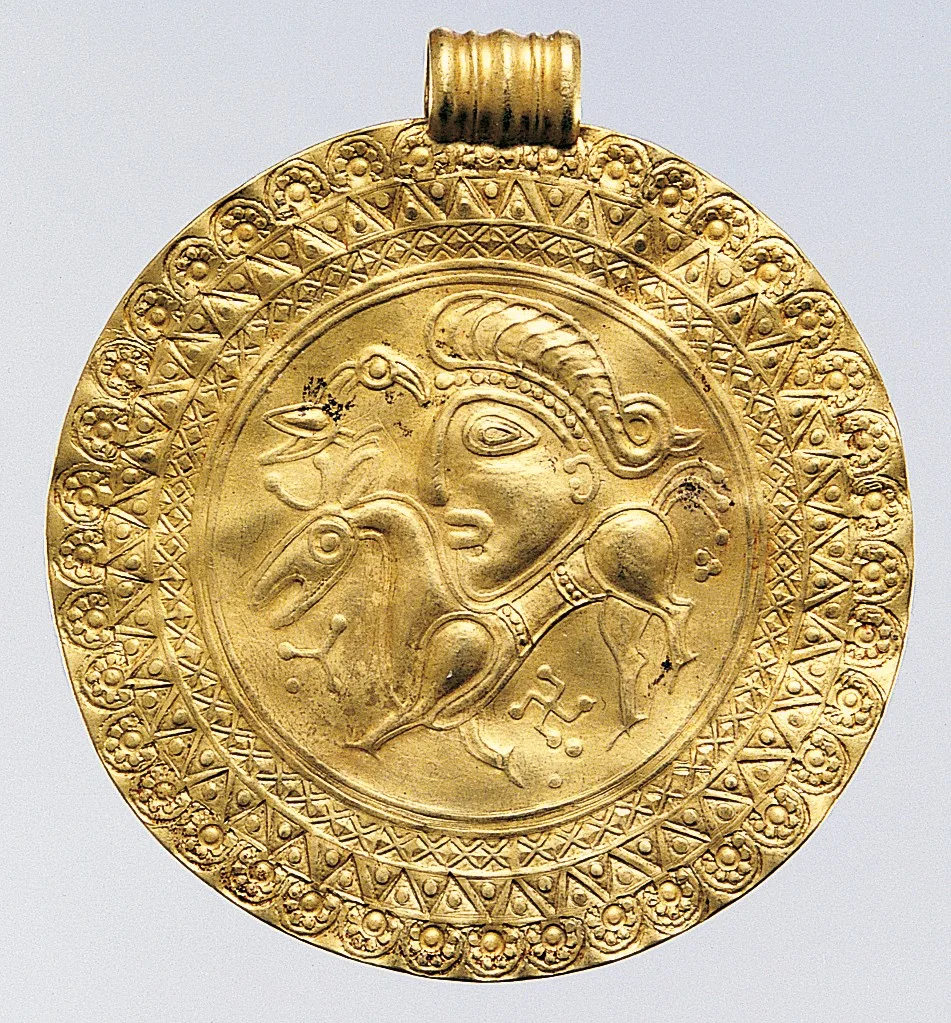
The place of Tiwaz in the alphabet is fixed not by guesswork but by finds where the whole futhark is carved out in order. The Kylver stone from the island of Gotland, dated to around the year 400, preserves the oldest complete runic row known, and Tiwaz stands in it at its seventeenth position. The gold bracteate from Vadstena in Sweden repeats the entire futhark and additionally divides it into three groups with dots, showing plainly that the sign of Tyr opens the third eight.
These monuments matter twice over. They prove that the order of the runes was stable across an enormous territory and held for centuries, and that Tiwaz occupied one strictly defined position rather than drifting from carver to carver. That stability is unusual for an alphabet transmitted largely without schools or scribal institutions, and it suggests the row was learned and recited as a fixed sequence, much as a child learns the alphabet by chant.
Other Migration Period objects show the same rune not in a teaching row but at work. Spearheads with runic inscriptions, sword fittings and personal ornaments carry Tiwaz where it belonged: on weapons. Britain has its own contribution here, since the Anglo-Saxon settlement brought the runic tradition across the North Sea and developed it into the extended futhorc, with finds such as the Thames scramasax carrying a full runic row of their own. The rune of Tyr travelled with the language.
The Viking Age and the Elder Futhark
By the Viking Age the Elder Futhark had gradually given way to the shorter Younger Futhark of sixteen runes. Tyr in the Norse pantheon had by then yielded first place to Odin and Thor, but the rune bearing his name survived. In the Younger Futhark the sign came to be called simply "Tyr" and stood for both a sound and the god himself.
The Vikings used runes both in writing and in magic. Tiwaz was cut on amulets, on hilts, on memorial stones. The Scandinavian world was one where Thor's hammer, runic marks and charms against evil forces worked together as a single system of protection. The rune of Tyr held the place of patron of the fair duel and the just outcome of a dispute.
Oblivion and Revival
With the coming of Christianity the runic tradition faded. Runes were still used for centuries in remote corners of Scandinavia for calendars and everyday notes, but their sacred sense was all but lost. The revival began in the Romantic era, when Europeans rediscovered the northern sagas and the Poetic Edda.
In the twentieth century interest in the runes grew stronger still, partly through works on mythology and the occult. Today the sign has returned to attention as part of a broad revival of Norse symbolism in jewellery, alongside serious academic runology and the practice of modern heathen religious communities.
The Rune in the Twentieth Century
This part of the story is usually either skipped or turned into an argument. It is better simply to set out what happened, because a reader who buys a piece with this rune deserves the facts rather than either a silence or a lecture.
The trouble begins with the occult revival in German-speaking Europe around 1900. An Austrian writer named Guido von List published a runic system of his own in 1908, an eighteen-rune row he presented as an ancient Germanic mystery recovered by vision. It was not the Elder Futhark. Runologists then and since have treated it as invention rather than scholarship, but it circulated widely in nationalist and occult circles, and it is through this channel, not through archaeology, that most twentieth-century political uses of runes arrived.
From there certain runes were taken up as emblems by organisations of the Nazi state in Germany between 1933 and 1945. The Tiwaz rune was among them. It was used as the badge of a party leadership school, later as the divisional insignia of one of the Waffen SS formations, and it appeared on grave markers in place of a cross. Other Elder Futhark signs, and the doubled lightning-bolt emblem derived from another rune, were used the same way. Nothing about the original meaning of these signs was preserved in that use; they were adopted for their air of ancestral antiquity and given new content.
Three consequences follow, and all three are worth knowing.
Legally. In Germany and Austria the display of insignia belonging to unconstitutional organisations is a criminal matter under postwar law. The plain Tiwaz rune as a historical letter is not itself on the prohibited list, and museums, scholarly publications and heathen religious groups use it without difficulty. What is prohibited is the specific Nazi-era composition and context. The distinction is genuine but it is not always obvious at a glance, so anyone wearing runic jewellery in central Europe should be aware that the question exists.
Practically. Modern databases of extremist symbols do list Tiwaz, and they list it with an explicit note that it is also a legitimate historical and religious symbol used by many people with no political meaning whatsoever. That double listing describes the situation accurately. In some settings the rune will be read as heritage, in others it will be read as a signal, and which happens depends on the country, the company and what else is worn with it.
Historically. The rune is older than the twentieth century by roughly seventeen hundred years. It is a letter of an alphabet that was carved on the Kylver stone around the year 400, and its meaning was recorded in three medieval poems written by people who had never heard of modern politics. Its association with a sky god of oath and assembly is documented; its association with any twentieth-century movement is an appropriation of the same kind that happened to a great many older symbols, from the swastika of South Asian and European antiquity onwards.
The honest position is therefore neither to pretend the appropriation never happened nor to hand the rune over to it. If you wear Tiwaz, it is worth being able to say what it actually means, where it comes from and which century you are referring to. That knowledge is also the best answer to anyone who asks.
Tyr: the One-Handed Guardian of Justice
You cannot understand the Tiwaz rune without its god. Tyr is the figure the whole meaning rests on, and his central myth, the story of the lost hand, explains why victory and sacrifice stand so close together in Norse culture.
Who Tyr Is
In the Norse pantheon Tyr is a god of war, but not in the way Odin or Thor wage war. Odin is war as cunning, fury and magic; Thor is war as brute force and defence. Tyr answers for war as right: for the fair duel, for the keeping of rules, for the oath sworn before battle. He is the god of the thing, the popular assembly where disputes were settled and law was made.
Tyr was reckoned the bravest of the gods. The Prose Edda states plainly that he is so wise and so daring that a bold man was said to be "as brave as Tyr." Yet he is not the most visible figure in the myths, because his role is different: he is a guarantor of order, not a hero of adventures. More on Tyr's place among the other gods can be found in the overview of the Norse pantheon.
Why Tyr Gave Way to Odin
Tyr was not always a secondary god. In the oldest Germanic religion the sky god Tiwaz stood above all others; by the Scandinavian period Odin and Thor had pushed him aside. Historians see the cause in a shift in the understanding of power itself. Odin embodied war as cunning, inspiration and magic, and the war bands of the late Iron Age gave first place to that image of the sorcerer chieftain. Tyr remained a god of an older cast: rule rather than trickery, order rather than fury. He kept the assembly, the oath and the fair duel, everything that holds a society together, but he stopped being supreme.
The linguistic evidence for that earlier supremacy is unusually clear. The name Tiwaz descends from the same root as the Latin deus and the Greek Zeus, and behind all of them stands a reconstructed sky father of the Indo-European languages. In other words the god whose rune this is was once the god, in the plainest sense of the word. Traces survive in the calendar: Tuesday is Tyr's day, the Germanic answer to the Roman dies Martis, the day of Mars, which is also why the French mardi and the Spanish martes carry the war god rather than the sky god.
The rune bearing his name preserves the memory of that seniority. The sign of victory belongs to a god who once ruled the sky and then stepped into the shadow while remaining the guarantor of law. There is a logic in it: order is kept not by whoever is loudest but by whoever is trusted.
The Sacrifice of the Hand to Fenrir
The central myth of Tyr is at once terrible and beautiful. The gods raised the monstrous wolf Fenrir, son of Loki, and watched with dread how fast he grew. A prophecy said the wolf would bring the doom of the gods. The Aesir resolved to chain him, but Fenrir was so strong he tore through every fetter.
Then the dwarves forged the magical bond Gleipnir, thin as a silk ribbon yet unbreakable. Fenrir suspected a trick and agreed to be bound only if one of the gods, as a token of good faith, would place a hand in his mouth. No one dared, for all knew the wolf would not be freed and the hand would be lost. Only Tyr stepped forward. When Fenrir understood he was bound for good, he closed his jaws, and Tyr lost his right hand.
The meaning runs deeper than plain courage. Tyr knowingly broke an oath to save the world, and paid for it with his hand. The god of justice committed an injustice, knowing its price. That is the paradox of the Tiwaz rune: true victory sometimes demands a personal sacrifice, and honour is measured by what you are willing to give up for the common good.
Tyr, Law, the Thing and Oaths
Tyr's one-handedness did not make him weaker in the eyes of the northerners. On the contrary, it became the mark of his special truthfulness. An oath sworn "by the hand of Tyr" was valued above others, because everyone remembered what that hand had cost. Tyr was patron of the thing, those popular assemblies where free people settled disputes, judged and confirmed laws.
So the Tiwaz rune gained its second great meaning alongside victory: justice. Not abstract, but concrete, tied to the honest word, to readiness to answer for oneself, to respect for the law. A warrior who wore the sign of Tyr promised to fight by the rules and to accept the outcome of the duel as a verdict of higher powers.
Mars Thingsus: Tyr in a Roman Inscription
The southern neighbours of the Germanic peoples left evidence about Tyr as well, and the best of it stands on British soil. At Housesteads, one of the forts on Hadrian's Wall in Northumberland, archaeologists found altars dedicated to Mars Thingsus. They were set up by Frisian soldiers serving in the Roman army in the third century. Mars is the Roman god of war, the name the Romans used for Tyr under the standard practice of matching foreign gods to their own, and Thingsus derives from the word thing, the popular assembly. The result reads as Mars of the Assembly, a god of war and of law at once: precisely the Tyr the northern myths describe.
The inscription is valuable because it predates the Prose Edda by many centuries and confirms that the link between Tyr and the assembly is not a late invention of Icelandic writers. Already in the Roman period the Germanic peoples saw in their war god both a fighter and a patron of the gathering where judgement is given. When a thirteenth-century Icelandic manuscript and a third-century altar in northern England agree on the character of a god, the agreement is worth something.
There is a pleasing detail in the location. The men who set up those altars were auxiliaries far from home, posted to the northern frontier of an empire, and what they chose to record about their god was not his ferocity but his connection to lawful assembly. The stone is now in the museum collections associated with the Wall, and it remains the single most concrete piece of evidence that the meaning carried by the Tiwaz rune is genuinely ancient.
Customer reviews
Zevira is a real jewellery shop. Genuine payments, deliveries and customer thank-yous.
🥰🥰🥰 gracias

Ok, ¡gracias! 🙂

The Meaning and Symbolism of Tiwaz
The sense of the rune is built from several layers, and all of them go back to the image of Tyr. Victory, justice, courage, self-sacrifice: in Norse culture these ideas were not kept apart but woven into a single knot of warrior honour.
Victory in a Fair Fight
The first and chief meaning of Tiwaz is victory. But with an important caveat: an honest victory, won by the rules. The rune was carved on weapons not to guarantee an easy win, but so that the gods would confirm the rightness of the one who fought. A duel in northern culture was a form of trial. The gods, it was held, gave victory to the side that carried the truth.
So Tiwaz was never the rune of the hired killer or the treacherous invader. It is the sign of one ready to stand in the open field and let the outcome decide who is right. In a modern reading the rune supports honest competition, sport, the defence of one's position, wherever the point is to win for real rather than at any cost.
Justice and Law
The second meaning grows from Tyr's role as god of the thing. Tiwaz is the rune of justice, right and order. It was called on when going to court, when sealing a contract, when giving an important word. The arrow aimed straight up reads like scales brought into balance, like the straight line of the law that cannot be bent.
That makes Tiwaz a close relative of justice symbols from other cultures. The sign of Tyr is set beside the ancient idea of divine judgment and beside warrior codes of honour, where justice was placed above personal gain.
Courage and Self-Sacrifice
The third layer is the most personal. The story of the hand and Fenrir turned Tiwaz into the rune of deliberate sacrifice. To wear it is to accept that important things sometimes have to be paid for, and paid for dearly. This is not reckless bravado but the mature courage of a person who knows the price of an act and commits it anyway.
That is why the rune is tied to a sense of duty. Tyr did not seek glory; he did what he had to do. In that sense Tiwaz is closer to the idea of responsibility than of heroics. The sign of one who keeps his word when keeping it is hard.
Tiwaz as the Spiritual Warrior
There is an inner reading too. The battle the rune speaks of does not always take place on a field. Often it is a struggle with oneself: with laziness, fear, the temptation to abandon one's own principles. In that sense Tiwaz is the rune of the spiritual warrior, one who holds inner discipline and does not betray himself.
Such an understanding brings the sign of Tyr close to the idea of steadfastness known to the most varied traditions. Outer victory begins with inner straightness, and the arrow pointing up is a daily reminder of it.
Upload a photo of your pet, someone you love, or an object. We'll build a 3D model and hand-cast it in pewter.




Tiwaz in the Rune Poems
The meaning of Tiwaz does not have to be reconstructed blind. Three medieval rune poems speak about it directly, written down in different corners of the Germanic world. They are short verse sequences in which each rune is given a few lines, and they are the closest thing that survives to a native explanation of what the signs meant. For the rune of Tyr the Anglo-Saxon, Norwegian and Icelandic versions all survive, and all three point in the same direction while placing their emphasis differently.
The Anglo-Saxon Poem: the Rune as a Star
In the Old English rune poem the sign is called Tir and is described not as a god but as a heavenly light. The verse says that Tir keeps faith with nobles, always holds its course above the mists of night, and never fails. The reference is almost certainly to a guiding star, the kind by which direction was held in the dark, most probably the Pole Star. The English text was written down in a Christian era, and the direct name of a pagan god had given way there to the image of a dependable light. But the substance survived: Tir is that which does not stray from its course and can be relied on. This is where the reading of the rune as true direction comes from.
The poem itself has a curious history worth knowing. The manuscript that carried it was in the Cotton library and burned in a fire at Ashburnham House in 1731, so the text known today rests on a printed transcript made before the fire. The Anglo-Saxon rune poem is therefore, in a small way, a survivor twice over.
The Norwegian Poem: the One-Handed Among the Aesir
The Norwegian rune poem is shorter and blunter. Its verse on the rune Tyr opens directly: Tyr is the one-handed among the Aesir. The second line veers off into a workaday remark about a smith who must often blow his bellows, and it serves as rhyme rather than as meaning, which is characteristic of that poem's construction throughout. But the first line strikes the heart of the myth. Here, unlike in the English text, the god is named openly, and his defining mark is the lost hand. A Scandinavian hearing the verse would have recalled the story of the wolf at once.
The Icelandic Poem: What Was Left of the Wolf
The Icelandic version is the densest in imagery. It calls Tyr the one-handed god, that which is left over from the wolf, and the ruler of temples. Each formula is a compressed reference. What is left over from the wolf recalls the bitten hand; ruler of temples points to the god's ancient priestly standing; and a Latin gloss beside the verse translates the name as Mars, the Roman god of war. In a handful of words the Icelandic poet fitted myth, cult and the Roman parallel together.
What the Three Poems Say Together
Set side by side, the three poems give a picture with depth. The English remembers the rune as a star and a bearing; the Scandinavian ones as a one-handed god and his sacrifice. There is no contradiction between them, only two faces of one sign. A guide that never fails and a god who paid with his hand for keeping his word are describing the same quality: reliability guaranteed by the self.
The poems were written down centuries after the height of the pagan runic tradition, and none of them is a neutral document. The English one is Christian in framing, the Icelandic one comes from a manuscript culture that had already turned mythology into literature. Even so, they are the most direct testimony that exists about what Tiwaz meant to the people who used it, and the fact that three independent traditions converge on the same idea is stronger evidence than any one of them alone.
Tiwaz in Magic and Divination
In runic practice Tiwaz is one of the clearest runes in meaning, and one of the few whose sense changes with position. In a reading it matters whether the rune falls upright or reversed.
The Upright Position
Upright, arrow up, Tiwaz reads plainly as positive. It speaks of victory in the matter ahead, of a successful outcome to a dispute or a contest, of the truth being on your side. In questions of relationships the rune points to honesty, loyalty and a readiness to defend those close to you. In affairs, to resolve and timely action.
Tiwaz upright often advises not to retreat and to go straight for the goal, while keeping to the rules. Success won dishonestly the rune does not support. Its counsel is always about moving forward with a clear conscience.
The Reversed Position
Reversed, Tiwaz changes its tone. An arrow pointing down speaks of a loss of energy, of defeat, of injustice met or allowed. It can be a warning: you are losing direction, your resolve is weakening, or you have entered a fight not worth waging.
In relationships the reversed rune often points to disloyalty, to lost trust, to a conflict where the rules have been broken. The counsel here is single: restore honesty, take back your straight direction, and sometimes accept defeat with dignity, as Tyr did when he took the loss of his hand.
Runes of Victory and Sigrdrifa's Counsel
The best known mention of runic magic connected with Tyr is preserved in the Poetic Edda. In the lay of the valkyrie Sigrdrifa she instructs the hero Sigurd: if you would win victory, you must know the runes of victory, cut them on the hilt of the sword, on the blade's groove and on its guard, and name Tyr twice. It is a rare case of an ancient source describing directly how and why the rune was put on a weapon.
The advice matches what archaeology shows. The sign of Tyr really was cut on blades, and the repetition the valkyrie speaks of accounts for finds carrying several Tiwaz in a row. Naming Tyr twice is not a poetic ornament but an instruction: strengthen the rune by repeating it, and address the god of victory by name. For a modern piece of jewellery this passage gives a solid footing, since a doubled or tripled Tiwaz in an engraving goes back not to invention but to a verse a thousand years old.
It is worth reading the counsel in full context, because Sigrdrifa's speech is a catalogue of runic knowledge rather than a single charm. She goes on to speak of ale runes, birth runes, sea runes, speech runes and healing runes, each with its own surface to be cut on. Victory runes come first in the list, which tells you something about the priorities of the audience the poem was composed for.
Tiwaz in Bind Runes
A separate theme is the bind rune, the joining of several signs into one symbol. Tiwaz enters such combinations readily, because its simple shape lays easily over others. The best-known combination is several Tiwaz set one atop another, which strengthens the meaning of victory.
The rune of Tyr is often joined with Algiz, the rune of protection, giving a sign of "guarded victory," and with the heritage rune Odal, binding honor to kin and home. Such bind runes are popular in modern jewelry: they let you gather a personal charm from several meanings.





What Tiwaz Jewellery Is Made Of
The material of a runic piece decides more than its look. The northern tradition gave metal meaning, and understanding what your pendant or ring is made of helps you judge the thing.
Silver
Silver is the chief metal of the Scandinavian tradition. Most of the pendants and charms of the Viking Age were made of it, and the hoards archaeologists find consist above all of silver. It is tied to the moon, to night light and to that very guiding star the rune poem speaks of.
A silver pendant with Tiwaz reads as restrained and noble, suits both men and women, and settles well into everyday wear. Runic jewellery most often uses 925 sterling silver: it is strong enough, holds a crisp engraved line and does not trigger allergies in most people.
Gold and Bronze
Gold in northern culture meant the sun, wealth and power. Gold pieces were worn by chieftains and nobility, and a gold sign of Tyr reads as a symbol of high standing and serious intent. It is the choice for someone who wants to invest weight and durability in a piece.
Bronze is closer to historical realism. Many genuine amulets of the Migration Period were bronze. A bronze Tiwaz with a noble patina looks archaeological, as if lifted from a barrow, and appeals to those who value the feel of true age.
Steel
Stainless steel is the choice of the modern pragmatist. It is strong, does not tarnish, leaves no marks on the skin and is not afraid of water. A steel rune suits a brutal, spare treatment, and such a pendant looks good on a leather cord in an everyday men's look.
Symbolically, steel echoes the very essence of Tiwaz, since this is the rune of the weapon and the blade. The cold gleam of the metal underlines the warlike character of the sign, and its low maintenance makes such a piece something for every day that you need not take off.
Wood and Bone
The most archaic versions of the rune are cut in wood and bone. That is most likely how the first runes looked: the word "rune" is kin to the ideas of secret and of carving. A wooden or bone tablet with Tiwaz is a nod to the oldest way of working with the sign.
Such pieces are prized for their natural texture and the feel of craft. They are light, warm to the touch and suit runic sets well, where what matters is less the jeweler's finish than the tie to the original tradition. The broader world of protective signs is covered in a separate guide to charms, amulets and talismans.

Turn on your camera, pick earrings, a pendant or a ring, and see the piece on yourself in real time.
Switch items in one tap.
Everything runs in your browser: no photo or video is ever uploaded.
How to Wear Tiwaz Jewellery
Runic jewellery is not worn like an ordinary pendant. The sign has an orientation, and the northern tradition gives it weight. Here are the main ways and rules.
On the Neck as a Pendant
The most common way to wear Tiwaz is as a pendant on a chain or cord. Orientation matters here: the rune is worn arrow up, for it is in that position that it means victory and true direction. A reversed sign reads in tradition as a weakening, so it pays to watch how the pendant hangs.
Length is chosen to suit the look. A short cord (40 to 45 cm) holds the rune high, at the collarbones, where it shows well. A medium chain (50 to 55 cm) is versatile and slips under a shirt collar. A leather or rubber cord gives the brutal, expedition look that suits warrior symbolism.
Ring and Bracelet
Tiwaz looks good on a ring too. The rune is engraved around the band or set as a seal on a flat face. A signet ring with the sign of Tyr reads as a mark of a personal word, since a seal ring was historically used to seal oaths and contracts, exactly the domain the rune of justice answers for.
On a bracelet the rune is placed as a charm or engraved on a plate. A leather bracelet with a metal insert is a popular format in the Scandinavian style. The main thing is that the sign is with you and reads in the right position when the arm hangs down.
What to Pair It With
Tiwaz lives well in a set with other Scandinavian symbols. The classic pairings are Tiwaz with Thor's hammer, where justice and protection meet, and Tiwaz with the valknut, the knot of the fallen, for those who honor the warrior theme in full.
Of the practical rules, one is worth remembering: runic jewellery looks better as an accent than lost in a heap of pendants. One clear sign on a clean chain is stronger than five symbols jumbled together. If you want layers, give each rune its own length line so they do not overlap.
Leave your email, we'll send your discount code. No spam, unsubscribe anytime.
The code arrives by email, valid on your first order.
Who to Give the Tiwaz Rune
The sign of Tyr is a meaningful gift with a concrete message. Unlike neutral jewellery, Tiwaz has an addressee and an occasion, and that makes the choice more precise.
A Gift for a Man with Character
Most often Tiwaz is chosen as a gift for a man. The rune of victory, justice and warrior honour sits well on the image of a person who keeps his word and answers for his acts. It is not about aggression but about reliability: the sign says "he can be relied on."
A silver or steel pendant on a leather cord is a good choice for a brother, father, partner or friend. The message reads without words: I see strength and honesty in you, and I wish you victories won fairly.
For Athletes, Competitors, the Military
Tiwaz is a natural talisman for those whose lives are tied to contest and defence. An athlete before a big start, a person defending a position, one who has chosen service and the protection of others: for all of them the rune of victory in a fair fight rings straight home.
In sport, where superstition thrives and any talisman works as an anchor of confidence, the sign of Tyr holds a place of honour. It recalls discipline, the rules of the game and the truth that real victory is won by the rules.
For an Important Threshold
The rune is also given for a significant crossing: before a trial, an exam, a move, the start of one's own venture, any moment when a person needs resolve. Tiwaz in that sense works as a wish: go straight, hold your direction, do not turn aside.
Like many charms, a gifted rune is held in tradition to be stronger than one bought for oneself. The giver invests the sign with a wish of luck, and the charm becomes a portable memory of that support.
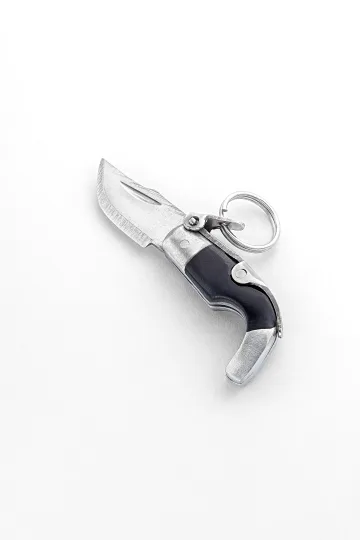
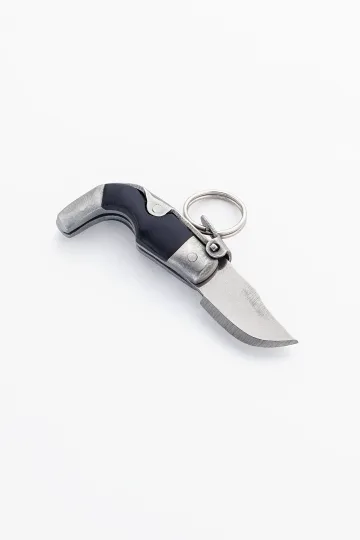
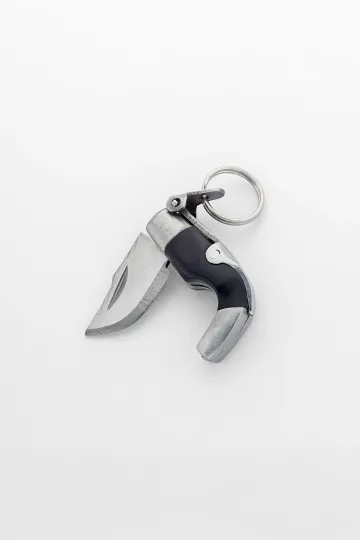
CAPAORA mini knife pendant
The 18th-century Spanish navaja in miniature: 40 mm of stainless steel, a real folding mechanism and a Palanquilla lock that clicks. An affordable gift to remember.
Authentic · Ships from Spain · 14-day returns
How to Choose Tiwaz Jewellery
If you are buying your first rune, for yourself or as a gift, there are a few questions worth answering in advance. It will save you from disappointment.
Check the Orientation of the Rune
The first and most important thing: make sure the rune is shown arrow up. Upright, Tiwaz means victory; reversed, it means weakening and defeat. A good maker always sets the sign in the right orientation and builds the pendant so it does not flip when worn.
Look at the bail. If it sits off-centre, the pendant can hang crooked and the arrow will drift aside. On a quality piece the centre of gravity is chosen so the rune sits level.
Choose the Size
For an everyday pendant, medium sizes are best, around 2 to 3 cm in height. Smaller risks getting lost on the chest; larger starts to look heavy unless you deliberately want a massive piece. For a person of large build the upper end is more fitting; for a slim neck a compact option sits more in proportion.
Size should also match the setting. A small sign under a shirt is a quiet personal charm; a large one on a leather cord is an open statement. Both approaches are right; the only question is what role you give the piece.
Engraving and Bind Runes
Decide whether you want a single rune or a combination. A single Tiwaz reads clearly and suits those who care about the idea of victory and justice itself. A bind rune joining Tiwaz with Algiz or Odal gathers several meanings into one sign and makes the piece more personal.
If you choose engraving, check the crispness of the lines. The rune rests entirely on straight strokes, and the slightest carelessness leaps out. Good engraving is deep and even; the sign reads at a glance even on a small face.
Tiwaz and Other Runes: a Comparison
The Elder Futhark is a system, and Tiwaz gains its exact meaning only in comparison with its neighbours. Understanding the differences helps you choose "your" rune and avoid confusing signs that are close in spirit.
Tiwaz and Algiz
Algiz is the rune of protection, of the charm, of the link to higher forces. In shape it resembles a reversed Tiwaz: three lines fanning upward like raised hands or the antlers of an elk. If Tiwaz is attack and victory, then Algiz is defense and the shield. They are often worn together: attack and defense, sword and shield in one set.
Tiwaz and Odal
Odal is the rune of heritage, kin, home and ancestral land. It is about roots and belonging, while Tiwaz is about personal honor and victory. Together they form a fine pair: to defend what is yours, to win for what is yours. The sign of one who fights not for an abstraction but for family and home.
Tiwaz and Sowilo
Sowilo is the rune of the sun, the victory of light, life force and wholeness. It too is tied to success, but its success is of a different kind: not the result of struggle but the radiance of fullness and health. Tiwaz wins victory in battle; Sowilo radiates victory as a natural state. The first is closer to the warrior, the second to the healer and the person seeking harmony.
One footnote belongs here rather than anywhere else. Sowilo is the rune that was doubled into the emblem of the SS, which is why it carries a heavier modern burden than Tiwaz does and why it is treated far more strictly in German and Austrian law. If you are choosing between the two runes for a piece to wear in central Europe, that difference is worth knowing before you order rather than after.
Tiwaz and Ansuz
Ansuz is also connected with the gods, and that leads to confusion. But the connection differs between the two runes. Ansuz is the rune of an As, a god in general and most often Odin, and it answers for the word, the breath, inspiration and wisdom. Tiwaz is the rune of one specific god, Tyr, and it speaks of victory and law. Ansuz is about speech and knowledge; Tiwaz is about action and a just outcome.
Put another way, if Ansuz is the god who speaks, Tiwaz is the god who keeps his word and answers for it with his hand. They are worn to different purpose: one as a sign of clear thought and eloquence, the other as a sign of resolve and honest strength. People who work with language, teaching or negotiation tend to reach for the first; people facing a test of nerve tend to reach for the second.
Myths and Truth About the Tiwaz Rune
A great deal of confusion has gathered around the runes, and the sign of Tyr is no exception. Some common claims are true, some distort history. Here are the most frequent.
A word is due separately about the late distortions. Some symbols of the Elder Futhark were in the twentieth century appropriated by political movements and given a sense foreign to them. Tiwaz does not belong directly among those signs, but the general cloud of suspicion sometimes falls on it too. The sound approach is simple: the rune is older than any late ideology, its true meaning goes back to a sky god and to the idea of an honest victory, and wearing it as a sign of justice and courage is entirely fitting.
Send a friend a discount code, they save on their first order.
Facts That Surprise
Behind the spare shape of the rune hide several stories that rarely make it into short descriptions. Here are the ones that surprise most.
Tuesday is named after Tyr. The English Tuesday and the German Dienstag are literally "Tyr's day." The Germanic peoples translated the Roman "Mars's day," equating their god of war with the Roman one. So the name of the one-handed guardian of justice lives on in the calendar of half the world, and most people say it every week without suspecting it.
Tyr's name is kin to the names Zeus and Jupiter. All of them go back to one Indo-European root meaning the bright daytime sky. Tiwaz, Zeus, the Latin Deus and the Sanskrit Dyaus are, in essence, different branches of one most ancient sky god. Tiwaz keeps the memory of that kinship in its very name.
Tyr was the supreme god before Odin. In the oldest Germanic religion the sky god Tiwaz stood above all. Odin pushed him aside only later, in the Norse tradition. So the rune of victory bears the name of a former king of the gods who voluntarily stepped into the shadow, remaining the guarantor of the law.
An oath "by the hand of Tyr" was valued above others. Precisely because everyone knew what that hand had cost. A god who gave up a limb for the common good became a living standard of the honest word. The loss made him not weaker but more authoritative.
The rune poem ties Tiwaz to a star. The Old English text describes the rune as a sure guide that "keeps its course over the mists of night and never fails." It likely means the Pole Star. So the rune of the weapon turned out to be a rune of true bearing in the dark as well.
The shape of the rune is found on real weapons. Tiwaz is no armchair invention. It was scratched on spearheads and blades of the Migration Period, and such finds are kept in museums. The sign did its work exactly where it was meant to, on the point.
Silver, gold, Norse symbolism, runes, charms, matching sets.
Frequently Asked Questions
What does the Tiwaz rune mean? Tiwaz is the rune of victory, justice and warrior honour from the Elder Futhark. It is named after Tyr, the Norse god of war and law. Its core meanings are victory in a fair fight, justice and law, courage and deliberate sacrifice. The shape of the rune is an arrow aimed upward, a symbol of true direction and of a weapon ready for battle.
Why is the rune tied to one-handedness? Because its god, Tyr, lost his right hand. In the myth he put his hand in the jaws of the wolf Fenrir as a pledge of good faith so the gods could bind the monster. The wolf bit off the hand when he understood he would not be freed. That sacrifice made Tiwaz the rune of deliberate self-sacrifice for the common good.
Can a woman wear Tiwaz? Yes. Although the rune is more often chosen by men because of the warrior theme, its meanings, justice, honesty, resolve, inner steadfastness, are universal. Tyr was patron of law and the honest word, not of the battlefield alone. A woman's look takes the sign of victory and justice easily.
What is the difference between Tiwaz and Algiz? Tiwaz is the rune of attack and victory; Algiz is the rune of protection and the charm. In shape they resemble each other: Algiz looks like a reversed Tiwaz. In meaning they complement one another, like sword and shield, which is why they are often worn together in one set or bind rune.
What does a reversed Tiwaz mean? In divination a reversed rune (arrow down) means a loss of energy, defeat, injustice or a weakening of resolve. In relationships it can point to disloyalty and lost trust. The rune's counsel in that position is to restore honesty and take back your straight direction. When worn as jewellery the sign is kept arrow up.
Is the rune tied to anything undesirable? The rune itself is older than any late reading and goes back to the sky god Tiwaz. Certain symbols of the futhark were appropriated by political movements in the twentieth century, but the true meaning of Tiwaz, victory, justice, honour, has nothing to do with that. Wearing it as a sign of courage and honesty is entirely fitting.
Which material should I choose for Tiwaz jewellery? Silver is the classic of the Scandinavian tradition, restrained and noble. Steel is practical, brutal and needs no care, suiting the rune of the weapon. Bronze gives the archaeological look of true age. Gold reads as a mark of status. For everyday wear, silver or steel is chosen most often.
Who is the Tiwaz rune a good gift for? For those who value honesty, keep their word and are tied to contest or defence: athletes, people defending a position, those who have chosen service. It is a meaningful gift for a brother, father, partner or friend. By tradition a gifted rune is held to be stronger than one bought for oneself.
Conclusion
The Tiwaz rune has travelled from the name of a supreme sky god to a mark on a warrior's blade and on, to a modern pendant on a silver chain. Over thousands of years the way it is presented has changed, but the meaning has stayed the same: a victory you need not be ashamed of, a justice you stand up for, and an honour measured by readiness to pay.
The arrow pointing up recalls a god who put his hand in a wolf's jaws and did not flinch. Whether you believe in the power of runes or simply value a sign with a deep history, Tiwaz remains one of the clearest and strongest symbols of the northern tradition: a straight line leading to the goal, and the character to reach it.
Buying it as a gift? Each one arrives ready to give.
 A branded Zevira box and a little card come with every order.








About Zevira
Zevira makes jewellery in the artisan tradition of Albacete, Spain. Tiwaz is one of those symbols we love: an ancient shape readable without words, equally at home on a thin silver chain and on a rough leather cord. We reproduce the strict geometry of the rune and make sure the sign always sits arrow up, in its victorious position.
Here is what you can find with us on the theme of Norse symbolism:
- Runic pendants in silver, steel and a bronze finish
- Thor's hammer, the valknut and other northern signs for layered sets
- Bind runes and engraving for a personal charm with several meanings
- Charms against the evil eye and protective amulets from various traditions
- Chains and leather cords of different lengths for a rune of any size
Every piece is made by a craftsman by hand, with the option of personal engraving. 925 silver and 14 to 18K gold.