The Ansuz Rune: Meaning of the Symbol of Wisdom, the Word and Inspiration in the Elder Futhark
Odin gave up an eye for wisdom and hung for nine nights on the world tree, pierced by his own spear, to wrench the runes out of the abyss. Ansuz, the fourth sign of the Elder Futhark, sounds like the exhale of that knowledge. Its name means "god," and its element is the breath that becomes a word.
That is where the paradox begins. A sign worn today as a symbol of eloquence and inspiration started out being about the gods themselves, about the race of the Aesir led by Odin. Ansuz speaks not of chatter, nor of a pretty phrase for its own sake. It is about the word that carries force behind it: the spell, the oath, the counsel that changes a fate. Here a word weighs as much as the stroke of a sword.
The rest follows in order: where the rune's name came from, how it sounded and looked, why it is bound to Odin, what it meant to the Norse and the Anglo-Saxons, what a runic pendant is made of, how to wear it, how Ansuz differs from other runes of knowledge, and why an ancient sign of breath and speech returned to jewellery after a thousand years of silence.
Why a God Is Breath and the Word
The word "ansuz" goes back to Proto-Germanic ansuz, meaning "god, deity." This was not just any divinity but a specific race: the Aesir, the elder gods of the Northern pantheon, to whom Odin himself belonged. The same ancient root gave the Norse áss (a god), the Old English ōs, and, in the view of linguists, it echoes the Sanskrit asura and the Avestan ahura, which named the mighty heavenly lords of the ancient Indo-Iranians. The idea of "a higher power that gives life" lived in this word long before the first runic inscriptions.
For the Northern world the gods were above all givers of breath. The myth of the making of the first humans tells how the gods found two lifeless trunks on the shore, an ash and an elm, and brought them to life. Odin gave them önd, breath and spirit; his companions gave reason, warmth and shape. Human speech began with that breath. Ansuz stands exactly on this border: where the inhale turns into a voice, and the voice into a meaningful word.
Wear the symbol, don't just read about it. These are in stock:


The rune took this idea and turned it into a sign. A vertical stave with two branches slanting down and to one side recalls a tilted tree, a figure with a raised arm, and a stream of air bursting from a mouth. The form is legible and stable, and its place in the alphabet is no accident: right after the runes of wealth and force comes the rune of the thing that sets a human apart from a beast, reasoned speech.
Understanding Ansuz means separating two layers, as with any rune. The first is practical: it was a letter for the vowel "a," an ordinary unit of writing in the runic row. The second is symbolic: every rune carried a name and a meaning, and Ansuz owned the theme of the divine word, of wisdom and inspiration. Both layers lived at once. A carver could cut Ansuz simply as an "a" in someone's name and, in the very same breath inside a charm, as a sign calling on the favour of the gods and the force of the true word.
What the Ansuz Rune Is
The Meaning of the Name and Its Sound
Ansuz is the fourth rune of the Elder Futhark, the oldest runic alphabet of the Germanic peoples. It carried the sound "a" and belonged to the first of three "aettir," the groups of eight runes into which the row was divided. The rune's name, reconstructed as ansuz, translates directly as "god." It is the only rune of the Futhark whose name points not to an object, an element or an animal, but to the celestials themselves.
The name of the sign sounded its own way across the branches of the Germanic world. To the Norse it was áss or óss (a god), to the Anglo-Saxons ōs (a god, and by chime with the Latin os also "mouth"), and for the Goths scholars reconstruct a form kindred to a god's name. Everywhere the root is one, and everywhere it reaches toward the idea of a higher power gifted with speech and will. Through this name the rune was bound from the start to the gods of the word, above all to Odin.
What the Symbol Looks Like
The shape of Ansuz is simple and memorable: a vertical stave and two short branches leaving it downward at a sharp angle, both on the same side. It resembles a tree bent by the wind, or a letter "F" whose crossbars have dropped toward the ground. In the classic version the branches point down and to the right, while the stave stands upright.
One detail matters. Runes were carved, not written. The straight lines and the complete absence of horizontals are not decoration but a demand of the material. Across wood and bone, along the grain, a horizontal cut is hard to make; it splits the wood and disappears. So the whole Futhark is built from verticals and diagonals, and Ansuz is a model example of the strict, carvable form in which every branch works both as a letter and as a pattern.
Its Place in the Elder Futhark
The Elder Futhark was used roughly from the 2nd to the 8th century across Germanic Europe, from Scandinavia to the shores of the Black Sea. Twenty-four signs split into three rows of eight, each row named after its own first rune. Ansuz stands fourth in the first aett, right after the runes of wealth, force and giant might, and it opens the theme of reason and the word in the row.
Its place in the first eight puts Ansuz at the very start of the alphabet, among the runes of the foundations of being. If the first signs speak of the material, of cattle, the aurochs and the frost, then Ansuz brings in the immaterial: voice, thought, knowledge, a bond with the gods. In the runic poems that have come down to us, its stanza is always about speech, the mouth and wisdom, and by this it is recognised across every branch of the tradition.
Ansuz and Odin: The Rune of the God
Of all the gods Ansuz is bound most firmly to Odin, and the bond is no accident. Odin is the god of wisdom, of poetry and of the runes themselves. It was he, by the myth, who won runic knowledge, and it is he who owns the mead of poetry that grants the gift of the word. A rune whose name means "god" and whose theme is speech and inspiration naturally leans toward the figure of the chief patron of the word in the North.
In the Icelandic rune poem this bond is named outright: the stanza on Ansuz speaks of "old Gautr," and Gautr is one of Odin's many names, and it calls the rune the prince of Asgard and the lord of Valhalla. So a medieval text itself identified the sign with the god. To wear Ansuz is in part to reach toward this circle of images, where the word, knowledge and divine inspiration meet in a single figure. You can read more about Odin in jewelry separately.
Upload a photo of your pet, someone you love, or an object. We'll build a 3D model and hand-cast it in pewter.
History: From the Proto-Germans to Today
Proto-Germanic Roots
Long before the first runic inscriptions, the Germanic tribes already had the word ansuz and the concept behind it. The Indo-European base that named breath, spirit and a higher power produced kindred words among different peoples: the Indian asuras, the Iranian ahuras, the Germanic Aesir. The idea that "a god is the one who breathes and speaks from on high" was shared across a vast circle of cultures in an age when writing did not yet exist.
When the Germanic peoples created or borrowed runic script in the first centuries of our era, they gave the fourth sign the name of a concept already at hand. The rune did not invent the link between god and word; it fixed it in letter form. From that moment the sound "a" and the image of a speaking deity were fused in one simple shape.
The Scandinavian Iron Age and the Viking Era
Runic writing came into its full flower during the Iron Age and the Viking era, roughly from the 8th to the 11th century. By that time the Elder Futhark in the north had already given way to the shorter Younger Futhark of sixteen signs. Ansuz survived there under the name áss or óss, its shape slightly altered but its bond with the gods intact. What is more, in the younger row this sign came to stand for a whole group of vowels and remained one of the most frequent in inscriptions.
In Viking society the word carried the weight of law. An oath was sworn aloud, before witnesses, and to break it meant to lose one's honour. A skald who could shape a song of praise or a biting mockery was prized at the weight of silver, and his lines could raise a chieftain up or shame an enemy for generations. The rune of the divine word settled onto this culture of the spoken word precisely: where what was said decided a fate, the sign of speech was a sign of force.
The Anglo-Saxon Rune Poem
The fullest medieval commentary on this rune survives in the Anglo-Saxon rune poem, written down in England probably in the 10th century. In the Old English order of sounds the rune's name shifted, and the sign came to be called ōs. The word meant "god," but by chime with the Latin os, "mouth," the poem read the rune as a sign of speech. Its stanza runs roughly like this: the mouth is the source of all speech, the support of wisdom and a comfort to the wise, a delight and a hope to every noble person.
The stanza is strikingly true to the heart of the sign. It joins three themes that trail after Ansuz across the whole tradition: speech, wisdom and comfort by the word. A Christian scribe could smooth away the direct reference to a pagan god, replacing it with the image of the mouth, but the core stayed the same: the force that turns breath into a meaningful sound is the very foundation of the human mind.
The Norwegian and Icelandic Rune Poems
The Scandinavian rune poems, the Norwegian and the Icelandic, also kept a stanza on this rune, but they took different paths. The Norwegian poem read the name óss as "river mouth" and speaks of it as the beginning of most roads, adding the image of a scabbard for a sword. Here the rune becomes a sign of the source, the place from which paths branch out, and in this too the theme of a beginning and a direction can be heard.
The Icelandic poem went deeper into the myth. It calls the rune "old Gautr," the prince of Asgard and the lord of Valhalla, that is, it identifies the sign outright with Odin. The Northern tradition did not hide behind a metaphor here: the rune of breath and the word belongs to the god of poetry and wisdom, and the medieval author looked no further for a better reading. The three poems together show how one sign was read in different ways, yet always returned to speech, the source and the deity.
Odin and the Winning of the Runes
No account of this rune is complete without the myth of how the runes came to humankind at all. The Hávamál, the "Sayings of the High One" from the Poetic Edda, puts the story in Odin's own mouth. He says that for nine long nights he hung on the branches of the world tree Yggdrasil, pierced by a spear, given as a sacrifice to himself, without food or drink, staring into the darkness below. At the end of the ninth night he took up the runes with a cry and fell from the tree, having won the knowledge.
This myth explains why the runes were held to be not an invention but a spoil, wrenched from the abyss at the price of suffering. Knowledge does not come for free; it is paid for. Ansuz, the rune of the god and the word, stands at the very centre of this story: it is the very wisdom for which Odin gave himself up. The myth of the mead of poetry belongs to the same theme, the magic drink a sip of which makes a person a skald or a sage. Odin won this mead by cunning and brought the gift of inspired speech to gods and to humankind.
The Revival in the 20th Century
With the arrival of Christianity and the Latin alphabet, the runes gradually left everyday use. In Scandinavia they held on longer, in places into the late Middle Ages as calendars and household marks, but as the main script they yielded to Latin letters. Ansuz, along with the whole Futhark, passed from a living alphabet into the realm of antiquity, of inscriptions on stones and of scholarly memory.
Fresh interest in the runes arrived with the 19th and 20th centuries and their fashion for Germanic antiquity, folklore and mysticism. Systems of runic divination appeared, books of interpretation, and jewellery in their wake. That is when Ansuz firmly took on the role of "the rune of communication, wisdom and inspiration" by which it is known today. It is worth holding in mind that the modern divinatory reading is a reconstruction and a creative development, not a direct copy of what Iron Age people meant. Both layers are real; they simply belong to different eras.
The Meaning of the Ansuz Rune: the Word, Wisdom, Inspiration
Speech and Communication
The first and chief meaning of Ansuz is the word in action: speech, conversation, a message, a signal. Not empty chatter but meaningful communication that changes something. The counsel that leads out of a dead end. The oath that binds. The news that comes in time. In modern practice the rune is tied to successful negotiations, clarity in disputes, and the skill of both hearing and being heard.
In this key Ansuz stands not for the mere fact of speaking but for the quality of the bond between people. It is about the word reaching without distortion, about the meaning being understood, about a conversation leading to a decision. That is why an Ansuz pendant is often chosen by those whose work rests on the word: negotiators, teachers, writers, everyone for whom conveying a thought precisely matters.
Wisdom and Knowledge
The second layer of Ansuz's meaning is wisdom, accumulated knowledge, mature understanding. The rune points to the image of Odin, who wandered the worlds, gave up an eye for a draught from the well of wisdom and gathered knowledge from everywhere, disdaining neither sorcery nor cunning. Wisdom here is not quiet bookish learning but living, hard-won experience, paid for with sacrifice and curiosity.
Knowledge in the sense of Ansuz is what passes from mouth to mouth: the counsel of elders, the lore of a family, the science of a craft that a master pours into an apprentice. Oral tradition was the chief storehouse of memory for the Northern world, and the rune of the word was its natural symbol. To wear Ansuz is in part to value learning, conversation with those who know, and the patient gathering of experience.
Inspiration and Poetry
The third layer, the most fiery, is inspiration, the creative surge, the poetic gift. Here the rune is bound tightly to one of Odin's names and to the concept of óðr, which named at once frenzy, fury and poetic ecstasy. The ancient North did not divide inspiration from possession: a skald in the moment of creation was held to be seized by a special, almost divine state.
The myth of the mead of poetry fixed this idea in concrete form. Whoever tasted the magic drink gained the gift of shaping verse and speaking wisely. Inspiration was thought of as something that comes from outside, a gift and not only labour. Ansuz in this layer becomes the rune of the creative person: the writer, the musician, the orator, everyone who catches and gives shape to what seems to arrive as if by intuition.
Breath and the Life Force
It is worth returning separately to the oldest meaning, to breath. The myth of the making of the first humans gives Odin the gift of önd, of breath and spirit, which sets the living apart from the lifeless. By this logic Ansuz stands at the very source of life: where the inhale starts a voice, and the voice expresses will and reason. Speech here is not decoration but a mark that a being is animate.
From this the rune has a calm, deep layer of meaning rarely noticed in hasty readings. Ansuz is not only about beautiful phrases but about the very ability to live consciously, to breathe fully, to feel a bond with something larger. Many choose this sign for exactly that quiet reminder: as long as you breathe and speak the truth, you are alive in the full sense of the word.
Ansuz and Odin
All three vivid meanings of the rune meet in the figure of Odin, and so the bond with the god is worth setting apart. Odin unites in himself wisdom, poetry and the power of the word, and Ansuz inherits this threefold nature whole. He is the god who sacrifices himself for knowledge, wins the mead of poetry, inspires skalds and holds the runes themselves in his hands. A sign whose name means "god" and whose theme is speech cannot be understood apart from him.
That is why Ansuz is often chosen by those to whom the image of the seeking, wandering sage is close, rather than that of the thunder-wielding warrior. This is a rune of reflection, not of the blow, of the word, not the sword. Paired with other Northern symbols it adds the theme of reason and inspiration to the look, balancing the signs of force and protection.
Reversed Ansuz
Divinatory practice also weighs the "reversed" position of the rune, when the sign falls upside down. Reversed Ansuz is read as a distortion of the word: lies, manipulation, empty eloquence, bad counsel, misunderstanding, rumour. It is the flip side of the same theme: if the upright rune is about honest and clear speech, the reversed one is about speech that deceives and divides.
There is no point looking for a historical basis here; the split into upright and reversed meanings is a product of modern practice. Yet as a system of images it is coherent and keeps both sides of the word in view. The same voice that carries wisdom can carry deceit, and the ancients knew the price of a lying tongue very well, for cunning and treachery walk hand in hand with the gift of speech in the myths.
Customer reviews
Zevira is a real jewellery shop. Genuine payments, deliveries and customer thank-yous.
🥰🥰🥰 gracias
Ok, ¡gracias! 🙂
What Ansuz Jewellery Is Made Of
The material of a runic pendant carries its own meaning and changes both the look and the character of the piece. Here are the main options and what is worth knowing about each.
Gold
The warm and solemn choice for the rune of the god and of inspiration. Gold in Northern poetry is itself a circumlocution, "fire of the sea," and it is tied to the world of the gods and to the highest value. A gold Ansuz amplifies the theme of the divine word and reads as festive. Most often 14 or 18 karat is used; both hold the crisp carving of the sign and are unafraid of daily wear, and the warm sheen of the metal chimes with the idea of the light of wisdom.
The gold version works well as a gift for a meaningful occasion: the defence of a thesis, the release of a book, the start of teaching or of a public undertaking. Here form and content line up: the precious metal of the gods for a rune named after them.
Silver
Silver was the Vikings' main measure of value, far more common in use than gold. Hoards from the era are packed with silver coins, ingots and broken pieces of jewelry. A silver Ansuz looks restrained and severe, pairs well with a leather cord and the rough texture close to Scandinavian aesthetics. It is a universal everyday option, sturdy and undemanding in care. It is worth reading separately about what sterling silver 925 means.
The severe sheen of silver suits the rune of reflection: there is something in it of the moonlit, nighttime light under which Odin stared into the darkness in search of knowledge. For the image of a thinker rather than a warrior, silver fits almost better than gold.
Bronze and Brass
Bronze gives a warm, slightly archaic tone close to ancient finds, and so it is loved for its "museum" look. Brass is cheaper and brighter, nearer to gold in colour. Both alloys render the relief of the carving well, and over time they take on a patina that many find noble and fitting for an ancient symbol.
Copper alloys have one drawback: they can leave a dark or greenish mark on the skin. The cause is a reaction of copper with sweat and cosmetics, and it is not a defect. It is worth reading separately about why skin turns green from jewelry and how to avoid it.
Wood and Bone
The most authentic option from a craft point of view: wood and bone are exactly what runes were originally carved into, and the sign of breath and the word on a living, warm material sounds especially fitting. A wooden or bone Ansuz, cut by hand, is closest to the historical spirit of the sign. Such pendants are light, warm to the touch, and each has its own unique grain pattern.
The price of authenticity is fragility and fussiness. Wood fears moisture, bone is sensitive to changes in conditions, and both materials call for careful handling. This kind of amulet is more often chosen as a ritual or collector's piece than for daily wear.
Stainless Steel
The pragmatic modern choice. Steel 316L does not darken, does not fear water or sweat, leaves no mark on the skin and holds the crisp carving of the sign for years. Here the symbolism lives entirely in the form, not in the rarity of the material.
A steel Ansuz suits anyone who wears jewellery constantly and does not want to think about upkeep. It fits an everyday, sporty or streetwear look and easily survives what wood or bone would never forgive.



How to Wear the Ansuz Rune
At the Neck as a Pendant
The most common way to wear the rune is as a pendant at the neck, close to the body and to the throat from which the voice is born. There is a logic in this: it is fitting to keep the sign of the word where the word also sounds. A short chain (40-45 cm) holds the rune high, at the collarbones. A medium one (50-55 cm) brings it onto the chest, where the symbol reads large. A long one (60-70 cm) tucks the amulet under clothing, closer to the heart.
By a view common in practice, a protective rune is worn so that the sign is oriented correctly toward its owner, so it "reads" for the wearer rather than for the person facing them. There is no strict historical rule here, but many value the sense that the symbol is turned toward them. A separate guide to choosing chain length can help you settle on the right one.
On a Ring and a Bracelet
Ansuz sits well in a ring and in a bracelet too. Engraving the rune on a flat signet ring or on the plate of a bracelet looks spare and does not catch the eye, which appeals to those who wear the symbol "for themselves." A ring with a single rune has the advantage that the sign is always before your eyes, on the hand, and easily becomes a personal anchor and reminder: before an important conversation, a lecture or a talk, the gaze falls on the symbol, and that gathers the thoughts.
A bracelet with a rune echoes the Scandinavian arm-rings that were worn as a mark of status and a memory of an oath. For the rune of the word and the oath such a link is especially fitting.
Direction and Correct Form
When choosing a piece it is worth checking that the rune is carved correctly: a vertical stave and both branches on one side, pointing down at a sharp angle. A reversed or mirrored sign in the divinatory tradition reads as a distorted word, lies and misunderstanding, so a workshop should orient Ansuz with a clear "top."
This is not a superstitious quibble but a matter of meaning. If you are taking a rune for its meaning, it is logical for that meaning to be upright. With a good maker the orientation of the sign is checked, and a pendant has a clear "top" by which it hangs.
What to Pair It With
Ansuz is spare and gets along with almost any style. It looks good on a rough leather or rubber cord in the Scandinavian key, on a thin chain in a minimalist look, and paired with other Northern symbols. Fitting neighbors include a pendant with the image of Odin, to whom the rune is bound most tightly, the Algiz rune as a sign of protection, and the Fehu rune as a sign of prosperity.
The one thing worth avoiding is clutter. A single rune on a clean cord reads more strongly than one hemmed in among five pendants. If you want layers, give Ansuz its own length of chain so the sign does not get lost.

Turn on your camera, pick earrings, a pendant or a ring, and see the piece on yourself in real time.
Switch items in one tap.
Everything runs in your browser: no photo or video is ever uploaded.
Who Ansuz Suits and Who It Is Given To
Ansuz is not tied to gender, age or profession, but it has themes it is especially in tune with. It is the rune of the word, of knowledge and of inspiration, so it is most often chosen and given in connection with speech, learning and creativity.
People take it:
- For those whose work rests on the word. Teachers, negotiators, lawyers, hosts, consultants. The rune of clear speech settles onto their calling more precisely than most.
- For creative people. Writers, poets, musicians, everyone who catches inspiration and gives it form. Ansuz is the sign of that very surge.
- For those who learn and teach. The symbol of knowledge passed from mouth to mouth suits both the student and the mentor.
- As a gift for the defence of a thesis, the release of a book, the start of teaching or of a public undertaking. A wish of clear speech and inspiration in tangible form.
- For lovers of Northern culture and the runic tradition. Ansuz is the logical choice for anyone close to the image of Odin the sage, not only the god of war.
As a gift Ansuz is convenient because its meaning reads warmly and cleverly: a wish of wisdom, eloquence and inspiration. A jewelry gift guide by occasion can help you pick the right version for the moment.
Leave your email, we'll send your discount code. No spam, unsubscribe anytime.
The code arrives by email, valid on your first order.
How to Choose Ansuz Jewellery
Correct Form and Orientation
The first thing people look at is the accuracy of the sign. The stave is vertical, two branches leave it downward on one side at a sharp angle. A pendant should have a clear "top" so the rune does not end up reversed while worn. A mirrored or upside-down form is undesirable for the rune of the word, because in the tradition it reads as distorted speech and deceit.
Checking is simple: lift the pendant by its loop in its natural position and make sure the stave stands upright and the branches point down and to one side. If a workshop made the sign legible and stable, that is a good mark of attention to meaning, not only to form.
Craft Versus Stamping
Mass stamping gives an even but faceless sign, often with a blurred relief. Hand carving or quality casting hold crisp edges, and the rune looks alive. For a symbol whose whole force is in its form, crisp lines are not a quibble but the essence.
If you want a piece with character, look for versions with hand finishing, a light asymmetry to the carving, an honest metal texture. Such pendants are closer to the spirit of runic craft, where each sign was carved separately rather than rolling off a line by the hundred.
Size and Proportion
For an everyday pendant a size of 2-4 centimetres is comfortable. Under two the sign gets lost on the chest; over four it starts to look massive. For a masculine look and a broad neck people take it nearer the upper edge, for a slender build nearer the lower. A ring and a bracelet call for finer, neater engraving, or the rune looks crude and its thin branches merge.
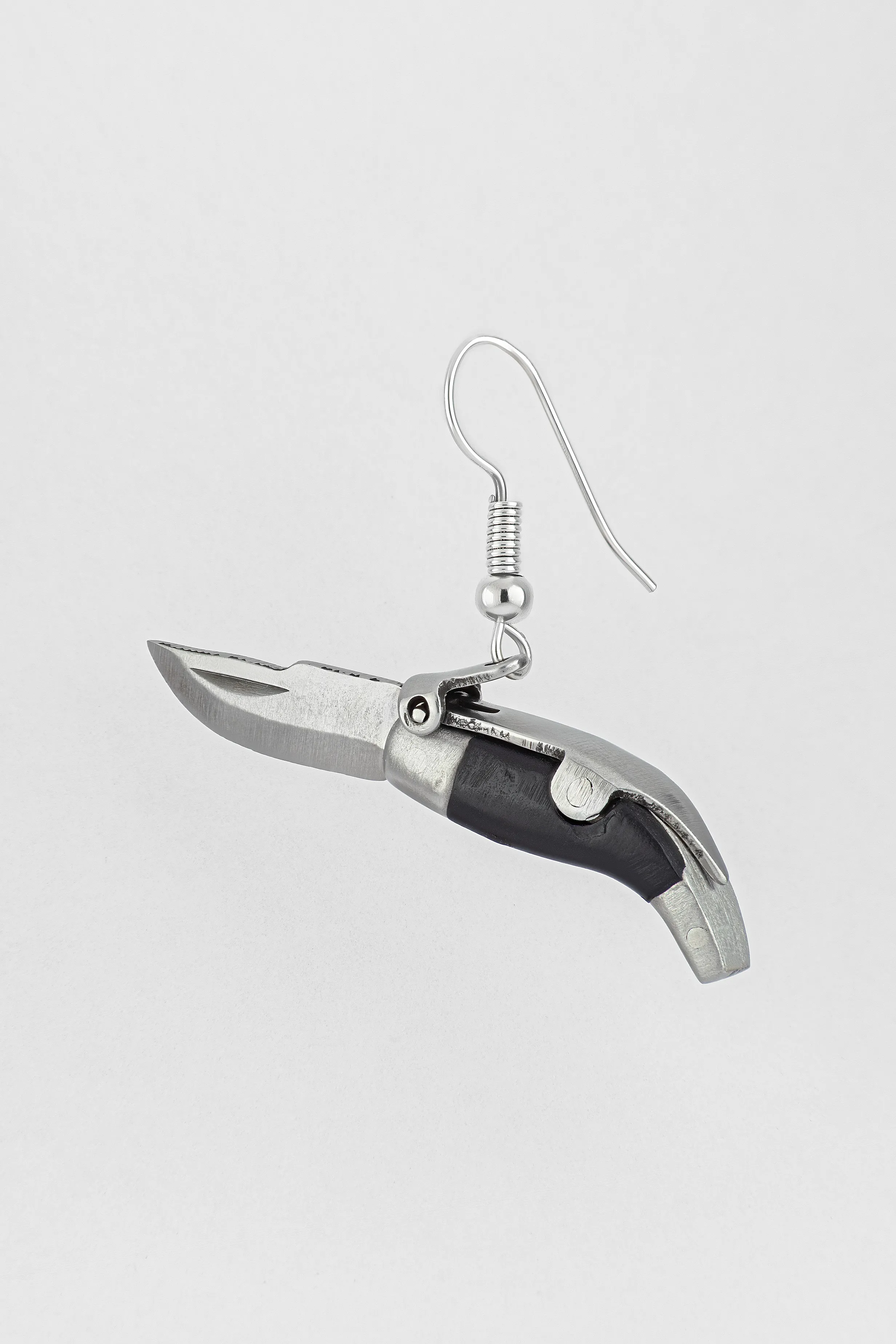
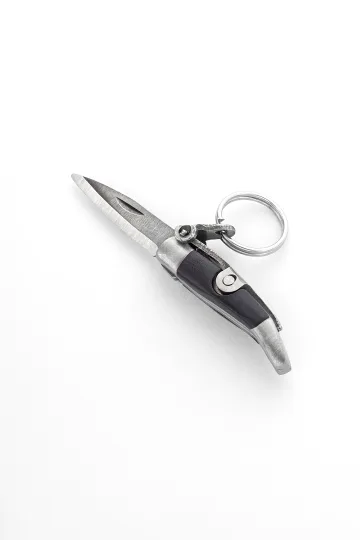
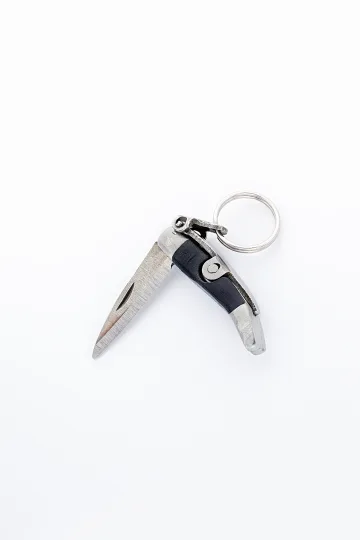
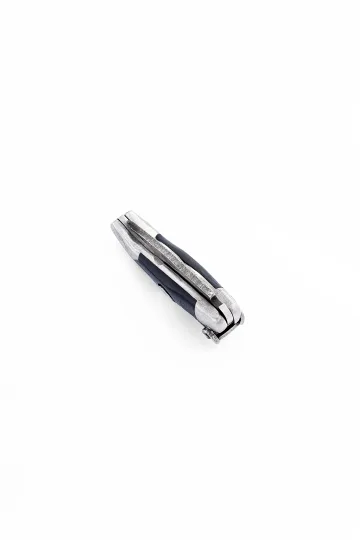
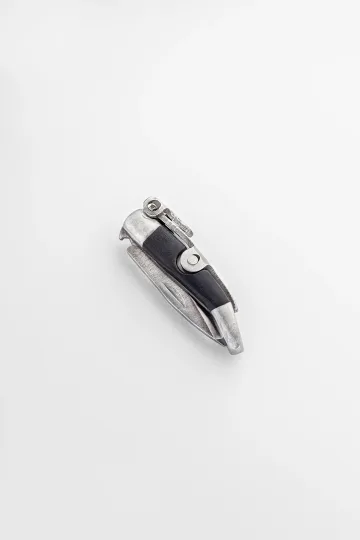
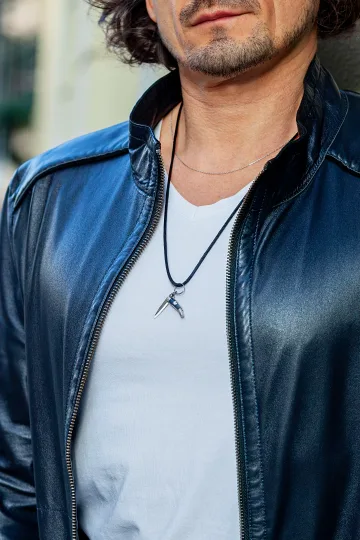
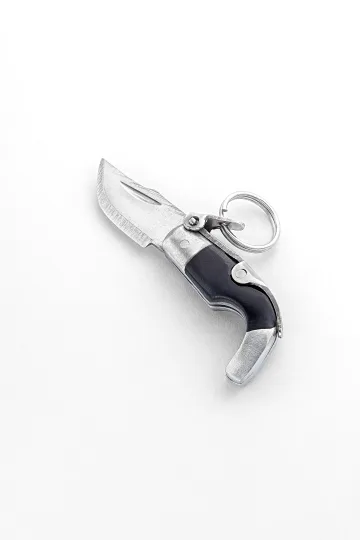
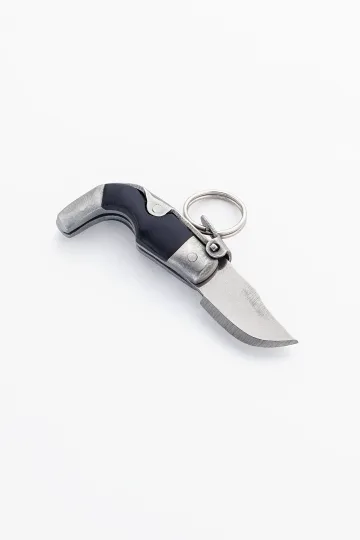
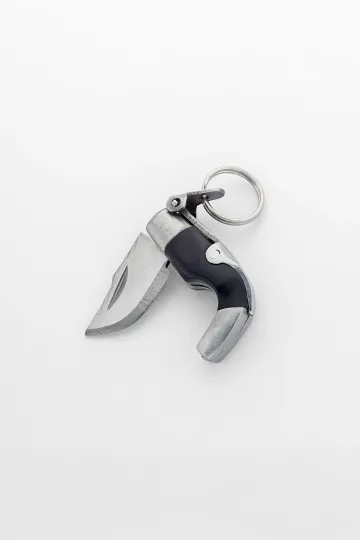
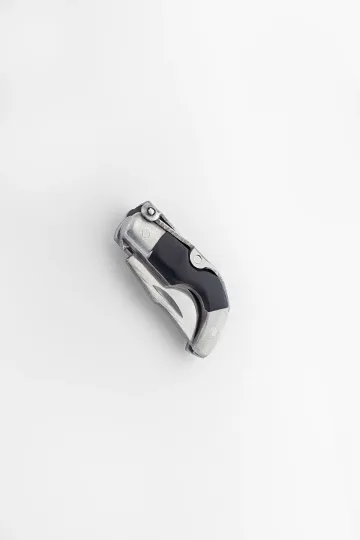
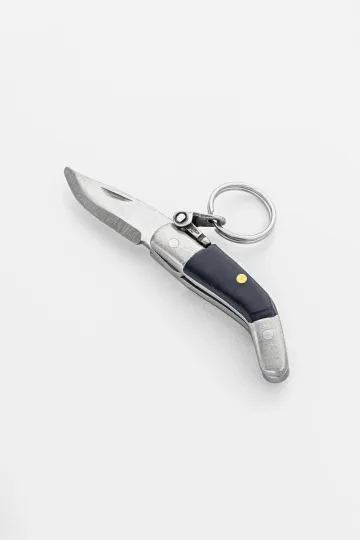
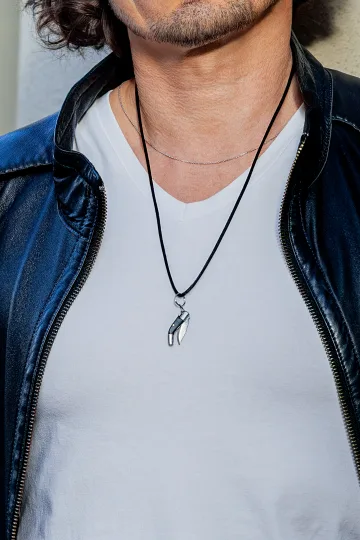
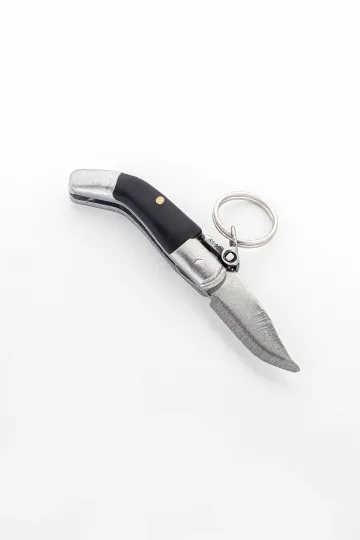
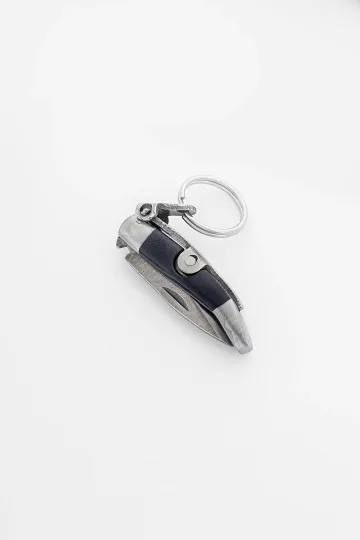
CAPAORA mini knife pendant
The 18th-century Spanish navaja in miniature: 40 mm of stainless steel, a real folding mechanism and a Palanquilla lock that clicks. An affordable gift to remember.
Authentic · Ships from Spain · 14-day returns
Ansuz and Other Runes of the Word and Knowledge: What Is the Difference
More than one rune carries the theme of reason, the word and insight in the Futhark; several do, and they share the meanings out among themselves. Understanding the differences helps you choose "your own."
Ansuz and Kenaz: the Word and Mastery
The main pair on the theme of knowledge is Ansuz and Kenaz. Both are about the light of the mind, but of different kinds. Ansuz is knowledge that passes by the word: counsel, lore, a science from mouth to mouth, insight from on high. Kenaz is the torch, knowledge-as-skill, the craftsman's mastery, technique won by one's own hands and experience. Ansuz is nearer to wisdom and inspiration, Kenaz to skill and the creative fire in the workshop.
Together they describe the full path of knowledge: the light of understanding (Kenaz) that kindles the work, and the word (Ansuz) by which that understanding is passed to others. One rune is about what you can do, the other about what you can explain and hand on.
Ansuz and Raidho: the Word and the Path
The rune Raidho answers for movement, the road, the right order and rhythm. It is about things going their proper course, about the journey and the correct running of an affair. Ansuz is nearer the content of a message, Raidho nearer its delivery and the rhythm in which it sounds. Speech without rhythm and order falls apart, and a road without news is empty, and so these runes complement each other well.
If Ansuz is the word itself, then Raidho is the path by which the word reaches its addressee, and the measure in which it settles. Together they describe successful communication: the right meaning, sent in the right rhythm and in time.
Ansuz and Dagaz: the Word and Illumination
The rune Dagaz is the dawn, the breakthrough, the instant when darkness gives way to light and clarity comes. If Ansuz is about the gradual knowledge that is gathered and passed on, then Dagaz is about sudden illumination, the flash of understanding, the leap in quality. They are often set side by side, because wisdom often ripens slowly and dawns all at once.
Once you have sorted through these differences, it is easier not to confuse the runes of the mind and to choose a sign for a specific intent: the word and counsel (Ansuz), mastery and technique (Kenaz), the path and order (Raidho) or a sudden breakthrough (Dagaz).
The Psychology of a Runic Amulet
You do not have to believe in the magic of runes for an Ansuz pendant to "work." The mechanisms that make such an amulet useful are quite earthly and well described.
An anchor of intent. When a person ties an object to a concrete goal, a glance at that object returns the mind to the goal. A rune of the word at the neck becomes a quiet reminder: speak clearly, listen carefully, choose your words. Before a conversation or a talk it works as a visual bookmark for attention, without any mysticism.
The confidence effect. Sports and cognitive psychology describe the "lucky object" effect: a person confident that a talisman is with them acts calmer and more collected. Anxiety drops, focus rises. For those who fear public speaking and hard conversations, Ansuz often does exactly this.
Ritual and control. Putting on a sign before an important day is a small ritual, and rituals restore a sense of control where much is out of our hands. It does not cancel out preparation and rehearsal, but it lowers the stress around them and helps you gather yourself.
Identity and values. To wear a rune of the word is to state quietly, first of all to yourself, your priorities: clarity, knowledge, honest speech, inspiration. Anchors of identity increase resilience to hardship, and in that sense an ancient sign works for a thoroughly modern person for whom being heard matters.
There is nothing supernatural in this. An amulet does not change reality; it changes the wearer's relationship to reality, and it does so in a measurable, useful way, above all where everything is decided by the right word said in time.
Ansuz in Culture and Heritage
Runes have long moved beyond archaeology and live in language, folklore and modern culture. Ansuz's trace here is the deepest of all: it hides in a god's name and in the names of the days of the week themselves.
In language and the calendar. Odin's name in its South Germanic form, Woden, gave its name to Wednesday: the English Wednesday is literally "Woden's day." Through this name the theme of Ansuz, the god of the word and of wisdom, has reached us in the very schedule of the week, though most speakers never suspect it. And the root ansuz lives on in Scandinavian names that begin with "As," and in the very word "Aesir" for the gods.
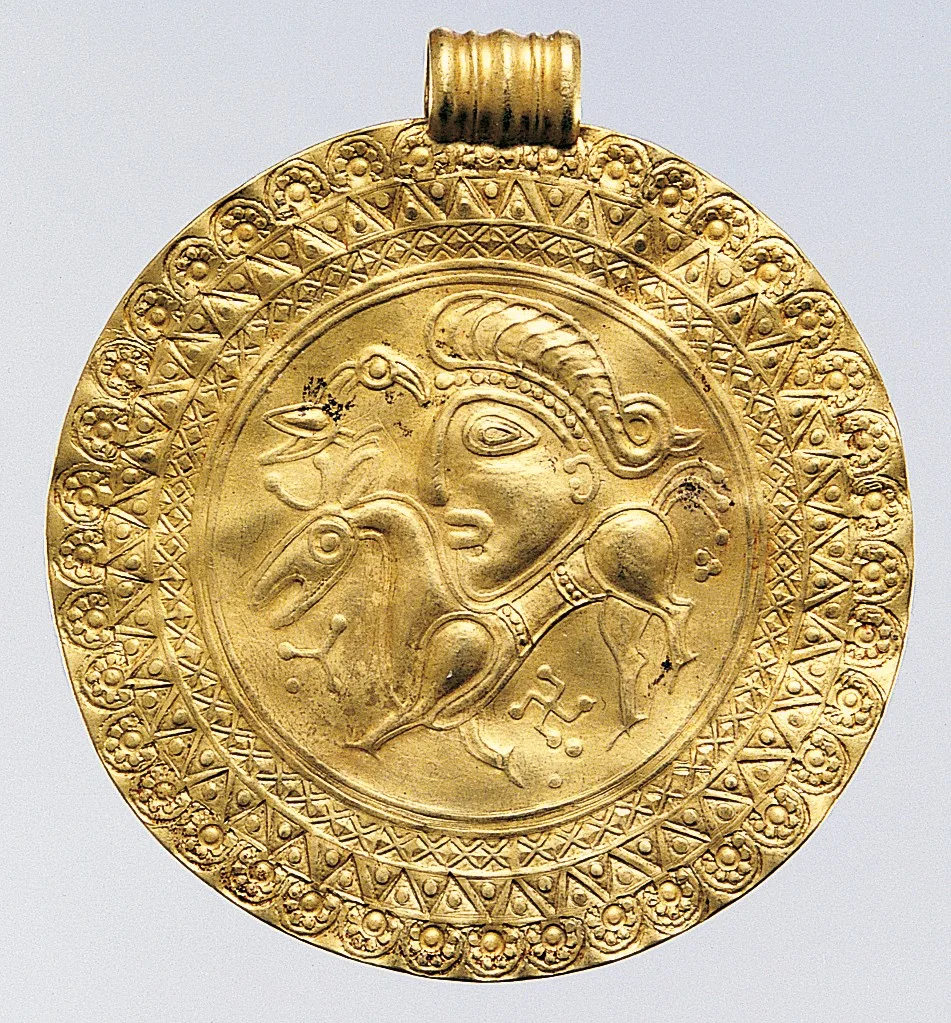
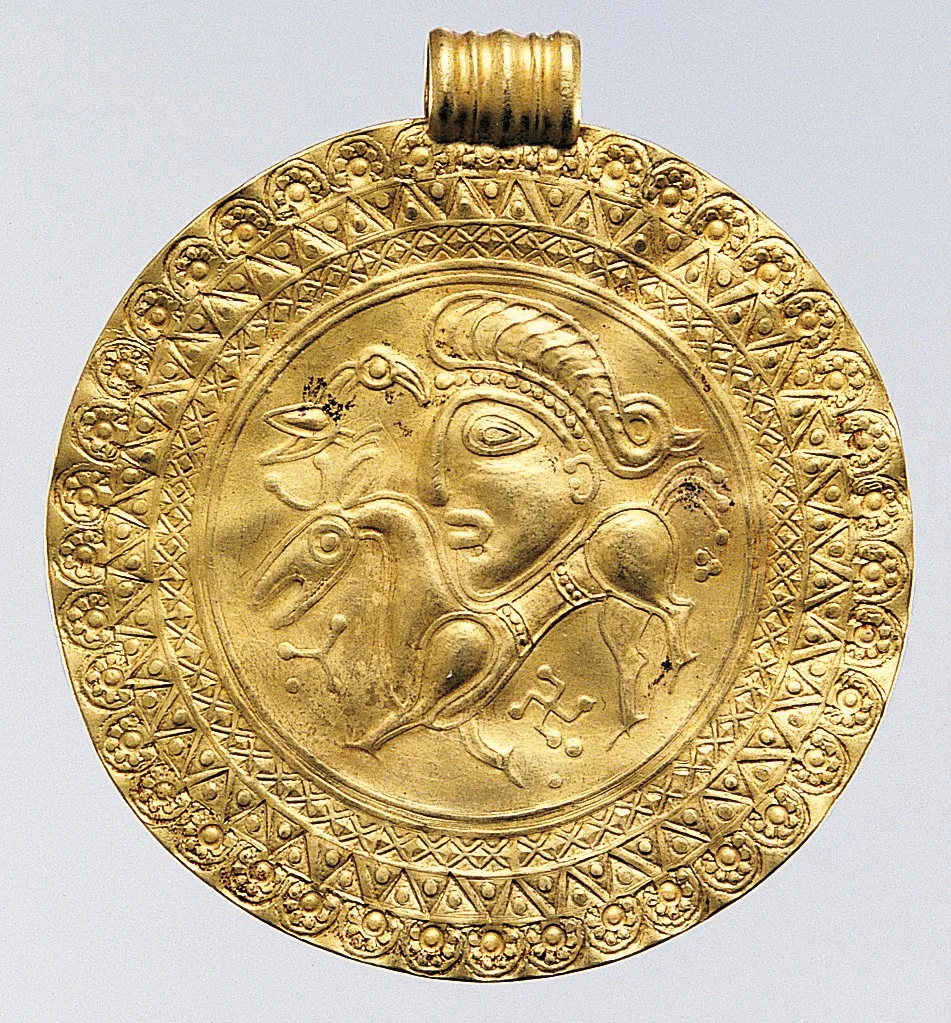
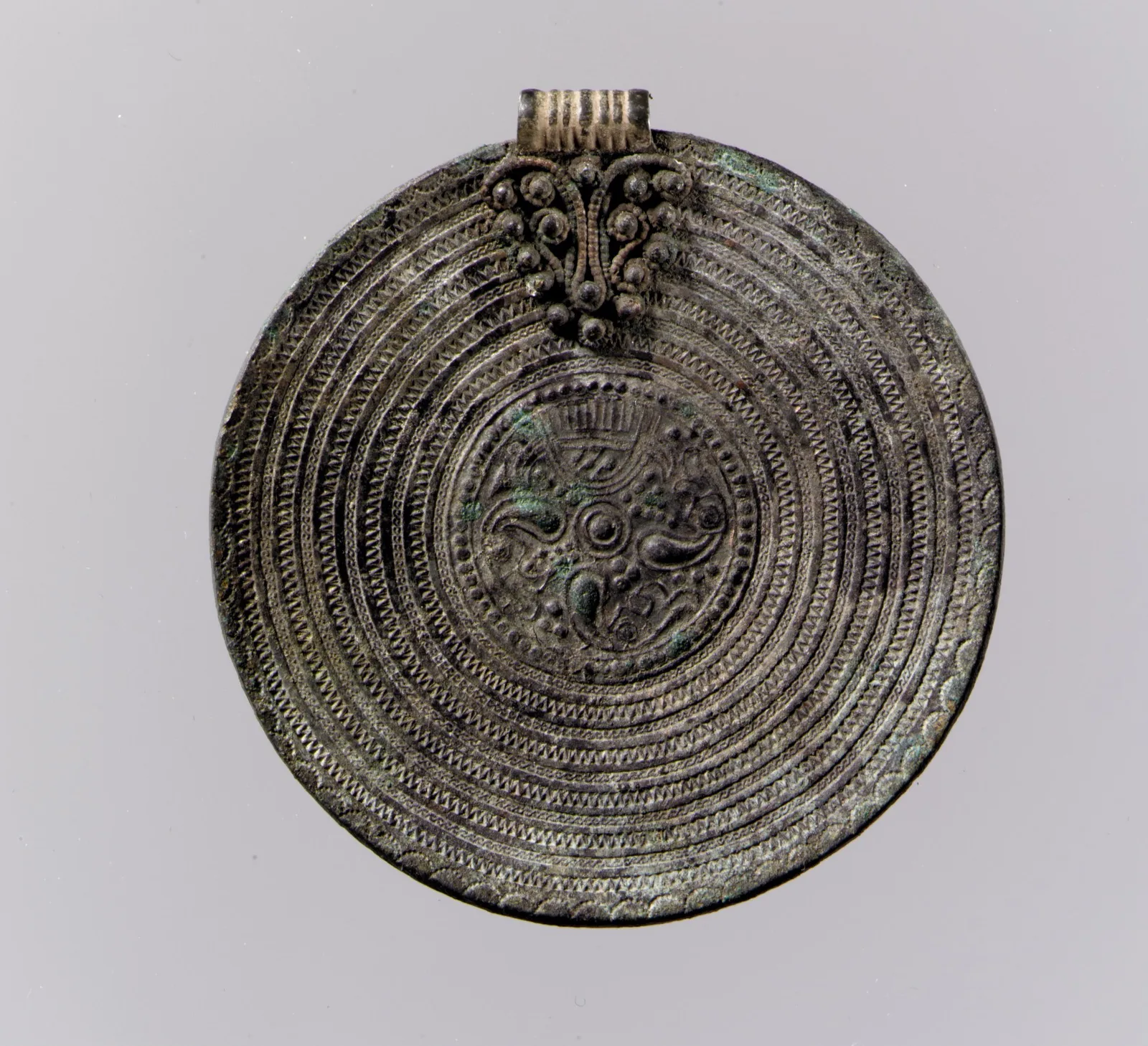
In runic inscriptions. Ansuz appears on a host of archaeological finds: amulets, bracteates, weapons, stones. Sometimes as an ordinary letter, sometimes, in scholars' view, as a charm-sign calling on the favour of the gods. Researchers will argue for a long time over where it is a letter and where it is magic, but the very presence of the rune on costly and ritual objects speaks to its bond with the higher and the spoken.
In modern symbolism. The revived interest in Northern antiquity has made the Futhark a recognisable visual language. Runes decorate books, games, music covers and craft goods. Ansuz, as a sign of the wise word and of inspiration, holds a firm place in this set, above all where authors want to underline the theme of knowledge and poetry.
One important caveat is worth keeping. In the 20th century some individual runic signs were used by political movements of grim repute, and a heavy context surrounds certain symbols. Ansuz does not belong to that circle and remains a neutral sign of the word and of wisdom, but a general awareness of what you wear and what you wear it beside is fitting here.
Facts About the Ansuz Rune That Surprise You
It is the only rune named after the gods. Other runes bear the names of objects and elements: cattle, the aurochs, hail, the sun. Ansuz alone in the whole row is named by the word "god," pointing straight at the Aesir and Odin.
Wednesday is named after Odin. The English Wednesday goes back to "Woden's day," the South Germanic name of Odin. Through the god of the word and of wisdom, with whom Ansuz is bound, the runic theme has survived into the modern calendar.
Odin won the runes at the price of self-sacrifice. By the Hávamál he hung for nine nights on the world tree, pierced by a spear, given as a sacrifice to himself, to raise the runes from the abyss. In the North knowledge was held to be a spoil, not a gift.
The rune's name is kin to the Sanskrit asuras. The Germanic ansuz, the Norse áss, the Indian asura and the Iranian ahura all reach toward one ancient root of a higher power. The idea of a speaking deity is older than the runes themselves by thousands of years.
The Anglo-Saxons read the rune as "mouth." In Old English the name of the sign became ōs, and by chime with the Latin os the rune poem read it as "mouth, the source of speech." So the sign of the god became also a sign of the human word.
The Icelandic poem named the rune Odin outright. Its stanza calls the sign "old Gautr," the prince of Asgard and the lord of Valhalla. This is a rare case where a medieval text openly identifies a rune with a specific god.
Inspiration and fury in the North were one word. The concept óðr, from which Odin's name is derived, meant both poetic ecstasy and battle frenzy. Ansuz inherits this fiery, almost dangerous side of inspiration.
Runes were carved, not written. The absence of horizontal lines in Ansuz and across the whole Futhark is not aesthetics but a demand of wood and bone: along the grain a horizontal is almost impossible to cut, for it splits the material.
Silver, gold, runic and Scandinavian symbolism, protective charms, paired sets.
Send a friend a discount code, they save on their first order.
Frequently Asked Questions About the Ansuz Rune
What does the Ansuz rune mean? Ansuz is the fourth rune of the Elder Futhark, standing for the sound "a" and the concept of "god." In a broad sense it symbolises the divine word, speech, wisdom, knowledge and inspiration. The name goes back to Proto-Germanic ansuz, "god," and points to the race of the Aesir led by Odin, the patron of poetry and the runes.
Is Ansuz the rune of Odin? It is bound to Odin more tightly than any other rune. Its name means "god," its themes are wisdom, poetry and the word, and the Icelandic rune poem calls the sign "old Gautr," that is, Odin, the prince of Asgard. At the same time Ansuz does not "belong" to him alone but relates to the whole race of the Aesir.
What does the Ansuz rune look like? A vertical stave with two short branches leaving it downward at a sharp angle on one side. The form recalls a bent tree or a letter "F" with dropped crossbars. There are no horizontal lines in the sign, as across the whole Futhark.
What does reversed Ansuz mean? In the divinatory tradition the reversed position is read as a distorted word: lies, manipulation, empty eloquence, bad counsel, misunderstanding, rumour. It is the flip side of the rune: upright is about honest speech, reversed about speech that deceives. The split into upright and reversed meanings appeared in modern practice.
Who does the Ansuz rune suit? Those whose life is bound to the word and to knowledge: teachers, writers, negotiators, musicians, students and mentors. It is chosen for clear speech, inspiration and confidence in conversation. It makes a good gift for the defence of a thesis, the release of a book or the start of a public undertaking.
Can you wear the Ansuz rune every day? Yes. For daily wear silver and stainless steel are convenient: they are sturdy, undemanding in care and do not darken. Gold suits too. Wood and bone are authentic but fragile and call for careful handling; they are more often chosen as a ritual or collector's version.
Can you wear Ansuz together with other runes and symbols? Yes, and it is common. Ansuz pairs well with a pendant of the image of Odin, with the protective rune Algiz and with the rune of prosperity Fehu. The main thing is not to overload the look: one or two symbols read more strongly than a handful of pendants on one chain.
Do you have to believe in the magic of runes to wear Ansuz? No. Many wear the rune for its meaning and history rather than for a "magic of the word." The sign is interesting in itself: it is more than fifteen hundred years old and is bound to language, to the myth of Odin and to the oral culture of Northern Europe. Belief stays a private matter.
Runes, Scandinavian charms and symbolism in silver, gold and steel.
Buying it as a gift? Each one arrives ready to give.
 A branded Zevira box and a little card come with every order.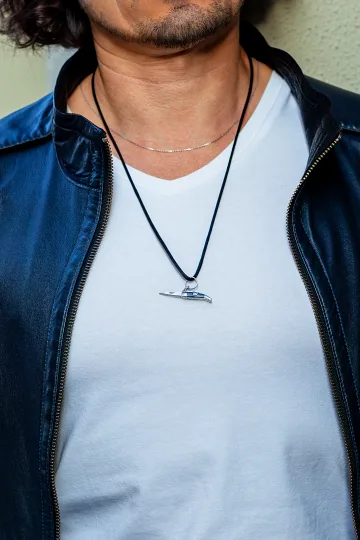




Conclusion
Ansuz travelled from a sign that stood for the gods themselves to a symbol of clear speech and inspiration on a silver chain. Over fifteen hundred years both faith and writing changed, but the essence of the rune stayed the same: the word is a force, and it must be handled as carefully as a weapon. Ansuz is a reminder that breath turned into a meaningful sound is what sets a reasoning person apart and binds them to something larger.
The fourth rune of the ancient alphabet tells both truths at once, honestly. The word carries wisdom, comfort and inspiration, and it is also able to lie, to set people quarreling and to destroy. Whether you wear Ansuz for its meaning, for the beauty of the Northern form or for a quiet reminder to speak clearly and listen carefully, you carry with you one of the most human symbols in history: the sign of what makes us human, of speech with a thought behind it.
Wear the symbol, don't just read about it. These are in stock:
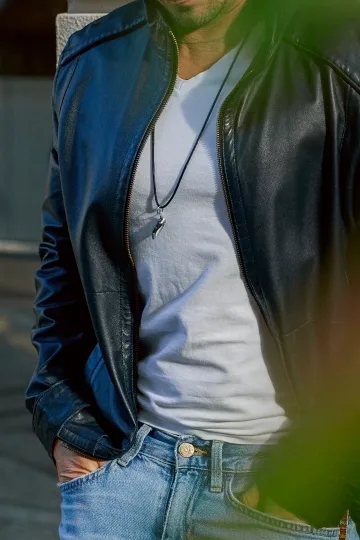
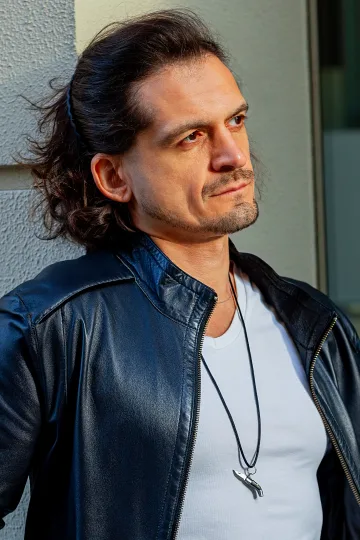
About Zevira
Zevira makes jewellery in the artisan tradition of Albacete, Spain. Runic symbolism is one of the themes close to us: an ancient form, legible without words, equally at home on a rough leather cord and on a thin chain. We render Ansuz with a checked orientation of the sign and crisp carving, in modern materials and proportions.
What you can find with us on the theme of Northern symbols:
- Runic pendants in silver, gold and steel
- Scandinavian charms: images of Odin, protective runes, signs of the gods
- Leather and rubber cords and chains of various lengths for a rune of any size
- Paired and set versions for those who collect the symbolism of the Futhark
- The option of personal engraving
Every piece can be personalised with engraving. Sterling silver 925 and 14-18K gold.