Odin in Jewelry: the Allfather, the Spear Gungnir, and the Valknut as the Mark of the Fallen
Odin gave up one of his own eyes for a single sip of wisdom, then hung for nine days on the world tree, pierced by a spear, to wrench the secret of the runes out of death itself. Vikings carved his marks into weapons and amulets. Today the same valknut sits on a pendant, while the ravens Huginn and Muninn perch on a signet ring. The chief god of the North never left.
Who Odin Is
Odin is the supreme god of the Norse pantheon, lord of the Aesir, master of war, wisdom, poetry, and magic. He is called the Allfather because he fathered a host of gods and watches over humankind. Germanic peoples further south called him Wodan, the Anglo-Saxons Woden, but it is one and the same deity. Odin rules from Asgard, seated on the throne Hlidskjalf, from which he sees across all nine worlds, and he gathers warriors slain in battle into his hall, Valhalla.
The name "Odin" goes back to an ancient root meaning "fury," "frenzy," "inspiration." From that same root come the Germanic "Wut" (rage) and the old idea of "od," the sacred madness of the poet and the warrior. The god's very name carries the idea of a seizing, dangerous rush of spirit that drives the berserker into battle and the skald toward verse. Odin is not a god of calm order but of sharp, perilous knowledge bought through suffering.
Wear the symbol, don't just read about it. These are in stock:



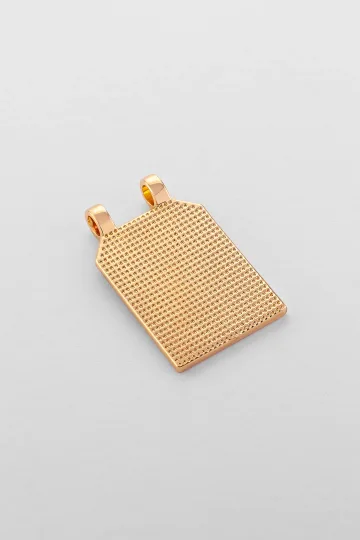
In jewellery Odin rarely appears as a portrait, the one-eyed old man in a wide-brimmed hat, and far more often through his attributes: the spear Gungnir, a pair of ravens, the eight-legged horse Sleipnir, wolves at his feet, the valknut, the triangular knot of the fallen. These marks read instantly: wisdom won at the price of sacrifice, martial courage, a tie to the other world. A pendant with a valknut or a signet ring with ravens works like an ancient badge of the initiated, understood without a caption.
The Allfather stands at the head of the Aesir, but his power is built differently from thunder gods like Zeus. Odin rules not by thunder and force but by knowledge and cunning. He wanders the worlds under other names, trades for secrets, sacrifices part of himself for something greater. This trait gives his symbols a particular shade: they speak not of brute might but of the price a person is willing to pay for understanding.
Odin's Place Among the Gods of Asgard
Odin heads the Aesir, the chief lineage of Norse gods, and his seniority rests on wisdom and foresight. Frigg is his wife, guardian of marriage and motherhood, who knows fates yet keeps silent about them. Thor is his son, god of storm and protector of people, the one who marches against giants with a hammer. Baldr, the bright and beloved son, whose death sets off a chain of disasters. Loki, blood-brother and eternal breaker of order, now helper, now foe. Around Odin lies a whole world of kin and companions, and his place within it is that of the one you go to for the last word of knowledge, not for raw strength.
The Allfather's inner circle is worth remembering too. Ravens bring him news from every world, wolves share his meals, valkyries carry the slain to Valhalla at his command, and the eight-legged horse bears him between worlds. This retinue explains why the raven and the valknut so often sit side by side in Norse imagery: they show the god not alone but surrounded by the marks of his all-seeing eye and his power over life and death.
What follows, in order: where the cult of Odin came from, what each of his symbols means, what meanings his marks carry, why the valknut is held to be the Allfather's seal, what such jewellery is made from, how and with what to wear it, and where Odin lives in art and pop culture.
The History of Odin's Cult
Odin's image has lived a long life, and at almost every stage it left a trace in metal, stone, and bone, exactly where jewellery grew from. Bracteates, brooches, amulets, runestones. People wore all of this on the body or set it up in memory, and through this small craftwork the god's image reached us.
Roots: the Pan-Germanic Wodan
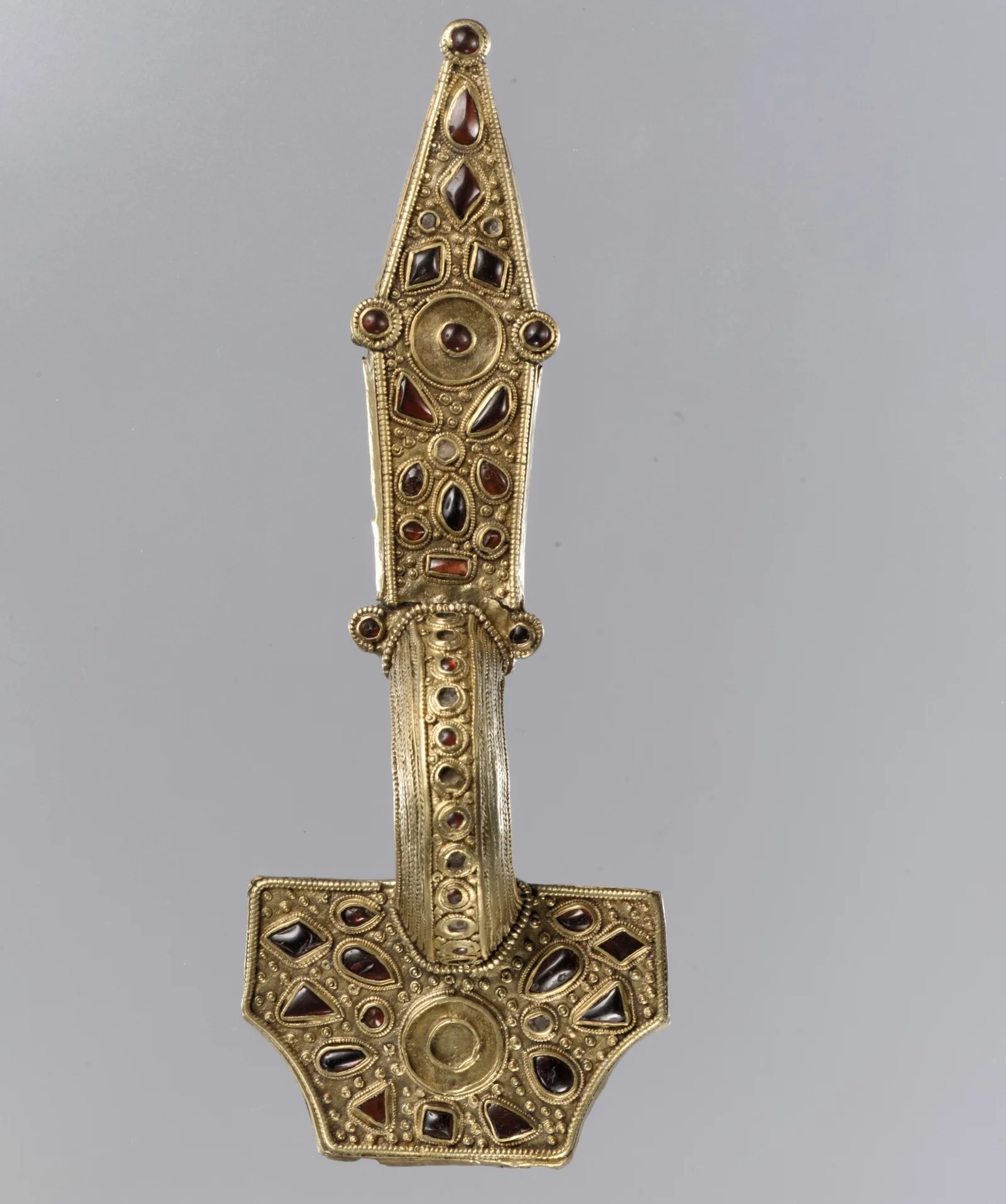
Long before the Viking Age, Germanic tribes honoured a god named Wodan. The Roman historian Tacitus, describing the Germanic peoples in the first century, called their chief god Mercury, and scholars agree this points to Wodan-Odin: the Romans recognised in him a god who guided souls and watched over travellers. From Wodan came the name of a weekday: the English Wednesday is "Woden's day," and the Scandinavian "onsdag" holds the same root. So the memory of the god is sewn into the very calendar people use every day, without even suspecting it.
The image of a wandering god who guides souls explains much about his symbolism. Wodan led the dead into the other world, and so people linked him with roads, crossroads, and threshold places. Germanic peoples hung items on trees and set them in the ground in his honour, and warriors wore amulets bearing his marks in hope of luck in battle and a worthy death. Even at this early stage the god was tied to things a person carries on the body, and that tie reached jewellery with barely a break.
Golden Bracteates of the Migration Period
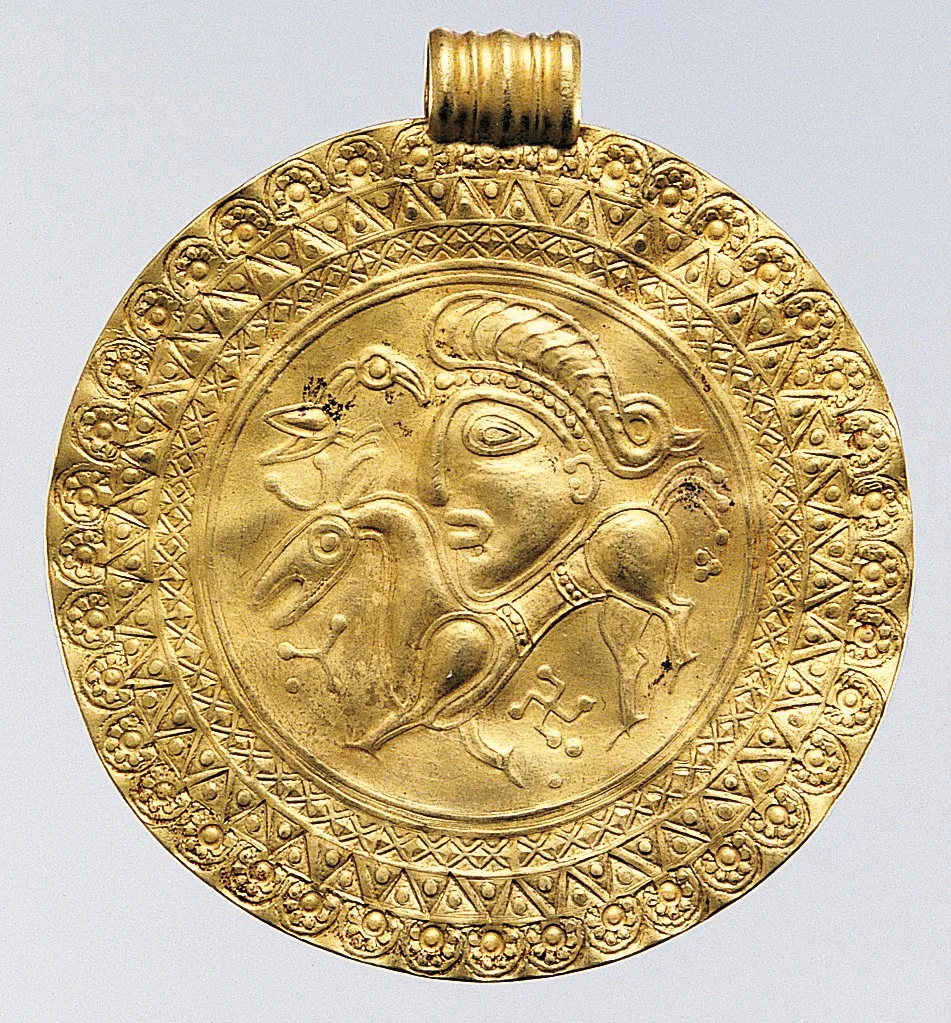
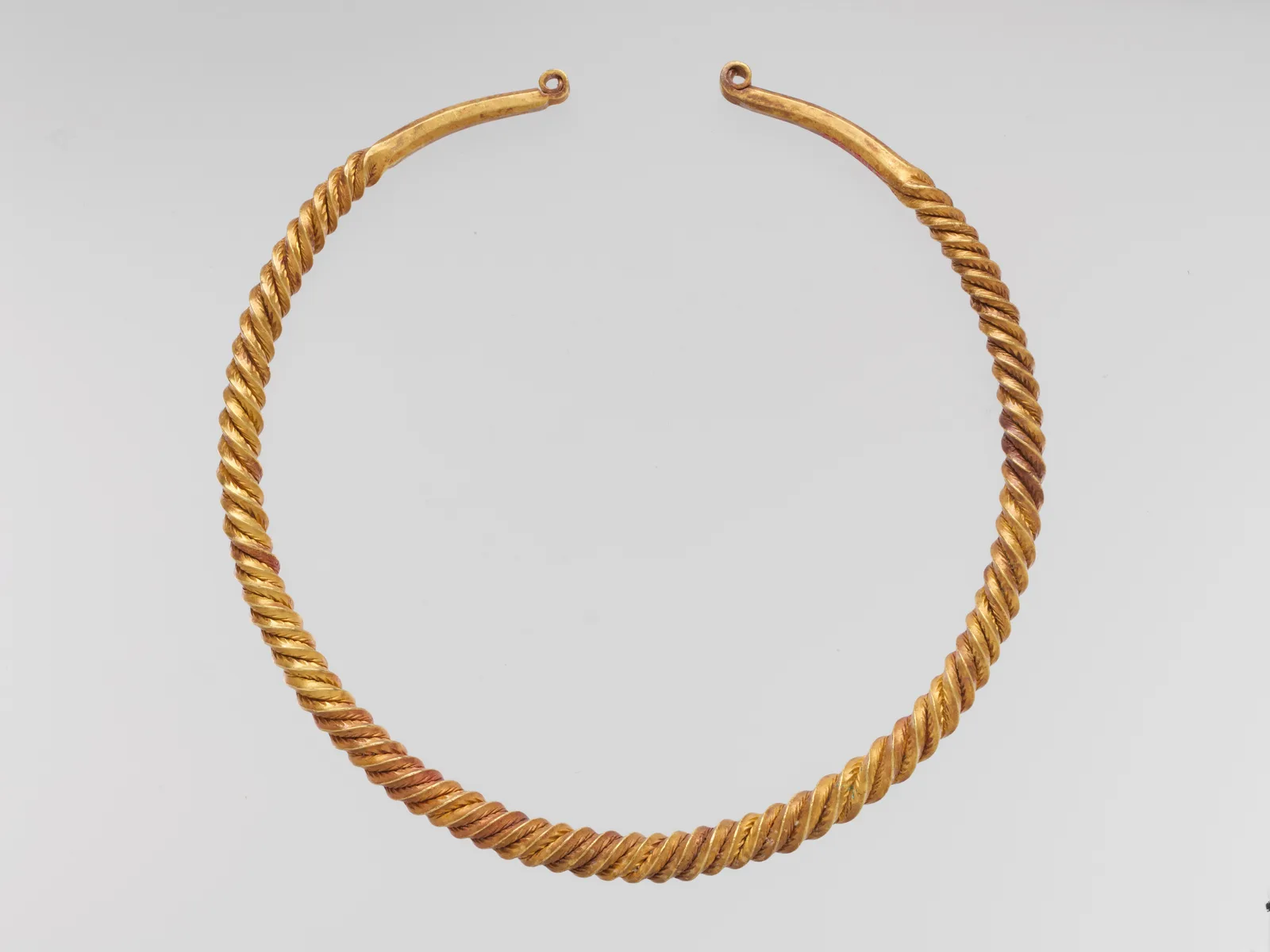
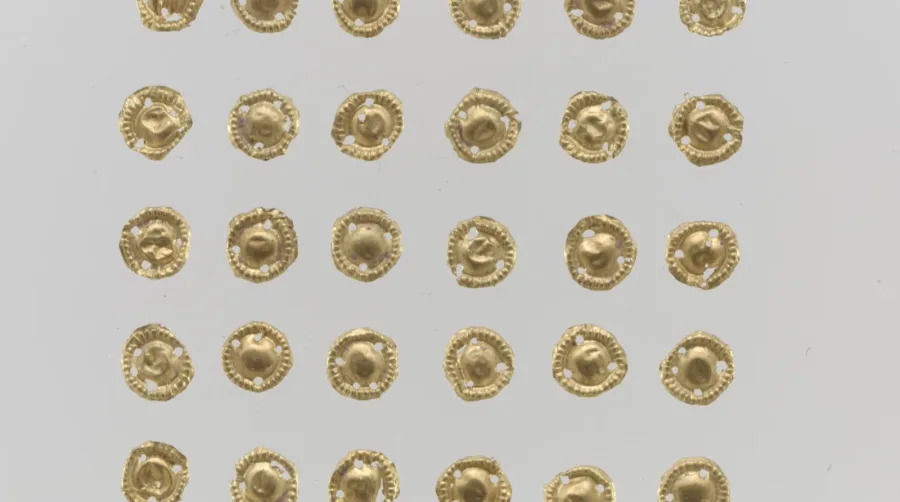
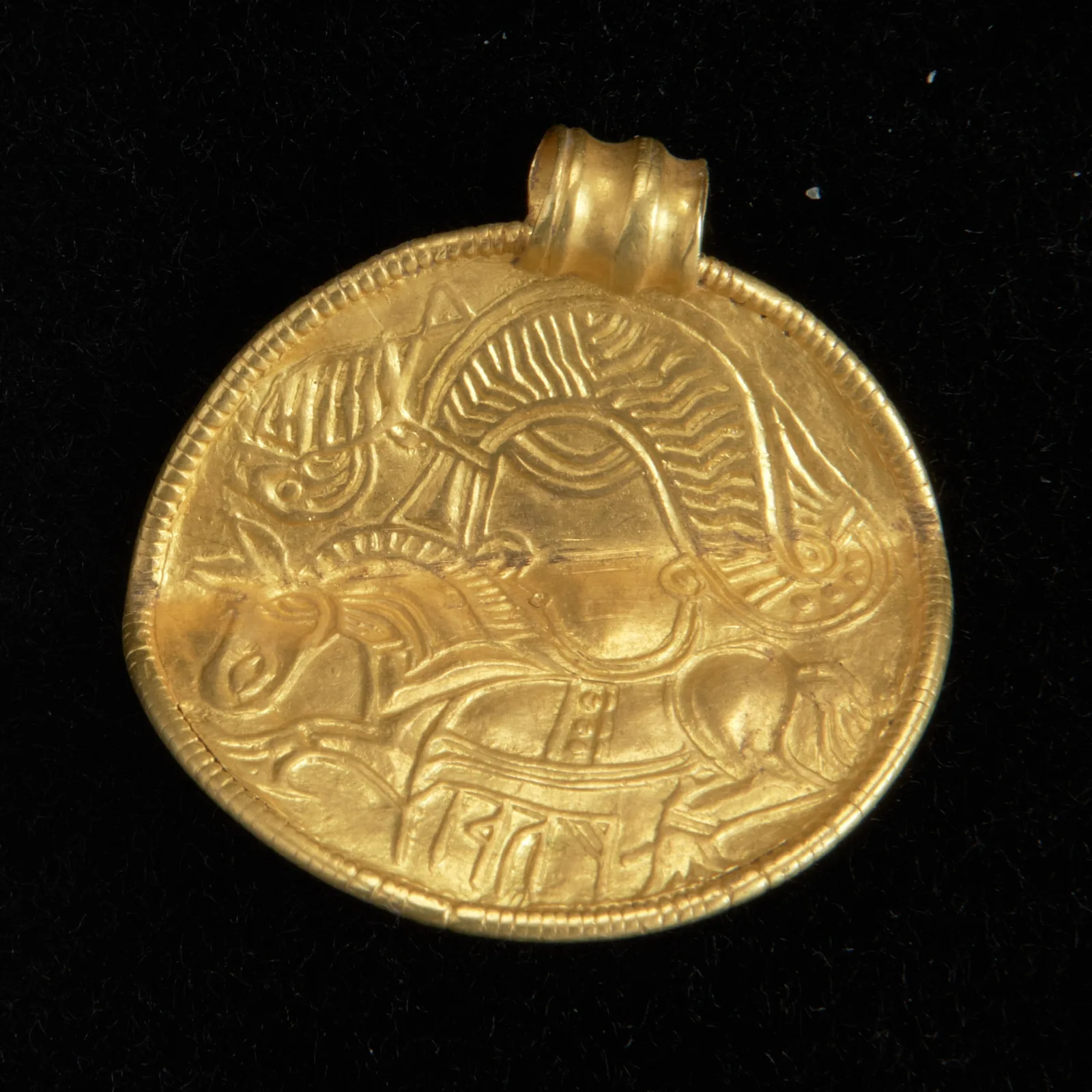
In the fifth and sixth centuries, bracteates spread across Northern Europe: thin gold pendant-medallions with a stamped image. Many show a man's head, sometimes with a bird and a horse beside it, and many researchers read these scenes as early images of Odin the healer and lord of magic. Bracteates were worn around the neck as protective amulets, and they are, in effect, the direct ancestors of the modern pendant bearing the god's symbolism. Gold, a profile, a protective meaning. The link to jewellery here is no metaphor but literal continuity.
The Viking Age: the Cult at Its Peak
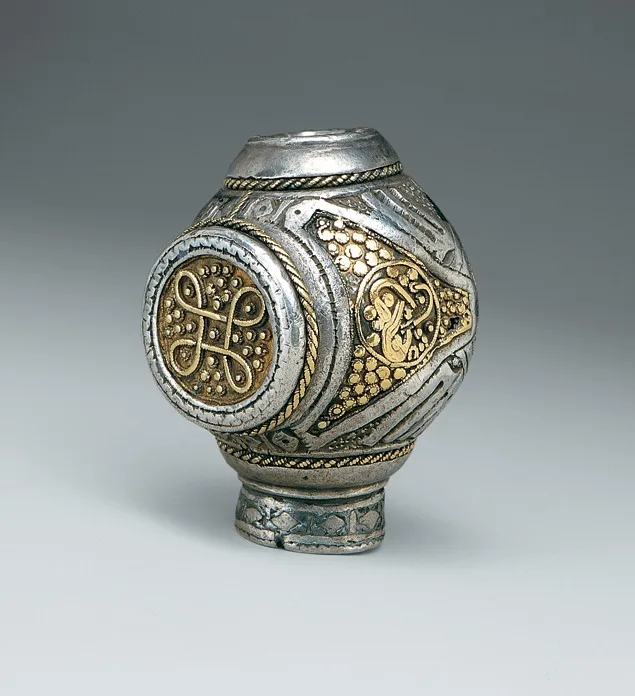
From the eighth to the eleventh century, in the Viking Age, the cult of Odin reached its height. He was the god of kings, skalds, and professional warriors, those who went into battle for glory and a place in Valhalla. The nobility claimed him as an ancestor of their lines. On runestones, weapons, brooches, and pendants his marks appear: the valknut, ravens, interlaced knots. Before a battle a warrior would cast a spear over the enemy host with the cry "Odin owns you all," dedicating the fallen to the god. It is from this layer, warlike and aristocratic, that most of the Norse symbolism worn in jewellery today descends.
Odin on Yggdrasil: Sacrifice for the Runes
The most astonishing myth about Odin is the story of how he won the runes. To gain the secret knowledge of the written signs, the Allfather hung for nine days and nine nights on the world tree Yggdrasil, pierced by his own spear, without food or drink, offering himself to himself. On the edge of the ninth night, at his limit, he glimpsed the runes below, seized them with a cry, and fell, having gained wisdom. This story from the poem "Hávamál" lies at the very heart of Odin's image: knowledge does not come free, and it is paid for with pain and a part of yourself. That is why runes and a spear in jewellery carry an almost sacrificial meaning rather than a decorative one.
Decline and Christianization
With the arrival of Christianity in Scandinavia in the tenth and eleventh centuries, the open cult of Odin faded. But the image did not vanish; it slipped into folklore, into tales of a wanderer in a cloak and hat, into legends of the Wild Hunt, where a ghostly rider races across the sky at the head of a dead host. Many traits of the wandering one-eyed old man with a staff and a wide-brimmed hat later echoed in literary images of wise wizards. The god did not die; he changed his guise.
The Revival of Interest
In the nineteenth century, Romantics and collectors of antiquity rediscovered Norse mythology. The "Poetic Edda" and the "Prose Edda," set down in Iceland and the main sources on the gods of the North, came to be read across Europe. Painters depicted Odin, sculptors modelled him, and jewellers brought back into use the valknut, the raven motif, and runic inscriptions. The twentieth and twenty-first centuries carried the wave forward through books, film, and games, and today the Allfather's symbolism is enjoying a new flowering precisely in jewellery.
A valknut rides bare skin under a rough sweater, never over lace. The knot of the fallen does not flirt, so don't ask it to.
How to Style Odin's Symbols
I have been collecting Norse marks on shoots for years, and the valknut and ravens have been through dozens of looks with me. Here is what actually holds character, sorted by occasion.
How do I wear a valknut pendant every day? For daily wear I recommend blackened silver on a medium chain, so the knot sits on the chest. I always suggest a plain top without a print, dark or solid, because the strict geometry of the three triangles only reads on a clean background. A large valknut I take under a sweater or tee, a small one on a thin chain I tuck under a shirt with the top button undone.
Where does the signet ring with ravens go? I let the signet play solo. A massive ring with two ravens I suggest on the little finger or the ring finger, with no neighbours on the same hand, or they fight for attention. Silver I choose for weekdays, gold for a dressed-up exit. A runic engraving around the band I add for depth, but I never set a second ring beside it.
And how do I play up the spear Gungnir? The spearhead pendant is the sharpest and most graphic of Odin's marks. Short near the collarbones it reads as an accent, longer over a sweater it turns bold. I recommend pairing it with other small pendants on different chains, because the sharp form likes contrasting lines beside it, not matching ones.
Is this a masculine mark or for everyone? For everyone, simply in different registers. The feminine version I keep finer and more graphic: a delicate valknut, a small raven, a thin runic line. The masculine one I push toward weight: a wide signet, a large knot, pronounced relief, a leather cord instead of a chain. Steel and blackened silver hold the severity, gold adds warmth.
What do I pair Norse marks with? By theme, the Allfather's marks sit well with the rest of the northern symbolism: Thor's hammer, the runic compass vegvisir, runes. A themed set comes together well in the spirit of Viking jewelry. One rule that never fails: a severe valknut beside a scatter of little flowers loses its character, so I keep the look in one tone and do not mix it with playful decor.
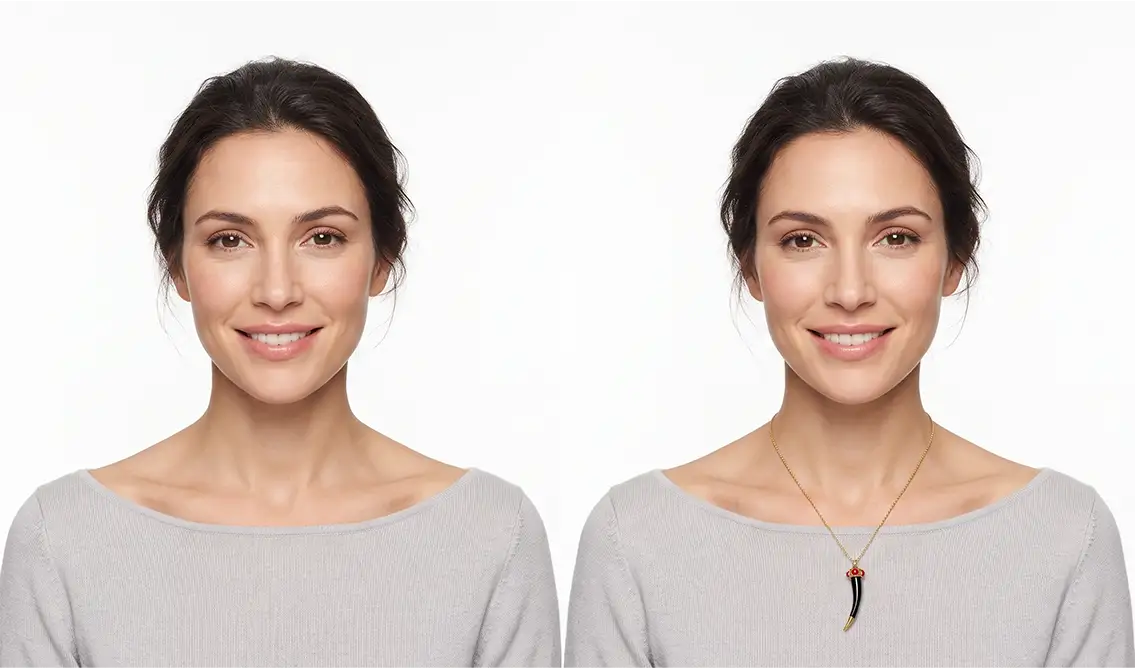
Turn on your camera, pick earrings, a pendant or a ring, and see the piece on yourself in real time.
Switch items in one tap.
Everything runs in your browser: no photo or video is ever uploaded.
Customer reviews
Zevira is a real jewellery shop. Genuine payments, deliveries and customer thank-yous.
🥰🥰🥰 gracias
Ok, ¡gracias! 🙂
Odin's Symbols
The Allfather has a whole set of attributes, and each has become a jewellery motif in its own right. Let us take them one by one.
The Spear Gungnir
Gungnir is Odin's spear, forged by skilled dwarves, the underground craftsmen. Its special property is that it never misses and always strikes its target, and its head is carved with the sacred runes of the oath. Gungnir is the very spear with which Odin pierced himself on Yggdrasil, so it is bound at once to war and to sacrifice for knowledge. In jewellery the spear reads as a sign of precision, resolve, and an unbreakable word. A spearhead pendant or an engraving with a runic shaft works sharp and masculine, pointing to the god's very essence: strike without missing, keep your oath. An oath sworn on the point of Gungnir was held unbreakable in the sagas, and so the spear became a mark of an honest word no less than a mark of war. For a person who values a promise above profit, the spearhead reads more precisely than any other symbol of Odin.
The Ravens Huginn and Muninn
Odin's two ravens are named Huginn and Muninn, which are translated as "Thought" and "Memory." Every morning they fly from the god's shoulders, circle all nine worlds, and return by evening to whisper into his ear everything they have seen. Through them Odin knows what happens in the farthest corners of the world, and so one of his names is the Raven God. In Norse imagery the ravens are the Allfather's eyes and ears, a sign of all-knowing, intelligence, and a tie to the other world. We have devoted a separate study to the raven, where the bird is opened up as an image in its own right; here the pair of ravens matters precisely as the god's attribute, his living messengers. A pendant or signet with two ravens at the sides reads as a sign of a sharp mind and a good memory, a wish to see further than others.
The Single Eye and the Well of Wisdom
Odin is one-eyed, and this is no maiming but the trace of a willing sacrifice. To drink from the well of Mimir, the spring of wisdom at the roots of the world tree, the god gave up his eye. One eye for a double sight: outer and inner, visible and hidden. It is said the surrendered eye still lies at the bottom of Mimir's well, gazing on from the depths of wisdom while the god himself looks at the world with the eye that remains. This image makes Odin a god who paid with his body for understanding. In jewellery the single-eye motif appears more rarely than a direct depiction, yet the idea of sacrifice for knowledge runs through all his symbolism. A signet with the one-eyed profile of the god in his hat reads as the mark of a person ready to pay the true price for wisdom rather than seek the easy road.
The Eight-Legged Horse Sleipnir
Sleipnir is Odin's horse, the best of all horses, with eight legs. He bears his rider through air and over water, between all the worlds, including the road to the realm of the dead. By the myth he was born of Loki, who turned himself into a mare, and so Sleipnir is a creature of unusual, borderland nature. The eight legs give him supernatural speed and the power to cross boundaries closed to others. In jewellery the eight-legged horse is a rare but strong motif: a sign of swift movement, freedom, and a bridge between worlds. A pendant with Sleipnir reads as a symbol of a path without obstacles, a road that neither water nor death can stop. Eight legs appear on the carved stones of the island of Gotland, where the rider on the eight-legged horse is read as Odin riding into the other world, and that ancient scene comes alive in modern engraving.
The Valknut
The valknut is an interlaced knot of three triangles, one of Odin's chief marks. It is found on runestones and objects beside images of the god, of warriors, and of the fallen. The word itself, in its modern reconstruction, means "knot of the fallen," and the valknut is linked with those who died in battle and were received into Valhalla. It is a sign of Odin's power over life and death, over the warrior's passage into the hall of heroes. We examine the valknut as a symbol in its own right in detail, and here it matters as the seal of the Allfather himself. In jewelry the valknut is a spare, recognizable mark, loved for its clean geometry and the deep meaning of a bond with the god of the fallen.
The Wolves Geri and Freki
At Odin's feet lie two wolves, Geri and Freki, whose names mean "Greedy" and "Ravenous." In Valhalla the Allfather gives them his entire share of food, while he himself lives on wine alone, for a god of words and spirit is content with inspiration. The wolves are predator companions, a sign of martial fury and of the god's tie to wild, untamed power. If the ravens are Odin's mind and memory, the wolves are his ferocity and hunger. In jewelry the wolf motif stands on its own and is popular; we have devoted a separate study to the wolf, and in Odin's context the pair of wolves reads as a sign of strength, loyalty to the pack, and the ancient, wild element the god keeps at his side.
Upload a photo of your pet, someone you love, or an object. We'll build a 3D model and hand-cast it in pewter.
The Meaning of Odin in Jewellery
Why wear the Allfather's symbol? Odin holds several layers of meaning, and each answers a different need.
Wisdom
Odin is first of all a god of wisdom, and this is his chief meaning. He gathers knowledge from every world through the ravens, drinks from Mimir's well, wins the runes. To wear his symbol is to put reason, sharp observation, and the ability to see beyond the obvious in first place. The valknut or a pair of ravens reads as the mark of a thinking person, one who values understanding above force.
Sacrifice for Knowledge
The chief trait of Odin is that wisdom does not come to him free. He gives up an eye for a drink from the well, hangs pierced on the tree for the runes. So his symbolism carries the idea of a price a person is willing to pay for growth. This speaks to those who have come through a hard road, through loss, and emerged stronger. The mark of Odin says: I know what it cost, the thing I came to understand.
War and Valor
Odin is a god of war, but war of a particular kind: he is the patron of martial glory and of a worthy death, the one who chooses the fallen for Valhalla. His symbols mean valour, fearlessness, the readiness to go to the end. The spear Gungnir and the valknut carry exactly this meaning. Such a piece is often chosen as a mark of inner steadfastness and fighting spirit in a broad sense, not literal war.
Poetry and Inspiration
Odin won the mead of poetry, the sacred drink that grants the gift of words, and became the god of skalds. His name sounds with "od," the inspired frenzy of the maker. So the Allfather's symbolism is close to those who write, compose, create. For them the mark of Odin is not about war but about the fire of inspiration, about the word that is mightier than the sword. This is a rare facet for a war god, and it gives the image more depth.
The Magic of the Runes
Odin is lord of the runes, and through them of magic: divination, spells, secret knowledge. For the Norse the runes were both writing and sorcery at once. Odin's symbolism is bound to this side: the pull toward the hidden, the other, the steering of fate through signs. For those drawn to runic symbolism, the Allfather's mark is close as the image of the master of the runes himself, the one who paid for them more dearly than anyone.
A Tie to the Other World
Odin is also a guiding god between worlds, the one who travels the roads of life and death. He rides Sleipnir into the realm of the dead to wrest a prophecy from them, and he leads the ghostly Wild Hunt. This borderland nature makes his symbolism close to those living through a threshold: a loss, a great transition, the start of something new. The mark of Odin in this sense works as a reminder that boundaries can be crossed, and that one can return from the dark with the spoils of knowledge.



The Valknut as Odin's Mark
Of all the Allfather's symbols, the valknut deserves a talk of its own, because it is the one that most often lands in jewellery and is most firmly bound to the god personally.
The valknut is a knot of three interlaced triangles. It appears in two drawings: with three separate but linked triangles, and with a single unbroken line folding into three triangles. Archaeologists find it on the runestones of Gotland, on the carved posts of the Oseberg burial ship, on Viking Age seals and rings. Almost always nearby are scenes of death, burial, or figures of warriors, and this steady tie to dying gave the mark its reading.
"Knot of the fallen" is the very meaning of the valknut: it marks warriors who died in battle and were received by Odin into Valhalla. The three triangles are read in different ways: as the nine worlds of the Norse universe, as the bond of life, death, and rebirth, as the passage of the soul between worlds. No exact ancient explanation has survived, and part of the meanings is later reconstruction, which it is honest to keep in mind. But it is precisely this openness of reading that keeps the valknut alive: each person puts their own meaning into it without breaking the ancient frame of the mark of the fallen.
In jewellery the valknut is prized for a rare blend of clean geometry and depth. Three triangles fold into a strict, almost graphic mark that looks equally good as a large pendant or a small engraving. People wear it as a mark of memory for those who are gone, as a symbol of belonging to the warrior spirit, as a personal seal of a bond with Odin. It is the most direct way to wear the Allfather's mark without depicting the god himself.
The valknut is often confused with two close signs, and they are worth telling apart. The triquetra is a knot of three arcs or loops, a symbol of threeness and continuity that appears in both the Celtic and the Norse traditions, but it is not directly tied to Odin. The horn of Odin, or the triskelion of three joined drinking horns, points to the myth of winning the mead of poetry and also belongs to the god, but it looks quite different, rounded. The valknut is set apart precisely by its three sharp triangles. If you want to wear the mark of the Allfather and of the fallen specifically, choose the triangular valknut rather than the rounded knots that are easy to mix up with it in a catalogue.
Materials
The Allfather's image calls for materials that hold the idea of severity, antiquity, and authenticity. Not all of them fit, and each has its own logic.
Silver
Silver, with its cold gleam, best conveys the northern, "icy" aesthetic of Norse symbolism. Sterling silver, 925, is sturdy, wearable every day, and does not cause allergies in most people. A valknut, ravens, and a spear in silver look graphic and masculine, and silver itself takes oxidation easily in the recesses of the relief, to bring out the interlacing of the knot or the plumage of the bird. Blackened silver is perhaps the most Odinic choice: it gives that same severe, time-darkened texture the ancient amulets had.
Gold
Gold points straight to the golden bracteates of the Migration Period, the early amulets bearing the god's image. A gold pendant with a valknut or ravens reads as a premium, status option, heir to an ancient noble tradition, for it was the nobility who wore gold. The warm gleam softens the severity of the symbol and makes it richer. For those who want to tie the northern mark to the idea of lineage and heritage, gold fits best of all.
Bronze and Brass
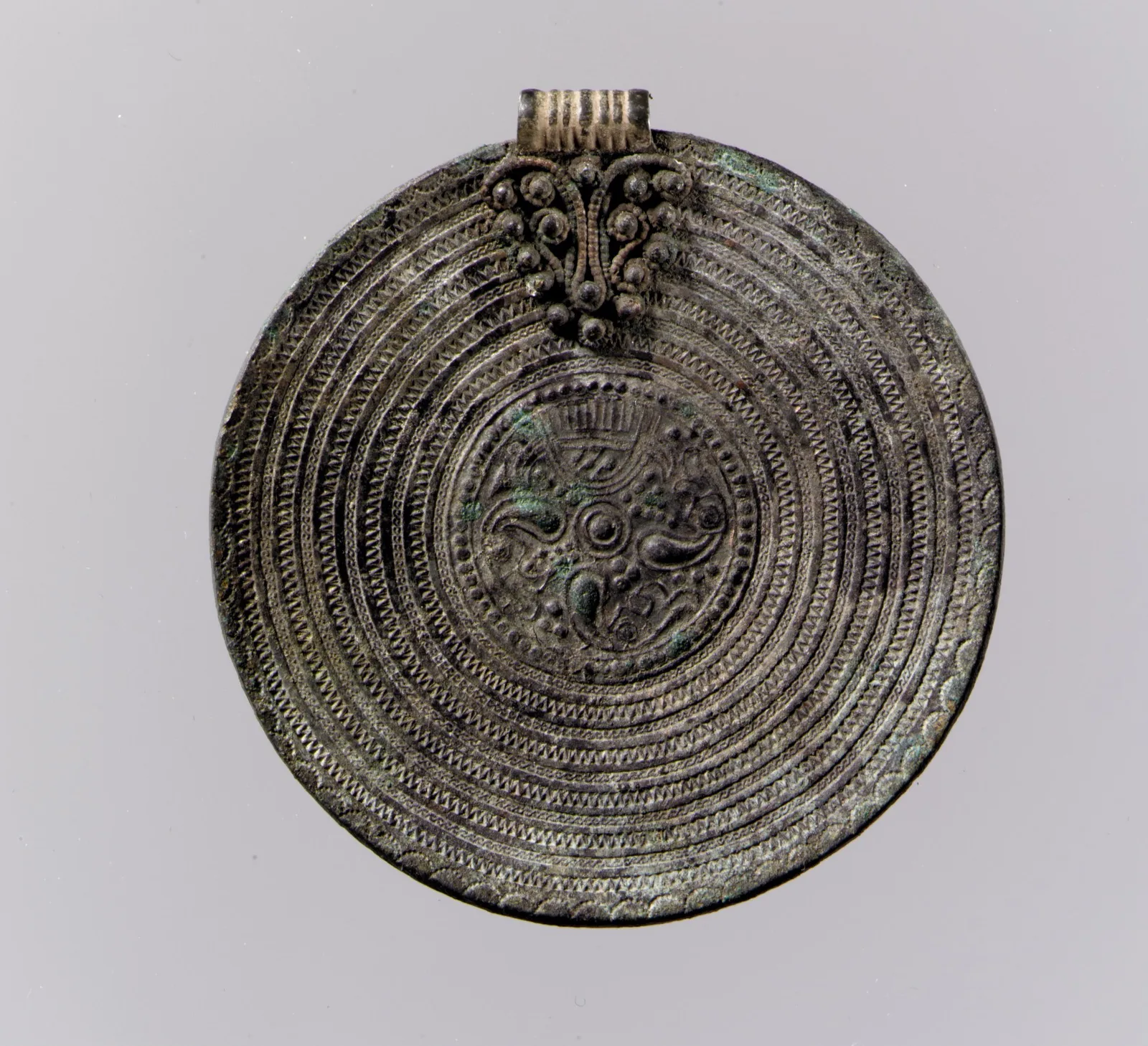
Bronze is a historically accurate material: a great many Viking Age amulets and brooches were cast precisely from bronze and other copper alloys. The warm coppery sheen gives the image an archaic, museum depth, as if the thing had just been lifted from a dig. Brass with a golden tone works in a similar way and costs less. The downside of copper alloys is that they darken over time and may leave marks on the skin, so such pieces need care. Bronze and brass are best taken off before a shower and before sleep, wiped with a soft cloth, and stored in a dry place; then the patina settles handsomely rather than in blotches. For anyone who wants a warm historic texture without the fuss, gilded silver is the answer.
Steel
Stainless steel is the choice for those who want a modern, brutal northern mark without the fuss. Steel does not darken, is not afraid of water, and holds a crisp engraving of a valknut or runes. A PVD coating gives a black or steel shade that lasts for years. A steel pendant with Odin's symbolism looks pulled-together and severe, which suits an urban, technical aesthetic and sits well in a man's everyday look.
Bone, Wood, and Leather
A separate line is natural materials in the spirit of the age itself. Carved bone, wood with burned-in runes, a leather cord instead of a chain. Such pieces convey the rough, handmade texture of the ancient amulet and pair well with a metal inset: a silver valknut on a leather thong, for instance. These materials add authenticity to the image and connect a modern piece with how the amulets of the Vikings actually looked.
Leave your email, we'll send your discount code. No spam, unsubscribe anytime.
The code arrives by email, valid on your first order.
Who It Suits and Who It Is Given To
The Allfather's symbol is no neutral piece of jewellery, and that is its strength. It suits those who want to wear a mark with character, and it works well as a meaningful gift.
Who the Symbol of Odin Suits
Odin's marks suit people with a pull toward knowledge and inner depth. Those who value the mind above force, who are used to thinking, observing, seeing beyond the obvious. The valknut is closer to those who have come through loss or a hard road and wear the mark as a memory of the price of experience. Ravens suit observant people with a good memory, given to analysis. The spear suits those who value precision and keep their word. The universal rule is simple: the Allfather's symbol strengthens what is already in a person, the pull toward wisdom and steadfastness, rather than grafting on something foreign.
Odin as a Gift
A piece with Odin's symbolism is given with a clear message. The valknut is given as a sign of memory and steadfastness, to a person who has come through a trial, as a wish for the strength to hold on. A pendant with ravens is given to someone valued for intelligence and insight. The spear Gungnir is fitting to give a decisive person of word and deed, as a wish to strike true and keep an oath. A runic motif is given to those drawn to northern culture and secret knowledge. To any such gift it is good to add a few words about the meaning of the symbol, so it opens up fully.
The Psychology of Choosing a Northern Symbol
Behind the pull toward Odin's symbolism stands a plain human need: to give meaning to one's own experience and to gather oneself before something hard. Psychologists noticed long ago that talisman objects help people hold focus, add confidence, work as an anchor. A valknut on the chest or ravens on the finger are not magic but a reminder to oneself: I paid for what I understand, I see further, I will endure. So the Allfather's symbolism is often chosen on the threshold of change, after a loss, before a new stage. The thing does not make a person wiser, but it helps them take a collected, strong stance inside their own head, and that is already a great deal.
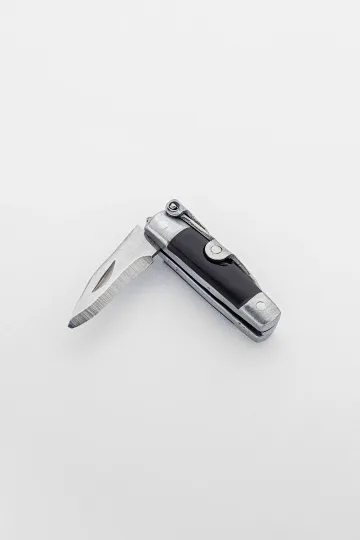
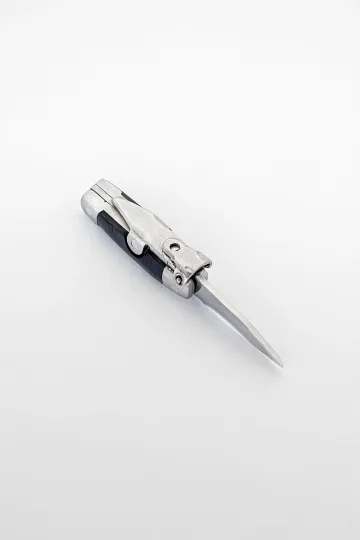
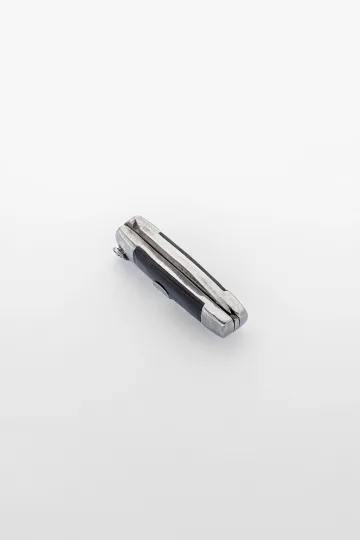
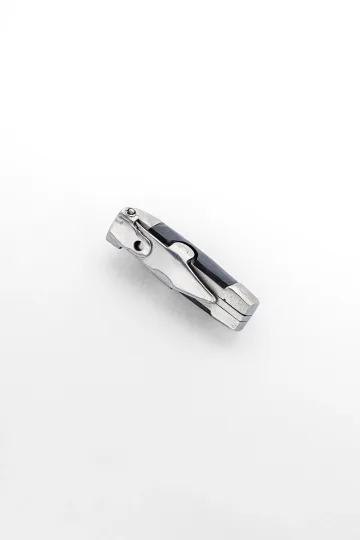
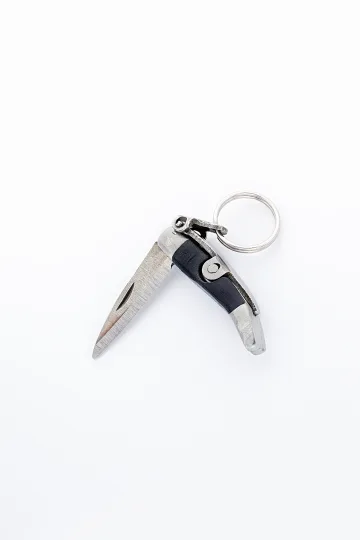
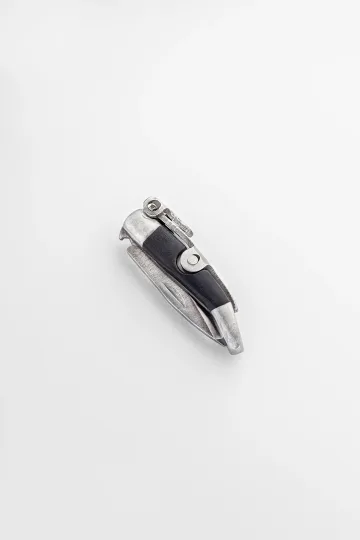
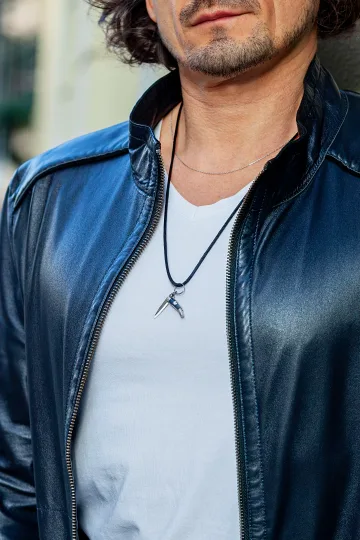
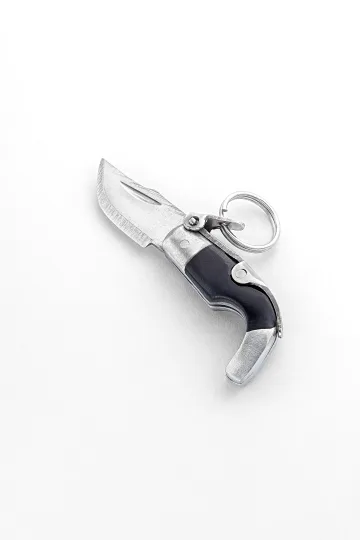
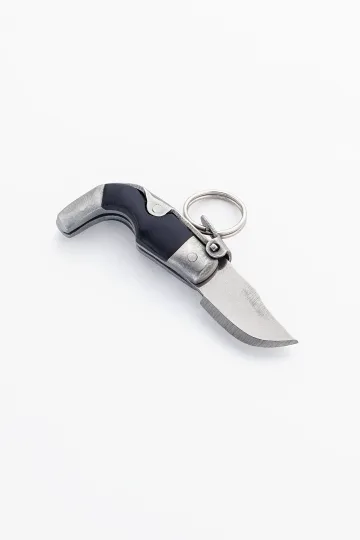
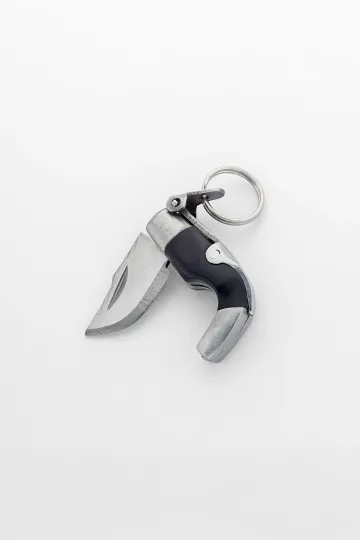
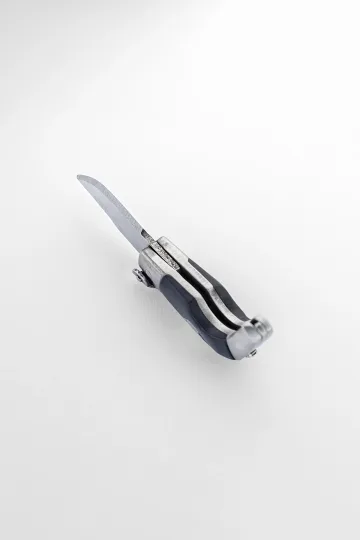
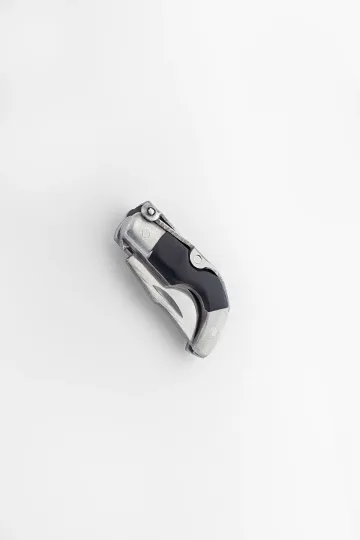
CAPAORA mini knife pendant
The 18th-century Spanish navaja in miniature: 40 mm of stainless steel, a real folding mechanism and a Palanquilla lock that clicks. An affordable gift to remember.
Authentic · Ships from Spain · 14-day returns
Odin in Art and Pop Culture
The Allfather has a large cultural life beyond the ancient myth: in painting, sculpture, literature, and modern stories. All of it feeds the symbolism of jewellery.
Odin in Painting and Sculpture
After the Romantics rediscovered Norse mythology in the nineteenth century, artists set about painting Odin. They depicted him as a mighty wanderer in a cloak and a wide-brimmed hat, with a spear and ravens on his shoulders, mounted on the eight-legged Sleipnir at the head of the Wild Hunt. Sculptors of the North raised monuments to him, modelled busts of the severe one-eyed old man. From this tradition jewellery inherited the habit of depicting Odin majestic, bearded, surrounded by his attributes, and the image of the ravens and the spear took hold as the god's identifying mark. Carvers in metal and bone keep these traits in mind when they bring the Allfather's profile onto a signet or a pendant.
Odin in Literature and Film
The image of the wise wanderer in a cloak and hat, with a staff and secret knowledge, has echoed in dozens of literary wizards and mentors. Many traits of the kind and the fearsome sorcerers of adventure literature and film go back precisely to Odin the wanderer. Modern stories of the gods of the North have brought the Allfather back to the screen and the page at full height: now as the severe chief of Asgard, now as a charming trickster god walking among people under another name. These stories made the valknut, the ravens, and the spear recognisable far beyond Scandinavia, and many come to the northern symbolism through them. It is worth remembering only that the modern screen Odin is a free fantasy on the theme of the myth, not the ancient image itself.
Odin in Games and Music
Norse mythology became a large theme of video games and heavy music, and through them the image of Odin reached the youngest audience. In games about the gods of the North the Allfather appears now as a mentor, now as an adversary, and players first meet the valknut, the ravens, and the runes there. Northern folk and metal built a whole aesthetic around the sagas, and album covers, the stage, and merch brought Odin's symbolism into the everyday wardrobe. Many come to the valknut or the ravens not from a mythology textbook but from a favourite game or band, and there is nothing wrong with that: the ancient mark simply found a new road to the person. It is worth only telling the historical foundation apart from modern fantasy and knowing what you wear.
Facts That Surprise
Odin has gathered so many stories over the millennia that some sound almost beyond belief.
A weekday bears Odin's name. Wednesday in many languages is named in his honour: the English Wednesday is "Woden's day," and the Scandinavian "onsdag" holds the same root. When you name the middle of the week, you speak the Allfather's name.
Odin has more than a hundred and fifty names. Skalds called him by dozens of bynames: the Allfather, the Raven God, the Wanderer, the High One, the Grey-Bearded, the One-Eyed, and many more. Each name opened a new facet of the god, and this wealth of bynames is itself a monument of Norse poetry.
Odin sacrificed himself to himself. In the poem "Hávamál" he says he hung on the tree, pierced by a spear, "given to Odin, myself to myself." This is one of the rarest images in mythology, a god who sacrifices himself for his own higher knowledge.
Odin's ravens are his reconnaissance. Huginn and Muninn, "Thought" and "Memory," fly over the whole world each day and report to the god. Odin himself admitted he fears not bringing Huginn back, but he worries more for Muninn: to lose memory is more terrible than to lose thought.
Sleipnir was born of a male god. The eight-legged horse was born of Loki, who turned himself into a mare to distract the stallion of the giant builder. So the best horse of Asgard turned out to be the son of a trickster god in female guise.
Odin drank only wine. In Valhalla he gives his entire share of food to the wolves Geri and Freki, and lives on wine alone, for a god of word and spirit is content with inspiration instead of food.
The valknut still keeps a secret. No exact ancient explanation of the three interlaced triangles has survived. The very name "knot of the fallen" and part of the readings are modern reconstruction, and in that unspokenness lies part of the mark's pull.
Berserkers were called "Odin's men." Berserker warriors fell into a battle frenzy, that same "od," the sacred fury sewn into the god's name. It was believed the Allfather himself led them in battle, making them numb to pain.
Odin changed his guise and walked among people. He wandered the worlds under other names, in a cloak and a hat pulled low to hide the empty socket, questioning and trading for secrets. From this image grew the whole tradition of the wise wandering wizard.
Send a friend a discount code, they save on their first order.
Frequently Asked Questions
Who is Odin in Norse mythology?
Odin is the supreme god of the Norse pantheon, lord of the Aesir, master of war, wisdom, poetry, and the magic of the runes. He is called the Allfather, rules from Asgard, and gathers fallen warriors in Valhalla. Germanic peoples further south called him Wodan. He is a god not of brute force but of knowledge won at the price of sacrifice.
What does the valknut symbolise?
The valknut is a knot of three interlaced triangles, a mark of Odin and of fallen warriors. It is read as the "knot of the fallen," a symbol of the god's power over life and death, of the warrior's passage into Valhalla. The three triangles are linked with the nine worlds and with the cycle of life, death, and rebirth. The exact ancient meaning has not survived, and part of the readings is modern reconstruction.
How does Odin differ from Thor?
They are different gods, father and son. Odin is the king and the sage; he rules by knowledge, magic, and cunning, and wins the runes at the price of sacrifice. Thor is his son, god of storm and protector of people, who marches into battle himself against giants with the hammer Mjolnir. If the mark of Odin is about wisdom and valour, Thor's hammer is about direct protection.
Can a woman wear the symbol of Odin?
Yes. The valknut, ravens, and runic patterns long ago became universal motifs. The feminine version is usually finer and more graphic: a graceful valknut, a small raven, a thin runic inscription. Odin's symbolism carries the idea of wisdom, steadfastness, and memory, which is close to a person of any gender.
What does the spear Gungnir mean?
Gungnir is Odin's spear, forged by dwarves, which never misses and always strikes its target. Its head is carved with the runes of the oath, and it is the very spear with which the god pierced himself on the world tree for the runes. In jewellery the spear means precision, resolve, and an unbreakable word.
Which material is best for jewellery with Odin's symbolism?
It depends on the goal. Blackened silver gives the most Odinic severe texture and suits everyday wear. Gold points to the ancient golden bracteates and reads as a status option. Steel is a modern brutal choice with no fuss in care. Bronze gives a historic museum look, and bone, wood, and leather add the handmade authenticity of an ancient amulet.
Why are ravens linked with Odin?
The ravens Huginn and Muninn, "Thought" and "Memory," are Odin's messengers. Every morning they fly over all nine worlds and by evening whisper to the god everything they have seen. Through them Odin knows everything, which is why one of his names is the Raven God. In jewellery the pair of ravens reads as a sign of intelligence, all-knowing, and a good memory.
Is Odin a god of war or of wisdom?
Both at once, and that is what sets him apart. Odin is the patron of martial glory and of a worthy death, the one who chooses the fallen for Valhalla. But first of all he is a god of wisdom, poetry, and magic, who gave up an eye and sacrificed himself for knowledge. His symbolism joins valour and intellect, strength and an understanding of its price.
Conclusion
Odin outlived the fall of his own cult and remained in the most durable form the North knew: in golden amulets, in runic marks, in the interlaced knot of the fallen worn on the body. The valknut, the ravens, the spear, and the runes proved stronger than time because they carry a rare meaning: wisdom does not come free, it is paid for. Today the Allfather's symbolism answers simple human needs: a longing for depth, for steadfastness, for a memory of what has been lived through, for clarity of sight. In choosing a valknut or ravens, a person continues, in essence, the gesture of the ancient skald who carved the god's mark into metal. Knowledge, valour, and memory fit in the palm of a hand.
Silver, gold, Norse symbolism, protective amulets, matching sets.
Buying it as a gift? Each one arrives ready to give.
 A branded Zevira box and a little card come with every order.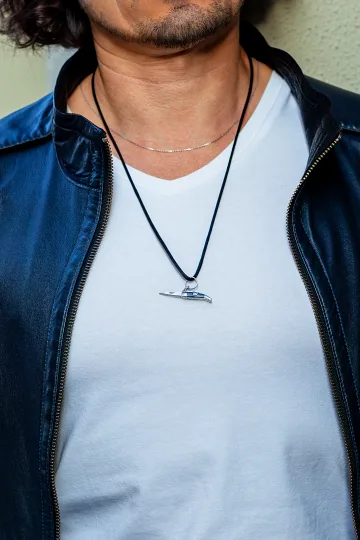




About Zevira
Zevira is jewellery with meaning: symbols, protective amulets, marks of strength and protection in clean forms of silver and gold. We love things that carry a story thousands of years long, and we bring it into modern design without needless grandeur. The valknut, ravens, runes, and other marks of the ancient gods sit in the catalogue beside minimalist pendants and matching sets, so everyone finds their own mark.