The valkyrie in jewellery: Odin's shield-maiden, shield and spear
The Norse buried their dead with tiny silver figures of women holding out a horn of mead. Archaeologists find them across Northern Europe, from Denmark to the banks of the Volga. These are valkyries, Odin's shield-maidens, who chose the slain in battle and carried them to Valhalla. The image is older than the Vikings, and it still lives in pendants today.
Who is the valkyrie
A valkyrie is a shield-maiden from Norse mythology, a servant of the high god Odin who chooses the worthiest of the fallen on the battlefield and escorts their souls to Valhalla, the hall of the slain. The name in Old Norse sounds like "valkyrja" and literally means "chooser of the slain." Her main task is already coded into that name: not to wage war for war's sake, but to decide which of the fallen earned a place in the warriors' paradise.
Unlike an angel or a generic winged figure, the valkyrie is a specific northern image with a clear set of markers. She is armed: a spear or sword in her hands, a shield on her left arm, sometimes a helmet on her head. She is tied to a horse on which she rides above the earth, and to the horn from which she serves mead to warriors in Valhalla. Her wings, where they appear, are a late artistic addition, not an original Norse trait. The true valkyrie of the old sagas usually has no wings, but she is always armed.
Wear the symbol, don't just read about it. These are in stock:



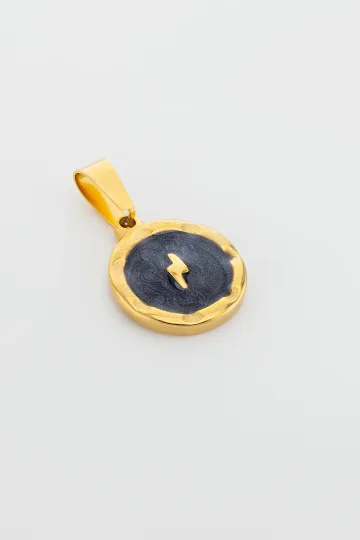

The valkyrie enters jewellery in two ways. The first is the direct portrait: a female figure with spear, shield and horn, cast in metal, like the archaeological amulets of the Viking age. The second is the set of her attributes taken separately: shield, spear, helmet, horse, horn. A pendant of a maiden holding out a horn reads instantly to anyone who knows northern myth: it is a sign of martial courage, of protection, and of a worthy outcome.
Valkyries serve Odin, but they are not faceless handmaidens. In the sagas they have names, characters and fates. The most famous of them, Brynhild, defied Odin and was punished for it: the god pricked her with a sleep-thorn and sealed her inside a ring of fire on a mountain top, from which only a fearless hero could free her. This tale of the maiden in the fiery ring lived for a thousand years and shaped great operas and legends. So the valkyrie is both a symbol and a heroine with a biography.
The name and what it means
The word "valkyrie" is built from two Old Norse roots: "valr," the fallen in battle, the heap of bodies on the field, and "kjosa," to choose. Together they give "chooser of the fallen." From the same root "valr" comes the name of Valhalla, "the hall of the fallen," and the word "valgrind," the gate of that hall. The result is a tight family of words around the idea of a glorious death in battle and what follows it.
The name itself explains why the valkyrie cannot be reduced to wings. Her essence is the choice, the decision, the fact that she stands on the border between life and the afterlife and decides who may pass through the gate. To wear her symbol is to keep close the sign of the one who separates the worthy from the unworthy.
How the valkyrie differs from other maidens of myth
Northern myth is full of female figures, and the valkyrie is easy to confuse with her neighbours. The Norns are the three maidens of fate who weave the thread of life at the roots of the world tree, but they do not fight or choose the fallen, they set destiny in advance. The Disir are protective spirits of the family line, vaguer and more domestic. The goddess Freyja stands closest of all: she too takes half of the fallen warriors into her own hall, Folkvangr, and some storytellers call her the leader of the valkyries outright. But Freyja is a goddess, while the valkyrie is her heavenly host, a band of maidens in the service of higher powers.
History of the image: from the sagas to archaeological finds
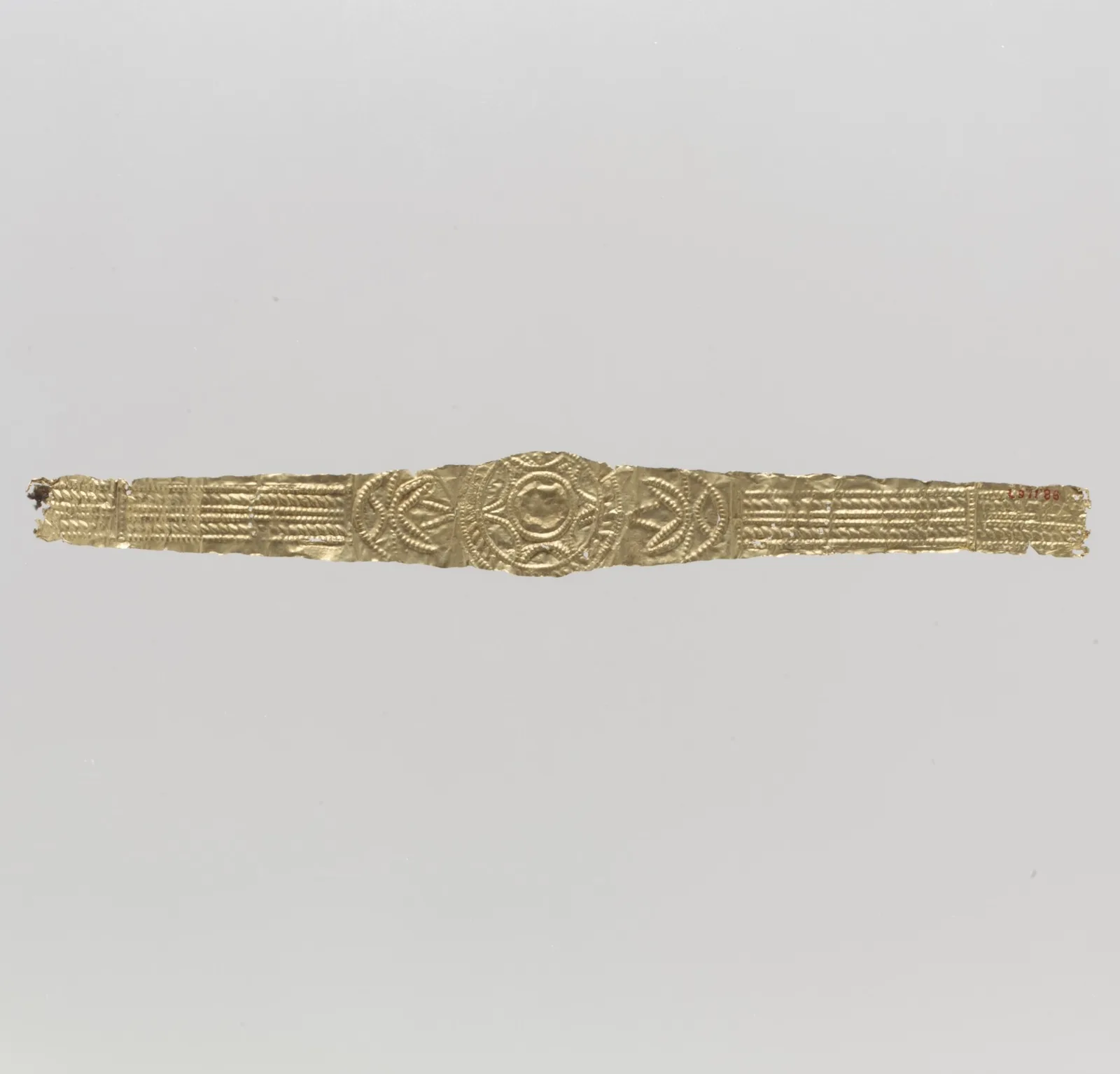
The image of the valkyrie has lived for more than a thousand years, and at almost every stage it left a trace in small-scale metalwork, which is exactly where jewellery grows from. Amulets, brooches, carved stones, manuscripts. Let us go through it by era.
Odin's maidens in Norse mythology
In the oldest layer of northern myth the valkyries are grim spirits of battle, closer to demons of war than to the beautiful maidens of later paintings. The ancient "Spear-Lay" depicts them as weavers seated at a horrifying loom: the warp made of human entrails, weights made of skulls, the shuttle an arrow, and they weave the cloth of war, deciding who will win and who will die. It is a chilling image, far from romance. The valkyries of the earliest texts are the fate of battle itself in female form, cold and relentless.
Over time the image softened. In the Poetic Edda and the Prose Edda, the main sources for northern myth, the valkyries already serve Odin with purpose: he sends them into every battle, they choose who must fall, and they hand out victory. Their names speak for themselves: Hild (battle), Thrud (strength), Hrist (the shaker), Mist (mist), Gondul, Skogul. You can hear the clash of weapons in those names. Odin gathers the fallen heroes in Valhalla so they may feast and fight until the last battle of the world, Ragnarok, and the valkyries are his recruiters.
Valhalla and the choice of the fallen
Valhalla is Odin's vast hall, its roof tiled with gilded shields and its rafters made of spears. Here the valkyries bring the Einherjar, the chosen fallen warriors. By day the Einherjar go out into the yard and hack each other to death, sharpening their skill at arms, and by evening all their wounds close again and they return to the feast. There the valkyries meet them: they carry round horn after horn of mead and ale, inexhaustible as eternity itself. This horn in the maiden's hand became one of her chief markers in art and in amulets.
The meaning is plain and harsh. A warrior who falls in battle does not vanish or go down to the dreary underworld realm of Hel, where those dead of sickness and old age end up. He joins an honoured host; an eternal feast and an eternal battle await him. The valkyrie is the one who opens that door for him. For a Norseman her figure was therefore not frightening but welcome: to meet a valkyrie meant you had died worthily and were expected above.
Norse valkyrie amulets: the archaeologists' finds
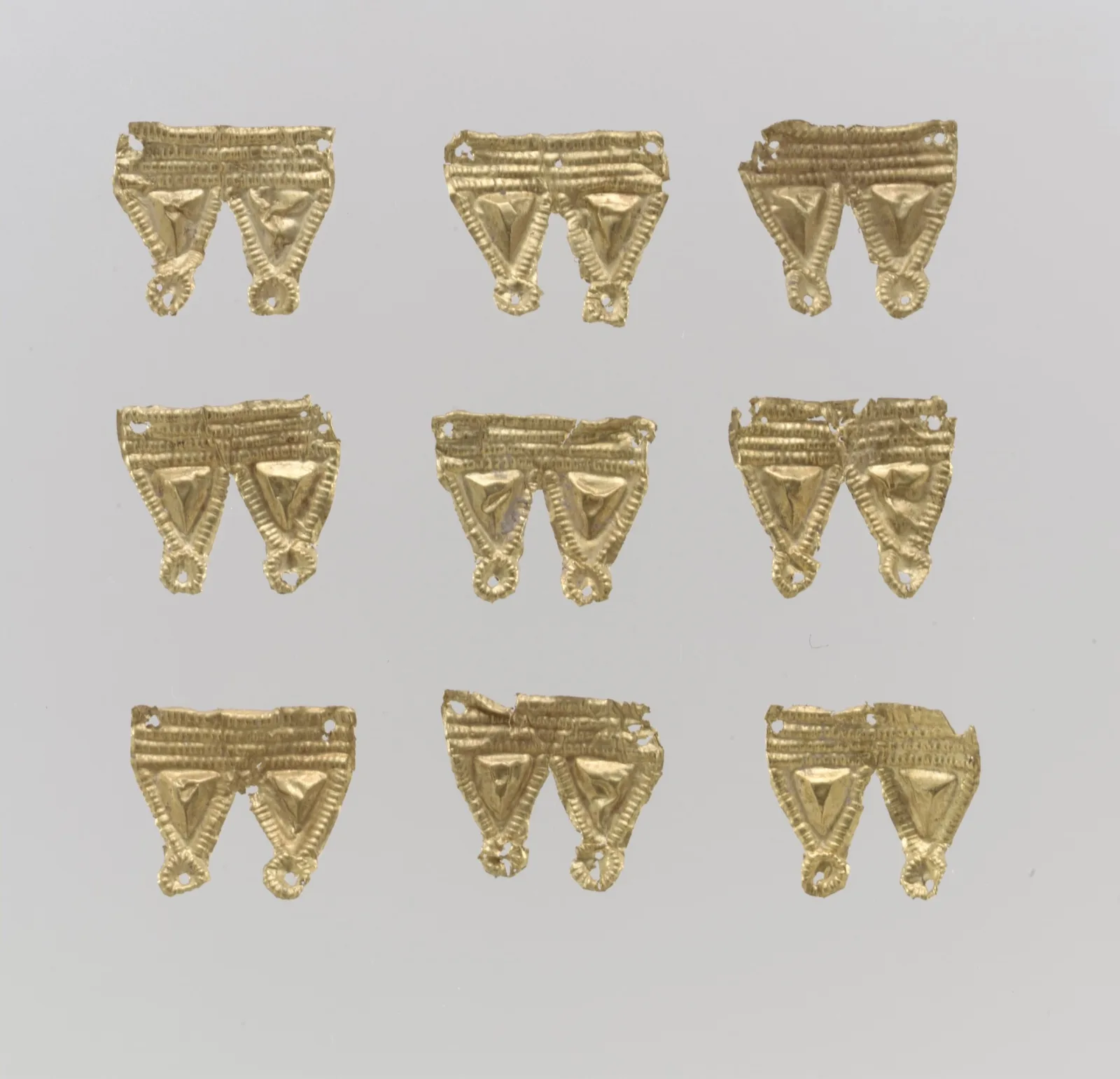
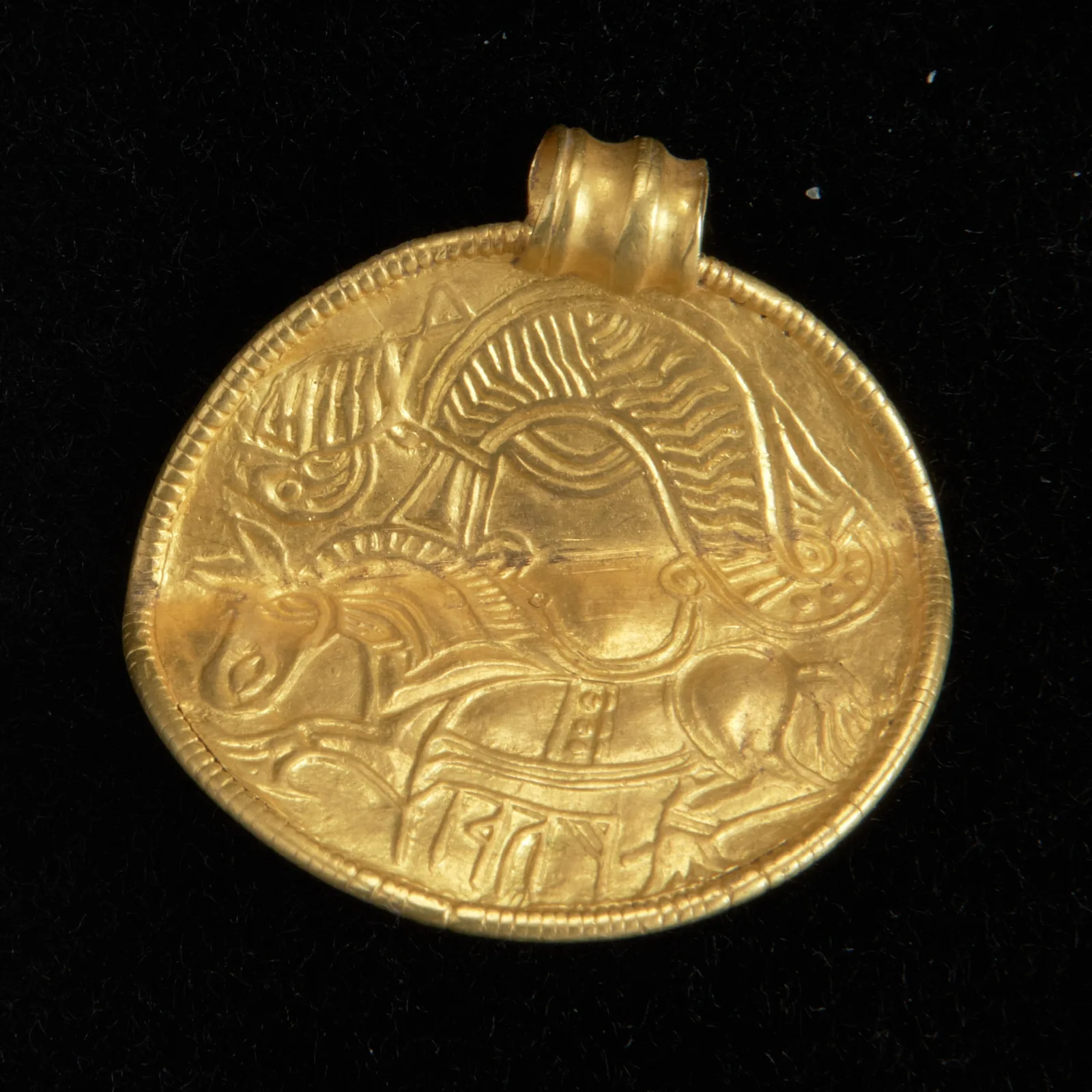
The weightiest proof that the valkyrie lived not only in the sagas lies in museum cases. Archaeologists have found dozens of small metal pendants from the Viking age showing a female figure with a horn or with weapons. They are called valkyrie amulets. A silver figure from Tuna in Sweden shows a woman in a long dress holding out a horn; it is taken to be a valkyrie greeting a warrior in Valhalla. Another celebrated find from a grave at Hornelund, and a series of figures from the island of Oland, show the same scene.
Especially striking is the find from Hardby in Denmark, where a mounted shield-maiden in a helmet, with shield and spear, is cast as a three-dimensional figure. Such objects were worn at the neck or sewn onto clothing. They were placed in women's graves, and that says a great deal: the image of the warlike maiden was dear both to male warriors and to the women of the North themselves. The valkyrie amulet was a protective charm, a sign of connection with the world of the gods and, perhaps, a guard on the journey to the other world.
The valkyrie in medieval manuscripts and carving
After the conversion to Christianity the pagan images of the North did not disappear but moved into manuscripts and stone carving. The Icelandic manuscripts that record the Eddas were accompanied by drawings, and the valkyries in them appear in a more "knightly" guise. The picture stones of the island of Gotland, carved in the pre-Christian and transitional eras, show scenes of a fallen warrior's arrival: a rider on Odin's eight-legged horse and a woman with a horn meeting him. This is, in effect, a stone comic strip about the road to Valhalla, and the valkyrie is the central figure in it.
The valkyrie in popular culture
In the nineteenth century northern myth went through a powerful revival. Composers and poets turned to the sagas, and the valkyrie was transformed from a dark spirit of battle into a majestic maiden in a winged helmet, riding through a storm sky. It was then, in the operatic tradition, that the winged helmet and the image of a horsewoman among the lightning fixed themselves to her, though the original sagas held nothing of the kind. The scene of the valkyries' ride became one of the most recognisable musical images of all.
In the twentieth and twenty-first centuries the valkyrie entered popular culture firmly: comics, video games and fantasy novels gladly take the shield-maiden as an archetype of the strong, independent heroine. From a mythological spirit of death she became a symbol of female strength and fighting spirit. This shift matters for jewellery: today a valkyrie pendant is chosen not as a grim sign of doom but as an image of inner resilience and an independent character.
A valkyrie wants oxidised silver and a bare collarbone, not gold frills. The shield-maiden commands; she does not decorate. Don't argue.
What to wear a valkyrie with
I have been building looks around northern symbolism for years, and the valkyrie is one of those figures you can pull into a whole outfit or, just as easily, lose against a busy top. Here is what consistently works for me.
What do I wear a valkyrie with every day? For an everyday look I choose a mid-size silver figure on a 50-55 cm chain over a plain tee, a roll-neck or a linen shirt. A dark top (graphite, khaki, navy) holds the relief of the metal and does not argue with the figure. I suggest dropping busy prints: the valkyrie is a scene in itself, and a pattern only breaks it up.
A large figure or a single attribute? For a large shield-maiden I recommend a plain collarless top, so the silhouette sits in full and reads clearly. If you want it quieter, I go for a single attribute: a round shield with a boss or a graphic spear. They layer with other northern pendants on chains of different lengths, because the shapes do not get in each other's way.
How should a woman wear a valkyrie? For a woman I suggest a fine, graphic figure in silver or gold on a medium chain. That valkyrie reads as a sign of an inner core, not a little decorative flower. It works with a strict look and with an everyday one, adding character to both. Under an open neckline I choose a shorter chain, so the figure lands in the open zone near the collarbone.
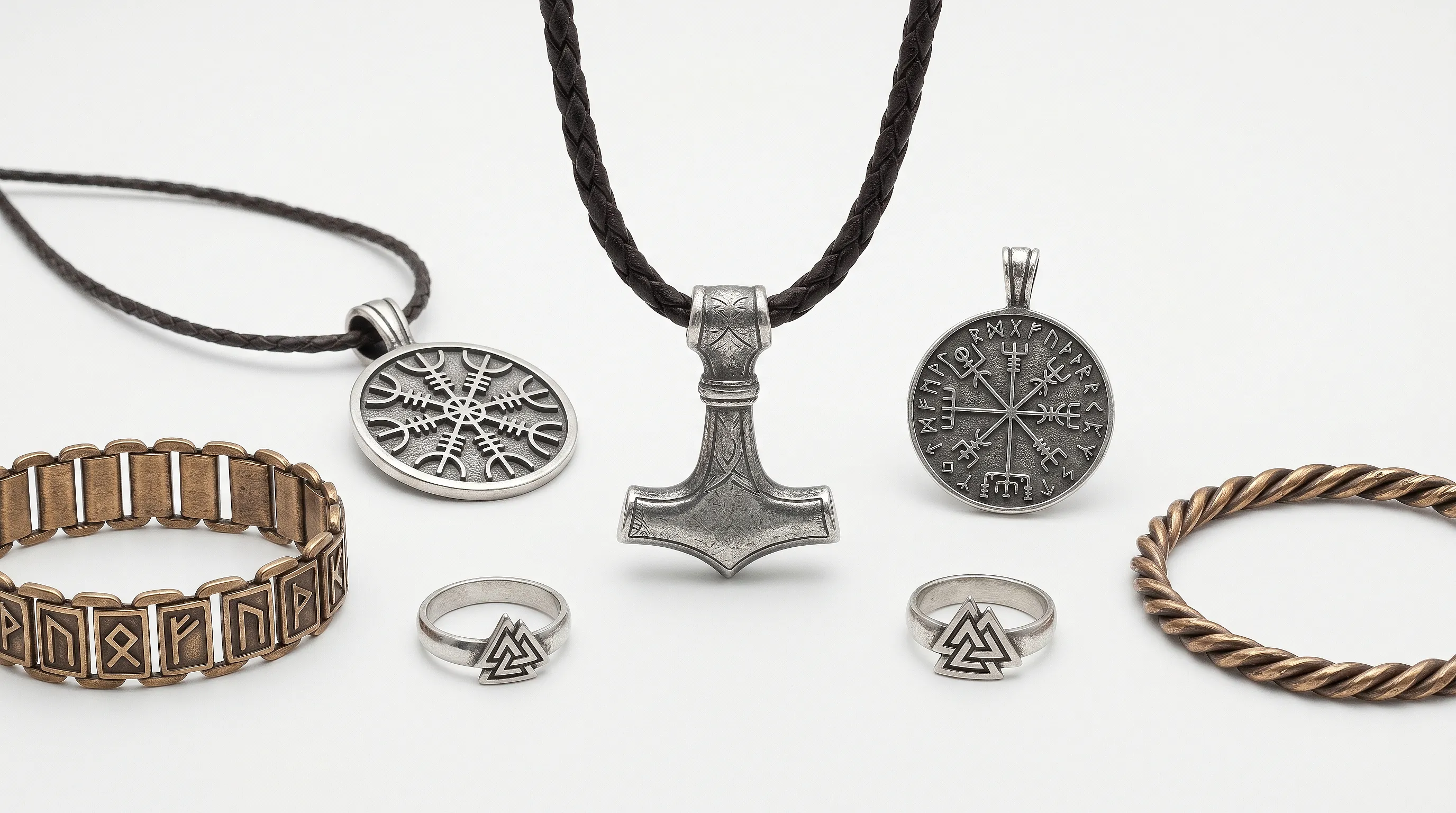
And the brutal, warrior version? For a warrior look I choose a massive figure with pronounced relief, oxidised silver or steel on a heavy chain. I build it into a northern set with Thor's hammer, runes and leather. Rough textures and dark tones carry the metal of the valkyrie best; against them it reads sharply.
What to pair it with, and what to avoid? One strong symbol works as an accent, so I never crowd the valkyrie. Thematically Mjolnir, Thor's hammer, the protective rune Algiz, the wolf as Odin's beast, and among weapons the sword and the shield go with her. I avoid decor of the opposite tone: the grim maiden beside a scattering of little flowers loses her character. If you want layers, give each pendant its own chain length.

Turn on your camera, pick earrings, a pendant or a ring, and see the piece on yourself in real time.
Switch items in one tap.
Everything runs in your browser: no photo or video is ever uploaded.
The symbols of the valkyrie
The shield-maiden carries a whole set of attributes, and each has become a jewellery motif in its own right. Let us take them one by one.
Wings
Wings are the most recognisable but the latest of the valkyrie's attributes. In the original Norse texts the valkyrie flies not on wings but on a horse, or takes the shape of a swan through a magical feathered garment. Wings on her back and helmet attached themselves to her in nineteenth-century art, when artists drew the valkyrie close to the ancient Nike and to Christian angels. Today the winged valkyrie is an established visual canon, and a pendant of a winged maiden reads as a sign of ascent, transition and flight above the fray. The symbolism of wings on their own is covered in detail in the article on wings in jewellery.
Shield
The shield is an original and exact attribute of the valkyrie. On Viking-age amulets the maiden is often shown precisely with a shield covering her left side. The shield stands for protection, defence, readiness to meet a blow. In jewellery the round Norse shield with a central boss reads as a sign of steadfastness and invulnerability. By one account the very word is tied to the valkyries: "shield-maidens" is a name borne in the sagas both by valkyries and by earthly women warriors. More on the meaning of this symbol in the article on the shield in jewellery.
Spear
The spear links the valkyrie directly to Odin, since the high god's chief weapon is the spear Gungnir, which never misses. The valkyries act by Odin's will, and the spear in their hands is an extension of his power to decide the outcome of a battle. On picture stones and figures the valkyrie often holds the spear point upward. In jewellery the spear stands for purpose, precision of intent and a link to a higher will. It is a sharp, graphic motif that sits well in modern minimalism.
The horn of mead
The horn is the most "peaceful" and at the same time the most frequent attribute on archaeological amulets. The valkyrie with a horn is not a warrior in battle but the mistress of Valhalla, greeting the fallen and offering him the drink of the eternal feast. The drinking horn stands for hospitality, reward, the passage into a new and honoured state. A pendant of a maiden holding out a horn carries a soft, noble meaning: you are expected, you have earned it, you are welcome. This image strips the valkyrie of her gloom and makes her a sign of a worthy welcome.
Horse
The horse is the valkyrie's mount. She races over fields and seas, carrying the fallen, and in some texts dew falls from her horse's mane to bring fertility to the valleys. The horse stands for movement, speed, strength and the link between worlds. In the Norse tradition the horse is a sacred animal in general, a guide between life and the afterlife, and beneath the valkyrie it takes on that meaning in full. In jewellery a stylised horse beside the maiden, or on its own, reads as a sign of freedom and swiftness.
Helmet
The helmet attached itself to the valkyrie in the artistic tradition, especially the winged or horned helmet of the operatic stage. The historical truth is more modest: the Vikings did not wear horned helmets, that is a nineteenth-century myth, and valkyries on the old figures were more often shown in a plain conical helmet or with their hair loose or tied in a knot. Even so, the helmet as an attribute stands for readiness for battle, protection of the head, martial discipline. In jewellery the valkyrie's helmet reads as a sign of composure and strength of spirit.
Swan plumage
A distinct and ancient trait of the valkyrie is her power to turn into a swan through a magical feathered garment. In the tale of Volund the smith, three valkyries fly down to a lake in swan form, take off their plumage and bathe, and the heroes steal their garments to keep the maidens. The swan adds grace, purity and the motif of captured freedom to the image. This swan trace, rather than bird wings on the back, is the true "wingedness" of the original valkyrie.
Customer reviews
Zevira is a real jewellery shop. Genuine payments, deliveries and customer thank-yous.
🥰🥰🥰 gracias

Ok, ¡gracias! 🙂

The meaning of the valkyrie in jewellery
Why wear the symbol of a shield-maiden? The valkyrie has several layers of meaning, and each answers a different need.
Protection
Valkyrie amulets were placed in graves as protective charms, and the protective meaning of the image is the oldest of all. The maiden with a shield covers you, the maiden as guide leads you through danger. To wear the valkyrie's symbol is to ask for protection on the road, in a struggle, at a turning point. The shield in her hand makes that meaning plain to see: she stands between you and the blow.
Martial courage
The valkyrie chooses the worthiest, those who fell bravely. Her symbol is therefore a sign of honour, courage and loyalty to one's path to the very end. It speaks to people who value steadfastness and do not back down. This is not about aggression but about the readiness to stand for what is yours and to take a hit. A valkyrie pendant reads as a personal sign of a fighter's character.
Guide between worlds
The valkyrie's main work is the passage: she leads the soul from one state to another, from death to glory, from earth to the hall. Her image is therefore tied to the theme of change, transition, a new stage. Such a symbol is chosen on the threshold of great changes, when you have to pass through something hard and come out toward something better. Here the valkyrie is a sign that the passage will be a worthy one.
Female strength
The modern reading of the valkyrie is the image of a strong, independent woman who decides for herself and acts for herself. The maiden with a weapon, an equal of the gods in a world of grim warriors, became an archetype of female power. The valkyrie's symbol is therefore especially close to women who value independence and an inner core. It is a rare female image of strength that does not reduce to beauty or motherhood.
Fate and choice
The valkyrie is kin to the Norns, the maidens of fate, and she herself shapes the fate of a battle by her choice. Her symbol carries the idea that a person is not a plaything of chance, that choice has weight. To wear the sign of the valkyrie is to remember: the outcome is decided, and it is decided by the one who acts. This is a meaning for those who believe in responsibility for their own path.
Upload a photo of your pet, someone you love, or an object. We'll build a 3D model and hand-cast it in pewter.




The Viking valkyrie amulet: the real finds
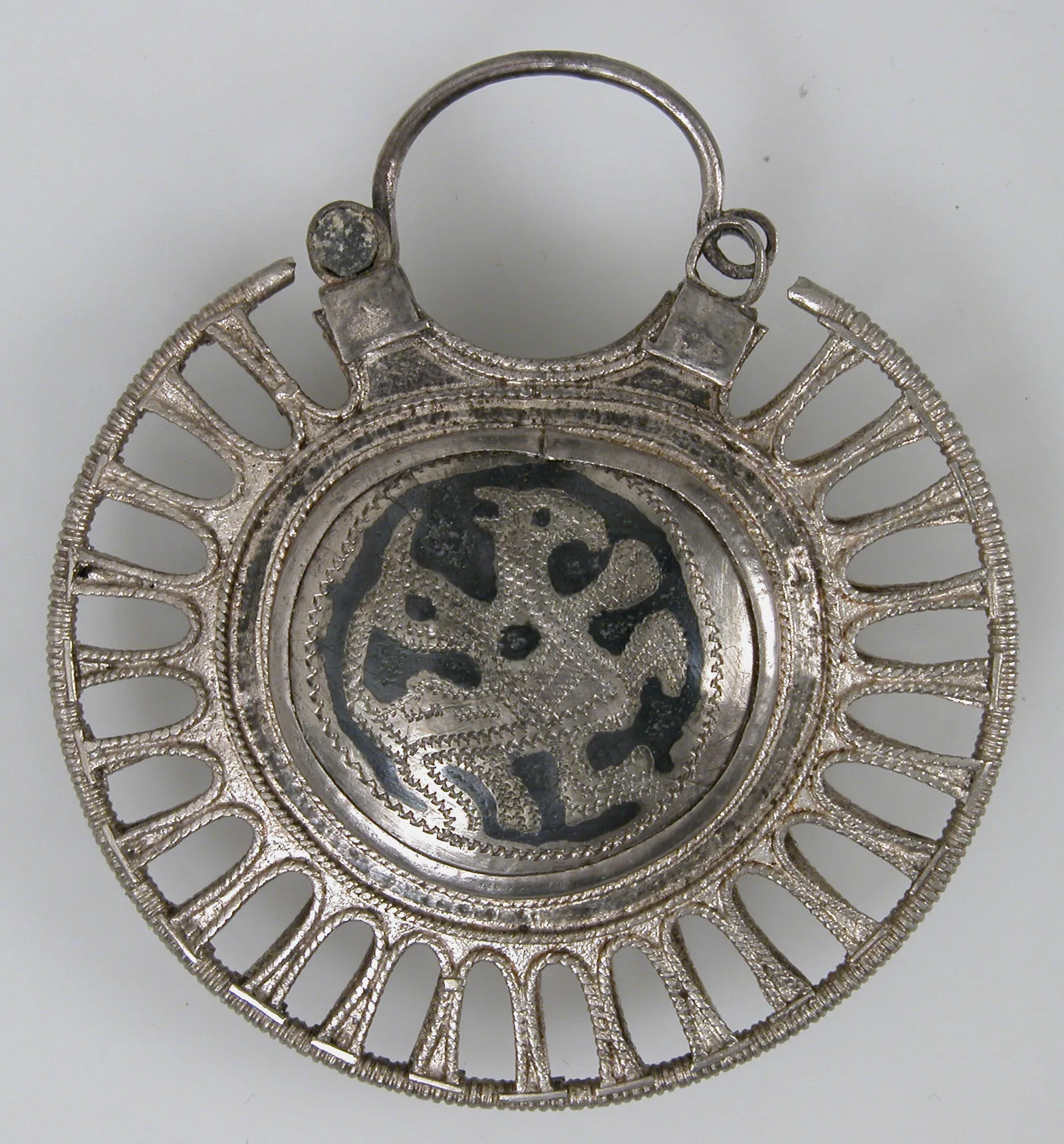
It is worth gathering together what the archaeologists have found, because it is the genuine objects that set the valkyrie apart from an invented fantasy image. These finds prove that the shield-maiden was a living element of belief and daily life in the North, not only a subject of the sagas.
The silver-gilt figure from Hardby, found in Denmark, shows a horsewoman in a helmet, with shield and spear, riding forward. It is a solid three-dimensional pendant, a rarity for its age, and one of the most convincing depictions of a valkyrie in full martial gear. It is dated to the Viking age and often shown as the benchmark of the image.
Valkyrie pendants with a horn are far more widespread. They are found in women's graves across Scandinavia and well beyond it, along the trade routes as far as the lands of Rus and the Volga region. A woman in a long dress, her hair gathered in a distinctive knot, holds out a horn. Such figures were made of silver and bronze, sometimes gilded. They are small, the size of a finger joint, and were worn at the neck as a personal charm.
A separate category is the picture stones of the island of Gotland. Whole scenes are carved on them: a rider arrives in the other world and is met by a woman with a horn. These stone reliefs are older than most of the amulets and show that the scene of the fallen man met by a valkyrie was a common one, recognisable to everyone. Archaeologists argue over the details of interpretation, but the woman with a horn meeting a rider reads clearly enough.
What unites all the finds: the valkyrie of the Viking age is not a winged maiden in plate armour but either a mounted warrior with shield and spear, or the mistress of the hall with a horn. The wings and the horned helmet were added by later culture. When a maker today produces a piece "after the historical valkyrie," they lean precisely on these silver figures, not on the operatic stage. This approach ties a modern pendant to the tradition of Viking jewellery and to northern charms such as the valknut, Odin's knot.





Materials
The image of the shield-maiden calls for materials that hold the idea of steadfastness and northern austerity. Each has its own logic.
Silver
Silver is historically the truest material: the genuine valkyrie amulets were cast precisely in silver, sometimes gilded. The cold gleam of the metal conveys the harsh northern aesthetic well. Sterling silver, 925, is durable, wearable every day and does not trigger allergies in most people. A silver valkyrie figure looks graphic and noble, and silver is easy to oxidise in the recesses of the relief to bring out the texture of the shield, the folds of the dress and the features of the face.
Gold
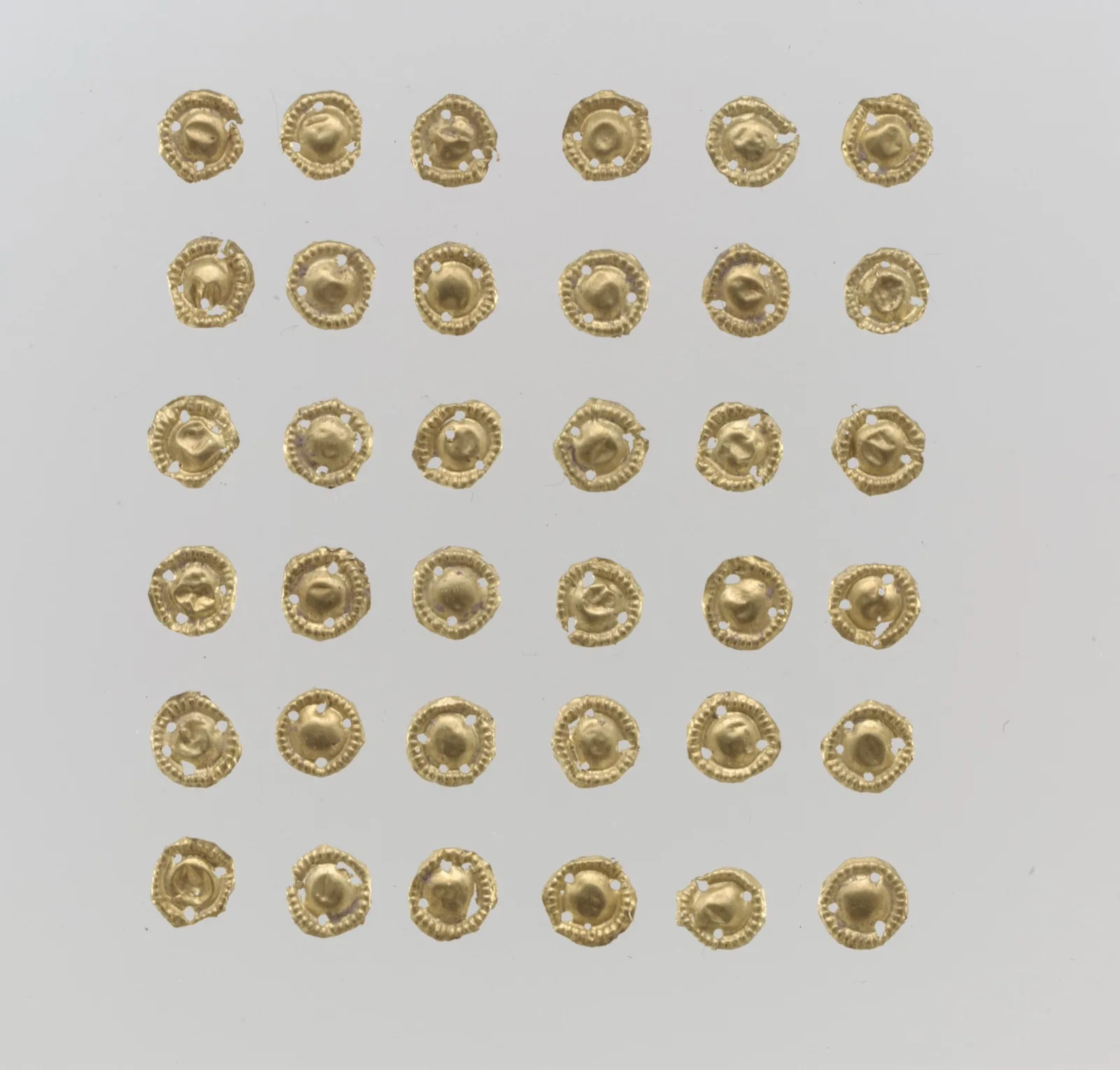
Gold gives the image a ceremonial, status note. Gilded figures appeared among the historical finds too, so a gold valkyrie does not break the tradition but continues its most expensive version. The warm gleam of the metal softens the harshness of the martial image and makes the piece festive. A gold valkyrie is chosen as a premium sign, a piece for a special occasion.
Bronze and brass
Bronze is a historically accurate material: many northern amulets were cast precisely in copper alloys. The warm sheen gives the image an archaic, museum-like depth, as if the figure had just been lifted from a dig. Brass with its golden tone works in a similar way and costs less. The drawback of copper alloys is that they darken over time and can leave marks on the skin, so such pieces need care. Bronze and brass should be taken off before a shower and before sleep, wiped with a soft cloth and kept in a dry place; then the patina settles beautifully rather than in blotches. Anyone who wants exactly that warm ancient texture without the fuss chooses gilded silver: the look is close to bronze, but the base is noble.
Steel
Stainless steel is the choice of those who want a modern, brutal valkyrie with no fuss in care. Steel does not darken, does not fear water, and holds a crisp engraving of the shield and spear. A PVD coating gives a black or golden shade that lasts for years. A steel valkyrie pendant looks composed and severe, which suits an urban, technical aesthetic and goes well with heavy clothing and leather.
Stones and enamel
The valkyrie image is often paired with stones that play on the northern palette. Dark onyx and hematite add severity; blue lapis lazuli and labradorite with its shimmer hint at the storm sky across which the maidens ride. Enamel lets you bring colour into the figure's shield or cloak. Stone and enamel add depth to the image and help tie the harsh martial motif to a modern jewellery language.
Leave your email, we'll send your discount code. No spam, unsubscribe anytime.
The code arrives by email, valid on your first order.
The valkyrie in art and opera
The shield-maiden has a separate large life in art, and it feeds modern jewellery symbolism directly. It is worth knowing, to understand where the look familiar to us came from.
In nineteenth-century painting the valkyrie became a favourite subject of northern Romanticism. Artists depicted maidens riding across a storm sky, lifting fallen warriors, soaring above the battlefield. It was painting that fixed the image of the majestic horsewoman with streaming hair, in shining armour, surrounded by lightning and clouds. Northern masters painted more intimate scenes too: a valkyrie bending over a wounded warrior, choosing him for Valhalla.
Opera gave the valkyrie her loudest voice. A great musical tetralogy after northern and Germanic legend brought a whole band of shield-maidens onto the stage, and the scene of their ride became one of the most recognisable musical images in history. It was the operatic tradition that firmly placed the winged helmet and armour on the valkyrie, though the original sagas held nothing of the kind. The story of the valkyrie Brynhild, sealed in a ring of fire and woken by a hero, formed the heart of the plot and lived on the stage for more than a century.
From this artistic and operatic tradition the look familiar to us came into jewellery: the winged helmet, the armour, the image of the horsewoman. When a person today pictures a valkyrie, they more often see the operatic maiden than the silver figure from a dig. Both images have a right to exist: the historical one is closer to genuine northern belief, the romantic one is brighter and more recognisable. A good piece can lean on either; what matters is only knowing the difference.
CAPAORA mini knife pendant
The 18th-century Spanish navaja in miniature: 40 mm of stainless steel, a real folding mechanism and a Palanquilla lock that clicks. An affordable gift to remember.
Authentic · Ships from Spain · 14-day returns
The valkyrie versus the angel and plain wings
The valkyrie is often confused with an angel or reduced to a pair of wings, and that impoverishes the image. Let us set out how the shield-maiden of the North differs from these neighbouring symbols, so the choice is a conscious one.
The valkyrie and the angel
The angel and the valkyrie are both winged female figures, and on the surface they look alike, but their meaning differs in almost everything. The angel is a messenger of the one God in the Christian, Jewish and Islamic traditions, a herald, a guardian, a bearer of good news. Its essence lies in service to the light, in gentleness, in protection. The valkyrie is a spirit of northern pagan myth, tied to war, death and the choice of the fallen. Her essence lies in strength, in decision, in martial honour. The angel comforts, the valkyrie chooses. The angel is unarmed, the valkyrie carries a shield and spear. If you want a soft, bright, protective meaning, the angel is closer. If you want a sign of fighting steadfastness and northern strength, that is the valkyrie.
The valkyrie and plain wings
A pair of wings without a figure is a universal sign of freedom, flight, ascent, not tied to any particular myth. The valkyrie is always a figure with character and history, and her wings, moreover, are a late addition the original sagas did not have. To wear plain wings is to speak of freedom in general. To wear a valkyrie is to speak of a specific northern image: of the choice of the worthy, of protection, of Odin's shield-maiden. Wings are broader and more neutral, the valkyrie is deeper and more definite.
When to choose the valkyrie specifically
People choose the valkyrie when they want not a general symbol of flight but a specific northern image of strength. When the theme of Norse myth, the sagas, the Viking age feels close. When they want a sign of female power rather than tenderness. When the ideas of protection on the road, a worthy passage, loyalty to one's path to the end are dear to them. In these cases neither the angel nor abstract wings will carry the needed meaning as precisely as the shield-maiden with shield and horn.
Facts that surprise
Over a thousand years so many stories have gathered around the valkyrie that some sound almost beyond belief.
The valkyrie's wings were invented a thousand years after the Vikings. In the original Norse sagas the valkyrie flies on a horse or turns into a swan, but she has no wings on her back. The winged look familiar to us took shape only in nineteenth-century art, when artists drew the shield-maiden close to the ancient goddess of victory and to Christian angels.
The Vikings did not wear horned helmets. The horned helmet of the valkyrie and the Viking is a wholly theatrical myth of the nineteenth century. Archaeologists have not found a single battle helmet with horns from the Viking age. Real warriors and valkyries on the old figures wear plain conical helmets or none at all.
The earliest valkyries wove cloth from human entrails. In one of the oldest poems the valkyries sit at a horrifying loom: the warp of entrails, weights of skulls, the shuttle an arrow. They weave the outcome of a battle. The romantic image of a beautiful maiden appeared long after that nightmarish one.
Valkyrie amulets were found in women's graves. Silver figures of the maiden with a horn were placed in graves precisely for women. That means the image of the warlike maiden was dear both to male warriors and to the women of the North themselves, as a personal charm.
The valkyrie was found thousands of kilometres from Scandinavia. Pendants of the shield-maiden turn up along the trade routes as far as the lands of Rus and the Volga region. Northern merchants and warriors carried the image far beyond their homeland, and the valkyrie travelled together with the silver.
The valkyrie's name literally means "chooser of the slain." The word itself codes her work: she does not wage war for war's sake, she selects the worthiest of the fallen. From the same root comes the name of Valhalla, "the hall of the fallen."
Dew from the valkyrie's horse's mane brought the harvest. By one text, from the manes of the horses on which the maidens ride, dew falls into the valleys, bringing fertility. So the grim image of war is unexpectedly tied to life and to the harvest as well.
The goddess Freyja took half of the fallen before Odin. Not all fallen heroes went to Valhalla: the goddess Freyja chose half for her hall, Folkvangr. Some storytellers called her the leader of the valkyries outright, so the shield-maidens had a heavenly commander of their own.
Who it suits and who you give a valkyrie to
People choose the valkyrie when the image of inner strength and composure before a hard choice feels close to them. This is not about aggression but about the resolve to see a thing through and not give up: that is why a valkyrie amulet is often taken before a serious threshold, an exam, an operation, a move, a change of path. As a gift it says more than words: it marks out a steadfast person, the one who takes a hit and shields those close to them.
The image reads as female in essence, but men wear it too, for whom the valkyrie is a warrior's companion and guide rather than only the maiden of the shield. The valkyrie pairs well with other northern signs: beside a rune, a valknut or Odin's raven it forms a whole story rather than looking like a chance souvenir. It is fitting to give on a day of strength, on a send-off for a journey, for an important new start.
Send a friend a discount code, they save on their first order.
Frequently asked questions
Who is the valkyrie in simple terms?
A valkyrie is a shield-maiden from Norse mythology, a servant of the high god Odin. Her job is to choose the worthiest of the fallen warriors on the battlefield and escort them to Valhalla, the hall of the slain, where an eternal feast awaits them. The name itself means "chooser of the slain."
Did the valkyrie have wings?
In the original Norse sagas the valkyrie has no wings on her back. She flies on a horse or turns into a swan through a magical feathered garment. The familiar winged look took shape only in nineteenth-century art, when the shield-maiden was drawn close to the goddess of victory and to angels. So the wings are a late artistic addition.
How does the valkyrie differ from an angel?
The angel is a messenger of the one God, an unarmed herald of light and protection. The valkyrie is a spirit of northern pagan myth, tied to war, death and the choice of the fallen, always with a shield and spear. The angel comforts, the valkyrie chooses the worthy. The meaning of these winged figures differs in almost everything.
What does a valkyrie pendant symbolise?
The valkyrie in jewellery stands for protection, martial courage, a worthy passage and female strength. It is a sign of steadfastness and character for those who take a hit and do not back down. The modern reading makes her a symbol of a strong, independent personality.
Can a woman wear a valkyrie?
Yes, and for a woman it is an especially strong image. The valkyrie is one of the rare female symbols of power that does not reduce to beauty or motherhood. The maiden with a weapon, an equal of the gods, reads as a sign of independence and an inner core. The female version is usually finer and more graphic.
What kind of valkyrie amulets do archaeologists find?
These are small silver and bronze pendants of the Viking age, showing a woman with a horn or a horsewoman with shield and spear. They were placed in graves as protective charms. Famous finds were made in Denmark and on the island of Oland. Modern jewellery after the valkyrie leans precisely on these figures.
Which material is best for a valkyrie piece?
Silver is the truest historically, since the genuine amulets were cast in it, sometimes gilded. Gold gives a ceremonial, status version. Steel is the modern, brutal choice with no fuss in care. Bronze and brass give a warm, museum-like texture but need care. Stones such as labradorite or hematite add the northern palette.
Is the valkyrie the same as Brynhild?
Brynhild is the most famous of the valkyries, a heroine of sagas and operas. Odin punished her for her disobedience, pricking her with a sleep-thorn and sealing her in a ring of fire, from which a hero freed her. So the valkyrie is the whole class of shield-maidens, while Brynhild is a particular one of them, with a fate and a name of her own.
Conclusion
The valkyrie outlived the fall of her own faith and remained in the most durable form antiquity knew: in the tiny silver figures worn on the body and laid in graves. The maiden with shield, spear and horn proved stronger than time, because she answers simple human needs: people want protection, they want strength, they want to believe that the passage through something hard will be a worthy one. Today a valkyrie pendant is chosen not as a grim sign of doom but as an image of resilience and an independent character. In choosing Odin's shield-maiden, a person continues the gesture of the northern maker who cast her figure a thousand years ago. Protection, courage and a worthy path fit in the palm of a hand.
Silver, gold, northern symbolism, protective charms, signs of strength.
Buying it as a gift? Each one arrives ready to give.
 A branded Zevira box and a little card come with every order.













About Zevira
Zevira is jewellery with meaning: symbols, charms, signs of strength and protection in clean forms of silver and gold. We love pieces with a history thousands of years long, and we carry that history into modern design without needless pomp. Northern motifs, shield-maidens, runes and charms sit in the catalogue alongside minimalist pendants and paired sets, so everyone can find their own sign.