Wings in jewellery: the meaning of the oldest symbol of freedom
Why people hung a wing around their neck
Humans never had wings, which is exactly why we have been drawing them for three thousand years. A wing on a chain is not really about a bird. It is about an old human wish to leave the ground behind, to move faster, freer, above whatever holds us down. That is why wings were given to gods, heroes and the souls of the dead: to everyone who, people believed, could beat gravity.
In jewellery a wing is one of the most loaded and at the same time most open of all signs. Its meaning shifts depending on whose wing it is, whether it stands alone or in a pair, whether it is folded or spread wide. Below we look at what a wing says without words, where its main images come from, how to read the different kinds of wings, and how to choose a winged piece while knowing exactly what you are wearing.
Wear the symbol, don't just read about it. These are in stock:

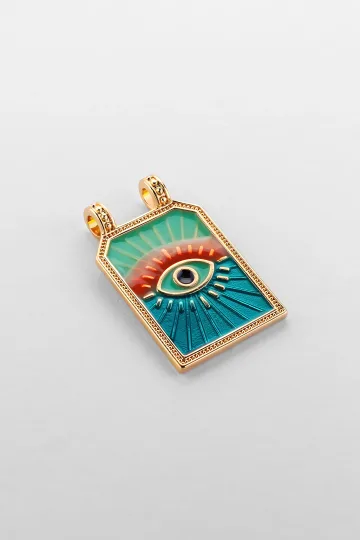




A wing as a sign: what it says without words
A wing has no single meaning. It has several layers, and most people are drawn to one of them. Naming them separately is more honest than reducing everything to a vague "something about freedom".
Freedom and flight. The main and clearest meaning. A wing is the ability to rise above what keeps you on the ground: lightness, motion, will. This layer needs no religion and reads the same to everyone, which is why a wing is so often chosen at turning points, when you want change.
Protection and shelter. A wing stretched over someone is an ancient gesture of guarding. A bird shelters its chicks under a wing, and that image passed on to protective gods and guardian angels. Here a wing speaks not of flight but of care.
Message and a link to the higher. A winged messenger brings news from up there down to here. The wing as a sign of the herald, the bridge between sky and earth, runs from the oldest cultures to the Christian angel.
Aspiration and ambition. A wing is a pull upward, a wish for more, growth. In this sense people wear it as a quiet reminder to themselves: do not stop, reach higher.
Soul and memory. In many traditions wings were given to the soul leaving the body. This layer exists, but it is only one of many, and a wing does not have to be about loss at all. More often it is about living, earthly freedom.
A wing goes on plain cotton, never on a loud print. That engraving is the whole point, so let me see it.
How and what to wear it with
A wing rarely wants drama around it. It is a quiet sign, and over the years I have learned to dress it that way rather than crowd it. Here is how I place it.
What do I put a wing on for every day? For daily wear I recommend a small wing on a fine chain over plain clothing. On a calm, solid background the fine engraving of the feather reads at its best, while a busy print argues with it. A high collar or a shallow neckline gives the pendant support, so for the everyday I choose those over a wide-open one.
How do I dress a wing for a special occasion? For a special day I suggest a large open wing or a wing with a light stone. It carries the look on its own, so I keep the rest of the outfit calm and let that one piece do the talking.
What do I pair a wing with? I like a wing alongside related motifs: stars, moon, a feather, a bird. They all speak of lightness and movement upward, so they sit together without a fight. Heavy, aggressive symbolism is another story, and I keep those pieces for a separate day.
What length and size do I choose? The rule I follow is simple. A small wing wins near the collarbones on a short chain, where the detail stays close to the eye. A large one I hang on a medium length, where it unfolds at full height and does not jam into the collar.
Who does a wing actually suit? Anyone who likes a quiet piece with a meaning rather than a loud pile of metal. My one firm request: keep several winged pieces in a single metal. Mix the metals and the look falls apart, and the old sign gets lost in the noise.

Turn on your camera, pick earrings, a pendant or a ring, and see the piece on yourself in real time.
Switch items in one tap.
Everything runs in your browser: no photo or video is ever uploaded.
A short mythology of flight
The power of the wing as a symbol comes from a long line of images across very different cultures. It helps to know them: when you choose a winged piece, you inherit this rich trail of meaning.
Nike and Victoria: the wings of victory
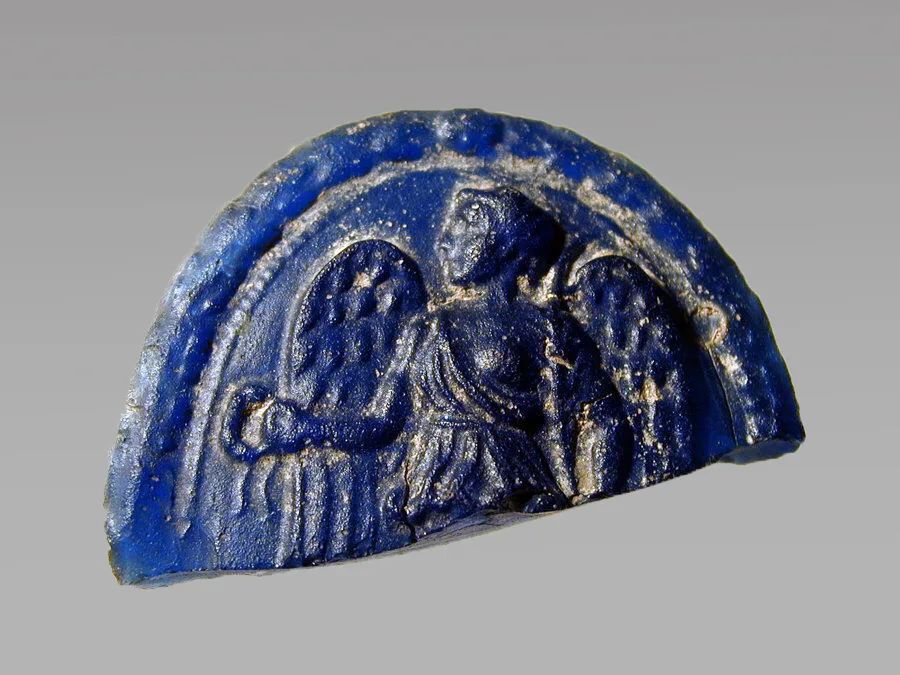
In ancient Greece Nike, the goddess of victory, was shown winged, and in Rome her counterpart Victoria. The wings meant victory was swift and came from above. The Greeks even built temples to Nike Apteros, "wingless victory": they deliberately left her wingless so that victory could not fly out of the city.
The famous Winged Victory of Samothrace, wings spread on the prow of a ship, set an image that is still echoed today. She was found in 1863 on the island of Samothrace, without head or arms, and in that state became one of the most recognisable statues in the world, around two thousand two hundred years old. The wing of victory is about triumph, momentum, the moment when everything comes together.
Hermes and Mercury: the wings of speed and message
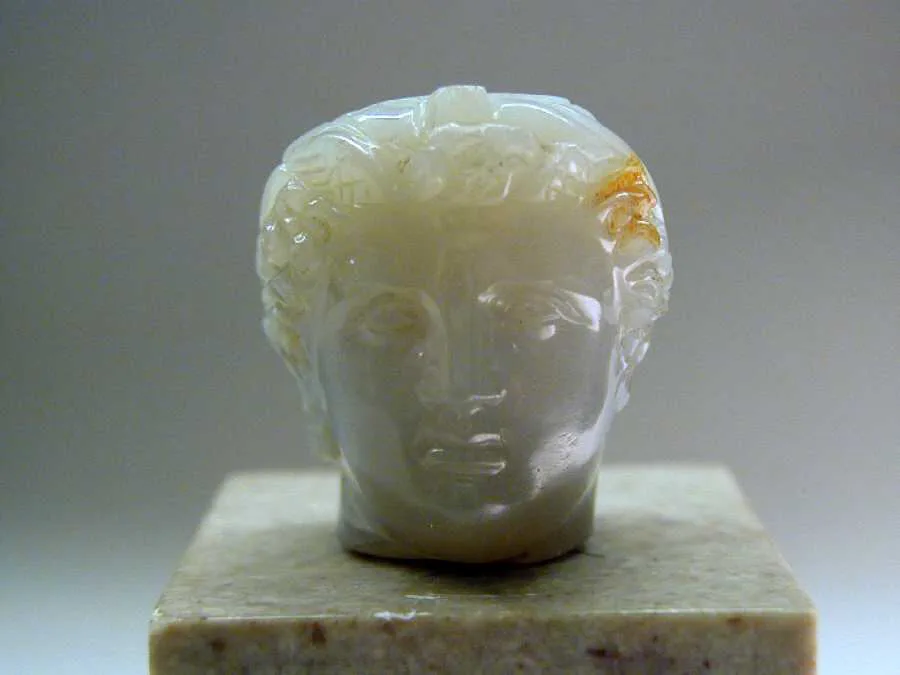
The Greek Hermes and the Roman Mercury wore winged sandals, the talaria, and a winged helmet. They are messenger gods, guides, and the wings on their feet meant the speed of thought and motion, the ability to appear anywhere in an instant. The swift Mercury gave his name to the fastest planet in the solar system, and also to quicksilver, the metal you cannot hold in your hands. A winged sandal still reads as a sign of trade, the road and fast communication.
Eros: the wings of love you cannot hold
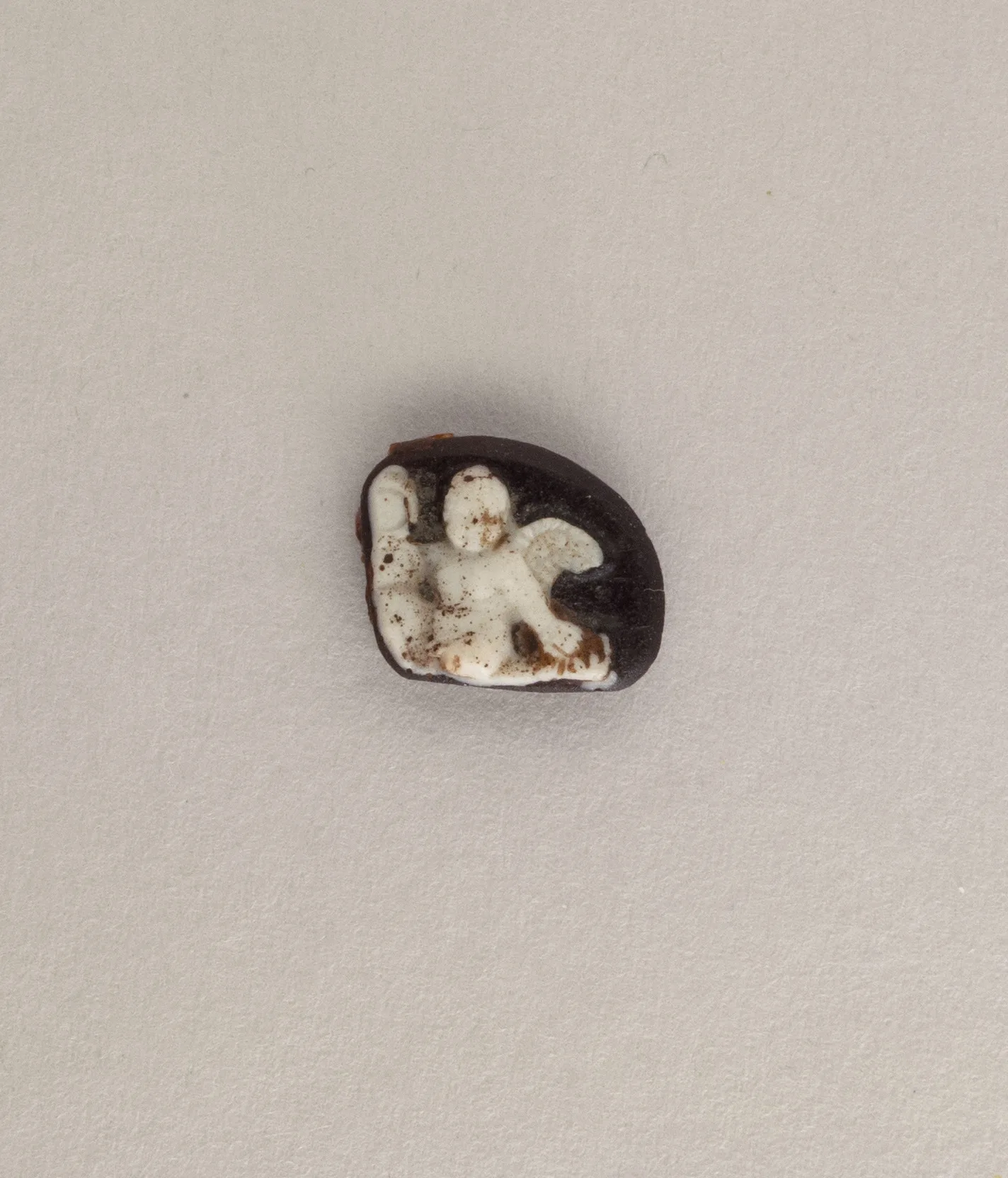
Eros, the god of love, the Roman Cupid, is winged too, and that is a telling detail. The wings mean that feeling comes and goes on its own, you cannot catch it and lock it away. Winged Cupid became one of the most enduring images and, through the baroque putti, reached the greeting card. Here the wing is about the lightness and unpredictability of feeling.
Icarus and Daedalus: the wing as daring and its price
The craftsman Daedalus made wings of feathers and wax so that he and his son could escape an island. Icarus rose too close to the sun, the wax melted, and he fell into the sea. From this myth came a saying that lives in every European language: do not fly too close to the sun. On the famous sixteenth-century Netherlandish painting the fall of Icarus is almost impossible to spot, only the legs vanishing under the water against an ordinary ploughman who did not even raise his head. This myth gave the wing an important shade of meaning: a wing is both daring and warning, the dream of flight and the memory that height has a price. So a wing is sometimes read not only as freedom but as courage that takes a risk.
Winged guardians of the ancient East
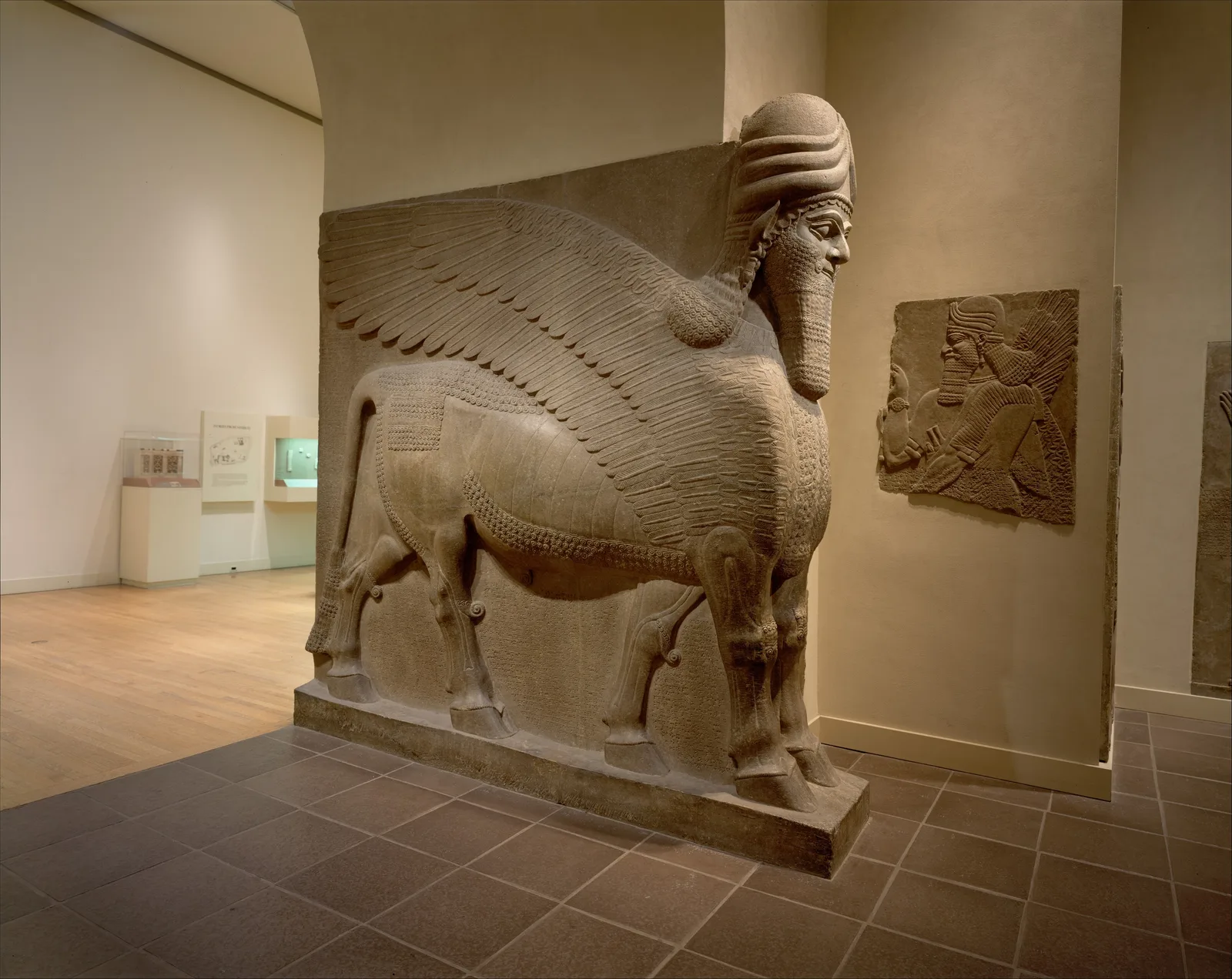
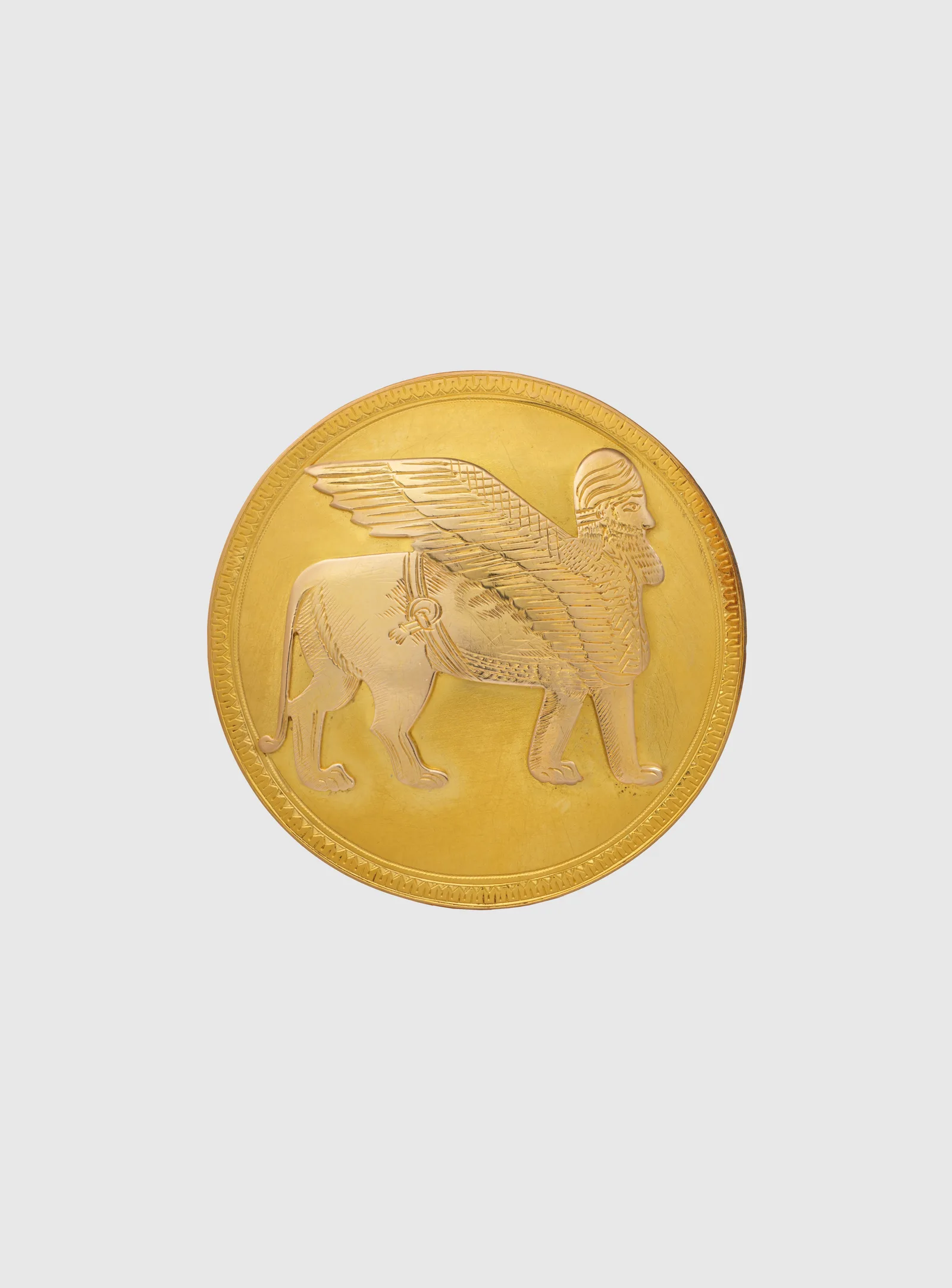
The wing as protection is older than antiquity. The palaces of Assyria were guarded by lamassu, winged bulls with human faces. In Egypt protective goddesses such as Isis and Maat were shown with arms spread as wings, stretched over those they kept safe. In Zoroastrianism a winged disc stood for the highest power and the guardian spirits, the fravashi. The logic is everywhere the same: a great wing over a person is protection from above. This, not later religion, is the source of the guardian-wing image.
Egypt gave the wing an especially rich language. The god Horus was shown as a falcon, and his all-seeing eye with spread wings became one of the country's chief protective signs, placed in tombs and worn as an amulet. The scarab beetle was shown winged too: the Egyptians saw in it an image of the rising sun and rebirth, and the winged scarab with open wings was laid on the chest of mummies as a wish for new life. Here the wing speaks not of flight but of protection and a return to the light.
In Christianity the wing got its own very precise code. From early times the four evangelists were shown as winged beings: Matthew as a winged man (or angel), Mark as a winged lion, Luke as a winged ox, and John as an eagle. These four winged images go back to the vision of the prophet Ezekiel and still appear in churches and on old books. Here the wing is a sign of heavenly messengership: each being carries the word from above.
The North added its own winged messengers to this line. In Norse myth the valkyries, the maidens of battle, swept over the field and decided the fate of warriors, carrying the fallen to Odin's halls, and in later art they are often drawn winged. Among the Germanic and Northern peoples the wing was tied to courage and fate rather than tenderness. And in Japan live the tengu, winged mountain spirits with bird-like features: once feared as dangerous tricksters, later honoured as guardians of the mountains and masters of martial skill. The tengu's wing is power, wildness and secret knowledge, another reminder that the wing has a very different character at different ends of the world.
Whose wings: angelic, bird, insect, mechanical
A wing almost never hangs alone in a void. It has an origin, and that origin changes its meaning. A viewer who knows the theme reads at once whose wing is in front of them.
The angel wing
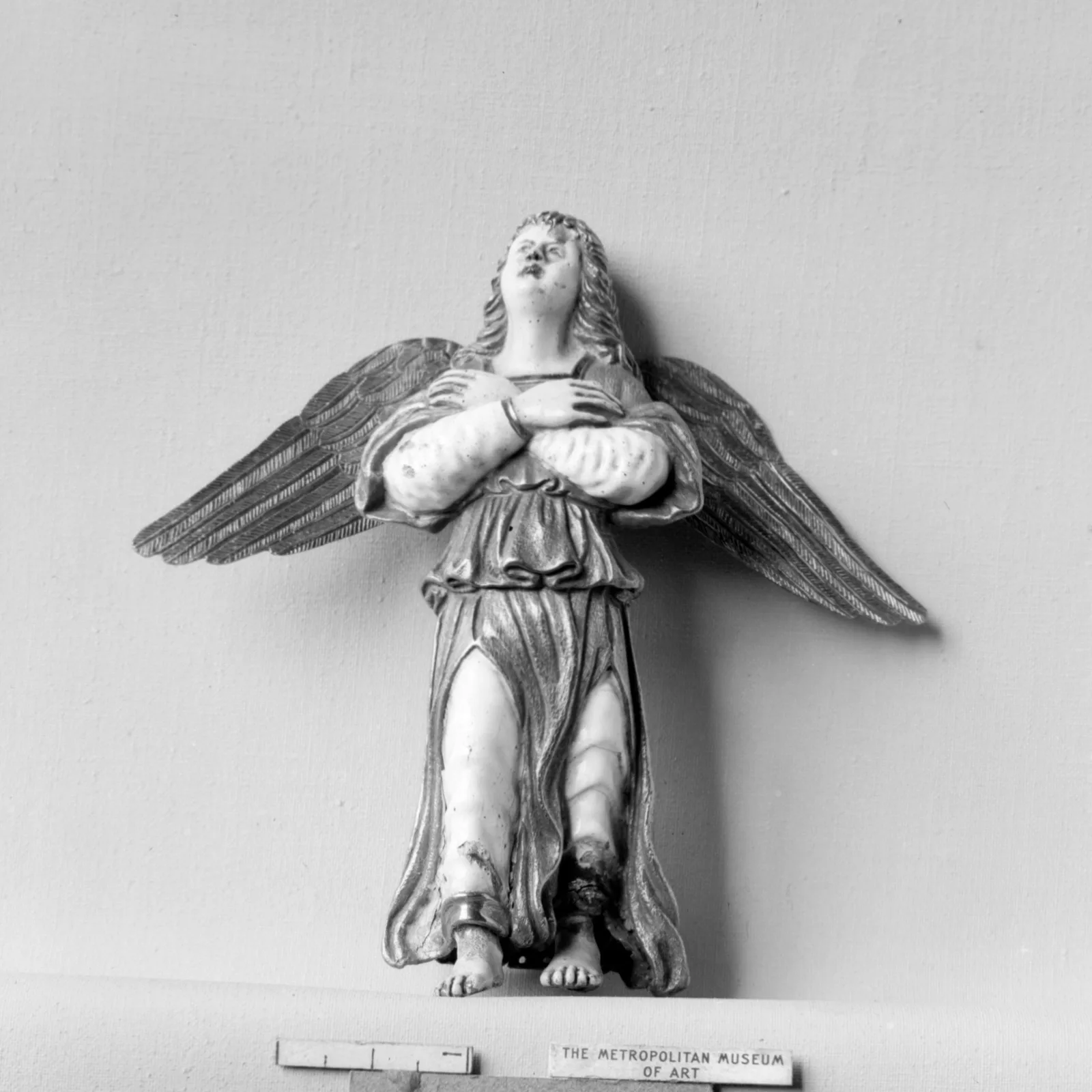
The most common version. The feathers are large and soft, the plumage dense, the outline calm. The angel wing carries a tone of protection and a link to the higher. This is a large theme in its own right, and the angel image is covered in detail in the article on the angel in jewelry. When a piece keeps only the wing, without the figure and halo, it sounds broader and more secular, closer to the pure idea of freedom.
The bird wing and feather
A bird wing is lighter and sharper than an angel's, the feathers often long and pointed. The single feather as a sign of freedom and lightness belongs here too, and it has its own study of the feather. From bird imagery grew the dove as a sign of peace and message, while the swallow, hummingbird and dragonfly are gathered in their own guide to winged messengers. A bird wing is chosen when you want a natural, non-religious lightness.
Insect wings
The wings of a butterfly and a dragonfly are built differently: transparent, netted, finely veined. Their meaning is different too, not about flight and strength but about fragility, transformation, the brevity of beauty. This line is opened up in the article on the butterfly. In jewellery such wings are made openwork, with enamel or a stone read against the light.
The winged horse and fantastical wings
Wings were given to creatures too: to Pegasus, griffins, dragons. The winged horse is inspiration and impulse, and it has its own piece on Pegasus. A fantastical wing carries the meaning of the being it belongs to, which is why on its own it appears more rarely.
The mechanical wing
A modern motif: a wing of gears, rivets and metal plates, in the spirit of steampunk. It joins the old idea of flight with the aesthetic of machines and reads as a dream of flight made by human hands. The dream is old: Leonardo da Vinci drew an ornithopter with flapping wings around 1490, four centuries before the first aeroplane, and copied the feathers and the bend of a bird's wing, trying to understand how a person might rise into the air. The mechanical wing is a rare but expressive option for those drawn to an industrial style.
Customer reviews
Zevira is a real jewellery shop. Genuine payments, deliveries and customer thank-yous.
🥰🥰🥰 gracias
Ok, ¡gracias! 🙂
Winged creatures of mythology
Wings belonged not only to gods but to a whole menagerie of mythical beings, and each coloured the meaning of the wing in its own way.
The griffin, with the body of a lion and the wings of an eagle, joined the strength of earth and sky and was held to be a guardian of gold and treasure. Its wing is a sign of watchful protection. Garuda in Hinduism is the king of birds and the mount of the god Vishnu, a mighty winged protector against evil, still a beloved image in the East. Harpies and sirens, on the other hand, show the dark side of the wing: winged maidens who lead travellers astray and bring death. For them the wing is temptation and danger, not rescue. In Slavic tradition there are the bird-maidens Sirin and Alkonost, whose singing is now mournful, now heavenly.
The conclusion from this varied line is simple: a wing in itself is neutral, its meaning is set by its owner. It can guard, like the griffin's and Garuda's, and it can lure into the abyss, like the sirens'. Once it enters jewellery, the wing almost always takes the bright side of its heritage, freedom and protection, but it helps to know the other side, to grasp the full depth of the symbol.
Upload a photo of your pet, someone you love, or an object. We'll build a 3D model and hand-cast it in pewter.
One wing or a pair: how form changes the meaning
The form of a wing is a language of its own, and a good piece uses it.
A single wing reads as a personal sign, a fragment, something left unsaid. People choose it when they want quiet and a hint rather than a loud statement. A pair of wings is fullness, protection, an embrace; the image sounds warmer and more complete, which is why paired wings are often taken as a symbol of care or of the bond between two people.
Folded wings speak of calm, focus, strength at rest. Open, spread wings are motion, impulse, readiness to take off. So a minimalist folded curve and a wide open wing carry completely different moods, even made from the same metal. When choosing a piece, it is worth deciding what is closer to you: quiet composure or open impulse.
Kinds of winged jewellery
A wing lives in jewellery in a few steady formats.
The wing pendant. The most universal version, from a tiny hint to a large, dramatic feather. Hung on a fine chain, worn both every day and for the occasion.
Paired wings. Two wings, sometimes joined by a heart or a stone. Often a piece for two, a wing each, as a sign of the bond between people.
Wing earrings. From small studs to long drops and the fashionable ear-climber format, where the wing rises along the edge of the ear. Here the wing works graphically and noticeably.
A ring with a wing. The wing wraps the finger or opens out on the face of the ring. An option for those who want to wear the symbol somewhere other than the neck.
A wing with a stone. The wing as a setting or backdrop for a stone, usually pale and sky-like: mother-of-pearl, moonstone, a blue mineral. The stone strengthens the theme of sky and light.
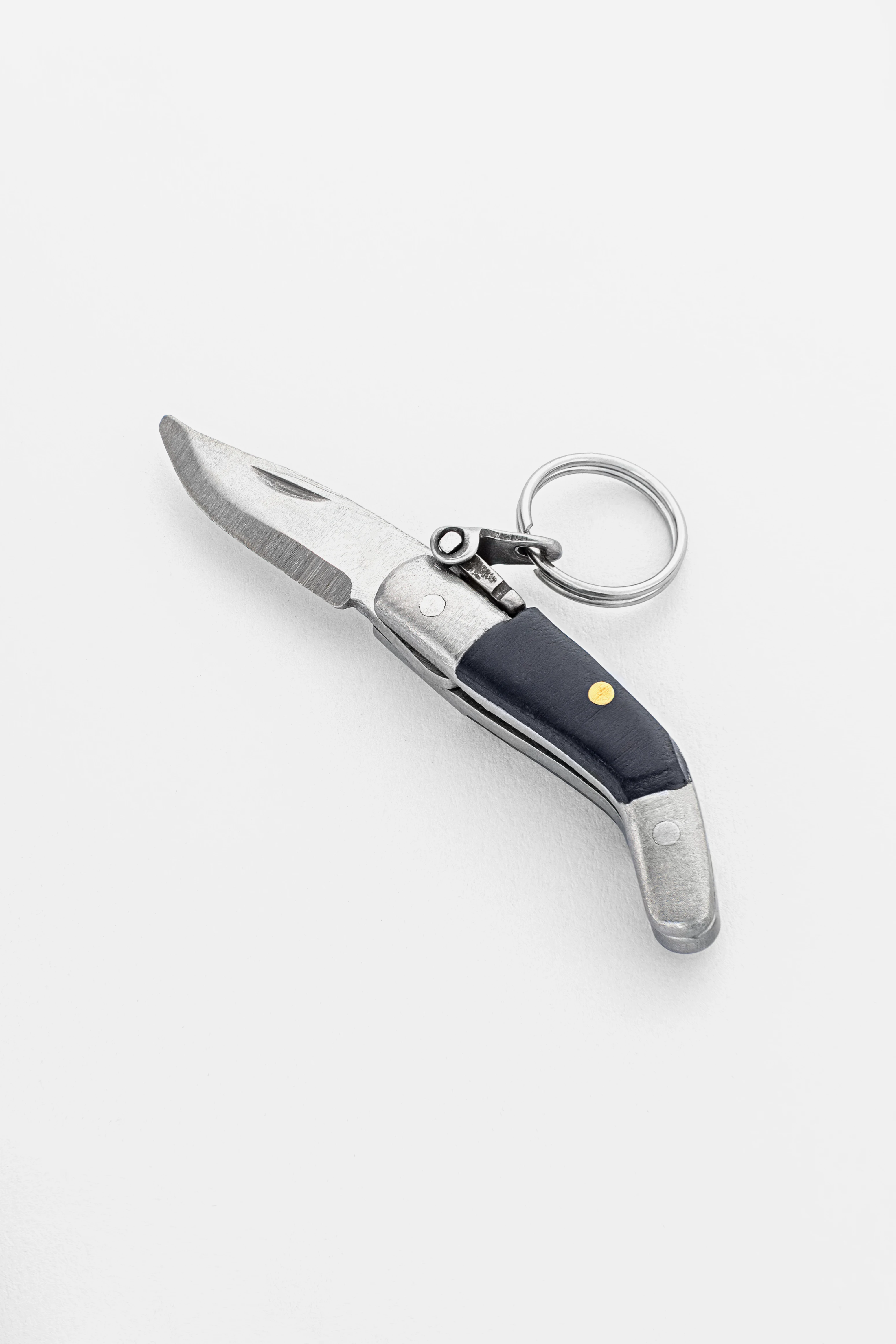
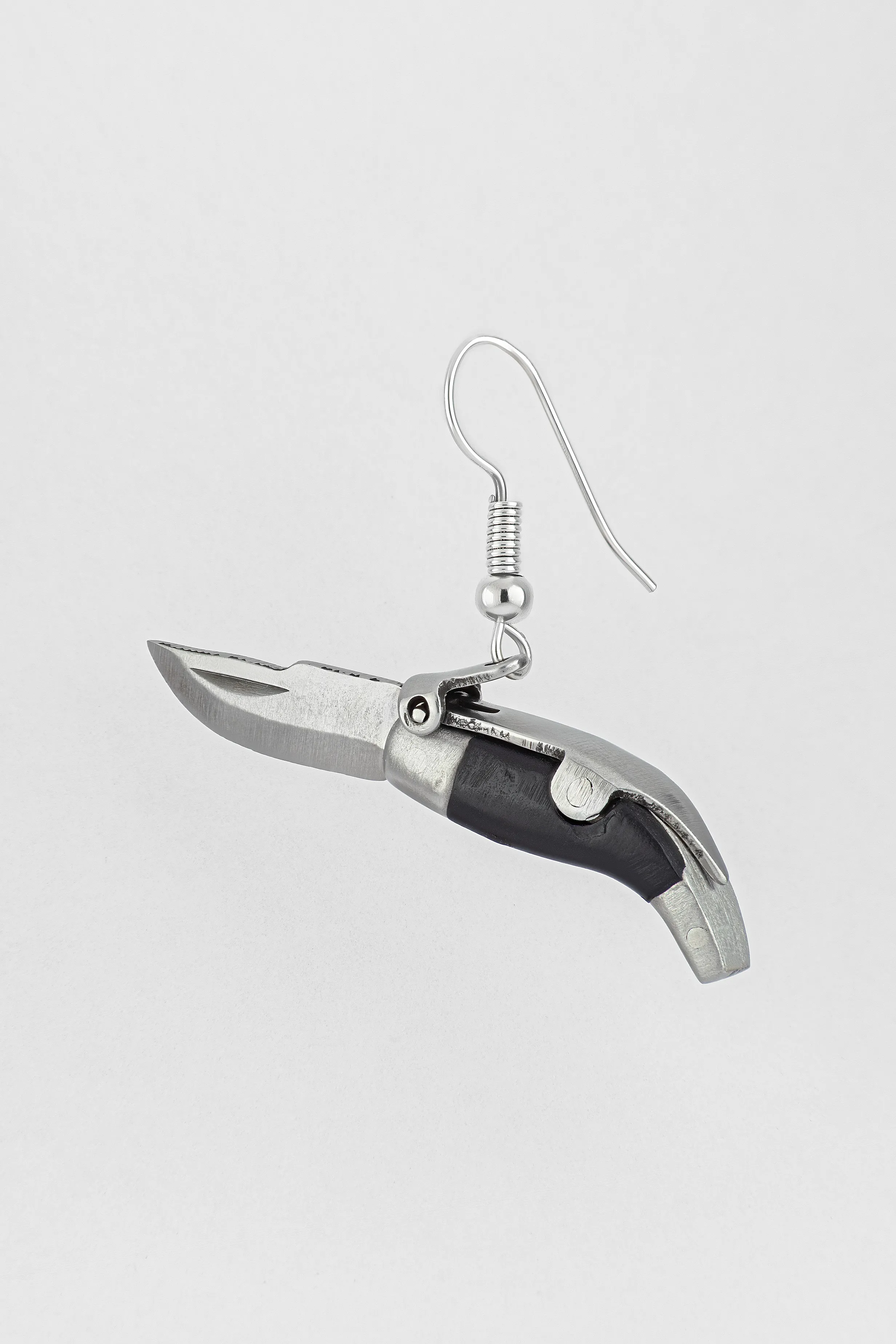
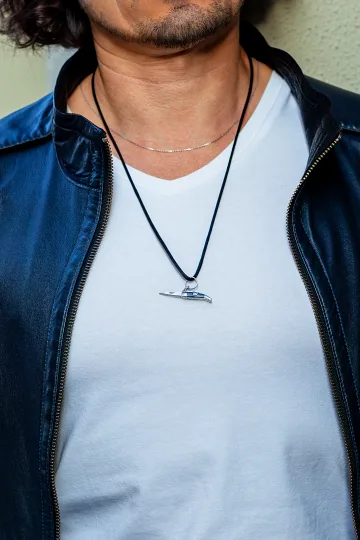
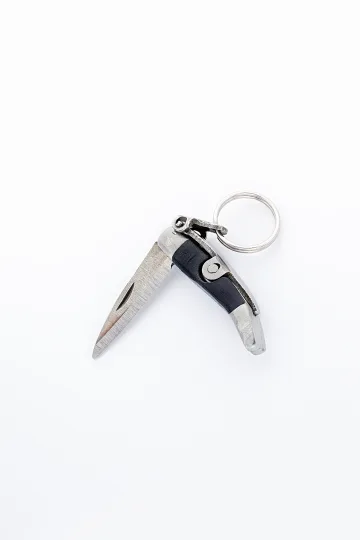
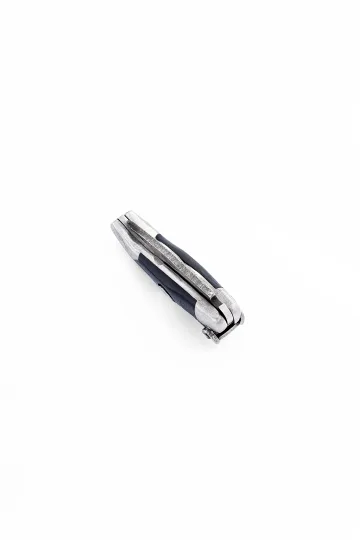
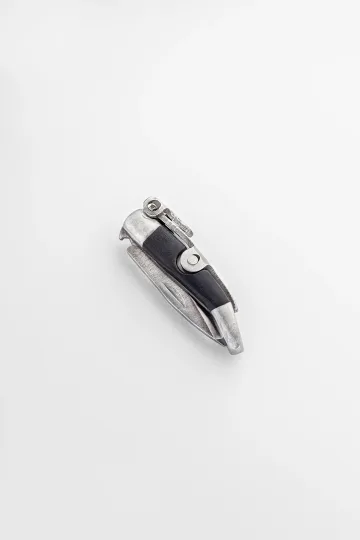
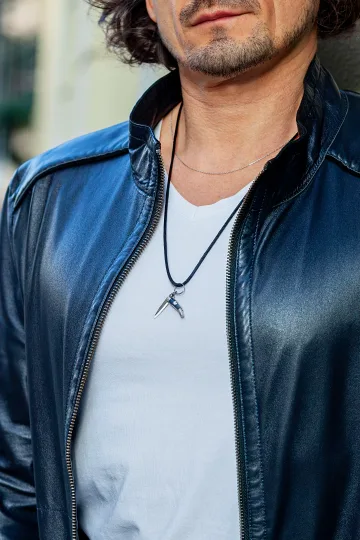
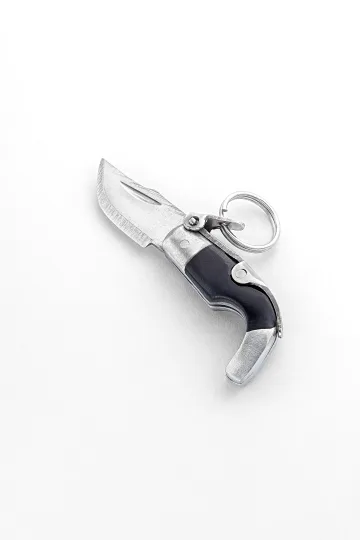
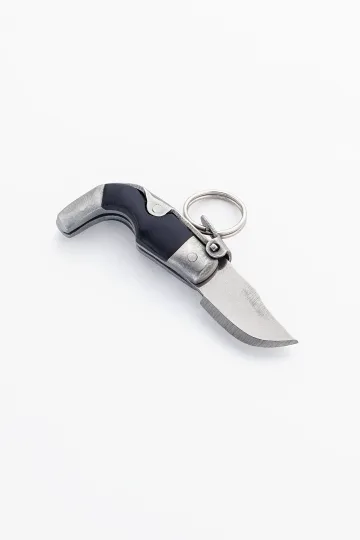
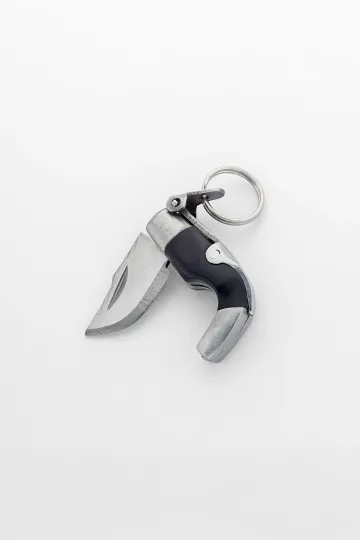
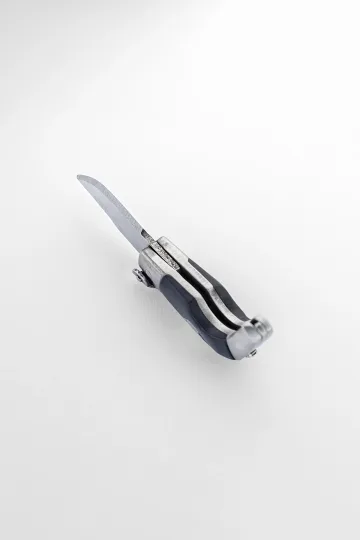
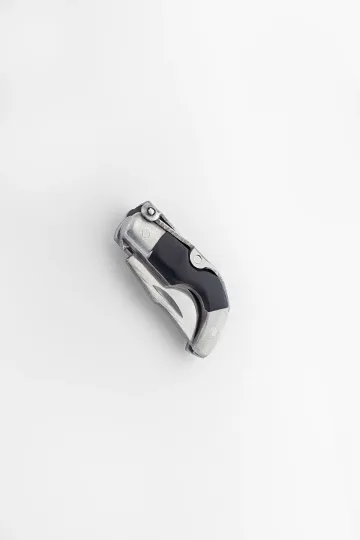
CAPAORA mini knife pendant
The 18th-century Spanish navaja in miniature: 40 mm of stainless steel, a real folding mechanism and a Palanquilla lock that clicks. An affordable gift to remember.
Authentic · Ships from Spain · 14-day returns
Materials and the craft of the feather
The maker's main task in a winged piece is the feather, because it is the texture of the plumage that makes a wing come alive. A smooth, empty surface rarely works.
Silver. The most common choice. The cool white metal sits well on the sky theme, and the feather on it is worked with engraving, a matte surface or polishing. A silver wing stays affordable.
Yellow and rose gold. The warm light of gold softens the image, makes the wing less severe. Rose gold suits paired wings especially well.
Oxidised silver. Dark pigment in the recesses brings out each feather sharply. The wing looks more graphic and composed, well suited to large dramatic forms.
The engraving of the feather. The character depends on it. Bold, sparse carving gives a powerful wing; fine, dense hatching makes it soft and lyrical; a smooth wing without texture looks modern but demands a flawless form. The maker's hand shows in the feather, and it is the first thing to look at.
Stones. Pale accents are set into winged pieces, mother-of-pearl, moonstone, a white or blue mineral, to strengthen the theme of sky. They give a soft glow without loud sparkle and rhyme well with the theme of flight, as does a whole category of celestial jewellery with motifs of the sun, moon and stars.
Leave your email, we'll send your discount code. No spam, unsubscribe anytime.
The code arrives by email, valid on your first order.
How to care for a winged piece
A wing is more vulnerable than a smooth pendant: its meaning rests on the relief of the feather, on the fine lines of engraving and in the recesses between feathers. That is exactly where dirt gathers, metal dulls and plating wears away, so caring for a wing differs from caring for a plain pendant. Let us go through it by material.
Pale silver. Silver darkens from air, sweat and cosmetics, and on a wing this is especially visible: the film settles first into the grooves between feathers and mutes the pattern. Take the wing off before a shower, the pool and sleep, and do not put it on until you have applied perfume and cream and let them soak in. A silver wing is cleaned with a soft polishing cloth and warm water with a drop of soap, then dried. Toothpaste and harsh powders are best kept off the feather: the abrasive scratches the engraving and over time smooths the lines away. If the tarnish has gone deep, a special silver bath helps, but the wing should not stay in it longer than a couple of minutes, or the wanted contrast will leave along with the blackness.
Oxidised silver. Here the rule is the opposite and easy to break out of habit. The dark layer in the recesses of the feather is the whole effect; it was applied on purpose so that each feather reads. Polishing pastes, silver baths and vigorous cleaning take the blackness off along with the dirt, and the wing goes from graphic to flat and grey. An oxidised wing is wiped only with a dry or slightly damp soft cloth, along the raised edges, without scrubbing the depths. Film is removed from the open, pale areas carefully, spot by spot. The less you rub an oxidised wing, the longer its relief lives.
Gold plating and thin coatings. Plating is a micron layer of gold over silver or another metal, and on the edge of the feather it wears first, because it is the edges that catch on clothes and skin. Prolonging its life is simple: take the wing off for the night and for water, do not rub it with an abrasive, clean it only with a soft cloth without pastes. No home remedy will bring back worn plating; it is only restored anew by a jeweller, so for daily wear solid metal is more reliable, and a plated wing is kept for going out.
Pale, soft stones. Mother-of-pearl, moonstone and opal, which suit a wing so well, are delicate inserts. They fear acids, perfume, household chemicals and sharp temperature changes, and mother-of-pearl scratches as well. Such stones must not go into an ultrasonic cleaner or a silver bath: the liquid and vibration cloud the surface and can loosen the setting. They are cleaned only with a soft, slightly damp cloth, without soaking. Opal also dislikes drying out; long hot air and direct sun harm it. If a wing holds such a stone, put the piece on last and take it off first.
Storage. A wing with texture needs its own place. Several pieces in one box rub against each other; the edge of the feather scratches its neighbours and is scratched itself, and pale stones go matte. Keep a wing in a separate pouch or compartment, silver better in a closed box with an anti-tarnish strip, so it darkens more slowly. A quick wipe with a soft cloth every few weeks protects the relief better than a rare but harsh deep clean.
How to choose a format for your look and chain length
A wing lives in different formats, and each asks for its own seat on the body and its own backdrop. Picking a format for yourself is easier than it seems if you start from the neckline and your usual look.
A single wing on a chain. The most flexible version. A small wing wins near the collarbones, on a short chain, where it is seen close up and the engraving reads. A large spread wing is taken on a medium length, closer to the start of the chest, where it unfolds at full height and does not bump into the collar. Under a closed collar and a roll-neck, longer and larger is more logical; under an open neckline, shorter and finer. Plain, single-colour clothing gives the feather the best backdrop; a busy pattern argues with the engraving.
Paired wings. Two wings sound warmer and more complete; this is the format of bond and care. They are often worn a little lower, on a medium length, so that both wings lie symmetrically and do not fold one over the other. If paired wings are meant for two, a wing each, it makes sense to keep the same metal and length, so the pieces read as a set.
Wing earrings. From small studs to long drops and the format where the wing rises along the edge of the ear. Long wing earrings draw the eye down and suit a bare neck and gathered hair; small wing studs live with any look and do not argue with a pendant. Wing earrings are best not paired with a large wing at the neck in one outing: two noticeable wings start to compete. Choose one main focus.
A ring with a wing. The wing wraps the finger or opens out on the face. This is the option for those who wear the symbol away from the neck. A bulky wing ring is self-sufficient; it needs no support from other wings, plain rings alongside are enough. Mind the height of the relief: a tall feather catches on pockets and gloves, for an active day take a lower profile.
A wing with a stone. Here the stone becomes the main thing, and the wing works as a setting and backdrop. A pale sky stone, mother-of-pearl or moonstone, asks for calm surroundings and a single length, so its glow does not drown in clutter. Such a wing suits an occasion better than every day, especially if the stone is soft.
The general rule is simple: one noticeable winged piece per look, the rest quieter and in one metal. Several wings mixed with different metals break up the look, and the ancient sign is lost in the noise.
How to choose a good winged piece
A wing lives by the texture of the feather, and the feather is the easiest place to tell careful work from a stamping.
Look at how the plumage is worked. On a good wing the feathers read separately, the engraved lines are crisp and not smudged, the pattern does not blur. A cheap casting gives itself away with a flat, blurred feather without depth. Check the symmetry if the wing is paired or figured: a tilt at once makes the piece look careless. Pay attention to where the bail joins the wing; the seam should be even and unnoticeable, not a rough lump. On a quality piece the edge of the feather is smooth, not sharp or jagged.
Choose the size for the person and the neckline. A small, delicate wing is lost on a large frame and under a closed collar, while a big spread wing weighs on a slender neck. And remember the metal: thin plating wears off the feather's edges over time, so for daily wear solid silver or steel is more reliable than a coating.
Who it suits and what occasions to give it for
A winged piece suits those who value the idea of freedom and movement, and those going through change. It is a good sign for a new stage: a change of job, a move, a graduation, the start of a path. A wing says "fly" better than any words.
As a gift a wing is universal, because it imposes no religious meaning. A single wing can be given as a wish for freedom and courage, paired wings as a sign of a bond between close people. A traveller suits a wing as a symbol of the road; someone who has won a victory suits a wing in the spirit of Nike as a sign of triumph. A wing fits worst those looking for the most neutral accessory with no meaning at all: a wing always says something.
Wings in modern culture
A wing is not a museum symbol; it lives today as well. It is one of the most popular motifs in tattoo art, where open wings on the back or a small wing on the wrist mean freedom and memory. Wings are worn on uniform by pilots and paratroopers as a sign of the sky and belonging. In street fashion the wing has become a sign of lightness and rebellion against routine. This vitality is what makes the wing such a convenient piece of jewellery: its ancient meaning reads instantly, yet it sounds modern.
Send a friend a discount code, they save on their first order.
Wings in heraldry and emblems
From mythology the wing passed into coats of arms and badges of rank, where it works as a language of status and belonging. In heraldry a wing means protection, swiftness and patronage from above; it was placed on the shields and helmets of families. The double-headed eagle with spread wings became the arms of whole states as a sign of power over West and East.
Later the wing settled firmly into the insignia of aviators: a winged badge on a pilot's chest is a symbol of the sky, of mastery and of belonging to the brotherhood of the air. A winged wheel became the emblem of railways and speed; a winged cup and staff a sign of medicine and trade. This line explains why a wing reads so confidently as a sign of movement, dignity and belonging to something larger. In jewellery this layer adds severity to the wing, especially in a graphic, medal-like rendering, where the wing looks not tender but composed and strong.
Wings: facts that surprise
A few things about wings that people usually do not think about, and should.
The first Christian angels were wingless. In early art, the first three centuries, messengers were drawn as ordinary youths without wings. Wings were added only at the end of the fourth century, borrowed from the winged Nike. In other words, the familiar winged angel is younger than Christianity itself by several hundred years.
With Homer, words can fly. The phrase "winged words" was not coined by a journalist but by Homer: in the Iliad and the Odyssey a hero's speech is called "winged" dozens of times, that is, flying straight to the listener. Today the term is used for apt quotations, and behind it stands the same idea of the wing as a swift message.
The Greeks made victory deliberately wingless. In Athens stood a temple to Nike Apteros, "wingless victory": the statue was deliberately given no wings, so that victory could not fly out of the city. A rare case where the wing was removed on purpose rather than added.
The wing gave its name to a planet and a metal. The swiftness of wing-footed Mercury stuck so firmly that his name was given to the fastest planet and to fluid quicksilver, impossible to hold in the hand.
Leonardo designed wings four centuries before aviation. Around 1490 da Vinci drew an ornithopter with flapping wings and studied the structure of a bird's feather. People dreamed of their own wings long before they could rise into the air.
"Earning your wings" is not a metaphor. Pilots are given a winged badge after their first solo flight, and the tradition has lived for over a century. From it comes the phrase "to spread your wings", which in some form exists in almost every European language.
The scarab was laid winged on the mummy's chest. In Egypt the dung beetle was held to be an image of the rising sun, and a winged scarab was placed on the chest of the dead as a wish for rebirth. The result was a wing that meant not an escape from the earth but a return to the light.
The four evangelists are still known by their wings. The winged man, lion, ox and eagle are an old code for Matthew, Mark, Luke and John. If above a door in an old church you see these four winged beings, you are looking not at a menagerie but at a signature: "scripture speaks here".
The most famous wings in sculpture are headless. The Winged Victory of Samothrace, the model of winged victory, came down to us without head or arms, and in just that state became one of the most recognisable statues in the world. The wings outlasted everything else.
Frequently asked questions
What do wings symbolise in jewellery? Most often freedom and flight, the ability to rise above circumstances. But a wing has other layers too: protection and shelter, when the wing is stretched over someone; message and a link to the higher in a winged messenger; aspiration and growth as a pull upward. There is a layer of memory as well, but a wing does not have to be about loss; far more often it is about living, earthly freedom. Which meaning to give it is largely up to the wearer.
How does a wing differ from an angel and from a feather? A wing is a broader and more secular symbol. An angel is a specific image with a figure and its own theological meaning, while a single wing without a figure sounds broader, closer to the idea of freedom. A feather is a fragment of a wing, an even lighter and more personal sign. So a wing is chosen when you want the idea of flight without ties to religion, an angel when the guardian matters, a feather when you want quiet understatement.
Can a non-believer wear a wing? Yes, and it is quite usual. A wing is older than any single religion and means first of all freedom and movement, not faith. The winged sandals of Hermes, the wings of Nike, the wings of Eros are ancient, not church images. If you want the most secular reading, take a bird or abstract wing rather than an angelic one.
What does one wing mean against a pair of wings? A single wing reads as a personal sign, a fragment, something left unsaid; people choose it for quiet and a hint. A pair of wings is fullness, protection and an embrace, which is why paired wings are often taken as a symbol of the bond between two or of care. Besides, folded wings speak of calm, while spread wings speak of impulse and motion, so the form changes the mood as much as the number.
What metal and stones to choose for a wing? Most often silver: its cool white colour suits the sky theme, and the feather on it is easy to work with engraving. Oxidised silver brings out the relief and suits large wings; warm gold softens the image. Among stones, pale and shining ones fit the theme: mother-of-pearl, moonstone, a white or blue mineral. They strengthen the motif of sky and do not argue with the fine engraving of the feather.
What occasion to give a winged piece for? Best of all for the start of a new stage: a new job, a move, a graduation, an important milestone. A wing reads as a wish for freedom and courage. Paired wings are good to give as a sign of a bond between two close people. A traveller suits a wing as a symbol of the road, and someone who has reached success a wing in the spirit of the goddess of victory.
Is a wing necessarily about loss and memory? No. A wing does have a memorial layer, coming from the image of the soul leaving the body, and for some a wing stays a sign of memory. But it is only one meaning among many and far from the main one. Far more often a wing is worn as a sign of freedom, change, courage and movement upward, and given for happy, bright occasions.
Silver, gold, symbolism, wing pendants, paired sets, medallions.
Buying it as a gift? Each one arrives ready to give.
 A branded Zevira box and a little card come with every order.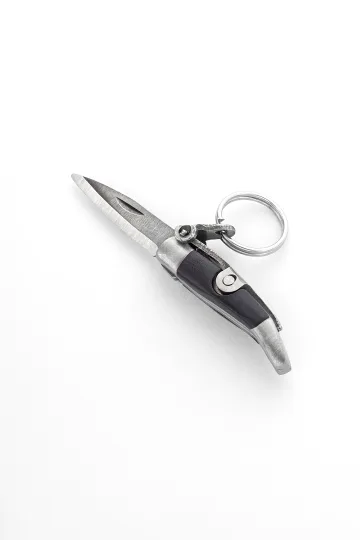




About Zevira
Zevira is a Spanish jewellery brand from Albacete. Winged motifs, wing pendants and paired sets are one of the catalogue's categories. We love symbols with a long history and a clear meaning, not empty decoration. The wing is one of the oldest and most honest among them. See current pieces in the catalogue.