Loki in jewelry: trickster god, father of monsters, and the serpent symbolism of the cunning one
Loki gave birth to an eight-legged horse by turning into a mare, talked dwarves out of the gods' treasures on a wager over his own head, and at the end of the myth lay chained in a cave while a snake dripped venom onto his face. The trickster god of the North fits no list of the good or the wicked. That is exactly why his signs are worn today by people who dislike easy answers.
Who Loki is
Loki is the Norse god of cunning, deceit, and change, the trickster of the pantheon, the one who breaks order and keeps it moving at the same time. He lives among the Aesir, the chief gods of Asgard, yet by blood he is tied to the jotnar, the giants, the ancient enemies of the gods. That double origin sets his whole nature: he is insider and outsider at once, helper and saboteur in one body, ally of the gods in some myths and the cause of their doom in others.
Unlike the thunderer Thor or the wise Odin, Loki has no domain of his own such as storm or war. His power lies in his mind, in the knack of slipping free, deceiving, turning into anyone. He is a shapeshifter: he becomes a salmon, a mare, a fly, an old woman, a seal. He is the father of monsters: the wolf Fenrir, the world serpent Jormungandr, and Hel, the ruler of the dead. And he is also the one who, more often than anyone, pulls the gods out of the trouble he himself dragged them into.
Wear the symbol, don't just read about it. These are in stock:


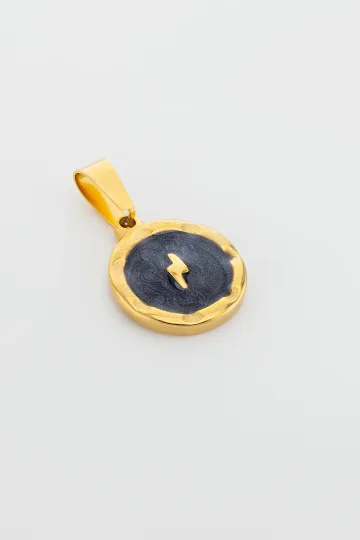

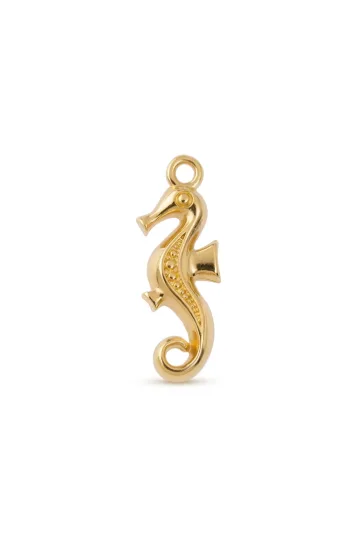
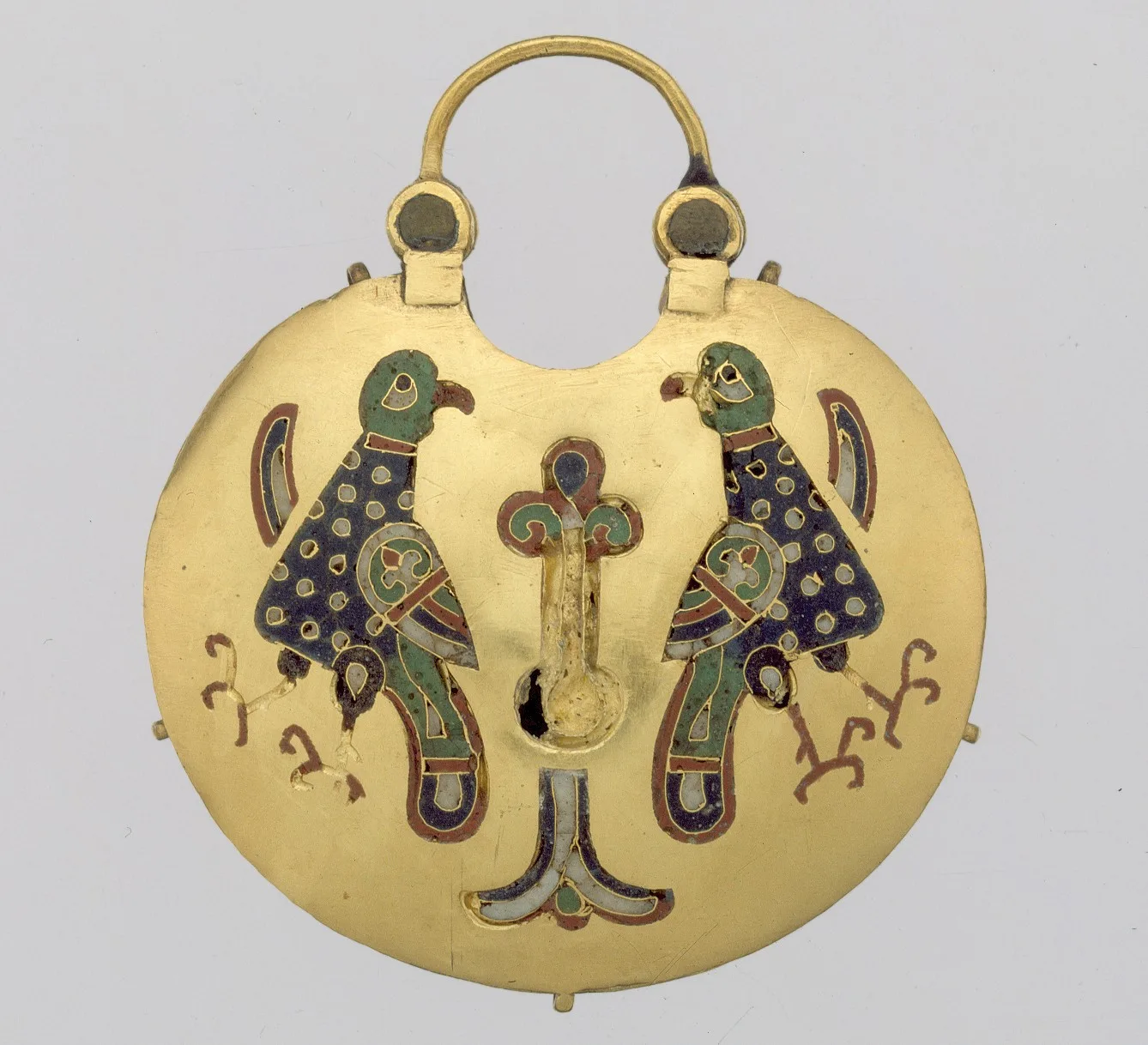
In jewellery Loki appears not as a portrait but through the signs of his nature. The snake and the dripping venom, the interlaced knot, tongues of flame, a mask with two faces, the silhouettes of his monstrous children. These motifs read as a mark of wit, daring, and a refusal to fit someone else's frame. A pendant with a coiled serpent or a signet with a double mask works as a quiet manifesto: I am not what I seem, and I cannot be predicted.
Loki's image draws people precisely through its ambiguity. He is neither villain nor hero, he is the force of change without which the frozen order of the gods would have ossified long ago. In a world where symbols usually carry one clear message, the trickster's sign speaks of something else: of accepting your own shadow, of humour on the edge, of the freedom to be inconvenient. That is a rare meaning, and people come to it deliberately.
Loki's place among the gods of Asgard
Loki holds an odd place in Asgard: he is there not by birthright but by alliance. In various versions of the myth he is the sworn brother of Odin, and it is this oath of blood-brotherhood that gives him a seat at the gods' table. Odin and Loki stand side by side in the old songs, two cunning minds, and the Aesir drink only what is served to both of them together. But the bond is fragile: Loki belongs among the gods only for a time, and his double blood sooner or later takes over.
Loki's family is as double as he is. His wife, the goddess Sigyn, stays faithful to the end, holding a bowl over her chained husband so the snake's venom will not drip onto his face. His children by the giantess Angrboda, on the other hand, are three monsters fated to undo the world: the wolf Fenrir, who will swallow Odin, the serpent Jormungandr, who will poison Thor, and Hel, who gathers the dead. So Loki turns out to be at once a tenderly loved husband and the father of the gods' ruin.
In order, then: where Loki's image came from, what pranks and feats lie behind his fame, what each of his symbols means, what meaning his signs carry, why the trickster appeals so strongly to the modern mind, what such jewellery is made of, and how to wear it.
Loki's history and myths
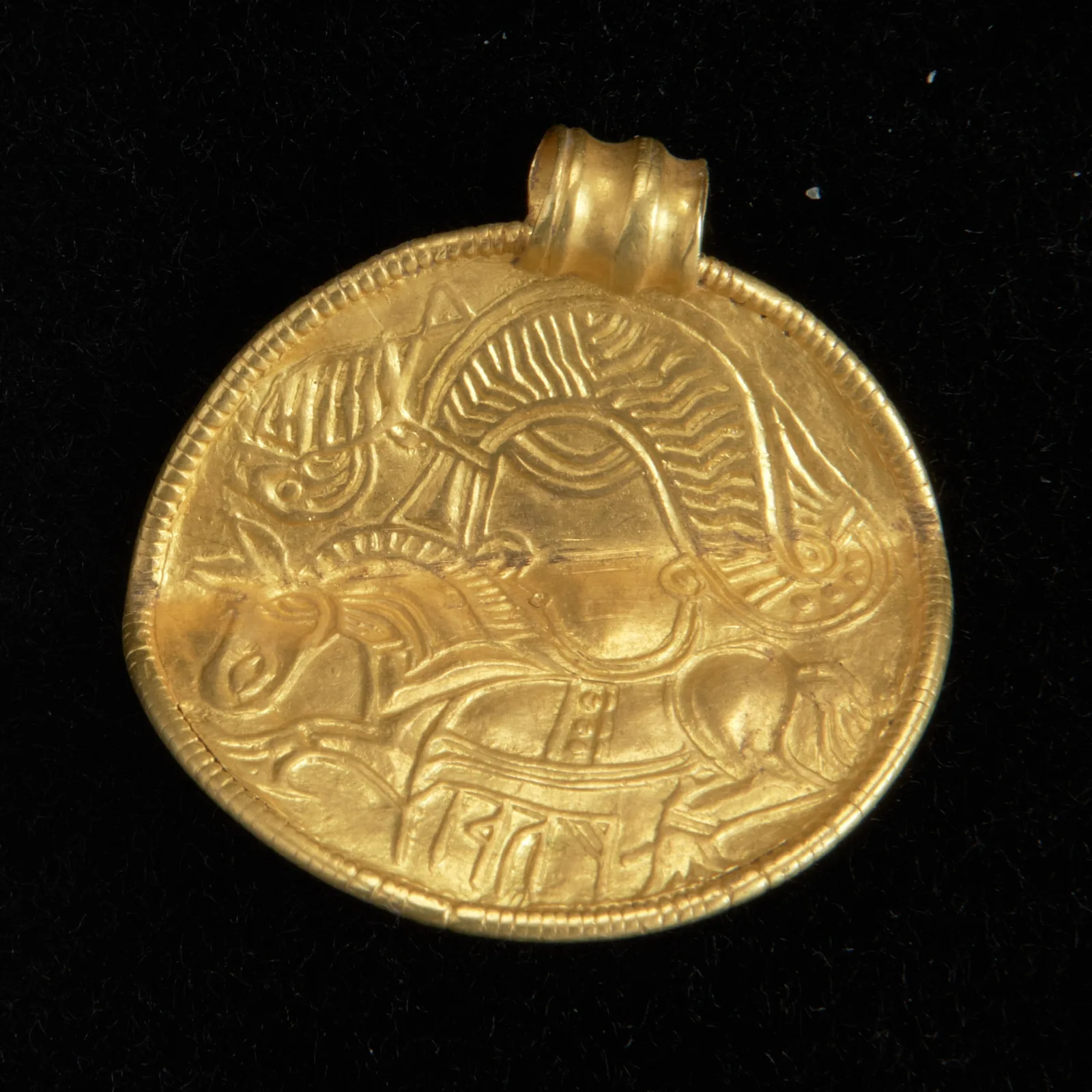
Loki's image reaches us mainly from two Icelandic collections, the Poetic Edda and the Prose Edda, written down in the thirteenth century, and from scattered skaldic poems. Unlike Odin or Thor, whose amulets archaeologists find by the dozen, there is almost no material trace of a cult of Loki himself. No one prayed to him, no one wore his sign for luck in battle. He lived in story, in narrative, and it was through the myths, not through ancient charms, that his image reached modern jewellery. Fix this in mind from the start: Loki's symbolism in jewellery is young, grown from a love of the myth rather than from a thousand-year tradition of the amulet. All the more interesting, then, that a modern maker takes an ancient image and reads it anew, with no canon of a protective charm to look back on, since Loki simply never had one.
Odin's sworn brother and the double blood
Loki's bond with Odin is older than their enmity. In the poem Lokasenna the trickster himself reminds the All-Father of their old oath: once they mixed their blood and swore to be brothers. That oath explains why a deceiver god, alien to the Aesir by blood, sits among them as an equal. Odin, himself a cunning lover of borrowed shapes, found a kindred spirit in Loki. Two minds, two pulls toward forbidden knowledge and toward play on the edge. But where Odin pays for wisdom with his own sacrifice, Loki pays with the troubles of others, and there lies the deep difference between them.
Loki's double nature shapes his entire path. He is the son of the giant Farbauti and, it seems, of a giantess, that is, a jotun by blood, an ancient enemy of the gods. And yet he is among the Aesir, eats with them, travels with Thor, rescues them by cunning. This in-between standing makes him a figure of crossing, a being between two worlds, which links him to the tricksters of other peoples. He is no traitor in the simple sense; he is the one whose loyalty is always in doubt, because he belongs to both sides at once.
Pranks and help to the gods
Most of the myths about Loki are stories of how he first brings on trouble and then sorts it out himself. When a giant builder nearly takes the sun, the moon, and the goddess Freyja from the gods as payment for the wall of Asgard, it is Loki who, turning into a mare, distracts the giant's stallion and wrecks the deal. When Thor's hammer Mjolnir is stolen, Loki devises the plan to get it back by dressing the thunderer up as a bride. When the goddess Idunn with her apples of youth is taken captive by a giant, it is Loki again who frees her, turning into a falcon.
These stories show the whole mechanism of the trickster. He creates a problem through his daring and curiosity, then solves it through wit and cunning the blunt-minded gods lack. Thor can smash any enemy with his hammer, but he cannot outwit. Odin is wise, but bound by his standing. And Loki is free, slippery, and shy of nothing, not deceit, not a change of shape, not a woman's dress on the god of storms. The gods put up with him precisely because without his crooked mind many a knot would never come undone.
Gifts of the dwarves: Loki's wager
One of the most famous myths explains where the gods got their chief treasures, and once again Loki is at the centre. Out of spite he cut off the golden hair of the goddess Sif, Thor's wife, and the thunderer forced him to set everything right. Loki went down to the dwarves, the cunning underground craftsmen, and they forged golden hair that grows as if alive, the spear Gungnir for Odin, the ship Skidbladnir, Freyr's boar, the ring Draupnir, and the hammer Mjolnir for Thor.
The most interesting part is how Loki got hold of the hammer. He wagered his own head with the dwarves Brokkr and Eitri that they could not make anything better than the old treasures. To win, Loki turned into a fly and bit the smith on the eyelid during the forging, which left the hammer's handle short. But Brokkr won all the same. And here the trickster wriggled free: take the head, he said, but I did not stake my neck, so leave the neck alone. In revenge the dwarf sewed his mouth shut. In this single myth lies all of Loki: thanks to his prank the gods received the finest weapon in the world, while he nearly lost his head and slipped out of it on a technicality. So Thor's hammer, the great protective sign of the North, came into being through a trickster's wager.
Ragnarok: the doom of the gods
If in most myths Loki is an unpleasant but tolerable rogue, in one he crosses the line for good. He engineers the death of Baldr, the bright and beloved son of Odin. Learning that nothing can harm Baldr except mistletoe, Loki places a sprig of mistletoe in the hands of the blind god Hodr and guides his blow. Baldr dies, and he cannot be brought back from the land of the dead, because one giantess, in whose shape people see Loki himself, refuses to weep for him. With this killing the trickster starts the countdown to the end of the world.
At Ragnarok, the final battle of the gods, Loki takes the side of chaos once and for all. He brings from the land of the dead the ship Naglfar, made of the nails of corpses, and leads an army of giants and monsters against the Aesir. His children finish the work: the wolf Fenrir devours Odin, the serpent Jormungandr and Thor kill each other. Loki himself meets the god Heimdall in a fight to the death, and both fall. So the trickster, who began as a mischievous helper of the gods, becomes their doom. The duality is pushed to its limit: the one who kept the world in motion brings it down in the end.
Punishment with the snake
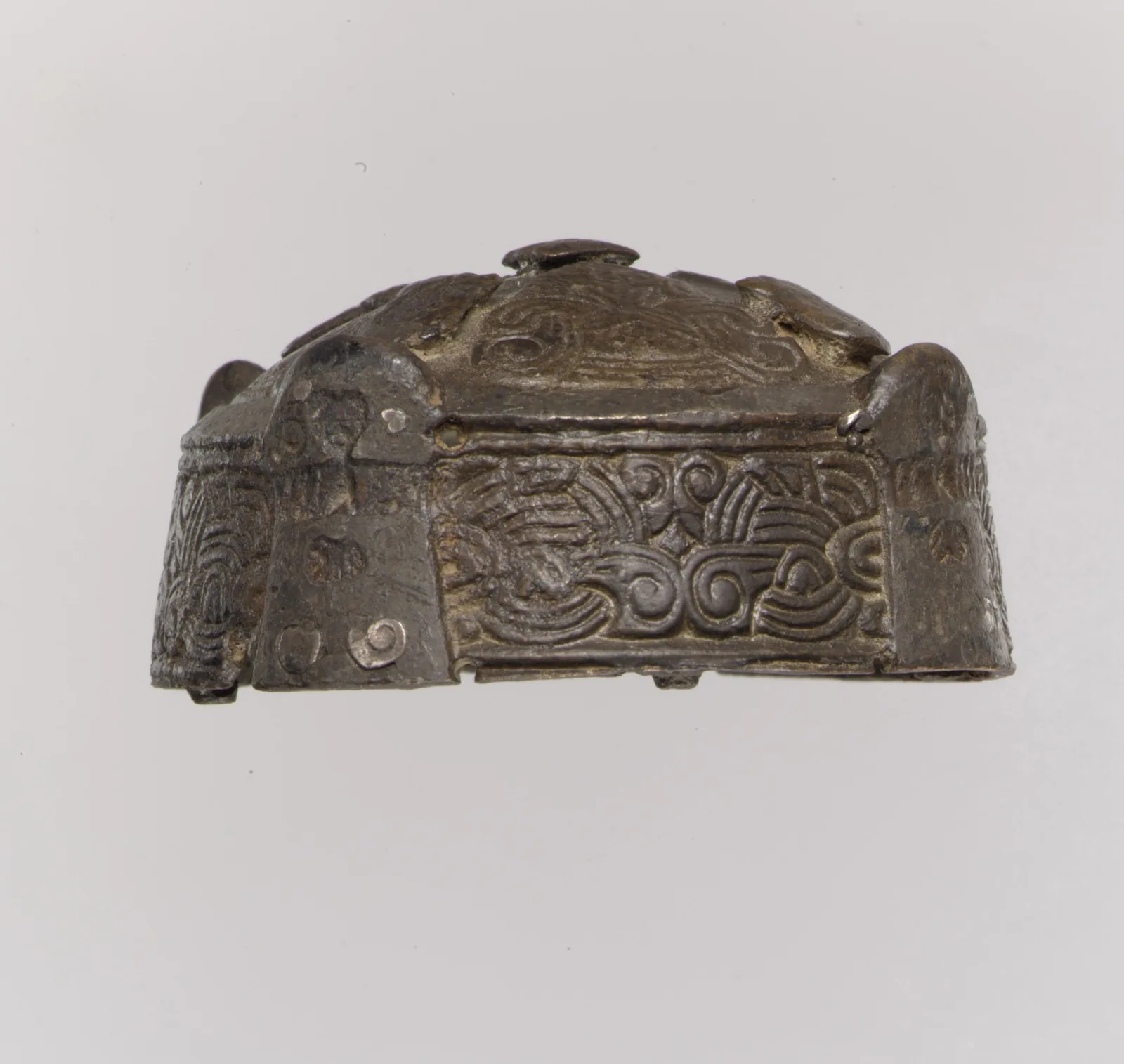
Between the killing of Baldr and Ragnarok lies the darkest myth about Loki, and it is the one that gave him his serpent symbolism. For his crimes the gods catch the trickster, who tried to flee by turning into a salmon, and chain him in a cave to three sharp stones with the entrails of his own son. Above Loki's face the goddess Skadi hangs a venomous snake so the poison drips straight onto his skin. His faithful wife Sigyn stands beside him with a bowl and catches the venom, but when the bowl fills and she steps away to empty it, the drops fall on her husband's face. Loki thrashes with pain so violently that the earth shudders, and in these convulsions people saw the cause of earthquakes.
This image, the bound god and the dripping snake, became the most recognisable in Loki's iconography. It was carved on a church cross from the Isle of Man back in the Viking age, painters depict it, and it lies at the root of modern jewellery with the motif of a snake above a figure, or simply an interlaced serpent as a sign of the trickster himself. The snake with Loki is not wisdom or healing, as in other cultures, but punishment, pain, and endurance in suffering. Sigyn with her bowl beside him turns the grim scene into a story of loyalty that holds even over a chained god of change.
A Loki serpent wants oxidized silver and an open collar. Never under a boardroom tie: it is the mark of the sly, not the salaried.
How to wear Loki
Loki's symbolism is loud and full of character, so I build the look around it rather than piling it on top. Here is what I recommend by occasion, straight from my work on set.
How do I wear a serpent pendant every day? For daily wear I recommend oxidised silver on a medium chain, so the serpent settles onto the chest. Keep the top plain and unpatterned, then the relief of the scales reads in full. A pale tee or a dark shirt both hold the sign well, as long as the fabric does not argue with it.
Should I wear a mask signet alone or with other rings? A massive signet I leave to solo: one ring on the hand, no neighbours on the same fingers. That way the two-faced mask or the knot reads as intended instead of drowning in metal. On the other hand I suggest at most a thin plain band, no theme.
Silver or gold for a Loki sign? I choose by the facet you want to pull out. For a cool skin undertone and a graphic, grim look I recommend oxidised silver. For a warm undertone and the fiery side of the trickster I suggest gold, which sounds warmer and richer. Black steel is a separate, bolder register of its own.
Can I layer the serpent with other chains? Yes, but by the rule of one accent. The large serpent I set as the lead, then add neutral chains without pendants or smaller Norse signs around it. Different lengths keep the layers in order so the marks do not tangle on the chest. I leave the signet out of that stack; it wants its own hand.
Does Loki's symbolism suit a formal look, or a woman? Both, easily. Under a formal top I recommend a fine serpent or a small knot that slips under the collar, read only up close. For a woman I suggest the delicate register: a thin two-faced pendant, a neat serpent ring. The god himself changed shape and sex, so there are no rigid frames here.

Turn on your camera, pick earrings, a pendant or a ring, and see the piece on yourself in real time.
Switch items in one tap.
Everything runs in your browser: no photo or video is ever uploaded.
Customer reviews
Zevira is a real jewellery shop. Genuine payments, deliveries and customer thank-yous.
🥰🥰🥰 gracias
Ok, ¡gracias! 🙂
Loki's symbols
Loki has no single canonical sign like Thor's hammer or Odin's valknut, and that in itself says something about his nature. His symbolism is assembled from the motifs of the myth, and each one carries its own facet of the trickster.
Fire and flame
Fire is perhaps the oldest association with Loki. Folk tradition and some scholars linked his name to flame, seeing in the trickster a spirit of fire, as double as he is: fire both warms and burns, both serves people and slips out of control. In Norse daily life the flickering of flame in the hearth was sometimes named in connection with Loki. In jewellery the fiery motif, tongues of flame, warm gold, shades of red and orange stone, conveys exactly that facet: a living, dangerous, shifting energy that cannot be fully tamed. Flame as a sign of Loki is about passion and risk, about a force that builds and destroys with the very same heat.
The snake
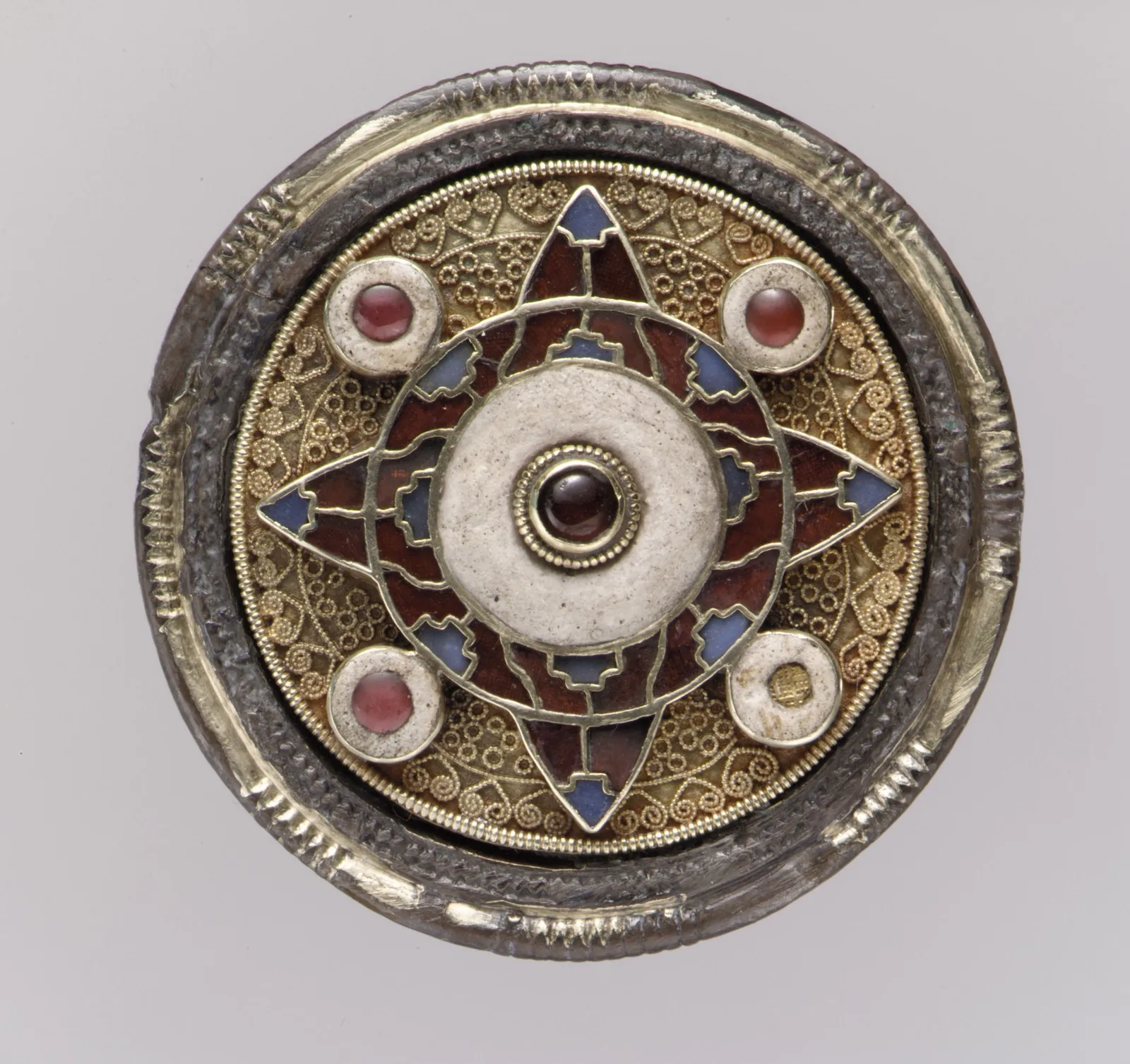
The snake with Loki comes from the myth of punishment, where a venomous snake drips onto the chained god. This is not a healer-snake or a snake of wisdom, but a snake of punishment and trial. At the same time the same image carries the theme of endurance: Loki bears the pain while Sigyn catches the venom, and so an interlaced serpent in the trickster's jewelry reads in two ways, as pain and as the ability to withstand it. The snake is a rich symbol in general, and we treat it separately as an image in its own right in jewelry; in Loki's context this is the facet that matters: not temptation and not rebirth, but venom, reckoning, and the strength to stand against it. A pendant with a snake coiled around a figure, or simply a coiled serpent, works as a personal sign for those who have passed through a reckoning and held firm.
The mask and duality
The mask and the motif of two faces are a direct expression of Loki's defining trait: he is never what he seems. A god who changes shape and sex, who lies and saves in one and the same myth, reads best through the image of a mask, through a face with two sides, light and dark. In jewellery this can be a two-faced figure, a pendant with a face that smiles on one side and frowns on the other, or an abstract sign of splitting. People choose such a motif when they acknowledge their own complexity, when they do not want to be read all the way through. Loki's mask is not deceit for the sake of evil but a refusal of the flat image, the right to be many-layered.
The knot and interlacing
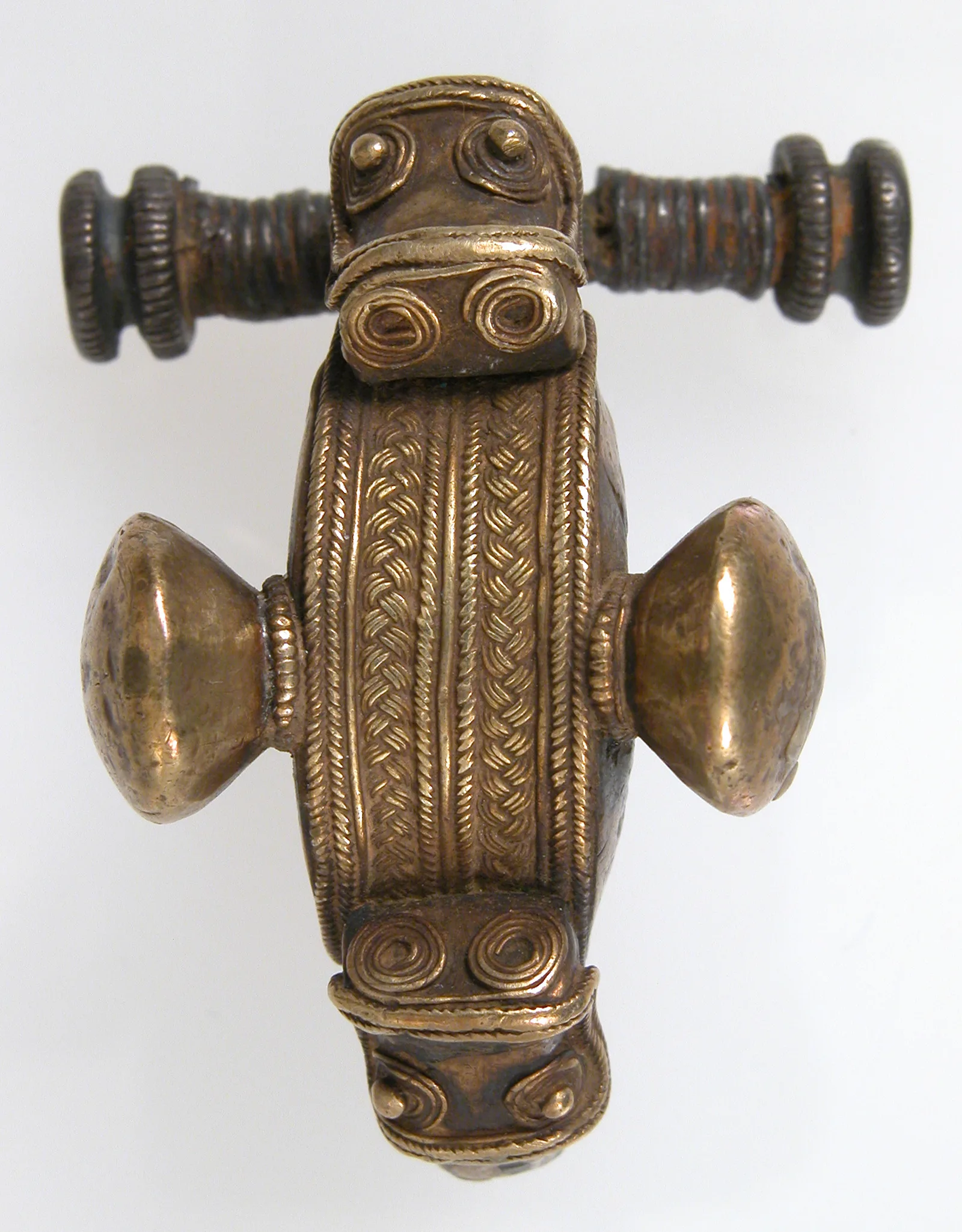
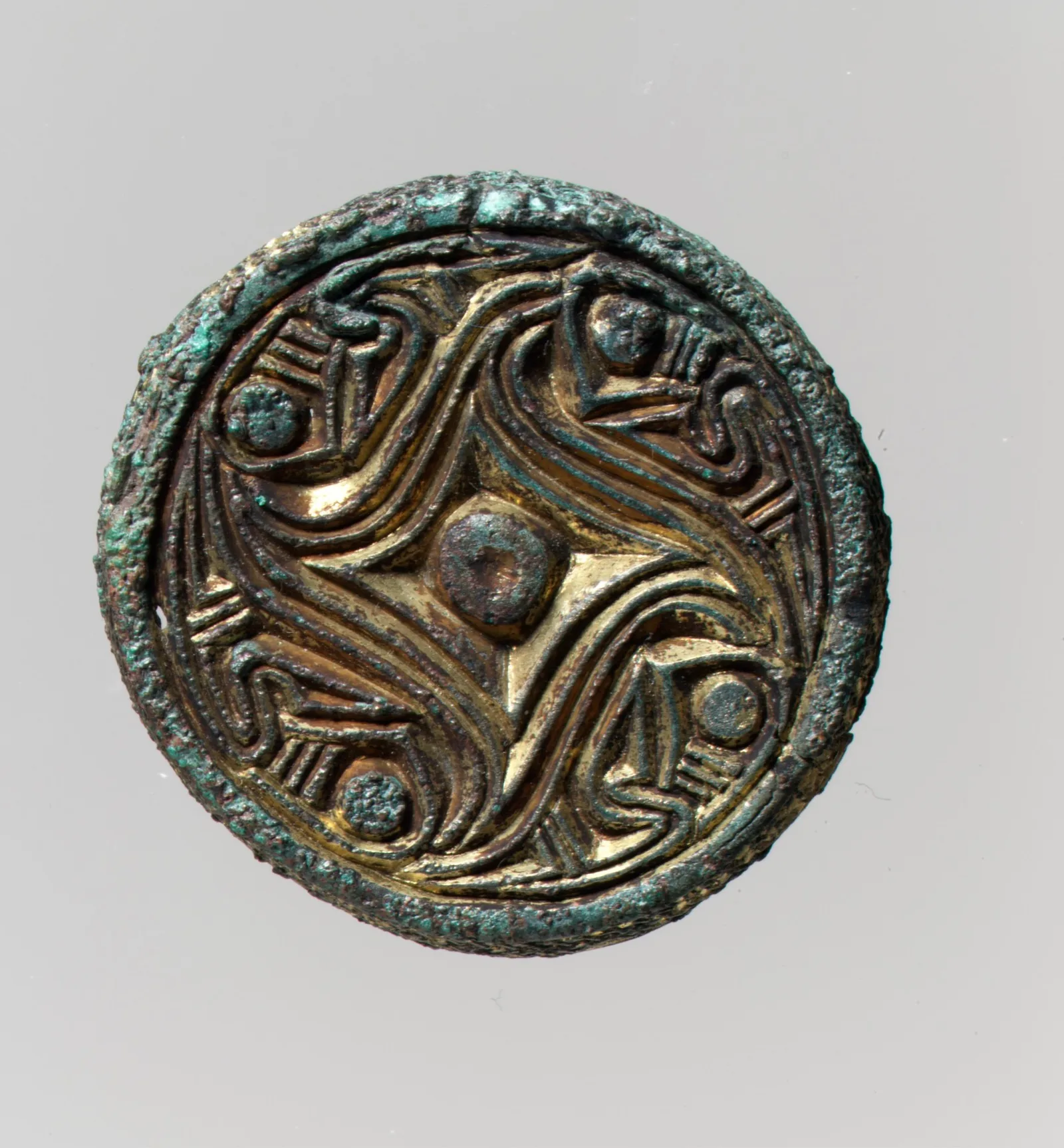
The interlaced knot, a tangled yet whole line, conveys the essence of the trickster as the one who ties and unties the knots of fate. Loki tangles the gods up in problems and finds the way out of them himself, and this mechanism sits well on the Norse interlace knot, on a weave with no beginning and no end. Unlike the strict geometric valknut of Odin, Loki's knot is more sinuous, more alive, with more movement in it. In jewellery such a motif reads as wit, resourcefulness, the ability to untangle the complex. It is a sign of the one who thinks not in a straight line, who sees the roundabout way where others run into a wall.
The monster children
A separate line of Loki's symbolism runs through his children, three monsters fated to undo the world. The wolf Fenrir, the world serpent Jormungandr who girdles the earth and bites his own tail, and Hel, the ruler of the dead, half living and half dead. Each of them is a powerful image in its own right, and through them Loki is present in jewellery as the father of doom. The silhouette of a wolf, a ring of the serpent biting its tail, a two-toned figure of the half-living goddess. These motifs carry the theme of fate, of inevitability, of the dark side of the world that the trickster fathered. To wear a sign of Loki's children is to accept that change has a price and that chaos gives birth to the new and the terrible at once. This is the harshest facet of his symbolism, and it is chosen by those who are not afraid to look straight into the dark.
Upload a photo of your pet, someone you love, or an object. We'll build a 3D model and hand-cast it in pewter.
What Loki means in jewellery
Why wear the sign of a trickster, a god no one even prayed to for luck? Loki has a distinct set of meanings, and each answers a need that other symbols leave open.
Cunning and wit
Loki's chief meaning is a sharp, flexible mind that finds a way out where strength fails. The trickster is no stronger than Thor and no wiser than Odin in the lofty sense, but he is more resourceful than them all. His sign is chosen by people who rely on quick thinking, on the knack of outwitting circumstance, on the unconventional solution. It is the symbol of someone who does not charge head-on but looks for the loophole, not out of cowardice but out of respect for their own mind. In a world of blunt symbols of strength, Loki's sign speaks of strength of another kind: of cunning as a virtue.
Change and motion
Loki is the god without whom the frozen order of the gods would have ossified. He brings chaos, but fruitful chaos, the kind that will not let the world stand still. His sign carries the idea of change, of motion, of a refusal of stagnation. People choose it on the threshold of big shifts in life, when the familiar has to be broken and a different path taken. The trickster reminds us that a frozen order is not eternal and that sometimes it is precisely the rule-breaker who moves everything forward. It is a symbol for those who are not afraid to change and to be the cause of change.
Adaptability and shapeshifting
Loki is a shapeshifter; he becomes anyone: a salmon, a mare, a fly, an old woman, a falcon. This ability to change shape reads as the highest adaptability, the skill of fitting into any setting, of finding the right form for each task. His sign is close to those who are flexible, who do not cling to one role, who know how to be different in different circumstances. This is not two-facedness in the bad sense but a living ability to change while remaining yourself. Loki's shapeshifting is the symbol of the chameleon, the person who values their own many-sidedness.
The shadow side
Loki is the only one of the great gods of the North who openly embodies the shadow, the dark side the others hide. He lies, he harms, in the end he undoes the world. And that is exactly why his sign is honest: it does not pretend to be a pure symbol of good. It is chosen by those who have accepted their own shadow side, who do not put on an air of perfection, who know their own anger, envy, and urge to break things. Psychology speaks of the shadow, the part of the self we push away. Loki's sign is an agreement that everyone has a shadow, and that the strength lies in admitting it rather than denying it.
Humor and provocation
Loki is funny where the other gods are solemn. He is a mocker, a jester, the one who at the feast in Lokasenna needles each god in turn, exposing their weaknesses. There is a lot of black humour in his image, a lot of daring, a will to tease. His sign is chosen by those who value irony, who cannot stand others' pomp, who are ready to laugh at sacred things, themselves included. It is the symbol of someone with a tongue like a razor, with a love of provocation, of puncturing false self-importance. Loki's humour is a weapon against everything frozen and puffed up.



Loki as a modern favourite
Of all the gods of the North it is Loki who has lived through the brightest surge of popular affection in recent decades, and that is worth explaining on its own, because it feeds directly into the demand for his symbolism in jewellery.
Why the trickster appeals
The modern person is tired of flat heroes. The flawless saviour who is always right is dull, you do not believe in him, you do not see yourself in him. Loki, by contrast, is alive through his very flaws: he is envious, easily wounded, sharp-tongued, does nasty things and rescues in the next breath. A real human being with all his contradictions can be recognised in him. Psychologists speak of the pull of the ambiguous hero: we are drawn to a character who resembles us, with light and shadow at once. Loki gives the audience permission to be imperfect, and there lies the secret of his charm.
There is a second layer too. The trickster has always been the voice of those who do not fit in. He is an outsider among the gods, half giant, changing shape and sex, inconvenient, mocking. For everyone who feels out of step with what is expected, the figure of the trickster becomes their own. He shows that being inconvenient, strange, many-sided is not a flaw but a strength. That is why Loki's sign is often chosen as a symbol of nonconformity, of the right to be yourself against the common frame.
Loki in pop culture
Norse mythology has become a major subject of films, series, video games, and books, and Loki turned out to be the most charming figure in that wave. His image of a deceiver with a hidden depth, balancing between villain and hero, fit the taste of the modern audience perfectly. Through the screen and through games, millions of people met the trickster for the first time and came to love precisely his ambiguity. Many arrive at Norse symbolism not from a mythology textbook but through a favourite character, and that is fine: an ancient image has found a new way to reach people.
It is worth keeping one difference in mind. The charming screen rogue is a free fantasy on the theme of the myth, while the ancient Loki is a far darker and more frightening figure, the father of monsters and the doom of the gods. Modern popularity has made the trickster almost endearing, but in the source he is more complex and more terrible. Wearing his sign is more interesting when you know both versions: the charming modern hero and the ancient god of chaos he grew out of.
Leave your email, we'll send your discount code. No spam, unsubscribe anytime.
The code arrives by email, valid on your first order.
Materials
Loki's image calls for materials that hold the idea of duality, fire, and changeability. Not all of them fit, and each has its own logic for the trickster's character.
Silver
Silver of the 925 standard, with its cold sheen, conveys the northern, sharp aesthetic well and is at the same time versatile for everyday wear. It is durable, hypoallergenic for most people, and easily darkens in the recesses of relief. For Loki's symbolism that matters: oxidized silver brings out the interlace of a serpent, the scales, the relief of a mask, giving that very play of light and shadow that mirrors the god's double nature. A coiled serpent or a two-faced figure in oxidized silver looks graphic and characterful, with a slight grimness that suits the trickster.
Gold
Gold with its warm sheen points to Loki's fiery facet and to the myth of the golden treasures he won from the dwarves. A gold serpent or a tongue of flame reads richer and warmer than a silver one, with more passion and risk in it. For those who want to tie the trickster's sign to fire, to the energy of change, gold suits best. Yellow gold gives a direct fiery association, while a combination of gold and dark enamel or a black coating sharpens the theme of the contrast of light and dark that lies at the heart of Loki's image.
Steel and black coating
Stainless steel is the choice for those who want a modern, brutal sign of the trickster without fuss in care. Steel does not tarnish, does not fear water, holds a crisp engraving of a serpent or a knot. A PVD coating gives a black tone that especially suits Loki's dark side: black steel with a matte surface reads bold and modern. A two-toned solution, steel sheen and black areas on one piece, directly mirrors the god's duality and sits well in an urban men's and unisex look.
Enamel and coloured inlays
Enamel and coloured stones give what pure metals cannot: contrast and colour, without which Loki's image grows poorer. Black-and-red enamel on the scales of a serpent, a warm-toned stone in the role of a drop of venom or fire, a two-toned coating on a mask. All of this works toward the trickster's main theme, the joining of opposites in a single piece. Red and orange tones add the fiery facet, green points to the snake, black to the shadow. A coloured inlay turns a strict metal sign into a living, shifting image that answers the god's character most precisely.
Wood, bone, and leather
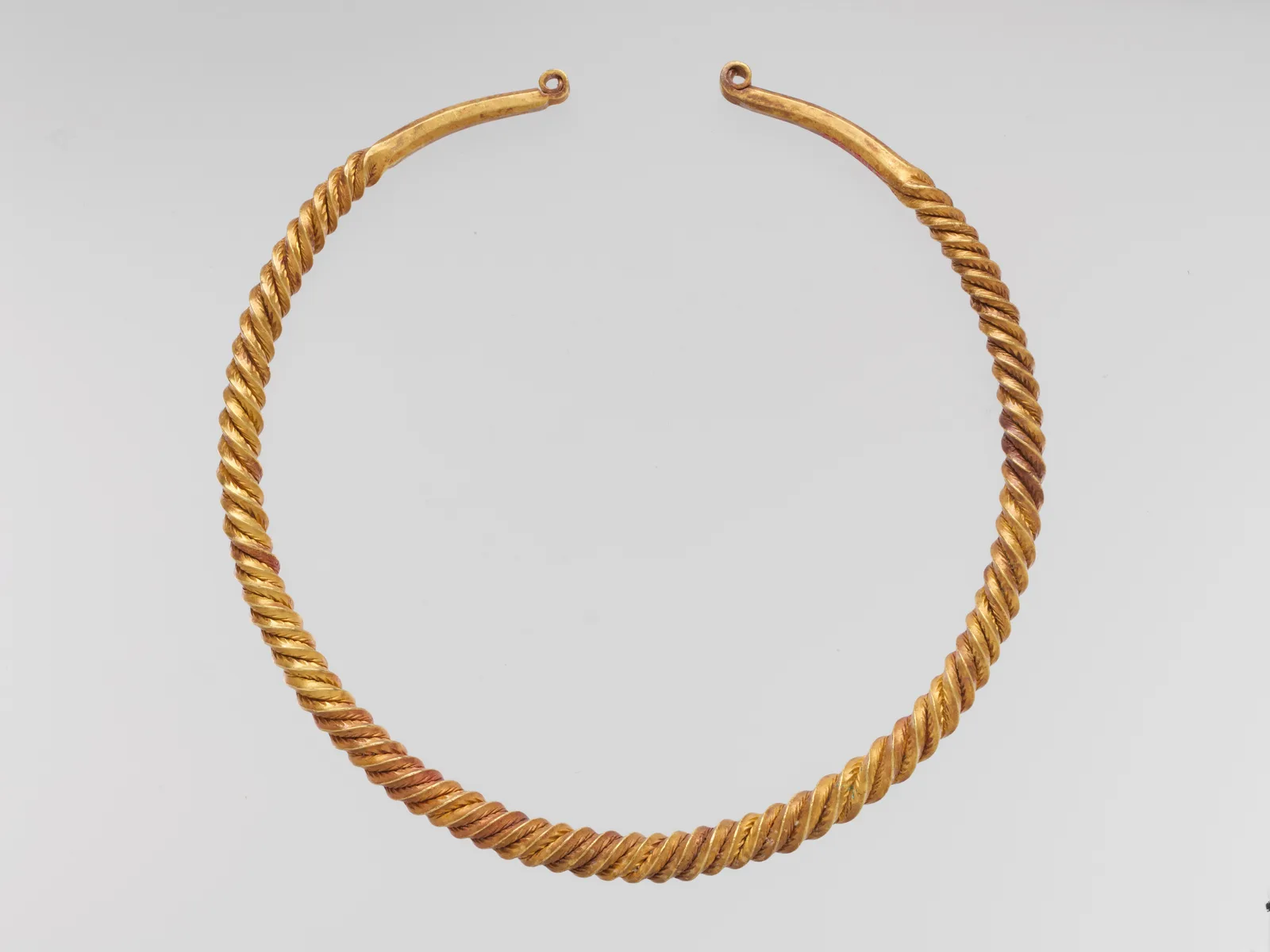
Natural materials in the spirit of the era itself add an archaic, handmade texture to the image. Carved bone, wood with a burned-in knot or serpent, a leather cord instead of a chain. Such pieces convey the rough authenticity of an ancient object and pair well with a metal inset, for example a silver serpent on a leather thong. For Loki natural materials are especially fitting: they tie the modern sign to that wild, borderland world of giants and shapeshifters to which the trickster belongs by blood.
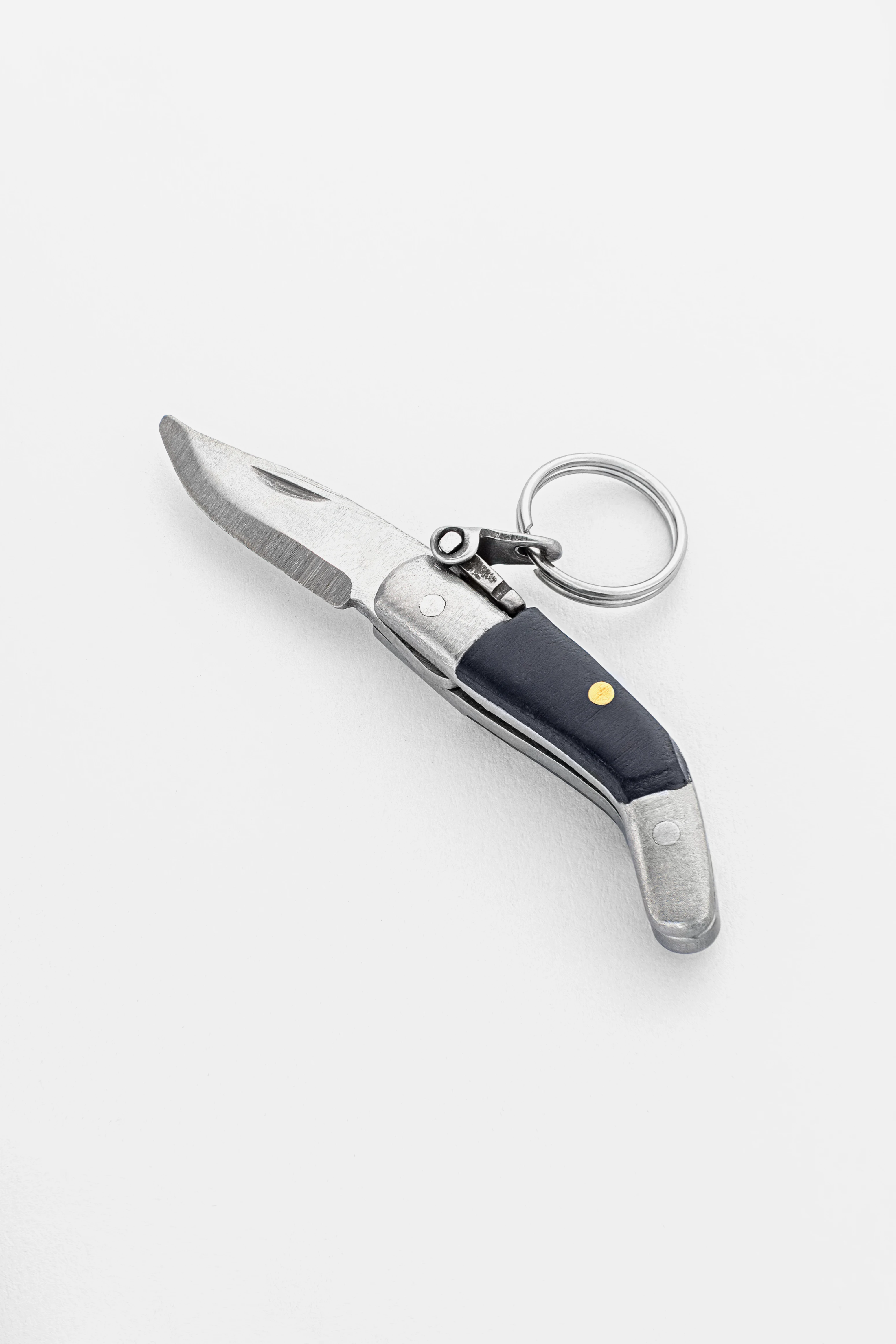
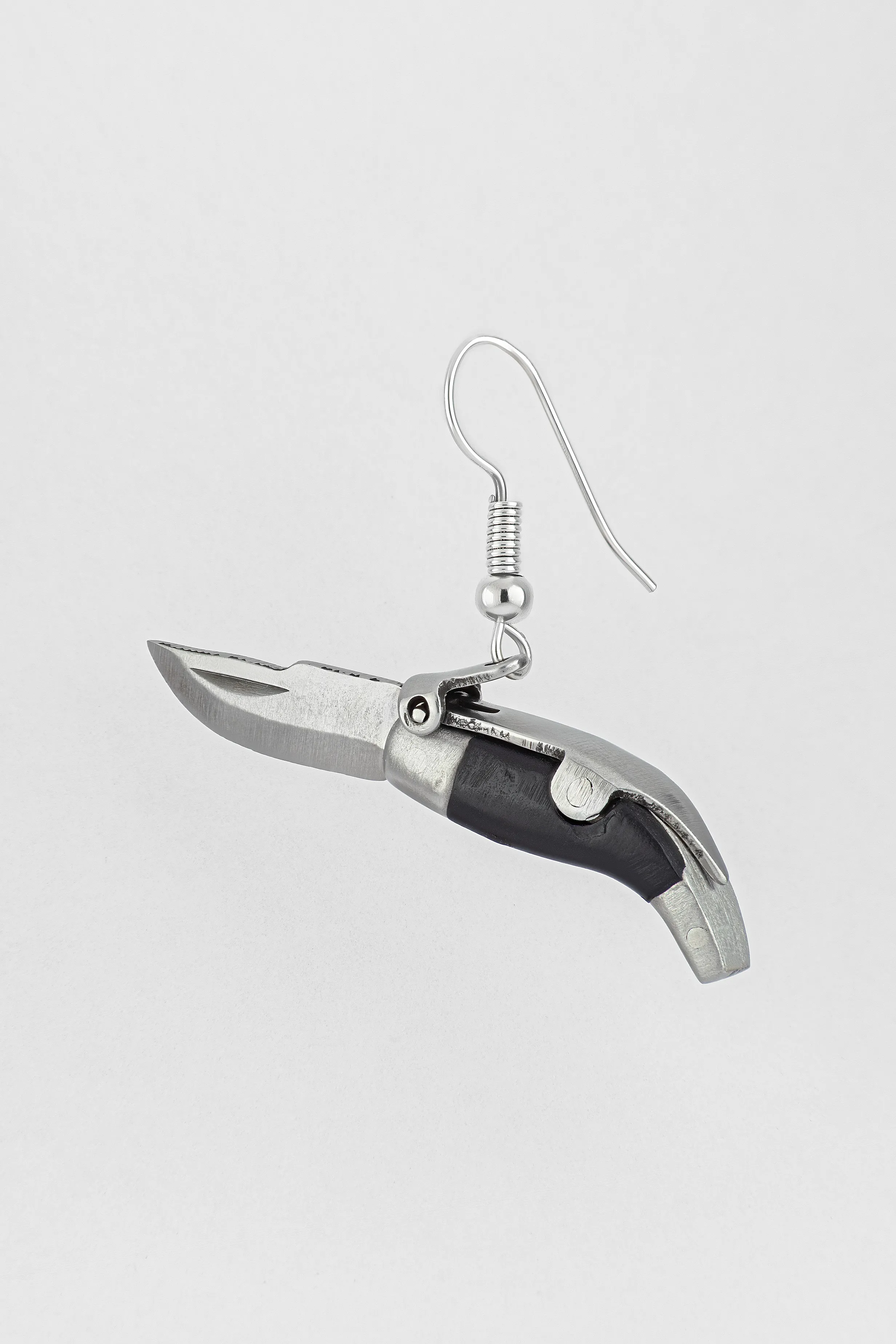
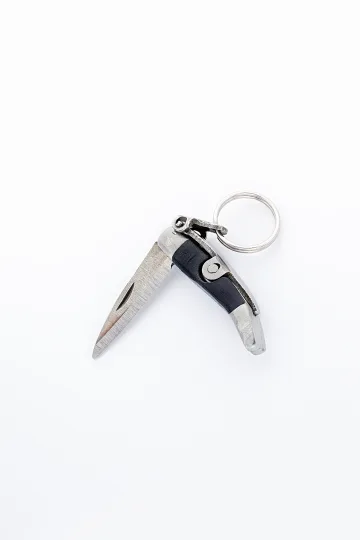
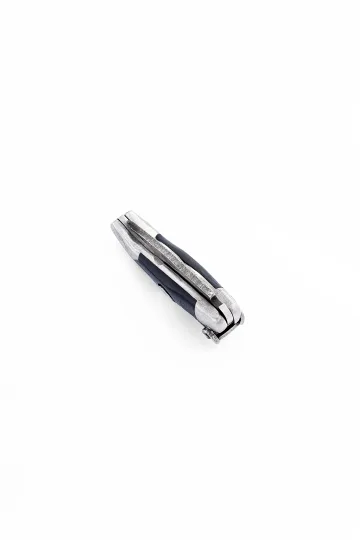
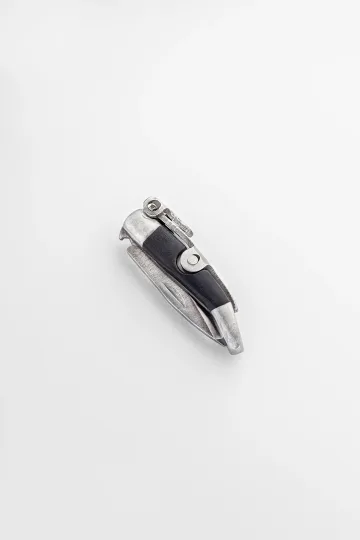
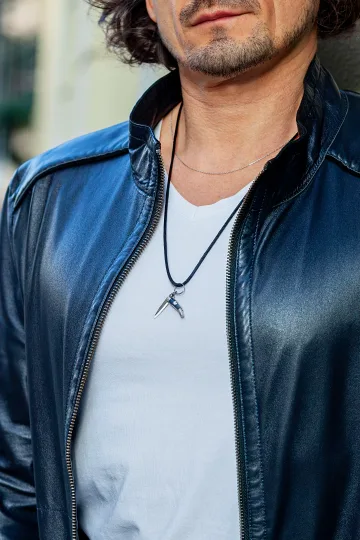
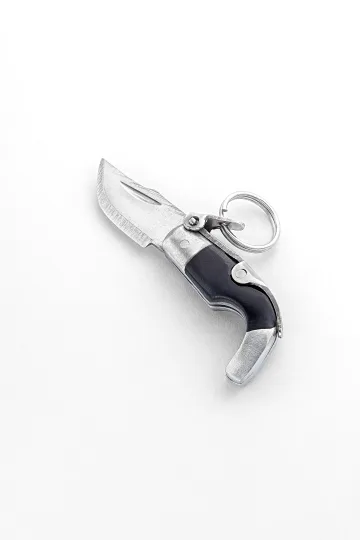
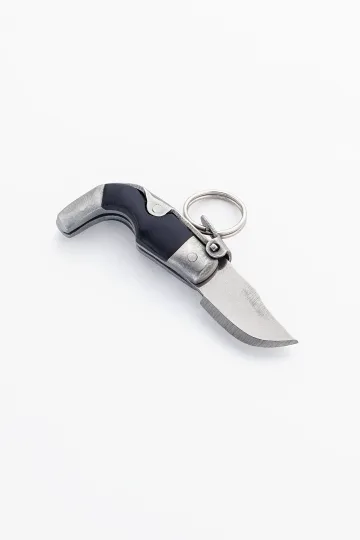
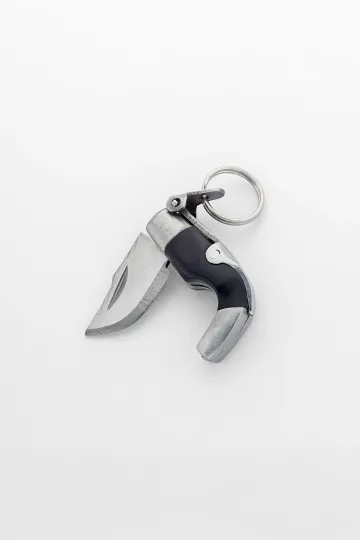
CAPAORA mini knife pendant
The 18th-century Spanish navaja in miniature: 40 mm of stainless steel, a real folding mechanism and a Palanquilla lock that clicks. An affordable gift to remember.
Authentic · Ships from Spain · 14-day returns
Tricksters of the world's peoples
Loki is not alone: the figure of the cunning one, the breaker of order who deceives and teaches at the same time, exists in nearly every people. This commonality explains why the trickster's image grips people so deeply, and widens the meaning of his symbolism beyond the North.
Hermes for the Greeks, the Roman Mercury, is a messenger god, patron of merchants, travelers, and thieves, a sly one who as an infant stole Apollo's cattle and talked his way out of it on charm. He is a guide between the world of the living and the dead, a being of the border like Loki. We devoted a separate study to Hermes, and his caduceus with its serpents echoes Loki's serpent facet: both gods are tied to cunning and to passage between worlds.
Anansi among the peoples of West Africa is a spider-trickster who tricked all the world's stories out of the sky god and brought them to people. His tales crossed the ocean with the enslaved and became part of the folklore of the Caribbean and the Americas. Anansi, like Loki, is small and weak against the strong, but wins by wit, and there lies the central moral of the trickster: cunning is stronger than brute force.
Coyote among the peoples of North America is creator and destroyer in one, who now brings fire to people, now draws trouble down on them through his own greed and folly. He is funny and wise, low and great at once. In Coyote there is the same duality as in Loki: the trickster of every people is a force that does not fit the simple division into good and evil, because the world itself is just like that.
Facts that surprise
Loki has gathered so much strangeness in the myths that some of the stories sound almost unbelievable.
Loki was the mother of an eight-legged horse. To wreck the deal with the giant builder, he turned into a mare, lured away the giant's stallion, and gave birth to a foal himself. So the finest horse of Asgard, the eight-legged Sleipnir that Odin rides, turned out to be the son of a deceiver god in a woman's shape.
Thor's hammer came about through Loki's wager. Mjolnir, the great protective sign of the North, was forged by the dwarves when Loki wagered his own head with them. Because the trickster bit the smith in the shape of a fly, the hammer's handle came out short, but in all else Mjolnir became the finest weapon of the gods.
Loki saved his head on a technicality. Having lost the wager to the dwarf Brokkr, he gave up his head but declared that he had not staked his neck, so it could not be touched. The dwarf could not take the head without harming the neck, and in revenge sewed the trickster's mouth shut.
Earthquakes were explained by Loki's torment. By the myth the chained god thrashes with pain when the snake's venom drips onto his face, and his convulsions make the earth shudder. So the ancient Norse explained underground tremors.
Loki named the serpent that girdled the earth. His son Jormungandr, the world serpent, is so vast that he wraps around the whole earth and bites his own tail. When he lets go of the tail, the end of the world will begin.
Loki took part in a flyting where he insulted every god at once. In the poem Lokasenna he bursts into a feast and needles each god and goddess in turn, exposing their secrets and weaknesses, until Thor arrives and drives him out.
Loki's wife holds a bowl over him until the end of time. The faithful Sigyn stands beside her chained husband and catches the snake's venom in a bowl, stepping away only to empty it. This scene of loyalty over a chained god of change is one of the most moving in the mythology of the North.
The image of Loki with the snake is carved on a Christian cross. On a Viking-age stone cross from the Isle of Man there survives a depiction in which scholars see a bound Loki, which speaks to the staying power of the image even on the threshold of Christianity.
Send a friend a discount code, they save on their first order.
Frequently asked questions
Who is Loki in Norse mythology?
Loki is the god of cunning, deceit, and change, the trickster of the Norse pantheon. By blood he is half giant, but he lives among the Aesir as Odin's sworn brother. He is a shapeshifter who changes form and sex, the father of the monsters Fenrir, Jormungandr, and Hel, and an ambiguous figure: now a helper of the gods, now their doom at Ragnarok.
Is Loki a god of good or of evil?
Neither, and there lies his essence. Loki does not fit the simple division: in some myths he rescues the gods by cunning, in others he brings trouble down on them, and in the end he undoes the world. His sign is chosen precisely for that ambiguity, for accepting that both light and shadow exist in a person and in the world.
What is Loki's symbol?
Loki has no single canonical sign like Thor's hammer. His symbolism is assembled from the motifs of the myth: the snake from the story of punishment, fire, the mask and duality, the interlaced knot, the silhouettes of his monster children. In jewellery the snake and the interlaced knot appear most often, as signs of cunning and reckoning.
Why is Loki tied to the snake?
The serpent symbolism comes from the myth of Loki's punishment. For his crimes the gods chained the trickster in a cave and hung a venomous snake over his face so the poison would drip onto his skin. That is why the snake with Loki is not wisdom but punishment, pain, and endurance in suffering, which is what makes it such a strong sign.
Can a woman wear Loki's symbol?
Yes, and Loki's image is especially suited to it. The god himself freely changed sex and shape, so his symbolism is unisex by nature. The feminine version is usually finer and more graphic: a delicate serpent, a small knot, a thin two-faced pendant. The trickster's signs carry the idea of wit, change, and the right to be yourself, and that is close to a person of any sex.
How does Loki differ from Odin?
They are different gods, though sworn brothers. Odin is the All-Father, the wise lord of the Aesir who wins knowledge at the price of his own sacrifice. Loki is the cunning rule-breaker who gets his way through deceit and a change of shape and pays for the result with the troubles of others. Odin embodies wisdom, Loki resourcefulness, and the two are bound by an oath of blood-brotherhood.
Who are Loki's children?
By the giantess Angrboda, Loki has three monster children: the wolf Fenrir, who will swallow Odin at Ragnarok, the world serpent Jormungandr, who girdles the earth, and Hel, the ruler of the land of the dead. Besides that, turning into a mare, Loki gave birth to the eight-legged horse Sleipnir. All his children are beings of a borderland, monstrous, or otherworldly nature.
What material is best for jewellery with Loki's symbolism?
It depends on the facet you want to bring out. Oxidised silver gives a graphic grimness that suits the snake and the mask. Gold points to the fiery side of the trickster. Black steel reads modern and brutal. Enamel and coloured inlays add contrast and colour, mirroring the god's duality most precisely.
Conclusion
Loki is the only one of the great gods of the North whom no one prayed to for luck and whose sign no ancient warrior wore as a charm. He lived in story, in the tale of a cunning one who gave birth to a horse, bargained the gods' treasures out of the dwarves, killed Baldr, and lay chained beneath a dripping snake. It is this ambiguity that made him the favourite of a new age. In a world of flat symbols of good, the trickster's sign says something else: accepting your own shadow, cunning as a virtue, the right to be many-faced and inconvenient. Choosing the snake, the mask, or Loki's interlaced knot, a person wears not a charm but a stance. It is a sign of wit, change, and the freedom not to fit in, and there lies its rare strength.
Silver, gold, Norse symbolism, protective signs, matching sets.
Buying it as a gift? Each one arrives ready to give.
 A branded Zevira box and a little card come with every order.




About Zevira
Zevira is jewellery with meaning: symbols, protective signs, marks of strength and character in clean forms of silver and gold. We love pieces with a history thousands of years long, and we carry it into modern design without needless pomp. Snakes, knots, Norse signs, and the images of ancient gods sit in the catalogue beside minimalist pendants and matching sets, so that everyone can find their own sign.