Veles in Jewellery: God of Cattle and Wealth, the Seal of Veles and the Mark of the Lord of the Underworld
In old treaties the princes of early Rus swore by two gods at once: by the weapons of Perun and by the cattle of Veles. Perun answered for a warrior's word, Veles for prosperity, trade and the binding force of a deal. Break an oath sworn on Veles, the saying went, and you would turn yellow as gold and lose all you owned. Today the mark of this god is being cut once more into a silver pendant.
Who Veles Was
Veles is one of the chief gods of the Slavic pantheon, patron of cattle, wealth, trade, wisdom and lord of the lower, underground world. He was called the "cattle god," and that phrase carries far more than a herd of cows. Among the early Slavs, livestock was the measure of wealth, and for a long time the very word for "cattle" also meant "property" and "money." So a god of cattle was a god of plenty in the widest sense: of harvest, of profit, of goods earned and kept, of a lucky trade.
The god's name survives in two close forms, Veles and Volos. Scholars still argue over whether these were two separate deities or one under two names, but in popular memory they merged into a single figure, the keeper of wealth and of the waters under the earth. From the root of the name, by one reading, come words tied to will, power and possession; by another, words tied to cattle and to wool, to the "hair" (volos). Either way we are speaking of a god who holds prosperity and the lower forces of the earth in his hands.
Wear the symbol, don't just read about it. These are in stock:



Few sources about Veles have survived, and that is worth keeping in mind from the very start. No written testimony from the pagans themselves remains, since the pre-literate Slavic tradition was passed on by mouth. What we know of the god comes from mentions in chronicles, from recorded oaths, from later ethnographic observations of rites, and from comparison with the beliefs of neighbouring peoples. So scholars largely assemble the figure of Veles grain by grain, and some of the details we take for granted today are reasoned reconstruction rather than word-for-word ancient lore. That does not make the image any less alive, but it asks for honesty about where there is solid knowledge and where there is a careful guess.
In jewellery Veles appears not as a portrait but through his signs. The chief one is the so-called Seal of Veles, an angular mark shaped like an upside-down letter "A" or a bull's muzzle with downturned horns. Beside it stand the bull and the wild aurochs, the bear, the serpent, the horn of plenty. Each of these images reads as a wish for wealth, strength and a bond with old, earthbound wisdom. A pendant bearing the Seal of Veles, or a signet ring with a bull's head, works like an old charm for profit and a sturdy household.
Veles stands apart among the Slavic gods. If Perun is the god of the thunderstorm, of the war band and of heavenly order, then Veles is the god of the earth, of cattle, of underground waters and of all that gathers and is kept. He is patron not of warriors but of herdsmen, merchants, storytellers and the volkhvy, the pagan priests and keepers of knowledge. That trait gives his symbolism a particular shade: it speaks not of battle valour but of husbandry, wisdom and a bond with the ancestors who lie in the same earth.
Where Veles Stands Among the Slavic Gods
Veles holds the place of the earthly, lower pole in the Slavic pantheon, opposite the heavenly Perun. Over the world rules the thunderer Perun, god of the prince's war band and of the storm, whose idol in Kyiv stood on a hill, at the top. Veles is bound to the low ground, to the earth, to cattle, waters and the underground realm, and his idol, by the chronicle record, stood below, on the Kyiv Podol by the marketplace. That geography alone, the high and the low, tells the story of how the two gods related.
It is worth fixing the circle of images around Veles. Cattle and the aurochs as a sign of wealth, the bear as the lord of the forest and the god's own beast, the serpent as the keeper of buried hoards and waters, the horn of plenty as a token of abundance. This retinue explains why a bull's head, a bear's claw and a serpent motif sit so often together in Slavic protective symbolism: they show the god through his beasts and attributes, not through a face, which the tradition has left us almost nothing of.
What follows, in order: where the cult of Veles came from, what each of his signs means, what his symbols carry, why the upside-down angular mark is called the Seal of Veles, how Veles stands against Perun, what such jewellery is made of, how and with what to wear it, and where Veles lives in folklore and ethnography.
The History and Cult of Veles
The image of Veles lived a long life, from a pagan treaty backed by thunder and weapons down to a village festival, and at almost every stage it left a trace in rites, words and objects people kept close. The figure is restored from chronicles, from recorded oaths, from late ethnographic notes on rites, and from names that survived into modern times.
The Cattle God: Wealth Measured in Herds
The earliest and most enduring name for Veles is the "cattle god." In a world that counted wealth in head of livestock, such a god answered for everything earned: for the increase of herds, for the harvest, for plenty in the home, for luck in trade. Cattle gave milk, meat, wool and draught power; they were bartered and paid out like money. So the patron of cattle naturally became the patron of wealth in general. The farmer asked Veles for a sturdy household, the merchant for a good deal, and both turned to the same god of plenty. That bond reaches us in the very language: a word that meant both "cattle" and "property," and a word for "treasury" built from the same root.
God of Wisdom, Song and the Volkhvy
Veles is also a god of wisdom, of tales and of hidden knowledge, patron of the volkhvy, the old pagan priests and keepers of lore. In the medieval poem "The Tale of Igor's Campaign" the bard Boyan is called "Veles's grandson," that is, heir to the god of poetry and inspiration. The link between a god of wealth and wisdom is no accident: to the ancients, knowledge was a kind of hoard you could gather, much like a herd, and a storyteller who held the lineages and the legends kept a wealth no smaller than herds of cattle. From this comes Veles's side as lord of the word and of memory, close to anyone who prizes a sharp mind and learning.
Lord of the Underworld and the Waters Below
Veles is master of the lower, underground world, the realm of the dead and the store of buried hoards. To him the souls of the ancestors go; in his keeping are the waters below, the roots of the world tree, all that lies under the earth and within it. This trait ties him to the image of the keeper of unseen wealth: gold and ore also lie in the earth, in his domain. The ancients saw a clean logic here. The god of plenty and the god of the lower world were one god, because both kinds of riches are hidden in the depths and come to a person from there. The bond with the ancestors makes Veles's symbolism close to the theme of kin and heritage.
Treaties, Oaths and the Unbreakable Word
The name of Veles rang out in the weightiest oaths of early Rus. By the chronicle, when striking treaties with the Greeks, the Rus swore by two gods at once: the warriors by their weapons and by Perun, the rest by Veles, the "cattle god." A breaker of such an oath called down the wrath of the god of wealth: it was promised that he would turn yellow as gold and lose all he had earned. So Veles became the guarantor of an honest deal and an unbreakable word, above all in matters of trade and husbandry. That role makes his sign a fitting charm for anyone who values a promise given and the strength of an agreement.
Veles and Perun: the Clash in Myth
In the reconstruction of the old Slavic myth, Veles and Perun are eternal opponents. By one reading, Veles the serpent steals from the thunderer his cattle, his waters or his wife, hides them in the lower world, and Perun gives chase, strikes with lightning, drives him under the earth and under stone, and frees what was taken. This story of a heavenly god battling an earthbound serpent is what scholars call the basic myth of the Slavs. It is important to keep in mind that much of it is reconstruction, gathered from scraps, not a whole ancient tale. But the opposition of two forces, the storm above and the underground below, runs clearly through the Slavic picture of the world.
Dual Belief: Veles and Saint Blaise
With the coming of Christianity the open cult of Veles died down, but the image did not vanish; it passed onto a saint close in name and role. The patron of cattle became Saint Blaise, whose name echoes Volos and Veles, and in the countryside he too was called the "cow" or "cattle" god, protector of the herds. On Saint Blaise's day prayers were said for the health of livestock, the animals were sprinkled with holy water, and special biscuits in the shape of little cows were baked. So the pagan god of plenty quietly lived on under a Christian name into modern times, and this is a rare, clear example of dual belief, where the old and the new grew together in a single feast.
Late Traces in Ethnography
Late records of rites preserve one more vivid trace of Veles. Reapers would leave on the cut field a small unreaped tuft of ears, which they called "Veles's little beard" or "the wisp for the beard," bending it over and decorating it. This was an offering to the god of fertility and of the field, payment for the harvest and a plea for plenty to come. The rite survived into the nineteenth and even the twentieth century, when few still remembered Veles himself, and it shows how deeply the god's name was rooted in the peasant year. From such small, stubborn traces scholars piece the old god back together.
The Seal of Veles wants oxidised silver and an open collar, not a gilt chain fresh off a gift-shop shelf. Keep the little flowers away from it.
How and With What to Wear It
I have worn the sign of Veles through dozens of looks, from reenactment fairs to plain city days. No belief in the old gods is needed here. The point is simpler: how to wear the angular seal, the bull ring or the claw so they read as character and do not get lost on the chest.
How do I wear the Seal of Veles every day? I recommend oxidised silver on a chain of middling length, around 45 to 50 cm, so the mark lies on the chest. Keep the top plain, no pattern: a grey tee, a linen or cotton shirt with the top button undone. A dark top makes the seal an accent, a light one lights up the darkened silver. A large mark wants a clear zone at the collarbones; a small one slips under the collar without fuss.
Will a bull signet ring overload my hand? Not if you let it lead alone. I suggest wearing the massive ring on the ring finger or the little finger, with no other rings on the same hand, so it does not compete for attention. I choose silver for an everyday look and gold for a formal one. Sleeves rolled, a plain watch, and the bull carries the whole hand by itself.
Leather cord or chain? It depends on which side of the image you want. For a claw, a fang or a beast's head I choose a leather cord: it heightens the primal, forest texture of Veles. For a graphic seal I take a silver chain, which reads cleaner and sterner. Bronze or brass on a cord suits anyone after a museum, dug-from-the-ground look, but mind the care: take it off before a shower and before sleep.
How do I build a look that does not turn gaudy? A strong sign works as an accent, not in a pile. I recommend layering the Seal of Veles with a couple of plain chains or other Slavic marks: Perun's axe, the lunula. What I keep well away is a glossy gold chain with little flowers beside a stern seal; it wrecks the whole tone. One strong piece always beats five small ones.
How does a woman wear it without it turning heavy? I go finer and more graphic: a delicate seal, a small horn of plenty, a thin serpent's curve on a short chain at the collarbones. Gold softens the sternness of the mark, oxidised silver keeps its character. One rule: scale it to yourself, not to someone else's hand. A large man's bull ring is beside the point here; find the sign that fits your own palm.

Turn on your camera, pick earrings, a pendant or a ring, and see the piece on yourself in real time.
Switch items in one tap.
Everything runs in your browser: no photo or video is ever uploaded.
Customer reviews
Zevira is a real jewellery shop. Genuine payments, deliveries and customer thank-yous.
🥰🥰🥰 gracias

Ok, ¡gracias! 🙂

The Symbols of Veles
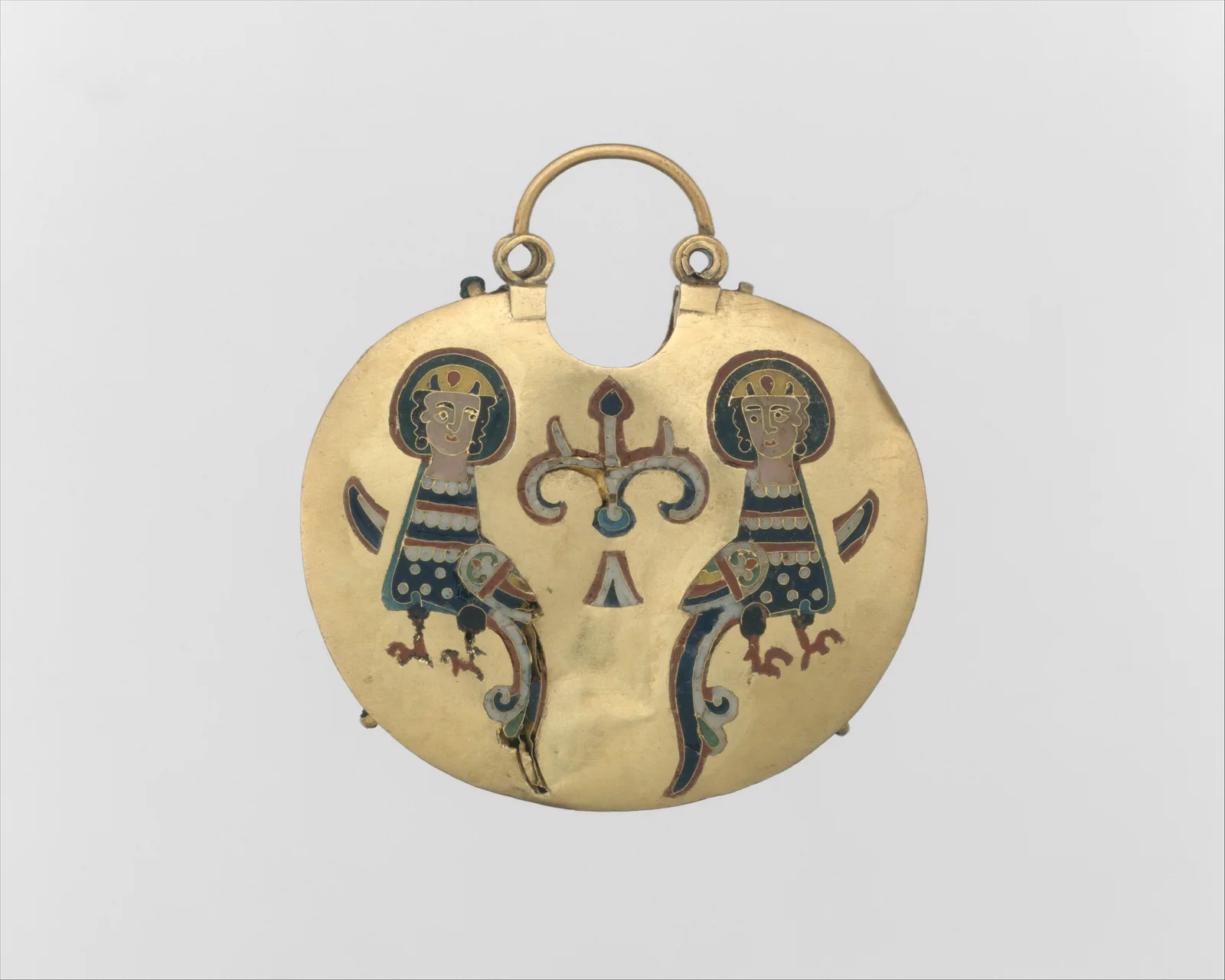
Veles comes with a whole set of signs, and each will stand on its own as a jewellery motif. Let us take them one at a time, keeping in mind that part of these readings is modern reconstruction rather than word-for-word ancient witness.
The Seal of Veles, or the Mark of Veles
The chief graphic sign of the god is the Seal of Veles, an angular symbol shaped like an upside-down letter "A" with a crossbar, read as a stylised bull's or bear's muzzle with the horns turned down. The inversion and the downward direction tie the mark to the lower world, to the earth and the underground forces, the domain of Veles. The Seal of Veles is worn as a charm for wealth, wisdom and luck in one's affairs, as a sign of a bond with old earthbound power. It is fair to say plainly that whole archaeological proof of this mark in exactly this form is scarce; it is in large part an image shaped in modern times on the basis of mythology. But as a graphic it is spare and strong: the angular lines fall into a recognisable, almost runic drawing that sits well on both a pendant and a ring.
The Bull and the Aurochs
The bull and its wild ancestor the aurochs are the most direct sign of Veles, god of cattle and wealth. The mighty horned beast embodied strength, fertility, abundance, the very idea of goods earned. The aurochs, the now-extinct wild ox, stood for the Slavs as an image of primal might; its horns were prized, and from them ritual cups and charms were made. A bull's head or horns in a piece of jewellery read as a sign of plenty, a sturdy household, a man's strength and persistence. A pendant or a signet ring with a bull's head points to the very heart of Veles: a god whose wealth was measured in horned herds. It is an old sign of profit and force, plain without a caption.
The Bear
The bear is the lord of the forest and the beast most closely tied to Veles. The god was often imagined in a bear's form, and the bear itself was honoured among the people as master of the woods, strong, wise, bound up with the wealth of the land and with the world of the ancestors, since the beast sleeps through the winter as if it goes into the lower world and returns in spring. The bear's claw and fang were worn from of old as a powerful charm for strength and protection. In jewellery the bear motif, the beast's head, paw or claw, reads as a sign of primal might, protection and a bond with the forest and earthbound wisdom of Veles. It is a stern, masculine symbol for someone who values strength and endurance.
The Serpent
The serpent is one of the forms of Veles himself and his sign as lord of the lower world. In the basic myth Veles appears as a vast serpent guarding the waters below and the hoards, and it is with him that the thunderer Perun does battle. Among the Slavs the serpent is tied to earth, water and underground riches, to wisdom and long life, and to the shedding of skin as an image of renewal. The serpent motif in jewellery reads two ways at once: it is both the keeper of hidden wealth and a sign of wisdom and old earthbound power. We cover the serpent as a symbol in its own right in full detail, while in the context of Veles the serpent matters precisely as a form of the god, the guard of his underground hoards.
The Horn of Plenty
The horn of plenty is an image of abundance directly tied to the god of wealth. A full horn spilling its gifts, grain, fruit and coins, reads as a wish for profit, harvest and a full house. With Veles this symbol is especially fitting, since both the bull's horn and the idea of a vessel brimming with goods come together in his image as god of cattle and of what is earned. In jewellery the horn of plenty works as a spare sign of luck in one's affairs and of material wellbeing, a gift with a plain wish of plenty for someone starting a venture or a household.
Upload a photo of your pet, someone you love, or an object. We'll build a 3D model and hand-cast it in pewter.




What Veles Means in Jewellery
Why wear the sign of Veles? The god carries several layers of meaning, and each answers a different human need.
Wealth and Plenty
Veles is above all the god of wealth, and this is his main meaning. The cattle god answered for plenty, profit, goods earned, luck in husbandry. To wear his sign is to stake on a sturdy household, on material wellbeing, on the ability to earn and to keep. The Seal of Veles, the bull, the horn of plenty read as an old charm for profit and plenty, as a wish for a full house. This is close to anyone who builds a venture, runs a household, values reliable plenty.
It is worth clarifying just what kind of wealth Veles favoured. It is not a gambler's chance luck, not a hoard fallen from the sky, but plenty earned, grown, won by honest work. A herd grows year by year, a field yields to labour, trade brings profit to the skilled. The cattle god answered for increase, for what gathers and multiplies rather than scatters. So his charm is closer to a steady person who builds plenty slowly and for the long term, not one chasing a quick win. In that sense the sign of Veles reads as a wish not for wealth that drops in your lap but for a sturdy, growing household that can be handed on.
Wisdom and Knowledge
Veles is a god of wisdom, of song and of hidden knowledge, patron of storytellers and the volkhvy. The ancients gathered knowledge like wealth and kept it like a herd. So the symbolism of Veles is close to anyone who values a sharp mind, learning, memory, anyone who lives by the word and by knowledge. For them the god's sign reads not of money but of another kind of wealth, of wisdom and mastery of lore. It is a rare side for a god of plenty, and it gives the image more depth.
Craft and Trade
Veles is patron of merchants, craftsmen and the honest deal. People swore by his name in trading treaties; they asked him for luck in business and for the binding force of a word. The god's symbolism is close to anyone who trades, makes things, strikes deals, anyone who lives by craft and exchange. For them the sign of Veles works as a charm for honest gain, a strong agreement and luck in one's affairs. It is a plain wish for someone opening a venture or going into negotiations.
A Bond With the Ancestors
Veles is lord of the lower world, where the souls of the ancestors go, and through this he is a god of the bond between kin and those who came before. His domain is the earth in which the forefathers, the roots, the origins lie. The symbolism of Veles is close to anyone for whom kin, heritage and the memory of the ancestors matter, the link between generations. In this sense the god's sign reads as a thread reaching deep into the family line, as a charm for the strength of the family and respect for one's roots. A close theme is held by the old Slavic lunar charm, the lunula, tied to a woman's lot and to kin.
For the early Slavs, the honouring of ancestors and the lord of the lower world joined directly. The forefathers lie in the earth, and the earth and the underground realm are the domain of Veles, so the dead themselves are in his keeping. At funeral rites, on the days set aside to remember the departed, the image of the god who receives the souls was unseen but present. So for those who wear the sign of Veles today for the sake of kinship, it works not as a piece of jewellery about money but as a quiet reminder of one's roots, of those who came before, of the duty of memory. That is a rare side for a charm of wealth, and it makes the symbol of Veles deeper than a simple sign of luck in business.





Veles and Perun: Two Forces
Of all Slavic mythology the pair of Veles and Perun deserves a separate word, because it is their opposition that holds up the frame of the whole worldview and explains how the sign of Veles differs from the signs of the upper, heavenly gods.
Perun is the god of the thunderstorm, of thunder and lightning, patron of the prince's war band and of warriors, god of heavenly order and force. Veles is his earthly opposite, god of cattle, wealth, the waters below and the lower world, patron of herdsmen, merchants and the volkhvy. One above, the other below. One rules thunder and weapons, the other plenty and the hidden. This pair, high and low, thunder and earth, is the very spine of the Slavic cosmos.
In the basic myth of the Slavs their feud is played out as a chase. Veles in serpent form steals from Perun his cattle, his waters or his bride and hides them in the lower world, under the earth, under stone, under a tree. Perun pursues the thief, strikes with lightning at all his hiding places, and at last frees what was taken, returning rain, cattle and order to the world. The thunderstorm in this myth is that very battle, and the lightning is the thunderer's weapon. It is important to keep in mind that no whole ancient text of this myth exists; scholars have assembled it from scraps of rites, songs and comparison with neighbouring traditions, so it is reasoned reconstruction rather than word-for-word lore.
For jewellery this pair gives a plain choice of tone. If you want a sign of strength, storm and a warrior's protection, you choose the hammer or axe of the thunderer, and we cover the axe of Thor and Perun separately. If wealth, wisdom, husbandry and a bond with the earth are closer to you, you choose the sign of Veles. A double charm, in which both forces meet, also turns up: the ancients, after all, swore by two gods at once, granting that the world needs both thunder and earth, both force and plenty.
Leave your email, we'll send your discount code. No spam, unsubscribe anytime.
The code arrives by email, valid on your first order.
Materials
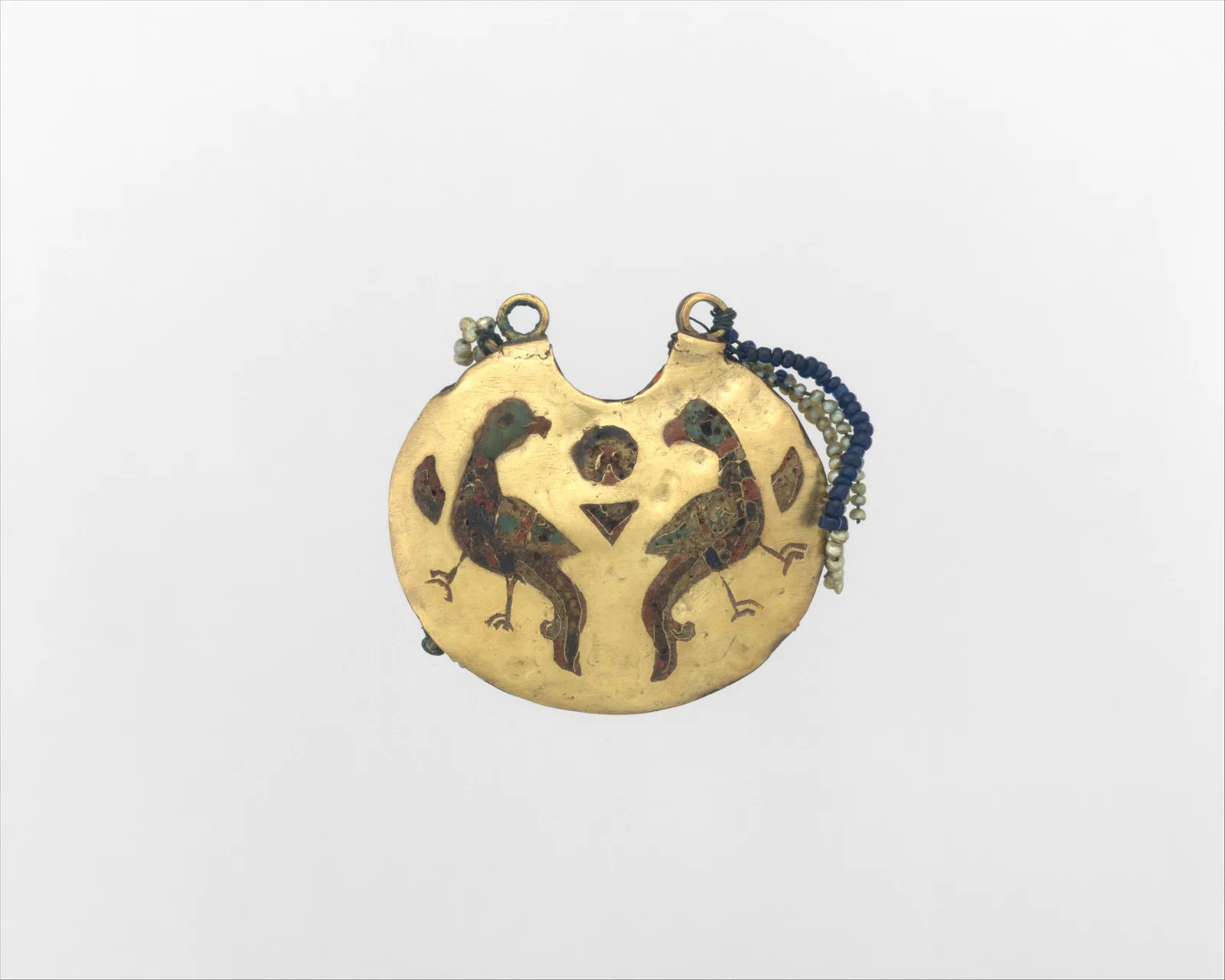
The image of Veles calls for materials that hold the idea of antiquity, earthbound strength and authenticity. Far from all of them fit, and each has its own logic.
Silver
Silver best carries the stern, archaic look of Slavic symbolism. Sterling silver, marked 925, is durable, fit for everyday wear and free of allergy for most people. The Seal of Veles, a bull's head, a serpent in silver look graphic and weighty, and silver itself is easy to blacken in the recesses of the relief, to bring out the angular lines of the mark or the texture of a beast's muzzle. Oxidised silver is perhaps the most "Veles-like" choice: it gives that very dark, time-darkened texture the old charms had when they were lifted out of the ground.
Bronze and Brass
Bronze is a historically close material: many Slavic charms, pendants and brooches were cast precisely from bronze and other copper alloys. The warm coppery cast lends the image an archaic, museum depth, as if the thing had just been raised from a dig. Brass with its golden tone works much the same and costs less. The drawback of copper alloys is that they darken over time and can leave marks on the skin, so such pieces need care. Bronze and brass are best taken off before a shower and before sleep, wiped with a soft cloth and kept in a dry place; then the patina settles handsomely rather than in blotches. Anyone who wants the warm, historical texture without the fuss chooses gilded silver.
Gold
Gold points straight to the idea of wealth that Veles presides over, and it reads as the high-status version of the sign. A gold Seal of Veles or bull's head ties the symbol of the god of plenty to the richest of metals, which is fitting and handsome in meaning. The warm gleam softens the sternness of the Slavic mark and makes it richer. For anyone who wants to bind a charm of plenty to the idea of kin and heritage, gold suits best, since it was gold above all that was gathered and handed down from one generation to the next.
Wood, Bone and Leather
A line of its own is natural materials in the spirit of the era itself. Carved wood, bone with a burnt-in sign, a leather cord in place of a chain. Such things carry the rough, handmade texture of the old Slavic charm and go well with a metal inset, for instance a silver Seal of Veles on a leather thong. Wood is especially fitting for the forest, bear side of the image, and bone points to the beast charms, the fangs and claws. These materials add authenticity and tie a modern piece to how the charms of our ancestors actually looked.
CAPAORA mini knife pendant
The 18th-century Spanish navaja in miniature: 40 mm of stainless steel, a real folding mechanism and a Palanquilla lock that clicks. An affordable gift to remember.
Authentic · Ships from Spain · 14-day returns
Veles in Folklore and Ethnography
Veles has a large life beyond the old myth, in peasant rites, in place names and in late beliefs. All of it feeds the symbolism of jewellery and helps make sense of what the god's image lived on after the conversion.
"Veles's Little Beard": the Harvest Rite
The most vivid late trace of the god is the harvest rite. Reaping the last of the field, the reapers left one tuft of ears uncut, bent it over and decorated it, calling it "Veles's little beard" or "the wisp for the beard." This was an offering to the god of the field and of fertility, payment for this year's harvest and a plea for plenty to come. The uncut "beard" was sometimes wound with a ribbon, with bread and salt laid beneath it. The rite survived into late times across the East Slavic countryside, and in it the name of Veles rang on stubbornly when the god himself was all but forgotten.
Saint Blaise, Protector of Cattle
After the conversion the role of patron of cattle passed to Saint Blaise, whose name echoes Volos. Among the people he was called the "cow god," protector of the herds, and on Saint Blaise's day in February prayers were said for the health of livestock, the animals were sprinkled with holy water, and ritual biscuits in the shape of little cows and bulls were baked. So the pagan cattle god quietly lived on under a Christian name, and a peasant asking Blaise for an increase of his herd was, in essence, turning to the same old patron of plenty as his distant forebears.
Veles in Beliefs About Wealth and Hoards
As lord of the underground world and of hidden treasures, Veles lingered in beliefs about hoards and buried wealth. The earth in the popular mind keeps gold and ore, and the lord of the lower world governs this hidden bounty. From this comes the steady link of the god with the theme of a found hoard, of luck, of unlooked-for plenty raised from the ground. This side makes the symbolism of Veles close both to a master of herds and to anyone who trusts in luck and a windfall, who seeks his own and digs deep, in the literal sense and the figurative. In old beliefs a hoard was often held to be charmed, given over to the keeping of the lower powers, and only the worthy or the one who knew the right word could take it. Behind this stands that same image of Veles, the god who holds the hidden wealth of the earth and decides to whom it shall open.
Veles in Modern Culture and Neo-Paganism
In modern times the image of Veles was reassembled from chronicles, songs and rites, and he became a large theme in writing about Slavic antiquity, in historical prose and in the neo-pagan movements reviving pre-Christian cults. It was in this milieu that the Seal of Veles took shape as a recognisable graphic sign and went into jewellery. Many come to the god's symbolism precisely through a modern interest in Slavic roots, through books, music, reconstruction. There is nothing wrong in that: an old image has found a new path to people. What matters is only to tell the historical basis, won by scholars, from later invention, and to understand what you wear and why.
Facts That Surprise
Veles has gathered so many stories over the centuries that some sound almost too odd to be true.
The word for "cattle" once meant "money." In the old East Slavic tongue, the word stood for a herd, for property and for the treasury alike, and the prince's treasure store took its name from the same root. The cattle god Veles was, in essence, a god of money and wealth in the most direct sense, with no metaphor about it.
People swore by Veles in international treaties. Striking peace with Byzantium, the Rus swore by two gods: the warriors by Perun and their weapons, the rest by Veles, the "cattle god." A breaker of the oath was promised that he would turn yellow as gold and lose all he had earned. The god's name stood in the same line as treaties between states.
The bard Boyan is called "Veles's grandson." In "The Tale of Igor's Campaign" the prophetic storyteller Boyan is named "Veles's grandson." This means Veles was also a god of poetry, song and inspiration, patron of those who kept the legends, and by no means only a master of herds.
The god lived on into modern times under a saint's name. After the conversion the patron of cattle became Saint Blaise, an echo of Volos and Veles. On his day cows were sprinkled and cow-shaped biscuits were baked. So the pagan god of plenty quietly lived another thousand years under a Christian name.
Veles and Perun stood at different heights in Kyiv. The idol of the thunderer Perun stood at the top, on a hill, and the idol of Veles below, on the Podol by the marketplace. That geography matched the mythology exactly: the heavenly god above, the earthly and underground one below, by the place where trade went on.
A field was left "for Veles's little beard." Reaping the field, the peasants left an uncut tuft of ears as an offering to Veles for centuries, bending and decorating it. The rite outlived paganism itself and survived into the nineteenth century, when few still remembered the god.
Veles could be a serpent. In the basic myth of the Slavs the god of the lower world appears as a vast serpent who steals cattle and waters and hides them under the earth, while the thunderer Perun drives him with lightning. So the god of wealth turned out to be an underground serpent, keeper of hoards too.
The god's name is disputed to this day. Veles or Volos, one god or two, scholars have argued for centuries. The sources are few, and much of the god's image is reasoned reconstruction, gathered grain by grain, rather than a whole ancient tale.
Send a friend a discount code, they save on their first order.
Frequently Asked Questions
Who was Veles in Slavic mythology?
Veles is one of the chief Slavic gods, patron of cattle, wealth, trade, wisdom and lord of the lower, underground world. He was called the "cattle god," since cattle were the measure of plenty. He is patron of herdsmen, merchants, storytellers and the volkhvy, god of plenty and hidden knowledge, the opposite of the heavenly thunderer Perun.
What does the Seal of Veles mean?
The Seal of Veles is an angular mark shaped like an upside-down letter "A," read as a stylised bull's or bear's muzzle with the horns turned down. The downward direction ties it to the lower world and the earth, the domain of Veles. The mark is worn as a charm for wealth, wisdom and luck in one's affairs. It is worth knowing that in exactly this form it is largely an image shaped in modern times on the basis of mythology.
How does Veles differ from Perun?
They are gods opposite in meaning. Perun is the god of the storm, of thunder and of the prince's war band, god of heavenly order and force, his sign the hammer or axe. Veles is the god of the earth, of cattle, of wealth and of the underground world, patron of merchants and the volkhvy. One above and about force, the other below and about plenty. In the basic myth they are eternal opponents, the thunderer pursuing Veles the serpent.
Can a woman wear the symbol of Veles?
Yes. The Seal of Veles, the horn of plenty and the serpent motif have long become universal signs. A woman's version is usually finer and more graphic: a delicate seal, a small horn of plenty, a thin serpent's curve. The symbolism of Veles carries ideas of plenty, wisdom, a bond with kin and earth, and that is close to a person of any gender.
Which material is best for a piece with the symbolism of Veles?
It depends on the aim. Oxidised silver gives the most "Veles-like," stern texture and suits everyday wear. Gold ties a charm of plenty to the richest metal and reads as the high-status version. Bronze gives a historical, museum look close to old Slavic charms. Wood, bone and leather add handmade authenticity, especially for the forest, bear side of the image.
Why is Veles called the cattle god?
Because he is patron of cattle, and cattle among the early Slavs were the measure of wealth; the very word for "cattle" also meant property and money. The god of herds automatically became the god of plenty, profit and goods earned. Both the herdsman, asking for an increase, and the merchant, asking for a good deal, turned to him. The "cattle god" is, in essence, a god of wealth.
Is Veles a good god or an evil one?
Neither, in the simple sense. Veles is a complex, double-natured god: giver of wealth, wisdom and plenty, yet also lord of the lower, underground world, opponent of the thunderer, taking serpent form in the myth. The ancients did not split gods into good and evil the way we do. Veles is the force of earth and plenty, needed by a person, but tied to the low, the dark and the hidden.
Which beast is linked with Veles?
Several at once. The bull and the aurochs as a sign of wealth and cattle, the bear as lord of the forest and a form of the god himself, the serpent as keeper of underground hoards and another form of Veles. Each beast opens its own side of the god: the bull plenty, the bear strength and a bond with the forest and the ancestors, the serpent wisdom and the hidden wealth of the lower world.
Conclusion
Veles outlived the fall of his own cult and remained in the most enduring form Rus knew: in a name grown into the language of money and wealth, in a peasant rite on the cut field, in the name of a saint sprinkling the herd, in an angular mark once more being cut into silver. The bull, the bear, the serpent, the horn of plenty and the god's seal proved stronger than time, because they carry a plain meaning: plenty, wisdom, a sturdy household, a bond with the earth and with kin. Today the symbolism of the cattle god answers simple human needs, the wish for profit, for a sharp mind, for reliable plenty, for the memory of one's roots. In choosing the sign of Veles, a person carries on the gesture of a distant forebear who left the god a tuft of ears for luck. And no belief in the old gods is needed here: the sign works as a clear reminder to yourself of what you wish to grow, to keep and to hand on. Wealth, wisdom and the strength of the earth fit in the palm of a hand.
Silver, gold, Slavic symbolism, charms, signs of strength and plenty.
Buying it as a gift? Each one arrives ready to give.
 A branded Zevira box and a little card come with every order.













About Zevira
Zevira is jewellery with meaning: symbols, charms, signs of strength and protection in clean forms of silver and gold. We love things with a story thousands of years long, and we carry it into modern design without needless pomp. The Seal of Veles, the bull, the serpent and other signs of the old gods sit in the catalogue beside minimalist pendants and paired sets, so that everyone finds their own sign.