Svarog in Jewellery: the Slavic Smith God, the Star of Svarog, and Heavenly Fire
The old Slavs believed that the first pair of tongs was thrown down to people by a god himself. Before that, smiths worked with bare hands, scorching themselves on hot metal, until Svarog dropped iron pincers to the earth and taught humankind to hold fire without burning. From that fall, the legend says, the craft began. Today the sign of the heavenly smith is carved into silver once again.
Who Svarog Is
Svarog is the Slavic god of the sky, of heavenly fire, and of smithcraft, the supreme father of the gods and the maker of the visible world. His name is linked to an ancient root meaning "sky" and "shining," and the whole image is already folded into that name: a god who lives above, forges on a heavenly anvil, and lets sparks, fire, and order fall to earth. Put briefly, Svarog is the heavenly smith who gave people fire, craft, and law.
A smith held a special place among the old Slavs. He alone knew how to tame fire and turn a shapeless lump of ore into a plough, a sickle, a sword, an ornament. This looked like a wonder, almost like sorcery, and so smithcraft was surrounded by both respect and fear. A god who forges in the sky, in this picture of the world, was no mere craftsman but a creator: he hammers out the cosmos itself, the way a smith hammers a thing from iron. That is the source of Svarog's role as father of the gods and orderer of the world.
Wear the symbol, don't just read about it. These are in stock:





Few sources about Svarog survive, and it is fair to keep that in mind from the start. There are no written records from the pagans themselves, since the pre-literate Slavic tradition lived by word of mouth. We know the god through later chronicle insertions, through comparison with the beliefs of neighbouring peoples, through ethnographic records of rites and folk beliefs about smiths. So scholars largely piece Svarog together from fragments, and some of the details that feel familiar today are a reasoned reconstruction rather than a verbatim ancient legend. This does not make the image any less alive, but it asks for precision: where the knowledge is solid, and where it is a careful guess.
The main mention of the god's name stands in a late Slavic insertion into a translation of a Byzantine chronicle. There Svarog is named the father of the sun god, called Dazhbog and "Svarozhich," that is, the son of Svarog. From this link grows the image of Svarog as parent of the other gods and as the heavenly orderer who passed daylight on to his son. The word "Svarozhich" itself later came to mean fire as such, both domestic and sacrificial, and this is the second important trace of the god: fire that is called the son of the sky.
In jewellery Svarog appears not as a portrait but through his signs. The chief of them is the so-called Star of Svarog, also known as the Square of Svarog, an angular pattern of interwoven lines that forms a square and a star at once. Beside it stand the hammer and tongs of the heavenly smith, the spark of heavenly fire, the horse as an image of the sun running across the sky. Each of these signs reads as a wish for creation, mastery, order, and a firm beginning. A pendant with the Star of Svarog or a ring with a hammer works as an old charm for labour, craft, and a steady hand at the work.
Svarog stands apart among the Slavic gods. If Perun is the god of thunder and the warband, and Veles the god of cattle, wealth, and the lower world, then Svarog is the god of the very top, of the sky and the creating fire, a parent and an orderer. He is the patron not of warriors or merchants but of makers, masters, smiths, of everyone who shapes something with their own hands. This trait gives his symbolism a particular shade: it speaks not of plunder or battle but of creation, craft, and the order a person brings into the world through work.
Svarog's Place Among the Slavic Gods
Svarog holds in the Slavic pantheon the place of the heavenly father, the upper, creating pole. Above the world, by the reconstruction, stands he, the smith god and parent, and from him come the younger gods, the Svarozhichi: the solar Dazhbog and fire, the Svarozhich. Perun the thunderer governs the storm and the warrior order, Veles holds the lower realm, the earth and plenty, while Svarog is bound to the very top, to the sky, light, and the creating fire. This arrangement alone, the father above and his elemental children below, already tells the story of how the gods relate.
It is worth remembering Svarog's circle of images too. The hammer and tongs as the tools of the heavenly smith, the anvil and forge as the place of making, the spark and flame as heavenly fire, the horse as the sun running across the sky, the star-square as the graphic sign of the god himself. This retinue explains why the hammer, the spark, and the angular woven pattern so often sit side by side in Slavic protective symbolism: they show the god through his work and his tools, not through a face the tradition has left us almost nothing of.
Next, in order: where the cult of the heavenly smith came from, what each of his signs means, what his symbolism carries, how to read the Star of Svarog, what such jewellery is made of, how and with what to wear it, and why smith gods look so alike among the most different peoples.
History and Cult of the Heavenly Smith
Svarog's image lived a long life, from the heavenly forge that hammered out the world to the household fire in the stove, and at almost every stage it left a trace in rites, words, and beliefs about craft. Scholars restore this image from late chronicle insertions, from comparison with neighbouring mythologies, from ethnographic records about smiths and fire.
The Heavenly Smith Who Forged the World
The very heart of Svarog's image is the smith on the heavenly anvil. The ancients saw in smithcraft an almost cosmic power: out of shapeless ore and fire a finished thing is born, the way an ordered world is born out of chaos. A god forging above is, by this logic, the creator who hammered out the firmament, the luminaries, and the order of things. The hammer, anvil, forge, and tongs are not ordinary tools but instruments of creation. That is why Svarog is not one god among many but a parent and an orderer, the one who gave the world its form with a blow of the heavenly hammer. This trait links him to the creator smiths in the myths of other peoples and explains the special respect for the craft itself.
The God Who Gave People Fire and Craft
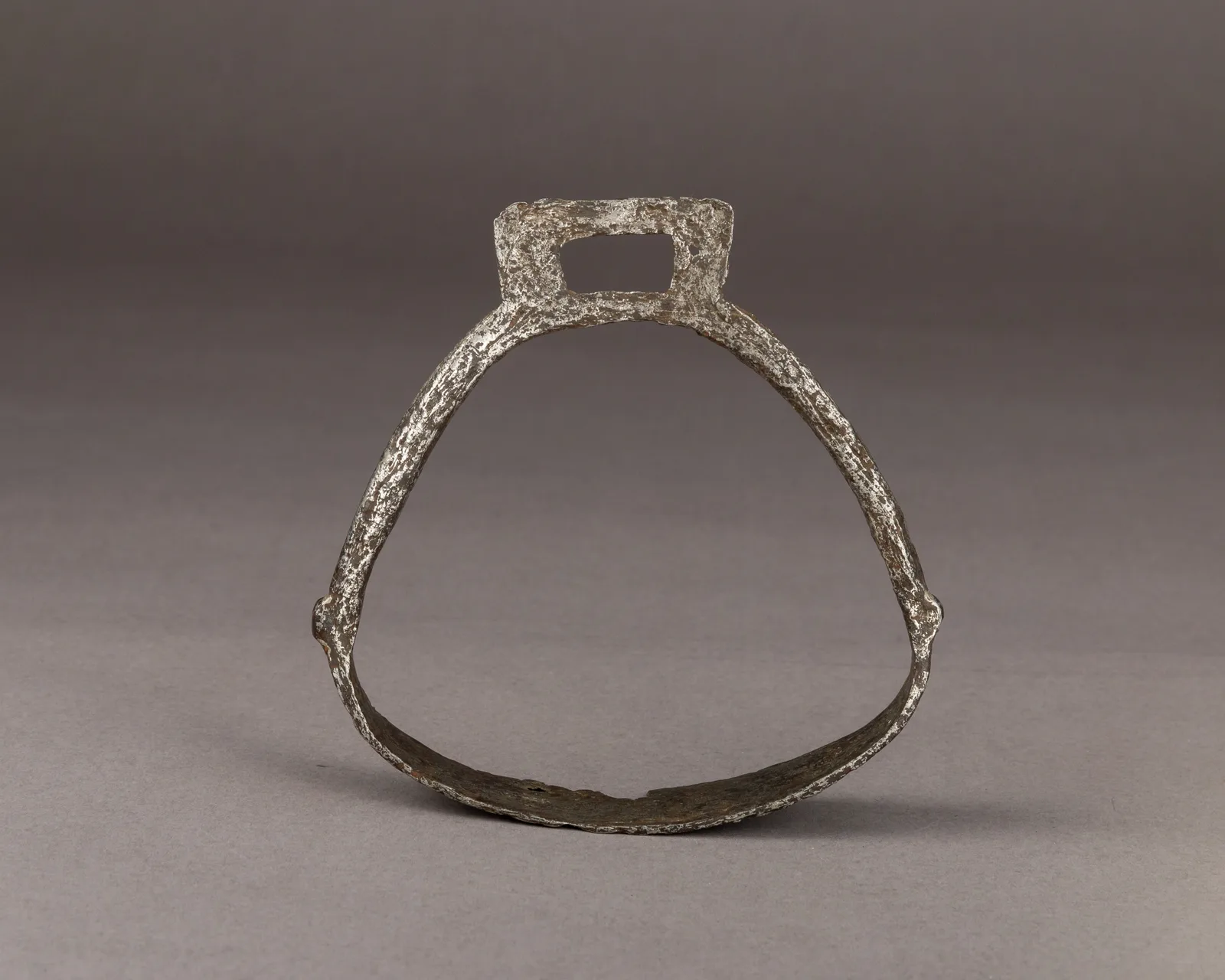
The second great facet of Svarog is the giver. By the legend, it was the heavenly smith who taught people to use fire and forge metal, and by one recorded tale he threw them iron tongs from the sky so they could hold red-hot iron without burning. Before that, the legend says, people forged with their hands or knew no smithcraft at all. The gift of fire and craft is a key motif: the god is not content with power but shares with humankind a skill that changes their whole life. Having received fire and smithcraft, the human race steps out of wildness into craft, into weapons, into the plough, into the ornament. Svarog in this sense is a bringer of light, a god who gave people the chief skill of their hands.
Father of the Gods and the Svarozhichi
Svarog is the parent of the younger gods, who are called Svarozhichi, that is, the sons of Svarog. The chief of them is the solar Dazhbog, giver of daylight and warmth, whom the late chronicle insertion plainly calls the son of Svarog. The second Svarozhich is fire, domestic and sacrificial, like a living son of the sky come down to people in the hearth. This link matters for understanding the god: Svarog passes the sky and light to his son the way a smith passes the craft and the forge to his son. So a heavenly family is built, the father smith above and the elemental children, sun and fire, working in the world of people. The image echoes the sun god, and we cover solar and lunar symbolism separately.
Fire Named Svarozhich
A separate and vivid feature of the cult is fire that was called by the god's name. In late sermons against paganism the Slavs are reproached for "praying to the fire under the drying barn, to Svarozhich." This means that living flame in the barn, in the stove, on the altar was taken as the son of Svarog, as heavenly fire come down to people. It explains why fire in Slavic daily life was surrounded with taboos and respect: you could not spit into it or throw anything unclean into it, and it was tended like a living being. The household hearth, seen this way, is not everyday warmth but the presence of the divine, a particle of heavenly fire left by the smith god in the house. From here comes Svarog's link to the theme of the hearth, the home, and the family line.
The Smith in Slavic Folklore
The image of the heavenly smith reaches into later folklore too, where the smith becomes an almost magical figure. In tales and legends the smith reforges a voice, remakes the old into the new, defeats a serpent, forges a wedding and fate itself. In Ukrainian legends the smith saints Kuzma and Demyan catch a terrible serpent by the tongue with red-hot tongs, harness it to a plough, and plough the earth with it, leaving behind "the serpent ramparts." Behind these stories stands the same ancient idea: the smith tames chaos with fire and iron, just as the heavenly god tamed it at the world's creation. The folk memory of the wonder-working smith is a late reflection of Svarog's cult.
Dual Faith: the Smith Saints
With the coming of Christianity the open cult of the heavenly smith faded, but the image did not vanish. It passed onto saints linked with fire and craft. The folk patrons of smiths became the saints Kuzma and Demyan, the unmercenaries, whose names merged into a single smiths' feast, Kuzminki. They were thought of as heavenly forgers, masters who forge ploughs and weddings, and people turned to them for luck in the craft and a strong marriage. So the ancient smith god quietly lived on under Christian names into modern times, and this is a clear example of dual faith, where the old and the new grew together in one feast of masters.
Late Traces in Ethnography
Late records of rites preserve traces of the veneration of fire and the forge that go back to the heavenly smith. The fire in the stove was tended as a living thing, carried from the old house into the new one, and never allowed to be defiled. The village smith was credited with a special power, and people came to him to charm away an illness, to seal a union, to forge a charm. The forge stood apart, at the edge of the village, at the border of one's own and the stranger's, as a place where a person touches a dangerous creating force. From such stubborn details, beliefs about fire and the smith, scholars piece together the image of the ancient god, whose name was almost forgotten by the nineteenth century, while his work and his fire remained.
The Fire of the Wedding and Marriage
A separate facet of the heavenly smith is his link to the wedding and marriage. In folk thought the smith "forges" a wedding the way he forges a horseshoe or a sickle, and the plea "forge me a little wedding" sounds in ritual songs as a direct address to the master at the forge. Behind this lies an ancient logic: to join two people into a family is as much a creative act as to join two pieces of iron into one thing. Fire both heats and fuses. Through the theme of the hearth that the newlyweds light in the new house, the image of Svarog the smith joins the idea of creating a family, and so the sign of the heavenly forger is sometimes chosen as a charm for a strong union and a shared hearth.
The Star of Svarog wants oxidised silver and a dark collar, not gold over a beach tan. You are a smith, not a tourist. End of story.
How and With What to Wear
The heavenly smith's sign has passed through dozens of my shoots, from stern menswear to fine feminine looks. Here is what actually works, by occasion and without superstition.
How do I wear the Star of Svarog every day? For daily wear I suggest a medium star on a chain that rests on the chest over a plain top. A print on a tee or a sweater fights the angular weave, so I recommend a smooth top: black, grey, sand. Keep a large star on the open area, tuck a small one under a shirt with the top button undone. Oxidised silver reads the sternest here.
Where does the hammer ring go? A massive ring I let take the lead: one ring on the hand, no neighbours, or they quarrel for attention. Wear it on the ring or the little finger, ideally on the working hand, where it looks like it means business. Silver pulls the ring into everyday, gold lifts it to formal. If the hand already carries a watch and bracelets, the hammer ring wants empty space beside it.
Does the smith's sign suit a woman? It does, and do not argue. The image is traditionally masculine, but the star, the spark, and the solar circle have long been worn by all. For women I recommend a thinner, more graphic version: an elegant star on a fine chain, a small spark, a radiant circle. Leave the heavy relief and the leather cord to those who want sternness. Gold softens the sign, oxidised silver makes it stricter.
Which metal should I choose for my look? I choose by what a person wears every day. Dark clothes, a strict top, a love of the archaic call for oxidised silver: it catches every line of the weave. Warm tones, an open collar, the idea of light and hearth lead to gold. For those who work with their hands and value working texture, I suggest bronze or steel on a leather cord, just remember the care that copper alloys need.
What do I pair it with so it is not overloaded? A strong sign works as an accent, not in a pile. I layer the Star of Svarog with neutral chains or other Slavic signs: an axe, a lunula, the Seal of Veles. A scattering of little flowers or a shiny mass beside it I do not advise, the stern geometry loses its character next to them. One piece with a story always beats five random ones.

Turn on your camera, pick earrings, a pendant or a ring, and see the piece on yourself in real time.
Switch items in one tap.
Everything runs in your browser: no photo or video is ever uploaded.
Customer reviews
Zevira is a real jewellery shop. Genuine payments, deliveries and customer thank-yous.
🥰🥰🥰 gracias
Ok, ¡gracias! 🙂
The Symbols of Svarog
The heavenly smith has a whole set of signs, and each one suits a standalone jewellery motif. Let us take them one by one, keeping in mind that part of the readings is a modern reconstruction rather than a verbatim ancient witness.
The Star of Svarog, Also the Square of Svarog
The chief graphic sign of the god is the Star of Svarog, also called the Square of Svarog, an angular pattern of interwoven lines in which a square and an eight-pointed star can be read at once. The lines weave into a dense lattice with no beginning and no end, and this weaving is read as an image of order forged out of chaos, as the joining of the earthly, the square, and the heavenly, the star, in one sign. The Star of Svarog is worn as a charm for creation, mastery, clarity of mind, and a steady hand at the work. It is fair to say plainly: there is little solid archaeological confirmation of this sign in exactly this form, and it is largely an image shaped in modern times on the basis of mythology and folk ornament. But as graphics it is lean and strong, the angular weave folds into a recognisable, almost runic drawing that sits well on both a pendant and a ring. More on how to read this sign in a separate section below.
The Hammer and Tongs
The hammer and tongs are the tools of the heavenly smith and the most direct sign of Svarog the creator. The hammer strikes the anvil, giving metal its shape, and the tongs hold the red-hot iron in the fire. In the Slavic legend it was the tongs that the god threw to people from the sky, teaching them smithcraft, so the pincers here are no small detail but a gift that changed humankind. The hammer and tongs in jewellery read as a sign of creation, mastery, persistent labour, and the ability to give the world form with one's own hands. It is important not to confuse this hammer with the war hammer of the thunderer: for Svarog the hammer is a tool of craft and creation, not a weapon. We cover the hammer and axe of the thunderer separately, and the difference here is fundamental, the smith and the warrior are different roles.
Heavenly Fire and the Spark
Heavenly fire is the core of the image of Svarog and his son the Svarozhich, and in the signs it lives as a spark, a tongue of flame, a solar circle. Fire for the Slavs was thought of as living, come down from the sky from the smith god, so a spark in jewellery reads as a particle of the creating force, as a beginning, warmth, the life of the household hearth. Tongues of flame, a radiant circle, sparks against an angular background are lean signs that point to the gift of fire and to the craft itself, which is impossible without fire. The fiery motif gives Svarog's image warmth and movement, balancing the stern geometry of the star.
The Horse and the Solar Wheel
The horse is an image of the sun running across the sky, and so it too belongs to Svarog's circle of signs and to his son Dazhbog. The ancients imagined the sun as a wheel rolling across the firmament or a galloping horse, and horses on the roof of the hut, on towels, on charms guarded the home and drove off the dark. The solar wheel, the kolovrat, the radiant circle are kindred signs of light and movement, tied to Svarog's heavenly family. In jewellery the horse and the solar circle read as signs of light, movement, vital force, and the daytime warmth the heavenly father gives through his solar son. This is a softer, brighter facet of the symbolism, unlike the stern geometry of the star or the smith's tools.
Upload a photo of your pet, someone you love, or an object. We'll build a 3D model and hand-cast it in pewter.
The Meaning of Svarog in Jewellery
Why wear the sign of the heavenly smith? The god carries several layers of meaning, and each answers a different human need.
Creation and Creativity
Svarog is first of all a creator, and this is his chief meaning. The god who forged the world is the patron of all who make: masters, craftspeople, artists, engineers, everyone who turns a plan into a finished thing. To wear his sign means to bet on creation, on the work of the hands, on the ability to bring a thing to its final form. The Star of Svarog, the hammer, the spark read as an ancient charm for creative force and mastery, as a wish not to abandon what you have started. This is close to those who work with their hands or their heads on something new, who value the very skill of making.
Craft and Mastery
Svarog is the patron of craft in the most concrete sense, the god of smiths and of everyone who has a trade. His sign suits the one who forges, carves, solders, mends, builds, who lives by their mastery. The hammer and tongs in this reading stand for respect toward manual work, as a charm for a steady hand and a precise eye. This is a plain wish for the master, the craftsperson, the one who takes pride in the skill of their hands and wants the work to go well.
Order Out of Chaos
Svarog has a particular, philosophical facet: he brings order into the world. The smith takes shapeless ore and chaotic fire and makes from them a thing with a clear form and purpose, just as the god forged an ordered world out of chaos. So the sign of Svarog reads also as a charm for clarity, focus, the ability to bring order to one's affairs and one's head. The angular weave of the Star of Svarog with its strict lattice conveys this idea well: many lines drawn into a single ordered pattern. This is close to those who value structure, discipline, the ability to turn confusion into a system.
Manly Strength and Support
The image of the heavenly smith traditionally reads as masculine: fire, metal, hard labour at the anvil, fatherhood, the role of head and orderer. Svarog is a father god, parent of the gods, the support of the heavenly family, and his symbolism carries the idea of mature manly strength, responsibility, the ability to hold up the home and the work. The god's sign in this reading works as a charm for endurance, reliability, fatherly firmness. This is a clear meaning for a man who sees himself as the support of his family and a master of his trade, although the geometry of the Star of Svarog has long become universal.
The Hearth of the Family and the Warmth of Home
Through his son the fire, Svarog is linked to the household hearth, and so to the home, the family line, the warmth of the family. The fire in the stove was thought of as a particle of heavenly fire left by the god in the house, so the hearth is no longer everyday warmth but the presence of a divine beginning that guards the family. The sign of Svarog in this sense reads as a charm for a strong home, the warmth of the hearth, the bond of generations around one fire. This is close to those for whom family, ancestral memory, and the comfort of home are a value. A kindred theme of the family line and a woman's lot is held by the Slavic lunar charm, the lunula.



The Star of Svarog: How to Read the Sign
Of all the god's signs, the Star of Svarog deserves a separate talk, because it is the one most often asked about and the one most often carved into silver.
The Star of Svarog is a woven angular sign in which a square and an eight-pointed star can be read at the same time. The lines interweave, forming a dense lattice with no clear beginning or end, and at the centre an empty field is often left, read as the point of creation, as the forge or the spark. The pattern is strictly symmetrical and has no single top point, it is the same from every side, and in this people see an image of even, stable order.
The sign is read like this. The square is the earthly, the material, the four cardinal directions, the firm ground a person walks on. The star is the heavenly, the spiritual, the radiance, the rays. Their joining in one pattern is read as the meeting of the earthly and the heavenly, of matter and spirit, as that very creative act in which a thing is born out of earthly ore and heavenly fire. The interweaving of the lines is read as order forged from chaos, as the continuity of labour and lineage, as a defence no evil can slip through.
The Star of Svarog is worn as a charm for creation, mastery, clarity of mind, a firm beginning to any undertaking. It is chosen by masters, creative people, those who are building a home, starting a venture, beginning a great work. The sign is held to help bring what you have started to its final form and not lose your strength along the way.
People often ask how the Star of Svarog differs from similar angular Slavic signs. Alongside it in common use go the Square of Svarozhich, the Star of Lada, protective signs with a similar weave, and they are easy to confuse. The difference is in the accent: the Star of Svarog is read as a masculine sign of creation and order, tied to the heavenly smith and fire, while the Star of Lada, for example, is referred to a woman's lot, love, and family harmony. The graphics themselves are kindred, because they all grew out of one folk woven ornament, but the meaning addressed is different. When choosing a sign, look honestly at both the beauty of the pattern and at which god and which side of life it is ascribed to, so that the charm answers your own need.
It is worth keeping an honest caveat in mind. The Star of Svarog in exactly this form is largely a sign shaped in modern times on the basis of mythology and folk geometric ornament, not literally copied from an ancient archaeological example. This does not make it empty: it rests on the real image of the smith god and on a genuine tradition of woven protective ornament. But wear it honestly, understanding that before you is modern graphics on an ancient foundation, not a literal copy of an amulet from a burial mound. Those for whom the living protective tradition without later reconstructions matters most, we refer to the overview of Slavic charms and gods.
Leave your email, we'll send your discount code. No spam, unsubscribe anytime.
The code arrives by email, valid on your first order.
Materials
The image of Svarog calls for materials that hold the idea of antiquity, fire, metal, and authenticity. By no means all of them suit, and each has its own logic.
Silver
Silver conveys the stern, archaic aesthetic of Slavic symbolism best of all. Sterling 925 silver is durable, wearable every day, and does not cause allergies in most people. The Star of Svarog, the hammer, the spark in silver look graphic and weighty, and silver itself is easily oxidised in the recesses of the relief to bring out the angular lines of the woven sign. Oxidised silver is perhaps the most "Svarog-like" choice: it gives that dark, time-worn texture of the ancient charms lifted out of the earth, and it reads every line of the star's strict lattice well.
Bronze and Brass
Bronze is a historically close material: many Slavic charms, pendants, and brooches were cast precisely from bronze and other copper alloys, and bronze itself is born in the fire of the smelter, which echoes the image of the smith god. The warm coppery sheen gives the image an archaic, museum-like depth, as if the thing had just been lifted from a dig. Brass with a golden tone works similarly and costs less. The drawback of copper alloys is that they darken over time and can leave marks on the skin, so such pieces need care: take them off before showering and sleeping, wipe them with a soft cloth, store them in a dry place, and then the patina settles beautifully rather than in blotches. Anyone who wants a warm historical texture without the fuss chooses gilded silver.
Gold
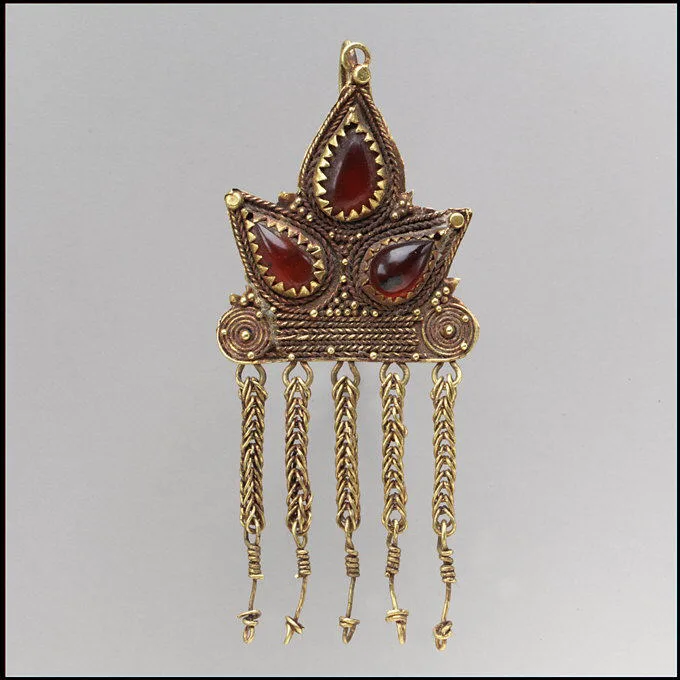
Gold points to the heavenly fire and the sunlight that Svarog governs through his son Dazhbog, and it reads as a status, bright version of the sign. A gold Star of Svarog or hammer ties the symbol of the heavenly smith to the warmest metal in colour, and the gleam of gold conveys the idea of the spark, the flame, the solar circle well. The warm sheen softens the sternness of the angular weave and makes it richer. For anyone who wants to bind a charm for creation to the idea of light and the warmth of home, gold suits especially well.
Wood, Bone, and Leather
A separate line is the natural materials in the spirit of the era itself. Carved wood, bone with a burnt-in sign, a leather cord instead of a chain. Such pieces convey the rough, handmade texture of the ancient Slavic charm and pair well with a metal inset, for example a silver Star of Svarog on a leather thong. Wood suits the warm, hearth-side facet of the image, bone points to the most ancient charms, and a leather cord strengthens the primal, craftsmanly texture. These materials add authenticity to the image and tie modern jewellery to how the charms of our ancestors actually looked.
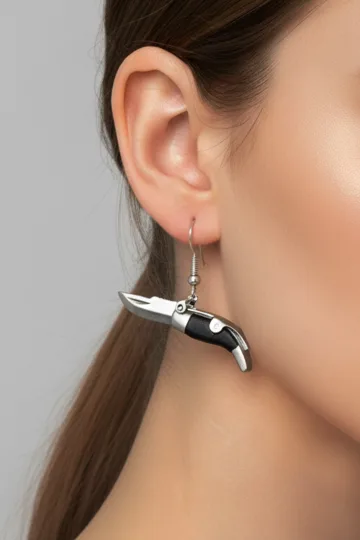
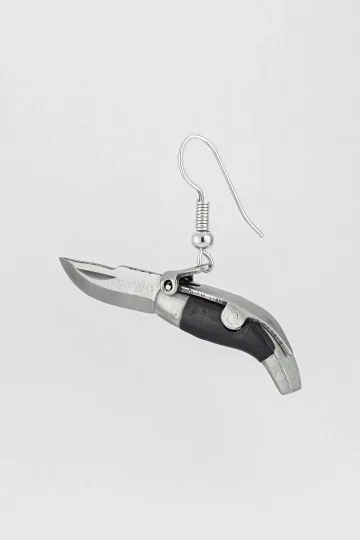
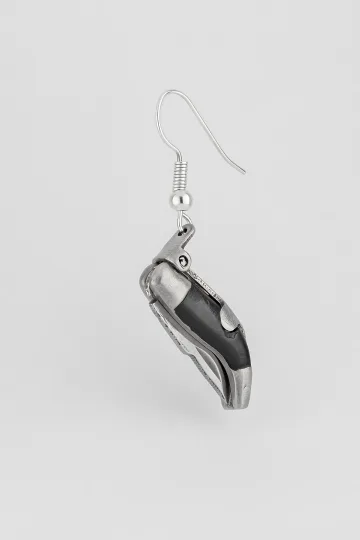
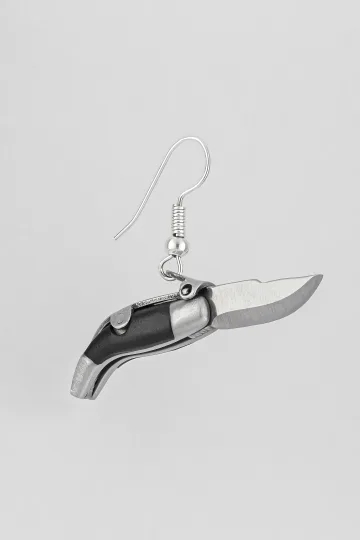
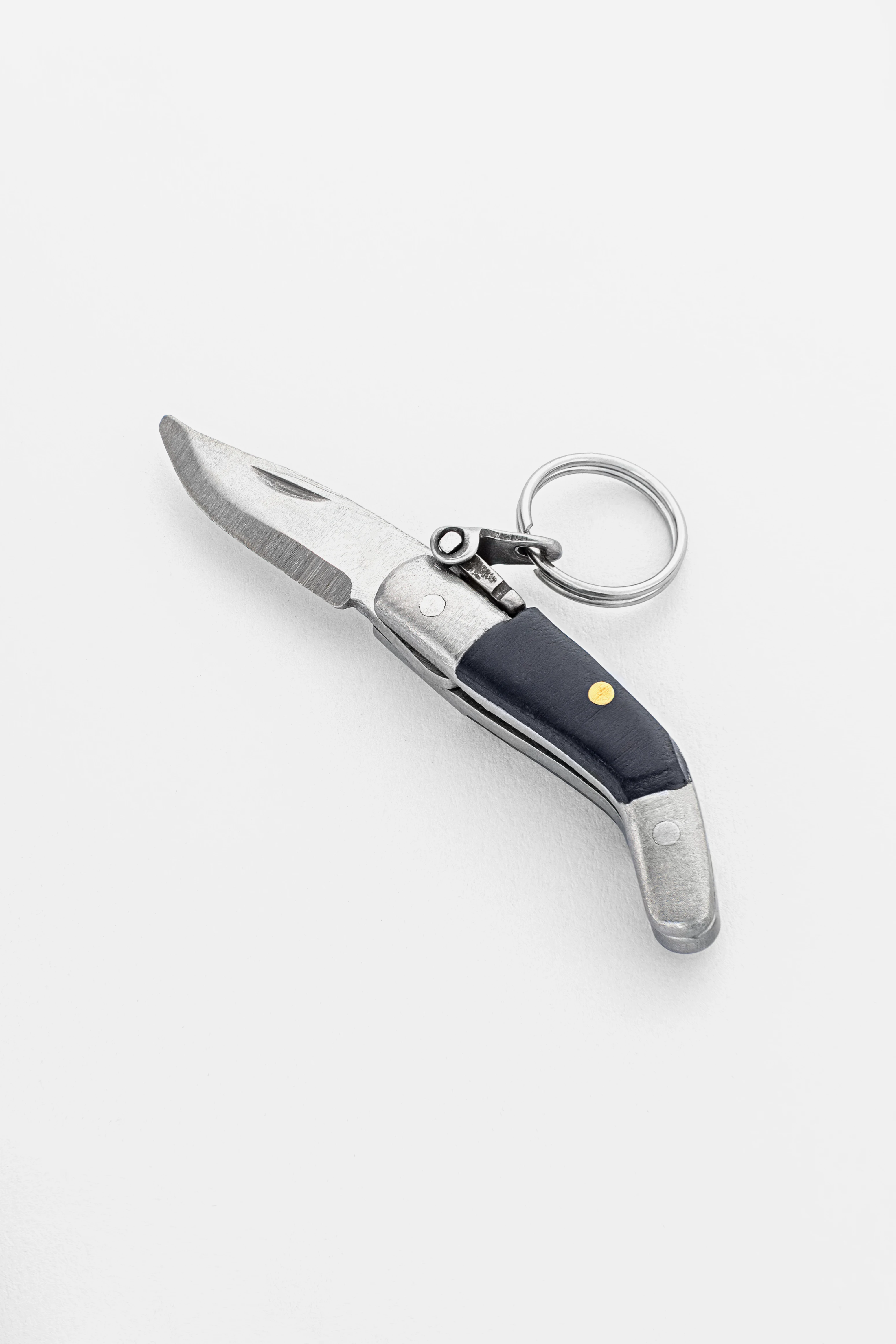
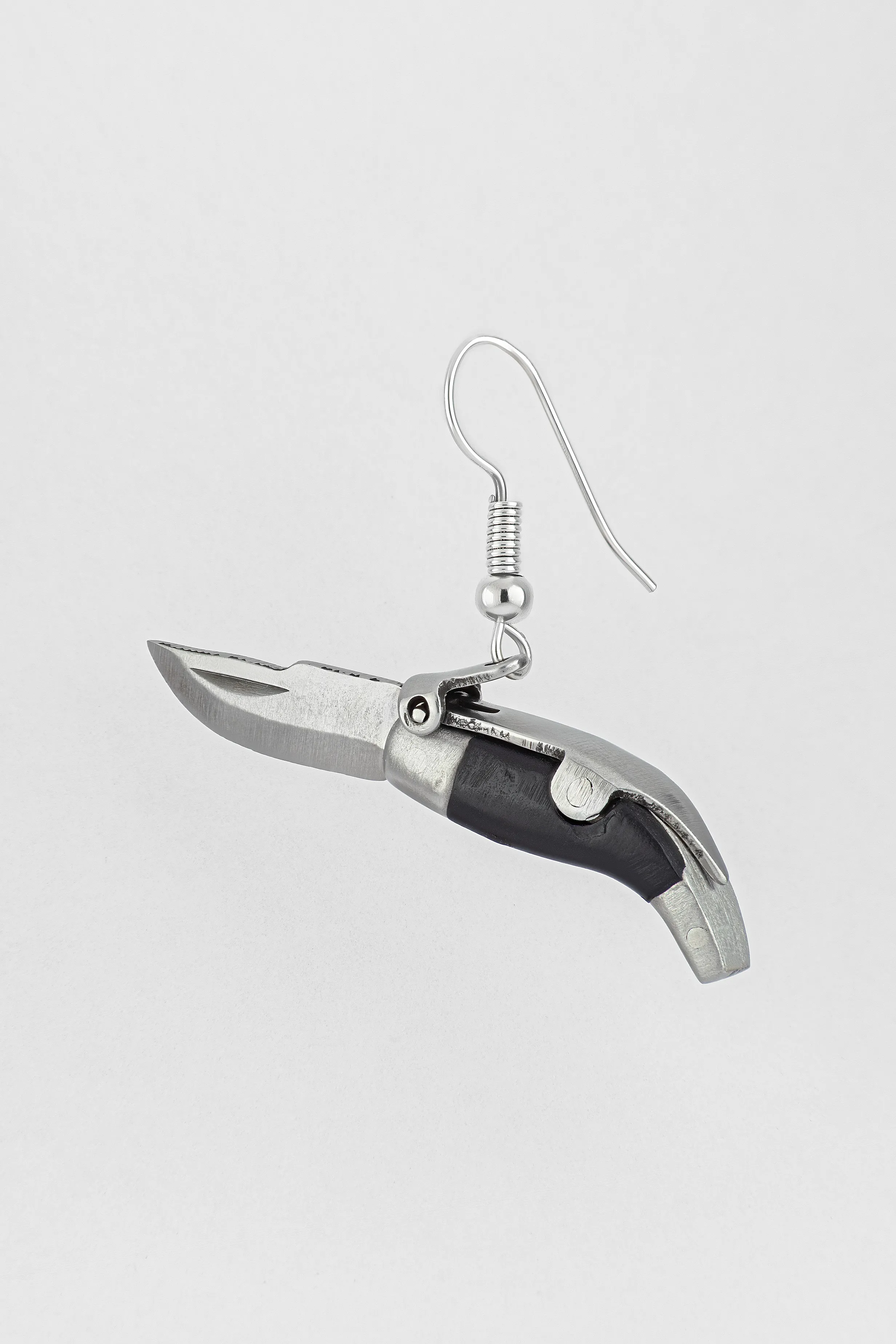
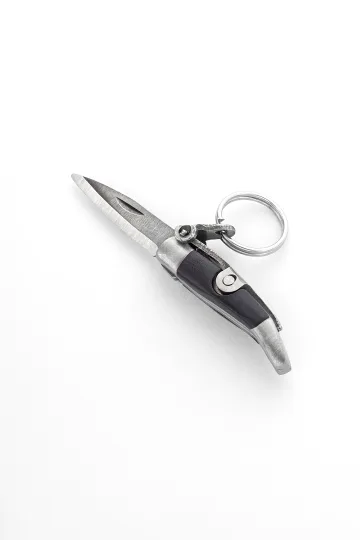
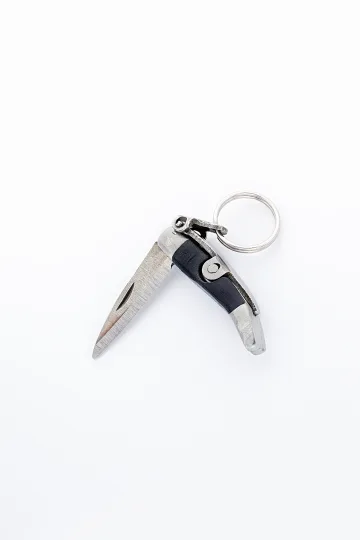
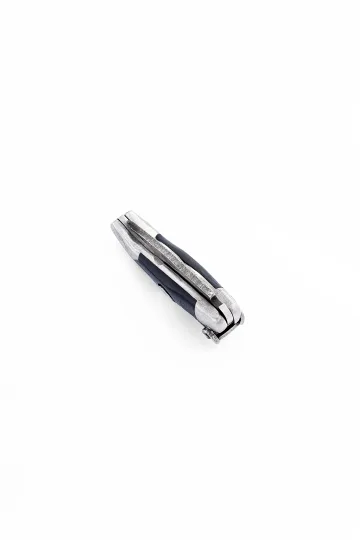
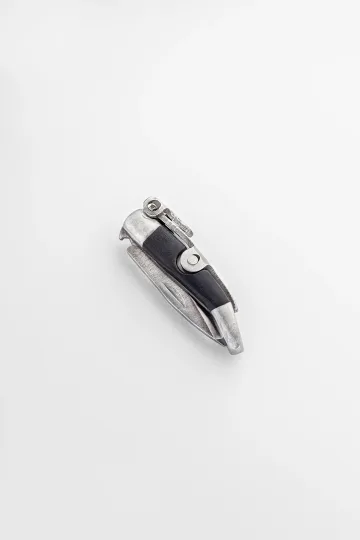
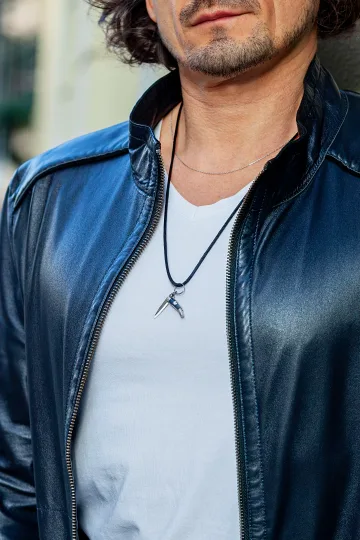
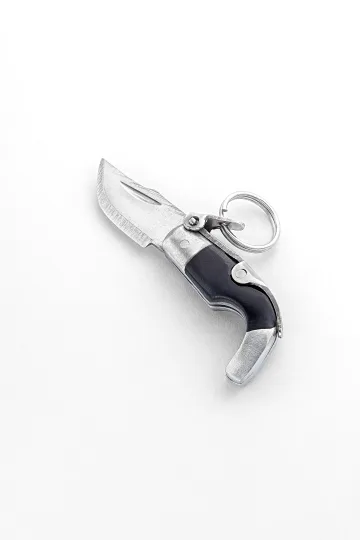
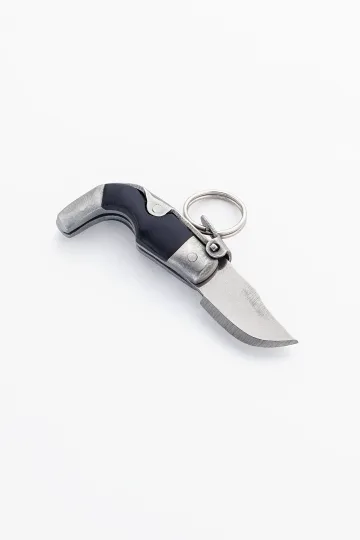
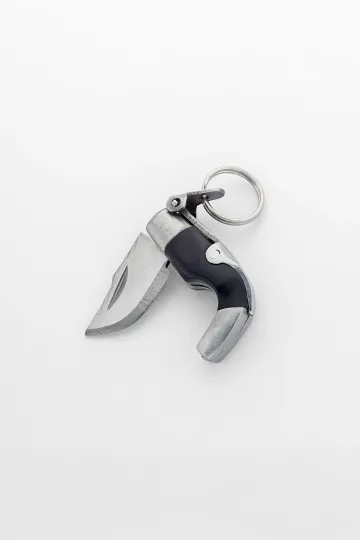
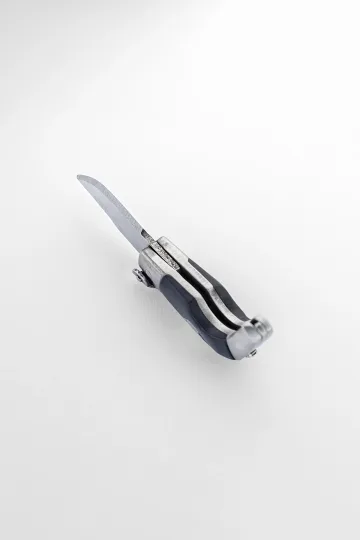
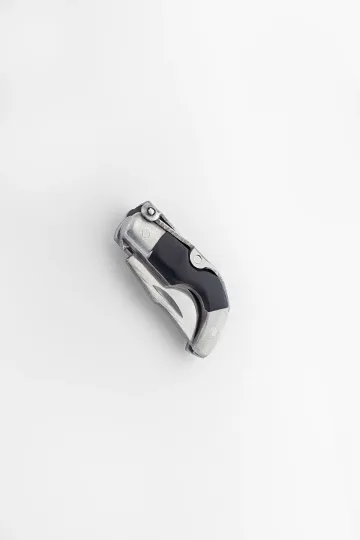
CAPAORA mini knife pendant
The 18th-century Spanish navaja in miniature: 40 mm of stainless steel, a real folding mechanism and a Palanquilla lock that clicks. An affordable gift to remember.
Authentic · Ships from Spain · 14-day returns
Smith Gods Among Different Peoples
Svarog is not alone: almost every ancient people had its own smith god, and the comparison helps to understand exactly how the Slavic heavenly forger resembles his kin and how he differs. The image of the smith creator proved so important to humankind that it was born independently in the most varied cultures.
For the Greeks this is Hephaestus, god of fire and smithcraft, the lame master who forges in the depths of a volcano the weapons of the gods, the armour of heroes, ornaments, and cunning mechanisms. Like Svarog, Hephaestus is tied to fire and the making of things, but the Greek god holds the place of a skilled craftsman at the court of the gods rather than a supreme father creator. The Romans knew the same god under the name Vulcan, and from him comes the very word "volcano," the fire-breathing mountain forge.
The Scandinavians have no heavenly smith god as such, but they do have the legendary forger Volund, a master enchanter, and the dwarves, the dvergar, who forged the treasures of the gods, including the thunderer's hammer. Here the role of the maker of things is given not to the supreme god but to special masters. This is a different logic from the Slavic one, where the father of the gods himself holds the hammer and tongs.
Among the Finno-Ugric peoples, in the epic, the smith Ilmarinen forges the vault of the sky and the wondrous mill of fortune, the Sampo, and he is very close to Svarog: a smith forging the sky itself. Among many peoples of the world, from the Caucasus to Africa, the smith is a half-holy, dangerous figure on the border of worlds, because he alone tames fire and metal. The Ossetians and other peoples of the Caucasus venerated the heavenly forger Kurdalagon, and among the peoples of West Africa the smith was often considered a first ancestor and culture hero who taught people the craft. Time and again one story repeats: the one who masters fire and iron stands closer to the gods than the rest. Against this background the Slavic Svarog, the heavenly father with a hammer, looks like part of a great pan-human family of smith gods, where the skill of forging was equated with the skill of making the world.
So how does Svarog differ from his kin? In that for the Slavs the smith is the supreme creator, not an assistant master at the court of older gods, like Hephaestus, and not a separate enchanter craftsman, like Volund. For the Slavs the very creation of the world is conceived as forging, and it is not a helper but the father of the gods who holds the hammer. This trait brings Svarog closer to the Finnish Ilmarinen, who forges the firmament, than to the Greek lame craftsman. For jewellery this matters: the sign of Svarog carries not a shade of service and subordinate mastery, but a shade of supreme, fatherly creation, the making of the world from nothing.
Facts That Surprise
The heavenly smith has gathered over the centuries so many stories that some of them sound almost unbelievable.
Fire among the Slavs was called by the god's name. In old sermons against paganism people were reproached for "praying to the fire under the drying barn, to Svarozhich," that is, the living flame in the barn was considered the son of Svarog. The household fire literally bore the name of the heavenly smith's son.
Svarog is known from an insertion into a Byzantine chronicle. The main mention of the god's name is a late Slavic insertion into a translation of a Greek chronicle, where Svarog is named the father of the solar Dazhbog. In essence, a whole creator god reached us thanks to a scribe's note in the margins of someone else's book.
The smith saints caught a serpent with tongs. In Ukrainian legends the saints Kuzma and Demyan, who inherited the role of the smith god, catch a monstrous serpent by the tongue with red-hot tongs, harness it to a plough, and plough the earth. The huge ancient ramparts were called "the serpent ramparts" by the folk.
The word "Svarog" is argued about to this day. Some scholars derive the name from a root meaning "sky" and "shining," others propose different readings, still others argue whether this was an independent pan-Slavic god or a bookish figure. The sources are few, and much in the god's image is a reasoned reconstruction.
The forge stood apart for a reason. The village smith was respected and feared, and his forge was often set at the edge of the village, by water or forest. A person who alone tames fire and metal was considered to stand on the border of worlds, almost a sorcerer, an heir of the heavenly smith.
The star and the square are one sign. In the Star of Svarog the square, the symbol of the earth, and the star, the symbol of the sky, are deliberately combined. One charm holds within it the meeting of the earthly and the heavenly, and in this lies the whole meaning of the god who joined ore and fire into a created thing.
A smith god exists among almost everyone. Hephaestus for the Greeks, Vulcan for the Romans, Ilmarinen for the Finns, Volund for the Germanic peoples, demigod smiths for the peoples of the Caucasus and Africa. The skill of forging seemed to people so wondrous that the smith god was invented independently by dozens of cultures.
The tongs were thrown to people from the sky. By one recorded legend, before Svarog people did not know how to hold red-hot iron, and the god dropped them ready-made smith's tongs from the sky. From this heavenly gift, the legend says, all craft began.
Send a friend a discount code, they save on their first order.
Frequently Asked Questions
Who is Svarog in Slavic mythology?
Svarog is the Slavic god of the sky, of heavenly fire, and of smithcraft, the supreme father of the gods and the maker of the visible world. He was imagined as the heavenly smith who forged the cosmos on a heavenly anvil and gave people fire and craft. From him come the younger gods, the Svarozhichi: the solar Dazhbog and fire itself. He is the patron of makers, masters, and smiths.
What does the Star of Svarog mean?
The Star of Svarog, also the Square of Svarog, is a woven angular sign that combines a square, the symbol of the earth, and an eight-pointed star, the symbol of the sky. Their joining is read as the meeting of the earthly and the heavenly, as order forged from chaos. The sign is worn as a charm for creation, mastery, and clarity of mind. In exactly this form it is largely an image shaped in modern times on the basis of mythology and folk ornament.
How does Svarog differ from Perun and Veles?
These are gods of different spheres. Svarog is the heavenly father, the god of the creating fire and of smithcraft, the parent of the gods. Perun is the thunderer, god of the storm, of war, and of the princely warband, and his sign is the war hammer or the axe. Veles is the god of cattle, wealth, and the lower world, the patron of merchants and seers. Svarog is about creation and craft, Perun about strength and battle, Veles about plenty and the land.
Is Svarog's hammer the same as Thor's hammer?
No. For Svarog the hammer is a smith's tool, a sign of craft and creation, with which the god forges things and the world itself. Thor's hammer, Mjolnir, and Perun's axe are the weapon of the thunderer, a sign of storm, strength, and warrior defence. Outwardly the hammer may look similar, but the meaning is different: one is about mastery and labour, the other about battle and might.
Can a woman wear the symbol of Svarog?
Yes. Although the image of the heavenly smith traditionally reads as masculine, the Star of Svarog, the spark, and the solar circle have long become universal signs. The feminine version is usually thinner and more graphic: an elegant star on a thin chain, a small spark, a radiant circle. Svarog's symbolism carries the ideas of creation, clarity, the warmth of the hearth, and order, and that is close to a person of any gender.
Which material is best for jewellery with Svarog's symbolism?
It depends on the aim. Oxidised silver gives the most "Svarog-like" stern texture, reads the angular weave of the star well, and suits everyday wear. Gold ties the charm to heavenly fire and light, reading as a status, warm version. Bronze gives a historical museum look, close to the ancient Slavic charms and the image of the smelter. Wood, bone, and leather add handmade authenticity.
Who is the sign of Svarog right for?
First of all for those who create: masters, craftspeople, artists, engineers, everyone who works with their hands or is building something new. And also for those who value order, clarity, a steady hand at the work, who see themselves as the support of the home and the family line. The sign of the heavenly smith reads as a charm for creation, mastery, and a firm beginning to any labour.
Is Svarog a real ancient god or a late invention?
Svarog himself is a real figure of Slavic mythology, known from a late chronicle insertion and comparison with neighbouring traditions, though the sources are few and much in his image is reconstructed by scholars. The Star of Svarog in its familiar graphic form, however, is largely a modern design on the basis of mythology and folk ornament. The image of the god is ancient, the specific drawing of the sign is largely new, and it is fair to keep that distinction in mind.
Conclusion
Svarog survived the fall of his own cult and remained in the most durable form Rus knew: in the fire that was called by his son's name, in the wonder-working smith of fairy tales, in the smith saints catching a serpent with tongs, in the angular star that is carved into silver once again. The hammer, the tongs, the spark, and the woven sign proved stronger than time, because they carry a clear meaning: creation, mastery, order, the warmth of the hearth, a steady hand at the work. Today the symbolism of the heavenly smith answers simple human needs, the wish to create, to bring what you have started to its final form, to hold the home and the work, to put a little order into the world. Choosing the sign of Svarog, a person continues the gesture of a distant ancestor who kept the fire in the stove as a living son of the sky. And no belief in ancient gods is needed here: the sign works as a clear reminder to yourself of what you want to create, to forge, and to keep. The sky, the fire, and the craft fit in the palm of your hand.
Silver, gold, Slavic symbolism, charms, signs of strength and creation.
Buying it as a gift? Each one arrives ready to give.
 A branded Zevira box and a little card come with every order.




About Zevira
Zevira is jewellery with meaning: symbols, charms, signs of strength and protection in clean forms of silver and gold. We love things that carry a history thousands of years long, and we bring it into modern design without needless pathos. The Star of Svarog, the hammer of the heavenly smith, the Seal of Veles, and other signs of the ancient gods sit in the catalogue beside minimalist pendants and paired sets, so that everyone finds their own sign.