Slavic Amulets and Gods in Jewellery
The Slavs left almost no written myths: their priests kept no books, and later chroniclers recorded foreign gods sparingly and with hostility. So the pantheon is reconstructed from potsherds, from embroidery on shirts, from pendants out of burial mounds, and from words still hidden inside folk charms in the nineteenth century. Here the amulet is older than any text.
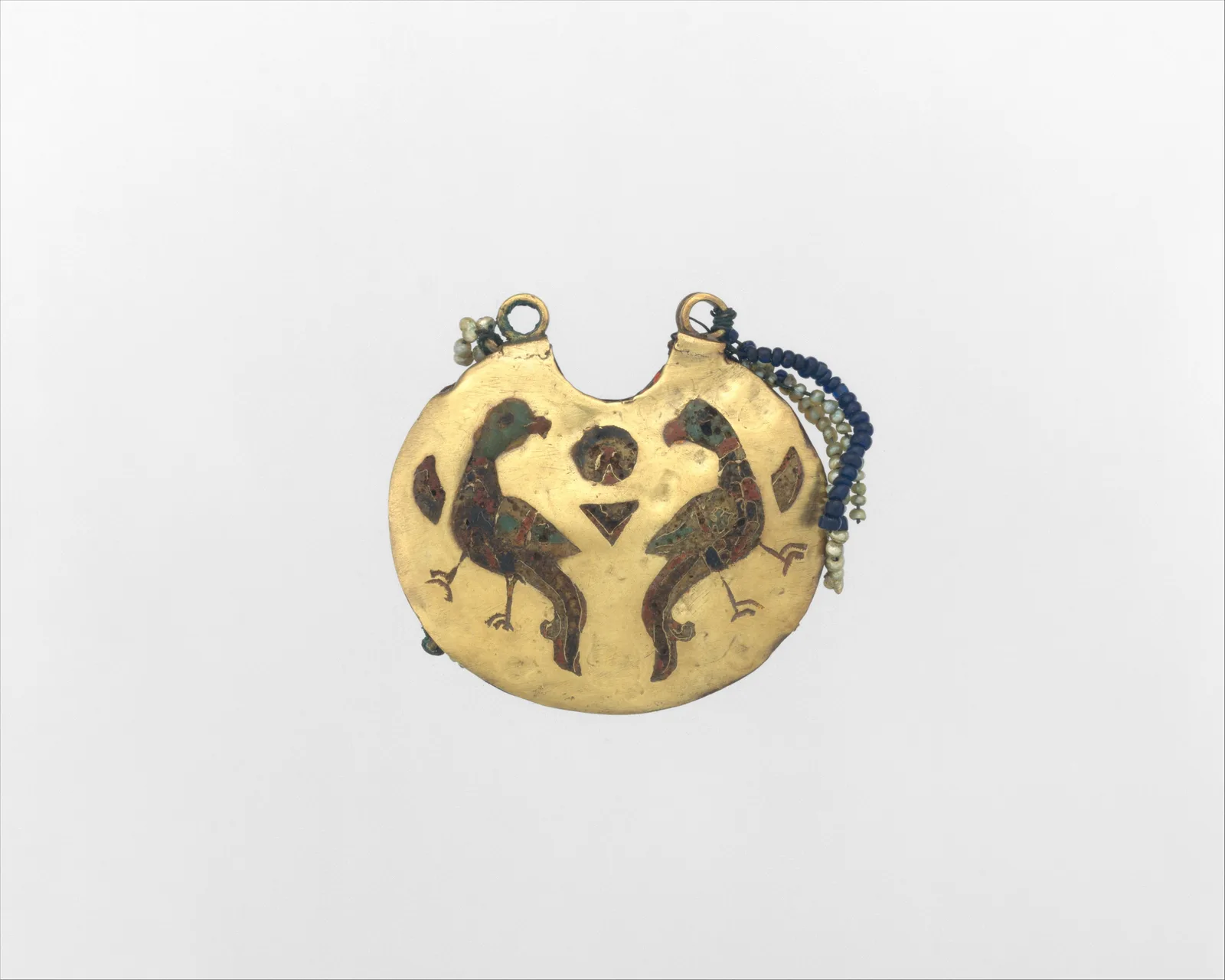
That is what makes Slavic symbolism special. The Norse have the Edda, the Greeks whole libraries, but for the Slavs a mark on metal is often the only surviving source. A lunula, a little horse, a comb, a tiny bell on a child's shirt, a temple ring beside a woman's face: all of this was worn as protection, as a wish, as a conversation with the unseen. Today the same motifs return in pendants, rings and earrings, and behind each one stands not a pattern for beauty's sake but a whole way of seeing the world.
How Slavic Amulets Work
Slavic paganism was not a tidy system with temples and dogma but a living folk faith woven tightly into the peasant year. At its centre stood the forces of nature and the ancestors. Thunder, the sun, the earth, water, the fire in the hearth, the field, the livestock, a woman's lot at the spinning wheel: all of it had its patrons and its signs. The amulet was a tool for talking to these forces, a way to ask for protection and turn aside misfortune.
Pre-Christian Beliefs of the Eastern Slavs
Before the baptism of Rus at the end of the tenth century, the Eastern Slavs worshipped many gods and spirits. The upper layer held the great gods: the thunderer, the god of cattle and wealth, the solar deities, the goddess of the female lot. Below them lay an enormous world of spirits: the house spirit in the cottage, the forest spirit in the woods, the water spirit in the river, water maidens near the water, protective guardians. Between a person and these forces stood the amulet, a small object worn on the body or hung in the home. It did not depict a god literally; more often it was a sign: a solar circle, the diamond of a sown field, a comb, a key, a little spoon, the figure of an animal.
Wear the symbol, don't just read about it. These are in stock:


What Dual Faith Means
After baptism the old faith did not vanish but merged with Christianity into a phenomenon researchers call dual faith. A person was baptised, went to church, yet kept hanging a lunula on the cradle, wearing a bell against evil spirits, charming away illness. The saints quietly took the places of the old gods: Elijah the prophet on his fiery chariot stepped into the thunderer's place, Saint Blaise became patron of cattle in place of the former god of herds, Saint Paraskeva of Friday took on women's cares and spinning. Dual faith stretched on for centuries, and that is exactly why a single grave can hold both a cross and an ancient protective pendant on the same thread.
What People Actually Wore
Honesty is needed here. Most of the pretty "Slavic" symbols sold today as ancient are, in their surviving form, younger than they seem, and some were invented outright in the twentieth century. Archaeology gives a different set: women's temple rings, lunulae, horse and duck pendants, bells, miniature spoons, combs, key amulets, animal figures. These things are genuinely found in burial mounds and city layers. When the talk is of an authentic tradition, it is these that one should lean on, and reconstructed signs are more honestly called reconstruction rather than antiquity.
History of Slavic Amulets
Before becoming a pendant on a chain, the Slavic amulet travelled a long road: from a crude Bronze Age cast pendant to the silver filigree of pre-Mongol Rus and on to the ethnographic records of recent centuries. This history is assembled from finds, and each layer adds something of its own.
Archaeology: Protective Pendants and the Animal World
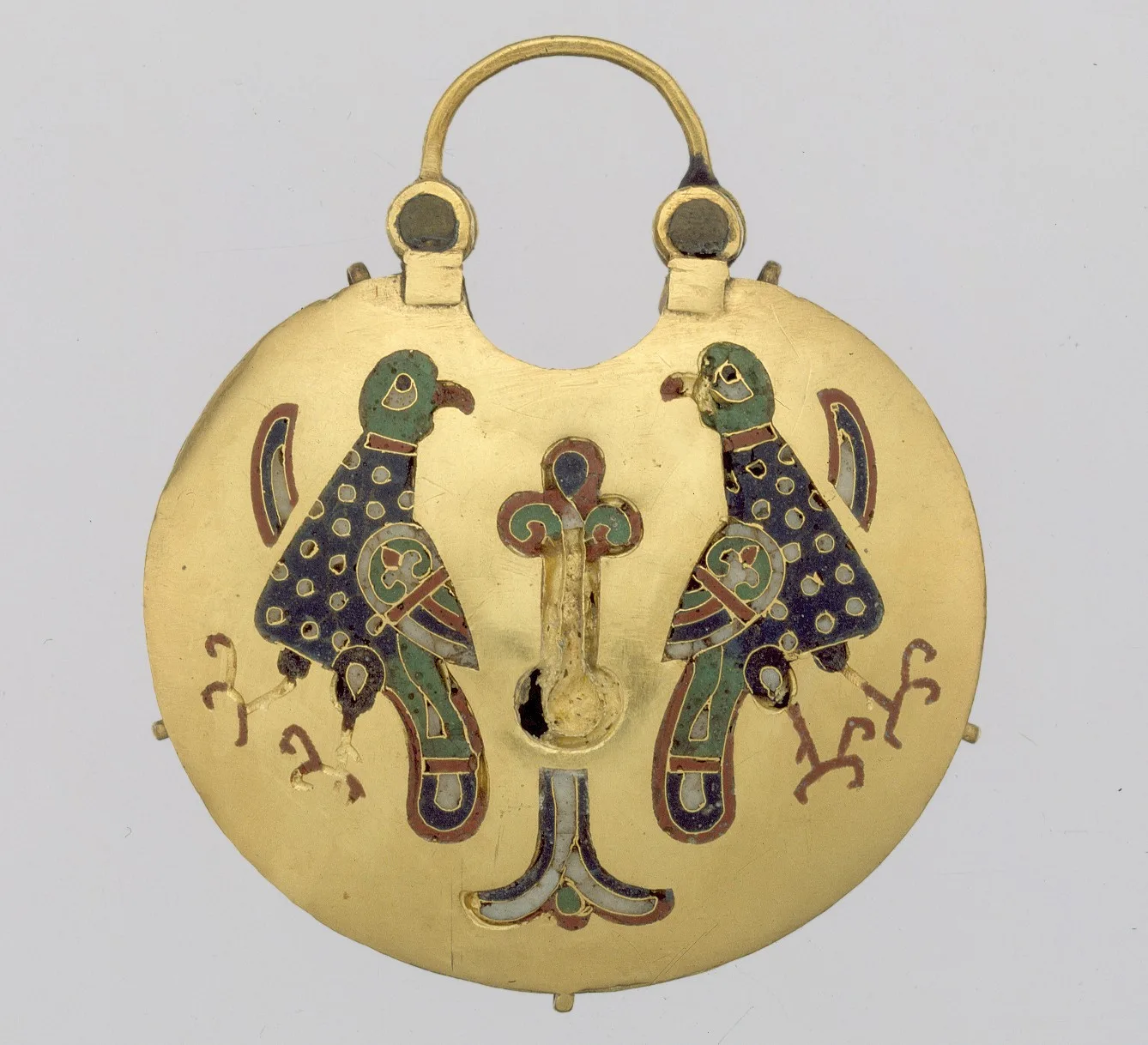
The earliest amulets of the Eastern Slavs and their neighbours are cast pendants of bronze and copper alloys. Among them are figures of horses, ducks, bears, birds, combs, bells. The horse is linked to the sun and to good fortune, the duck to water and to the origin of the world, the comb to protection from illness. Many pendants were hollow with a tiny pellet inside, and they chimed softly as the wearer walked: the ringing was believed to drive off evil spirits. This was not jewellery in our sense but a working object, like a lock on a door.
Temple Rings: A Woman's Signature
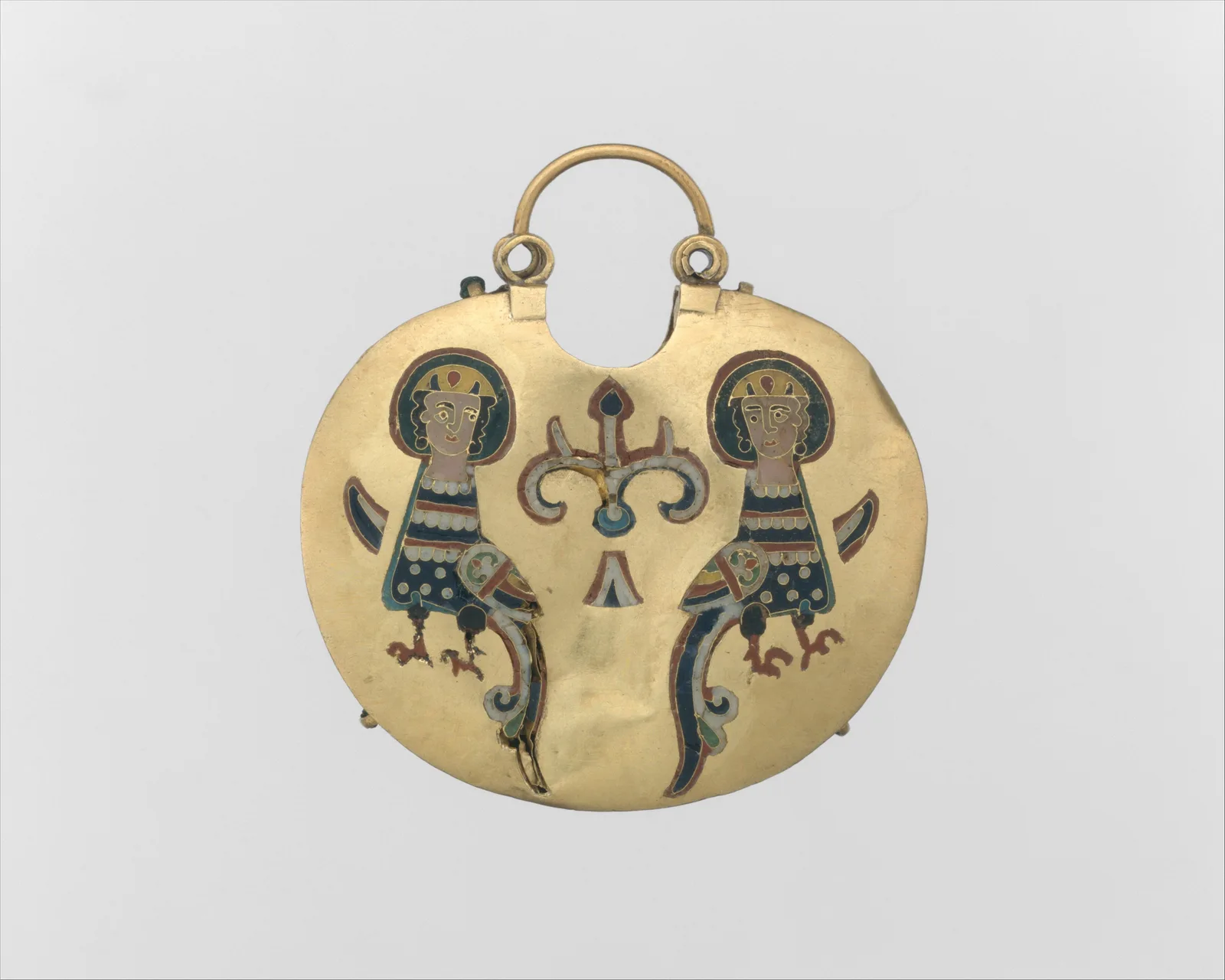
A special category is the temple ring, a metal ornament that women wore beside the temples, braided into the hair or hung from the headdress. Archaeologists prize them because the form of the temple ring differed for every tribal union: seven-rayed for the Radimichs, seven-lobed for the Vyatichs, spiral for the Severians. From the type of ring in a grave one can tell which union a woman belonged to. It was a kind of signature, an identifying mark of family and land, worn right on the head.
Lunulae and Solar Signs
Among the pendants the lunula stands apart, an ornament shaped like a crescent with the horns pointing down, a woman's amulet of the moon, the female lot and fertility. People wore it across the whole Slavic territory and beyond, from the Bronze Age to the Middle Ages. A detailed study of the form and meaning is in the separate article on the lunula, the Slavic lunar amulet. Beside the lunar sign lived the solar one: circles, crosses within a circle, rosettes, wheels. The sun was the chief force for the farmer, the one the harvest and life itself depended on, so solar signs covered ornaments, the window frames of cottages and spinning tools alike.
Baptism and Dual Faith in Metal
When Christianity arrived, the workshop did not retool in a day. The same craftsmen who cast lunulae and little horses began casting crosses and icon plaques, and their customers wore both at once. Lunulae with an inset cross appear, crosses with a crescent base, pendants where the old and the new sign are joined in a single object. This was not confusion but living dual faith: a person shielded themselves with every available force, without choosing between them.
Ethnographic Reconstructions
The third source is the ethnography of the nineteenth and early twentieth centuries, when scholars began recording peasant beliefs, charms, embroidery, ritual songs. From these records they reconstruct what archaeology lacks: the names and roles of the gods, the meaning of patterns, the formulas of charms. Caution matters here. Part of this reconstruction is reliable, part is already the conjecture of researchers, and some "ancient" gods and symbols were born in the studies of nineteenth and twentieth century scholars. An honest approach separates the find from the hypothesis.
Burial Mounds, Hoards and City Layers
Where do the pendants used to reconstruct the faith even come from? There are three sources. The first is burial mounds and ground cemeteries, where the amulet lay on the body of the dead exactly as it was worn in life, and is therefore especially valuable for understanding the whole set. The second is hoards, sets of ornaments hidden in anxious years, which show what was worn together and how it was valued. The third is the cultural layers of pre-Mongol towns, where fragments, casting moulds and blanks tell of the craft itself. From a casting mould, for instance, one can see that a single master cast both a lunula and a cross, to suit different customers.
A thunder axe on a thin gold chain is brown shoes with a black tux. Leather cord or blackened silver, and I will not hear otherwise.
How and With What to Wear It
Over years on set I have run the Slavic sign through dozens of looks, and the lesson is simple: it speaks on its own and does not need a cluster of other pendants behind it. Here is what actually works, by occasion.
How do I wear a lunula every day? For daily wear I recommend a silver lunula on a short or medium chain, so the pattern of the horns sits in the open and stays readable. Light linen, plain knit, a clean neckline: on that background the sign works as an accent rather than getting lost. Horns pointing down, the way it was always worn, is its natural seat.
What does the axe of Perun sit best on? I suggest the axe on a leather cord or a heavy chain, never on thin delicate links that argue with its weight. It goes with a coarse knit, a jacket, an untucked shirt. Matte metal or niello-darkened silver hold its stern character better than anything glossy.
Does a Slavic sign work at the office? It does, as long as you keep it restrained. I choose niello silver or patinated bronze, at a length that tucks under the top shirt button, so the sign disappears under the collar and reads as a quiet detail. Under a jacket a lunula or a solar rosette sit calmly, with no parade shine.
What clothing should I pair an amulet with? I recommend natural tones and a simple cut: linen, wool, heavy cotton, muted colours. The Slavic sign dislikes gloss and festive clutter; it wants a slightly archaic background. On a clean neckline one amulet settles into the centre and carries the whole accent by itself.
One sign or a set? One strong sign on a clean chain is always more expressive than five symbols jumbled together. If you want more volume, I suggest building a set within one theme, a lunula plus small solar earrings, not a mix of eras and pantheons. And pick the length to suit the neckline, not the other way round.

Turn on your camera, pick earrings, a pendant or a ring, and see the piece on yourself in real time.
Switch items in one tap.
Everything runs in your browser: no photo or video is ever uploaded.
Perun: The Thunderer and the Thunder Sign
Perun is the supreme god of the Eastern Slavic pantheon, god of thunder, lightning, war and the prince's warband. It was his idol that Prince Vladimir set at the head of the pantheon in Kiev before baptism, and it was Perun who was later cast into the Dnieper. He is the most reliably attested Slavic god.
The Axe as Perun's Sign
Perun's chief wearable sign is the little axe. Archaeologists find many small bronze and lead-tin axe amulets that were worn on the belt and the neck as an amulet of the warrior and the man. The axe is tied to thunder just as the northern thunderer's hammer is: both gods split the sky with a blow. This close kinship of signs is covered in detail in the article on the axe of Thor and Perun in jewellery. As an ornament, Perun's axe is a sign of strength, protection and the masculine principle.
The Thunder Sign and the Wheel
Perun is linked with the so-called thunder sign, a six-rayed rosette or a wheel within a circle. It was carved on roof gables, on spinning tools, on dishes as protection against lightning and fire: like wards off like. It should be said honestly that the direct link of this pattern with Perun in particular is largely reconstruction, not a proven fact. But as an ancient solar and storm sign, the six-rayed rosette really did exist and was widely used in folk art.
Perun and Veles as a Pair
Perun is almost always understood as a pair with Veles. They are the two poles of the world: Perun above, god of the sky, the storm, the warband and princely power; Veles below, god of the earth, the herds, plenty and the realm of the dead. In folk retellings they are bound by an eternal quarrel: the thunderer chases his opponent across the sky, strikes with lightning, and the other hides in stone, in a tree, in water. This pair of opposites holds the whole peasant cosmos together: above and below, storm and earth, war and husbandry. In choosing the sign of Perun or Veles, a person in a sense chooses their pole of this world.
Veles: God of Cattle, Wealth and the Other World
Veles, or Volos, is the second god in importance, patron of cattle, wealth, trade, and also of wisdom, poetry and the bond with the world of the ancestors. If Perun is the god of the warband and the sky, then Veles is the god of the depths, the earth, the herds and plenty. In the chronicles, princes swore their oath by both: by the weapon of Perun and the wealth of Veles.
Cattle as Wealth
For the Slav, cattle were walking capital; the old word for "cattle" once meant money as well. Veles answered for exactly this wealth, for the increase of the herds, for the plenty of the home. So householders turned to him wishing for gain, and he was quietly honoured even after baptism, when his role passed to Saint Blaise, patron of domestic cattle. As an ornament, the motifs of Veles speak of plenty, growth, a firm foundation for the life of the household. The reconstructed sign of Veles is often drawn as an inverted rune-like figure, but here again it is more honest to speak of a modern reconstruction rather than an authentic ancient symbol. The image is gathered in more detail in the article on Veles, a Slavic god in jewellery.
Customer reviews
Zevira is a real jewellery shop. Genuine payments, deliveries and customer thank-yous.
🥰🥰🥰 gracias

Ok, ¡gracias! 🙂

Mokosh: The Female Lot and the Thread of Fate
Mokosh is the only goddess in Vladimir's Kievan pantheon, patroness of the female lot, spinning, weaving, fertility and water. She spun the thread of human fate, and so is tied to the spindle, the distaff and the yarn. After baptism her traits passed in large part to Saint Paraskeva of Friday, patroness of handicraft and women's cares.
Yarn, Distaff and Spindle
For the peasant woman spinning was both labour and ritual. The thread that was spun was imagined as the thread of life, and the distaff itself was covered with protective patterns. Friday was held to be the day of Mokosh and of Paraskeva, and on that day spinning was forbidden, so as not to anger the goddess. As an ornament, the motifs of Mokosh speak of female strength, the home, fertility, the protection of mother and child. The lunula and women's pendants belong here too. The gathered set of women's pieces is examined in the article on Mokosh and Slavic women's amulets.
Svarog: The Heavenly Smith
Svarog is the god of the sky and of heavenly fire, the smith who by legend forged the first plough and taught people to work metal and the land. His name is linked to fire and to the word that meant the sky. Svarog is the ordering god, the one who gave people the craft and the law of marriage. In folk memory his legacy reaches to the fire of the forge and of the hearth. As an ornament, the image of Svarog speaks of creation, mastery, the strength of fire that turns ore into a useful thing, and so it stands close to the very theme of the jeweller's craft.
Upload a photo of your pet, someone you love, or an object. We'll build a 3D model and hand-cast it in pewter.




Dazhbog: The Sun and the Giver of Goods
Dazhbog is a solar god, giver of warmth, light and harvest, whose name reads as "the giving god." In The Tale of Igor's Campaign the people of Rus are called the grandsons of Dazhbog, that is, descendants of the sun. He is one of the gods whose name has come down to us reliably. The sun was the source of life itself for the farmer, so solar signs hold a special place in the amulet.
Solar Signs: Circle, Wheel, Rosette
The solar circle, the spoked wheel, the rosette, the cross within a circle are the most ancient solar symbols, shared by many cultures. Among the Slavs they covered spinning tools, window frames, dishes, embroidery as a wish for light, warmth, fertility and protection. As an ornament, the solar sign speaks of life, energy, good fortune. People wore it as a wheel pendant and as a round plaque. It matters here to separate genuine folk rosettes and wheels from later stylisations.
Kolovrat as an Ancient Solar Sign
Kolovrat is the name for a turning solar wheel, the sign of the moving sun. The motif of a turning rosette or swastika-like figure is one of the most ancient solar symbols of humanity, found from India to Scandinavia, including in Slavic and Finno-Ugric embroidery and carving as a wish for sun, the turning of the year and fertility. A clear reservation is needed here. In the twentieth century a similar geometric figure was appropriated by political movements and took on an entirely different, dark meaning that has nothing to do with the peasant solar sign. And the word "kolovrat" as a name for a Slavic symbol in particular came into use only in the twentieth century, among reenactors, not in antiquity. So the correct way to put it is this: an ancient turning solar sign did exist and was a kindly wish for light, but its later political fate and its modern name are a separate story that must not be mixed with ethnography.
Alatyr: The Sacred Stone and the Star
In folklore Alatyr is a sacred white-burning stone lying in the middle of the sea on the island of Buyan, the centre of the world, from beneath which healing rivers flow. Hundreds of folk charms are addressed to it: "on the sea, on the ocean, on the island of Buyan lies the stone Alatyr." It is an image of the centre, the support, the source of strength and healing.
The Alatyr Star
The so-called Alatyr star, an eight-pointed star of two overlaid squares or a cross with rays, is sold today as an ancient amulet of "the centre of the world." The eight-rayed rosette and the eight-pointed star really are a frequent motif of Slavic embroidery and carving, a symbol of the sun, the star, well-being. But tying this pattern to the folkloric stone Alatyr in particular, and the name "Alatyr star," is a modern reconstruction, not a medieval tradition. One can wear such a sign as a handsome solar motif, understanding its real age.





Valkyrie: A Foreign Sign, Not a Slavic One
Sometimes among "Slavic amulets" a pattern called the valkyrie is sold, a symmetrical woven wheel, credited with the protection of the warrior and female strength at the same time. This is a misunderstanding. Valkyries are figures of Scandinavian, not Slavic, mythology, maidens who carry off fallen warriors. And this particular woven sign under that name was born in modern reconstruction and has no ancient Slavic roots. The sign is handsome, but calling it a genuine Slavic amulet is wrong, and it is more honest to understand that.
Guardian Spirits, Spirits and the Lower Mythology
The great gods are only the tip. Far closer to the peasant's daily life stood the lower mythology: the household and nature spirits a person dealt with every day. Many amulets protected against exactly these, or, on the contrary, appeased them.
The House Spirit and the Spirits of the Dwelling
The house spirit is the spirit of the home, the master of the cottage, who guards the dwelling, the livestock and the plenty if you get on with him, and makes mischief if you offend him. He was not worn on the neck, but the amulets linked to him, horseshoes, little keys, spoons, bells, were hung in the home and on clothing as a sign of the hearth's well-being. A key pendant meant the safety of goods, a spoon meant plenty, a comb meant health and protection from illness. These everyday signs are the most widespread, folk part of the amulet.
The Guardian Maiden and Female Spirits
In folk tradition the guardian maidens are female protective spirits linked to water, the family line and protection. The image of the guardian maiden has been heavily reimagined and romanticised in popular culture later on, so handsome "ancient guardian maidens" deserve caution. But the idea of a female protective principle itself is real and shows through in women's amulets: the lunula, duck pendants, the pattern of the birth-goddesses, two female figures flanking a tree or a sign. The birth-goddesses are goddesses of birth and fate; they were embroidered on towels and shirts as a wish for fertility and the well-being of the family line.
Forest, Water and Field
Nature spirits divided the world into their own domains. The forest spirit was master of the forest, the water spirit and water maidens the masters of water, the field spirit of the field. A person entering their domain behaved carefully and wore an amulet as a pass and protection. Many animal pendants, horses, ducks, bears, are not random figures but signs of a bond with these forces and of their favour. The duck, for example, is linked in Slavic cosmology to the creation of the world out of water, so a duck pendant carried a deep meaning, not merely a decorative one.
Leave your email, we'll send your discount code. No spam, unsubscribe anytime.
The code arrives by email, valid on your first order.
How to Choose an Amulet
A Slavic amulet is chosen not by the prettiness of the picture but by what it means and how authentic it is. First it is worth deciding what matters more: a historically accurate object or simply a symbol close in meaning.
By Meaning and Sphere of Life
Protection and strength are the axe of Perun and the solar signs. Plenty, growth, the household are the image of Veles. The female lot, the home, motherhood are the lunula and the women's pendants of Mokosh. Light, warmth, life are the solar wheel. The road and the turning of the year are the turning solar sign. First name your theme, then choose the sign for it, not the other way round.
Authenticity Versus Reconstruction
It helps to divide symbols honestly into three groups. The first is reliable archaeology: the lunula, temple rings, the axe, horse and duck pendants, bells. The second is folk patterns with reconstructed meaning: solar rosettes, the thunder sign. The third is modern reconstructions with ancient-looking names: many "signs of the gods," the Alatyr star, the valkyrie. All three can be worn, but it is honest to understand what you are holding, an ancient form or a handsome new idea.
The Amulet as Part of a Larger Tradition
The Slavic amulet stands in the same row as the protective symbols of other peoples, from the nazar to the hamsa. If the very idea of a protective ornament is of interest, it is examined in the large guide to amulets, talismans and protective charms. The Slavic sign here is only one branch of a shared ancient tree.
CAPAORA mini knife pendant
The 18th-century Spanish navaja in miniature: 40 mm of stainless steel, a real folding mechanism and a Palanquilla lock that clicks. An affordable gift to remember.
Authentic · Ships from Spain · 14-day returns
Men's and Women's Amulets
The Slavic tradition divided signs fairly clearly into men's and women's, though there was no rigid wall between them. Understanding this division helps in choosing a piece that will sit naturally.
Women's Amulets
The women's set is above all the lunula, symbol of the moon and the female lot, temple rings as a sign of the family line, duck pendants, combs, keys and spoons tied to the home and plenty. The motifs of Mokosh belong here too: the spindle, the distaff, the pattern of a sown field as a diamond with dots. These signs are about fertility, motherhood, the protection of home and child. A woman's amulet is often layered: on one base pendant hung bells, spoons and combs at once.
Men's Amulets
The men's set is built around strength and protection. The axe of Perun is the chief men's sign, the warrior's amulet. To it are added solar wheels, figures of predatory beasts and birds, and later swords and battle signs. A man's amulet is usually more sparing than a woman's, one strong sign instead of a cluster of pendants. As an ornament this reads as restrained strength, without excess.
Children's and Shared Amulets
Children were given bells, whose ringing drove off evil spirits, and small protective pendants for the cradle and the shirt. Solar signs, the lunula in the female line, the image of the tree of life were more shared, family pieces. Today the division is loose: the lunula is worn simply as a handsome lunar sign, and the axe is taken up by women too, who value its graphic line and its meaning of strength.
Materials: Silver, Bronze, Filigree and Granulation
The Slavic amulet lived historically in metal, and here the material says no less than the form. The choice between silver and bronze is a choice between nobility and the authentic roughness of a find.
Silver
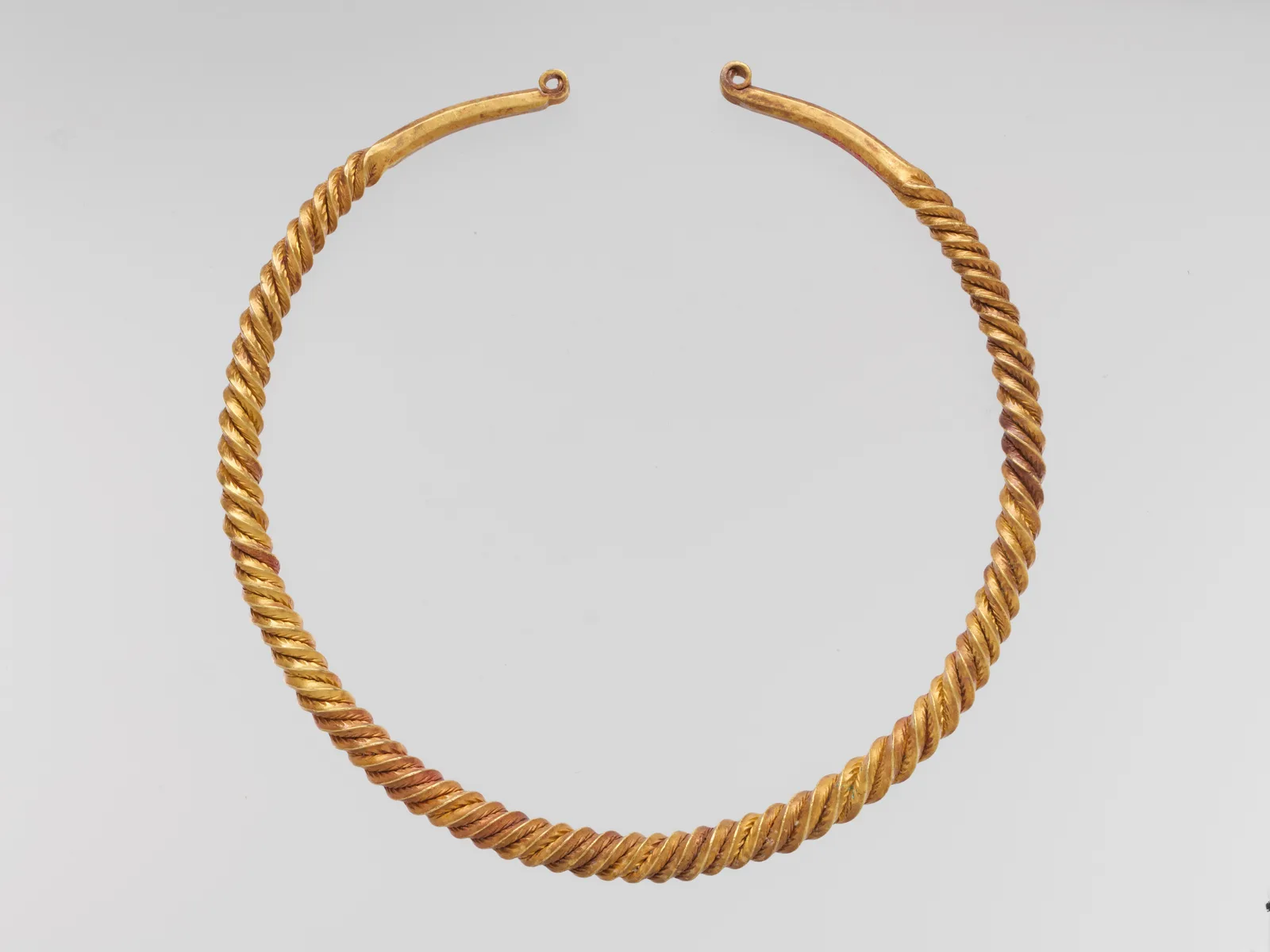
Silver is the chief noble metal of Slavic ornaments of the pre-Mongol period. From it were made the finest lunulae, temple rings, pendants and collars. The cold lunar gleam of silver sits perfectly on a lunar or solar sign, and over time the metal darkens in the hollows of the pattern, bringing out the relief of the filigree. Sterling silver, 925 fineness is a sensible modern balance of strength and a noble look, one the Slavic graphic line seems made for.
Bronze and Copper Alloys
Bronze and copper alloys are the material of the most widespread, folk amulets: cast horses, ducks, bells, axes. The warm golden tone of bronze looks good on massive pieces in an ethnic spirit, and patina over the years gives an ornament the look of a real burial-mound find. This is the choice for those who want a rough, honest texture rather than shine, and who value the sense of archaeological authenticity.
Filigree and Granulation
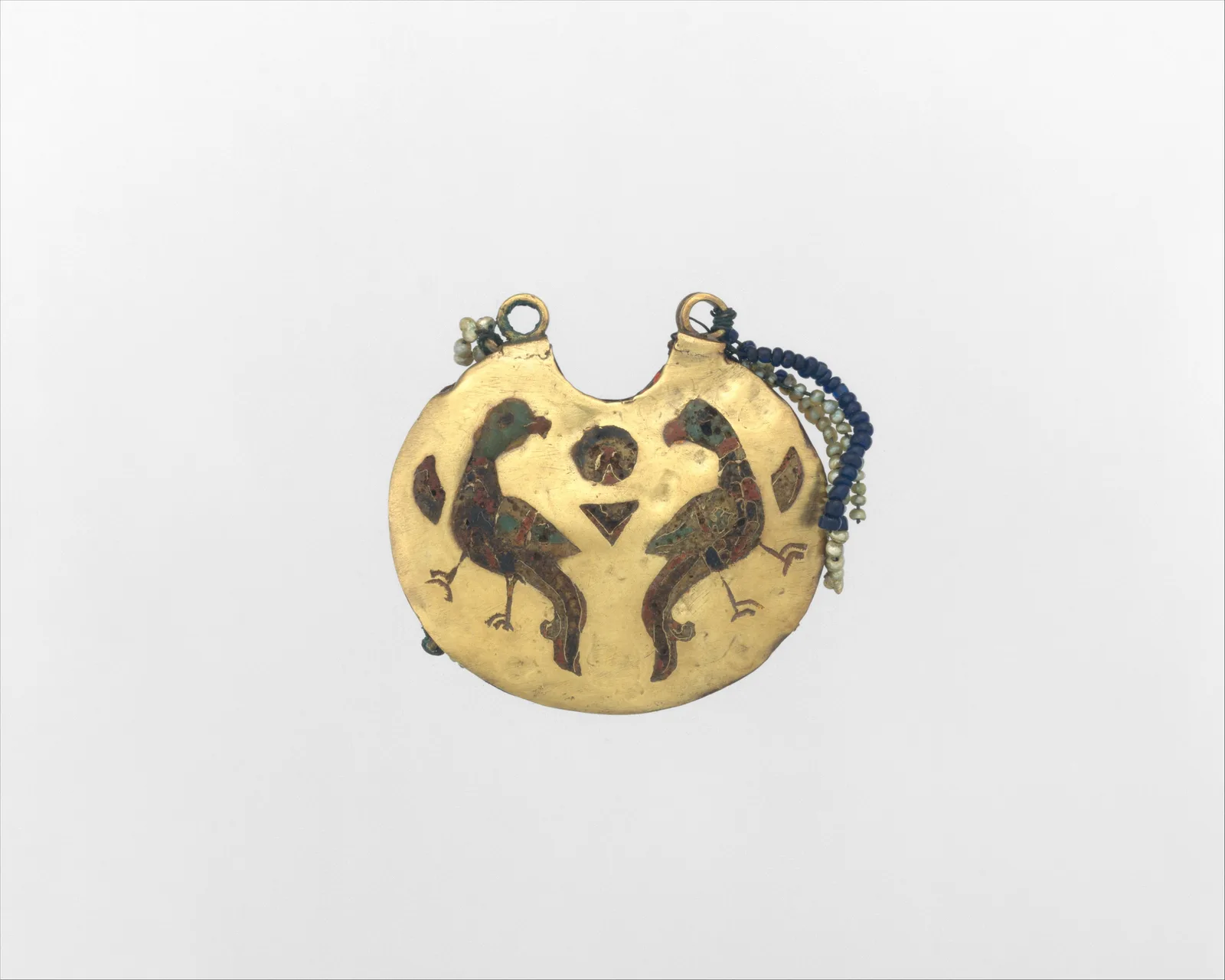
Filigree is a pattern of thin twisted or smooth wire, soldered onto a base or assembled as openwork. Granulation is a pattern of the tiniest metal beads soldered along a design. These two techniques were the summit of Old Russian jewellery: with them the finest lunulae, pendants and beads were adorned. Filigree gives a lacy lightness, granulation a fine shimmering relief. A high-level modern Slavic piece often leans on exactly these methods, continuing the tradition of the masters of pre-Mongol Rus.
Enamel and Niello
Cloisonné enamel and niello were added to silver and gold. Enamel gave bright coloured insets in costly pendants and collars; niello is a dark alloy poured into an engraved design so that it stands out against the light metal. Niello-darkened silver especially suits austere amulets: a dark pattern on a light ground reads clearly and sternly, in keeping with the ancient sign.
The Psychology of Choosing a Slavic Amulet
The pull toward a Slavic sign is rarely accidental. More often behind it stands a wish for connection: with roots, with nature, with generations you never met. Understanding this motive helps in choosing a piece that will not be random.
The Sign as a Bond with the Family Line
Many choose a Slavic amulet for the feeling of continuity. A lunula or an axe on the neck works as a quiet reminder: behind you stands a long row of people who lived by these signs. This is not magic but the mechanics of memory. An object you see and touch many times a day quietly keeps the chosen value in focus, whether that is home, strength or the bond with the ancestors. Slavic symbolism is especially good for this, because its meanings are simple and firm: sun, earth, protection.
An Ideal, Not a Mirror
Often a sign is chosen not by what we are but by what we want to become or to strengthen in ourselves. A gentle person reaches for the axe of Perun as a support, a restless one for the calm solar wheel. There is no contradiction in this: the amulet sets a direction, it does not describe a fact. The peasant too turned not to the god he was but to the one whose strength was needed for the task at hand: to Veles for increase, to Mokosh for a safe birth, to Perun for protection.
Honesty as Part of the Pleasure
A separate joy of the Slavic theme lies in knowing the real history of your sign. Understanding that the lunula is an ancient find, while the Alatyr star is rather a handsome new idea, does not cheapen the piece but makes it more honest. To wear an amulet knowing its real age and meaning is more pleasant than believing in an invented antiquity. It is respect both for the tradition and for yourself.
The Slavic Sign in Folk Art
Before becoming a pendant, the Slavic sign lived in wood, cloth and the metal of everyday life. This language of patterns is the chief surviving source on the beliefs.
Embroidery and Pattern
Folk embroidery on shirts, towels and bed valances is a whole dictionary of the amulet. A diamond with dots inside is a sown field, a sign of fertility. A female figure with raised arms between two riders or birds is the image of the goddess and the birth-goddesses. The protective pattern ran along the edges of clothing: the collar, the cuffs, the hem, where the body is open and where misfortune could slip in. Embroidery was not ornament in our sense but a working protective border.
Carving and Painting
The same language of signs covered wood: window frames, the bargeboards and ridge horses of roofs, spinning tools, the boards of distaffs, dishes. Solar rosettes and wheels, thunder signs, horse heads on the roof ridge protected the home from without and within. The distaff, a woman's chief tool, was covered all over with amulets, since spinning was imagined as handling the thread of fate. A modern Slavic pendant often takes a motif straight from this carving.
The Metal of Everyday Life
Between ornament and household object there was no sharp boundary for the Slavs. Belt mounts, buckles, brooch fasteners, the fittings of horns and ladles carried the same protective signs as the pendants. The amulet lived on the neck, on the belt, on clothing and on utensils alike. The Slavic sign was spread throughout daily life rather than concentrated in a single pendant as it is today, and that is worth keeping in mind when choosing a piece.
Send a friend a discount code, they save on their first order.
The Slavic Pantheon Versus the Scandinavian and the Greek
Three pagan worlds gave jewellery three different languages of signs. Understanding the difference is useful when you are choosing whose tradition to wear, all the more so because the Slavic and Scandinavian worlds were neighbours and borrowed much from each other.
Slavic: Nature, Family Line and the Farming Year
Slavic symbolism grew out of peasant life and the cult of nature. Its signs are about the sun and the earth, about fertility, about the female lot and the householder's plenty, about the protection of home and family line. This is the language of the farmer and the mother, not only of the warrior. Its main trait is the bond with the natural cycle: sun, moon, field, water, ancestors. And its main peculiarity is the scarcity of written sources, which makes the temptation to conjecture so great. The genuine Slavic sign is modest and functional: the lunula, the axe, the solar wheel, the ringing bell.
Scandinavian: Fate, Valour and the North
The northern gods live under the shadow of Ragnarok, their own doom, and their whole tradition is about endurance and valour in the face of the inevitable. The signs are angular, manly: the hammer, the rune, the valknut, the interlacing of beasts. If the Slavic symbol is often about fertility and home, the northern one is about how to hold on in battle and in fate. The neighbouring of the two worlds is visible right in the metal: the axe of Perun and the hammer of Thor are almost one sign of the thunderer. A full study of the northern gods is in the article on the Scandinavian pantheon, the gods of Asgard.
Greek: The Human Ideal and Form
The Greek gods are immortal and resemble people, with passions and a biography. Their symbolism is about character, harmony, the beauty of form, about the ideal you strive toward. The signs are elegant and measured, the legacy enormous in European art. If the Slavic sign is about the bond with nature and the family line, the Greek one is about who you want to be. The images are gathered in detail in the article on the Olympian gods, the Greek pantheon.
What Unites the Three Traditions
All three turn faith and character into a small wearable sign. They can even be combined, if for you this is about meaning rather than strict belonging. The main thing is to understand the language of each symbol and not mix them thoughtlessly, passing one off as another, as so often happens with Slavic and Scandinavian signs.
Facts That Surprise
The Slavic theme is full of details that rarely make it into a short retelling and that change how you see familiar amulets.
The Slavs wrote no book about their gods. Almost everything we know about Perun and Veles came through hostile Christian chronicles, treaties with Byzantium and late folklore. The chief source on the beliefs is not a text but an object: a pendant, an embroidery, a pattern on a distaff.
The old word for "cattle" meant money. Wealth was measured in herds, so the cattle-patron Veles was also a god of plenty, and the words for "cattle" and "treasury" stood side by side. The household amulet of the Slavs was, in the literal sense, an amulet of the purse.
By temple rings archaeologists read a woman's tribe as if from a passport. Seven-lobed rings mean the Vyatichs, seven-rayed the Radimichs, spiral the Severians. The form of the ornament beside the temple pointed directly to the land and union its owner came from.
Many bells were a weapon against evil spirits. A hollow pendant with a pellet inside chimed as the wearer walked, and the ringing was held to be protection: evil spirits fear the chime. So the ornament worked on its own, without any rite, simply while the person moved.
The lunula was not worn by the Slavs alone. The lunar amulet with horns pointing down is found among many peoples from the Bronze Age, from the Mediterranean to the steppes. It is one of the most ancient and widespread female signs in history, not an exclusively Slavic invention.
Some of the popular "Slavic" symbols are younger than the steam engine. Many signs of the gods, the Alatyr star, the valkyrie in their present form and under their present names were born in the nineteenth and twentieth centuries, among scholars and reenactors. This does not make them ugly, but ancient they are not.
The saints took the places of the old gods almost literally. Elijah the prophet on his fiery chariot stepped into the thunderer's place, Blaise took the cattle, Paraskeva of Friday took women's handicraft. A nineteenth-century peasant prayed to a saint without suspecting that he was repeating a gesture of his great-great-grandfather, once turned to Perun, Veles and Mokosh.
The thunder sign was carved as a fire extinguisher. The six-rayed rosette was placed on roof gables and window frames in the belief that like wards off like, and the sign of thunder would protect the home from a lightning strike and fire. It was a folk insurance policy long before the lightning rod.
Perun and Veles survive in the names of days and herbs. Traces of the old gods hide in language and folk botany: herbs named "Perun's," beliefs about storm days, the tying of Thursday to the thunderer among a number of neighbouring peoples. The gods departed, but splinters of their cult stuck in everyday words.
The ridge horse on the roof is a god standing guard over the home. The carved horse head on the roof ridge, from which the very word for the ridge piece comes, is an ancient amulet of the dwelling. The horse is linked to the sun and to good fortune, and its image atop the home guarded the family from above, just as the solar sign on the wall guarded from within. Ornament and architecture spoke the same language of signs.
Frequently Asked Questions
Which Slavic gods are known reliably?
The most reliably attested are Perun, the thunderer and head of the pantheon, Veles, god of cattle and wealth, Mokosh, the only goddess of the Kievan pantheon, and Dazhbog, a solar deity. Their names appear in chronicles, treaties and The Tale of Igor's Campaign. Many other names have come down more poorly or were restored later, so they deserve more caution.
How does an amulet differ from a talisman and a protective charm?
In folk tradition the boundary is loose. An amulet is an object that guards, turns aside misfortune and protects; its task is defensive. A talisman draws luck and good fortune. In practice one object often does both: the lunula both protects a woman and wishes her fertility. A large study of the differences is in the guide to amulets, talismans and protective charms.
Can an unbaptised or non-believing person wear a Slavic amulet?
Yes. The lunula, the axe, the solar wheel have long become cultural and aesthetic signs, part of a heritage rather than an object of obligatory cult. People wear them for meaning and beauty, just as the nazar or the hamsa are worn outside their original tradition. Faith here is each person's private matter.
Is it true that the kolovrat is an ancient Slavic symbol?
The turning solar sign itself, the rosette or wheel, really is very ancient and is found in many cultures as a wish for sun and the turning of the year. But the name "kolovrat" for a Slavic symbol in particular appeared in the twentieth century, among reenactors. And an outwardly similar figure was appropriated in the twentieth century by political movements and took on an entirely different, dark meaning. The ancient solar sign and its later political fate are two different stories that must not be mixed.
Why is the lunula worn with the horns pointing down?
Horns down turn the crescent into a cup, a vessel that seems to gather and hold good fortune, fertility, female strength. This is an ancient, steady gesture of the lunar amulet. The form and its meaning are examined in detail in the separate article on the lunula.
Which amulets are genuinely archaeological, and which are reconstruction?
Genuine archaeology is the lunulae, temple rings, axes, horse and duck pendants, bells, combs, spoons. Reconstruction with ancient-looking names is many "signs of the gods," the Alatyr star, the sign called the valkyrie. Both can be worn, but it is honest to understand the difference between a find from a burial mound and a handsome new idea.
Which material is the most authentic for a Slavic amulet?
For costly, status pieces it is silver, often with filigree and granulation, as the finest lunulae and pendants of pre-Mongol Rus were made. For widespread, folk amulets it is bronze and copper alloys, from which horses, ducks and bells were cast. Silver gives nobility; bronze with patina gives the honest look of a find.
How do Slavic amulets differ from Scandinavian ones?
The Slavic sign is more often about nature, fertility, home, the female lot and the farming year; it is softer and more domestic. The Scandinavian one is about fate, valour and battle; it is angular and martial. At the same time the worlds were neighbours, and some signs almost coincide: the axe of Perun and the hammer of Thor are two faces of one thunderer.
Buying it as a gift? Each one arrives ready to give.
 A branded Zevira box and a little card come with every order.













Conclusion
The Slavic pantheon came down to us not in books but in objects: a lunula in a burial mound, an axe on a belt, a temple ring beside a face, a ringing bell on a child's shirt. Behind each sign stands the peasant world, where the sun gave life, the earth gave bread, and the amulet kept up a quiet conversation with unseen forces. Perun, Veles, Mokosh, Dazhbog, the solar wheel and the lunar crescent are the language of this world. Today it returns in silver and bronze, in filigree and niello, in pendants, rings and earrings. In choosing a Slavic amulet, the most honest thing is to know what you are holding, an ancient form out of the earth or a handsome modern idea, and to wear it as a sign of connection with nature, the family line and your own memory.
Silver, bronze, amulets and symbols with a history, Slavic and beyond.
About Zevira
Zevira makes jewellery with meaning: symbols, amulets and motifs with a history, in silver and gold. We love things that mean something to their owner, from Slavic signs to protective charms of other traditions. If you are looking for your own symbol, start with the catalogue and find the one that is about you.