The Olympian Gods: the Greek Pantheon in Jewellery
In ancient Greece and Rome, people wore an engraved gem on one finger showing their patron god. It was an amulet, a personal seal, and an ID all at once: pressed into wax, the impression sealed a letter and announced whose protection you walked under. The eagle of Zeus, the owl of Athena, the lyre of Apollo all fit onto a stone no bigger than a fingernail and worked like an ancient calling card with belief built in.
Twelve chief gods lived on the summit of Mount Olympus, and each had a signature: an object, an animal, or a plant by which people recognised them without a caption. These signatures outlasted the temples themselves. Today they return in pendants, rings, and earrings because they carry a ready meaning: you choose not a picture but a character that fits you.
Who the Olympians were
The Olympians are the twelve chief gods of the Greek pantheon who, according to myth, lived on Mount Olympus, the highest mountain in Greece. They were not the first generation of gods. Before them the world was ruled by the Titans under Cronus, and earlier still by primal forces such as Chaos, Gaia (Earth), and Uranus (Sky). The Olympians came to power after the war with the Titans, the Titanomachy, and divided the world between themselves.
The roster of twelve shifted slightly from author to author and city to city, but the stable core was this: Zeus, Hera, Poseidon, Demeter, Athena, Apollo, Artemis, Ares, Aphrodite, Hephaestus, Hermes, and either Hestia or Dionysus. Hades, god of the underworld, usually falls outside the dozen because he lives below the earth rather than on Olympus, but in raw power he is the equal of his brothers.
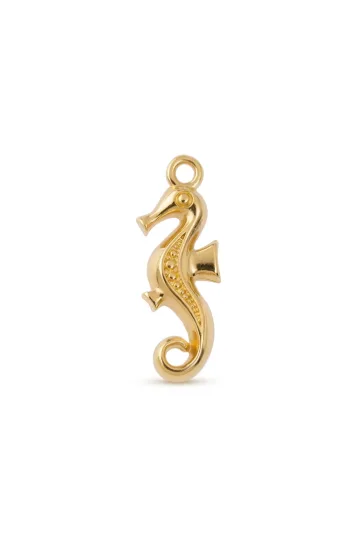
Wear the symbol, don't just read about it. These are in stock:





How Greek gods differed from the rest
Greek gods are immortal but not all-powerful and not flawless. They grow jealous, take revenge, fall in love, lie, and make mistakes. That makes them closer to people than the stern deities of many other traditions. A Greek did not so much fear the gods as bargain with them, offering a sacrifice to the right patron before a venture and carrying that god's sign on his person.
Why attributes rather than faces
Outside temples and large statues, the gods' faces were rarely depicted in antiquity. On coins, signet rings, and gems, a single recognisable object was enough. The thunderbolt meant Zeus, the trident Poseidon, the winged sandals Hermes. This language of signs is exactly what passed into jewellery: a small object reads instantly, needs no portrait, and sits well on metal.
The Olympians and the Romans
When Rome conquered Greece, it adopted her gods almost wholesale and gave them Roman names. Zeus became Jupiter, Hera became Juno, Aphrodite became Venus, Poseidon became Neptune, Hermes became Mercury. The attributes stayed the same. So in European art and jewellery the ancient gods live under double names, and the Roman version is often even more popular than the Greek.
Genealogy of the gods: who is related to whom
To make the pantheon settle into a system in your head rather than a heap of names, hold three generations in mind. First, from Chaos the primal forces are born: Gaia (Earth), Uranus (Sky), Tartarus, Eros. Gaia and Uranus give rise to the Titans. Then the youngest Titan, Cronus, overthrows his father, marries his sister Rhea, and rules the world, but he fears that his children will repeat his fate, so he swallows them one by one. Rhea hides the youngest, Zeus, slipping her husband a stone wrapped in swaddling clothes instead. The grown Zeus frees his brothers and sisters, leads them to war against the Titans, and wins. So the third generation, the Olympians, takes the summit.
This picture makes the key thing clear: Zeus, Poseidon, and Hades are blood brothers who divided the sky, the sea, and the underworld. Hera, Demeter, and Hestia are their blood sisters. Everything else in the younger generation is already the children of Zeus by various mothers: Athena, Apollo, Artemis, Ares, Hephaestus, Hermes, Aphrodite (in one version), and Dionysus. Once you grasp the kinship, it is clear why the myths are so thick with family quarrels: these are literally the stories of one big, fractious family.
The twelve Olympians: who is who
Write the stable dozen out in a single line and you get a ready map of characters. Zeus is power and sky. Hera is marriage and dignity. Poseidon is the sea and the elements. Demeter is harvest and motherhood. Athena is wisdom and strategy. Apollo is light, music, and prophecy. Artemis is the hunt, the moon, and freedom. Ares is the fury of war. Aphrodite is love and beauty. Hephaestus is fire and craft. Hermes is movement, trade, and cunning. And in twelfth place either Hestia with her household hearth, or Dionysus with wine and ecstasy, depending on the list and the city.
Swapping Hestia for Dionysus is no accident. Hestia willingly gave up her seat at the gods' common table to Dionysus when he joined the Olympian circle, choosing the quiet service of the hearth over a fight for status. That touch captures her character well: of all the gods, she is the only one who never clung to a place in the sun.
How the gods entered jewellery
The Greek pantheon did not arrive in jewellery recently. It was there from the very start, back when a piece of jewellery and an amulet meant the same thing.
Gems and intaglios
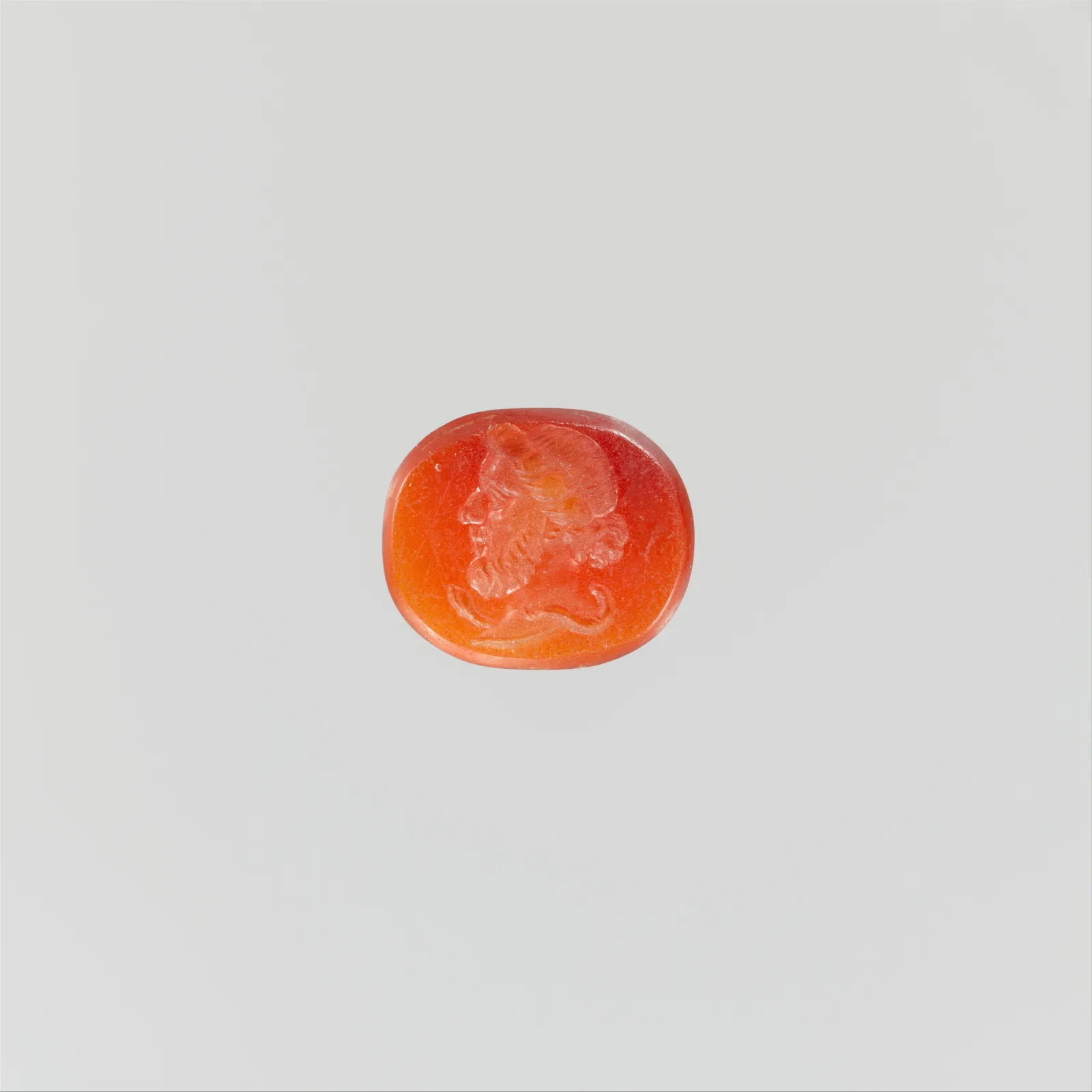
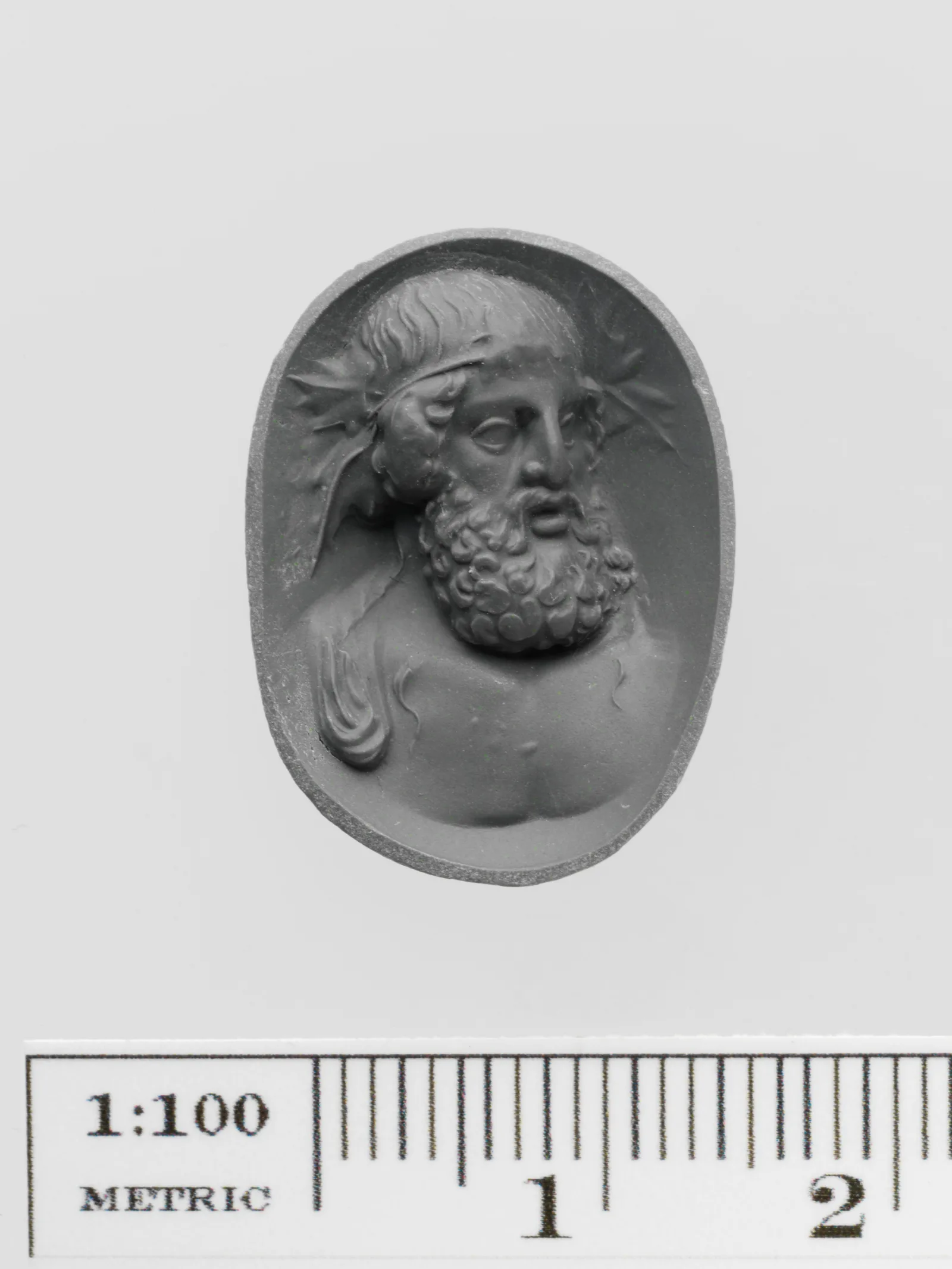
The oldest carrier of a god's image is the carved stone. An intaglio is a stone with a sunken image; a gem, in the broad sense, is any carved jewel. The Greeks, and before them the people of Crete and Mycenae, carved figures of gods and their attributes into carnelian, agate, and amethyst. A signet ring with an intaglio served as a seal: the owner pressed the stone into wax or clay and left an impression that certified a document or sealed a door. The god on the stone was both signature and protector of the deal.
Coins as a portable pantheon
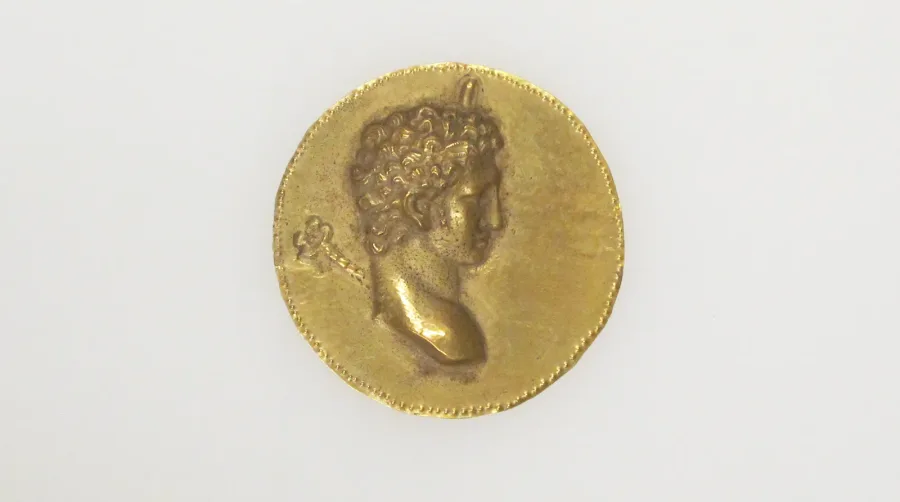
Greek city-states minted coins bearing the patron gods of the city. The owl of Athena on Athenian tetradrachms, Apollo and his lyre, Zeus with his eagle. Coins spread across the whole Mediterranean and carried the images of the gods better than any book. Later, coins were set into mounts and worn as pendants, and that tradition survived into jewellery with ancient motifs.
Roman cameos
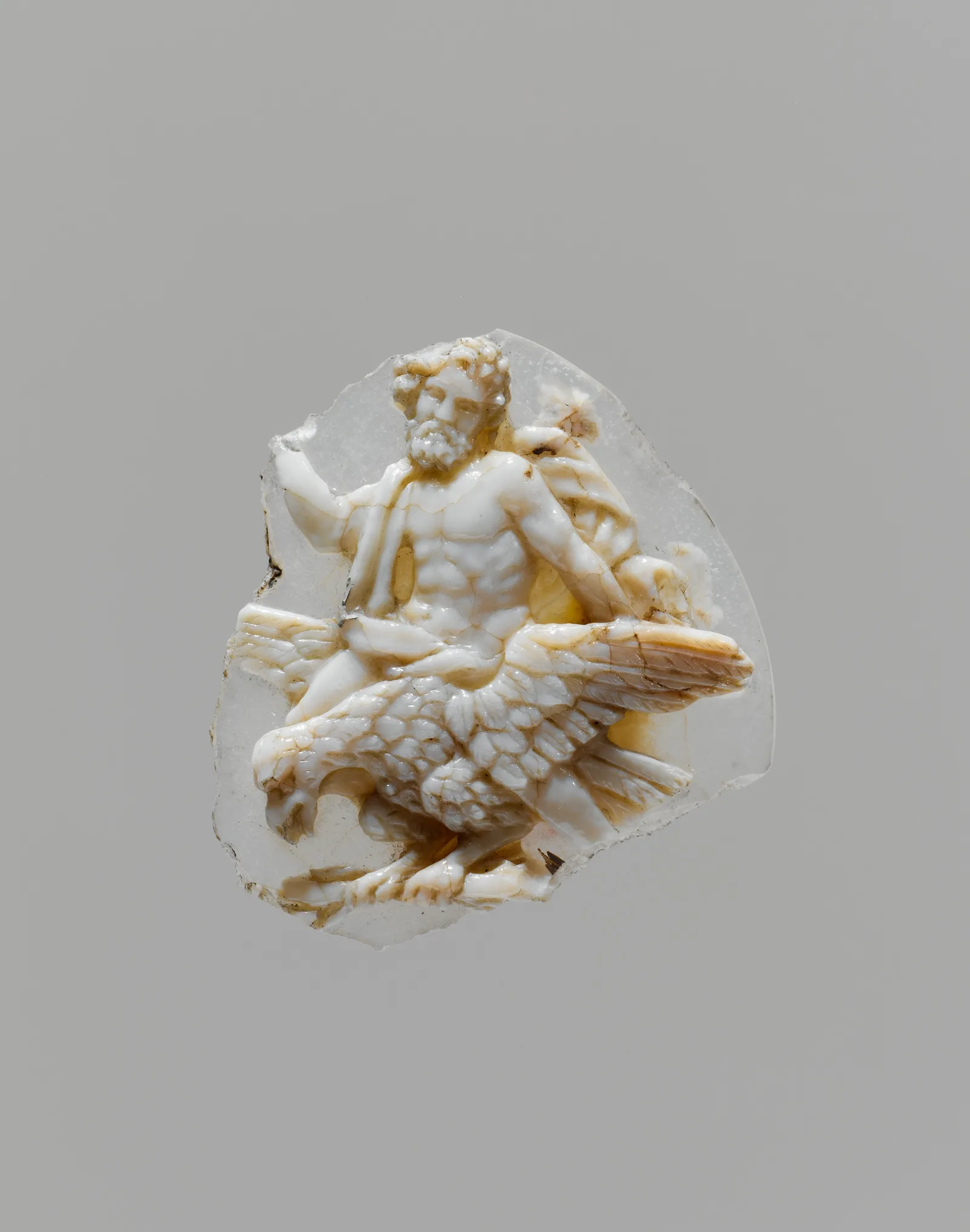
A cameo is carving in reverse: the relief stands out above the background, usually on a two-layer stone such as sardonyx, where the light upper layer gives the figure and the dark lower layer the ground. The Romans brought the cameo to perfection. Profiles of gods and deified rulers, scenes with Venus, Mars, Jupiter. The cameo became a status piece, and interest in it flared up again in every era that loved antiquity.
The Renaissance and Neoclassicism
In the Renaissance, humanists rediscovered antiquity, and the gods of Olympus returned to rings, pendants, and seals. The real explosion came in the late eighteenth and early nineteenth century, in Neoclassicism. The excavations of Pompeii and Herculaneum, the fashion for everything Greek and Roman, the Grand Tour of educated Europeans through Italy. Travellers brought home gems and cameos with gods as a souvenir with a story attached. Cameo cutters in Italy worked by the thousand.
Art Nouveau and beyond
At the turn of the nineteenth and twentieth century, Art Nouveau fell in love with mythology again. Flowing lines, female nymph figures, motifs from Greek legend. Jewellers took not so much the gods themselves as their world: wings, shells, laurel, moons. Since then the ancient pantheon has never left jewellery, changing only the language of its forms.
One sign on a bare collarbone lands the blow. Only the unsure hang the whole pantheon round their neck, and I won't hear otherwise.
How to wear your god's sign
Over years on shoots I have tried these ancient signs across dozens of looks. Here is what actually works, by occasion and by texture, not by myth.
How do I wear a god's sign every day? For everyday I recommend one attribute on a thin chain: an owl, a caduceus, a crescent. A light top lifts silver, a dark one turns the sign into an accent. Under a V-neck the pendant falls right into the centre, its best spot. With a round neck I suggest a shorter chain, so the sign rests on the fabric rather than hiding behind it.
Which metal goes with which god? I take my cue from the character of the sign. For sunny Zeus and Apollo I choose yellow gold, for lunar Artemis and Hestia cool silver, for sea-bound Poseidon silver with a cool stone. Dark metal and sharp graphics I give to Ares and Hades. Gold reads regal, silver reads restrained, and I never confuse the metal with the god.
And where does a cameo go? A cameo I recommend for a more composed, slightly vintage look: smooth fabric, a clean neckline, few other pieces. It is a statement on its own, so I keep nothing loud beside it. I wear it larger, at a short or medium length, so the carving stays legible.
How do I build an evening look? For evening I suggest an open neckline and a rich colour: wine, emerald, black. A gold sign or a gem sits best here on bare skin near the collarbone. I keep the length short, 40-45 cm, one sign with no crowd of other pendants.
Can I wear several gods at once? You can, but with sense. I take a pair whose realms complete each other: mind and force, beauty and luck. I give each sign its own chain length so they do not knot together. One god always beats a crowd, so even in layers I keep the signs apart and in order.

Turn on your camera, pick earrings, a pendant or a ring, and see the piece on yourself in real time.
Switch items in one tap.
Everything runs in your browser: no photo or video is ever uploaded.
The gods of Olympus in art
Before becoming a pendant on a chain, a god passed through painting and sculpture. The image we wear today was struck by centuries of art, and it helps to understand that chain.
Ancient sculpture set the canon
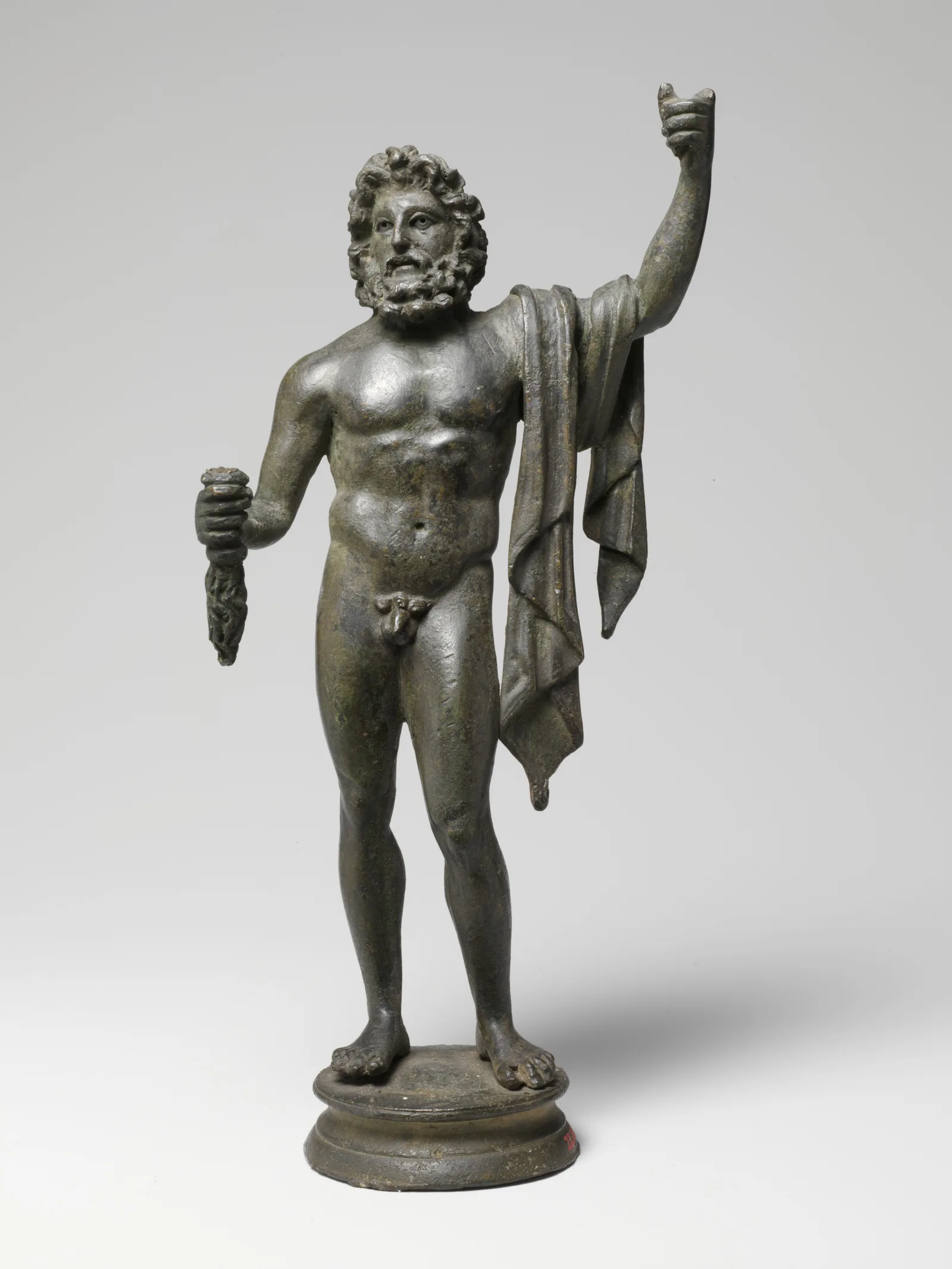
The Greeks were the first to decide how each god should look. Zeus mature, bearded, majestic. Apollo young, beardless, perfectly built. Aphrodite nude or half-dressed, with a modest gesture. Hermes light, in motion. These types were fixed in marble and bronze, and for two thousand years afterward artists repeated them. When you recognise a god from a single silhouette, you are reading a canon invented by ancient masters.
The Renaissance brought the gods back into painting
Renaissance artists rediscovered ancient subjects and began to paint the birth of Venus, the judgement of Paris, the love of Mars and Venus. The gods stepped out of temples and onto the canvases of palaces and villas. With the paintings came small-scale work too: medals, gems, and seals with the same subjects. The image of a god became both grand art and a small wearable object once more.
Baroque and Classicism
In the Baroque the gods turned theatrical and dynamic, with a riot of drapery and clouds. Classicism, by contrast, gave them back their austerity and clean lines, closer to the ancient ideal. Neoclassical jewellers leaned on exactly this calm, clean language, which is why cameos of that era look so balanced. A god on a cameo rarely shouts; more often he is restrained, like an ancient statue.
What art gave to jewellery
The chief legacy of painting and sculpture is recognisability. Artists repeated the attributes so often that the trident, the thunderbolt, the shell, or the owl came to read instantly, without a caption. Jewellery simply took the ready-made vocabulary, polished by art, and carried it onto metal and stone at a small scale.
Famous ancient gems and cameos
The history of the carved stone holds things that outlived empires. They show what this tiny genre was capable of.
The Gonzaga Cameo
One of the most famous surviving ancient cameos, cut from three-layer sardonyx in Hellenistic Egypt. It shows a double profile of a royal pair, executed with such subtle layer transitions that the faces seem to glow from within. The cameo wandered from collection to collection for centuries and became a benchmark for what can be achieved on a layered stone.
The Farnese Cup
A large cameo bowl of sardonyx, also Hellenistic. On the outside, the head of Medusa; on the inside, a complex allegorical scene with gods of fertility and the Nile. It proves that carvers worked at both miniature and large scale, building whole mythological compositions in stone.
Gems as seals of power
The rulers of antiquity had personal signet gems with their patron gods. The impression of such a ring certified decrees and letters, and forging fine bespoke carving was nearly impossible. A gem with a god served as signature, coat of arms, and amulet at once, concentrating the owner's status in a single stone.
Why they inspire jewellers
These objects set the bar: a god on a stone can be not a trinket but a work of art. Modern makers who take on an ancient motif keep exactly this tradition in mind, where a small stone carries great art. That is why a good gem is valued not for its subject but for the carver's hand.
Zeus and the eagle with the thunderbolt
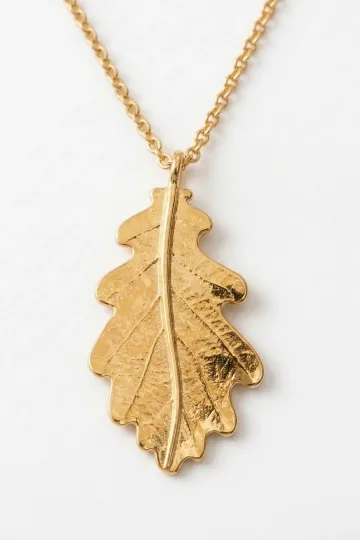
Zeus, the Roman Jupiter, is the supreme god, lord of the sky and the storm, king of Olympus. His attributes are the thunderbolt, the eagle, the sceptre, and the oak. In jewellery Zeus is about command of the situation, leadership, protection from above. A thunderbolt as a pendant reads sharp and masculine, an eagle as a sign of strength and keen sight. Zeus is chosen by those used to taking responsibility and weathering a blow. There is more in a separate piece on Zeus and Jupiter in jewellery.
Hera and the peacock
Hera, the Roman Juno, is the wife of Zeus, queen of the gods, patron of marriage and family. Her bird is the peacock, whose tail, by myth, is adorned with the eyes of the hundred-eyed watchman Argus. In jewellery Hera and the peacock are about dignity, fidelity, the standing of the lady of the house. The peacock in jewellery carries the same idea: regal beauty that needs no proof, and protection of the family circle.
Hera in detail: myth and sign
Hera guarded marriage, yet her own marriage cost her dearly: Zeus was endlessly unfaithful, and most of the myths about Hera are stories of her jealous revenge on his lovers and their children. Heracles, whose name literally means "glory of Hera," paid all his life for his father's affair, working through twelve labours under the goddess's pressure. Out of this doubleness her character is built: on one side the protection of family and fidelity, on the other a pride that does not forgive betrayal.
In jewellery Hera is worn by those for whom dignity and the standing of mistress of the house matter. Her chief sign, the peacock with its eyed tail, reads instantly and works as an amulet of the family circle. Juno's wedding symbolism survived in the name of June: the month dedicated to the patron of marriage is still considered the best for weddings. A pendant or earrings with a peacock motif are a quiet way to wear the idea of a faithful and worthy union.
Athena, the owl, and the aegis
Athena, the Roman Minerva, is the goddess of wisdom, just war, and crafts, born straight from the head of Zeus fully armed. Her attributes are the owl, the spear, the helmet, and the aegis, a shield bearing the head of Medusa the Gorgon. In jewellery Athena is about intellect, strategy, calm strength. The owl in jewellery long ago became a separate symbol of wisdom and night vision. And the aegis ties Athena to the story of Medusa the Gorgon, whose face on the shield drove off enemies.
Athena in detail: myth and sign
The birth of Athena is one of the most vivid scenes in the pantheon. Zeus was warned that a son by the Titaness Metis would overthrow him, so he swallowed his pregnant beloved. In time a terrible pain split the god's head; Hephaestus struck it with a hammer, and out of the crack stepped a grown Athena, fully armed and with a war cry. So from the very start the goddess of wisdom became the embodiment of a clear, ready mind that needed no long growing up.
Her contest with Poseidon for the patronage of Athens explains why intellect, not force, rules that city. Poseidon struck with his trident and gave a spring of salt water; Athena grew an olive tree that gave food, oil, and timber, and the citizens chose her gift. That is why her owl sits on Athenian coins, and the olive remains a sign of wise choice. In jewellery Athena is taken by people who, in an argument, rely on cool calculation rather than shouting. An owl on a pendant or signet keeps exactly this idea close: think before you strike.
Customer reviews
Zevira is a real jewellery shop. Genuine payments, deliveries and customer thank-yous.
🥰🥰🥰 gracias
Ok, ¡gracias! 🙂
Aphrodite, the shell, and the pearl
Aphrodite, the Roman Venus, is the goddess of love, beauty, and desire, born from the sea foam. Her attributes are the scallop shell, the pearl, the rose, the dove, and the myrtle. In jewellery Aphrodite is about sensuality, attraction, femininity without extra words. The pearl is no accident here: born inside a shell, it ties directly to the legend of the goddess rising from the sea. A scallop shell as a pendant reads instantly, even without the figure of Venus herself. If you want to go deeper into Aphrodite's own gem, the complete guide to pearls helps.
Apollo, the lyre, and the laurel
Apollo, who kept his name among the Romans, is the god of light, music, poetry, prophecy, and healing. His attributes are the lyre, the laurel wreath, the bow, and the rays of the sun. In jewellery Apollo is about talent, harmony, clarity of mind. The lyre as a sign of music and creativity, the laurel as a symbol of glory and victory. The laurel wreath outlived Apollo himself and became an independent sign of triumph, from ancient victors to award motifs of modern times, which is the subject of a separate piece on the laurel wreath in jewellery.
Apollo in detail: myth and sign
The laurel became Apollo's sign through an unhappy story. The god fell in love with the nymph Daphne; she fled from him and prayed to be saved, and the gods turned her into a laurel tree right in his arms. Apollo made the laurel his eternal plant and the wreath that later crowned victors, poets, and triumphators. So a laurel wreath on a piece of jewellery reads in two registers at once: both as glory and as the memory of the unattainable.
Apollo is a rare god whose name the Romans did not change: he came to Rome under his own Greek name, so strong was his cult. In jewellery he is chosen by creative people and those who value clarity, harmony, and measure (the motto of Apollo's Delphic temple, "nothing in excess," is about his essence). A lyre as a pendant speaks of music and talent, sun rays of light and a clear mind, laurel of earned victory. Gold suits him best: the sun's metal for the sun god.
Artemis, the moon, and the bow
Artemis, the Roman Diana, is the goddess of the hunt, wild nature, and the moon, twin sister of Apollo. Her attributes are the bow and arrows, the crescent moon, the deer, and the hounds. In jewellery Artemis is about independence, freedom, a bond with nature and the night. The crescent as a pendant is one of the oldest female symbols, the bow and arrow a sign of aim and resolve. Artemis is chosen by those who value autonomy and dislike having decisions made for them.
Artemis in detail: myth and sign
Artemis was born first of the twins and, by legend, at once helped her mother deliver her brother Apollo, which made her a patron of women in childbirth too. Yet she herself chose independence forever, asking her father Zeus for eternal maidenhood, a bow, and a retinue of nymphs instead of marriage. Her freedom was fierce: the hunter Actaeon, who by chance saw the goddess bathing, she turned into a deer, and his own hounds tore him apart. This is no sweet woodland fairy but a stern mistress of the wild who defends her space to the end.
Artemis's crescent is one of the oldest female signs in jewellery, and people wear it precisely for the idea of autonomy and connection with the lunar cycles. Silver suits her better than gold: the cool lunar metal against the solar metal of her twin brother. A bow and arrow on a pendant read as a sign of aim and the resolve to go your own way. Artemis is taken by those who value the right to decide for themselves and hand that right to no one.
Upload a photo of your pet, someone you love, or an object. We'll build a 3D model and hand-cast it in pewter.


Hermes and the caduceus
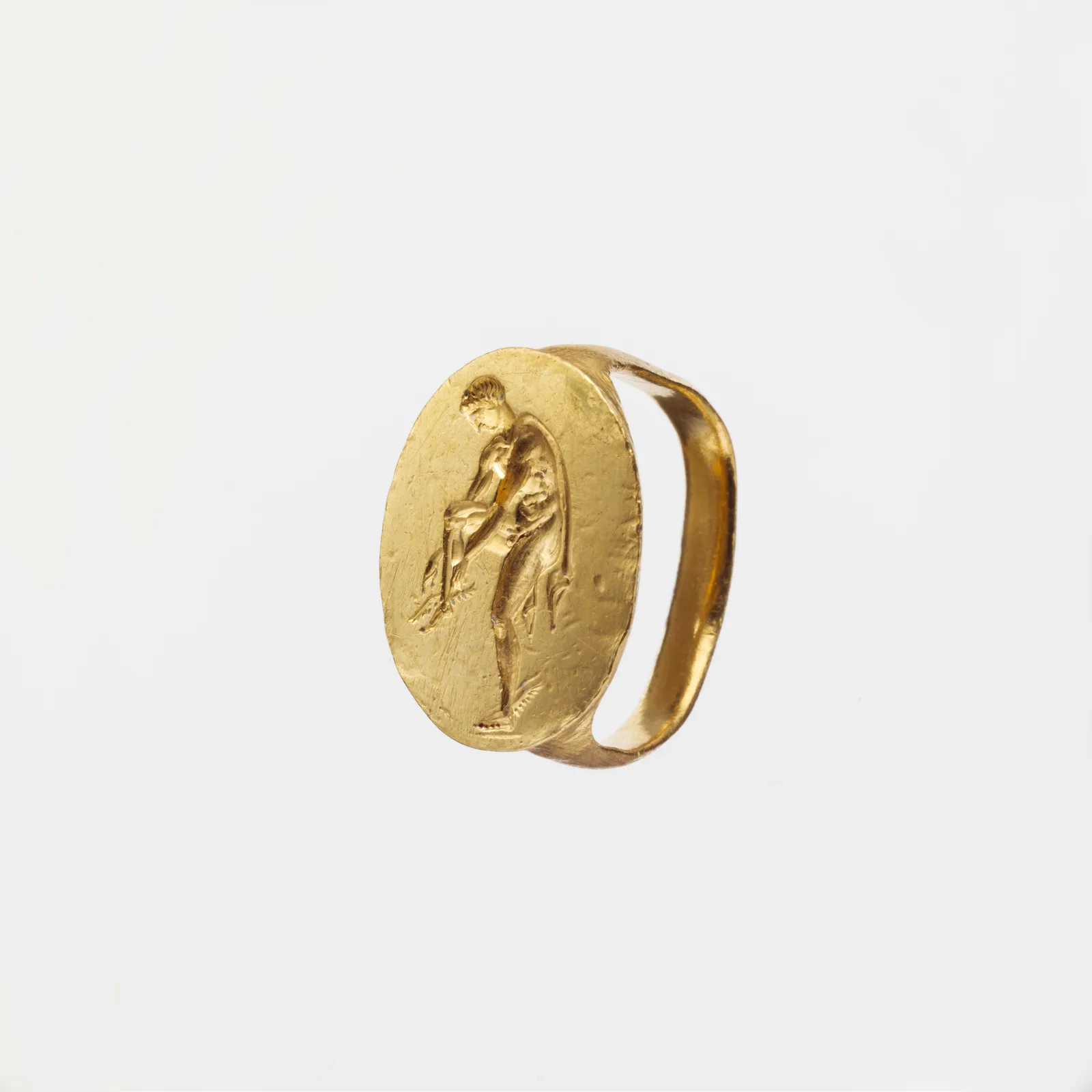
Hermes, the Roman Mercury, is the messenger of the gods, patron of travellers, merchants, orators, and, on the side, of thieves and tricksters. His attributes are the winged sandals, the winged petasos helmet, and the caduceus, a staff entwined by two serpents. In jewellery Hermes is about movement, a quick mind, luck in business and on the road. The caduceus is often confused with the rod of Asclepius (one serpent, the symbol of medicine), but they are different signs. There is more in a piece on Hermes and Mercury in jewellery.
Poseidon and the trident
Poseidon, the Roman Neptune, is the god of the seas, earthquakes, and horses. His chief attribute is the trident, a three-pronged spear with which he commanded the waves. In jewellery Poseidon is about the elements, strength, a bond with water and sea travel. A trident as a pendant is spare and recognisable, loved by those tied to the sea and by anyone who simply likes a powerful, direct symbol. There is a separate piece on Poseidon and Neptune in jewellery.



Ares and the spear
Ares, the Roman Mars, is the god of war, or rather of its furious, frenzied side (the calculating military wisdom belonged to Athena). His attributes are the spear, the helmet, the shield, and sometimes a dog and a bird of prey. In jewellery Ares is about drive, courage, fighting spirit. Among the Romans, Mars was far more respected than Ares was among the Greeks, since he was held to be the father of Romulus and the patron of Rome itself. The sign of Mars (a circle with an arrow) survived to our day as the symbol of the masculine.
Ares in detail: myth and sign
The Greeks rather disliked their war god. Ares embodied the blind fury of battle, blood and chaos, and the myths regularly humiliate him: Athena beats him with intellect, giants hold him captive in a bronze jar, and once wounded he flees the field complaining to his father. Zeus tells his son outright that he is the most hateful of all the gods to him. The Romans, by contrast, recast Mars as a venerable founding father: he sired Romulus and Remus, gave his name to the month of March, and was held the guardian of the state itself. The same god, two utterly different attitudes.
In jewellery Ares is about direct drive and fighting spirit with no looking back. His sign, the circle with an arrow, survived to our day as the universal symbol of the masculine, and it is perhaps the most enduring ancient sign of all. A spear or helmet on a pendant reads as a claim to courage. Dark metal and sharp graphics convey his energy better than soft forms. Ares is taken by those who do not fear conflict and push straight ahead.
Hephaestus and the hammer
Hephaestus, the Roman Vulcan, is the god of fire, smithing, and craft, the only physically imperfect Olympian (lame), yet the most skilled master of all. His attributes are the hammer, the anvil, and the tongs. In jewellery Hephaestus is about labour, mastery, making with one's hands. For a jeweller he is in effect the patron god of the craft: all the finest weapons and ornaments of the gods were forged by him. The hammer as a sign is valued by people who make things themselves.
Hephaestus in detail: myth and sign
Hephaestus is the only god who wins not by beauty and not by strength but with his hands. Thrown from Olympus and left lame, rejected by his mother, he took his revenge through mastery: in his forge under the volcano were born the armour of Achilles, a shield with a whole world on it, the sceptre and thunderbolts of Zeus, the first woman Pandora, and golden automaton handmaidens who helped the lame god walk. He also forged the finest invisible net with which he caught his unfaithful wife Aphrodite with Ares, turning insult into public revenge. This is a god who turns any defeat into work.
For a jeweller Hephaestus is almost a personal patron: everything finest in the world of the gods came from his hands. In jewellery his hammer, anvil, or tongue of flame read as a sign of labour and making, and they are taken by people who make things themselves rather than receive them finished. It is a rare case where a symbol speaks not of origin or luck but of craft as a value. Warm metal and a textured, as-if-forged surface suit him better than mirror polish.
Dionysus, the grape, and the thyrsus
Dionysus, the Roman Bacchus, is the god of wine, winemaking, ecstasy, and theatre. His attributes are the grapevine, the ivy, the thyrsus (a staff wreathed in ivy with a pine cone at the tip), and the leopard. In jewellery Dionysus is about joy, freedom, sensuality, and revelry. The cluster of grapes and the leaves are a frequent motif in jewellery, from ancient cups to earrings. Dionysus is the patron of those who know how to let go of control and celebrate life.
Dionysus in detail: myth and sign
Dionysus came to the Olympians last and from the outside: his mother was mortal, and as an infant he survived her death and was carried to term in the thigh of Zeus himself. Hence his double nature, half god and half outsider, who wanders the world bearing wine, madness, and release. His retinue of maenads and satyrs tore down every boundary, and theatre as an art grew out of his festivals. Dionysus is the part of a person that wants to step beyond the limits, let go of control, and dissolve into a shared rush.
In jewellery his cluster of grapes, ivy leaf, or thyrsus read as a sign of joy, sensuality, and freedom from convention. The grapevine is one of the oldest jewellery motifs of all, from ancient wreaths to cluster earrings. Dionysus's stone is amethyst: the Greeks believed it guarded against drunkenness, and the very name of the stone means "not drunk." Dionysus is taken by those who value celebration, taste, and the knack of living here and now without turning life into one long duty.
Leave your email, we'll send your discount code. No spam, unsubscribe anytime.
The code arrives by email, valid on your first order.
Demeter and the ear of grain
Demeter, the Roman Ceres, is the goddess of fertility, agriculture, and harvest, mother of Persephone. Her attributes are the ear of wheat, the sheaf, the horn of plenty, and the poppy. In jewellery Demeter is about abundance, care, motherhood, a bond with the earth and the cycles of nature. An ear of grain as a pendant carries the idea of plenty and the continuation of the family line. The name of Ceres survives to this day in the word cereal.
Demeter in detail: myth and sign
Demeter's most important myth explains the change of seasons. Hades carried off her daughter Persephone to the underworld, and the mother, maddened with grief, stopped giving the earth its fertility, sending a hungry winter over the world. Zeus had to broker a deal: Persephone spends part of the year with her mother (and then the earth blooms) and part below with her husband (and then winter comes). So through a family drama the Greeks explained why nature dies and revives in a cycle. Demeter is maternal love in all its force, able to halt the whole world for the sake of a child.
In jewellery her ear of grain, sheaf, or horn of plenty read as a sign of plenty, care, and the continuation of the line. An ear of grain on a pendant is one of the warmest and most legible ancient motifs, especially close to those for whom family and home are the main support. The name of Ceres survives in the word cereal, and the first asteroid ever discovered, later reclassified as a dwarf planet, was named after the goddess too. Demeter is taken by people who are grounded and solid, who value the harvest in the broad sense, the fruits of their labour and their family.
Hestia and the hearth
Hestia, the Roman Vesta, is the goddess of the household hearth, family, and the sacred fire. The quietest of the Olympians: she has almost no myths, because she never left Olympus and never got tangled in intrigue. Her attribute is the flame of the hearth. In jewellery Hestia is about home, comfort, inner peace, loyalty to family. She has little in the way of a direct object-sign, so she is most often conveyed through the motif of fire or the circle of the hearth. Hestia is chosen by those for whom home is the chief value.
Hestia in detail: myth and sign
Hestia's silence is not weakness but a choice. When Poseidon and Apollo courted her, she swore to Zeus to remain an eternal maiden and keep the hearth, and for this she received the first share of every sacrifice and a place in the heart of every home. The sacred fire of her Roman form, Vesta, burned in the temple on the forum, tended by the Vestal priestesses: while the flame lives, Rome lives. Among the Greeks, fire for a new colony was lit from any city's hearth, carrying a piece of home along. Hestia is that unnoticed force that keeps a home whole.
She has almost no object-sign, and in that lies her special beauty: Hestia is worn through the motif of flame, the circle, or the hearth, through a pure idea rather than an attribute. In jewellery she is about inner peace, comfort, and loyalty to the close circle. This is the choice of those who value not loud status but a warm, dependable home worth returning to. Warm metal and a calm, understated form convey her essence more precisely than any bright symbol.
Hades and the helmet of invisibility
Hades, the Roman Pluto (or Dis), is the god of the underworld and lord of the dead. He does not belong to the dozen Olympians because he lives below the earth, but in power he equals Zeus and Poseidon, his brothers. His attributes are the bident, the three-headed dog Cerberus, the helmet of invisibility, and the horn of plenty (as god of underground riches, including ores and metals). In jewellery Hades is about depth, mystery, strength hidden from sight. Dark stones and black metal convey his energy well. This is the choice of those who are not frightened by the theme of death and who value what lies beneath the surface.
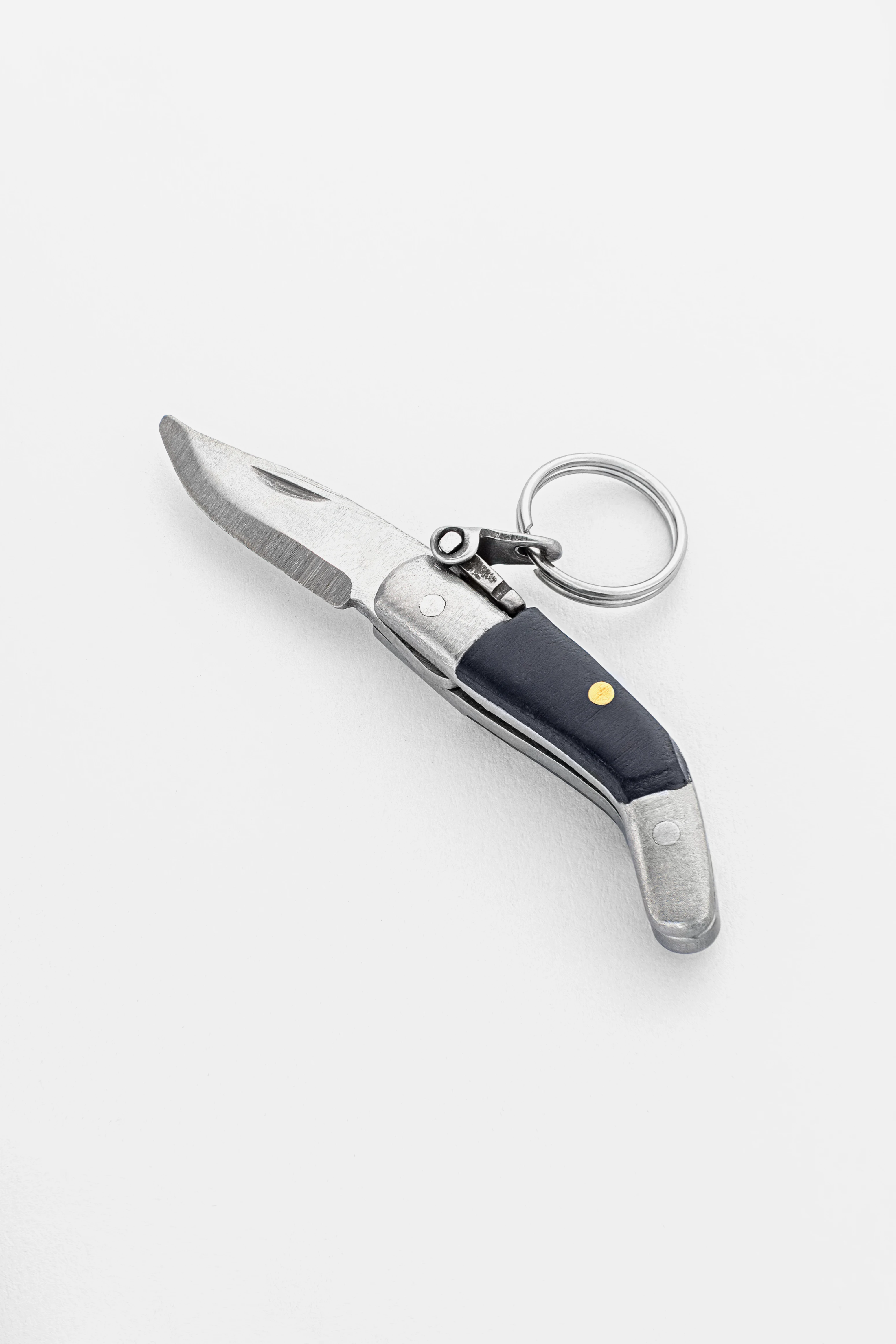
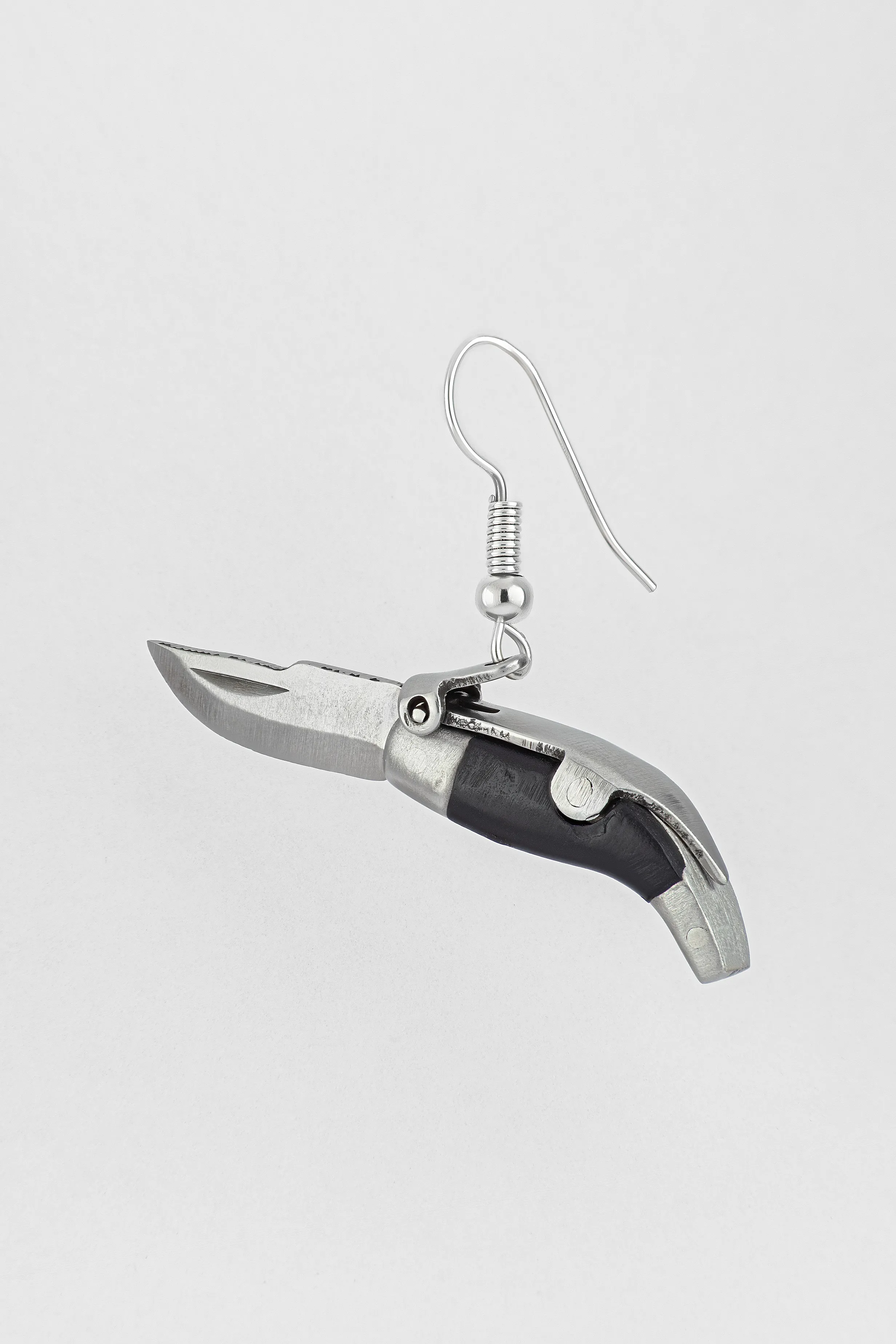
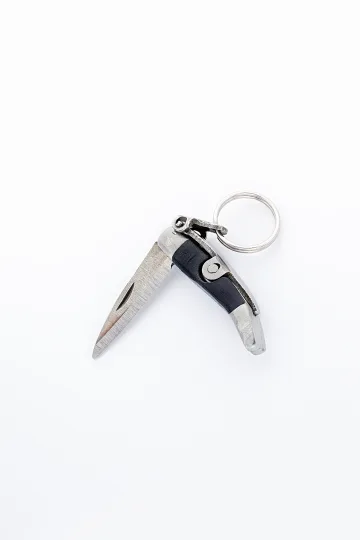
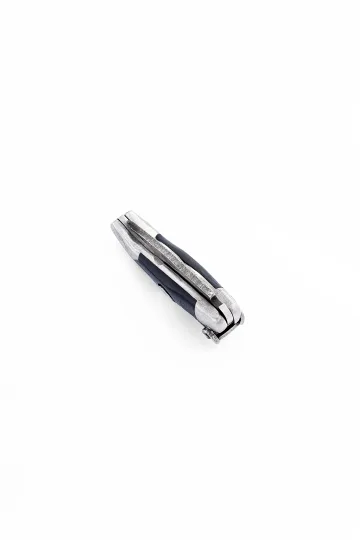
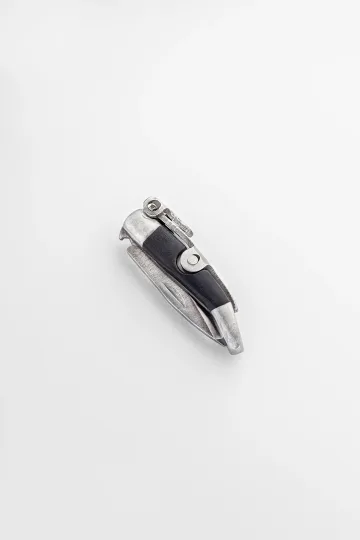
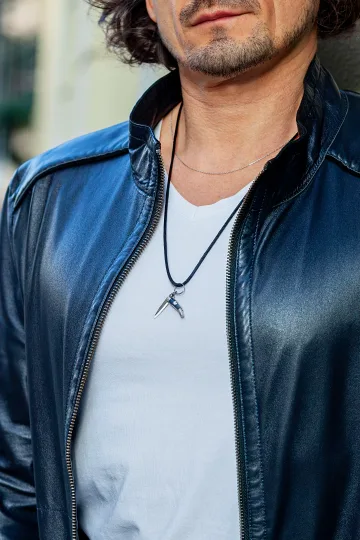
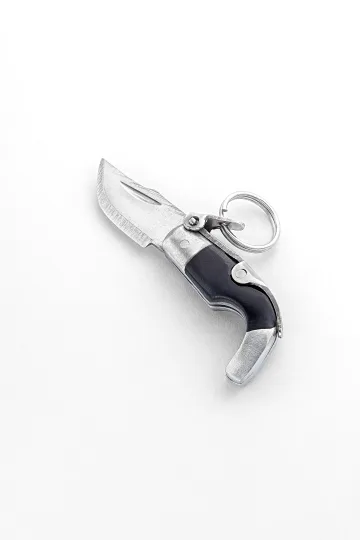
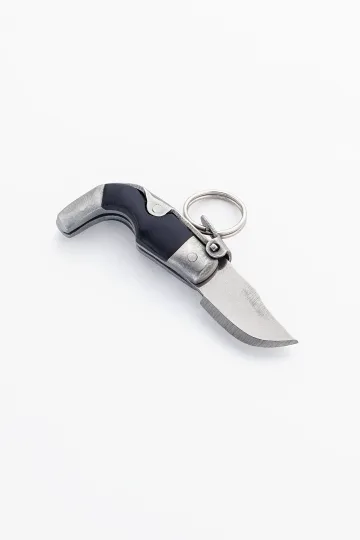
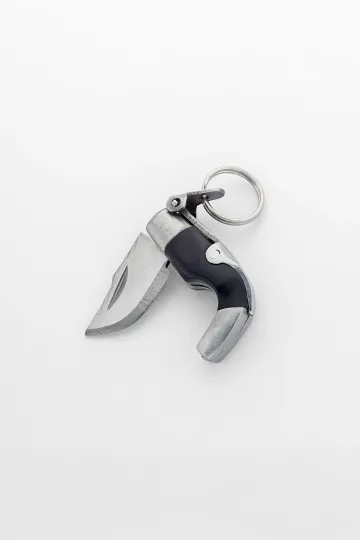
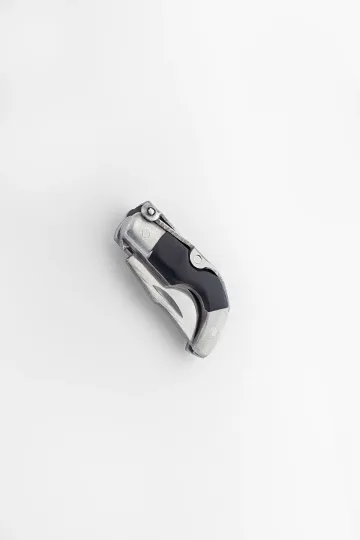
CAPAORA mini knife pendant
The 18th-century Spanish navaja in miniature: 40 mm of stainless steel, a real folding mechanism and a Palanquilla lock that clicks. An affordable gift to remember.
Authentic · Ships from Spain · 14-day returns
Companions and minor deities
Around the twelve chief gods spun a whole world of lesser gods and spirits, and their signs appear in jewellery too, sometimes even more often than the Olympians themselves.
Eros and the arrow of love
Eros, the Roman Cupid or Amor, son of Aphrodite, god of desire. His bow and arrow wound the heart and kindle love. The arrow or the winged heart is one of the most enduring ancient motifs in jewellery about love, reaching our day almost unchanged.
Nike and the wings of victory
Nike, the Roman Victoria, the winged goddess of victory. Her image is a figure with wings and a wreath or a palm branch. The wing as a sign of triumph and ascent passed into jewellery separately from the goddess herself and reads as a wish for success.
Hypnos, Thanatos, and the world of sleep
Hypnos, god of sleep, and his brother Thanatos, god of gentle death, children of the night. The poppy, linked with oblivion and sleep, sometimes appears in jewellery as a quiet, melancholy motif. It is rare but expressive symbolism for those who value calm and acceptance.
Pan and nature
Pan, the goat-legged god of wild nature, shepherds, and sudden fear (hence the word panic), companion of Dionysus. His pipes and horns are a sign of free, untamed nature. Pan is a reminder that in the Greek world the divine lived both on the summit of Olympus and in every grove.
How to choose your patron god
You choose your god not by the beauty of the picture but by character. Ask yourself what is closest to you as a value, and start from there.
By trait of character
Leadership and responsibility is Zeus. Wisdom and strategy, Athena. Love and beauty, Aphrodite. Freedom and independence, Artemis. Creativity and harmony, Apollo. Mastery and labour, Hephaestus. Joy and lightness, Dionysus. Home and family, Hestia or Hera. Movement and luck in business, Hermes.
By sphere of life
Tied to the sea or often travelling by water, that is Poseidon. Working with your hands, making things, Hephaestus. Studying, writing, researching, Athena or Apollo. Trading, negotiating, Hermes. Caring for home and loved ones, Hestia, Demeter. Loving risk and struggle, Ares.
By date and season
Sometimes a god is matched to a season or the mood of the year. Demeter is associated with harvest and autumn, Dionysus with the grape gathering, Artemis with the full moon, Apollo with summer sun. This is not a strict system but rather a way to tie a symbol to a moment of life.
Can you wear several
You can. The Greeks themselves turned to different gods for different occasions, and there is no ban on combining them. A common move: a pair of gods whose spheres complement each other. Athena and Ares as intellect and strength, Aphrodite and Hermes as beauty and luck, Zeus and Hera as power and family.
A simple way to find yours in three questions
If you are spoilt for choice, narrow it with three questions to yourself. First: what is my chief trait, or which one do I want to strengthen? Strength and power lead to Zeus, intellect to Athena, love to Aphrodite, freedom to Artemis, creativity to Apollo, craft to Hephaestus, joy to Dionysus, home to Hestia. Second question: in what setting does my life unfold? Sea and road are Poseidon and Hermes, earth and family Demeter and Hera, workshop and making Hephaestus, study and the word Athena and Apollo. Third: am I choosing a sign for who I am, or for who I want to become? Both answers are valid; what matters is to be aware of just what you are wearing.
When three questions leave one or two gods, the attribute decides the rest. Look at which sign you would most enjoy seeing every day: thunderbolt, owl, shell, crescent, lyre, ear of grain. The final choice is often made by the form of the symbol rather than by logic, and that is fine. The Greeks too went by whichever image spoke to them rather than by a strict table. If doubt lingers, start with one sign on a plain chain and live with it: the right symbol usually becomes "yours" within a couple of weeks of wear.
The psychology of choosing a patron god
The choice of a god is rarely random. More often a person is drawn to what they want to strengthen in themselves or remind themselves of each day.
A sign as a daily reminder
A small symbol on the neck or hand works as a quiet anchor. Whoever chose Athena's owl keeps the idea of a cool head close at the moment they feel like flaring up. Artemis's crescent recalls the right to one's own space. This is not magic but the mechanics of attention: a thing you see and touch many times a day quietly keeps the chosen value in focus.
An ideal, not a mirror
People often choose a god not for who they are but for who they want to become. A calm person may be drawn to the drive of Ares, a restless one to the clarity of Apollo. There is no contradiction in this: the symbol sets a direction rather than describing a fact. The Greeks too prayed not to the god they were but to the one whose help they needed for a given task.
Why antiquity rather than your own tradition
The Greek pantheon is convenient because it is culturally neutral and yet rich in meaning. You can wear a caduceus or an owl with no tie to religion, as a pure sign of character. For many it is a way to speak of values without declaring either a faith or membership of a closed circle.
The attribute instead of the figure
The most elegant way to wear a god is not his figure but his sign. So did the Greeks: on a small stone or coin a single object was enough.
The advantage of the attribute is restraint. A thunderbolt, trident, lyre, or owl reads as pure geometry, with no figurative weight. Such a symbol is universal, worn by men and women alike, suiting both a strict and a free style. Hephaestus's hammer, Demeter's ear of grain, Aphrodite's shell, Hermes's caduceus, Artemis's crescent, each of these signs works on its own and does not require the viewer to remember the whole of mythology.
The attribute is also more tactful. A full-length figure of a god is a statement, while a small sign on a chain is a detail for those in the know. Whoever knows will read it. Whoever does not will simply see a beautiful thing. That is exactly why the ancient tradition rested on signs rather than portraits.
Materials: gem, cameo, coin, gold, silver
Ancient symbolism loves the materials in which people have been used to seeing it for centuries.
Carved stone: gem and intaglio
Semi-precious stones such as carnelian, agate, onyx, and amethyst are the historical home for a god's image. An intaglio with sunken carving gives a play of light in the hollows, and a ring with such a setting comes closest to the ancient original. Today gems are cut both by hand and by machine, and good carving reads even at a small size.
Cameo
A cameo with relief, usually on sardonyx or agate with layers of different colour, conveys the profile of a god or a scene from myth. It is the most recognisable ancient jewellery format. A cameo is worn as a brooch, a pendant, or a ring inset. The vintage look of the cameo returns in waves and always looks costly.
Coin motif
A pendant in the shape of an ancient coin with a god or his symbol harks back to the oldest tradition of carrying a god's image with you. A coin disc with Athena's owl or the profile of Apollo looks both historical and graphic.
Gold
Gold is the logical material for the gods: the sun's metal of Apollo, the colour of Zeus's power, of Aphrodite's luxury. Yellow gold gives the most ancient note, warm and regal. A god's sign in gold reads like a small relic.
Silver
Silver 925 is more practical and restrained, closer to the lunar gods: Artemis with her crescent, Hestia with her quiet fire, Poseidon with the cold of the sea. Silver holds the sharp graphics of an attribute well and suits everyday wear.
Companion stones
A stone is matched to a god by his sphere. Pearl and moonstone for Aphrodite and Artemis, tiger's eye and citrine for the solar Zeus and Apollo, dark onyx and hematite for Hades, turquoise and aquamarine for the sea god Poseidon. The stone reinforces the character of the symbol without arguing with it.
Send a friend a discount code, they save on their first order.
How to choose a good gem or cameo
An ancient motif is easy to spoil with crude execution, so when choosing you look not at the subject but at the quality of the carving and the material.
By clarity of carving
The chief mark of a good gem is the legibility of the figure at a small size. In quality work the face, the pose, the attribute are visible even when the stone is fingernail-sized. In a poor stamping the relief is blurred, the details run together, and the god turns into a faceless blob. Turn the piece under the light: the facets of the carving should give a clear play of shadow, not a murky patch.
By material
A real gem is cut from stone: carnelian, agate, onyx, sardonyx. The stone is cool to the skin, has weight and a natural pattern of layers. A cheap imitation is cast glass or plastic, light, warm to the touch, often with bubbles inside or a mould seam along the edge. On a cameo, look at the border of the layers: in a natural two-layer stone the transition is alive and uneven, in a fake it is suspiciously even, as if painted on.
By the setting
A good gem usually sits in a neat setting that holds the stone at the edge and does not cover the design. Crude claws, a crooked bezel, traces of glue instead of a setting speak of haste. The silver or gold of the setting is best checked for a hallmark, especially if the piece is presented as precious.
Handmade versus machine
Today gems are cut both by hand and on a CNC machine. The machine gives even, repeatable carving; handwork gives living, slightly imperfect lines and character. Neither is worse in itself: the question is the cleanness of the execution. A costly handmade cameo is valued for the maker's hand, a tidy machine gem for affordability with good clarity.
Greek gods in modern culture
The Olympians have gone nowhere; they simply changed carrier. Today their images live in books, games, film, and language, and that is exactly why a god's symbol reads even to those who never opened a book of mythology.
In language and branding
The gods' names long ago became words. Nectar, "nike" as victory, echo, nymph, morphine from the dream god Morpheus, hypnosis from Hypnos. The names of the planets are the Roman gods almost in full: Jupiter, Mars, Venus, Neptune, Mercury. When you wear the sign of Hermes or Athena, you wear a name that already sounds around you every day.
In games and pop culture
Modern games and adventure books draw constantly on Greek myth: gods become characters, their attributes recognisable details. The younger generation often meets the pantheon not through a textbook but through a story, and comes to jewellery already knowing that the trident is Poseidon and the winged sandals are Hermes. This keeps demand for ancient symbolism alive.
Why the symbol works without knowing the myth
Even without recalling the details of the legends, a person reads the basic meaning: a thunderbolt is strength, an owl wisdom, a shell and a pearl beauty. The attributes have become an almost universal alphabet, legible across cultures. Therein lies the strength of the Greek pantheon for jewellery: the sign speaks for itself.
The Greek pantheon versus the Egyptian and the Norse
The three great pagan pantheons gave jewellery three different languages of symbols. Understanding the difference is useful when you choose whose sign to wear.
Greek: human and aesthetic
The Greek gods resemble people: with passions, weaknesses, a biography. Their symbolism is about character and ideal, about who a person wants to be. The signs are graceful and recognisable, the aesthetic finely tuned, the legacy in European art vast. This is the pantheon of harmony, reason, and beauty of form.
Egyptian: eternity and protection
The Egyptian pantheon is sterner and older; it is about the afterlife, eternity, magical protection. The goddess Isis and the Egyptian gods give signs such as the ankh, the eye of Horus, the scarab, which work as protective seals. If the Greek sign tells who you are, the Egyptian is more about what guards you. The style is more geometric, closer to a hieroglyph.
Norse: hardness and fate
The Norse pantheon, headed by Odin and Thor, is about strength, fate, endurance in the face of the inevitable. Its signs (Thor's hammer, runes, the valknut) are angular, masculine, without the Greek softness. This is the language of the warrior and northern myth, where even the gods are mortal and march toward the final battle.
The Greek pantheon versus the Roman: twin names
It is worth dealing separately with the pair most often confused, the Greek and Roman versions of the same gods. These are not two different pantheons but one under two names. Rome, having conquered Greece, identified its own old Italian gods with the Greek ones and took over the whole mythology entire. So most Olympians have a twin name: Zeus is Jupiter, Hera is Juno, Poseidon is Neptune, Athena is Minerva, Aphrodite is Venus, Ares is Mars, Artemis is Diana, Hermes is Mercury, Hephaestus is Vulcan, Demeter is Ceres, Dionysus is Bacchus, Hestia is Vesta. The attributes did not change: thunderbolt, trident, owl, and shell stayed the same.
The difference is more often in emphasis than in essence. The Roman Mars is far more venerable than the Greek Ares, because he was held to be the father of Rome's founders. Venus, among the Romans, became the ancestress of the Julian line and so gained a state weight that Aphrodite never had. Apollo, on the other hand, entered Rome under his own Greek name, untranslated. For jewellery this means a simple thing: in choosing a sign you choose not a "Greek" or a "Roman" god but a single character that is convenient to call by whichever name sounds closer to you. The Roman names, by the way, are often more popular in European jewellery: Venus and Jupiter sound more familiar than Aphrodite and Zeus.
What unites them
All three traditions do the same thing: they turn character and belief into a small wearable sign. They can even be combined, if for you it is about meaning rather than strict membership. The main thing is to understand just what each symbol says.
The gods by element
A handy way to choose your patron is to start from the element closest to you. The Greeks themselves divided the world among the gods by the realm of their power.
Sky and storm
The heights were held by Zeus with his thunderbolt and eagle, and beside him Hera, queen of the sky. These are gods of height, power, and the view from above. Their signs are taken by those used to leading and answering for many, and drawn to the idea of strength that comes from on high.
Sea and water
The water was held by Poseidon with his trident, and from the foam Aphrodite was born. The sea element is about might and beauty at once: one sign stern, the other sensual. Aquamarine, pearl, moonstone, and silver convey this watery register best.
Earth and fertility
Earth and harvest were the domain of Demeter with her ear of grain, underground riches of Hades. These are gods of plenty, roots, the cycle of birth and fading. Their symbolism is warm and solid, closer to gold, dark stones, and plant motifs.
Fire and light
The fire of the forge was held by Hephaestus, light and sun by Apollo, the household flame by Hestia. This is the element of making, clarity, and the warmth of the hearth. The hammer, the lyre, the motif of flame or sun rays read as a sign of mastery, talent, and home.
Facts that surprise
The ancient pantheon is full of details that never make it into the schoolbook retelling of the myths.
The owl on Athenian coins was so well known that the saying "to carry owls to Athens" meant the same as "carrying coals to Newcastle": doing something pointless, bringing more of a thing to a place that already has it in abundance.
The tail of Hera's peacock, by legend, got its eyes from the hundred-eyed giant Argus. When Hermes lulled the watchman to sleep and killed him on the orders of Zeus, Hera moved all his eyes onto the plumage of her favourite bird, so they would never close.
Hermes's caduceus (two serpents on a staff) and the rod of Asclepius (one serpent) are constantly confused. Many medical emblems use the caduceus by mistake, although the symbol of medicine is the staff with a single serpent, while the caduceus is about trade and negotiation.
The name of Ceres, the Roman Demeter, survives to this day in the word cereal. And the goddess herself gives her name to the first asteroid ever discovered, later reclassified as a dwarf planet, Ceres.
Hephaestus is the only Olympian with a physical defect. By one version Hera threw him from Olympus for his ugliness, by another Zeus threw him. The smith god took an elegant revenge: he forged his mother a golden throne that seized whoever sat down and would not let go.
Aphrodite, the goddess of love, was married to the ugliest god, Hephaestus, and cheated on him with the most warlike, Ares. The story of the net in which the jealous Hephaestus caught the lovers was a favourite subject of artists for centuries.
The word panic comes from the name of the god Pan, companion of Dionysus. Sudden, causeless terror, especially in lonely places, was thought to be sent by him.
The Greeks did not build a single shared temple to all the gods. Each had his own cult, his own patron city, his own festivals. The idea of gathering everyone under one roof came later, and the Roman Pantheon in Rome ("temple of all the gods") is exactly about this.
Olympus is no invention but a real mountain in northern Greece, the highest in the country. Its summit is almost always shrouded in cloud, and that is exactly why the ancients decided that there, behind the curtain of cloud, the gods lived, hidden from human eyes.
Nearly all the names of the planets of the Solar System are Roman gods: Mercury, Venus, Mars, Jupiter, Neptune. The days of the week in the Romance languages keep the gods too: the French mardi is the day of Mars, mercredi the day of Mercury. The pantheon is literally written across the calendar and the sky we still use.
Amethyst took its name from Dionysus, or rather from the belief that it guards against drunkenness. In Greek "amethystos" means "not drunk," and the Greeks set the stone in cups and wore it in rings, hoping to drink without consequence. So the wine god unwittingly gave his name to the stone meant to protect against wine.
The full list of the twelve Olympians was never fixed. Different cities and authors shuffled the roster, added local gods, swapped Hestia for Dionysus. The idea of exactly twelve chief gods is a convenient frame rather than a strict canon, and in that it resembles our own lists of "the greats": the number is round, the names are debatable.
The goddess Nike, whose name became a synonym for victory, was at first not a separate deity but a companion. She was often shown as a small winged figure on the palm of Zeus or Athena, as if victory were something the great gods hold and hand out. Nike's wing became an independent symbol later, and now it lives in jewellery apart from the whole of mythology.
The months and days still keep the names of the goddesses of marriage and war. June is named after Juno, patron of weddings, and so is still considered a lucky month for marriages. March bears the name of Mars: among the Romans the campaign season opened in spring, when the snow melted and the armies set out again.
Buying it as a gift? Each one arrives ready to give.
 A branded Zevira box and a little card come with every order.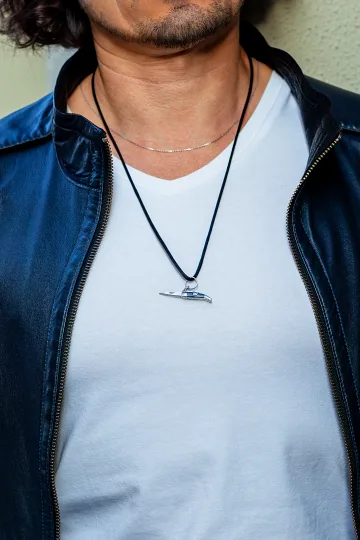




Frequently asked questions
How many gods are there on Olympus in all?
Classically there are twelve, but the roster floated a little. The stable core: Zeus, Hera, Poseidon, Demeter, Athena, Apollo, Artemis, Ares, Aphrodite, Hephaestus, Hermes, and either Hestia or Dionysus. Hades equals the chief gods in power but usually falls outside the dozen, because he lives below the earth rather than on Olympus.
How do the Greek names differ from the Roman?
They are the same gods under different names. Zeus is Jupiter, Hera is Juno, Aphrodite is Venus, Poseidon is Neptune, Hermes is Mercury, Ares is Mars, Artemis is Diana, Athena is Minerva. Rome took over the Greek pantheon and gave it Latin names, keeping the attributes. That is why in art the gods often appear under a double name.
Which patron god suits luck in business?
Hermes (Mercury), patron of trade, negotiation, and the road. His sign is the caduceus, a staff with two serpents. For luck in new ventures people also take Zeus as a symbol of protection from above or Demeter as a sign of plenty and prosperity.
Can I wear a god's symbol if I do not believe in Greek mythology?
Yes. It has long been a cultural and aesthetic symbol, not an object of religious cult. Wearing a caduceus or Athena's owl is about values close to you (intellect, movement, wisdom), not about worship. Just as the nazar or the hamsa are worn by people outside their original traditions.
What is the difference between a cameo and an intaglio?
An intaglio is carving into the stone, the image sunken; such a stone served as a seal and gave a raised impression in wax. A cameo is carving in reverse: the relief stands above the background, usually on a two-layer stone, where the light figure contrasts with the dark ground. A cameo is worn as jewellery, an intaglio historically as a signet ring.
Which material is the most historically accurate?
Carved semi-precious stone: carnelian, agate, onyx, sardonyx. It was on stones like these that the Greeks and Romans carved gods for rings and pendants. The coin motif is also very authentic, since coins with gods were the first mass "wearable" pantheon.
Which god suits a woman, and which a man?
There is no hard division. Athena, Artemis, Aphrodite, Hera, Demeter, and Hestia are more often chosen by women, but Athena and Artemis are about strength and independence, not femininity alone. Zeus, Poseidon, Ares, Hephaestus, and Hades are more often taken by men. Hermes, Apollo, and Dionysus are universal. In the end people choose by character, not by sex.
How do I combine several gods in one look?
Take a pair whose spheres complement each other: intellect and strength (Athena and Ares), beauty and luck (Aphrodite and Hermes), power and family (Zeus and Hera). Give each symbol its own chain length, or spread them across different pieces (a pendant and a ring), so the signs do not blur into a heap.
Conclusion
The Greek pantheon is a ready gallery of characters, and each god arrives with his own sign: thunderbolt, owl, lyre, trident, shell. The ancient tradition long ago showed how to wear that belief on yourself, through carved stone, coin, cameo. Today the same language of signs works in pendants, rings, and earrings: you choose not a picture but a value close to you, leadership, wisdom, love, freedom, or mastery. And a single attribute on a clean chain is enough to make the symbol ring.
Silver, gold, symbolism, amulets, matching sets.
About Zevira
Zevira makes jewellery with meaning: symbols, amulets, and motifs with a story, in silver and gold. We love things that mean something to their owner, from ancient signs to protective amulets of various traditions. If you are looking for your symbol, start with the catalogue and pick the one that is about you.