Poseidon (Neptune) in jewellery: the trident, the myth and power over the elements
The Greeks feared Poseidon more than they feared Zeus. Zeus ruled the sky from a distance, while Poseidon shook the ground underfoot and sank ships on a whim. His trident struck a rock and water poured out, or a horse burst free. This is a god whose weapon creates life and destroys it with a single blow.
To the Romans, Poseidon was Neptune. Both hold a trident, both ride a chariot drawn by sea horses, and both rule an element that humankind never learned to master. In jewellery this image reads not as "the sea" in general, but as a specific figure of power: a god, a trident, a force able to feed and to punish in equal measure.
What follows, in order: who Poseidon is and how he differs from Neptune, where the image of the god with the trident came from, what each of his attributes means, why the trident lives on as a symbol in its own right, and how the god of the sea differs from sea creatures in jewellery. Marine animals are a separate topic, and there is an honest conversation about them below, with links.
Who Poseidon is and how he differs from Neptune
Poseidon in the Greek pantheon
Poseidon is one of the chief gods of the Greek Olympus, brother of Zeus and Hades. When the three brothers divided the world after the defeat of the Titans, Zeus received the sky, Hades the underworld, and Poseidon the sea and everything beneath the water. The earth and Olympus were held in common, and it was precisely this loophole that kept Poseidon meddling in earthly affairs, shaking the ground and quarrelling over cities.
He was called the "earth-shaker" (Enosichthon) and the "earth-holder." That detail matters: for a Greek, Poseidon governed both the waves and the earthquakes. People living on the seismically active islands of the Aegean read every tremor as the mood of the god. So Poseidon is not a comfortable figure. He was respected and appeased rather than loved.
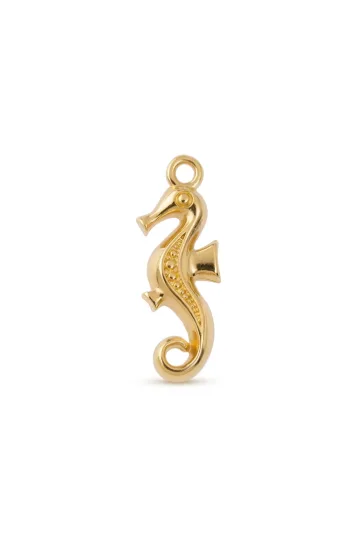
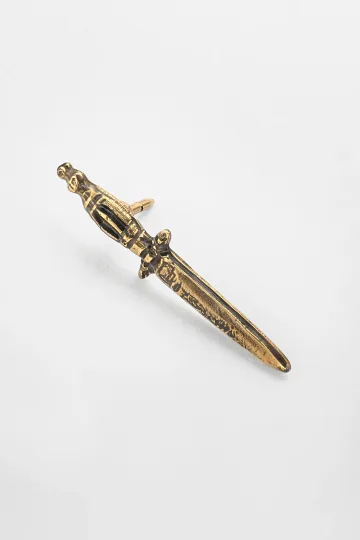
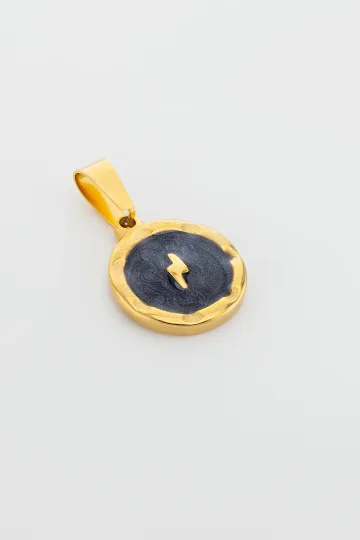
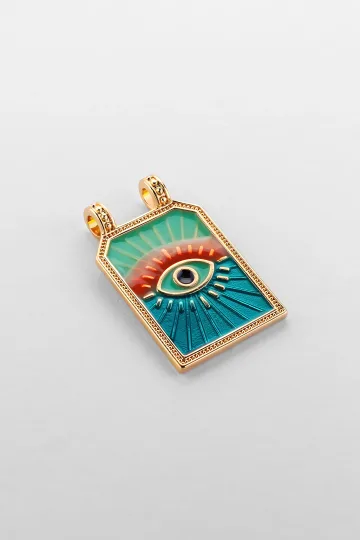
Wear the symbol, don't just read about it. These are in stock:



Neptune in the Roman tradition
The Romans took Poseidon over under the name Neptune. At first Neptune was a modest god of fresh water and springs, important to farmers in arid Italy. Later, under the influence of Greek culture, he merged with the figure of Poseidon and became a full lord of the sea. The attributes are the same: trident, horses, beard, wave.
The difference lies mostly in the name and the emphasis. The Greek Poseidon is closer to a raw, untameable force. The Roman Neptune is a touch more official, tied to the naval might of Rome and to the festival of Neptunalia, held at the height of summer heat when water was prized most. In jewellery both names work as synonyms, and the label "Neptune" is often chosen for its softer Latin ring.
Names and epithets
The god of the sea carries many epithets, and each one opens a facet of his character. "Earth-shaker" answers for earthquakes. "Hippios" (of horses) marks the patron of horses and riders. "Asphaleios" is the keeper of harbours, the one sailors called on for a safe berth. "Phytalmios" connects him to plant life and to the moisture that feeds the fields. This layering explains why one and the same god watches over both the storm and the quiet anchorage.
The story of the image: from ancient coins to neoclassical fountains
Archaic and classical: the first depictions
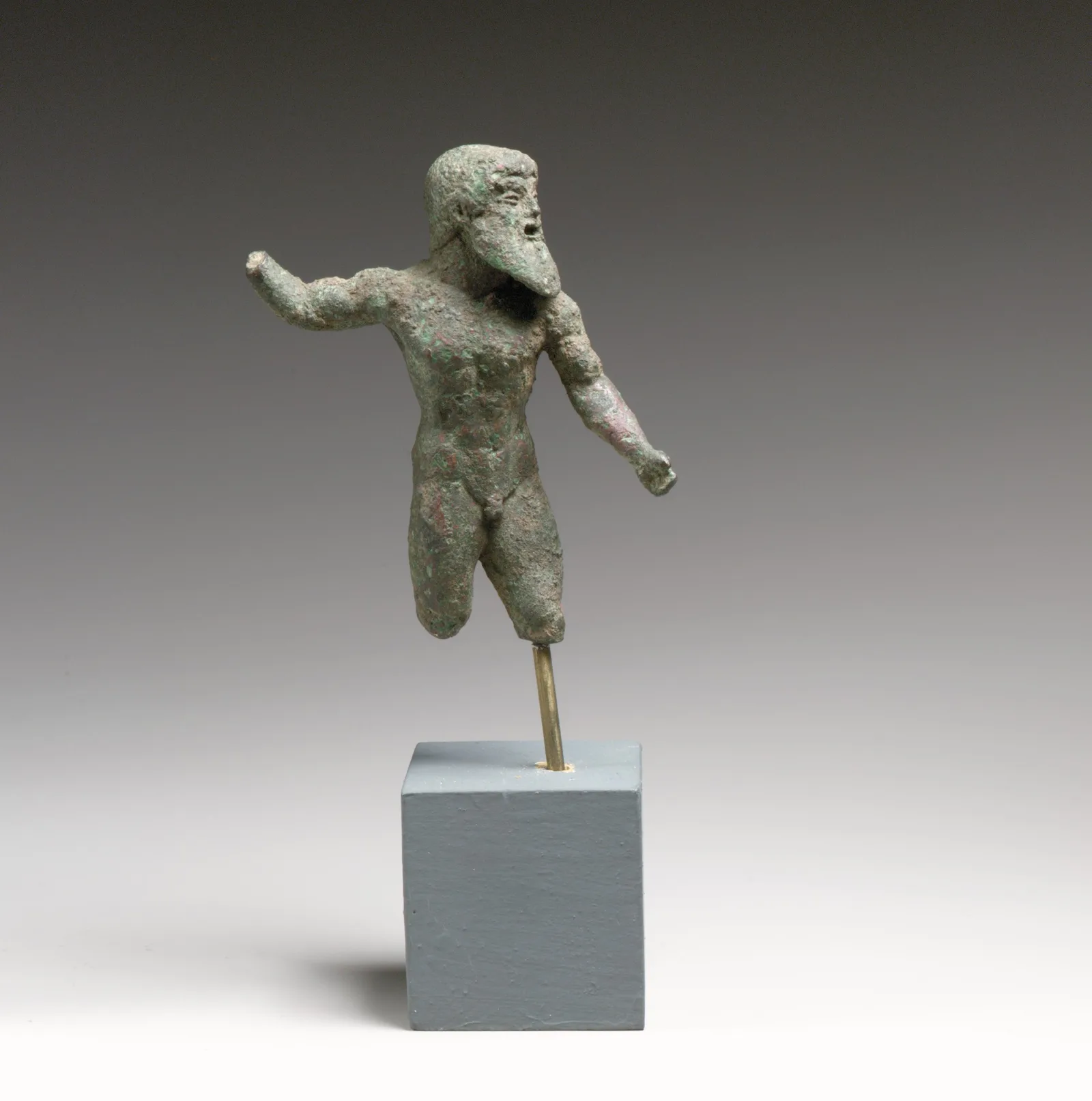
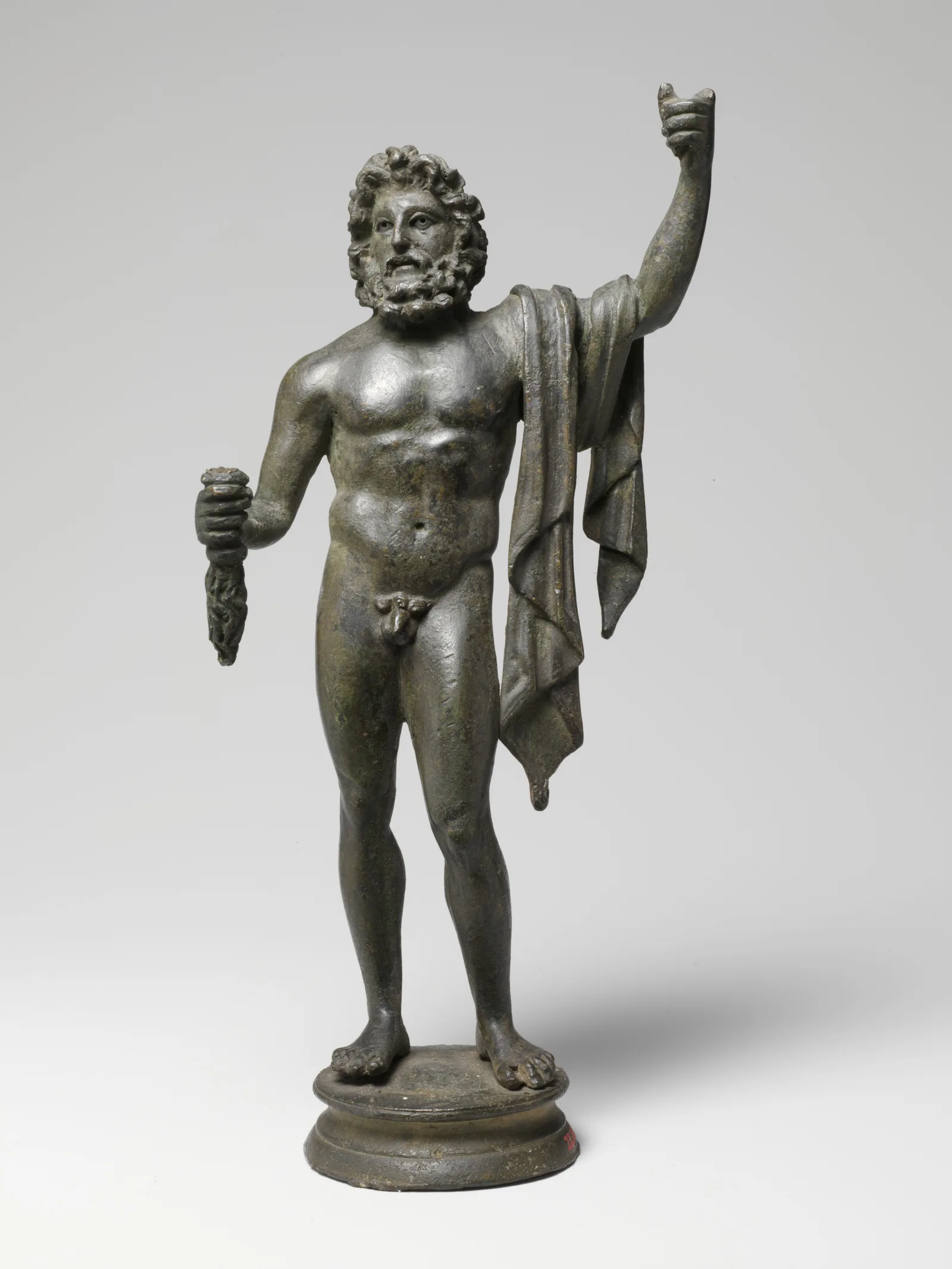
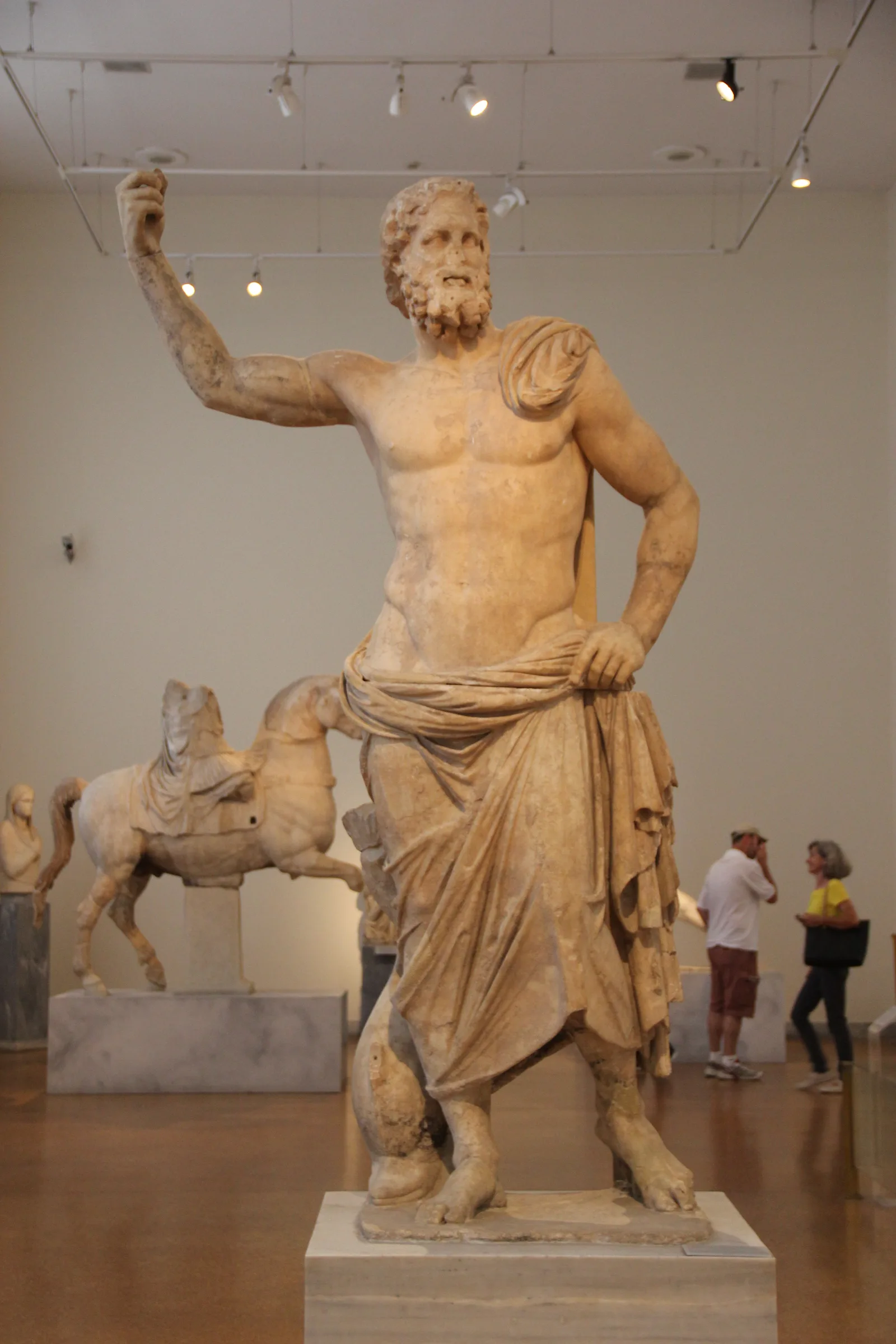
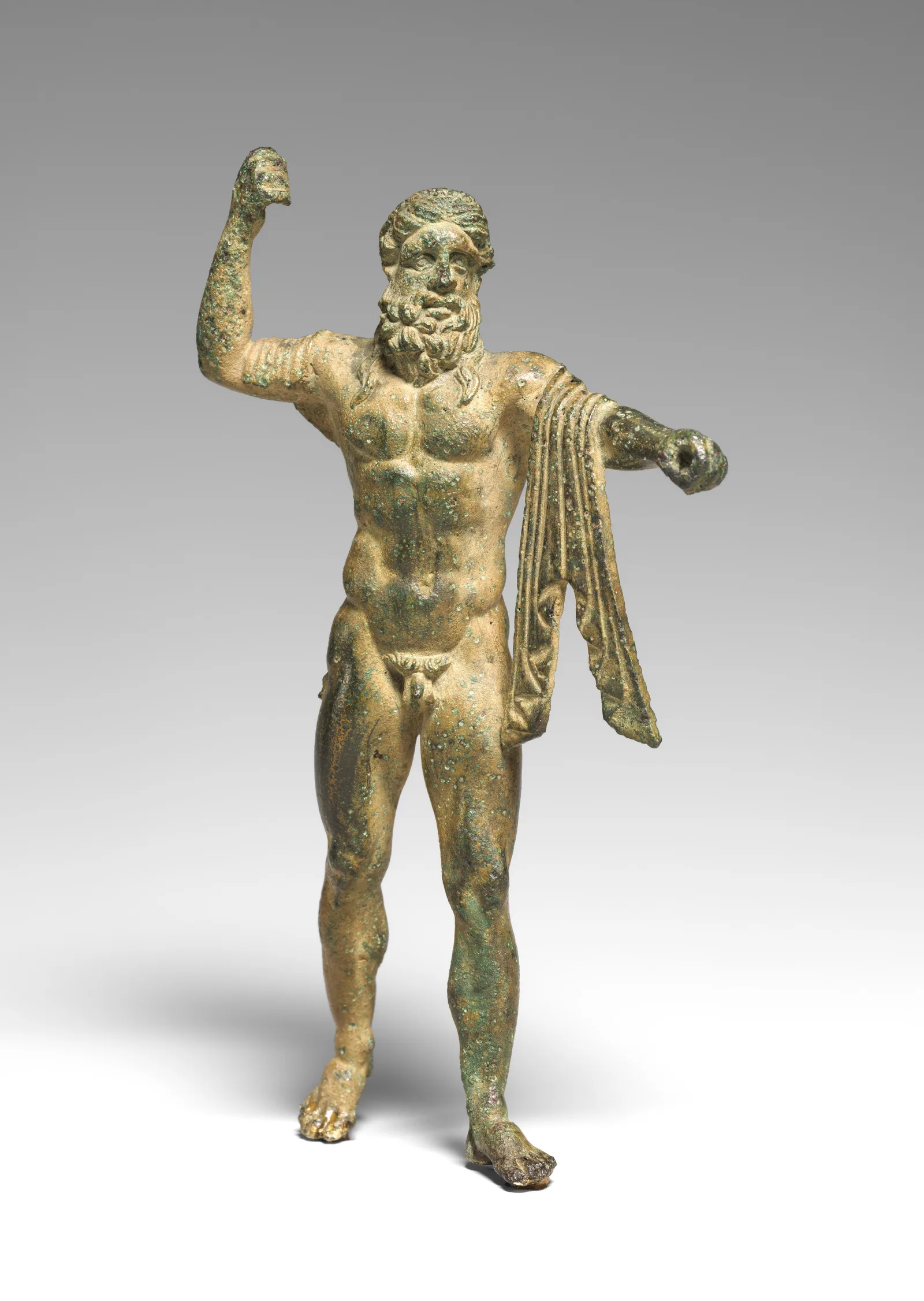
The earliest images of Poseidon on Greek vases and in temple sculpture show a mature, bearded man, almost indistinguishable from Zeus. The main way to tell them apart is the attribute: Zeus has the thunderbolt, Poseidon the trident. The famous bronze statue raised from the sea off Cape Artemision (around 460 BCE) shows the god with a raised arm, poised to hurl his weapon, and the argument over whether it is Zeus with a bolt or Poseidon with a trident continues to this day. The very fact that the argument exists shows how close the two images were.
The temple of Poseidon at Cape Sounion, whose white columns are visible from the sea, served as a marker for sailors entering Athens. Here you can see the heart of the cult: the god is not somewhere abstract, he stands on the edge of the land and looks out over the water he rules.
Famous ancient depictions of the god
A handful of ancient images set the canon by which Poseidon is still recognised. The bronze god from Cape Artemision, lifted from the seabed, stands mid-throw, legs apart, gripping in his drawn-back hand a weapon that did not survive, which keeps the "is it Zeus or Poseidon" debate alive. This figure gave the image its signature pose: the stable, wide stance of a man used to keeping his balance on a deck. In vase painting the god more often sits or strides with his trident at the ready, surrounded by fish and dolphins so the viewer grasps at once where the scene takes place. Gems and coins gave us the profile portrait: a beard in ringlets, a commanding brow, sometimes a wreath of seaweed. Roman floor mosaics added the ceremonial procession on a chariot drawn by hippocamps amid a crowd of nereids. These ancient models matter for modern jewellery, because a good Poseidon pendant leans on exactly these: the wide stance, the clear trident, the recognisable profile. Recognition rests not on a maker's invention but on two and a half thousand years of settled iconography.
Coins and gems: the god on metal
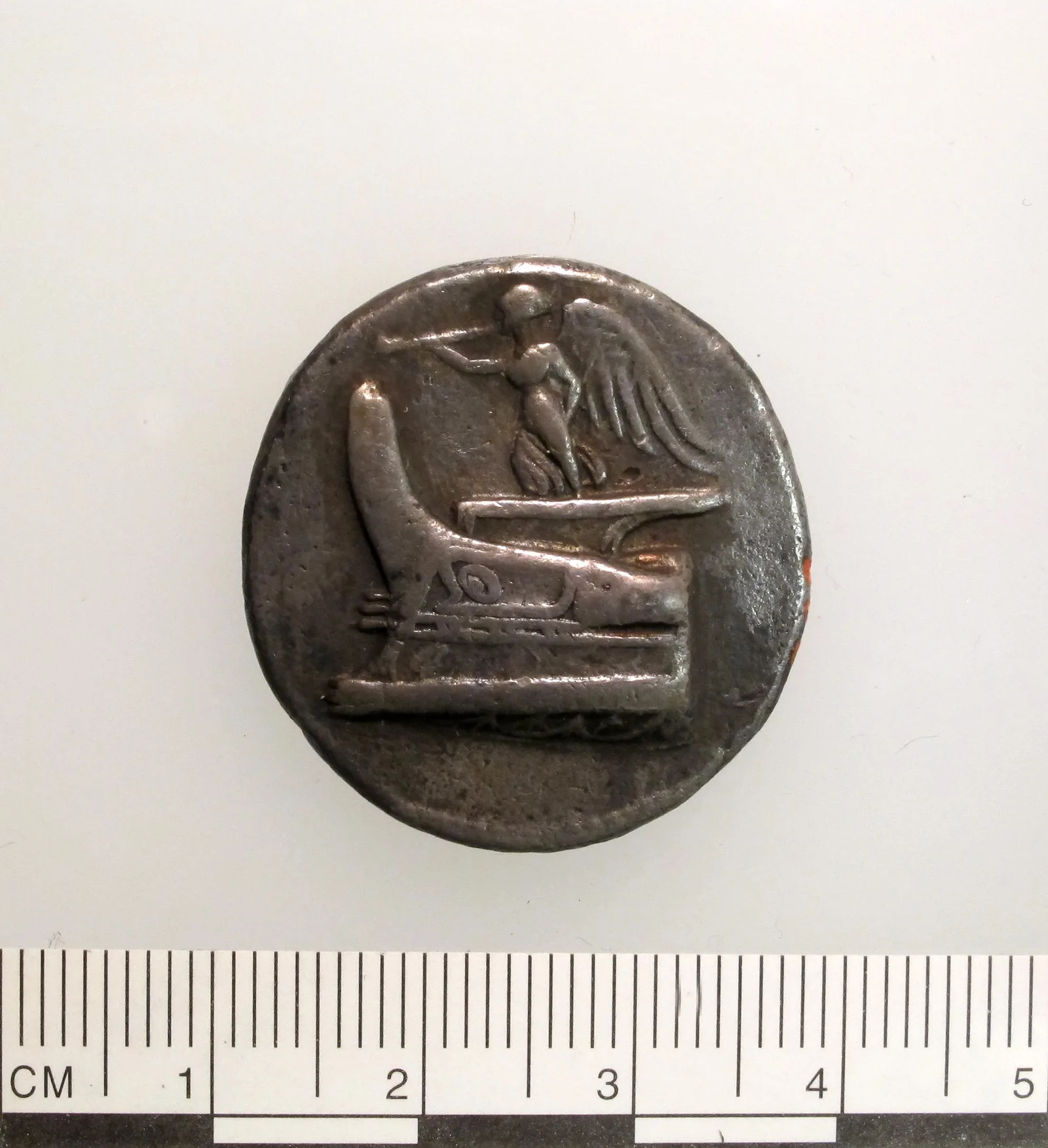
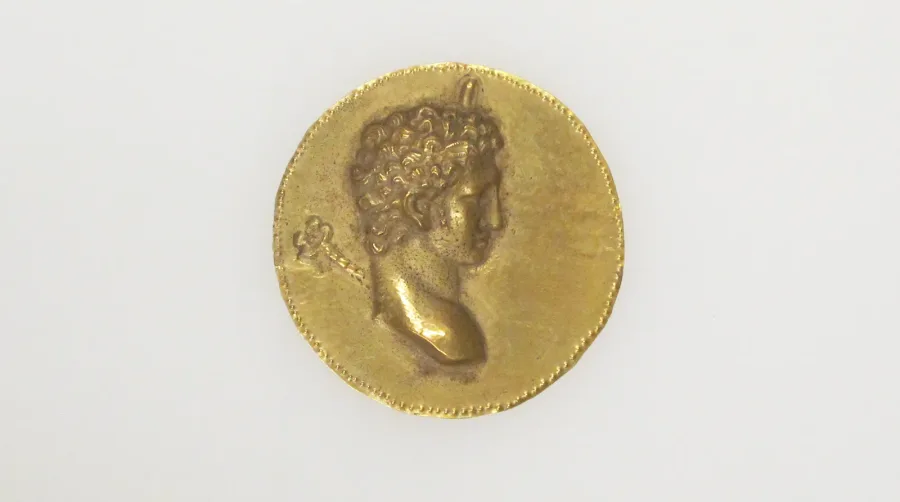
Cities whose wealth depended on the sea struck Poseidon on their coins. On the coins of Macedon under King Demetrios Poliorketes the god is shown seated, with his trident, as a symbol of naval victory. Gems, small carved stones for signet rings, often carried the god's profile or a scene with the trident. A ring with such a gem worked as a personal mark: the owner declared a tie to the sea, to trade, or to the fleet. This is the direct ancestor of the modern Poseidon pendant, the same idea of a wearable symbol of power over the elements.
Neptune of Rome: god of a naval power
Rome, having become a Mediterranean power, raised Neptune to the rank of a state symbol. After naval victories, commanders dedicated temples to the god and held games in his honour. On coins and triumphal reliefs Neptune appeared as patron of the fleet. In the mosaics of Roman villas, especially in North Africa, vast images survive of the god on a chariot harnessed to sea horses, surrounded by nereids and tritons. These mosaics decorated the floors by pools and baths, linking the figure of the lord of water to a place where water brought pleasure.
Renaissance and Baroque: the god in fountains
During the Renaissance the ancient gods returned to art, and Neptune became a favourite figure for civic fountains. The logic is plain: a god of water on a fountain is both an ornament and a centre of meaning. The Neptune Fountain in Bologna by the sculptor Giambologna shows a powerful male figure with a trident, calming the water around him with a commanding gesture. Similar fountains appeared in Florence, in Rome, and later across Europe. The image stuck: Neptune is the force that governs the flow, that stops it and directs it.
The Baroque added drama. The god became dynamic, with a streaming beard and tense muscles, surrounded by spray and sea monsters. It is this Baroque Neptune that most often inspires modern three-dimensional jewellery: a brutal profile, a churning element, the trident as the axis of the composition.
Neoclassicism and naval power
In the eighteenth and nineteenth centuries, when maritime empires fought over the oceans, Neptune became a political symbol once again. The god appeared on medals, on the figureheads of ships, in allegories of naval might. Sailors still keep the rite of "Neptune's Day" when crossing the equator, when a newcomer is initiated by "the god of the sea himself," complete with trident and a beard of oakum. This living ritual shows that the image did not die in museums but stayed part of maritime culture.
A trident rides on bare skin in silver. Gold under a tie is for landlubbers.
What to wear jewellery with Poseidon
Over years on shoots and around sea stories the trident has passed through dozens of looks with me. Here is what actually works, by occasion.
Where does the full figure of the god go? I recommend the full Poseidon figure on bare skin under an open collar, on plain dark fabric. It does not tolerate neighbours: one large pendant and a clean line on the chest. For a larger build I suggest a bigger figure; a slim build needs only a compact one.
Is the trident easier to wear? Yes, the trident is more versatile. It sits under a shirt and a jumper, reads even at a small size, and lives every day. On a fine chain I choose a restrained look, on a leather cord a rugged one. It is the most practical way to carry the sea-god theme.
Silver or gold? For a maritime look I recommend silver, ideally blackened: the cool metal echoes water and holds the beard and prongs beautifully. Gold I choose for a formal outing, where it makes the sign feel like an occasion. For anyone genuinely near the water I suggest steel, since it shrugs off salt and sweat.
What chain length? For an accent pendant I choose a medium length, so it settles into the open area of the chest. The minimalist trident is good on both a short and a long chain. I pair the image with a spare maritime theme, a wave or a shell, and never overload it with mixed symbols. One strong sign beats a cluster of pendants.
Who is it given to? To someone tied to the sea: a sailor, a fisherman, a sailing or diving enthusiast. And to a person of strong character, a leader, someone passing through a stormy stretch who suits a sign of inner anchor. For horse lovers I suggest leaning on the god's equestrian side.

Turn on your camera, pick earrings, a pendant or a ring, and see the piece on yourself in real time.
Switch items in one tap.
Everything runs in your browser: no photo or video is ever uploaded.
The key myths that shaped the image
The division of the world and a grudge against the land
After the Olympians defeated the Titans, the three brothers cast lots. Zeus drew the sky, Hades the underworld, Poseidon the sea. The earth stayed common ground, and this became a source of permanent discontent for Poseidon. He felt he had received less than Zeus, and across his whole mythological biography he tried to extend his domain, quarrelling over cities and sending storms against those who slighted him. In jewellery this trait reads as character: the mark of someone who will not settle for the role assigned to him and fights for what is his.
The lot of the three brothers: how they divided the world
It is worth looking closely at the act of division itself, because it explains much about Poseidon's character. The brothers did not divide the world by seniority or merit, they drew lots blind. That means Poseidon got the sea not as a reward and not by choice but by chance, and he spent his whole life with the sense that he might have ruled the sky. Hence his rivalry with Zeus and his constant attempts to seize a piece of the land. The arrangement rested on a fragile balance: none of the brothers openly trespassed into another's domain, but Poseidon was forever testing the edges. The whole trio belongs to the great Greek pantheon of Olympus, where each god has a zone of responsibility and a set of grievances. For anyone wearing the symbol, this story sounds modern: you got something other than what you wanted, by the lottery of circumstance, and now you either make peace with it or rewrite the rules in your favour.
The contest for Athens: force against usefulness
The duel between Poseidon and Athena for the city deserves its own look, because in it two kinds of gift collided. Poseidon offered a spring, salt or accompanied by a warhorse depending on the version, that is, force, a fleet, military power. Athena grew an olive tree, which gives oil, food, light and timber, that is, peaceful prosperity. The citizens chose the olive, and this was a choice not against the god of the sea but in favour of what feeds people every day. The lesson of the story is hard: brute force loses where people value usefulness and stability. Poseidon, having lost, sent a flood, which only confirmed why his gift had been rejected. In jewellery this myth reads more subtly than "sea against reason": it is about the difference between what impresses and what saves you in the long run. The olive went to level-headed Athena, but even the defeated Poseidon remained a god feared more than the victors. Incidentally, in that same Olympian circle Aphrodite was born from the very foam of the sea, so in Greek myth water nourished both power and beauty.
The contest for Athens with Athena
The best-known myth about Poseidon is the contest for patronage over Attica. The god struck his trident into the rock of the Acropolis, and a spring gushed out, salt in one version, with a horse in another. Athena grew an olive tree. The council of gods, or the citizens, chose the olive as the more useful gift, and the city went to the goddess, taking the name Athens. Poseidon, in his fury, sent a flood. Artists depicted this scene for centuries, and it has remained a symbol of the choice between force and wisdom.
The creation of the horse and the pursuit of Demeter
The birth of the horse is bound up with Poseidon. In one version he created the horse with a blow of his trident, to make an impression in the contest. In another he pursued Demeter, goddess of fertility, who turned into a mare to escape; Poseidon turned into a stallion and caught her. From that union the wondrous horse Arion was born. So the sea god became a patron of horses too, and this double nature of land and sea gives the image depth.
Polyphemus, Odysseus and a long-held wrath
In the Odyssey, Poseidon is the hero's chief enemy. Odysseus blinded the cyclops Polyphemus, the god's son, and in revenge Poseidon kept him from returning home for years, raising storms and knocking him off course. This myth fixed the image of Poseidon as a god with a long memory and a thirst for revenge, whose favour is worth guarding. Sailors remembered this and did not anger the lord of water for nothing.
The walls of Troy and the ungrateful king
Poseidon, together with Apollo, built the impregnable walls of Troy for King Laomedon, who then refused to pay. The offended god sent a sea monster against the city. This story explains another facet of his character: Poseidon values a bargain and punishes deceit harshly. For anyone wearing the symbol, this can be read as a sign of loyalty to one's word.
Customer reviews
Zevira is a real jewellery shop. Genuine payments, deliveries and customer thank-yous.
🥰🥰🥰 gracias
Ok, ¡gracias! 🙂
The symbols of Poseidon: trident, horse, dolphin, wave
The trident as the chief attribute
The trident is the unmistakable mark of Poseidon. Without it the god turns into an ordinary bearded old man. The three prongs are traditionally read as power over the three forms of water, the sea, rivers and springs, or as the three states of water, or the three realms of the world. By myth the trident was forged by the cyclopes, the same craftsmen who made the thunderbolt for Zeus and the helmet of invisibility for Hades. It is a weapon of creation and destruction: a blow to the rock birthed a spring or a horse, a blow to the sea raised a storm.
In jewellery the trident works as the most compact and recognisable way to show Poseidon. Often the figure of the god is dropped entirely, leaving only the weapon. There is a separate conversation about this below.
The power of the trident: what it could do in the myths
In Poseidon's hands the trident is not a ceremonial staff but a working tool of the god. A blow to the rock knocked out a spring, a blow to the sea gathered the waves into a wall, a blow to the land birthed a horse and shook the soil. In the myths the weapon acts as an extension of its owner's will: the god speaks no spells, he simply strikes, and the element obeys. So the trident reads as a sign of direct, physical influence on the world, without intermediaries or tricks. Where Zeus hurls a bolt from a distance, Poseidon works up close, with hand and shaft. This earthiness of power makes the image easy to grasp: the trident speaks of someone used to settling matters head on, rather than waiting for the weather to change. And, as befits a real tool, it cuts both ways: the same point that waters the land can also wreck the shore.
The horse and the hippocamp
Poseidon is a patron of horses, which surprises those who know him only as a sea god. By one myth he created the first horse by striking the earth with his trident. By another he pursued the goddess Demeter, turning himself into a stallion. The horse ties the god to the land, to strength, to movement.
The sea version of the horse is the hippocamp, a creature with the forequarters of a horse and the tail of a fish. Hippocamps drew Poseidon's chariot across the waves. In jewellery the hippocamp is an elegant motif: it joins the idea of the sea with the idea of tamed power. If the theme of the sea horse as an image in its own right appeals to you more, look at the article on the seahorse in jewellery, where the focus is the living fish, not the god's mythical steed.
The horse and the wave: why the sea was a herd to the Greeks
The link between the god of horses and the god of the sea seems strange only to the modern mind. To a Greek it was obvious. The crest of a breaking wave with its white foam on top looks like the mane of a galloping horse, and the steady roar of the surf like the thunder of a herd. So the waves were called "the horses of Poseidon," and the image of the god driving a team across the sea read almost literally: he rules the water the way a charioteer drives his horses, pulling the reins and letting them go. This metaphor explains why horse and wave so often fuse in art into the single figure of the hippocamp. For jewellery it carries a rich meaning: a maned wave or a hippocamp speaks of a force you can ride but never tame for good. The element obeys while it is held with a firm hand, and breaks loose the moment you let go.
The dolphin as an attribute of the god
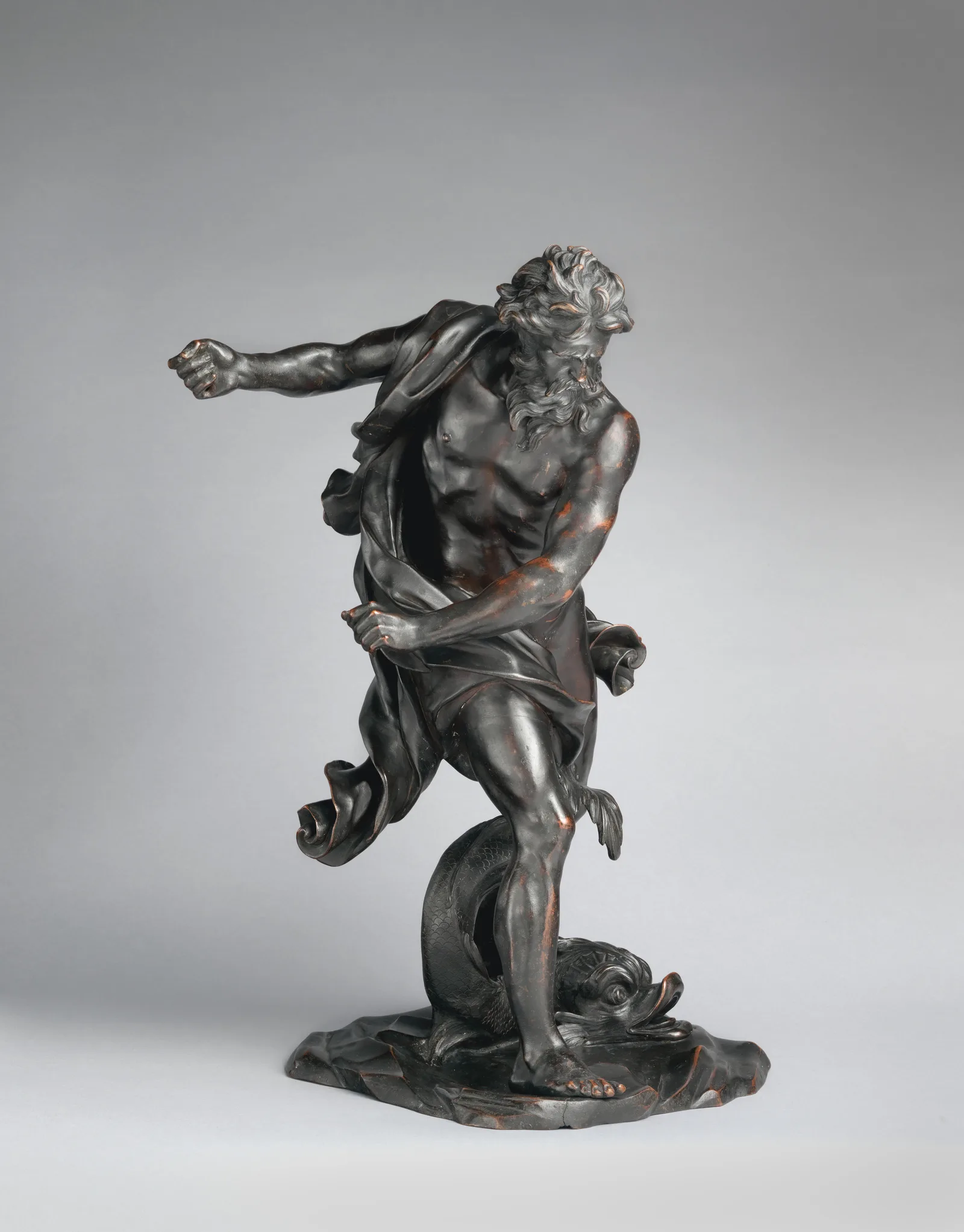
The dolphin is a frequent companion of Poseidon. By myth it was a dolphin that found the nymph Amphitrite and persuaded her to become the god's wife, for which it was set in the sky as a constellation. So a dolphin beside the trident reads as a sign of reconciliation and successful go-between. But the distinction matters: the dolphin as an attribute of Poseidon is part of the god's myth, while the dolphin as a symbol in its own right, standing for play and intelligence, is an altogether different subject. If you are interested in the animal itself and what it means, read about the dolphin in jewellery.
The wave and the shell
The wave accompanies the god as the element he rules. In jewellery the wave often appears as engraving behind the trident or as the shape of the pendant itself. The conch horn of Triton, Poseidon's son, served the god as a signalling instrument: Triton blew the conch, and the waves calmed or rose. The shell is therefore a sign of command over the element, of the ability to give orders to the water.
The "earth-shaker": god of earthquakes
The most underrated facet of Poseidon is his power over the land through underground tremors. The Greeks lived on a fault line, where the ground shuddered regularly, and they explained it by the god's wrath: he struck his trident into the seabed, and the shudder ran out beneath the islands. The epithet "Enosichthon," earth-shaker, placed Poseidon closer to fear than to admiration. When a temple collapsed or a wall cracked, people blamed not chance but the mood of the lord of water. This trait sets the Greek sea god apart from the many quiet water spirits of other peoples: his power reaches even those who never put out to sea. For the image in jewellery this adds weight. The trident turns out to be a sign of both the waves and the fact that the ground underfoot is not as reliable as it seems, while steadiness is the skill of standing upright even when your footing shifts.
The meaning of Poseidon in jewellery: power over the elements
Power and control over the uncontrollable
The chief meaning of the image of Poseidon is power over what is, in principle, uncontrollable. The sea cannot be tamed, an earthquake cannot be predicted, yet the god stands over this chaos and directs it. To wear Poseidon is to declare an inner anchor in the middle of instability. This is not a symbol of calm but a symbol of the ability to hold the helm when everything around you is storming.
Strength and the masculine
The image of the god with a powerful torso, a beard and a weapon is traditionally read as a sign of strength and mature masculinity. Unlike the young gods, Poseidon is mature, experienced, with a temper of his own. So jewellery with him is often chosen by men drawn to the idea of confident, proven strength rather than youthful bravado.
Storm and calm in one image
Poseidon has a dual nature. He raises the storm, yet he also grants the calm and the safe berth. That duality is where the strength of the image lies. The trident is a reminder that a person, like the god, is capable of both eruption and calm, that restraint can follow a flash of anger. For many this carries a personal meaning: a sign of the ability to govern one's own temper.
Patron of sailors, fishermen and those who travel by water
Those who are bound to the water see Poseidon as a patron. Sailors, fishermen, swimmers, sailing enthusiasts and divers wear the trident as a request for the element's favour. This is ancient logic: appease the one on whose mood your safety depends. A gift to such a person bearing the symbol of Poseidon reads as a wish for calm water beneath the keel.
Patron of horses and riders
Because of the epithet "of horses," Poseidon is considered a patron of horses and riders. This is a rare but lovely meaning for a piece of jewellery: a sign for those whose life is tied to equestrian sport or simply to a love of horses. Here the god is revealed from an unexpected, earthbound side.
Upload a photo of your pet, someone you love, or an object. We'll build a 3D model and hand-cast it in pewter.



The trident as a symbol in its own right
When the trident lives without the god
The trident long ago separated from the figure of Poseidon and took on a life of its own. Graphically it is spare: a vertical axis and three prongs. That makes it an ideal motif for minimalist jewellery. A trident pendant reads instantly, needs no detailed working of a face and beard, and works well at a small size. Many choose the trident rather than the full figure of the god, for the sake of this graphic clarity.
The trident in heraldry and the symbolism of the sea
The trident entered the coats of arms of coastal cities and states, the emblems of fleets and naval academies. The British image of Britannia, ruling the waves, holds a trident as a sign of maritime dominion. The symbol of the planet and the chemical element tied to the name of Neptune is also based on the trident. So the god's weapon became a universal mark of the sea and of power over it, understood without words.
The trident and the astrological Neptune
In astrology Neptune is the planet of dreams, intuition, the sea of the unconscious. Its symbol is built on the trident. So jewellery with a trident is sometimes chosen not for the maritime theme but as a sign of the planet Neptune in a personal chart, as a nod to an intuitive, fluid cast of nature. This is a second, parallel meaning of one and the same graphic mark.
The trident as a personal motto
For many the trident has become a sign of personal steadiness. The three prongs are easy to read as three supports, three values, three qualities that a person stands on. This openness to interpretation makes the trident a handy "quiet motto": on the outside a maritime motif, on the inside the wearer's personal code.



Poseidon against marine symbols: a god, not sea life
The fundamental difference
This is the key way to set the theme apart. Poseidon is a deity, a figure of power, a mythological character with a biography, a temper and a weapon. Marine symbols in jewellery are most often living creatures and objects: fish, whales, shells, anchors, stars. The difference is like that between a portrait of a monarch and an image of his country. Poseidon answers for the whole ocean, while a dolphin or a seahorse is one of its inhabitants, his subjects, his attributes, but not the god himself.
The dolphin: attribute of the god or a separate sign
The dolphin can appear beside Poseidon as part of the myth, but as a symbol in its own right it stands for play, intelligence, friendliness and lightness. That is a different emotional register, softer and warmer. A full account of this meaning is in the article on the dolphin in jewellery.
The seahorse and the hippocamp: do not confuse them
The hippocamp of myth is a horse with a fish's tail, the god's team. The seahorse is a real fish with a touching biology, where the fathers carry the young. In jewellery these are two different images with different meanings. There is a separate piece on the living fish in the article on the seahorse in jewellery.
The anchor and general maritime symbolism
The anchor is a sign of hope, of an anchor point and of a return to port, not a sign of power over the elements. It is about a person who holds on to the shore, not about a god who rules the water. The distinction is fine, but it carries meaning. There is a detailed piece on the anchor in the article on the anchor in jewellery, and a broad overview of the whole subject in the guide to ocean jewellery symbols.
Why separate the meanings
Understanding the difference helps you choose an honest symbol. If the idea of strength, control over chaos and mature might appeals to you, your sign is Poseidon or the trident. If play, lightness and a love of the sea as a beautiful world are closer to you, your choice is the marine animals. One person can wear both, but their meanings differ, and it is worth knowing exactly what you are saying with your jewellery.
Materials: what jewellery with Poseidon is made from
Sterling silver 925
Silver is the most common choice for the image of the sea god, and not by accident. The cold gleam of the metal echoes the theme of water, silver holds the fine working of the beard and the prongs of the trident well, and the darkening in the recesses adds depth to the figure. For everyday wear sterling silver 925 is ideal: durable, hypoallergenic for most people, noble in appearance. Oxidised silver especially suits the brutal, Baroque Poseidon.
Gold and gold plating
Gold lends the image a sense of occasion and recalls the ancient tradition where the god was struck on precious coins. Yellow gold underlines the "solar," commanding side and makes the piece feel high-status. Gold plating over silver is a sensible compromise: the look of gold at a more accessible cost. A gold trident on dark skin looks especially striking.
Stainless steel
Steel is a logical material for a maritime theme. It does not fear water, does not tarnish, withstands salt and sweat, so it suits those who really do spend time by the water or in active movement. A steel trident on a leather or textile cord is a practical option for a man, one that needs no care and leaves no marks on the skin.
Stones and enamel
Blue and blue-green stones strengthen the maritime theme. Topaz, aquamarine, lapis lazuli and turquoise create the colour of water around the figure of the god or in the background. Blue and green enamel works at a lower cost than stones and gives a deep, even wave colour. Dark stones, onyx or hematite, underline the menacing, stormy side of the image.
Wood, leather and cord
Not every piece with a trident is metal all the way through. The pendant is often hung on a leather or waxed cord, which makes the image more earthbound, more masculine, more rugged. This option suits those drawn to travel and active rest by the water. Wooden elements or beads in natural tones in the same setting add the feel of a jetty, of a boat's timber, of a fisherman's daily life.
Leave your email, we'll send your discount code. No spam, unsubscribe anytime.
The code arrives by email, valid on your first order.
How to choose jewellery with Poseidon
The figure of the god or only the trident
The first decision is how literal to be. The full figure of the god with beard and trident is an expressive, eye-catching image, one that calls for character and the right occasion. The plain trident is more versatile, calmer, and fits more easily into everyday wear. If in doubt, the trident is almost always the safer bet: it reads both as a maritime theme and as a personal sign.
Size to suit build and occasion
A large figure of the god asks for an open chest and a sturdy build, otherwise it overloads the look. A compact trident sits well on anyone. For everyday wear, choose a small size; for an accent under an open collar, go larger. Keep in mind the neighbours on the chain: a strong symbol works better alone than in a cluster of pendants.
How to tell a thoughtful piece from a stamping
A good piece with Poseidon shows in the working of the detail: you can see the anatomy of the figure, the texture of the beard, the clean edges of the trident. Cheap stamping gives a flat, blurred silhouette with no character. Pay attention to the pendant's fastening and to the quality of the metal: a maritime theme implies contact with moisture, and the metal must stand up to it. There is more on the material in the guide to sterling silver 925.
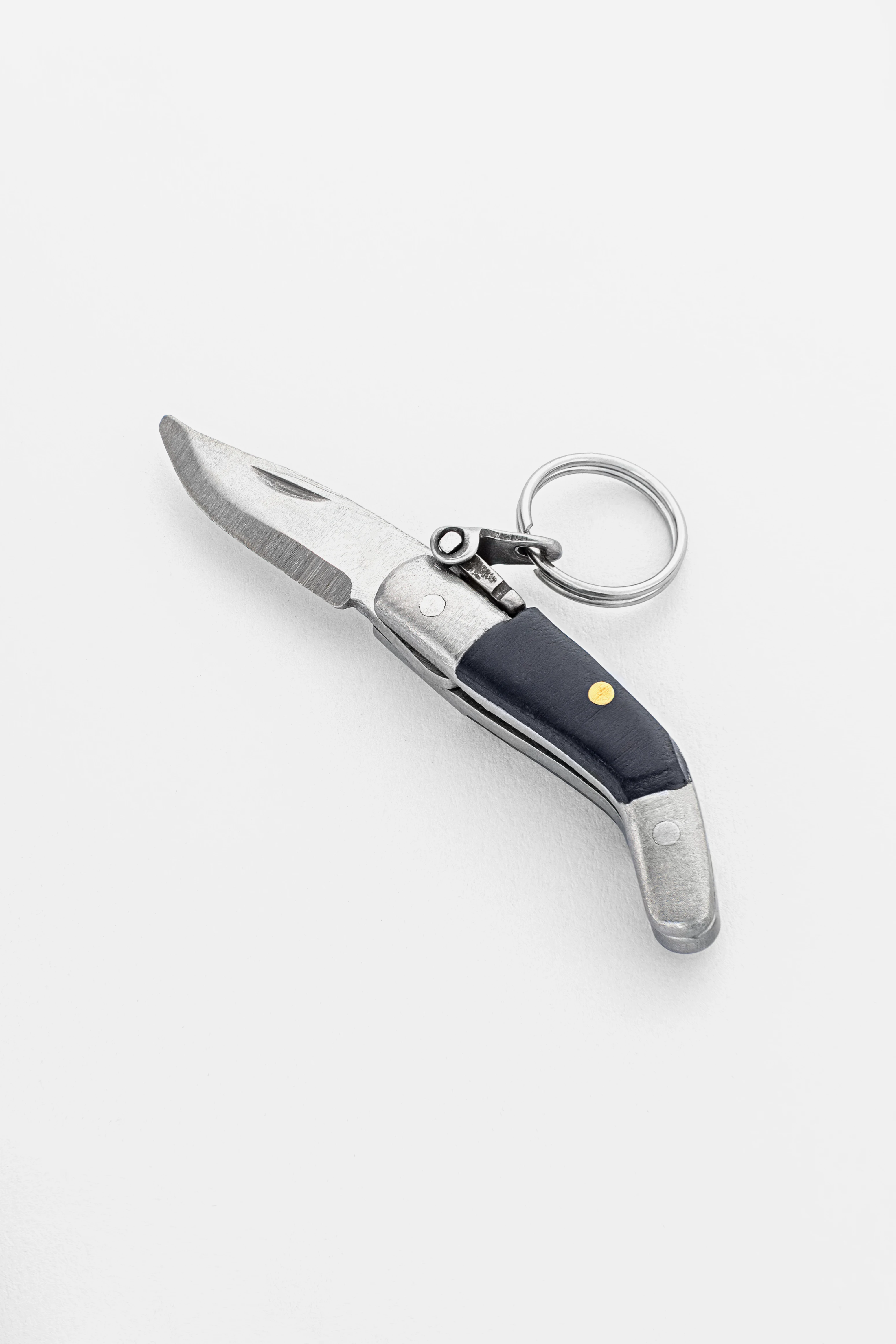
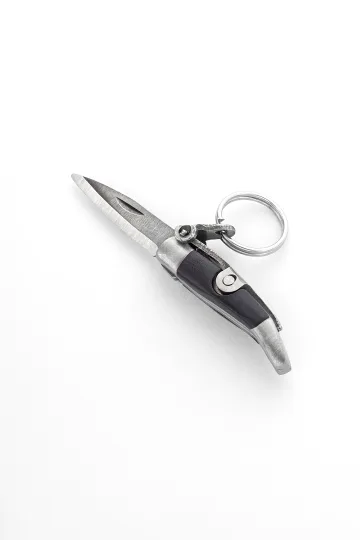
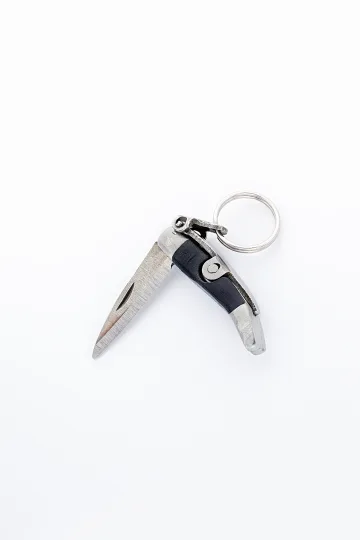
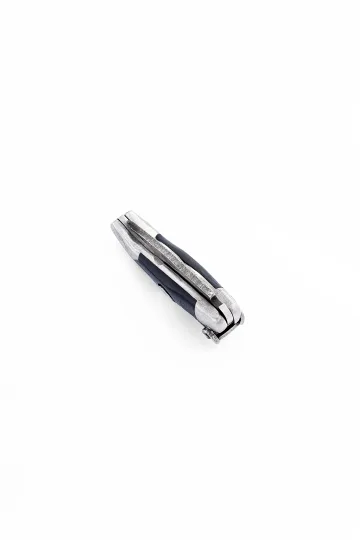
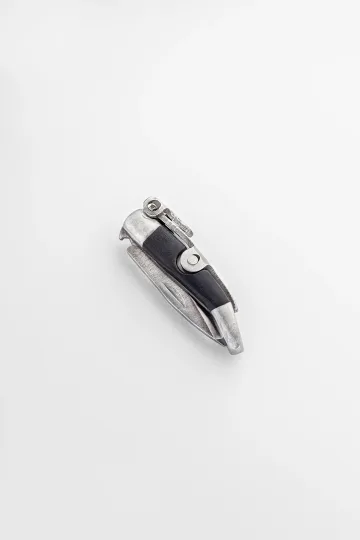
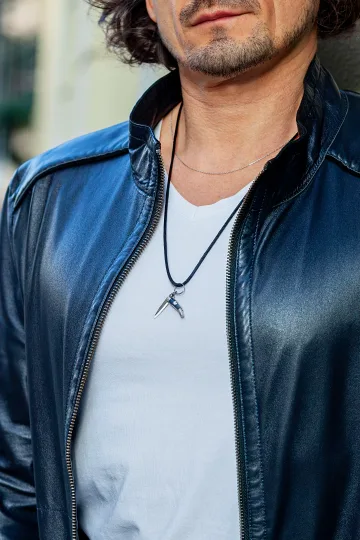
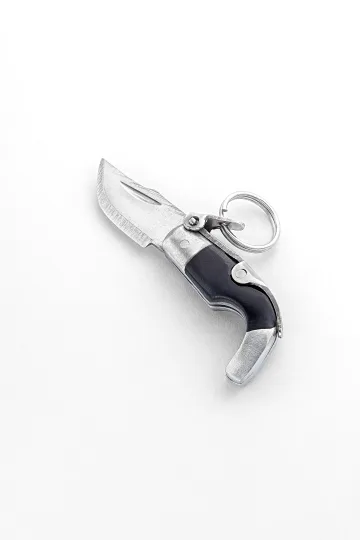
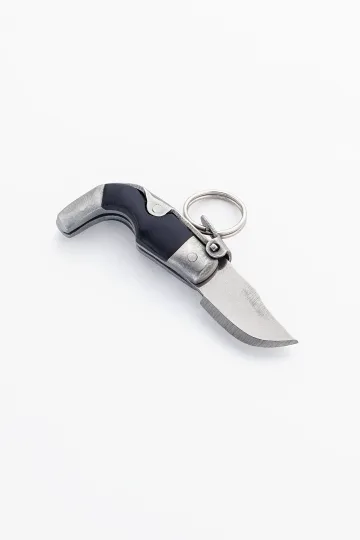
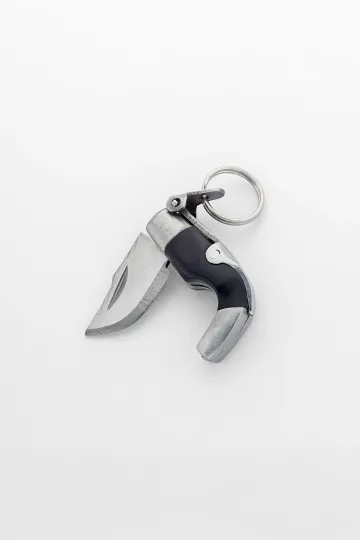
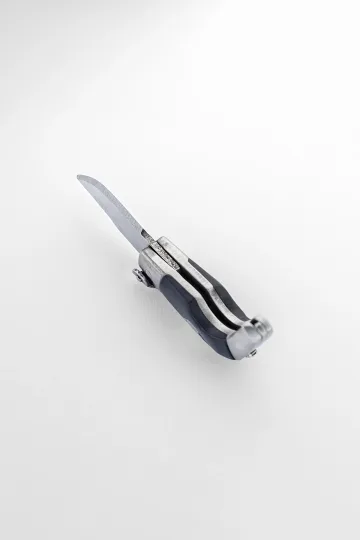
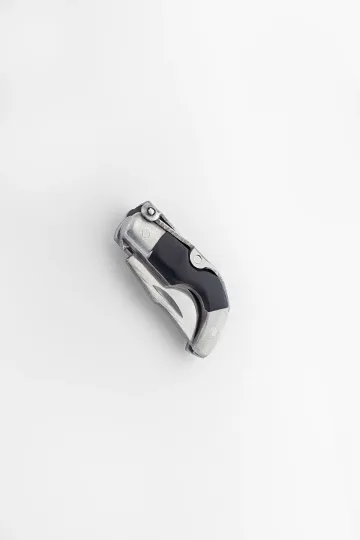
CAPAORA mini knife pendant
The 18th-century Spanish navaja in miniature: 40 mm of stainless steel, a real folding mechanism and a Palanquilla lock that clicks. An affordable gift to remember.
Authentic · Ships from Spain · 14-day returns
Poseidon in art and culture
The god in painting and sculpture
After the Renaissance, Neptune became a constant figure in large canvases and park sculpture. Artists loved him for the drama: a turbulent sea, a tensed body, a streaming beard, a trident in a dynamic gesture. The scene "Neptune calms the waves," after a line of Virgil, became a classic subject, a symbol of order imposed over chaos. The garden ensembles of the Baroque and Classicism almost always included a Neptune by the water as a centre of meaning.
Naval power and state symbolism
The image of the god with the trident served for centuries as an allegory of naval might. An allegorical figure ruling the waves and holding a trident decorated the medals, coats of arms and figureheads of coastal powers. So the myth turned into a language of state strength, and the trident became a sign of mastery over the water, clear to any sailor.
A living rite: Neptune's Day
The maritime tradition of "baptism" when crossing the equator is alive to this day. An experienced sailor dresses up as "King Neptune," with a beard, a crown and a trident, and stages a mock initiation for the newcomers. This rite shows that Poseidon is not a dusty museum character but part of the living culture of people whose lives still depend on the sea.
Water gods among other peoples: Poseidon's place among them
Why a comparison helps you understand the image
Almost every coastal people has its own lord of the water, and Poseidon is one of many such gods. A comparison helps you see what makes the Greek god distinctive: the combination of elemental fury, a tie to horses and earthquakes, and a stern, masculine character. This is useful when choosing jewellery: you are choosing a specific temperament, not an abstract "god of the sea." The Greek Poseidon has a vivid, recognisable character, and it is exactly this that draws people to the image.
Neptune and Roman naval might
The Roman Neptune was discussed above, but the shift of emphasis is worth underlining. If the Greek Poseidon is an untameable element, the Roman Neptune is a touch more tamed, tied to the fleet, the harbours and state victory at sea. For those drawn to the idea of organised force rather than wild fury, the Latin name and presentation suit better.
Poseidon against Neptune: one face, two temperaments
Although the names are treated as synonyms, there is a gap between the Greek and the Roman god that shows when you choose a piece of jewellery. Poseidon came out of the world of the seafarers of the Aegean, where every storm could be the last, and so he is capricious, vengeful, personally invested in the fate of mortals. He feuds with Odysseus, quarrels over cities, takes offence at the lot. Neptune began as a god of the fresh water of arid Italy, and his real career began when Rome went to sea and made the god a symbol of the fleet and of state victory. So Neptune is colder and more official: less about personal grievance and more about order on the water, about triumph over the enemy, about a state ruling the waves. Roughly speaking, Poseidon is a character, and Neptune is an office. In choosing a name for a piece of jewellery, you are choosing between these shades: a wild element with a face and a temper, or a disciplined maritime power. On the surface the trident is the same, but the two names carry a different temperature of meaning.
Aegir and the northern maritime tradition
In Norse mythology the sea was ruled by Aegir, the giant host of underwater feasts, and his wife Ran, who dragged the drowned into her nets. The northern image of the sea is darker and colder than the Greek. For those drawn to a harsh, northern aesthetic, this tradition is sometimes more interesting, though it appears in jewellery less often. Against this background Poseidon looks like a southern, warmer and more human god.
Lords of the water from Egypt to Japan
It is worth casting an eye over other traditions too, to see how differently peoples imagined the master of the water. For the Egyptians, the flood of the Nile that fed the whole country was the charge of Hapi, a god of plenty and generosity, with a rounded body and water plants, without any of Poseidon's menace. In Mesopotamia, Ea, also known as Enki, was a god of fresh underground waters and of wisdom, more a patron and a trickster than a brawler. Among the Slavs the water element was peopled by the vodyanoy and the masters of the rivers, spirits without a trident and without a crown, with whom people negotiated rather than worshipped as a king. In the Japanese tradition the sea was ruled by Ryujin, a dragon king in an underwater palace, lord of the tides through magic pearls, a serpentine rather than a human image. Against this background the singularity of the Greek god is clear: Poseidon is one of the few lords of the water who is at once masculine, human in form, armed, and tied to horses and earthquakes. He is not a generous provider and not a bargaining spirit, but a ruler with a character and a weapon, and it is exactly this gathering into one vivid type that made him so convenient for jewellery.
The shared idea of an unconquered element
For all their differences, the water gods of various peoples express one thought: the sea feeds and kills, it gives life and takes it away, and a person stands small before it. Poseidon with his trident is the ancient, most recognisable form of this idea. In choosing him, a person steps into a very old tradition of respect for an element that was never conquered.
The psychology of an image of strength: why wear a trident
A sign of an inner anchor
Protective and empowering symbols work not by magic but by psychology. When a person wears a sign that, for them, means steadfastness, they subconsciously behave more steadfastly more often. The trident of Poseidon becomes such an anchor for many: the eye falls on the piece, and the mind brings up the instruction "hold the helm, do not sink." It is like the way athletes keep an object on them that lends confidence.
Managing your own storm
The duality of Poseidon, able both to raise a storm and to calm the water, maps onto the personal theme of control over the emotions. A hot-tempered person, or one passing through a turbulent period, chooses the trident as a reminder: restraint should follow the flash, since the god both rages and calms. The piece becomes a quiet instrument of self-regulation.
A symbol of role and responsibility
The image of the mature god with a weapon is a sign not of aggression but of responsibility. Poseidon answers for an immense element, and his power is a burden, not a toy. People in leadership positions or carrying responsibility for others often choose this image as a reflection of their role. The trident reads as "I have this under control."
A tie to the sea as part of identity
For sailors, fishermen, divers and everyone whose life is bound to the water, jewellery with Poseidon is a marker of belonging. It tells those around them, and the wearer themselves, who they are and where their element lies. Psychologically, such anchors of identity raise resilience to stress, like a regimental badge for a soldier or a club scarf for a supporter.
Why people are drawn to the marine symbol in particular
The choice of a maritime sign is rarely accidental, and there is usually a clear psychology behind it. In the human mind the sea is an image of freedom and unpredictability at once: it has no borders, it beckons and it frightens. Someone who chooses a symbol of the sea is more often drawn to open space and dislikes tight frames, finding movement closer than stability. At the same time the sea is also depth, what is hidden under a calm surface, and many choose a maritime motif as a sign that there is more inside them than shows on the outside. Poseidon holds a special place in this row: he is not about contemplating the waves but about power over them. He is chosen not by those who want to dissolve into the element, but by those who want to govern it. This is an important fork at the point of purchase. A quiet maritime motif, a shell or a wave, speaks of a love of the water. The trident and the figure of the god speak of a wish to hold the element in check. Once you understand which of the two feelings is stronger in you, it is easier to choose an honest sign, one you will not later have to take off because it is "not about you."
The marine symbol as permission to change
There is one more reason why people are drawn to water at certain moments in life. The sea is bound up with transition: setting sail, a new shore, a change of course. People often buy a maritime symbol on the threshold of change, when the old has ended and the new has not yet arrived. The trident of Poseidon at that moment works not as an ornament but as a small permission to oneself to move on, holding the helm in one's own hands. This explains why such pieces are often given at farewells, at a change of job, or after a hard period. The sign of water seems to say: the pitching is normal, ships are built precisely to leave the harbour.
Send a friend a discount code, they save on their first order.
Facts that surprise
Poseidon lost to Athena
In the contest for patronage over the city, Poseidon struck his trident into the rock of the Acropolis and gave the Athenians a salt spring, while Athena grew an olive tree. The people chose the olive as the more useful gift, and the city went to the goddess. The offended Poseidon sent a flood over Attica. So the chief city of Greece took its name not from the god of the sea.
He created the horse
By myth the first horse appeared from a blow of Poseidon's trident on the ground, or from his attempt to impress Demeter. So the god of the sea is also the god of horses, and this explains the epithet "of horses," strange to the modern mind, for a sea deity.
The cyclopes forged the trident
The same weapon that Poseidon carried was made by the same craftsmen as Zeus's thunderbolt and Hades's helmet. The trident, the bolt and the helmet of invisibility are a set of super-weapons forged by the cyclopes in gratitude for being freed from captivity. Three brothers, three objects of power.
Earthquakes are his doing
For the Greeks, Poseidon answered for both the sea and the earthquakes. The epithet "earth-shaker" made him especially fearsome for the inhabitants of seismic islands. The god of the sea was, in their eyes, also the god of underground tremors.
The dolphin became a constellation for matchmaking
The dolphin persuaded Poseidon's future wife to marry the god and, as a reward, was placed in the sky. The small constellation Delphinus still carries the memory of this mythical matchmaking.
The trident became the mark of a chemical element
The symbol of the planet Neptune, based on the trident, gave its name and sign to the chemical element neptunium. So the weapon of an ancient god reached the periodic table.
The Neptunalia saved people from drought
The Romans celebrated the festival of Neptune in the July heat, when water was worth its weight in gold. They built shelters from branches by the water and asked the god for moisture. The god of the sea was also a god of saving coolness.
The waves were called his horses
The Greeks called the foaming crests of the waves "the horses of Poseidon," because the white foam on the top of a wave resembled a streaming mane. So the god of the sea and the god of horses came together in one image, both in myth and in the everyday speech of fishermen.
A bronze with his face was raised from the sea
The famous bronze statue of the god was found not in a temple and not in the earth, but on the seabed off Cape Artemision, where it had lain for more than two thousand years after a shipwreck. The god of the sea, in the literal sense, returned from the water he ruled.
His temple stood as a beacon over the cliff
The sanctuary of Poseidon at Cape Sounion was set on the very edge of the cliff above the sea, so that its white columns were visible from passing ships. The temple worked as a marker for sailors, and the cult of the god literally helped them keep their course.
Frequently asked questions
How does Poseidon differ from Neptune?
It is one and the same god under different names. Poseidon is the Greek name, Neptune the Roman. The attributes match: trident, horses, beard, power over the sea. In jewellery the names are interchangeable, and "Neptune" is sometimes chosen for its soft Latin ring.
What does Poseidon's trident mean?
The trident is a sign of power over the water element. The three prongs are read as power over the sea, rivers and springs, or as the three states of water. It is a weapon of creation and destruction: a blow to the rock birthed a spring, a blow to the sea raised a storm.
Can you wear the trident without the figure of the god?
Yes, and this is the most common format. The trident long ago became a sign of the sea and of power over it in its own right. It is graphically clean, reads at a small size and suits minimalist jewellery well.
Does the image of Poseidon suit women?
The full brutal figure of the god leans toward a masculine presentation, but the trident and the hippocamp are neutral and look good as a unisex or women's sign, especially in a fine, minimalist execution.
How does Poseidon differ from marine symbols like the dolphin?
Poseidon is a god, a figure of power over the whole element. The dolphin, the seahorse, the anchor are inhabitants and objects of the sea with their own, softer meanings of play, of anchorage, of hope. The difference is like that between a ruler and his country.
Which material should I choose for jewellery with Poseidon?
Sterling silver 925 for a noble look and fine detail, steel for those who really do spend time by the water, gold or gold plating for a sense of occasion. Blue stones and enamel strengthen the maritime theme.
Who is it fitting to give a trident piece to?
To those tied to the sea, a sailor, a fisherman, a sailing or diving enthusiast. And also to a person of strong character, a leader, and to someone passing through a stormy period who is suited by a sign of inner anchor.
Is the trident connected with astrology?
Yes. The symbol of the planet Neptune in astrology is built on the trident. So the piece is sometimes chosen as a sign of the planet in a personal chart, as a nod to an intuitive, fluid nature, and not for the maritime theme at all.
Why is Poseidon considered a god of earthquakes?
The Greeks lived on seismic ground and explained the underground tremors by the wrath of the god, who struck his trident into the seabed. Hence his epithet "earth-shaker." Poseidon's power reached even those who never put out to sea, which made him especially fearsome.
Why is the god of the sea linked with horses?
By myth Poseidon created the first horse with a blow of his trident, and the Greeks called the crests of the waves his horses outright, because of the foam that looks like a mane. So he is at once lord of the sea and patron of horses and riders.
Who ruled the sea among other peoples?
Every coastal people had its own lord of the water: the Roman Neptune, the Norse Aegir, the Egyptian Hapi, the Japanese dragon king Ryujin. Poseidon stands out in gathering masculinity, a weapon, horses and earthquakes into one image.
Conclusion
Poseidon is a rare image in jewellery, one where strength is not aggressive but responsible. The god does not brandish his trident for nothing, he holds in check what a person is unable to control. There lies a meaning that outlives the centuries: the ability to stand upright when everything around you storms, and to direct the flow rather than drown in it. The trident has long lived on its own, as a sign of the sea, of power over it, and of personal steadiness. And sea life is a neighbouring, warmer theme, and keeping these meanings apart means understanding exactly what you are saying with your jewellery.
Silver, gold, symbolism, maritime motifs and images with character.
Buying it as a gift? Each one arrives ready to give.
 A branded Zevira box and a little card come with every order.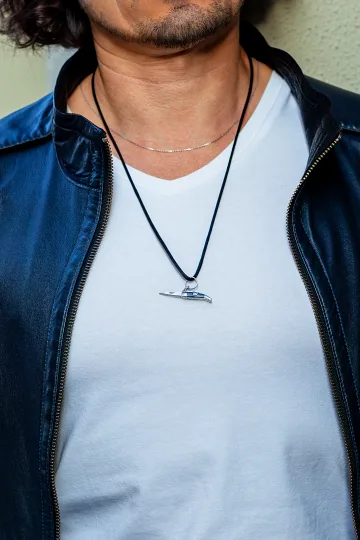




About Zevira
Zevira makes jewellery that carries meaning rather than empty shape. We gather symbols with a history, from protective talismans to mythological images, and explain what stands behind them, without mysticism and without empty grandeur. The image of Poseidon and the trident is a story about strength that can both raise a storm and bring a ship into port. If that meaning is close to you, choose your sign with intent.