Aphrodite (Venus) in Jewelry: Goddess of Love, Beauty and Attraction
The Goddess Born from Sea Foam
The Greeks said Aphrodite was born from no mother at all, but from the foam of the sea off the coast of Cyprus, and a wave carried her ashore inside an open shell. Ever since, the shell and the pearl inside it have read as a sign of love. Not the cute heart from a greeting card, but something far older: beauty rising out of water.
Aphrodite to the Greeks, Venus to the Romans. The same goddess under two names, and both still live on in jewellery. Her attributes have spread across pendants and rings so widely that we wear them often without knowing the name behind them: the shell, the pearl, the dove, the rose, the mirror with a small cross below. Each one carries a story three thousand years long.
Here is the order ahead: who Aphrodite was and where she came from, how her image shifted from a marble statue to Botticelli's painting, what each of her symbols means, how the Greek version differs from the Roman, what materials such pieces are made from, and how to wear them. And one thing to keep straight: with Aphrodite the shell is the attribute of the goddess's birth, not a craft material. The scallop shell as a pilgrim's badge is a separate conversation in the article on the scallop shell of the Camino de Santiago.
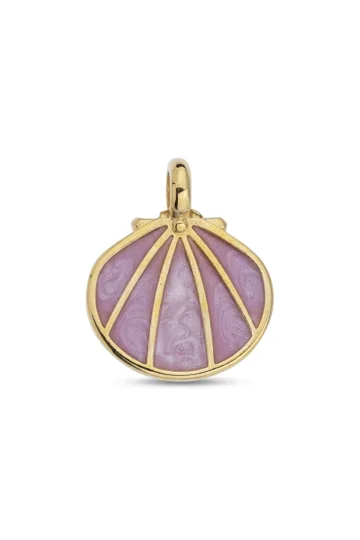
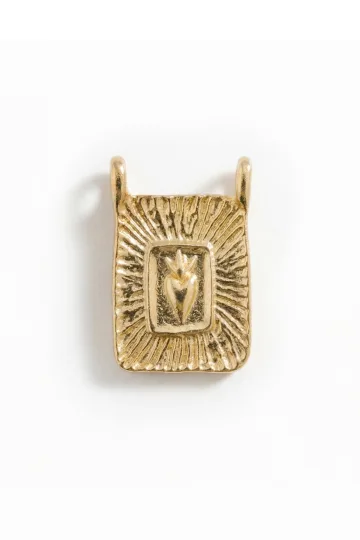
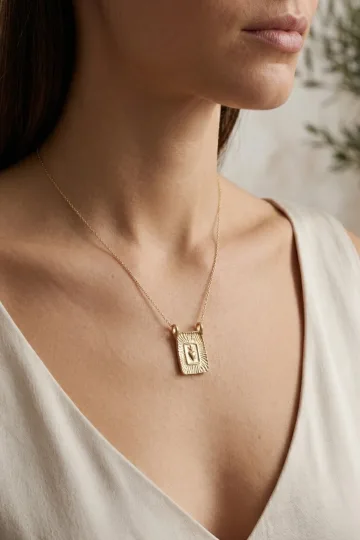
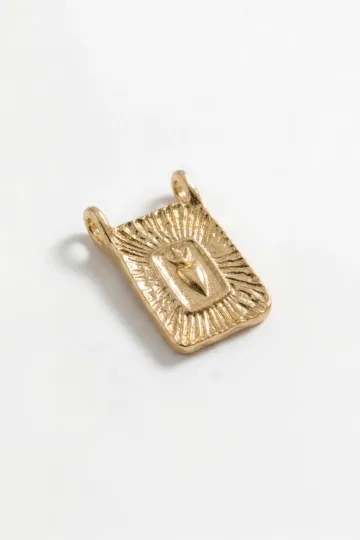
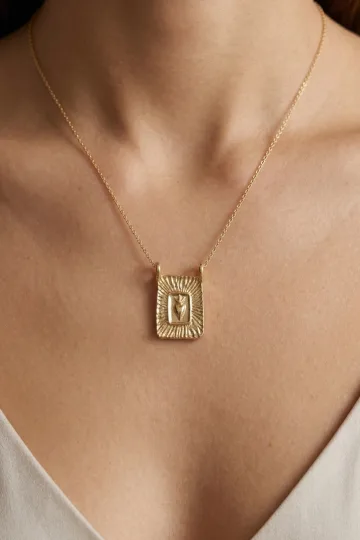
Wear the symbol, don't just read about it. These are in stock:



Who Aphrodite and Venus Were
The Name and Its Origin
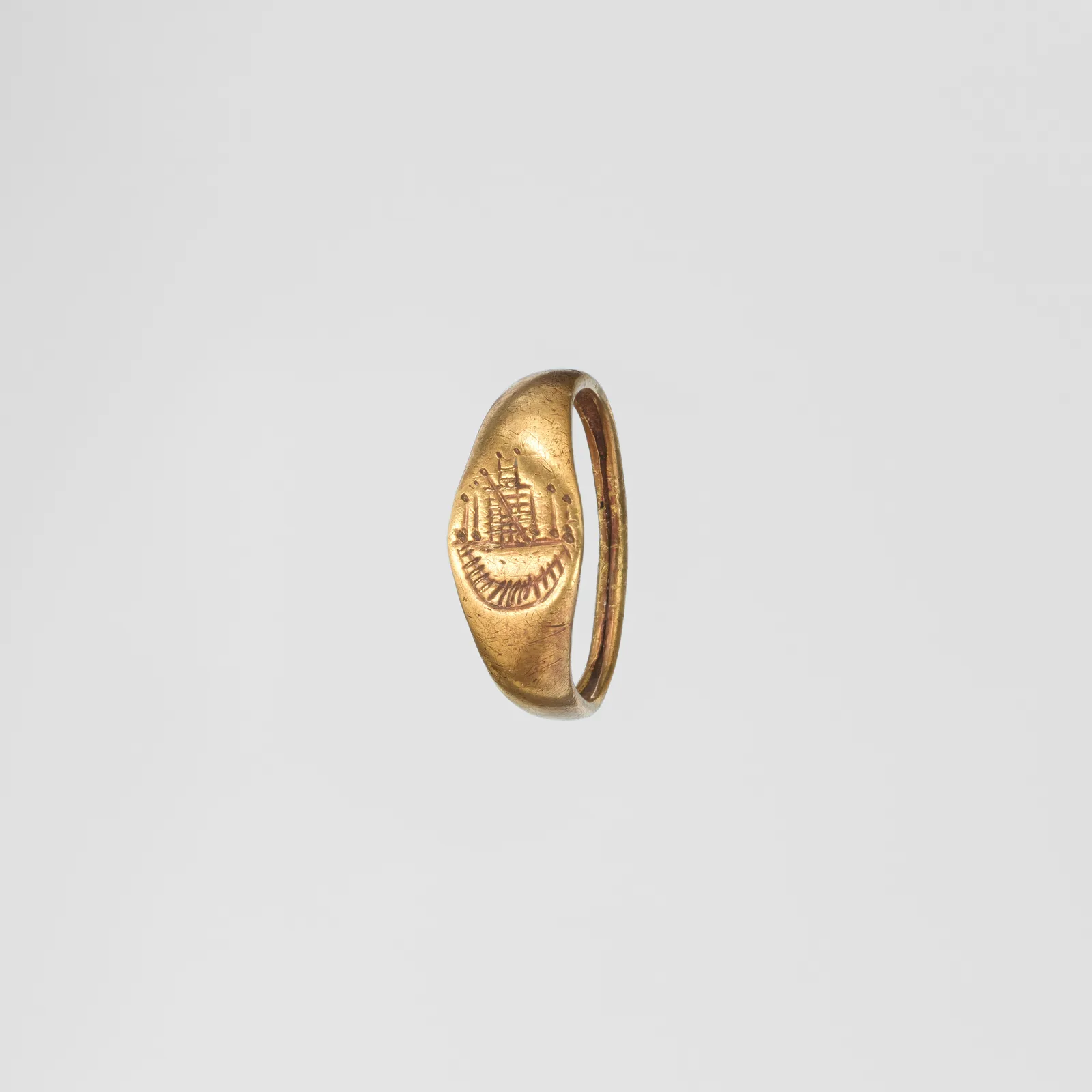
Aphrodite (in Greek Ἀφροδίτη) is the Olympian goddess of love, beauty, desire and fertility. The ancients linked the name itself to the word aphros, meaning foam, and explained it this way: the goddess rose from the sea foam. Modern linguists argue over whether the name came from the East, from the Phoenician and Sumerian goddesses of love, but the Greeks held to their own version of the foam and Cyprus.
For the Romans her counterpart is Venus. This is not a translation or a copy but a native Italic goddess whom the Romans identified with the Greek one. Venus meant more to Rome than love alone: through her son Aeneas the Julian family traced its descent, and Caesar and Augustus counted her as their ancestress. So the goddess of love also became the protector of the state.
What She Governed
In the Greek mind Aphrodite was responsible for attraction between people, for marriage and bodily beauty, for the fertility of the earth and the sea. She was called Urania (the heavenly one, in charge of exalted love) and Pandemos (the common one, in charge of earthly desire). Two faces of one force: love as a spiritual ascent and love as passion.
Her Place Among the Olympians
Aphrodite is one of the twelve chief gods of the Greek pantheon. Her husband is the lame smith Hephaestus, her lover the warlike Ares, her son the winged Eros (Cupid or Amor to the Romans). Who is who on Olympus and how the gods relate to one another is laid out clearly in the overview of the Olympian gods and the Greek pantheon. Aphrodite is one of the most recognizable figures there, and her attributes more than any other passed into jewelry.
Two Legends of Her Birth
The Greeks told two versions of the goddess's arrival, and both live on in jewellery. In the first, from the poet Hesiod, Aphrodite was born from the sea foam that boiled up around a severed part of the body of the Titan Uranus, fallen into the water off Cyprus. Read this way, the name literally means "foam-born." In the second, from Homer, she is the daughter of Zeus and the Oceanid Dione, born in the ordinary way. The first legend is the more vivid one, which is why it gave us the image of the shell and the foam that we see on pendants. The second explains why the goddess sits among the Olympians as a full daughter of Zeus.
Companions and Retinue
The goddess was rarely shown alone. She is accompanied by the Charites, the three goddesses of beauty and grace, who dressed and adorned Aphrodite. Beside her is the winged Eros with his bow, sometimes a whole flock of little erotes. Her retinue included Himeros (ardent desire) and Peitho (the goddess of persuasion). This company hints at how to read jewellery with the goddess: it speaks of love, but also of charm, the gift of being liked, the power to persuade. Cameos often show Venus with little cupids, and this is not random decoration but a reference to her ancient retinue.
Born from Sea Foam: Hesiod Versus Homer
It is worth pausing on the very dispute over the goddess's birth, because two different pieces of jewellery grew straight out of it. In Hesiod, in the poem Theogony, it all begins with violence against the sky: the Titan Cronus cuts away a part of the body of his father Uranus and throws it into the sea off the coast of Cyprus. White foam boils up around it, and from the foam rises a fully grown goddess of unheard-of beauty. In Greek, foam is aphros, and Hesiod draws the name Aphrodite directly from that word. The version is grim at its source, yet it gave the world the brightest image of all: beauty born from water, complete and perfect, with no childhood and no growing up.
Homer, in the Iliad, tells it differently and far more plainly. For him Aphrodite is the lawful daughter of Zeus and the Oceanid Dione, born the ordinary way, like the other Olympians. No foam, no Cyprus, just another daughter of the king of the gods. This version explains why the goddess sits on Olympus as a full member of the family and why Zeus calls her his daughter.
For jewellery the difference is what matters. Hesiod's "foam-born" goddess gave us the shell, the sea wave, the pearl as a frozen drop of foam, the whole marine set we still wear today. Homer's daughter of Zeus gave us something else: the goddess among the gods, the figure in a cameo beside the other Olympians. When you choose a shell pendant, you are voting for Hesiod. When you take a cameo with a profile among the pantheon, Homer is the closer match. The Greeks held both versions in mind at once and saw no need to choose.
Two Faces: Urania and Pandemos
The Greeks noticed early that love comes in very different kinds, and split this between two names of one goddess. Aphrodite Urania, the Heavenly, was in charge of exalted, spiritual love, of the pull toward the beautiful and the eternal. Plato in the Symposium tied her to the love of the soul, to the ascent from the beauty of the body to the beauty of the idea. Aphrodite Pandemos, the Common, governed earthly love, bodily desire, the passion between ordinary people. The name Pandemos literally means "belonging to all the people."
The ancients did not, in everyday life, place one face above the other, though the philosophers argued the point. Both sides were needed: without Urania, love would stay bare desire; without Pandemos, it would turn into a cold abstraction. The goddess held both poles at once, and that was her strength.
For jewellery this pair gives a handy key to choosing. Anyone drawn to the exalted reading, to love as a spiritual lift, chooses austere, light pieces: pearl, white mother-of-pearl, a thin planetary sign. Anyone closer to the earthly, sensual side takes warm gold, a pink stone, deep coral. The same symbol of the goddess sounds different depending on which of her faces is closer to you, and there is no need to say it out loud; it is enough to feel it yourself.
Pearls belong on a bare collarbone, never over a turtleneck. Venus rose from the foam, not from a wool jumper. Behave.
How to Wear Jewellery with Aphrodite
Over years on shoots and fittings the theme of Venus has passed through a hundred looks with me, from a strict cameo to a thin planetary sign. Here is what actually holds a look together, sorted by occasion.
What do I wear pearl with every day? For daily wear I recommend a single pearl or a thin shell pendant on a chain over a plain tee, a linen shirt or fine knitwear. Silver and white gold suit cool clothing tones, yellow gold the warm ones. One detail: I put pearl on last, after fragrance and styling, or the stone goes dull.
And where does a cameo go? A cameo wants room around the profile. I suggest a plain chain and a calm neckline with no pattern, so the face of the goddess reads instead of drowning in print. Keep a large cameo on its own, with no neighbouring pendants. Over a solid top in a deep colour it looks its richest.
How do I build a romantic look? For a date or an anniversary I choose warm gold and a pink stone, morganite or rose quartz, with the motif of the rose or a pair of doves. An open neckline, smooth fabric in a wine or powder tone. Pink loves warm light and soft textures; silk and velvet nearby work for the look.
And how do I wear the sign of the planet Venus? The sign is pure graphics, and it lives by the rules of minimalism. I recommend a fine chain, a short length at the collarbone and an open neckline with no fuss. Only equally graphic pieces beside it, no clusters of pearls. This is the most everyday and the calmest way to wear the theme, and it needs no occasion.
How do I avoid tipping into the saccharine? The theme of Venus overdoes it easily if you hang pearl and roses and little cupids on all at once. I advise one clear accent: pick the main symbol, the shell, the pearl or the planetary sign, and build the look around it. The more solemn the occasion, the more fitting the figurative goddess; the more everyday, the more spare the symbol. Measure here is the best tribute to the goddess of harmony.

Turn on your camera, pick earrings, a pendant or a ring, and see the piece on yourself in real time.
Switch items in one tap.
Everything runs in your browser: no photo or video is ever uploaded.
Customer reviews
Zevira is a real jewellery shop. Genuine payments, deliveries and customer thank-yous.
🥰🥰🥰 gracias

Ok, ¡gracias! 🙂

The History of the Image
The Ancient Near East: Her Forerunners
Long before the Greek Aphrodite, the Near East worshipped goddesses of love and war for millennia. Sumerian Inanna, Babylonian Ishtar, Phoenician Astarte. All of them combined beauty, passion and power. Cyprus, where by myth Aphrodite rose from the foam, was a crossroads of trade routes, and the cult of the local goddess soaked up Eastern features. That is why in early images Aphrodite is often armed or stern, closer to the warrior Ishtar than to the gentle beauty of later centuries.
These Eastern goddesses left their mark on jewellery too. Ishtar was linked to the eight-pointed star, carved on seals and worn as a sign of her protection. Through go-betweens like this star, and the dove, the shared sacred bird of many Near Eastern goddesses, the symbolism flowed smoothly from one culture to the next. When the Greeks took on Aphrodite, they inherited part of this ancient set of signs as well, the dove among them, which has survived to our own day.
Archaic and Classical: The Birth of the Canon
In Archaic Greece the goddess was shown clothed, with an apple or a flower in her hand. The turning point came in the 4th century BCE. The sculptor Praxiteles created the Aphrodite of Knidos, the first large nude female statue in Greek art. The goddess is caught before her bath, covering herself with one hand, a vessel for her clothing beside her. For its time this was a revolution. The people of Knidos refused to sell the statue even in exchange for cancelling all the city's debts, and pilgrims sailed in to see it from across the Mediterranean.
Hellenism: The Venus de Milo
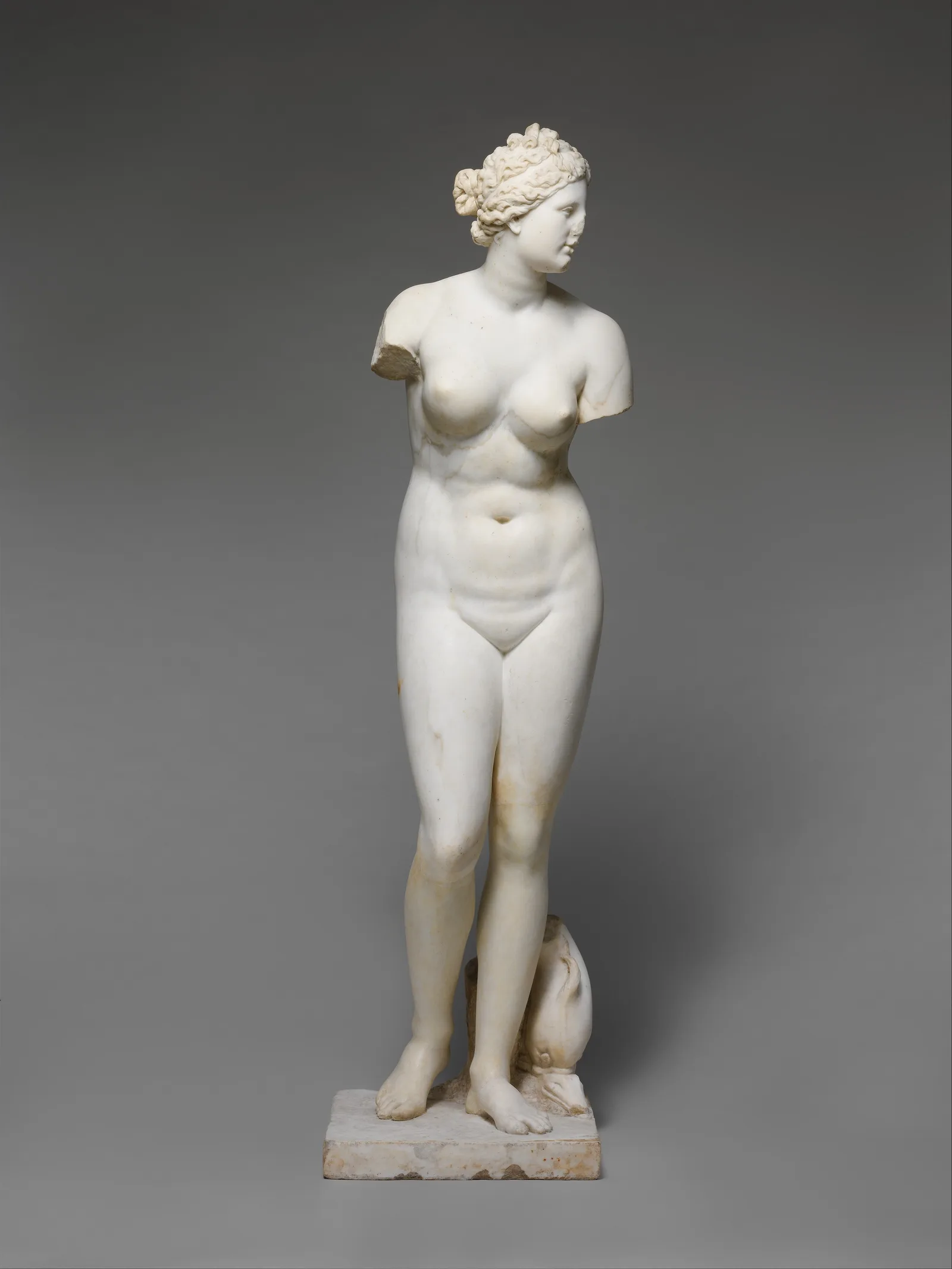
The most famous statue of the goddess was made around 130 to 100 BCE on the island of Milos. The armless marble figure with a bare torso and falling drapery became, over two thousand years, a symbol of classical beauty itself. The arms are lost, and people still argue over what she held: an apple, a mirror, the edge of her garment. That unfinished quality only made her more compelling. The image of the austere profile and the flowing lines of the body passed into cameos, lockets and carved pendants.
Ancient Rome: Venus the Ancestress
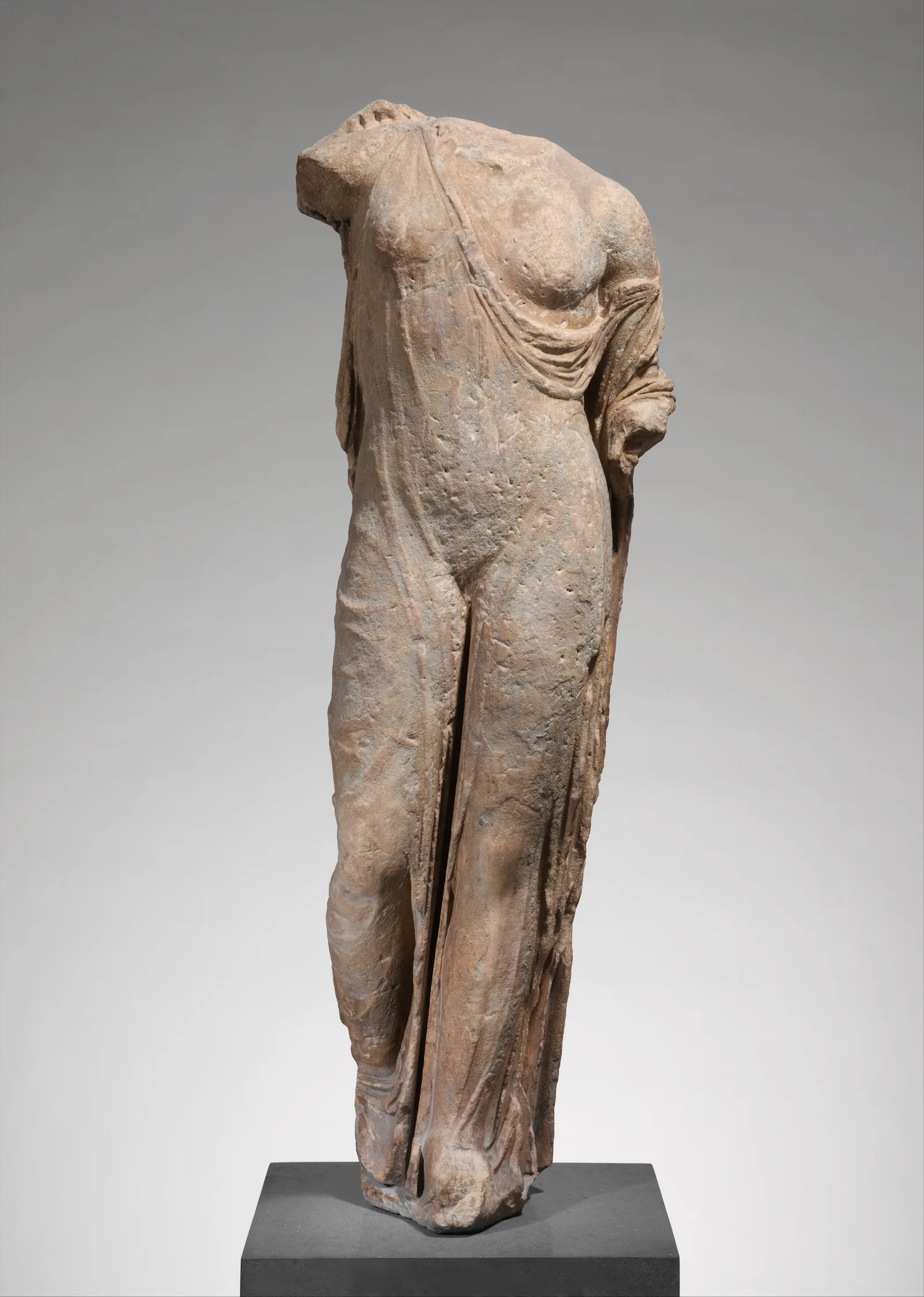
Rome took the goddess as its own. Julius Caesar built a temple to Venus the Ancestress (Venus Genetrix) in his new forum and wore a ring with her image. Pompeian frescoes show Venus on a shell, sailing across the sea. Roman women wore jewellery with her image, believing the goddess granted charm and luck in love. It is from the Roman tradition that the very word "venereal," in the sense of "having to do with beauty and love," came down to us.
The Renaissance: Botticelli's "Birth of Venus"
Around 1485 the Florentine Sandro Botticelli painted the Birth of Venus. The nude goddess stands on a huge shell, the winds drive her toward the shore, a nymph hurries to throw a cloak over her. The painting joined an ancient subject with Christian Florence and became the most reproduced image of the goddess in all of history. It is from here that the scallop shell fused permanently with Venus in the popular mind. When you see a pendant in the shape of an open shell today, behind it stands Botticelli, not the real biology of the mollusk.
Neoclassicism and the 19th Century
In the 18th and 19th centuries Europe fell in love with antiquity all over again. Sculptors carved Venuses from white marble, jewellers cut cameos with her profile from agate and shell, lockets with the goddess were given at engagements. The Victorian fashion for "the language of flowers and symbols" fixed the rose, the dove and the myrtle as signs of tender feeling, and all three lead back to Aphrodite. It was then too that a cameo with a woman's profile became an almost obligatory part of a lady's wardrobe, and many of those profiles are the goddess of love herself.
Pompeii and Roman Daily Life
A chapter of its own in the history of the image belongs to the Roman towns buried by the ash of Vesuvius. On the walls of Pompeian houses, frescoes survive of Venus sailing across the sea on a shell, and these paintings gave archaeologists a rare chance to see how the goddess was depicted in ordinary, non-temple life. In the same ruins they found women's jewellery with her motifs: intaglio rings, earrings, pendants. Pompeii showed that Venus was both high art and part of everyday life, jewellery included.
The Twentieth Century: The Return of the Motif
After a long quiet, the image of the goddess came back to jewellery in waves. Art Deco loved austere geometry and took not the figure itself but her attributes: the pearl, the sea wave, the stylised shell. Later, jewellers turned to the myth directly again, making shell pendants and lockets with Venus's profile. Today the motif lives in two streams at once: the classical one, with cameos and pearls, and the modern one, with a spare sign of the planet Venus on a thin chain.
The Symbols of Aphrodite
The Shell
The shell is the sign of the goddess's birth from the sea. In the myth a wave carried Aphrodite ashore inside an open shell, and ever since the shell has read as the cradle of beauty, the vessel from which love emerges. It helps to keep the meanings apart: with Aphrodite the shell is the attribute of the goddess, a symbol of birth and femininity, not the material mother-of-pearl in itself. If what interests you is the scallop shell as the pilgrim's badge on the road to Santiago, that is a wholly different story, treated in its own article.
The Pearl
A pearl is born inside a shell, in water, slowly and in secret. To the ancients it was a frozen drop of sea foam, that is, literally a particle of the very element from which Aphrodite rose. So the pearl has been counted the goddess of love's stone since antiquity: a sign of purity, femininity and tender beauty. Types, choosing and care are covered in detail in the complete guide to pearls, and here it is enough to say that a pearl pendant or earrings are the most direct way to wear the symbolism of Venus without a single inscription.
The Dove
The dove is the sacred bird of Aphrodite. The Greeks harnessed doves to her chariot, kept them at her temples, released them on feast days. A pair of cooing doves became a sign of lovers in antiquity and has survived to our day: the doves on wedding cards are the direct descendants of the goddess's birds. In jewellery two doves facing each other read as a symbol of a faithful pair.
The Rose
By one legend the rose grew from the blood of Aphrodite's beloved; by another, white roses turned red when the goddess pricked her foot on the thorns, rushing to him. So the rose became the flower of love and passion, and has stayed that way ever since. A red rose in a piece of jewelry is a short way to speak of feeling. Floral symbolism in jewelry more broadly is covered in the article on flowers in jewelry.
Myrtle
Myrtle is an evergreen shrub with white flowers and a spicy scent, dedicated to Aphrodite. Brides were crowned with myrtle wreaths, myrtle branches were carried at weddings, myrtle was planted by the goddess's temples. Unlike the lavish rose, myrtle is a quiet, homey symbol of married love and long accord. It turns up less often in modern jewellery, but a myrtle wreath in engraving or enamel points straight to Venus.
The Mirror (the ♀ Sign)
The mirror is the attribute of beauty: the goddess gazes into it, admiring herself and checking her own charm. From this mirror, by a widespread account, grew the astronomical and alchemical sign of Venus, a circle with a small cross below. Today that same sign reads as the symbol of the female sex. The sign has gathered many meanings at once, from a planet to politics, and it has an article of its own: the female symbol and the sign of Venus in jewelry. In the context of the goddess the mirror is, above all, a sign of beauty and self-admiration in the good sense of the word.
The Cestus Girdle
Aphrodite had a magic girdle, in Greek kestos, that made its wearer irresistible. In the myths even Hera borrowed it to win back Zeus's attention. The girdle is a rare, almost forgotten attribute, but it is the one that answers for the idea of "magnetism," the pull that cannot be explained by looks alone. Its echo in jewellery is the thin belt-chains and the motif of an interwoven ribbon.
The Apple
A golden apple inscribed "to the fairest" was thrown by the goddess of discord, and three goddesses quarreled over who should have it. Paris gave it to Aphrodite, and so began the road to the Trojan War. Ever since, the apple has been a sign of victory in the contest of beauty, the prize of the fairest. Scholars still wonder whether it was an apple the Venus de Milo held in her hand. In jewellery the apple appears rarely, but as a subtle nod to the myth of Paris it is read at once by those who know.
The Dolphin and Marine Motifs
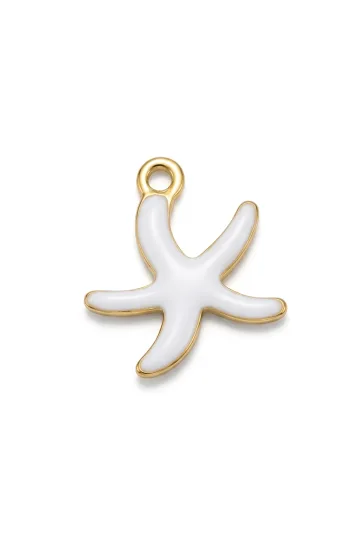
Since the goddess rose from the sea, the whole marine theme is hers. The dolphin that accompanied Aphrodite over the waves, the crest of a wave, the starfish, all of these are images akin to her. In ancient sculpture a small dolphin often props up the goddess's leg, helping to hold the heavy marble and at the same time recalling her birth from the water. In modern jewellery marine motifs beside a pearl or mother-of-pearl strengthen the link with Venus, even without her figure.
Upload a photo of your pet, someone you love, or an object. We'll build a 3D model and hand-cast it in pewter.




What Aphrodite Means in Jewellery
Love
The most obvious meaning. A piece with the goddess's symbols is a piece about feeling: romantic, tender, passionate. It is given as a sign of love and worn as a reminder of it. Unlike an abstract little heart, the image of Venus adds depth: a whole mythology stands behind it, well beyond a single icon.
Beauty
Aphrodite is the standard of beauty in European culture. To wear her symbol is to acknowledge the value of beauty as such, of caring for oneself, of aesthetics. This is not vanity but respect for the harmony the goddess embodied.
Femininity
The shell, the pearl, the rose are soft, rounded, feminine forms. A piece with the goddess's symbolism underlines the feminine without challenge and without inscriptions. Many choose it for exactly that: a quiet, confident statement of femininity.
Attraction
Aphrodite's magic girdle answered for magnetism. So her jewellery is often worn as a talisman of attraction: not a love spell, but a tuning toward one's own appeal, toward the confidence that makes a person magnetic. Psychologically it works simply. When an object reminds you that you are worthy of love, you carry yourself differently.
Self-Worth
The modern reading of the goddess has shifted from "being liked by others" to "valuing yourself." The mirror of Venus is both a look outward and a look inward. A piece with her symbolism is more and more often bought for oneself, as a sign of self-respect and self-love, not only as a gift from someone else.
Fertility and Abundance
In antiquity Aphrodite answered both for people's feelings and for the fertility of the earth and sea, for abundance and the continuation of the line. This layer of meaning is almost forgotten in jewellery, but it explains why the goddess was so often linked to spring, blossoming and harvest. A pendant with the symbolism of Venus was historically read as a wish for fertility, well-being and a full life, not for romantic love alone.
Harmony and Aesthetics
Venus in the broad sense is about harmony: proportion, the beauty of proportions, the pleasure of the beautiful. It is no accident that the planet which in astrology answers for taste and the pull toward art bears her name. A piece with her motif suits those for whom not loudness but proportion and a sense of measure matter. It is a quiet declaration of love for beauty as a value, without showy glitter.





Aphrodite and Venus: Greek and Roman
One Goddess, Two Names
Aphrodite and Venus are not two different goddesses but one figure across two cultures. The Greeks called her Aphrodite, the Romans Venus, and when Rome adopted the Greek myths the two images merged. In jewellery both names are used as synonyms, and the choice usually comes down to taste: "Venus" sounds more familiar to the European ear, while "Aphrodite" points straight back to the Greek source.
How the Roman Venus Differed
The Greek Aphrodite was above all a goddess of love and beauty. The Roman Venus added a meaning of state to this: ancestress of the Julian line, protector of Rome, symbol of military luck (Venus Victrix, Venus the Victorious). So Roman jewellery with the goddess sometimes carried a political tinge that the Greeks had not given it.
Eros, Cupid and Amor
The goddess's son is called Eros by the Greeks, Cupid or Amor by the Romans. The winged boy with bow and arrows who wounds hearts is her constant companion in art. In jewellery mother and son often appear together: Venus and a little cupid is a classic subject of the cameos and lockets of the Renaissance and Neoclassicism.
Why Venus Was More Serious Than Aphrodite
Look closely and the Roman Venus turns out heavier and weightier than the Greek source. To the Greeks, Aphrodite was dear as a goddess of feeling and beauty, but they did not usually let her near high politics. The Romans did the opposite. They made Venus the foremother of their people: through her son Aeneas, who fled from burning Troy, the first families of Rome traced their descent. The dictator who, in effect, founded the empire, and his heirs, openly called the goddess their ancestress and struck her on coins.
From this Venus gained epithets the gentle Greek goddess never had. Venus the Victorious answered for luck in war, Venus the Ancestress for the continuation of the line and the state, Venus the Purifier for moral order. The goddess of love grew into the protector of all Rome. Love was not cancelled for the Romans, but to it was added the weight of the state, the family, the fate of the people.
This difference is faintly heard in jewelry too. The Greek Aphrodite is lighter, she is about pure feeling and marine beauty. The Roman Venus is more solid; there is a tinge of dignity in her, of lineage, of serious intent. So a massive cameo with a profile reads a little "Roman," while an airy shell pendant reads a little "Greek." This is not a strict rule but a tone, and yet it exists, and someone who knows feels it. The link of Venus to the pantheon and to the figure of the thunderer is easy to fill out through the overview of the Olympian gods and the Greek pantheon and the portrait of Zeus as king of the gods, whose daughter Homer called her.
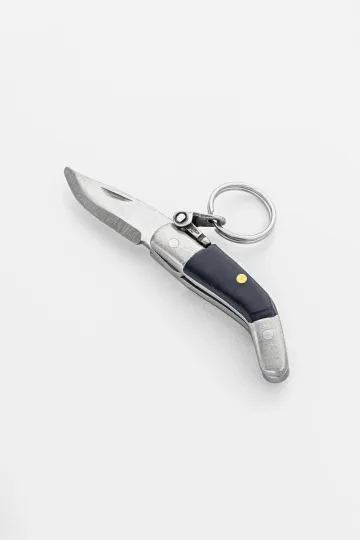
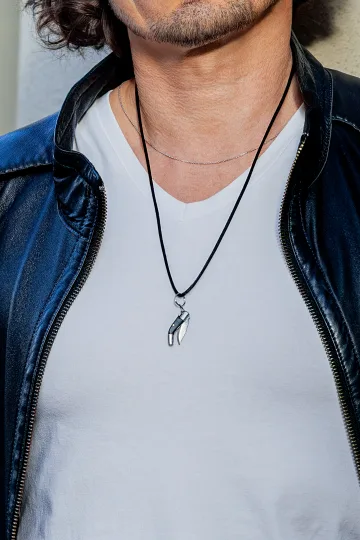
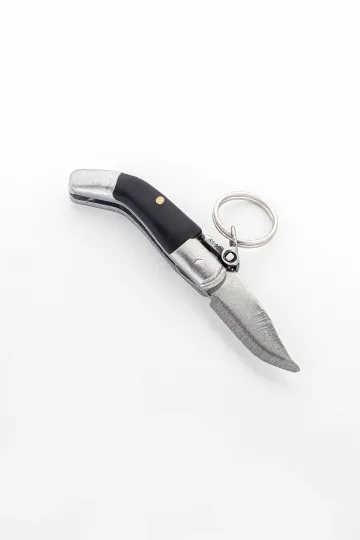
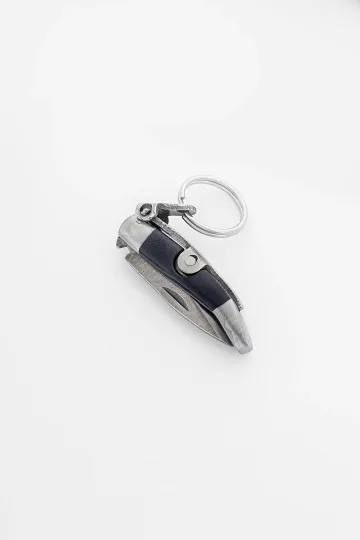
CAPAORA mini knife pendant
The 18th-century Spanish navaja in miniature: 40 mm of stainless steel, a real folding mechanism and a Palanquilla lock that clicks. An affordable gift to remember.
Authentic · Ships from Spain · 14-day returns
Materials for Jewellery with Aphrodite
Pearl
The most "Venus" material of all. The pearl is born in a shell, just as the goddess herself came out of one, so the link is direct and ancient. White pearl reads as pure tenderness, cream as warm femininity, black Tahitian as mystery and passion. Pearl is fussy to care for, afraid of acids and perfumes, but in return it gives a soft, living glow that faceted stones do not have. The different grades are conveniently covered in the pearl guide.
Shell and Mother-of-Pearl
Mother-of-pearl is the inner layer of the shell, the very one in which the pearl is born. From it cameos are cut, inlays and shell-shaped pendants are made. Mother-of-pearl is more accessible than pearl and still carries the same marine symbolism of the goddess. The colour is iridescent, from milky white to grey-pink, and it pairs beautifully with silver and gold.
Morganite and Rose Quartz
Pink stones speak directly to the theme of love and tenderness. Morganite is a rare pink beryl, transparent, with a calm peachy-pink glow, a stone of the premium segment. The details are in the article on morganite, the pink beryl. Rose quartz is softer and more accessible; it has long been called the "stone of love" and is linked to tenderness toward oneself and others, and it has its own piece on rose quartz. Both stones sit well in jewelry on the theme of Venus.
Gold and Silver
Gold is the metal of the sun, of warmth and luxury; it underlines the solemnity of the goddess's image and gets along beautifully with cream-toned pearl. Silver is cooler and quieter, closer to the sea and the moon, to white pearl and mother-of-pearl. If you want to wear the symbolism every day, silver is more practical: how to tell the real thing is covered in the article on 925 silver and what it means. Many combine both metals, and there is no mistake in that.
Coral
Coral has a long link with Venus. Ancient authors held red coral to be frozen blood or a petrified plant of the sea, born in the same element as the goddess. Pink and red coral went into beads, cameos and pendants, and was long a companion of the marine theme of Venus alongside the pearl. Today natural coral is harvested ever more rarely because of reef protection, so careful alternatives and vintage pieces turn up more often, but the motif itself stays recognizably "marine" and warm.
Turquoise and Aquamarine
Blue and blue-green stones add the colour of the sea itself to the theme of Venus. Aquamarine, whose name literally means "sea water," is transparent and cool, and chimes with the wave from which the goddess rose. Turquoise is warmer and denser; it has long been counted a protective stone and at the same time carries the same marine note. Both options work well if you want to move away from the usual white pearl and pink tones toward the image of the sea as the element of Aphrodite's birth.
The Cameo as a Carrier Material
A cameo is not a stone but a way of carving, but in the theme of Venus it is almost a separate material. The master takes layered agate, sardonyx or shell, where a light layer lies over a dark one, and carves a white profile of the goddess against the contrasting ground. A shell cameo is lighter and cheaper than a stone one, which is why it made the image of Venus widespread in the 19th century. A cameo is prized because it carries the face of the goddess literally, not by hint, and yet stays an elegant detail rather than a bulky figure.
Leave your email, we'll send your discount code. No spam, unsubscribe anytime.
The code arrives by email, valid on your first order.
Venus in Art
Sculpture: From Knidos to Neoclassicism
The image of the goddess in stone is a story of its own, two thousand years long. The Aphrodite of Knidos by Praxiteles set the canon of nude beauty, the Venus de Milo brought it to perfection, and the sculptors of the Renaissance and Neoclassicism copied and recreated this image again and again. Many of the poses in jewellery cameos and lockets are scaled-down quotations of famous statues.
Painting: Botticelli and the Venetians
After Botticelli's Birth of Venus the goddess became a favourite subject of painters. The Venetian masters painted her reclining, the northern artists dressed her in the jewels of their own time. From these paintings details passed into jewellery: the wreath of roses, the strand of pearls at the neck, the shell beneath the feet. When you look at an old cameo, you often have before you a fragment of a famous canvas.
Cameos and Glyptics
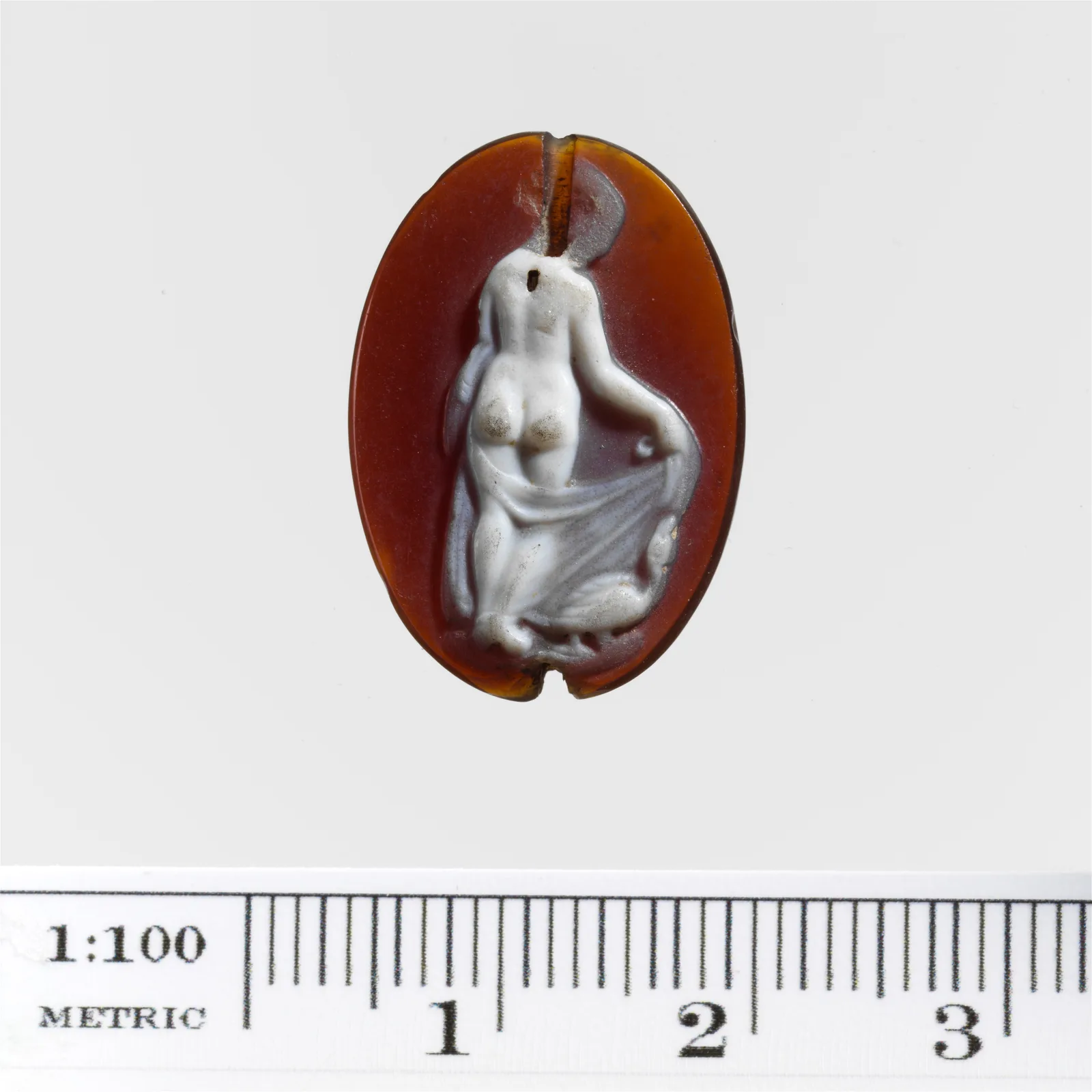
Carving in stone and shell is the craft in which the image of Venus lived especially long. A cameo with a woman's profile was an obligatory detail of a lady's wardrobe throughout the 19th century, and very often it is the goddess of love. Layered agate, sardonyx and shell cameo gave the master a material with ready-made coloured layers, out of which a white profile was carved against a dark ground.
Venus in Poetry and Literature
The image of the goddess lived in stone and paint, and in words too. The Roman poet Lucretius opened his poem On the Nature of Things with a hymn to Venus as the force that moves all living things and brings forth the spring. The poets of the Renaissance sang of her beauty, and with it of the shell, the pearl and the rose. These lines fed the jewellers too: a patron who had read of the "foam-born" goddess wanted to wear an echo of what he had read. The literary Venus and the jewelled Venus grew side by side and fed each other for centuries.
Why This Image Does Not Age
The heart as a sign of feeling appeared relatively late, while the image of Venus has held for three thousand years, and the reason is its many layers. The same symbol speaks of love, beauty, femininity, fertility, harmony and even of a planet in the sky. Each age took its own from it without cancelling the rest. So a piece with the goddess is not tied to the fashion of any one decade: it rests on meaning gathered over dozens of generations, and that keeps it from aging.
Three Images That Set the Canon
If you reduce the whole history of the image to a few things, you come to three famous images on which all the later iconography of the goddess rests. The first is the Aphrodite of Knidos by the sculptor Praxiteles, made around the middle of the 4th century BCE. It is the first large statue of a nude goddess in Greek art. Before her, only men were sculpted nude, while women were clothed. Praxiteles caught the goddess before her bath: she has set her clothing on the vessel standing beside her and covers herself with one hand. This pose, modest and calm at once, came to be called the "Venus Pudica" and spread across thousands of copies, cameos and lockets. The original is lost, but we know it from Roman repetitions.
The second is the Venus de Milo, a marble figure of the Hellenistic age, found on the island of Milos at the start of the 19th century. Armless, with a bare torso and drapery slipping to the hips, she became over two hundred years a synonym for classical beauty in general. The loss of the arms turned into an advantage: the unfinished quality stirs the imagination, and everyone completes the image their own way. From this statue the austere profile, the calm tilt of the head and the flowing line of the shoulder passed into jewellery, easy to recognise in cameos.
The third image is already painting, Botticelli's Birth of Venus, painted at the end of the 15th century. The goddess stands on a huge scallop shell, the winds drive her toward the shore, a nymph hurries to cover her with a cloak. The painting joined an ancient subject with Christian Florence and became the most reproduced image of the goddess in all of history. It is with this painting that the scallop shell fused permanently with Venus in the popular mind. When you see a pendant in the shape of an open shell, behind it stands Botticelli, not the real mollusk. These three things, two sculptures and one painting, are the common language all jewellery with the goddess speaks.
The Psychology of Choosing a Symbol of Love
The very set of love symbols is curious, and so is a subtler question: why does a person choose the goddess rather than a heart, a knot, a word. Behind the choice usually stands a wish for depth. The heart reads instantly and so feels too general, like an emoji. The image of Venus calls for knowledge, and that knowledge becomes part of the pleasure: the owner wears something whose meaning does not open up at once, and that gives it the value of a secret.
There is a second motive too, more personal. Psychologists have long noticed that a reminder object changes behaviour. When a piece gently reminds a person that they are worthy of love and beautiful, they carry themselves more confidently, and that confidence makes them more attractive in the eyes of others. There is no magic here; ordinary self-tuning is at work. The symbol of Venus suits this role precisely because it speaks at once of love and of self-worth, of the look outward and the look inward.
The third motive is the shift from "being liked" to "valuing yourself." A century ago a piece with the goddess was bought as a gift, to please or delight someone else. Today it is more and more often chosen by people for themselves, as a quiet sign of self-respect. The mirror of Venus has gone from a symbol of vanity to a symbol of self-care. This shift explains much about why the ancient image has taken root so well with today's buyer: it can speak both of love for another and of love for oneself, without setting one against the other.
Venus Beyond Art
The image of the goddess long ago stepped outside museums and galleries and spread into everyday language. From her name comes the word "aphrodisiac," a substance that kindles desire. The Latin "Venus" gave a name to beauty and to a whole row of plants: maidenhair (in many languages "Venus's hair") is the name of an elegant fern, the lady's slipper (literally "Venus's slipper") is an orchid with a flower shaped like a shoe, and Venus's combs and mirrors turn up in old botanical handbooks. The goddess even gave her name to a day of the week: the Romance languages call Friday in her honour, because the Romans dedicated that day to Venus.
In the sky her name belongs to the brightest planet after the Moon and the Sun, visible at sunset and sunrise. The ancients, not knowing it was a single body, long took the morning and evening Venus for two different stars and gave them different names. The craters on the planet itself are by tradition named with women's names, and this is a tacit tribute to the goddess. So the image of Aphrodite lives in three layers at once: in jewellery as a symbol of love, in language as the root of many words, and in the sky as a point of light that people have watched for thousands of years. This ubiquity is what explains why the Venus motif in a pendant does not feel like something narrow: behind it stands a whole network of meanings scattered across culture.
Venus in Astrology
The Planet of Love and Beauty
In astrology Venus is the planet that answers for love, relationships, aesthetics, money and pleasures. It "rules" the signs of Taurus and Libra. People whose Venus is strong in the chart are considered charming and drawn to beauty. Hence the popularity of jewellery with the symbolism of Venus among those keen on astrology: it is a sign of one's planet on the body.
Venus in the Sign of Libra
Libra is the second sign ruled by Venus, and here she unfolds differently than in sensual Taurus. Libra is about balance, partnership, diplomacy and a love of harmony in relationships. For those born under Libra the symbolism of Venus reads as a sign of striving for balance and the beauty of a union. If Taurus takes sensuality from Venus, then Libra takes grace and the pull toward accord, and a piece with the goddess underlines exactly this side.
The ♀ Sign and Its Meanings
That same circle with a small cross, grown from the goddess's mirror, in astronomy denotes the planet Venus, and today reads also as the symbol of the female sex, and as the alchemical sign of copper. So many meanings have gathered that there is a separate piece on it: the female symbol and the sign of Venus. In jewelry this sign can be presented any way you like: as a planet, as femininity, or simply as austere graphics.
Venus in the Sign of Taurus
Taurus is the home sign of Venus, and it is no accident that it is linked to a love of beautiful things, comfort and sensual pleasures. On the pairing of the bull, Venus and this sign there is a separate article on Taurus jewelry. For those born under Taurus a piece on the theme of Venus is almost a self-portrait in metal.
Aphrodite Versus Other Symbols of Love
Venus and the Heart
The heart is a universal, instantly read sign of feeling, but that very simplicity is its weakness: it is nameless and turns up at every step. The image of Venus is deeper, with a myth, a history and a whole set of attributes behind it. If you want meaning rather than just an icon, the goddess wins. The heart sign and its history are covered in the anatomical heart in jewelry, and an overview of all the signs of feeling is gathered in the article on love symbols in jewelry.
Venus and Cupid
Cupid, also Amor, is the son of Venus, a winged archer who wounds hearts. His arrow is about sudden falling in love, about the strike of feeling. Venus is about love as a state, as beauty and attraction in general. Often they are worn together: mother and son complement each other, passion and tenderness in one subject.
Venus and the Knot of Love
The knot is a symbol of a bond that cannot be broken, a sign of fidelity and union. It is about the strength of a relationship, while Venus is about its beauty and attraction. A good pair for a joint gift: the knot says "forever," Venus says "with love." On the different knots there are articles on the Celtic knot and the sailor's knot.
Venus and Talisman Words
Sometimes love wants to be put in a direct word: faith, hope, love, engraved on metal. This is the most literal language of feeling, with no mythology and no decoding. Venus speaks through an image, not text, and that is her strength: the symbol works on several levels at once and does not sound insistent. On talisman inscriptions there is a separate piece, jewelry with the words love, faith, hope. It works well when word and image complement each other rather than repeat.
Facts That Surprise
The Knidian Aphrodite of Praxiteles was prized so highly that, by tradition, King Nicomedes offered to cancel the entire state debt of the city of Knidos in exchange for the statue. The people refused.
The Romans had a special feast, the Veneralia, on the 1st of April, when women removed the jewellery from the statue of the goddess, washed her and dressed her again, asking for luck in love.
The ancients held pearls to be frozen drops of sea foam, or dew fallen into an open shell. Since Aphrodite herself was born from the foam, a pearl was taken as a literal particle of the goddess.
The arms of the famous Venus de Milo have still not been found, and for almost two hundred years scholars have argued whether she held an apple, a mirror, or the shield of Ares, in which she admired her reflection.
The dove became the "bird of peace" much later; originally it was a bird of passion and fertility, dedicated to Aphrodite, and a pair of doves meant lovers, not peace.
The word "aphrodisiac," a substance that kindles desire, comes straight from the name of Aphrodite.
Botticelli depicted Venus standing on a scallop shell, although the ancient myth itself does not specify the kind of shell. It was the painting that fixed the pairing of "Venus plus scallop" in the popular mind.
The planet Venus is the brightest object in the night sky after the Moon, and the ancients, seeing it at dawn and dusk, long took the morning and evening star for two different bodies.
Friday in the Romance languages is named in honour of Venus: vendredi in French, venerdì in Italian, viernes in Spanish. The Romans dedicated this day to the goddess, and the name has survived to our day, though few remember why.
The Knidian Aphrodite of Praxiteles was set up in a temple open on all sides, so the statue could be admired from every angle. Ancient authors wrote that the marble had no fewer admirers from behind than from the front, and pilgrims walked all the way around the goddess.
The craters on the planet Venus are by international agreement named only with women's names, real and mythical. It is the only planet honoured with an entirely "female" map, and a tacit tribute to the name of the goddess.
Send a friend a discount code, they save on their first order.
Frequently Asked Questions
How does Aphrodite differ from Venus?
They are one and the same goddess under different names. Aphrodite is the Greek name, Venus the Roman. When Rome adopted Greek mythology, the images merged. In jewellery both names are used as synonyms, the only difference being in the sound and a light tinge: for the Romans Venus was also a protector of the state.
Why is the shell considered a symbol of Aphrodite?
By the myth the goddess was born from the sea foam and came ashore inside an open shell. Botticelli's painting the Birth of Venus fixed this image. So with Aphrodite the shell is a sign of the birth of beauty and femininity, not a marine material in itself. The scallop shell as a pilgrim's badge is a separate subject, treated in the piece on the shell of the Camino de Santiago.
Can a man wear jewellery with Venus?
Yes. The symbolism of love and beauty is not strictly tied to gender, and the sign of Venus itself was used by alchemists and astronomers with no connection to femininity at all. A man would do well with spare options: a pearl in an austere setting or the sign of the planet without pink stones. Pearls are now worn by men anyway, and there is a separate article about it.
Which stone best suits the theme of Aphrodite?
Pearl, because it is born in a shell and is directly linked to the myth of the goddess. Of the coloured stones the pink ones are closest: morganite for a premium look and rose quartz as an accessible "stone of love." Mother-of-pearl works well for cameos and shell pendants.
Are pieces with Venus given at weddings?
Yes, and it is a long tradition. Myrtle, dedicated to Aphrodite, was woven into brides' wreaths from time immemorial, and pearl was counted the wedding stone of purity and femininity. A pendant or earrings with the symbolism of Venus is a fitting wedding gift with deep meaning.
Is this connected to astrology?
Yes, there is a direct link. Venus is the planet of love and beauty; it rules Taurus and Libra. People keen on astrology wear the symbolism of Venus as a sign of their planet. More on the sign itself is in the article on the female symbol and the sign of Venus.
Why is the image of Venus better than an ordinary little heart?
The heart reads instantly, but it is nameless and turns up everywhere. Behind the image of Venus stand a myth, a history and a whole set of attributes: the shell, the pearl, the dove, the rose. That gives depth and makes the piece a conversation rather than a nameless icon. An overview of the signs of feeling is gathered in the article on love symbols.
How do I care for the pearl in such a piece?
Pearl is afraid of acids, perfumes, hair spray and abrasives. Put it on last, after makeup and fragrance, wipe it with a soft cloth after wearing, and store it apart from hard stones so it does not get scratched. The detailed rules are in the pearl guide.
Buying it as a gift? Each one arrives ready to give.
 A branded Zevira box and a little card come with every order.














Conclusion
Aphrodite and Venus are the most beautiful way to speak of love without words. Behind the shell stands the myth of birth from the foam, behind the pearl a frozen drop of the sea, behind the rose and the dove a thousand-year tradition of lovers. To wear such a piece is to choose meaning with a history over a nameless icon, to acknowledge the value of beauty and tenderness, and often simply to love yourself a little more. Greek name or Roman, pearl or pink stone, a gift or a purchase for yourself, the result is one: this is jewellery about a feeling that has not gone out of fashion in three thousand years.
Jewellery with the Symbolism of Love and Beauty
Pearl, marine motifs, pink stones and gentle forms. Choose your own piece in the spirit of Venus, as a gift or for yourself.
Browse the catalogueWear the symbol, don't just read about it. These are in stock:


About Zevira
Zevira is jewellery with meaning. We gather symbols that carry a story: charms, signs of love, mythological images. Every piece comes with a clear account of what it means and where it came from, so you wear something with character rather than impersonal metal with a stone. Pearl, silver, gilt settings, natural stones, all chosen so the piece serves long and pleases every day.