Ra: the Egyptian sun god, the meaning of the symbol, the solar disc and jewellery
Every night Ra died, and every morning he was born again. By day he sailed across the sky in a golden barque; by night he went down into the underworld and there did battle with the serpent Apophis, the embodiment of chaos. For an Egyptian, sunrise was not simply dawn but a daily victory over the dark.
Ra is the supreme sun god of ancient Egypt, the one who remade the world each day by the simple fact of rising. For the Egyptian, the sun was not a heavenly light but a living deity making a dangerous journey: by day across the river of the sky, by night through the underworld realm of the dead. And the fact that it climbed back above the horizon each morning was held to be not a law of nature but a victory won in battle. Around this daily drama an entire religion took shape, in which the pharaoh was called the son of Ra and temples were oriented to the path of the sun.
In jewellery Ra arrives through his signs rather than through a portrait. The solar disc, the falcon with the disc above its head, the rearing cobra, the scarab rolling the sun toward dawn. These images read instantly, and they mean life, light, order and power. What follows, in order: how the sun god looks, where his cult came from, what barque carries the sun across the sky, what his symbols mean, and how all of it works in a pendant or a ring.
Who Ra is: the solar disc and the falcon
Ra stands at the head of the Egyptian pantheon as creator and lord. The Egyptians pictured him in different forms depending on the hour of the day and the age, but they always knew him by one sign: the solar disc above his head. Let us work through the iconography of the god and his transformations across the day.
The falcon with the solar disc and the uraeus
Most often Ra was shown as a man with the head of a falcon, and above it a red solar disc encircled by the cobra-uraeus. The falcon head tied him to the sky and to the height of flight: the falcon soars above all other birds and looks at the sun without turning away, which is why it became the bearer of solar power. The disc above the head is the sun itself, and the cobra coiled around it stood for protection and the power to scorch any enemy of the god. In this form Ra often merged with the falcon god Horus, and the combined deity was called Ra-Horakhty, "Ra who is Horus of the two horizons." Such an image read as the sign of the daytime sun in its full strength, from sunrise to sunset. It is the falcon Ra with the disc that most often passes into modern pendants and signet rings, because the silhouette of a bird with the sun over its head is recognised without a caption.
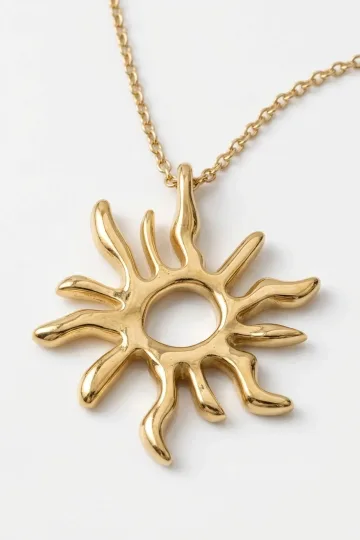
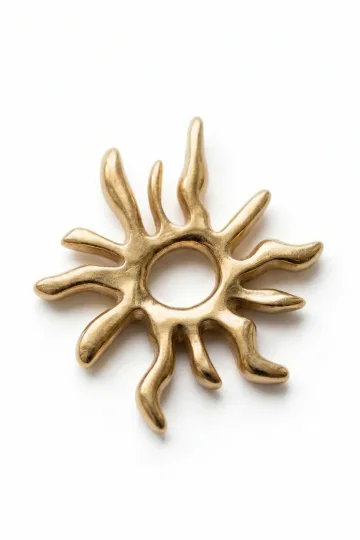
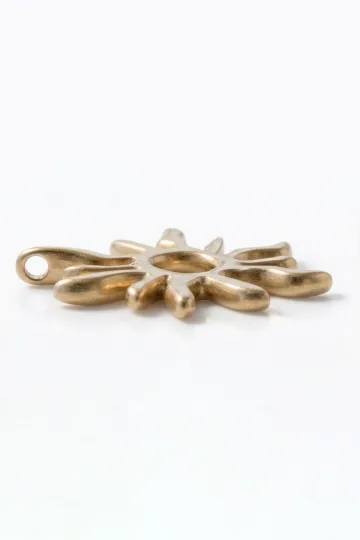
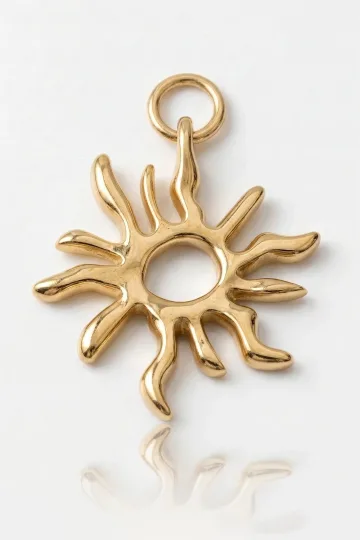
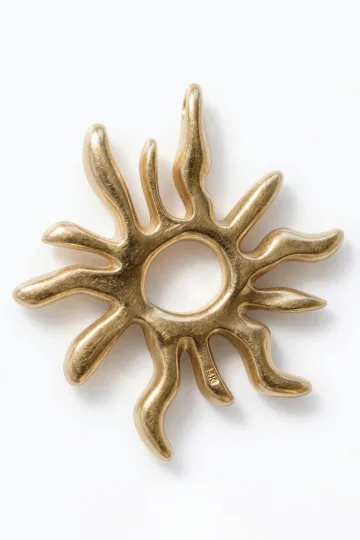
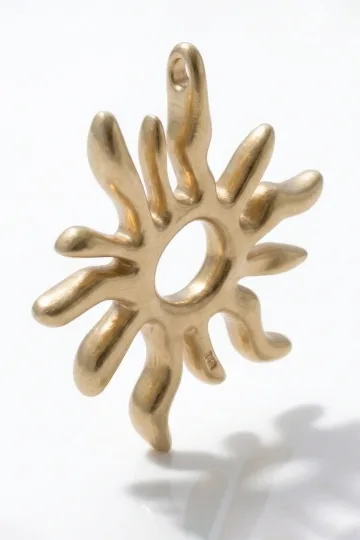
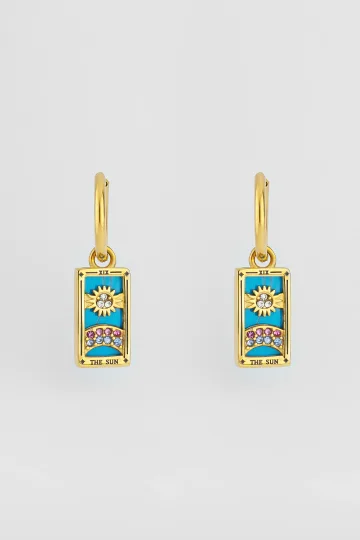
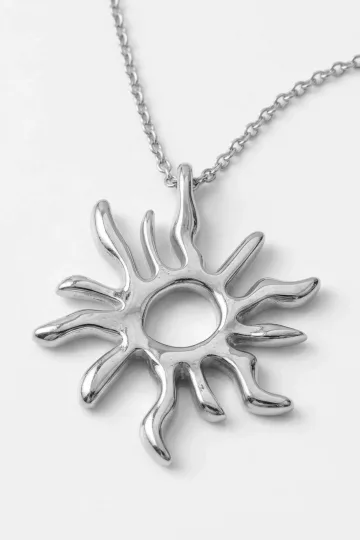
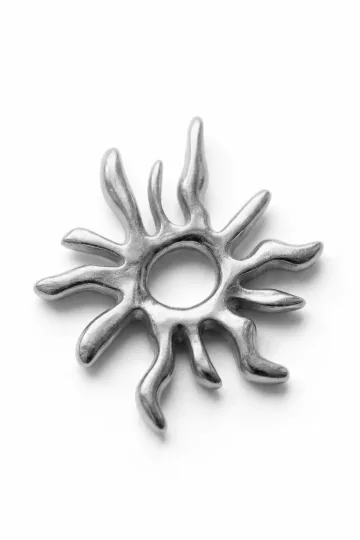
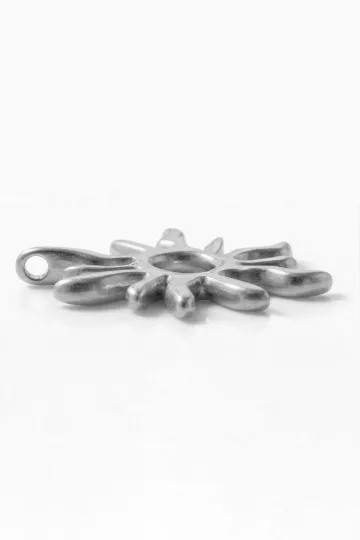
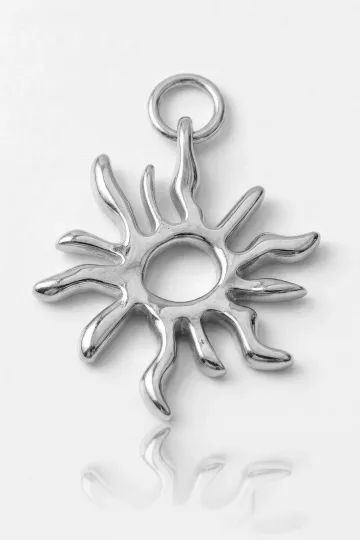
Wear the symbol, don't just read about it. These are in stock:


Khepri, Ra and Atum: the sun in three ages
The Egyptians saw in the sun not one face but three, matching its positions in the sky. The morning, rising sun was called Khepri and was imagined as a scarab rolling the solar ball above the horizon, a sign of birth and renewal. The midday sun at its zenith was Ra himself in full might, the falcon with the blazing disc. The evening, setting sun became Atum, a weary elder retiring to rest in the underworld. Three names described one and the same passage of the light through the day: birth, flourishing, old age and departure. This idea of the three ages of the sun explains why the scarab appears so often beside the image of Ra: it is not a rival god but the morning, youthful aspect of the same sun. For jewellery this is convenient: disc, falcon and scarab fall into a single solar set with a shared logic of the cycle.
Atum-Ra as creator of the world
In the religious picture of Heliopolis, Ra merged with the ancient creator god Atum, and the combined Atum-Ra was held to be the one who made the world out of primeval chaos. By this myth, in the beginning there was only the ocean of non-being, Nun, a dark and formless abyss. From it rose the first hill, and on it appeared the creator, who begat himself. He made the first pair of gods, Shu the air and Tefnut the moisture, and from them came earth, sky and the whole further line of deities. So the sun turned out to be not a heavenly light but the very source of being: its first rising was the first moment of the world. This role of first creator gives Ra's symbolism a particular depth. To wear his sign is to bind oneself both to light and to the idea of beginning, to that point from which everything set out. For the Egyptian, each dawn repeated this first creation in miniature.
Forms and mergings of the sun god
In Egypt the sun was rarely called by a single name. Across three thousand years of cult the sun god absorbed dozens of local deities, changed his form by the hour and by the era, and once very nearly became the only god at all. Let us see how these mergings work and why behind the sign of the sun stands not one cult but a whole family of forms.
How the Egyptians joined their gods
Egyptian religion knew no jealousy between gods. When two cults met, their deities did not fight for primacy but merged into a double name, in which each part kept its own sense. So the solar Ra joined with the creator Atum in Heliopolis, with the falcon Horus in the form of Ra-Horakhty, with Theban Amun as Amun-Ra, and in other cities his name was added to local gods, to Sobek the crocodile or to Ptah the craftsman. Each merging did not cancel the earlier forms but built a new layer over the old. One and the same light could bear different names, and the priests saw in this not a contradiction but a richness. For a symbol this means that the disc of the sun gathers several traditions beneath it at once, rather than being locked into a single narrow image.
The Aten: a sun without a face
At the height of the New Kingdom the pharaoh Akhenaten did what no one before him had done: he tried to reduce all theology to a single sun. He proclaimed as his one god the Aten, the solar disc itself, and forbade the old cults, above all that of the mighty Amun. The Aten was shown not as a man with a falcon head but as a pure circle from which rays spread out, each ray ending in a small hand holding out the sign of life. Akhenaten moved the capital to a new city he called Akhetaten, "the horizon of the Aten," and composed hymns to the sun of rare beauty, in which the god appears as the nourisher of every breath on earth. This reform came closer to monotheism than anything Egypt had known before. But it rested on the will of a single king and struck no deep root.
The return of the old forms
After Akhenaten's death the solar upheaval collapsed almost at once. His young successor returned the capital to its former place, restored the cult of Amun and changed his own name, dropping the "Aten" from within it. The new capital was abandoned, and later the memory of the reformer himself was scrubbed away, his name struck from the lists of kings. The old forms of the sun all came back together: Ra again sailed across the sky in his barque, Amun-Ra again ruled from Karnak, the scarab Khepri again rolled up the dawn. This swift reversal shows how firmly the many-faced sun had grown into Egyptian life. The idea of a single disc proved too narrow for a culture used to seeing in the heavenly light birth, flourishing and departure all at once. In the end it was the richness of forms, not the strict monotheism of Amarna, that fixed itself to the sign of the sun.
Ra only in gold and with a large disc, on an open collar. Silver dims the sun, and a small pendant turns the god into a keychain charm.
How to wear Ra: what to pair it with, metal and chain length
The solar sign loves open space at the chest and warm metal, so I build the look from the neckline and the colour of the clothes rather than from the pendant itself. I have gathered here what I advise clients when they choose a disc, a falcon or a scarab for their wardrobe.
What to wear the symbol of Ra with every day? For an everyday look I recommend a disc or falcon of medium size on a chain of around fifty centimetres over plain fabric. A busy print argues with the rays and the chasing, so I choose a smooth backdrop: sand, chocolate, navy, wine. Warm metal on such fabric reads like a small sun and keeps the look composed.
Which metal should I choose for a solar symbol? The metal I advise matching to the sense of the sign. Gold or gold plating I recommend to those who wear Ra as a sign of life, warmth and power: the yellow gleam repeats directly the colour of the midday sun. Silver I choose for a graphic, restrained look, especially with oxidising, when the clean line of the falcon matters more than ceremony. One metal throughout the look keeps the picture whole, so I do not advise mixing gold with silver in a single set.
How do I choose the chain length for the neckline? The length I match to the collar. Under an open collar or a shallow neckline I advise a short chain of around forty-five centimetres: the disc lands in the collarbone zone, where the solar sign reads best. Under a closed top I recommend dropping the pendant to fifty or fifty-five centimetres, onto the upper chest, so it is not lost under the fabric. A large winged disc I keep for a long chain and an open neckline, where there is room for the wings.
What size of disc to take? The size I choose for the job of the look. A small disc or scarab of one and a half to two centimetres reads as a personal sign and fits under a shirt and in a restrained setting. A medium falcon or disc of two and a half to three centimetres works as an everyday accent. A large winged disc of four to six centimetres I take for the evening and an open collar, where it opens up to its full width. A small pendant on an open chest gets lost, so under a deep neckline I advise a larger size.
What suits weekdays, and what suits going out? For weekdays and a restrained setting I choose a small disc, a scarab or a signet ring with a falcon, where the solar sign reads as a calm pattern rather than a statement. For the evening, by contrast, I recommend a large gold disc or a winged sun over an open collar on smooth dark fabric. Polished gold plays on smooth materials; oxidised silver adds graphics and character.

Turn on your camera, pick earrings, a pendant or a ring, and see the piece on yourself in real time.
Switch items in one tap.
Everything runs in your browser: no photo or video is ever uploaded.
The history of Ra's cult
The cult of the sun grew together with Egypt itself, and at its height it shaped everything: the calendar, temple architecture, the title of the king. Let us follow how the sun god rose to the summit of the pantheon and how his name changed across the millennia.
Heliopolis and the priests of the sun
The chief centre of Ra's worship was the city the Greeks later called Heliopolis, "the city of the sun," which the Egyptians themselves called Iunu. It stood near the place where Cairo would later grow, and it kept the oldest sanctuary of the cult: the Benben stone, a conical or pyramidal symbol of the first hill that rose out of chaos. It was believed that the first ray of the rising sun had settled upon it. The priests of Heliopolis worked out one of the most influential theological systems of Egypt, placing Ra-Atum at the head of the nine chief gods known as the Ennead. Their teaching about the creation of the world from the primeval ocean spread throughout the land and became the foundation of royal ideology. So great was the influence of the Heliopolitan priesthood that its readings of the sun long became those of all Egypt. Obelisks, those stone needles with gilded tips, also came from here: their point caught the first and last ray and was in essence an enlarged Benben.
Ra in the Old Kingdom and the pyramids
The cult of the sun reached its height in the age of the Old Kingdom, the time of the builders of the great pyramids. Beginning with the Fourth and especially the Fifth Dynasty, Ra came to the fore among the gods, and the pharaohs began to include his name in their own, calling themselves "sons of Ra." The kings of the Fifth Dynasty built special sun temples, open to the sky, at whose centre stood a massive Benben obelisk. The pyramids themselves are linked by many scholars to the solar idea: their faces, spreading from the apex, echo the rays of the sun breaking through the clouds, and the point aims at the sky, toward Ra. The Pyramid Texts, the oldest religious inscriptions on the walls of royal tombs, are full of appeals to the sun god and of descriptions of how the dead king rises to him to sail together in the heavenly barque. So the sun became at once the god of the living and the goal of the pharaoh's journey after death, a promise of eternity beside the creator.
Amun-Ra: the merging of two gods
When the centre of power shifted south, to Thebes, the local god Amun rose along with his city. Amun was a hidden, invisible deity; his name itself meant "the hidden one." To join his ancient solar might with the new power of Thebes, the priests merged Amun with Ra into the single supreme deity Amun-Ra. So the hidden god gained the visible face of the sun, and the sun god gained a new political force. Amun-Ra became the king of the gods in the age of the New Kingdom; to him were dedicated the vast temples of Karnak and Luxor, the largest cult buildings of the ancient world. This merging shows an important trait of Egyptian religion: the gods did not displace one another but combined, accumulating meanings. One and the same sunlight could bear different names and be honoured as different faces of a single power. For symbolism this means that behind the sign of the sun stands not one narrow cult but a whole network of interwoven traditions.
The pharaoh as son of Ra
The bond of the king with the sun god was not a metaphor but the foundation of all power. From the Old Kingdom on, every pharaoh bore the special title "son of Ra," and one of his five throne names was written in a cartouche precisely under this sign. The king was held to be the earthly embodiment of the solar order: as Ra upheld the cosmos against chaos in the sky, so the pharaoh upheld law and justice on earth. The god's morning rising and the king's accession to the throne were thought of as events of one kind. After death the pharaoh, by belief, joined Ra and sailed with him in the eternal barque across the sky. This idea ran through the state religion for millennia and explains why solar symbols in Egypt always carried a shade of kingship and highest power. When someone today chooses a pendant with a solar disc, they unknowingly plug into this ancient language, in which the sun meant the right to command.
For more than three thousand years the cult of Ra remained a pillar of the Egyptian worldview, and even when the pharaoh Akhenaten tried to replace the whole pantheon with the single solar disc of the Aten, he was in essence quarrelling with the form of the solar cult, not with the very idea of the sun as the highest force. After his death the old gods returned, and Ra again took his place. This resilience shows how deeply the sun was woven into the very fabric of Egyptian life, from the calendar and the harvest to the afterlife fate of the king.
Customer reviews
Zevira is a real jewellery shop. Genuine payments, deliveries and customer thank-yous.
🥰🥰🥰 gracias
Ok, ¡gracias! 🙂
Ra in art and monuments
The cult of the sun left behind both texts and stone: obelisks, temples open to the sky, buried barques and paintings on tomb walls. These monuments speak of Ra more precisely than any retelling, because they show how the Egyptians tried to write the movement of the sun into architecture and craft.
The obelisks of Heliopolis
An obelisk is a stone needle with a pyramidal tip, and it was born precisely from the solar cult of Heliopolis. The top, called the pyramidion, was covered with electrum or gold so that it would be first to catch the ray of dawn and last to let go of the ray of dusk. In essence the obelisk was an enlarged Benben, that first hill on which the first light of creation had settled. The oldest surviving one still stands on the site of Heliopolis, within modern Cairo, and was raised under the pharaoh Senusret I. Later obelisks were cut from a single block of granite in the quarries of Aswan, where the famous unfinished giant survives, cracked in the very rock while still being worked. A pair of such needles usually stood at the entrance to a temple, marking the gate of the sun.
The sun temples of the Fifth Dynasty
The kings of the Fifth Dynasty built a special kind of sanctuary dedicated directly to the sun. Unlike the dark temples of other gods, the sun temple was open to the sky: its heart was a spacious roofless court, at whose centre stood a short, thick Benben obelisk on a massive plinth. Worship went on under the sun itself, at a great altar. The remains of such temples survive at Abu Ghurab and Abusir, south of Giza, and by them one can see that the sun was honoured not in half-darkness but in the light, facing it. Nearby were also found likenesses of sun barques laid out in brick, so the god could make his voyage here too, on earth.
The sun barque of Khufu
In 1954, at the southern foot of the pyramid of Khufu at Giza, archaeologists opened a sealed pit and found in it a dismantled barque of Lebanese cedar that had lain there for more than four thousand years. It was reassembled from hundreds of pieces: a long, graceful vessel over forty metres in length, bound with ropes and almost without metal. Such barques were placed by royal tombs so the pharaoh could join Ra and sail with him along the heavenly river. The barque found by Khufu, one of the oldest large ships to reach us whole, is today kept in a new museum by the pyramids. It turns the myth of the solar voyage from a metaphor into a tangible thing you can walk around.
The night voyage on tomb walls
The path of the sun through the underworld the Egyptians both described and drew, hour by hour, on the walls of royal tombs. The texts known as the "Book of Amduat" and the "Book of Gates" unrolled the whole nightly road of Ra through the twelve regions of the Duat: the barque, the retinue of gods, the guardians of the gates, the vanquished serpent. Such paintings cover the walls of the tombs in the Valley of the Kings near Thebes and served the king as a map of the journey after death. The colours held for millennia in the dry air of the underground chambers, and by them one can still trace each night hour of the god. For the Egyptian this was not decoration but a guide: the image secured for the dead the same voyage toward dawn that the sun itself made.
The idea of the solar voyage deserves a discussion of its own, because it is exactly this that turned an ordinary sunrise into a daily drama of life and death. The barque, the night journey and the battle with the serpent formed the core of the myth of Ra and explained to the Egyptian why the light has to be won back anew each time.
The barque of the sun and the battle with Apophis
For the Egyptian the sun did not rise and set but travelled across the sky. Ra crossed two realms in two barques, and his night road was full of danger. The climax of each night was the duel with the serpent of chaos, and on its outcome depended the new dawn.
Mandjet and Mesektet: the two barques of the sun
Ra sailed the sky not in one barque but in two, matching the two halves of the day. The day barque was called Mandjet, "the barque of millions of years," and on it the god rose from the east to the zenith and descended to the west, lighting the world of the living. In the evening, on the horizon, he changed to the night barque Mesektet, and on it entered the underworld. Both barques were manned by a retinue of gods: at the helm stood wise Thoth, ahead a goddess watched out the way, and around gathered the defenders of the sun. The Egyptians imagined the sky as a river along which the solar bark glides, and this was no accident: their whole life rested on the Nile, where the boat was the main means of travel. Ra's heavenly voyage was a reflection of earthly sailing on the great river, only carried up to the scale of the whole cosmos. Models of such barques were placed in tombs so the dead could join the god.
The night voyage through the Duat
The setting of the sun the Egyptians understood not as a vanishing but as the entry of the god into the underworld, which they called the Duat. By night Ra sailed along the underworld river through twelve regions, matching the hours of the night, and in each he was met by his own deities, guards and dangers. This was not rest but hard labour and risk. In the depth of the Duat, at the darkest hour, a great mystery took place: the sun god united with the body of Osiris, lord of the dead, and from this meeting both were renewed. Ra gave the dead light and hope of new life, while he himself drew strength for a new birth at dawn. The texts that Egyptologists call the "Book of Amduat" and the "Book of Gates" described this night voyage in detail, hour by hour, and were painted on the walls of royal tombs. For the Egyptian, night was not emptiness but the time when the sun labours in the unseen world for the sake of its morning return.
Apophis, the serpent of chaos
Ra's chief enemy was Apophis, a gigantic serpent, the embodiment of darkness, non-being and chaos. He was not an ordinary god with his own cult but the personification of the very threat of ruin to the order, that dark abyss out of which the world once rose and into which it threatened to fall back. Each night, in the depth of the underworld, Apophis lay in wait for the solar barque, seeking to stop it, to drink the water of the river, to overturn the bark and keep the sun from rising. Sometimes he was linked to solar eclipses and storms: if the day suddenly darkened, the Egyptians thought Apophis had managed for a moment to swallow the barque. The serpent was immortal in the sense that he could not be destroyed forever: chaos cannot be abolished, only fended off again and again. And so the battle with Apophis repeated each night without end. This image of the eternal opposition of order and chaos became one of the most powerful in Egyptian thought.
The daily victory over chaos
Ra did not fight alone. On guard by the barque stood the god Set, who for all his turbulent nature here acted as the sun's defender: he pierced Apophis with a spear and held the serpent fast. Other gods helped too, and sometimes a fearsome goddess entered the fray, the daughter and "eye" of Ra. Each night the serpent was fended off, slashed, bound, and at dawn the sun burst out of the underworld a victor. This is exactly why sunrise for the Egyptian was not routine but triumph: the light had once again overcome the dark, order had once again held against chaos. The priests even performed rituals to aid the god, reciting spells and burning wax figures of the serpent to strengthen Ra in the night battle. In this picture lies an important sense of the sun symbol: light is not given for free, it is won. A pendant with a solar disc, on this reading, means not serenity but steadfastness, a daily readiness to meet the dark and overcome it.
Upload a photo of your pet, someone you love, or an object. We'll build a 3D model and hand-cast it in pewter.


The meaning of Ra in symbolism
Behind the image of the sun god lie several layers of meaning, and each answers its own human need. Let us work through the chief meanings that make Ra one of the strongest of solar symbols.
Life and light
The first and most obvious meaning of Ra is life. The sun gave Egypt everything: warmth, light, the rhythm of the day, the strength for grain to grow along the Nile. Without it there would be no harvest, nor even the possibility of existence, and so the sun god was received as the source of life in the most direct sense. His rays, which on later images were drawn ending in small hands, literally held out life to all living things. To wear the symbol of Ra is to bind oneself to this life-giving force, to the idea of a light that feeds and sustains. In this sense the solar sign is close and clear to a person of any culture: in all corners of the earth the sun meant life and warmth. For jewellery this makes the image of Ra warm and life-affirming, a sign of vitality and energy rather than a strict religious symbol demanding a particular faith.
Order against chaos
The second meaning grows out of the myth of the night battle. Ra is the light that daily overcomes the dark, the order that fends off the onslaught of chaos. The Egyptians called the order of the world by the word "maat": truth, justice, the harmony of the cosmos. Ra was the chief defender of maat, and his fight with Apophis was a battle for the very structure of the world. From this comes a deep sense of the symbol: the sun means not untroubled well-being but steadiness in the face of threat, discipline and steadfastness. Whoever chooses the sign of Ra precisely for this layer reads it as a reminder to hold one's inner order in spite of any chaos around. This makes the solar symbol close to people who value composure and an inner backbone, and not only warmth and joy.
Power and kingship
The third layer of meaning is power. Ra was the king of the gods, and the pharaoh was called his son and earthly deputy, so the sun in Egypt always carried a shade of highest power and the right to command. The gold from which royal regalia were made was held to be "the flesh of the gods," and above all the flesh of the sun god, eternal and imperishable. The solar disc on the crown, the obelisk reaching for the sky, the falcon image of Ra, all of it was a language of sovereign might. In jewellery this layer reads as a sign of dignity, leadership, confidence in one's own right. The symbol of Ra in gold inherits directly this royal tradition, in which the sun meant the summit of the hierarchy. Whoever wears it with this sense chooses a sign not of gentle warmth but of grandeur and strength of character.
Rebirth and the eternal cycle
The fourth meaning is rebirth. Each evening the sun "died" in the west, each morning it was born again in the east, and this endless cycle made Ra a god of renewal and eternal return. The night union with Osiris in the depth of the Duat gave hope of life after death: as the sun rises after the night, so the dead may rise to new life. And so solar symbolism in Egypt was always tied to the idea of immortality and cyclicity, and not to daylight alone. The scarab rolling the sun toward dawn became the chief sign of this renewal and an amulet of resurrection. For jewellery the sense of rebirth makes the symbol of Ra a sign of new beginnings, turning points, the ability to rise again after hard times. It is given and worn as a reminder that after any night comes the dawn.



Psychology: why people choose the symbol of the sun
The solar sign is not chosen at random. Behind the pull toward the image of the sun lie plain human needs, and by which layer of meaning resonates most strongly it is easy to tell whom such a symbol suits.
The pull toward light and life
Light draws a person on the simplest level. We turn to the window, reach for warmth, come alive on a clear day and grow heavy in a long spell of dark. The sun is tied in our perception to vigour, growth and life itself, and this response needs no explanation: it is the same in people of any culture. The sign of the sun at the chest catches up this feeling and keeps it close, like a small source of warmth. Whoever chooses the disc of Ra for the sake of this layer is usually seeking in the piece not a strict meaning but support, a reminder of light on the days when there is not enough of it.
The need for order and a footing
The second motive is subtler. The myth of Ra's night battle with chaos answers a very grown-up need: to hold one's own world in order against pressure from without. A person needs to feel that after the dark the dawn will come again, that effort has meaning, that order can be defended. The sun, winning light back from the dark each morning, becomes a precise image of this inner discipline. Such a symbol is closer to people in moments of overload and change, when a footing is needed and a reminder of one's own steadfastness. It reads not as serenity but as a calm resolve to hold the course.
Whom the solar sign suits
If it is all drawn together, the symbol of the sun resonates with two casts of nature. For the first, warm and active, it fits as a sign of their own energy, as an amplifier of the light they already carry to others. For the second, composed and persistent, it is close as a footing, as a promise that after any night comes the morning. In both cases the sign does not ascribe to a person what is foreign but names what is already within. This is exactly why solar symbolism rarely leaves anyone indifferent: it touches either the pull toward life or the need for steadfastness, and more often both at once.
Ra in jewellery
The sun god comes into jewellery through a set of recognisable signs, each of which can be worn on its own. Let us work through what forms the symbolism of Ra takes and what they mean at the throat or on the finger.
The solar disc as a pendant
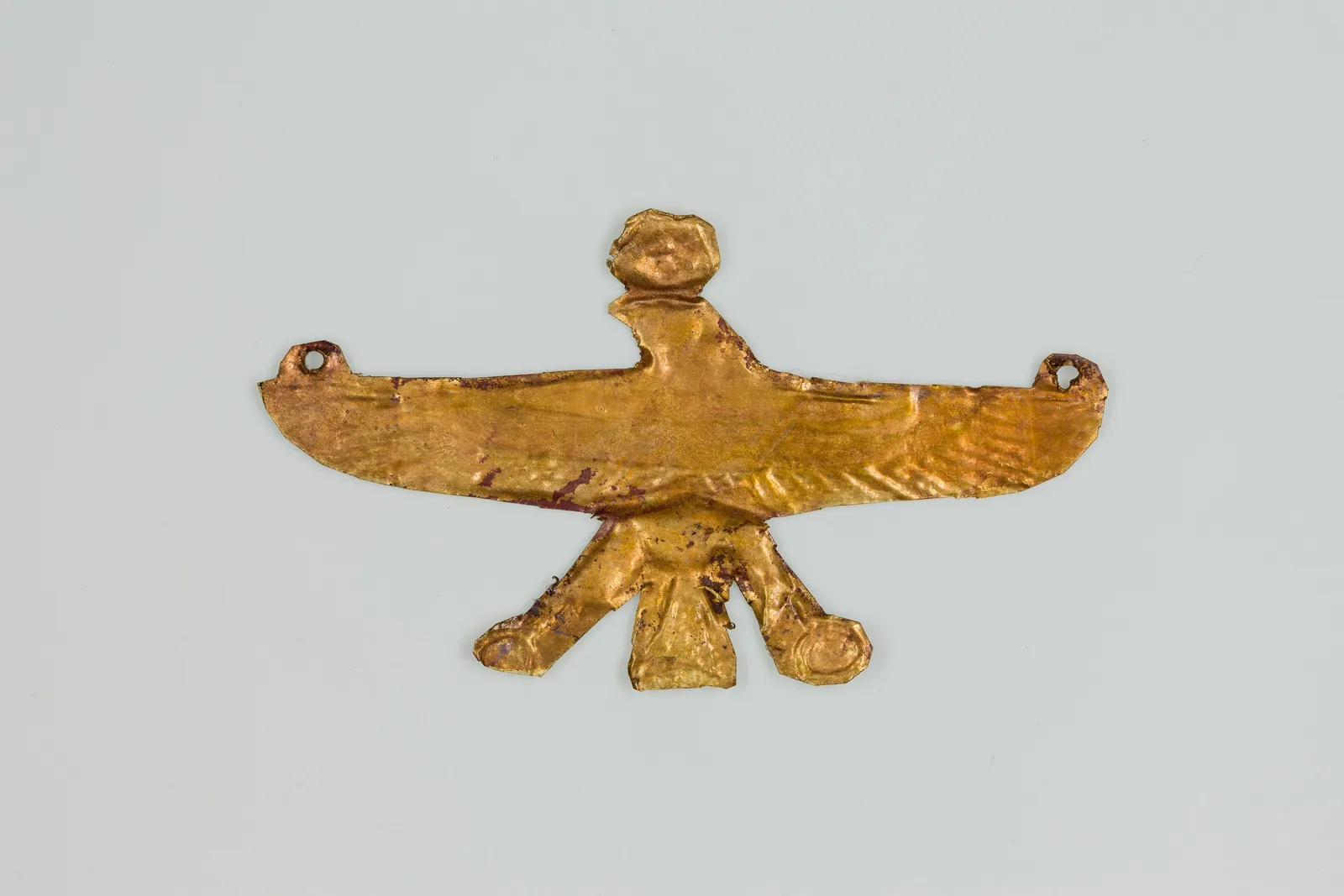
The most direct and universal sign of Ra is the solar disc. In jewellery it becomes a round medallion, often with rays around the edge or a raised centre, sometimes with the cobra-uraeus or wings at the sides. The winged solar disc, an ancient Egyptian symbol of protection and kingship, is especially expressive in a pendant: two outspread wings and a circle between them read as a sign of heavenly power stretched over the wearer. The disc is handy because it is spare and suits anyone: a circle with rays is clear without explanation and looks good both in a minimalist and in a richly worked form. In gold the solar disc inherits directly the Egyptian tradition, in which precisely this metal was the flesh of the sun god. Such a pendant means life, light and protection all at once, and it is worn by people close to warm, life-affirming symbolism.
The falcon of Ra
The falcon image of the god gives a second large motif. A pendant or signet ring with a falcon, especially with a solar disc above the bird's head, refers directly to the iconography of Ra-Horakhty, the daytime sun in full strength. The falcon means height, keen sight, flight above the ordinary and the link of sky with earth. This sign is closer to those who seek in a symbol the idea of striving upward, of a clear gaze and power over one's own life. The falcon silhouette is graphic and sits well in chasing and relief, which is why it is loved in men's signet rings and in restrained pendants. The image of the sun bird echoes the later Egyptian falcon god Horus, and it can be hard to draw the line between them, because in the form of Ra-Horakhty they merged. For jewellery this is rather a plus: the falcon with the disc carries two layers of meaning at once, solar and royal.
The scarab and the rising sun
The scarab is the morning, youthful aspect of the sun, the god Khepri, rolling the light toward dawn. As a jewellery symbol it is one of the oldest and most beloved in Egypt: scarabs were carved from stone in their thousands, worn as amulets, set into rings and placed in burials as a sign of resurrection. For the theme of Ra the scarab matters because it shows the sun at the moment of birth, and so it carries the sense of renewal, of new beginnings and of protection in the transitional moments of life. The rounded shape of the beetle sits well in a pendant or a ring, and on its flat underside the ancients often cut inscriptions and signs. Whoever wants to wear solar symbolism with an accent on rebirth rather than power chooses precisely the scarab. On how the dung beetle became one of the chief amulets of Egypt, it is worth reading a separate look at the meaning of the scarab in jewellery.
The uraeus and the Eye of Ra
The uraeus is the rearing cobra shown on the forehead of the god and the pharaoh, right by the solar disc. It stood for protection, royal power and the ability to scorch an enemy: by myth the cobra was the "Eye of Ra," a fearsome force separated from the god and sent to punish. To this belongs also the theme of the Eye of Ra, the solar eye that embodied the active, sometimes furious might of the sun, personified by fearsome goddesses. In jewellery the uraeus arrives as an element of the solar disc or as a cobra motif in its own right, a sign of protection and dignity. The Eye of Ra should be told apart from the better-known Eye of Horus: the first is tied to the sun and its punishing force, the second to the moon and to healing. This difference is easy to confuse, and the lunar eye is discussed in detail in the look at the meaning of the Eye of Horus. The uraeus and the solar eye carry the sense of protection, and so they are chosen as an amulet.
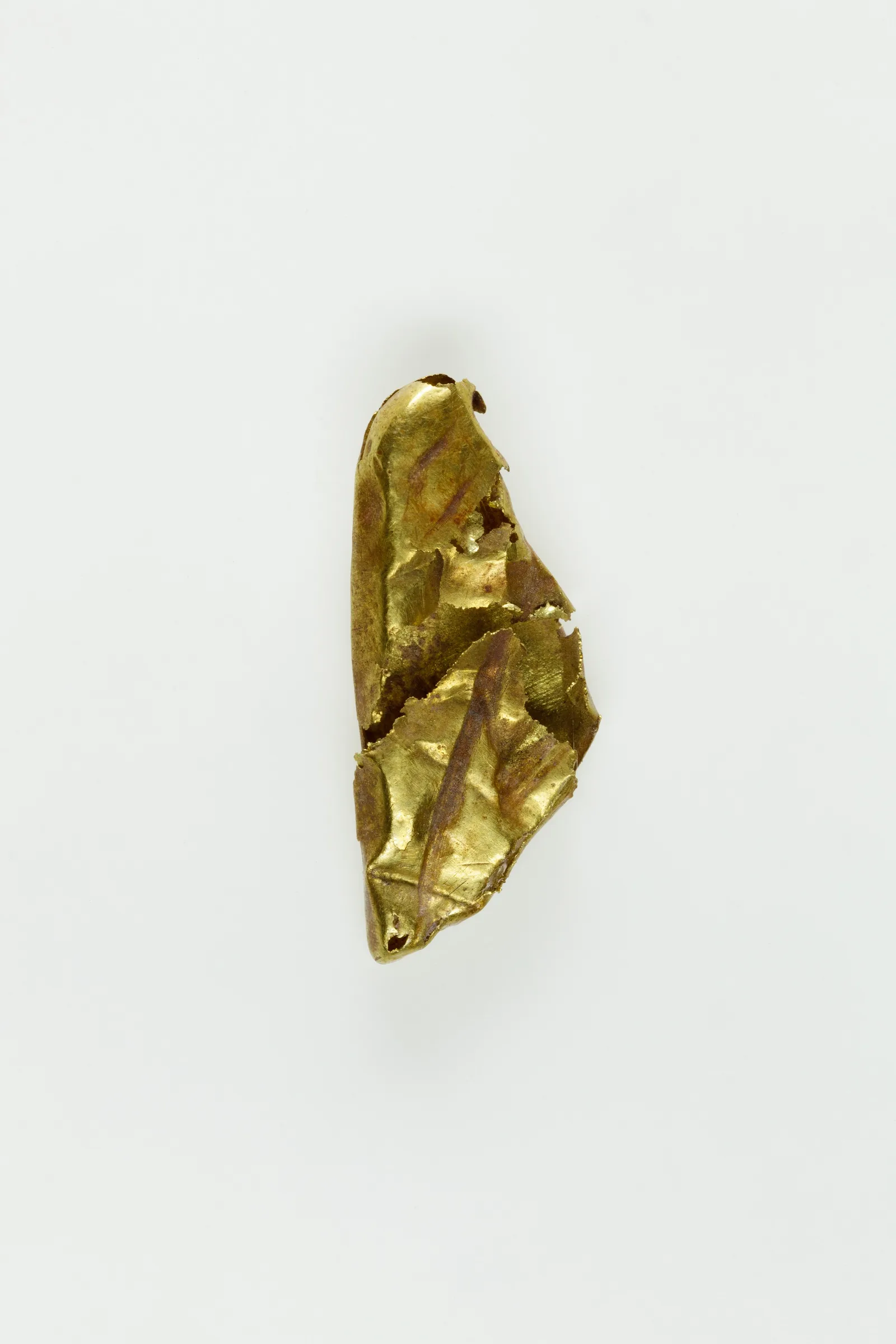
The choice of a particular sign depends on which layer of meaning is closer. The disc speaks of life and light, the falcon of height and power, the scarab of renewal, the uraeus of protection. It is good that they all fall into a single solar language, and in one set they can sit side by side without quarrel, since behind them stands one and the same sun in its different faces.
Leave your email, we'll send your discount code. No spam, unsubscribe anytime.
The code arrives by email, valid on your first order.
Materials for the symbolism of Ra
The image of the sun god calls for materials that hold the idea of light, warmth and durability. Each has its own logic and its own tie to the Egyptian tradition.
Gold, the flesh of the sun god
Gold is the chief material for the symbolism of Ra, and not by fashion but by direct sense. The Egyptians called gold "the flesh of the gods" and linked it precisely to the sun: the imperishable, ever-shining metal was the earthly substance of the sun god. Royal masks, the jewellery of pharaohs, temple vessels blazed with gold as a reflection of the light of Ra. And so a golden solar disc or falcon inherits the very heart of the cult: the warm yellow gleam repeats the colour of the midday sun. Gold does not tarnish, does not oxidise, keeps its look for millennia, and this permanence lies perfectly over the idea of a god who is born again each day. For those who wear the symbol of Ra as a sign of life, power and the eternal cycle, gold is the most precise choice. It is a premium, ceremonial material, and in it solar symbolism opens up most fully, linking a modern piece to a tradition thousands of years old.
Silver and electrum
Silver gives a cooler, lunar gleam, and in its pure form it argues a little with the solar theme. But silver has its own expressiveness: a graphic falcon or a stern disc in silver reads composed and modern, without the ceremonial pathos of gold. Sterling silver of 925 fineness is durable, wearable every day, and suits most people. Especially interesting is electrum, the natural alloy of gold and silver that the Egyptians knew and valued: with it they covered the tips of obelisks so they would flash brighter in the sun. Electrum gave a pale gold with a cool cast and was in its own way a solar material. Modern jewellery combining yellow and white metal aesthetically inherits this ancient idea. Gilded silver also works as a compromise: a warm solar tone on a durable silver base, more affordable than pure gold and closer to it in look.
Carnelian, lapis lazuli and turquoise
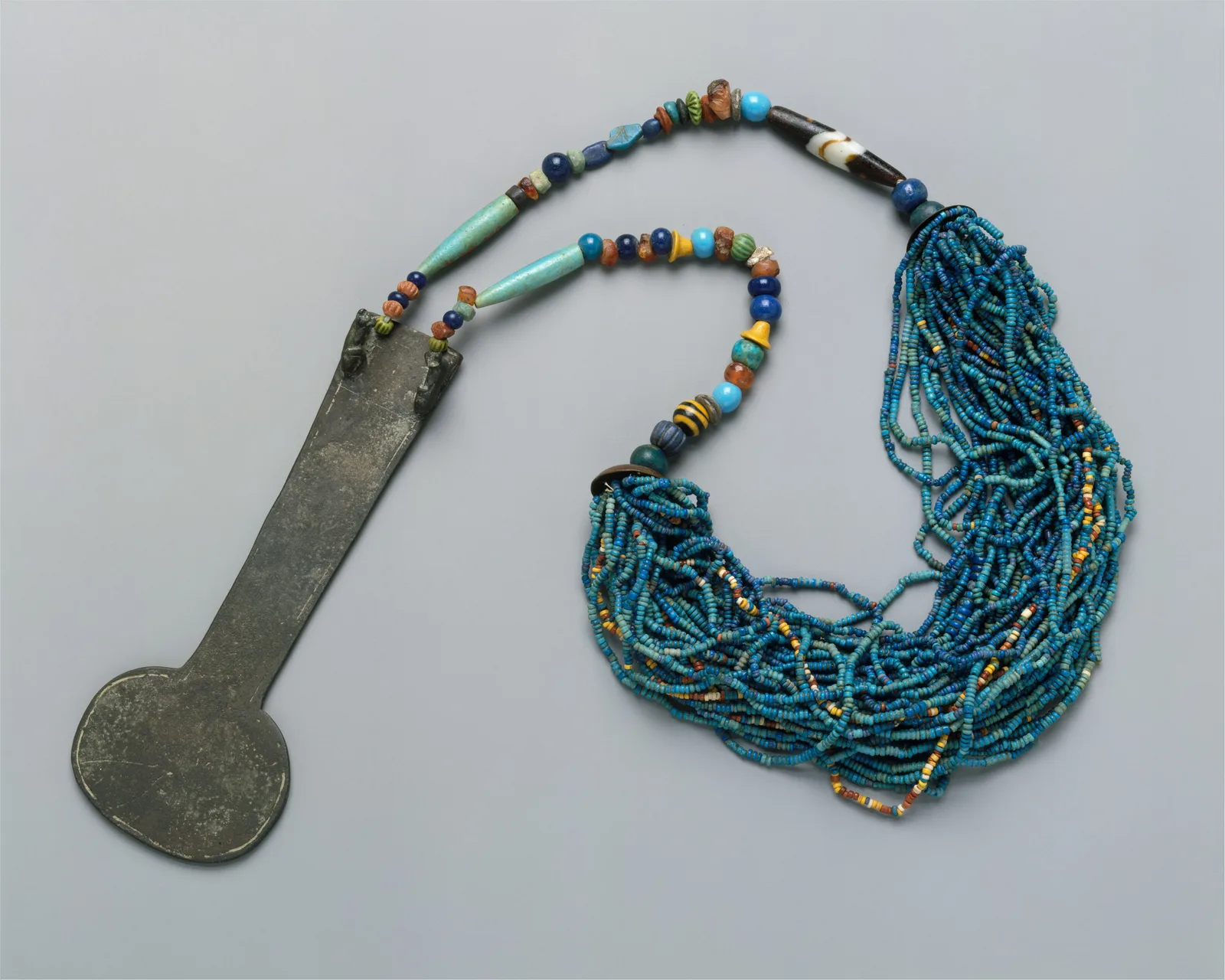
The Egyptian masters loved to combine metal with bright stones, and three of them were especially tied to solar symbolism. Carnelian, the red-orange stone of the colour of the setting sun, meant life, warmth and energy, and it was often set into amulets and rings beside gold. Lapis lazuli, the deep-blue stone with golden sparks of pyrite, recalled the night sky with its stars and served as an image of the heavenly sphere along which the solar barque sails. Turquoise gave the fresh blue-green tone of the dawn sky and was held to be a joyful, protective stone. The classic Egyptian combination of gold, carnelian and lapis is still read today as a sign of ancient Egypt: warm metal, fiery stone and the blue of the sky together convey the whole path of the sun from sunrise to night. In jewellery with the symbolism of Ra these stones add historical precision and depth of colour.
Enamel and oxidising
To convey the colourfulness of the Egyptian images, modern jewellery often uses enamel. Blue, red, turquoise enamel on gold or silver repeats that same palette of lapis, carnelian and turquoise that the ancient masters used, only in a more accessible way. An enamelled solar disc or scarab looks bright and festive, closer to the painting of sarcophagi than to bare metal. Another device is the oxidising of silver: the dark oxide in the hollows of the relief brings out the lines of the falcon, the rays of the disc or the pattern of the wings, making the image graphic and full of contrast. Oxidised silver with polished highlights conveys well the texture of feathers and the scales of the cobra. The choice between enamel and oxidising is a choice between festive colour and stern graphics. The first is closer to those who want a bright, "museum" image of Egypt, the second to those who prefer a restrained modern monochrome aesthetic.
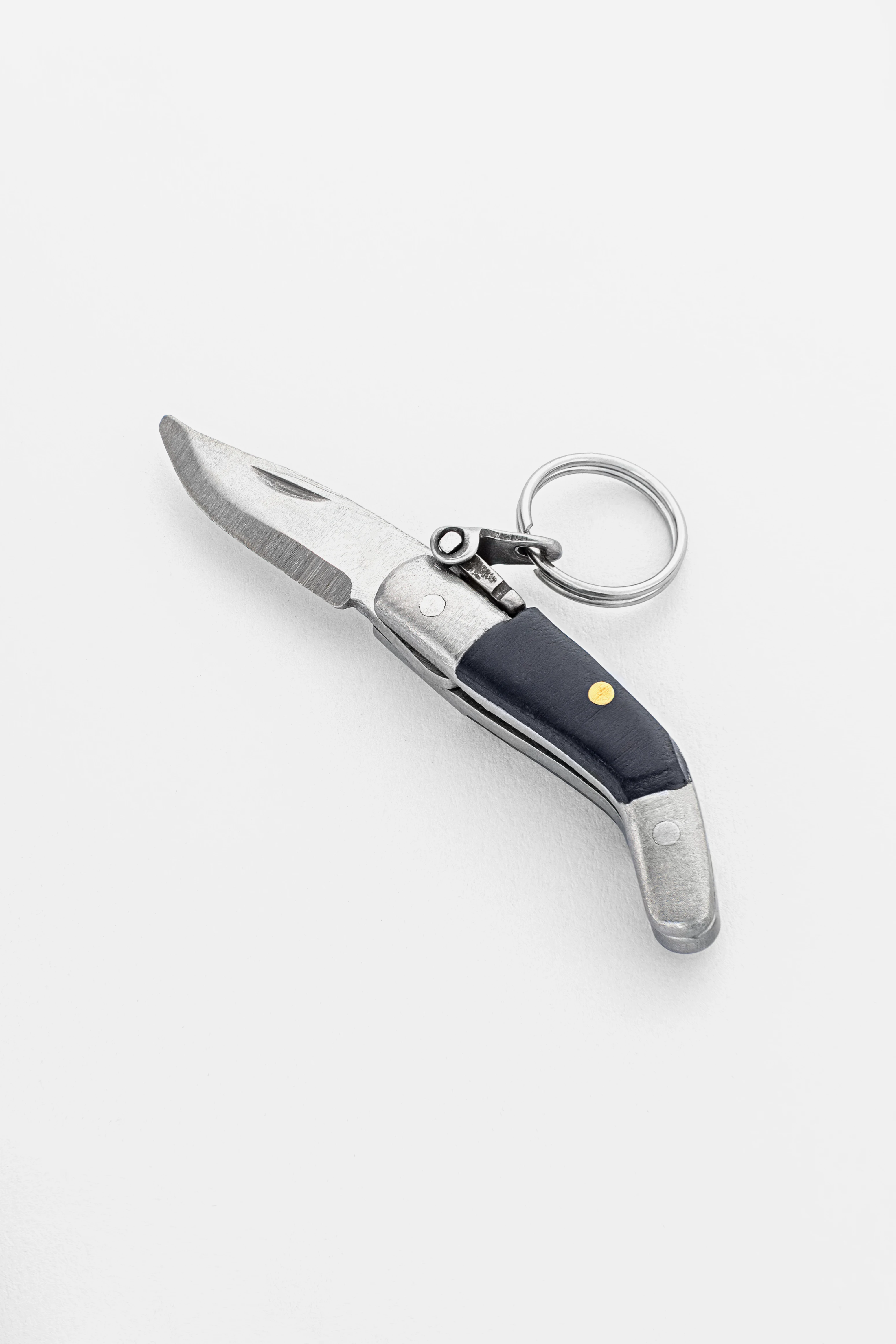
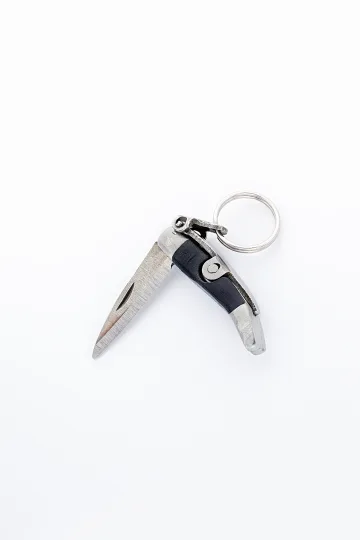
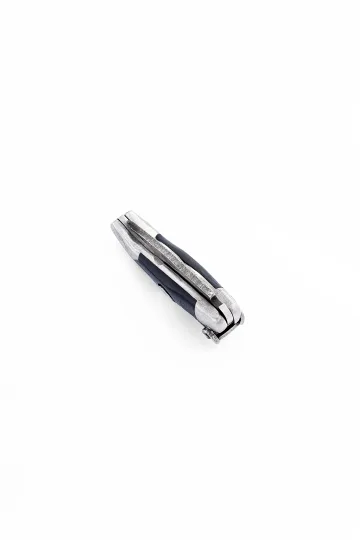
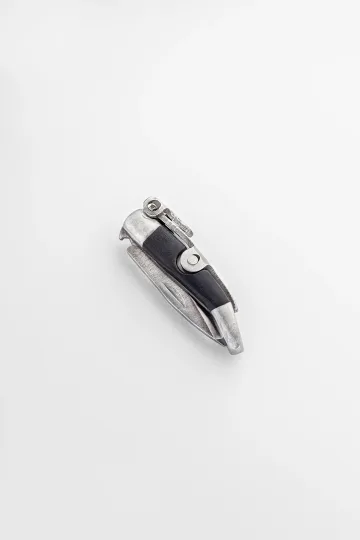
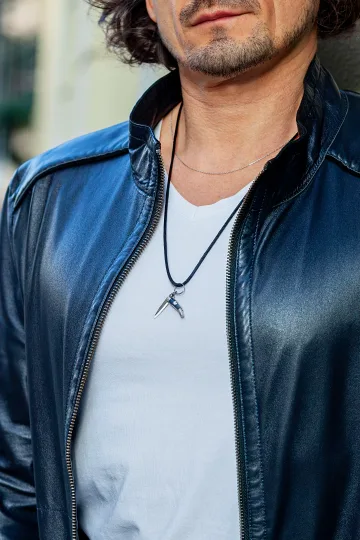
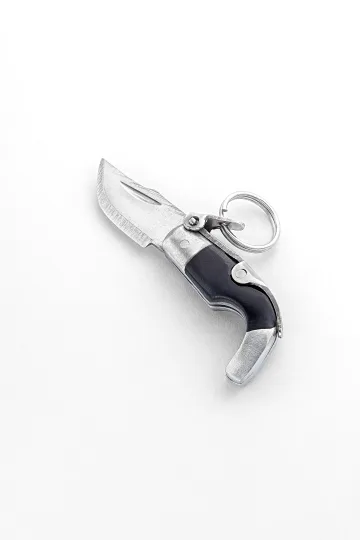
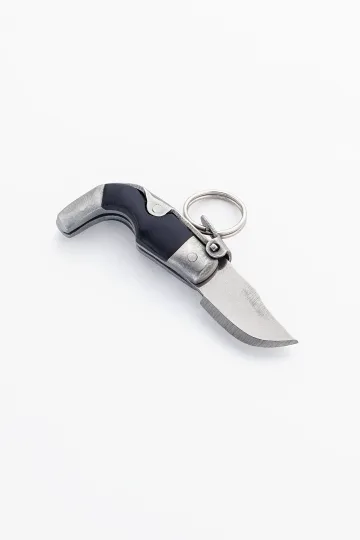
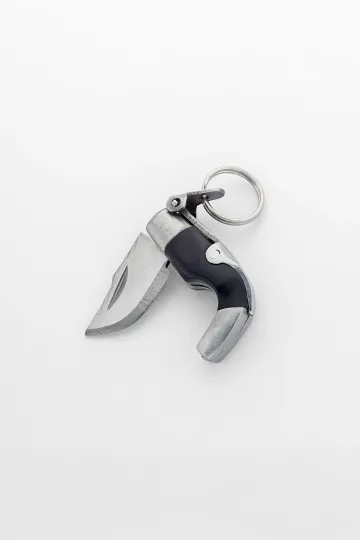
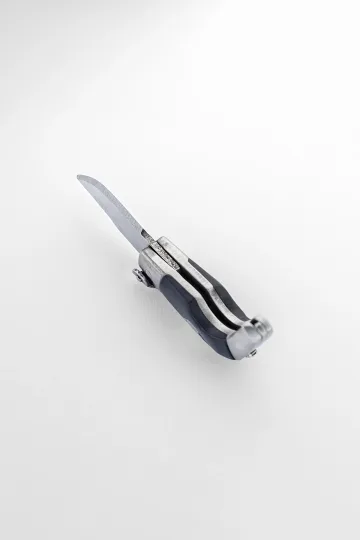
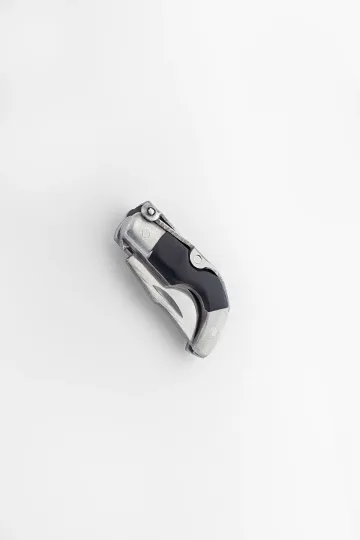
CAPAORA mini knife pendant
The 18th-century Spanish navaja in miniature: 40 mm of stainless steel, a real folding mechanism and a Palanquilla lock that clicks. An affordable gift to remember.
Authentic · Ships from Spain · 14-day returns
Whom the symbol of Ra suits and to whom it is given
The solar sign is not neutral, and in that lies its strength. It suits a particular cast of character and works well as a meaningful gift with a clear message.
Whom the symbol of Ra becomes
The symbol of the sun becomes people of warm, active energy, those inclined to lead and to warm those around them. The solar disc suits optimists and lovers of life, for whom light and life are close values. The falcon image of Ra is closer to people who are purposeful, with a clear gaze and a habit of looking ahead, those who value the height of a goal and power over their own course. The scarab suits a person on the threshold of change, beginning a new chapter, since it means birth and renewal. The uraeus and the solar eye are close to those who seek in a piece protection and dignity. The general rule is simple: the symbol of Ra amplifies what is already in a person, rather than ascribing what is foreign. It will not make a leader of an introvert, but to a person with an inner fire it will give a precise sign of their nature. Solar symbolism also suits well those who simply love the aesthetic of ancient Egypt and its rich history.
Ra as a gift
A piece with the symbolism of Ra is given with a clear and bright message. The solar disc is a wish of life, warmth and light, so it is fitting to give it for a birthday, as a sign of joy and energy. The scarab is ideal as a gift at the start of a new road: a change of work, a move, the beginning of study, recovery after illness, since it means rebirth and luck in a new venture. The falcon of Ra suits well an ambitious person, as a wish of height and clarity of purpose. The winged solar disc, with its sense of protection, is given as an amulet, a sign of patronage from above. To the gift it is worth adding a few words about the meaning, so the symbol opens up fully: the tale of a god who each morning overcomes the dark turns a piece into a warm word of encouragement. The solar theme is universal and clear to a person of any age and gender, which makes such a gift a safe bet.
Ra in culture and heritage
The solar cult of Egypt did not vanish with the pharaohs. Its images, its stones and the very idea of the sun as the highest force outlived millennia and spread far beyond the Nile. Let us follow where the solar heritage of Ra left a noticeable trace.
The Eye of Ra and the fearsome goddesses
The sun in Egypt was both light and a heat capable of scorching. This dangerous side was personified by the "Eye of Ra," the solar eye, imagined as an independent force separated from the god and sent to punish his enemies. The Eye of Ra was the name given to several goddesses at once: the lion-headed Sekhmet, whose breath carried heat and plague; the gentle Hathor, goddess of love and joy; the cat Bastet. By myth the enraged eye once left the god, and it had to be brought back by cunning and coaxing, its fury softened. In this pair, gentle Hathor and furious Sekhmet, the Egyptians expressed the double nature of the sun: it both nourishes and burns. From this the solar sign carries both warmth and a shade of fearsome protection.
Obelisks beyond Egypt
The stone needles of Heliopolis proved too striking to stay in place. Already in antiquity rulers carried off Egyptian obelisks as a sign of power over the land of the sun: several were taken to Rome, where they still stand in the squares, among the tallest surviving in the world. Later, in modern times, obelisks were moved to other great cities too, where they adorn embankments and squares. So the sign of the first solar ray, born in the cult of Ra, became one of the most recognisable silhouettes of world architecture, though few passers-by remember its origin. The form outlived the faith that gave rise to it.
The winged disc through the ages
Another solar image of Egypt spread across the whole ancient Near East: the winged disc, the sun with outspread wings. In Egypt it meant protection and kingship, heavenly power stretched over the sovereign. Neighbouring peoples took up this sign and fitted it to their own gods, so that the winged sun is met on monuments far beyond the valley of the Nile. Its longevity is understandable: the image is simple, strong and clear without words. Wings stretched over a circle read as patronage from above in any culture. In jewellery the winged disc has lived on to our day precisely thanks to this universal clarity, remaining one of the most expressive of solar motifs.
Ra and the neighbouring Egyptian symbols
The sun god existed not in solitude but in the dense network of images of ancient Egypt. Comparison with the neighbouring symbols helps to grasp the place of Ra more precisely and not to confuse similar signs.
Ra and the ankh
The ankh, the Egyptian cross with a loop at the top, is the sign of life, one of the most recognisable symbols of Egypt. Its tie to Ra is direct: the sun was the source of life, and the ankh its sign, so in images the gods often hold out the ankh to the nose of the pharaoh, granting him the breath of life. On late solar images the rays of the Aten ended in hands holding the ankh, literally lowering life from the sky. The difference is that Ra is a deity, an acting force, while the ankh is an abstract sign-concept, life itself as such. They are often worn together: the solar disc as the source, the ankh as the gift. If you want to sort out the sign of life itself, its history and meaning, a separate look at the meaning of the ankh, the Egyptian cross of life helps. Together the sun and the ankh form a finished statement about life and its heavenly source.
Ra and the scarab
The scarab and Ra are not rivals but different faces of one sun. The scarab embodies the god Khepri, the morning rising light at the moment of birth, while Ra is the sun at its zenith, in full daytime strength. In essence the scarab is the youth of the same sun, its dawn aspect. And so in symbolism they complement each other: the disc of Ra speaks of day and power, the scarab of renewal and beginning. To wear them together is to hold the whole cycle in a single image, from birth to flourishing. The difference is in the accents: the scarab is closer to the theme of luck, resurrection and protection in transitional moments, and Ra to the theme of life, light and supreme force. Whoever wants a gentle, protective sense chooses the beetle; whoever wants the sovereign and solar chooses the disc. Both, meanwhile, belong to one solar circle of images.
Ra and the Eye of Horus
The Eye of Horus and the Eye of Ra are easy to confuse, but behind them stand different heavenly lights. The Eye of Horus, the Wedjat, is tied to the moon, to healing and to the restoring of wholeness: by myth the damaged eye of the falcon god was healed, and so it became a sign of health and protection. The Eye of Ra, by contrast, is solar; it embodies the active, at times furious force of the sun, that fearsome might which punishes the god's enemies. Both eyes mean protection, but with a different temperature: the lunar eye of Horus is gentle and healing, the solar eye of Ra is blazing and warlike. In jewellery it is the Eye of Horus that is met more often, having become a popular amulet, and its story is discussed in detail in the material on the goddess Isis and the Egyptian pantheon in jewellery. Understanding this difference, it is easy to choose the right sign: solar punishment or lunar healing.
Ra and Anubis
Anubis, the god with the head of a jackal, was in charge of embalming and of the soul's road in the afterworld, and at first glance he is far from the solar Ra. But their paths crossed at the most important place in the Egyptian picture of the world, in the underworld realm of the Duat. By night Ra sailed through the same world of the dead over which Anubis presided, and the solar light gave the souls of the dead hope. The difference in roles is clear: Ra is the god of life, light and day, Anubis the god of death, darkness and passage. Together they outline the full circle of Egyptian existence, from sunrise to burial and back to a new dawn. In symbolism the solar sign and the funerary sign form opposite poles: one about life and energy, the other about protection at the threshold of death and about a worthy passage. Understanding this pair helps to see that the Egyptian gods added up to a single system, in which light and dark were parts of one whole. On the god of embalming himself, his jackal form and his role as guide of souls through that same night country over which Ra sailed, there is a detailed look at the meaning of Anubis in jewellery.
The comparative table shows the main thing: Egyptian symbolism is not a set of scattered signs but a connected network, in which the sun holds the central place. Ra stands in the middle of this network as the source of life and light, around which the signs of protection, renewal and passage are arranged. This is exactly why solar images combine so easily with other Egyptian motifs in a single piece or set.
Around the sun god, as around everything Egyptian, a good deal of confusion and simplification has gathered. Let us work through the most frequent misconceptions, so as to wear the symbol with a clear understanding rather than with common myths. Some of them mix up different gods, some transfer to Egypt notions foreign to it, some simply distort the history of the cult.
Send a friend a discount code, they save on their first order.
Facts that surprise
The history of the sun god holds details that change one's view of familiar symbols. Here are a few facts that rarely make it into short retellings.
First. The Egyptians saw in the sun not one god but three, matching its positions in the sky. In the morning it is the scarab Khepri, rolling the light toward dawn; by day the falcon Ra in full strength; in the evening the elder Atum, retiring to rest. Three names described one path of the sun through the day: birth, flourishing and old age.
Second. The setting of the sun was for the Egyptian not an end but the beginning of the most dangerous part of the journey. By night Ra descended into the underworld and sailed through its twelve regions, matching the hours of the night, fending off the attacks of the serpent of chaos. Sunrise meant that the god had once again won the night battle.
Third. The enemy of the sun, the serpent Apophis, could not be killed forever. He embodied chaos itself, and chaos is indestructible; it can only be fended off again and again. And so the battle repeated each night without end, and the priests even burned wax figures of the serpent, aiding the god with spells.
Fourth. Gold the Egyptians called "the flesh of the gods" and linked precisely to the sun. The imperishable, ever-shining metal was held to be the earthly substance of the sun god, and so royal masks and jewellery were made of gold as reflections of the light of Ra.
Fifth. Obelisks, those stone needles with gilded tips, were an enlarged symbol of the first solar ray. Their point was covered with electrum so it would flash brighter at dawn, catching the first and last light of the day.
Sixth. In the depth of the night the sun god united with Osiris, lord of the dead, and from this meeting both were renewed. Night was not emptiness but the time of a great mystery, when the sun laboured in the unseen world for the sake of its morning return.
Seventh. When the pharaoh Akhenaten tried to replace all the gods with the single solar disc of the Aten, he quarrelled not with the sun but with the form of its cult. After his death the old gods returned, and Ra again took his place, showing how deeply the sun was woven into Egyptian life.
Frequently asked questions
Who is Ra in Egyptian mythology?
Ra is the supreme sun god of ancient Egypt, creator and lord of the world. The Egyptians believed that each day he sails across the sky in the solar barque, and by night descends into the underworld, where he fights the serpent of chaos Apophis. He was shown as a man with the head of a falcon and a solar disc above his head. The pharaoh was called "son of Ra," and the god himself was held to be the source of life, light and order.
What does Ra symbolise?
Ra means life, light, order and power. The sun gave Egypt everything needed for existence, so the sun god was received as the source of life. His daily victory over the serpent of chaos made him a symbol of order against ruin. As king of the gods he meant supreme power, and the eternal cycle of sunset and sunrise gave him the sense of rebirth and immortality.
How does Ra differ from Amun-Ra?
Ra is the original sun god, worshipped in Heliopolis. Amun is the god of the city of Thebes, whose name meant "the hidden one." When Thebes rose, the priests joined Amun with Ra into the single supreme deity Amun-Ra, to bind the ancient solar might to a new political force. In essence it is the same sun god under a combined name, who became king of the gods in the age of the New Kingdom.
What is the solar barque of Ra?
It is the vessel on which Ra sailed across the sky and through the underworld. By day he used the barque Mandjet, rising from the east to the zenith and descending to the west; by night he changed to the barque Mesektet and entered the realm of the dead. The Egyptians imagined the sky as a river along which the solar bark glides, echoing earthly sailing on the Nile. Models of such barques were placed in tombs.
Who is Apophis and why did Ra fight him?
Apophis is a gigantic serpent, the embodiment of darkness, non-being and chaos. Each night he lay in wait for the solar barque in the underworld, seeking to overturn it and keep the sun from rising. Ra, with the help of other gods, fended off the serpent, and at dawn the sun came out a victor. Apophis could not be destroyed forever, because he personified chaos itself, and so the battle repeated each night.
How does the Eye of Ra differ from the Eye of Horus?
The Eye of Ra is solar; it embodies the active, at times furious force of the sun, that fearsome might which punishes the god's enemies. The Eye of Horus, the Wedjat, is tied to the moon, to healing and to the restoring of wholeness. Both eyes mean protection, but with a different temperature: the solar eye of Ra is blazing and warlike, the lunar eye of Horus is gentle and healing. In jewellery it is the Eye of Horus that is met more often, as an amulet.
Which material is best for a piece with the symbol of Ra?
Gold suits ideally: the Egyptians called it "the flesh of the gods" and linked it to the sun, so a golden disc or falcon inherits the very heart of the cult. Silver gives a stricter, graphic look, while electrum and gold plating give a warm tone at a reasonable cost. The classic Egyptian combination of gold with carnelian and lapis lazuli adds historical precision and conveys the whole path of the sun from sunrise to the night sky.
Can a person of any faith wear the symbol of Ra?
Yes. The solar disc and the falcon are above all cultural and historical images, clear in all corners of the earth, since the sun everywhere meant life and warmth. They are worn by people of the most varied views, including those who are simply close to the aesthetic of ancient Egypt. The symbol demands no particular faith and reads as a sign of life, light and inner steadfastness.
Conclusion
Ra is a rare symbol behind which stands a whole picture of the world. For the Egyptian the sun was not a law of nature but a living god, each day making a dangerous journey: by day across the heavenly river in a golden barque, by night through the realm of the dead, where the serpent of chaos lay in wait. And the fact that in the morning the light rose again above the horizon was not routine but a victory won in battle. In this picture lies the chief sense of the solar sign: light is not given for free, it is won back anew each day.
In jewellery Ra works on several levels at once. The solar disc speaks of life and light, the falcon of height and power, the scarab of renewal and new beginnings, the uraeus of protection and dignity. Behind each of these signs stands one and the same sun in its different faces, so they fall into a single warm language, clear without explanation. Gold, "the flesh of the sun god," opens up this symbolism most fully, linking a modern pendant to a tradition thousands of years old.
What to pour into the solar sign each person decides for themselves: the joy of life, steadfastness before chaos, the ambition of height or the hope of rebirth. Ra honestly holds all these meanings, because for the Egyptian he was everything at once, the beginning and the footing of the world. To wear his image is to continue the ancient gesture of a person who met each dawn as a small miracle and knew its worth.
Silver, gold, the symbolism of ancient gods, protective amulets, paired and gift sets.
Buying it as a gift? Each one arrives ready to give.
 A branded Zevira box and a little card come with every order.




About Zevira
Zevira is jewellery with meaning: symbols, amulets, signs of strength and protection in clean forms of silver and gold. We love things that carry a story thousands of years long, and we bring it into modern design without needless pathos. The solar disc, the falcon, the scarab and other signs of ancient Egypt sit in the catalogue beside minimalist pendants and paired sets, so that everyone finds their own symbol.