Thoth: Egyptian god of wisdom, writing and the moon, symbol meaning and jewellery
The ibis-headed god gave Egypt writing and counting, kept the record at the judgement of souls and made peace between quarrelling gods. He was held to be the keeper of the word, of measure and of the lunar calendar. Thoth stood behind every scribe and behind every written scroll, while his bird wandered the marshes of the Nile under the light of the moon.
Who Thoth is: the ibis and the baboon
Thoth is the ancient Egyptian god of wisdom, writing, counting and the moon, patron of scribes, magic and knowledge. In Egyptian his name sounded like Djehuty, and the familiar "Thoth" reached us through the Greeks. In the Egyptian pantheon he held a place all his own: not a thunderer and not a warrior, but the one who keeps the records, guards the measure and knows the power of the word. It was to Thoth that Egyptians traced the invention of writing, the division of time into months and the very ability to call things by their true names. They believed writing to be a gift of the divine rather than a human invention, and the giver was Thoth.
The god had two chief forms, and both are tied to the night light. Most often he was shown as a man with the head of a long-billed ibis, less often wholly as a baboon. For an Egyptian these were not masks but different bodies of one god, each carrying its own sense. Below we unpack how these images read and why the ibis in particular became the sign of wisdom.
Wear the symbol, don't just read about it. These are in stock:

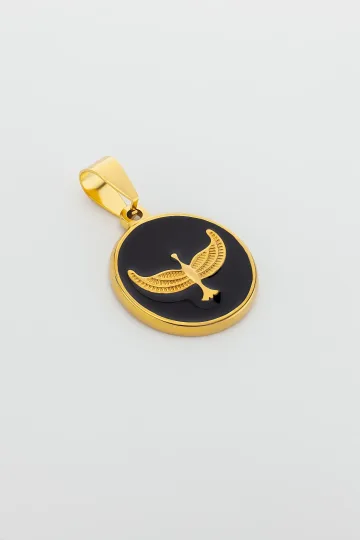






The ibis-headed man with a scribe's palette
The most recognisable form of Thoth is a slender man with the head of an ibis, the sacred marsh bird with a curved bill. In his hands he often holds a scribe's palette and a reed pen or a scroll, and sometimes a notched palm rib for counting the years. This kit speaks for itself: before us is not a warrior nor a ploughman but a man of letters, a reckoner and a keeper of records. The long curved bill of the ibis reminded Egyptians of a pen dipped in ink and of the shape of the crescent, so the bird linked itself at once to writing and to the moon. A pendant or a gem with an ibis-headed figure was read in antiquity as a sign of learning and of patronage over knowledge.
The baboon as the god's second form
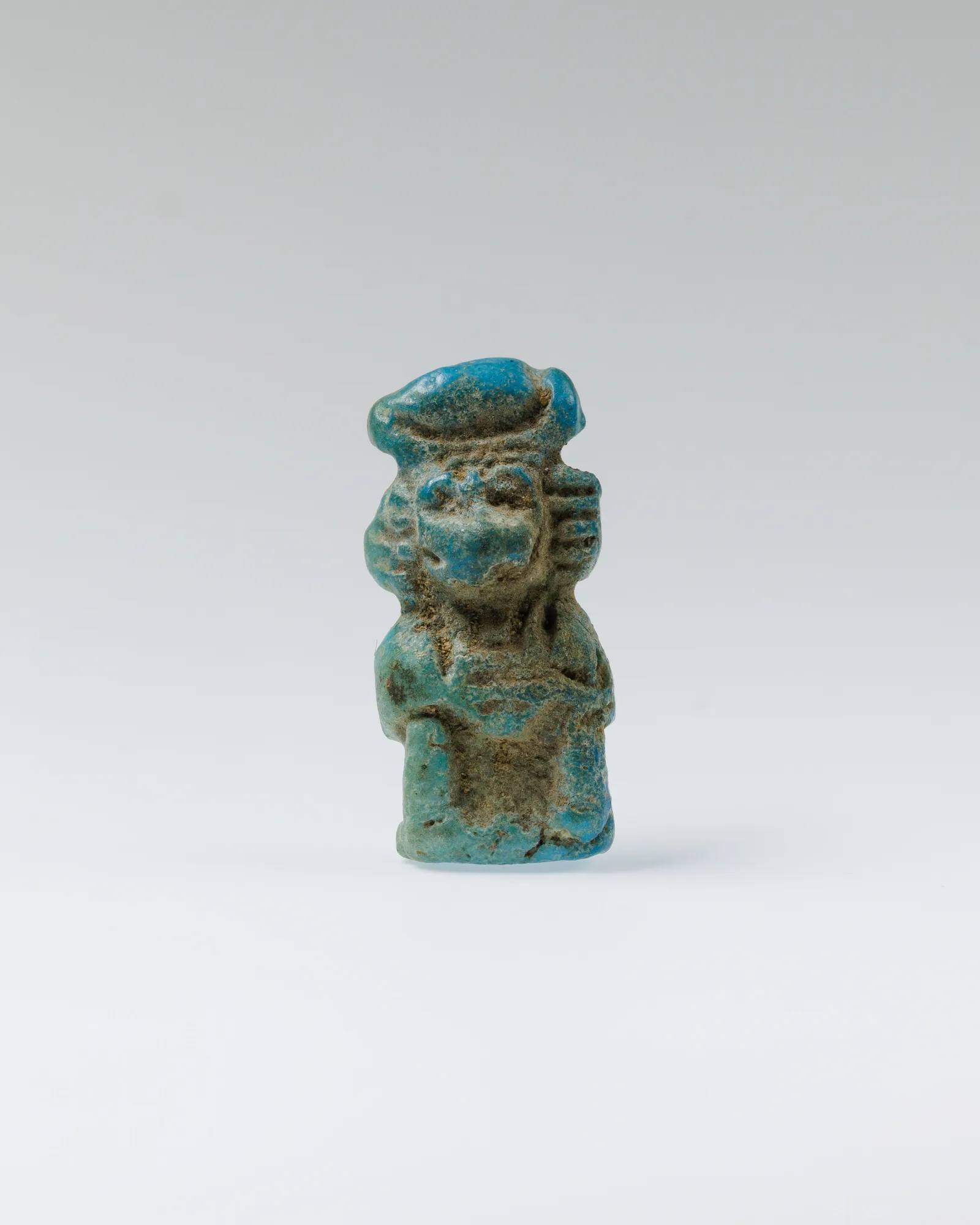
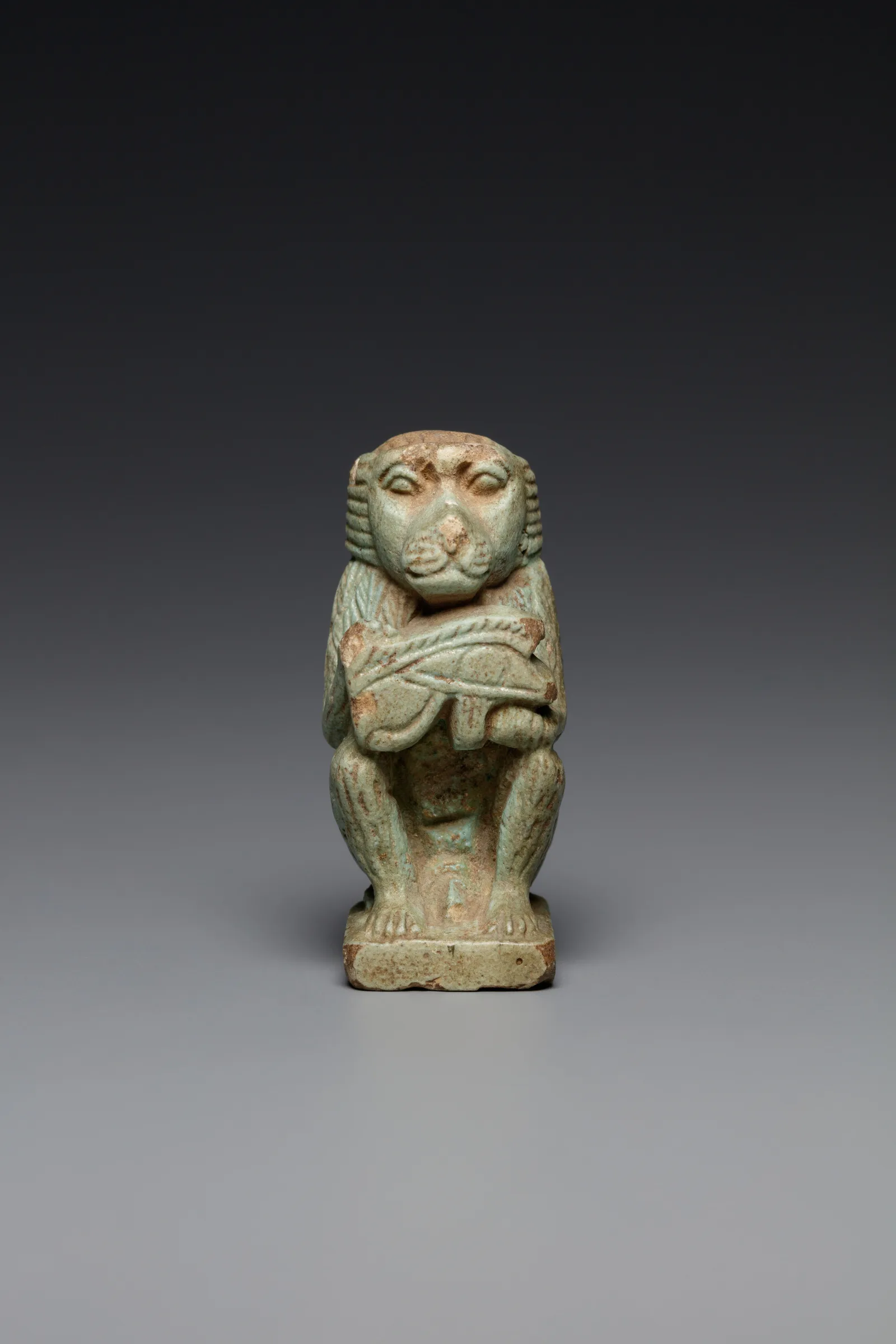
The second form of Thoth is the baboon, most often sitting on its haunches with its muzzle raised. Egyptians noticed that troops of baboons let out loud cries at dawn to greet the sun, and read this as a greeting to the gods and a share in the order of the world. So the baboon became an animal of wisdom and vigilance, and through that an animal of Thoth. In baboon form the god was often shown at the scales in the scene of the judgement of the dead, where he watches over the accuracy of the weighing. Both forms, ibis and baboon, sat calmly side by side and underscored different facets of one god: the fineness of writing and a sharp attentiveness.
The morning cry of the baboons the Egyptians tied to sunrise itself and to the sun god Ra: the apes were thought to raise their paws to the dawning light and to be the first in the world to greet its appearance. In temple scenes rows of baboons were often shown just so, forepaws lifted to the sun as if in a shared prayer. Through this image Thoth-the-baboon became bound up with the daily march of the heavenly lights and with the order that is re-established at every dawn. The god's lunar tie never vanished either: the seated ape was sometimes crowned with the same lunar disc in the cup of a crescent as the ibis-headed figure.
The lunar disc and crescent on his head
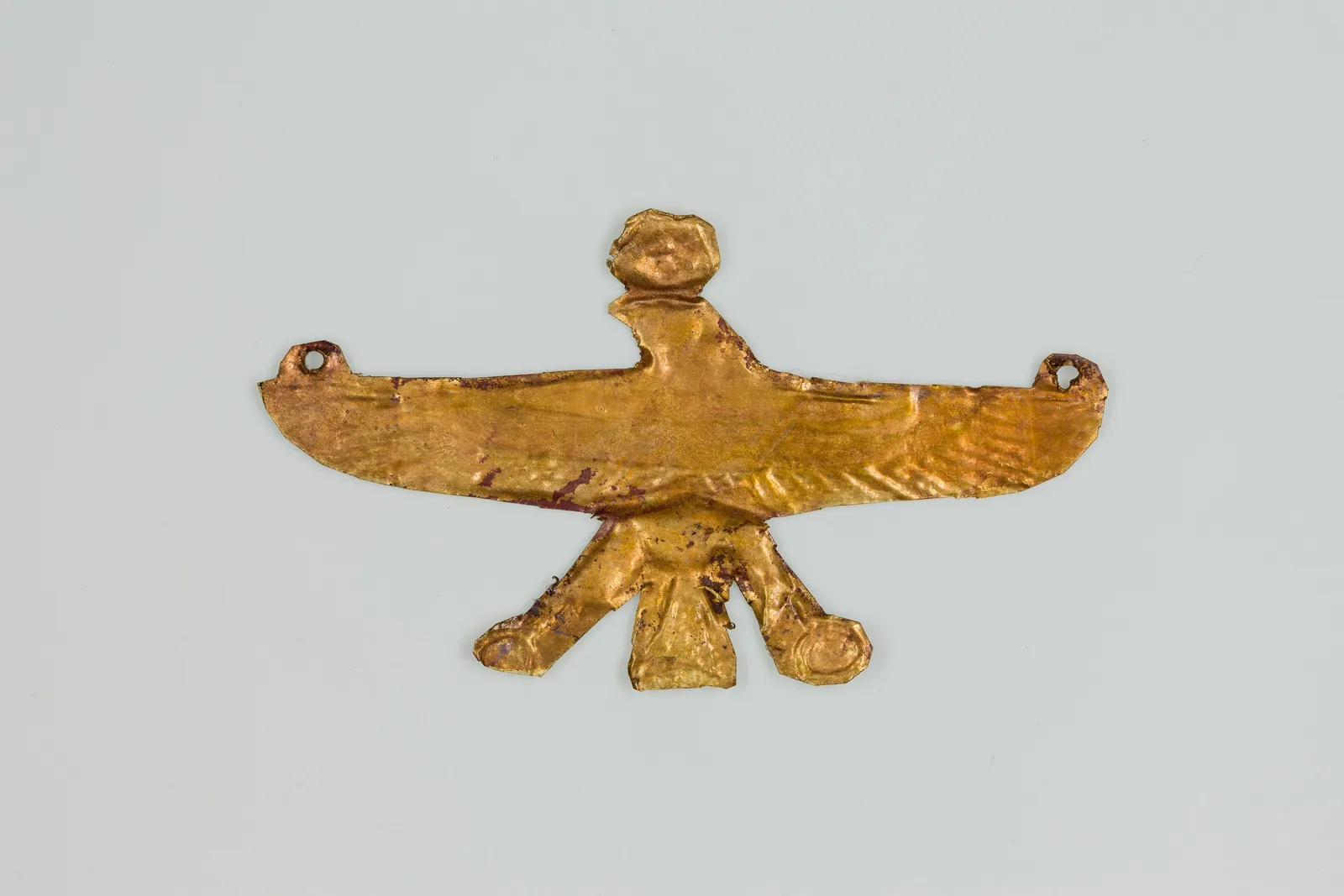
Above Thoth's head a lunar sign was often placed: a full disc resting in the cup of a young crescent. This pointed directly to his role as a lunar deity. In the Egyptian picture of the world the moon answered for the counting of time, for it was by its phases that the months were reckoned, and Thoth as the god of measure and order naturally attached himself to the night light. His lunar headdress set him apart from the solar gods and stressed that his element was not the heat of noon but the quiet light by which records are kept and the passage of time is watched. In jewellery this lunar motif lives on: a crescent above a figure or on its own reads as a reference to Thoth.
It is worth explaining why the moon fastened itself so firmly to the god of counting. The lunar month, with its changing phases, was for Egyptians the first natural way to divide and measure time: from new moon to new moon ran a clearly marked stretch that is easy to count. The priests set the temple feasts and the times of service by the moon, and with them the whole ritual life of the year. Thoth as keeper of measure naturally headed this reckoning, and the lunar disc on his brow was for Egyptians not an ornament but a badge of office: before us is the one who marks out time. In jewellery this detail carries the same double sense, pointing at once to the night light and to the idea of a counted, ordered span.
Why the ibis in particular became the sign of wisdom
The choice of the ibis for the role of the bird of wisdom is no accident and is easily explained. The ibis feeds in the shallows, methodically probing the mud with its curved bill, and this unhurried, precise motion the Egyptians tied to the attentiveness and patience of a scribe. The bird keeps to the water, to the border of land and flood, and borders and measures are exactly the domain of Thoth. Finally, the curve of the bill recalled both the scribe's pen and the sickle of the moon, drawing writing, counting and the night light into one image. Ibises were honoured so highly that they were bred at the temples and, after death, embalmed by the million, whole underground necropoleis being set up for the bird. So the living marsh bird became the visible sign of the god of knowledge.
The history of Thoth's cult
The worship of Thoth reaches into the deepest layer of Egyptian history and runs without a break for thousands of years, from the early dynasties to Greco-Roman times. Over these centuries the god's image gathered detail, merged with local traditions, and at the close of antiquity gave rise to a whole current of thought that outlived Egypt itself. Let us go through the main milestones of that long road.
Hermopolis, the city of eight gods
The chief centre of Thoth's cult was a city in Middle Egypt that the Egyptians themselves called Khemenu, "Eight," and that the Greeks later renamed Hermopolis. The name "Eight" is linked to a local tale of eight primordial deities, the Ogdoad, who personified the original chaos before the making of the world: the abyss, darkness, water and the invisible. Thoth was honoured here as lord of the city and orderer of the cosmos that came out of that primal state. In the temples of Hermopolis sacred ibises and baboons were kept, and the surrounding necropoleis hold countless mummies of these animals. Pilgrims came here to bring the god a bird as a go-between and to leave a plea for clarity of mind, luck in a lawsuit or a sure hand in writing. The city's priests were famed for their learning, kept watch on the sky and guarded the scrolls, and it was this reputation as a centre of knowledge that fixed on Hermopolis the image of a dwelling of wisdom. From here the fame of Thoth spread across all Egypt, and it was this city that gave the Greeks the reason to identify the local god with their own Hermes, renaming Khemenu as Hermopolis.
Scribe of the gods and lord of measure
In myth Thoth held the office of scribe of the gods and ran the heavenly chancery. He recorded the decisions of the council of gods, kept the count of the years of reign, measured out spans and guarded the scrolls of the laws of the world. He was closely tied to the goddess Maat, the embodiment of truth, order and justice: Thoth was held to be the one who knows and safeguards the measure, and Maat the one who is that measure. Such a role made Thoth the patron of all who dealt with word and number: scribes, reckoners, healers, priests and keepers of archives. An Egyptian official began his working day with a short bow to Thoth, because on his favour, it was believed, depended the accuracy of the hand and the clarity of the mind.
Alongside Thoth the Egyptians honoured Seshat, goddess of writing, counting and measure, called his female counterpart. Seshat kept the chronicle of royal years, measured out with a cord the foundations of temples at their laying, and recorded on the leaves of the sacred ished tree the span allotted to the pharaoh. If Thoth answered for the word and for knowledge in general, then Seshat embodied the exact record and the measuring: together they covered the whole domain of letters, from the heavenly chancery to the laying-out of a building site. Such a paired deity shows once more how highly the Egyptians set the skill of counting, measuring and setting a deed down in writing.
Thoth and Hermes Trismegistus
When Egypt entered the Greek and then the Roman world, foreigners began to seek matches for the local gods among their own. Thoth, with his office of messenger of the gods' will, patron of writing and guide of souls, was identified with Hermes. From that fusion was born the figure of Hermes Trismegistus, the "Thrice-Greatest," under which was understood precisely the Egyptian god of wisdom in Greek dress. To him were ascribed ancient secret knowledge about the stars, numbers, nature and the soul. The epithet "thrice-greatest" underscored his exceptional standing: this image was thought of as the source of all wisdom, older than Greek philosophy. So the name of an Egyptian god became the signboard for a whole body of teachings.
Hermeticism and the legacy of the name
Under the name of Hermes Trismegistus, in the first centuries of the Common Era, a corpus of philosophical and mystical texts took shape, later called Hermetic. Out of it grew a current known as Hermeticism, which influenced late antiquity, medieval alchemy and thinkers of the Renaissance. The famous "Emerald Tablet," with its formula about the correspondence of the higher and the lower, was also linked to this name, though it took shape long after the pharaohs. Here it is worth keeping an honest frame: the texts of Hermeticism are already Greco-Roman and medieval thought, not genuine records of predynastic Egypt. But the very fact that the European tradition for centuries traced secret wisdom back to the Egyptian Thoth shows how strong his image as god of knowledge proved to be.
Thoth loves silver and lunar cold, a fine line at the collarbone. A gold ibis shouts, but this god speaks quietly.
How to wear Thoth: what to pair it with, metal and chain length
Thoth is a quiet sign, and I build a look to match: not for show, but for the attentive eye. Silver and a lunar line at the collarbone suit him better than loud gold. I have gathered here what I advise clients by occasion.
What to wear Thoth with every day? For an everyday look I recommend a fine silhouette ibis pendant or a crescent of about two centimetres on a chain of medium length, over plain fabric. Grey, graphite, navy hold the cool gleam of silver cleanly, and the fine drawing of a feather reads best against a smooth backdrop. A busy print argues with the line of the bill, so I choose it last. Such a pendant does not catch the eye of a random passer-by, and that is exactly what one wants from the sign of Thoth.
Which metal and motif to bring together? Silver I advise as the base: its cool gleam answers the lunar nature of the god, and a crescent in silver sounds whole, metal and subject about one thing. Oxidised silver I choose when I want to bring out the graphic of an ibis feather, the darkened hollows giving the sign an almost technical-drawing character. Gold or plating I recommend if a warm contrast to the lunar theme is wanted, but then I keep one metal throughout the look and do not mix silver with gold in a set.
How to choose the chain length for the neckline? I match the length to the neckline. Under an open collar I advise a short chain of around forty-five centimetres: the ibis or crescent lands in the collarbone zone, where the line reads most clearly. Under a closed top I recommend dropping the pendant to fifty or fifty-five centimetres, onto the upper chest. The lunar motif enters a layered look well, so lengths of sixty to seventy centimetres I keep for several fine charms on chains of different lengths.
What size of sign to choose? I match the size to the task. A small fine pendant of one and a half to two centimetres I recommend as a personal quiet sign under a shirt or in a restrained setting; it does not stick out and is clear only to the owner. A medium of two and a half to three centimetres I advise as a standalone accent on a plain backdrop, where the drawing of the feather has room to open up. A large figure of a scribe or a baboon I choose more rarely and only under a simple top, or the miniature is overloaded with detail.
What suits weekdays, and what suits going out? For weekdays and a working setting I choose a flat silhouette ibis or a crescent in matte or oxidised silver, where the sign reads as a clean graphic motif. For the evening, by contrast, I recommend polished silver or warm plating on a long chain, over smooth dark fabric: the gleam of the moon plays on smooth materials, and the lunar motif gathers the evening look around one clear line.

Turn on your camera, pick earrings, a pendant or a ring, and see the piece on yourself in real time.
Switch items in one tap.
Everything runs in your browser: no photo or video is ever uploaded.
Keeper of the word and of measure
If all the roles of Thoth are brought to one, the result is the image of a keeper: of the word, of measure, of time and of the record. Egyptians entrusted him with everything that demands precision and brooks no arbitrariness. Let us go through his chief duties one by one, because it is out of them that both the symbolism of the god and its echo in modern jewellery grow.
The invention of writing and hieroglyphs
To Thoth was ascribed the very gift of writing. Egyptians called the hieroglyphs "the words of the god," and the giver of those words was held to be Thoth. In their view writing was not invented step by step, by trial, but received ready-made from a deity as a means to fix speech, preserve knowledge and pass it on to descendants. Hence the special, almost sacred attitude to writing and to those who mastered it. A scribe in Egypt was a respected figure, and his craft was held to share in the divine gift. A youth who mastered writing gained a road to offices of which a ploughman could only dream, and schoolroom instructions plainly advised holding to the pen as to the most reliable of crafts. Command of the god's signs opened the way to the temples, the chanceries and the court itself, so the gift of Thoth was prized as a key to the whole ordering of the country. A pendant with a sign of writing or with the figure of a scribe points to exactly this idea: the word written down and preserved is stronger than the word spoken and forgotten.
The magic of words and spells
Closely tied to power over writing is Thoth's power over the magic of the word. In the Egyptian picture of the world a name rightly spoken or written held power: to call a thing by its true name was to gain mastery over it. Thoth, as lord of words, was held to be lord of spells too, a knower of the formulas that quicken and protect. He was called on in healing and protective texts, and the exorcist-priests acted as if in his person. This concerns a religious idea of the ancients, not a testable effect, but it is exactly this idea that gives the image of Thoth depth: he is patron not of brute force but of the power of the exact word, spoken at the needful hour.
To this power of the word belongs also the tale of the "Book of Thoth." In late Egyptian stories it was a scroll in which the god had written the most powerful spells in the world: whoever read them supposedly understood the speech of beasts and birds and could see the gods, but any attempt to seize such knowledge turned into a reckoning. The keepers of such texts were in fact special priests called heri-heb, the "carriers of the scroll." It was they who read the formulas at temple services, at the bedside of the sick and over the body of the dead, acting by the word in the person of Thoth. In their hands writing ceased to be a mere record and became an act, and the scroll itself an object of power to be handled with care.
Thoth records the weighing of the heart
One of the best-known scenes of Egyptian religion is the judgement of the dead, the weighing of the heart. The soul of the deceased was led into the hall, where on the scales the heart was balanced against the feather of Maat, the sign of truth. If the heart proved no heavier than the feather, the person was declared righteous. The weighing was in the charge of the guide god Anubis, while Thoth stood beside him with a palette and set the outcome down in the scroll. The scribe's role here is key: the verdict was held valid once it was written by the hand of Thoth. The god of knowledge acted as the impartial recorder of the highest court, and this fixed on him the sense of justice and of incorruptible precision. To wear his sign was to stand on the side of measure and honest reckoning.
Keeper of the calendar and of the counting of time
As a lunar deity Thoth answered for the counting of time. By the phases of the moon Egyptians kept the months, and the god himself was held to be the orderer of the calendar and the keeper of its accuracy. A tale told that it was Thoth who won for the year its extra days, so as to fit in the due number of days, having outplayed the course of time in his own favour. This tie to the calendar strengthened his image as lord of measure: he marked out both the words on the scroll and the days in the year, the nights by the moon and the spans of reigns. The Egyptian year was divided into three seasons by the flood of the Nile, and the accuracy of this reckoning too was traced to Thoth, for an error in the calendar threw off the times of sowing and harvest, and with them the whole life of the country. In jewellery the lunar motif tied to Thoth reads doubly: as a reference both to the night light and to the very idea of ordered, counted time.
Customer reviews
Zevira is a real jewellery shop. Genuine payments, deliveries and customer thank-yous.
🥰🥰🥰 gracias
Ok, ¡gracias! 🙂
Thoth and writing
Of all the gifts the Egyptians traced to Thoth, writing stood first. It was not a matter of a simple skill but of the very ability to fix thought on stone and papyrus, and hence the attitude to writing was almost sacred. Let us take up separately how the Egyptians understood the god's writing, who its keepers were, and how the dispute over this gift reached Greek philosophy.
"The words of the god": what medu-netjer means
Egyptians called the hieroglyphs "medu-netjer," which translates literally as "the words of the god." In the very name of the signs their origin is already set: writing was thought of not as a human find but as the speech of a deity, set down for people. The giver of these words was held to be Thoth, so every sign bore the mark of his patronage. To an Egyptian a hieroglyph was not a conventional token but the image of a thing, endowed with a share of its power: to write a name was in part to summon the thing itself into being. Hence writing was kept strict, and letters were entrusted not to everyone. The very Greek word "hieroglyph," which we use to this day, also speaks of the holiness of the signs: it means "sacred carving" and is only a translation of the Egyptian "words of the god" into another tongue.
Schools of scribes and the status of the man of letters
Learning to write in Egypt began in boyhood, in schools attached to temples and chanceries. Pupils copied model texts onto potsherds and wooden boards, memorised signs and rewrote the instructions of their elders. The labour was long and hard, but the reward was worth it: a scribe was freed from the duties, taxes and bodily toil to which a ploughman was bound. A well-known school text plainly listed the hardships of every craft, from smith to laundryman, to bring the pupil to the conclusion: no craft is more reliable than the pen. The scribe sat in the shade, did not dirty his hands and could rise to high office at court. The patron of this whole class was Thoth, and a young man of letters began his day with a bow to the god, on whom, it was believed, depended the steadiness of the hand and the clarity of memory. So the gift of writing remained a religious idea and at the same time a very earthly road to comfort and respect.
Plato on Theuth: the dispute over writing
Thoth's fame as the giver of writing outlived Egypt itself and passed into Greek philosophy. In the dialogue "Phaedrus" Plato put into the mouth of Socrates an Egyptian tale of a god named Theuth, in whom Thoth is easily recognised. By this account the god brought the king the gift of writing, expecting praise, but got an unexpected answer. The king objected that writing would not strengthen memory but weaken it: people would cease to hold knowledge within themselves and would come to rely on outward signs, gaining the show of wisdom instead of the real thing. So at the dawn of European thought the name of an Egyptian god came to be tied to the eternal dispute over the use and harm of the record. That dispute has not aged: the same arguments are repeated every time a new means of storing knowledge begins to replace living memory. Tellingly, the first to whom the gift of writing was ascribed remained precisely Thoth, patron of the word among the Egyptians.
Thoth in art and monuments
The image of Thoth has come down to us in myth and in stone, paint and papyrus. Ancient masters depicted the god in tombs, temples and funerary scrolls, and by these monuments one can see the place he held in the Egyptians' faith. Let us gather the chief of them, from the famous scene of judgement to the huge statues of baboons.
The weighing of the heart in tombs and on papyri
The most frequent subject with Thoth in it is the judgement of the dead, which Egyptian artists repeated on the walls of tombs and on the scrolls of the "Book of the Dead." At the centre of the scene stand the scales: on one pan the heart of the deceased, on the other the feather of the goddess Maat. Beside it the artist almost always set Thoth with palette and pen, poised to record the outcome. Perhaps the most famous example of this scene has survived in the funerary papyrus of the scribe Ani, kept in the collection of the British Museum. On it Thoth is drawn as an ibis-headed figure by the scales, and beside it a baboon perches, crowning the beam. Such scrolls were laid in the tomb as a guide to the afterworld, and the presence of Thoth the scribe in them was obligatory: without his record the verdict was not held final. Funerary papyri with this scene are in many museum collections, from the British Museum to the Metropolitan Museum in New York.
Thoth had a hand in temple art beyond the judgement of the dead too. On the walls of sanctuaries he was often shown beside the pharaoh in scenes of crowning: the god of knowledge wrote the ruler's name on the leaves of the sacred ished tree, fixing the span of his reign. In other scenes Thoth together with the god Horus performed the rite of purification over the king, pouring over him a stream shaped as a chain of signs of life. These reliefs show that the god of writing was summoned both to the scales of judgement and to the most solemn of earthly affairs: wherever a decision had to be fixed forever, the hand of Thoth was needed.
The colossal baboons of Hermopolis
In Hermopolis, the chief city of the cult, Thoth was honoured in baboon form too, and on a truly giant scale. Before the temple stood two colossal statues of seated baboons, carved from quartzite and reaching several metres in height. They were set up under the pharaoh Amenhotep III and have survived to our day, though damaged by time, on the site of the ancient city that the Arabs later called El-Ashmunein. The size of these statues shows how highly the god of knowledge was set: usually only the very chief gods and the kings themselves were marked with colossi. A seated baboon with raised muzzle, greeting the dawn, was here not a decoration but the visible presence of Thoth at the entrance to his house. Nearby archaeologists find traces too of vast necropoleis of sacred ibises and baboons, set up at the temple.
Scribes' palettes and figures of men of letters
A class of monuments all its own is the very tools of scribes and their images. The scribe's palette, a narrow board with hollows for black and red pigment and a case for reed pens, was a working tool and at the same time a badge of belonging to the class of men of letters under the patronage of Thoth. Many such palettes survive in museums, some with dedications to the god. A separate and very telling tradition is the statue of a scribe, showing a man seated cross-legged with a scroll on his knees, ready to write. Such figures were placed in tombs to underscore the learning and high standing of the buried. Behind all this stood Thoth: holding a pen in his hands, an Egyptian became, as it were, a sharer in the craft of the god himself. Even the schoolboys' boards, covered with exercises, belong indirectly to the same circle of monuments of letters.
Upload a photo of your pet, someone you love, or an object. We'll build a 3D model and hand-cast it in pewter.



What Thoth symbolises
The meaning of Thoth grows straight out of his duties. He is a god not of an element and not of passion, but of order, knowledge and the exact word. Hence his symbolism is calm and "cerebral," turned toward those who value clarity of thought and measure. Below are the chief senses his image carries.
Wisdom and knowledge
The first and chief meaning of Thoth is wisdom. And wisdom of a special kind: not worldly cunning but knowledge written down, tested and preserved. Thoth is patron of those who learn, research, keep records and pass experience on. In this sense his image is close to everyone for whom knowledge is a value in itself and not a bare working tool. The sign of Thoth is fitting as a quiet reminder of the importance of study and of a careful attitude to the word. It does not shout of power or luck but speaks of a clear head, and in that lies its restrained charm.
Let us make plain what kind of wisdom is meant. Egyptians valued not abstract speculation but knowledge applied and tested: the skill of counting the harvest and the floods, keeping accounts, healing, laying out fields and buildings, naming things rightly. The wisdom of Thoth is the skill of a master of his craft, joined to a respect for the record that keeps experience for those who follow. Hence his image is closer even today not to a dreamer but to a person of action who keeps knowledge in order and knows how to use it. In this sense the sign of the scribe-god is not about learning on display but about the working clarity of a head that is prized in any craft where precision matters.
Balance and justice
Through his tie to Maat and to the judgement of the dead, Thoth carries the meaning of balance and justice. He is the one who keeps the measure and sets down in the scroll the honest outcome, yielding to neither fear nor flattery. Symbolically this is an image of impartiality: the scales, the feather of truth and the hand that records the verdict without distortion. For many this sense is close as a sign of inner honesty, of the habit of judging by truth and keeping one's word. Unlike warlike symbols of power, Thoth speaks of power of another kind, the power of the rule over arbitrariness.
It matters that justice for the Egyptians was no abstract ideal: they called it Maat and thought of it as the very support of the world, the order on which heaven, the state and the conscience of a person all rest. Thoth was the one who knows this measure and sets down its decisions in writing, so his image joined justice to the precision of the record. A verdict became valid when it was written, not when merely spoken, and in this one feels the ancient respect for the word made fast. As a symbol this sense is close to those who believe that honesty demands not a burst but constancy: to keep the measure day after day, not by chance.
Magic and the secret word
Thoth is patron of magic in its Egyptian understanding, that is, of the power of the exact, rightly spoken word. This sense makes his image alluring to those drawn to the theme of hidden knowledge, formulas and mystery. An honest caveat belongs here: this is an ancient religious idea, not a testable power. But as a symbol of respect for the word, for its weight and its consequences, this facet of Thoth speaks even today. The sign of the enchanter-god is worn by those who feel that the spoken and the written are no trifle but a deed.
It is worth remembering too that for Egyptians magic and medicine went hand in hand. A healer read protective texts over the sick and signed them with the names of the gods, and Thoth as lord of healing formulas stood behind these words. In his charge were not spells for harm but speeches that restore order in the body and in the world. So the image of Thoth is free of any sinister tinge: he is not a sorcerer casting a curse but a keeper of the words that bring back balance. This sense is close to those who see in knowledge and exact speech a power to help rather than to frighten.
Mediator and healer of strife
A separate and beautiful role of Thoth is the peacemaker. In the myths he more than once acted as a go-between in the quarrels of gods, quenched enmity with a reasonable word and restored the broken order. By one tale it was Thoth who healed the damaged eye of Horus, the famous wedjat, returning it to wholeness, and so that eye became a sign of protection and restoration. Such a role makes Thoth a symbol of the reasoned settling of conflict, of the healing of strife not by force but by measure and word. In this he is closer to the diplomat and the judge than to the warrior, and his sign suits those who value the skill of coming to terms and of mending what is broken.



Thoth in jewellery
In jewellery Thoth arrives rarely as a full figure and far more often through his recognisable signs: the ibis, the lunar crescent, the scribe's palette, the little baboon. These motifs read as a reference to wisdom, writing and measure, so they are chosen by people drawn to the theme of knowledge and to a calm, "cerebral" symbolism. Let us take up the forms in which the god's image lives in metal.
The ibis pendant
The most direct sign of Thoth is the ibis, the long-billed bird in the shallows. A pendant with an ibis, in silhouette or worked in detail, reads as a symbol of learning, attentiveness and patronage over knowledge. Such a motif sits well both in graphic minimalism, where the bird is given in one clean line, and in more detailed jewellery work with plumage and curved bill rendered. The ibis is universal in image: it is not tied to gender and does not shout of status but speaks of a cast of mind. Hence the ibis pendant is often chosen as a personal quiet sign, not clear to every passer-by but full of meaning for its owner.
The lunar motif and the crescent
Through the lunar nature of Thoth the motif of the crescent is tied to him, especially paired with a disc in the cup of the crescent, as in the god's classic headdress. A lunar pendant or a crescent charm reads doubly: as a reference to the night light in general and as a sign of Thoth, lord of the counting of time. The cool silvery gleam of the metal works here for the image, stressing the tie to the moon rather than the sun. Such a motif goes well with other heavenly signs and enters easily into layered looks, where several fine charms hang on chains of different lengths.
The baboon and the scribe figure
Rarer but telling motifs are the seated baboon and the figure of a scribe with a palette. The baboon points to the god's second form and to the image of a watchful, sharp-eyed wisdom that greets the dawn. The figure of a scribe, or the palette with a pen, speaks plainly of the gift of writing and of the craft of the word. These motifs are chosen by those close to the theme of learning literally: people who work with texts, knowledge, archives, and all who value the idea of experience preserved and written down. In metal such subjects are more often rendered graphically, so that the figure reads clearly and does not turn into an overloaded miniature.
Silver as the lunar metal
For the symbolism of Thoth silver is especially fitting. Its cool gleam is traditionally tied to the moon, and so to the lunar nature of the god of time-counting. A silver ibis, crescent or scribe's sign sounds whole: metal and subject speak of one thing. Gold and gold plating are apt too, especially when a warm, "solar" contrast or a more festive look is wanted, but silver is closest of all to the lunar idea of the image. Oxidised silver with darkened hollows brings out the fine drawing of a pen or of ibis plumage, giving the sign a graphic, almost technical-drawing character.
Materials and care
The choice of material for a piece with a Thoth motif is a matter not of taste alone but also a way to support the meaning of the symbol. Below is what such pieces are most often made of and how to care for them, so that the fine drawing of an ibis or a crescent keeps its sharpness for long.
925 silver
Silver is the chief material for the symbolism of Thoth, and the reason is not the lunar tie alone. The metal holds well the fine lines of bill and plumage, reflects light handsomely and stays affordable. 925 silver is the standard jeweller's alloy, sturdy and pleasant to wear. Its one quirk is a tendency to darken over time, especially in a damp environment, but a light tarnish comes off easily with a silver cloth. For graphic signs oxidised silver is often chosen, where the darkened hollows are deliberately left dark for contrast with the polished raised parts.
Gold and gold plating
Gold lends the image warmth and a festive note. Gold of fourteen to eighteen carats is the durable, premium version for those who wear the symbol constantly and do not want to think about care, for gold barely dulls. A more affordable path is gold-plated silver, giving a golden tone at a reasonable cost. It is worth remembering that plating wears off the raised parts over time, so for daily wear of fine relief signs this is worth bearing in mind. A warm golden tone looks good on skin with a warm undertone and gives a "solar" contrast to the lunar theme of Thoth, if that contrast is intended on purpose.
Care for fine drawing
The signs of Thoth often carry a small drawing: ibis feathers, the notches on a palette, the thin sickle of the crescent. In these hollows dust and cosmetic residue gather over time. A soft toothbrush with a drop of soapy water gently cleans the relief, after which the piece is rinsed and wiped dry. For oxidised pieces ultrasonic cleaning is best avoided: it washes the dark patina out of the hollows and kills the intended contrast. In that case polish only the raised parts, leaving the hollows dark. Silver is refreshed from time to time with a special cloth, and gold need only be wiped with a soft fabric.
Leave your email, we'll send your discount code. No spam, unsubscribe anytime.
The code arrives by email, valid on your first order.
Who Thoth suits and who to give it to
The symbolism of Thoth is aimed: it is closest of all to those for whom knowledge, the word and measure are not empty concepts. Below is who the image of the god of wisdom especially becomes, and how to choose it as a gift so that the gesture is exact.
Who the symbol is close to
The sign of Thoth suits well people of mental work and all who live by the word and by knowledge: those who write, teach, translate, keep records, research, heal, judge by truth. It is close to students and scholars, editors and lawyers, doctors and all who value clarity of thought and honest reckoning. It suits too those interested in ancient cultures and Egyptian symbolism apart from any profession. Finally, the image of Thoth is fitting for people to whom the idea of balance and justice matters, for the recorder-god of the highest court is a symbol of incorruptible measure. It sits well too on those who value calm, understated things with a hidden meaning: an ibis or a crescent does not catch the eye of a random passer-by but says much to the one who knows. It is a sign not for those who want to declare their power but for those who value reason, a clear head and the habit of carrying what is begun through to a written result.
Thoth as a gift
As a gift the symbol of Thoth works as a meaningful gesture, especially if the recipient is tied to the word, to knowledge or to science. An ibis pendant is fitting for the end of studies, the defence of a thesis, the start of teaching or a new post where precision and responsibility matter. The lunar motif tied to Thoth suits those close to heavenly symbolism and the theme of time. A good idea is to accompany the gift with a short note explaining who Thoth is and what his sign means: the twofold story of the god, from Egyptian scribe to Hermes Trismegistus, gives a lively occasion for warm words. A safe choice is a silver ibis or crescent pendant of medium size on a chain, neutral in gender and style.
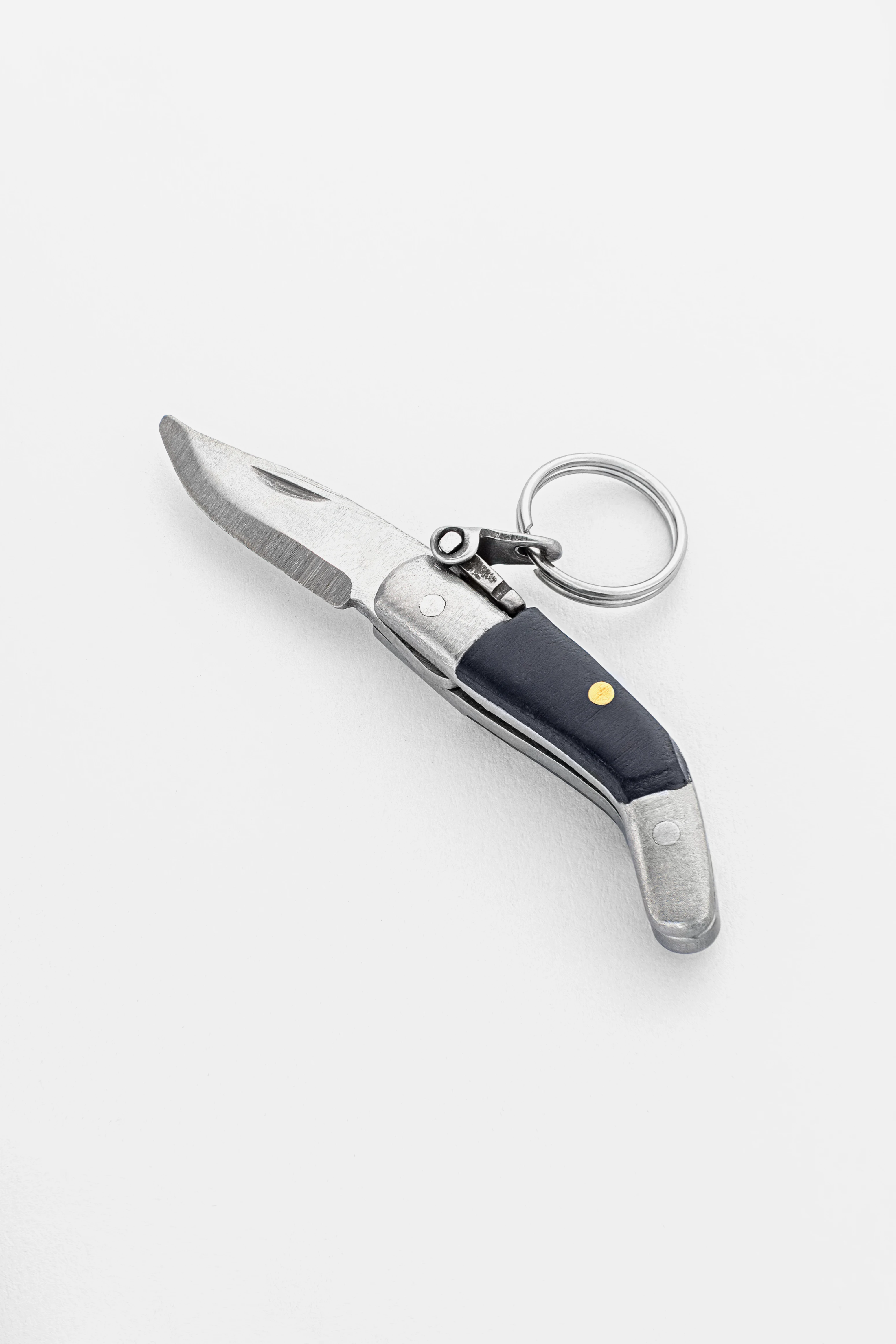
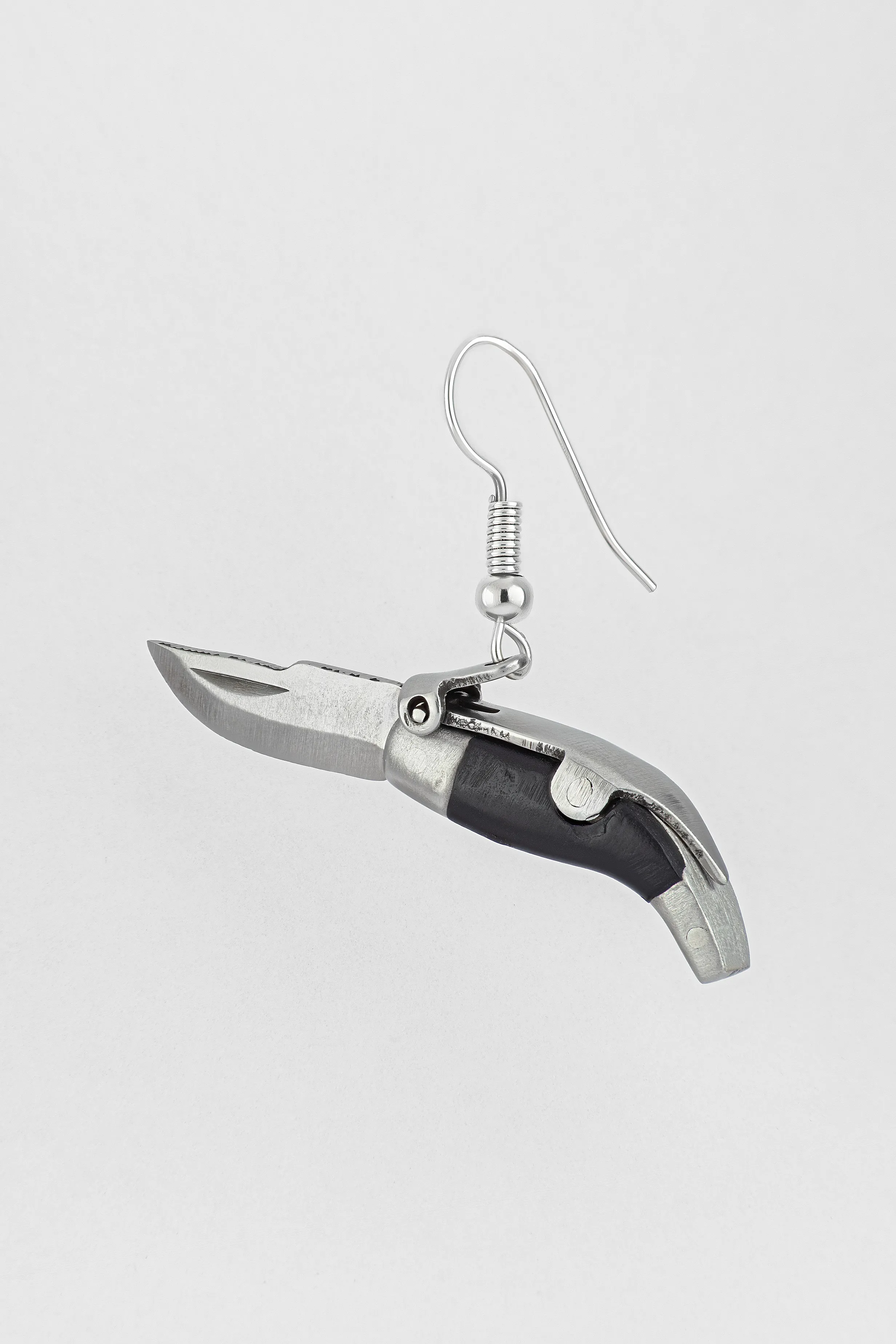
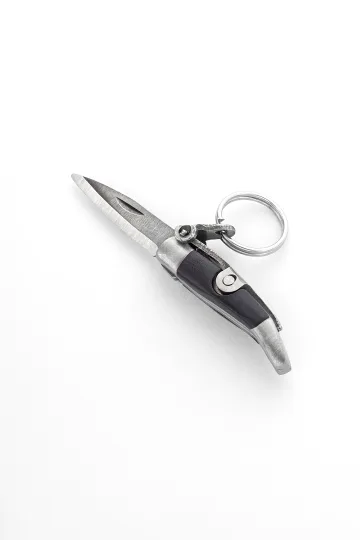
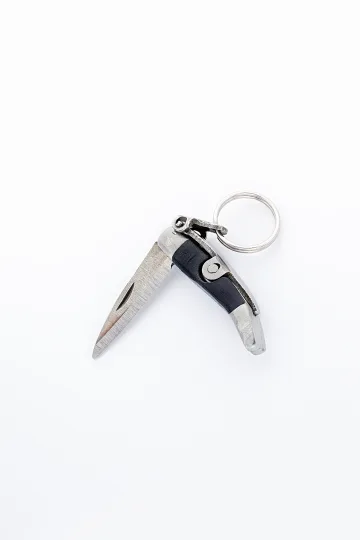
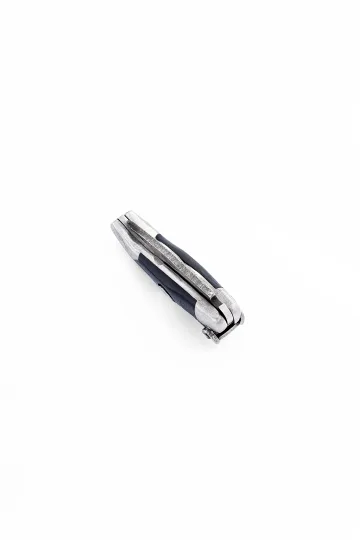
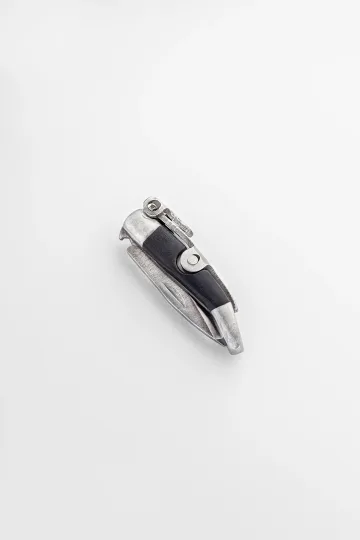
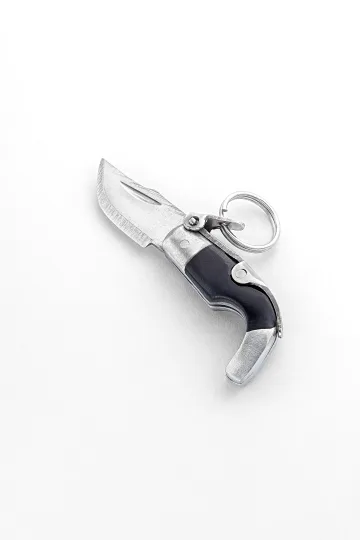
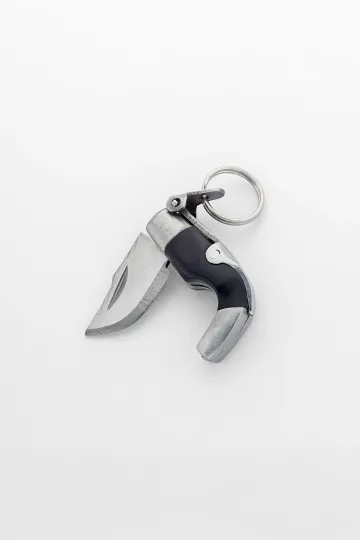
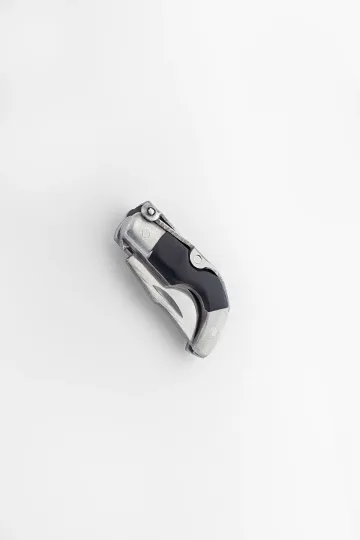
CAPAORA mini knife pendant
The 18th-century Spanish navaja in miniature: 40 mm of stainless steel, a real folding mechanism and a Palanquilla lock that clicks. An affordable gift to remember.
Authentic · Ships from Spain · 14-day returns
Why people choose the image of Thoth
Behind the choice of any symbol stand both taste and cast of character. Thoth draws a particular type of person, and it is worth unpacking why his image resonates with some more strongly than with others. This is not about mysticism but about a simple match between the sign and the inner values of the wearer.
A pull toward knowledge, writing and order
Thoth is above all a god of knowledge, and he is chosen by those for whom to learn, to understand and to write down matters more than to impress. To a person who values clarity of thought, is drawn to books, keeps notes and cannot bear disorder in affairs, the image of the scribe-god turns out close almost without explanation. There is in it neither aggression nor show of force, but there is the calm confidence of one who knows. Psychologically such a symbol works as a quiet support: it confirms what a person already values in himself and serves as a soft reminder to keep the measure, to carry what is begun through to a written result and to judge by truth. Many note that wearing an understated sign is more pleasant precisely because it speaks of the owner without words and demands no explanation to a chance passer-by.
Whom the image fits by cast
Closest of all Thoth is to those who live by word and thought: students, writers, teachers, all for whom work with text and knowledge is daily. A student before an exam, an author over a manuscript, an editor, a lawyer, a doctor find in the image of the god of knowledge a support they understand. He is close too to people who value balance and justice: the impartial recorder of the highest court resonates with those used to keeping their word and yielding to neither fear nor flattery. Finally, Thoth draws lovers of quiet, "cerebral" symbolism, who need no loud sign of status but value a meaning clear above all to themselves. In all these cases the choice of the image is not superstition but a way to carry with one what a person already believes in: the value of knowledge, of order and of the exact word.
Thoth and neighbouring symbols
The Egyptian pantheon is full of signs easy to confuse or to lump together, though each has its own role. Thoth stands in this row apart as the god of word and measure, but he has constant neighbours at the judgement of the dead and in jewellery. Let us compare him with the nearest of them, so the difference reads clearly.
Thoth and Anubis
Anubis and Thoth act together in the scene of the weighing of the heart, but their roles differ. Anubis, the jackal-headed god, leads the dead to the scales, watches over the weighing itself and preserves the body through embalming. Thoth stands beside with a palette and records the outcome of the judgement. Anubis is the guide and guardian of the threshold of death, Thoth the recorder and keeper of the verdict. In symbolism Anubis is closer to the theme of passage, of protection on the way and of care for the dead, and Thoth to the theme of a just outcome, written and made fast. Both signs often stand side by side but speak of different things: one of the road, the other of the honest record at its end.
Thoth and the ankh
The ankh, the Egyptian cross of life, is the sign of life itself and of its eternal continuation, a loop above a crossbar that the gods hold out to a person's face like the breath of being. Thoth in this pair answers not for life as such but for the knowledge and measure by which life is ordered. If the ankh is about being and its gift, then Thoth is about the word, the counting and the record by which that being is made sense of. The signs live well side by side because they complete each other: the ankh gives life, Thoth gives it clarity and order. In jewellery they are sometimes joined for exactly this fullness of meaning.
Thoth and the eye of Horus
The eye of Horus, the wedjat, is tied to Thoth directly through myth: by the tale it was Thoth who healed the damaged eye, returning it to wholeness, and so the eye became a sign of protection, health and restoration. In symbolism the wedjat speaks of protection and wholeness, and Thoth of the reason that restores that wholeness. One might say that the eye of Horus is the result, and Thoth the one who brought it back. Both images are closely interwoven, and paired they read as protection upheld by knowledge and measure. About the eye itself it is worth reading separately, and beside it the figure of Thoth gains its logical role as healer of strife.
How not to confuse Egyptian signs
Egyptian symbolism attracts precisely by its density: gods, animals, amulets and signs add up to a coherent system where each element points to its neighbours. Because of this they are easily blurred into one "Egyptian aesthetic," losing the differences. And the differences matter, because on them depends the meaning of the chosen piece. Thoth answers for the word, knowledge and measure, Anubis for passage and the protection of the dead, the ankh for life itself, the eye of Horus for protection and restoration. The mother goddess and patroness of magic is a large separate theme: it is told in detail in the piece on the goddess Isis and the Egyptian pantheon, where it is shown how the chief figures are linked. Understanding who answers for what, it is easy to assemble a meaningful set of signs instead of a random scatter of motifs, and to wear exactly what you mean.
Send a friend a discount code, they save on their first order.
Facts that surprise
Around Thoth a good deal of the unexpected has gathered, and much of it changes the view of the god of knowledge. Here are a few facts worth knowing.
First. Ibises, the sacred birds of Thoth, the Egyptians embalmed in incredible numbers. In the underground necropoleis at the temples archaeologists find millions of ibis mummies, laid in clay jars. It was a whole industry of temple piety: the bird was brought to the god as a go-between between a person and Thoth.
Second. The name of Thoth reached us in a Greek distortion. The Egyptians themselves called him Djehuty, and this original name is tied, by one version, precisely to the name of the ibis. The familiar "Thoth" is already a Hellenistic rendering, passed through the Greek language.
Third. The philosopher Plato retold an Egyptian tale of the invention of writing precisely in connection with Thoth, whom he called Theuth. In that story the god brings the king the gift of writing, and the king answers that writing will weaken human memory. So the ancient dispute over the use and harm of the record came to be tied to the name of Thoth as early as antique philosophy.
Fourth. Thoth was held to be the one who won the calendar its extra days. By the tale he won them in a game, so that the goddess of the sky could bear her children despite a ban, and at the same time fitted the year into the right number of days. The god of measure literally outplayed time itself.
Fifth. From the identification of Thoth with Hermes was born a word that lives to this day. "Hermetic," that is, tightly sealed, goes back to the name of Hermes Trismegistus and to the alchemical vessels sealed by his science. So the Egyptian god of wisdom is unseen present in the most ordinary word.
Sixth. Thoth was honoured as patron of both writing and counting, of measurements and even of board games. Egyptians saw in a game of moves and rules a reflection of the order of the world, and order is the domain of Thoth, so the god was tied to the reckoning of moves too.
Seventh. To Thoth were ascribed whole secret books of knowledge. The tale of the "Book of Thoth" told of a scroll of powerful spells, hidden at the bottom of a river in a series of nested caskets under the guard of serpents. Whoever read it would supposedly understand the speech of birds and beasts and see the gods themselves, but the reckoning for the stolen knowledge in these stories is always heavy.
Eighth. In the scene of the judgement of the dead the verdict was held valid only after Thoth had written it. An oral decision was not enough: the power of the word for the Egyptians rested on the record, and the scribe-god was a necessary link in the most just of courts.
Ninth. By the name of Thoth was called the first month of the Egyptian year too. The season of the Nile flood opened the month that the Greeks rendered as "Thoth," and with it began the count of the new year. The memory of this has survived to our day: in the Coptic calendar, a direct descendant of the ancient Egyptian one, the first month still bears the name "Tout."
Frequently asked questions
Who is Thoth in simple terms?
Thoth is the ancient Egyptian god of wisdom, writing, counting and the moon. He was shown as a man with the head of an ibis or in the form of a baboon, and on his head a lunar disc was often placed. He was held to be the scribe of the gods, the inventor of writing, the keeper of measure and time, and at the judgement of the dead he recorded the outcome of the weighing of the heart.
Why does Thoth have the head of an ibis?
The ibis is a marsh bird with a long curved bill, which the Egyptians honoured as a sign of attentiveness and patience. The curve of the bill reminded them of a scribe's pen and the sickle of the moon, and its unhurried feeding in the shallows was tied to the diligence of a man of letters. So the ibis became the visible image of the god of writing and of lunar time-counting.
How does Thoth differ from Anubis?
Both act in the scene of the judgement of the dead, but their roles differ. Anubis, the jackal-headed god, leads the dead to the scales and answers for embalming and the passage into the world of the dead. Thoth stands beside with a palette and records the outcome of the weighing of the heart. Anubis is the guide and guardian, Thoth the recorder and keeper of the just verdict.
Are Thoth and Hermes Trismegistus the same thing?
In essence yes, it is one image in different cultures. When the Greeks came to Egypt, they identified Thoth with their own Hermes, and out of that fusion arose the figure of Hermes Trismegistus, the "Thrice-Greatest." Under this name in Greco-Roman times a corpus of mystical texts took shape, but at the base lies precisely the Egyptian god of wisdom.
What does a piece of jewellery with a Thoth symbol mean?
The sign of Thoth, be it an ibis, a crescent or a scribe figure, reads as a symbol of wisdom, knowledge, writing and measure. It is a calm, "cerebral" symbol that speaks of a clear head, honesty and respect for the word rather than of power or wealth. It is chosen by people for whom knowledge, study and just reckoning matter.
Which metal is best for a piece with Thoth?
Silver is especially fitting, because its cool gleam is tied to the moon, and Thoth is a lunar deity. Silver holds well the fine drawing of bill and feather. Gold and gold plating are apt too, if warmth and a festive note or a deliberate "solar" contrast are wanted. Oxidised silver brings out the small relief with a graphic contrast.
Can a person of any faith wear a Thoth symbol?
The image of Thoth is part of the ancient Egyptian religion, which deserves to be treated with respect. Today his sign is worn above all as a cultural and meaningful symbol of wisdom and knowledge, not as an object of a living cult. It may be worn by a person of any views, so long as they understand with respect where the symbol came from and what it meant to the ancients.
Who is a piece with Thoth a good gift for?
The symbol of Thoth suits well people of mental work and all who are tied to the word and to knowledge: students, teachers, scholars, editors, lawyers, doctors. It is fitting for the end of studies, the defence of a thesis or a new responsible post. It suits too those absorbed in ancient cultures and Egyptian symbolism.
Conclusion
Thoth is a rare god whose power is measured not by thunder and not by the sword, but by the precision of word and measure. Egyptians entrusted to him all that brooks no arbitrariness: writing, counting, the calendar, the record of the just verdict. He stood behind every scribe, ran the heavenly chancery, made peace between quarrelling gods and set down in the scroll the outcome of the judgement of the dead. His bird, the long-billed ibis, wandered the marshes of the Nile under the light of the moon and became the visible sign of a patient, attentive wisdom.
The fate of the image proved a match for the god of knowledge himself. From the Egyptian Djehuty he turned into the Greek Hermes Trismegistus, gave his name to a whole current of thought and lived on unseen to our day even in the ordinary word "hermetic." At the same time it is worth keeping an honest frame: the true Thoth is the god of predynastic and pharaonic Egypt, while the later Hermetic teachings are already a Greco-Roman and medieval structure built over his name.
In jewellery Thoth works as a quiet, "cerebral" symbol. The ibis, the crescent, the scribe's palette read as a sign of wisdom, writing, balance and measure, turned toward those who value a clear head and honest reckoning. It is not a loud sign of power but a calm sign of reason. What exactly to pour into the image of the ibis-headed god each decides for himself, but at the base there will always be a respect for the word, the knowledge and the order that he kept for thousands of years.
It is a good thing too that this symbol demands no loud declarations and forces no single reading on its recipient. One will see in it a reference to an ancient faith, another a sign of learning, another simply an elegant bird at the water under the moon. Thoth, who for thousands of years kept the record behind the scribe, calmly accepts any of these readings and remains himself, the quiet patron of all who value clear thought and the exact word.
Silver, gold, Egyptian and mystical symbolism, lunar motifs, paired pieces and gift sets.
Buying it as a gift? Each one arrives ready to give.
 A branded Zevira box and a little card come with every order.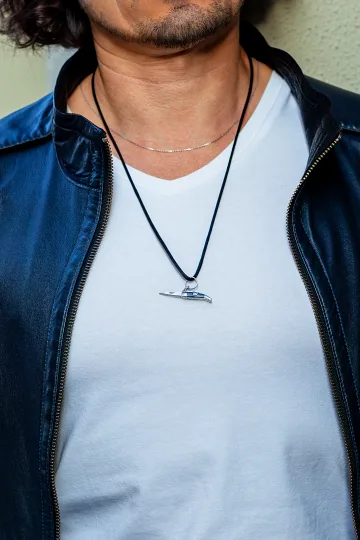







About Zevira
Zevira works in Albacete, Spain, where the craft of jewellery reaches back into a centuries-old local tradition. Thoth and the Egyptian signs are part of our collection of symbols, where they sit alongside mystical and heavenly motifs in which form and meaning hold together.
What you can find with us on this theme:
- Pendants with Egyptian symbolism in silver
- Lunar crescent charms close to the motif of Thoth
- Signs in oxidised silver for a graphic aesthetic
- Gold-plated versions with a warm tone
- Paired pieces and gift sets with mystical symbolism
Personal engraving is available. We work in 925 silver and gold of fourteen to eighteen carats.