The Laurel Wreath in Jewellery: Symbol of Victory, Triumph and Undying Glory
In antiquity the laurel wreath did the job a gold medal does today. It crowned champions of the Pythian Games, poets and Roman generals at their triumphs. From it came the word "laureate" (from the Latin laureatus, "crowned with laurel"), and the Nobel Prize, whose winners we still call exactly that. A ring of leaves outlived every empire and turned into jewellery.
Laurel proved a remarkably hardy symbol. The priestesses of Apollo wore it, the caesars struck it on their coins, sculptors set it into the facades of universities and courthouses. When Napoleon crowned himself emperor, he wore not a medieval crown but a golden laurel wreath in the manner of Rome's rulers. And when you see a slim sprig of laurel on a pendant or a band of gold leaves on a ring, you are holding an idea more than two and a half thousand years old: I stood my ground, I made it, I was recognised.
Here is the order of what follows: what a laurel wreath is and how it differs from other wreaths, where it came from, what it means today, the forms jewellers give it, the materials, how and with what to wear it, and how it differs from wreaths of olive, oak and myrtle.
What a Laurel Wreath Is
Apollo's Laurel: A Plant That Became a Symbol
A laurel wreath is a ring or open band made from the leaves and twigs of the noble bay tree (Laurus nobilis), an evergreen Mediterranean tree with dense, fragrant leaves. The same leaves go into soup, but in jewellery the point is different: a shape you recognise at a glance. Two curved branches meeting over the brow or closing into a circle, a row of long oval leaves, sometimes small berries.
Laurel was sacred to Apollo, god of light, music, poetry and prophecy. The priestesses of his temple at Delphi chewed bay leaves before they prophesied. Winners of the Pythian Games, held in Apollo's honour, were crowned with laurel rather than the olive of the Olympics. So the plant of the god of light and the arts grew together with the idea of a gift, of recognition, of the highest achievement.
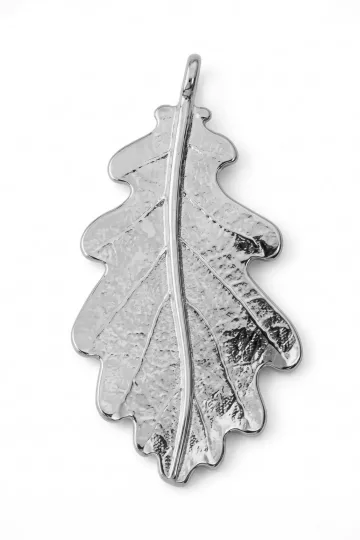
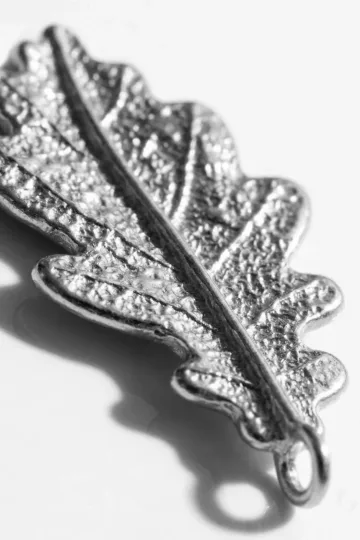
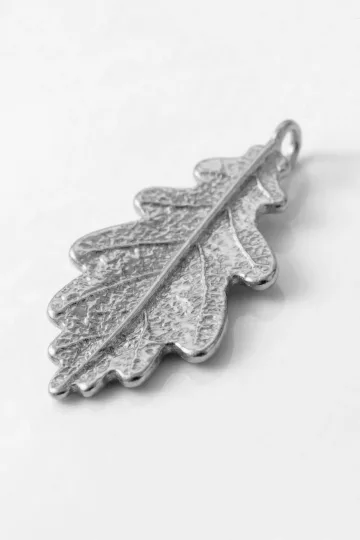
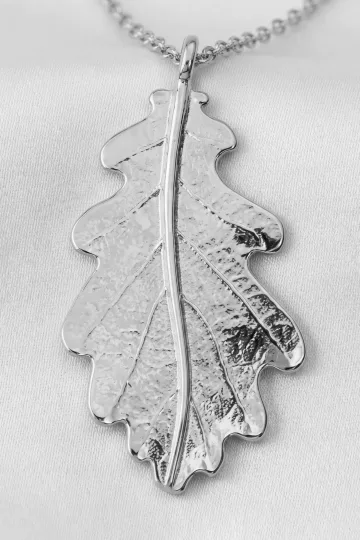
Wear the symbol, don't just read about it. These are in stock:
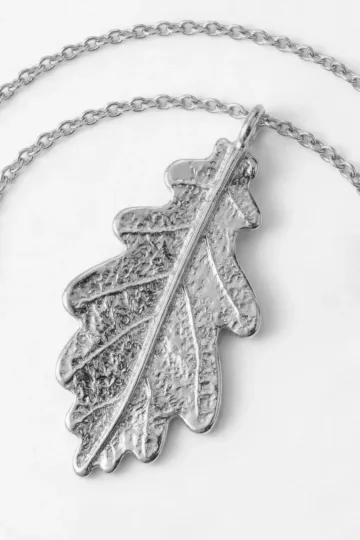




Open Band, Diadem or Closed Circle
In jewellery laurel comes in two basic geometries. The first is the open wreath-band: two branches spread from the centre, as on ancient coins, leaving the back of the head bare. That is the classic Roman corona triumphalis. The second is a closed circle, a ring of leaves with no break, a symbol of wholeness and completion. Pendants tend toward the circle or half-circle, rings toward an unbroken band of leaves, tiaras toward an open wreath across the brow.
One detail matters: the leaves always point one way, following the run of the branch. That is not chance but a readable mark of quality. On cheap stamped pieces the leaves often face every which way; on good work they lie in rhythm, as on a struck coin.
How a Laurel Wreath Differs From Other Wreaths
History has many wreaths, and they are easy to confuse. Laurel is victory, triumph, glory, poetry. Olive is peace and the Olympic Games. Oak is strength, valour and civic steadfastness (the Roman corona civica). Myrtle is love, marriage and Venus; it was given to brides. The crown of thorns is something else entirely, a Christian symbol of suffering. When you choose a piece "with a wreath", it pays to know which leaf is in front of you: the difference in meaning is enormous. More on that in the comparison section below.
The History of the Laurel Wreath: From the Myth of Apollo to the Nobel Prize
The Myth of Apollo and Daphne
The symbol has an origin legend, and a sad one. Apollo, god of the sun and of poetry, mocked little Eros and his bow. The offended Eros loosed two arrows: one of gold pierced Apollo so that he burned with desire, one of lead struck the nymph Daphne so that she came to loathe love. Apollo gave chase, Daphne fled in terror and begged her father, a river god, to save her. The nymph's body began to stiffen: skin became bark, arms became branches, hair became leaves. Daphne turned into a laurel tree.
Apollo embraced the trunk and felt the heart still beating beneath the bark. He said that since Daphne could not be his wife, she would be his tree. Ever since, laurel is sacred to Apollo, and a wreath of its leaves crowns poets, musicians and victors. In Greek the laurel is called "daphne", after the nymph. Ovid retold this story in his Metamorphoses so fully that it became the canon painters and poets returned to for centuries. The sad ending carries the symbol's hidden meaning too: laurel comes at a cost, it is never had for free, and behind every wreath stands someone's story of effort and loss.
Greece and the Pythian Games
The Greeks were the first to make laurel a prize. At the Pythian Games in Delphi, second in standing only to the Olympics, champions were crowned with a laurel wreath. Victory in athletics, in the chariot race, in music and poetry earned this wreath, and to a Greek it was worth more than any metal. There were no cash prizes at the great games; the reward was glory and the right to come home wearing the wreath.
Laurel was tied to prophecy as well. The Pythia, the prophesying priestess of the Delphic oracle, was said to draw her inspiration from laurel. So the wreath bound together the three things Greeks prized above all: athletic prowess, the poetic gift, and a link with the divine.
Laurel ran through the very fabric of the Delphic cult. The temple of Apollo was decked with laurel branches, pilgrims brought laurel as an offering, and the winner carried off his wreath as a piece of the god's sacred tree. To a Greek this meant more than a medal: the wreath testified that Apollo himself had marked the man out. Musical and poetic contests at the Pythian Games were valued on a par with the athletic ones, and so from the start laurel crowned both body and spirit, both the runner's strength and the singer's gift. That doubleness, sport and art under one wreath, stayed with the symbol for good.
The Champion's Wreath: Four Games and Four Plants
Ancient Greece knew four great contests, and each had its own wreath. The Olympic Games at Olympia crowned with olive, the Pythian at Delphi with laurel, the Isthmian near Corinth with pine, the Nemean with a wreath of wild celery. An athlete who won all four earned the honorary title "periodonikes", the one who completed the circuit. Of these four plants, laurel turned out to have the luckiest fate: pine and celery stayed in the history books, while laurel and olive survived to our own day as living symbols of victory and peace.
The crowning rite itself was short and without glitter. The Pythian victor had branches cut from the sacred laurel, a wreath plaited on the spot and laid on his head. No gold, no cash prize was due at the great games: the value of the wreath lay not in the material but in the fact that all Greece had seen it. The champion returned home a hero; odes were composed for him, statues raised, taxes lifted. The dried wreath was kept as a relic, sometimes dedicated back to the temple. The idea that the highest prize is worth more than money precisely because it cannot be bought was born, in large part, here, at the Delphic laurel.
The Champion's Laurel and the Award Medal
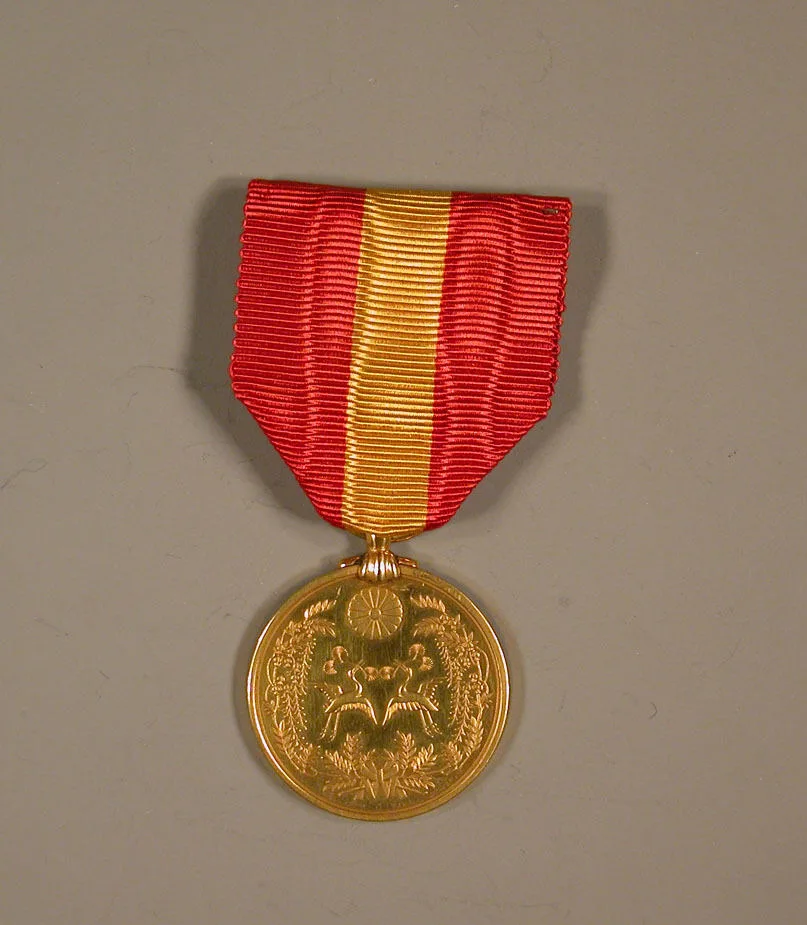
A straight line runs from the victor's living wreath to the modern award medal. The Greeks rewarded with glory and a wreath of leaves; metal came later, when an award needed to be made to last. But the logic stayed the same: both wreath and medal are a public sign that a person won a fair contest. It is no accident that on countless medals and orders laurel winds around a portrait or a number: the plant by itself means "merit is recognised here". In jewellery a laurel pendant works by this same ancient logic of a personal medal, worn not on a ribbon but on a chain.
Rome: The Triumph, the Caesar and the Corona Triumphalis
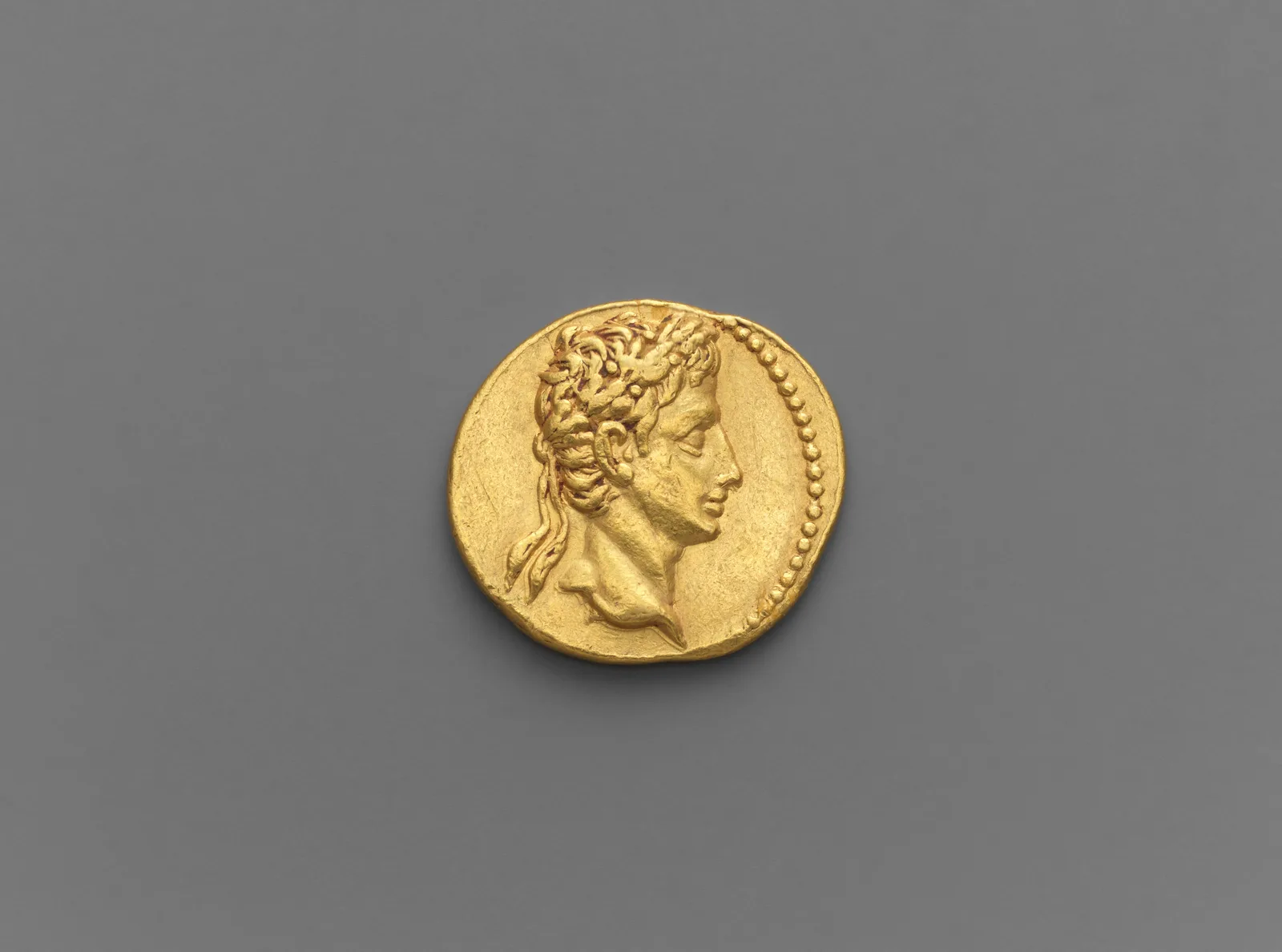
Rome raised the cult of laurel to the scale of the state. A victorious general granted a triumph by the senate entered the city in a laurel wreath, on a chariot, to the roar of the crowd. Laurel was held over his head or set on his brow. This was the highest military honour of the Republic, and later of the Empire.
The caesars made the wreath a personal mark. Julius Caesar, by the account of his contemporaries, was especially fond of the laurel wreath, and sharp tongues said it was partly because it hid his bald spot. After him the wreath became an attribute of imperial power. It was struck on coins: a ruler's profile in laurel is the most recognisable image in Roman numismatics. Laurel was planted by temples, branches decked houses on days of victory, messengers bearing news of a win carried laurel boughs.
Laurel had a practical cult in Rome too. The bay tree was thought to be immune to lightning, so the emperor Tiberius, the stories say, would put on a laurel wreath during a thunderstorm, seeking protection. Laurel was planted in the imperial gardens, and there was a legend of a sacred grove grown from a branch a bird dropped into the lap of the first emperor's wife. Each new ruler took his wreath from that grove. So laurel became not only a prize but a living thread linking power to the gods and to nature.
Emperors in Laurel: From Caesar to the Late Empire
After Caesar the laurel wreath grew firmly onto the figure of the ruler. Augustus, the first emperor, showed himself in laurel on coins and statues, and this was calculated: he was saying that his power rested on victories and on the favour of the gods, not on brute force. From Augustus the wreath became a fixed part of the imperial image. The ruler's profile in laurel leaves was struck on aurei and denarii across the empire from Britain to Syria, and to a provincial that small portrait was, in effect, the only "face" of the distant lord.
Gradually the emperors' laurel fused with another, heavier headpiece, the radiate crown and the golden diadem. The further from the Republic, the less memory of any particular triumph the wreath held and the more it became pure sign of power: to wear laurel meant simply "I rule". When late-empire rulers began to set gemstones into the crown, the laurel base could still be made out beneath them. So over a few centuries laurel travelled from an honestly earned military honour to a crown worn by right of birth, and it was this double sense, merit and power, that it kept through every later revival.
The Olympics, the Olive Argument and Neoclassicism
Here it is worth not getting confused. At the ancient Olympic Games the crown was olive, wild olive from the sacred grove of Olympia. Laurel was the prize of the Pythian Games. The modern Olympic movement revived the idea of the wreath as a prize, and at the Athens Games of 2004 medallists were once again crowned with olive, a nod to antiquity. But in popular culture laurel and sporting victory have grown together so firmly that the laurel branch is drawn on emblems, cups and medals the world over.
In the age of neoclassicism and the Empire style, at the turn of the eighteenth and nineteenth centuries, Europe fell in love with antiquity all over again. Laurel returned to architecture, furniture, fashion and jewellery. Napoleon, crowned in 1804, chose a golden laurel wreath as a sign that he was heir to Caesar and not to medieval kings. Empress Joséphine and the ladies of her court wore diadems and parures with laurel motifs. Empire-style jewellery is studded with gold laurel leaves.
The Middle Ages and the Crowning of Poets
In the Middle Ages the ancient wreath all but vanished from daily use, but scholars and poets kept its memory. In 1341 a landmark event took place in Rome: the poet Petrarch was solemnly crowned with laurel on the Capitol. This was a deliberate attempt to revive the ancient tradition, and from it came the lasting phrase "poet laureate". Petrarch received the wreath not for winning a contest but for his contribution to letters, and so laurel was bound for good to poetry and learning. Medieval universities took up the idea: a degree and a title came to be thought of as a "crowning", and from this same root came the word "baccalaureate".
"Laureate" and "Baccalaureate": How Laurel Hid Inside Words
It is worth pausing on how deep laurel grew into the language of learning. The word "laureate" comes straight from the Latin laureatus, "crowned with laurel". When we say "prize laureate" today we mean, quite literally, a person who in the ancient sense had a laurel wreath set on their head, though neither wreath nor head remains in the picture, only the meaning: judged the best.
The word "baccalaureate" has a more amusing history. By a common account it goes back to the Latin bacca lauri, "laurel berry". A young graduate with a first degree was, as it were, wearing not yet a full wreath but only its first berries: recognition is there, but the road still lies ahead. Hence "bachelor" as the opening rung. In an Italian university a graduate is still called laureato, the crowned one, and the act of taking the degree there is called laurea, that is, "laurel". So millions of people around the world "receive their laurel" every year without the faintest idea of it. When such a person puts on a sprig-of-laurel pendant at graduation, they close a circle two thousand years long: word and object meet again.
Modern Awards: From Nobel to the Film Festival Emblem
The word "laureate" has reached our day unchanged. Nobel laureate, Pulitzer laureate, competition laureate, all of them are "crowned with laurel", though no one puts on a real wreath. The laurel branch became a graphic sign of victory: it is drawn on diplomas, on festival emblems, on the packaging of premium goods. The film-festival "laurels", those two brackets of leaves around a film's title, are a direct descendant of the ancient wreath. The symbol travelled from the head of a Delphic champion to a badge in the corner of a poster without once losing its meaning.
Laurel in the English Language and Tradition
English absorbed laurel through classical education and the long shadow of Rome and Greece. The crown of bay sits inside everyday English speech and ceremony, often unnoticed. The office of Poet Laureate, held in Britain since the seventeenth century, carries the ancient crowning into the present: the very title names a poet "wreathed in laurel", honoured by the crown for their craft. Heraldry took up the laurel branch as a charge for valour and merit, winding it around crests and orders. And the language is full of it: to be "crowned with laurels", to wear "the laurels of victory". So for an English speaker laurel is no foreign sign but a long-settled, instantly readable mark of merit and recognition.
Laurel crowns the victor, not the also-ran. Earn it first, then wear it, and don't you dare rest on it.
How and With What to Wear a Laurel Wreath
Over years on shoots the laurel has passed through dozens of looks with me, from weddings to weekday errands. Here is what actually works, sorted by occasion.
What do I pair laurel with for a wedding? For the bride I suggest a laurel tiara or wreath-diadem over a flowing, high-waisted dress, the most ancient and Greek silhouette there is. For the bridesmaids I recommend a thin sprig pendant as a shared themed accent. Laurel reads two ways here: as a piece for the head, and as a wish for love triumphant and peace at home.
What do I give for graduation or a win? This is the most exact occasion laurel has. The word "laureate" points straight to the diploma and the prize, so I choose a sprig pendant or a modest wreath ring for anyone who has finished a course, defended a thesis, earned a promotion, taken a competition. The meaning lands without a word of explanation, and the piece stays wearable for years.
How do I build an evening look with laurel? For evening I reach for gold or enamel laurel on an open neck, long branch earrings, and a tiara when the moment calls for it. Laurel catches warm light and the shimmer of evening make-up, so I recommend smooth fabrics in deep colours: wine, emerald, black. Against bare skin at the collarbone a sprig pendant looks especially good.
Is laurel right for every day? Yes, as long as you keep the scale modest. I recommend a delicate sprig on a thin chain, small leaf earrings or a narrow ring. Laurel is vertical and clean in shape, so it does not quarrel with clothes and sits well in a V-neck. Silver or steel in a white-gold tone is the most understated weekday option.
Who does laurel actually suit? Anyone who loves speaking jewellery with a story. Laurel is tied to no religion, no gender and no age: for a man's look I choose a stricter wreath in silver or steel, for a woman's more often gold and finer work. And it makes a thoughtful gift: to give laurel is to acknowledge someone's merit, and that is always good to receive.

Turn on your camera, pick earrings, a pendant or a ring, and see the piece on yourself in real time.
Switch items in one tap.
Everything runs in your browser: no photo or video is ever uploaded.
The Meaning of the Laurel Wreath
Victory and Triumph
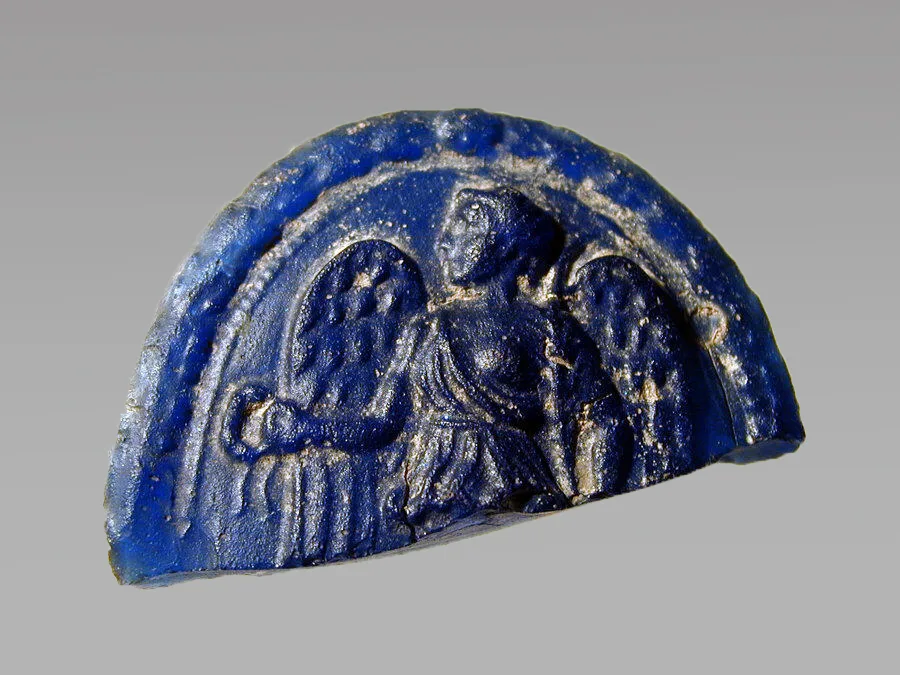
The chief meaning of laurel is victory. Not just any victory, but one earned, won in a fair contest and publicly acknowledged. The wreath goes on the winner; it cannot be bought, only earned. So a piece with laurel reads as a quiet statement of achievement: I walked my road, I reached the end. It makes a strong gift for someone who has finished their studies, defended a thesis, won, succeeded.
The Immortality of Glory
Laurel is evergreen; it does not drop its leaves in winter. The ancients saw a metaphor in this: a victor's glory does not wither, the memory of the deed does not die. A laurel wreath is a promise that what was achieved will remain. In jewellery this sense is especially prized: gold leaves do not spoil, much like a reputation honestly earned.
Peace and Reconciliation
Laurel has a peaceful side as well. Like the olive branch, a laurel branch was held out as a sign of reconciliation and goodwill. After a military victory laurel meant both triumph and the peace that followed, the end of strife. In this sense the wreath carries a double message: I have won, and now calm sets in.
Poetry and the Creative Gift
Because laurel was the tree of Apollo, god of poetry, the wreath crowned poets. From this comes the title "poet laureate", still held today by official poets at courts and parliaments. For a creative person a piece with laurel is a sign of belonging to the craft of the muses, to a tradition that runs back to Delphi. A good gift for a musician, a writer, an artist.
Honour, Recognition and Dignity
At its broadest, laurel reads as a sign of honour and public recognition. It was set on the buildings of courts, academies, universities and banks, everywhere the idea of merit and authority matters. To wear laurel is to speak of dignity, of being worth something. It is a symbol with no religious attachment, legible to anyone, which makes it easy and neutral to wear.
A Link With Apollo and Light
Because laurel was the tree of Apollo, god of the sun, it carries solar meaning too: light, clarity, reason, harmony. To the ancient mind Apollo was the patron of order and measure, the opposite of chaos. Through this link laurel speaks of a clear head, of the victory of reason and talent over brute force. So gold laurel with its warm glow reads as especially whole: the metal of the sun on the tree of the sun god. For those who value exactly this side of the symbol, laurel becomes a sign of inner light and creative clarity, not only of outward triumph.
Customer reviews
Zevira is a real jewellery shop. Genuine payments, deliveries and customer thank-yous.
🥰🥰🥰 gracias
Ok, ¡gracias! 🙂
Forms of the Laurel Wreath in Jewellery
The Wreath-Diadem and the Laurel Tiara
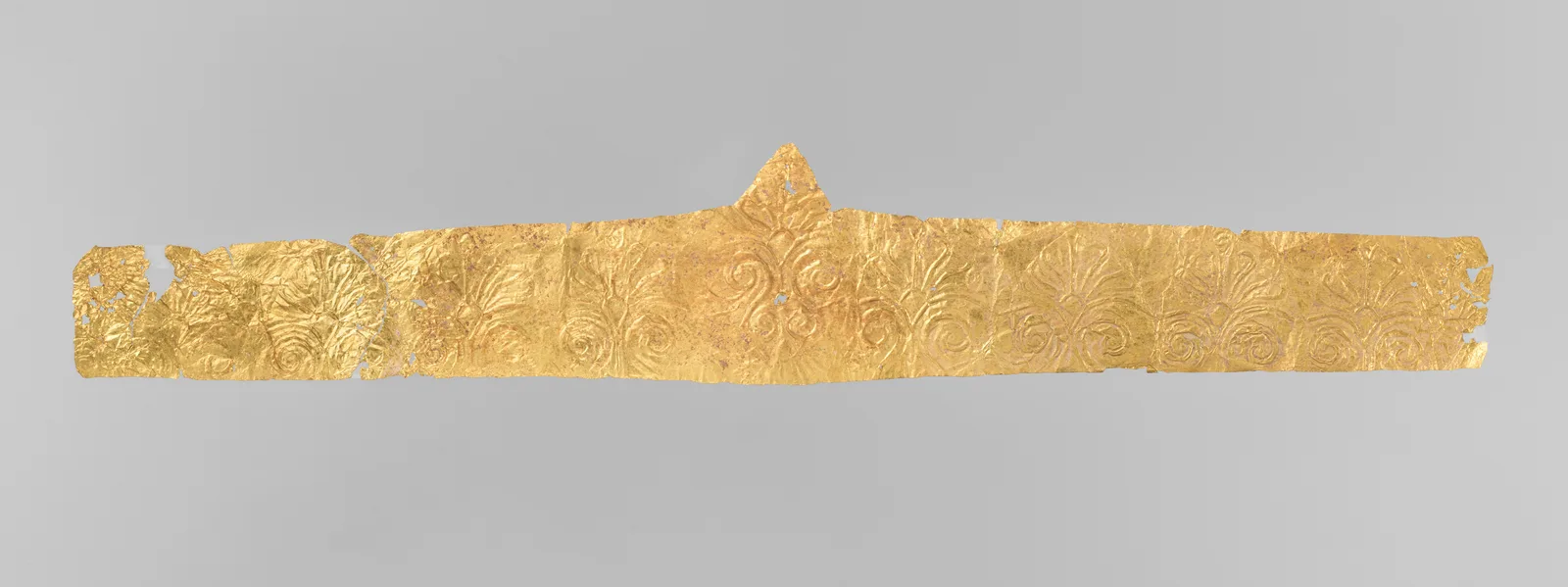
The most striking form is the wreath worn across the brow. A slim metal band carrying laurel leaves echoes the ancient corona. A piece like this picks up the tradition of tiaras and diadems and works well where you want a ceremonial, goddess-like look: at a wedding, on stage, at a themed shoot. A full laurel tiara suits a bride in an ancient or Empire style. The mini version, a narrow band with a couple of leaves, is worn in ordinary life as a soft accent. A laurel tiara sits well on different hairstyles: on loose hair it lies like a light crown, on an updo it underlines the line of the brow, on a Greek arrangement with ringlets it looks as if it stepped off an ancient fresco. For a photo shoot laurel is indispensable: it sets the theme at once, and the look reads as "goddess" or "muse" from the first frame.
The Laurel Sprig Pendant
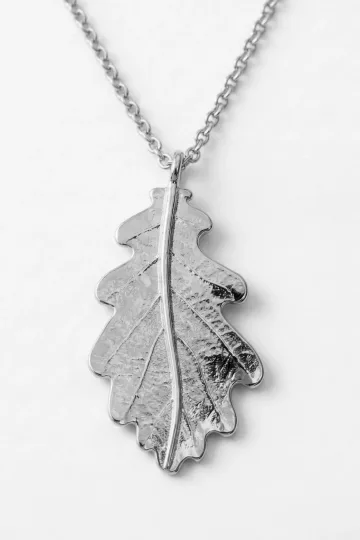
The most wearable form for every day. A small laurel sprig or a closed wreath on a chain. The sprig reads lightly and does not shout, the wreath-circle looks a touch stricter and more symbolic. A laurel pendant works well as a gift for graduation or the close of a hard chapter: the meaning comes across, and the piece stays right for years.
The Laurel Wedding Ring
A separate and beautiful idea is a ring whose band is made of laurel leaves running around the circle. Here the wreath works twice: as a symbol of wholeness (the closed circle) and as a sign of love's triumph. Such a ring is chosen by couples drawn to ancient aesthetics, or by those who want an engagement and wedding piece with a story rather than a plain band of metal. The laurel band also plays nicely on the very genre of the ring: a circle with no beginning and no end.
Laurel Earrings
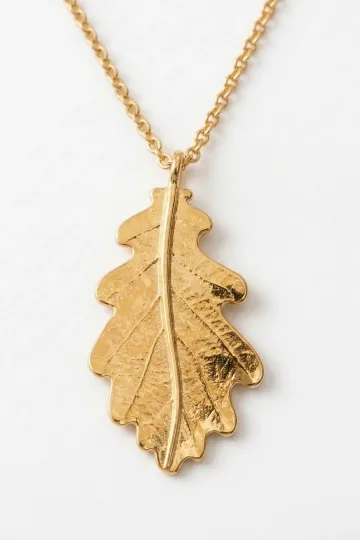
Sprig earrings or half-hoop earrings of laurel leaves give a vertical, drawn-out line that lengthens the neck and looks well with hair up. Small leaf studs suit every day, long drop branch earrings suit the evening. Laurel on earrings is usually finer than on a pendant, so the material and the cleanness of the casting matter especially here.
The Bracelet and the Midi Ring
A laurel branch lies well along the wrist: a rigid bangle with leaves follows the line of the arm. A thin ring with a sprig curving around the finger gives a light, almost invisible accent. These forms are loved by those who prefer delicate jewellery and wear the symbol more for themselves than for show.
Laurel in Jewellery Through the Ages
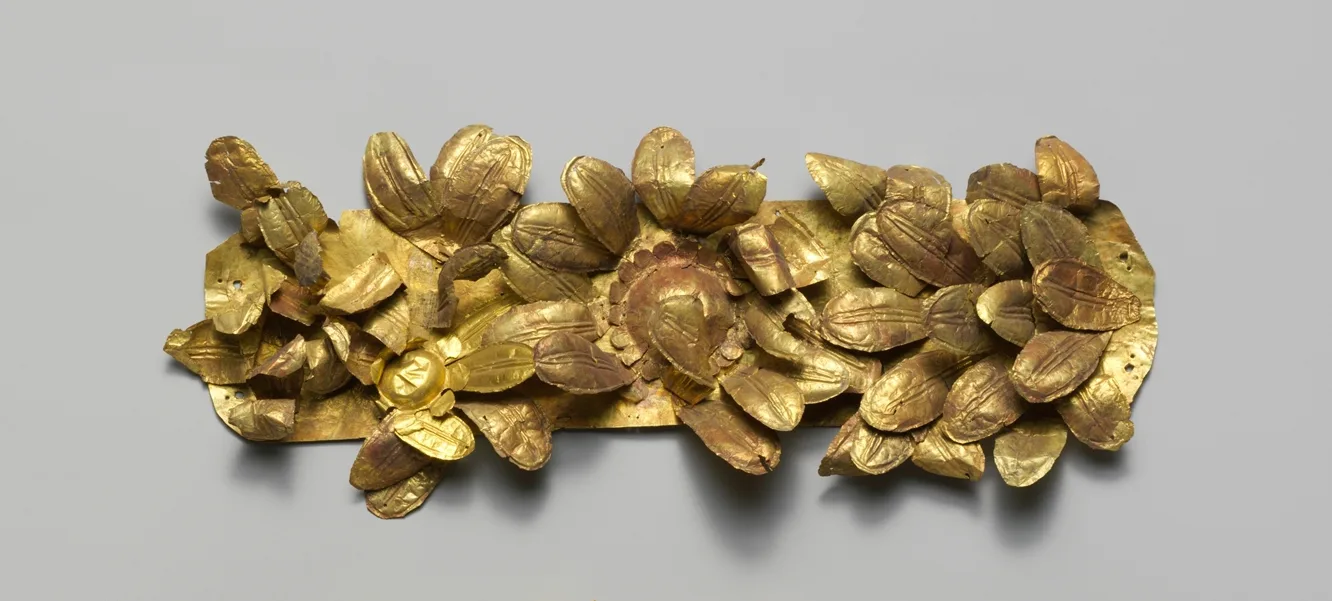
The form of the laurel wreath in jewellery changed along with fashion, and through these changes you can read the history of taste. For the Greeks and Romans the gold wreath was both jewellery and award at once: the finest hammered leaves on a flexible band were set on the head, and such diadems are found in noble burials all across the Mediterranean. These were not mass-made things but one-off work by master craftsmen, and the leaves on them still look almost alive. Ancient laurel echoes other ancient motifs in jewellery, which likewise took their shape straight from sculpture and the struck coin.
After a long pause, laurel returned to jewellery on the wave of neoclassicism and the Empire style, at the turn of the eighteenth and nineteenth centuries. Parures came into fashion then, full sets of tiara, earrings, necklace and bracelet, and the laurel leaf became one of their favourite motifs. Ladies of the Empire era wore gold laurel diadems over Greek hairstyles, while brooches and combs with laurel finished the look of the "ancient goddess". This was not a hint at victory so much as a sign of taste and belonging to high culture.
Later, in the age of historicism and neoclassicism at the start of the last century, laurel lived through one more revival, now as the brooch, the hairpin and the tiara for ceremonial occasions. At that time the wreath was often joined to an oak branch or a ribbon bow, and it became part of award and parade symbolism. Today the pendulum has swung toward minimalism: laurel is more often made small and delicate, as a thin sprig pendant, a narrow band ring or tiny leaf earrings. The huge tiara is now worn mainly by brides and on stage, while everyday life keeps the light, almost graphic laurel. The meaning has not shifted an inch: the lavish Empire diadem and the tiny pendant say one and the same thing, achievement and recognition.
Upload a photo of your pet, someone you love, or an object. We'll build a 3D model and hand-cast it in pewter.



Materials for the Laurel Wreath
Gold: The Classic of Triumph
Gold is the historically correct material for laurel. Ancient and Empire wreaths were made of gold, and Napoleon's crown was gold. Yellow gold gives a warm, "solar" glow that chimes with Apollo, the god of light. For anyone after the most canonical, ceremonial look, gold laurel is the obvious choice. Rose gold softens the symbol, makes it more romantic; white gold shifts it into a strict, graphic register.
Silver: Restrained Honour
Sterling silver 925 gives a cooler, lunar laurel. A silver wreath looks more restrained than gold and fits better into an everyday style. It is a practical choice for those who want to wear the symbol daily without drawing extra attention, and for those who simply prefer a white metal. Silver holds the fine detail of the leaves well, which matters for laurel.
Enamel: The Living Green Leaf
Cold or hot enamel gives laurel back its natural colour. Green enamel leaves on a metal frame look fresh and clear; you read at once that this is laurel and not an abstract ornament. Enamel works well for pendants and earrings where you want colour and character. The drawback is that enamel needs care: a knock can chip it.
Steel and Plating as a Practical Option
For those who value low maintenance, laurel is made of jewellery steel with a PVD coating in gold or rhodium tone. Such a wreath does not tarnish, leaves no marks on the skin and is not afraid of water. The symbolism does not change by a gram: the meaning of laurel is in the shape, not in the hallmark. It is a sensible choice for an active person or for a first piece with a laurel motif.
Caring for a Laurel Piece
Laurel is fussier than smooth jewellery precisely because of its relief: dust and skin oil gather between the leaves, and over time the pattern dulls. A silver wreath is cleaned with a soft brush and a special cloth, now and then a professional product, and kept apart in a pouch so it does not darken from contact with air and other things. Gold needs only wiping and an occasional wash in warm water with a drop of mild soap, working the brush gently into the hollows between the leaves. Enamel laurel calls for caution: it must not be dropped or rubbed with abrasives, or the enamel chips; better to wash it in plain water and dry it at once. A coated steel wreath is the most patient, a wipe is enough, but it too should not be scratched with hard sponges, so the plating stays intact. Take any piece off before the shower, the pool and sport, and the relief of the laurel will last longer.



The Psychology of the Laurel Wreath
Why does a person choose the symbol of victory rather than just any pretty thing? The psychology here is fairly clear, and it explains why laurel works even on people far from antiquity.
An anchor of achievement. When a piece is tied to a particular win (a diploma, a promotion, a finished marathon, the end of a hard stretch), it becomes a physical anchor for that experience. Each time a person sees laurel on themselves, a brief memory flares up: I did it. In cognitive behavioural therapy this is called the technique of anchoring, and it works exactly so. Laurel suits this role well, because its meaning (victory) matches the moment one wants to fix in place.
A signal to oneself. A worn symbol is a message first of all not to others but to one's own mind. Laurel at the neck quietly repeats: you are one of those who see things through. Psychologists note that such markers of identity raise resilience to stress and help hold the line on hard days. It is the same logic by which athletes keep a lucky kit and graduates treasure a diploma.
A gift as recognition. When laurel is given, a separate effect kicks in. To receive a symbol of victory from another person is to hear: I see what you achieved. Studies in the psychology of gifts show that things with a clear emotional intent affect the recipient more strongly than an equivalent purchase made for oneself. Laurel fits this role perfectly, because it is literally about merit and recognition.
Quiet pride without boasting. Laurel lets you mark a success without announcing it aloud. A small sprig on a chain does not shout, yet it means a great deal to the wearer. It is a delicate way to wear pride that does not look like bragging, and so it is comfortable even for reserved people.
Leave your email, we'll send your discount code. No spam, unsubscribe anytime.
The code arrives by email, valid on your first order.
How to Choose a Laurel Wreath: What to Look For
If you are buying a piece with laurel for the first time, for yourself or as a gift, a few pointers will help you not go wrong.
The Quality of the Leaf Casting
Laurel lives in the detail. On good work the leaves lie in rhythm, points one way along the run of the branch, with the central vein drawn in. On poor stamping the leaves are smeared, facing every which way, the veins invisible. Hold the piece to the light: if the relief is crisp and the leaves read as leaves rather than as vague blobs, you have a worthy thing in front of you.
Size to Suit the Form and the Person
A sprig pendant for every day is bought small, two to four centimetres, so it does not overweight the look. A tiara and a wreath-diadem are chosen to fit the head and the occasion, larger for a wedding, thinner for an everyday band. Leaf earrings are made finer than a pendant, so the cleanness of the casting is judged especially strictly. A man usually suits the upper end of the size range, a person of slight build the lower end.
Material to Suit a Way of Life
Gold is ceremony and durability, silver is restraint and the everyday, enamel is colour and character, coated steel is low maintenance with no care needed. If the piece will be on you every day and meet water, silver or steel is the wiser choice. If it is a ceremonial thing for special occasions, gold or enamel will show their full worth. To repeat: material does not affect the meaning of the symbol, laurel stays laurel in any hallmark.
Closed Circle or Open Wreath
A closed circle of leaves reads as wholeness and completion, an open wreath-band is closer to the ancient crown of the triumphant. A closed band is more natural for a ring, an open wreath for a tiara, while a pendant suits either. The choice here is more about taste and about which meaning is closer to you: the road completed, or the moment of triumph itself.
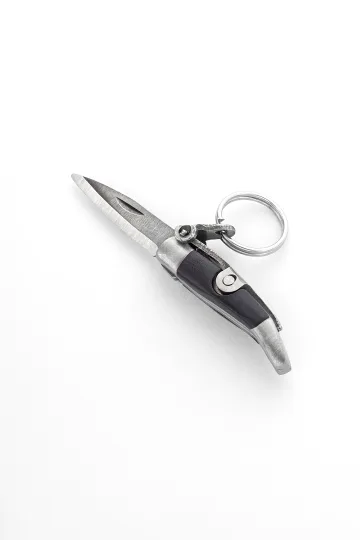
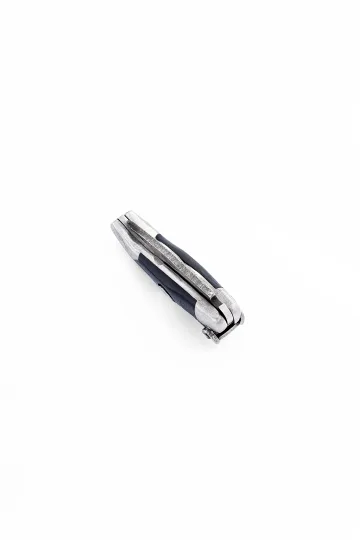
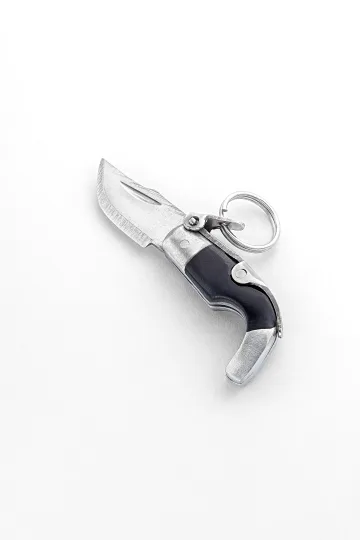
CAPAORA mini knife pendant
The 18th-century Spanish navaja in miniature: 40 mm of stainless steel, a real folding mechanism and a Palanquilla lock that clicks. An affordable gift to remember.
Authentic · Ships from Spain · 14-day returns
Laurel in Art, Heraldry and Awards
The laurel wreath is one of the most frequent motifs in European art. Apollo with laurel, the poet Petrarch crowned with laurel in Rome in 1341 (from which the very notion of "poet laureate" comes), allegories of Victory and Glory with laurel branches in hand, all of these were painted and sculpted for centuries. Bernini has a famous sculpture, Apollo and Daphne, where you can see the nymph's fingers sprouting laurel leaves. Renaissance and Baroque artists adored this subject for its drama and for the chance to show flesh turning into wood.
In heraldry and state symbolism laurel means valour and merit. Laurel branches surround crests, frame orders and medals, wind around columns on monuments. A wreath of laurel and oak together is a frequent military symbol: laurel for victory, oak for steadfastness. On many awards, from ancient times to modern orders, the laurel branch is an obligatory element. Even banknotes and seals of various countries carry laurel as a sign of authority and dignity. This ubiquity made laurel a visual synonym for the very word "award".
Laurel in Painting
Artists returned to laurel again and again, because it gave both a beautiful shape and a ready meaning. Apollo was almost always painted crowned with laurel, lyre in hand, golden and young. Allegorical figures of Glory and Victory hold a laurel wreath above a hero's head or hold it out before them, a gesture you recognise on hundreds of canvases and frescoes. The subject of Apollo and Daphne became a favourite of Baroque masters for its drama: the moment of transformation, when the nymph's fingers and hair sprout leaves, let an artist show movement, horror and wonder at once. A laurel wreath in a portrait worked as a message too: if a person is shown in laurel, they are a thinker, a poet or a victor, and the viewer of that age read it instantly.
Laurel in Literature and Language
Laurel has grown deep into language, and often we use it without noticing. "To reap the laurels", "to rest on one's laurels", "to look to one's laurels", all these phrases are about glory and the unease of falling behind. English laureate, Italian laureato (the name for a university graduate in Italy), French lauréat all come from the one Latin root. In poetry laurel became shorthand for the lofty: to crown with laurels, the laurel crown of glory. This linguistic ubiquity matters for a piece of jewellery too: when a person wears laurel, they lean on a meaning already stitched into speech, and so the symbol reads with no explaining.
Famous Laurel Wreaths in History
A few wreaths became truly legendary. The wreath of Julius Caesar, which the senate granted him the right to wear, turned into a mark of sole power and, in the end, into one of the pretexts for the plot against him. Napoleon's golden wreath, worn at the coronation of 1804, was made by Parisian jewellers on a Roman model from thin gold leaves; after the empire fell the wreath was taken apart, and its leaves scattered into collections and the melting pot. The wreaths of the Pythian victors did not survive, because they were living and dried out, but their image reached us through vase painting and sculpture. And the most widespread "wreath" today is, perhaps, the festival laurels on film posters: billions of people have seen them with no idea they were looking at a descendant of the Delphic prize.
Laurel Against Olive, Oak and Myrtle
All four plants gave wreaths in antiquity, but their meanings differ, and when choosing a piece this is worth understanding.
Laurel and Olive: Victory Against Peace
Laurel is the prize of the Pythian Games and the Roman triumph, a symbol of victory and glory. Olive is the prize of the Olympic Games and an ancient sign of peace (the olive branch still means reconciliation). Telling the leaves apart is not hard: laurel's leaf is larger, denser, with a pointed tip, olive's is narrow, silvery-green, small. If the idea of achievement and triumph matters to you, choose laurel. If the idea of peace, harmony and calm, olive is closer.
Laurel and Oak: Glory Against Steadfastness
The oak wreath (corona civica) in Rome was given to one who had saved the life of a citizen in battle, an honour for valour and steadfastness rather than for victory as such. Oak is about strength, endurance, sturdy resolve. Laurel is about triumph and recognition. Oak leaves with their wavy edges and acorns are unmistakable. These two symbols are often joined together on awards, and in jewellery such a pairing turns up too.
Laurel and Myrtle: Triumph Against Love
Myrtle is the plant of Venus, a symbol of love and marriage. Brides were adorned with a myrtle wreath, woven into wedding headdresses for centuries. Laurel is about public glory, myrtle about love and family. If the matter is a wedding, myrtle is historically more exact, but laurel suits too, as a wish for love "triumphant". Myrtle has small, oval, glossy leaves and white flowers, laurel has large matte leaves and no flowers.
The roots of all these wreaths reach into the Greek pantheon: laurel is Apollo, olive is Athena, myrtle is Aphrodite. Which plant is dedicated to whom is set out in detail in the piece on the Olympian gods.
Facts That Surprise
The word "laureate" literally means "crowned with laurel". From the Latin laureatus. A Nobel laureate is a "person in a laurel wreath", though no actual wreath is handed over, of course.
Baccalaureate comes from laurel too. By one account the Latin bacca lauri, "laurel berry", gave the word baccalaureus, hence "bachelor" and "baccalaureate". A young graduate is, as it were, a person with the first laurel berries, not yet a full wreath.
Caesar, by rumour, loved the wreath because of his bald spot. Suetonius wrote that Julius Caesar was delighted by the right to wear the laurel wreath always, because it hid his receding hairline. So the highest state symbol solved a household problem on the side.
Laurel really is evergreen. Laurus nobilis does not drop its leaves in winter, and that is exactly why the ancients made it the symbol of unfading glory. The metaphor is literal, not invented.
The Delphic Pythia, by tradition, chewed laurel. The prophesying priestess drew inspiration from Apollo's laurel before a session. Modern researchers argue over the causes of the oracle's trance, but laurel was certainly there in the story.
The Greeks called laurel "daphne". After the nymph Daphne, who turned into a tree. The woman's name Daphne is still common, and it means, quite literally, "laurel".
The film-festival "laurels" are a direct descendant of the ancient wreath. The two brackets of leaves around a film's title on a poster, the sign that the picture won something or was selected, repeat the shape of the ancient corona.
Napoleon was crowned in a golden laurel, not a crown. In 1804 he put on a wreath of Roman model to underline his succession from Caesar rather than the French kings. This wreath survived in part: its leaves were later sold off and melted down.
An Italian graduate, in the literal sense, "receives laurel". A university degree in Italy is called laurea, and the graduate laureato, the crowned one. At graduation there a real wreath of laurel leaves is sometimes still worn, closing a tradition two thousand years long.
The Greeks had four "wreath" games, each with its own plant. The Olympic crowned with olive, the Pythian with laurel, the Isthmian with pine, the Nemean with celery. An athlete who won all four was called "periodonikes", the one who completed the circuit.
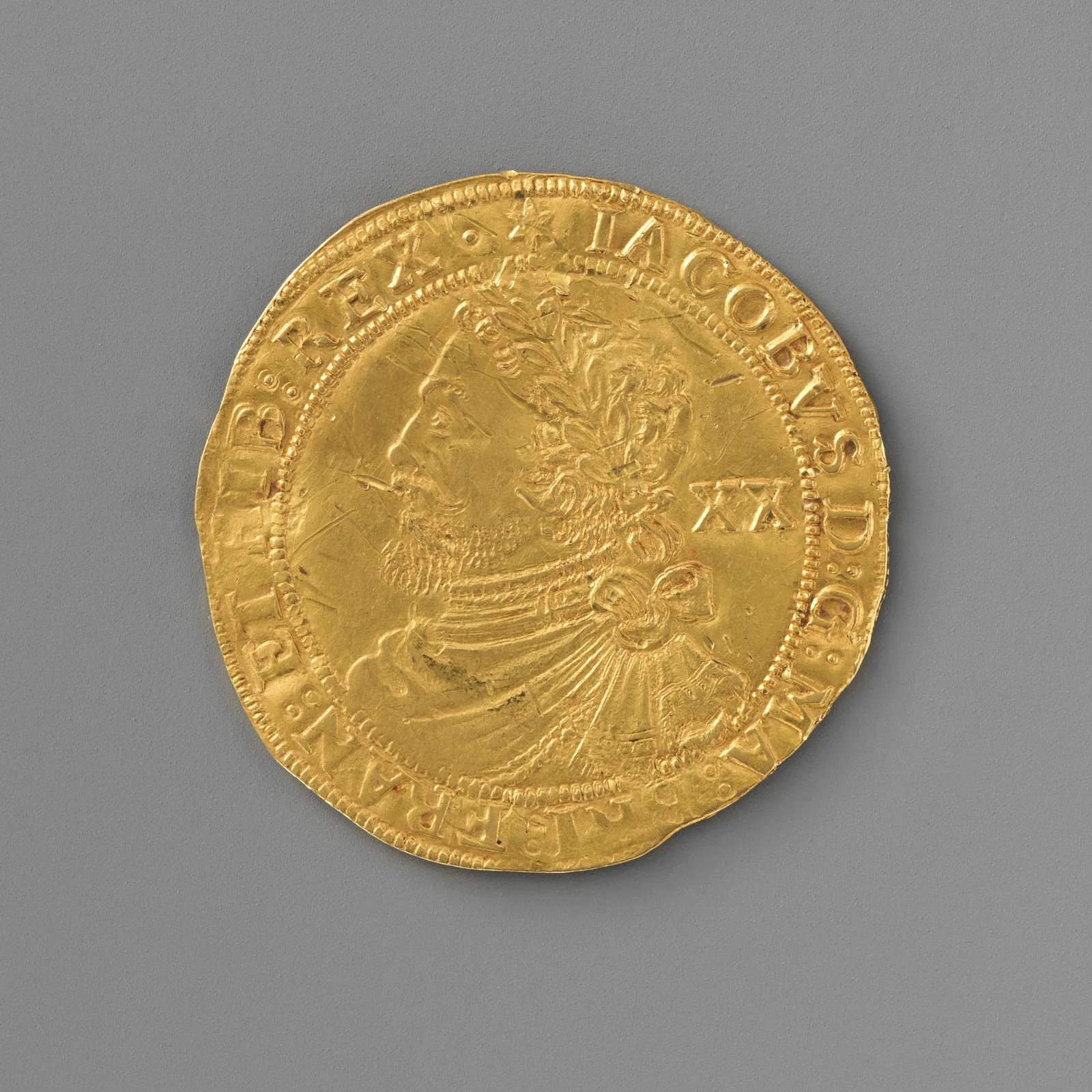
Laurel travelled on coins for thousands of years. From the profiles of Roman caesars in the wreath to the English "Laurel" of James I, named straight for the laurel on the king's head, laurel leaves on money meant one thing: here is lawful power, recognised and crowned.
Send a friend a discount code, they save on their first order.
Frequently Asked Questions
What does a laurel wreath symbolise in jewellery?
First of all victory, triumph and earned recognition. On top of that, glory that does not wither (laurel is evergreen), peace and reconciliation, the poetic and creative gift. Laurel reads as a quiet statement of achievement and suits those who have completed an important stage.
How does a laurel wreath differ from an olive one?
Laurel is victory and glory, the prize of the Pythian Games and the Roman triumph. Olive is peace and the Olympic Games. By appearance laurel's leaf is larger, denser and pointed, olive's is narrow and silvery-green. The meaning differs: laurel is about triumph, olive about calm and accord.
Can a man wear a laurel wreath?
Yes. Laurel was originally a male military and imperial symbol; it crowned generals and caesars. For a man's look a stricter silver or steel wreath is usually chosen, a sprig pendant on a chain or a ring with laurel. The symbol has no limits by gender.
Does a laurel wreath suit a wedding?
Yes. The bride can wear a laurel tiara or wreath-diadem for an ancient and Empire look, and a sprig pendant as a soft accent. Laurel at a wedding reads as a wish for love triumphant and peace in the home. Historically myrtle was used more often for brides, but laurel suits too and looks more ceremonial.
Which metal is best to choose for a laurel wreath?
Gold is the most canonical, ceremonial option (ancient and Empire wreaths were gold). Silver gives a restrained everyday laurel. Enamel returns the leaves to their natural green. Coated steel is the practical no-care choice. The symbolism does not change with the material; the meaning of laurel is in the shape.
Where does the word "laureate" come from?
From the Latin laureatus, "crowned with laurel". In antiquity victors and poets were crowned with laurel, and the word stuck to those judged the best. A Nobel laureate, a prize or competition laureate are all "crowned with laurel", though no one has put on a real wreath for a long time.
Is the laurel wreath a Christian symbol?
No. Laurel is an ancient, pre-Christian symbol tied to the god Apollo, the Greek games and Roman power. It should not be confused with the crown of thorns, which belongs to the Christian symbolism of suffering. Laurel is neutral toward religion, so people of any belief wear it.
Which form of laurel wreath to choose as a gift?
For graduation or an achievement, a sprig pendant or a modest wreath ring, the meaning reads at once. For a wedding, a laurel tiara or diadem. For every day, a delicate sprig on a chain or small leaf earrings. Laurel makes a fine, meaningful gift: to give it is to acknowledge someone's merit.
Conclusion
The laurel wreath travelled from the head of a Delphic champion to a badge on a diploma without once losing its meaning. It is a symbol of earned victory, unfading glory and recognition, legible without words and with no religious attachment. In jewellery it lives in sprig pendants, band rings, tiaras and earrings, in gold, silver and enamel. To wear laurel is to say that the road has been walked, and walked well. It is a strong personal mark and a gift that rarely misses for someone who has achieved something and earned recognition.
Silver, gold, symbolism, wedding rings, paired sets and jewellery with meaning.
Buying it as a gift? Each one arrives ready to give.
 A branded Zevira box and a little card come with every order.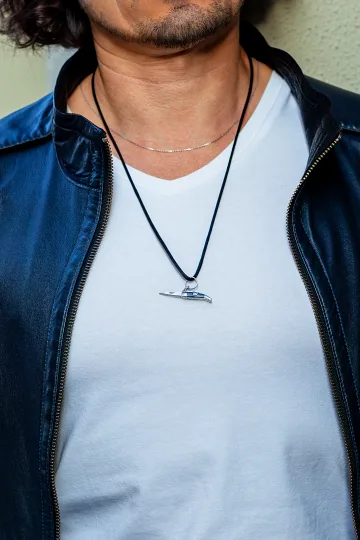












About Zevira
Zevira is jewellery with a history. We gather symbols proven by time: amulets, signs of luck, ancient motifs like the laurel wreath. Every piece here says something rather than merely shining. If the idea of an object with meaning is close to you, take a look at what is in stock.