Tiaras and Diadems: When to Wear Them, the Difference, and How
The diadem is older than the crown. Gold headbands turn up in Bronze Age graves, thousands of years before the first kings in any sense we would recognise. The word itself is Greek, diadema, and it means nothing grander than a band. Not a crown, not a badge of power, just a ribbon tied around the brow. From there it travelled all the way from the headband of a winning athlete to the centrepiece of a wedding morning.
A fog of confusion has settled over the tiara and the diadem. People treat them as the same thing, mix them up with festival headdresses, and hesitate to wear one to a graduation for fear of looking like they raided a costume box. Yet headwear is quietly coming back. Brides wear it, graduates wear it, pageant finalists wear it, actresses wear it on stage, and ordinary women wear it for a milestone photo shoot.
This piece covers how a tiara differs from a diadem and from the rest of the family, where they came from, what they are made of, and above all when such a piece belongs on your head and when it tips an outfit into fancy dress. Plus an honest word about the everyday mini tiara, fixing it into your hair, and looking after it.
Before the rules and the history, a quick orientation. Headwear lives on a spectrum, from a plain band you could wear to the shops to a towering parade piece that only suits a wedding or a stage. Knowing where a given piece sits on that spectrum is the whole game, and the short quiz below is a fast way to place yourself on it.
Tiaras, Diadems, and Their Relatives: Who Is Who
How a Tiara Differs From a Diadem
There is no strict border between the two words, and arguing over it is like arguing where a hill ends and a mountain begins. In short: a tiara is a semicircle, an arc above the brow that does not close at the back of the head. A diadem, in the original ancient sense, is a band or ribbon that runs around the head fully or almost fully. In everyday speech a tiara is usually the tall ceremonial piece with peaks and stones, while a diadem is the lower, smoother strip. A shop will happily sell you both under either name, and there is no real harm in that.
What a Festival Headdress Is and Why It Comes Up
Across many cultures there are stiff folk headdresses, dense and often covering the whole forehead with a tall panel embroidered in pearls, beads, and river nacre. They differ from a tiara in that they are not a metal frame set with stones but a fabric or board base with rich embroidery. In the jewellery world, though, there is a form named after them, the kokoshnik tiara: a tall band that rises above the brow as an even wall, with no sharp peaks. The shape grew out of imitating those folk headdresses and became a classic of formal diadems.
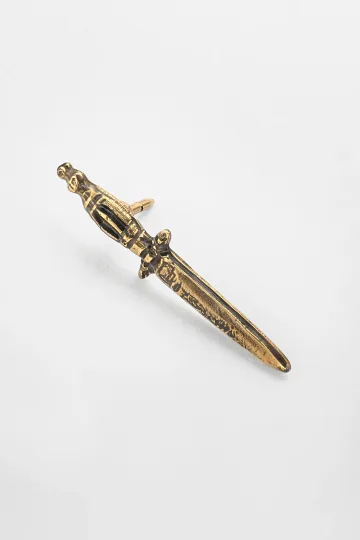
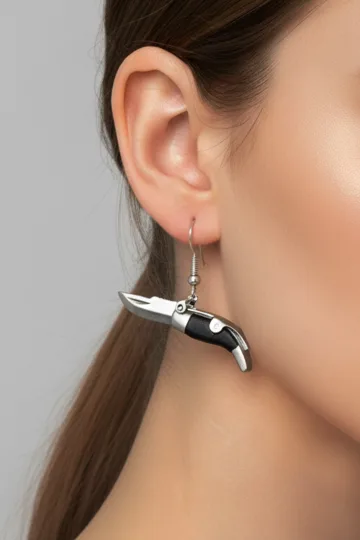
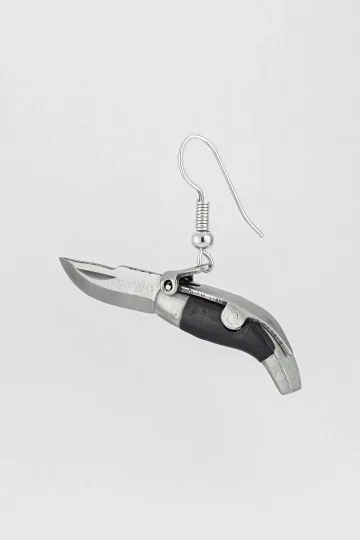
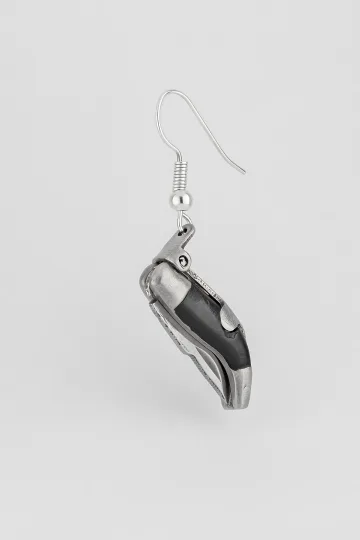
Wear the symbol, don't just read about it. These are in stock:







Bandeau: The Diadem That Slipped Onto the Brow
A bandeau is a low, wide band worn straight along the hairline rather than on the crown. Its heyday came in the 1920s, when cropped hair and dropped waists called for an ornament that ran across the forehead, sometimes with a feather or a brooch off to one side. The bandeau is the closest living thing to the ancient diadem-as-ribbon, and today it returns at themed evenings and jazz-flavoured photo shoots.
Wreath, Crown, and Where the Line Falls
A wreath and a crown are already marks of power and rite. A wreath closes into a ring and is often tied to a wedding ceremony or a coronation. A crown is heavier and taller, often with arches meeting at the top, and only a narrow circle of people wear one, on strictly defined occasions. The tiara and the diadem are lighter and more democratic: an ornament, not a regalia, and anyone with a reason and the wish can put one on. If the symbolism of power is what interests you, there is a separate read on the crown in jewellery.
Comb, Headband, and Hair Pin: Close Neighbours
A whole family of hair ornaments lives next door to the tiara. A comb holds on by teeth pushed into the hairstyle and can carry the same decoration overhead that a tiara does. A headband is a smooth or decorated arc with no tall top, the everyday relative of the diadem. A hair pin or clasp fastens a single element into the hair. They all solve one task in different ways: to lift and adorn the head.
Ferronnière: A Stone That Drops Onto the Forehead
The ferronnière deserves a word of its own. It is a fine chain or band around the head with a single stone or pendant set exactly at the centre of the forehead. The fashion for it came out of the Renaissance and returned in the romantic nineteenth century. A ferronnière does not lift the hairstyle the way a tiara does; instead it softly underlines the line of the brow, and today it is loved for its tender, slightly mysterious look in photographs.
Aigrette: A Feather on the Head
An aigrette is an ornament with a feather, or an imitation of one, fixed above the brow on a frame. In the early twentieth century no formal evening got by without one. The aigrette is closer to a hair brooch than to a tiara, but it solves the same task: to add height and movement. Today a feather in the hair reads as a retro accent for a themed look.
History: From the Bronze Age to the Wedding Morning
The Ancient Near East and the First Headbands
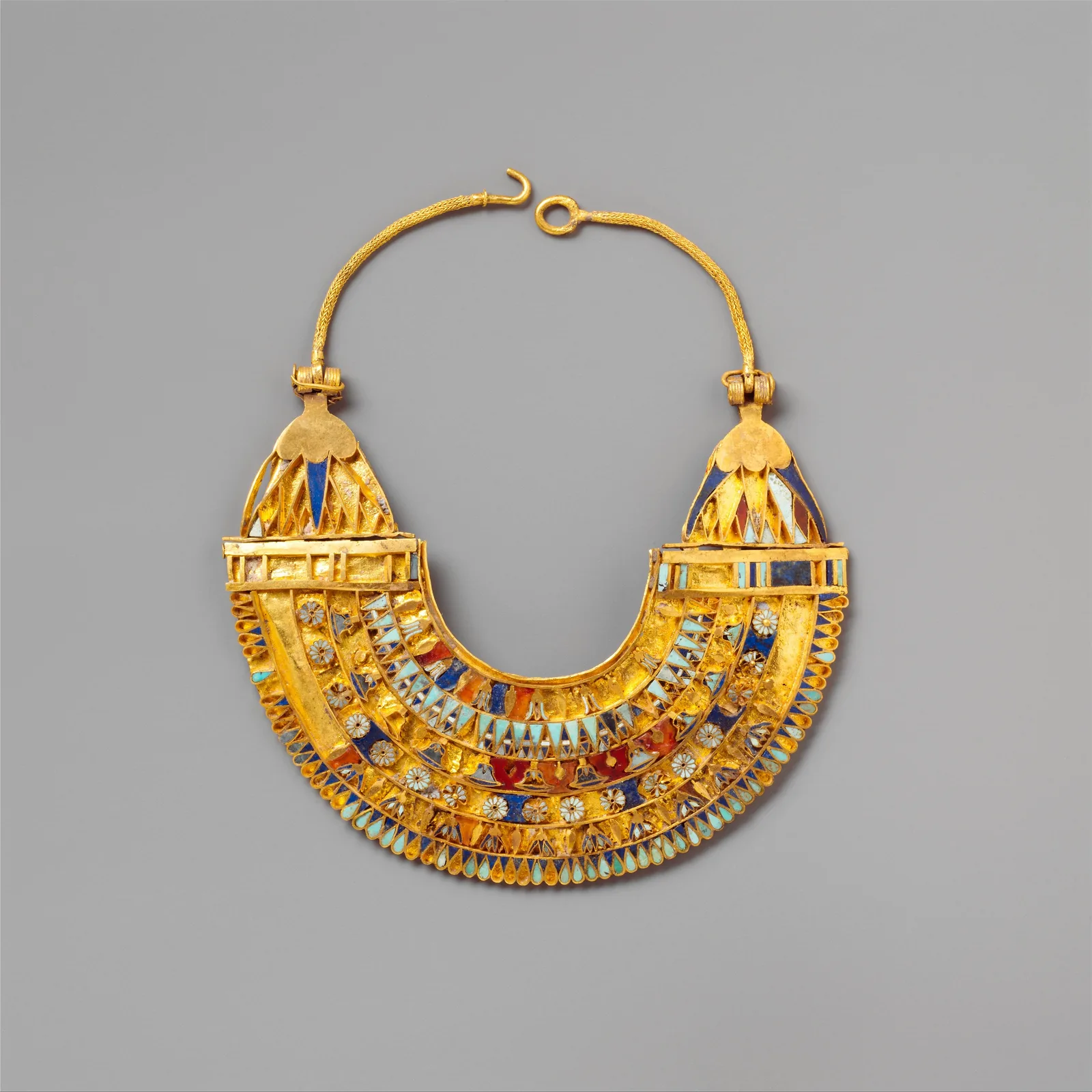
The earliest ancestors of the diadem are gold headbands and hoops from the graves of Mesopotamia and the Aegean. The royal tombs of Ur held the finest gold ribbons, leaves, and flowers, all made to be fixed to the head. These things were worn by the living at feasts and by the dead in burial. Even then, metal on the brow meant both beauty and standing: the finer the work and the more gold, the higher the owner stood.
Greece: The Band of the Victor and the Bride
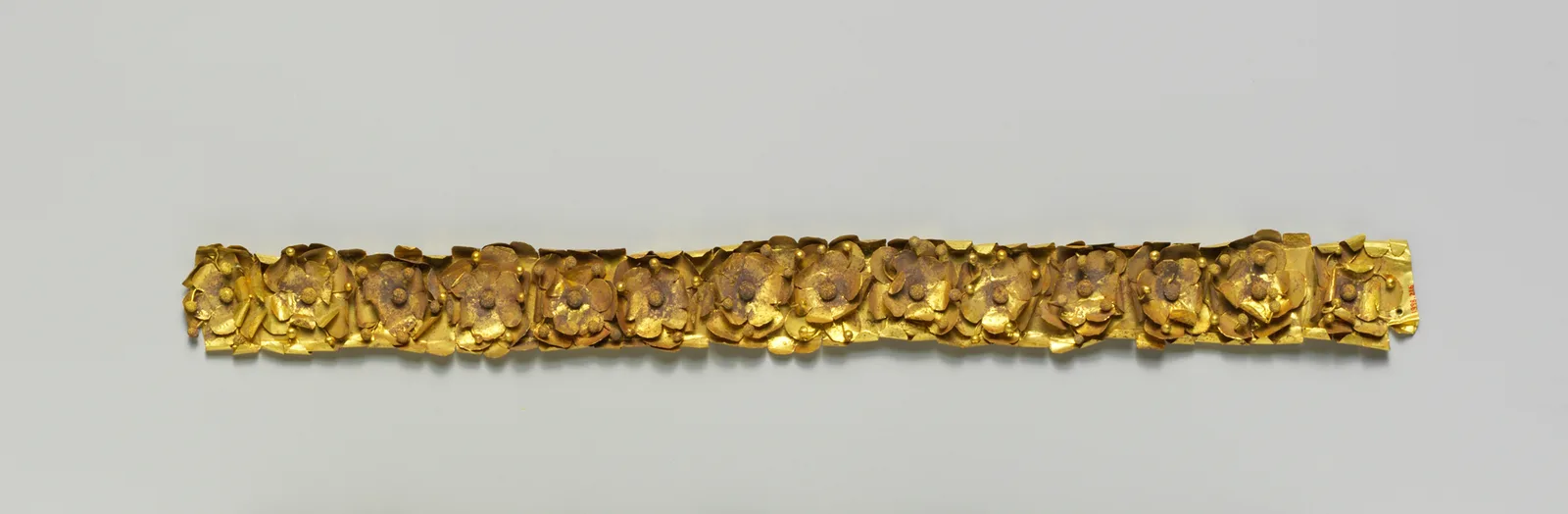
For the Greeks the diadema was a band, plain and simple. It was tied onto the winner of the games, onto a priest, sometimes onto a bride and groom at a wedding. Alongside it ran gold stephanoi, wreaths of fine metal leaves of laurel, myrtle, and oak, worn on solemn occasions. The Greek diadem was humbler than the Eastern one in the number of stones, yet finer in its handling of metal: gold was bent into leaves and grain-ears so thin that they trembled at the slightest movement.
Hellenistic Diadems: Gold After Alexander
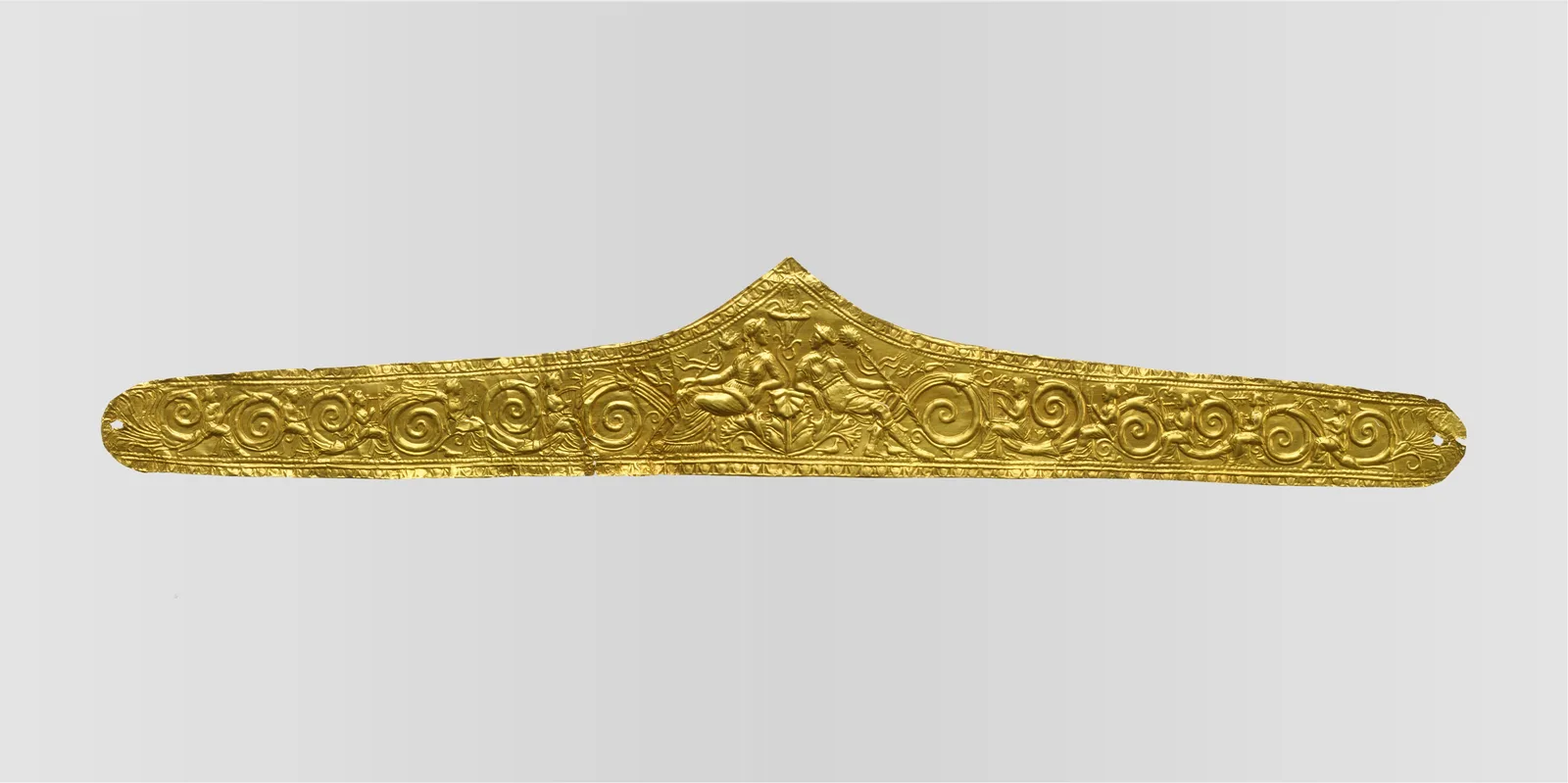
After the campaigns of Alexander the Great, the Greek world mixed with the Eastern one, and the diadem grew richer. There came the famous gold knots, the so-called knot of Heracles, at the centre of the headband, inserts of garnet and glass, fine granulation, and filigree. These Hellenistic diadems already sit close to our idea of a formal head ornament: sparkle, symmetry, a central accent above the brow.
Rome and Byzantium: From Wreath to a Halo of Gold
Rome inherited both the wreath and the diadem but gave them a tint of power. The laurel wreath became the mark of the triumphant general and the emperor. Byzantium went further and turned the diadem into part of imperial dress, sewn with pearls and pendants by the temples. From here runs the tradition of tying brow gold to the highest status, a habit that would later echo through the European monarchies.
Empire and Neoclassicism: The Return of Antiquity
At the turn of the eighteenth and nineteenth centuries Europe fell in love with antiquity all over again. High-waisted gowns, Greek-inspired hairstyles, and, of course, diadems. The Empire style brought back to the head gold wreaths of wheat and laurel, cameos set into hoops, and slender browbands. The diadem became part of society dress again, not only court dress: women with no claim to a throne wore it to balls and receptions.
The Flowering of the Nineteenth Century
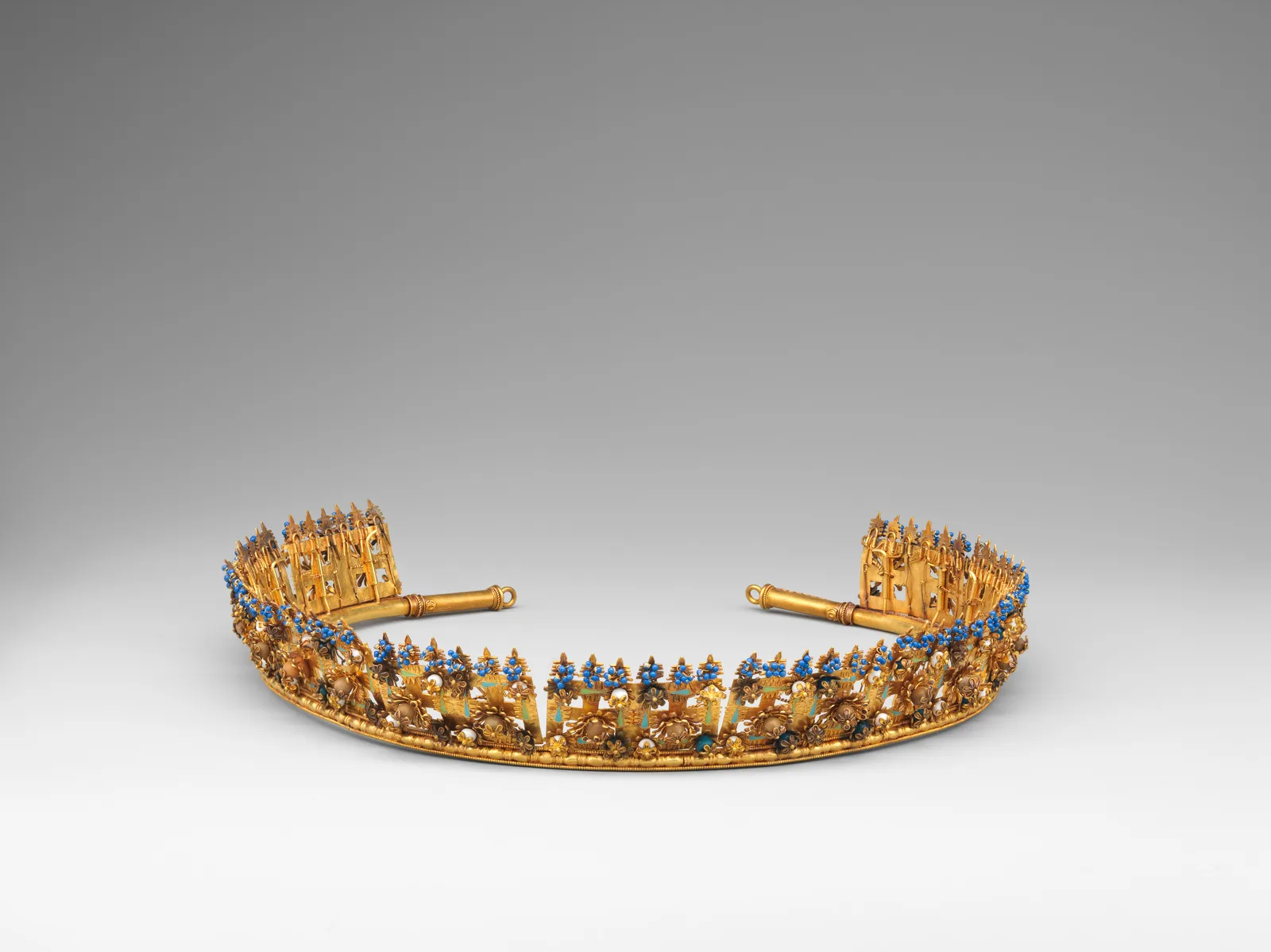
It was the nineteenth century that made the tiara what we know today. Better cutting, affordable quality crystal and silver, and a fashion for lavish evening hairstyles led to a boom in formal headwear. Transformer tiaras appeared, the kind you could take apart into brooches and a necklace; diadems on springs that quivered at every step; floral motifs, stars, and ears of wheat. An evening appearance with nothing on the head was considered unfinished.
Wedding Tiaras: How an Ornament Became Part of the Rite
The custom of wearing a tiara at a wedding took hold in the nineteenth century along with the fashion for the white dress and the long veil. The tiara held the veil and completed the bride's look, chiming with the idea of purity and celebration. It was often a family piece, passed down the female line and worn once in a lifetime. From there comes the feeling, alive to this day, that a tiara belongs to a special day rather than to ordinary life. If you are planning a wedding, look into the broader read on bridal jewellery.
The 1920s: The Bandeau and the Jazz Age
The twentieth century nearly buried the tall tiara. Cropped hair, dropped waists, and a loose silhouette called for a different ornament, and the bandeau came in to replace the formal hoop. A low band across the brow, sometimes with a feather or a brooch off to one side, sat perfectly on the short waves of a finger-curled style. It was a rare moment when the diadem literally slid down from the crown onto the forehead, closer to its ancient origin as a ribbon.
The Later Twentieth Century: The Tiara Retreats to Special Occasions
After the middle of the twentieth century, headwear gradually stopped being a required part of evening dress. Everyday fashion grew simpler, formal hairstyles became rare, and the tiara withdrew into a narrow zone of special events: the wedding, the pageant, the stage, the costume ball. That is when today's feeling settled in, that a diadem is not an everyday thing. Yet it never disappeared; it turned into a piece worn seldom but with intent.
Material decides almost everything about how a head ornament behaves: how it catches the light, how heavy it sits, how long it lasts. Before the section on occasions, it helps to know what a tiara is actually built from, frame and all.
A tiara earns a high bun and an occasion, not the coffee queue. Wear it to the office and you asked for the stares.
What to Wear a Tiara or Diadem With
Over years of shoots, weddings, and stage work I have put head jewellery through hundreds of looks. Here is what actually holds and reads, sorted by occasion and by hairstyle.
Which hairstyle carries a tiara? I always begin with the hair, not the piece. For a tall formal tiara I recommend a high smooth bun or a tight braid: they give it a firm base and a handsome pedestal, and it sits as though poured on. For soft curls and waves I suggest a mid-height diadem that lies over the volume. On straight loose hair I choose a thin headband or a low band, because a tall hoop simply will not stay put.
Which neckline and dress should the diadem follow? Bare shoulders, a boat neck, and a deep V-neck I save for a tall formal arc: the neck is free and the look reads whole. Under a high closed neckline I take a lower piece, so the accent by the face does not fight the one above the brow. Bridal white and ivory I keep with cool silver and rhodium, while cream and champagne I bring to life with warm gold plating. It helps to tie the stone colour to one detail of the outfit, a sash or embroidery.
How do you fix it securely for the whole evening? A tiara holds through the hairstyle, not by itself. I recommend at least light volume at the roots, then I hook the frame with pins through its loops, hide the ends of the arc in the hair, and if needed fix it with a thin elastic across the back under the strands. The tighter the style, the firmer the support. And always try it on in advance, on the very hairstyle you will wear: walk, tilt your head, check that it neither presses nor slides. Catching the slip a week out beats catching it five minutes before you leave.
How do you keep earrings and a necklace from overloading the look? A tiara likes to take the lead. If the brow carries large sparkle, I advise keeping ears and neck modest: small studs or a thin chain instead of a scatter across the look. Under a massive necklace, the reverse: take a simpler diadem. A simple guide: count three zones of sparkle, head, ears, neck, and let only one lead. With a veil I set the tiara in front of the veil comb or over it, so the metal stays visible.
Where should a diadem definitely not go? The border is plain: a tiara belongs where solemnity is built into the event itself. A wedding, a ball, the stage, a pageant, a dressed-up shoot, and a big celebration give both the reason and the context. A business meeting, the office, a walk, and a café I steer clear of, since there a formal piece turns into a costume. A practical test works: if you are wearing clothes in which sparkle feels surplus, the head ornament will be surplus too. For weekdays I would rather take a smooth headband, and save the tall shining arc for the evening it was invented for.

Turn on your camera, pick earrings, a pendant or a ring, and see the piece on yourself in real time.
Switch items in one tap.
Everything runs in your browser: no photo or video is ever uploaded.
Customer reviews
Zevira is a real jewellery shop. Genuine payments, deliveries and customer thank-yous.
🥰🥰🥰 gracias

Ok, ¡gracias! 🙂

What Tiaras and Diadems Are Made Of
Silver as the Classic Base
Silver has been the base metal for formal headwear for centuries. It is strong enough to hold the shape of an arc and soft enough to be drawn into thin rays and curls. The white shine of silver sits well beside clear stones and pearls without fighting them for colour. A modern diadem in sterling 925 silver is a sensible choice: a noble tone, the option to repair it, and a hallmark you can read. What that number means is set out in detail in the piece on 925 silver.
Crystal and Glass: Sparkle Without Precious Stones
Cut crystal and good glass gave the tiara the very thing people want from it, the play of light. A well-cut clear stone catches the light of the room and scatters it, creating that glow above the brow. Crystal is lighter and cheaper than diamond, it can be set in large clusters, and for evening light that is more than enough. Most of the historic formal tiaras we see in old photographs shone with crystal and paste, not with a scatter of diamonds.
Cubic Zirconia: The Modern Stand-In for a Clear Stone
Cubic zirconia is a man-made crystal that suits the role of a setting in a diadem almost perfectly in its shine and clarity. It is hard, it holds a cut, it does not cloud, and it costs sensibly. For a piece worn on special occasions, cubic zirconia solves the question of sparkle without needless spending: on the head, in motion, under evening light, it is nearly impossible to tell from a costly stone.
Pearl: A Soft Glow Instead of Flashes
If crystal and cubic zirconia give a sharp sparkle, pearl gives a soft glow. A pearl tiara looks more restrained and warmer, and it sits well in a bridal and romantic look. Pearl is often combined with clear stones: flashes along the edge and matte spheres at the centre. To pick the pearls themselves and understand their grades, there is a separate guide to pearls.
Gold Plating and Rhodium: What a Coating Changes
The base metal is often covered with a thin layer of another. Rhodium plating adds a cold mirror shine to silver and guards it against tarnish. Gold plating gives a warm golden tone that befriends warm skin and champagne shades of dress. A coating does not change the build, but it sets the mood: cool silver under a white dress, warm gold under cream and beige.
Brass and Silver Plating in Affordable Tiaras
In the affordable end of formal headwear, brass under silver or gold plating often does the work. Brass is hard, holds a complex arc, and takes a coating well. It has one drawback: over time the thin layer of silver or gold wears away at the points of friction, and the yellow base metal shows through. For a piece worn a few times in a lifetime that is no problem, but for frequent wear sterling 925 silver is more dependable.
Frame and Fixings: The Invisible Engineering
The least visible part of a tiara is its skeleton. Under the decoration hides a springy arc, loops for pins, sometimes mini combs along the edges, and the fine wire that draws the elements down into the hair. The quality of the frame decides whether the piece presses on the head and whether it holds all evening. A good diadem springs, following the shape of the head, rather than sitting on it as a dead ring.
Weight: Why a Light Tiara Wins
Weight decides whether you can bear the piece through the whole celebration. A heavy formal piece starts, by the end of the evening, to press on the temples and leave a mark on the skin. Experienced makers lighten the build: they make the frame from thin springy wire, set hollow elements, and choose light crystal over dense stones. A light diadem is barely felt on the head, and it is the one you want to put on again rather than take off within the hour.
Enamel and Colour: When a Tiara Is Not Only Clear
Not every diadem is colourless. Enamel, coloured glass, and coloured stones add a shade and a character to headwear. Blue enamel chimes with the eyes, a warm scatter of amber glass befriends a golden dress, a floral diadem with green leaves looks fresh at a summer wedding. Colour makes a piece more individual and helps tie it to the rest of the look, rather than tossing a random flash above the brow.
Upload a photo of your pet, someone you love, or an object. We'll build a 3D model and hand-cast it in pewter.




When a Tiara or Diadem Suits the Day
The Wedding: The Main Occasion
The wedding stays the occasion above all others. A tiara holds the veil, completes the hairstyle, and works as an accent in pictures that will last a lifetime. There is almost no risk of overdoing it here: the solemnity of the moment justifies the sparkle. The only thing to settle is matching the diadem to the dress and veil in metal tone, and not overloading the look if the earrings and necklace are already large.
Graduation: Yes, If You Keep It Measured
Graduation is the second legitimate occasion. A low diadem or a slender stone-set headband looks right under an evening dress. The secret is restraint: for a young look, choose a delicate arc rather than a massive ceremonial piece. A thin shining line in the hair adds a sense of celebration without turning the graduate into a costume-film queen of the ball. The subject is also covered in the piece on jewellery by face shape, which helps you get the proportions right.
Ball and Theatre: The Tiara's Natural Home
A costume ball, an opera premiere, a formal reception with an evening dress code: this is the natural habitat of the diadem. Here a tall ceremonial piece does not look out of place, because the whole context is solemn. The evening light of grand halls seems made for crystal: it comes alive under chandeliers and spotlights the way it never will under daylight.
A Photo Shoot: A Chance to Try a Crown Without a Crown
A photo shoot grants a freedom real life does not. An anniversary session, a boudoir series, a themed portrait in the spirit of the Empire era or the 1920s, a family album for a milestone. In the frame a tiara reads as an artistic device, not a claim. It is a safe way to try a look that would feel too bold on an ordinary day.
Stage and Performance: An Ornament Seen From the Back Row
On stage the rules are different. A performer, a dancer, a host of the evening needs something visible from afar, and a tiara does this better than earrings. Stage light demands large sparkle, so tall diadems with a generous scatter of stones belong here. What would look excessive in daily life reads from the stage as exactly right.
A Beauty Pageant and the Crowning of the Winner
Pageants have kept the tiara as a literal symbol of victory. The finalist receives a crown or diadem as the badge of a title, and here the ornament carries a direct meaning reaching back to the ancient victor's wreath. It is a rare modern case where a tiara means precisely what it meant thousands of years ago: recognition of the best. Dance and ballet competitions added a custom of their own: a classical variation on stage is almost unthinkable without a diadem in the hair, and there it is not an ornament but part of the costume of the role.
A Class Reunion and a Graduation Anniversary
A separate and warm occasion is the anniversary of a graduation and the reunion many years on. An evening of memories in a dressed-up hall allows a light diadem just as the graduation once did. Headwear here links past and present: what was worn young can be worn again, now with other experience behind you. A restrained shining arc adds solemnity to the evening without overload.
Where a Tiara Is Not Worn
There is a flip side. A business meeting, the office, a walk, a trip to a café: this is not the territory of a formal diadem. Here it looks like a costume rather than an ornament, and it reads as misplaced. The rule is simple: a tiara suits the day where solemnity is built into the event itself. If the occasion is ordinary, better to take a thin headband, a comb, or to make do with earrings.
A Milestone and a Round Anniversary
Between the wedding and the ordinary day sits a wide band of occasions where a diadem belongs. A round anniversary, a golden or silver wedding, a formal family dinner in honour of a date, an appearance in public for a large personal event. Here headwear works as a sign that the day is special. A low diadem or a rich headband is enough to mark the solemnity without going to wedding scale.
New Year and a Big Celebration
New Year's Eve and large home celebrations grant a rare freedom: sparkle here is both allowed and welcome. Under an evening dress and a dressed table, a thin shining diadem reads as part of the festive mood rather than a claim. It is a convenient occasion to try headwear for the first time, without waiting for a wedding or a ball.





How to Fix It and Choose It for Yourself
How a Tiara Holds on the Head
The ornament holds on not by itself but through the hairstyle. A diadem is fixed with hidden pins through the loops in the frame, hooked onto a backcomb, with the ends of the arc hidden in the hair and sometimes secured with thin bands or an elastic across the back of the head under the hair. The tighter the hairstyle, the firmer the support. On smooth loose hair a tall tiara is hard to hold, so at least a light volume is usually made at the roots beneath it.
Where to Set It: On the Crown or Nearer the Brow
The position changes the whole look. A tiara on the crown, set back a little from the hairline, reads as the classic, royal seating. A diadem lowered nearer the brow gives a bohemian, ancient mood, especially if it is a low band or a bandeau. There is no universal rule: a tall formal piece is more often set on the crown, a low band nearer the brow.
For the Face Shape and the Height of the Brow
The geometry of the face hints at the choice. A high forehead suits a diadem set lower, which visually shortens the distance. A low forehead, by contrast, suits a piece set higher, so as not to press on an already short zone. A round face is slimmed by a higher central section of the tiara, a long face by an even horizontal line. The logic of choosing for the face is set out in more detail in the guide to earrings and face shape, and the same principles work for headwear.
For the Hairstyle: Bun, Curls, Loose Hair
Each hairstyle asks for its own. A high bun is the ideal support for a formal tiara and at the same time a handsome pedestal. Curls and waves go well with a mid-height diadem that lies over the volume. On straight loose hair a thin headband or a low band holds more reliably than a massive hoop. A good hairdresser allows for the weight and shape of the ornament in advance, rather than trying to fit it on at the last moment.
Pairing With a Veil and Other Jewellery
A tiara lives in an ensemble. With a veil it is usually set in front of the veil comb or over it, so the metal stays visible. With earrings and a necklace the rule of balance works: if the head carries a large accent, the ears and neck had better stay modest, or the look is overloaded with sparkle. One leading element always beats three competing ones.
Metal Tone for Hair and Skin
The metal of a diadem is better matched to you than to the dress alone. Cool silver and rhodium freshen dark and ashy hair and befriend a cool skin tone. Warm gold comes alive on chestnut and red hair and suits warm skin. Light hair takes either, with the overall mood of the look mattering more. When the metal is in tune with the face, the ornament looks like part of the person rather than something stuck on top.
How to Try It On and Check the Fit in Advance
A tiara should not be left to the last day. Try it on ahead of time, ideally on the very hairstyle you will wear on the day, walk about the room in it, tilt your head, check that it does not press or slide. Better to discover that a piece slips a week before the event than five minutes before you leave. A good hairdresser does a trial styling under the ornament, so that everything holds without surprises on the day.
Leave your email, we'll send your discount code. No spam, unsubscribe anytime.
The code arrives by email, valid on your first order.
Tiara Versus Comb and Headband
Tiara Versus Hair Comb
A comb is the more modest and flexible alternative. It holds by its own teeth, needs no grip around the whole head, and tucks easily into the hair at the side or the back. A tiara is more visible and more ceremonial; a comb fits more subtly into a look and suits less formal occasions. If you want sparkle without a crown above the brow, the comb is the moderate path.
Tiara Versus Headband
A headband is the everyday relative of the diadem. It is lower and simpler, worn with ordinary clothes, and needs no special occasion. A tiara is formal and tied to an event. Put bluntly, you can wear a headband to work; a tiara you cannot. Between them lies a middle zone: a decorated headband with a scatter of stones at a celebration can play the role of a light diadem.
When to Choose Which
The choice comes down to the scale of the occasion. A wedding, a ball, the stage, a pageant call for a tiara. A graduation, a formal dinner, a dressed-up photo shoot allow a mid-height diadem, a rich headband, or a comb. Weekdays and semi-festive outings are the territory of the thin headband. The more solemn and rare the event, the taller and brighter the headwear can be.
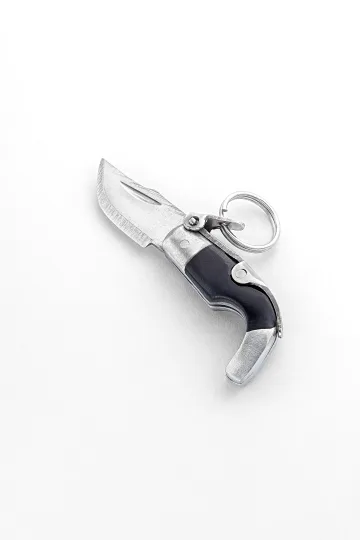
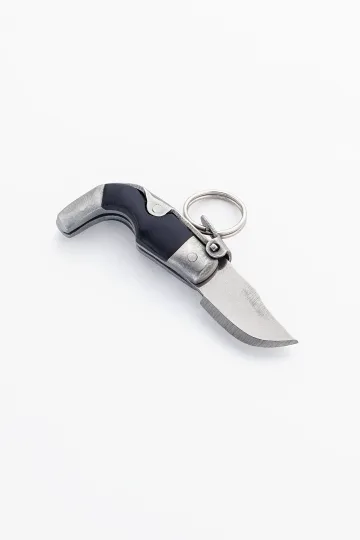
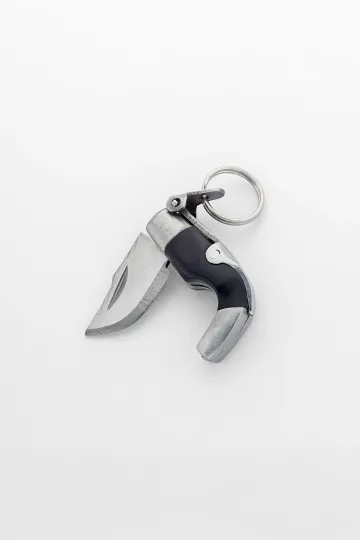
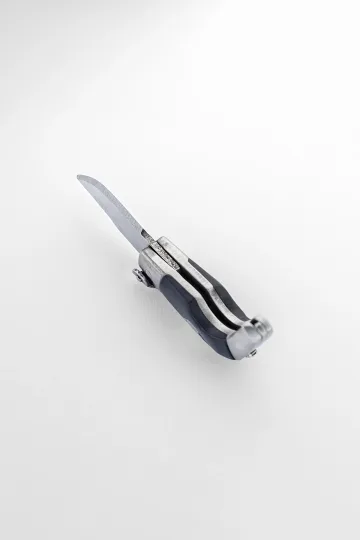
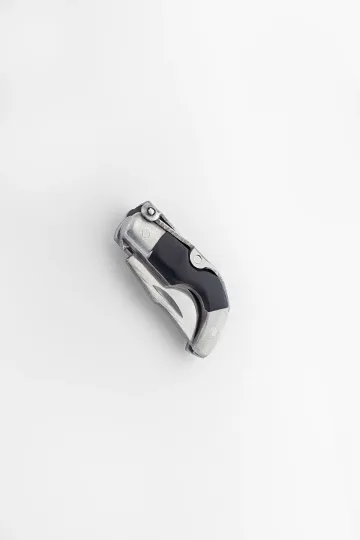
CAPAORA mini knife pendant
The 18th-century Spanish navaja in miniature: 40 mm of stainless steel, a real folding mechanism and a Palanquilla lock that clicks. An affordable gift to remember.
Authentic · Ships from Spain · 14-day returns
A Mini Tiara Every Day: Can You
What a Mini Tiara Is
A mini tiara is a low narrow arc with a small scatter of stones, more a hint of a diadem than a formal piece. It does not rise high above the brow and reads as a decorated headband. That is exactly why it is easier to fold into ordinary life: the sparkle is there, but the royal scale is not.
Where It Suits Outside a Celebration
A mini tiara can be worn to a date, to a festive dinner, to a party, to a shoot for social media. The one condition is an outfit and a context in which sparkle in the hair does not argue with the surroundings. With a dressed-up dress and evening make-up, a thin shining arc looks like a considered accent rather than a costume.
How Not to Turn Weekdays Into a Carnival
The border is thin but real. With a business suit, with sportswear, and under daytime office light, even a mini tiara looks alien. A simple rule works: if you are wearing clothes in which sparkle feels surplus, the head ornament will be surplus too. For weekdays it is more honest to take a smooth headband without stones, and to save the shine for the evening.
Facts That Surprise
The Transformer Tiara: An Ornament That Comes Apart
Many historic tiaras were cleverly built: they could be taken apart into separate brooches and pendants and even turned into a necklace. This solved two problems at once, economy and versatility. A woman bought one costly piece and wore it now on the head, now on the chest. Such transformer tiaras were prized especially highly for the ingenuity of their construction.
Quivering Diadems on Springs
In the nineteenth century, ornaments on the finest springs came into fashion; in French they were called en tremblant, trembling. Flowers, stars, and ears of wheat were fixed so that they swayed faintly with every movement of the head and caught the light from different angles. The tiara literally shimmered while its owner walked across the hall.
A Wreath Instead of a Crown for Victors
The direct ancestor of the tiara is not a crown but the wreath of the athlete and the poet. In antiquity the winner of the games, the triumphant general, and the favourite of the muses were crowned not with the metal of power but with a ring of leaves. From here runs the idea that something worn on the head signifies achievement rather than birth. The modern crown of a pageant winner is a distant echo of that very laurel wreath.
The Custom of Wearing a Tiara After Marriage
In some aristocratic circles an unspoken rule applied: an unmarried girl did not wear a tiara, and the right to one came only after the wedding. The diadem was a sign of a married woman's status and of belonging to the family she had entered. The wedding tiara, in this sense, was both an ornament of the day and an initiation into a new status.
Ears of Wheat, Stars, and the Knot of Heracles
The motifs of formal headwear repeat across centuries for a reason. Ears of wheat meant fertility and plenty, stars meant the sky and luck, laurel meant victory, and the knot of Heracles, a twisted loop at the centre of a diadem, was held to be a charm against evil as far back as Hellenistic times. In wearing such a piece, a woman carried a whole code of ancient wishes on her head.
Its Own Language of Flowers on the Head
Floral diadems spoke a language of flowers for centuries. Orange blossom was a required attribute of the bride and meant purity and fertility, myrtle stood for love, laurel for victory, and ears of wheat for plenty. A young woman put on her head not pretty curls of metal but a whole message, understood by everyone around her. This quiet language of plants in headwear has survived into our floral tiaras, though few today read it literally.
The Tiara Worn Upside Down
Among the transformers were some truly cunning pieces: diadems that could be turned over and worn the other way for a different pattern, or bent into a choker for the neck. One piece gave its owner several different ornaments depending on how it was turned and fixed. This was not a whim but practicality: costly metal and stones worked to the full, changing their role from evening to evening.
Pearl in the Hair as a Sign of Purity
Pearl in wedding diadems did not appear for beauty alone. Behind it trails a long symbolism of purity and of tears turned to joy. Pearl on a bride's head was thought to bring peace to the home. This same logic of pearly purity was long tied to a Spanish wedding tradition as well, which has its own telling in the read on the mantilla and peineta.
Send a friend a discount code, they save on their first order.
Care and Storage
How to Clean a Tiara
Formal headwear picks up hairspray, powder, and skin oil along the edge of the arc. Clean it with a soft brush and a weak soapy solution, going gently between the stones, then wipe it dry and keep harsh chemicals off the settings. Pearl and glued stones dislike soaking, so they are wiped only with a damp cloth. After each outing it is worth wiping the diadem before you put it away.
How to Store It Without Breaking the Frame
A tiara dreads pressure on the arc. Store it in a box shaped to fit, without crushing the frame and without stacking other things on top. Crystal and cubic zirconia grow dull over time from dust, so keep the ornament in a closed box or a soft pouch. It helps to line a silver base with an anti-tarnish cloth so the metal does not darken between outings.
What to Do If a Stone Falls Out
A scatter of small stones will sooner or later lose one of its elements, especially if the tiara is worn often. Do not glue the stone back with household glue: it clouds and spoils the neighbouring settings. The right path is a workshop, where the stone is seated on a jeweller's compound or reset. Timely repair costs less than restoring a diadem that has shed its stones entirely.
How to Travel With a Tiara
A formal piece often has to travel to the place of a wedding or a shoot, and the journey is the chief enemy of a fragile frame. Pack the tiara in a hard box shaped to fit, cushion it with soft fabric, and carry it only in hand luggage, not in the hold, where it will be crushed. Tall peaks and thin springs dread pressure, so put nothing on top of the box. Better to spend once on a proper case than to straighten a bent arc just before you leave.
Frequently Asked Questions
What Is the Difference Between a Tiara and a Diadem, in Plain Words?
A tiara is an open arc above the brow, usually tall and formal. A diadem, in the original sense, is a hoop or band around the head, usually lower and simpler. In everyday use the words are treated as synonyms, and sellers rarely separate them, so there is no real error in the mix-up.
Can You Wear a Tiara to a Graduation?
Yes, it is one of the legitimate occasions. Better to choose a low elegant diadem or a thin stone-set headband than a massive ceremonial piece. For a young look, restraint matters: a thin shining line in the hair adds a sense of celebration, while a bulky tiara turns the look into a costume.
How Does a Tiara Hold On and Not Fall?
Through the hairstyle and pins. The ornament is hooked with hidden pins through the loops in the frame, the ends are hidden in the hair, and it is sometimes secured with a band or elastic across the back of the head. The tighter the hairstyle and the more volume at the roots, the firmer the support. On smooth loose hair a tall tiara is hard to hold.
What Are Affordable but Beautiful Tiaras Made Of?
Of silver or silver-plated metal with crystal and cubic zirconia. Crystal gives a strong sparkle under evening light, and cubic zirconia suits the role of a clear stone almost perfectly. On the head, in motion, under the light of a hall, such a piece is nearly impossible to tell from a costly scatter, yet it costs incomparably more sensibly.
Can You Wear a Tiara If You Are Neither a Bride Nor a Queen?
You can. A ball, a theatre premiere, a pageant, the stage, a themed photo shoot, and a dressed-up evening are all legitimate occasions. The tiara stopped being a privilege of the throne back in the Empire era, when ordinary society women wore it. The main rule is simple: a tiara suits the day where solemnity is built into the event itself.
Which Tiara Suits a High Forehead?
The one set lower, nearer the brow, or a diadem with a pronounced horizontal line. That way the ornament visually shortens the distance from the eyebrows to the hair. A high forehead is not suited by a tiara lifted high onto the crown, which lengthens the brow zone further.
How Does a Tiara Differ From a Headband and a Comb?
A headband is an everyday smooth arc with no tall top, wearable any day you like. A comb holds by teeth in the hairstyle and suits less formal occasions. A tiara is formal, visible, and tied to a solemn event. The rarer and more solemn the occasion, the more a tiara belongs.
How Do You Care for a Tiara With Pearl?
Pearl is not soaked or rubbed with abrasives. Wipe it with a soft damp cloth and dry it at once; apply perfume and hairspray before you put the ornament on. Store a pearl tiara apart from hard stones, so as not to scratch it, in a soft pouch or a box shaped to fit.
Buying it as a gift? Each one arrives ready to give.
 A branded Zevira box and a little card come with every order.








About Zevira
Zevira makes jewellery that gets worn rather than hidden away in a box. We work with sterling 925 silver, clear stones, and pearl, and we build pieces so they hold, sit on the head, and do not press all evening. A formal diadem for a wedding, an elegant headband for a graduation, or a thin shining arc for a photo shoot: we help you choose the form for the occasion, the face, and the hairstyle, rather than selling empty sparkle.