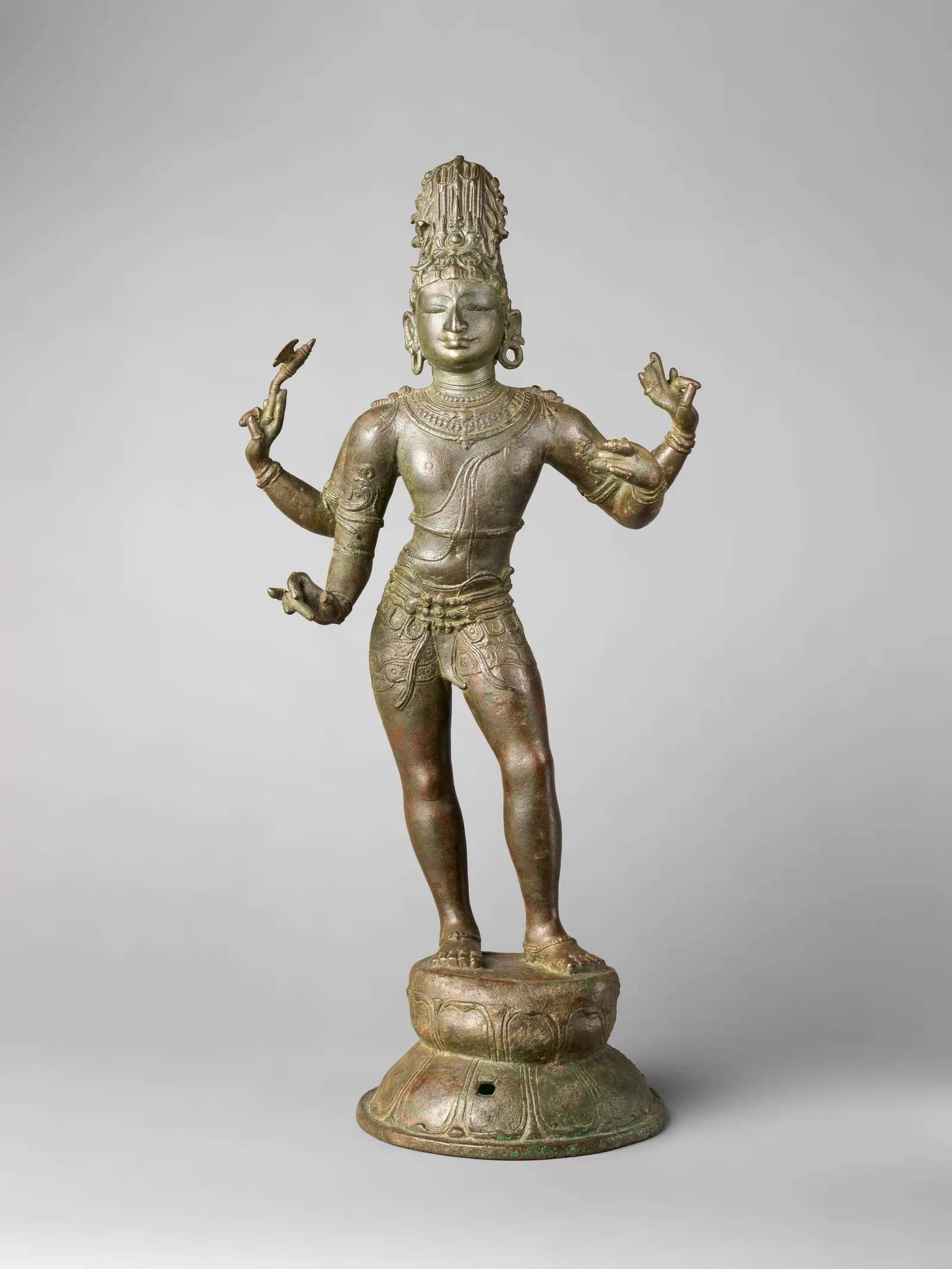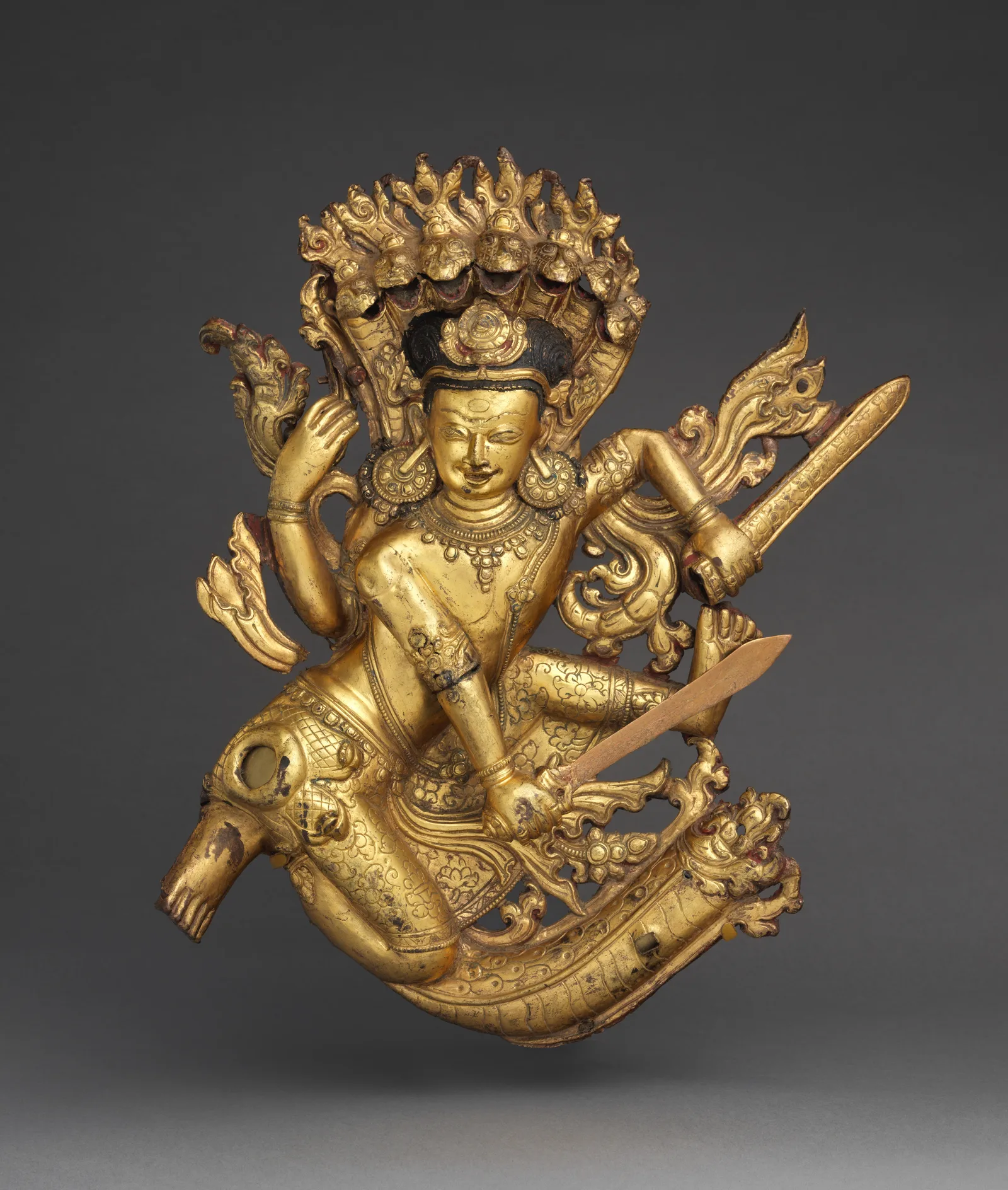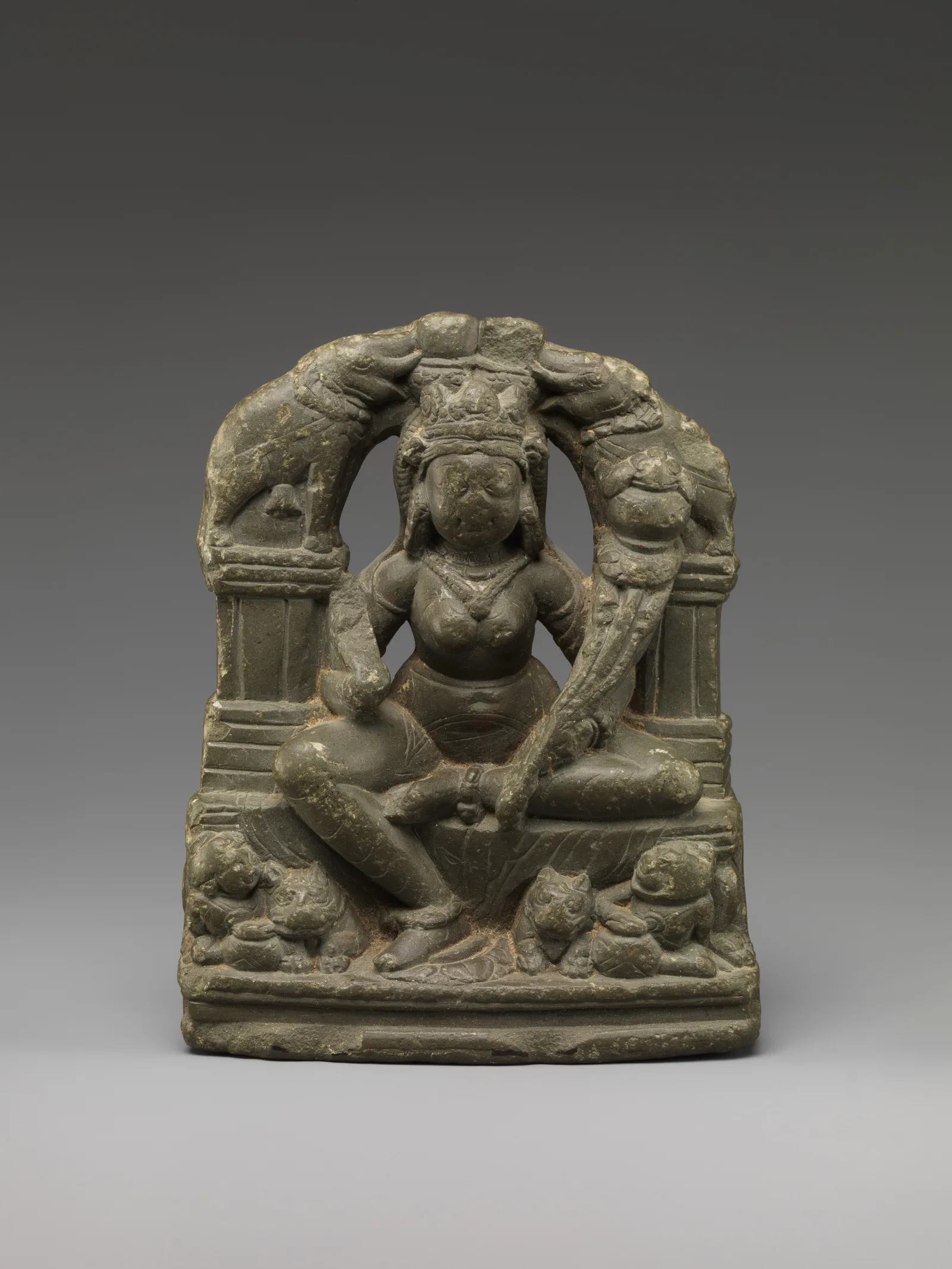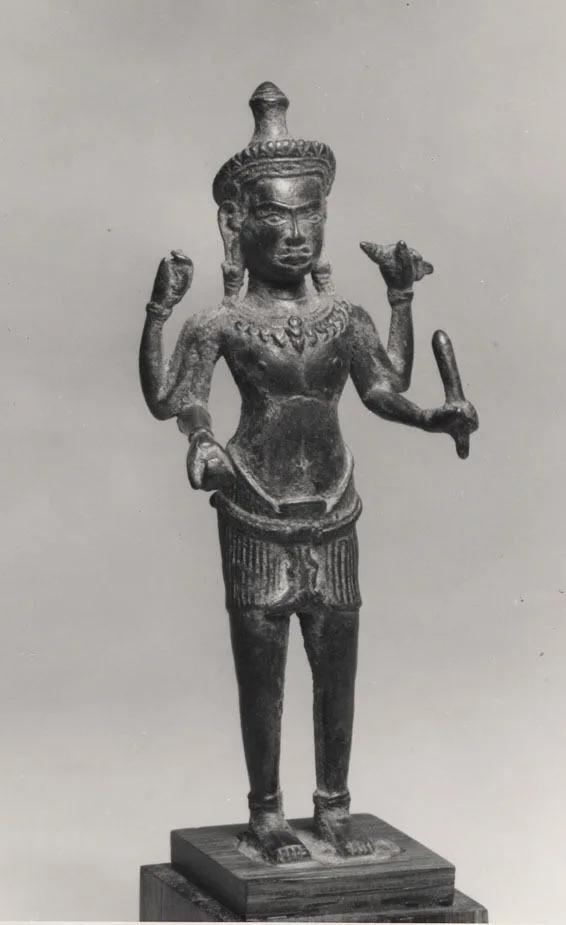
Vishnu in jewellery: the protector god of the cosmos, the Sudarshana chakra and the ten avatars
When the world is in danger, one god does not destroy that danger but descends to earth in a new body to save the balance. Vishnu has come this way ten times already: as a fish, a turtle, a lion, as King Rama, as the cowherd Krishna. His radiant disc, his conch and his mace have long lived in pendants as a sign of protection and order.
Who Vishnu is
Vishnu is one of the supreme gods of Hinduism, the keeper and protector of all that exists. If the Hindu picture of the world has one who creates the universe and one who transforms it, then Vishnu answers for the longest and quietest act of all: he holds the world in balance for as long as it lasts. His role is preservation, the upholding of order and protection against chaos. This is why Vishnu is so often called the protector god, and it is exactly this quality that carries over into jewellery bearing his symbols.
The name "Vishnu" in Sanskrit is linked with the sense of "the all-pervading," "the all-embracing." It holds the idea of a god who runs through the whole of creation, who is present in every part of it and is therefore able to uphold order everywhere. Like other great gods, Vishnu has many names: Narayana (the one resting on the waters), Hari (the deliverer), Jagannatha (lord of the universe), Madhava, Keshava, Govinda. Each name opens a facet of his nature, and many of them are repeated like a prayer.
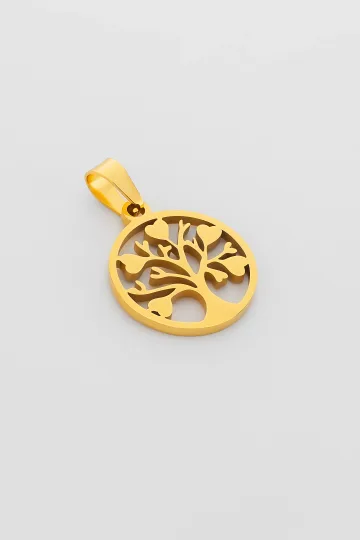
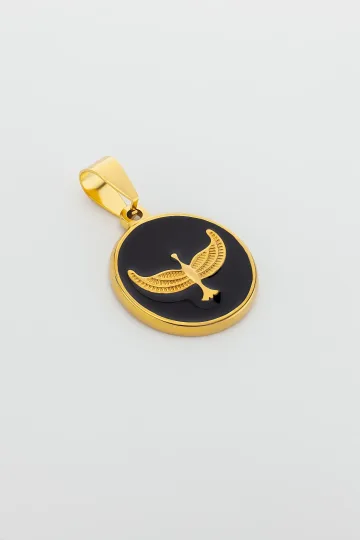
Wear the symbol, don't just read about it. These are in stock:
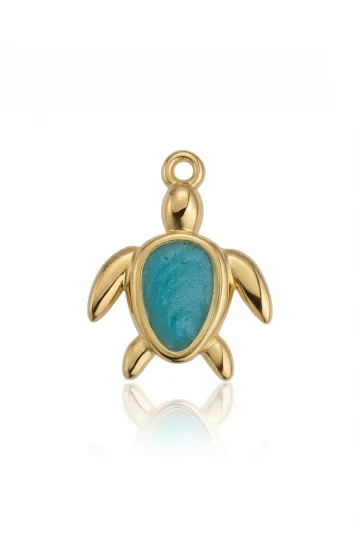


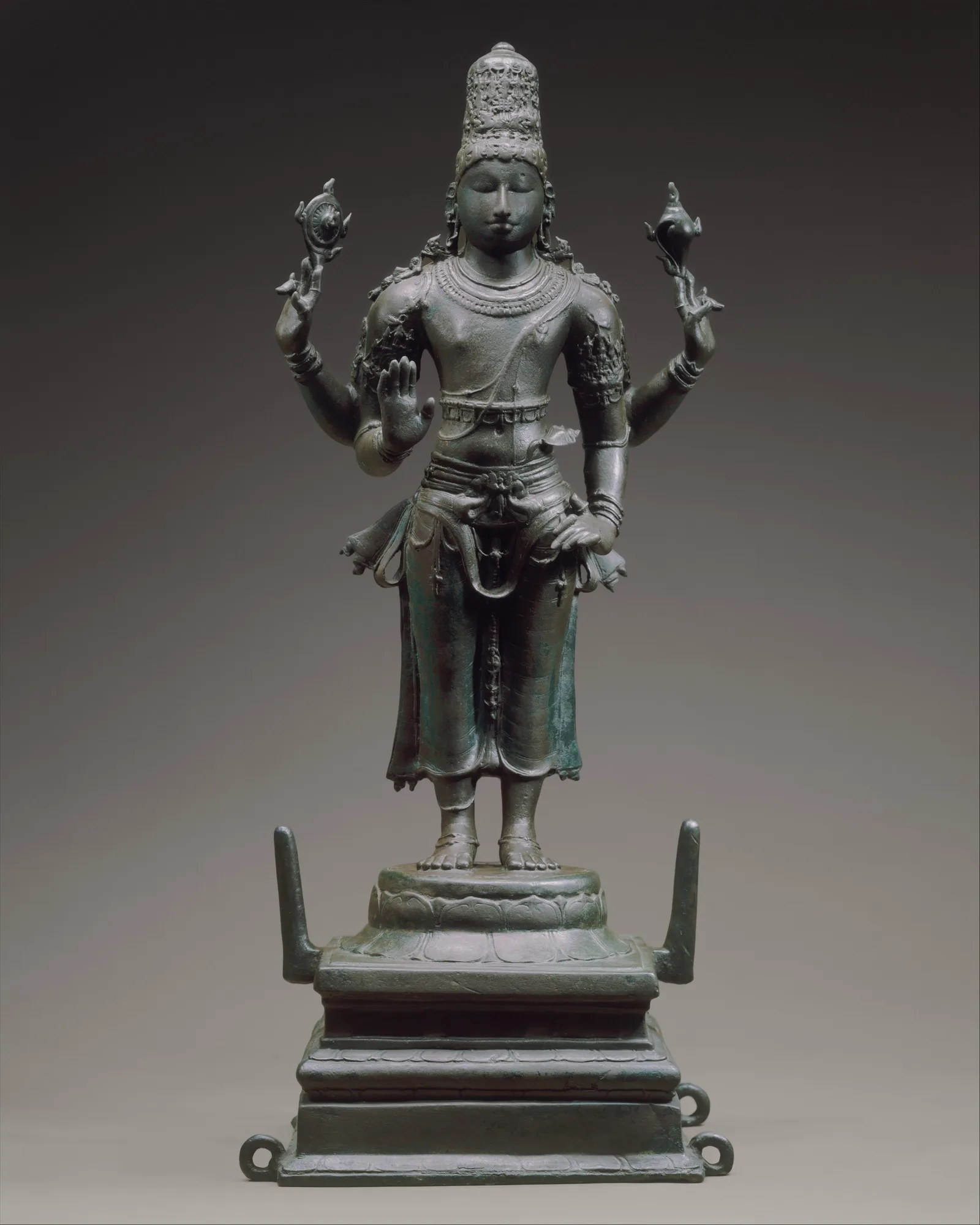
In jewellery Vishnu appears both as a full figure and through a recognisable set of attributes: the radiant disc, the Sudarshana chakra, the shankha conch, the gada mace, the lotus in his hand, the eagle Garuda at his feet, the special tilak mark on his forehead. These signs are enough for someone who knows them to recognise the god at once, and for everyone else they give a beautiful, meaningful form. A pendant with the chakra or the conch works as a sign of protection, of fidelity to order and of the calm strength of one who keeps the world rather than destroys it.
Vishnu holds a special place among the gods of the Hindu pantheon. Together with the creator and the transformer he forms the trimurti, the threefold image of a single divine principle in its three acts: creation, preservation and renewal. At the same time, for the millions of people who follow the path of Vaishnavism, it is Vishnu himself who is the supreme deity, the source and cause of everything, and not merely one of three equals. For them the whole world is an expression of his will, and the avatars are his direct descents to earth.
Vishnu's place among the Hindu gods
Vishnu stands alongside the other great images of the Hindu pantheon, and his role among them is unique. His consort is the goddess Lakshmi, goddess of abundance, fortune and beauty, who accompanies the god on his earthly descents. When Vishnu comes to earth as an avatar, she is often born at his side: with King Rama she is the faithful Sita, with the cowherd Krishna she is Radha and Rukmini. The union of Vishnu and Lakshmi holds within it the idea of harmony between strength and well-being, between protection and prosperity.
It is worth remembering the close circle of Vishnu's symbols too. His loyal companion and mount is the king of birds, Garuda, the mighty eagle on whom the god circles the world. His couch is the colossal thousand-headed serpent Shesha, on whose coils Vishnu rests in the ocean between the creations of the universe. These images explain why you so often see a bird with open wings and a coiled serpent beside the figure of Vishnu: they show the god not alone but set within a whole universe of meaning.
Next, in order: where the image of Vishnu came from, what each of his symbols means, in which avatars he descended to save the world, why people wear such jewellery, what it is made from, how to wear it respectfully, and what surprising facts have gathered around this god.
History and cult of Vishnu
The image of Vishnu is one of the oldest in any living religion on the planet, and over the millennia his cult has grown into one of the largest spiritual traditions in the world. At almost every stage of this long history Vishnu left his mark on art, including small sculpture and jewellery.
The ancient roots of the image
In the earliest sacred texts, the hymns of the Vedas, Vishnu is not yet a supreme god but one of the solar deities, known for a famous feat: with three strides he measured the whole universe, covering earth, sky and everything between them. This image of a god who covers the entire world in three steps became the seed of the later idea of the all-embracing protector. In time the figure of Vishnu absorbed the features of other revered gods and heroes, grew in significance and rose to the rank of one of the supreme deities.
The trimurti and the role of protector
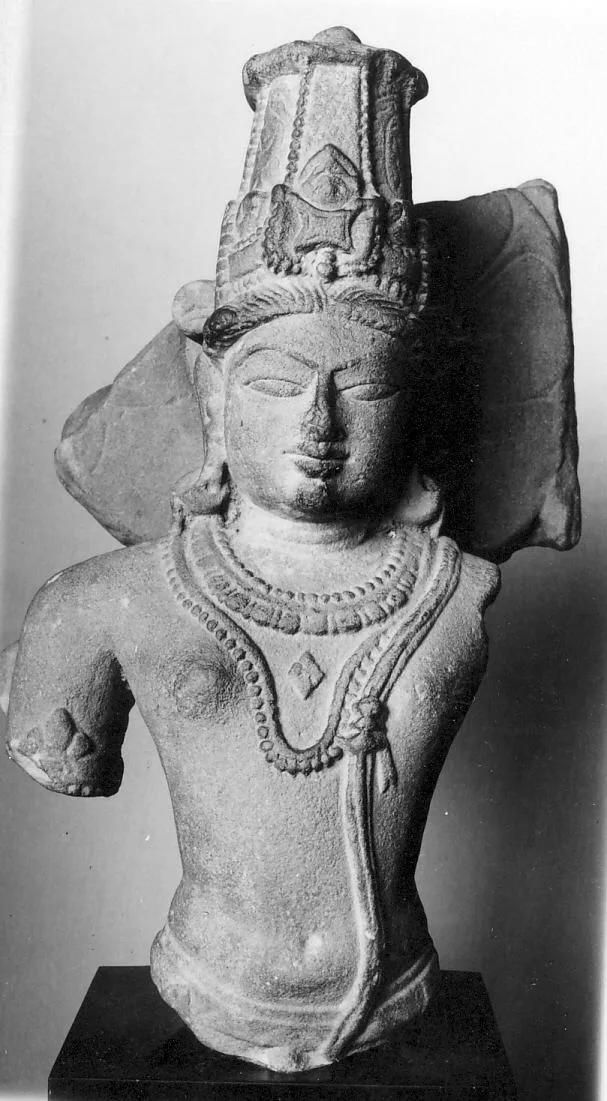
The idea of the trimurti, the threefold divine principle, took shape in the sacred texts and became a convenient way to describe the three acts of the supreme: creation, preservation and transformation. The creator brings the world into being, the protector sustains it, the transformer ends the old to make way for the new. Of the three, Vishnu holds the longest role: he keeps the world through the whole span of its existence, guards the order of dharma and does not let chaos gain the upper hand. This philosophy explains why people choose his symbols as signs of protection and steadiness: behind the image of Vishnu stands the very idea of preservation and balance.
Sleeping on the serpent Shesha
One of the most poetic images of Vishnu is the god resting on the waters of the cosmic ocean. Between two creations of the universe, when the former world has dissolved and the new one is not yet born, Vishnu lies on the coils of the colossal serpent Shesha as it floats across the endless waters. His consort Lakshmi sits at his feet. From the navel of the sleeping god grows a lotus, and within that lotus the creator is born, who will begin the new world. This image of rest amid the boundless waters became a favourite subject of temple sculpture, and it speaks of the god as the quiet foundation of being on which everything holds.
Avatars: the god descends to save the world
The central feature of Vishnu's cult is the teaching of avatars, the descents of the god to earth. When the order of dharma falls into decline, when evil prevails and the world loses its balance, Vishnu is born in a new body to restore justice and save the good. A famous sacred text says this plainly: whenever dharma falls into decline, the god manifests himself on earth. So came his ten chief avatars, the dashavatara, among whom King Rama and the cowherd Krishna grew into beloved deities in their own right, with vast cults of their own. This idea of salvation through descent makes Vishnu an especially close and human god.
Vaishnavism
From the worship of Vishnu grew one of the largest branches of Hinduism, Vaishnavism. For its followers, Vishnu and his avatars are the supreme deity, and the path to liberation runs through love and devotion to the god, bhakti. The worship of Krishna and Rama, the chanting of their names and pilgrimage to the great temples of Vishnu draw hundreds of millions of people. From this living tradition comes all the recognisable symbolism: the tilak mark on the forehead, the images of the chakra and the conch, the figures of the avatars. Understanding this context helps you wear jewellery with Vishnu thoughtfully and with respect.
A war-disc rides bare skin, alone. Bury it under five chains and the guardian of the cosmos turns into a keyring charm. Don't you dare.
What to wear a Vishnu symbol with
Over years of working with symbolic pieces, the chakra and the shankha have passed through dozens of looks on me. Here is what actually works, by occasion, with no mysticism.
What do I wear a chakra with every day? For daytime I recommend a silver chakra on a thin chain over a plain tee or an unpatterned shirt. The graphic toothed disc wants a clean background and an open neck, so I suggest a V-neckline: the disc sits dead centre and reads in full. Busy prints and high collars swallow it.
Gold or silver for a Vishnu symbol? I look at your skin undertone. For a warm undertone I recommend gold or gold plating: it echoes the god's golden robes and reads formal. For a cool undertone I suggest silver with blackened recesses, so the chakra's teeth and the shell's coils stay crisp and graphic. In doubt, choose silver, it gets along with almost everything.
How do I wear the full figure of the god? A four-armed Vishnu figure needs room. I choose a plain top and a longer chain, 55 to 60 cm, so the figure lands on the chest and reads whole, with every attribute. A small clothing print beside it turns the fine relief into mush, so I keep the background clean.
Can I build a layered look? You can, with sense. I recommend wooden tulasi beads as a quiet ethnic layer on the wrist; they sit well with silver and thin strands. The chakra itself I suggest leaving to solo: one strong sign on a clean neck always beats a disc crushed between five pendants.
What do I wear for a special day or as a gift? For a celebration and for gifting I choose gold and the shankha shell: warm metal and a soft spiral read festive and generous, echoing the idea of abundance. For a housewarming or the start of a big venture, this sign reads as a wish for support and protection.

Turn on your camera, pick earrings, a pendant or a ring, and see the piece on yourself in real time.
Switch items in one tap.
Everything runs in your browser: no photo or video is ever uploaded.
Customer reviews
Zevira is a real jewellery shop. Genuine payments, deliveries and customer thank-yous.
🥰🥰🥰 gracias

Ok, ¡gracias! 🙂

Symbols of Vishnu
Vishnu has a whole set of recognisable attributes, and almost every one has become a jewellery motif in its own right. In his hands, of which he is usually shown with four, he holds four chief objects, and each carries its own meaning. Let us take them one by one.
The Sudarshana chakra: the disc of fire
The Sudarshana chakra is the radiant throwing disc of Vishnu, his chief weapon and one of his most powerful symbols. It is a spinning circle with a sharp, toothed edge and tongues of flame along its rim, able to cut through any evil. The name "Sudarshana" is translated as "auspicious vision," and the disc stands for the mind cutting through ignorance, the divine will that keeps order, and the very turning of time and the cosmos. Vishnu hurls the chakra in defence of dharma, and so it reads as a sign of just strength turned against chaos. In jewellery the disc of fire works sharply and graphically, which is why, of all Vishnu's attributes, the chakra most often finds its way into spare pendants and rings. This is the most recognisable sign of Vishnu in particular, rather than the general lotus or conch, which also appear with other gods.
The shankha conch
The shankha is a sea conch blown like a horn, and for Vishnu it is one of the chief attributes. Its twisting spiral reproduces the primal sound of creation, and the low note the conch gives off purifies space and drives off evil. Its sound is believed to herald the victory of good and to summon people to a righteous cause. In temples the conch is blown during worship, and it is also used to pour sacred water over images of the deities. The spiral shape of the conch makes it a beautiful and recognisable pendant motif, and its tie to purification and the triumph of good gives the piece a deep meaning. The conch lives on as a symbol in its own right in many cultures, but in Vishnu's hand it sounds precisely like the voice of order overcoming chaos.
The gada mace
The gada is a heavy mace that Vishnu holds in one of his hands. It stands for strength, authority and might, the god's power to crush any opponent of order. This mace even has its own name, Kaumodaki, and it is linked with the strength of knowledge and of time, before which evil cannot stand. Unlike the cleaving chakra, the mace stands for the direct, crushing power of the keeper. In jewellery the gada appears less often than the disc and the conch, but as a part of the figure of Vishnu it matters: the god's four arms and the four objects in them are recognised exactly by this set. The mace adds a weighty, protective force to the image of the protector.
The lotus
In one of his hands Vishnu holds an open lotus, the flower of purity, spiritual unfolding and creation. From the lotus that grows from the navel of the god sleeping on the waters, the new world is born, so the flower is directly tied to the creative and sustaining power of Vishnu. The lotus grows from muddy water yet stays unstained, and so it stands for purity of spirit amid the mire of the world. It is the oldest and most beloved symbol of Indian culture, with a rich life of its own, and there is a separate piece on the lotus in jewellery. In Vishnu's hand the lotus sounds like a sign of purity, creation and spiritual unfolding, balancing the formidable force of the chakra and the mace.
Garuda: the eagle who carries the god
Garuda is the king of birds, a mighty eagle with a human body, the loyal companion and mount of Vishnu. On him the god races around the world, hurrying to wherever protection is needed. Garuda is the eternal enemy of serpents and a sign of the sky, of speed and of devoted service. In temple art he is often shown at Vishnu's feet or carrying the god on his back, with open wings. As a jewellery motif Garuda gives a strong, dynamic image of a defender and guardian, and it is chosen by those drawn to the idea of swift, devoted strength on the side of good. The eagle bearer shows Vishnu in motion, hurrying to the aid of the world.
Tilak: the mark on the forehead
The tilak is a special mark that followers of Vishnu apply to the forehead as a visible sign of devotion to the god. Among Vaishnavas it usually appears as two light vertical lines, sometimes with a coloured element between them, symbolising the feet of Vishnu. The tilak is not jewellery in the ordinary sense but a sign of belonging to the tradition and of blessing, so it deserves a respectful approach and an understanding of its religious meaning. In jewellery symbolism the tilak itself appears rarely, but it is important to know about it: it is one of the key visible signs of the worship of Vishnu, and it helps tell his cult apart from other branches of Hinduism.
Upload a photo of your pet, someone you love, or an object. We'll build a 3D model and hand-cast it in pewter.




The ten avatars, the dashavatara
The teaching of avatars is the heart of Vishnu's cult, and his ten chief descents, the dashavatara, form a whole gallery of images. Each came in its own age to save the world from a particular calamity. Here they are in order, with a brief word on each.
Matsya: the fish
The first avatar is Matsya, a giant fish. By tradition Vishnu in the form of a fish saved the forefather of humanity and the sacred knowledge from a great flood, towing the ark to safety. This image echoes the flood myths of many peoples around the world.
Kurma: the turtle
The second avatar is Kurma, a colossal turtle. She lay on the bed of the ocean of milk and offered her shell as the support on which the gods and demons churned a mountain to win the drink of immortality from the waters. Without this steady base the churning of the ocean would have been impossible.
Varaha: the boar
The third avatar is Varaha, a giant boar. When a demon dragged the earth down to the bottom of the cosmic ocean, Vishnu in the form of a boar dived into the waters, lifted the earth on his tusks and returned it to its place. This is the image of a god who, in the literal sense, saves the planet itself.
Narasimha: the man-lion
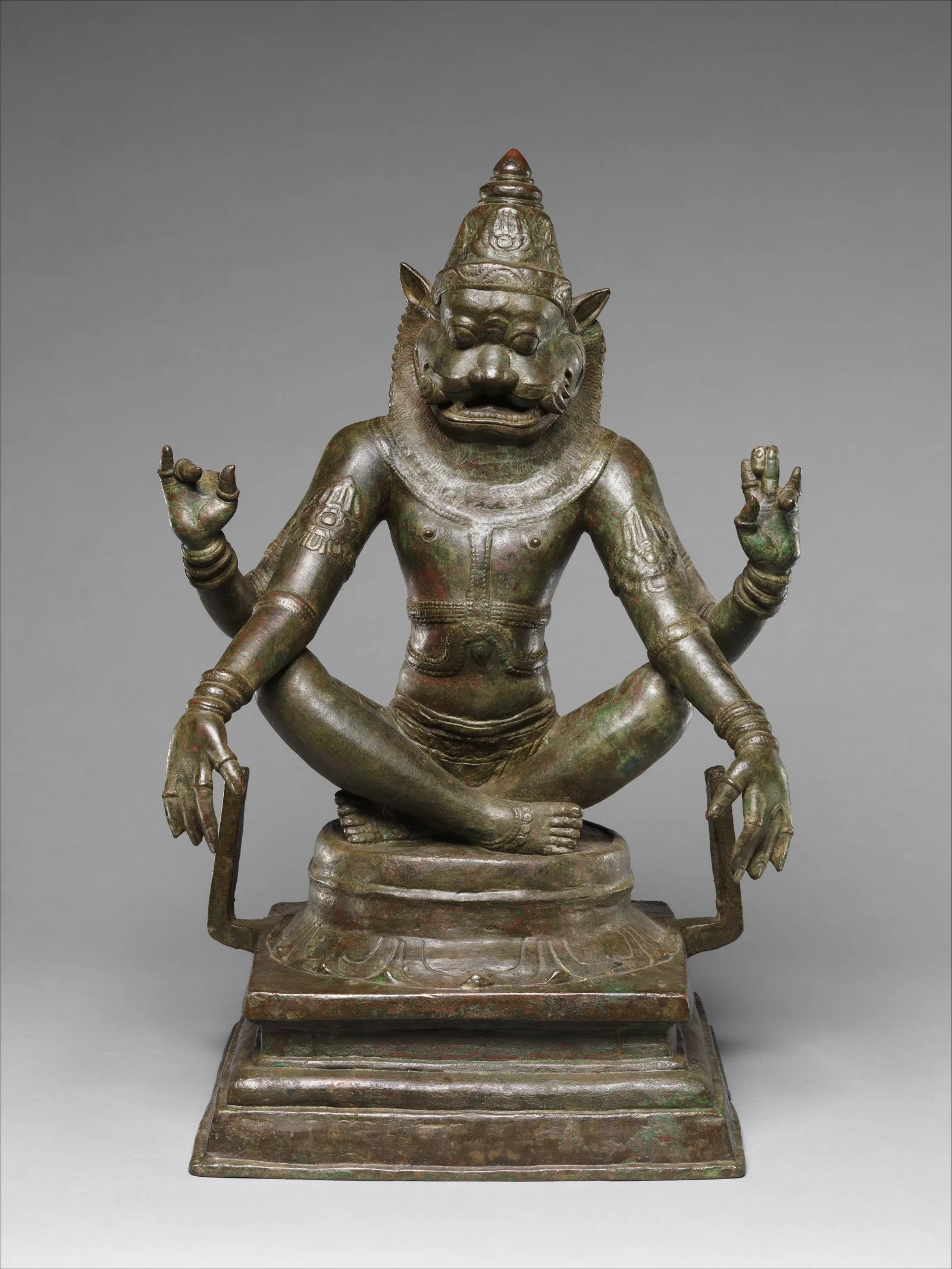
The fourth avatar is Narasimha, half man and half lion. He appeared to slay a demon who had been promised that he could be killed by neither man nor beast, neither by day nor by night, neither inside a house nor outside it. Narasimha got around every condition: neither man nor beast, at dusk, on the threshold. This is a beloved image of the protection of the devotee from evil.
Vamana: the dwarf
The fifth avatar is Vamana, a young brahmin dwarf. He asked a mighty demon king for only as much land as he could cover in three strides, then grew to cosmic size and spanned all the worlds in three steps. Here the ancient Vedic image of Vishnu measuring the universe in three strides comes directly back to life.
Parashurama: the warrior with the axe
The sixth avatar is Parashurama, Rama with the axe. A fearsome warrior, he restored justice by subduing the overreaching nobility of his time. This is the image of a god who sets a broken social order straight by force.
Rama: the hero king
The seventh avatar is Rama, a noble king and the hero of a great epic. An ideal ruler, a faithful husband and a model of duty, he defeated a demon abductor and freed his consort Sita. Rama became a beloved deity in his own right, to whom millions turn, and his story is a moral compass for a whole culture.
Krishna: the cowherd and teacher
The eighth avatar is Krishna, one of the most beloved and revered gods of India. A playful cowherd with a flute, the beloved of the cowherd girls, a wise teacher and charioteer who gave the world a famous song about duty and the path. Krishna grew into a vast cult of his own with its own symbolism, and a separate, full piece is devoted to him.
Buddha: the awakened one
The ninth avatar, in many lists, is the Buddha, founder of the teaching on the path to liberation. The inclusion of the Buddha among the avatars of Vishnu is Hinduism's way of making sense of and accepting the great teacher within its own picture of the world. It shows how flexible and all-embracing the image of the protector god turned out to be.
Kalki: the rider yet to come
The tenth avatar is Kalki, who has not yet come. By tradition he will appear at the end of the present dark age on a white horse, sword in hand, to punish evil and begin a new bright cycle of the world. This is the image of hope for a coming restoration of justice and a renewal of the universe.
The avatars in jewellery
In jewellery symbolism the avatars live in different ways. Most often it is the two most beloved, Rama and Krishna, who find their way into pieces, since they have long become deities in their own right with recognisable attributes: the bow for Rama, the flute and the peacock feather for Krishna. Less often you meet the fearsome man-lion Narasimha as a strong protective talisman and the fish Matsya as a sign of salvation. Understanding that all these images are facets of a single protector god helps you read a piece more deeply: behind each figure stands the shared idea of descent for the sake of saving the good.





The meaning of Vishnu in jewellery
Why wear a symbol of Vishnu? This god carries several layers of meaning, and each answers a different human need. What unites them is the idea of preservation and order, rather than destruction or passive stillness.
Protection and preservation
The chief meaning of Vishnu is protection. He is the god who keeps the world, guards it from chaos and holds it in balance. The symbol of Vishnu, especially the chakra or the conch, is chosen as a sign of a talisman, of a calm strength that stands on guard. This is not the aggressive protection of an attacker but the steady protection of a keeper, of one who holds and does not let go. For a person such a sign works as a reminder that there is something to lean on and that what matters in their life is under watch.
Keeping order and dharma
Vishnu keeps dharma, the righteous order of things. His symbol speaks of the value of steadiness, of fidelity to one's duty and path. The chakra that cleaves evil and the mace that crushes chaos are images of a strength that serves order rather than self-will. For someone who values honesty, faithfulness to their word and an inner backbone, the sign of Vishnu sounds like support for these qualities. It is the symbol of a person who keeps a promise given and does not stray from their path.
Mercy and salvation
The teaching of avatars adds a warm, saving facet to the image of Vishnu. The god descends to earth again and again to rescue the world in trouble, never leaving it to the mercy of evil. This is the idea of mercy, of a readiness to come to the rescue. The symbol of Vishnu is also chosen as a sign of faith that help will come in a hard hour, that the good will not be abandoned. This hope of salvation makes the image of the protector especially human and close.
Balance and steadiness
The image of Vishnu resting on the serpent amid the ocean speaks of balance and calm in the midst of the world's storms. This is a god who keeps his composure while bearing all of being on himself. For those who seek inner steadiness, the ability not to lose their footing in change and worry, the symbolism of Vishnu serves as an anchor. It is not a promise that there will be no storms but a reminder that you can remain a calm foundation in the very centre of them.
Who this sign suits
The symbol of Vishnu is chosen by people who value the idea of preservation rather than struggle at any cost. They are the ones who guard their family, their work, their relationships and see their strength in the ability to hold and to protect. The sign of Vishnu is given as a wish for steadiness and patronage: at a housewarming, at the start of a great undertaking, to a person who carries a great deal on their shoulders and needs a reminder of their own support. In a Vaishnava setting such a gift carries the direct religious meaning of devotion to the god; in a secular one it is a meaningful talisman with a warm idea of protection and order.
Materials
The image of Vishnu is historically tied to certain materials, and each has its own logic. Some came straight from the temple tradition, some from the craft of jewellery.
Gold
Gold is historically closest to the image of Vishnu. The god is often described clothed in golden garments, he is adorned with gold in temples, and the warm glow of the metal echoes the solar, regal nature of the protector. A golden chakra, conch or figure of Vishnu reads as a ceremonial, festive option, fitting for a significant gift or a piece for a special occasion. The warm radiance of gold answers the idea of abundance and fortune carried by Vishnu's consort, the goddess Lakshmi.
Silver
Sterling silver 925 with its cool gleam conveys the graphic side of Vishnu's symbolism beautifully. The chakra with its toothed rim, the spiral of the conch, the silhouette of Garuda in silver all look austere and noble, and silver is easily darkened in the recesses of the relief to bring out the details of the disc or the coils of the conch. Silver is durable, wearable every day and does not cause allergies in most people. For a spare chakra or a small conch pendant it is, arguably, the most versatile choice.
Bronze and brass
Bronze is a historically accurate material for Indian temple sculpture: figures of the gods, including Vishnu and his avatars, were cast in bronze for centuries. The warm sheen lends the figure a museum-like, archaic depth. Brass with its golden tone works in a similar way and costs less. The drawback of copper alloys is that over time they darken and can leave marks on the skin, so they need care: take them off before showering and sleeping, wipe them with a soft cloth, store them in a dry place. Anyone who wants exactly that warm texture without the fuss chooses gold-plated silver: the look is close to bronze, while the base is finer.
Wood and natural beads
In the Vaishnava tradition a special place belongs to beads made of tulasi wood, the sacred plant dedicated to Vishnu. Beads from its wood are strung into threads for repeating the names of the god, and they are worn as a sign of devotion. Wood gives a warm, natural, non-metallic texture, and bracelets or threads of such beads sound like a calm ethnic accent next to silver. As with any natural material, wood has its own care requirements: it should not be soaked for long or kept in damp conditions. A full set of prayer beads is an object of spiritual practice, so it deserves to be treated with an understanding of its purpose.
Stones
A separate line is inlays of stones connected with Vishnu by colour and meaning. Deep blue and sapphire shades echo the fact that Vishnu is often shown with blue skin, the colours of the endless sky and ocean on which he rests. Yellow and golden stones answer his golden garments. The stone here works as an accent rather than as the lead, because in jewellery with Vishnu the symbol itself comes first: the disc, the conch, the figure of the god.
How to tell a good piece from a stamping
The image of Vishnu lives in its details, and the quality of the work shows at once. A good chakra has a readable toothed edge and tongues of flame along the rim; the disc does not turn into a plain smooth circle. A conch should show a twisting spiral and a mouth, not a shapeless little horn. A figure of Vishnu shows all four arms and the four attributes in them: disc, conch, mace, lotus. In a weak casting the details run together, the face is blurred and the objects in the hands cannot be made out. Real silver carries a hallmark of its grade, most often 925, while a suspiciously light "silver" piece with no hallmark that quickly tarnishes to green gives away a cheap alloy under a coating. Wooden beads are tested by their natural, not perfectly even surface: beads that are too smooth often turn out to be plastic imitations.
Leave your email, we'll send your discount code. No spam, unsubscribe anytime.
The code arrives by email, valid on your first order.
How and with what to wear, respectfully
The symbolism of Vishnu is strong and culturally loaded, so it is worth approaching its wearing thoughtfully. The image is recognisable by its form, but behind it stands a living religion, and respect for that religion is part of good taste.
A pendant with the chakra or the conch
A pendant is the most common way to wear Vishnu. A spare chakra is worn on a chain of medium length, and its graphic toothed circle looks good on its own, without neighbours competing for attention. The shankha conch with its soft spiral gives a smoother, warmer silhouette. The full figure of Vishnu is more complex in its drawing and needs space: a plain top without a pattern and a chain long enough for the figure to settle on the chest and read as a whole. Silver suits an everyday look, gold a ceremonial one.
A ring and a bracelet
A ring with the chakra or with the face of Vishnu is worn as a personal sign, usually on one hand without other large rings beside it. A bracelet of wooden beads, sometimes with a silver conch charm, sits on the wrist as a calm ethnic accent and pairs well with other threads and fine bracelets. Strictly speaking, tulasi prayer beads are an object of spiritual practice, and wearing them as a plain piece of jewellery should be done with an understanding of their purpose.
Respect for the culture
Vishnu is not abstract decor but a deity of a living religion, worshipped by hundreds of millions of people. Wearing his symbol is fine and is not considered an offence if it is done with respect. It is worth knowing at least the basic meaning of what you wear and avoiding vulgar or joking takes on sacred images. The tilak mark and prayer beads, which carry a direct religious meaning, call for especially delicate treatment. It is fitting to wear a symbol of Vishnu in everyday life, in meditative practice, as a meaningful talisman. It is less fitting to turn a sacred sign into a shock accessory with no understanding at all. A simple rule: respect for the meaning makes a piece of jewellery deeper, not poorer.
What to pair it with
A single strong symbol of Vishnu works better as an accent than in a crowd. The chakra or the figure of the god is best left to take the lead. Thematically the image of Vishnu sits well with other signs of the Hindu and meditative tradition: with the sacred syllable Om, with the lotus, with the symbolism of Krishna as his avatar. What to avoid is a mix with decor of the opposite tone: a formidable disc next to a frivolous scattering loses its character.
CAPAORA mini knife pendant
The 18th-century Spanish navaja in miniature: 40 mm of stainless steel, a real folding mechanism and a Palanquilla lock that clicks. An affordable gift to remember.
Authentic · Ships from Spain · 14-day returns
Vishnu in art and temples
Vishnu has a large cultural life beyond the home altar, and it feeds the modern symbolism of jewellery. The two main areas are temple art and the tradition of painting, which kept and developed his image for centuries.
Vishnu in temple sculpture
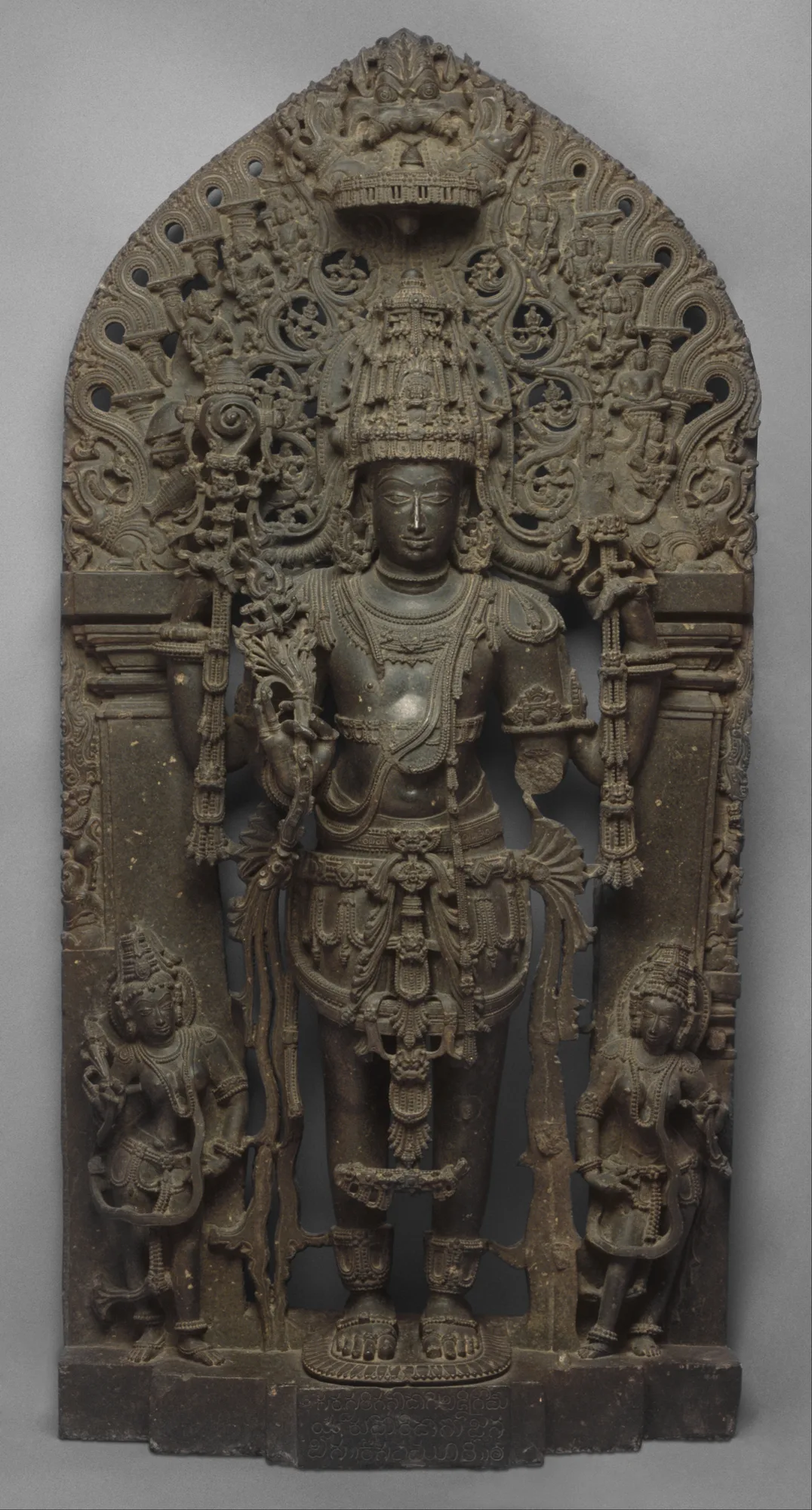
The great temples dedicated to Vishnu are whole worlds carved in stone. Stone reliefs cover their walls with scenes from the life of the god and his avatars: here he sleeps on the serpent amid the ocean, here the boar lifts the earth on its tusks, here the man-lion slays the demon. The huge complexes of southern and central India, grand sanctuaries dedicated to Vishnu as lord of the universe, have drawn pilgrims for centuries. From this rich tradition all the recognisable details came into jewellery: the four arms with the disc, conch, mace and lotus, the figure of the god sleeping on the waters, the silhouette of Garuda. Every chakra pendant is a distant descendant of a temple relief.
Vishnu in painting and miniature
Beyond stone, the image of Vishnu lived for centuries in painting. The later Indian miniature loved to show him lying on the serpent in the ocean of milk, blue-skinned, in golden garments, surrounded by his consort and the lotus. His avatars in particular gained an especially rich pictorial life, above all Krishna and Rama: their stories are painted in thousands of miniatures, where the cowherd plays the flute among the cowherd girls and the king fights the demon. From this tradition came the recognisable look of the god: blue skin, gold, the disc and conch in his hands, the calm face of the keeper. It is this look that reads in the figure on a pendant.
The image of the god on the waters
One of the most beloved subjects in the art of Vishnu deserves its own word: the god resting on the coils of the serpent Shesha amid the cosmic ocean, with a lotus growing from his navel. This scene of rest between the creations of the universe became the summit of temple sculpture and a favourite motif of painting. It conveys the very essence of Vishnu: the quiet, unshakeable foundation of being on which everything holds, and from which a new world is born. It is this image of rest and steadiness that carries over into jewellery as a sign of inner balance.
Facts that surprise
So many stories have gathered around Vishnu over the millennia that some sound almost unbelievable.
Vishnu measured the whole universe in three strides. Even in the oldest hymns of the Vedas the god performs his famous feat: in three steps he covers earth, sky and everything between them. Later this image came back to life in the dwarf avatar Vamana, who grew to cosmic size and reclaimed the worlds from a demon's power in three strides.
The Buddha entered the ranks of Vishnu's avatars. In most of the classic lists the ninth descent of the protector god is the Buddha, founder of a separate great teaching. In this way Hinduism made sense of and accepted the figure of the great teacher in its own manner, showing how all-embracing the image of Vishnu turned out to be.
One avatar has not yet come. The tenth avatar, Kalki, will by tradition appear only at the end of the present dark age, on a white horse with a sword in his hand. He is the only one of the ten descents placed in the future, and a hope of the renewal of the world is tied to him.
Flood myths echo around the world. The first avatar of Vishnu, the fish Matsya, saves the forefather of humanity and the sacred knowledge from a great flood by towing the ark. The story of humanity saved from a flood on an ark is found among many peoples far apart from one another.
A flower grows from the god, and from the flower a world is born. By a favourite image of art, a lotus grows from the navel of Vishnu sleeping on the waters, and within that lotus the creator is born, who will begin a new universe. So a single image shows the whole chain: the protector, the flower, the creator, the new world.
The god has weapons with names of their own. The chakra of Vishnu is called Sudarshana, "auspicious vision," and his mace bears the name Kaumodaki. The attributes of the great god are so important that they are given their own names and honoured almost as separate beings.
The eagle Garuda became a symbol in his own right. The bird who carries Vishnu, the mighty eagle Garuda, stepped far beyond the temple: his image has been used for centuries as a state and heraldic sign in several countries of the region. So the god's companion came to live a symbolic life of his own.
The serpent Shesha holds the earth on himself. The thousand-headed serpent Shesha, on whose coils Vishnu rests, by tradition holds the whole earth on his heads. When he stirs his heads, earthquakes occur. So a single image joins the couch of the god and the very foundation of the world.
The conch has a "right" and a "wrong" twist. The spiral of the shankha is most often coiled one way, and the rare conches with the reverse, right-handed twist are prized especially highly as auspicious. Such a conch is linked with the goddess of abundance, Lakshmi, and counted as a rare piece of fortune, so it is sought after both in the temple and in jewellery.
Send a friend a discount code, they save on their first order.
Frequently asked questions
Who is Vishnu in simple terms?
Vishnu is one of the supreme gods of Hinduism, the protector god and keeper of all that exists. In the trio of supreme gods he answers for the preservation of the world and the upholding of order for as long as the universe lasts. The central feature of his cult is the avatars: when the world is in danger, Vishnu descends to earth in a new body to save the good. Among his avatars are such beloved gods as Rama and Krishna.
What does the Sudarshana chakra mean?
The Sudarshana chakra is the radiant throwing disc of Vishnu, with a toothed edge and tongues of flame, his chief weapon. The name is translated as "auspicious vision." The disc stands for the mind cutting through ignorance, the divine will that keeps order, and the turning of time and the cosmos. Vishnu hurls the chakra in defence of dharma, so in jewellery it reads as a sign of just strength against chaos and the most recognisable symbol of this god in particular.
How does Vishnu differ from Krishna?
Krishna is an avatar of Vishnu, his earthly descent, not a separate god. Vishnu is the supreme protector of the cosmos, while Krishna is one of his incarnations, a cowherd and wise teacher who came to save the world and gave people a famous teaching about duty. At the same time Krishna became so beloved that he grew into a vast cult of his own. You could say that Krishna is the face in which Vishnu appeared to people in one of the ages.
How many avatars does Vishnu have?
Most often people speak of ten chief avatars, the dashavatara: the fish Matsya, the turtle Kurma, the boar Varaha, the man-lion Narasimha, the dwarf Vamana, the warrior Parashurama, King Rama, the cowherd Krishna, the Buddha and the rider yet to come, Kalki. At the same time the tradition mentions a larger number of descents of Vishnu too, sometimes naming twenty-four or more. The dashavatara of ten is the best-known and most settled list.
Can a person of another faith wear a symbol of Vishnu?
Yes, if it is done with respect. Vishnu is a deity of a living religion, but his symbols entered world culture long ago through art and an interest in Indian philosophy. Wearing the chakra, the conch or the figure of the god is fine if you know the basic meaning and avoid vulgar takes on sacred images. The tilak mark and prayer beads call for especially delicate treatment. Respect for the culture makes a piece of jewellery deeper.
What does the shankha conch symbolise?
The shankha is a sea conch blown like a horn, one of the chief attributes of Vishnu. Its spiral reproduces the primal sound of creation, and the note of the conch purifies space and drives off evil, heralding the victory of good. In temples it is blown during worship. As a jewellery motif the conch gives a beautiful spiral silhouette and carries the meaning of purification and the triumph of order over chaos.
Why is Vishnu shown as blue?
The blue colour of Vishnu's skin is linked with the boundlessness of the sky and ocean, which he embraces and on whose waters he rests. The blue stands for the vastness, depth and all-encompassing nature of the god who runs through the whole of creation. This same deep blue is often given to Krishna, his avatar. In jewellery the blue is conveyed by deep blue and sapphire inlays beside the figure or symbol of the god.
Who are the serpent Shesha and the eagle Garuda?
These are the two constant companions of Vishnu. Shesha is a colossal thousand-headed serpent, on whose coils Vishnu rests in the ocean between the creations of the universe, and who by tradition holds the earth on himself. Garuda is the king of birds, a mighty eagle, the loyal carrier of Vishnu, on whom the god races around the world. Both images often appear beside the figure of Vishnu in art and explain why you see now a coiled serpent, now a bird with open wings, near him.
Conclusion
Vishnu has outlived the millennia and remained one of the most living images in world culture: from the ancient god who measured the universe in three strides to the blue-skinned keeper sleeping on the serpent amid the ocean. His strength lies in an idea clear to a person of any age: the world must be cared for, order must be kept, and in a hard hour the one who descends to save the good comes to the rescue. The chakra, the conch, the mace and the lotus in the god's four hands answer simple human needs: to feel protected, to hold to one's path, to believe in salvation and to keep one's balance amid the storms. In choosing the sign of Vishnu, a person carries with them a quiet reminder that the world has a protector, and that they themselves have something to lean on.
Silver, gold, the symbolism of world cultures, talismans and meaningful signs.
Buying it as a gift? Each one arrives ready to give.
 A branded Zevira box and a little card come with every order.













About Zevira
Zevira makes jewellery with meaning: symbols, talismans, signs of strength and inner support in clean forms of silver and gold. We love things with a history thousands of years long, and we carry it into modern design without empty grandeur and without mysticism. The signs of ancient cultures in the catalogue sit alongside minimalist pendants and matching sets, so that everyone can find their own symbol.