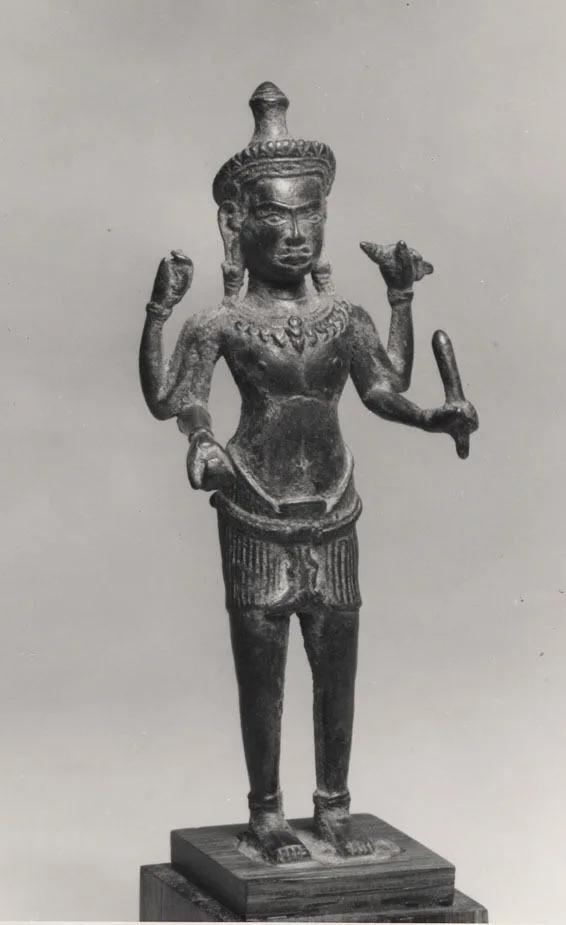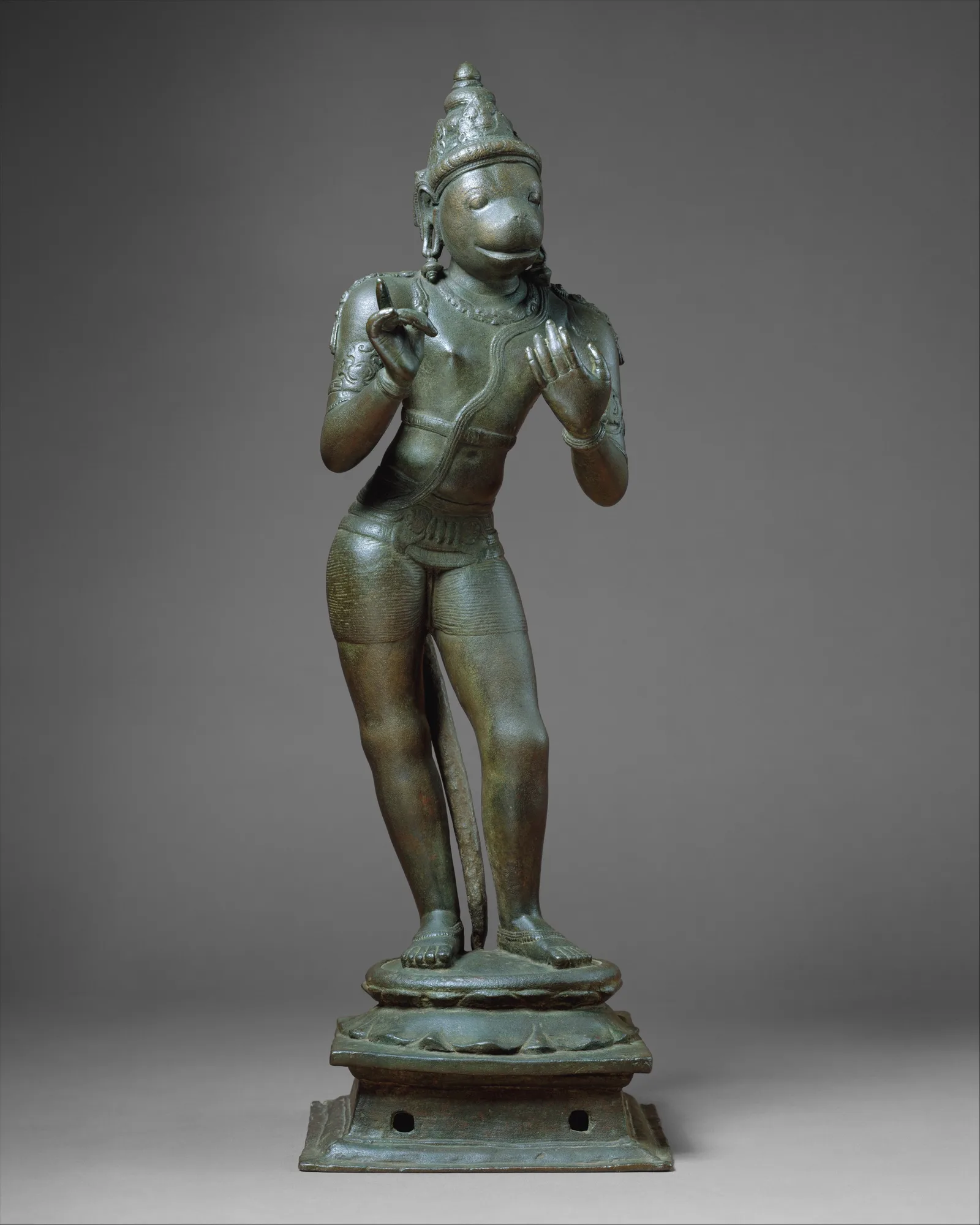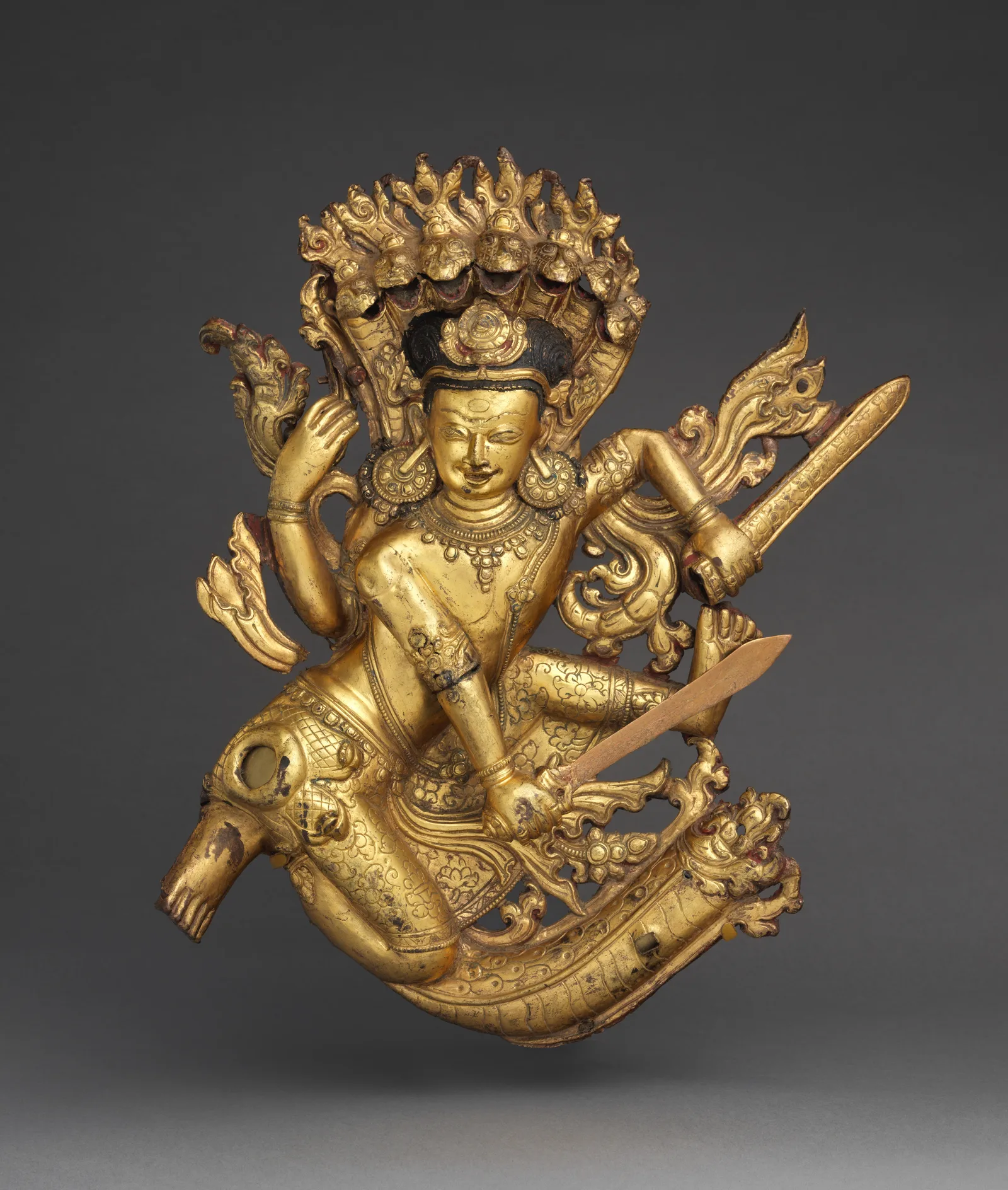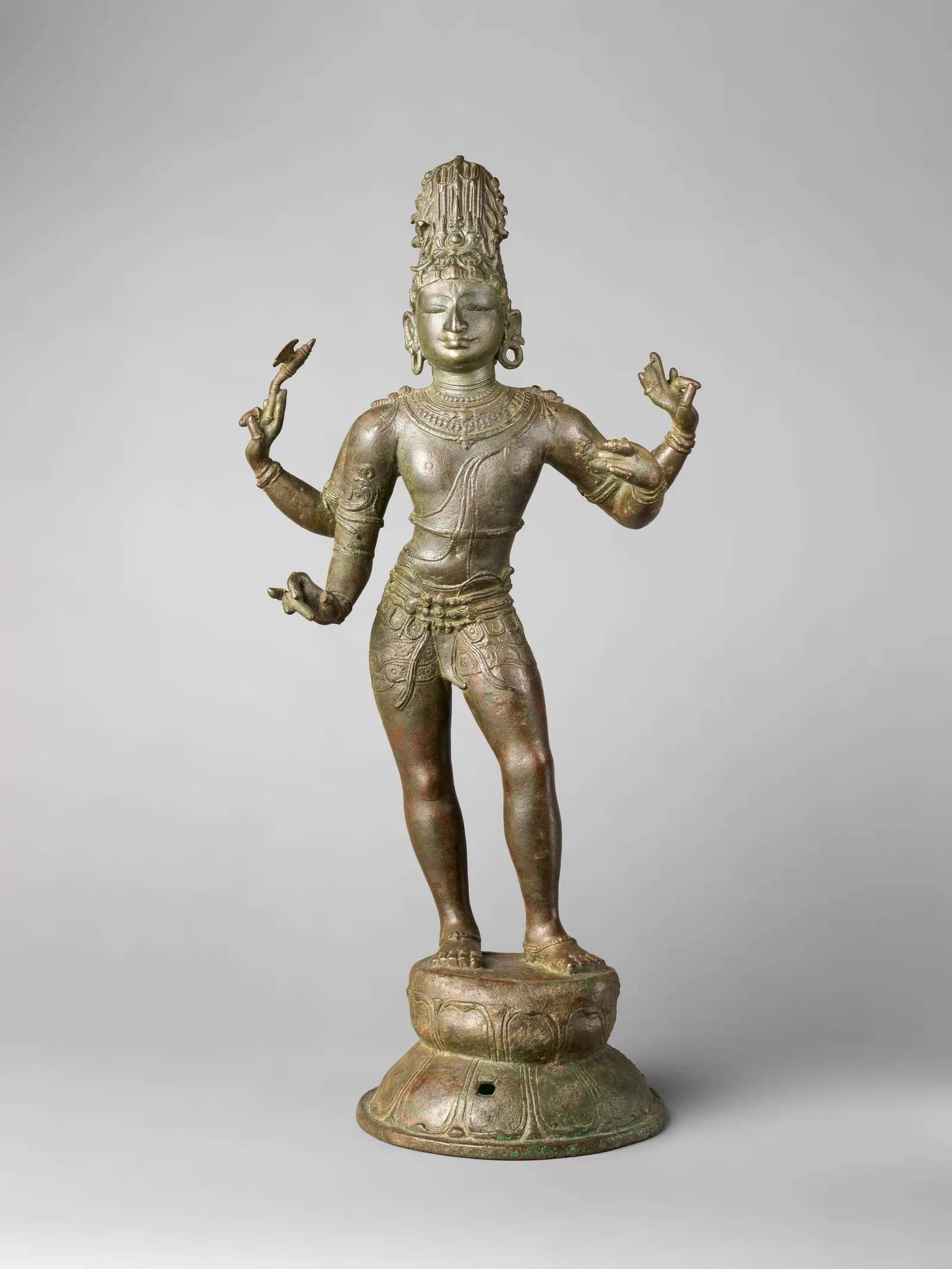
Shiva in jewellery: the god of transformation, the third eye, and the dance that remakes the world
A dancing bronze figure inside a ring of flame stands in museums beside the gods of antiquity, and twentieth-century physicists chose exactly this image to represent the rhythm of matter. Shiva is no "god of destruction" from cautionary tales. He is the one who closes the old to make room for the new. His trident, drum, and crescent have long lived in pendants.
Who Shiva is
Shiva is one of the chief gods of Hinduism, part of the supreme trinity together with Brahma and Vishnu. His role is that of the transformer: he completes worn-out cycles so the world can be born again. Calling him simply a "god of destruction" is therefore inaccurate. Destruction in Shiva is neither malice nor catastrophe but a necessary ending, without which renewal is impossible. The old forest burns, and a young one rises from the ash. This is the idea Shiva holds.
The name "Shiva" in Sanskrit means "auspicious," "gracious," "the one who brings happiness." A bright rather than frightening sense is built into the word itself. The god has many other names: Mahadeva (the great god), Nataraja (king of the dance), Rudra (the roaring, the fierce), Shankara (the bringer of good), Nilakantha (the blue-throated). Each name opens its own facet: in one place a stern ascetic in the mountains, in another a tender husband, in another a cosmic dancer setting the rhythm of all that exists.
Wear the symbol, don't just read about it. These are in stock:
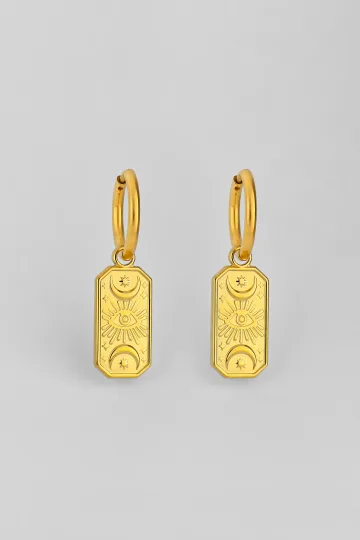
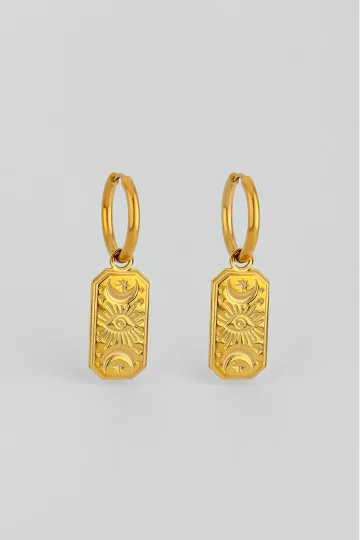
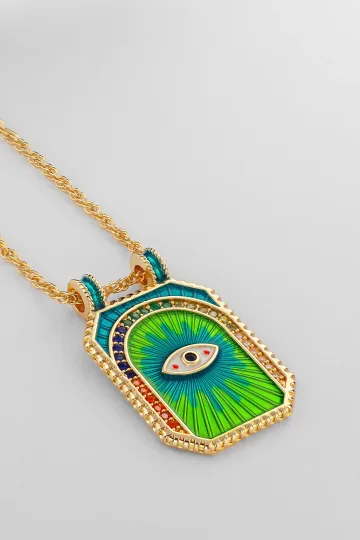
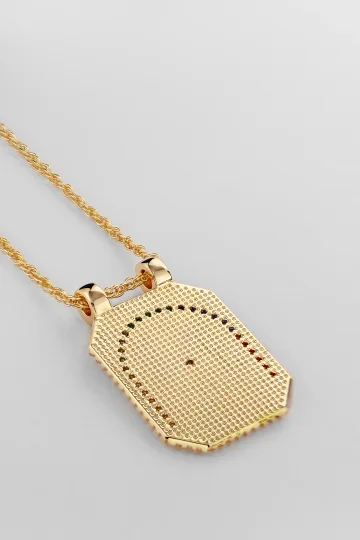


In jewellery Shiva appears both as a full figure and through his recognisable attributes: the trishula trident, the damaru drum, the crescent in his hair, the serpent at his neck, the third eye on his brow, rudraksha prayer beads. These signs read instantly to anyone familiar with Hindu culture, and to everyone else they offer a beautiful, meaningful form. A pendant with a trishula or a dancing Nataraja works as a sign of inner strength, calm, and the ability to let the past go.
Shiva holds a special place among the gods of the Hindu pantheon. If Brahma creates the world and Vishnu preserves it, then Shiva is responsible for dissolution and a fresh beginning. Together the three form the Trimurti, a threefold image of a single divine principle in three of its actions. Yet for millions of people, the followers of Shaivism, Shiva himself is the supreme deity, the source and cause of everything, rather than one of three equals.
Shiva's place among the Hindu gods
Shiva stands beside the other great images of the Hindu pantheon, and his role among them is unique. His consort is the goddess Parvati, gentle and loving in one aspect and a fierce warrior, Durga or Kali, in another. Their son is Ganesha, the elephant-headed remover of obstacles, one of the most loved and recognisable gods of India. The second son, Kartikeya, is the god of war. This family lives on Mount Kailash, and together they form a whole world of stories to which artists and craftspeople have returned for centuries.
Worth remembering too is the close circle of Shiva's symbols. The bull Nandi is his faithful companion and mount, the guardian at the entrance of every temple. The sacred river Ganga, by legend, descended from the heavens through Shiva's hair so its torrent would not shatter the earth. Mount Kailash in the Himalayas is considered his abode. These images explain why a bull, a stream of water, and a mountain peak so often appear near the figure of Shiva: they show the god not alone but set within a whole universe of meaning.
What follows, in order: where the image of Shiva came from, what each of his symbols means, why people wear such jewellery, what the Nataraja dance carries, what these pieces are made of, how to wear them respectfully and with what, and the surprising facts that have gathered around this god.
The history and cult of Shiva
The image of Shiva is one of the oldest in any living religion on the planet. Its roots reach back thousands of years, and over that time the cult grew into one of the largest spiritual traditions in the world. At almost every stage of this long history Shiva left a mark on art, including in small sculpture and in jewellery.
The ancient roots of the image
Scholars find possible forerunners of Shiva as far back as the Indus Valley civilisation, which existed around five thousand years ago. On ancient seals there is a figure of a horned deity seated in a posture resembling a yogic one, surrounded by animals. Many researchers cautiously call this image a "proto-Shiva" or a "lord of the beasts," though there is no direct proof of the connection and the debate continues. In the sacred texts of the Vedas, the god of storm and wild nature bears the name Rudra, fierce and unpredictable. Over time the image of Rudra merged with the figure of Shiva, and the fierceness softened into the graciousness reflected in the name itself.
The Trimurti and the role of the transformer
The idea of the Trimurti, a threefold divine principle, took shape in the sacred texts and became a convenient way to describe the three actions of the supreme: creation, preservation, and transformation. Brahma the creator, Vishnu the preserver, Shiva the transformer. The logic matters: transformation here is equal to creation. Without the ending of the old there would be no place for the new, and so Shiva is as necessary as Brahma. This philosophy explains why people are not afraid to wear his symbols: behind "destruction" stand renewal, release, and the forward motion of life.
The yogi and the ascetic
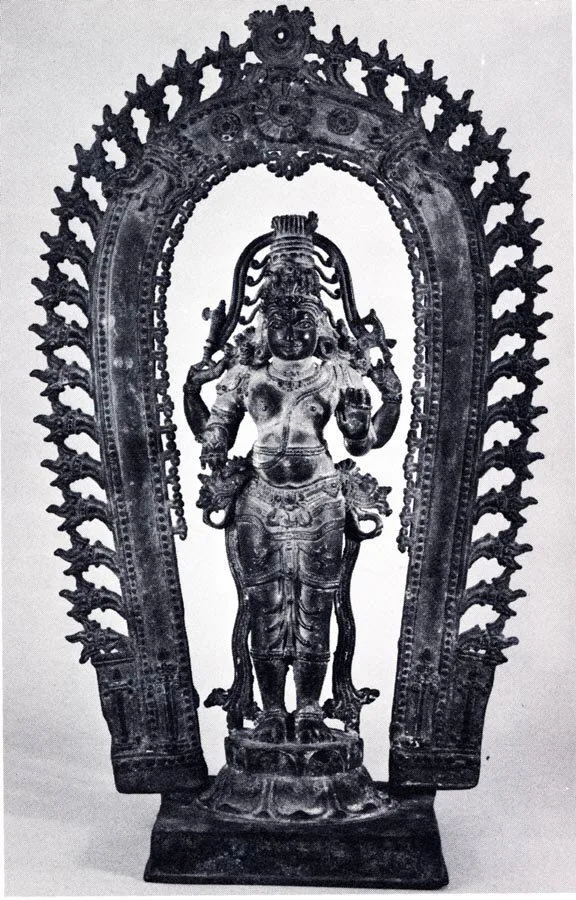
One of the most powerful facets of Shiva is the image of the great yogi and ascetic. He sits in meditation high in the Himalayas, on Mount Kailash, absorbed in contemplation. His body is covered with ash, his hair gathered into a high knot, his gaze turned inward. This Shiva teaches self-control, detachment from the unnecessary, inner silence. From this image grew his role as patron of yoga and meditation, and for the same reason Shiva's attributes are so often chosen by people walking the path of mindfulness and self-work.
Nataraja and the cosmic dance
A wholly different facet is Shiva Nataraja, the king of the dance. In this aspect the god dances his "tandava" dance, and every movement sets the rhythm of the whole universe: birth, existence, dissolution, renewal, and release. The image of Nataraja took shape in southern India, and the bronze figures of the dancing Shiva became the summit of Indian casting art. A separate large section below is devoted to this dance, because it is Nataraja who best conveys the essence of Shiva as the transformer.
The fierce aspect: Bhairava
Shiva also has a thoroughly stern aspect, Bhairava, the fierce guardian and remover of fear. In this form the god is depicted as furious, with weapons in his hands, surrounded by signs that drive off evil. Bhairava is honoured as a protector, and the paradox is that the terrifying image exists precisely for protection: a fierce guardian drives misfortune away from the one under his care. In jewellery this facet appears less often than the peaceful dancer or the ascetic, but it explains why Shiva's symbolism holds both the tenderness of the crescent and the fierceness of fire. The same god can be a quiet contemplative and a furious protector, and both sides are equally real.
Shiva's family: Parvati, Ganesha, and Mount Kailash
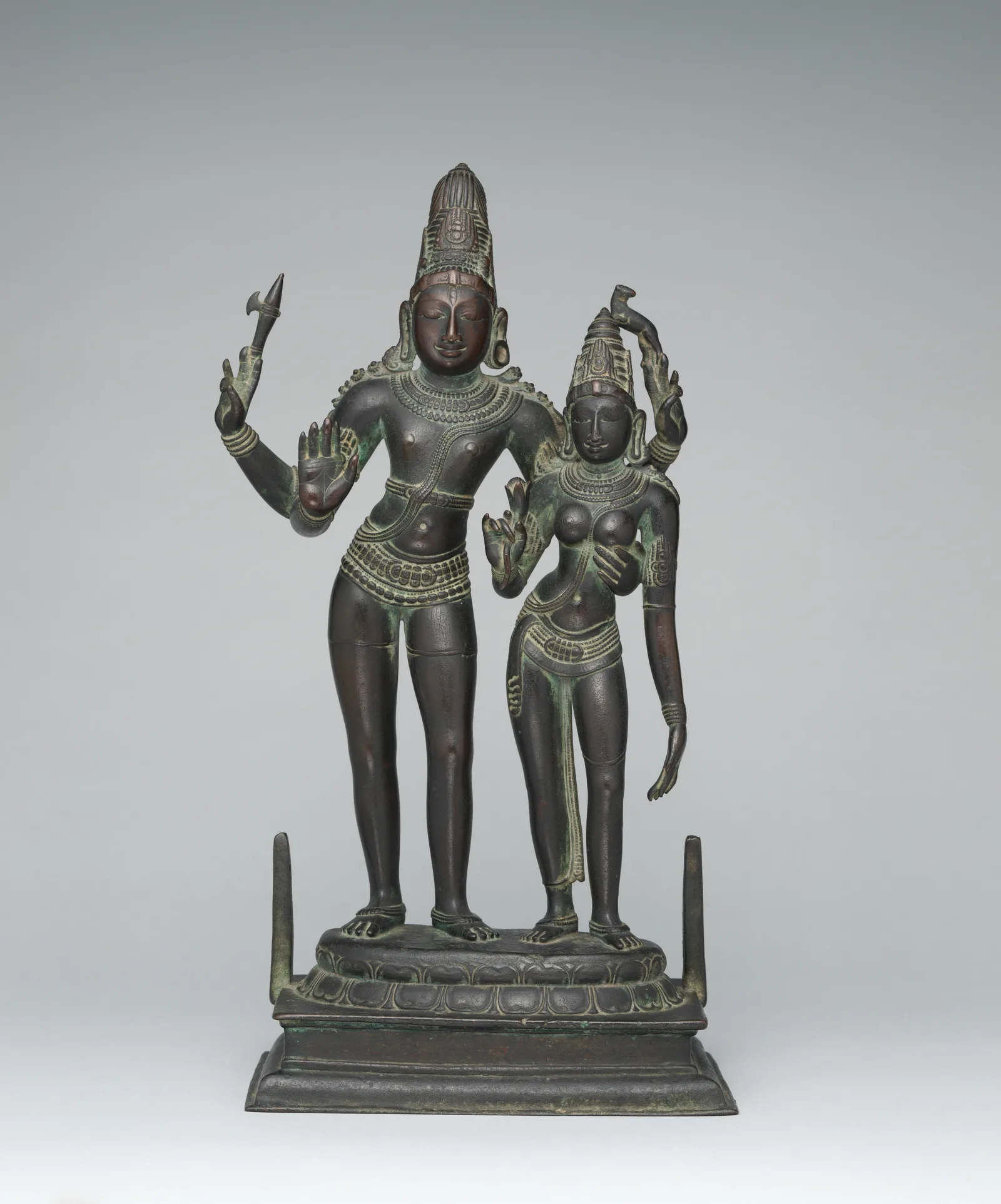
The mythology of Shiva is in large part a set of family stories. His consort Parvati won his love through stern asceticism, and their union became a symbol of harmony between the masculine and feminine. They had sons: Ganesha, whose head, by the famous myth, Shiva struck off in anger and then revived by fixing on the head of an elephant, and the warlike Kartikeya. Mount Kailash in the Himalayas is considered the home of this divine family and one of the chief places of pilgrimage for the followers of several religions at once. The image of Shiva as a loving husband and father balances his severity as an ascetic and his fierceness as a transformer, giving the figure depth and a human quality.
A Nataraja dances on bare skin and a plain shirt. Smother him in a loud print and he stops dead.
How to wear a Shiva symbol
Over years on shoots I have styled the trishula, the Nataraja and strands of rudraksha across dozens of looks. Here is what actually works, and I keep one thing in mind: a living religion stands behind this sign, so wear it thoughtfully rather than as random décor.
What do I wear a trishula pendant with day to day? For everyday I recommend a spare silver trishula on a medium chain over a plain tee or a linen shirt. A light top lifts the graphic trident, a dark one turns it into an accent. I suggest letting it lead alone, with no competing pendants: a sharp silhouette is stronger on its own.
How do I wear a Nataraja so it reads? The dancing Shiva needs room. I choose a plain top without a pattern and a chain long enough for the figure to sit on the chest so all four arms and the ring of flame read. Against a busy fabric the silhouette gets lost, so I keep the background calm.
Is a Shiva symbol right for a formal look? It is. Under a jacket I recommend silver or matte gold, length 45-50 cm, so the trishula slips under the top shirt button. It then reads as a quiet detail rather than a loud accent, and a strict dress code is no obstacle.
What do I put on for yoga or meditation? Here Shiva's symbols are at home. I suggest a strand of rudraksha on the wrist, sometimes with a small silver trishula, and a minimum of shine. The warm brown beads sit on the arm as a calm accent and do not pull focus from the practice.
Silver or gold for my skin tone? For a cool undertone I recommend silver: Shiva's austere graphic look reads clean and noble on it. A warm tone suits gold, which echoes the fire of the third eye and formal temple bronze. In doubt, take silver: it is more versatile and wears every day.

Turn on your camera, pick earrings, a pendant or a ring, and see the piece on yourself in real time.
Switch items in one tap.
Everything runs in your browser: no photo or video is ever uploaded.
The symbols of Shiva
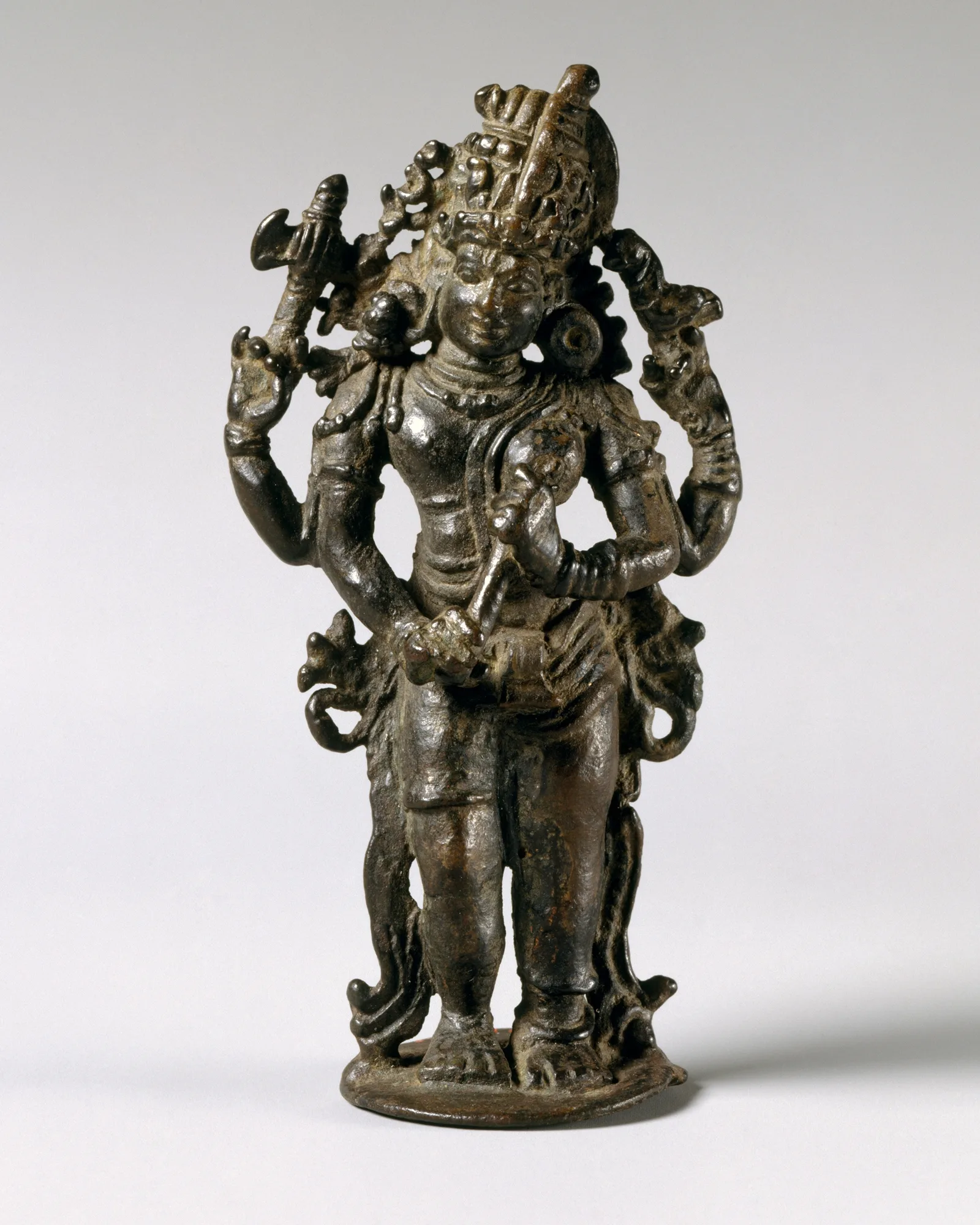
Shiva carries a whole set of recognisable attributes, and almost every one has become an independent jewellery motif. Let us take them one by one, pointing to separate articles where a symbol deserves its own conversation.
The third eye
The third eye on Shiva's brow is a sign of higher sight, the ability to see beyond the ordinary. By myth, when Shiva opens the third eye, fire bursts from it that can burn to ash, so the eye is linked both to wisdom and to the destructive power of knowing. It is one of the oldest images of inner vision. Since the third eye has long lived as an independent symbol of intuition and consciousness, a separate piece is devoted to the third eye and the Ajna chakra. In Shiva it is first of all a sign of insight that burns away illusions.
The trishula: the trident
The trishula is Shiva's trident, his main weapon and one of his most powerful symbols. The three prongs are read in different ways, and the richness of the image lies in that. Most often they are linked with the god's three actions: creation, preservation, and transformation. They are also read as the three gunas, the three fundamental qualities of nature, as past, present, and future, and as the three states of consciousness. The trishula stands for power over all three worlds and the ability to cut through ignorance. In jewellery the trident reads sharply and graphically, which is why, of all Shiva's attributes, the trishula most often ends up in spare pendants and rings.
The crescent in his hair
A young crescent shines in Shiva's hair, and it is one of his gentlest signs. The moon at his temple symbolises power over time and cycles, since the moon waxes and wanes through its round. It also lends the god's fierce aspect a coolness and calm, balancing the heat of the third eye. The crescent as an ornament has long lived a life of its own, and it is described separately in the piece on the crescent moon and star and in the article on the sun and moon. In Shiva the moon adds calm and a cyclical wisdom to the image.
The serpent Vasuki
A serpent coils around Shiva's neck, most often identified with the king of serpents, Vasuki. The snake around the god's neck is not a threat but a sign of power over the fear of death and over primal force itself. By the famous myth of the churning of the ocean, Shiva drank a deadly poison to save the world, and the poison remained in his throat, staining his neck blue, hence the name Nilakantha, the blue-throated. The serpent guards this poison and keeps the god's power. The snake as an independent symbol of renewal and wisdom is covered in a separate article on the snake in jewellery. In Shiva the serpent is a sign of tamed primal energy.
The damaru: the drum
The damaru is a small two-headed drum shaped like an hourglass, which Shiva holds in one of his hands in the Nataraja dance. The sound of the damaru is considered the first sound, from which the world was born, a rhythmic pulse that sets creation going. The shape of the drum, two cones joined by a narrow waist, is read as the union of the masculine and feminine, from whose meeting the universe is born. In jewellery the damaru appears less often than the trident, but as a motif it carries a beautiful idea: everything begins with rhythm and sound. The small drum often appears as a detail of the Nataraja figure, in one of his upper hands, and an attentive eye recognises it by the characteristic hourglass shape. A damaru as a standalone pendant is chosen by those who feel close to the idea that the world rests not on frozen form but on a pulse, on a rhythm that never stops for a moment.
Rudraksha: the prayer beads
Rudraksha are the seeds of a tree that have been strung into prayer beads since deep antiquity for meditation and the repetition of mantras. The name itself is translated as the "eye of Rudra," that is, the eye of Shiva: by legend these seeds were born from the god's tears. Rudraksha beads are worn as a sign of devotion to Shiva and as an aid in spiritual practice. Each seed has "faces," and the number of faces is given different meanings. For jewellery, rudraksha offers a warm, natural, non-metallic texture, and bracelets or strands of these beads are worn both in a religious context and as an ethnic accent.
The lingam
The lingam is an abstract symbol of Shiva, venerated in temples and shrines across India. It is not an "idol" in the usual sense but a sign of the god's formless creative energy, his presence and generative power. The lingam is usually paired with a yoni base, and together they express the unity of the masculine and feminine, the inseparability of all that exists. For believers this is a deeply sacred image, so it deserves respectful treatment and no vulgar interpretation. The lingam does appear as a motif in jewellery, but it calls for delicacy and an understanding of context, which is why people more often choose the more universal signs of Shiva such as the trishula or the Nataraja figure.
Customer reviews
Zevira is a real jewellery shop. Genuine payments, deliveries and customer thank-yous.
🥰🥰🥰 gracias
Ok, ¡gracias! 🙂
What Shiva means in jewellery
Why wear a symbol of Shiva? This god holds several layers of meaning, and each answers a different human need. What unites them is the idea of motion and inner work rather than passive protection.
Transformation and change
The central meaning of Shiva is the capacity for change. His symbol is chosen on the threshold of a major life turn: a change of work, a move, the close of one stage and the start of another. The trishula or the figure of Shiva reminds you that an ending is not a finish but the condition of a new beginning. For someone living through change, this is a supportive idea rather than a frightening one.
Renewal through completion
Shiva teaches you to let go. Much in life clings to the past: to grievances, to habits, to roles that have long since grown too tight. The symbolism of the transformer helps you mentally put a full stop and clear the space. To wear a sign of Shiva is to keep a quiet reminder at hand: what has run its course can be released with respect, and that is a healthy movement rather than a loss.
Meditation and inner silence
The image of Shiva the yogi, seated in contemplation on a summit, speaks of the value of inner silence. For those who practise meditation or simply look for a way to slow down in a noisy life, the symbols of Shiva and rudraksha beads serve as an anchor for attention. This is not a promise of instant peace but a support for one's own practice.
Inner strength and power over fear
The serpent at Shiva's neck, the poison he drank, the fierce third eye. All of this is about the ability to face what is hard and not retreat. The symbol of Shiva is chosen as a sign of inner footing: I can tame my fears the way the god tamed the serpent and the poison. This is the strength not of aggression but of self-mastery.
Liberation
In Hinduism the highest goal of the path is liberation, escape from the wheel of rebirths and union with the supreme. Shiva as the destroyer of illusions and bonds is directly tied to this idea. For a believer his symbol is a sign of striving for the freedom of the spirit. For a secular person the same idea reads as freedom from the unnecessary, from the imposed, from the inner prisons we build ourselves. The lower foot of Nataraja, to which his hand points, is itself a sign of this refuge and liberation: the god, as it were, extends support to anyone who wants to break out of the circle of fear and habit. This is why the figure of the dancer is often chosen by people coming through a hard period, as a quiet sign that there is a way out.
Upload a photo of your pet, someone you love, or an object. We'll build a 3D model and hand-cast it in pewter.
Nataraja: the dance of creation
Among all the images of Shiva the dancing Nataraja stands apart, and he deserves his own conversation. It is this bronze figure that most often becomes the heart of a piece of jewellery and best explains who Shiva is.
What the dance shows
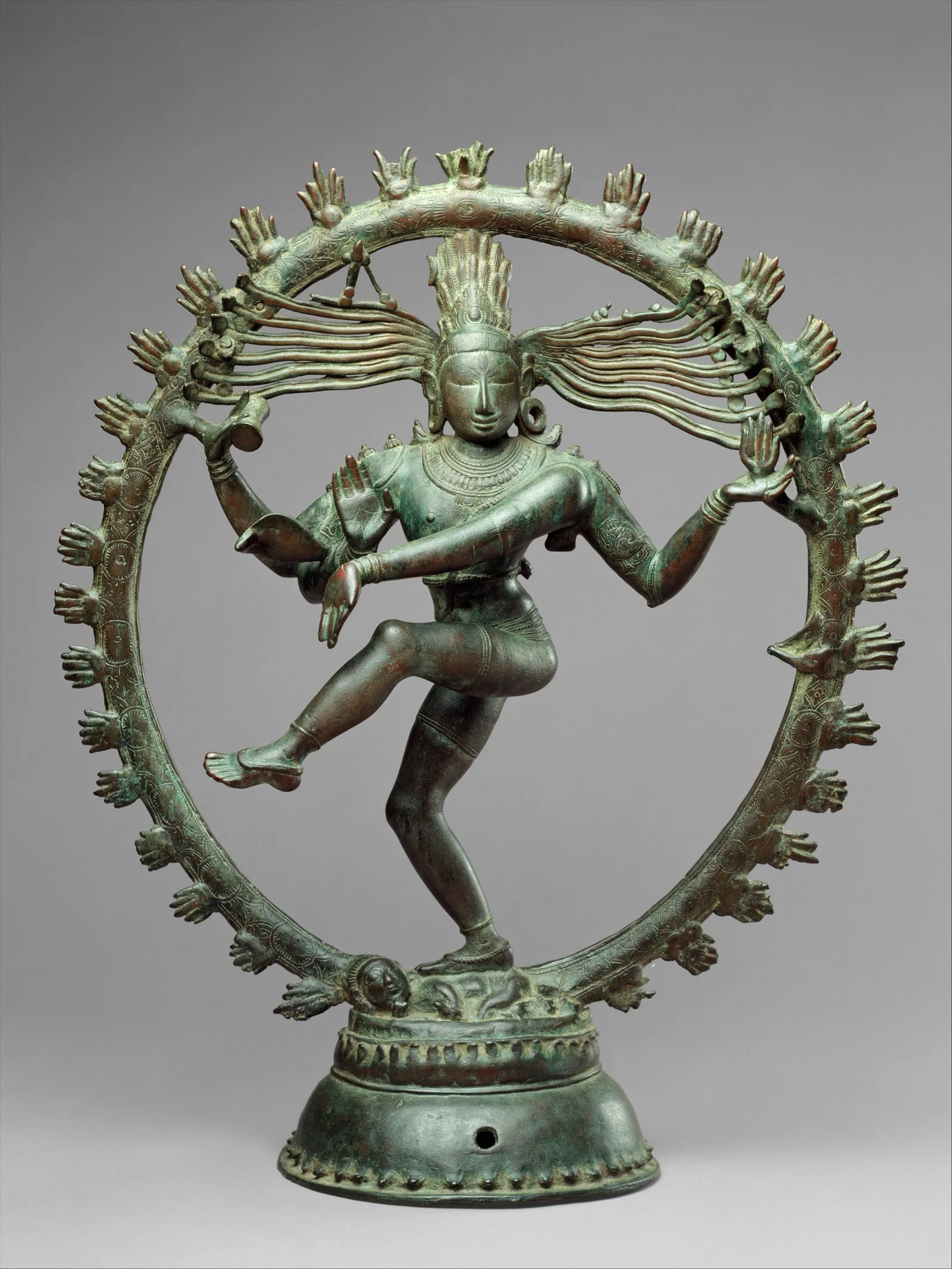
Nataraja is frozen in motion inside a ring of flame. He has four arms, and each carries a meaning. In the upper right hand is the damaru drum, beating out the rhythm of creation. In the upper left is fire, whose tongues dissolve what has run its course. The lower right hand is folded into the "fear not" gesture, granting protection and calm. The lower left points to the raised foot, a symbol of liberation and refuge. One foot of the dancer presses on the small figure of a dwarf demon, the personification of ignorance and illusion. The ring of flame around him is the universe passing through its cycles. In one figure the whole philosophy of Shiva is gathered: creation, preservation, dissolution, concealment, and liberation happen all at once, in a single eternal dance.
Where the image came from
The canon of the dancing Shiva took shape in southern India, and the bronze Natarajas became the summit of Indian casting. Craftspeople cast them by the lost-wax method, achieving striking precision and dynamism. These figures were carried in temple processions, and for millions of people the image of the dancer became the chief visible face of Shiva. Over time Nataraja stepped beyond the temple and became a symbol recognised worldwide of Indian art and Hindu philosophy.
Nataraja today
The image of the dancing Shiva entered world culture in an unexpected way. A large statue of Nataraja stands at the entrance of one of the world's largest centres of physics, because scientists saw in the cosmic dance a metaphor for the rhythm of subatomic particles, the eternal motion of matter. For jewellery Nataraja offers a complex motif saturated with meaning. A pendant with the dancing Shiva carries a condensed philosophy of motion, change, and calm in the midst of change. It is usually worn by those who feel close to this idea of life's rhythm, and the aesthetics here come second.



Materials
The image of Shiva is historically linked with certain materials, and each has its own logic. Some came straight from religious practice, some from the jewellery tradition.
Rudraksha
Rudraksha is the most Shaivite material of all. The warm brown seeds with their textured surface are strung into bracelets, strands, and prayer beads. They are light, pleasant to the touch, and carry a natural, non-metallic aesthetic. In a religious context rudraksha is a sign of devotion to Shiva; in a secular one it is an ethnic, calm accent that sits well on the wrist beside silver. Natural seeds need gentle care: they should not be soaked for long or kept in damp conditions, or they may crack. Sometimes rudraksha is combined with silver inserts and trishula pendants.
Silver
Sterling silver 925 with its cool shine conveys Shiva's austere, graphic aesthetic beautifully. A trishula, a Nataraja figure, a damaru in silver look severe and noble, and silver is easily blackened in the recesses of the relief to bring out the details of the dance or the prongs of the trident. Silver is durable, wearable every day, and does not cause allergies in most people. For a spare trishula or a small Nataraja pendant it is probably the most universal choice.
Gold
Gold lends the image of Shiva a ceremonial, warm depth. A gold Nataraja figure recalls the gilded temple bronzes, and a gold crescent or trident reads as a stately, festive version. Gold suits a piece meant as a significant gift or as something for a special occasion. The warm shine of the metal echoes the fire of the third eye and the ring of flame around Nataraja.
Bronze and brass
Bronze is the historically accurate material for Shiva: it was bronze the classic Natarajas were cast from. The warm cast gives the figure a museum-like, archaic depth. Brass with a golden tone works similarly and costs less. The drawback of copper alloys is that over time they darken and may leave marks on the skin, so they need care: take them off before showering and sleeping, wipe with a soft cloth, store in a dry place. Anyone who wants exactly the warm texture without the fuss chooses gilded silver: the look is close to bronze, while the base is nobler.
Stones
A separate line is inserts of stones linked with Shiva by colour and meaning. Blue stones echo his blue throat and the coolness of the crescent, dark ones set off the graphic quality of silver, clear ones add light to the image. The stone here works as an accent rather than as the main character, because in Shiva's jewellery the symbol itself comes first: the trident, the dance, the drum.
How to tell a good piece from a stamped one
The image of Shiva lives in its details, and the quality of the work shows at once. In a good Nataraja figure all four arms read clearly, the drum and the tongue of flame are recognisable, the pose holds its balance and does not look melted. In a weak casting the details merge, the face is blurred, the ring of flame turns into a shapeless hoop. The trishula is checked by the sharpness of its prongs: the edge should be crisp rather than rounded, or the trident loses its graphic character. Real silver carries a hallmark, most often 925, while a suspiciously light "silver" piece with no hallmark that quickly darkens to green betrays a cheap alloy under a coating. Rudraksha is checked for cracks and for the natural, not perfectly even surface of the seed: overly smooth "beads" often turn out to be plastic imitation.
Leave your email, we'll send your discount code. No spam, unsubscribe anytime.
The code arrives by email, valid on your first order.
Shiva in art and in yoga
Shiva has a large cultural life beyond the temple, and it feeds the modern symbolism of jewellery. The two main areas are the visual arts and the practice of yoga.
Shiva in art
Artists have returned to Shiva for thousands of years. The bronze Natarajas of southern India became a world classic of sculpture, a model of how frozen metal conveys motion. The stone reliefs of ancient temples show Shiva in dozens of aspects: the ascetic, the dancer, the husband of Parvati, the fierce Bhairava. The miniature painting of later centuries showed him seated on a tiger skin in the Himalayas, with a crescent in his hair and a trident in his hand. From this rich tradition all the recognisable details came into jewellery: the dance pose, the ring of flame, the set of attributes in four hands. Every Nataraja pendant is a distant descendant of temple bronze, and its silhouette speaks a language honed over centuries.
Shiva and yoga
Shiva is called Adiyogi, the first yogi, and the patron of yoga. By tradition it was he who passed to the first students the knowledge of working with the body, the breath, and consciousness. For this reason the symbols of Shiva are natural among those who practise yoga: the trishula, Nataraja, rudraksha beads appear both in studios and in personal jewellery. What is at issue here is discipline and inner work, not magic and not shamanism. A piece with Shiva, for a practitioner, is a reminder of the aim of practice: calm, concentration, the ability to let go of the unnecessary. It does not replace the work on oneself but serves it as a quiet support, and in that lies its honest meaning.
Nataraja and one yoga pose
The name of the king of the dance has also stuck in the practice itself. One yoga pose, the dancer's pose, bears the name of Nataraja because it repeats the posture of the dancing Shiva: standing on one leg, you draw the other back and reach for the foot with a hand, arching into a graceful curve. The pose demands balance, concentration, and calm, the very qualities the god himself symbolises. So the image of Nataraja lives both in the metal of a pendant and in the movement of the body, and a person wearing such a piece often knows this link.
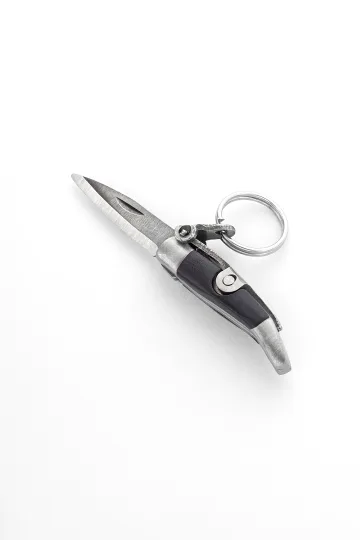
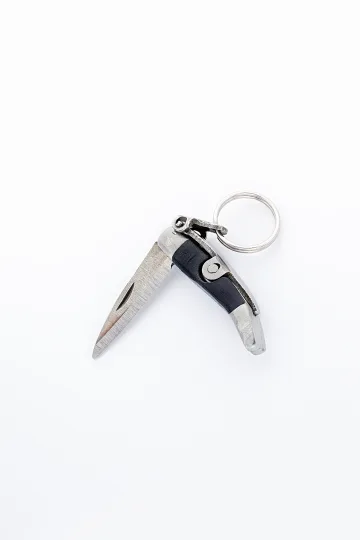
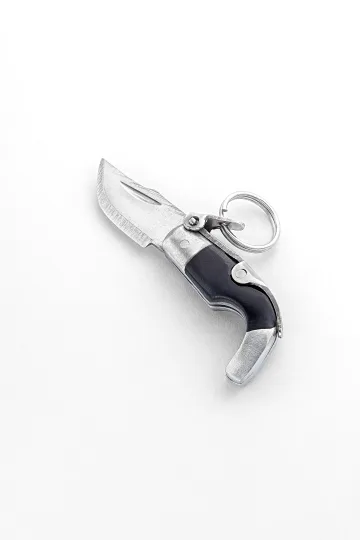
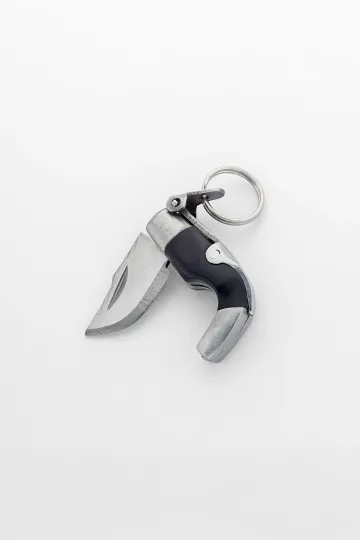
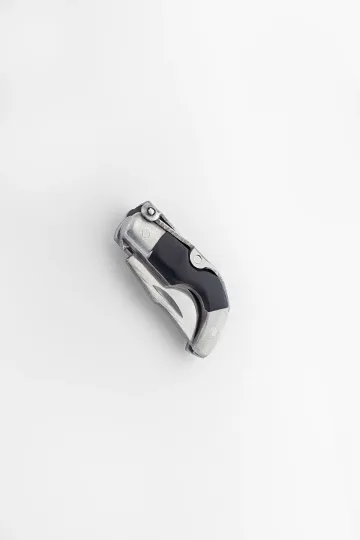
CAPAORA mini knife pendant
The 18th-century Spanish navaja in miniature: 40 mm of stainless steel, a real folding mechanism and a Palanquilla lock that clicks. An affordable gift to remember.
Authentic · Ships from Spain · 14-day returns
The psychology of choosing a symbol of change
Behind the pull towards a symbol of Shiva stands a clear human need: to come through change and not break. Psychologists noticed long ago that talisman objects help people hold on through hard periods, give a sense of footing, and work as an anchor for attention. A pendant with a trident or a figure of the dancer is not magic but a reminder to oneself: an ending is part of the path, not a catastrophe.
Why people choose the "god of destruction"
At first glance it seems strange to wear a symbol of a god linked with destruction. But the strength of the image lies exactly there. A person rarely fears creating; far more often they fear letting go: of the former job, the relationship, the familiar way of life, a version of themselves. The symbol of Shiva speaks directly of the value of completion, and for someone standing on the threshold of a major change this is a support. By choosing such a sign, a person gives themselves permission to close the old chapter and not cling to it out of fear of the emptiness.
An anchor of calm in change
A separate facet is the image of Shiva the yogi, who sits motionless in the midst of the world's storm. Many choose his symbol not for strength but for stillness. In a noisy, jittery life a small sign on the chest works as a point of return: a touch of the pendant is enough to remember the breath and ease the pace. The piece does not make a person calmer by itself, but it helps them take a calm position in their own head, and that is already a good deal.
Shiva in the cultures of different regions
The image of Shiva is not the same across India and beyond. Different regions and traditions single out different facets of him, and this variety is also reflected in jewellery.
The south of India: king of the dance
It was in the south of India that the image of Nataraja was born and flourished. Here Shiva is first of all a dancer, and the bronze figures of the dancing god became the calling card of the region. The southern tradition gave the world the very silhouette in the ring of flame that is recognised everywhere today. Jewellery with Nataraja inherits directly from this casting school.
The Himalayas: the ascetic on the summit
In the Himalayan belt and further north the image of Shiva the hermit, seated in the snows on Mount Kailash, is stronger. Here he is linked with stern asceticism, meditation, and detachment. Pilgrims have walked towards the sacred mountain for centuries, considering it the abode of the god. From this tradition a more austere, meditative aesthetic comes into jewellery: a plain trishula, rudraksha, a minimum of shine.
Beyond India
Shiva and his symbols long ago crossed the borders of India together with Hinduism and the worldwide interest in yoga. The image of the dancer became a recognisable sign of Eastern philosophy in the art and design of many countries. At the same time, beyond the home culture it is especially important to keep respect for the meaning of the symbol and not turn a sacred image into empty ornament. An understanding of context separates a meaningful piece from thoughtless borrowing.
Facts that surprise
Over the millennia so many stories have gathered around Shiva that some of them sound almost unbelievable.
A statue of the dancing Shiva stands at the entrance of the largest centre of physics. A bronze Nataraja greets scientists at one of the world's main laboratories for the study of particles, because the cosmic dance of Shiva was thought a fitting metaphor for the eternal motion and rhythm of matter. An ancient image and cutting-edge science met on a single threshold.
Poison that saved the world touched Shiva's neck. By the myth of the churning of the milk ocean, a deadly poison rose from the depths, threatening to destroy all life. Shiva drank it, held it in his throat, and did not let it poison the world. The poison stained his neck blue, and since then the god has been called Nilakantha, the blue-throated.
The seeds of the prayer beads are the "tears of Shiva." By legend the rudraksha tree grew from a tear of the god, shed out of compassion for the world. The word "rudraksha" itself is translated as the "eye of Rudra," one of Shiva's fierce names. So a simple wooden bead holds a whole myth of divine compassion.
A whole river runs down from his hair. By tradition the heavenly river Ganga would have crashed onto the earth and shattered it, but Shiva took its torrent onto his head and let it pass through the strands of his hair, softening the blow. This is why Shiva is sometimes depicted with a stream of water flowing from the knot of his hair.
Shiva has thousands of names, and they are deliberately recited. There are sacred lists of a thousand and more epithet-names of Shiva, each opening a facet of his nature. They are repeated like a prayer, and in the very abundance of names you can see an attempt to describe a boundless deity at least through a multitude of titles.
Shiva's dance comes in different kinds. The famous "tandava" is only one of his dances, and it is linked with fierce, transforming power. There is also a gentle, soft dance, the "lasya," which the tradition links with his consort Parvati. Together they form a pair of masculine and feminine principles of movement.
The bull at the temple entrance is always Shiva's companion. Before the shrines of Shiva there almost always sits a figure of the bull Nandi, turned towards the god. Nandi is his faithful companion, guardian, and mount, and pilgrims by tradition first greet the bull with respect.
The third eye can burn to ash. By one of the myths the god of love shot an arrow at Shiva to awaken passion in him and tear him from meditation. The enraged Shiva opened his third eye, and the fire that burst out turned the bold god to ash. The third eye has since been a symbol of the power of insight before which no illusion can stand.
Send a friend a discount code, they save on their first order.
Frequently asked questions
Is Shiva a god of destruction or of creation?
Both at once. Shiva is the transformer: he completes worn-out cycles to make room for the new. Destruction in him is not malice but the necessary condition of renewal, like a fire after which a young forest rises. So it is more accurate to call Shiva the god of transformation and renewal, while the word "destruction" conveys only one of his sides.
Can a person of another faith wear a symbol of Shiva?
Yes, if it is done with respect. Shiva is the deity of a living religion, but his symbols entered world culture long ago, especially through yoga and art. Wearing a trishula, a Nataraja, or a rudraksha bracelet is fine if you know the basic meaning and avoid vulgar readings of sacred images. Respect for the culture makes a piece deeper.
What does Shiva's trident mean?
The trishula, Shiva's trident, symbolises power over the three worlds and the god's three actions: creation, preservation, and transformation. The three prongs are also read as past, present, and future, and as the three fundamental qualities of nature. The trident stands for the ability to cut through ignorance, and in jewellery it reads sharply and graphically.
Who is Nataraja?
Nataraja is the "king of the dance," one of Shiva's chief images. The god dances inside a ring of flame, and every movement sets the rhythm of the universe: creation, preservation, dissolution, and liberation happen all at once. A pendant with Nataraja carries the idea of eternal motion and calm in the midst of change.
Why does Shiva have a serpent at his neck?
The serpent, more often identified with the king of serpents Vasuki, symbolises tamed primal force and power over the fear of death. By myth Shiva held a deadly poison in his throat to save the world, and the serpent guards this power. The snake at the god's neck is not a threat but a sign of self-mastery and renewal.
What is rudraksha, and can such prayer beads be worn as jewellery?
Rudraksha are the seeds of a tree from which prayer beads for meditation and the repetition of mantras are strung. The name is translated as the "eye of Shiva." Bracelets and strands of rudraksha are worn in both a religious and a secular context as a calm ethnic accent. Full prayer beads are an object of practice, so they deserve an understanding of their purpose.
Is a symbol of Shiva suitable for yoga?
Yes, and it is one of the most fitting uses. Shiva is called the first yogi and the patron of yoga, so the trishula, Nataraja, and rudraksha are natural among practitioners. Such a piece serves as a reminder of the aim of practice: concentration, calm, and the ability to let go of the unnecessary, without any esoterica.
How does Shiva differ from Ganesha and the Buddha?
Shiva is the supreme transformer god of Hinduism, the father of Ganesha. Ganesha is his son, the elephant-headed remover of obstacles, addressed at the start of any undertaking. The Buddha is a figure of another tradition, Buddhism, the founder of a teaching about the path to liberation through mindfulness. These are different images, though their symbols often sit side by side in jewellery on meditative themes.
Conclusion
Shiva has survived millennia and remained one of the most living images of world culture: from the ancient seals of the Indus Valley to the bronze dancer at the door of a physics laboratory. His strength lies in an idea clear to a person of any era: the old ends so that the new can be born, and in this motion there is no tragedy but the rhythm of life itself. The trident, the drum, the crescent, and the figure of the dancing god answer simple human needs: to come through change, to let go of the unnecessary, to find inner silence and strength. By choosing a sign of Shiva, a person carries a quiet reminder that ending and beginning are two sides of one dance.
Silver, gold, the symbolism of world cultures, talismans, and meaningful signs.
Buying it as a gift? Each one arrives ready to give.
 A branded Zevira box and a little card come with every order.






About Zevira
Zevira is jewellery with meaning: symbols, talismans, signs of strength and inner footing in clean forms of silver and gold. We love pieces with a story thousands of years long, and we carry it into modern design without needless pomp and without shamanism. The signs of ancient cultures in the catalogue sit beside minimalist pendants and paired sets, so that everyone finds their own symbol.