Lakshmi in Jewellery: Goddess of Wealth, Abundance, Fortune and Beauty
The Goddess Who Comes Only to a Clean House
On the night of Diwali, all across India people leave their doors open and light rows of small lamps so that Lakshmi will enter the house and not pass it by. She is the goddess of wealth, yet she comes not where gold glitters but where things are clean, bright and people are welcome. Prosperity as a reward for order, not for greed.
Lakshmi is the Hindu goddess of abundance, fortune, beauty and spiritual prosperity, the consort of Vishnu. People recognise her by four arms, a lotus, a stream of gold coins flowing from her palm, and two elephants pouring water over her. These images moved into jewellery long ago: lotus pendants, coins, small figures of the goddess on a red thread.
What follows, in order: who Lakshmi is and where she came from, how her cult has lived from the Vedas to the festival of Diwali, what each of her symbols means, why her kind of wealth is both money and purity of spirit, what materials such jewellery is made from, and how to wear it with respect. Lakshmi is not a protective animal like the elephant or the owl, but a living goddess worshipped right now, and that is worth keeping in mind.
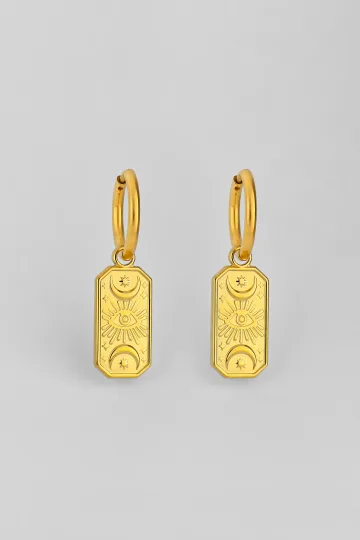
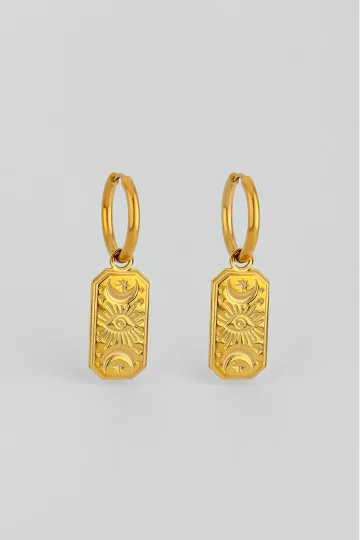
Wear the symbol, don't just read about it. These are in stock:



Who Lakshmi Is
The Name and Its Meaning
Lakshmi (in Sanskrit लक्ष्मी) is the goddess of wealth, abundance, fortune, beauty and fertility in Hinduism. The name itself is linked to the root "laksh," which means "aim," "sign," "perception." Lakshmi is what people strive towards, a good goal, a favourable sign. In the oldest texts the word simply meant "luck" or "an auspicious mark," and only later did a living goddess stand behind it.
She has a second, very important name: Shri (श्री). Shri means radiance, brilliance, well-being, dignity. The word is still placed before names as a mark of respect, much like "lord" or "saint." When a Hindu says "Shri Lakshmi," the meaning is doubled: grace upon grace. The goddess is often called this way as one, Shri-Lakshmi, and both names are read together as a single word.
How She Looks
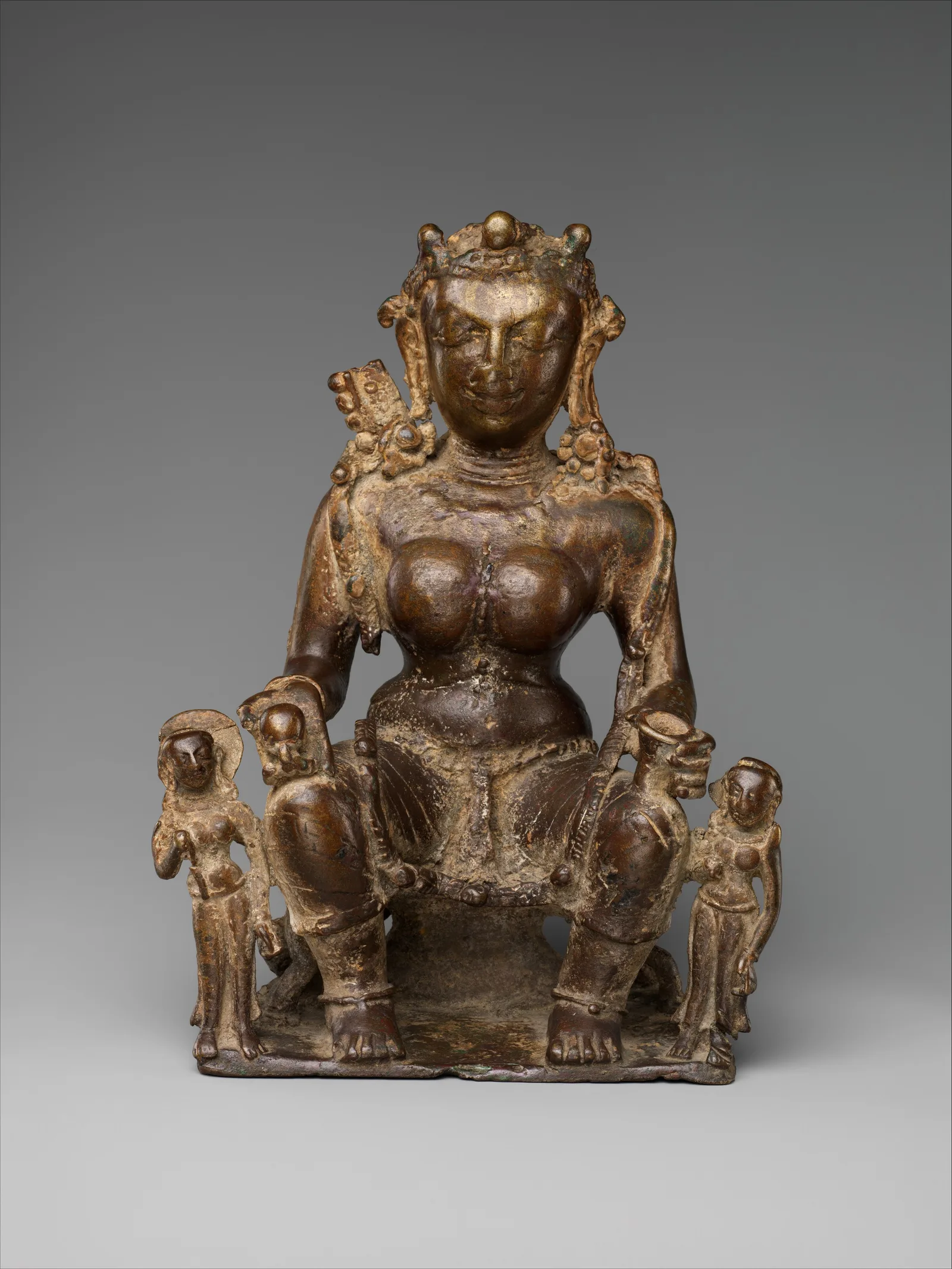
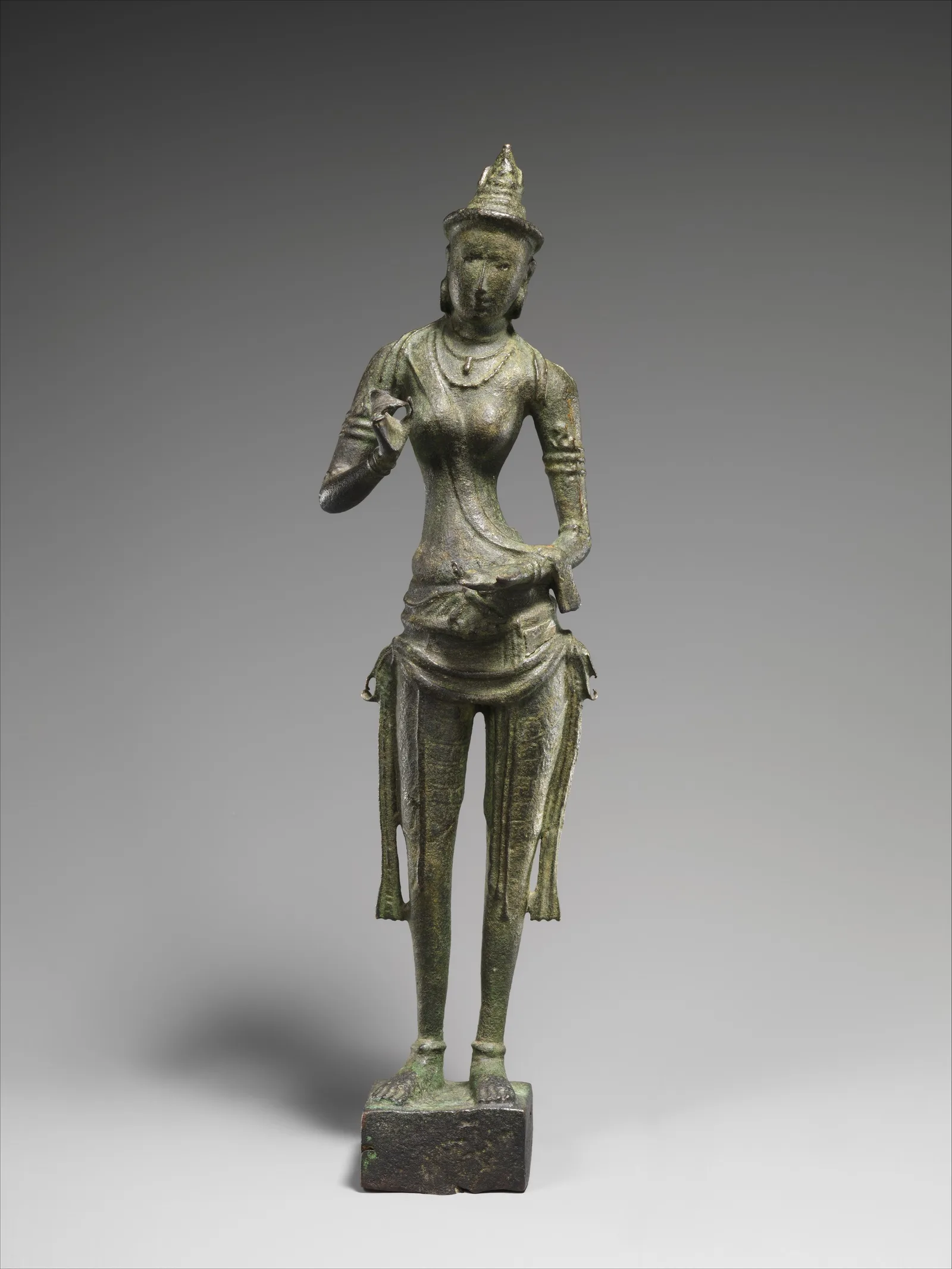
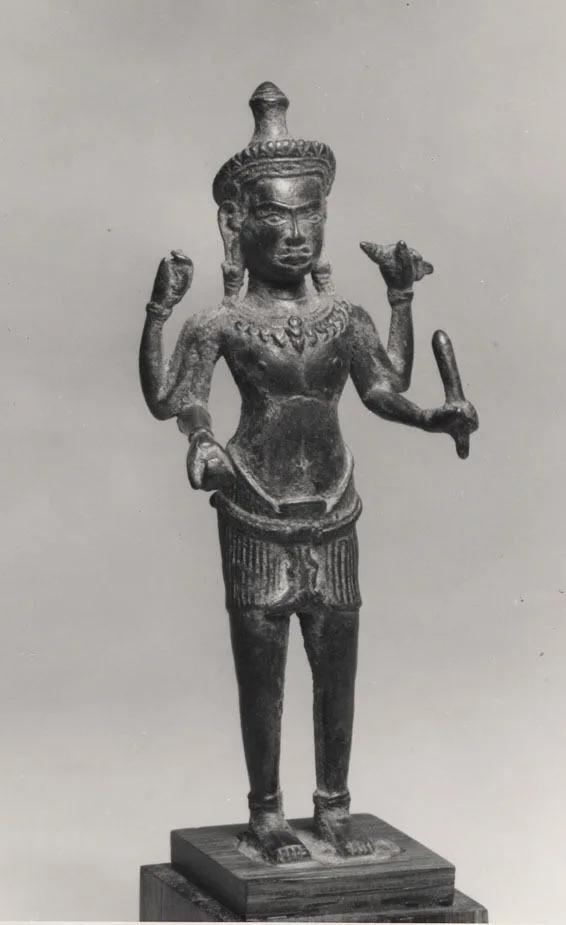
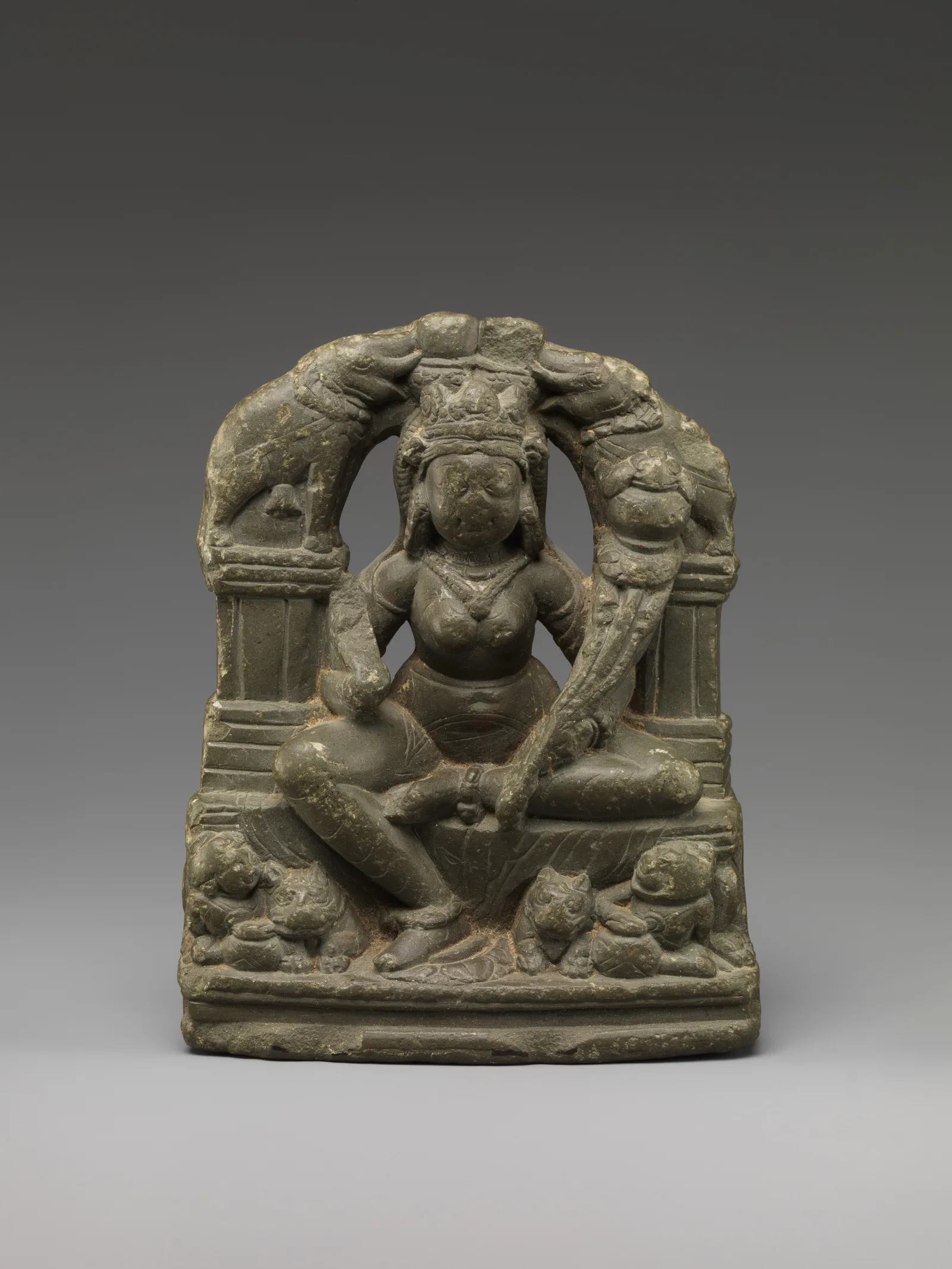
The canonical image is recognised instantly. A beautiful woman in a red or gold sari sits or stands on an open lotus. She most often has four arms. In the upper two she holds two lotuses, the lower right is folded in a gesture of blessing, and from the lower left a stream of gold coins pours out. On either side, two elephants raise their trunks and pour water over her from vessels. Her skin is golden, her ornaments rich, her face calm and kind.
Every detail of this image carries meaning, and that is why it passed so easily into jewellery. You can take the whole figure, or a single attribute: the lotus, the coin, the pair of elephants. Anyone who knows will read the reference to the goddess even when a pendant carries no face.
What She Governs
Lakshmi is responsible for wealth in all its forms, both material and spiritual. Money, harvest, success in work are her domain, but beauty, health, good reputation, wisdom and peace of mind belong to her too. In Hinduism wealth is not reduced to coins. Lakshmi grants the "fullness of life": a home where there is plenty, harmony and joy. So a merchant turns to her before a deal, a bride before her wedding, and anyone seeking inner harmony.
Her Place in the Hindu Pantheon
Lakshmi is among the chief goddesses of Hinduism and forms one of the sacred trinities of female deities, the Tridevi, together with Saraswati (wisdom and the arts) and Parvati or Durga (strength). She is the consort of Vishnu, preserver of the universe, and accompanies him through all his earthly incarnations. Where Vishnu is, there Lakshmi is too: they are an inseparable pair, a model of harmony between power and grace.
Tridevi: Wealth, Wisdom, Strength
Three great goddesses share among themselves the foundation of a prosperous life. Lakshmi is responsible for wealth and abundance, Saraswati for knowledge, speech and the arts, Durga or Parvati for strength and protection. They are often honoured together, especially during Diwali, because one without the other is incomplete: wealth without wisdom is squandered, wisdom without strength is defenceless, strength without wealth is barren. In jewellery the three goddesses are sometimes joined in a single set, but of them Lakshmi is the most "domestic," the closest of all to people's everyday hopes.
How Lakshmi Differs From the Male Gods of Plenty
In Hinduism wealth and fortune are also governed by other figures, for example Kubera, the treasurer god, keeper of the treasures of the north. But Kubera is more the owner and counter of hoards, while Lakshmi is grace itself, a living flow of plenty. People turn to Kubera for safekeeping and increase, and to Lakshmi so that wealth may come at all and stay clean. That is why her image, rather than the stern treasurer's, is the one people love to wear: she is warm, generous and beautiful.
Red and gold is Diwali, not a grey Tuesday. Don't hang the goddess over cheap trinkets, she wants a clean chain and a clean neck.
How to Wear Lakshmi
I have styled both quiet silver lotuses and full figures of the goddess for shoots. Let us settle one thing first: this is a living goddess, not an ornament, so her place is at the neck, on a ring or in earrings, never on shoes or underwear. Here is what actually works, sorted by occasion.
What should I wear every day? For daily wear I suggest the quietest sign: a fine lotus or a small coin on a neat chain. Silver or yellow gold, no scatter of stones, no ethnic framing. Such a lotus reads simply as a pretty flower, and the second layer is yours to know. It sits happily with a T-shirt, a shirt or a soft-tailored jacket.
And for Diwali or a celebration? Here I recommend the opposite, full voice: the whole figure of the goddess or Gaja-Lakshmi with her elephants, warm gold, a red stone (ruby, garnet, coral). The red-and-gold palette is her festival. Build the outfit around her and hang no other large accents nearby, one heroine needs one stage.
Coin, lotus or figure, if I hesitate? I look at how openly you want to carry the meaning. The quiet lotus I choose for those who value purity and discretion. The coin I suggest for the start of a venture, a move, a new year: it speaks plainly of plenty. The full figure I keep for an occasion and for those who wear the symbol openly and with understanding.
How do I layer without overloading? I keep Lakshmi the lead and everything else finer and simpler. One expressive pendant on a clean chain always beats a goddess crushed between five charms. If you want length, spread the chains apart by size but keep a single centre of meaning.
Who do I actually recommend this to? Those starting a venture, seeking stability, or fond of the idea of honest plenty and generosity. It lands beautifully as a gift for a housewarming or a business opening. Gender is beside the point, the goddess of abundance is worn by men and women alike. One rule that never fails: choose the form to fit the occasion, not the other way round.

Turn on your camera, pick earrings, a pendant or a ring, and see the piece on yourself in real time.
Switch items in one tap.
Everything runs in your browser: no photo or video is ever uploaded.
Customer reviews
Zevira is a real jewellery shop. Genuine payments, deliveries and customer thank-yous.
🥰🥰🥰 gracias
Ok, ¡gracias! 🙂
History and Cult
The Vedas: Born From a Hymn
The earliest mention appears in the "Shri Sukta," a hymn appended to the "Rigveda." There Shri-Lakshmi is described as radiant, golden, garlanded, bringing wealth, cattle, gold and offspring. At that time she still had no fixed biography; she was more a personification of luck and prosperity. Yet that hymn already holds everything we know about her today: gold, the lotus, abundance, grace.
The Churning of the Ocean of Milk
The famous story of the goddess's birth is told by the Puranas. The gods and asuras together churned the ocean of milk to obtain the drink of immortality. One after another, wonders rose from the churned waters, and among them Lakshmi rose, seated on an open lotus, dazzlingly beautiful. Everyone, gods and demons alike, froze, longing to win her. The goddess herself chose Vishnu and stood beside him. So fortune was joined to the preserver of the world, and that pair became a model of a harmonious union.
Consort of Vishnu and His Avatars
Lakshmi is faithful to Vishnu not only in heaven. When he descends to earth in the guise of an avatar, she comes down with him as his earthly companion. Vishnu comes as Rama, she becomes Sita. Vishnu comes as Krishna, she becomes Radha or Rukmini. Vishnu comes as Venkateshwara, she becomes Padmavati. The goddess changes names and forms, yet remains the same grace beside the same preserver. This idea of eternal companionship made Lakshmi the patron of marriage and faithfulness.
Ashtami: Eight Forms of Lakshmi
Over the centuries a teaching took shape of the "Ashta Lakshmi," eight manifestations of the goddess, each responsible for its own kind of wealth. Adi Lakshmi is the primordial goddess. Dhana Lakshmi grants money and gold. Dhanya Lakshmi governs harvest and food. Gaja Lakshmi is linked with elephants, royal power and plenty. Santana Lakshmi blesses with offspring. Dhairya or Vira Lakshmi gives courage. Vijaya Lakshmi brings victory. Vidya Lakshmi bestows knowledge. The eight forms show how broadly Hinduism understands wealth: it is bread and courage and children and wisdom, not coins alone.
Diwali: The Night She Is Awaited
Lakshmi's chief festival is Diwali, the festival of lights, celebrated in autumn. On the darkest night of the month of Kartika, homes are cleaned until they shine, doorways are decorated with rangoli patterns, rows of oil lamps called diyas are lit, and doors and windows are left open. It is believed that on this night Lakshmi walks past the houses and enters those that are clean, bright and full of harmony. Those who are lazy or stingy she passes by. People put on new clothes, give sweets, and merchants open new account books, asking the goddess for a fortunate year.
Lakshmi Puja and Everyday Worship
Worship of the goddess is not confined to one festival. Many Hindu families keep her image in a home shrine and perform puja, the rite of veneration, on Fridays, the day linked with Lakshmi. They offer her lotus flowers and red flowers, rice, sweets, light a lamp and recite her names. Merchants and entrepreneurs turn to her especially: for them Lakshmi is the patron of business, and her image often stands at the entrance to a shop or by the till.
Dhanteras and the Buying of Metal
The Diwali cycle of festivals opens with the day of Dhanteras, whose very name is made of "dhan" (wealth) and "teras" (the thirteenth day). On this day in India it is customary to buy something made of metal, usually gold or silver: coins, vessels, jewellery. The purchase is read as an invitation of wealth into the home and a good start to the financial year. From here runs the direct link between Lakshmi and the jeweller's craft: on this day a piece of jewellery is no luxury but almost a rite.
Regional Images of the Goddess
Lakshmi's appearance changes from region to region. In southern India people especially honour Gaja Lakshmi with elephants and the form of Dhana Lakshmi, who grants gold. In Bengal the Lakshmi Puja is held separately, a few days after the great festival of Durga, and there the goddess's image is closely tied to the rice harvest. In the figure of the god Venkateshwara in the south, the consort of Vishnu is called Padmavati, "the lotus one." These local differences explain why depictions of Lakshmi vary so widely: the canon is one, but the living variants number in the dozens.
Upload a photo of your pet, someone you love, or an object. We'll build a 3D model and hand-cast it in pewter.


The Symbols of Lakshmi
The Lotus
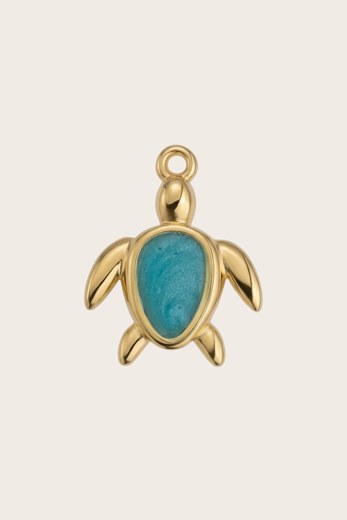
The lotus is Lakshmi's chief sign. The goddess sits on it, holds it in her hands, and she herself is often called Padma or Kamala, which means "lotus." The meaning goes deeper than a flower: the lotus grows out of muddy silt, rises above the water and opens clean and flawless, unstained. So too should the wealth of Lakshmi rise above the dirt and stay clean. The lotus is a sign of purity in the midst of the world, of spiritual unfolding, and of beauty born from a hard beginning. There is a detailed look at the lotus in jewellery and its meanings across cultures.
Gold Coins, the Stream From the Palm
From the goddess's lower left hand a stream of gold coins flows. This is the most direct sign of her generosity: wealth pours out without running dry, for those who are worthy of it. Lakshmi's coins are not a hoarded treasure but a flowing current, and in that lies the whole idea. Plenty comes and goes; it cannot be clenched in a fist, it must be shared so that it returns. In jewellery, small coin pendants beside a lotus or a figure of the goddess are read as a wish for prosperity that never runs dry. There is a broader article on the coin pendant and its meaning.
Elephants, the Gaja
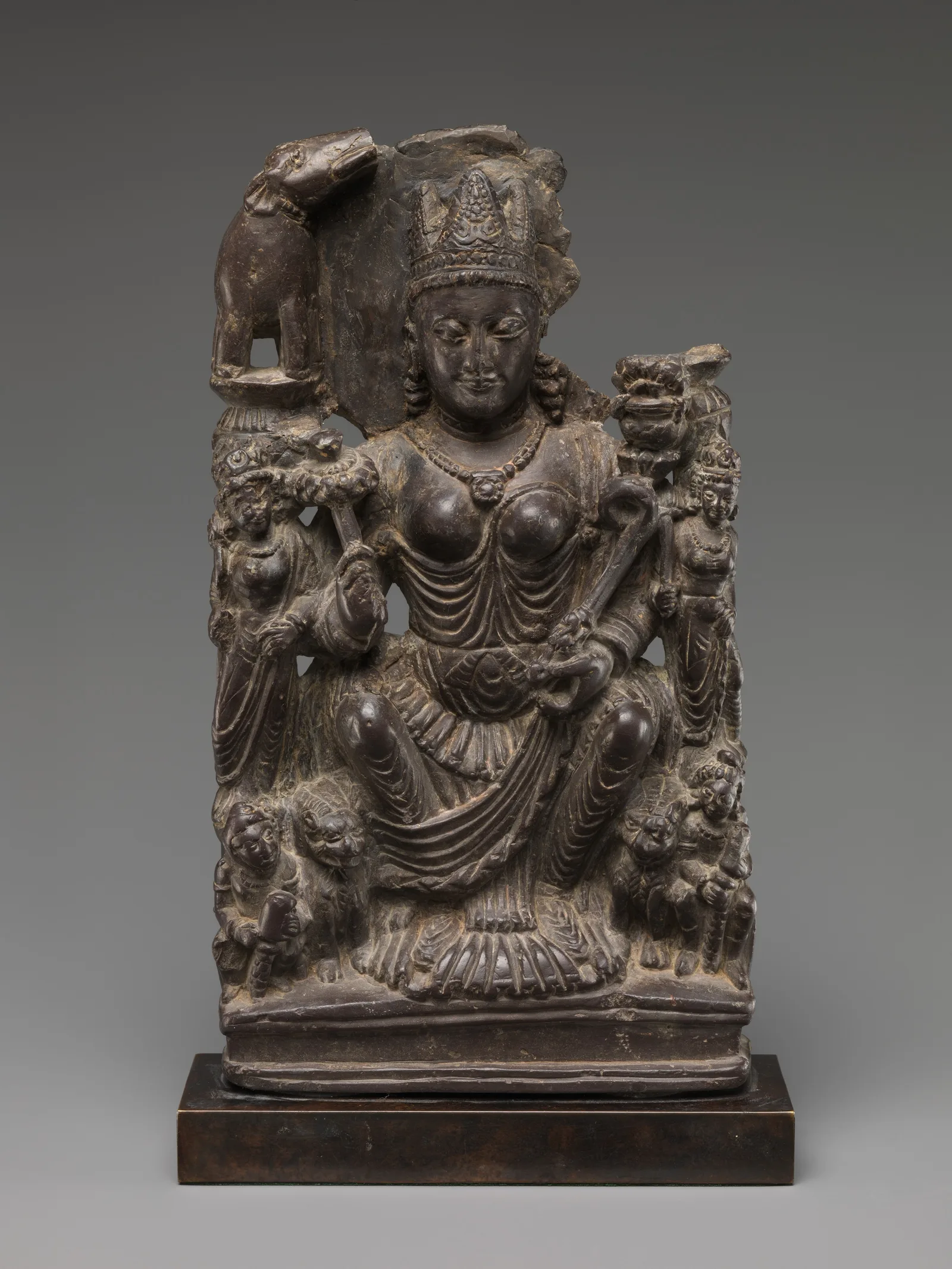
The two elephants pouring water over the goddess from vessels are called "gaja," and the form of Lakshmi with them bears the name Gaja Lakshmi. In India elephants are a sign of royal power, rain, fertility and grandeur. The water they pour is blessing and purification, and at the same time a reminder of the rain on which the harvest depended. Gaja Lakshmi is wealth in its full, royal sense: plenty, power, the abundance of the land. The elephant is a powerful symbol of fortune in its own right, with a separate article on the elephant in jewellery, but beside Lakshmi it reads precisely as her attribute, not as a thing apart.
Four Arms
The goddess's four arms are no mere decoration but a code of meaning. In Hindu iconography the number of arms shows the might and breadth of a deity's gifts. Lakshmi's four arms are linked with the four aims of human life in Hinduism: dharma (duty and righteousness), artha (wealth and well-being), kama (desire and pleasure) and moksha (liberation, spiritual freedom). The goddess holds all four in her hands, showing that true prosperity is a balance among them, not a single chase after money.
The Owl, the Vahana
Every Hindu deity has a vahana, an animal mount and companion. Lakshmi's is the owl (in Sanskrit "uluka"). The choice seems strange: the owl is nocturnal and in some cultures linked with darkness. It is read in different ways. By one thought, the owl can see in the dark, which is to say it teaches one not to lose one's senses either in abundance or in need. By another, the owl beside the goddess of plenty is a warning: wealth, like the owl, can be blind in the light of day, and one can easily be dazzled by it. The image of the owl in jewellery is layered in its own right, with an article on the owl, but as Lakshmi's vahana it reads in a particular way.
The Kalash, the Sacred Vessel
Beside Lakshmi a kalash is often shown, a copper or clay pot of water crowned with mango leaves and a coconut. The kalash is a sign of fullness, abundance, of life itself filled to the brim. During the Lakshmi Puja such a vessel is placed at the centre of the shrine as a container for the goddess's grace. In jewellery the full vessel appears less often than the figure or the lotus, but as a subtle reference to the rite of abundance it is recognisable.
Red and Gold
Lakshmi is almost always in a red sari with a gold border. In India red is the colour of well-being, marriage, vital force and festivity, while gold is both the metal of wealth and the colour of the goddess herself, whose skin is described as golden. The pairing of red and gold is her palette, and so jewellery with the goddess is often made on a red thread or with red inlays: garnet, ruby, coral, enamel.
The Garland and the Nectar of Immortality
In her hands or around her neck Lakshmi often wears a garland of lotuses and flowers, and at times a vessel of amrita, the nectar of immortality won from the churning of the ocean. The garland is a sign of honour and of choice: the goddess presents it to the one she elects. Amrita ties Lakshmi to earthly plenty and to life itself, to that which never runs dry. These details pass less often into mass jewellery, but in temple and carved pieces they appear as a subtle sign for those who know.





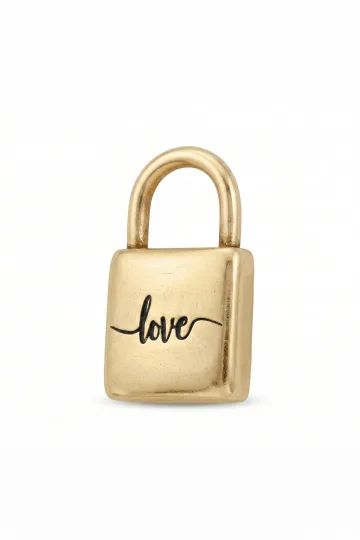
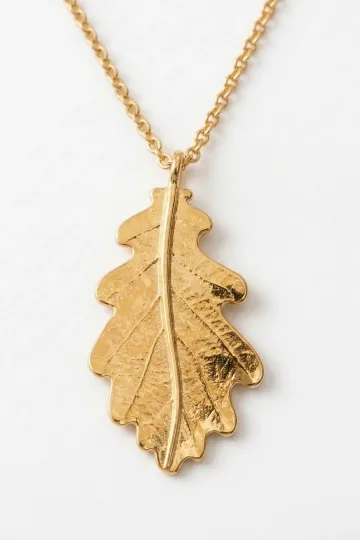
The Meaning of Lakshmi in Jewellery
Material Wealth
The most direct meaning. Jewellery with Lakshmi is worn as a wish for and a drawing of plenty: money, success in business, financial stability. This is no superstition about a "magnet for banknotes" but a reminder of intention and labour. The goddess in Hinduism is responsible for the fruits of effort, and her image keeps the focus on the goal, helps one not to give up.
Abundance and the Fullness of Life
Lakshmi's wealth is broader than money. It is a full house, a healthy family, good food on the table, harmony among people. The kalash, filled to the brim, is that very image of fullness. Jewellery with the goddess is read as a wish not for profit alone but for a whole, full life in which there is enough of everything that matters.
Fortune and a Favourable Outcome
The name Shri means a good sign, and Lakshmi from of old personified fortune. Her image is worn as a talisman of a good outcome: before an important undertaking, a deal, an examination, the start of a new path. In this she is close to many symbols of fortune from different cultures, and there is a large guide to amulets and talismans on protective jewellery in general.
Purity, Spiritual Prosperity
The lotus on which the goddess sits is a reminder: real wealth should stay clean. Lakshmi does not favour greed and dishonest gain; in the myths she walks away from the one who is proud and stingy. So her image is about spiritual wealth too: clarity of mind, calm, a good conscience. Plenty earned honestly, that has not spoilt the person, is what the goddess blesses.
Beauty and Dignity
Lakshmi is also a goddess of beauty. Her very name Shri is linked with radiance and grace. In this she echoes the goddesses of beauty of other cultures, for example Aphrodite among the Greeks. To wear a symbol of Lakshmi is to recognise beauty and dignity as part of a prosperous life, on a par with plenty and peace of mind.
Protecting What You Have
Lakshmi has a guarding side as well. People ask her both to attract wealth and to preserve what they already have: from loss, from poor spending, from the envy of others. So her image is often kept at the entrance to a home or shop as a guardian of well-being. In this role jewellery with the goddess is close in spirit to the classic protective charms, and it is worn with the same thought as protective signs: may the good that exists remain and grow, rather than drain away.
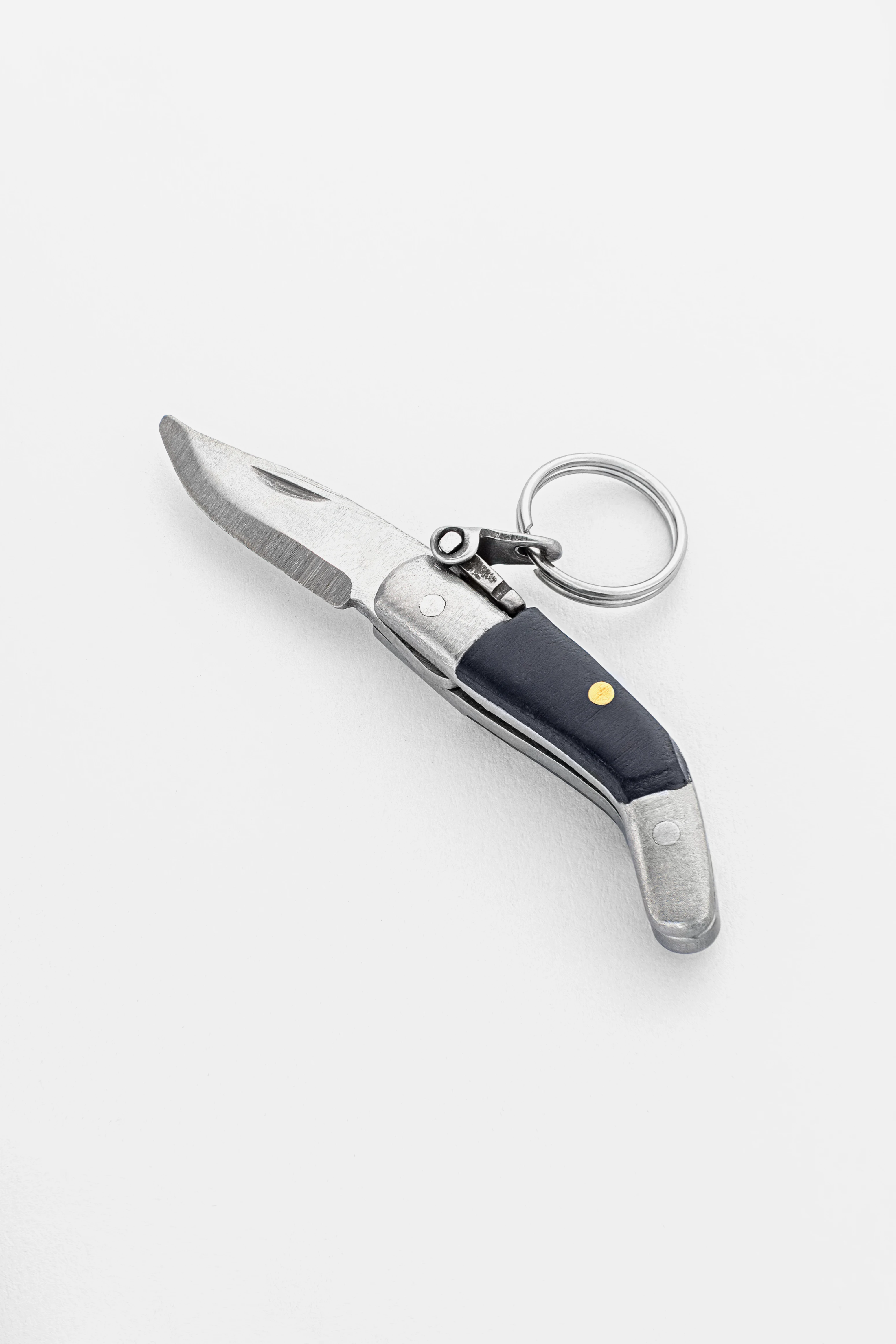
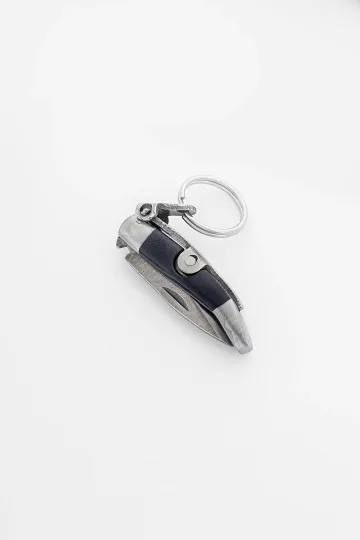
CAPAORA mini knife pendant
The 18th-century Spanish navaja in miniature: 40 mm of stainless steel, a real folding mechanism and a Palanquilla lock that clicks. An affordable gift to remember.
Authentic · Ships from Spain · 14-day returns
Lakshmi and Money: How to Understand It Rightly
Not Greed, but Plenty
The chief misunderstanding of the Western view: as if Lakshmi were a "goddess of money" in the sense of gain. This is not so. In Hinduism wealth (artha) is one of the lawful aims of life, but only beside dharma, duty and righteousness. Lakshmi blesses plenty earned honestly and in good conscience. Money without dharma, in this picture of the world, is not wealth but a counterfeit of it, and the goddess turns away from such a thing.
A Flow, Not a Hoard
Lakshmi's coins flow from her palm rather than lie in a heap. This is an image of movement: wealth comes and should pass on, into a business, into a family, into help for others. The one who hoards and grips, by Hindu thought, blocks the flow, and Lakshmi departs. Plenty is alive only while it is in motion. So generosity in this tradition is not the opposite of wealth but its condition.
A Capricious Guest
In the myths Lakshmi is called "chanchala," fickle, restless. She does not attach herself forever; she may come and go. This is an honest attitude to fortune and money: they are not given once and for all, they must be guarded, deserved, sustained by order and labour. The image of the goddess reminds one not to relax in plenty and not to despair in need, for both are passing.
Plenty and Generosity Together
The joining of wealth and generosity is the very heart of Lakshmi's cult. Diwali is a festival when people give gifts, feed guests, forgive debts and open their doors. Wealth is celebrated by sharing it. In this sense jewellery with Lakshmi is not about "I want more money" but about a healthy relation to plenty: earn honestly, keep sensibly, share generously.
A Clean House and Order
A separate facet of the cult is the link between wealth and order. Lakshmi enters where it is tidy, bright and free of quarrels. Before Diwali homes are washed until they shine, not out of superstition but as a plain metaphor: plenty holds where there is order, both in affairs and in relationships. Jewellery with the goddess can be worn as a quiet reminder of this: well-being begins not with the chase after money but with putting in order one's own space, habits and accounts. Dirt, debts and discord block the flow just as a closed door does.
Leave your email, we'll send your discount code. No spam, unsubscribe anytime.
The code arrives by email, valid on your first order.
Materials for Jewellery With Lakshmi
Gold, the Temple Tradition
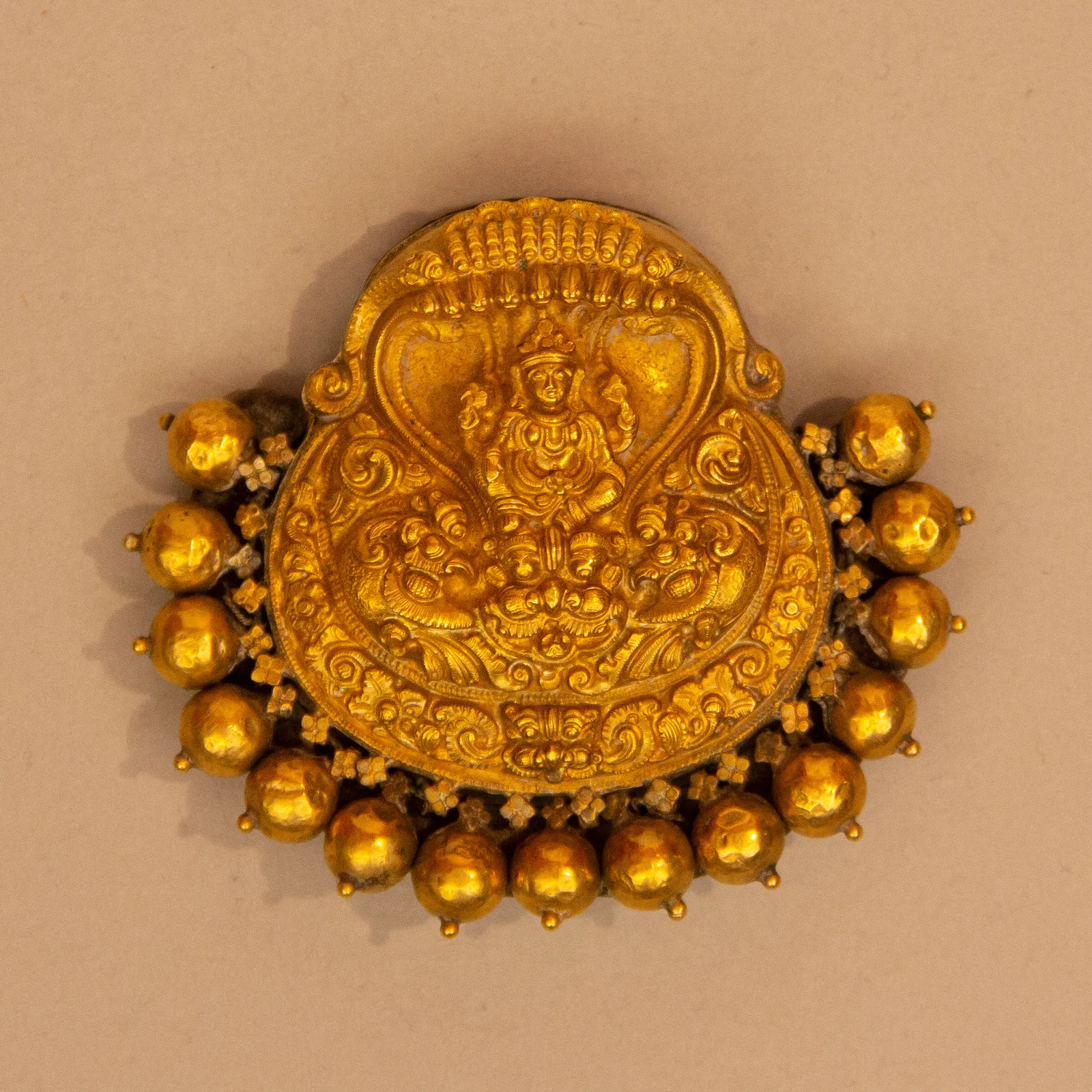
Gold is the metal of Lakshmi by her very nature: the goddess is golden-skinned, surrounded by gold, granting gold coins. In India there is a whole tradition of "temple jewellery," once dedicated to deities, with rich relief work and figures of the gods. A gold pendant with Lakshmi is the most canonical choice, and at Diwali gold is bought in India precisely as a way of calling the goddess. The warm sheen of the metal points straight to her image.
Silver
Silver is colder than gold, yet it too is deeply tied to Lakshmi. On Dhanteras, the first day of the Diwali celebrations, it is customary in India to buy silver: coins, vessels, jewellery, as a good investment and a sign of growing plenty. A silver pendant with the goddess or with a lotus is more practical than gold for everyday wear. If you want a sturdy, wearable metal, it is worth choosing real silver; there is an article on 925 silver and what it means on hallmarks and the signs of authenticity.
Coins as a Material
A genre of its own is coin jewellery stamped with Lakshmi. Such coins, gold and silver, are struck in India for Diwali, given as gifts, kept in a purse and a safe, worn on a chain. A coin with the goddess joins two of her signs at once: the metal of wealth itself and the image of the giver. The coin pendant is spare and easy to read, good for anyone who does not want a large figure.
Ruby, Garnet, Coral, Red Stones
Red is Lakshmi's colour, and red stones fit naturally into her theme. Ruby in the Indian tradition is a royal stone, linked with the sun, power and prosperity. Garnet is more affordable and carries the same warm red note. Coral, born of the sea, adds a living red shade. Any of these stones beside gold strengthens the link with the goddess and her festive red-and-gold palette.
Pearl and Lotus Motifs
The pearl is born in water, as the lotus grows from water, and this watery, pure note is close to Lakshmi. A pearl inlay in a lotus pendant reads as a drop of purity at the flower's heart. Mother-of-pearl and white stones also suit the theme of the opened lotus. Such materials soften the image, leading it away from pure luxury towards the idea of purity and spiritual unfolding.
Enamel and Multicoloured Techniques
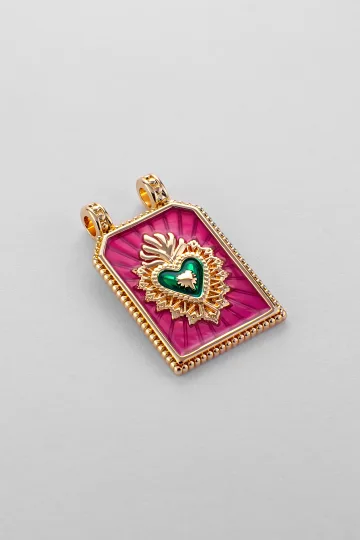
To convey the bright red-and-gold image of the goddess in an affordable piece, enamel is often used. Coloured enamel makes it possible to paint the sari, the lotus and the figure in colour without using many stones. The Indian tradition of "meenakari," coloured enamel on metal, adorned just such religious and festive pieces for centuries. An enamel pendant with Lakshmi conveys the mood of the festival more vividly than plain metal.
The Red Thread as a Base
Many wear a figure or a coin of Lakshmi not on a chain but on a red thread. Red is the goddess's colour, and the thread in the Indian tradition is tied to protection and blessing: it is bound on the wrist in temples and at festivals. A pendant on a red thread looks modest and yet carries a double meaning, plenty and protection. This is an accessible choice for anyone to whom the symbol matters more than costly metal, and it is easily renewed when the thread wears out.
Which Metal for Which Intention
The choice of metal can be tied to meaning. Gold is the very nature of the goddess; it is taken when you want a festive, solemn image and a bright wish for plenty. Silver is colder and quieter, closer to the idea of purity, to the lunar, calm side of the goddess, and more practical for every day. Pairing gold with a red stone strengthens the festive, royal note of Gaja Lakshmi, while plain silver with a lotus underlines the spiritual, purifying side. There is no mistake here; it all depends on which facet of the goddess you wish to wear closest to your body.
Lakshmi in Art and History
From Ancient Gateways to Temple Reliefs
The image of Lakshmi is one of the oldest in Indian art. Gaja Lakshmi, the goddess with elephants, was carved on the stone gateways of the Buddhist stupa at Sanchi more than two thousand years ago, before the modern Hindu canon had even taken shape. This means she was loved by Buddhists and Hindus alike long before their paths diverged. Later, temples all across India were covered with reliefs of the goddess on a lotus, and each local school added its own features.
Meenakari and Kundan, the Indian Jewellery School
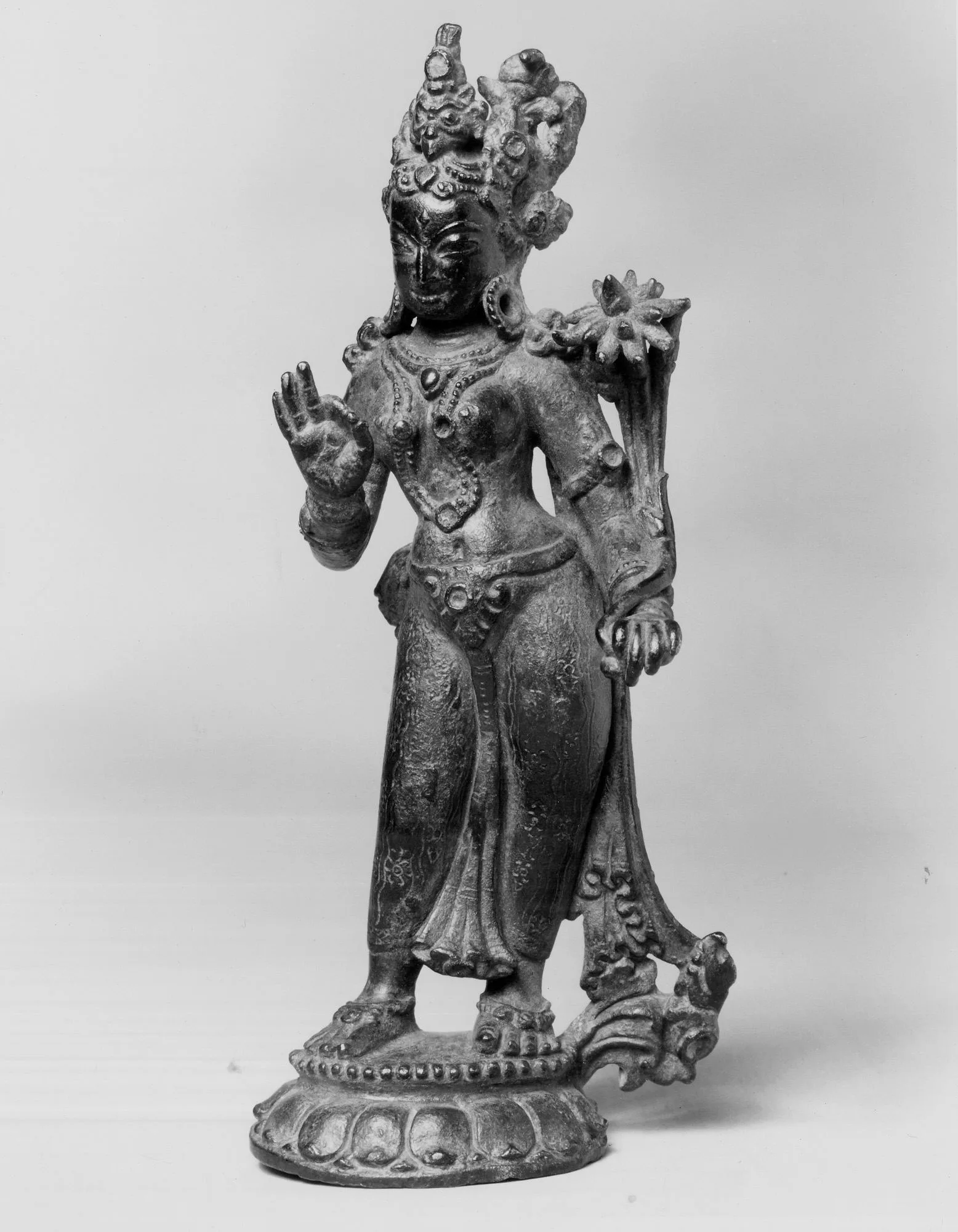
India gave the world special techniques in which the goddess's image lived for centuries. Meenakari is coloured enamel on gold, used to paint the reverse of jewellery and figures of the gods. Kundan is the setting of stones in gold foil without claw mounts. Both techniques flourished at the courts of Rajasthan and the Mughals and suited festive, religious pieces perfectly. A pendant with Lakshmi painted in meenakari conveys her red-and-gold image in living colour rather than in relief alone.
Lakshmi and Ganesha Together
In folk art and on festive cards Lakshmi most often appears alongside Ganesha, the elephant-headed god. They are shown side by side, sometimes with a third figure, Saraswati. The logic is simple and beautiful: Ganesha removes obstacles and grants wisdom, Lakshmi brings plenty, Saraswati bestows knowledge. This trinity covers everything needed for a fortunate beginning, and that is exactly why paired pendants of Lakshmi and Ganesha are popular in jewellery.
Why the Image Does Not Grow Old
Lakshmi has held in art for more than two thousand years because her meaning is layered. A single image speaks at once of money, harvest, beauty, purity, wisdom and peace of mind. Each age took its own without cancelling the rest, and each region added a local note. Jewellery with the goddess is not bound to the fashion of one decade: behind it stands meaning gathered by dozens of generations, and so it does not age.
Facts That Surprise
Lakshmi and Saraswati, the goddess of wisdom, by popular belief do not get on together, since few people are granted both great wealth and great learning at once. So in some homes their images are kept apart.
Lakshmi's name, or rather the form Shri, still lives in ordinary speech: millions place the respectful prefix "Shri" before people's names and titles, often without thinking that it is the name of a goddess.
In the myths Lakshmi once left the gods because of their pride, and the world grew poor and faded until she was brought back by the churning of the ocean. This is a parable that well-being departs together with respect and humility.
The mount of the goddess of plenty is the owl, a creature regarded in Indian folklore as far from the cleverest. Interpreters see a lesson in this: wealth without sense makes a person "blind in the light of day."
On Dhanteras, the eve of Diwali, sales of gold and silver in India soar so high that the day has become one of the largest jewellery trading days in the world. People buy metal quite literally as a form of worship.
Gaja Lakshmi, the form with elephants, was carved on the ancient Buddhist gateways at Sanchi more than two thousand years ago. The image of the goddess with elephants is older than many modern Hindu canons.
Lakshmi has eight chief forms, and one of them, Dhairya Lakshmi, grants not money but courage and endurance. In Hinduism bravery is counted as much a wealth as gold.
The lotus on which the goddess sits has the power to clean itself: water rolls off its leaves, leaving no dirt behind. The ancients noticed this before the scientists did and made the flower a symbol of purity unstained by the world.
Send a friend a discount code, they save on their first order.
Frequently Asked Questions
Who is Lakshmi, in simple words?
She is the Hindu goddess of wealth, abundance, fortune, beauty and prosperity, the consort of the god Vishnu. She is pictured as a beautiful woman on a lotus, with four arms, a stream of gold coins and two elephants. She grants plenty, but only honest and clean plenty, while the greedy and the proud she passes by.
What does Lakshmi's lotus mean in a piece of jewellery?
The lotus is her chief sign. The flower grows from silt, but rises above the water clean and unstained by dirt. So too should the wealth of Lakshmi stay clean. A lotus pendant reads as a wish for plenty that does not spoil the person, and for spiritual unfolding. There is more on the flower in the article on the lotus in jewellery.
Why do coins pour from Lakshmi's hand?
This is a sign of her generosity and of wealth that never runs dry. What matters is that the coins flow rather than lie in a heap: plenty should move, go into a business and to people, not pile up as a dead hoard. The image is a reminder that generosity is the condition of wealth, not its opposite.
Can a non-Hindu wear jewellery with Lakshmi?
Yes, if it is worn with respect and an understanding of the meaning, not as exotic decor. Lakshmi is a living goddess for hundreds of millions of people. It is fitting to wear her image as a pendant, a ring or earrings. It is disrespectful to place the image of a deity on footwear or underwear. Knowing what you wear is the chief condition of respect.
What is the difference between Lakshmi and Ganesha for plenty?
They are often honoured together, especially at Diwali. Lakshmi grants wealth and abundance themselves, while Ganesha, the elephant-headed god, removes the obstacles on the way to it and grants the wisdom to handle plenty. Their pair reads thus: Ganesha opens the road, Lakshmi brings the fruits.
Which metal is best for jewellery with Lakshmi?
Gold is the most canonical, since the goddess is golden-skinned and grants gold, and at Diwali gold is bought as a calling of Lakshmi. Silver is more practical for everyday wear and is also linked with the goddess through the tradition of buying on Dhanteras. Red stones, ruby, garnet, coral, strengthen her red-and-gold palette.
When is it best to give or wear jewellery with Lakshmi?
The chief occasion is Diwali, the goddess's autumn festival, when gold and silver are bought in India especially for it. Occasions of beginning are good too: a housewarming, the opening of a business, a new stage of life. A gift with her image carries a wish for a prosperous year and plenty in the new place.
Does Lakshmi bring only money?
No. Her wealth is broader: health, a good family, harvest, beauty, peace of mind, wisdom, courage. She has eight forms, and one grants not gold but endurance. Wealth in her cult is the fullness of life, not coins alone, and always together with honesty and generosity.
Buying it as a gift? Each one arrives ready to give.
 A branded Zevira box and a little card come with every order.











Conclusion
Lakshmi is the brightest way to speak of wealth, because her plenty is inseparable from purity. The lotus that grew from silt and stayed unstained. Coins that flow rather than lie in a heap. Elephants pouring blessing, like rain. Four arms holding at once money and duty and joy and freedom. To wear her symbol is to choose a healthy relation to plenty: earn honestly, keep sensibly, share generously. The goddess comes to a clean house and to a clear conscience; gold or silver, a large figure or a quiet lotus, the result is one: this is jewellery about abundance that has dignity.
Jewellery with the symbolism of abundance and fortune
The lotus, coins, warm gold and red stones. Choose your own piece in the spirit of Lakshmi, as a gift for a new undertaking or for yourself.
Browse the catalogueWear the symbol, don't just read about it. These are in stock:





About Zevira
Zevira is jewellery with meaning. We gather symbols that have a history: protective charms, signs of love and fortune, mythological and religious images from different cultures. Every piece comes with a clear account of what it means and where it came from, so that you wear a thing with character rather than impersonal metal and a stone. Gold, silver, natural stones, enamel, all chosen so that the piece serves long and pleases every day.