The Uruz Rune: Meaning of the Primal Strength and Health Symbol in the Elder Futhark
The last wild aurochs died in 1627 in a Polish forest, and with it vanished the mightiest beast in Europe. A thousand years earlier its name belonged to the rune Uruz, the second sign of the Elder Futhark. An ox as tall as a mounted rider became the symbol of primal strength, health and a will that cannot be tamed.
That is the whole character of the rune. Where the first sign of the row, Fehu, speaks of domestic cattle, of wealth you feed and guard, Uruz follows right after and flips the picture. Its beast belongs to no one. It gives no milk and walks in no herd; it lives on its own, and coming close to it is dangerous. Uruz is strength in its pure form, still untamed, not yet put to use, wild as a storm.
The rest follows in order: the beast behind the rune, how the sign sounded and looked, what it meant to the Norse and the Anglo-Saxons, what a runic pendant is made of, how to wear it, how Uruz differs from other strength runes, and why the second sign of an ancient alphabet returned as jewelry standing for health and endurance.
Wild Ox Against Tame Ox
The rune's name goes back to Proto-Germanic ūruz, "aurochs, wild ox." This is the animal the Romans called urus, known today by the German-derived word aurochs. A huge wild creature, ancestor of every domestic cow, it once roamed the forests and marshes of Europe, Asia and North Africa. A grown bull stood almost two meters at the shoulder and carried long horns curving slightly forward. Beside it, the cow we know looks like a shrunken copy.
The contrast with domestic livestock is what makes Uruz legible. Fehu, the first rune, is the herd behind the fence, wealth counted by the head, dowry and fine. Uruz, the second rune, is the same beast by blood but broken loose, grown twice the size and twice as dangerous. One rune is about property you hold and multiply, the other about a power you may meet but never own. Two oxen, tame and wild, open the alphabet side by side, and that is deliberate, not chance.
Wear the symbol, don't just read about it. These are in stock:



The shape of the sign carries the image. Uruz is drawn as a tall stave on the right and a slanted line dropping from its top toward the left and down, like the hump of an ox lowering its head or its horns bent toward the ground. The sign is low, heavy, stable, full of mass and a low center of gravity. It looks like something you cannot push over with your shoulder.
Understanding Uruz means holding two layers at once. The first is practical: it was a letter for the sound "u," an ordinary unit of writing in the runic row. The second is symbolic: every rune carried a name and a meaning, and Uruz owned the theme of wild strength, health and endurance. Both layers lived at once. A carver could cut Uruz simply as a "u" in someone's name and, in the very next breath inside a charm, as a sign of bodily vigor and the will to live.
What the Uruz Rune Is
The Meaning of the Name and Its Sound
Uruz is the second rune of the Elder Futhark, the oldest runic alphabet of the Germanic peoples. It carried the sound "u" and stood right after Fehu in the first of three "aettir," the groups of eight runes into which the row was divided. In the alphabet's own name, Futhark, the "u" comes second: F, U, Th, A, R, K. So Uruz gave the name of the alphabet its second letter.
The rune's name sounded similar across the Germanic world but was read differently. To the Anglo-Saxons it was ur, the wild ox. To the Norse it was úr, and here things get interesting: the northern tradition read the word another way, as "drizzle," "fine rain" or "slag, iron dross." That split of meaning deserves its own discussion, because it makes Uruz one of the most layered runes in the row.
What the Symbol Looks Like
Uruz's shape is simple and massive: a tall vertical stave on the right and a second line that leaves its top, runs left and slopes down, often stopping short of the base. It resembles an inverted "U" with uneven sides, an arch with one shortened leg, or the silhouette of an ox with its head lowered. Unlike the light, "horns-up" Fehu, Uruz pulls the eye downward, toward the earth and the mass.
One detail is shared by the whole Futhark: runes were carved, not written. The straight lines and diagonals are not decoration but a demand of the material. Across wood and bone, along the grain, a horizontal cut is hard to make; it tears and disappears. So the signs were built from verticals and diagonals, and Uruz, with its heavy slanted crossbar, is a model example of that carvable form.
Its Place in the Elder Futhark
The Elder Futhark was used roughly from the 2nd to the 8th century across Germanic Europe, from Scandinavia to the steppes of the Black Sea. Twenty-four signs split into three rows of eight, each row named after its own first rune. Fehu opened the first aett, sometimes called "Freyr's aett" after the god of fertility and plenty. Uruz stands second in it, right behind wealth.
The order reads like a small story. First Fehu, resource, property, the thing you own. Then Uruz, strength and health, the thing without which no property can be held. The old row seems to say: first there is something to defend, then there is something to defend it with. Wealth and bodily vigor walk as a pair at the very start of the alphabet.
The Aurochs as the Embodiment of Wild Strength
To feel the rune you have to picture the beast. The aurochs was no ordinary large bull. It was an animal that frightened seasoned hunters, moved in small groups through deep forest and did not back away from a man. The old Germanic peoples saw in it the very idea of untamed natural might: something stronger than you, older than you, with no intention of obeying you.
The full depth of Uruz grows from that image. The rune is not about muscle for show or about brutishness. It is about strength as a state of being alive, about the health that lets a body endure, about the will that keeps a person standing where weaker ones fall. For the ancients the aurochs was a living reminder that the world holds a might you cannot buy or tame, but which you can draw near to if you have the courage.
History: From Ice Age Aurochs to Today
The Aurochs in Nature and in Early Human Life
The aurochs walked beside humanity for tens of thousands of years. It was painted in ocher on cave walls: the famous bulls of Lascaux and Altamira are in large part aurochs, huge, tense, full of motion. For the Paleolithic hunter such a beast was prey, danger and, judging by the care with which it was drawn, an object of almost sacred attention.
By the Iron Age the aurochs had gone from chief game to a rare and formidable dweller of remote forests. Julius Caesar described the aurochs of the Hercynian forest in his account of the Gallic War: a little smaller than an elephant, he said, of terrible strength and speed, sparing neither man nor beast. He also noted the custom of Germanic youths hunting aurochs to prove their courage, and mounting the horns of a slain beast in silver to pass around as drinking cups at feasts. For the world that produced the runes, the aurochs was a measure of manly strength long before its name entered the alphabet.
Proto-Germanic Roots and the Sound
Long before the first runic inscriptions, the Germanic tribes already had the word ūruz and the image behind it. Indo-European languages are full of related roots for the wild ox and the might tied to it. When the Germanic peoples created or borrowed runic script in the first centuries of our era, they did not invent the meaning of the second sign. They took the name of a beast everyone knew and feared, and fixed it in letter form.
Through that name the aurochs reached us too. German Auerochse, the English loan aurochs, and the word for the beast in many tongues all trace back to the same ancient family of names for the mighty wild bull. Every time we name the animal, we repeat the root that a thousand years ago gave the rune its name.
The Scandinavian Iron Age and the Viking Era
Runic writing flourished during the Iron Age and the Viking era, roughly from the 8th to the 11th century. Uruz was cut into weapons, jewelry, amulets, wood and stone. By that time the Elder Futhark in the north had given way to the shorter Younger Futhark of sixteen signs, and the "u" rune survived there, its shape slightly altered but its heavy character intact.
In a society where bodily hardiness decided a great deal, the sign of the wild ox fit the culture naturally. Strength, endurance, the ability to stand in a fight and outlast a long winter were prized no less than silver. Uruz as a rune of bodily might and health was clear to anyone who held a weapon or ran a household where the weak simply did not survive.
The Anglo-Saxon Rune Poem
The most direct medieval comment on the rune is preserved in the Anglo-Saxon rune poem, written down in England probably in the 10th century. The verse on the rune ur describes the aurochs itself: a fierce beast, proud of its horns, a bold fighter that treads the moors. The poem does not moralize or soften the image. It paints a dangerous, free animal in its full might, and that is its value.
What matters here is that the Anglo-Saxon text ties the rune directly to the wild ox. For the English branch of the tradition, Uruz is, without any allegory, a beast, strength, wildness. This verse gives us the most reliable evidence that an aurochs, not some abstraction, stood behind the rune.
The Norwegian and Icelandic Poems: Rain and Slag
The Scandinavian rune poems read the same word úr quite differently, and here lies one of the rune's puzzles. The Norwegian verse says roughly, "úr comes from bad iron," meaning slag, dross, the waste left by poor forging. The Icelandic poem calls úr "the weeping of clouds," that is, drizzle, fine rain, and "the ruin of hay," hinting at the damp that spoils a harvest.
So the very same rune is a mighty ox in the south of the Germanic world and drizzle and iron slag in the north. How this fits together is still debated. Perhaps the words simply drifted apart in sound and gathered different senses in different lands. But there is a fine reading too: the wild ox, the primal rain and the glowing slag from the furnace are all images of raw, still-unformed power. An ox not yet broken. Water that falls from the sky before it becomes a river. Metal that has not yet become a blade. In every reading Uruz stays the rune of primal, unworked might, out of which something is still to be made.
Decline and Revival
With the arrival of Christianity and the Latin alphabet, the runes slowly left everyday writing. In Scandinavia they held on longer, in places into the late Middle Ages, but as a main script they gave way to Latin letters. Uruz, along with the whole Futhark, passed from a living alphabet into the realm of antiquity: inscriptions on stone, memory in the poems, marks in farm calendars.
New interest in the runes came with the 19th and 20th centuries and their taste for Germanic antiquity, folklore and mysticism. Systems of runic divination appeared, books of readings, and jewelry after them. That is when Uruz settled into the role of a rune of strength, health and life force, the one it is known by today. It is worth remembering that modern divinatory reading is reconstruction and creative development, not a direct copy of what Iron Age people meant. The historical Uruz was a letter and the name of a wild ox. Today's Uruz has also taken on a layer of esoterica grown over the last century and a half. Both layers are real; they simply belong to different ages.
Upload a photo of your pet, someone you love, or an object. We'll build a 3D model and hand-cast it in pewter.
Uruz and the Mythology of the North
The aurochs is not only an animal in the northern sources. Cattle stand at the very beginning of the world in Norse cosmology, which gives the rune a weight that its plain shape does not advertise.
Audhumla and the First Milk
In the Norse account of creation, before there were gods there was a cow. Audhumla came into being from the melting rime alongside the giant Ymir, and she fed him with four rivers of milk that ran from her udder. She fed herself by licking the salty ice, and over three days the licking uncovered a man in the block: Buri, the ancestor of the gods.
The order of that story is worth pausing on. The cow is older than the gods and is the means by which they enter the world at all. Life comes first from milk and then from patient work on frozen stone, which is an unusually practical origin myth for a people who kept cattle through northern winters. Uruz sits directly on top of this: the rune of the ox is a rune of sustenance before it is a rune of force.
Bulls and Gods
Cattle and bulls recur through the northern material in ways that keep the same double meaning of wealth and danger. Sacrificial oxen appear in the accounts of the great feasts. Thor's fishing expedition for the world serpent begins with him taking the head of a giant's ox to use as bait, and the detail is told as an outrage precisely because the animal was valuable.
Further south, the same association runs through the Indo-European world: bulls belong to storm gods and to the powers of fertility, from the Anatolian weather gods to the bull leaping of Bronze Age Crete. The aurochs of the rune poem, standing on the moor with its great horns, belongs to that older family of images. What the northern version adds is the hunt. The Anglo-Saxon stanza does not describe worship of the animal, it describes a creature that is proud, fierce and dangerous to approach, which is a farmer's view rather than a priest's.
Customer reviews
Zevira is a real jewellery shop. Genuine payments, deliveries and customer thank-yous.
🥰🥰🥰 gracias
Ok, ¡gracias! 🙂
The Meaning of the Uruz Rune: Strength, Health, Endurance
Primal Strength and Wild Energy
The first and chief meaning of Uruz is strength in its most natural, unbroken form. Not power won by cunning, nor the power of money, but bodily, animal might rising from life itself. The rune of the wild ox speaks of a force that sweeps obstacles aside, of the ability to act straight and hard where you must push through rather than go around.
This energy is neutral by nature and asks for direction. An aurochs can flatten everything in its path or simply graze. In modern reading Uruz is often understood as an inflow of vital force at the start of a new undertaking, the moment when a person feels enough might to take on something big. People wear it as a sign of that inner drive, a reminder of their own reserve of endurance.
Health and Life Force
The second important layer of meaning is health. Uruz has long been tied to bodily hardiness, recovery, the return of strength after illness or a low. The logic is direct: the wild ox is the embodiment of iron health, a beast hard to bring down. The rune of its name is read in the divinatory tradition as a good sign for the body, a promise of recovery and vigor.
That is why Uruz is often chosen as a health charm. Not as a replacement for a doctor and sensible self-care, but as a personal symbol of a mindset set on strength and recovery. A pendant with this sign is often given to someone on the mend, someone who has taken up sport, or someone who simply wants to carry a reminder of life force.
Resilience and Endurance
Strength comes in kinds. There is the explosive might of a blow, and there is the ability to carry a load for a long time without breaking. Uruz holds both, but endurance runs especially strong in it. The aurochs is no sprinter; it is a beast that moves heavily and surely through marsh and forest, one you cannot stop from a distance. The rune is read as a symbol of persistence, patient hardiness, the knack of standing where you have to hold on for a long time.
In that sense Uruz is close to people whose tasks call for a marathon, not a dash. Long study, a hard recovery, a big project with no quick payoff, raising a family, any work where the one who stays on their feet longest wins. Here the sign of the wild ox works as a quiet anchor of endurance.
Courage and the Will to Act
The Anglo-Saxon poem calls the aurochs a bold fighter, and not by accident. Uruz carries courage, the readiness to meet a hardship face on rather than turn away. The wild ox does not flee or scheme; it goes forward. The rune is tied to resolve, to the will to take on what frightens you, to the inner "yes" a person says to a challenge.
That reading makes Uruz close to anyone standing at the edge of a big step and looking for firmness in themselves. A change of work, a move, a public talk, a conversation long put off. The sign reminds you: the strength is already there; what remains is to move.
Formative Power: From Raw to Ready
The Scandinavian reading of úr as rain and iron slag adds one more sense to the rune. Rain is water still to become a river and feed a field. Slag is metal on the verge of becoming a blade. Both are raw stuff, full of power yet still without form. In this key Uruz is the rune of beginnings, of primal matter out of which something is still to be forged.
Hence its link with new ventures and change. The rune is read as the moment when the old is cast off and the new is not yet poured, when your hands hold only raw might and the freedom to give it any shape. It is an anxious but fertile state, and Uruz keeps it in view: the strength is here; the form is yours to set.
Reversed Uruz
Divination also weighs the "reversed" position of the rune, when the sign falls upside down. A reversed Uruz is read as weakness, a drop in strength, illness, energy spent for nothing, or force turned to harm: brutality, domination, dull stubbornness instead of endurance. It is the other side of the same theme. If the upright Uruz is healthy might under the guidance of the will, the reversed is might that has either run dry or burst its banks.
There is no need to look for a historical basis here: the split into upright and reversed meanings is a device of modern practice. But as a system of images it is coherent and honestly holds both sides of strength. The wild ox feeds myth and commands respect, yet it can also trample, and the rune does not let you forget that.



Uruz in Divination: Positions and Combinations
Most people meet Uruz in a reading rather than on an inscription. Everything in this section comes from the modern revival rather than from the Iron Age, and it is best treated as a set of images to think with.
Uruz in a Spread
In a past position Uruz usually points to a period when the person was carried through on raw capacity, health, youth or stubbornness, rather than on planning. In a present position it reads as available strength, energy that exists and is looking for a direction.
In a future position it is taken as a demand rather than a gift: something ahead will require endurance. In an obstacle position it becomes force misapplied, effort spent against the wrong wall, or the kind of stubbornness that has stopped being persistence. In an advice position it is direct and unsubtle, and it says to stop negotiating with the problem and push.
The aurochs image keeps all of this honest. A wild ox is not evil and not benevolent, it is simply powerful, and every position of the rune turns on whether that power is pointed anywhere useful.
Combinations with Other Runes
Uruz and Fehu puts wild strength beside owned wealth, and the pairing is usually read as capacity being turned into something that lasts.
Uruz and Tiwaz is strength under discipline, force with a direction, and it is the combination most often chosen for anything to do with training or long effort.
Uruz and Thurisaz is the volatile one. Both are powerful and neither is restrained, and the reading is generally a warning about force that has slipped its handler.
Uruz and Berkana is read as growth with vitality behind it, and it is a common choice for recovery and for beginnings that need physical stamina.
Uruz and Isa is strength held still: capacity that exists but is frozen, either by circumstance or by the person's own hesitation.
Uruz and Sowilo is energy plus visibility, effort that produces a result other people can see.
Bindrunes with Uruz
The shape of Uruz, a tall stave with a shoulder falling away from it, binds easily because the descending line gives other signs a place to attach.
Uruz with Tiwaz is the most frequently cut of these, strength joined to direction, and it is legible even at small sizes. Uruz with Algiz appears on protective pieces where endurance is the point rather than deflection. Uruz with Berkana is used for recovery and for new households.
As with any bindrune, keep the number of staves down and settle the meaning before anything is cut. A figure that needs a paragraph of explanation is a figure that will be explained badly for the rest of its life.
A Caveat About Divination
None of this predicts events. What Uruz asks in a reading is a plain question: do you have the strength this actually requires, and if you do, is it pointed at the right thing?
Used as a prompt, the rune earns its place. Used as a forecast, it becomes a way of avoiding the decision it was supposed to help with.
What Uruz Jewelry Is Made Of
The material of a runic pendant carries its own meaning and changes both the look and the character of the piece. For a rune of wild strength the choice of material is especially expressive: soft gold is one thing, stern iron quite another. Here are the main options and what is worth knowing about them.
Silver
Silver was the Vikings' chief measure of wealth and their most common precious metal. For Uruz it gives a restrained, austere look, pairing well with a rough leather cord and a texture close to Scandinavian taste. Sterling silver 925 is sturdy, easy to care for and holds the crisp carving of the heavy sign. It is a universal everyday choice that suits any look.
Silver Uruz reads well thanks to the contrast between the pale metal and the deep carving. The massive form of the rune sits solidly on silver, without needless shine, and conveys the sign's character more precisely than most.
Gold
Gold sounds warmer and more festive, and for a rune of strength that is an interesting move: a soft, noble metal carrying the image of unbreakable might. The contrast works for a gift on a meaningful occasion, when you want to join firmness of meaning with the value of the piece. Usually 14 or 18 karat is chosen; both hold crisp carving and stand up to daily wear.
Gold Uruz suits a gift of health and life force offered with a kind wish. Its warm shine softens the sternness of the sign without taking away its weight, and the piece turns out striking but not coarse.
Iron and Steel
For Uruz, iron and steel are almost the "truest" material by spirit. The Scandinavian poem ties the rune to iron through the image of slag, and the wild ox itself is a symbol of rough, unwrought might. Dark metal underlines the stern character of the sign better than precious alloys. Modern stainless steel 316L, meanwhile, is practical to the extreme: it does not darken, is unafraid of water and sweat, leaves no mark on the skin and holds carving for years.
Steel Uruz suits anyone who wears jewelry constantly and does not want to think about upkeep. It fits an everyday, sporty, street look and easily survives what wood or bone would not forgive. For a rune of endurance it is a fitting match of form and content.
Bronze and Brass
Bronze gives a warm, slightly archaic tone close to ancient finds, which is why it is loved for a "museum" look. Brass is cheaper and brighter, nearer to gold in color. Both alloys render the relief of heavy carving well, and over time they take on a patina many find noble and fitting for an ancient symbol.
Copper alloys have one drawback: they can leave a dark or greenish mark on the skin. The cause is copper reacting with sweat and cosmetics, and it is not a flaw. It is worth reading separately about how to handle it if it appears.
Wood and Bone
The most authentic option in terms of craft: runes were originally carved into wood and bone. A wooden or bone Uruz cut by hand comes closest to the historical spirit of the sign, and bone, with its dense, "animal" nature, echoes the image of the aurochs especially well. Such pendants are light, warm to the touch, and each has its own unique grain.
The price of authenticity is fragility and fuss. Wood fears moisture, bone is sensitive to changes, and both need careful handling. Such an amulet is more often chosen as a ritual or collector's piece than for daily wear.
Turn on your camera, pick earrings, a pendant or a ring, and see the piece on yourself in real time.
Switch items in one tap.
Everything runs in your browser: no photo or video is ever uploaded.
How to Wear the Uruz Rune
On the Neck as a Pendant
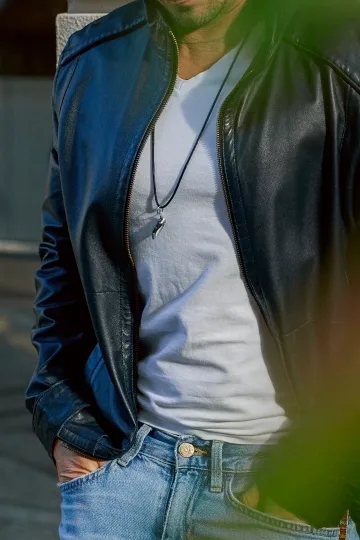
The most common way to wear a rune is a pendant on the neck, close to the body. Here both the length of the chain and the way the sign sits in the neckline matter. A short chain (40-45 cm) holds the rune high, at the collarbones, in view. A medium one (50-55 cm) brings it to the chest, where the massive sign reads large and weighty. A long one (60-70 cm) tucks the amulet closer to the heart, under clothing. The heavy form of Uruz looks especially good at medium length, where it has room.
By a view common in practice, a rune charm is worn so the sign is correctly oriented toward its owner, that is, "reads" for them. There is no strict historical rule here, but many value the feeling that the symbol faces them. A separate guide to choosing chain length can help you pick.
On a Ring and Bracelet
Uruz sits well in both a ring and a bracelet. The massive carving of the rune looks strong on a flat signet ring or a wide bracelet plate, where the weight of the sign has room to unfold. A bracelet with a strength rune echoes the Scandinavian arm-rings worn both as ornament and as a mark of valor, so the link to the theme of hardiness is direct.
A ring with a single rune is good because the sign is always on the hand, in view, and easily becomes a personal anchor: a reminder of your own endurance on a hard day. For the theme of Uruz that works especially well.
Direction and Correct Form
When choosing a piece, it is worth checking that the rune is carved correctly: a tall stave and a slanted line from its top running downward, not up. A reversed or mirrored sign reads in the divinatory tradition as weakness and decline rather than strength, so a pendant should have a clear "top." A good workshop orients Uruz so the "ox's back" is up and the "legs" are down.
This is not superstitious nitpicking but a matter of meaning. If you take a rune for its meaning, it makes sense for the meaning to be upright. With an attentive maker the sign's orientation is verified, and it is easy to tell which end is up.
What to Pair It With
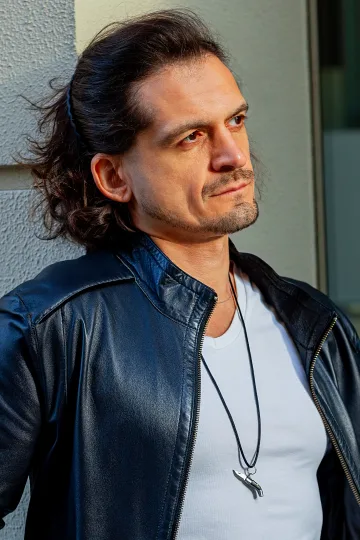
Uruz is spare and gets along with almost any style. It looks good on a rough leather or rubber cord in a Scandinavian key, on a solid chain in a masculine look, and alongside other northern symbols. Fitting neighbors are the Tiwaz rune as a sign of a warrior's honor, the Algiz rune as a sign of protection, and a pendant bearing a god from the Norse pantheon.
The one thing to avoid is clutter. Heavy in form, Uruz holds an image on its own and needs no crowd of neighbors. A single rune on a clean cord reads stronger than one squeezed among five pendants. If you want layers, give the sign its own length of chain.
Leave your email, we'll send your discount code. No spam, unsubscribe anytime.
The code arrives by email, valid on your first order.
Who Uruz Suits and Who It Is Given To
Uruz is not tied to gender, age or profession, but it has themes it is especially close to. It is a rune of strength, health and endurance, so it is most often chosen and given in connection with bodily hardiness, overcoming, and a new stage that calls for firmness.
People take it:
- For those recovering. As a health charm and a mindset for the return of strength after illness, injury or a low. The sign of the wild ox reads here as a promise of hardiness.
- For those who ask a lot of the body. Athletes, people in physical work, anyone for whom endurance is part of life. Uruz fits that frame of mind more precisely than most.
- For those on the edge of a big step. A change of work, a move, the start of a hard road. The rune works as a visual anchor of resolve.
- For lovers of northern culture and the runic tradition. Uruz is the logical second rune for those collecting the symbols of the Futhark after Fehu.
- For skeptics who care about meaning, not magic. The story of the wild ox and its rune is interesting in itself, and belief in the "power of the sign" stays a private matter.
As a gift, Uruz is convenient because its meaning reads at once and sounds kind: a wish for strength, health and endurance. A gift-jewelry guide can help you choose the right version for the occasion.
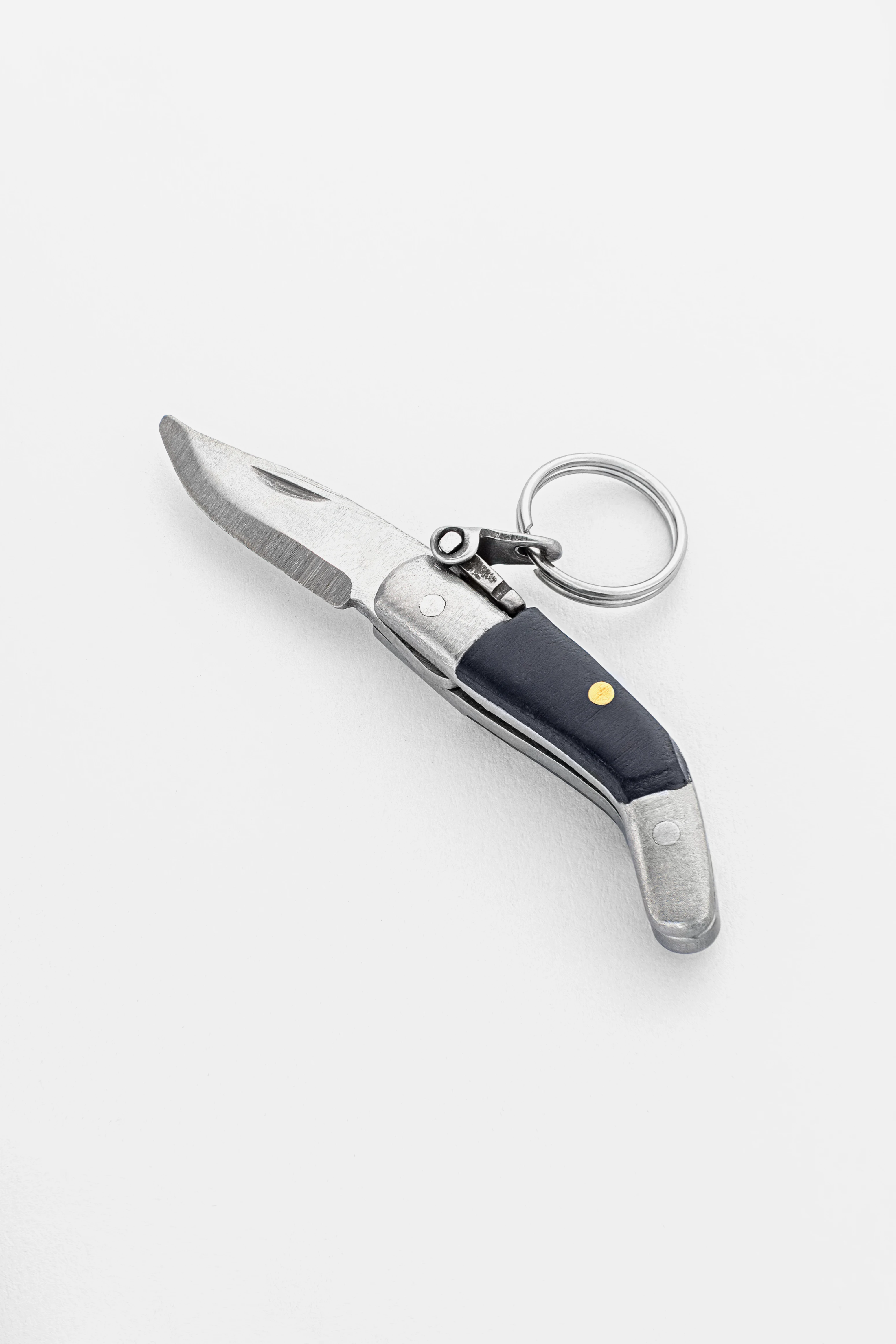
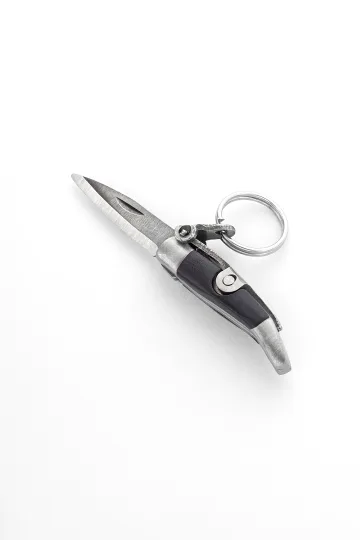
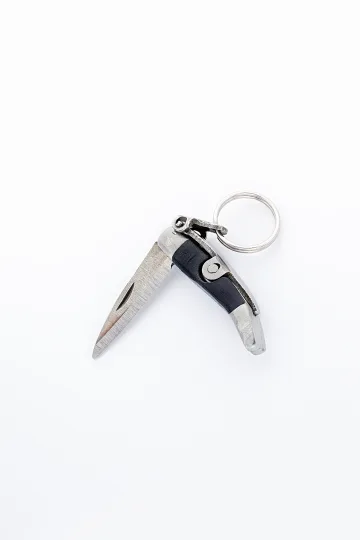
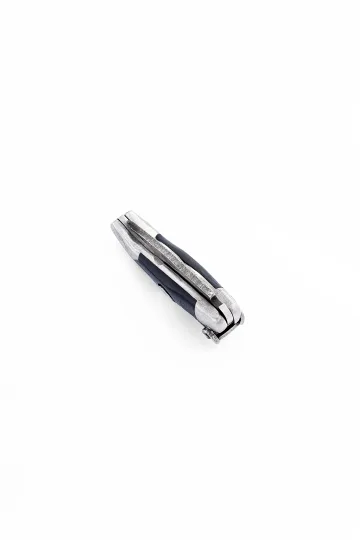
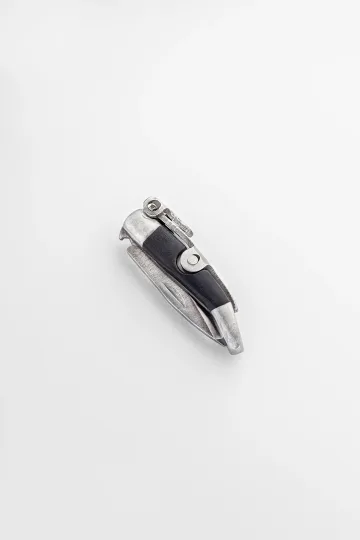
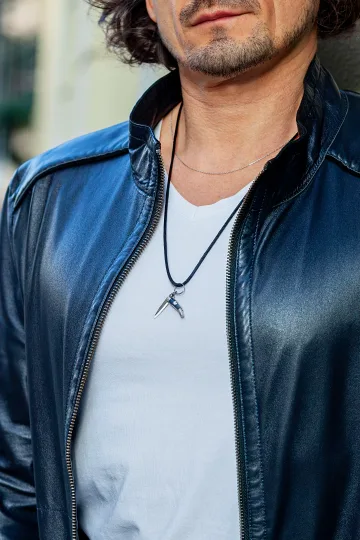
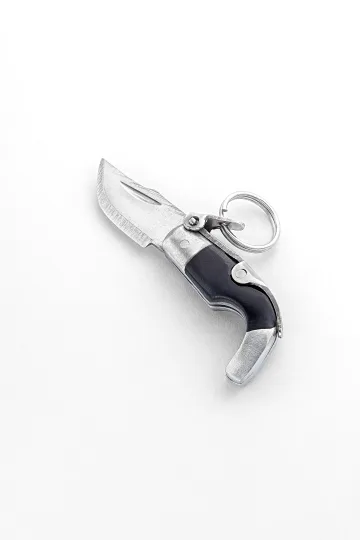
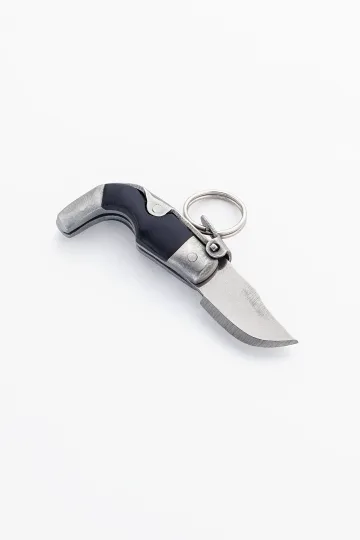
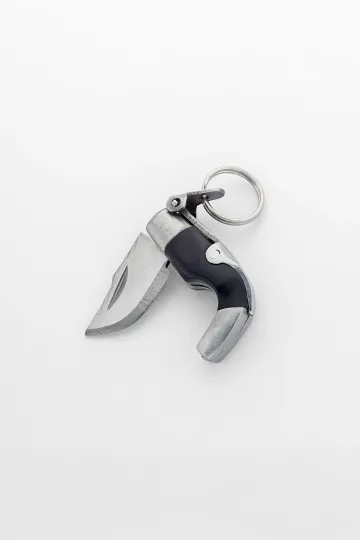
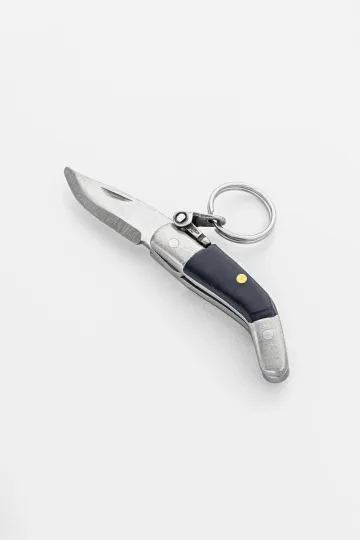
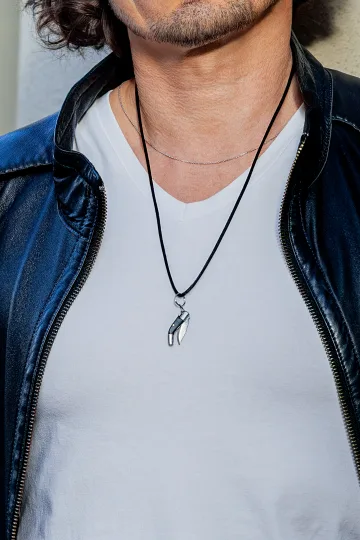
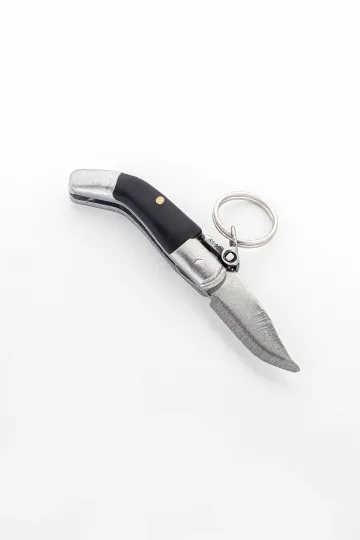
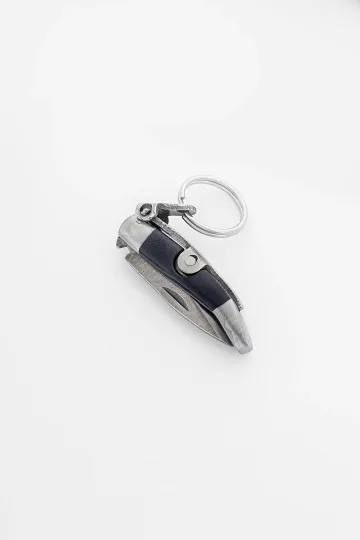
CAPAORA mini knife pendant
The 18th-century Spanish navaja in miniature: 40 mm of stainless steel, a real folding mechanism and a Palanquilla lock that clicks. An affordable gift to remember.
Authentic · Ships from Spain · 14-day returns
How to Choose Uruz Jewelry
Correct Form and Orientation
The first thing to look at is the accuracy of the sign. Uruz has a tall stave and a slanted crossbar that leaves its top and drops down. A pendant should have a clear "top" so the rune does not end up reversed when worn. A mirrored or upside-down form is undesirable for a rune of strength: a reversed Uruz reads in the tradition as weakness.
It is easy to check: lift the pendant by its loop in its natural position and make sure the heavy "back" of the sign is up and the lines run down. If a workshop has made the sign legible and stable, that is a good sign of attention to meaning, not only to form.
Craft Against Stamping
Mass stamping gives an even but faceless sign, often with blurred relief. Hand carving or quality casting hold crisp edges, and the rune looks alive. For a symbol whose whole strength is in its form and mass, crisp lines are not a quibble but the point. Heavy Uruz loses out especially when its relief is smeared: the sign loses its weight.
If you want a piece with character, look for versions with hand finishing, honest metal texture, a slight asymmetry of carving. Such pendants come closer to the spirit of runic craft, where every sign was cut on its own.
Size and Proportions
For an everyday pendant a size of 2-4 centimeters is comfortable. Below two, the massive sign loses its main trait, weightiness, and looks fussy. Above four, it starts to look heavy on a slender neck. For a masculine look and a broad neck, take toward the upper end, where the weight of Uruz belongs. A ring and bracelet call for finer, neater engraving, or the rune looks coarse.
Uruz and Other Strength Runes: The Difference
Strength and might in the Futhark are reflected not by one rune but by several, and they divide the meanings among themselves. Understanding the differences helps you pick "your own."
Uruz and Fehu: Wild Ox and Tame Ox
The main pair is Uruz and Fehu, two oxen at the start of the row. Fehu is domestic cattle, wealth, movable property, a resource you own and multiply. Uruz is the wild aurochs, strength and health, a might you cannot claim but can draw near to. One rune is about what you hold, the other about what holds you up.
The pair beautifully frames the start of the Elder Futhark: first property, then the hardiness to keep that property. From tame to wild, from a count by the head to a strength beyond counting. If Fehu is about prosperity, Uruz is about the body and the will without which prosperity cannot be kept.
Uruz and Thurisaz: Strength and Fury
The rune Thurisaz comes right after Uruz in the row and also speaks of might, but of another kind. Thurisaz is directed, sharp, often destructive force, tied to the image of a giant and a thorn that pricks. Uruz is basic, bodily strength, still neutral. Uruz gives a reserve of might; Thurisaz gives it a dangerous point. Together they describe the road from healthy hardiness to active, at times furious action.
Uruz and Tiwaz: Might and Discipline
The rune Tiwaz is the sign of the god Tyr, of a warrior's honor, justice and discipline. If Uruz is about raw, wild strength, Tiwaz is about strength placed at the service of duty and truth. Uruz is the might of body and life; Tiwaz is the might of will and principle. They are often set side by side, because strength without honor is blind, and honor without strength is powerless. Uruz gives hardiness; Tiwaz gives it direction and meaning.
Once you sort out these differences, it is easier not to confuse the strength runes and to choose a sign for a specific intention, not by the general theme of might.
The Psychology of a Runic Amulet
You do not have to believe in the magic of runes for a Uruz pendant to "work." The mechanisms that make such an amulet useful are quite down to earth and well described.
An anchor of intention. When a person ties an object to a concrete goal, a glance at that object returns the mind to the goal. A strength rune on the neck becomes a quiet daily reminder of your own hardiness and of the matter it was put on for. It works as a visual bookmark for attention, without any mysticism.
An effect of confidence. Sport and cognitive psychology describe the "lucky object" effect: a person sure their talisman is with them acts calmer and more collected. Anxiety drops, focus rises. For those who wear Uruz before exertion or a hard conversation, the sign does exactly that.
Body and mindset. A rune of health and strength reminds you of the body, of its reserve, of how much depends on simple things: sleep, movement, recovery. Wearing such a sign often works as a gentle nudge to care for yourself, and in that there is a very practical use.
Identity and values. To wear the rune of the wild ox is to quietly state, first of all to yourself, your priorities: hardiness, endurance, readiness to act. Anchors of identity raise resilience to hardship, and in that sense the ancient sign works for a very modern person.
There is nothing supernatural here. An amulet does not change reality; it changes the wearer's relation to reality, and does so in a measurable and useful way.
Uruz in Culture and Heritage
The wild ox left zoology long ago and lives on in language, in coats of arms and in the memory of peoples. The trace of Uruz is visible both in words and in images.
In language. German Auerochse, English aurochs, and the beast's name in many tongues trace through a common ancient root to the same animal that stands behind the rune. The word for the wild bull survives in surnames, place names and the rune's own name, recalling a beast that is no more.
In arms and signs. The head of an aurochs, a ring through its nose, adorned the coats of arms of Eastern European lands for centuries, where memory of the wild bull held on longest. The mighty beast was a handy symbol of strength and freedom for whole regions, and that heritage outlived the aurochs itself by centuries.
In cave art. The bulls of Lascaux and other Paleolithic caves are in large part aurochs, and they remain among the most powerful images of prehistoric art. The ancient painter caught the mass and tension of the beast so precisely that people still fall silent before these figures. The Uruz rune inherits the same age-old fascination with the might of the wild ox.
A sad record. The aurochs entered history as one of the first large beasts whose extinction is documented with an exact date. The last female fell in 1627 in the Jaktorow forest in Poland. Since then the wild aurochs has been gone, and the rune of its name remains one of the few living reminders of it.
Send a friend a discount code, they save on their first order.
Facts About the Uruz Rune That Surprise
The rune's beast is extinct, but its name lives. The last wild aurochs died in 1627 in the Jaktorow forest in Poland. It is one of the first extinctions recorded with an exact date. The Uruz rune keeps the memory of a beast that has been gone for four centuries.
One rune, two opposite meanings. The Anglo-Saxon poem reads ur as the wild ox, while the Scandinavian poems read úr as drizzle and iron slag. In the south of the Germanic world the rune is the might of a beast; in the north, raw rain and dross. The debate over how this fits together still goes on.
Uruz and Fehu are two oxen in a row. The first rune, Fehu, is domestic cattle and wealth. The second, Uruz, is the wild aurochs and strength. The alphabet opens with a pair of oxen, tame and free, and that is surely a considered order, not a coincidence.
People drank from aurochs horns at feasts. Caesar wrote that the Germanic peoples mounted the horns of slain aurochs in silver and passed them around as cups. The horn of a wild ox was a mark of a hunter's valor long before its name became a rune.
The aurochs was nearly the size of an elephant. By Caesar's account, the aurochs of the Hercynian forest yielded only a little to an elephant in size and spared neither man nor beast. A grown bull stood almost two meters at the shoulder, twice the height of the cow we know.
The rune is tied to health. In the divinatory tradition Uruz is a good sign for the body: recovery, the return of strength, hardiness. The logic is direct, the wild ox being the embodiment of iron health, a beast hard to bring down.
Runes were carved, not written. The heavy slanted line of Uruz and the absence of horizontals in the whole Futhark are not aesthetics but a demand of wood and bone: along the grain a horizontal is nearly impossible to cut.
The modern "strength" reading is younger than it seems. The divinatory system with upright and reversed meanings of Uruz took shape mainly in the 19th and 20th centuries. The historical rune was a letter and the name of a wild ox, not a card from a divining set.
Silver, gold, runic and Norse symbolism, charms, matching sets.
Buying it as a gift? Each one arrives ready to give.
 A branded Zevira box and a little card come with every order.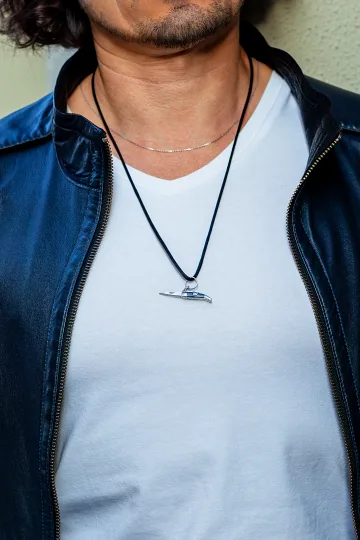




Frequently Asked Questions About the Uruz Rune
What does the Uruz rune mean? Uruz is the second rune of the Elder Futhark, standing for the sound "u" and the concept of the wild ox, the aurochs. Broadly it symbolizes primal strength, health, endurance, resilience and the will to act. The name goes back to Proto-Germanic ūruz, "aurochs, wild ox."
Is Uruz a rune of strength or of health? Both. Uruz is read as a sign of bodily might and as a health charm: recovery, the return of strength, hardiness. Both senses come from the image of the wild ox, a beast that for the ancients embodied unbreakable health and strength.
What does the Uruz rune look like? A tall vertical stave on the right and a slanted line that leaves its top, runs left and drops down. The form recalls an inverted "U" or the silhouette of an ox with its head lowered. There are no horizontal lines in the sign, as in the whole Futhark.
What does a reversed Uruz mean? In the divinatory tradition a reversed position is read as weakness, a drop in strength, illness, energy spent for nothing, or force turned to harm. It is the other side of the rune: upright is healthy might, reversed is might that has run dry or burst its banks. The split into upright and reversed meanings appeared in modern practice.
How does Uruz differ from Fehu? Fehu is domestic cattle and movable wealth, a resource you own. Uruz is the wild aurochs and strength, a might you cannot claim. The two runes stand side by side in the row, first and second, and form a pair: tame property and free strength. Fehu is about prosperity, Uruz about bodily hardiness.
Can you wear the Uruz rune every day? Yes. For daily wear silver and stainless steel are convenient: sturdy, easy to care for and non-tarnishing. Iron and steel are especially fitting for a rune of strength. Gold suits too. Wood and bone are authentic but fragile, more often chosen as a ritual or collector's piece.
Who is Uruz jewelry given to? Most often to someone recovering from illness, someone who asks a lot of the body, or someone on the edge of a hard step. Uruz is a kind wish for strength, health and endurance, so it is given as a charm for a new stage, a recovery or a sporting goal.
Do you need to believe in the magic of runes to wear Uruz? No. Many wear the rune for its meaning and history, not for the "power of the sign." Uruz is interesting in itself: behind it stand an extinct wild ox, cave art, the poems and a thousand years of northern European culture. Belief stays a private matter.
Runes, Norse charms and symbolism in silver, gold and steel.
Conclusion
Uruz traveled from the name of a wild ox to a symbol of strength and health on a silver chain. The aurochs died out nearly four centuries ago, but its rune remained and holds within it what people in every age have sought when they needed hardiness: the ability to stand, to recover, to move forward when it would be easier to retreat.
The second rune of the ancient alphabet speaks honestly of strength in all its doubleness. Might gives life its footing and its drive, and it also demands control, or it turns to brutality and waste. Whether you wear Uruz for its meaning, for the stern beauty of the northern form, or for a quiet reminder of your own reserve, you carry with you the memory of one of the mightiest beasts that ever walked the earth, and of the strength it embodied.
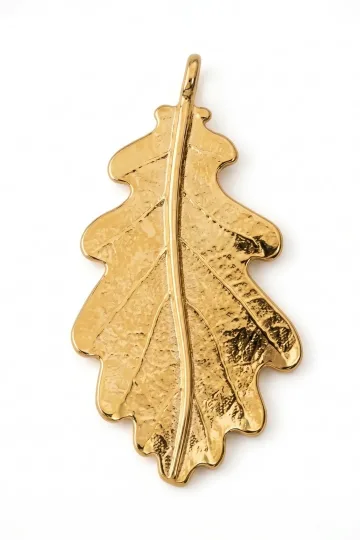
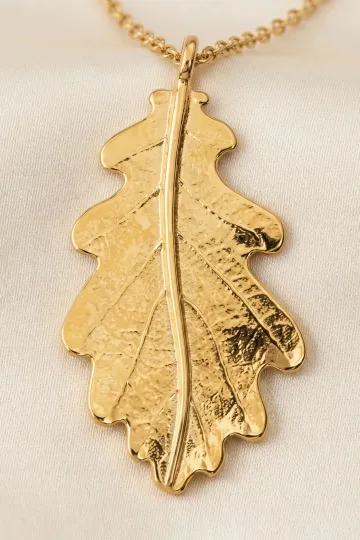
Wear the symbol, don't just read about it. These are in stock:
About Zevira
Zevira makes jewelry in the artisan tradition of Albacete, Spain. Runic symbolism is among the themes close to us: an ancient form, legible without words, equally at home on a rough leather cord and on a solid chain. We render Uruz with a verified orientation of the sign and crisp, weighty carving, in modern materials and proportions.
What you can find with us on the theme of northern symbols:
- Runic pendants in silver, gold and steel
- Norse charms: runes of strength and protection, images of the gods
- Leather and rubber cords and chains of various lengths for a rune of any size
- Matching and set pieces for those collecting the symbols of the Futhark
- The option of personal engraving
Every piece can be personalised with engraving. Sterling silver 925 and 14-18K gold.