The Berkana Rune: Meaning of the Birch Symbol of Motherhood and New Beginnings in the Elder Futhark
The birch is the first tree to return to scorched and stripped land. After the glacier, after the fire, after the clear-cut, it is birch seeds that sprout where nothing else will yet grow. The rune Berkana, the sign of the birch in the Elder Futhark, took on this pioneer's role and turned it into a symbol of birth, growth and new beginnings.
That is where its meaning starts. Berkana is not about the hoarded or the conquered. It is about the thing that is only now appearing: a child, an idea, a venture, a fresh chapter of life. It is the sign of the mother who gives a beginning, and the sign of the soil ready to receive a sprout. The feminine power here is not loud but generative, the kind that quietly unfolds life out of nothing.
The rest follows in order: where the symbol came from, how it sounded and looked, what it meant to the Norse and the Anglo-Saxons, what a runic pendant is made of, how to wear it, who it is given to, and how Berkana differs from other runes of beginning and fertility.
Why Birch Became the Mother's Rune
The rune's name goes back to Proto-Germanic berkanan, "birch." The same root gave English birch, German Birke and Norse björk, and reaches deeper still, into an ancient Indo-European root meaning "bright, white, shining." A whiteness is baked into the very word: the pale bark of a tree you can spot in the forest from a long way off, a bright mark among dark trunks.
For the peoples of Northern Europe the birch was a tree apart. It grows where other trees cannot yet survive, on the edge of the tundra and the forest, on poor soils, on burned ground. It is called the pioneer tree: birch arrives first, covers the earth and prepares it for the oak and the spruce that come later. In this its nature met the idea of a beginning, and the rune sealed the match in a sign.
Wear the symbol, don't just read about it. These are in stock:



Berkana took the image of the tree and tied it to the body of a mother. The shape of the rune, a vertical stave with two bulges on the right, has long been read as a woman's breasts or the outline of a pregnant belly. The sign of birth took the form of the body that gives birth. So the birch, the green of spring and motherhood met in a single rune of the Futhark's third row.
Understanding Berkana means separating two layers, as with any rune. The first is practical: it was a letter for the sound "b," an ordinary unit of writing in the runic row. The second is symbolic: every rune carried a name and a meaning, and Berkana owned the theme of birth, growth and the protection of what is growing. Both layers lived at once. A carver could cut Berkana simply as a "b" in someone's name and, in the very next breath inside a charm, as a sign of a safe delivery and healthy offspring.
What the Berkana Rune Is
The Meaning of the Name and Its Sound
Berkana is the eighteenth rune of the Elder Futhark, the oldest runic alphabet of the Germanic peoples. It carried the sound "b" and opened the third of three "aettir," the groups of eight runes into which the row was divided. The name of the alphabet itself, Futhark, is built from the sounds of the first six runes: F, U, Th, A, R, K. Berkana stands much further along, but its position at the head of the last aett is no accident either.
The rune's name sounded a little different across the Germanic world. To the Norse it was bjarkan, to the Anglo-Saxons beorc (birch or poplar), and for the Goths scholars reconstruct bercna. Everywhere the root is the same, and everywhere it is about the bright tree with white bark that is first to dress itself in green each spring.
What the Symbol Looks Like
Berkana's shape is simple and recognisable: a vertical stave with two bulges reaching to the right, one above the other. It resembles the Latin letter "B," and that is no coincidence, since both descend from a shared Mediterranean source of signs. In the runic tradition these two arcs were read as a woman's breasts, as two hills, or as the silhouette of a pregnant figure.
One detail matters. Runes were carved, not written. The straight lines and the angular arcs are not a style but a demand of the material. Across wood and bone, along the grain, a smooth rounded curve is hard to cut, so the "arcs" of Berkana in old inscriptions often look angular, assembled from short straight segments. The soft roundness of the sign is a later, decorative reading.
Variant Forms and Related Signs
There is no single "correct" Berkana. The shape shifted with time and place. In the classical Elder Futhark it is a stave with two arcs, but on surviving inscriptions those arcs often break into short straight strokes, and now and then they merge into one large triangle pressed against the stave. When the Elder Futhark gave way to the Younger in the North, the sign bjarkan was simplified: one arc or a short spur was left instead of two, and the same rune came to carry both the "b" and the "p" sound, because sixteen signs could no longer cover every phoneme separately.
The kinship with the Latin "B" is not a folk story. Both letters go back to a shared Mediterranean stock of signs, to the Phoenician and Greek branch from which the Germanic peoples are widely held to have taken the idea of writing. That is why Berkana and "B" resemble each other by descent rather than by accident. This is worth keeping in mind when choosing a piece: workshops sometimes draw a "pretty" rounded Berkana that drifts towards a printed capital B, whereas the historically honest sign is angular, its curves assembled from straight cuts.
Its Place in the Elder Futhark
The Elder Futhark was used roughly from the 2nd to the 8th century across Germanic Europe, from Scandinavia to the Black Sea. Twenty-four signs split into three rows of eight, each row named after its own first rune. The third aett opens with Berkana alongside the runes of home and of the human: near it stand Mannaz (the human being), Laguz (water), Ingwaz (seed and fertility) and Othala (inheritance). The whole final row turns toward the themes of kin, family and rootedness.
Standing at the head of the "human" aett gives Berkana special weight. If the first row opened with Fehu and the theme of wealth, and the signs of nature's forces followed, then by the third row the alphabet reaches what matters most to a family: birth, family and the continuation of life. Berkana stands first on that threshold.
The Birch as the Mother Tree
Among the peoples of the North the birch was a feminine, maternal tree. Birch twigs were bound into besoms and brooms that swept the home, driving out the old and the unclean and blessing a new cycle. A birch branch was used to symbolically "wake" fertility: in spring rites young branches touched people, cattle and fields, wishing growth and offspring.
From this the depth of the rune grows. Berkana is not about a force that takes but a force that gives a beginning and shields what is growing. It is about the mother at the cradle, the midwife, the woman who carries the family line forward. And at the same time it is about any undertaking that is still weak and in need of protection, whether an infant, a shoot or an idea.
Upload a photo of your pet, someone you love, or an object. We'll build a 3D model and hand-cast it in pewter.
History: From the Proto-Germans to Today
Proto-Germanic Roots
Long before the first runic inscriptions, the Germanic tribes already had the word berkanan and the reverence for the birch behind it. The bright spring tree was linked with mother goddesses, with the fertility of the earth and with a woman's lot. The Indo-European root meaning "shining, white" makes the birch kin to a whole circle of words about light in Sanskrit and the Baltic and Slavic tongues, and everywhere the tree trails an image of purity and renewal.
When the Germanic peoples created or borrowed runic script in the first centuries of our era, they gave the eighteenth sign the name of a tree already revered. The rune did not invent the link between birch and birth; it fixed in letter form what had lived in rite and language long before it.
The Scandinavian Iron Age and the Viking Era
Runic writing flourished during the Iron Age and the Viking era, roughly from the 8th to the 11th century. Berkana was cut into amulets, wood, bone and stone. By that time the Elder Futhark in the north had already given way to the shorter Younger Futhark of sixteen signs, and the birch rune survived there under the name bjarkan, its shape slightly altered but its meaning intact.
In Viking society birth was a dangerous business and so was surrounded with rites. Deliveries took place at home, by the light of the hearth, and women called on both a midwife and protective signs for help. Runes tied to a safe delivery were carved and spoken like a spell. Berkana, with its theme of childbirth and the protection of what is growing, belonged naturally to that circle of feminine, household magic that the sources speak of sparingly but with confidence.
Berkana in Inscriptions, on Stones and Bracteates
Berkana rarely turns up on its own as a standalone magical mark. Its main historical traces sit inside the full runic row, carved out in order from beginning to end. The earliest such row survives on the Kylver stone from Gotland, cut around the year 400. The slab carries the whole Elder Futhark in sequence, and Berkana stands where it belongs, near the end, among the runes of the last aett. The stone lay in a grave with the inscription facing inwards, and the complete alphabet on it is usually read as a protective formula for the dead.
The division of the row is even clearer on the gold bracteates, thin stamped medallions of the fifth and sixth centuries from Scandinavia. On the bracteates from Vadstena and Grumpan the futhark is broken into three groups of eight, and Berkana physically opens the third group, separated from its neighbours by a dot. For the history of the rune this is valuable evidence: the grouping into aettir, which later tradition talks about freely, can be seen with your own eyes on Iron Age gold.
As an ordinary letter "b" Berkana lived on hundreds of everyday objects, in names, short messages and ownership marks scratched into combs, spindle whorls and weapon fittings. Later, in the Younger Futhark, the sign bjarkan went on serving as the letter "b" on Viking Age memorial stones, in words such as "brother" and "bridge" carved in memory of the departed. A stone raised beside a new causeway, with a name and a claim of good works, is about as far from occult secrecy as writing gets.
The Anglo-Saxon Rune Poem
The fullest medieval commentary on the birch rune survives in the Anglo-Saxon rune poem, written down in England probably in the 10th century. The stanza on the rune beorc says a remarkable thing: the birch bears no fruit, yet still puts out shoots without seed, it is fair in its branches, tall in its crown and richly decked with leaves, reaching toward the sky.
The image is strikingly precise. The birch reproduces both by seed and by suckers from the root and the stump, so to a medieval observer it seemed to give birth without seed, of itself. Hence the reading of Berkana as a sign of self-renewal, of life that finds a way to continue against all odds. For a symbol of birth it is hard to imagine a better image than a tree that puts out shoots with no visible seed.
The Norwegian and Icelandic Rune Poems
The Scandinavian rune poems, the Norwegian and the Icelandic, also mention the birch rune, though more briefly. The Norwegian stanza notes that the birch has the greenest leaves of all the branches, then wanders off, as it often does, into a proverb about the cunning of Loki. The Icelandic poem calls bjarkan a "green branch," a "little tree" and a "shoot with young leaves."
Behind the spare lines stands one and the same observation: the birch is about fresh spring green, about young growth, about the thing that is only just opening. The Northern tradition saw in it not a mighty ancient oak but a living, supple, self-renewing beginning, and it is exactly this shade that Berkana carries in jewellery: not the weight of strength but the lightness of growth.
The Decline of Runic Writing
With the arrival of Christianity and the Latin alphabet, runes gradually left everyday use. In Scandinavia they held on longer, in places into the late Middle Ages, but as the main script they yielded to Latin letters. Berkana, along with the whole Futhark, passed from a living alphabet into the realm of antiquity, of inscriptions on stones and memory.
Even so, the rites with birch outlived the runes by many centuries. Birch besoms in the bathhouse, birch branches at spring festivals, homes decked with young greenery at Whitsun and at the start of summer survived in folk culture across Northern and Eastern Europe. The tree went on meaning renewal and protection even where the meaning of the rune itself had long been forgotten.
The Revival in the 20th Century
Fresh interest in the runes arrived with the 19th and 20th centuries and their fashion for Germanic antiquity, folklore and mysticism. Systems of runic divination appeared, books of interpretation, and jewellery in their wake. That is when Berkana firmly took on the role of "the rune of birth, motherhood and new beginnings" by which it is known today.
It is worth holding in mind that the modern divinatory reading is a reconstruction and a creative development, not a direct copy of what Iron Age people meant. Historical Berkana was the letter "b" and the name of the birch with a circle of protective meanings around childbirth. Today's Berkana has also absorbed a layer of esotericism that grew over the last century and a half. Both layers are real; they simply belong to different eras.
The Meaning of the Berkana Rune: Birth, Growth, Feminine Power
Birth and Motherhood
The first and chief meaning of Berkana is birth in the most literal sense: the arrival of a child, the start of a new life. The rune was tied to childbirth, to midwives, to the protection of mother and infant in their most vulnerable hour. Of all the signs of the Futhark, Berkana stands closest to the theme of motherhood, and so it is so naturally chosen and given for the birth of a child.
In a broader reading Berkana is any birth: of an idea, a venture, a relationship, a new version of yourself. It is about the moment when something is not yet strong but already exists, already breathes and demands care. A Berkana pendant is often taken not for "the magic of childbirth" but as a sign of the start of an important stage, when you want to protect the fragile and the growing.
Growth, Renewal and New Beginnings
The second layer of Berkana's meaning is growth and renewal. The pioneer birch, first to reach empty ground, became an image of a fresh start where everything seemed burned away. The rune is read as a sign of a new cycle: after a loss, after an illness, after a long winter, spring comes, and Berkana is about that spring.
Renewal in Berkana's sense is not loud but organic. It is about the quiet yet unstoppable force of life that finds a crack in the asphalt and grows through it. That is why the rune is chosen at turning points: a move, a change of work, the way out of a hard period, the wish to begin again. It promises no ease, but it promises that growth is possible.
Protection and Healing
The third meaning of Berkana is the protection and healing of what is growing. In the folk medicine of the North the birch was a healer tree: birch sap was drunk in spring for strength, bark and buds went into remedies, a birch besom drove out sickness. The birch rune absorbed this healing note and became a sign both of a beginning and of gentle recovery.
As a charm Berkana keeps the weak and the vulnerable: the infant, the convalescent, the venture just starting. It is given with a wish less for luck than for safekeeping, so that what has been born survives and grows strong. In this Berkana echoes the runes of protection, though it protects in its own way, as a mother does, by sheltering rather than deflecting a blow.
Berkana, Nerthus and the Mother Goddesses
The theme of the birch and of birth in Northern myth is held by the female deities of earth and fertility. First among them is Nerthus, the Mother goddess of the ancient Germanic peoples, whose cult a Roman historian described: she was drawn across the land on a sacred wagon, and while she was present all strife ceased. The earth-mother, giver of harvest and offspring, was revered as the source of all birth, and Berkana belongs to this circle of images.
In the Norse pantheon nearby stand Freyja, goddess of love and fertility, and Frigg, patron of marriage, motherhood and childbirth. Both are bound to a woman's lot, to birth and the protection of the family. To wear Berkana is in part to reach toward this circle, where earth, spring, feminine power and the continuation of the line are woven into one. A separate guide to the Norse pantheon tells more about the gods of the North.
Reversed Berkana
Divinatory practice also weighs the "reversed" position of the rune, when the sign falls upside down. Reversed Berkana is read as stalled growth, family troubles, anxiety around children and home, a beginning delayed or unfulfilled. It is the flip side of the same theme: if upright Berkana is about birth and growth, the reversed rune is about growth that has stalled and needs attention.
There is no point looking for a historical basis here; the split into upright and reversed meanings is already a product of modern practice. Yet as a system of images it is coherent: even spring has its late frosts, and a reminder of that keeps both sides of growth in view.
Bindrunes: Berkana in Combination
A bindrune is two or three runes drawn on a single stave, sharing one vertical line. Bound signs like these do occur in antiquity: carvers joined runes to save room on a stone, to fit a name onto a small object, or to keep a meaning half hidden. Berkana's straight stave makes it convenient for binding, since a second sign attaches to it easily without crowding the arcs.
The popular combinations read by theme. Berkana with Algiz gives "birth under protection," a charm for mother and child. Berkana with Ingwaz joins the seed and the shoot, conception and coming into the world. Berkana with Wunjo adds gladness to a new beginning, and with Sowilo, the sun, it lends strength and health to whatever is growing. It is worth remembering that these recipes belong to the modern craft of symbols rather than to any tested spell of the deep past. They work as a considered piece of design, not as guaranteed magic, and a jeweller who presents them as ancient formulae is selling you a story rather than a fact.
Berkana in Spreads and Pairings
In modern divination the rune is seldom read alone; the meaning comes out of its company. In the simple three-rune spread of past, present and future, Berkana in the future position is often taken as a birth to come, a child or a new venture, while in the present it marks a season of growth and care, when something fragile needs attention. Neighbours shift the shade of it: beside Fehu the talk is of money arriving for a new undertaking, beside Hagalaz, the rune of disruption, of a hard delivery or a delayed start, and beside Sowilo, the sun, of growth that has light and strength enough.
The caveat is the same one that applies to the whole divinatory system. Spreads, positions and neighbour meanings are the work of the nineteenth and twentieth centuries, not a documented Iron Age practice. The historical Berkana was a letter and a protective name, not a card from a fortune-telling set. Spreads are usable as a language of images, provided you remember where that language came from.
Customer reviews
Zevira is a real jewellery shop. Genuine payments, deliveries and customer thank-yous.
🥰🥰🥰 gracias
Ok, ¡gracias! 🙂
What Berkana Jewellery Is Made Of
The material of a runic pendant carries its own meaning and changes both the look and the character of the piece. Here are the main options and what is worth knowing about each.
Silver
Silver is nearly the best material for the birch rune. Its cold white sheen echoes the whiteness of birch bark, and the very word behind the rune's name means "bright, white." Sterling silver 925 looks restrained and clean, holds the crisp form of the sign well and suits everyday wear.
A silver Berkana reads calm and feminine, but without sweetness. It works both as a young mother's first piece and as a sign of a personal new beginning. On a leather cord it moves into a Scandinavian key; on a thin chain it becomes a quiet, minimalist charm.
Gold
Gold gives the rune warmth and a festive note, so a gold Berkana works well as a gift for a special occasion: the birth of a child, an anniversary, an important start. The warm sheen of the metal softens the ancient severity of the sign and makes it dressier. Most often 14 or 18 karat is used; both hold the crisp carving and are unafraid of daily wear.
Yellow gold reads warmer, white gold sits closer to the silver, "birch" note. Rose gold adds a softness fitting for the theme of motherhood. In any case a gold rune reads as a weighty, memorable gift, the kind that is kept and passed on.
Birch and Wood
The most authentic option in terms of meaning: to carve the birch rune from birch itself. A wooden Berkana, turned from pale birch wood or from burl, is closest to the historical spirit of the sign and to the material runes were first carved into. Such pendants are light, warm to the touch, and each has its own unique grain pattern.
The price of authenticity is fragility and fussiness. Wood fears moisture and calls for careful handling; it should not be soaked or left in the sun. This kind of amulet is more often chosen as a ritual or memorial piece than for daily wear, and it is especially fitting for the birch rune, where material and sign coincide.
Bronze and Brass
Bronze gives a warm, slightly archaic tone close to ancient finds, and so it is loved for its "museum" look. Brass is cheaper and brighter, nearer to gold in colour. Both alloys render the relief of the carving well, and over time they take on a patina that many find noble and fitting for an ancient symbol.
Copper alloys have one drawback: they can leave a dark or greenish mark on the skin. The cause is a reaction of copper with sweat and cosmetics, and it is not a defect. It is worth reading separately about why skin turns green from jewelry and how to avoid it.
Stainless Steel
The pragmatic modern choice. Steel 316L does not darken, does not fear water or sweat, leaves no mark on the skin and holds the crisp carving of the sign for years. Here the symbolism lives entirely in the form, not in the rarity of the material.
A steel Berkana suits anyone who wears jewellery constantly and does not want to think about upkeep. For a young mother that is a practical plus: a pendant like this is not a worry to wear with a child in your arms, and it survives water, soap and the daily rush.



How to Wear the Berkana Rune
At the Neck as a Pendant
The most common way to wear the rune is as a pendant at the neck, close to the body. Here both the chain length and the way the sign sits in the neckline matter. A short chain (40-45 cm) holds the rune high, near the collarbones, on show. A medium one (50-55 cm) brings it onto the chest, where the symbol reads large. A long one (60-70 cm) tucks the amulet under clothing, closer to the heart, which many value for a personal sign.
For the rune of motherhood, closeness to the body carries a special sense: it is often worn "for oneself," as a quiet reminder of a child, of a beginning, of one's own strength. A separate guide to choosing chain length can help you settle on the right one.
On a Ring and a Bracelet
Berkana sits well in a ring and in a bracelet too. Engraving the rune on a flat signet ring or on the plate of a bracelet looks spare and does not catch the eye, which appeals to those who wear the symbol "for themselves." A thin ring with a single rune becomes a personal anchor, a reminder of the beginning it was put on for.
A bracelet with Berkana is handy as a memorial piece: it is easy to add a bead or a second pendant on the occasion of the next important event, gathering on the wrist a small chronicle of beginnings. For the theme of growth and family this "accumulating" format suits especially well.
Direction and Correct Form
When choosing a piece it is worth checking that the rune is carved correctly: a vertical stave and both arcs on one side, facing right, one above the other. A reversed or mirrored sign in the divinatory tradition reads as stalled growth rather than birth, so a workshop should orient Berkana vertically and "arcs to the right."
This is not a superstitious quibble but a matter of meaning. If you are taking a rune for its meaning, it is logical for that meaning to be upright. With a good maker the orientation of the sign is checked, and a pendant has a clear "top."
What to Pair It With
Berkana is spare and gets along with almost any style. It looks good on a thin chain in a minimalist look, on a leather cord in the Scandinavian key, and paired with other Northern symbols. Fitting neighbors include the Algiz rune as a sign of protection, the Othala rune as a sign of home and kin, and the Fehu rune as a sign of plenty. Berkana plus Algiz reads as "birth under protection," a logical pair for a charm for mother and child.
The one thing worth avoiding is clutter. A single rune on a clean chain reads more strongly than one hemmed in among five pendants. If you want layers, give Berkana its own length of chain so the sign does not get lost.
Turn on your camera, pick earrings, a pendant or a ring, and see the piece on yourself in real time.
Switch items in one tap.
Everything runs in your browser: no photo or video is ever uploaded.
Who Berkana Suits and Who It Is Given To
Berkana is not tied to age or profession, but it has themes it is especially in tune with. It is the rune of birth, growth and the protection of what is growing, so it is most often chosen and given in connection with motherhood, family and a new stage of life.
People take it:
- For expectant and new mothers. The sign of childbirth, of the protection of the infant and of feminine power makes Berkana a natural gift for pregnancy and the birth of a child, a memorial piece for the passage into a new role.
- As a gift for the birth of a child. Not a toy and not a card, but a thing that stays with the mother for a long time and reminds her of a beginning. On what to give at this moment, there is a separate guide to jewelry for a new mother.
- For those beginning life anew. After a move, a divorce, an illness, a change of work, Berkana works as a sign of a fresh start and a quiet support.
- For lovers of Northern culture and the runic tradition. Berkana is the logical rune for anyone collecting the symbolism of the Futhark who values precisely its feminine, generative side.
- For skeptics who care about meaning, not magic. The history of the birch and its sign is interesting in itself, and belief in a "power of birth" stays a private matter.
As a gift Berkana is convenient because its meaning reads at once and sounds warm: a wish of birth, growth and protection. A jewelry gift guide by occasion can help you pick the right version for the moment.
Leave your email, we'll send your discount code. No spam, unsubscribe anytime.
The code arrives by email, valid on your first order.
How to Choose Berkana Jewellery
Correct Form and Orientation
The first thing people look at is the accuracy of the sign. The stave is vertical, two arcs reach to the right on one side, one above the other. A pendant should have a clear "top" so the rune does not end up reversed while worn. A mirrored or upside-down form is undesirable for the rune of birth.
Checking is simple: lift the pendant by its loop in its natural position and make sure the arcs point right, not left, and face up, not down. If a workshop made the sign legible and stable, that is a good mark of attention to meaning, not only to form.
Craft Versus Stamping
Mass stamping gives an even but faceless sign, often with a blurred relief. Hand carving or quality casting hold crisp edges, and the rune looks alive. For a symbol whose whole force is in its form, crisp lines are not a quibble but the essence.
If you want a piece with character, look for versions with hand finishing, a light asymmetry to the carving, an honest metal texture. Such pendants are closer to the spirit of runic craft, where each sign was carved separately.
Size and Proportion
For an everyday pendant a size of 2-4 centimetres is comfortable. Under two the sign gets lost on the chest; over four it starts to look massive. For a thin chain and a delicate look people take it nearer the lower edge, for an expressive charm on a cord nearer the upper. A ring and a bracelet call for finer, neater engraving, or the rune looks crude.
For a gift to a young mother a medium, light version is sensible: a pendant like this is comfortable to wear all the time, it does not get in the way or snag, and so it will be with her every day rather than in a jewellery box.
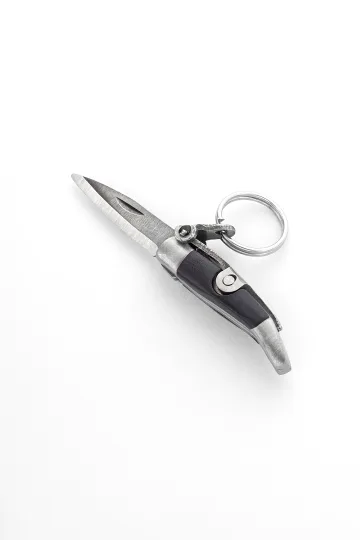
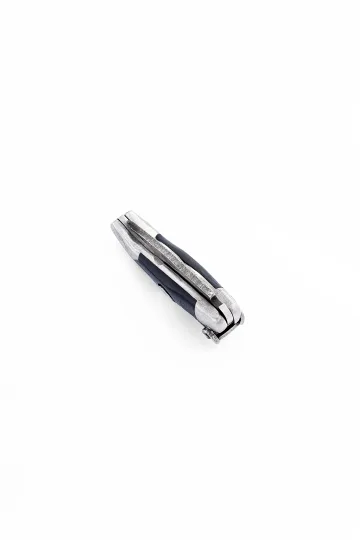
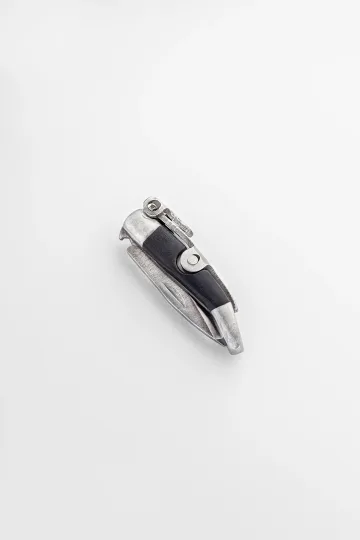
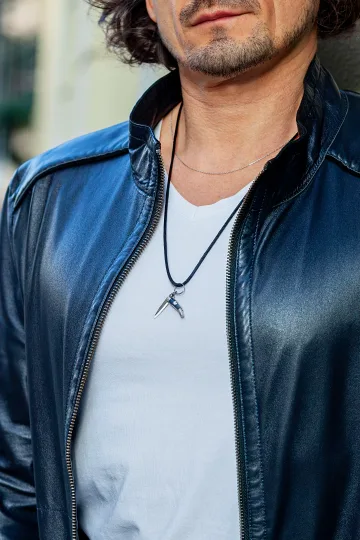
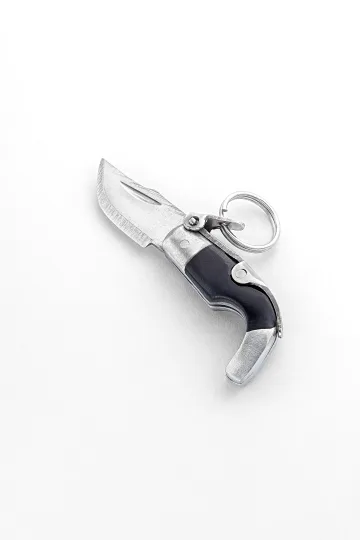
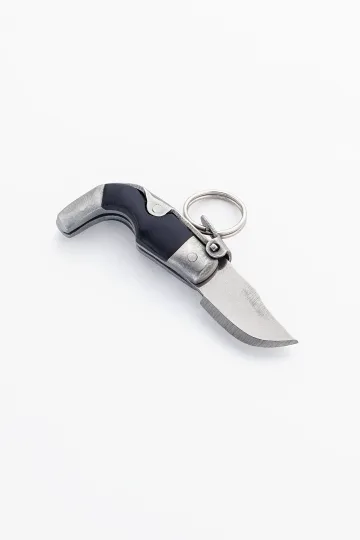
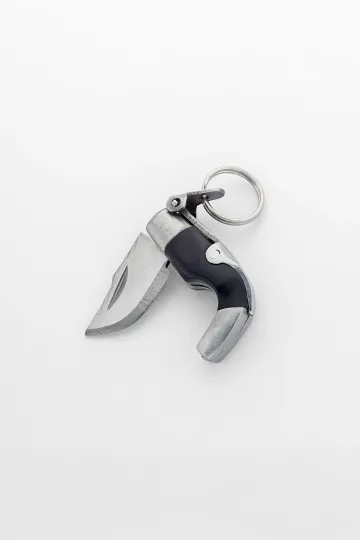
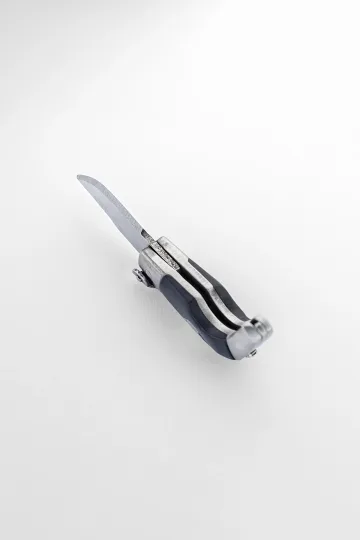
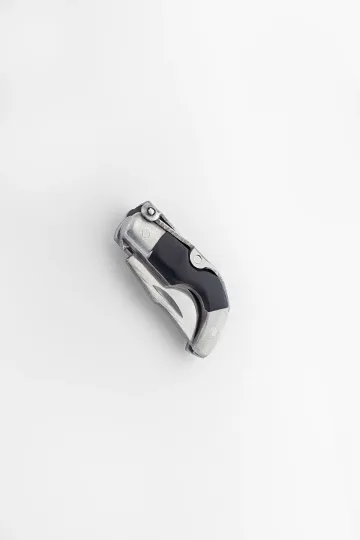
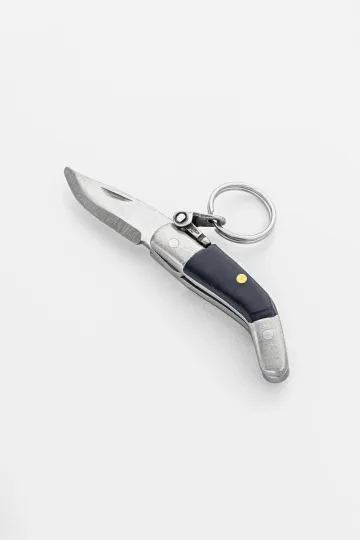
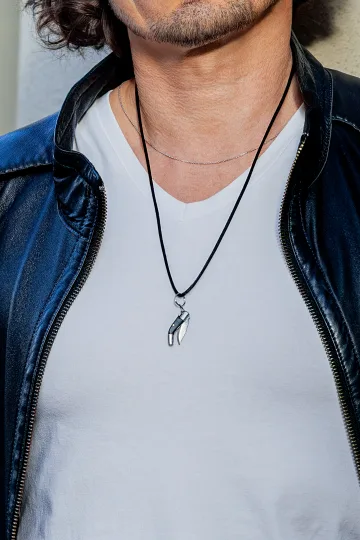
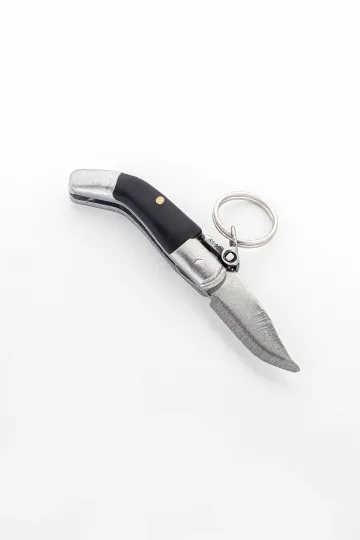
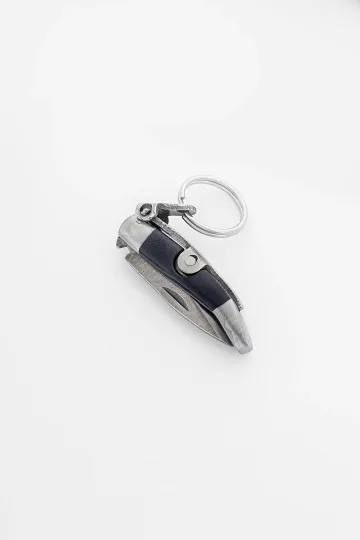
CAPAORA mini knife pendant
The 18th-century Spanish navaja in miniature: 40 mm of stainless steel, a real folding mechanism and a Palanquilla lock that clicks. An affordable gift to remember.
Authentic · Ships from Spain · 14-day returns
Berkana and Other Runes: What Is the Difference
More than one rune carries the theme of birth, growth and fertility in the Futhark, and they share the meanings out among themselves. Understanding the differences helps you choose "your own."
Berkana and Ingwaz: Birth and Seed
The main pair on the theme of fertility is Berkana and Ingwaz. Ingwaz, the rune of the god Ing-Freyr, is the seed, the potential, the hidden force that ripens within before it sprouts. Berkana is already the birth and the growth of what has ripened. Ingwaz is about conception and gestation, about the gathering of energy; Berkana is about coming into the world and the care of the newborn. Together they describe the full path: from seed (Ingwaz) to shoot and mother (Berkana).
Berkana and Laguz: The Feminine Water
The rune Laguz is water, flow, intuition, the unconscious. It too is counted among the feminine, "flowing" runes, and it stands in the third aett near Berkana. But Laguz is about the element of feeling and depth, about what flows and changes, while Berkana is about birth and growth in a dense, earthly sense. Laguz is the waters in which life ripens; Berkana is the bank on which it puts down roots.
Berkana and Algiz: Birth and Protection
The Algiz rune is protection, a charm, hands raised to the sky or the antlers of an elk. It is often set beside Berkana, because birth and protection go together: what has only just appeared must be kept safe. Algiz deflects the threat and sets a boundary; Berkana shelters and feeds from within. The pair Berkana plus Algiz is a classic charm for mother and child, where one rune gives life and the other guards it.
The Psychology of a Runic Amulet
You do not have to believe in the magic of runes for a Berkana pendant to "work." The mechanisms that make such an amulet useful are quite earthly and well described.
An anchor of transition. The birth of a child, a move, a new venture are moments when a whole life changes, and the mind needs something to lean on. An object tied to a transition helps you grasp and accept it. A rune of birth at the neck becomes a quiet marker of "a new chapter began here," and a glance at it returns the sense of meaning.
The confidence effect. Sports and cognitive psychology describe the "lucky object" effect: a person confident that a talisman is with them acts calmer and more collected. Anxiety drops, resilience rises. For a mother in the first months, full of tiredness and uncertainty, this anchor of calm works especially palpably.
Ritual and control. Putting on a sign on an important day is a small ritual, and rituals restore a sense of control where much is out of our hands. Childbirth and the first months with a child are full of the uncontrollable, and a protective gesture lowers the stress around what cannot be steered.
Identity and values. To wear a rune of birth is to state quietly (first of all to yourself) a new role and your priorities: family, growth, care, a beginning. Anchors of identity increase resilience to hardship, and in that sense an ancient sign works for a thoroughly modern person.
There is nothing supernatural in this. An amulet does not change reality; it changes the wearer's relationship to reality, and it does so in a measurable, useful way.
Berkana in Culture and Heritage
The birch and its sign have long moved beyond archaeology and live in language, rite and modern culture. Berkana's trace is the warmest of all: it hides in spring festivals and in the very image of the bright tree.
In language. English birch, German Birke, Norse björk and the Slavic bereza reach through a shared ancient root meaning "bright, white" toward the same concept that stands behind the rune. The name of the tree literally means "shining," and that whiteness of the bark is the original image of Berkana.
In rite. Birch branches and besoms across Northern and Eastern Europe are tied to renewal, purity and fertility. They decked homes for spring and early-summer festivals, swept the dwelling, "woke" the earth and the cattle to growth. The rites outlived the rune by centuries and kept its essence even without knowledge of the sign.
In modern symbolism. The revived interest in Northern antiquity has made the Futhark a recognisable visual language. Runes decorate books, games, music covers and craft goods. Berkana, as the sign of birth and feminine power, holds a special place in this set: it is often chosen precisely for its soft, maternal note rather than a warlike one.
One important caveat is worth keeping. In the 20th century some individual runic signs were used by political movements of grim repute, and a heavy context surrounds certain symbols. Berkana does not belong to that circle and remains a neutral sign of birth and growth, but a general awareness of what you wear and what you wear it beside is fitting here.
Facts About the Berkana Rune That Surprise You
The birch is a pioneer tree. In ecology the birch is called a pioneer species: it is first to settle empty, burned or stripped ground and prepares the soil for other trees. The rune of birth bears the name of the tree that literally begins the forest anew.
The rune's name means "shining." The word for birch and its relatives birch, Birke, björk go back to an ancient root meaning "bright, white." Behind the sign of Berkana stands a tree and, with it, an image of the whiteness and light of birch bark.
The Anglo-Saxon poem praises a birch that gives birth without seed. The old stanza notes that the birch puts out shoots "without seed," meaning suckers from the root. For a symbol of birth it is a perfect image: life that continues out of itself.
The shape of the rune was read as a woman's body. The two arcs of the sign ᛒ were long read as a woman's breasts or the outline of a pregnant belly. The sign of birth took the form of the body that gives birth.
Berkana opens the "human" aett. The third row of the Futhark turns toward the themes of kin and home: near Berkana stand the runes of the human being, family and inheritance. The alphabet reaches birth and the continuation of life in its final third.
Birch branches "woke" fertility. In the spring rites of the North, young birch branches touched people, cattle and fields, wishing growth and offspring. Berkana's tree was a living instrument of blessing.
The birch healed. Birch sap, bark and buds went into the folk remedies of the North, and a besom drove out sickness in the bathhouse. To the rune's theme of birth is added a note of healing and the recovery of strength.
The modern "maternal" reading is younger than it seems. The divinatory system with upright and reversed meanings of Berkana took shape mainly in the 19th and 20th centuries. The historical rune was the letter "b" and the name of the birch, not a card from a divination set.
Silver, gold, runic and Scandinavian symbolism, protective charms, paired sets.
Send a friend a discount code, they save on their first order.
Frequently Asked Questions About the Berkana Rune
What does the Berkana rune mean? Berkana is the eighteenth rune of the Elder Futhark, standing for the sound "b" and the name of the birch. In a broad sense it symbolises birth, motherhood, growth, renewal, the protection of what is growing and feminine power. The name goes back to Proto-Germanic berkanan, "birch," from an ancient root meaning "bright, white."
Is Berkana a feminine rune? Yes, it is traditionally counted among the feminine, maternal signs. It is tied to birth, midwives, the protection of mother and child, and to the image of the earth-mother and the goddesses of fertility. That said, anyone can wear it: as a sign of a beginning, of growth or of care for those close to you, it suits any person.
What does the Berkana rune look like? A vertical stave and two arcs reaching to the right on one side, one above the other. The sign resembles the Latin letter "B." In the tradition these two arcs were read as a woman's breasts or the silhouette of a pregnant figure.
What does reversed Berkana mean? In the divinatory tradition the reversed position is read as stalled growth, family troubles, anxiety around children and home, a beginning delayed. It is the flip side of the rune: upright is about birth and growth, reversed about growth that has stalled. The split into upright and reversed meanings appeared in modern practice.
Can you give Berkana for the birth of a child? Yes, it is one of the most fitting occasions. Berkana is directly tied to childbirth, motherhood and the protection of the infant, so a pendant with it becomes a warm, memorial gift for a young mother, a sign of the passage into a new role and a charm for the start of a new life.
How should the rune be positioned on a pendant? The arcs should face right and up, the stave vertical. A pendant needs a clear "top" so the sign does not end up reversed while worn. For the rune of birth an upright form matters, because a reversed one in the tradition reads as a stall.
Can you wear Berkana together with other runes and symbols? Yes, and it is common. Berkana pairs well with the protective rune Algiz (making the charm "birth under protection"), with the home rune Othala and with the wealth rune Fehu. The main thing is not to overload the look: one or two symbols read more strongly than a handful of pendants on one chain.
Do you have to believe in the magic of runes to wear Berkana? No. Many wear the rune for its meaning and history rather than for a "power of birth." The sign is interesting in itself: it is more than fifteen hundred years old and is bound to the language, rite and mythology of Northern Europe. Belief stays a private matter.
Runes, Scandinavian charms and symbolism in silver, gold and steel.
Buying it as a gift? Each one arrives ready to give.
 A branded Zevira box and a little card come with every order.




Conclusion
Berkana travelled from a sign for the birch, the bright pioneer tree, to a symbol of birth and feminine power on a silver chain. Over fifteen hundred years both the rites and the way to carry meaning changed, but the essence of the rune stayed the same: life begins anew, and its beginning must be kept safe.
The eighteenth rune of the ancient alphabet speaks of what matters most to a family: of birth, of the mother, of the shoot that breaks through where nothing grew. Whether you wear Berkana for its meaning, for the beauty of the Northern form or for a quiet reminder of the start of a new chapter, you carry with you one of the most human symbols in history: the sign of where everything begins.
Wear the symbol, don't just read about it. These are in stock:
About Zevira
Zevira makes jewellery in the artisan tradition of Albacete, Spain. Runic symbolism is one of the themes close to us: an ancient form, legible without words, equally at home on a rough leather cord and on a thin chain. We render Berkana with a checked orientation of the sign and crisp carving, in modern materials and proportions, so the rune of birth suits a young mother and someone beginning life anew alike.
What you can find with us on the theme of Northern symbols:
- Runic pendants in silver, gold and steel
- Scandinavian charms: protective runes, signs of kin, images of the mother goddesses
- Leather and rubber cords and chains of various lengths for a rune of any size
- Paired and set versions, including Berkana together with a rune of protection
- The option of personal engraving
Every piece can be personalised with engraving. Sterling silver 925 and 14-18K gold.