The Fehu Rune: Meaning of the Wealth and Abundance Symbol in the Elder Futhark
The old Germanic peoples counted their wealth in cattle, not coins. Fehu, the very first sign of the Elder Futhark, literally means "livestock." Three thousand years ago a herd was a walking bank account, the measure of a household and a bride's dowry. Fehu stamped its seal on that account.
That is where the paradox begins. A sign worn today as a symbol of money and success in business started out being about living animals: creatures you had to feed, guard and multiply. Wealth you could lose in a single bad winter. Fehu speaks not of gold locked in a chest but of movable property, a resource that works only when someone watches over it.
The rest follows in order: where the symbol came from, how it sounded and looked, what it meant to the Norse and the Anglo-Saxons, what a runic pendant is made of, how to wear it, how Fehu differs from other wealth runes, and why the first sign of an ancient alphabet survived a thousand years of neglect and returned as jewellery.
Why Wealth Meant Cattle
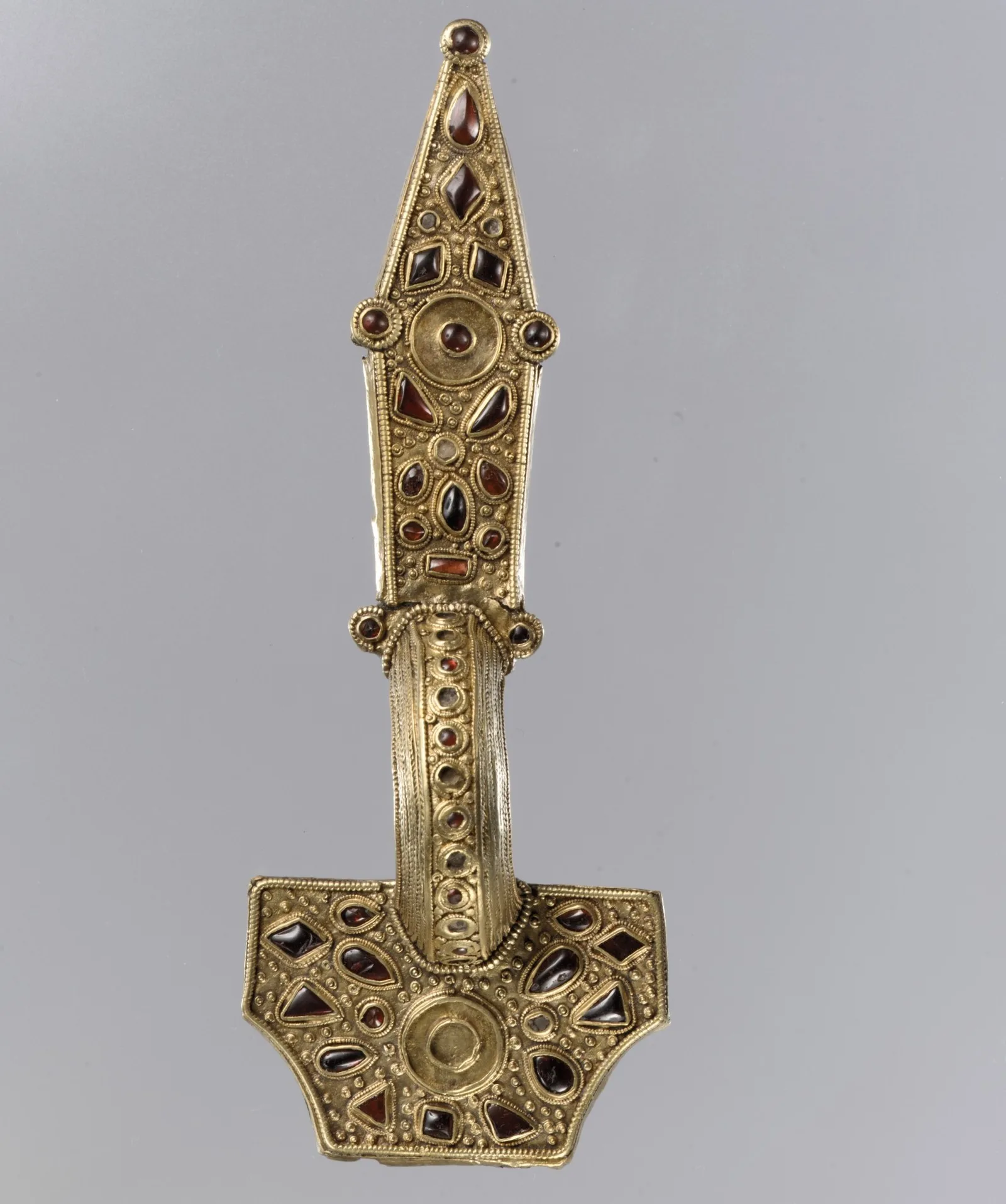
The word "fehu" goes back to Proto-Germanic fehu, meaning "cattle, domestic animals, movable property." The same root gave English fee (a payment or charge), German Vieh (livestock) and the Latin pecunia (money), which in turn comes from pecus, a herd. An ancient logic is baked into the language itself: money is what you can drive to market, sell, hand over as a dowry or carry off by force.
For a society with no banks and no paper money, cattle were the ideal form of capital. A cow gave milk and calves, which is to say it paid interest. An ox worked the field. A sheep gave wool every year. A rich man was one with many head of livestock, and that number was visible to every neighbour at a single glance over the fence.
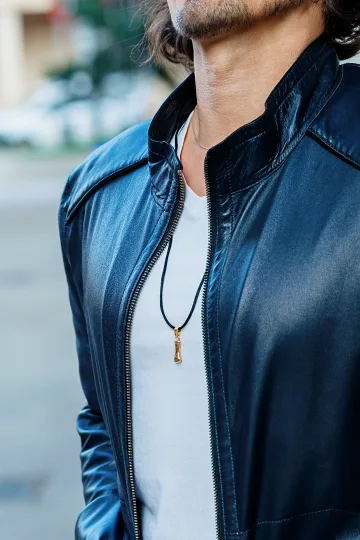
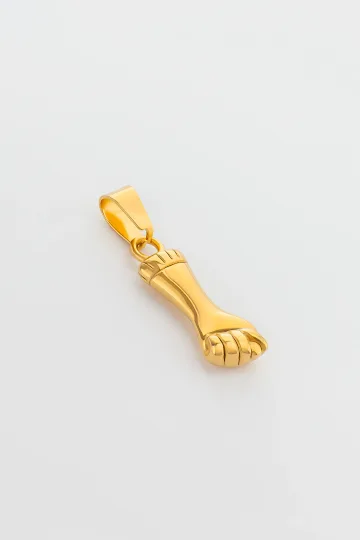
Wear the symbol, don't just read about it. These are in stock:


The Fehu rune took this idea and turned it into a sign. A simple vertical stave with two branches angled up and to the right recalls the horns of a bull or cow raised toward the sky. The form is legible, memorable, and it opens the whole twenty-four-sign alphabet for a reason: with wealth, with resource, with the thing that gives a family the means to carry on living.
Understanding Fehu means separating two layers. The first is practical: it was a letter for the sound "f," an ordinary unit of writing in the runic row. The second is symbolic: every rune carried a name and a meaning, and Fehu owned the theme of prosperity, growth and the circulation of resources. Both layers lived at once. A carver could cut Fehu simply as an "f" in someone's name and, in the very next breath inside a charm, as a sign of profit.
What the Fehu Rune Is
The Meaning of the Name and Its Sound
Fehu is the first rune of the Elder Futhark, the oldest runic alphabet of the Germanic peoples. It carried the sound "f" and opened the first of three "aettir," the groups of eight runes into which the row was divided. The name of the alphabet itself, Futhark, is built from the sounds of the first six runes: F, U, Th, A, R, K. So Fehu gave the alphabet not only its beginning but the first letter of its name.
The rune's name sounded a little different across the Germanic world. To the Norse it was fé (cattle, wealth), to the Anglo-Saxons feoh with the same meaning, and for the Goths scholars reconstruct faihu. Everywhere the root is the same, and everywhere it is about property you can count by the head.
What the Symbol Looks Like
Fehu's shape is simple and stable: a vertical stave and two short branches rising at a sharp angle, both on the same side. It resembles a tilted letter "Y" set against a pole, or two raised horns. In the classic version the branches point up and to the right.
One detail matters. Runes were carved, not written. The straight lines and the absence of horizontals are not a style but a demand of the material. Across wood and bone, along the grain, a horizontal cut is hard to make and tends to disappear. So the whole Futhark is built from verticals and diagonals, and Fehu is a model example of the economical, carvable form.
Variants Across the Futharks
The shape of Fehu is remarkably stable across time and geography, which is unusual for a written sign that was in use for well over a thousand years. In the Elder Futhark the stave is straight and both branches leave it at a sharp angle, often close to parallel. In the Younger Futhark, the reduced sixteen-rune row that the North moved to during the Viking age, the rune fe kept the same skeleton, though the branches were sometimes shortened and set lower down the stave. In the Anglo-Saxon futhorc the sign feoh barely changed at all, except that manuscript scribes drew it more evenly than stone carvers ever cut it.
The differences between the versions are differences of handwriting rather than of meaning. The angle of the branches, their length and how high they sit on the stave wandered from carver to carver and from material to material. On stone the lines are harder and straighter, on the thin metal of a bracteate lighter, in a manuscript rounder. One thing never varies: the branches are always on one side of the stave and always point upwards. A sign with the branches pointing down is not Fehu at all but a mirrored mistake, and it is worth checking before you commission an engraving.
Its Place in the Elder Futhark
The Elder Futhark was used roughly from the 2nd to the 8th century across Germanic Europe, from Scandinavia to the Black Sea. Twenty-four signs split into three rows of eight, each row named after its own first rune. Fehu opened the first aett, sometimes called "Freyr's aett" after the god of fertility and plenty.
Standing at the very head of the row gave Fehu special weight. In the runic poems that have come down to us, the reading of the alphabet always begins with it, and always with the theme of wealth. It is as if the ABCs opened not with a letter but with the concept of "capital."
Fehu and Cattle as a Measure of Wealth
Among the herding peoples of Northern Europe a herd was a universal currency. Fines for crimes under old laws were reckoned in cows and oxen. A bride's dowry was measured in head of livestock. Contracts were sealed by handing over animals. Wealth was living, breathing, in need of care, and that is the core difference between Fehu and abstract money.
The full depth of the rune grows from this. It is not about hoarded gold lying motionless. It is about property that breeds, feeds and works, yet can also be lost: cattle fall sick, die of famine, get raided. Fehu carries both a promise of profit and a reminder of responsibility.
Fehu in Counting, Law and Dowry
Before struck coinage reached the North, livestock served as the unit of value, and the law codes make that entirely explicit. The early Germanic codes set out compensation for injury and for killing in precise quantities of cattle or their equivalent. The Kentish laws of the early seventh century, the oldest surviving document written in English, price a lost ear, a broken arm and a killed freeman in shillings, and behind the shilling stood a fixed head count of cattle. A bride's dowry was reckoned in head. Contracts were sealed by handing an animal across.
English kept the word. Old English feoh meant both cattle and property in general, and it descends directly into the modern word "fee". Every solicitor's invoice in the country carries a word that used to mean a cow. The related Latin pecunia, money, comes from pecus, livestock, by exactly the same route, which shows how universal the equation was across the whole of Europe.
That earthiness matters for understanding the rune. Fehu is not about abstract good fortune. It is about property that can be counted, divided and exchanged. When modern practice attaches the sign to the idea of money moving, it is really returning the rune to its original job as a measure of value, only in a symbolic language rather than a legal one.
History: From the Proto-Germans to Today
Proto-Germanic Roots
Long before the first runic inscriptions, the Germanic tribes already had the word fehu and the concept behind it. The Indo-European root peku, meaning cattle and wealth, produced related words in Sanskrit (pashu, cattle), Latin (pecus) and the Germanic tongues. The idea "cattle equals prosperity" was shared across a vast circle of peoples long before writing.
When the Germanic peoples created or borrowed runic script in the first centuries of our era, they gave the first sign the name of a concept that already existed. The rune did not invent the link between wealth and cattle; it fixed it in letter form.
The Scandinavian Iron Age and the Viking Era
Runic writing flourished during the Iron Age and the Viking era, roughly from the 8th to the 11th century. Fehu was cut into weapons, jewellery, amulets, wood and stone. By that time the Elder Futhark in the north had already given way to the shorter Younger Futhark of sixteen signs, and Fehu survived there, its shape slightly altered but its name and meaning intact.
In Viking society wealth stayed tangible: silver by weight, arms heavy with ring-bracelets, herds on the farmsteads. The chieftain handing out rings to his war band is the archetype of the "ring-giver," and Fehu as a sign of value in circulation fit that culture perfectly. Wealth here was measured not by how much you had piled up but by how much you could give away.
The Anglo-Saxon Rune Poem
The fullest medieval commentary on Fehu survives in the Anglo-Saxon rune poem, written down in England probably in the 10th century. It opens with a stanza on the rune feoh and runs roughly like this: wealth is a comfort to every man, yet each must share it freely if he wishes to win glory before the Lord.
The stanza is strikingly double-edged. It grants that prosperity is pleasant and needed, then warns in the same breath: hoarding alone is dangerous, sharing is necessary. The Christian scribe added the reference to God, but the ethic of generosity itself is far older and reaches back into a pre-Christian belief that held wealth is dead and shared wealth works for the honour of a family.
The Norwegian and Icelandic Rune Poems
The Scandinavian rune poems, the Norwegian and the Icelandic, also open with Fehu and also eye wealth with a squint. The Norwegian stanza says wealth breeds strife among kinsmen and offers the image of a wolf living in the forest: a hint that plenty draws predators, both literal and human.
The Icelandic poem calls Fehu "the strife of kinsmen, the fire of the sea and the path of the serpent." "Fire of the sea" is a kenning, a poetic circumlocution for gold, and "path of the serpent" points to the dragons that guard hoards. The Northern tradition saw the dark side of wealth clearly: it sets families quarreling, lures greed and demands to be guarded, the way a dragon guards its gold.
Why All Three Poems Treat Wealth as a Danger
The three rune poems were written down in different countries and centuries apart: the Anglo-Saxon around the tenth, the Norwegian in the thirteenth, the Icelandic in the fifteenth. They still agree on Fehu to a degree that ought to be surprising. All three open the alphabet with wealth, and all three immediately add a qualification. The English one advises sharing it out. The Norwegian warns of strife among kin and puts a wolf in the forest. The Icelandic calls it the fire of the sea and the path of the serpent.
The agreement is not coincidence. Behind all three sits a common Germanic ethic in which wealth held back was considered dead and dangerous, while wealth distributed built honour and obligation. This was a gift economy before it was a cash one, and a lord who did not hand out arm-rings did not keep a following. The wolf in the Norwegian stanza is not decorative. Where goods accumulate, someone appears who wants to take them. The serpent and the dragon in the Icelandic poem say the same thing in the language of myth: gold attracts a guardian, and the guardian turns the owner into a recluse sitting on a hoard. The poems are not condemning prosperity. They are warning that it has to be handled well, which is a more useful thing for an amulet to say than a simple promise of money.
Fehu in Inscriptions: Stones, Bracteates and Amulets
Fehu stands first in almost every surviving record of the full runic row, because carvers frequently cut the entire alphabet as a model, a demonstration of skill, or a charm in its own right. The Kylver stone from Gotland, dated to around the year 400, carries the oldest known complete Elder Futhark, and Fehu opens it. The gold bracteate from Vadstena, a thin coin-shaped pendant of the sixth century, also carries the whole row beginning with the same rune.
A separate matter is the repetition of Fehu for effect. The stone from Gummarp in Blekinge bore a line saying that a chieftain set three staves, followed by three Fehu runes in a row, fff. The stone itself was destroyed in a fire in the eighteenth century, but the inscription survives in earlier drawings. The triple repetition is read as an intensifying formula in which the sound matters less than the accumulated sense of wealth and growth. Comparable groupings appear on other south Scandinavian stones.
Britain has its own runic monuments, and they are worth seeing if the subject interests you. The Franks Casket, a whalebone box of the eighth century carved with runic inscriptions and now in the British Museum, is the finest single object of Anglo-Saxon runic art. The Ruthwell Cross in Dumfriesshire carries lines of an Old English poem in runes cut into the stone. Neither is about Fehu specifically, but both show the script alive and in serious use on this side of the North Sea, which is easy to forget.
The Decline of Runic Writing
With the arrival of Christianity and the Latin alphabet, runes gradually left everyday use. In Scandinavia they held on longer, in places into the late Middle Ages, but as the main script they yielded to Latin letters. Fehu, along with the whole Futhark, passed from a living alphabet into the realm of antiquity, of inscriptions on stones and memory.
Even so, the runes never vanished completely. In rural Scandinavia runic calendars and household marks survived into the modern age, and the memory of the signs' meanings was preserved in folklore and scholarly works.
The Revival in the 20th Century
Fresh interest in the runes arrived with the 19th and 20th centuries and their fashion for Germanic antiquity, folklore and mysticism. Systems of runic divination appeared, books of interpretation, and jewellery in their wake. That is when Fehu firmly took on the role of "the rune of money and success in business" by which it is known today.
It is worth holding in mind that the modern divinatory reading is a reconstruction and a creative development, not a direct copy of what Iron Age people meant. Historical Fehu was a letter and a concept of cattle-wealth. Today's Fehu has also absorbed a layer of esotericism that grew over the last century and a half. Both layers are real; they simply belong to different eras.
Upload a photo of your pet, someone you love, or an object. We'll build a 3D model and hand-cast it in pewter.
The Meaning of the Fehu Rune: Wealth, Growth, Energy
Wealth and Movable Property
The first and chief meaning of Fehu is wealth in the form of movable property. Not land, not the inherited house (another rune, Othala, covers that), but exactly the kind of thing you can count, carry off and set into circulation. Cattle, silver, goods, money. Resource in motion.
In this sense Fehu stands for the ability to acquire and multiply rather than the mere fact of ownership. It is about active prosperity, about capital that works. That is why modern practice ties it to business success, launching a venture, an inflow of clients and money, and not to sitting passively on a chest.
Abundance and Fertility
Cattle are not only wealth; they are also increase. A herd grows on its own if it is cared for. Hence the second layer of Fehu's meaning: fertility, abundance, natural growth. As the rune of the first aett, "Freyr's aett," it is tied to the god of harvest and plenty, and so to the idea that life itself strives to multiply.
Abundance in Fehu's sense is not luxury on display but fullness: a full byre, a full barn, healthy offspring. Prosperity that feeds a family and gives it confidence in tomorrow. That is why a Fehu pendant is often chosen not for "money magic" but as a wish for fullness and growth in every undertaking.
Fire and Primal Energy
In the esoteric reading Fehu is often linked to primal fire, to the original creative energy. In Norse cosmology the world is born from the meeting of the ice of Niflheim and the fire of Muspelheim, and Fehu as the first rune is associated with that initial spark, the force that sets motion going.
The fire here is double-edged, like wealth itself. It warms and creates, and it burns if it slips out of control. So Fehu is understood as an energy that must be steered: aimed at a purpose, it brings profit; left unbridled, it breeds the greed and strife the rune poems warned about.
Fehu and the Vanir
The first aett of the Futhark is tied to the Vanir, gods of fertility and plenty, above all to Freyr and Freyja. Freyr answered for harvest, peace and prosperity, Freyja for love, gold and possession. Both figures are bound tightly to the idea of abundance, and Fehu, opening their aett, inherits that bond.
The link to Freyja is especially close: the myth of her golden tears, of the precious necklace Brisingamen, of gold as her element chimes with the rune of wealth. To wear Fehu is in part to reach toward that circle of images where gold, love and prosperity are woven into one.
Audhumla: The Cow at the Beginning of the World
The connection between Fehu and cattle reaches back to the very start of the Norse creation story. Out of the melting rime of Ginnungagap came the primeval cow Audhumla, and her milk fed the giant Ymir, from whose body the world was later made. Licking the salty blocks of ice, Audhumla freed Buri, the grandfather of Odin. So at the origin of everything in the Northern picture of the world stands a cow, the same animal whose name the first rune carries.
The sources draw no direct line from the myth to the rune, and it would be a stretch to claim one. What the coincidence does show is how deeply livestock sat in the thinking of these peoples. Cattle were at once the measure of wealth and the image of life itself, feeding and generating. Fehu inherits both roles at the same time, and that is a large part of why it feels warmer than a symbol of money has any right to feel.
Gullveig: The Gold That Would Not Burn
Norse myth also holds a darker image bound up with the theme of Fehu. The Poetic Edda mentions Gullveig, a name usually translated as the power of gold or the intoxication of gold. The Aesir pierced her with spears three times and burned her three times, and each time she was reborn. A good many scholars read the episode as a personification of gold and of greed: wealth that cannot be destroyed and that sows discord wherever it goes.
Gullveig is linked to the outbreak of the first war of the gods, between the Aesir and the Vanir. If that reading holds, then gold in the Northern myth was literally the cause of the conflict, which is exactly what the rune poems say when they call Fehu the strife of kinsmen. The same motif runs through the myth and through the interpretation of the rune: prosperity attracts conflict, and it needs handling with care.
Reversed Fehu
Divinatory practice also weighs the "reversed" position of the rune, when the sign falls upside down. Reversed Fehu is read as loss, failure in business, the loss of property, financial stagnation or a greed that blocks growth. It is the flip side of the same theme: if upright Fehu is about inflow and increase, the reversed rune is about outflow and loss.
There is no point looking for a historical basis here; the split into upright and reversed meanings is already a product of modern practice. Yet as a system of images it is coherent and keeps both sides of wealth in view, the two sides the old poems spoke of honestly.
Customer reviews
Zevira is a real jewellery shop. Genuine payments, deliveries and customer thank-yous.
🥰🥰🥰 gracias
Ok, ¡gracias! 🙂
Fehu in Divination: Positions and Combinations
Reading runes is a modern practice, assembled in the nineteenth and twentieth centuries out of scattered historical fragments and a good deal of invention. It has its own internal logic, and Fehu occupies a prominent place in it. What follows is how the rune is usually read, with the honest caveat that this is an interpretive system rather than a documented Iron Age magic.
Fehu in the positions of a spread
In the simple three-rune layout, where the positions stand for past, present and future, Fehu shifts its shade depending on where it lands. In the past it is read as an accumulated resource or an earlier success that has become the ground you stand on. In the present it means inflow, the start of something that pays, the moment when effort begins to return. In the future position it reads as a promise of sufficiency on the condition that the owner keeps putting something in.
In an advice position Fehu is interpreted almost identically by everybody: put the resource to work, do not sit on it as dead weight. That consistency is not accidental, because it is the same instruction all three rune poems give, arrived at by a completely different route.
Combining Fehu with other runes
The sense of a rune in a spread is refined by its neighbours. Fehu beside Uruz, the rune of raw force, is read as wealth won by hard work. Beside Wunjo it becomes prosperity that brings pleasure rather than anxiety. Paired with Othala it joins working capital to inherited holding, the image of a solid family household. If destructive Hagalaz falls alongside, or the rune itself lands reversed, the combination is read as a warning about risk of loss.
None of these are fixed formulas. They are the habit of reading runes in relation to each other rather than one at a time, which is the only part of the practice that has any real depth to it.
The triple Fehu and bindrunes
The threefold writing of Fehu, fff, is known from ancient Scandinavian stones and has carried over into modern practice as an intensifying formula for abundance. The other technique is the bindrune, in which several runes are joined into a single sign sharing one stave. Fehu is often used as the base of a money bindrune, with runes of intention added to it: Uruz for strength, Sowilo for success, Othala for stability.
The historical footing here is mixed, and it is worth being straight about which half is which. Bindrunes on stones are entirely real and well attested. The specific money combinations circulating today are the work of modern schools rather than an inheritance from antiquity. That does not make them useless as a way of assembling an intention into one engraved sign, but it does mean nobody should sell you one as ancient.



What Fehu Jewellery Is Made Of
The material of a runic pendant carries its own meaning and changes both the look and the character of the piece. Here are the main options and what is worth knowing about each.
Gold
The most obvious choice for the rune of wealth. Gold is itself a symbol of prosperity, and in Northern poetry it is a circumlocution outright, "fire of the sea," "Freyja's tears." A gold Fehu amplifies the theme of abundance and reads as festive. Most often 14 or 18 karat is used; both hold the crisp carving of the sign and are unafraid of daily wear.
The gold version works well as a gift for a meaningful occasion: launching a business, a large goal, an anniversary. The warm sheen of the metal chimes with the very idea of the rune, so form and content line up.
Silver
Silver was the Vikings' main measure of wealth, far more common in trade than gold. Hoards from the era are packed with silver coins, ingots and broken pieces of jewelry weighed out at settlement. So sterling silver 925 is historically almost the more "correct" material for Fehu than gold.
A silver rune looks restrained and severe, pairs well with a leather cord and the rough texture close to Scandinavian aesthetics. It is a universal everyday option, sturdy and undemanding in care.
Bronze and Brass
Bronze gives a warm, slightly archaic tone close to ancient finds, and so it is loved for its "museum" look. Brass is cheaper and brighter, nearer to gold in colour. Both alloys render the relief of the carving well, and over time they take on a patina that many find noble and fitting for an ancient symbol.
Copper alloys have one drawback: they can leave a dark or greenish mark on the skin. The cause is a reaction of copper with sweat and cosmetics, and it is not a defect. It is worth reading separately about why skin turns green from jewellery and how to avoid it.
Wood and Bone
The most authentic option from a craft point of view: wood and bone are exactly what runes were originally carved into. A wooden or bone Fehu, cut by hand, is closest to the historical spirit of the sign. Such pendants are light, warm to the touch, and each has its own unique grain pattern.
The price of authenticity is fragility and fussiness. Wood fears moisture, bone is sensitive to changes in conditions, and both materials call for careful handling. This kind of amulet is more often chosen as a ritual or collector's piece than for daily wear.
Stainless Steel
The pragmatic modern choice. Steel 316L does not darken, does not fear water or sweat, leaves no mark on the skin and holds the crisp carving of the sign for years. Here the symbolism lives entirely in the form, not in the rarity of the material.
A steel Fehu suits anyone who wears jewellery constantly and does not want to think about upkeep. It fits an everyday, sporty or streetwear look and easily survives what coral or wood would never forgive.

Turn on your camera, pick earrings, a pendant or a ring, and see the piece on yourself in real time.
Switch items in one tap.
Everything runs in your browser: no photo or video is ever uploaded.
How to Wear the Fehu Rune
At the Neck as a Pendant
The most common way to wear the rune is as a pendant at the neck, close to the body. Here both the chain length and the way the sign sits in the neckline matter. A short chain (40-45 cm) holds the rune high, on show, near the collarbones. A medium one (50-55 cm) brings it onto the chest, where the symbol reads large. A long one (60-70 cm) tucks the amulet under clothing, closer to the heart.
By a view common in practice, a protective rune is worn so that the sign is oriented correctly toward its owner, so it "reads" for the wearer rather than for the person facing them. There is no strict historical rule here, but many value the sense that the symbol is turned toward them. A separate guide to choosing chain length can help you settle on the right one.
On a Ring and a Bracelet
Fehu sits well in a ring and in a bracelet too. Engraving the rune on a flat signet ring or on the plate of a bracelet looks spare and does not catch the eye, which appeals to those who wear the symbol "for themselves." A bracelet with a rune echoes the Scandinavian arm-rings by which wealth was measured, so the link to the theme of prosperity is direct.
A ring with a single rune has the advantage that the sign is always before your eyes, on the hand, and easily becomes a personal anchor, a reminder of the goal or the venture it was put on for.
Direction and Correct Form
When choosing a piece it is worth checking that the rune is carved correctly: a vertical stave and both branches on one side, pointing up. A reversed or mirrored sign in the divinatory tradition reads as loss rather than gain, so a workshop should orient Fehu vertically and "branches up."
This is not a superstitious quibble but a matter of meaning. If you are taking a rune for its meaning, it is logical for that meaning to be upright. With a good maker the orientation of the sign is checked, and a pendant has a clear "top."
What to Pair It With
Fehu is spare and gets along with almost any style. It looks good on a rough leather or rubber cord in the Scandinavian key, on a thin chain in a minimalist look, and paired with other Northern symbols. Fitting neighbors include the Valknut, the Algiz rune as a sign of protection, and a pendant with the image of Odin.
The one thing worth avoiding is clutter. A single rune on a clean cord reads more strongly than one hemmed in among five pendants. If you want layers, give Fehu its own length of chain so the sign does not get lost.
Who Fehu Suits and Who It Is Given To
Fehu is not tied to gender, age or profession, but it has themes it is especially in tune with. It is the rune of a venture's start, of growth and the circulation of resources, so it is most often chosen and given in connection with money, work and ambition.
People take it:
- For those launching their own business. The symbol of a start, of inflow and increase, fits an entrepreneurial mindset more precisely than most.
- For those setting a large money goal. The rune works as a visual anchor of intent, a reminder of what the work is for.
- As a gift for a housewarming, a promotion, an anniversary. A wish of prosperity and growth in tangible form.
- For lovers of Northern culture and the runic tradition. Fehu is the logical first rune for anyone collecting the symbolism of the Futhark.
- For skeptics who care about meaning, not magic. The history of the sign is interesting in itself, and belief in a "money power" stays a private matter.
As a gift Fehu is convenient because its meaning reads at once and sounds well-wishing: a wish of prosperity and growth. A jewellery gift guide by occasion can help you pick the right version.
Leave your email, we'll send your discount code. No spam, unsubscribe anytime.
The code arrives by email, valid on your first order.
How to Choose Fehu Jewellery
Correct Form and Orientation
The first thing people look at is the accuracy of the sign. The stave is vertical, two branches rise on one side at a sharp angle. A pendant should have a clear "top" so the rune does not end up reversed while worn. A mirrored or upside-down form is undesirable for the rune of wealth.
Checking is simple: lift the pendant by its loop in its natural position and make sure the branches point up. If a workshop made the sign legible and stable, that is a good mark of attention to meaning, not only to form.
Craft Versus Stamping
Mass stamping gives an even but faceless sign, often with a blurred relief. Hand carving or quality casting hold crisp edges, and the rune looks alive. For a symbol whose whole force is in its form, crisp lines are not a quibble but the essence.
If you want a piece with character, look for versions with hand finishing, a light asymmetry to the carving, an honest metal texture. Such pendants are closer to the spirit of runic craft, where each sign was carved separately.
Size and Proportion
For an everyday pendant a size of 2-4 centimetres is comfortable. Under two the sign gets lost on the chest; over four it starts to look massive. For a masculine look and a broad neck people take it nearer the upper edge, for a slender build nearer the lower. A ring and a bracelet call for finer, neater engraving, or the rune looks crude.
How Not to Confuse Fehu with Similar Runes
Beginners occasionally mix Fehu up with a few of its neighbours in the alphabet, all of which have branches on a stave. Ansuz, the rune of the god and of speech, has its branches pointing downwards rather than up, so it reads as an upside-down Fehu and is very easy to get wrong on a small pendant. Laguz, the rune of water, has one branch only, short and near the top. Wunjo has a closed triangular flag at the head of the stave instead of two separate branches.
To avoid a mistake when buying or commissioning an engraving, hold the formula in mind: a straight stave, exactly two branches, both on the same side, both angled upwards. As soon as there are more than two branches, or they point down, or they close into a loop, you are looking at a different rune. It is worth checking the product photograph against that description rather than trusting the listing text, because reversed and mirrored runes turn up in mass-produced jewellery with some regularity.
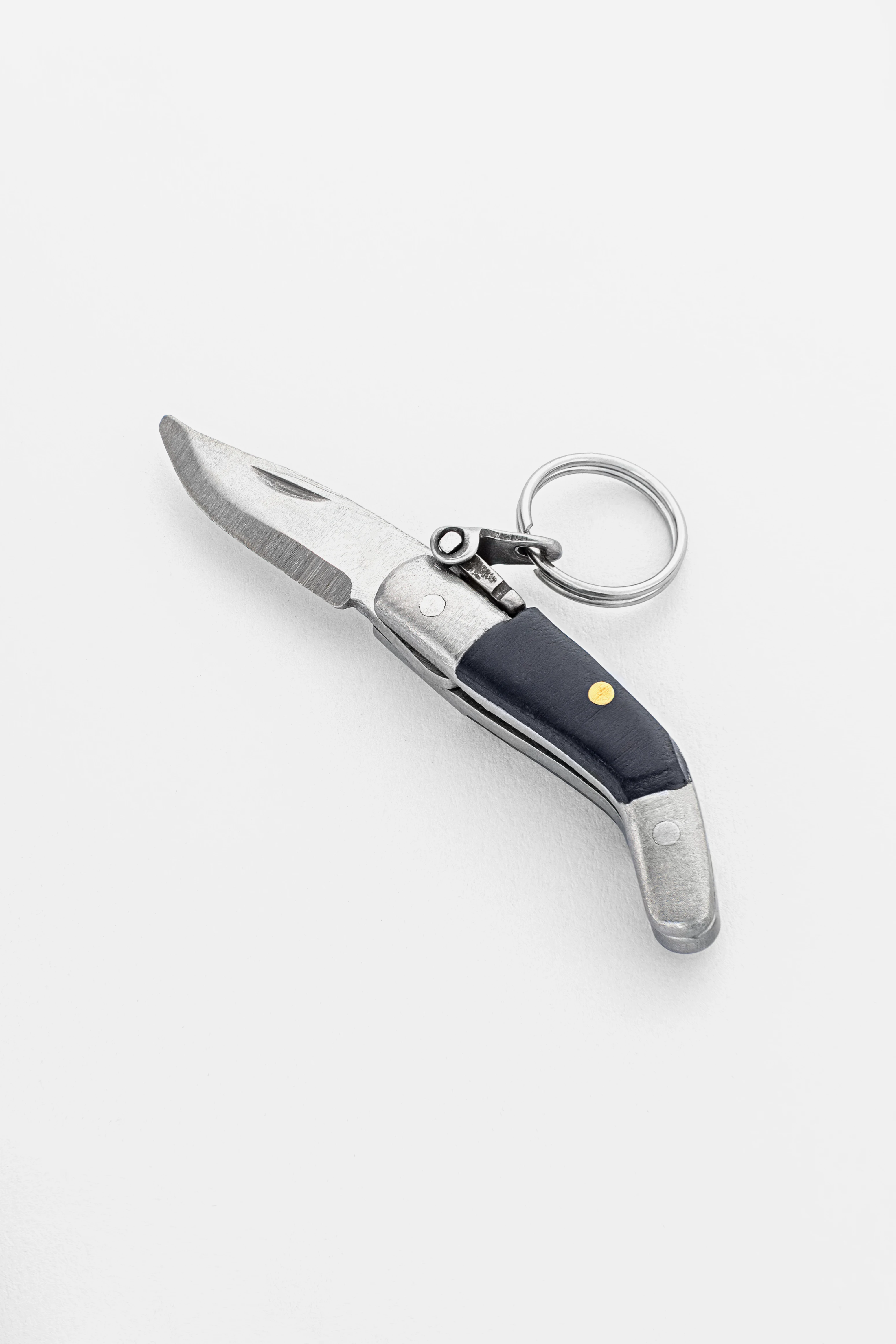
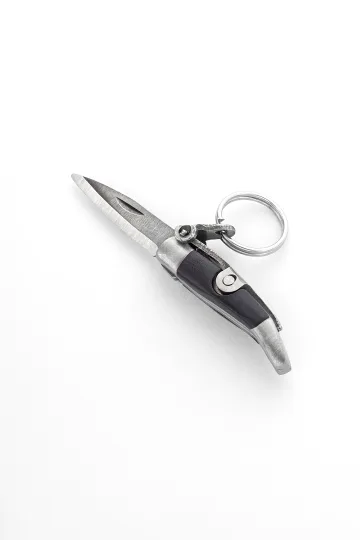
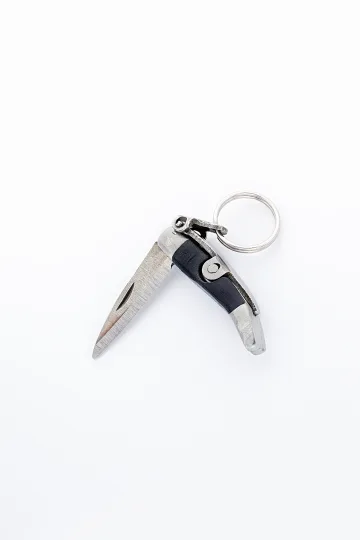
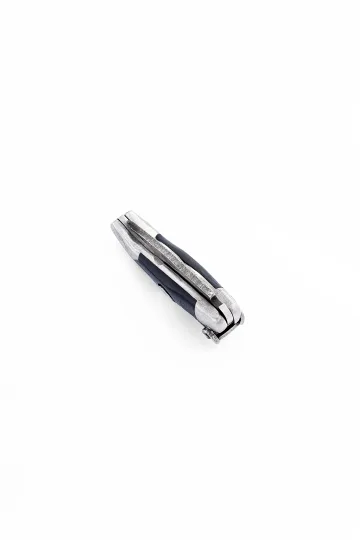
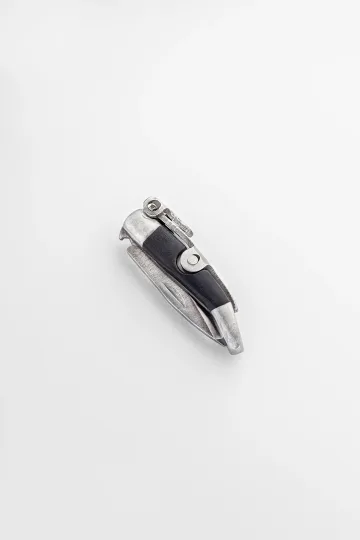
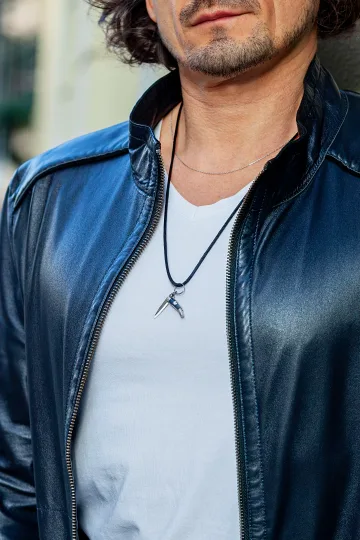
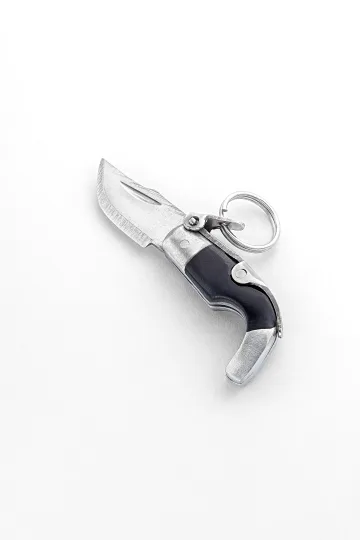
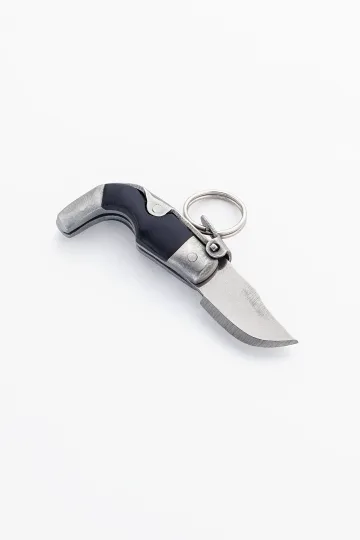
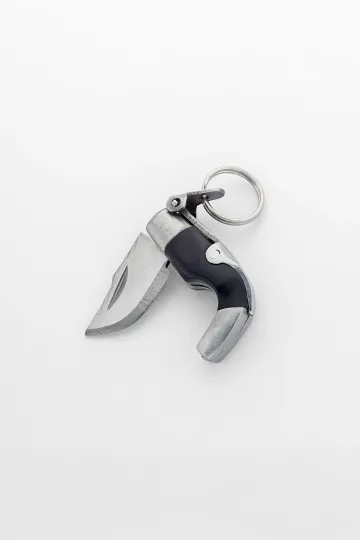
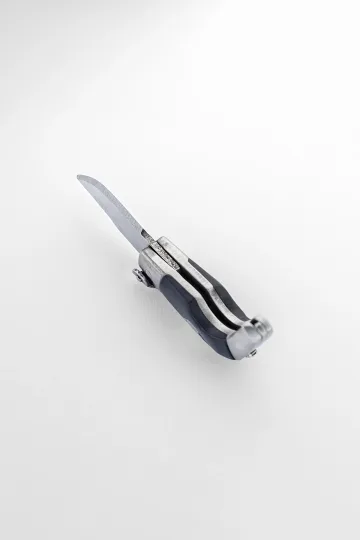
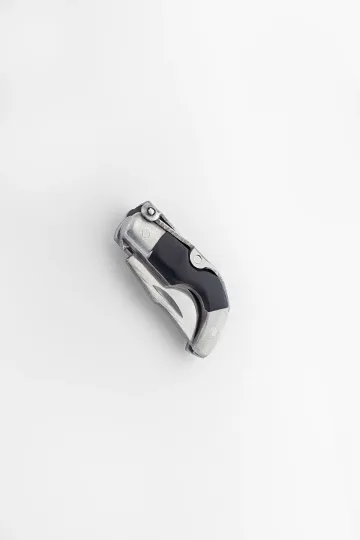
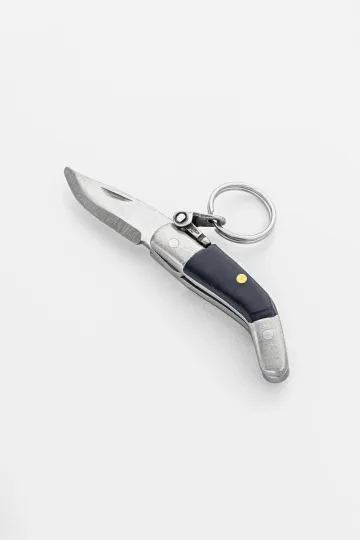
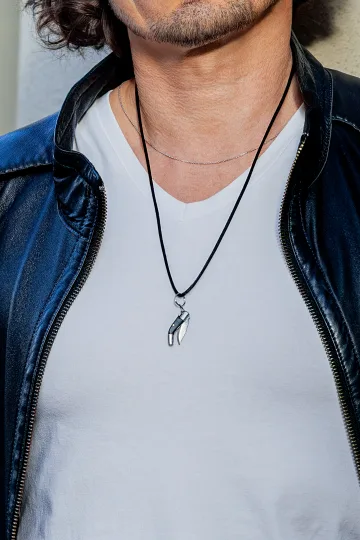
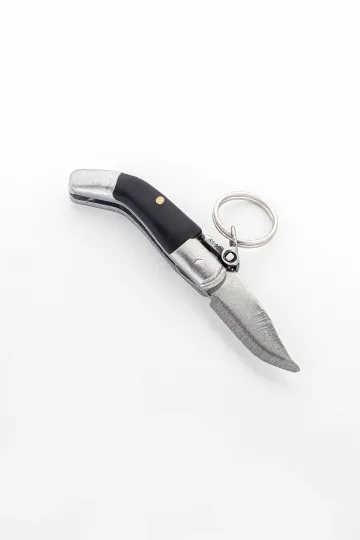
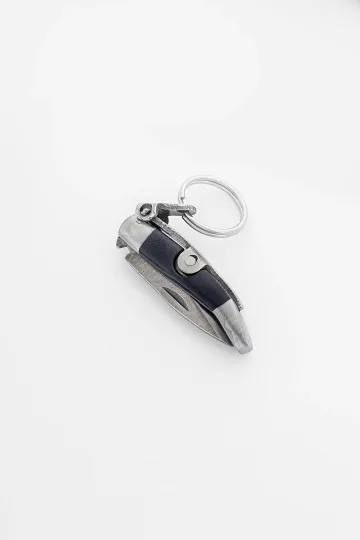
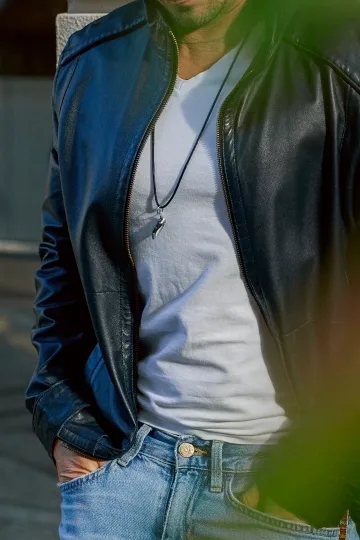
CAPAORA mini knife pendant
The 18th-century Spanish navaja in miniature: 40 mm of stainless steel, a real folding mechanism and a Palanquilla lock that clicks. An affordable gift to remember.
Authentic · Ships from Spain · 14-day returns
Fehu and Other Wealth Runes: What Is the Difference
More than one rune reflects wealth and prosperity in the Futhark; several do, and they share the meanings out among themselves. Understanding the differences helps you choose "your own."
Fehu and Othala: Movable Versus Inherited
The main pair is Fehu and Othala. Both are about property, but of opposite kinds. Fehu is movable wealth: cattle, silver, money in circulation, the thing that comes and goes. Othala is inherited holding: ancestral land, the house, what passes from generation to generation and is not sold.
The pair frames the Elder Futhark beautifully: Fehu opens the row, Othala (in the later version) closes it. From working capital to rooted inheritance, from profit to roots. If Fehu is about what you earn, Othala is about what you receive from ancestors and leave to descendants.
Fehu and Jera: Labour and Harvest
The rune Jera answers for the yearly cycle, the harvest and the reward for labour. It is about patience and timing: you sow, you wait, you reap. Fehu is nearer the result and the turnover, Jera nearer the process and the cycle. Together they describe the full path of prosperity: labour in season (Jera) yields fruit that becomes movable wealth (Fehu).
Fehu and Wunjo: Prosperity and Joy
The rune Wunjo is joy, harmony, contentment. If Fehu is about material inflow, Wunjo is about the inner sense of well-being. They are often set side by side, because prosperity without joy is empty and joy without a foundation is unsteady. Fehu gives the resource, Wunjo gives the ability to enjoy it.
Fehu and Uruz: Tame Cattle and Wild
The second rune of the Futhark, Uruz, stands immediately after Fehu and forms an expressive pair with it. Fehu is domestic livestock, wealth under supervision, a resource that a person feeds and counts. Uruz is the aurochs, the wild ox, the enormous and untameable ancestor of the domestic cow, hunted out of existence in Europe by the seventeenth century. The same root of life in two states, tamed and free.
The meanings follow from that. Fehu is about sufficiency, circulation, accumulation and generosity. Uruz is about raw strength, health, will and the ability to force a way through. The old alphabet opening with this pair is unlikely to be accidental: first the wealth you hold, then the wild power you have yet to master. Choosing between the two runes usually comes down to which is closer to your temperament, increasing what exists or breaking new ground. Both are legitimate answers, and people quite often own one of each at different stages of a life.
Once you have sorted through these differences, it is easier not to confuse the "money" runes and to choose a sign for a specific intent rather than by the broad theme of wealth.
The Psychology of a Runic Amulet
You do not have to believe in the magic of runes for a Fehu pendant to "work." The mechanisms that make such an amulet useful are quite earthly and well described.
An anchor of intent. When a person ties an object to a concrete goal, a glance at that object returns the mind to the goal. A rune of wealth at the neck becomes a quiet daily reminder of the venture it was put on for. It works as a visual bookmark for attention, without any mysticism.
The confidence effect. Sports and cognitive psychology describe the "lucky object" effect: a person confident that a talisman is with them acts calmer and more collected. Anxiety drops, focus rises. For many, Fehu does exactly this in business and negotiation.
Ritual and control. Putting on a sign before an important day is a small ritual, and rituals restore a sense of control where much is out of our hands. It does not replace real work, but it lowers the stress around it.
Identity and values. To wear a rune of prosperity is to state quietly (first of all to yourself) your priorities: growth, work, self-reliance. Anchors of identity increase resilience to hardship, and in that sense an ancient sign works for a thoroughly modern person.
There is nothing supernatural in this. An amulet does not change reality; it changes the wearer's relationship to reality, and it does so in a measurable, useful way.
Fehu in Culture and Heritage
Runes have long moved beyond archaeology and live in language, folklore and modern culture. Fehu's trace is at once the most invisible and the deepest: it hides inside words.
In language. English fee, German Vieh, Norse fé, Latin pecuniary (relating to money) all reach through a shared root toward the same "cattle-wealth" concept that stands behind the rune. Every time we speak of a fee or a payment, we repeat, without knowing it, the ancient logic of Fehu.
In runic inscriptions. Fehu appears on a host of archaeological finds: amulets, bracteates, weapons, stones. Sometimes as an ordinary letter in a name, sometimes, in scholars' view, as a charm-sign for luck and plenty. Researchers will argue for a long time over where it is a letter and where it is magic, but the very presence of the rune on costly objects speaks to its bond with value and status.
In modern symbolism. The revived interest in Northern antiquity has made the Futhark a recognisable visual language. Runes decorate books, games, music covers and craft goods. Fehu, as the first sign of the row and a handy symbol of prosperity, holds a firm place in this set.
One important caveat is worth keeping. In the 20th century some individual runic signs were used by political movements of grim repute, and a heavy context surrounds certain symbols. Fehu does not belong to that circle and remains a neutral sign of wealth, but a general awareness of what you wear and what you wear it beside is fitting here.
Send a friend a discount code, they save on their first order.
Facts About the Fehu Rune That Surprise You
The word "fee" and the word "cattle" are relatives. English fee (a payment) and German Vieh (livestock) go back to the same root as the rune's name. The concept "wealth equals movable property" has been stitched into European languages for thousands of years.
Fehu gave its name to the whole alphabet. The name "Futhark" is made from the sounds of the first six runes, and Fehu stands first. The first letter of the alphabet's name is its sound "f."
The old poems warned about wealth rather than praising it. The Norwegian rune poem directly links Fehu with strife among kinsmen, and the Icelandic one calls it "the fire of the sea and the path of the serpent," hinting at gold that guards itself like a dragon. The Northern tradition saw danger in prosperity as much as blessing.
Viking wealth was silver, not gold. Hoards from the era are packed with silver by weight: coins, ingots, broken pieces of jewellery. A silver Fehu is historically even more fitting than a gold one.
Fehu and Othala frame the whole Futhark. The rune of movable wealth opens the row, and the rune of inherited holding closes it. The ancient alphabet begins with profit and ends with roots.
Fines and dowries were counted in cows. Under early Germanic laws the price of a crime and the size of a dowry were measured in head of cattle. Fehu was, in the literal sense, a unit of legal and family accounting.
Runes were carved, not written. The absence of horizontal lines in Fehu and across the Futhark is not aesthetics but a demand of wood and bone: along the grain a horizontal is almost impossible to cut.
The modern "money" reading is younger than it seems. The divinatory system with upright and reversed meanings of Fehu took shape mainly in the 19th and 20th centuries. The historical rune was a letter and a concept, not a card from a divination set.
Silver, gold, runic and Scandinavian symbolism, protective charms, paired sets.
Frequently Asked Questions About the Fehu Rune
What does the Fehu rune mean? Fehu is the first rune of the Elder Futhark, standing for the sound "f" and the concept of wealth in the form of cattle and movable property. In a broad sense it symbolises prosperity, abundance, growth, an inflow of resources and business success. The name goes back to Proto-Germanic fehu, "cattle, wealth."
Is Fehu the rune of money? In modern practice, yes; it is read as the rune of wealth, an inflow of funds and success in business. But historically it was about not abstract money but movable property, above all cattle and silver. Fehu is about capital in circulation, not a hoarded treasure lying still.
What does the Fehu rune look like? A vertical stave with two short branches rising at a sharp angle on one side. The form recalls a tilted "Y" on a pole or two raised horns. There are no horizontal lines in the sign, as across the whole Futhark.
What does reversed Fehu mean? In the divinatory tradition the reversed position is read as loss, financial stagnation, failure in business or a greed that blocks growth. It is the flip side of the rune: upright is about inflow, reversed about outflow. The split into upright and reversed meanings appeared in modern practice.
Can you wear the Fehu rune every day? Yes. For daily wear silver and stainless steel are convenient: they are sturdy, undemanding in care and do not darken. Gold suits too. Wood and bone are authentic but fragile and call for careful handling; they are more often chosen as a ritual or collector's version.
How should the rune be positioned on a pendant? The branches should point up, the stave vertical. A pendant needs a clear "top" so the sign does not end up reversed while worn. For the rune of wealth an upright form matters, because a reversed one in the tradition reads as loss.
Can you wear Fehu together with other runes and symbols? Yes, and it is common. Fehu pairs well with the protective rune Algiz, with the Valknut and other Northern signs. The main thing is not to overload the look: one or two symbols read more strongly than a handful of pendants on one chain.
Do you have to believe in the magic of runes to wear Fehu? No. Many wear the rune for its meaning and history rather than for a "money power." The sign is interesting in itself: it is more than fifteen hundred years old and is bound to the language, culture and mythology of Northern Europe. Belief stays a private matter.
Runes, Scandinavian charms and symbolism in silver, gold and steel.
Buying it as a gift? Each one arrives ready to give.
 A branded Zevira box and a little card come with every order.




Conclusion
Fehu travelled from a sign for a herd of cows to a symbol of business success on a silver chain. Over fifteen hundred years both the form of prosperity and the way to keep it changed, but the essence of the rune stayed the same: wealth is a resource in motion, and it comes to the one who knows how to multiply it and is not afraid to share.
The first rune of the ancient alphabet tells both truths at once, honestly. Prosperity gives freedom and fullness, and it also demands responsibility, draws envy and sets kin quarreling if you hoard it alone. Whether you wear Fehu for its meaning, for the beauty of the Northern form or for a quiet reminder of a goal, you carry with you one of the most human symbols in history: the sign of what people work for, and of what is worth sharing.
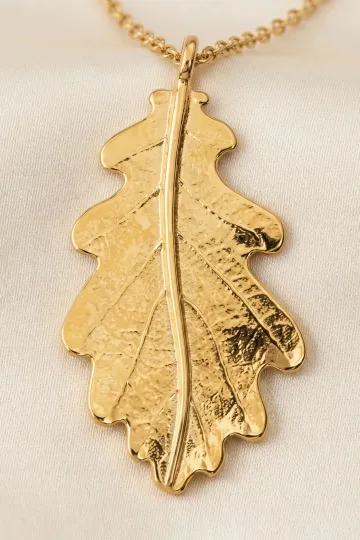
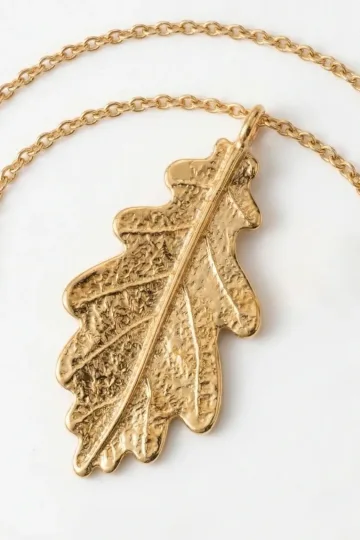
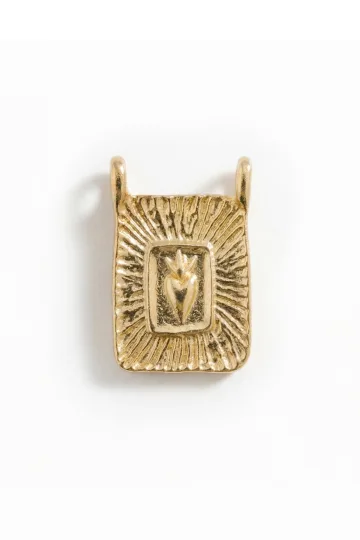
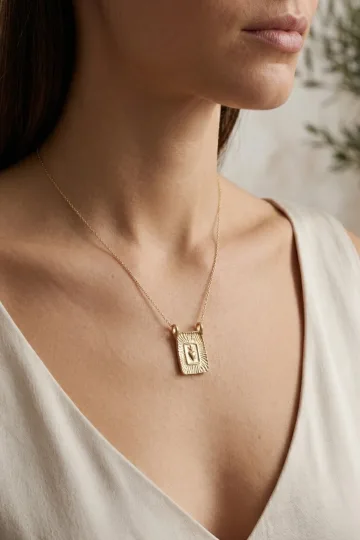
Wear the symbol, don't just read about it. These are in stock:
About Zevira
Zevira makes jewellery in the artisan tradition of Albacete, Spain. Runic symbolism is one of the themes close to us: an ancient form, legible without words, equally at home on a rough leather cord and on a thin chain. We render Fehu with a checked orientation of the sign and crisp carving, in modern materials and proportions.
What you can find with us on the theme of Northern symbols:
- Runic pendants in silver, gold and steel
- Scandinavian charms: the Valknut, protective runes, images of the gods
- Leather and rubber cords and chains of various lengths for a rune of any size
- Paired and set versions for those who collect the symbolism of the Futhark
- The option of personal engraving
Every piece can be personalised with engraving. Sterling silver 925 and 14-18K gold.