The Gebo Rune: Meaning of the Gift, Union and Balance Symbol in the Elder Futhark
The old Norse had no free gifts. A gift always created a debt: to accept it was to owe a return. Gebo, the seventh sign of the Elder Futhark, literally means "gift." Its form, a simple X-shaped cross, still stands at the end of letters in place of a kiss, and once served as a signature under an oath.
That is where the paradox begins. A sign we read today as a sweet symbol of generosity and love grew out of a hard economy of mutual obligation. Among the Germanic peoples a gift bound two people tighter than any contract: it created responsibility, trust and an alliance you could not leave without loss of honour. Gebo is not about "give and forget," but about a bond that works both ways.
The rest follows in order: where the symbol came from, how it sounded and looked, what it meant to the Norse and the Anglo-Saxons, why it cannot be reversed, what a runic pendant is made of, how it is worn as a pair and alone, how Gebo differs from other runes of union, and why the little cross X became one of the most human signs in history.
Why a Gift Always Demanded a Return
The word "gebo" goes back to Proto-Germanic gebō, "gift, giving." The same root gave English give and gift, Old Norse gjǫf, Gothic giba and German geben (to give). An ancient logic is baked into the language: a gift is an action, not an object, the movement of value from one person to another that always comes back.
For a society with no money, banks or written contracts, the gift was the main tool of connection. Gifts sealed peace between families, bound a marriage, bought the loyalty of a war band, and honoured the gods. To accept a gift was to accept an obligation. To refuse one was to reject the friendship itself. Exchanging gifts was not a gesture of courtesy but a load-bearing wall of northern social life.
Wear the symbol, don't just read about it. These are in stock:




The Gebo rune reduced this idea to the simplest possible form. Two lines cross each other and meet at a single point, the way two hands meet in a clasp or two roads converge. The sign is balanced: neither line dominates the other, neither end is heavier. In that symmetry lies the meaning of the rune, the gift as an equal exchange between equals.
Understanding Gebo means separating two layers. The first is practical: it was a letter for the sound "g," an ordinary unit of writing in the runic row. The second is symbolic: every rune carried a name and a meaning, and Gebo owned the theme of gift, union, hospitality and reciprocity. Both layers lived at once. A carver could cut Gebo simply as a "g" in someone's name and, in the next breath inside a charm, as a sign of an unbreakable bond or a blessing.
What the Gebo Rune Is
The Meaning of the Name and Its Sound
Gebo is the seventh rune of the Elder Futhark, the oldest runic alphabet of the Germanic peoples. It carried the sound "g" and stood in the first of three "aettir," the groups of eight runes into which the row was divided. Within that row Gebo holds the next-to-last, seventh place, followed at once by Wunjo, the rune of joy. Gift, then joy: a telling order.
The name of the rune sounded a little different across the Germanic world. The Goths give us giba, the Anglo-Saxons gyfu or giefu, the Norse gjǫf, and everywhere the root is one, and everywhere it is about giving. The modern words "give" and "gift" in English, "geben" and "Gabe" in German, descend from the same root. The gift proved so basic a concept that it survived millennia in living speech.
What the Symbol Looks Like
The shape of Gebo is as plain as it gets: two straight lines crossed at an angle, an even cross like the Latin letter X. Both strokes are of equal length, the meeting point exactly in the middle. The sign has no top and bottom, no left and right: turn it any way you like and it stays itself. This full symmetry makes Gebo one of the most recognisable and stable runes of the row.
An important detail: runes were carved, not written. The absence of a horizontal or vertical "stave" in Gebo fits the general logic of the Futhark. Wood and bone are easiest to cut on the diagonal, along and across the grain, and two crossed diagonals give a clean, deep, easily read sign. Gebo is a model of the spare, perfectly "carvable" form.
Its Place in the Elder Futhark
The Elder Futhark was in use from roughly the second to the eighth century across Germanic Europe, from Scandinavia to the Black Sea. Its twenty-four signs were split into three rows of eight, each named after its first rune. The first aett opened with Fehu, the rune of wealth, and is sometimes called "Freyr's aett," after the god of fertility and plenty. Gebo stands seventh in that row.
The company it keeps says a great deal. The first aett is all about the base forces of life: wealth, health, trial, speech, road, knowledge. Near its end, Gebo gathers those threads through the idea of bond and exchange, and Wunjo, which closes the row, turns the bond into joy. The order reads like a small story: first resources and experience, then the gift that binds people, and finally the joy of belonging.
The Gift as the Foundation of Northern Society
Gift-giving among the Germanic peoples was more intricate than it seems. There was a whole ethic of reciprocity: whoever received had to give back, and give back more richly, or lose face. A chieftain handed out rings, weapons and gold to his war band, and bought with them not greed but loyalty unto death. The image of the "ring-giver" runs through all northern poetry as the highest praise for a ruler.
Gebo took on exactly this layer. It is not about hoarding, nor about spending, but about the circulation of value between people that holds a society together. Wealth frozen in a chest was, to the northerners, dead and almost shameful. Wealth kept moving through gifts worked for the honour of the family. Gebo is the sign of that living circulation.
History: From the Proto-Germanic Peoples to Today
Proto-Germanic Roots
Long before the first runic inscriptions, the Germanic tribes already had the word gebō and the idea behind it. The Indo-European root ghebh, "to give and to take," produced kindred words across a range of languages and carried a double sense: to give and to receive were two sides of one act to the ancient mind. The idea that a gift and its return are inseparable is older than writing itself.
When the Germanic peoples created or borrowed runic writing in the early centuries of our era, they gave the seventh sign the name of an idea that already existed. The rune did not invent the link between gift and union; it fixed it in a letter. From that moment the cross X became the visible image of an invisible obligation binding giver and receiver.
The Scandinavian Iron Age and the Viking Age
Runic writing reached its height in the Iron Age and the Viking Age, roughly from the eighth to the eleventh century. Gebo was carved on weapons, jewellery, amulets, wood and stone. By then the Elder Futhark in the north had given way to the shorter Younger Futhark of sixteen signs, which kept no separate rune for "g," yet the idea of gift and exchange never left a culture built on generosity.
Viking society was steeped in the ritual of exchange. Guest and host swapped gifts, allies sealed a treaty with gifts, a groom brought gifts to the bride's family. A wedding was itself a great mutual giving: dowry, bride-price, an exchange of family treasures. Gebo, as a sign of the equal bond, fits this world better than most runes, for a northern marriage was a contract between two families sealed with gifts.
The Anglo-Saxon Rune Poem
The fullest medieval commentary on the gift rune survives in the Anglo-Saxon rune poem, written down in England probably in the tenth century. The stanza on the rune gyfu says that a gift is, for people, honour and support, dignity and adornment, and for every outcast it becomes help and sustenance where there is nothing else left.
The stanza is strikingly warm. It sees several roles in the gift at once: it is a mark of status for the giver, an ornament to a relationship, and a last support for one who has lost everything. A Christian copyist might have reduced it all to alms, but the ethic of mutual aid is far older and reaches back to a pre-Christian sense that society rests on the generosity of the strong toward the weak.
Gifts to the Gods: Exchange with Higher Powers
Gift exchange among the northerners was not limited to people. Relations with the gods ran by the same logic: a person offered a sacrifice, a gift, and expected a gift in return in the form of a harvest, luck or victory. The Latin formula "I give so that you may give" describes it exactly, and northern religion lived by it long before anyone wrote it down. In that sense Gebo is the sign not only of a human bond but of a covenant with the very powers of the world.
The wisdom of the old poems warned plainly about the balance of the gift. Better not to offer too much than to offer without measure, for a gift always seeks a return, and an excessive offering upsets the balance as surely as stinginess does. A person should be a friend to a friend and answer a gift with a gift, and the best gift is the one that comes from the heart. In those lines lies the whole of Gebo: not the size of the gift, but faithfulness to reciprocity.
The Decline of Runic Writing
With the coming of Christianity and the Latin alphabet, the runes slowly fell out of everyday use. In Scandinavia they held on longer, in places into the late Middle Ages, but as a working script they yielded to Latin letters. Gebo, along with the whole Elder Futhark, passed from a living alphabet into the realm of antiquity, of stone inscriptions and memory.
Yet the shape itself never vanished. The cross X lived on in wholly different systems: as the sign of multiplication, as a mark on a map, as the signature of the illiterate, as the symbol of a kiss at the end of a letter. The Gebo rune and this everyday little cross are not directly connected, but one feeling draws them together: X reads as a meeting, a crossing, a point where two come together.
Revival in the Twentieth Century
New interest in the runes came with the nineteenth and twentieth centuries and their taste for Germanic antiquity, folklore and mystery. Systems of runic divination appeared, then books of interpretation, and jewellery in their wake. It was then that Gebo settled into the role of the "rune of love, partnership and union" in which it is known today.
It is worth keeping in mind that modern divinatory meaning is a reconstruction and creative development, not a direct copy of what Iron Age people had in mind. The historical Gebo was a letter and a concept of gift-exchange. Today's Gebo has also absorbed a layer of esoterica and romance that grew over the last century and a half. Both layers are real; they simply belong to different eras.
Upload a photo of your pet, someone you love, or an object. We'll build a 3D model and hand-cast it in pewter.



Gebo in Surviving Inscriptions
Gebo is no armchair abstraction. The seventh rune turns up on real Iron Age objects, and there it behaves exactly as its name promises. The most eloquent examples cluster around the root gib, "to give," which surfaces directly in the wording of the inscription rather than only in the name of the letter.
The Formula "gibu auja": "I Give Luck"
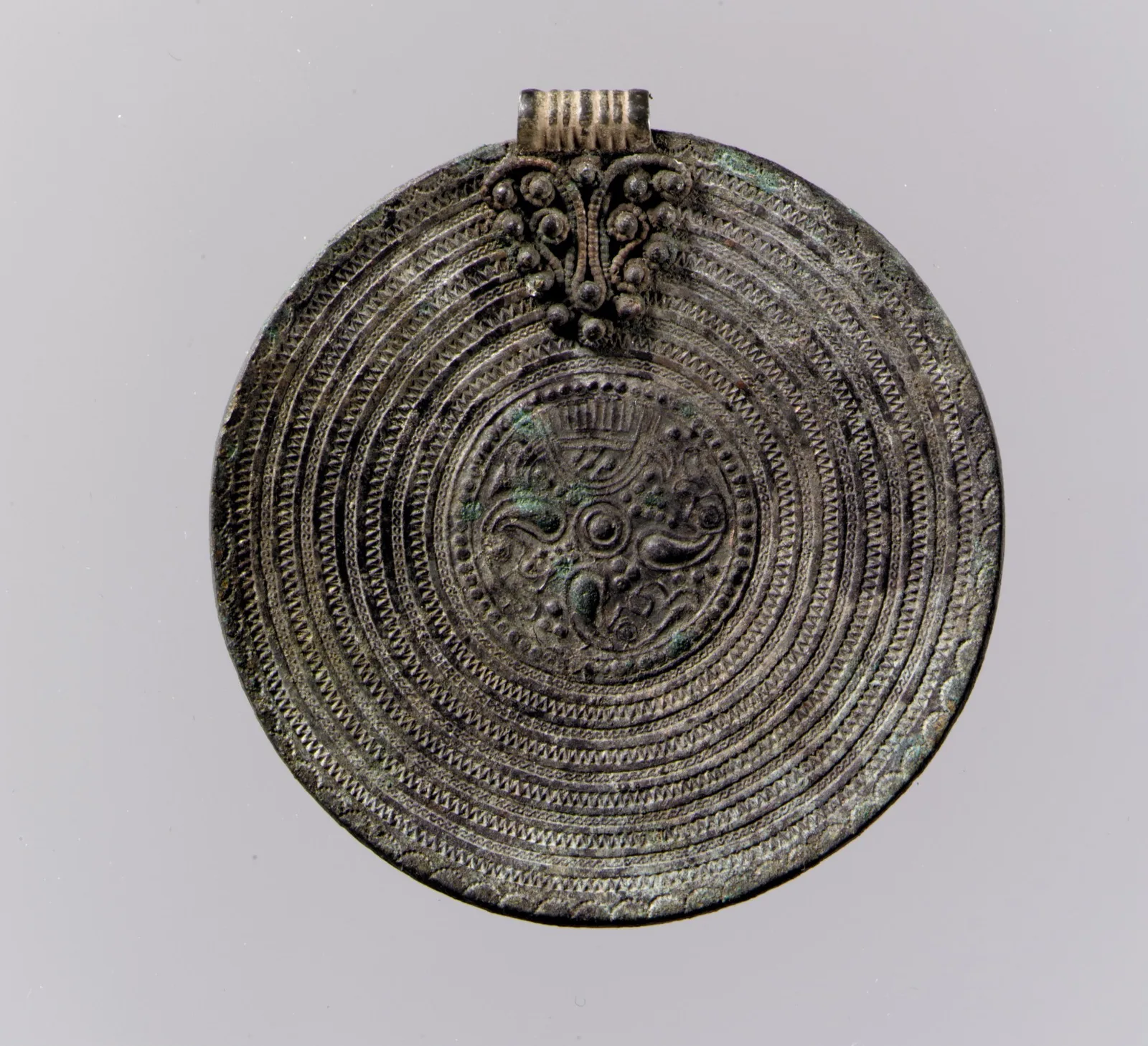
On gold bracteates of the Migration Period, the thin medallion pendants of the fifth and sixth centuries, a short formula appears: gibu auja. Word for word this is "I give luck" or "I give good fortune". Gibu is a first person verb, "I give," from the same root as the rune's name, and auja means luck, or benign power. The owner of such a bracteate wore a literal gift of protection at the chest, cast in gold. Several of these survive in Scandinavian and northern German finds, and comparable pieces sit in British collections gathered from Migration Period contexts.
An inscription of this kind shows how close gift and protection stood in the mind of the period. Gebo here is not an abstract emblem but part of a living statement: I give you good.
The Gift on Memorial Stones
The same root left its trace on stone. Runestones in southern Scandinavia preserve lines in which a ruler or a man of standing "gives" a year, a harvest, prosperity. A short gaf j, "gave a good year," ties the giver's name to the harvest rune. Behind that stands the northern logic by which a chieftain answers for the plenty of his people and confirms it with a public gift cut into rock, where everyone can read it and nobody can quietly forget it.
In ordinary writing Gebo simply served as the letter g, appearing inside dozens of names and words on buckles, spearheads, combs and amulets. Wherever two diagonals meet in a clean X, the seventh rune is usually what you are looking at, and that cruciform shape made it one of the most stable letters in the whole row: there is very little you can do to an X to make it something else.
Customer reviews
Zevira is a real jewellery shop. Genuine payments, deliveries and customer thank-yous.
🥰🥰🥰 gracias
Ok, ¡gracias! 🙂
Gebo in the Rune Poems and the Old Verse
Medieval texts preserve several direct statements about how the gift rune was understood, and reading those lines closely also draws the line between what is documented and what was invented much later.
Three Poems and One Gift Rune
Three principal rune poems survive: the Anglo-Saxon, the Norwegian and the Icelandic. Each works through the runes of its own row and gives a short stanza to every one. But a stanza on the gift rune exists in only one of the three. The reason is alphabetical. The Norwegian and Icelandic poems describe the Younger Futhark of sixteen signs, in which a separate g rune no longer existed, the sound having merged with its neighbour. So only the Anglo-Saxon poem sings about Gebo, because its row, the futhorc, kept and even expanded the older set of runes.
This is a useful inoculation against the temptation to invent "ancient Scandinavian interpretations of Gebo". The genuine poetic commentary survives in English, not in a Norse text. Anyone selling you a Viking reading of the rune of the gift is quoting, at best, an Old English manuscript.
Reading the Stanza on gyfu
The Anglo-Saxon stanza on the rune gyfu is short and densely packed. It calls the gift an honour and a glory among people, a support and a mark of worth, and for anyone destitute, left with nothing at all, a help and a sustenance. Two roles of the gift are folded into a few lines: for the strong it is ornament and a sign of standing, for the weak it is the last support available. The poetic device works through the alliteration characteristic of Old English verse and through the stringing together of near-synonyms: honour, worth, support.
The underlying idea, that a society holds together through the generosity of those who have towards those who have not, is older than Christianity in northern Europe and reaches back into pre-Christian gift ethics. The poem was written down by Christian hands, but the ethic in it predates them.
The Gift in the Hávamál
The fullest discussion of giving comes not from a runic text at all but from the Hávamál, the Eddic poem of counsel spoken in the voice of Odin. It states plainly that friends should gladden one another with weapons and with clothing, that those who give to each other in turn stay friends the longest, and that a gift should be repaid with a gift.
There is also a warning about measure. A gift always seeks an answer, so an excessive offering unsettles the balance just as surely as meanness does. Anyone who has been given something far too expensive by a colleague knows the feeling precisely: the debt is uncomfortable, and the friendship shifts. Gebo is never named in the poem, but these stanzas set out exactly its ethic: generosity, reciprocity and balance as the foundation of a durable bond.
The Meaning of the Gebo Rune: Gift, Union, Balance
Gift and Generosity
The first and chief meaning of Gebo is the gift in the broadest sense: a present, a giving, a talent, a mercy of fate. And not a gift as a one-off gesture, but the ability to give and to receive, to keep value in motion. The rune reminds us that what is given is not lost but returns in a circle, and that stinginess upsets that circle more than any poverty.
In this sense Gebo stands not for the object given but for the quality of the relationship between people. Generosity here is understood as a strength, not a weakness: the one who can give freely draws generosity in return and builds a web of loyal ties around them. This is why a Gebo pendant is often chosen as a sign of openness, of a readiness to give and to trust.
Partnership and Union
The second layer of Gebo is the union of two: partnership, marriage, friendship, a pact between equals. The symmetrical form of the rune suggests this meaning by itself: two lines meet on equal terms, neither subordinating the other. Gebo describes a bond in which both partners give and both receive, a union without hierarchy and without one swallowing the other.
That is exactly why Gebo became a favorite rune for paired jewelry and anniversary gifts. It speaks of a union in which two people stay themselves and are firmly bound all the same. Unlike signs of passion or infatuation, Gebo is about a mature bond: a partnership with mutual respect, honest exchange and shared responsibility. You can read more about the idea of such a symbol for two in the piece on the coordinate couple pendant.
The Balance of Exchange
The third layer of meaning is balance. Gebo warns that a gift works only when the exchange is even. To give without measure is as harmful as only to take. The one who gives too much puts the other in the position of an eternal debtor and quietly destroys the equality. The one who only receives loses respect. The rune teaches you to hold the balance between "give" and "receive."
Modern relationship psychologists prize this layer in particular: a healthy bond is built on reciprocity, not on the self-sacrifice of one side. Gebo worn at the throat becomes a quiet reminder of that balance, that in love, in friendship and in business alike it matters not only to invest but to let the other invest in you.
Hospitality and Connection
Another layer of meaning is hospitality. Among the northern peoples, to receive a guest, to feed and to gift them, was a sacred duty, and to break the laws of hospitality was a grave offence. Gebo carries this theme too: the bond between host and guest, between strangers whom a gift turns into allies. The cross X here reads as a threshold on which two people meet.
From this grows a wider sense: Gebo is the rune of the social fabric, of all those threads of trust by which people are bound to one another. Treaties, alliances, oaths, friendship between families, all of it rested on the exchange of gifts and promises. To wear Gebo is, in part, to acknowledge the value of those ties and one's own place in the shared web of mutual obligation.
Why Gebo Cannot Be Reversed
For most runes the divinatory tradition distinguishes an upright and a reversed position, and reads the reversed sign as a distortion or the flip side of the meaning. With Gebo the trick does not work: because of the full symmetry of the cross X, the rune looks the same however you turn it. A reversed Gebo simply does not exist, and that sets it apart among the runes of the row.
Interpreters see a deep sense in this. Gebo, the sign of gift and union, has no dark underside: a true gift cannot be turned to evil without ceasing to be a gift. Some practitioners still speak of a "shadowed" Gebo, when the exchange loses its balance, but that is no longer about the position of the sign, only about a breach of reciprocity itself. As a symbol on jewellery, Gebo is handy precisely because it fears no orientation: it is impossible to wear the wrong way up.



What Gebo Rune Jewellery Is Made Of
The material of a runic pendant carries its own sense and changes both the look and the character of the piece. Here are the main options and what is worth knowing about them.
Gold
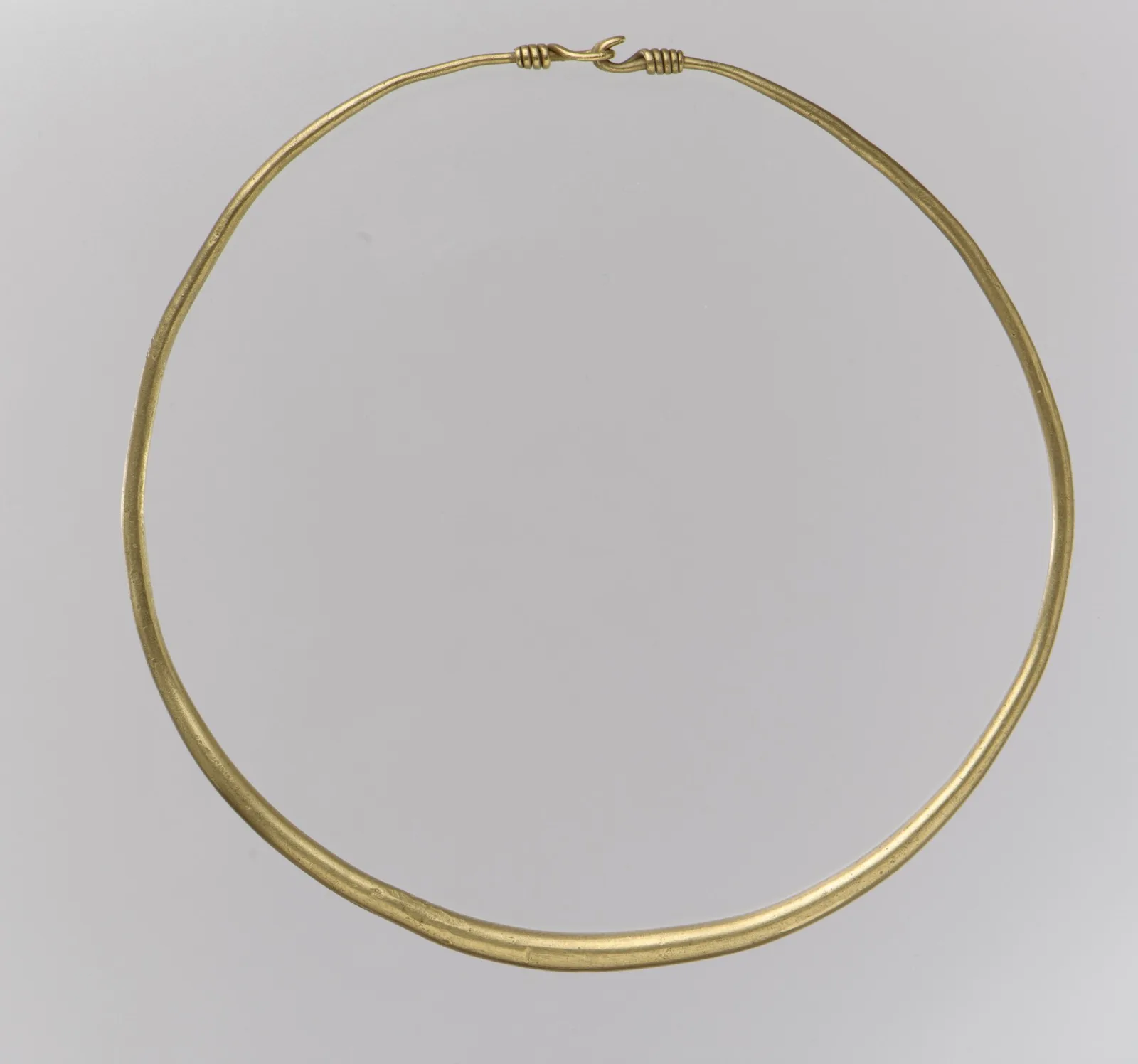
The most obvious choice for a rune of gift and union. Gold is the prime gift metal in itself, and in northern culture it was the highest form of gift: with gold rings and torcs chieftains rewarded loyalty. A gold Gebo strengthens the theme of generosity and rings out festive, which is why it is often chosen for an anniversary or a milestone gift. Fourteen or eighteen carats are usual, holding the crisp carving of the sign and standing up to daily wear.
For a paired piece gold is fine in that it ages nobly and lasts for decades, passing on into a family heirloom. A gift meant to be handed down further is wholly in the spirit of the rune itself.
Silver
Silver was for the Vikings the main measure of value and the most common form of gift, far more usual than gold. Fragments of silver jewellery were weighed in trade, silver rings sealed alliances. So 925 sterling silver is historically almost a more "correct" material for Gebo than gold.
A silver rune looks restrained and severe, pairing well with a leather cord and a rougher texture in the Scandinavian key. It is a universal everyday option, sturdy and easy to care for, and for paired pendants silver is handy in that it is affordable and easy to repeat in two identical pieces.
Bronze and Brass
Bronze gives a warm, slightly archaic tone close to ancient finds, which is why it is loved for its "museum" look. Brass is brighter and nearer gold in colour. Both alloys render the relief of the carving well, and over time they take on a patina that many find noble and fitting for an ancient sign of gift.
The copper alloys have one drawback: they can leave a dark or greenish trace on the skin. The cause is copper reacting with sweat and cosmetics, and it is not a defect. It is worth reading separately about why skin turns green from jewellery and how to avoid it.
Wood and Bone
The most authentic option from the craft point of view: runes were carved on wood and bone in the first place. A wooden or bone Gebo, cut by hand, comes closest to the historical spirit of the gift sign, for runes themselves were often given as amulets carved for a particular person. Such pendants are light, warm to the touch, and each has its own unique grain.
The price of authenticity is fragility and fussiness. Wood fears damp, bone is sensitive to changes, and both materials call for careful handling. Such an amulet is more often chosen as a ceremonial, keepsake or collector's piece than for daily wear.
Stainless Steel
The pragmatic modern choice. 316L steel does not darken, fears neither water nor sweat, leaves no trace on the skin, and holds the crisp carving of the sign for years. The symbolism lies wholly in the form, not in the rarity of the material, which suits the symmetrical Gebo especially well: the whole meaning is in the clean crossing of two lines.
A steel Gebo is good for those who wear jewellery constantly and do not want to think about care. It fits an everyday, sporty, "street" look and easily survives what wood or bone would not forgive. For paired bracelets worn without taking off, steel is often the most practical of all.

Turn on your camera, pick earrings, a pendant or a ring, and see the piece on yourself in real time.
Switch items in one tap.
Everything runs in your browser: no photo or video is ever uploaded.
How to Wear the Gebo Rune
On the Neck as a Pendant
The commonest way to wear the rune is a pendant at the throat, close to the body. Here both the chain length and how the sign sits in the neckline matter. A short chain (40-45 cm) keeps the rune high, near the collarbones. A medium one (50-55 cm) brings it onto the chest, where the cross reads large. A long one (60-70 cm) hides the amulet under clothing, closer to the heart. Because Gebo is symmetrical, it cannot be worn upside down, which makes it easy for everyday wear.
To find the right length for your height and neckline, a separate guide to choosing chain length can help. For paired pendants people often take two different lengths so the crosses do not clash when a couple wears them together in a photo or an embrace.
Paired Pendants
It is in a pair that Gebo comes fully into its own. Two identical crosses on two necks read as halves of one union, and since the sign has no top and bottom, both pendants are absolutely equal, which itself becomes a quiet statement about equality in the relationship. Such a set is given for an anniversary, an engagement, a wedding, or simply as a sign of a firm bond.
There is also the pretty variant of a split sign, where the cross is cut in two along the diagonal and each person keeps a half that completes the whole when they meet. But a whole Gebo has its own logic: two full signs instead of two halves say that each partner is self-sufficient and yet chooses to be together. Which version is closer depends on what the couple wants to say with the gift.
On a Ring and a Bracelet
Gebo sits well on both a ring and a bracelet. The cross looks laconic, almost geometric, and does not catch the eye, which is prized by those who wear a symbol "for themselves." Paired rings with Gebo echo the Scandinavian arm-rings that sealed alliances, so the link to the theme of gift and pact is direct and historical.
A ring with a single rune is good in that the sign is always before your eyes, on your hand, and easily becomes a personal anchor, a reminder of the value it was put on for: of loyalty, of balance, of the skill of both giving and receiving. On a bracelet plate the cross looks severe and suits any gender.
What to Pair It With
Gebo is laconic and gets along with almost any style. It looks good on a rough leather or rubber cord in the Scandinavian key, on a fine chain in a minimalist look, and in company with other northern symbols. Fitting neighbors are the Algiz rune as a sign of protection, the Fehu rune as a sign of plenty, and pendants with the images of gods from the Norse pantheon.
The one thing to avoid is clutter. A single cross on a clean cord reads stronger than one squeezed among five pendants. If you want layers, give Gebo its own line of length so the sign is not lost among its neighbours.
Who Gebo Is Given To
Gebo is not tied to gender, age or profession, but it has themes it is especially close to. It is a rune of gift, union and balance, so it is most often chosen and given where the matter is the bond of two people or gratitude.
It is taken:
- For couples on an anniversary, engagement or wedding. The symmetrical sign of an equal union says just what one wants to say on such a day: we are together, as equals.
- As a gift to a close friend. Gebo is a rune of friendship and loyalty, not only of romance. It fits where the bond matters more than words.
- For yourself, as a reminder of balance. For those prone to give too much and forget themselves, Gebo serves as a quiet sign of the importance of reciprocity.
- In thanks for help and support. A gift in return for a gift, exactly in the spirit of the rune. It is a fine and fitting way to close a debt of gratitude.
- For lovers of northern culture and the runic tradition. Gebo is one of the brightest and most single-meaning runes of the row, a natural choice for anyone collecting Futhark symbolism.
As a gift Gebo is convenient in that its meaning reads at once and sounds kind: a wish of union, balance and generosity.
Leave your email, we'll send your discount code. No spam, unsubscribe anytime.
The code arrives by email, valid on your first order.
How to Choose Gebo Rune Jewellery
Symmetry and Clean Lines
The first thing to look at with Gebo is the precision of the cross. Both lines should be of equal length and the meeting point strictly in the middle. A shifted or crooked cross loses the very balance in which all the strength of the rune lies. A good Gebo looks geometrically clean: two even strokes meeting exactly at the centre.
Checking is simple: fold the sign mentally in half along any of its four axes, and the halves should match. If the workshop has kept the symmetry, it is a sign of attention to meaning, not only to form. For a paired set it matters too that both signs be identical: two truly matching crosses reinforce the idea of equality.
Craft Versus Stamping
Mass stamping gives an even but faceless sign, often with blurred relief. Hand carving or good casting keeps crisp edges, and the rune looks alive. For a symbol whose whole strength is in the cleanness of its form, clarity of line is not fussiness but the point.
If you want a piece with character, look for versions with a hand finish, an honest metal texture, a neatly chamfered edge on the arms of the cross. Such pendants are closer to the spirit of runic craft, where each sign was carved separately and given to a particular person.
Size and Proportion
For an everyday pendant a size of 2-3 centimetres is comfortable. Below two the cross is lost on the chest; above three it starts to look heavy for so laconic a sign. For a masculine look and a broad neck people take nearer the upper end, for a slighter build nearer the lower. A ring and a bracelet call for finer, neater engraving, or the cross looks crude.
For paired pendants it is worth choosing the same size and line thickness so the signs read as a pair, not as accidentally similar pieces. Unity of proportion matters here more than in a single piece of jewellery.
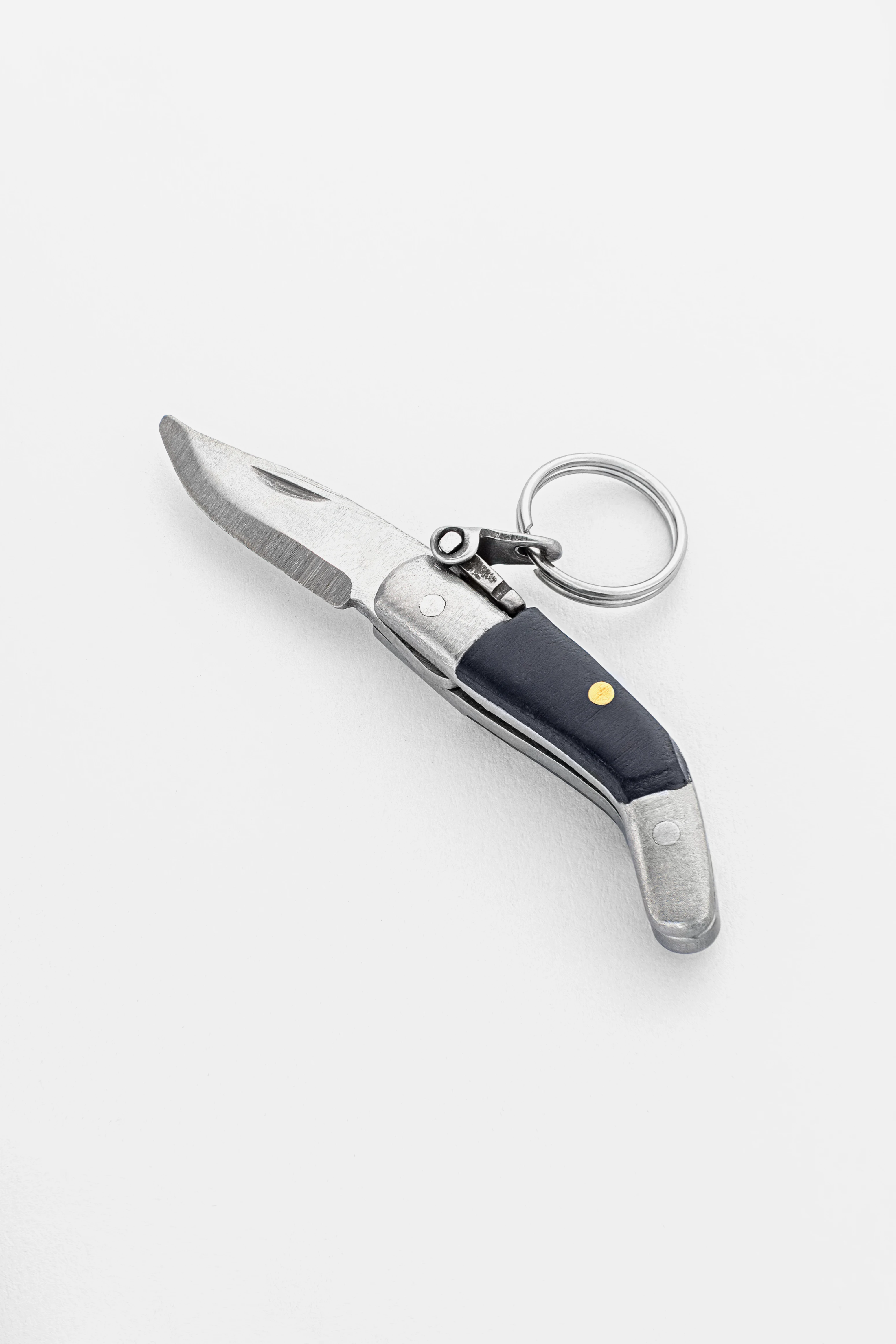
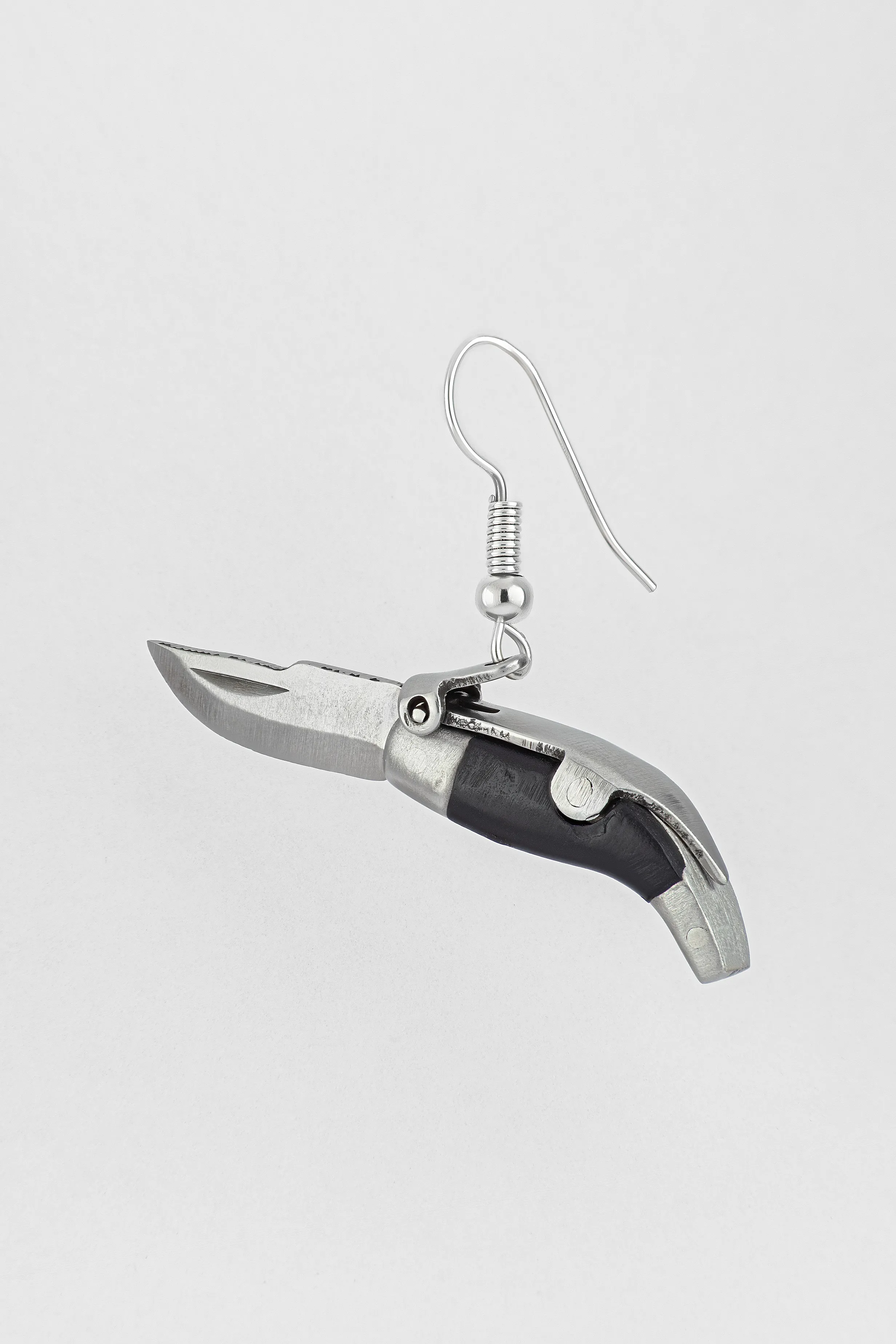
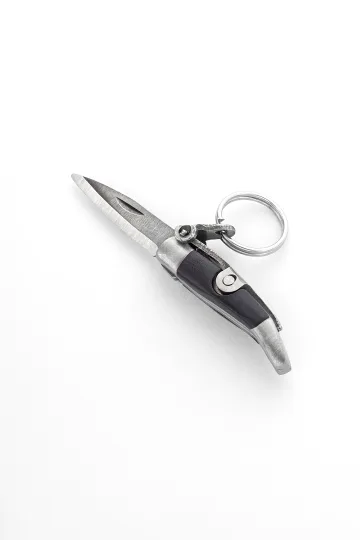
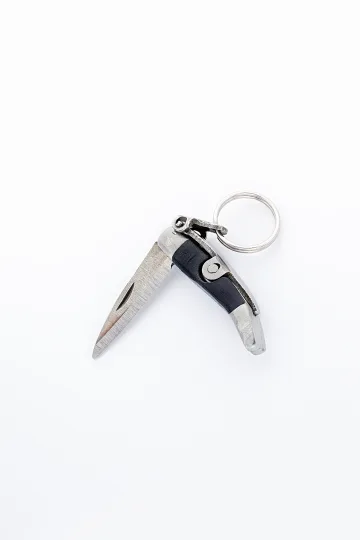
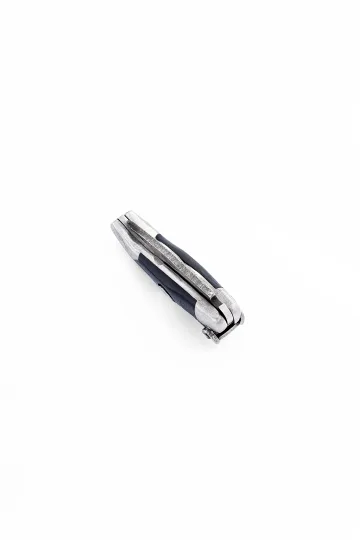
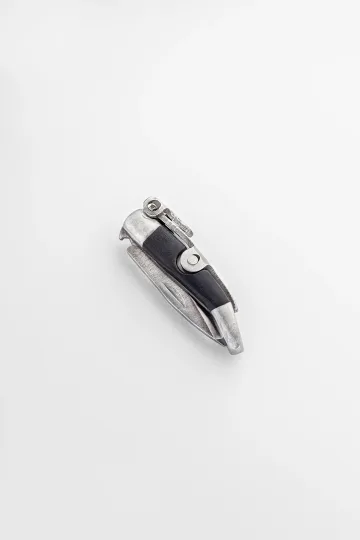
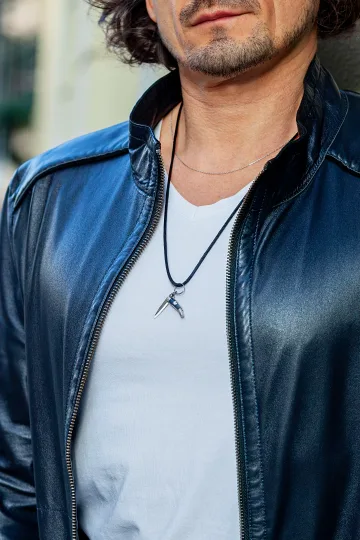
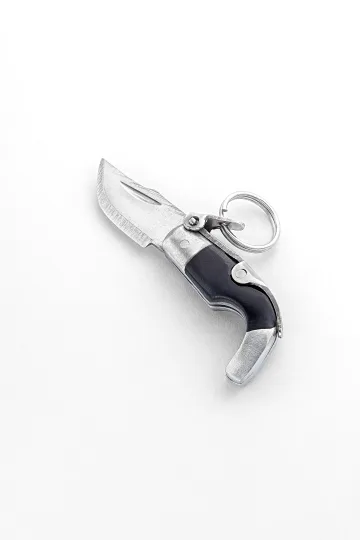
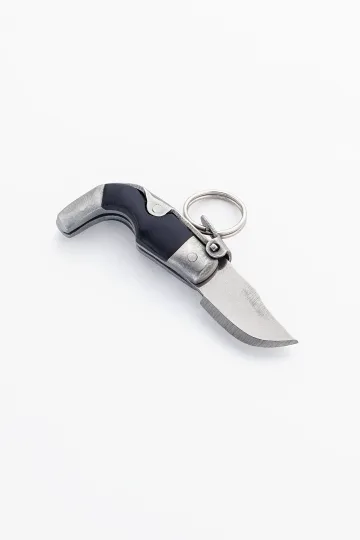
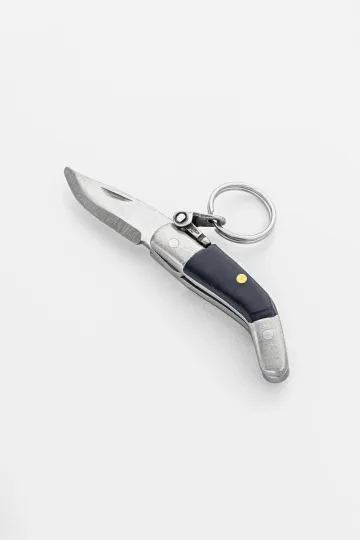
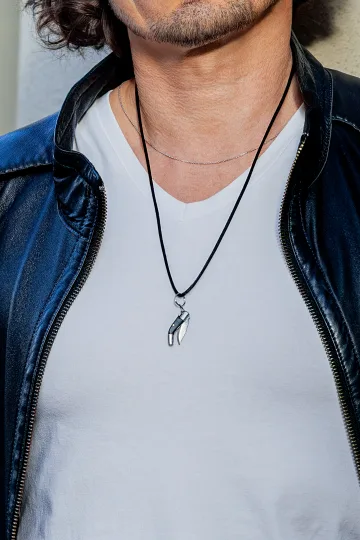
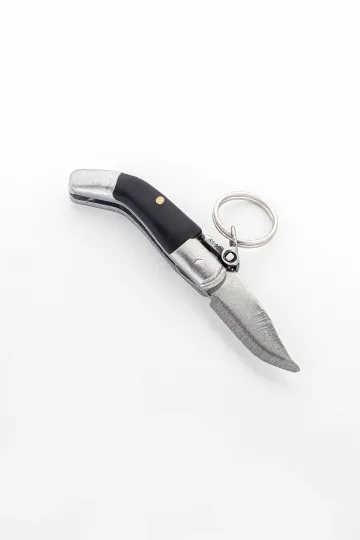
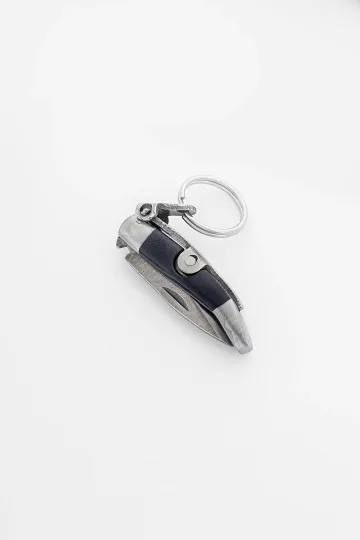
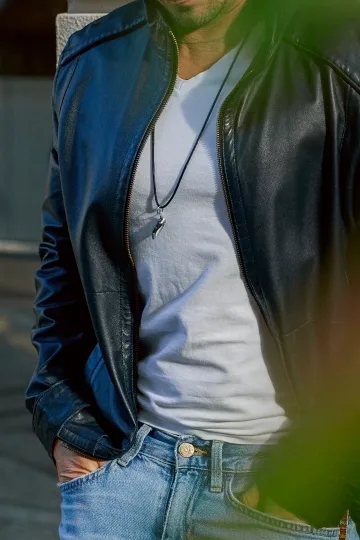
CAPAORA mini knife pendant
The 18th-century Spanish navaja in miniature: 40 mm of stainless steel, a real folding mechanism and a Palanquilla lock that clicks. An affordable gift to remember.
Authentic · Ships from Spain · 14-day returns
Gebo and Other Runes of Union and Gift: The Difference
The theme of bond, gift and joy in the Futhark is carried not by one rune but by several, and they divide the meanings among themselves. Understanding the differences helps you pick "your own."
Gebo and Wunjo: Union and Joy
Gebo's nearest neighbour in the row is Wunjo, the rune of joy, harmony and contentment that closes the first aett. If Gebo is about the very fact of a bond and its exchange, then Wunjo is about the feeling born of that bond. They are often set side by side: the gift creates the union (Gebo), and the union brings joy (Wunjo). Together they describe the whole path from exchange to the happiness of belonging.
For a gift, that difference suggests the accent. Gebo suits better where the bond itself and its balance matter: partnership, pact, loyalty. Wunjo is closer where you want to wish pure joy and lightness. A pair of these two runes on one chain reads as a wish of both the union and the happiness within it.
Gebo and Othala: Gift Versus Inheritance
Another important pair is Gebo and Othala (Odal). Both are about the values that bind people, but of a different kind. Gebo is the gift passing between equals here and now, the movement of value along the horizontal, from person to person. Othala is inheritance passing down the vertical, from ancestors to descendants, the family land and home that are neither given away nor sold.
Together they cover both axes of human ties. Gebo holds the bonds of one's own generation: marriage, friendship, pact. Othala holds the bond between generations: family, roots, inheritance. For a couple building a household, both runes make sense, for a family is both a union of two (Gebo) and the start of a new line (Othala).
Gebo and Ehwaz: Partnership and Motion
The rune Ehwaz, whose name means "horse," rules partnership in motion, the smooth work of two toward a common goal, like rider and steed. If Gebo is about the bond as such, about the balance of exchange, then Ehwaz is about joint action, about trust on the road. Gebo is a union at rest, Ehwaz is a union in motion.
The difference is subtle but useful for choosing. Gebo is given to underline the very firmness and equality of a bond. Ehwaz is closer where two go together toward a goal: a shared enterprise, a joint project, a road walked side by side. Once you grasp these shades, it is easier to pick a sign for a specific intention rather than by the general theme of union.
Gebo in Rune Divination
For most people today it is the divinatory layer that leads them to Gebo in the first place, so it deserves its own section, starting with an honest caveat and only then moving on to the practical side.
An Honest Caveat About Origins
Systematic rune divination in the form now practised took shape in the nineteenth and twentieth centuries, not in the Viking Age. Ancient sources speak of lots and of carved signs, and a Roman writer describes Germanic peoples casting marked slips of wood, but none of them left detailed spreads with fixed meanings for each rune. Everything set out below is therefore modern interpretive tradition, grown out of the sense of the rune rather than copied from an Iron Age rite. Knowing that is useful, because it stops a reconstruction being sold as ancient knowledge, and the reconstruction is interesting enough on its own terms.
The Straightforward Reading in a Spread
Gebo drawn in a spread reads as a sign of gift, union and equal exchange. On questions about relationships it speaks of partnership between equals and of two people willing to invest in each other. On business and agreements it points to a fair deal from which both sides come away better off. On questions about the self it is usually read as advice to hold the balance between giving and receiving, without sliding into self-sacrifice, which is the failure mode most readers see most often.
Combinations with Other Runes
Gebo shifts noticeably depending on its neighbours. Beside Wunjo, the rune of joy, it reads as a happy union. Beside Algiz, the rune of protection, as a guarded, dependable bond. Beside Fehu, the rune of wealth, as a favourable exchange or a profitable arrangement. With Othala, the rune of inheritance, Gebo opens into the theme of family and lineage; with Ehwaz, the horse rune, into the theme of a shared road. A reader looks at the whole pattern, and Gebo within it usually plays the part of a connector, the sign describing the relationship between whatever the neighbouring runes show.
Bindrunes Built on Gebo
The Gebo cross is often used as the base of a bindrune, a sign in which several runes merge into a single drawing around a shared intersection. Because Gebo has no long stave, only the point where two lines cross, other runes attach to it easily, and the whole charm then reads as the gift of something specific: the gift of protection, the gift of luck, the gift of strength. In contemporary jewellery a Gebo bindrune is sometimes commissioned to a personal intention, and the symmetrical cross underneath keeps the drawing balanced no matter what is added to it. That structural convenience is a large part of why Gebo appears in so many modern designs.
The Psychology of the Gift and the Union Amulet
You do not have to believe in the magic of runes for a Gebo pendant to "work." The mechanisms that make such an amulet useful are quite earthly and well described.
An anchor of reciprocity. When a person ties an object to a value, a glance at the object returns the mind to it. A rune of gift at the throat becomes a quiet reminder of balance in a relationship: not only to take but to give, not only to give but to allow yourself to be cared for. It works as a visual bookmark for attention, with no mysticism at all.
The power of the gift. Psychology has long described the effect of giving: the very fact of a gift strengthens the bond between two people more than its price. Giver and receiver are bound by a small mutual obligation of goodwill. A paired Gebo materializes that effect, turning an invisible bond into an object both people wear.
A symbol of commitment. A shared sign for a couple works as a public and a private promise. Relationship psychologists note that visible symbols of union, from rings to shared rituals, raise the durability of a bond: they translate feeling into a form you can see, both for yourself and for the other. A Gebo for two does exactly that.
Identity and values. To wear a rune of gift is to quietly state your priorities: bond, loyalty, generosity, equality. Anchors of identity raise resilience in hard times, and in this sense the ancient sign works for a very modern person, helping them hold to chosen values in a relationship.
There is nothing supernatural in this. The amulet does not change reality; it changes the wearer's attitude toward their bonds, and it does so in a measurable and useful way.
Gebo in Culture and Heritage
The runes long ago left archaeology behind and live on in language, signs and modern culture. Gebo's trace is the most unexpected: it hides in the form of a simple cross X, which has grown meanings of its own.
In language. English give and gift, German geben and Gabe, Norse gjǫf, through a common root, all reach back to the same idea of the gift behind the rune. A curious turn befell the German word Gift: once it too meant "gift," but it gradually narrowed to "a dose that is given," and then all the way to "poison." One root gave English a "present" and German a "toxin," and both senses grew from the idea of "what is given."
In the sign X. A cross like Gebo lives in culture in several roles at once: as the sign of multiplication, as a "here" mark on a map, as the signature of a person who cannot write, and as the symbol of a kiss at the end of a letter. There is no direct historical link between the rune and these meanings, but a common feeling unites them: X reads as a meeting and a crossing, a point where two come together. Gift and kiss, in that sense, ended up marked by the same sign independently.
In modern symbolism. The revival of interest in northern antiquity has made the Futhark a recognisable visual language. Runes adorn books, games, music covers, craft goods. Gebo, as a clear and bright sign of union, holds a special place in that set: it is readily taken for jewellery about love and friendship precisely because it has no dark side and cannot be worn wrong.
It is worth remembering an important caveat. In the twentieth century certain runic signs were used by political movements of grim repute, and a heavy context surrounds some symbols. Gebo does not belong to that circle and remains a neutral sign of gift and union, but a general sensitivity to what you wear and next to what is fitting here.
Send a friend a discount code, they save on their first order.
Surprising Facts About the Gebo Rune
The German word for poison used to mean gift. German Gift once meant a present, like English gift, but over time it narrowed to "a dose that is given," and then to "poison." One and the same ancient root of the gift gave two languages a "present" and a "toxin."
Gebo cannot be reversed. Because of the full symmetry of the cross X, the rune looks the same at any turn. It has no reversed position at all, and interpreters see in this a sign that a true gift cannot be turned to evil.
A gift always created a debt. Among the northern peoples there were no free gifts in our sense. An accepted gift obliged a return, and a richer one, or the giver lost face. The exchange of gifts held society together more firmly than any written law.
Joy follows Gebo in the row. Gebo stands seventh in the first aett, and right after it comes Wunjo, the rune of joy. The order reads like a little formula for happiness: first the gift and the union, then the joy of them.
Relations with the gods were built as an exchange of gifts. A sacrifice among the northerners was a gift to the gods in expectation of a return gift: harvest, luck, victory. The formula "I give so that you may give" describes both human unions and the covenant with higher powers, and Gebo was the sign of both.
The X kiss in letters is a coincidence. The X as a kiss at the end of a letter and the Gebo gift rune are not historically linked. But both traditions arrived independently at the same image: the crossing of two lines as a meeting of two.
A Viking wedding was a great mutual giving. A marriage was sealed by an exchange of gifts between families: dowry, bride-price, family treasures. The union of two was a contract between two households, and the gift sign fits that logic better than most runes.
The best gift came from the heart, not the purse. The old poems warned plainly: what matters is not the price of the gift but faithfulness to reciprocity. An excessive gift upset the balance as much as stinginess. Gebo is about balance, not scale.
Silver, gold, runic and Norse symbolism, amulets, paired sets for two.
Buying it as a gift? Each one arrives ready to give.
 A branded Zevira box and a little card come with every order.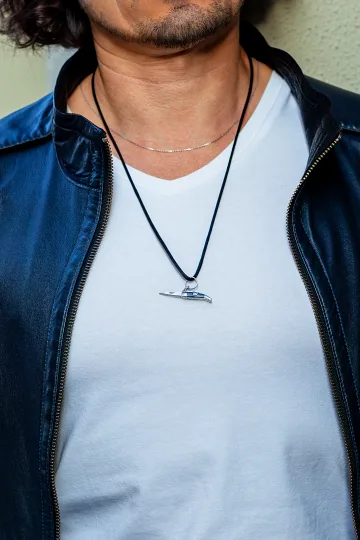




Frequently Asked Questions About the Gebo Rune
What does the Gebo rune mean? Gebo is the seventh rune of the Elder Futhark, standing for the sound "g" and the concept of the gift. In a broad sense it symbolises gift, generosity, union, partnership, hospitality and the balance of mutual exchange. The name goes back to Proto-Germanic gebō, "gift, giving," from the same root as English give and gift.
Is Gebo a rune of love? In modern practice it is often read as a rune of love and partnership, but it is more precise to say it is a rune of union and equal exchange. It fits romantic relationships, but it also speaks of friendship, pact and business partnership. Its heart is the balance between "give" and "receive," not feeling alone.
What does the Gebo rune look like? It is an even cross of two lines crossed on the diagonal, like the Latin letter X. Both strokes are of equal length, the meeting point strictly in the middle. The sign is fully symmetrical and has no top or bottom.
What does a reversed Gebo mean? There is no reversed Gebo: because of the symmetry of the cross, the rune looks the same at any turn. Some practitioners speak of a "shadowed" Gebo, when the exchange loses balance and one side only gives or only takes, but that is about a breach of reciprocity, not the position of the sign.
Why is Gebo given to couples? The symmetrical form of the rune reads as a sign of a union of two equals: two lines meet on equal terms, neither subordinating the other. So Gebo is often chosen for paired pendants and anniversary, engagement or wedding gifts. Two identical crosses on two necks speak of equality in the relationship.
Can you wear the Gebo rune every day? Yes. For daily wear silver and stainless steel are convenient: they are sturdy, easy to care for and do not darken. Gold suits too, especially for a paired piece meant to last for years. The symmetry of the sign is handy in that Gebo cannot be worn upside down.
Can you wear Gebo with other runes and symbols? Yes, and it is common. Gebo pairs well with the protection rune Algiz, the wealth rune Fehu and other northern signs. The main thing is not to overload the look: one or two symbols read stronger than a handful of pendants on one chain.
Do you have to believe in rune magic to wear Gebo? No. Many wear the rune for its meaning and history, not for the "magic of union." The sign is interesting in itself: it is more than fifteen hundred years old and tied to the language, the gift-exchange culture and the mythology of northern Europe. Belief remains a private matter.
Runes, Norse amulets and paired symbolism in silver, gold and steel.
Conclusion
Gebo has travelled from a sign for the exchange of cattle and rings to a symbol of love and partnership on a silver chain. Over fifteen hundred years the forms of giving and the occasions changed, but the essence of the rune stayed the same: the bond between people rests on equal exchange, on a readiness both to give and to receive, and it can be lost as easily as it is made if the balance is broken.
The seventh rune of the ancient alphabet tells a simple, grown-up truth. A gift is never free; it always creates a bond and a responsibility, and in that lies its strength, not its weakness. The cross X we now set in place of a kiss once sealed alliances more firmly than any contract. Whether you wear Gebo for its meaning, for the beauty of the northern form, or as a sign of a bond with someone close, you carry one of the most human symbols in history: the sign that we are bound to one another by what we give and receive.
Wear the symbol, don't just read about it. These are in stock:

About Zevira
Zevira makes jewellery in the artisan tradition of Albacete, Spain. Runic symbolism is among the themes close to us: an ancient form, legible without words, equally at home on a rough leather cord and a fine chain. We render Gebo with a true symmetry of the cross and crisp carving, in modern materials and proportions, including in paired sets for two.
What you can find with us on the theme of northern symbols:
- Runic pendants in silver, gold and steel
- Paired Gebo sets for anniversaries, engagements and weddings
- Norse amulets: runes of protection and plenty, images of the gods
- Leather and rubber cords and chains of various lengths for a rune of any size
- The option of personal engraving
Every piece can be personalised with engraving. 925 silver and 14-18K gold.