The Wunjo Rune: Meaning of the Symbol of Joy, Harmony and Granted Wishes
In the old Germanic languages the word "joy" was a letter. The rune Wunjo, the eighth sign of the Elder Futhark, carried the sound "w" and bore a name that meant joy, delight, contentment. Its descendant, the letter "wynn," survived into Old English manuscripts and stood for the sound [w] in places where the Latin alphabet could not cope.
That is where the paradox begins. A sign worn today as a charm of happiness and granted wishes started out describing something very earthly: a full belly, peace in the home, the absence of worry. Not rapture and not euphoria, but the calm fullness of a life where a household has enough of everything and nobody is at odds with anyone. Wunjo speaks of a joy you do not beg for but build.
The rest follows in order: where the symbol came from, how it sounded and looked, what it meant to the Norse and the Anglo-Saxons, what a runic pendant is made of, how to wear it, how Wunjo differs from other runes of happiness, and why the sign of joy closes the first row of the ancient alphabet.
Why Joy Was Measured in Peace
The rune's name goes back to Proto-Germanic wunjō, meaning "joy, delight, contentment." The same root gave English winsome (charming, pleasant), German Wonne (bliss, delight) and the verb wünschen (to wish). An ancient logic is baked into the word itself: joy is the state you reach when the thing you longed for has come true, when there is contentment and peace rather than a chase after the next thing.
For a society where a single winter could wipe out the herd and a feud between families could drag on for generations, joy was understood soberly. It meant peace in the home, healthy children, a full barn, no enmity with the neighbours. Not a feast put on for show, but a quiet confidence in tomorrow. A rich harvest and accord within the family were prized above fleeting merriment at the table.
Wear the symbol, don't just read about it. These are in stock:



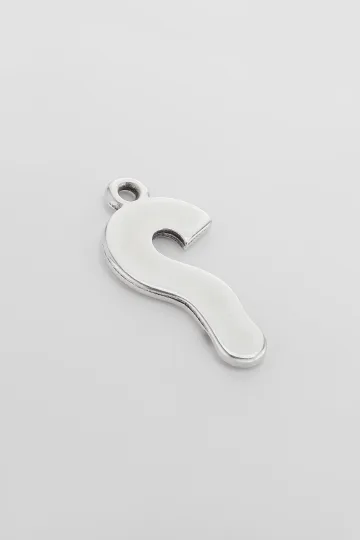
The Wunjo rune took this idea and turned it into a sign. A vertical stave with a triangular flag near the top recalls a raised banner or pennant. Many interpreters see in it a standard, the point around which a clan gathers: a symbol of unity, of shared joy, of belonging among your own. The form is legible and solemn, and it closes the first of three "aettir," the groups of eight runes into which the row was divided, on the very theme people build their wealth for: joy and accord.
Understanding Wunjo means separating two layers. The first is practical: it was a letter for the sound "w," an ordinary unit of writing in the runic row. The second is symbolic: every rune carried a name and a meaning, and Wunjo owned the theme of joy, harmony and granted wishes. Both layers lived at once. A carver could cut Wunjo simply as a "w" in someone's name and, in the very next breath inside a blessing, as a sign of happiness and peace.
What the Wunjo Rune Is
The Meaning of the Name and Its Sound
Wunjo is the eighth rune of the Elder Futhark, the oldest runic alphabet of the Germanic peoples. It carried the sound "w" and closed the first of three aettir, the groups of eight signs into which the whole row was divided. The name is reconstructed as wunjō, "joy, delight." In the Anglo-Saxon tradition the same rune was called wynn with the same meaning.
The root proved hardy. From it stretch English winsome, German Wonne and wünschen, and through them the idea of joy as a fulfilled wish reaches down to our own day. To wear Wunjo is in part to keep beside you one of the oldest words for happiness in the European languages.
What the Symbol Looks Like
Wunjo's shape is simple and stable: a vertical stave and a small triangle attached to the upper part on one side, like a flag to its pole. It resembles a letter "P" with a sharp rather than a round top, or a raised pennant. In the classic version the flag faces up and to the right.
One detail matters. Runes were carved, not written. The straight lines and sharp angles are not a style but a demand of the material. Across wood and bone, along the grain, a smooth curve is hard to cut and tends to crumble. So the whole Futhark is built from verticals and diagonals, and Wunjo is a model example: even its "flag" is made of straight segments rather than bent into an arc.
Variant Forms and What Wunjo Is Confused With
The shape of Wunjo is stable, but it has tolerances. The flag can be narrow and pressed close against the stave, or open and sharp, and the angle at which the triangle meets the top of the upright wanders noticeably between carvers. There is a variant in which the triangle is not fully closed and reads as two converging strokes running from a single point on the stave. All of these are the same rune. What matters is that the figure sits at the head of the upright and faces upward.
Two neighbours cause confusion by shape. The first is Thurisaz, the thorn rune, where the triangle meets the middle of the stave rather than the top. Slide the flag down and the sign of joy becomes a rune of force and threat, so on a piece of jewellery the height of that flag is not a detail to shrug at. It is worth checking before you buy, because stamped costume pieces get it wrong often enough to matter. The second source of confusion is the Latin P and the Greek rho. That resemblance is purely superficial: Wunjo has a pointed head built from straight segments rather than a rounded bowl. Closest of all to Wunjo stands the Anglo-Saxon letter wynn, and there the resemblance is no accident at all, because wynn is the same rune, surviving onto parchment.
Its Place in the Elder Futhark
The Elder Futhark was used roughly from the 2nd to the 8th century across Germanic Europe, from Scandinavia to the Black Sea. Twenty-four signs split into three rows of eight, each row named after its own first rune. The first aett was opened by Fehu, the rune of wealth, and closed by Wunjo, the rune of joy. The order is telling: the row begins with plenty and ends with the joy that plenty is meant for.
Standing at the end of the first aett gives Wunjo the sense of a summing up, a completion. The eight runes from Fehu to Wunjo read as a path: resource, strength, trial, knowledge, gift, and at the finish joy and harmony. The sign stands where the story of a family coming into its own arrives at a calm fullness.
Wunjo as a Sign of Kinship and Community
Many researchers link the shape of Wunjo to a banner or a weathervane, and a banner in the Germanic world is the gathering point of a clan and its war band. Hence an added layer of meaning: Wunjo is about belonging, about the joy of being among your own, about accord within a community. Happiness here is not solitary but shared.
This facet sets Wunjo apart from plain "merriment." The rune speaks of a joy that rests on bonds: family, sworn brothers, neighbours living in peace. Solitary contentment is incomplete in this picture; true delight comes where people are of one mind. That is why Wunjo is often chosen as a sign of friendship, alliance and a shared cause.
History: From the Proto-Germans to Today
Proto-Germanic Roots
Long before the first runic inscriptions, the Germanic tribes already had the word wunjō and the concept behind it. An Indo-European root meaning "to wish, to strive, to find delight" produced related words in Sanskrit and Latin. The idea that joy is a wish come true and a longing satisfied was shared across a vast circle of peoples long before writing.
When the Germanic peoples created or borrowed runic script in the first centuries of our era, they gave the eighth sign the name of a concept that already existed. The rune did not invent the link between the sound "w" and joy; it fixed in letter form the word people already used for their own contentment.
The Scandinavian Iron Age and the Viking Era
Runic writing flourished during the Iron Age and the Viking era, roughly from the 5th to the 11th century. The signs of the Elder Futhark were cut into weapons, jewellery, amulets, wood and stone. By the Viking era the Elder Futhark in the north had already given way to the shorter Younger Futhark of sixteen signs, and here a rare thing happened to Wunjo.
The rune of joy did not enter the Younger Futhark. The sound "w" came to be written with other signs, and Wunjo as a separate rune dropped out of Scandinavian use. It lived longest not in the north but in the west, among the Anglo-Saxons, where under the name "wynn" it became a full letter. So the sign of joy escaped oblivion not in its native Scandinavia but in England.
The Anglo-Saxon Rune Poem
The fullest medieval commentary on the rune of joy survives in the Anglo-Saxon rune poem, written down in England probably in the 10th century. The stanza on the rune wynn runs roughly like this: joy is known by the one who knows little of woe, pain and sorrow, and who has for himself prosperity and bliss and enough of a good dwelling.
The stanza gives a precise definition of the old joy. It is not rapture but the absence of suffering plus plenty and security. Happy is the one who has no pain, no want, and a home of his own. The definition is sober and humane: joy is understood as a steady state rather than a flash, and it rests on health, peace and a roof overhead.
The Stanza Line by Line
The Old English original is short and holds together on alliteration rather than rhyme. The first line, "Wenne bruceþ ðe can weana lyt", says roughly that joy is enjoyed by the one who knows few woes. The verb bruceþ does not mean to feel a flash of something; it means to use, to have the use of, the same root that survives in the modern word brook. Joy here is property that a person possesses, not a moment that a person catches.
The second line lists what the fortunate one lacks: sares and sorge, pain and sorrow. The definition proceeds by subtraction, by taking suffering away. The third line adds what is present: blæd and blysse, prosperity and bliss. The stanza closes on byrga geniht, enough of strongholds, where byrg means a fortress or an enclosed place, giving the idea of reliable shelter and safety, and lingering in every English place name that ends in bury or burgh.
The old poet built happiness out of four bricks: no pain, no sorrow, sufficiency, and protection. Not one word about ecstasy or good fortune, only settled, provided-for calm. The alliteration of blæd, blysse and byrga ties prosperity, joy and protection into a single knot of sound, as though the poet were pointing out that they do not work separately. For a culture in which a bad harvest or a raid could end a household, that is a definition of joy with the weather in it.
The Letter Wynn in Old English Manuscripts
Wunjo has a second life that few people know about. In Old English writing the Latin alphabet had no letter for the sound [w]. At first it was written as "uu," a double u, which is where the later name "double-u" comes from. But scribes found this awkward, and they borrowed the Wunjo sign straight from the runic row, calling it "wynn."
So the rune of joy became an ordinary letter in Christian manuscripts on parchment, side by side with the Latin alphabet. "Wynn" was used for the sound [w] for several centuries, well into the early Middle Ages, until it was gradually pushed out by that same double "u." A sign born to be cut into wood survived as a letter of ink into the age of books.
The Decline of Runic Writing
With the spread of Christianity and the Latin alphabet, runes gradually left everyday use. In Scandinavia they held on longer, in places into the late Middle Ages, but as the main script they yielded to Latin letters. Wunjo, along with the whole Futhark, passed from a living alphabet into the realm of antiquity, of inscriptions on stones and scholarly memory.
Even so, the runes never vanished completely. In rural Scandinavia runic calendars and household marks survived into the modern age, and the memory of the signs' meanings was preserved in folklore, manuscripts and the works of antiquarians.
The Revival in the 20th Century
Fresh interest in the runes arrived with the 19th and 20th centuries and their fashion for Germanic antiquity, folklore and mysticism. Systems of runic divination appeared, books of interpretation, and jewellery in their wake. That is when Wunjo firmly took on the role of "the rune of joy, harmony and granted wishes" by which it is known today.
It is worth holding in mind that the modern divinatory reading is a reconstruction and a creative development, not a direct copy of what Iron Age people meant. Historical Wunjo was a letter and a concept of joy and contentment. Today's Wunjo has also absorbed a layer of esotericism that grew over the last century and a half. Both layers are real; they simply belong to different eras.
Upload a photo of your pet, someone you love, or an object. We'll build a 3D model and hand-cast it in pewter.
Wunjo in the Runic Finds
The Kylver Stone and the First Complete Row
The earliest evidence that Wunjo stood eighth in the row comes from the Kylver stone on the island of Gotland. The slab was found in a grave, and cut into it is the oldest known complete Elder Futhark: twenty-four signs in order, from Fehu to the last rune. Wunjo occupies the eighth place in that sequence and closes the first ættir exactly where tradition expects it. The stone is dated to around the year 400, which makes it something like the oldest alphabet chart to reach us intact.
Besides the row, the slab carries a palindromic word and a fir-tree sign, both of which are usually read as protective. A complete alphabet laid in a grave was not put there to be read. It was a formula, the whole system of signs deployed at once to guard the dead, and Wunjo is present as part of that formula rather than as a word.
Bracteates With the Complete Futhark
The full row including Wunjo also survives on gold bracteates, the thin one-sided medallions of the fifth and sixth centuries that were worn as protective pendants. On the bracteate from Vadstena in Sweden the entire Futhark is cut around the rim and divided into three groups by dots, and it is these finds that show the division into ættir of eight runes was already deliberate. Wunjo stands on the boundary between the first and second group, eighth in order. A similar row appears on the Grumpan bracteate.
One detail matters for anyone thinking about a rune pendant today. The object carrying that row with Wunjo on it was itself an ornament, hung around the neck on a cord. The connection between the rune of joy and a wearable charm is not a modern invention, it is a direct continuation of an ancient practice, and the format has barely changed in fifteen hundred years.
Wynn on Anglo-Saxon Monuments
In the western, Anglo-Saxon branch the sign of joy appears as a working letter. On the Franks Casket, the whale-bone box of the early eighth century now in the British Museum, runic inscriptions in Old English use wynn for the sound w on equal terms with the other runes of the Futhorc. The same letter writes the Old English lines on the Ruthwell Cross, the stone monument in Dumfriesshire carrying a passage of the poem on the crucifixion. In these objects Wunjo is not a rune of joy drawn from a divination bag, it is an ordinary letter inside continuous text, used wherever a word needs a w in it, joyful or not.
It is telling that the sign survived longest and passed most naturally into writing among the Anglo-Saxons. The Anglo-Saxon Futhorc looked after Wunjo more carefully than the Scandinavian row did. While the north was cutting its alphabet down to sixteen signs and losing a separate rune of joy along the way, the English were expanding theirs to fit the sounds of their own language and keeping wynn in service. Wynn went on doing duty in manuscripts for centuries after the runes themselves had stopped being carved, and it left English writing only when Norman scribes replaced it with the double u.
Why Wunjo Is Rare in Continuous Inscriptions
Compared with the runes of common sounds, Wunjo turns up infrequently in actual textual inscriptions, and the reason is mundane. It stood for the sound w, which is relatively uncommon, and Elder Futhark inscriptions are short to begin with: a name, a dedication, an owner's mark of a few characters. The shorter the text, the smaller the chance it needs a w at all.
So the most reliable places to see Wunjo are not phrases but objects carrying the complete row, the Kylver stone and the bracteates, where the alphabet is written out in full. This quirk sometimes misleads people: the rarity of Wunjo in inscriptions gets mistaken for rarity of the rune itself, when the whole explanation lies in the sound it happened to carry.
Customer reviews
Zevira is a real jewellery shop. Genuine payments, deliveries and customer thank-yous.
🥰🥰🥰 gracias
Ok, ¡gracias! 🙂
The Meaning of the Wunjo Rune: Joy, Harmony, Granted Wishes
Joy and Satisfaction
The first and chief meaning of Wunjo is joy in its calm register. Not euphoria and not thrill, but contentment, satisfaction, the sense that life has come together. The rune describes the state of a person at ease with themselves and their circle, when the thing they longed for has come true and peace has settled in.
In modern practice Wunjo is tied to inner well-being, to the moment when effort bears fruit and you can breathe out. It is the joy of an outcome, not a start: if Fehu is about an inflow of resource, Wunjo is about the state that resource is gathered for. That is why a Wunjo pendant is often chosen as a reminder that joy is the goal, not a side effect.
Harmony and Accord
The second layer of Wunjo's meaning is harmony, balance, accord. The rune speaks of an equilibrium between people and within a person, of the different parts of life falling into place without strain. Accord in the family, peace with the neighbours, quiet in one's own head: all of this is Wunjo's field.
The harmony here is not passive but achieved. The old stanza directly links joy with the absence of strife and pain, that is, with a state you have to hold rather than get for free. So Wunjo is understood as a sign of reconciliation, of smoothing rough edges, of restoring bonds where cracks had appeared.
Granted Wishes
Through its kinship with the verb "to wish," Wunjo is closely tied to the theme of granted wishes. Joy by this logic is a longing come true, a craving satisfied. The rune is often chosen as a sign of a plan realised, a long-awaited goal reached, the arrival of the thing you had been waiting for.
In divinatory practice upright Wunjo is often read as a good sign: the thing a person has been working toward arrives. Not chance luck but a natural result, ripened in its own time. In this Wunjo chimes with the idea of a reward for a path walked without stumbles.
Kinship, Friendship and Community
Through its link with the banner and the gathering point of a clan, Wunjo carries the sense of community and belonging. It is the rune of friendship, alliance, good fellowship, the joy of being among your own. It is chosen as a sign of strong bonds: with family, with friends, with a team of like-minded people.
Here Wunjo is especially human. It reminds us that happiness alone is incomplete, that joy grows when you share it with someone. Paired and friendship amulets with Wunjo read exactly this way: as a quiet promise to hold together and to rejoice as one.
Wunjo and the Vanir
The first aett of the Futhark is tied to the Vanir, gods of fertility and plenty, above all to Freyr and Freyja. Freyr answered for harvest, peace and prosperity, Freyja for love, gold and the joy of possession. Wunjo, which closes their aett, inherits that bond: it is about the peace and contentment that the gods of fertility grant.
Wunjo is especially close to the idea of "frith," the old concept of peace and accord within a family, which the Vanir answered for above all. To wear Wunjo is in part to reach toward that circle of images where harvest, love and accord are woven into a single sense of a good, well-ordered life.
Reversed Wunjo
Divinatory practice also weighs the "reversed" position of the rune, when the sign falls upside down. Reversed Wunjo is read as gloom, discord, delayed joy, a quarrel with loved ones, or the sense that happiness is slipping away. It is the flip side of the same theme: if upright Wunjo is about accord and things come true, the reversed rune is about disunity and delay.
There is no point looking for a historical basis here; the split into upright and reversed meanings is a product of modern practice. Yet as a system of images it is coherent: joy has its shadow, and Wunjo keeps both sides in view, honestly, without a promise of an endless feast.
Wunjo in Spreads and Positions
In modern divinatory practice the meaning of Wunjo is sharpened by the position it falls into. In the position of the present it is read as accord that has arrived and a reason to breathe out. In the position of the future it reads as a promised reward for something already begun. In the position of advice it counsels guarding your connections and not chasing more at the expense of what is already in hand. Beside the rune of the road Wunjo is commonly taken as a good outcome to a journey or an undertaking, and beside Fehu as the joy that prosperity brings rather than the prosperity itself.
Readers usually make a separate note of what happens next to the darker signs. A troubling rune beside Wunjo is softened, while the joy itself is read as fragile and in need of attention. All of this is the language of contemporary practice, assembled over the last century and a half rather than inherited from the Iron Age, and it deserves to be treated as a system of images rather than a forecast.
Bindrunes and Combinations With Wunjo
Bindrunes are a topic of their own: signs in which two or more runes are fused into one figure sharing a stave. Wunjo is valued in them for its legible flag, which attaches neatly to the upright of a neighbouring rune without muddling either shape. The combination with Gebo, the rune of the gift, is put together as a sign of alliance and the accord it brings; with Fehu, the rune of plenty, as a wish for wellbeing that actually makes you happy; with the sun rune as a pairing of light and warmth.
The historical footing of these recipes is modest. Genuine ancient bindrunes exist, but their precise meaning is usually disputed, and most of the popular formulas involving Wunjo were composed in the twentieth century. That does not cancel their value as a personal symbol. It is simply more honest to treat a bindrune as a design made by somebody for a purpose than as a deciphered spell handed down from ancestors.



What Wunjo Jewellery Is Made Of
The material of a runic pendant carries its own meaning and changes both the look and the character of the piece. Here are the main options and what is worth knowing about each.
Gold
A warm and festive choice for the rune of joy. Gold is itself a symbol of fullness and plenty, and its soft sheen chimes with the idea of light and contentment that Wunjo carries. Most often 14 or 18 karat is used: both hold the crisp carving of the flag and are unafraid of daily wear.
A gold Wunjo works well as a gift for a happy occasion: a wedding, the birth of a child, a long-awaited event, a reconciliation. The warm metal deepens the bright note of the sign, so form and content line up here.
Silver
Silver was the Vikings' main measure of wealth, far more common than gold. It is restrained, severe and universal, and it pairs well with a leather cord and a thin chain alike. For the rune of joy sterling silver 925 is a good everyday option: sturdy, undemanding in care, close to Scandinavian aesthetics.
A silver Wunjo looks calm and does not shout about itself. It is a fine choice for anyone who wears the symbol "for themselves," as a quiet reminder of accord and joy rather than as jewellery for show.
Bronze and Brass
Bronze gives a warm, slightly archaic tone close to ancient finds, and so it is loved for its "museum" look. Brass is cheaper and brighter, nearer to gold in colour. Both alloys render the relief of the carving well, and over time they take on a patina that many find noble and fitting for an ancient sign.
Copper alloys have one drawback: they can leave a dark or greenish mark on the skin. The cause is a reaction of copper with sweat and cosmetics, and it is not a defect. It is worth reading separately about why skin turns green from jewellery and how to avoid it.
Wood and Bone
The most authentic option from a craft point of view: wood and bone are exactly what runes were originally carved into. A wooden or bone Wunjo, cut by hand, is closest to the historical spirit of the sign. Such pendants are light, warm to the touch, and each has its own unique grain pattern.
The price of authenticity is fragility. Wood fears moisture, bone is sensitive to changes in conditions, and both materials call for careful handling. This kind of amulet is more often chosen as a ritual or collector's piece than for daily wear.
Stainless Steel
The pragmatic modern choice. Steel 316L does not darken, does not fear water or sweat, leaves no mark on the skin and holds the crisp carving of the sign for years. Here the symbolism lives entirely in the form, not in the rarity of the material.
A steel Wunjo suits anyone who wears jewellery constantly and does not want to think about upkeep. It fits an everyday, sporty or streetwear look and easily survives what wood or bone would never forgive.

Turn on your camera, pick earrings, a pendant or a ring, and see the piece on yourself in real time.
Switch items in one tap.
Everything runs in your browser: no photo or video is ever uploaded.
How to Wear the Wunjo Rune
At the Neck as a Pendant
The most common way to wear the rune is as a pendant at the neck, close to the body. Here both the chain length and the way the sign sits in the neckline matter. A short chain (40 to 45 cm) holds the rune high, near the collarbones, on show. A medium one (50 to 55 cm) brings it onto the chest, where the symbol reads large. A long one (60 to 70 cm) tucks the amulet under clothing, closer to the heart.
By a view common in practice, a protective rune is worn so that the sign is oriented correctly toward its owner, so it "reads" for the wearer. There is no strict historical rule here, but many value the sense that the symbol is turned toward them. A separate guide to choosing chain length can help you settle on the right one.
On a Ring and a Bracelet
Wunjo sits well in a ring and in a bracelet too. Engraving the rune on a flat signet ring or on the plate of a bracelet looks spare and does not catch the eye, which appeals to those who wear the symbol "for themselves." A paired bracelet with Wunjo shared by two friends or a couple reads as a sign of community, the very joy of being of one mind that the rune stands for.
A ring with a single rune has the advantage that the sign is always before your eyes, on the hand, and easily becomes a personal anchor, a reminder of accord and of what it is worth keeping the peace around you for.
Direction and Correct Form
When choosing a piece it is worth checking that the rune is carved correctly: a vertical stave and a triangular flag facing up. A reversed or mirrored sign in the divinatory tradition reads as gloom and discord rather than joy, so a workshop should orient Wunjo vertically, with the flag toward the top.
This is not a superstitious quibble but a matter of meaning. If you are taking a rune for its meaning, it is logical for that meaning to be upright. With a good maker the orientation of the sign is checked, and a pendant has a clear "top."
What to Pair It With
Wunjo is spare and gets along with almost any style. It looks good on a rough leather or rubber cord in the Scandinavian key, on a thin chain in a calm look, and paired with other Northern symbols. Fitting neighbors include the Fehu rune as a sign of plenty, the Algiz rune as a sign of protection, and the Othala rune as a sign of ancestral heritage.
The one thing worth avoiding is clutter. A single rune on a clean cord reads more strongly than one hemmed in among five pendants. If you want layers, give Wunjo its own length of chain so the sign does not get lost.
Who Wunjo Suits and Who It Is Given To
Wunjo is not tied to gender, age or profession, but it has themes it is especially in tune with. It is the rune of joy, accord and granted wishes, so it is most often chosen and given in connection with happy events, friendship and inner peace.
People take it:
- For those who want to hold on to joy. The symbol of contentment and accord works as a quiet anchor, a reminder to guard the good that is already there.
- As a gift for a wedding, an engagement, a housewarming. A wish of accord and happiness in tangible form.
- For friends and loved ones as a sign of connection. A paired Wunjo reads as a promise to hold together and to rejoice as one.
- For those walking toward a long-awaited goal. The rune of granted wishes becomes a visual reminder that the plan will ripen.
- For lovers of Northern culture and the runic tradition. Wunjo is the logical close of the first aett for anyone collecting the symbolism of the Futhark.
As a gift Wunjo is convenient because its meaning reads at once and sounds well-wishing: a wish of joy, peace and hopes come true. A jewelry gift guide by occasion can help you pick the right version.
Leave your email, we'll send your discount code. No spam, unsubscribe anytime.
The code arrives by email, valid on your first order.
How to Choose Wunjo Jewellery
Correct Form and Orientation
The first thing people look at is the accuracy of the sign. The stave is vertical, the triangular flag joins the upper part on one side and faces up. A pendant should have a clear "top" so the rune does not end up reversed while worn. A mirrored or upside-down form is undesirable for the rune of joy.
Checking is simple: lift the pendant by its loop in its natural position and make sure the flag points up, not down. If a workshop made the sign legible and stable, that is a good mark of attention to meaning, not only to form.
Craft Versus Stamping
Mass stamping gives an even but faceless sign, often with a blurred relief. Hand carving or quality casting hold crisp edges, and the rune looks alive. For a symbol whose whole force is in its form, crisp lines are not a quibble but the essence.
If you want a piece with character, look for versions with hand finishing, a light asymmetry to the carving, an honest metal texture. Such pendants are closer to the spirit of runic craft, where each sign was carved separately.
Size and Proportion
For an everyday pendant a size of 2 to 4 centimetres is comfortable. Under two the sign gets lost on the chest; over four it starts to look massive. For a masculine look and a broad neck people take it nearer the upper edge, for a slender build nearer the lower. A ring and a bracelet call for finer, neater engraving, or the rune looks crude.
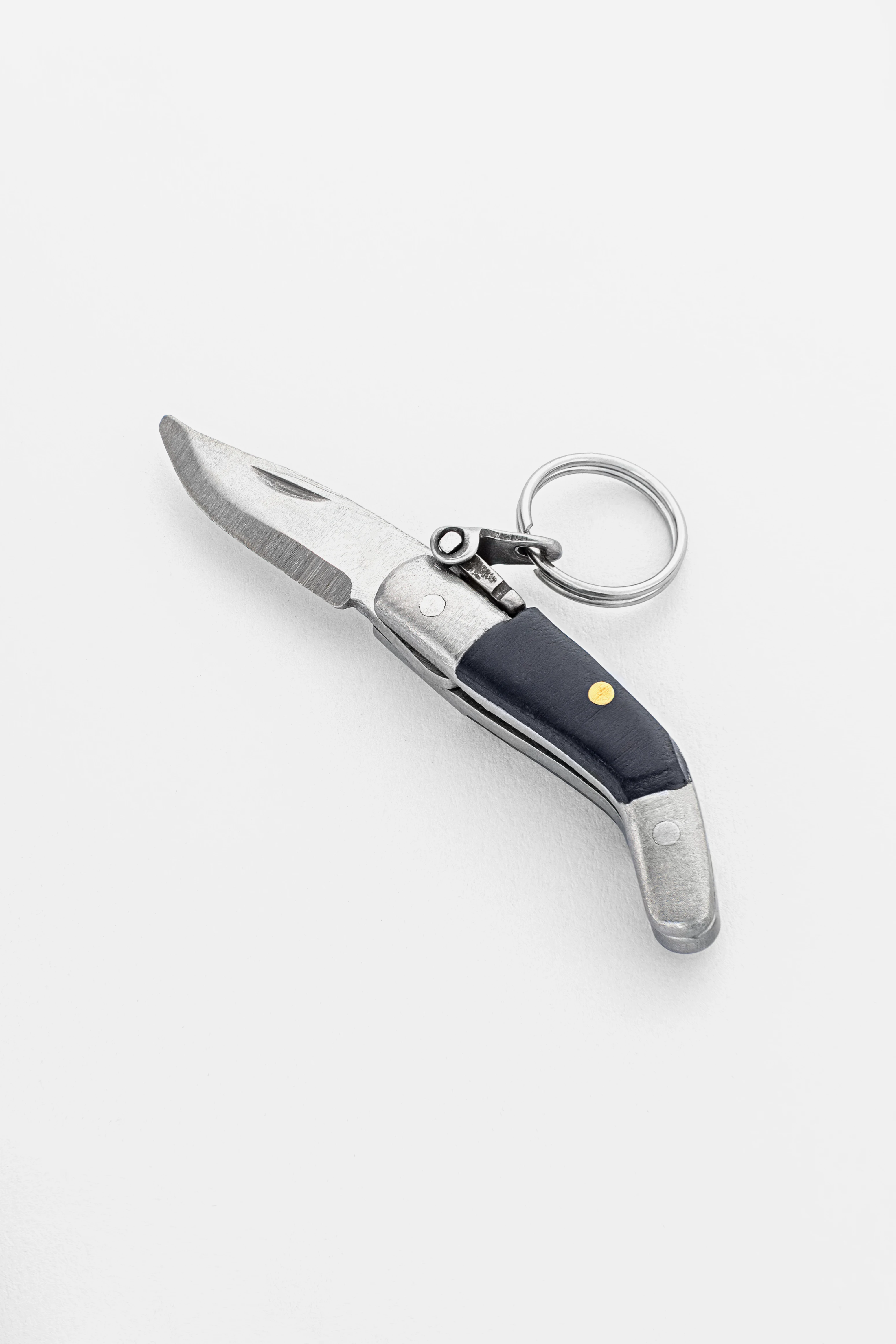
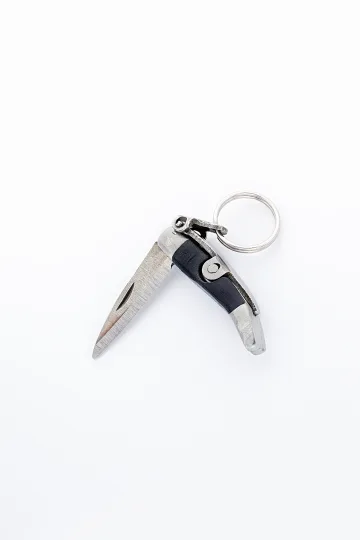
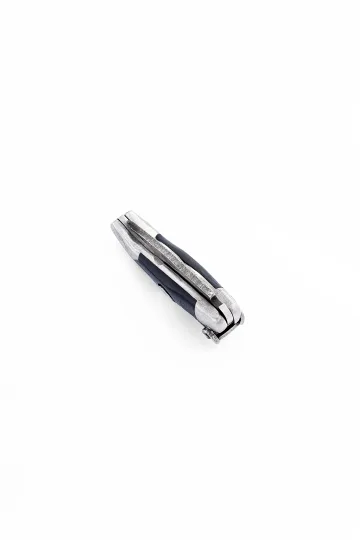
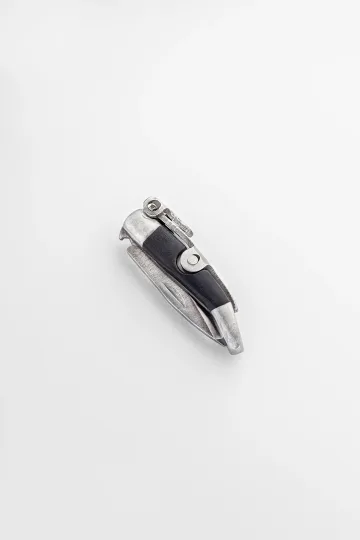
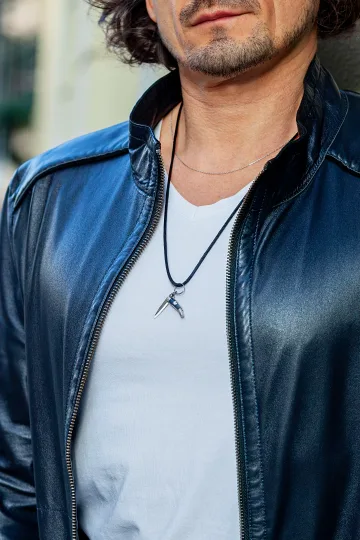
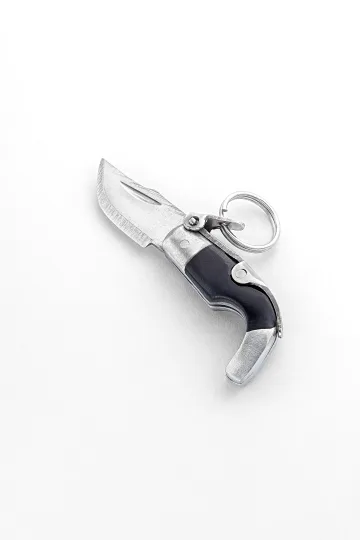
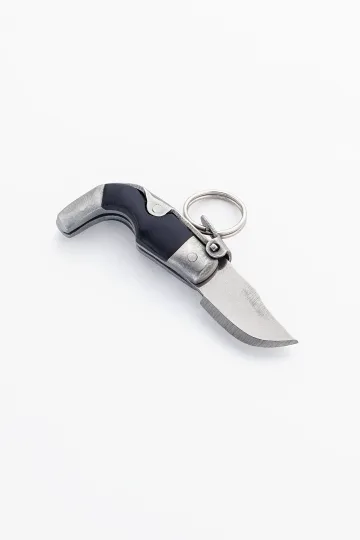
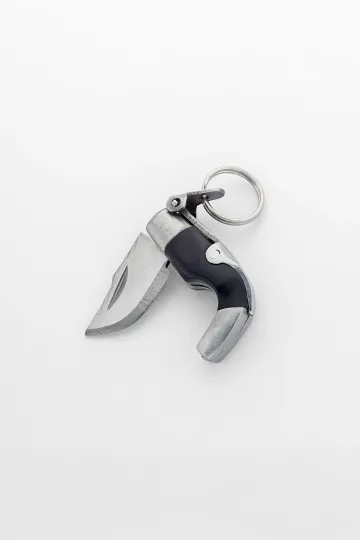
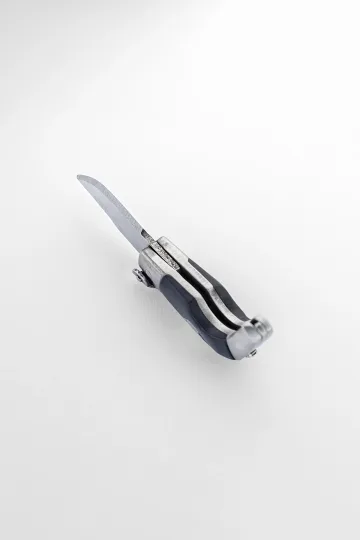
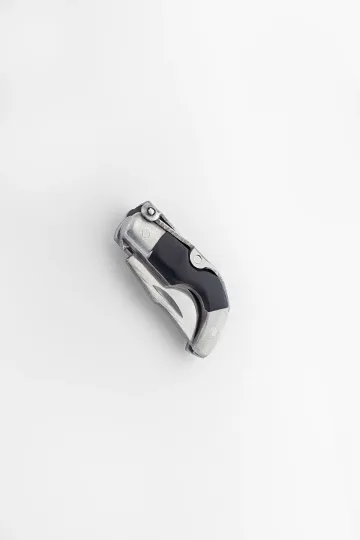
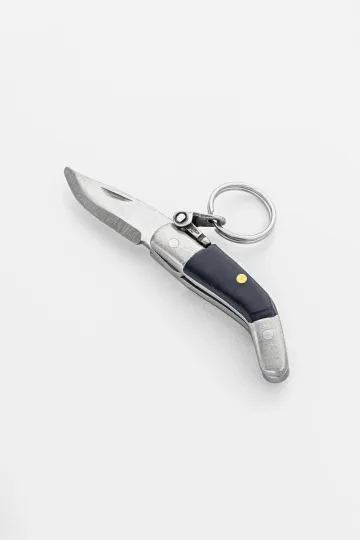
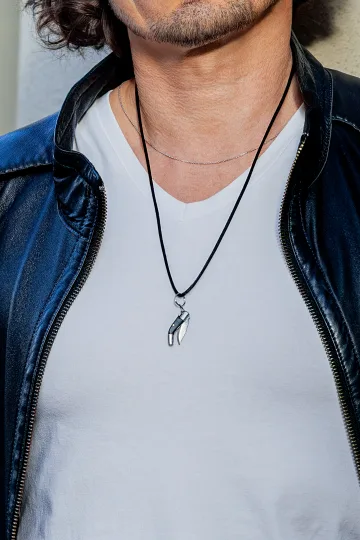
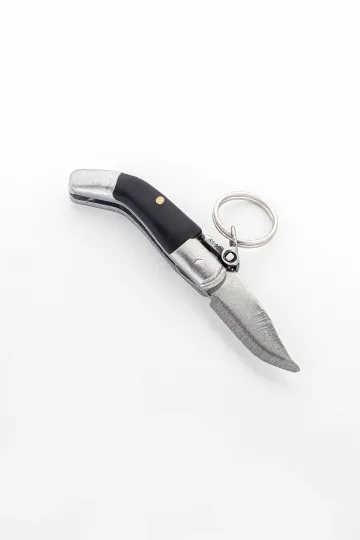
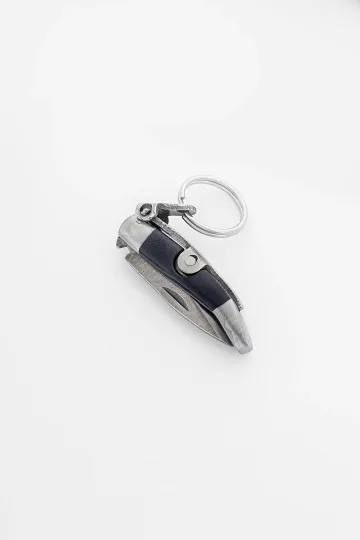
CAPAORA mini knife pendant
The 18th-century Spanish navaja in miniature: 40 mm of stainless steel, a real folding mechanism and a Palanquilla lock that clicks. An affordable gift to remember.
Authentic · Ships from Spain · 14-day returns
Wunjo and Other Runes of Joy and Connection: What Is the Difference
Joy, accord and good relations in the Futhark are reflected by more than one rune; several carry them, and they share the meanings out among themselves. Understanding the differences helps you choose "your own."
Wunjo and Fehu: Joy and Plenty
The main pair inside the first aett is Fehu and Wunjo, the start and the end of the row. Fehu is movable wealth: cattle, silver, money in circulation, the resource that comes and goes. Wunjo is joy and contentment, the state that wealth is gathered for.
The pair frames the first aett beautifully: it opens with plenty and closes with joy. From resource to meaning, from profit to peace. If Fehu is about what you earn, Wunjo is about what it is for. They are often set side by side for exactly this reason: plenty without joy is empty, and joy without a foundation is unsteady.
Wunjo and Gebo: Joy and Gift
The rune Gebo means gift, exchange, generosity and partnership, the bond of two through a present or a pact. It is about the relationship between people in the moment of exchange. Wunjo is nearer the result of those relationships: the joy and accord that grow out of them. Gebo is the act of giving; Wunjo is the warmth that stays behind afterward.
Together they describe the full circle of a good bond: generosity and exchange (Gebo) create accord and joy (Wunjo). Paired amulets often combine these two runes as a sign of a union and the happiness it brings.
Wunjo and Sowilo: Joy and the Light of Victory
The rune Sowilo means sun, light, victory and vital force. It is about energy and triumph, about a bright, active surge. Wunjo is softer: not a triumph but a quiet contentment, not a flash but a steady warmth. Sowilo is the light that strikes; Wunjo is the light that warms.
Once you have sorted through these differences, it is easier not to confuse the "bright" runes and to choose a sign for a specific intent: victory and energy from Sowilo, gift and union from Gebo, calm joy and accord from Wunjo.
Wunjo and Dagaz: Quiet Joy and Breakthrough
It is worth separating Wunjo from Dagaz, the rune of day and daybreak, because the two get run together more often than any other pair on this list. Dagaz is about the turn, the moment when darkness gives way to light, a change of state and a new beginning. Wunjo is about the condition that follows: level contentment, once the dawn has happened and an ordinary calm day has settled in.
Dagaz is the boundary and the pivot. Wunjo is what lies beyond the pivot, assuming it turned out well. The two are sometimes set side by side as breakthrough and the reward for it, which is a fair reading, but they should not be blurred into one meaning. One rune is about change, the other about the steady accord that change delivers, and a person choosing between them for a pendant is usually choosing between wanting something to shift and wanting something to hold.
The Psychology of a Runic Amulet
You do not have to believe in the magic of runes for a Wunjo pendant to "work." The mechanisms that make such an amulet useful are quite earthly and well described.
An anchor of state. When a person ties an object to a certain state, a glance at that object returns the mind to it. A rune of joy at the neck becomes a quiet reminder to notice the good and to guard the accord around you. It works as a visual bookmark for attention, without any mysticism.
The mindset effect. Cognitive psychology describes how expectation shapes perception: a person tuned to notice reasons for joy finds them more often. A reminder amulet nudges the focus slightly in that direction, and the day feels warmer.
Ritual and belonging. Putting on a paired sign with a loved one is a small ritual of community. It does not create a bond out of nothing, but it strengthens the sense of "we are of one mind," and that sense measurably raises resilience to stress and satisfaction in relationships.
Identity and values. To wear a rune of joy is to state quietly, first of all to yourself, your priorities: accord, peace and good bonds matter more than the rush. Anchors of identity increase resilience to hardship, and in that sense an ancient sign works for a thoroughly modern person.
There is nothing supernatural in this. An amulet does not change reality; it changes the wearer's relationship to reality, and it does so in a measurable, useful way.
Wunjo in Culture and Heritage
Runes have long moved beyond archaeology and live in language, writing and modern culture. Wunjo's trace is especially curious: it hides both inside words and inside the history of writing itself.
In language. English winsome (charming), German Wonne (bliss) and wünschen (to wish) reach through a shared root toward the same joy-and-contentment concept that stands behind the rune. Every time a German speaks of bliss and an English speaker calls someone winsome, they repeat, without knowing it, the ancient root of Wunjo.
In the history of writing. Wunjo's fate is unique among the runes. It was not only a letter in its own alphabet; it crossed into a foreign one, the Latin, and for several centuries served as the letter "wynn" in Old English manuscripts. Few ancient signs can claim to have worked as a written unit in two different systems of writing.
In modern symbolism. The revived interest in Northern antiquity has made the Futhark a recognisable visual language. Runes decorate books, games, music covers and craft goods. Wunjo, as a sign of joy and accord, holds a warm, friendly place in this set, free of grim associations.
One important caveat is worth keeping. In the 20th century some individual runic signs were used by political movements of grim repute, and a heavy context surrounds certain symbols. Wunjo does not belong to that circle and remains a neutral sign of joy, but a general awareness of what you wear and what you wear it beside is fitting here.
Send a friend a discount code, they save on their first order.
Facts About the Wunjo Rune That Surprise You
The rune of joy became a letter of the English alphabet. Under the name "wynn" the Wunjo sign wrote the sound [w] in Old English manuscripts for several centuries, until it was pushed out by the double "u" that later gave the name "double-u." Few runes served as a full letter in Latin writing.
The words "bliss" and "wish" come from the rune's name. German Wonne (delight) and wünschen (to wish), English winsome (charming) go back to the same root wunjō as the rune's name. The idea "joy equals a wish come true" has been stitched into the European languages for thousands of years.
An old poem defined joy through the absence of pain. The Anglo-Saxon rune poem describes happiness not as rapture but as the state of one who knows little woe, pain and sorrow, who has enough strength and a reliable dwelling. A sober, almost clinical definition of happiness.
Wunjo did not enter the Younger Futhark. When the Scandinavians cut the alphabet down to sixteen signs, the rune of joy fell out of Northern use. It lived longest not in its native Scandinavia but among the Anglo-Saxons, in England.
The rune's shape is a banner, not just a flag. Many researchers read Wunjo as a raised standard, the gathering point of a clan and its war band. Hence its second meaning: not solitary joy but the joy of community, of belonging among your own.
Fehu and Wunjo frame the first aett. The rune of plenty opens the first row of eight signs, and the rune of joy closes it. The ancient alphabet begins with resource and ends with the thing resource is for.
The modern "wish" reading is younger than it seems. The divinatory system with upright and reversed meanings of Wunjo took shape mainly in the 19th and 20th centuries. The historical rune was a letter and a concept of joy, not a card from a divination set.
Silver, gold, runic and Scandinavian symbolism, protective charms, paired sets.
Frequently Asked Questions About the Wunjo Rune
What does the Wunjo rune mean? Wunjo is the eighth rune of the Elder Futhark, standing for the sound "w" and the concept of joy, delight and contentment. In a broad sense it symbolises joy, harmony, accord, granted wishes and good bonds between people. The name goes back to Proto-Germanic wunjō, "joy."
Is Wunjo the rune of happiness? Yes, it is read as the rune of joy and inner well-being. But the shade matters: it is not euphoria but a calm contentment, the state where the thing you longed for has come true and life is in accord. The old poem defined this joy through the absence of pain, plenty and a reliable dwelling.
What does the Wunjo rune look like? A vertical stave with a small triangular flag near the top, facing one side. The form recalls a raised banner or a letter "P" with a sharp top. There are no horizontal lines in the sign, as across the whole Elder Futhark.
What does reversed Wunjo mean? In the divinatory tradition the reversed position is read as gloom, discord, a quarrel with loved ones or a delayed joy. It is the flip side of the rune: upright is about accord and things come true, reversed about disunity and delay. The split into upright and reversed meanings appeared in modern practice.
Can you wear the Wunjo rune every day? Yes. For daily wear silver and stainless steel are convenient: they are sturdy, undemanding in care and do not darken. Gold suits too and reads well for a joyful sign. Wood and bone are authentic but fragile; they are more often chosen as a ritual or collector's version.
Is Wunjo a good gift? Very much so. Its meaning reads at once and sounds well-wishing: a wish of joy, accord and hopes come true. Wunjo suits a wedding, an engagement, a housewarming, and a paired version with the same rune shared by two people reads as a sign of friendship and community.
Can you wear Wunjo together with other runes? Yes, and it is common. Wunjo pairs well with Fehu as a sign of plenty, with Gebo as a sign of gift and union, with Algiz as a sign of protection. The main thing is not to overload the look: one or two symbols read more strongly than a handful of pendants on one chain.
Do you have to believe in the magic of runes to wear Wunjo? No. Many wear the rune for its meaning and history rather than for a "magic of joy." The sign is interesting in itself: it is more than fifteen hundred years old, it served as a letter in two systems of writing, and it is bound to the language and mythology of Northern Europe. Belief stays a private matter.
Runes, Scandinavian charms and symbolism in silver, gold and steel.
Buying it as a gift? Each one arrives ready to give.
 A branded Zevira box and a little card come with every order.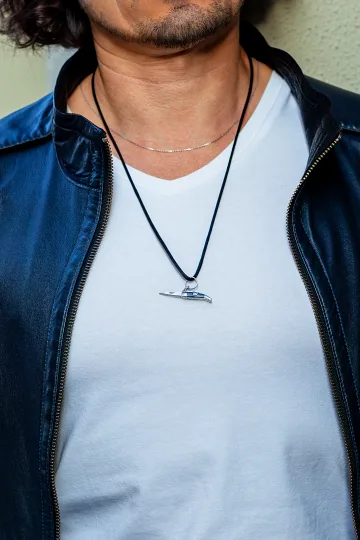




Conclusion
Wunjo travelled from a sign for the quiet contentment of a fed and peaceful home to a symbol of joy and granted wishes on a silver chain. Over fifteen hundred years both the form of writing and the way of understanding happiness changed, but the essence of the rune stayed the same: joy is a state you build rather than beg for, and it rests on accord, health and good bonds.
The last rune of the first aett tells honestly what joy is made of. Not rapture put on for show, but the absence of pain, peace with loved ones, an expectation fulfilled. Whether you wear Wunjo for its meaning, for the beauty of the Northern form or for a quiet reminder to guard the good that is already there, you carry with you one of the warmest symbols in history: the sign of what people work for, and save for, and make peace for.
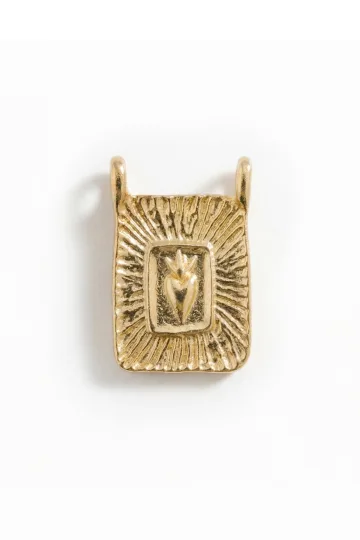
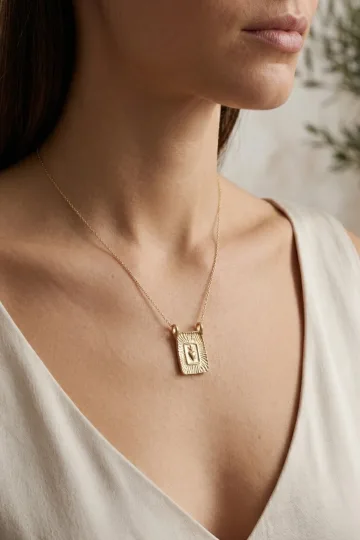
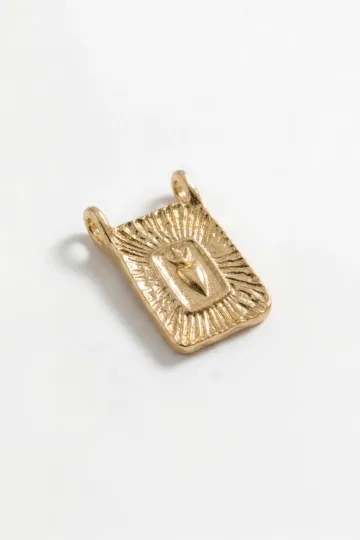
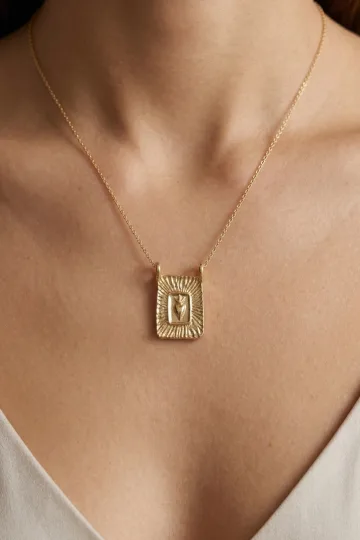
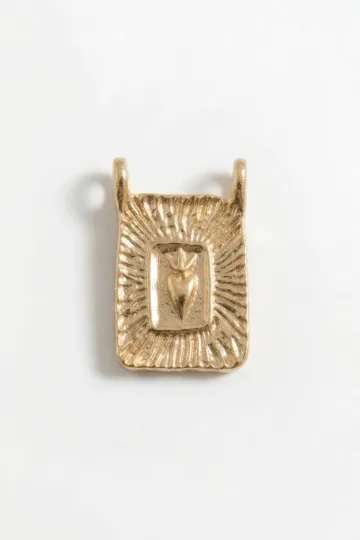
Wear the symbol, don't just read about it. These are in stock:
About Zevira
Zevira makes jewellery in the artisan tradition of Albacete, Spain. Runic symbolism is one of the themes close to us: an ancient form, legible without words, equally at home on a rough leather cord and on a thin chain. We render Wunjo with a checked orientation of the sign and crisp carving, in modern materials and proportions.
What you can find with us on the theme of Northern symbols:
- Runic pendants in silver, gold and steel
- Scandinavian charms: runes of joy, protection, plenty, images of the gods
- Leather and rubber cords and chains of various lengths for a rune of any size
- Paired and set versions for those who collect the symbolism of the Futhark
- The option of personal engraving
Every piece can be personalised with engraving. Sterling silver 925 and 14-18K gold.